
#MD58B
1823
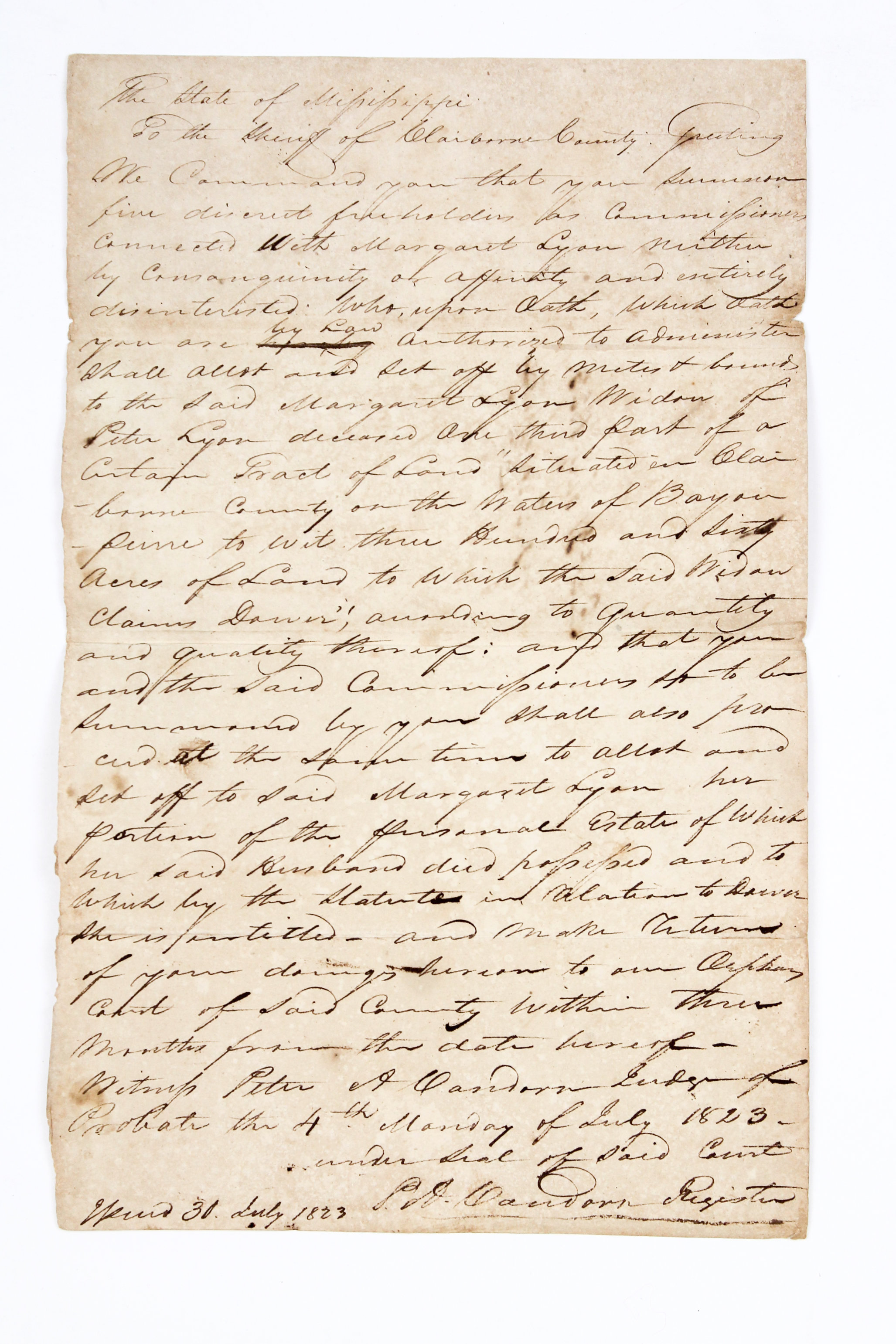
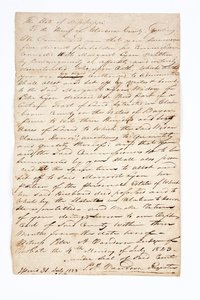
Folio (ca. 32,5x20,5 cm). 2 pp. Brown ink on yellowish wove paper. Minor tear at the fold, traces of glued paper, but otherwise a very good document.
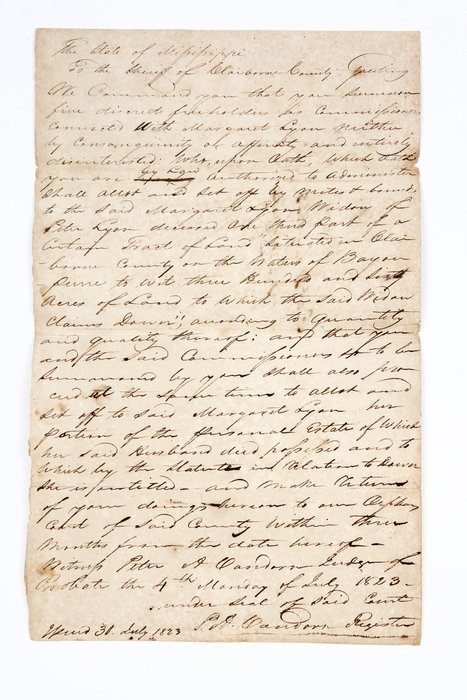
Historically important early Writ of Dower, offering a rare insight into the legal protections and property rights of women in antebellum Mississippi.
Under the legal principle of dower in the 1820s, a widow was entitled to a "life estate" in one-third of her deceased husband's real property and a specific portion of his personal estate. This judicial mechanism ensured that women, who were largely excluded from independent property ownership during marriage, were not left destitute by providing them with a guaranteed share of the estate’s resources and income.
The Write was issued by Peter A. Van Dorn (ca. 1773-1837), a judge on the Orphan's Court in Claiborne County, Mississippi, in July 1823. Van Dorn was an American lawyer, judge and cotton planter. Born in New Jersey, with a law degree from Princeton, as a young man he migrated to the Mississippi Territory, where he made his career and fortune. He became a major planter with a plantation on the Yazoo River and a law practice in Port Gibson. He was one of the founders of Jackson, Mississippi, designated as the capital when it became a state.
The document commands Joseph Briggs (ca. 1780-1830), Sheriff of Claiborne County, to summon five "discreet freeholders" to serve as disinterested commissioners for the estate of Peter Lyon (ca. - 1822). Their mandate was to allot and set off by "metes and bounds" to the widow, Margaret Lyon, one-third of a 360-acre tract on the waters of Bayou Pierre. The commissioners were strictly directed to account for both the "quantity and quality" of the land while designating Margaret’s rightful portion of the personal estate.
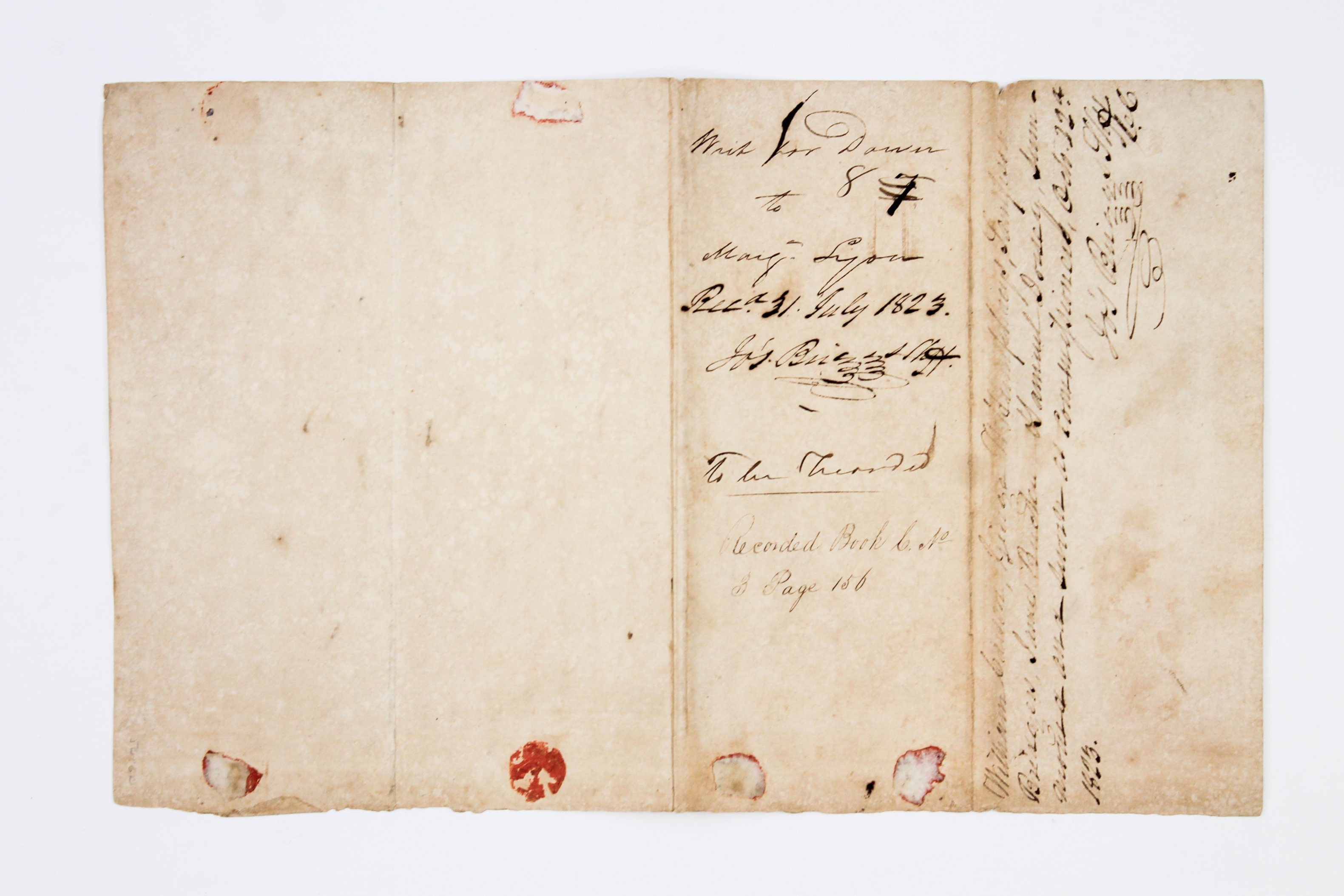
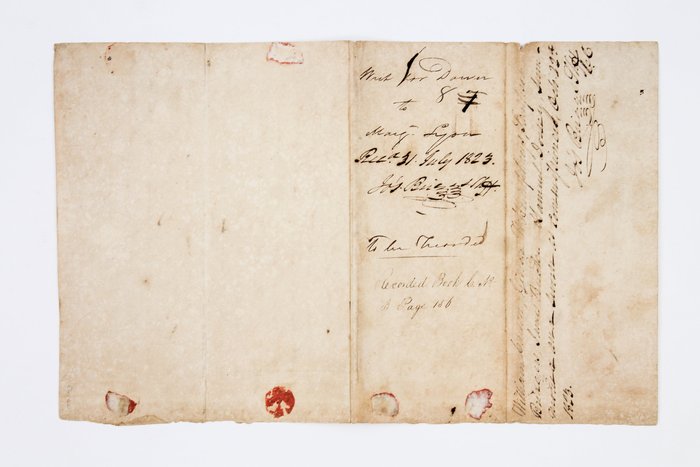
The verso of the document features the Sheriff’s inscription, indicating his appointment of five commissioners, including Claiborne County pioneers William Carson and George Humphreys.
Overall, historically important early Writ of Dower, offering a rare insight into the legal protections and property rights of women in antebellum Mississippi.
Text of the Writ:
“To the Sheriff of Claiborne County Greeting. We command you that you summon five discreet freeholders as Commissioners connected with Margaret Lyon neither by consanguinity or affinity and entirely disinterested. Who upon Oath, which Oath you are by law authorized to administer shall allot and set off by metes and bounds to the said Margaret Lyon widow of Peter Lyon deceased one third part of a certain Tract of Land situated in Claiborne County on the waters of Bayou Pierre to wit three hundred and sixty acres of land to which the said widow claims dower, according to quantity and quality thereof: and that you and the said commissioners so to be summoned by you shall also proceed at the same time to allot and set off to said Margaret Lyon her portion of the personal Estate of which her said husband died possessed and to which by the statute in relation to Dower she is entitled; and make return of your doings hereon to our Orphans' Court of said County within three months from the date hereof. Witness: Peter A. Van Dorn Judge of Probate 1823."