
#FRE18
Ca. 1953
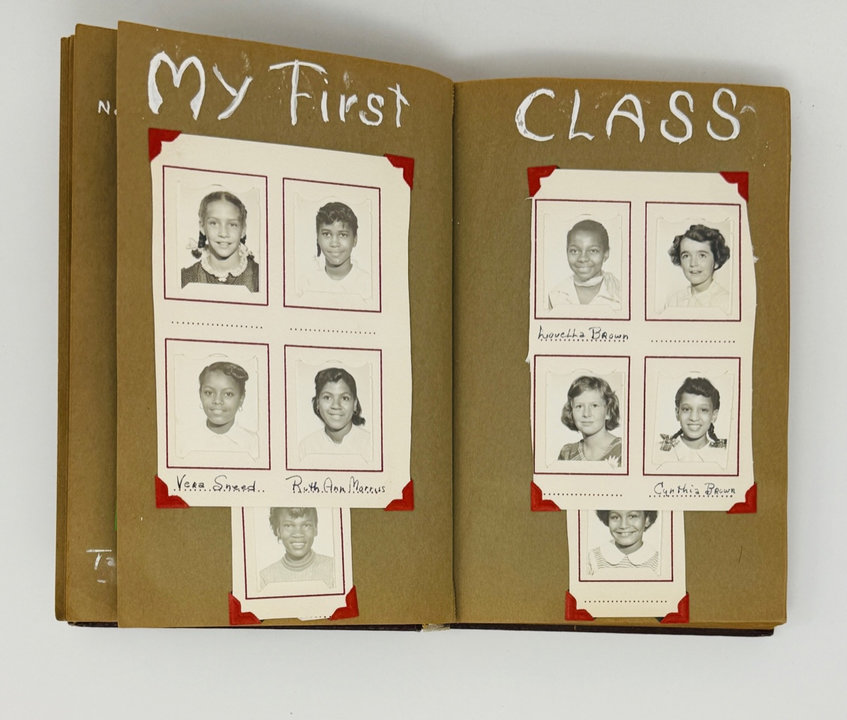
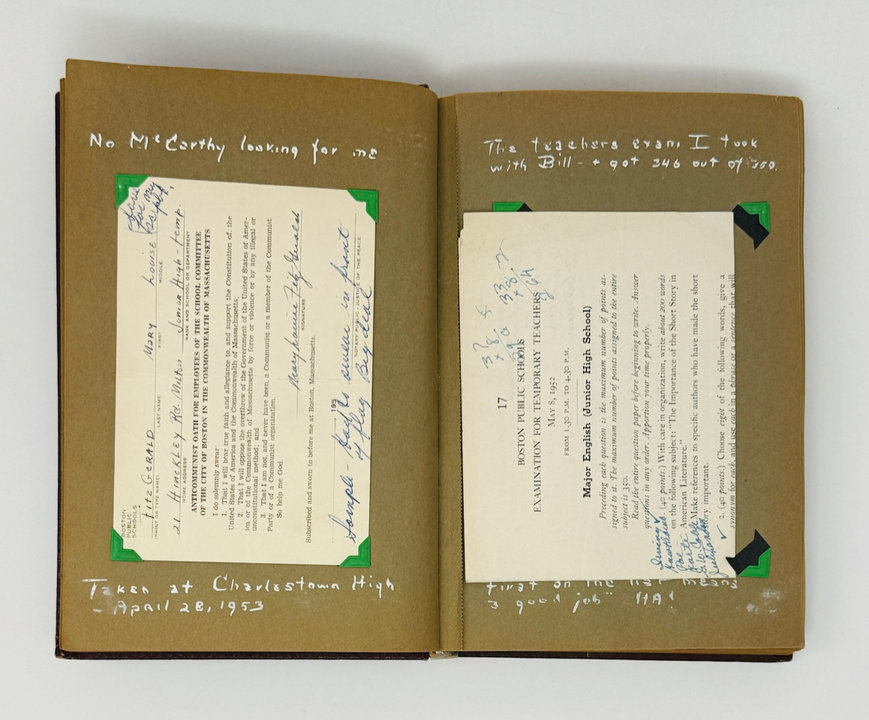
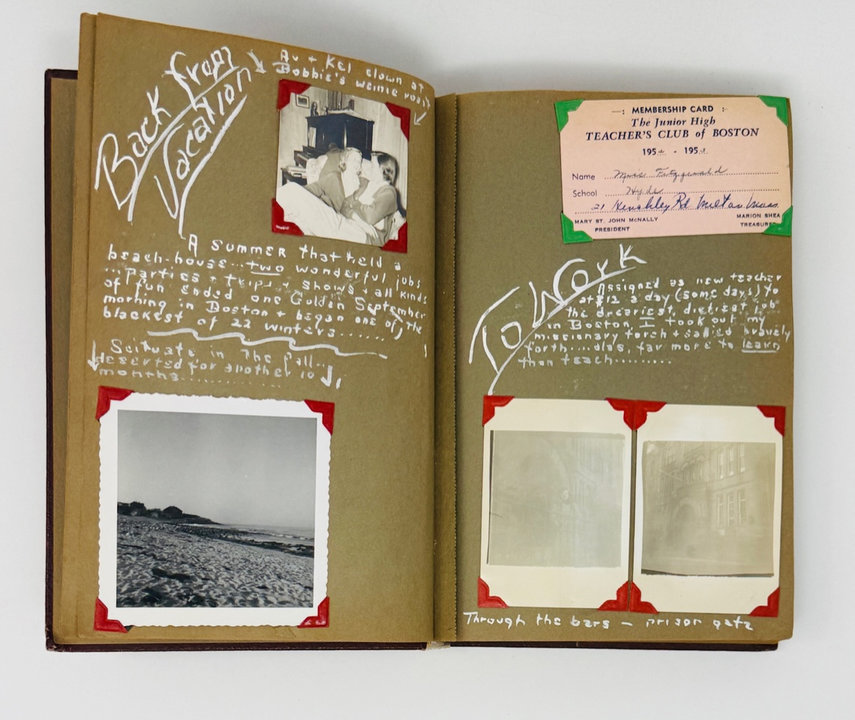
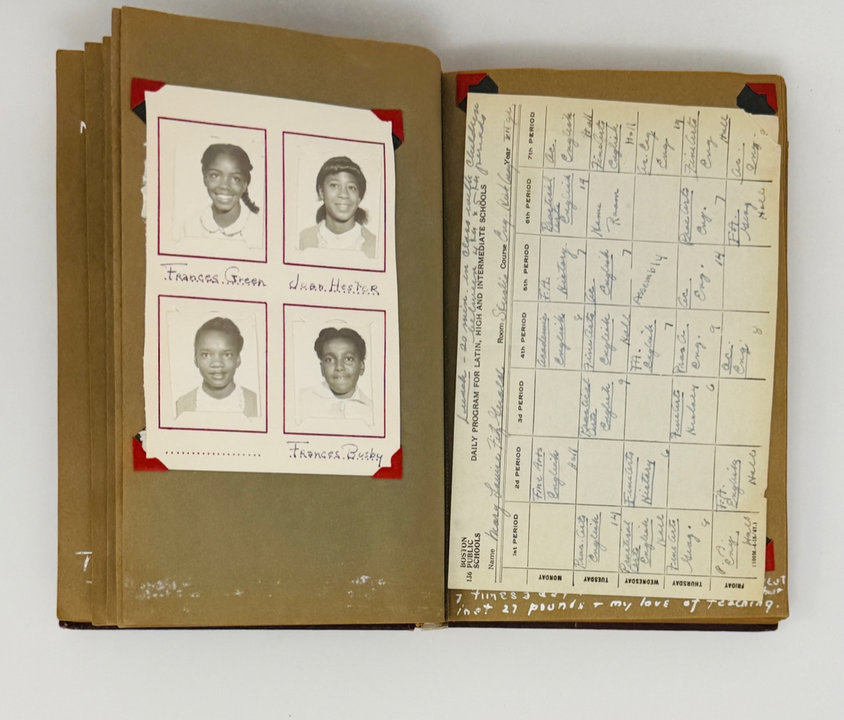
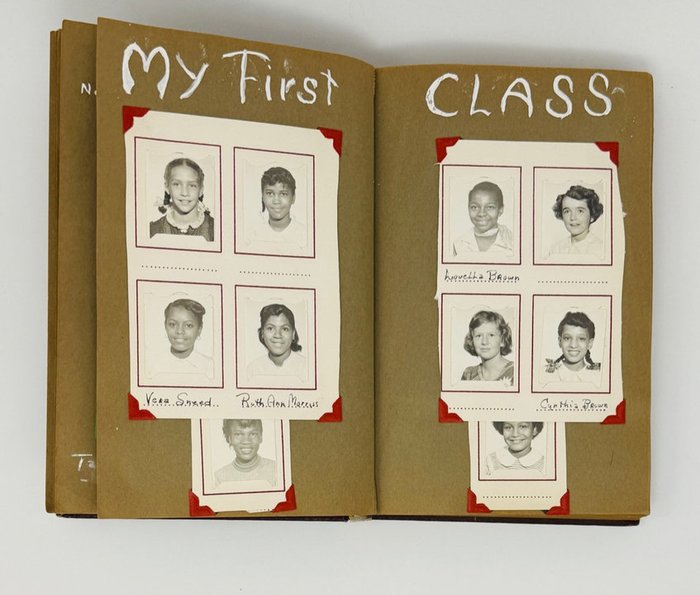
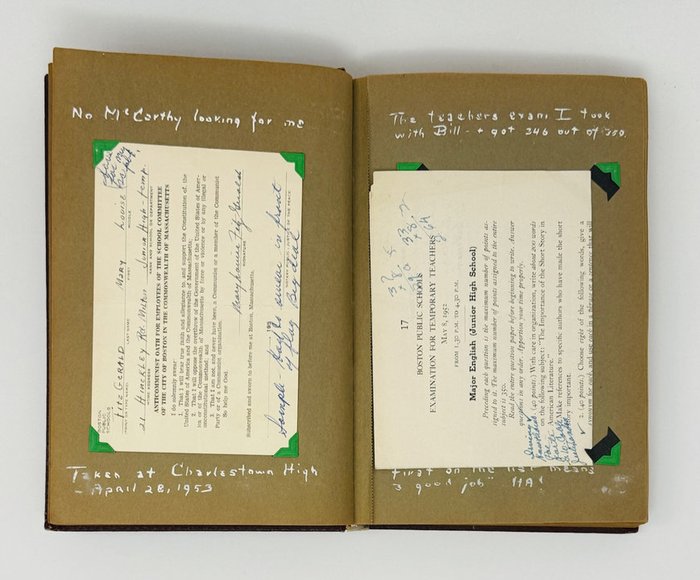
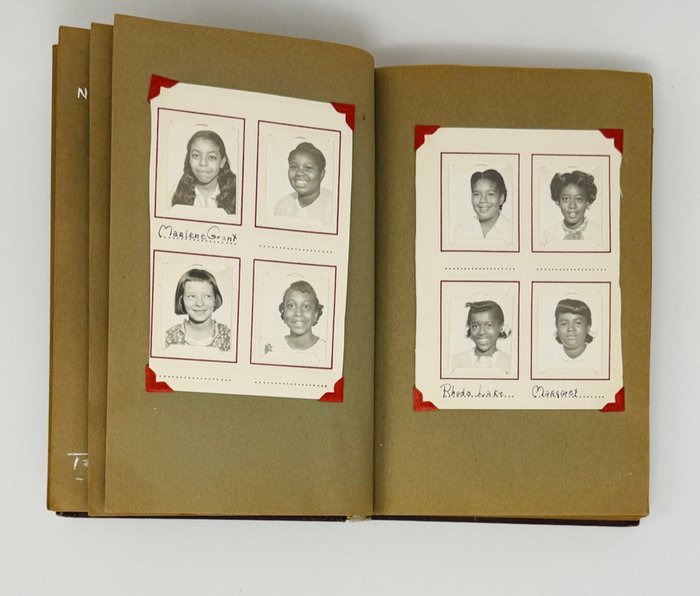
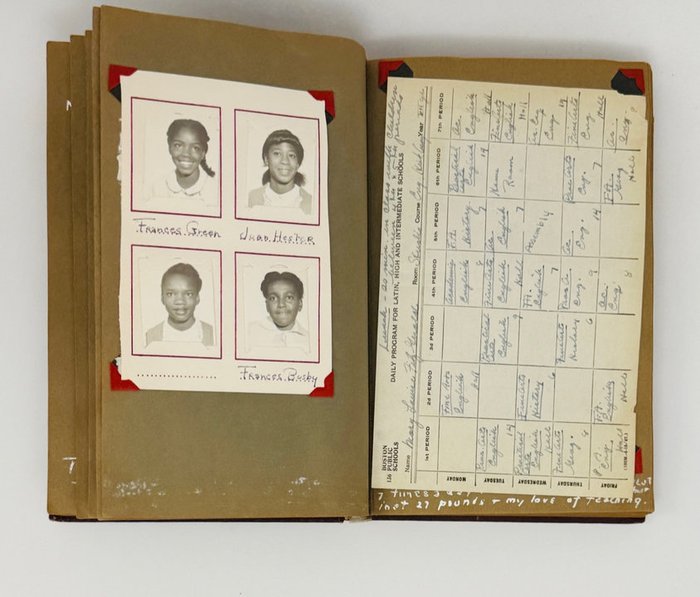
60 paper album leaves (20 blank). With 117 mounted original gelatin silver photographs (3 color). Larger photos ca. 9,x13 cm (3 ½ x 5 in), smaller ones, the snapshots of children in class ca. 4x3 cm (1 ½ x 1 in), and the rest ca. 9x9 (3 ½ x 3 ½ in). With 2 newspaper clippings, 5 documents relating to the school year, the curriculum, the instructions to substitute teachers glued in, as well as the membership card of the teacher’s club of Boston, and a postcard of a plane.
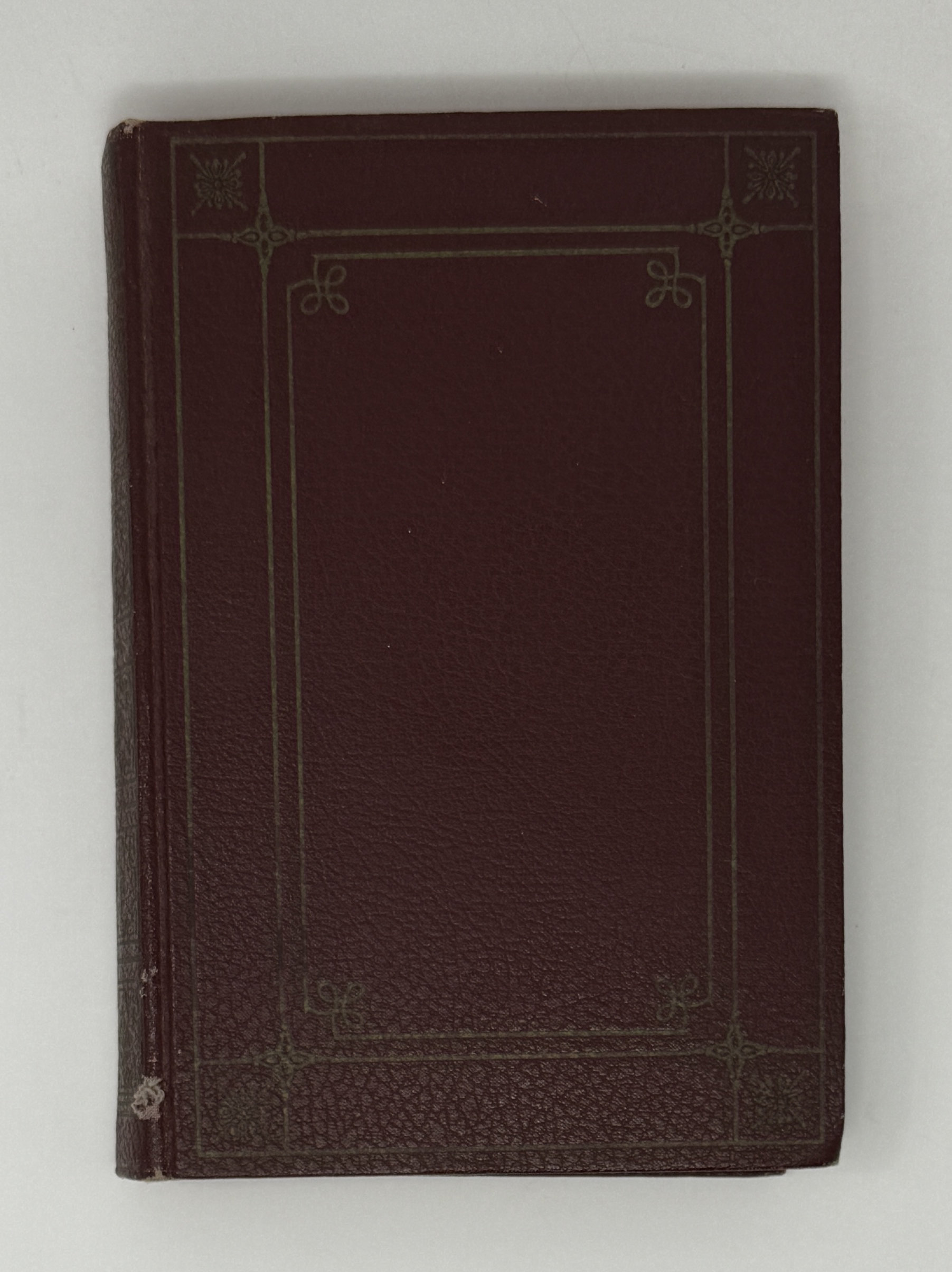
Most photos with white paste captions on the mounts Period brown cloth binding with blind-tooled ornaments on the front board. Several photos with fading, but overall a very good album with strong, interesting photos.
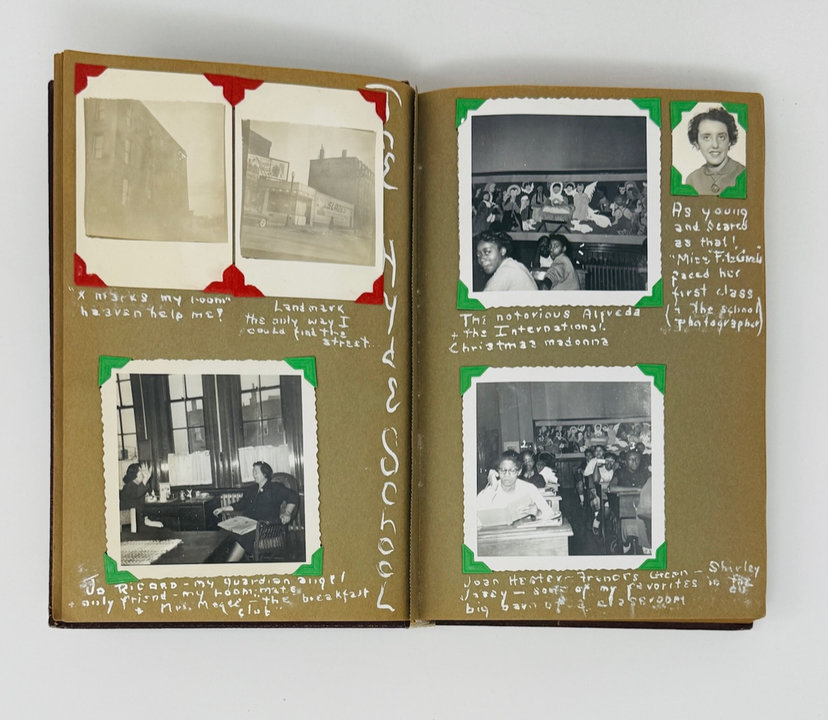
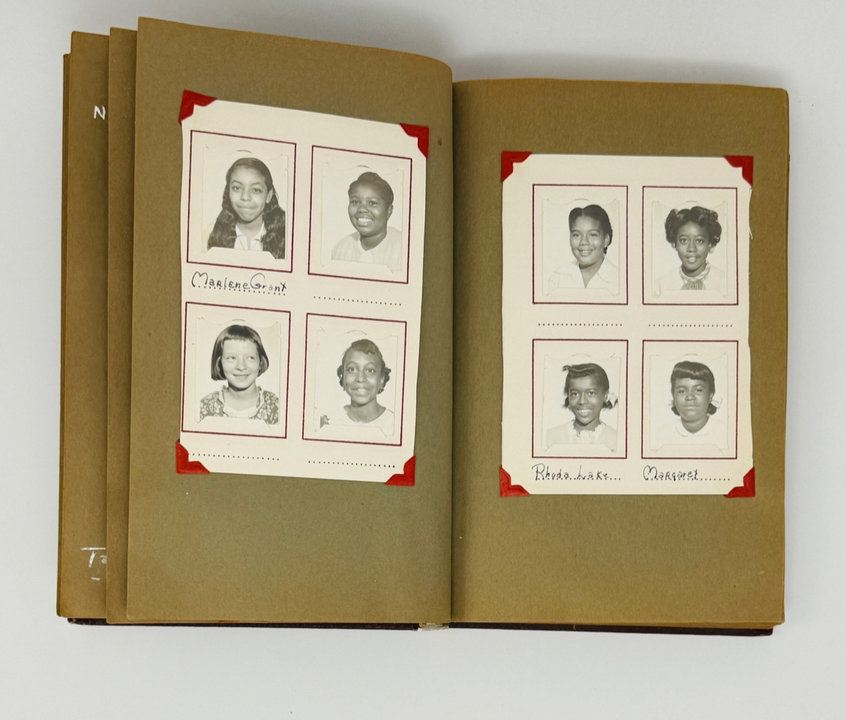
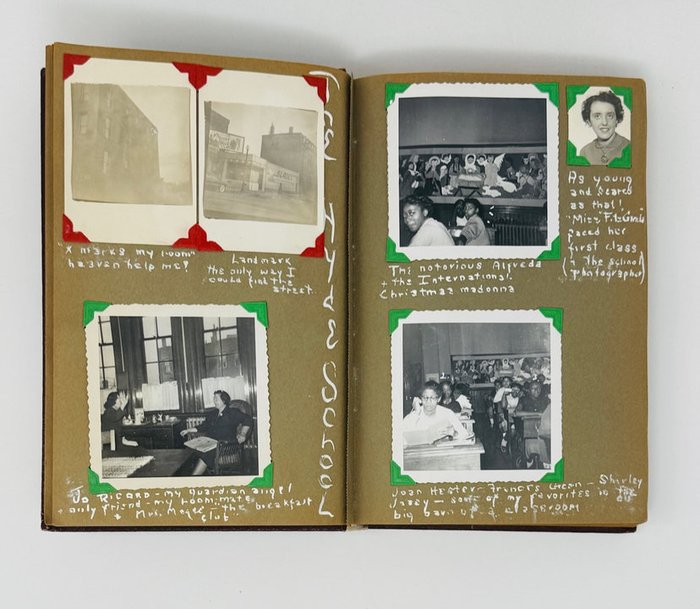
The scrapbook tells the story of Ms.Fitzgerald’s year at the ‘notorious’ Charlestown High complete with the images of her pupils, comments on the classes, her colleagues, the teaching process and dairy of other events in her life.
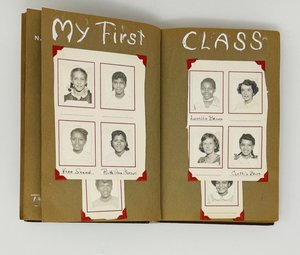
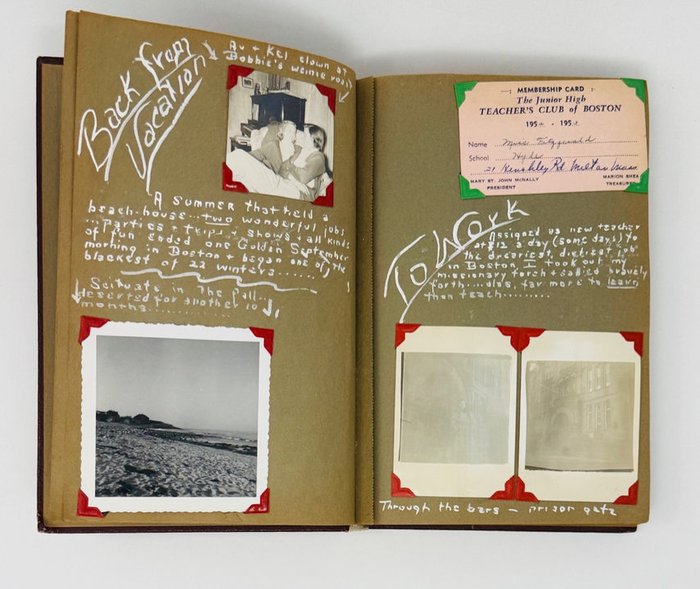
The album starts with a drawing of silhouette of the Charlestown School by Ms.Fitzgerald and a figure of herself hopping towards the building. The year began with her assignment to ‘the dirtiest, dreariest job in Boston’, what she describes at the same page as ‘the blackest of 22 winters’. The school building resembled a prison, according to the complier, and a ‘heaven help me!’ note adds to the general mood of the complier at the time. The images of all the pupils in ‘my first class’ follows (27 of 30 girls were African-American), with 3 of those were singled out by Ms.Fitzgerald as her ‘sort of my favorites’.
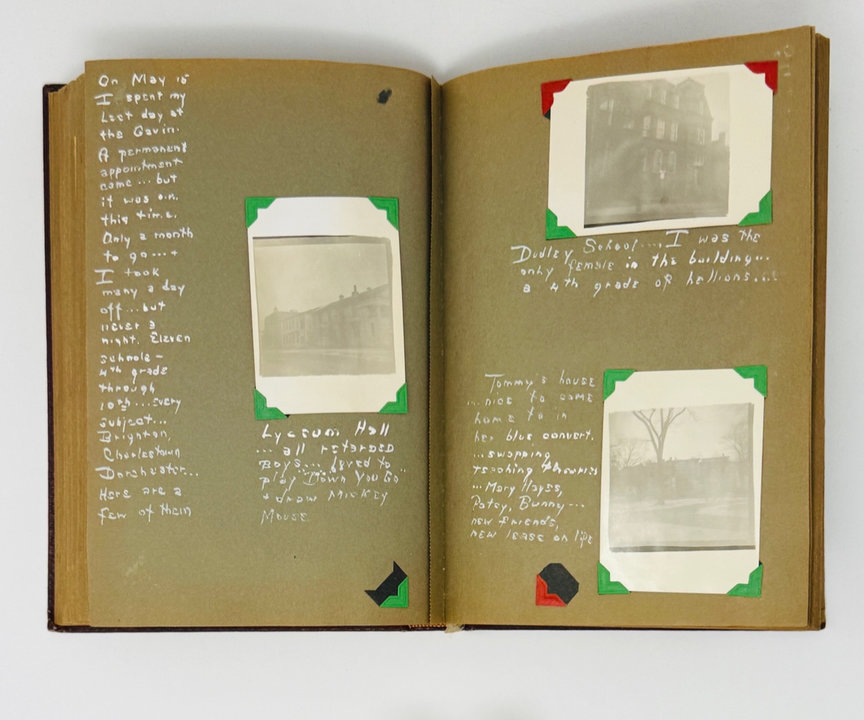
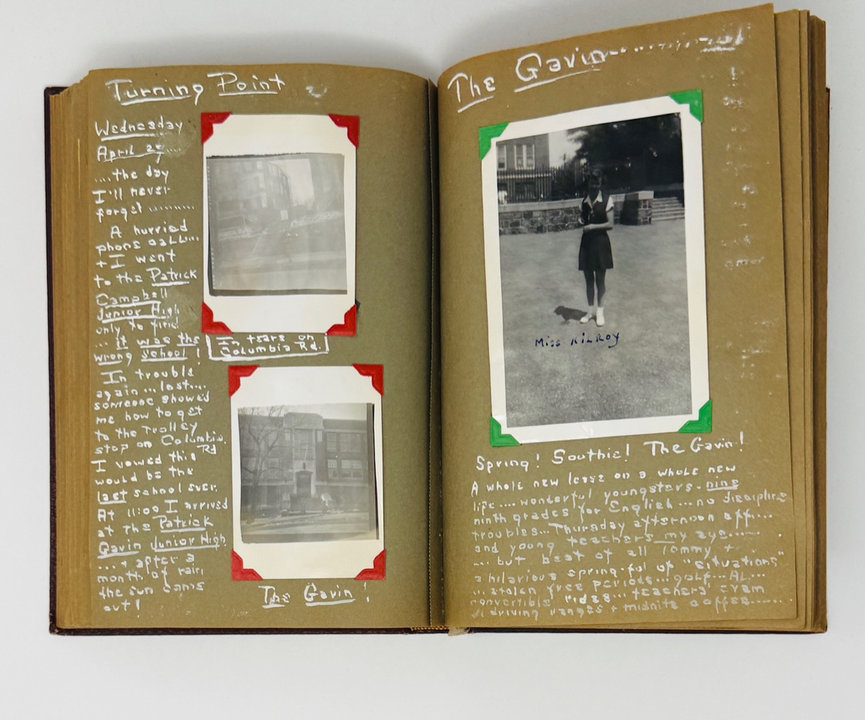
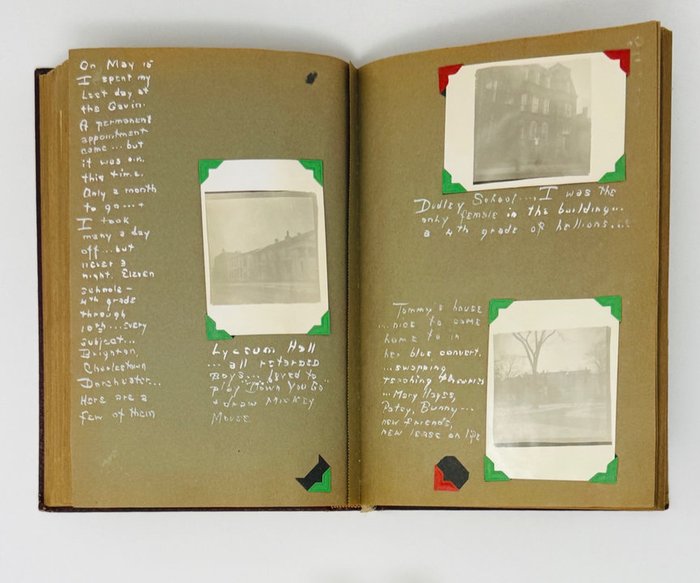
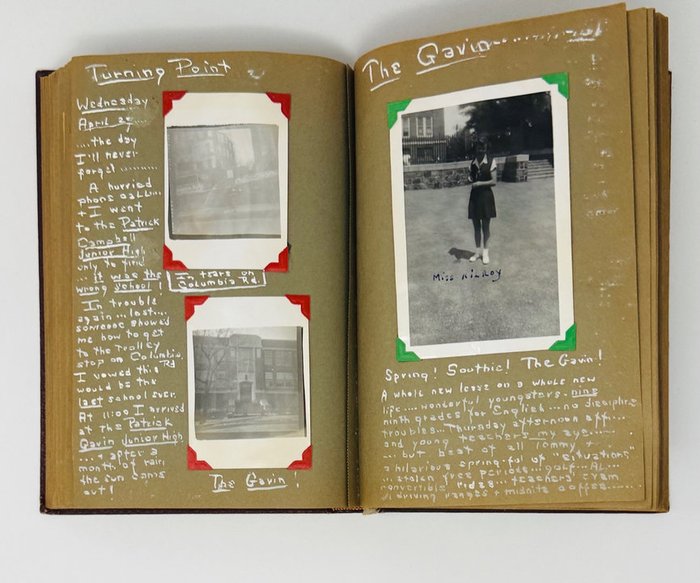
The other schools in the album in which Ms.Fitzgerald worked that year were The Jeremiah Burke High, The Clarence Edwards Junior High, Patrick Campbell Junior High, Patrick Gavin Junior High, ‘Dudley School’ and two more, unnamed. Every school receives a comment from Ms.Fitzgerald like ‘I was the only female in the building. 4th grade of hellions’ and a short description of her time there.
The rest of the album is dedicated to complier’s trips to New York, visiting her friends and parents.
The album constitutes a revealing document of a young female educator striving to secure a permanent high-school teaching position through a number of part-time jobs. Through its entries, it conveys the contours of this struggle—her emotions, doubts, regrets, and aspirations—culminating in a final, affirmative resolution with Ms. Fitzgerald’s appointment to a permanent post for the following academic year.