
#N4-033
1921
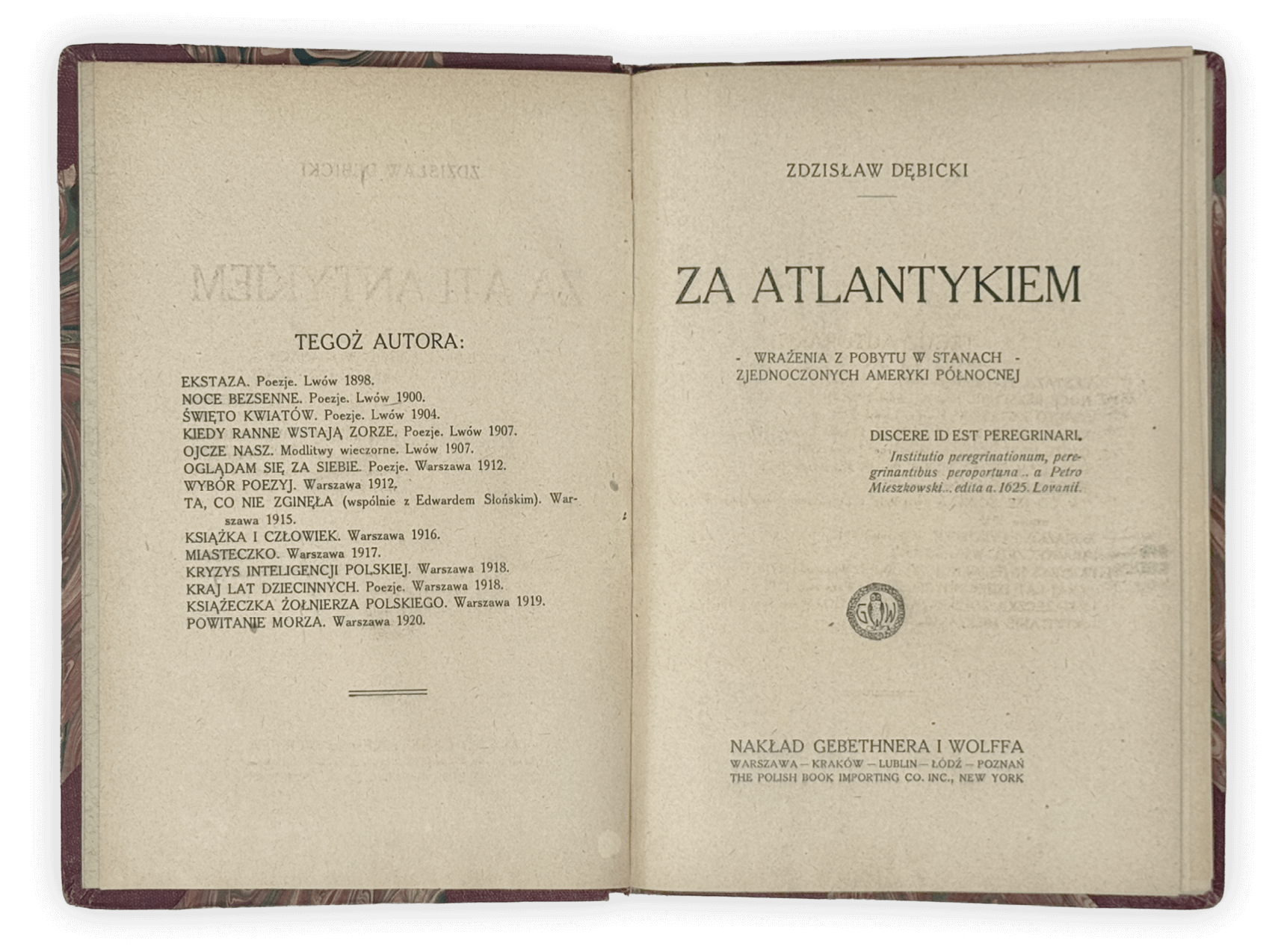
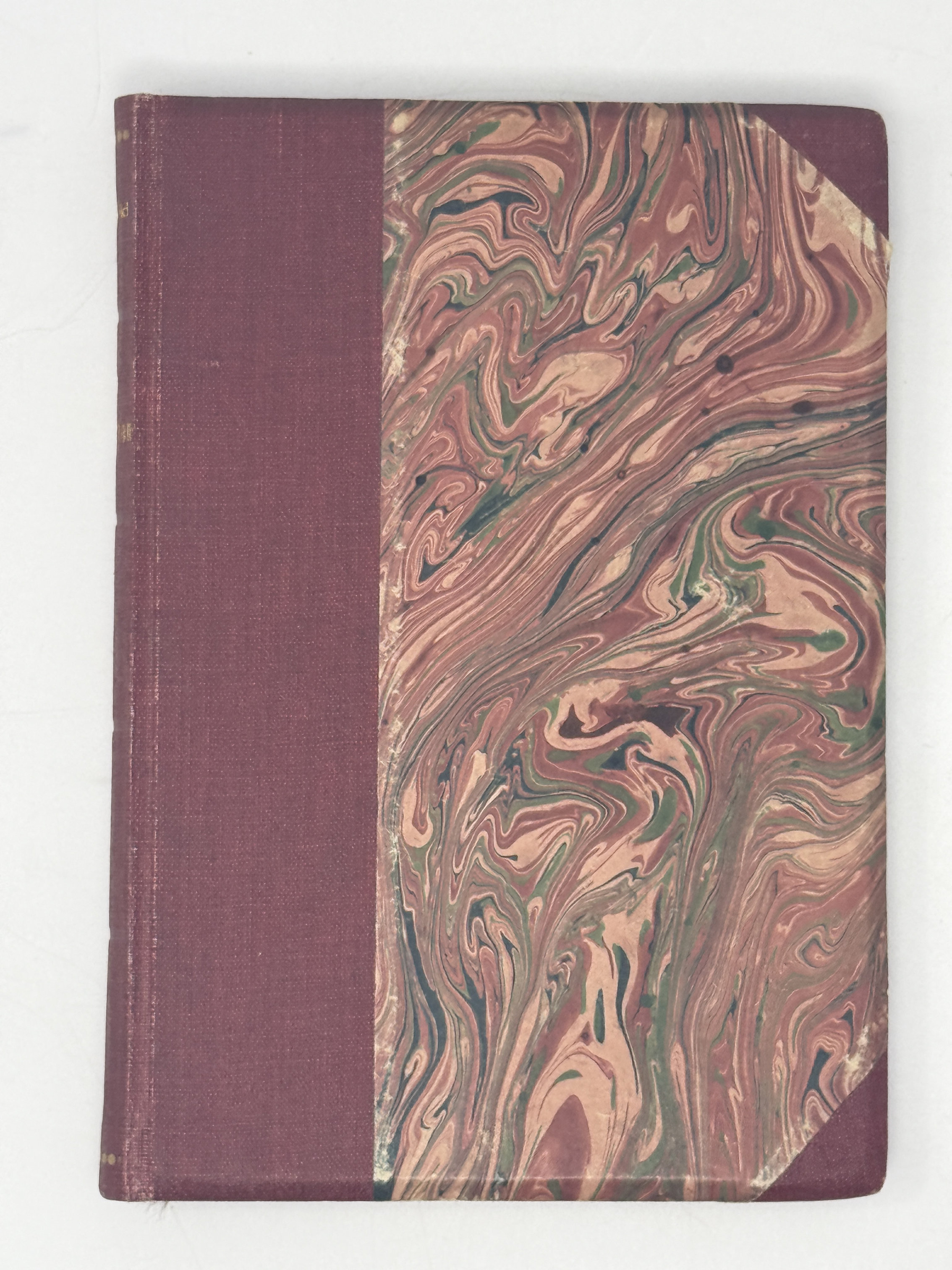
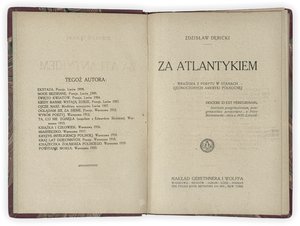
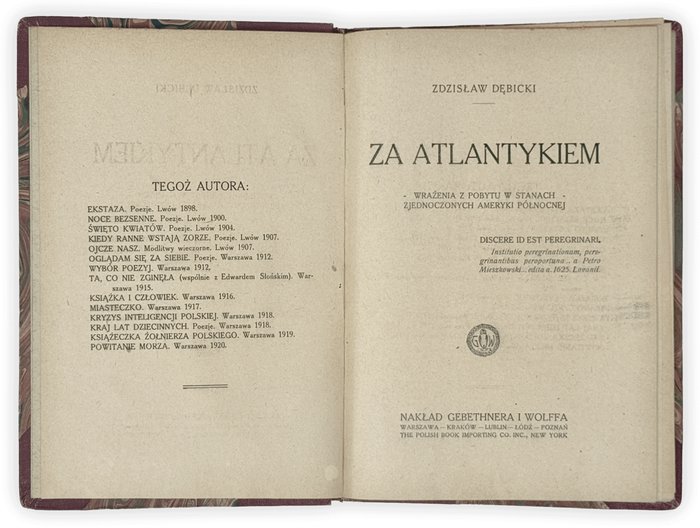
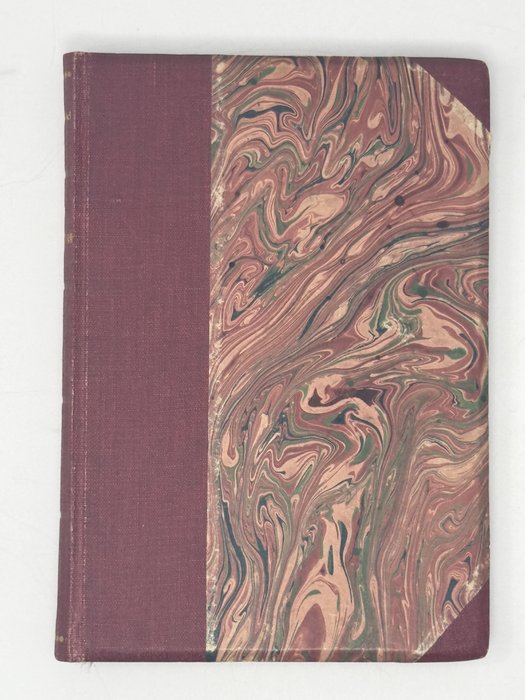
[4], 245 p. 18,5x12,5 cm. Contemporary cloth binding with marbled paper over the boards. Gilt lettering on the spine.p.223 is detached, otherwise in very good condition.
First and only edition.
Zdzisław Klemens Dębicki (1871-1931) - Polish poet, essayist, literary critic, publicist and memoirist. Since early age he was participating in the Polish libration movement. Arrested in 1894 for participating in a demonstration honoring the 100th anniversary of the Kościuszko Uprising , he spent six months in Pawiak prison. He was deprived of the right to study in Russian Empire, but he went to Lviv and finished his education. Active in pro-indepenent periodicals, he was a correspondent of "Tygodnik Ilustrowany", and traveled widely, one of the trips was to America, which resulted in this publication.
He made his debut at the age of 19, with a poem in the one-liner "Na hungernych" ("On the Hungry") (1890), but his first volume of impressionistic poems, Ekstaza (Ecstasy ), did not appear until 1899. His subsequent publications, though technically proficient, also adhered to the Young Poland conventions. His experiences during World War I and the Polish Legions inspired the volume "Ta, co nie zginęła" ("That Which Has Not Been Lost" ), co-written with Edward Słoński . His high literary culture, knowledge of and respect for classical literature, were evident in his publishing and literary criticism, as well as in his journalistic writings promoting the development of science and education.
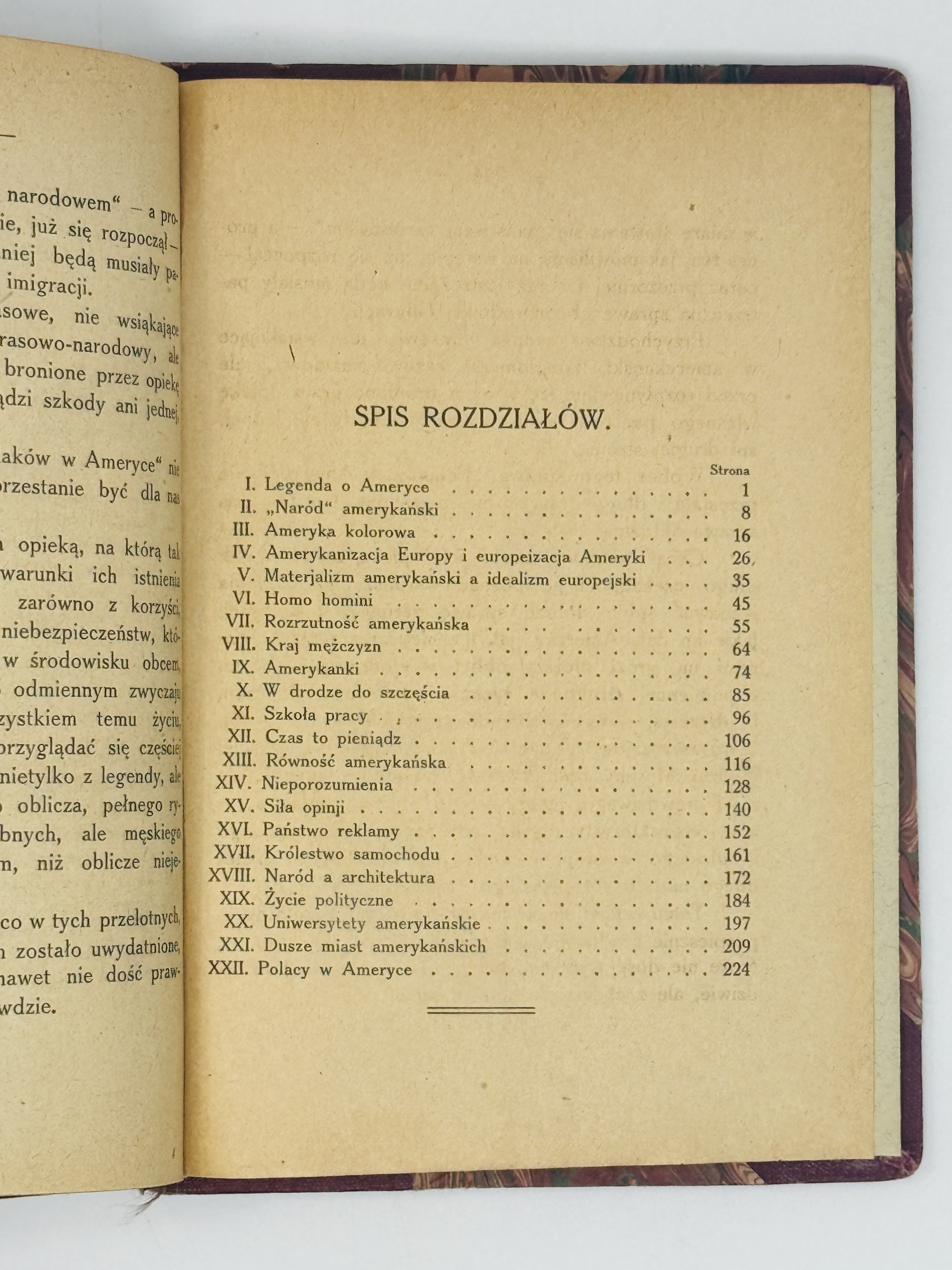
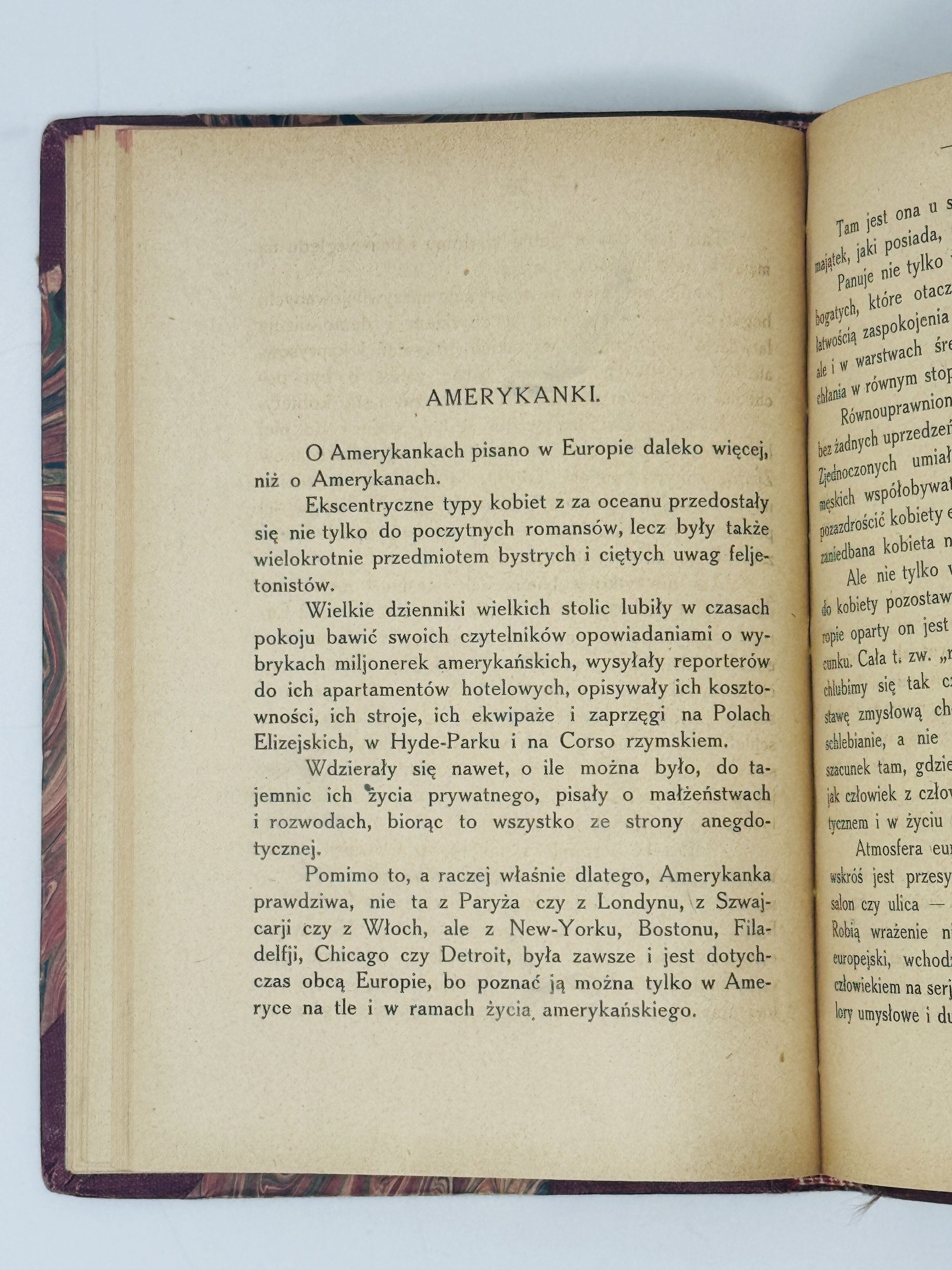
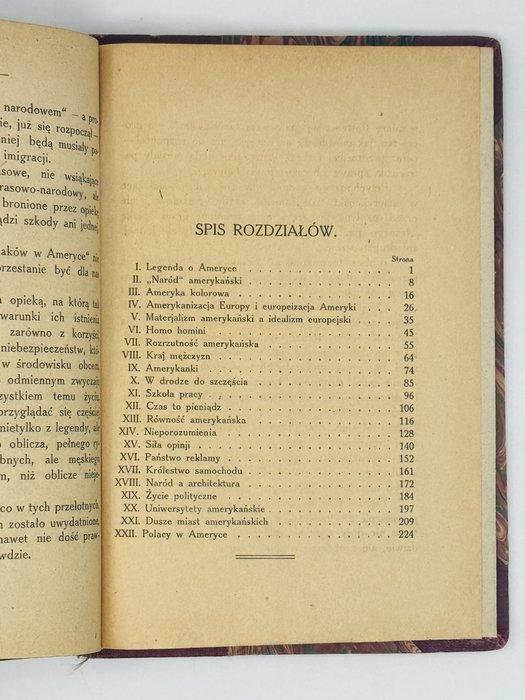
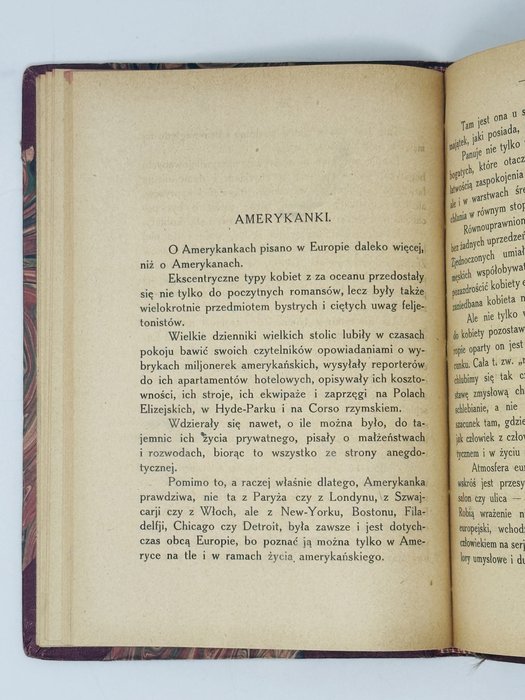
In this book Dębicki gives a critical overview of American society after his 1 year-long trip across the states. He dedicates a lot of space to the problems of the working class, school system, factories and automobile world. The separate chapters are dedicated to American Universities, cities and state of advertising industry. The separate chapter is dedicted to the problems of American women. One of the first chapters called ‘Colorful America’ is dedicated to Dębicki’s interacitons and thoughts on the existance of Native Americans, African Americans, Chinese and Japanese people in the country. Quotes from the chapter:
‘The long struggles of the white aliens against the rightful inheritors of this land… In the conscience of the white American who, as a citizen of the United States, considers himself the ruler of the entire territory, there is, perhaps subconsciously, a silent remorse for what happened to the [Native Americans]’.
‘The Negro in America is a being who, despite equal rights, is undoubtedly disadvantaged. The European who comes to America and comes into contact with these people at every step, starting with the porter and the street shoe shiner, has a special sympathy for them.’
‘The third race of color in America is the yellow. The American Chinese is, as everywhere, a quiet, peaceful worker who lives on a handful of rice and a piece of fish cooked all day, saving his earnings to one day return with them to his homeland. In this respect, he is similar to the Polish peasant.’
‘The [typical] The American dislikes the Japanese and fears them’.
However the longer chapter is dedicated to the lives of Poles in USA.
He gives the overview of the diaspora, separating them in two groups: recent newcomers, with whom author associates himself (many were forced to immigrate for political reasons), and the second and third generations of Poles, typically represented by farmers in the Southern States. A quote about that group from the text:
‘The secretary of the Polish Consulate in New York, Mr. Leon Orłowski, who was delegated to Texas in the spring of 1920 to investigate the issue of "Polish cotton" grown on local farms by Polish planters, told me that during his travels he met families who had been settled in Texas for several dozen years, but none of whose members spoke English.’
Proudly pan Dębicki boasts, that ‘Polish bells ring now in 517 American churches’. He went to Galveston, TX to visit the oldest Polish church in the country, also to Philadelphia, Baltimore, Pittsburg, Detroit, Milwaukee, Buffalo and Brooklyn to meet the diaspora. The immigrants have sent from USA to Poland over 300 million dollars in the years 1918-1920, according to the author. Describing different Polish societies across the country, Dębicki makes plan for after Polish national independence is regained, how these organizations could be used in helping persuading people to returm to Poland.