
#PF58
Ca. 1930s
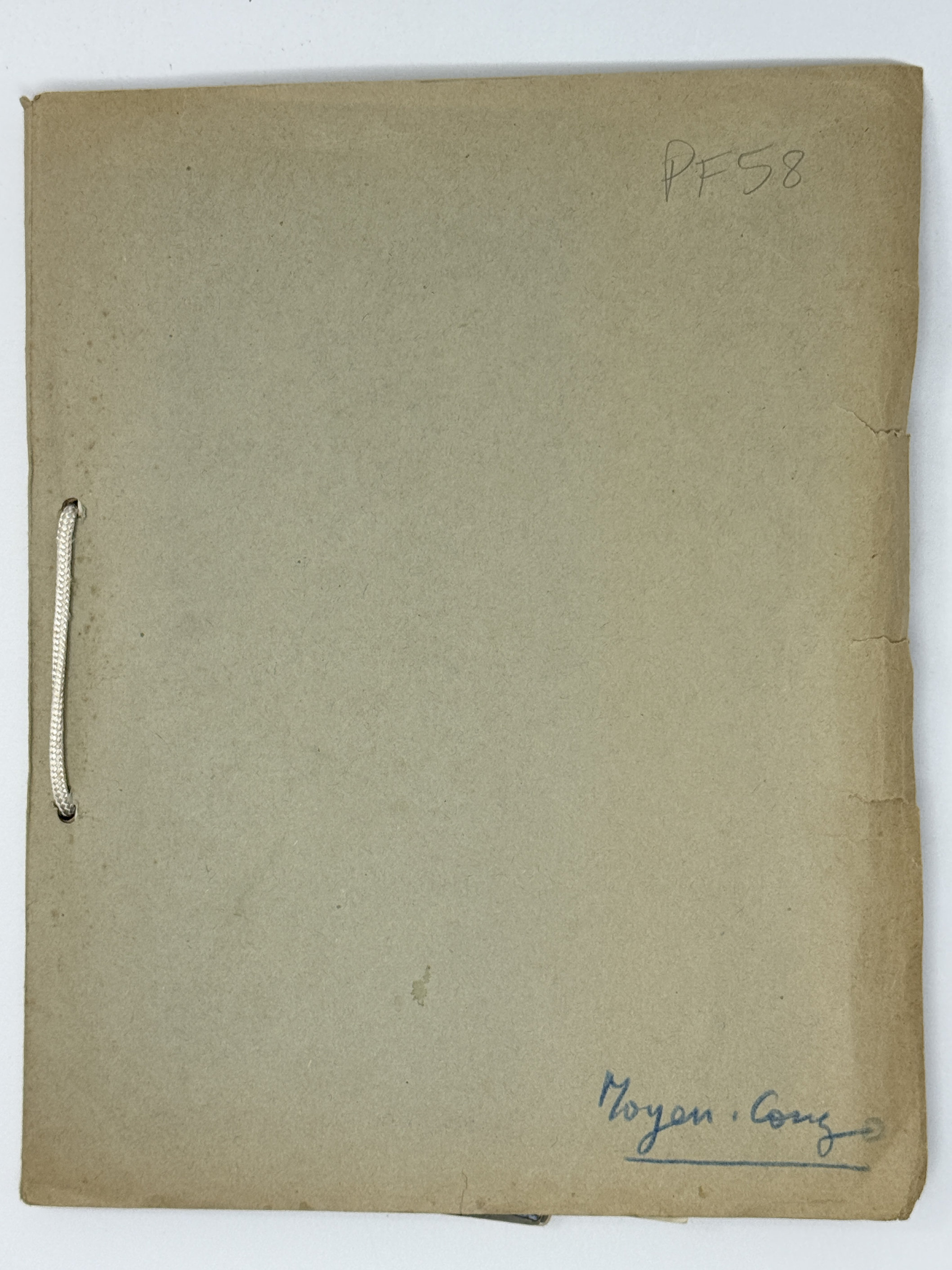
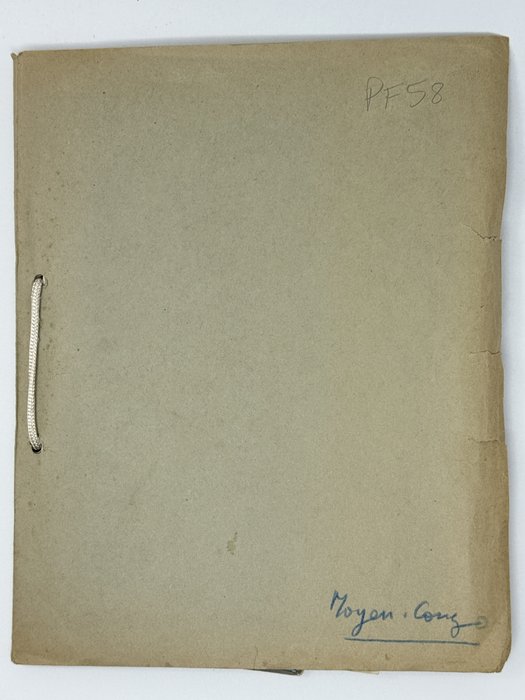
Folio album (ca. 29x23 cm or 11 ¼ x 9 in). With 48 original mounted and loosely inserted gelatin silver photos, including two large images ca. 18x24 cm (7 x 9 ¼ in) and ca. 13x26 cm (5 x 10 ¼ in); the rest of the photos are from ca. 12,5x18 cm (5x7 in) to ca. 6x9 cm (2 ¼ x 3 ½ in). Three images are printed as real photo postcards. Most images with detailed pen and/or pencil (black or blue) captions in French on verso or additional ink captions on the mounts. At least three images are dated June or December 1932 on verso. Two photos with ink stamps “Afrique Équatoriale Francais, Agence Économique…” on verso. Period album with blue paper covers, blue pencil title “Moyen Congo” in the right lower corner. Covers with minor creases and tears on extremities, one large photo slightly heightened in white, but overall a very good collection of strong interesting photos.
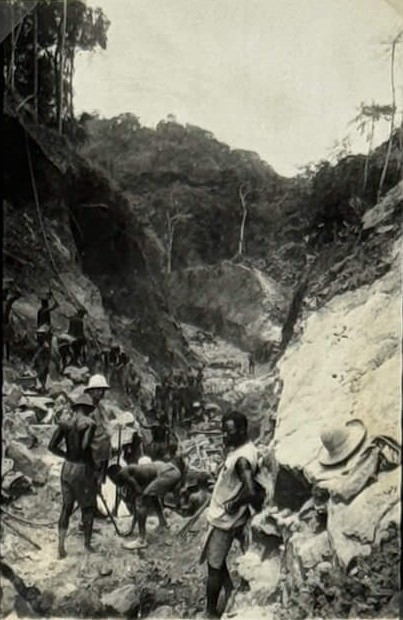
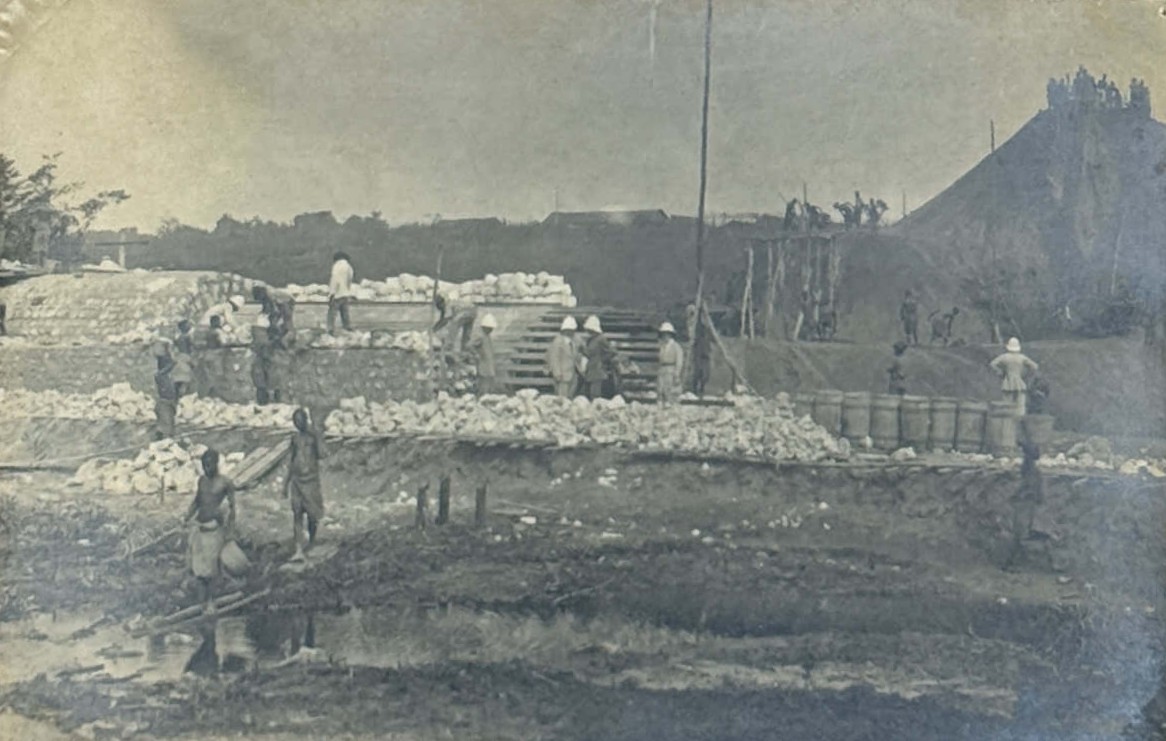
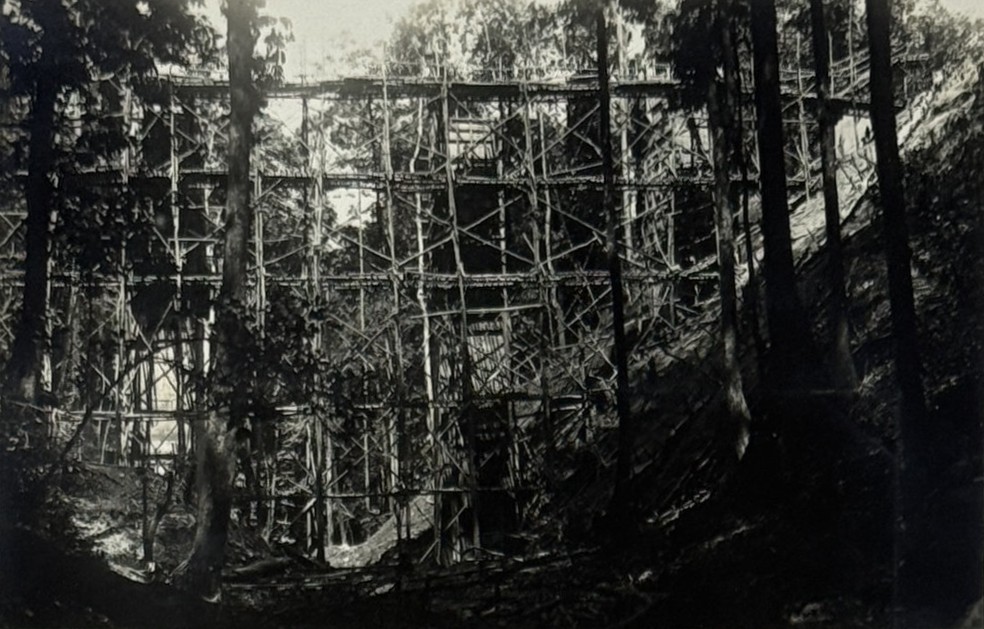
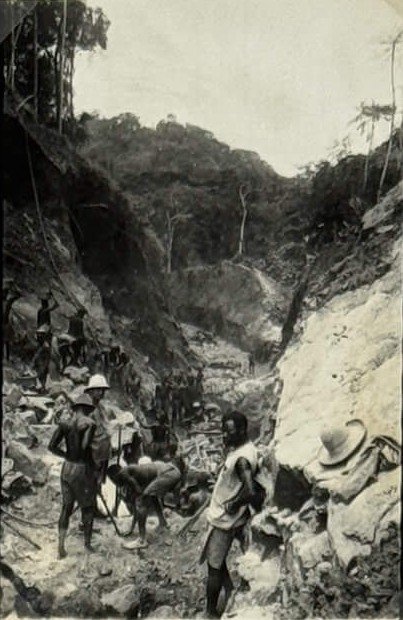
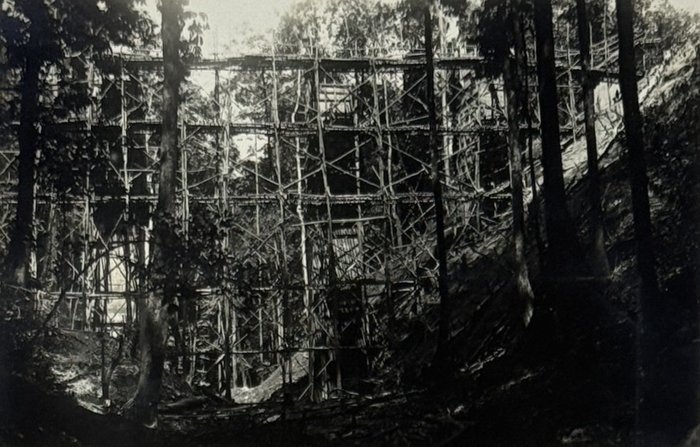
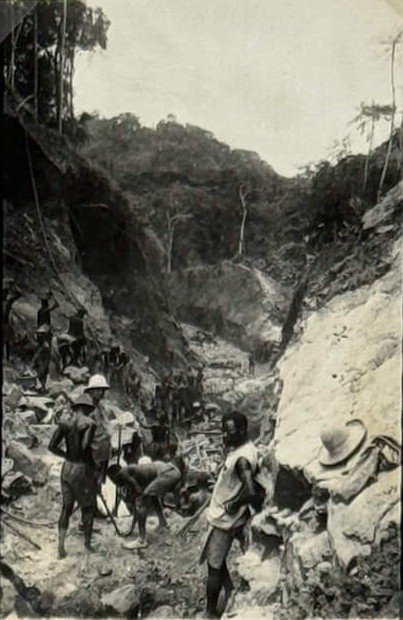
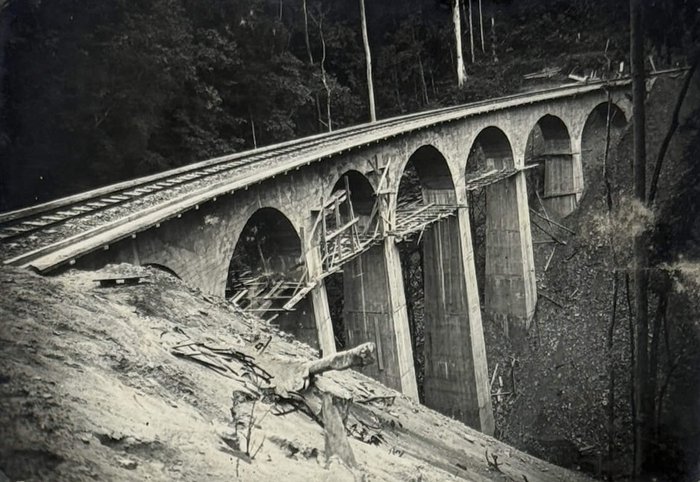
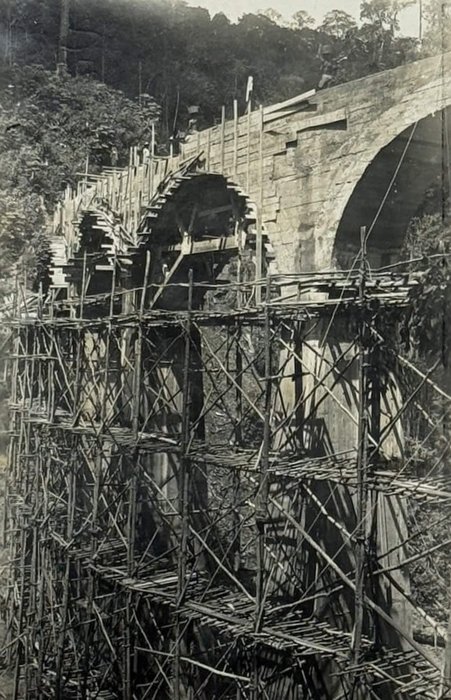
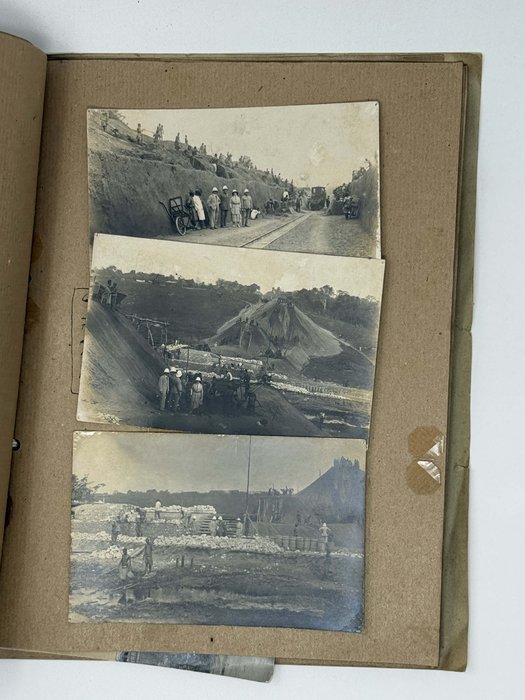
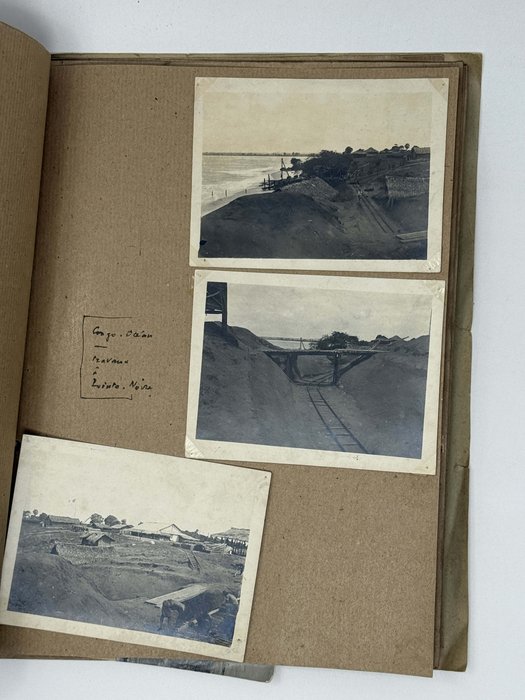
Historically significant collection of 48 original gelatin silver photos, documenting the construction of the first line of the Congo-Ocean Railway in French Congo (Republic of the Congo or Congo-Brazzaville) in the early 1930s. Built between 1921 and 1934, the railway, 318 miles (520 km) long, connected Brazzaville, the colony’s largest settlement on the upper Congo River, to Pointe-Noire, on the Atlantic coast, where an ocean port was planned to be built. The construction, based on forced labour, resulted in a massive loss of life of African workers due to harsh work conditions (10-hour shifts, six days a week), industrial accidents, malnutrition and diseases including malaria. The estimated number of total deaths is believed to be over 20,000 people. The area with the heaviest death toll was the Mayombe/Mayumbe Hills east of Pointe-Noire (the hills stretched from 60 to 170 km of the railway line starting from the Atlantic terminus). Heavily forested and traversed by numerous rivers and deep ravines, the Mayombe demanded the construction of “hundreds of small bridges, massive viaducts and a 1,700-meter-long tunnel under Mount Bemba, the longest in Equatorial Africa” (Daughton, J.P. “The Land of the Mayombe doesn’t Want Us:” The Brutality and Folly of the Construction of the Congo-Ocean Railroad; see more).
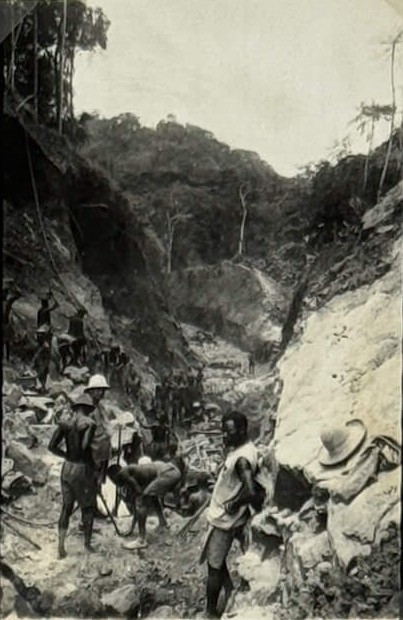
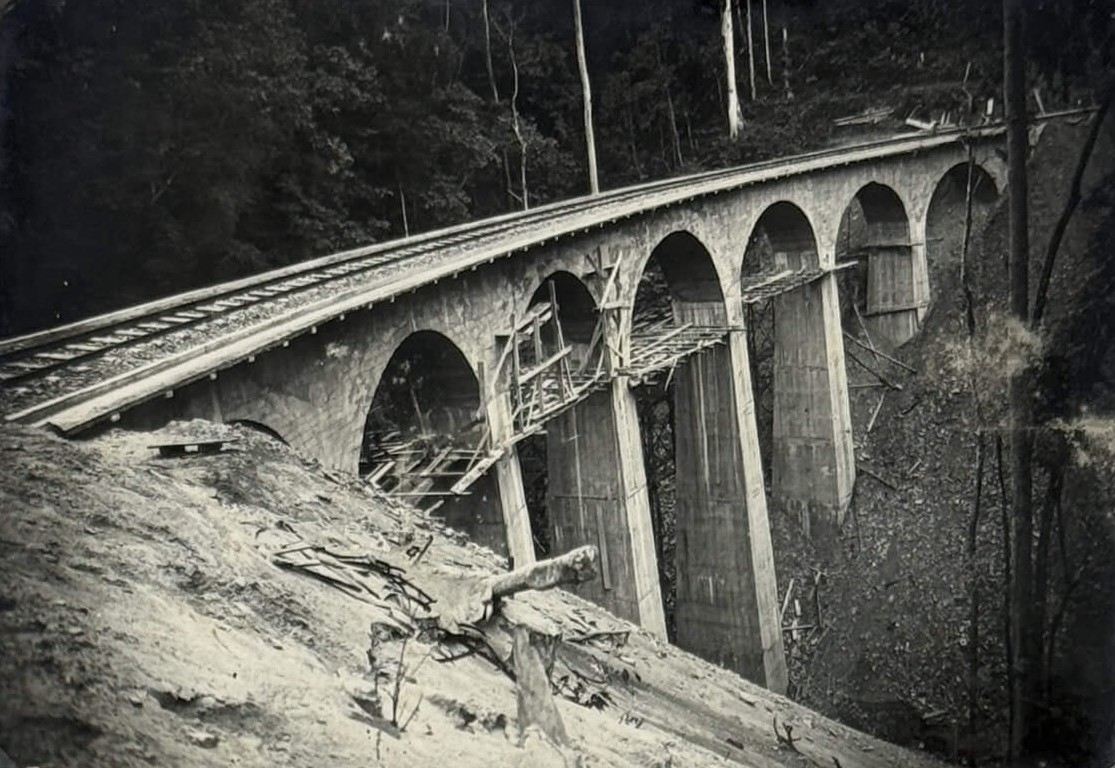
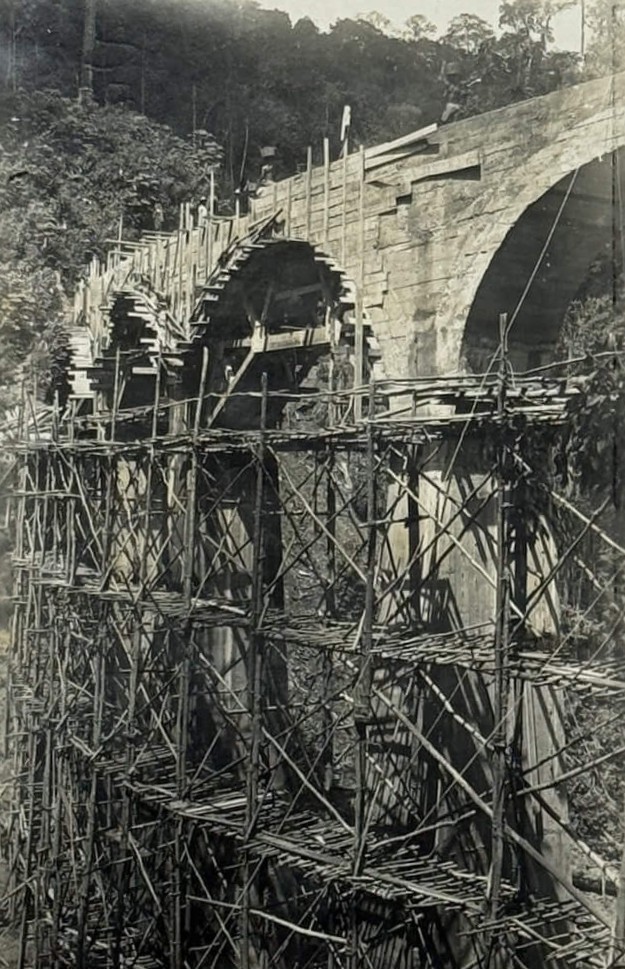
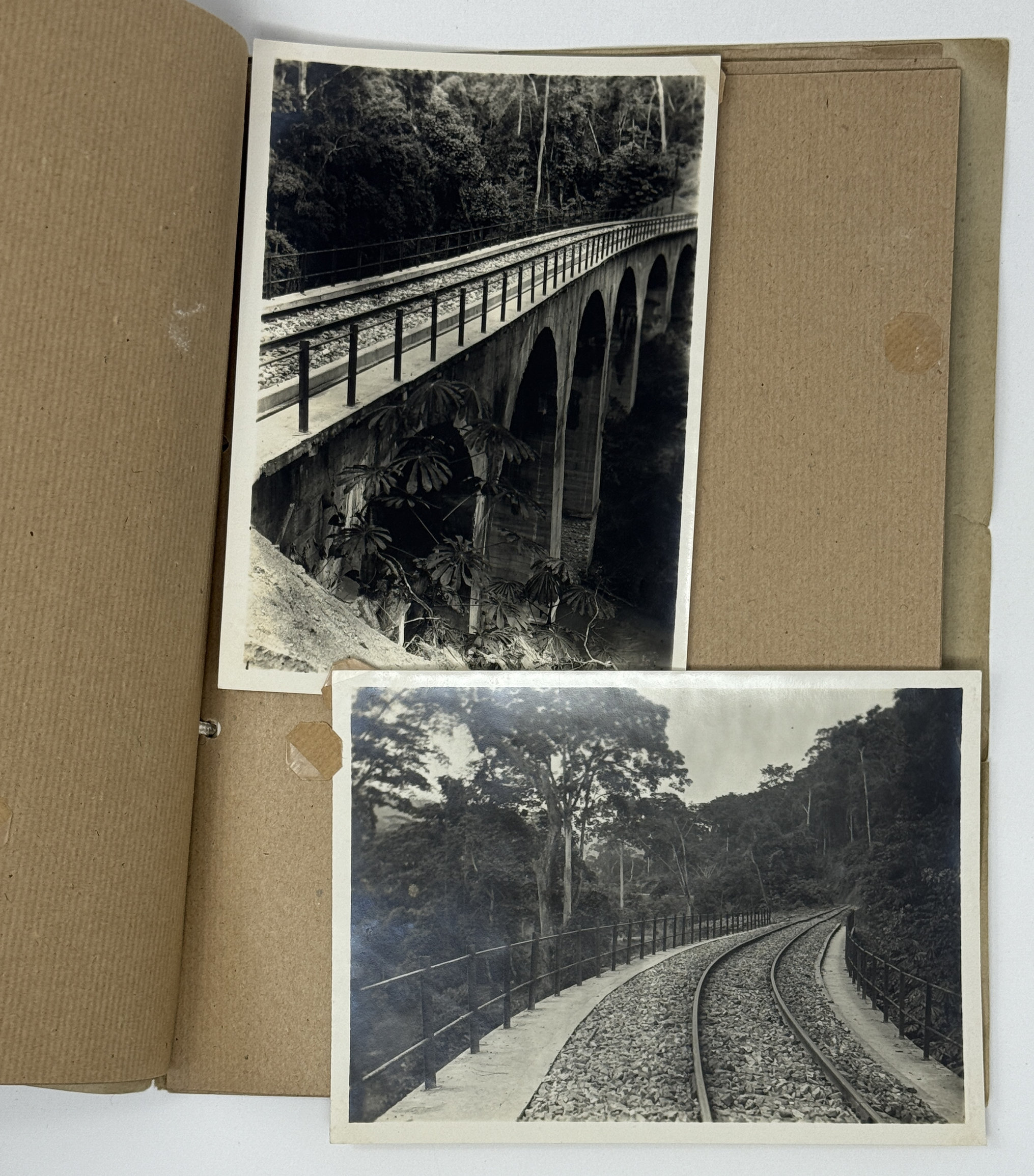
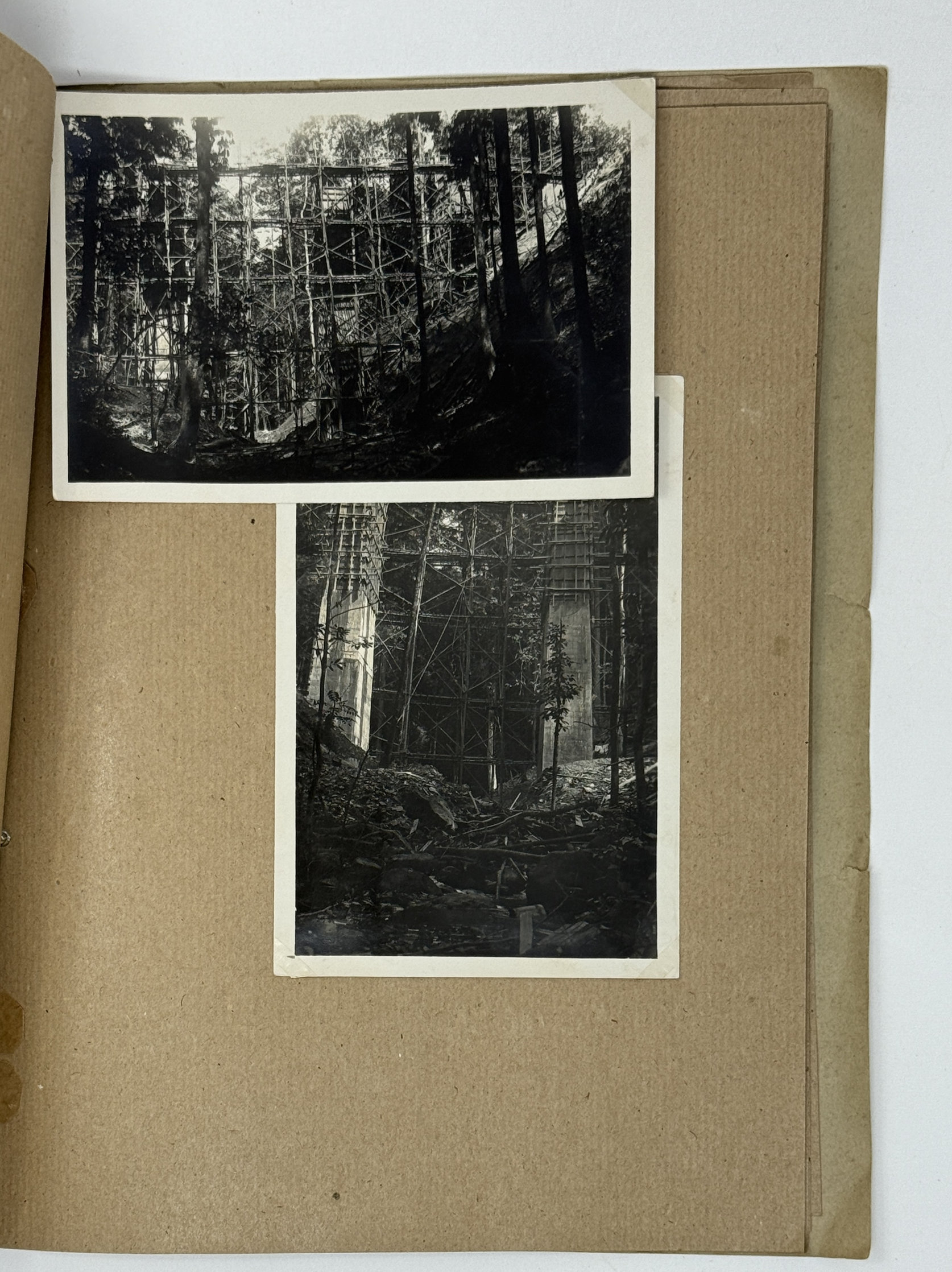
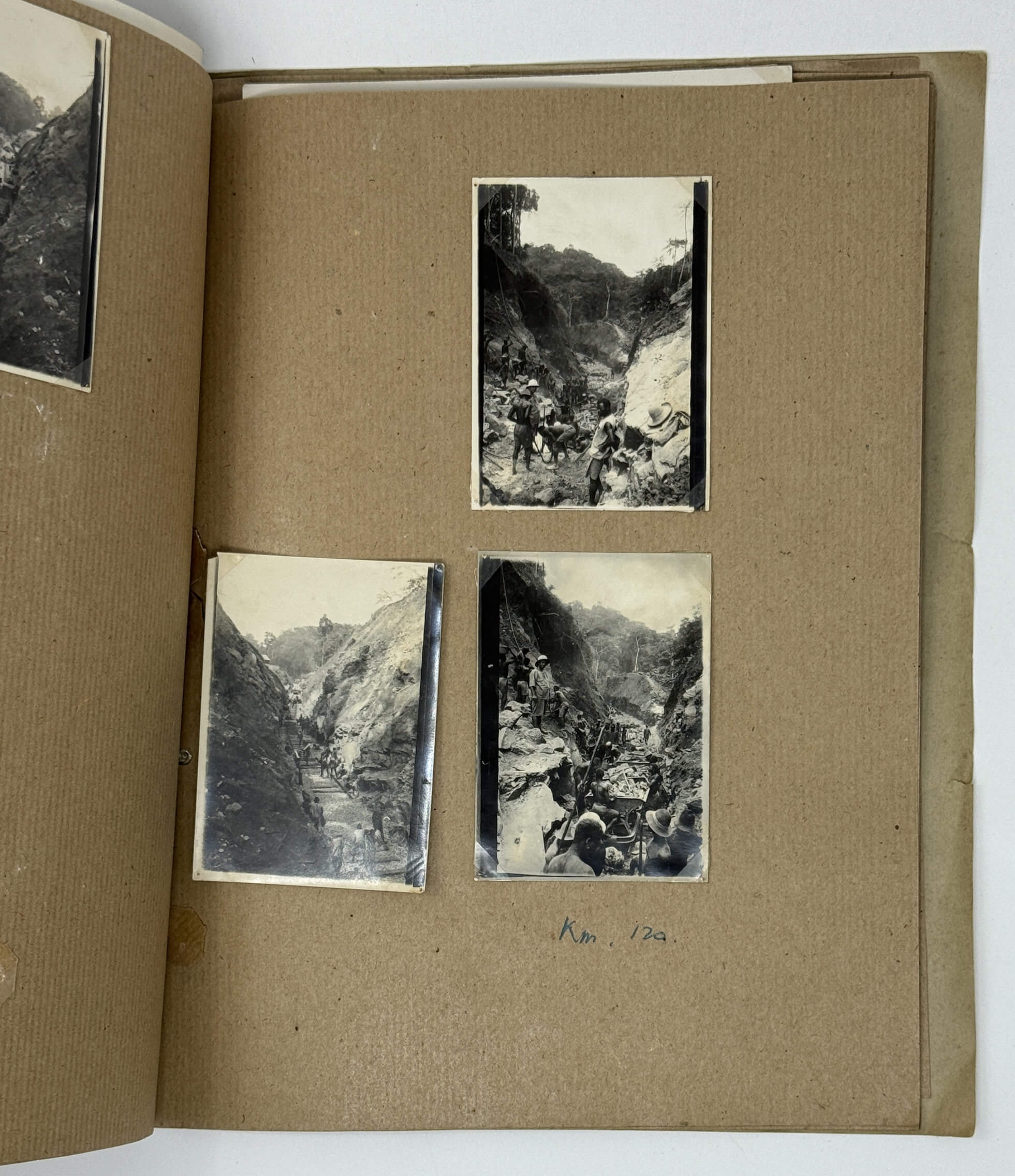
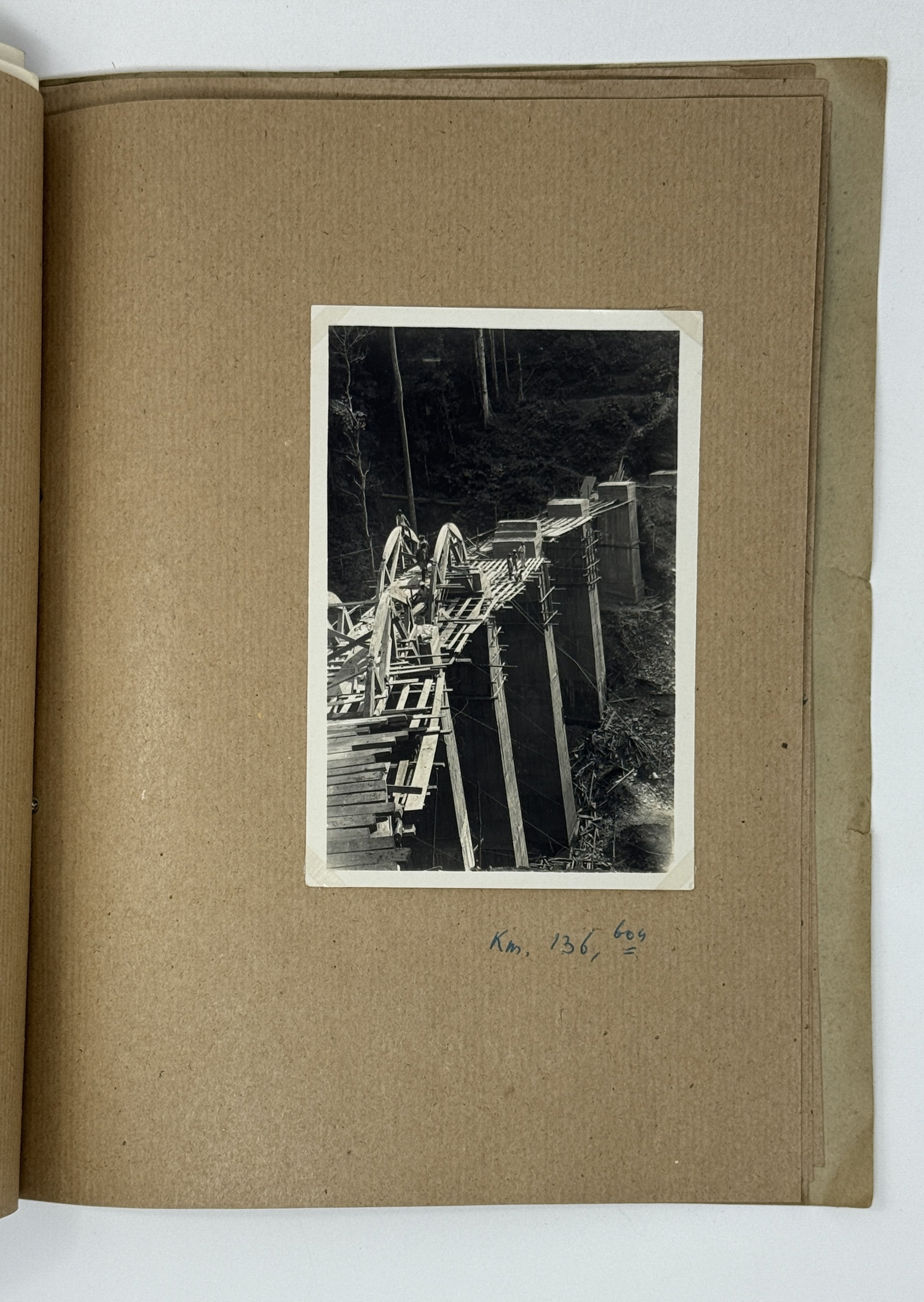
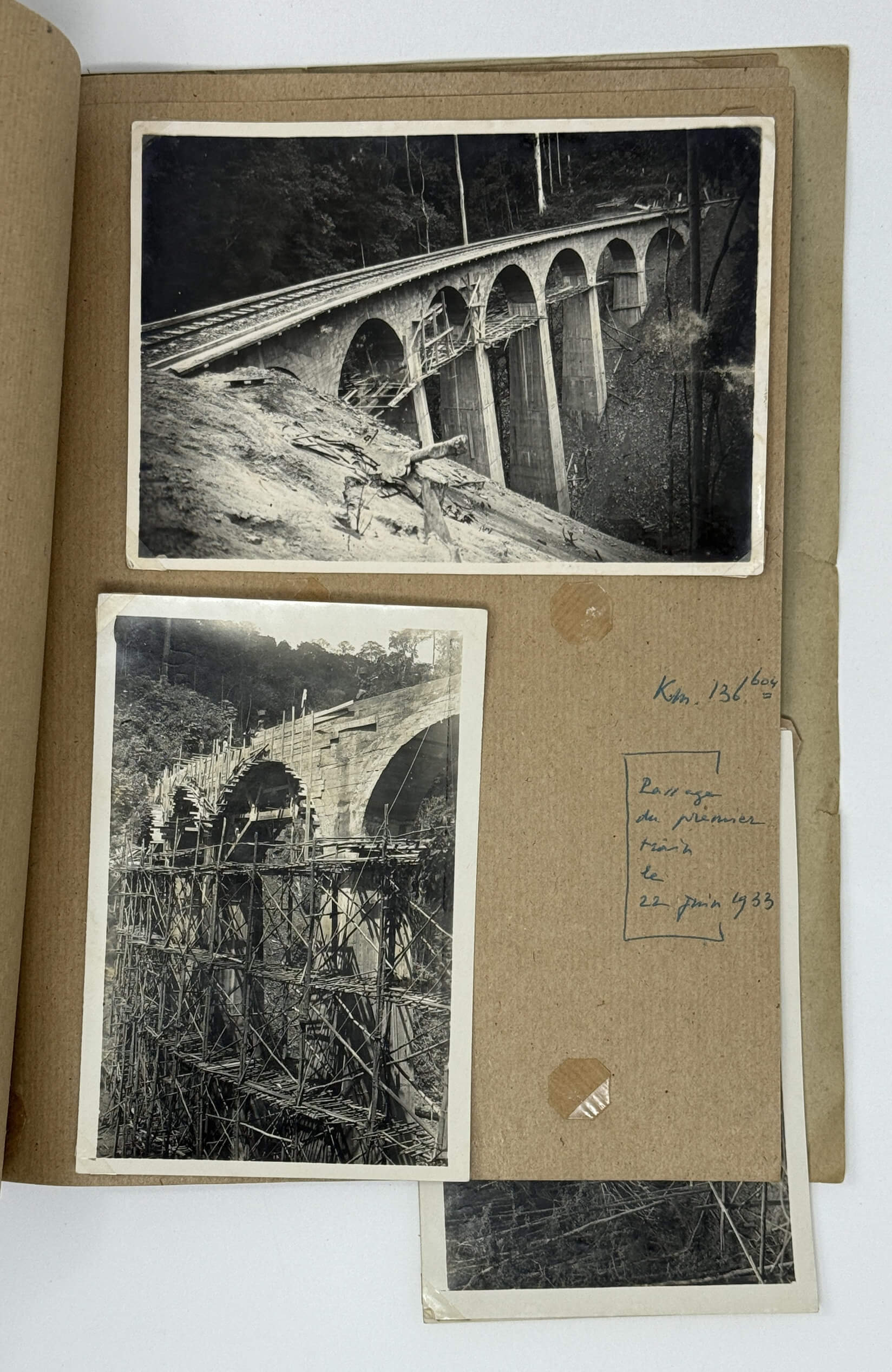
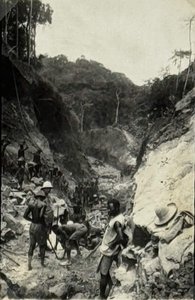
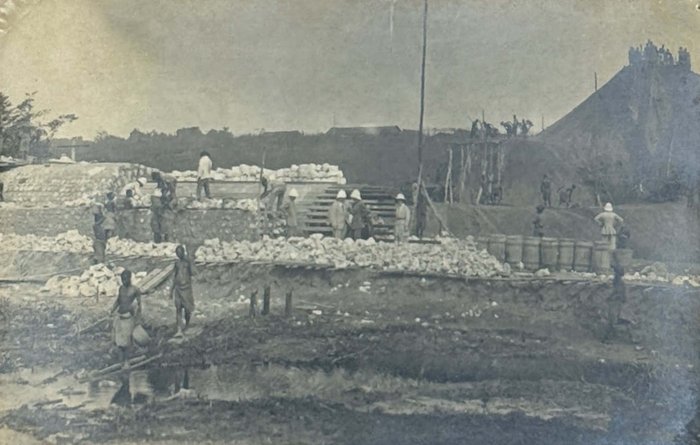
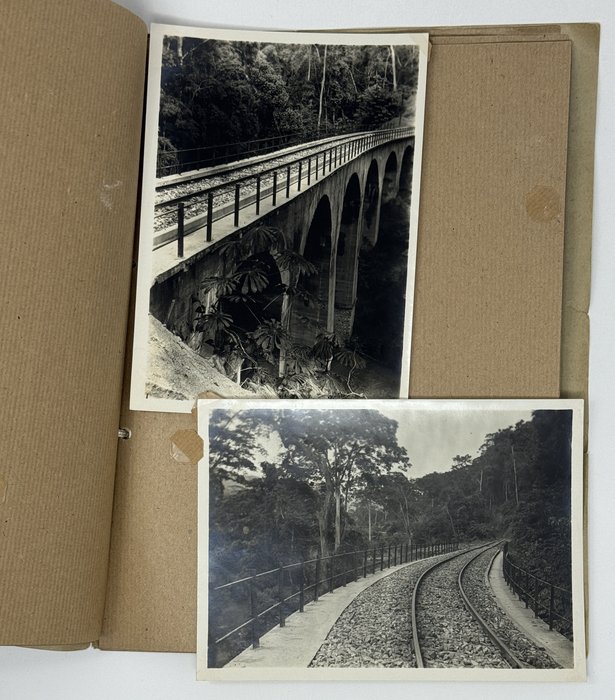
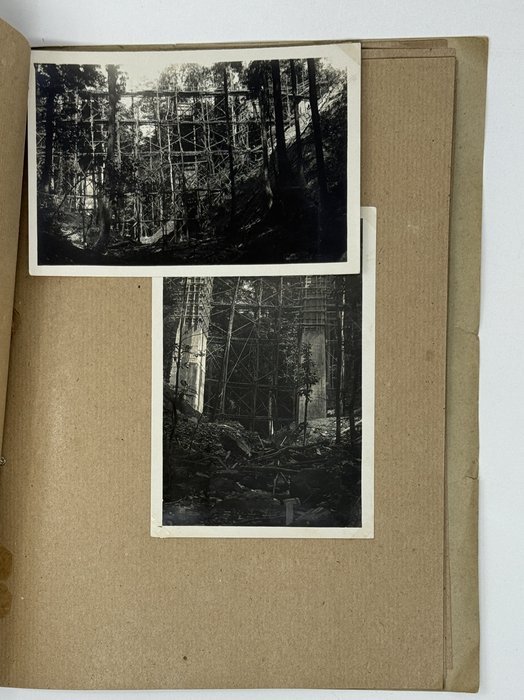
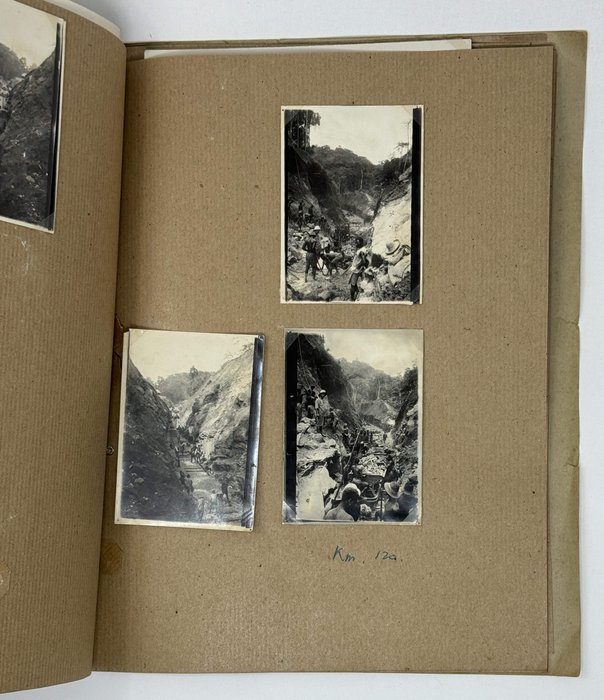
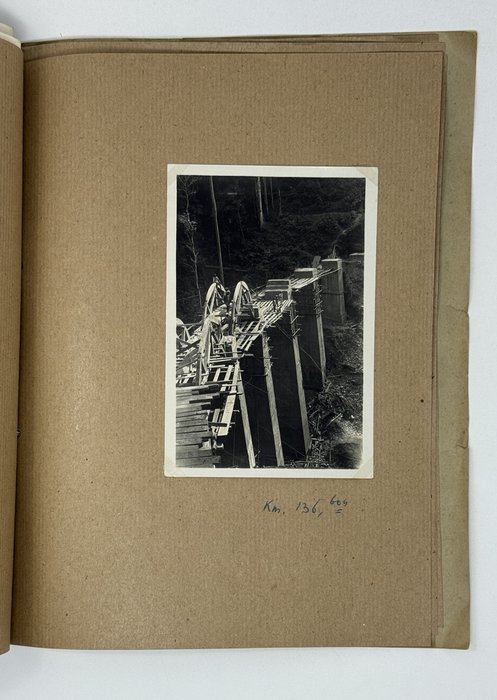
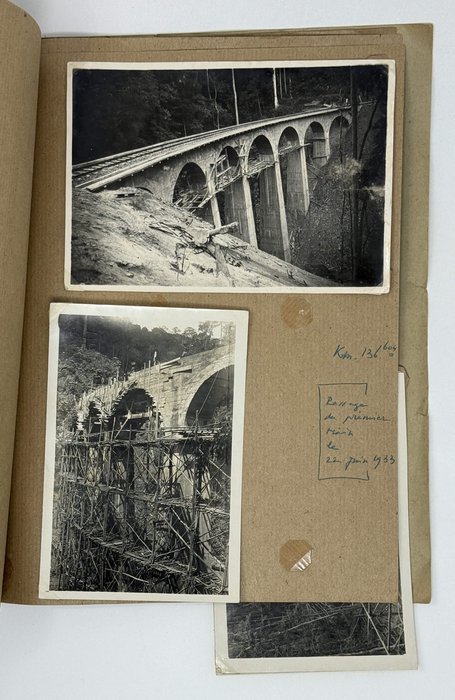
More than half of the photos in this collection show the railway construction in the Mayombe Hills: various stages of viaduct construction on the 106th, 117th, 136th and 137th km (earthworks, erection of girders and scaffolds, construction of the road surface) and digging through the hills for the railway line on the 119th and 120th km. The photos feature native workers and French supervisors, possibly including the compiler of the collection. A manuscript caption to the picture of a viaduct on km 136 adds that the first train passed there on June 22, 1933.
A series of five images (three are dated June or December 1932 on verso), apparently taken for the French colonial administration (two photos have ink stamps “Afrique Équatoriale Francais, Agence Économique…”), shows three objects in the Mayombe Hills: a completed viaduct on the 108th km, a finished platform at the entrance to M’Vouti station on the 127th km (Kouilou Region of the southern Republic of Congo) and a “tranchée” with a partly-laid railway track at the 131st km. Other photos from this group depict a viaduct in the Goma Tsé-Tsé district and a railway station in Goma-Bielo (additional caption reads “Exploitation du C.O.;” the same photo was found in the collections of the French Archives nationales d’outre-mer; see more).
Other photos of the Congo-Ocean railway include three views of the railway track under construction in Pointe-Noire (the ocean is visible in two of the photos) and three real photo postcards showing earthworks and a part of the completed line near Brazzaville.
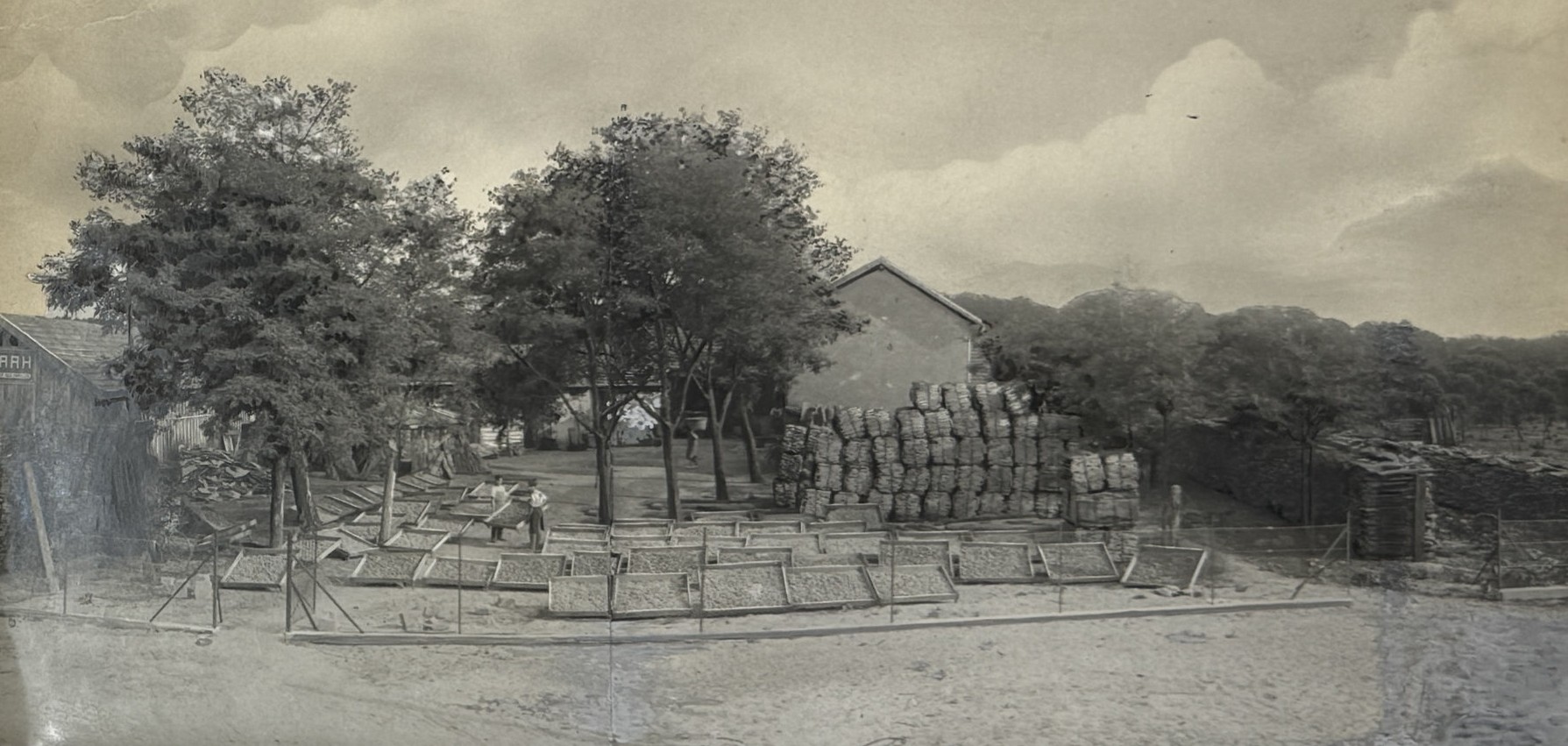
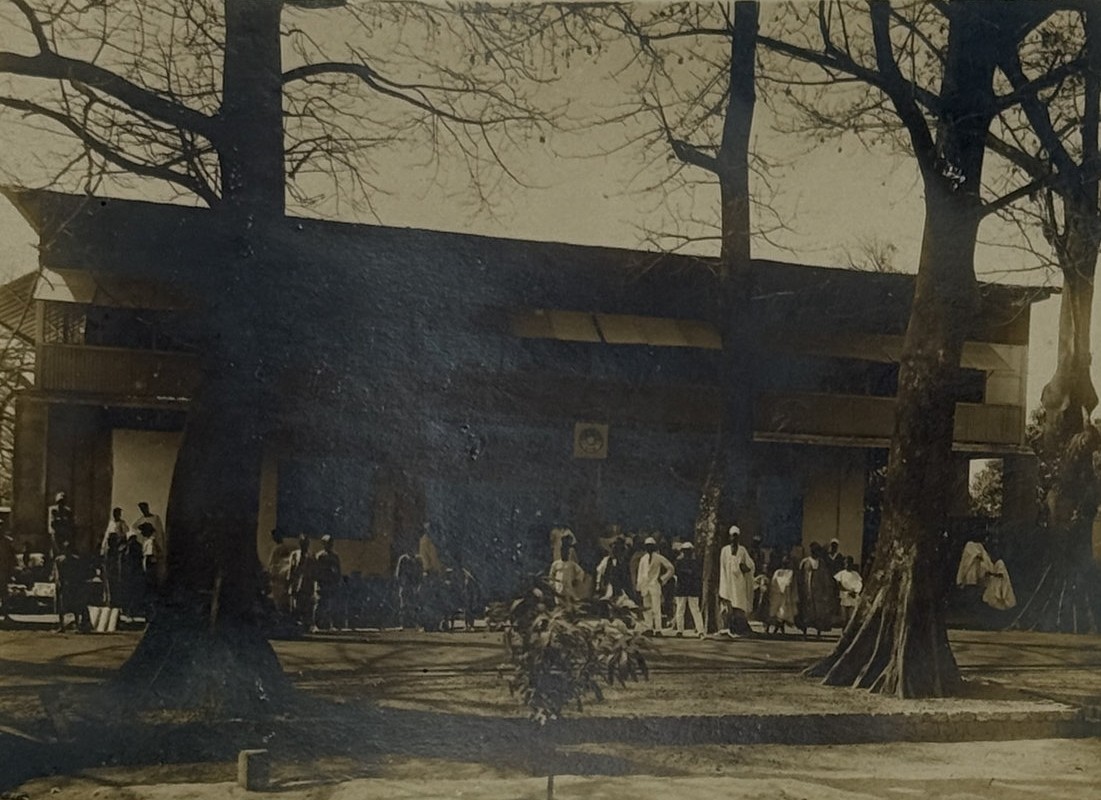
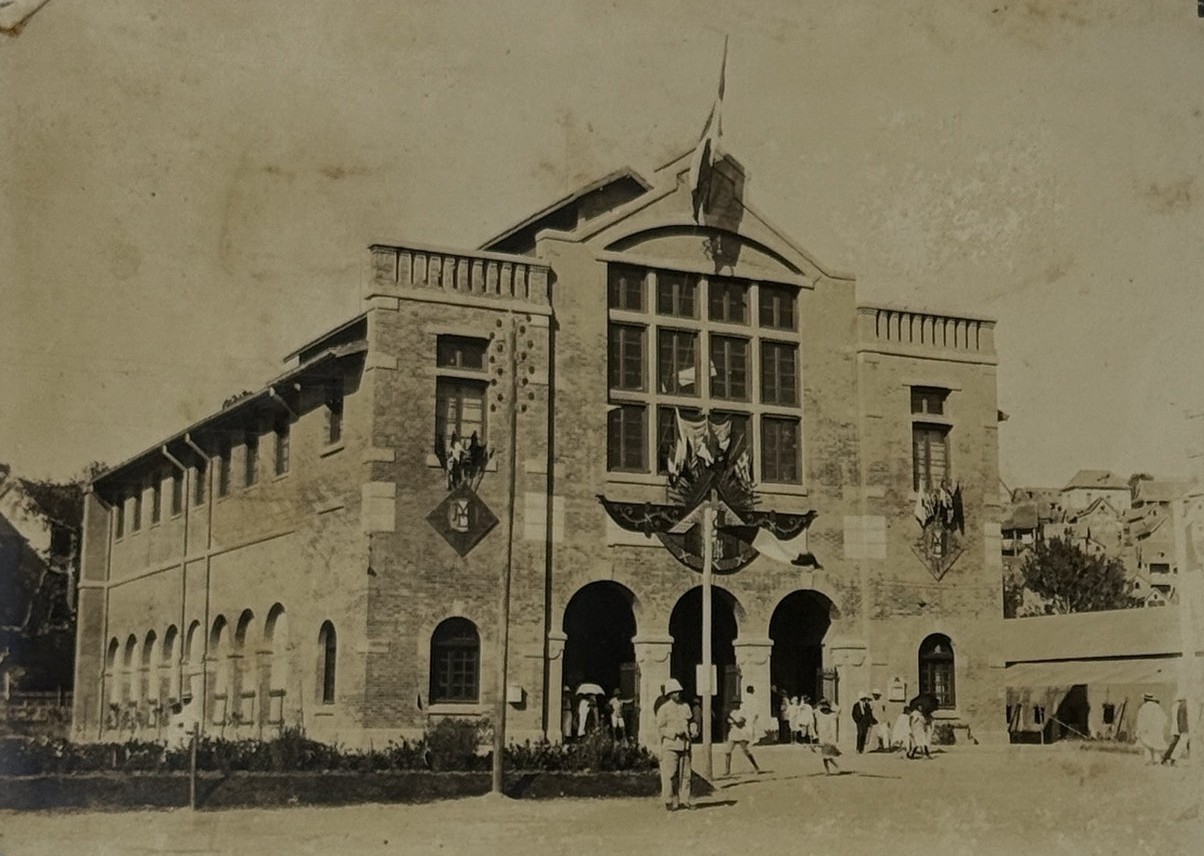
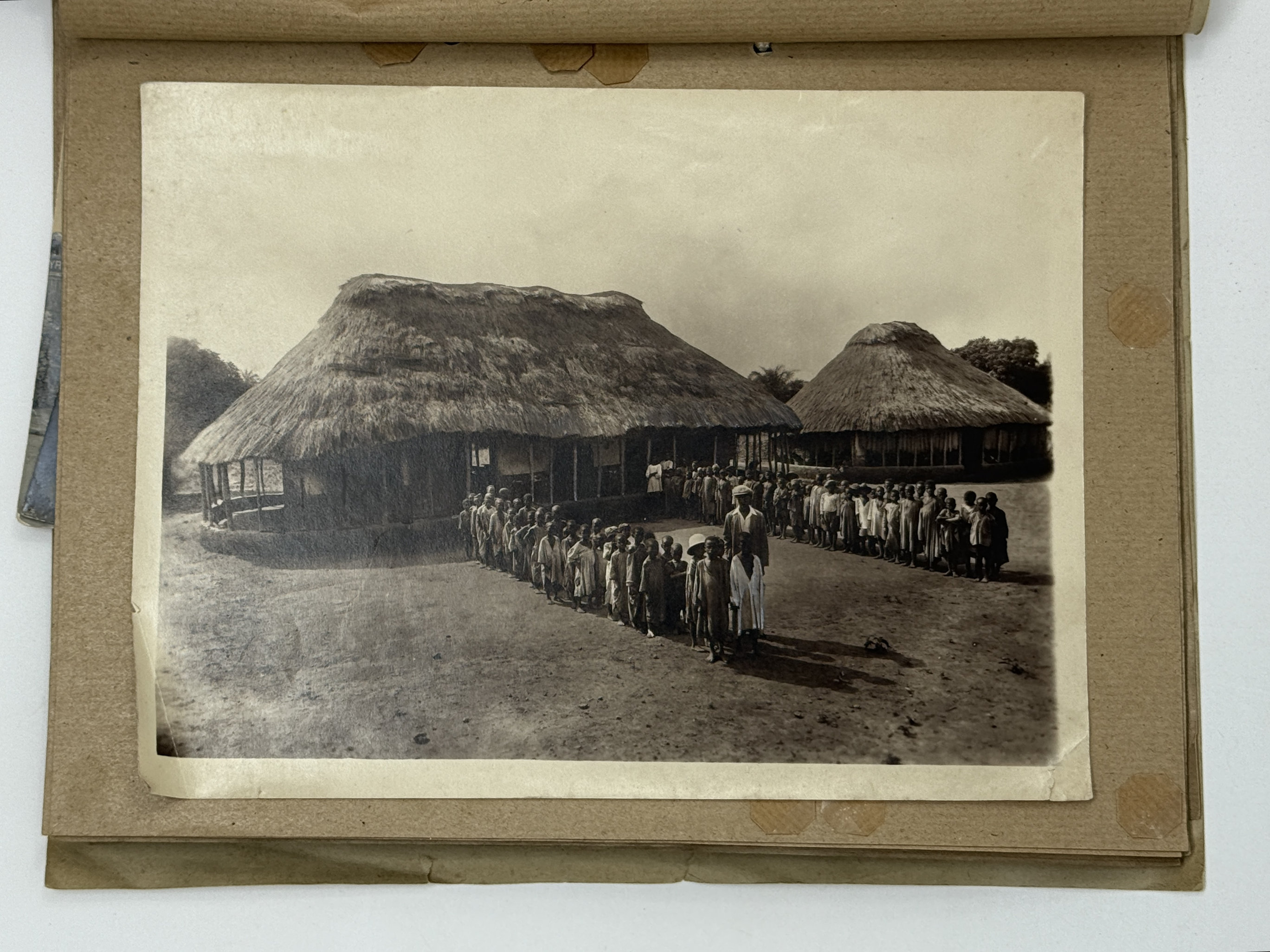
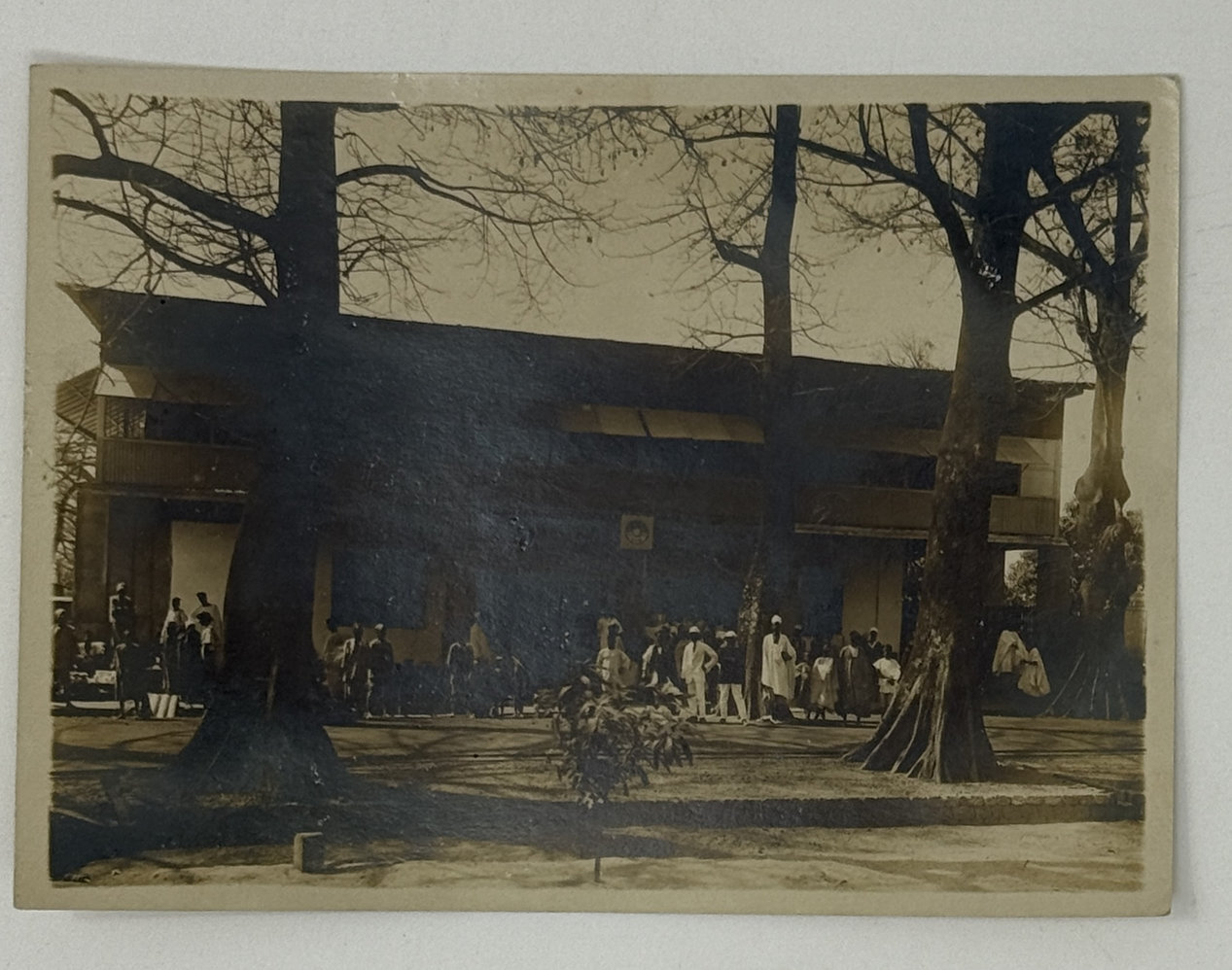
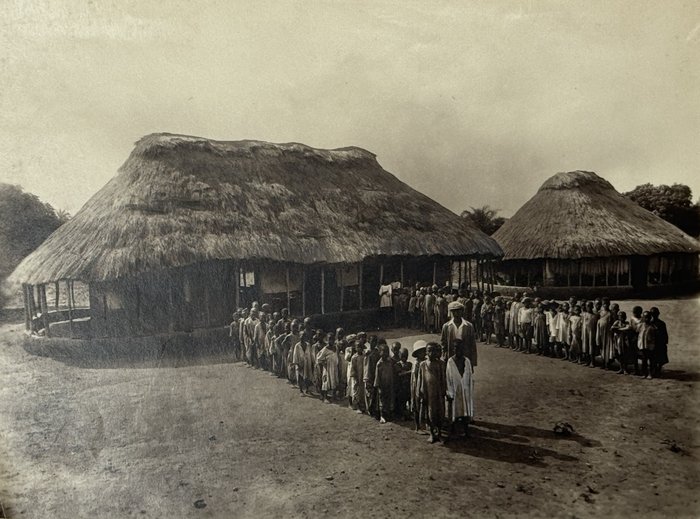
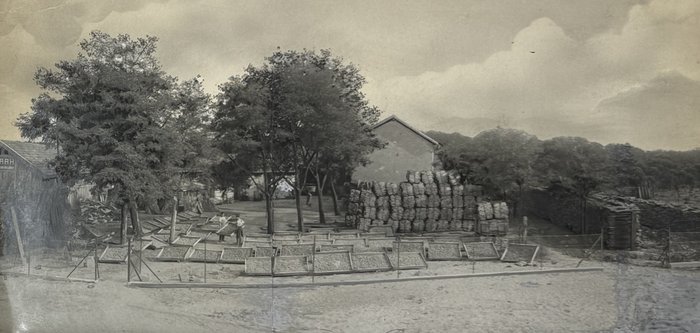
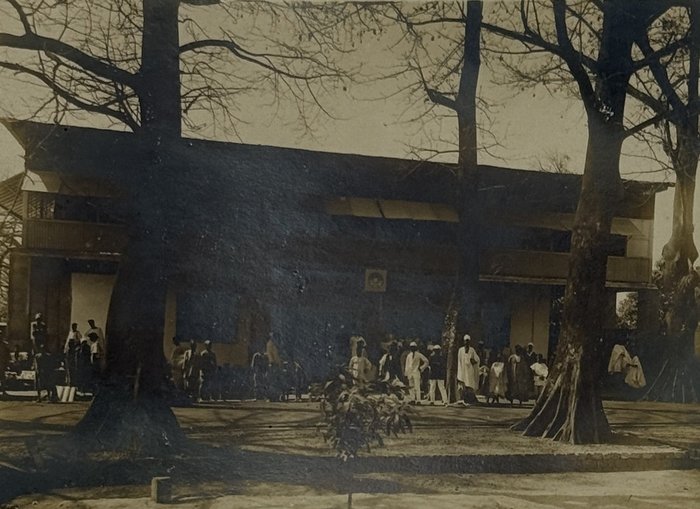
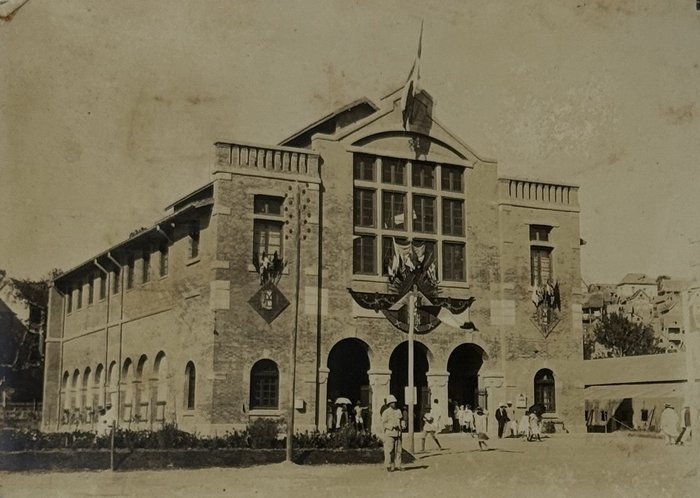
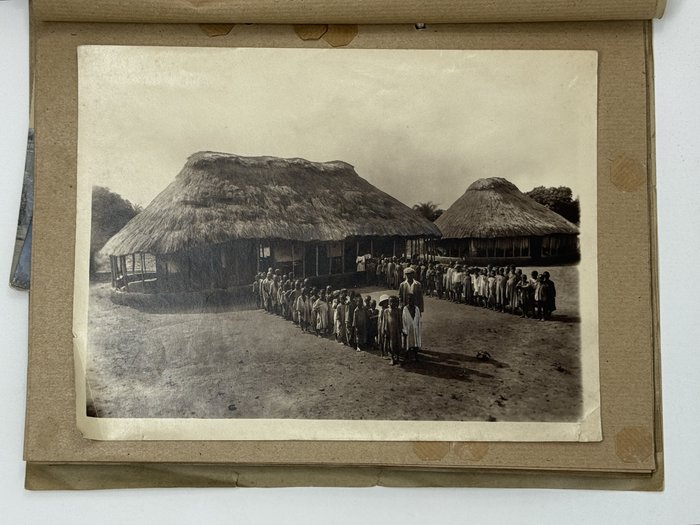
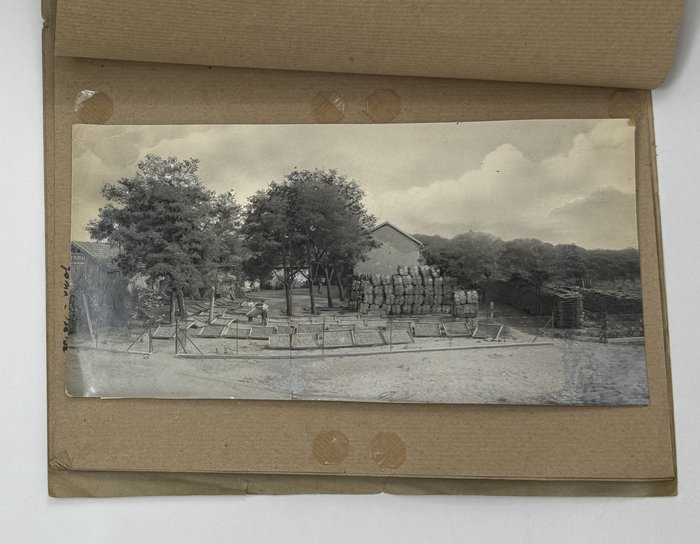
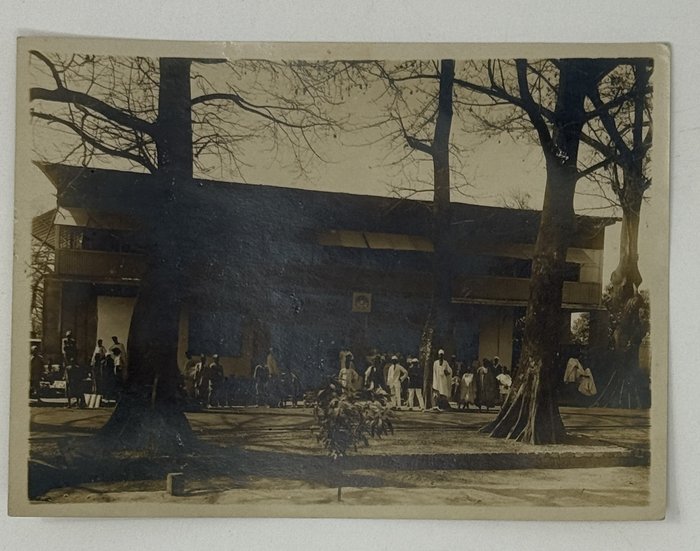
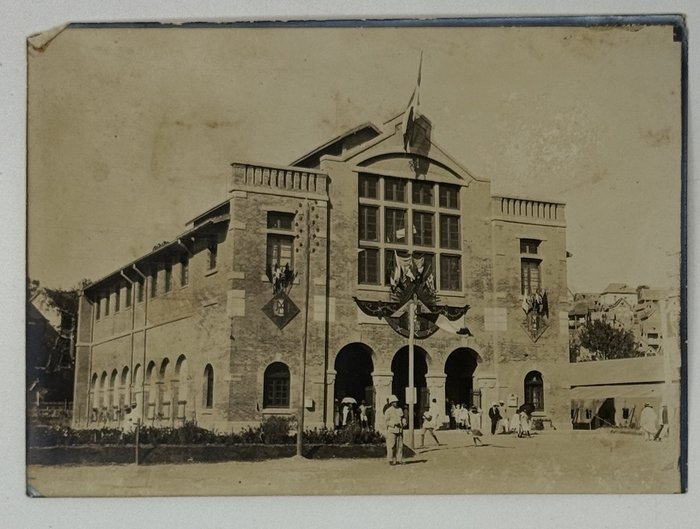
Three images apparently taken on the way to the railway construction areas show the Foulakary River, Bouenza River waterfalls and a small steamer (visible sign “Courbet”) on the Alima River (one of Congo’s tributaries). The large photos depict a village school and children, as well as a farm warehouse with drying produce. The collection also includes five views and scenes taken in French West Africa (French administrative building decorated with flags, locals at a building with the sign “F.A.O.,” a public fest, workers at a farm field – one image with ink stamps “Photo L. Méteyer, Grand-Bassam, Cote d’Ivoire” on recto and verso, one photo with a blind stamp “Photo Ouest-Africain A. James, Conakry, Guinée Francais” on recto).
Overall an important original visual source on the history of the construction of the Congo-Ocean Railway, in particular in the region of the Mayombe Hills.