
#P9
Ca. 1857-1859
Twenty-five original albumen photos all ca. 16x22,5 cm (6 ¼ x 8 ¾ in) or slightly smaller. All photos mounted on original Folio card leaves ca. 32,5x44 cm (13 x 17 ¼ in); all with printed captions on the mounts. All photos are signed (sometimes also dated) in negative; eight images with additional printed credits “Frith Photo” on the mounts. Mounts with occasional foxing, one photo with a minor scratch on the image, a few photos mildly faded, but overall a very good collection of strong intereing photos.
Historically significant collection of twenty-five early, well-preserved original albumen photos of Egypt, taken in the late 1850s by the famous British photographer Francis Frith.
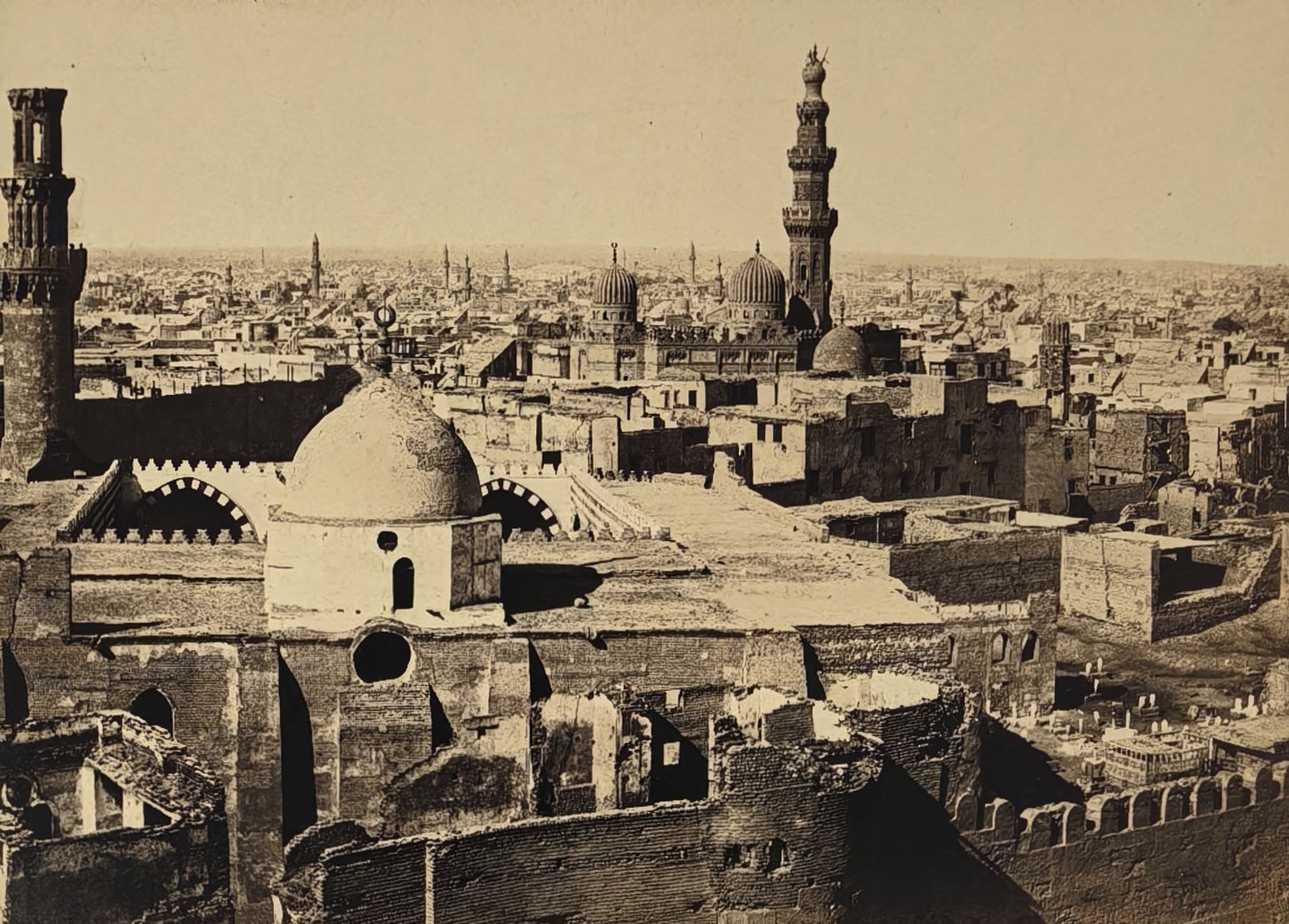
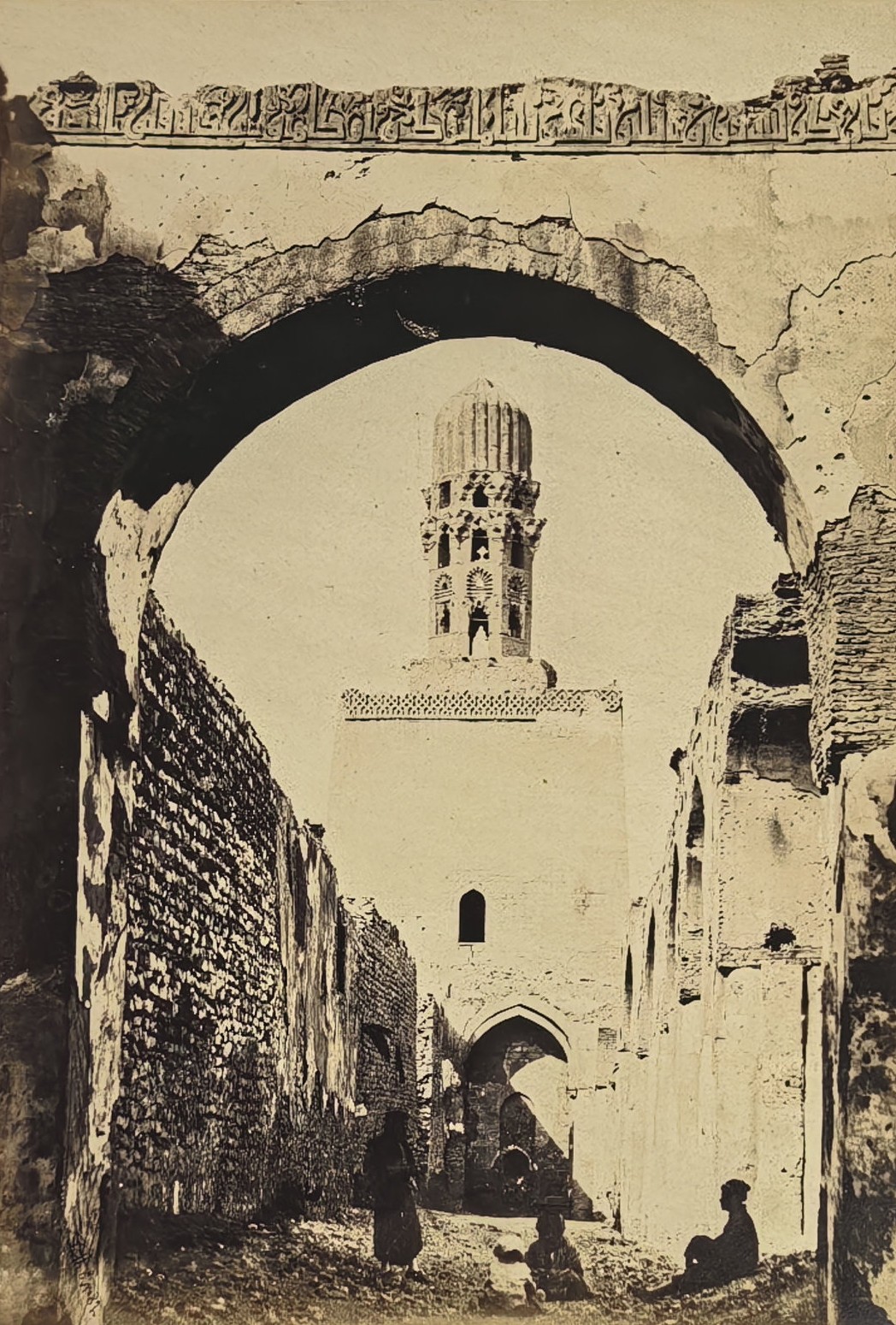
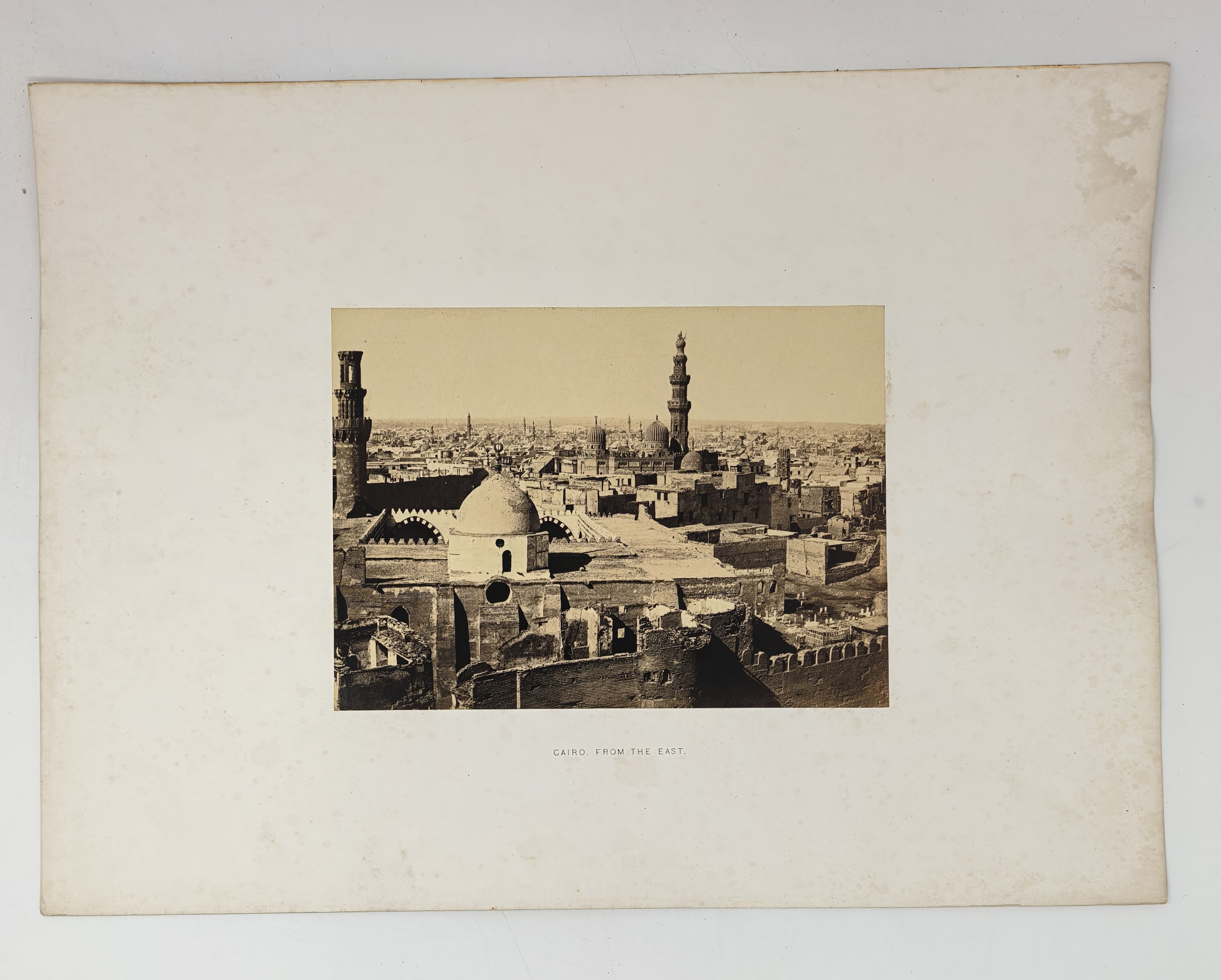
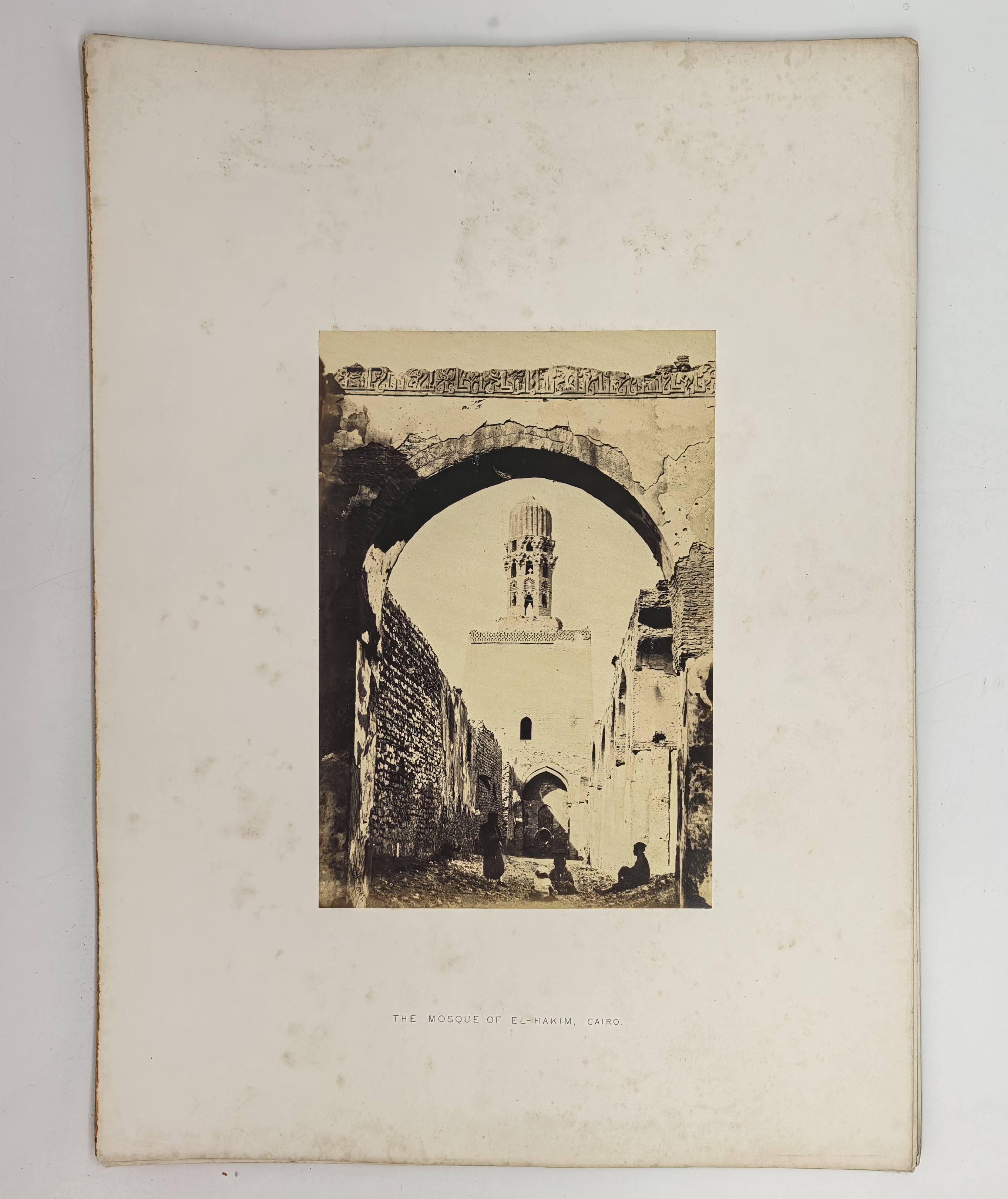
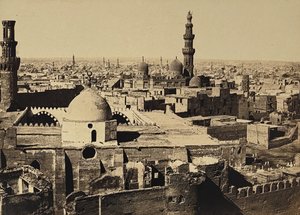
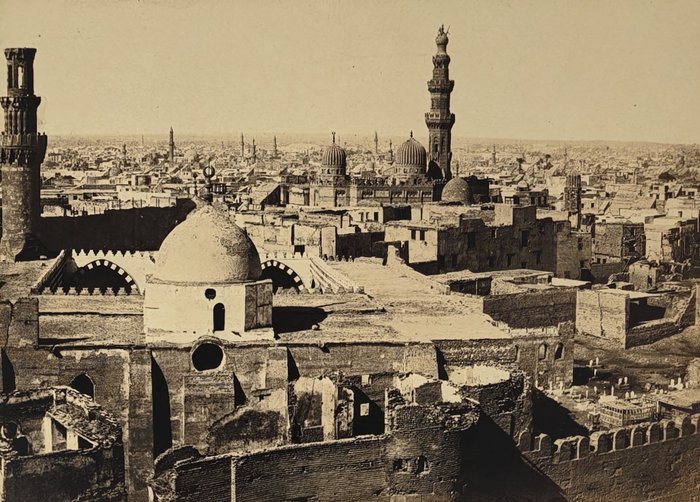
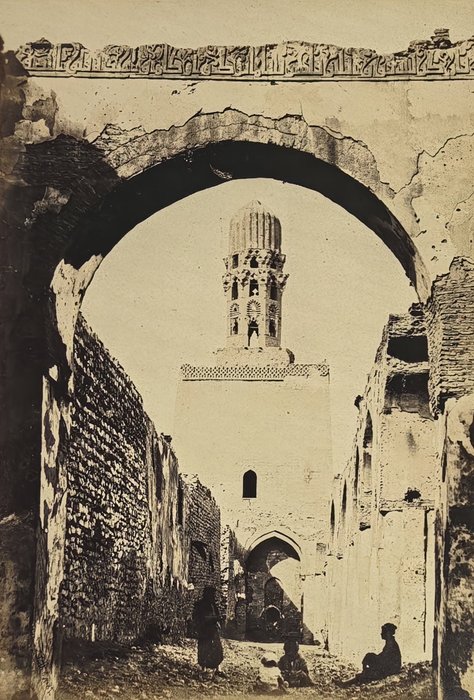
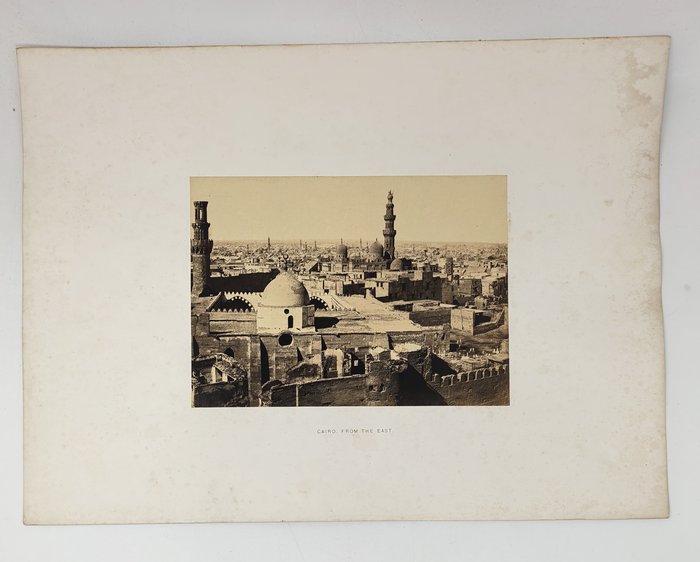
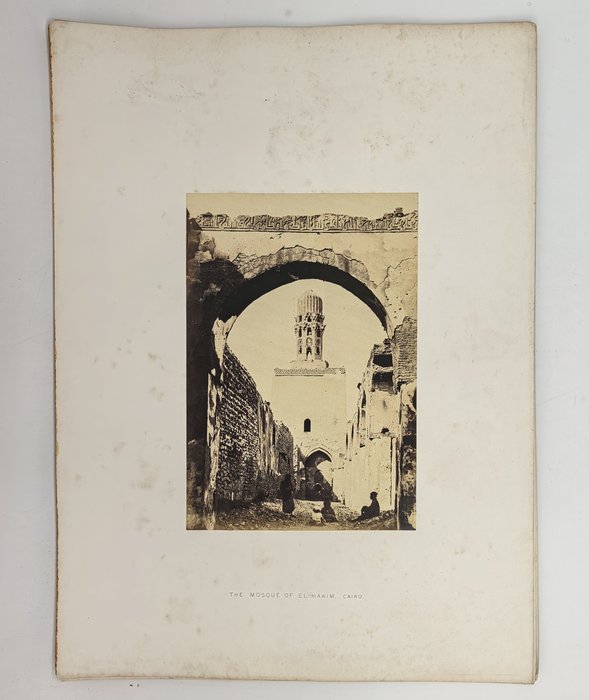
All signed by the photographer in negative, the photographs include six views of Cairo, titled: “Cairo from the East” (Darb al-Ahmar district with Aqsunqur Mosque, Madrasa of Umm al-Sultan Sha’ban, a part of the city wall, and a small enclosed graveyard); “The Mosque of Emeer Akhor” (funerary mosque of Quani-Bay/Mamluk Amir Akhur); “Tombs in the Southern Cemetery” (older part of Cairo Necropolis, with the Citadel and Muhammad Ali Mosque in the background); “The Ezbekeeyeh, Cairo” (Azbakeya district in western Cairo, with the houses of the neighbouring Coptic quarter); “The Mosque of El-Hakim, Cairo” (minaret and entrance gate to the Al-Hakim Mosque in Cairo’s historic quarter, shown before its wide-scale restoration in 1980); and “The Bab el-Azab Citadel, Cairo” (Ottoman-era Bab al-Azab Gate, which was built in 1754 to protect the original entrance to the Cairo Citadel; Al-Rumalia/Salah al-Din Square with several horses from the horses market of Cairo are in the foreground).
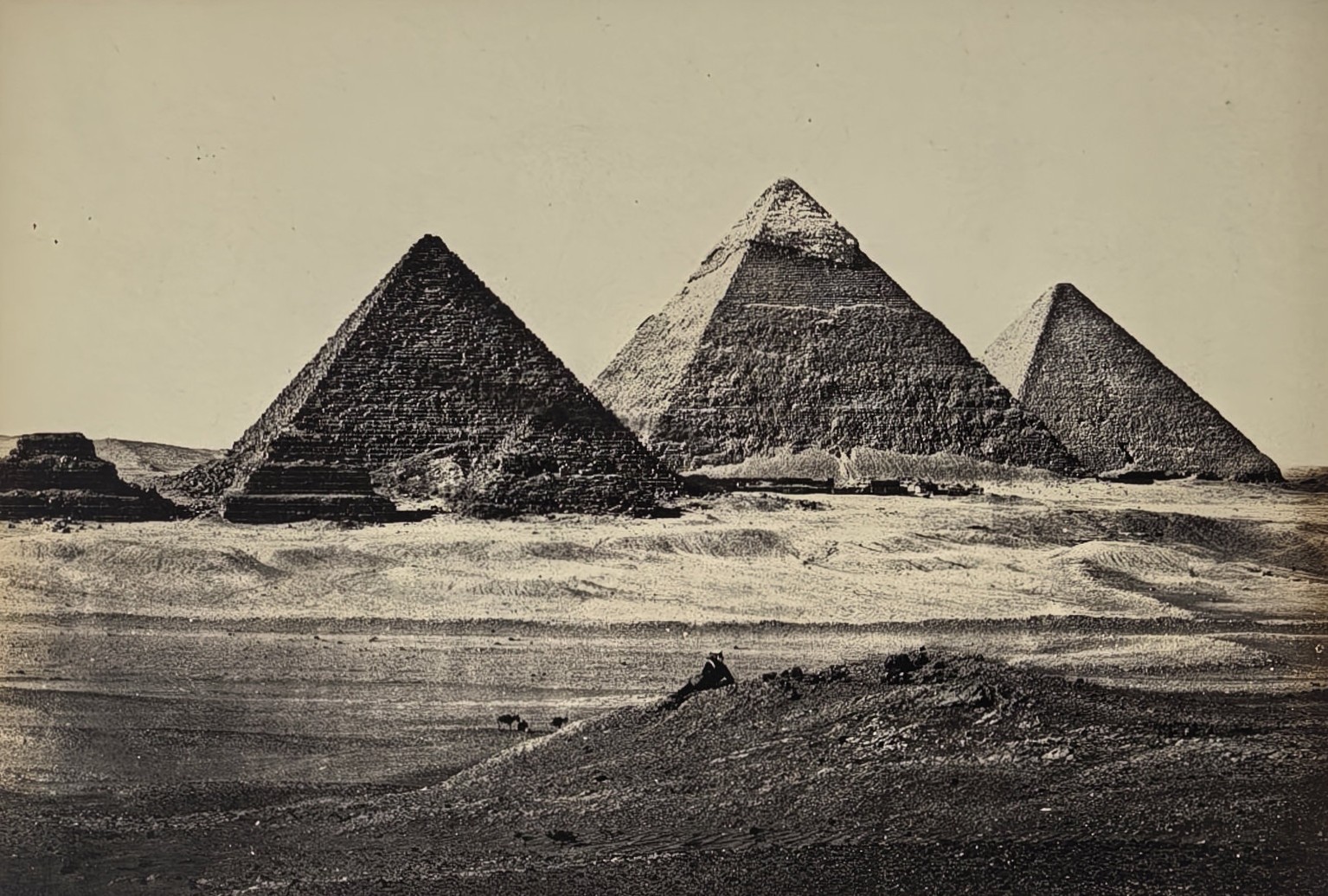
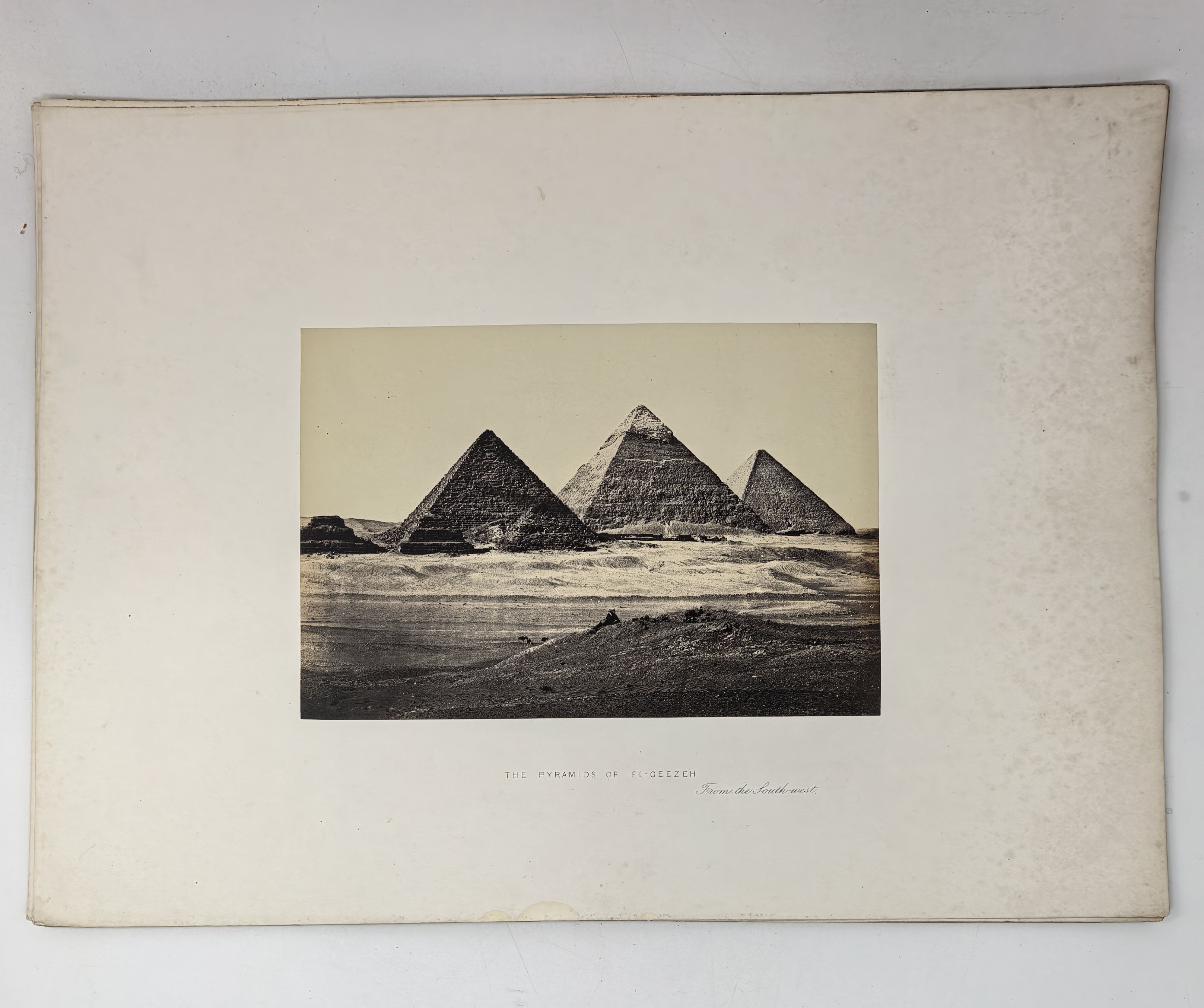
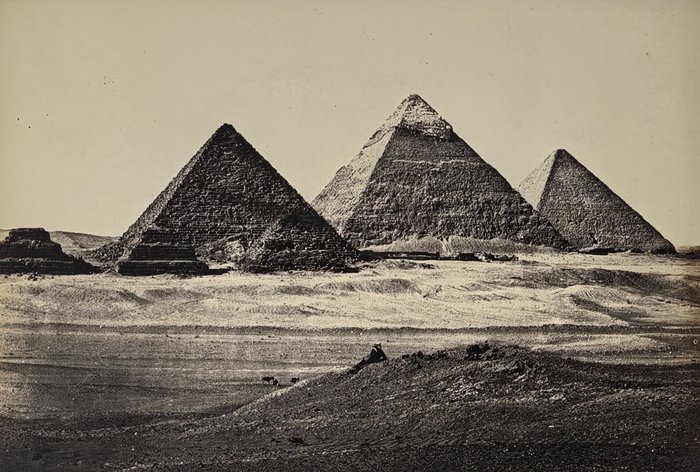
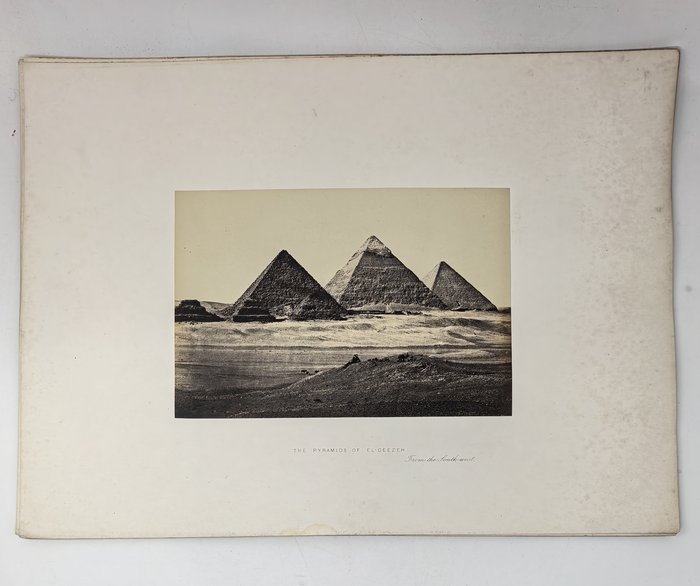
Three views of ancient Egyptian pyramids show “The Sphynx and Great Pyramid [classical view with the Sphinx’s body still almost fully buried in sand, before the major excavations in the 1880s]; “The Pyramids of El-Geezeh from the south-west” [classical view of the three main pyramids and Giza, together with the smaller “queens” pyramids]; and “The Pyramids of Sakkarah” (Pyramids of Djoser and Userkaf in the Saqqara complex).
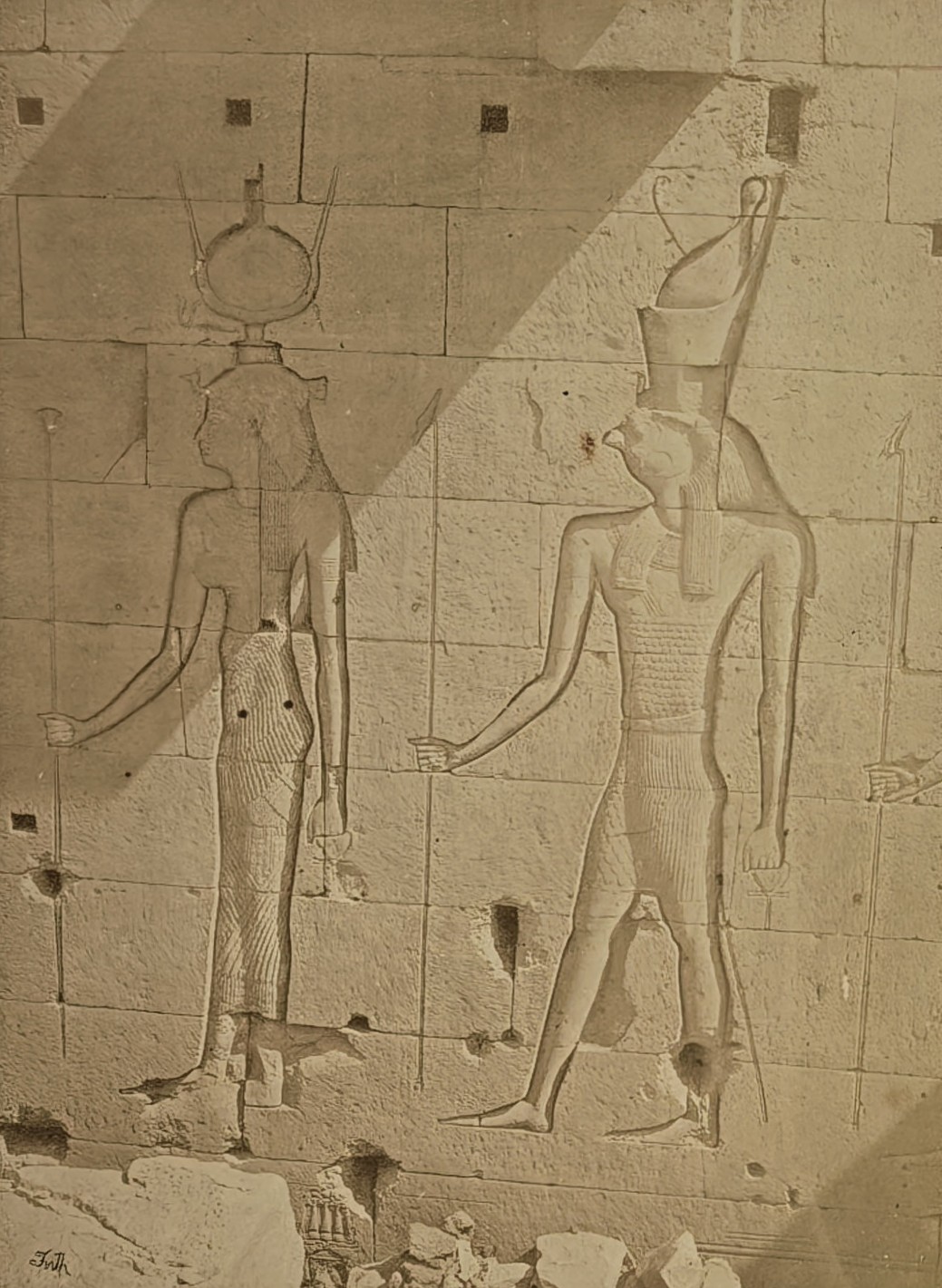
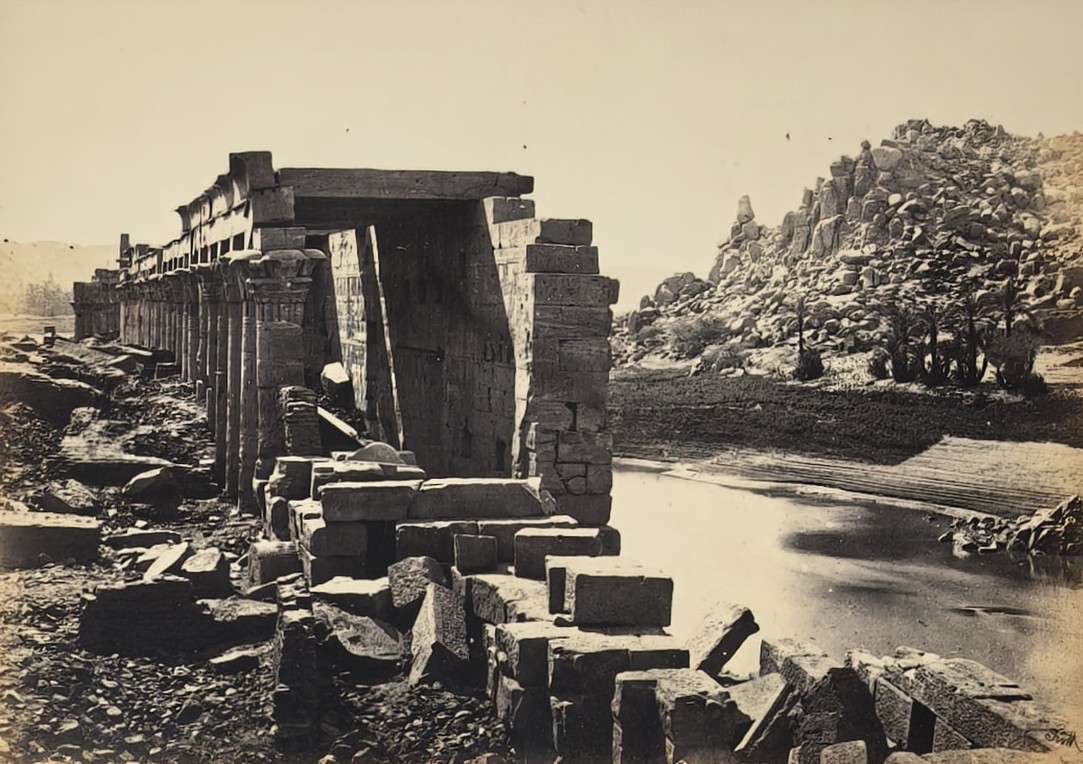
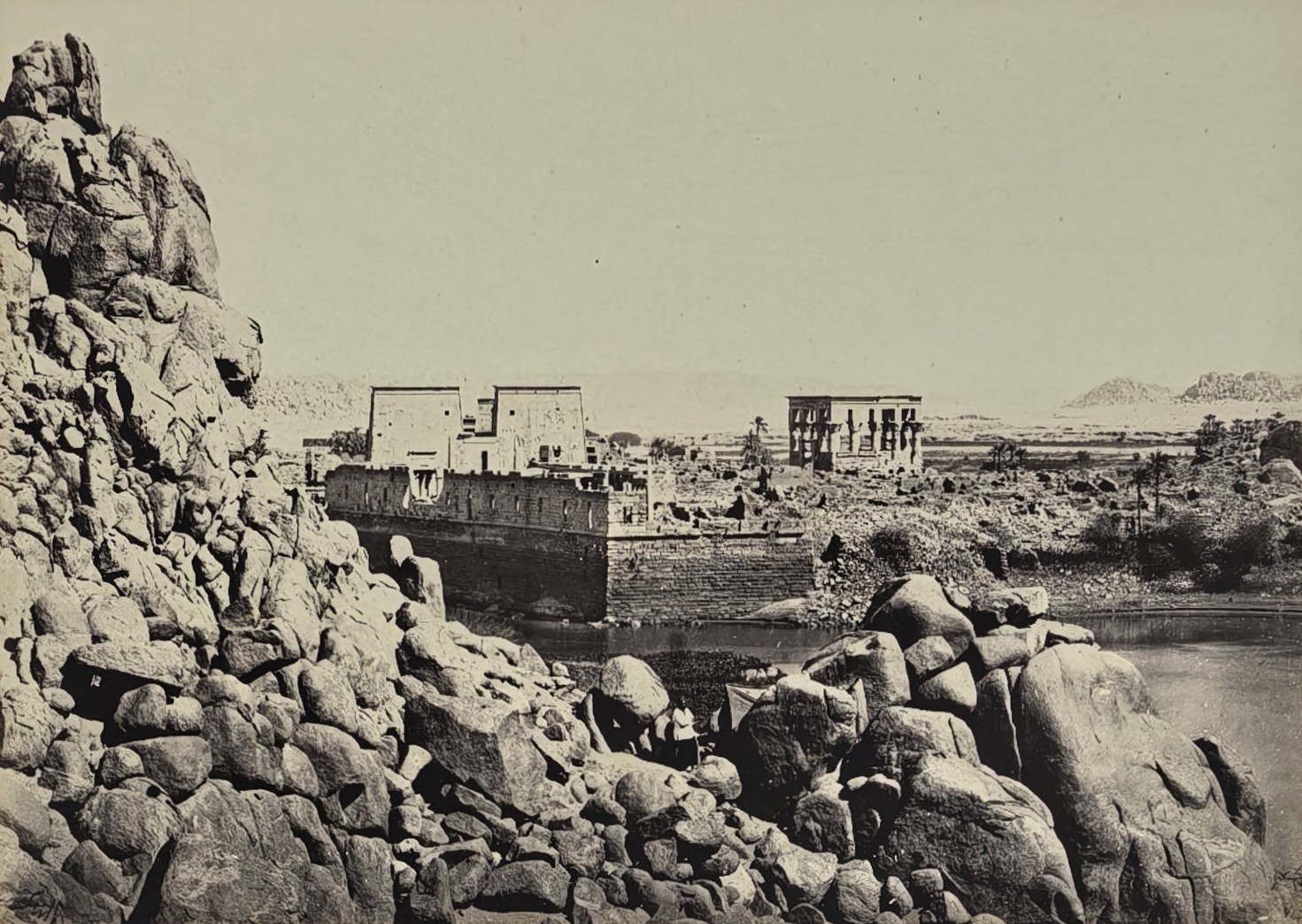
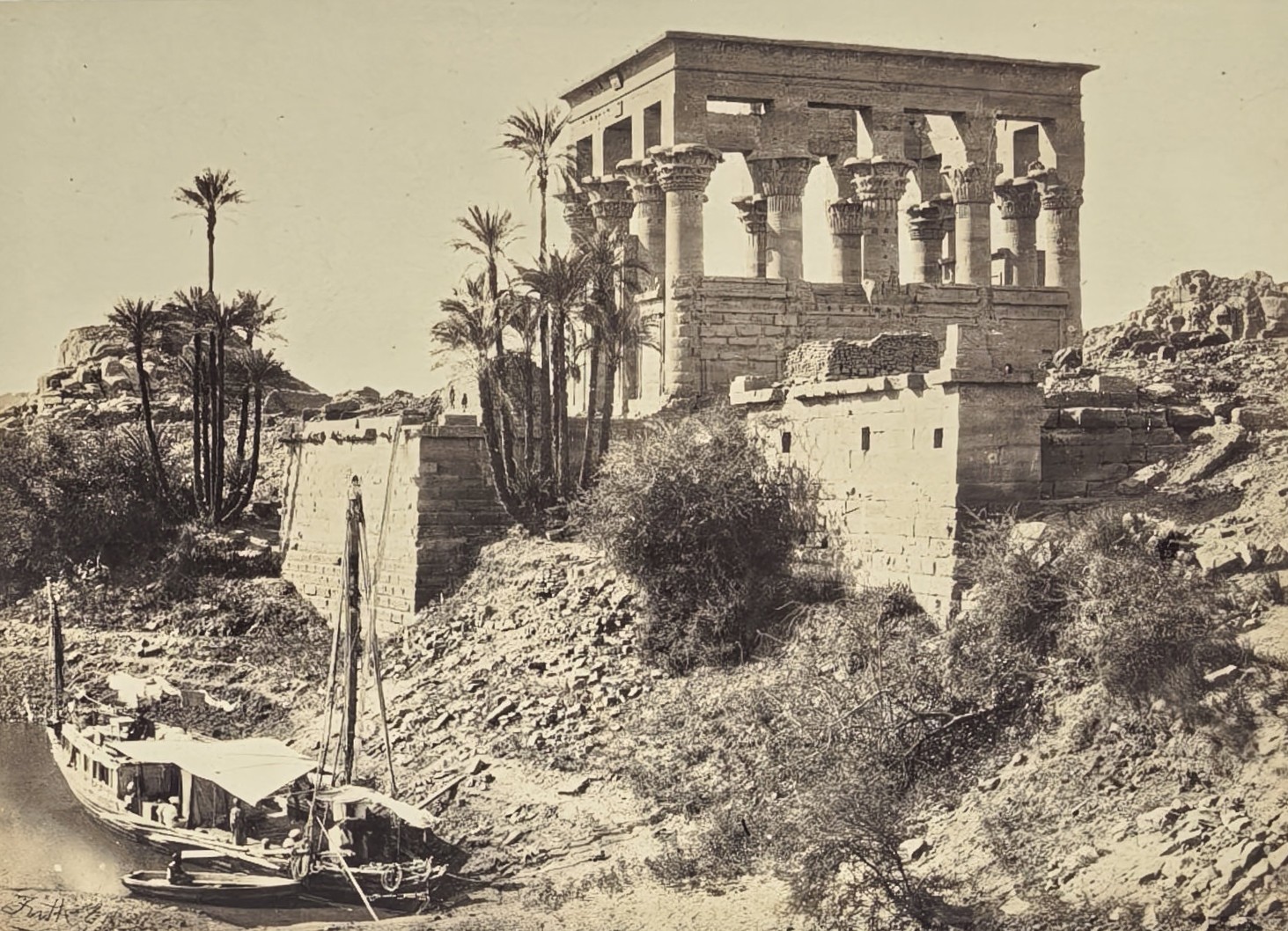
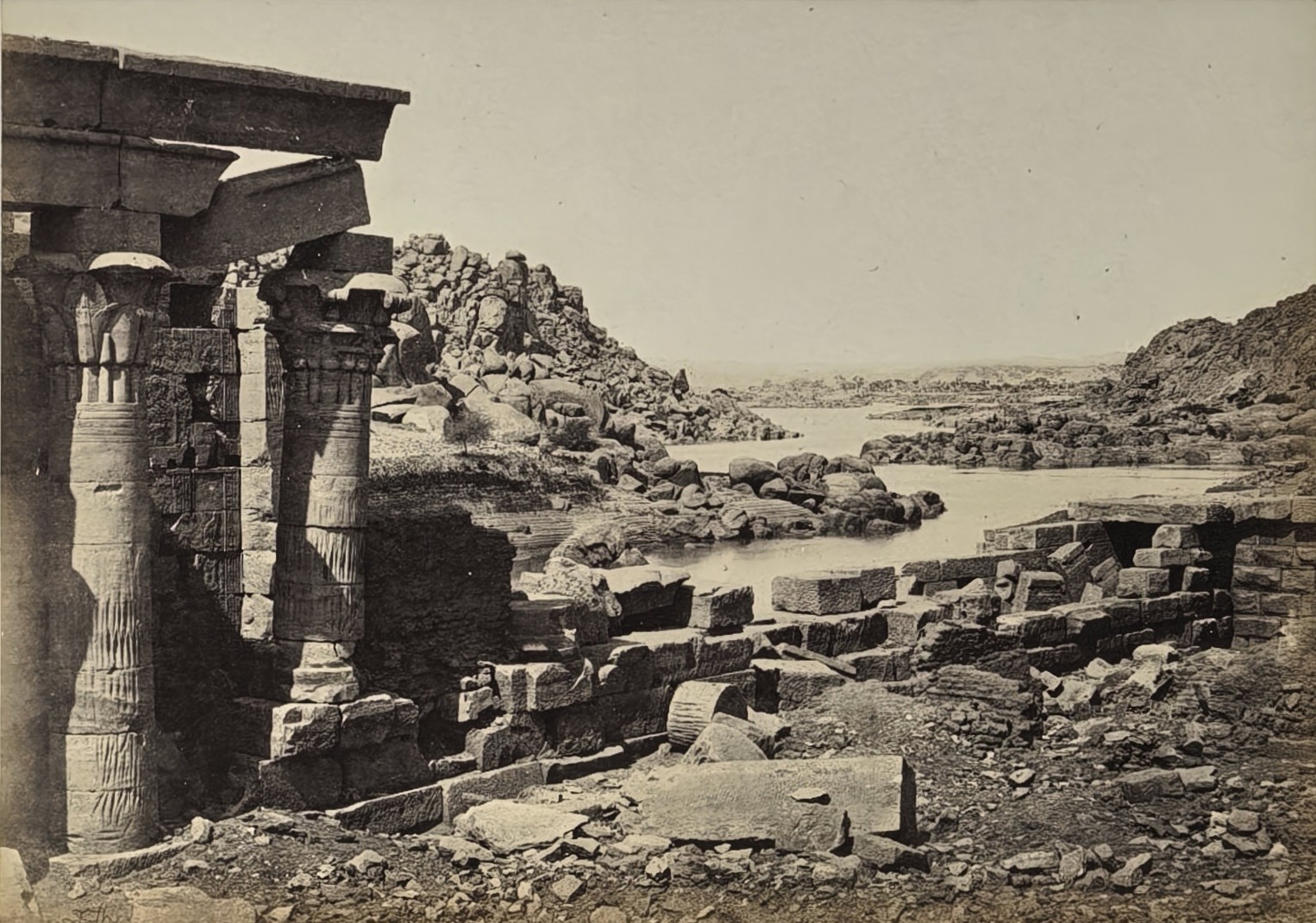
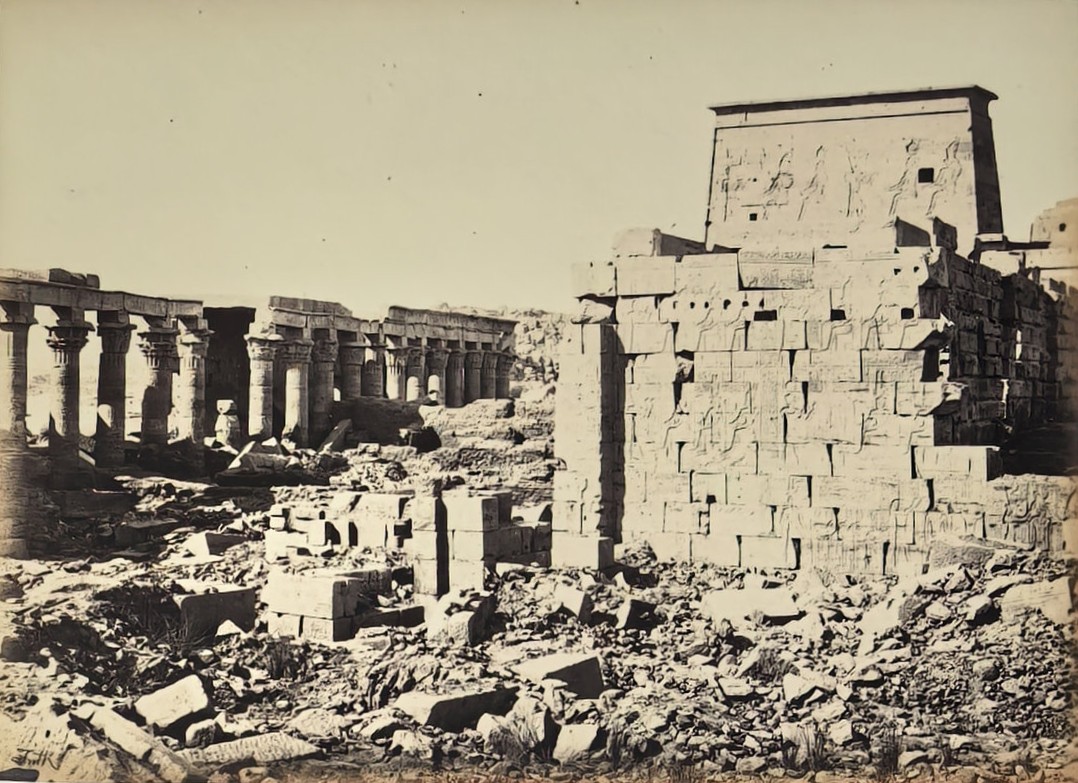
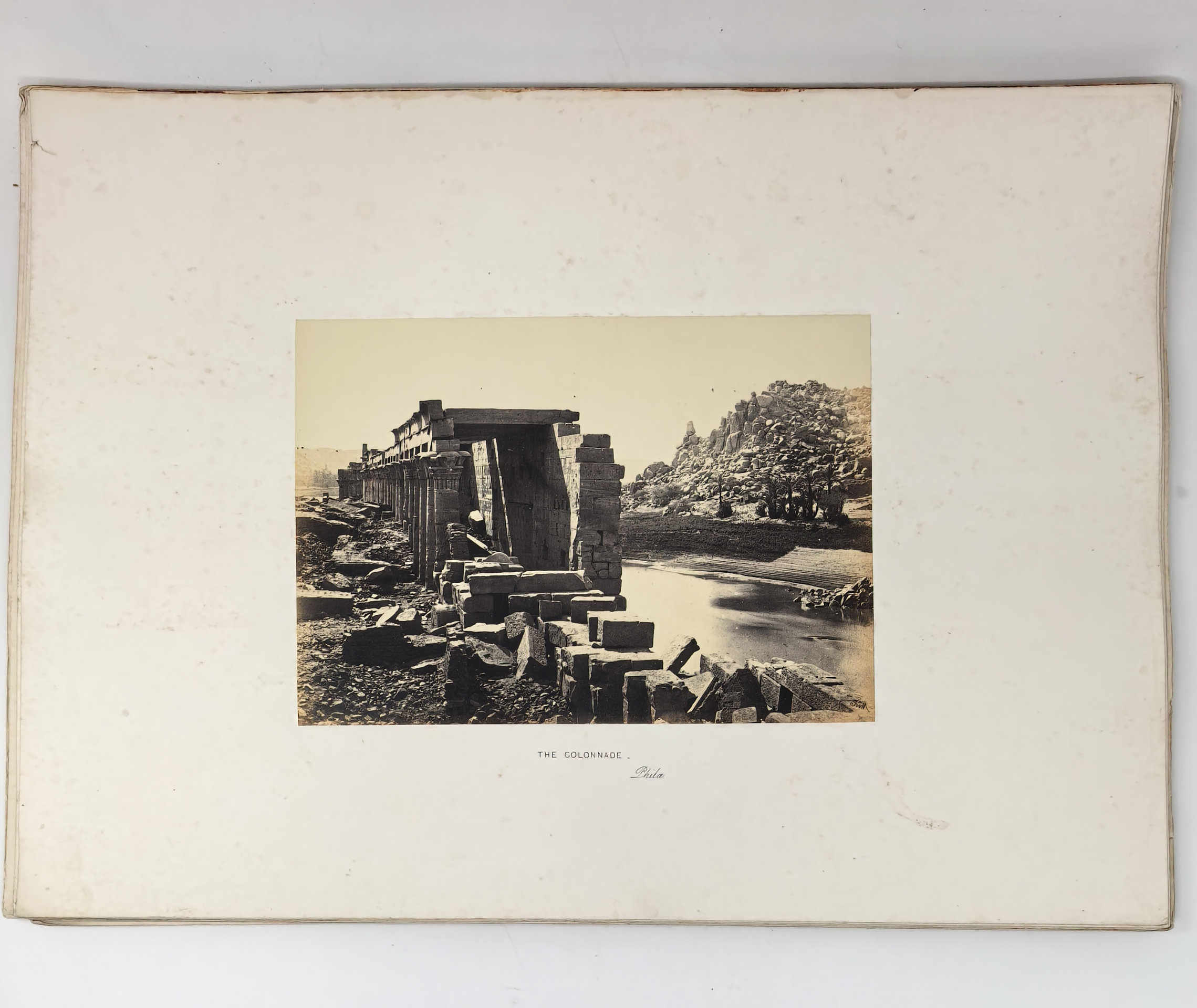
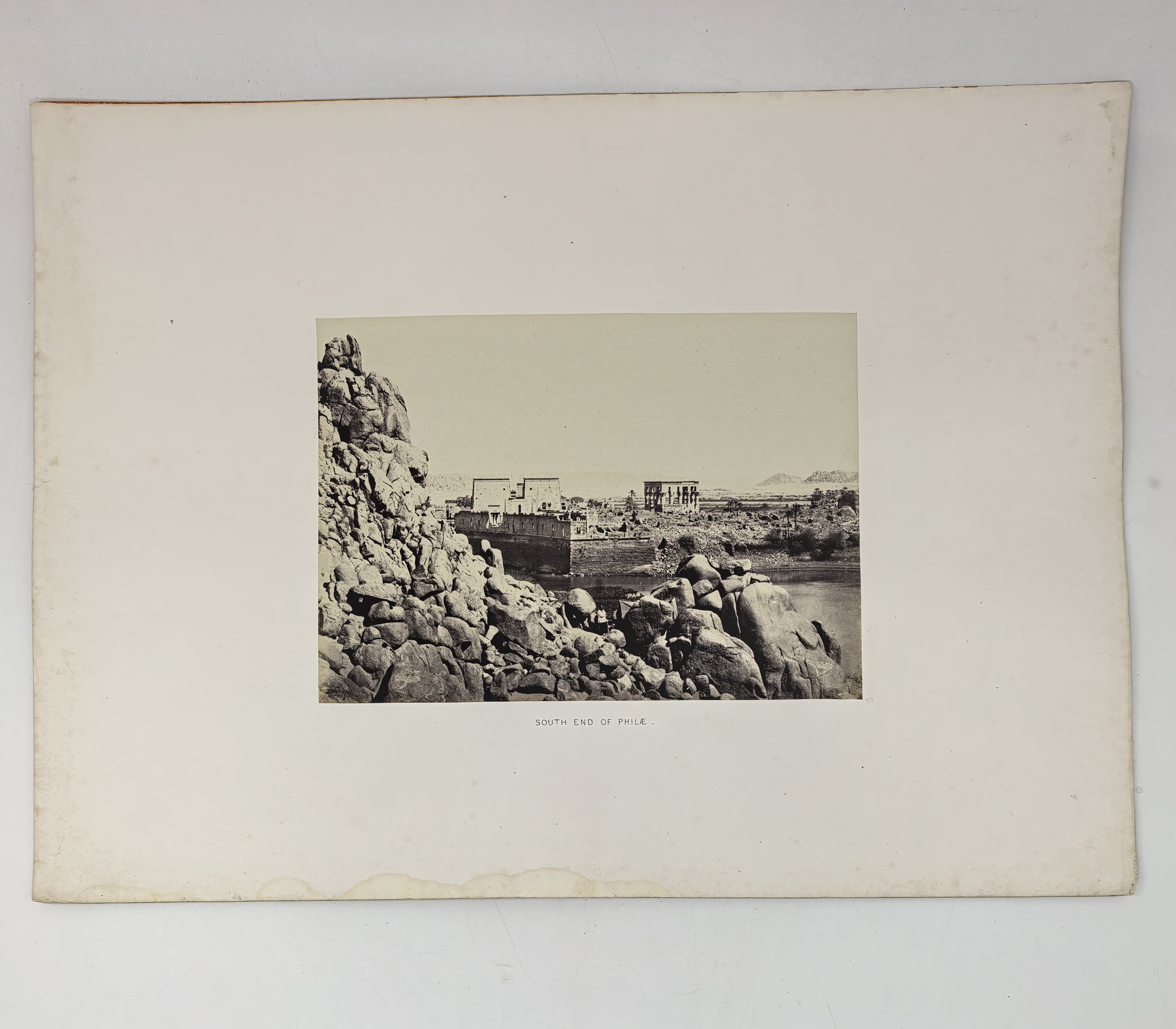
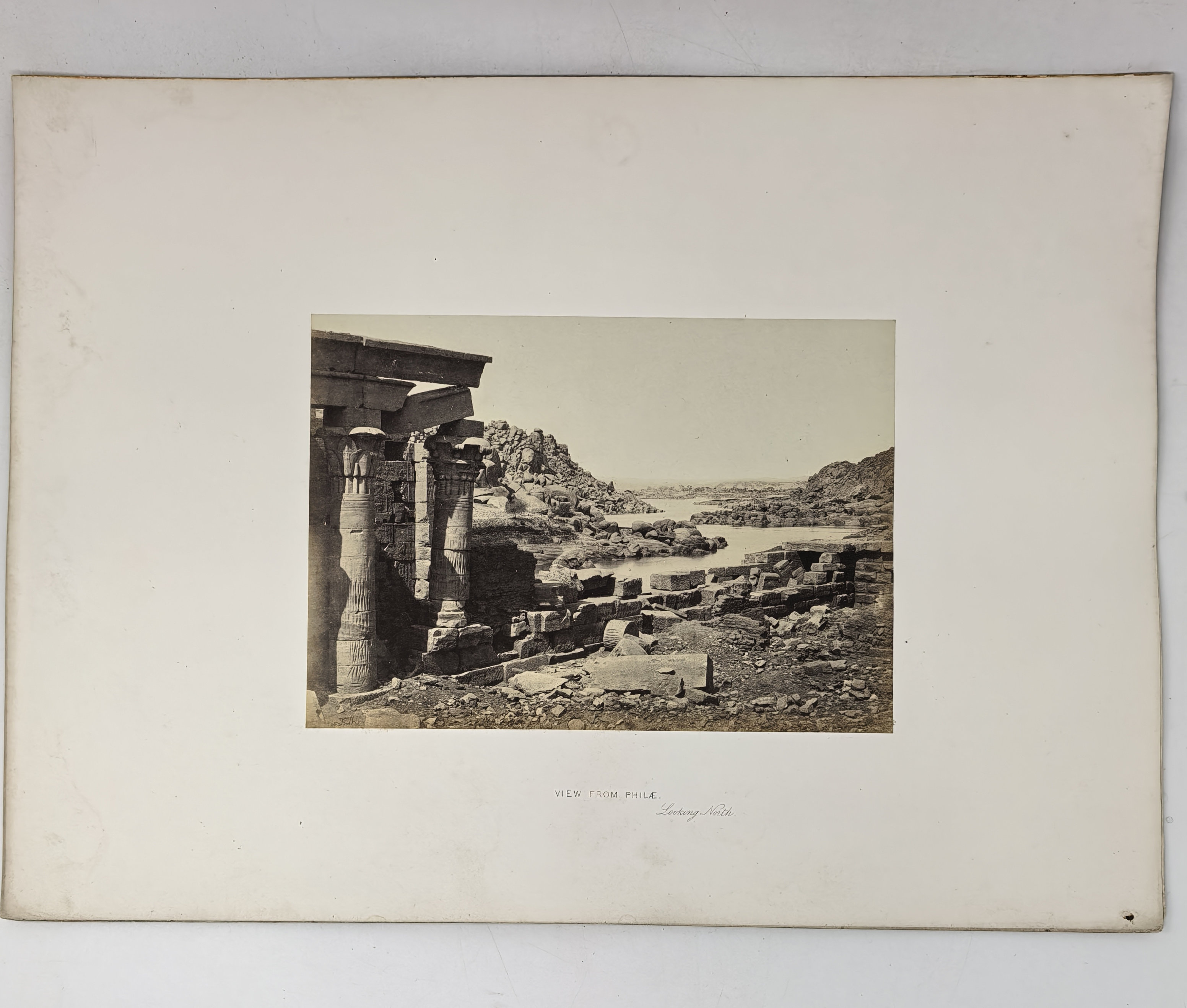
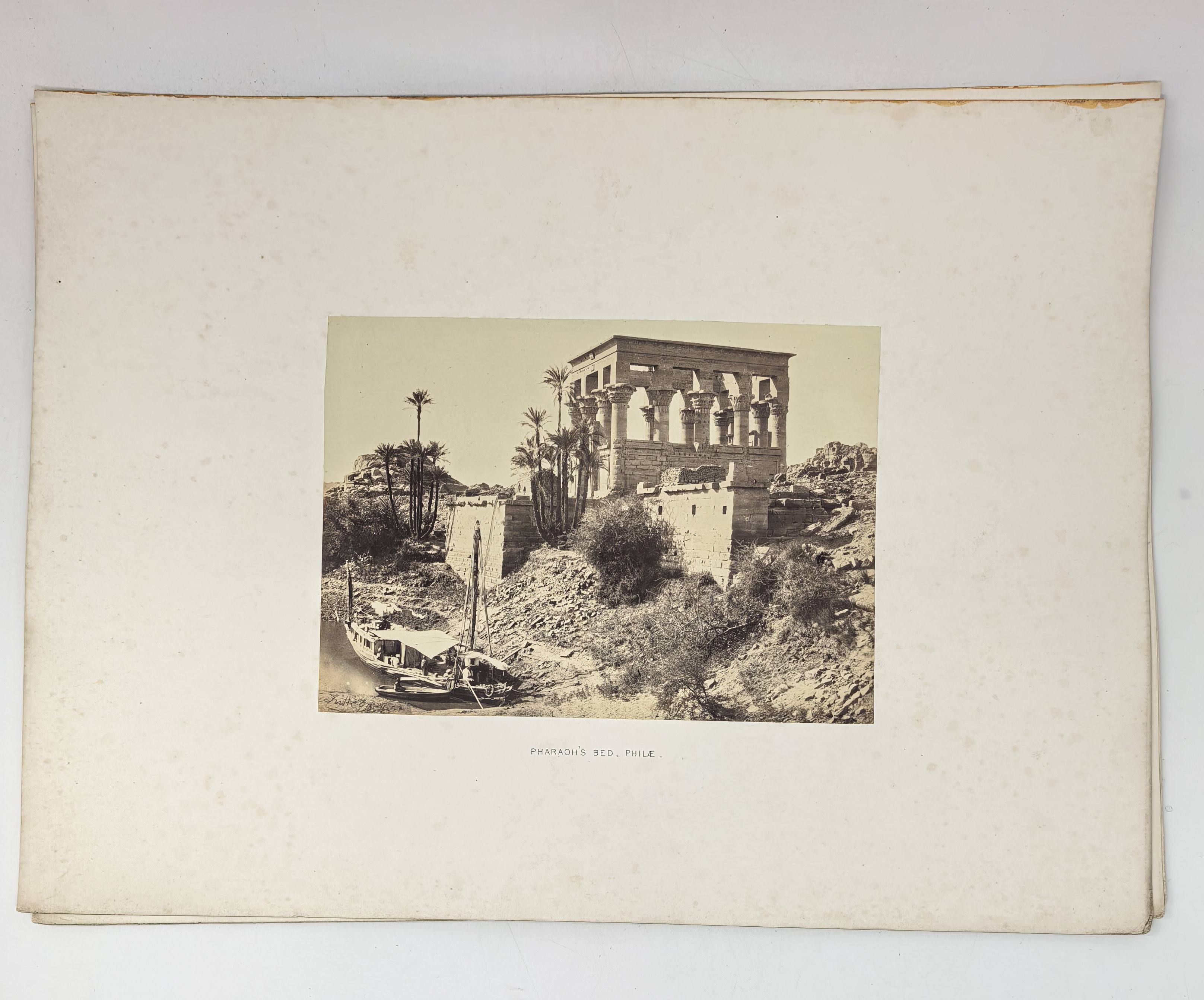
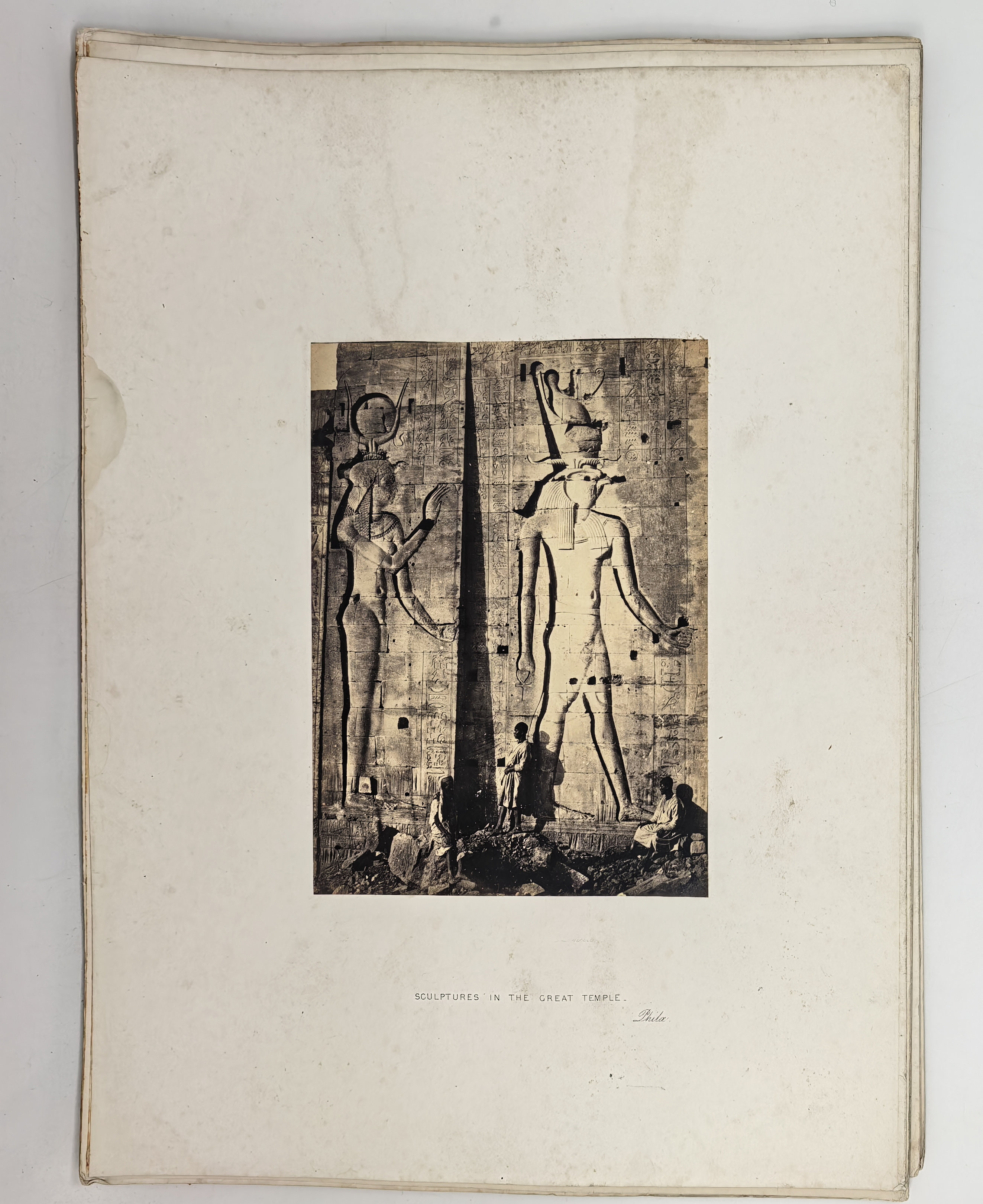
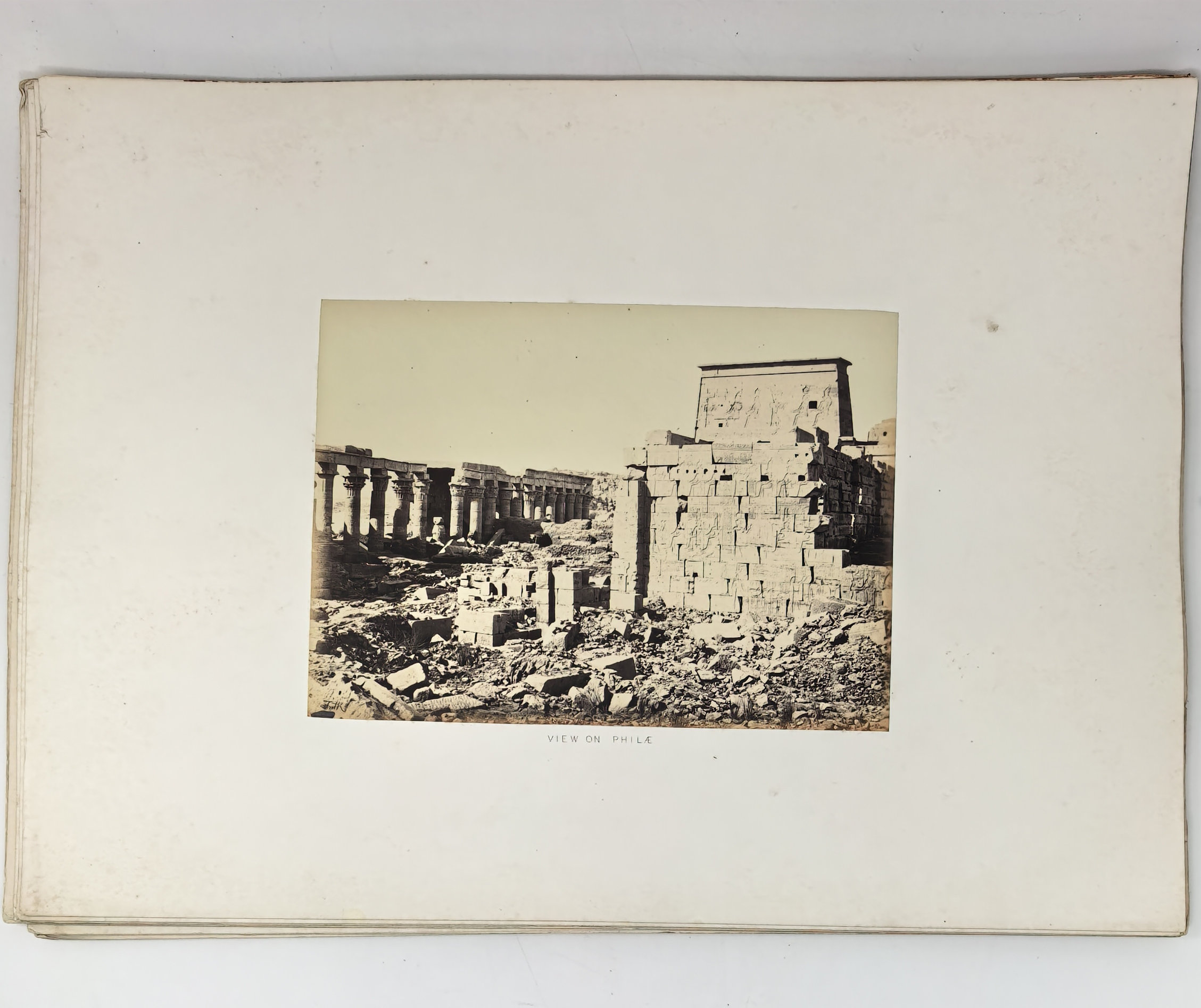
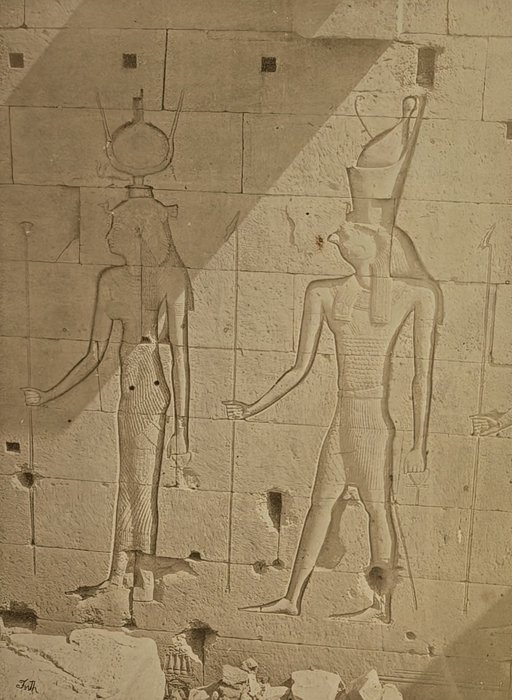
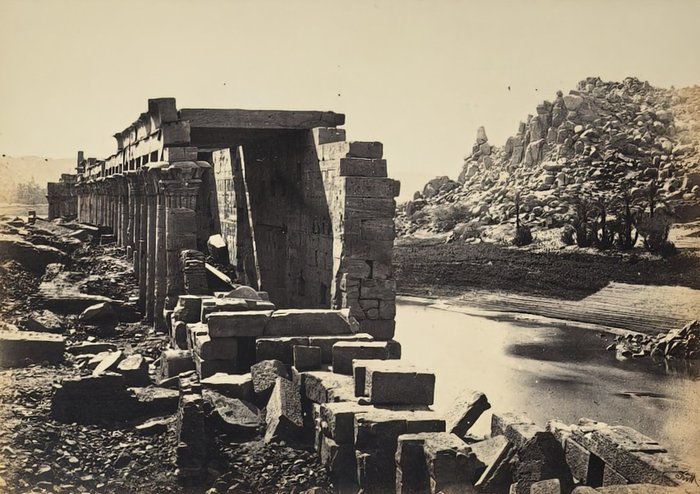
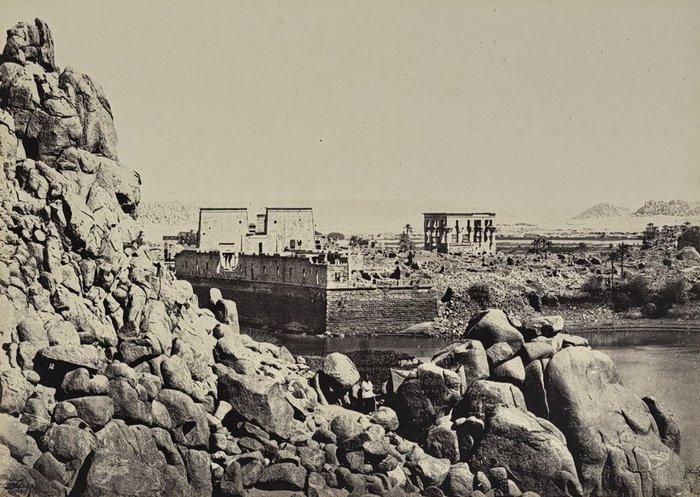
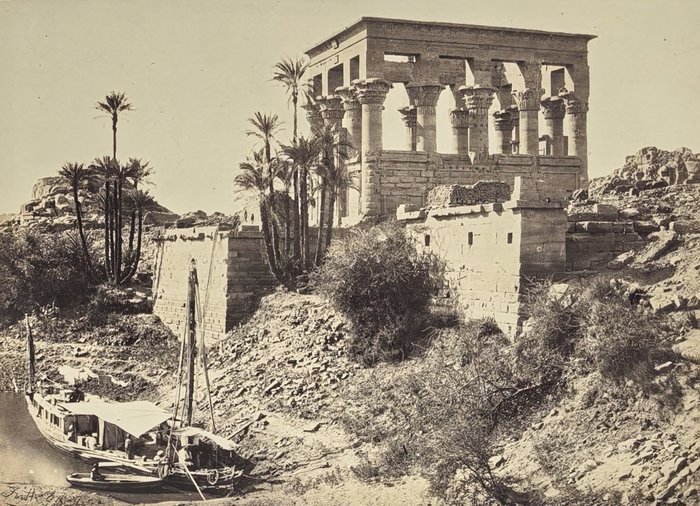
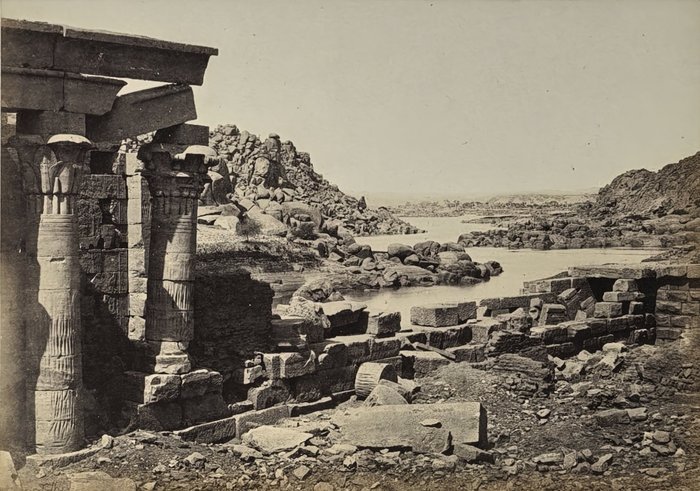
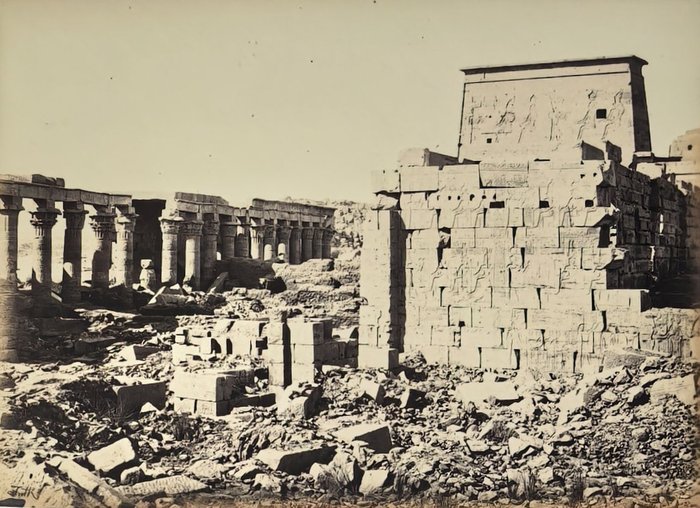
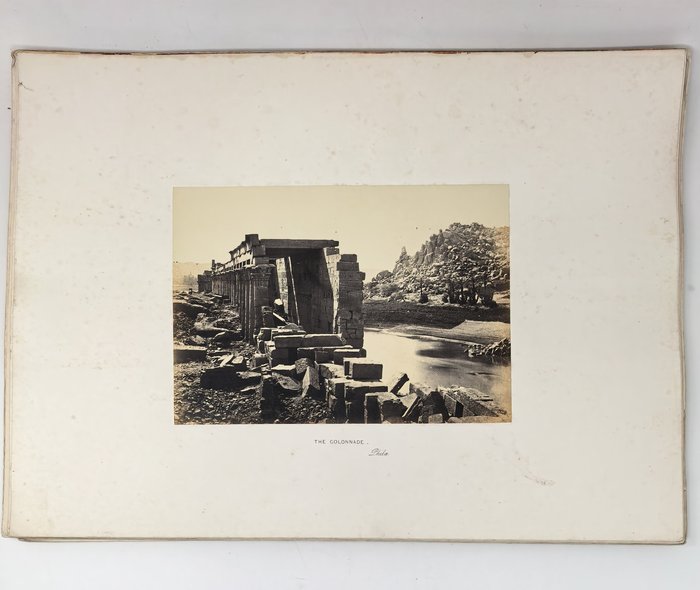
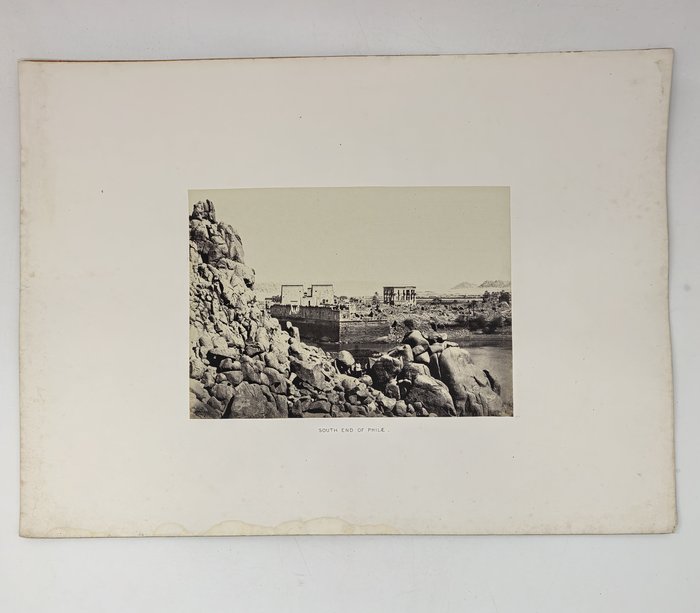
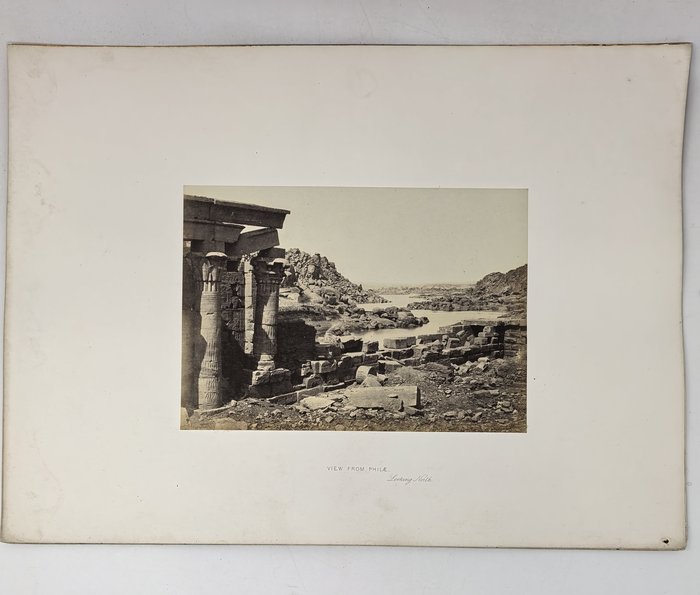
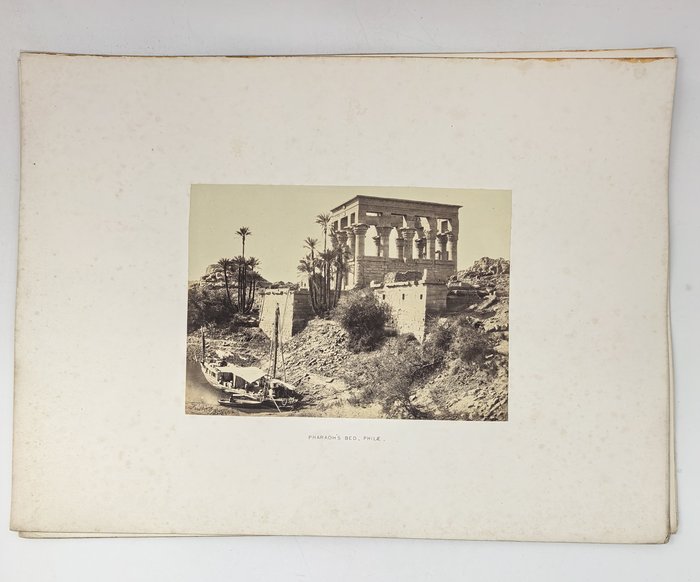
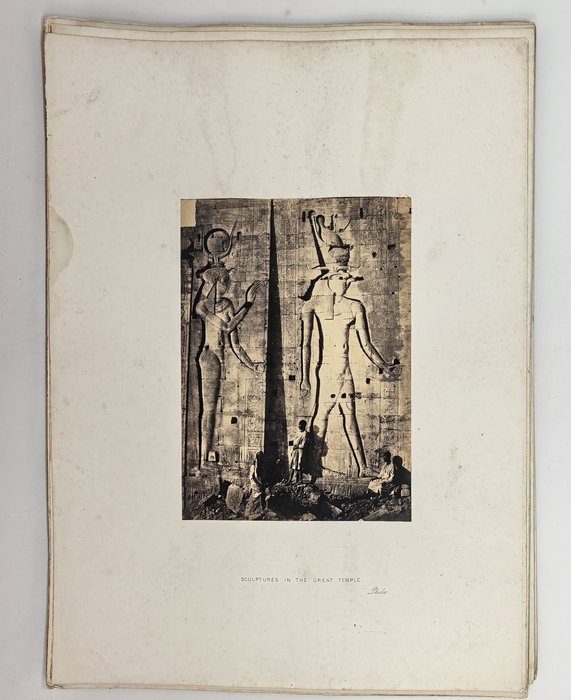
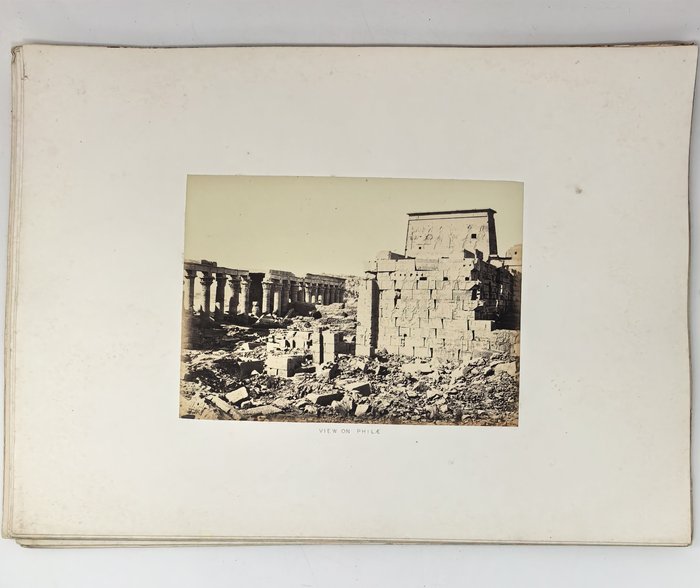
Eight photos show Philae Temple complex near Nile’s First Cataract in the Upper Egypt: “The approach to Philae” (general view looking south); “Pharaoh’s bed, Philae” (Trajan’s Kiosk and dahabiyah docked on the Nile’s bank); “View from Philae looking north” (a part of west colonnade on the left and Nile’s First Cataract in the far background); “South end of Philae” (with the First pylon and Trajan’s kiosk); “The colonnade” (western colonnade looking south); “View on the Island of Philae” (western colonnade, First pylon and the outer court); “Palms, &c. on Philae” (Trajan’s Kiosk and groves of palms taken from the Nile bank); “Sculptures in the Great Temple” (bas-reliefs of Isis and Horus on the outer façade of the First Pylon).
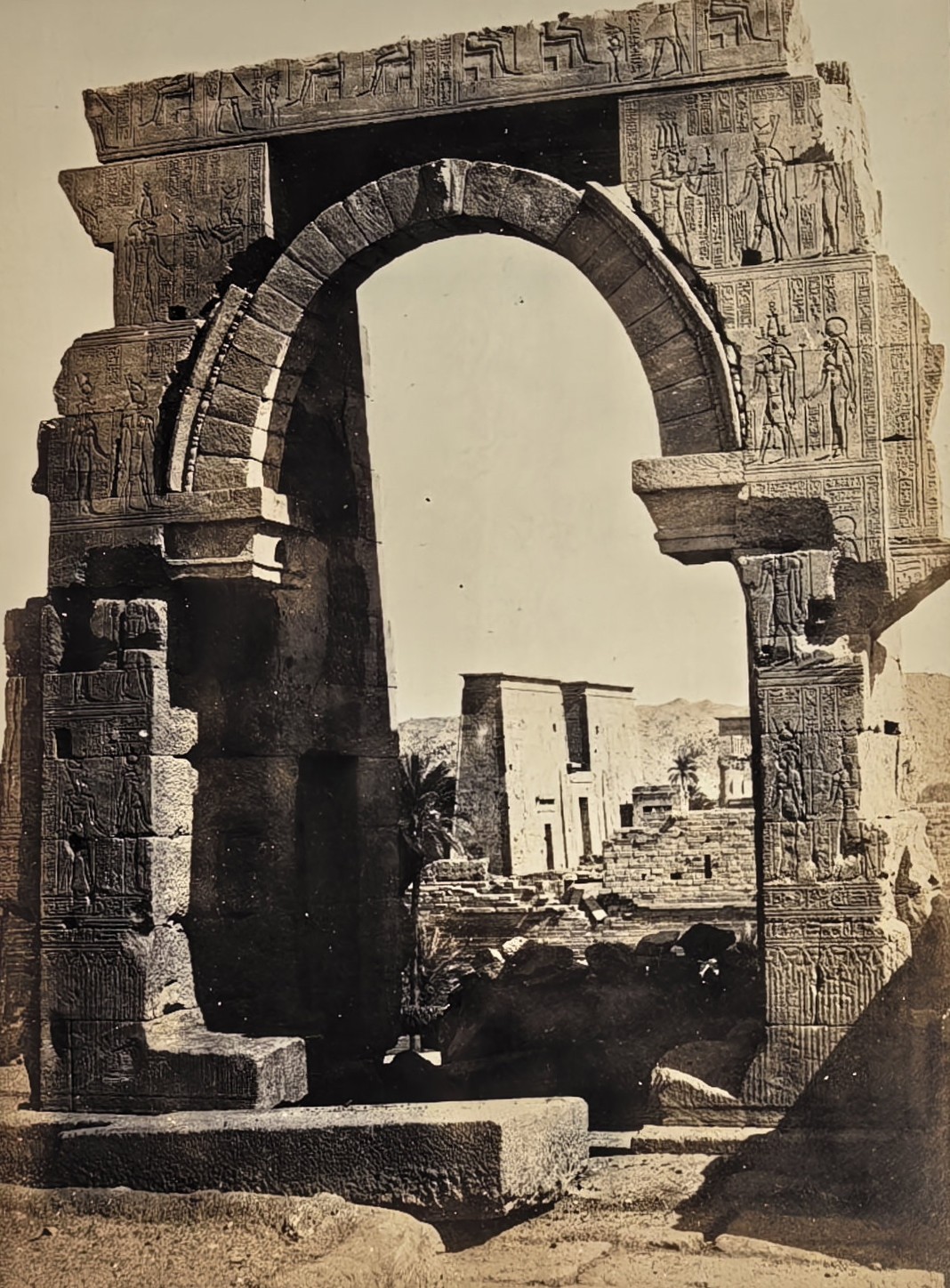
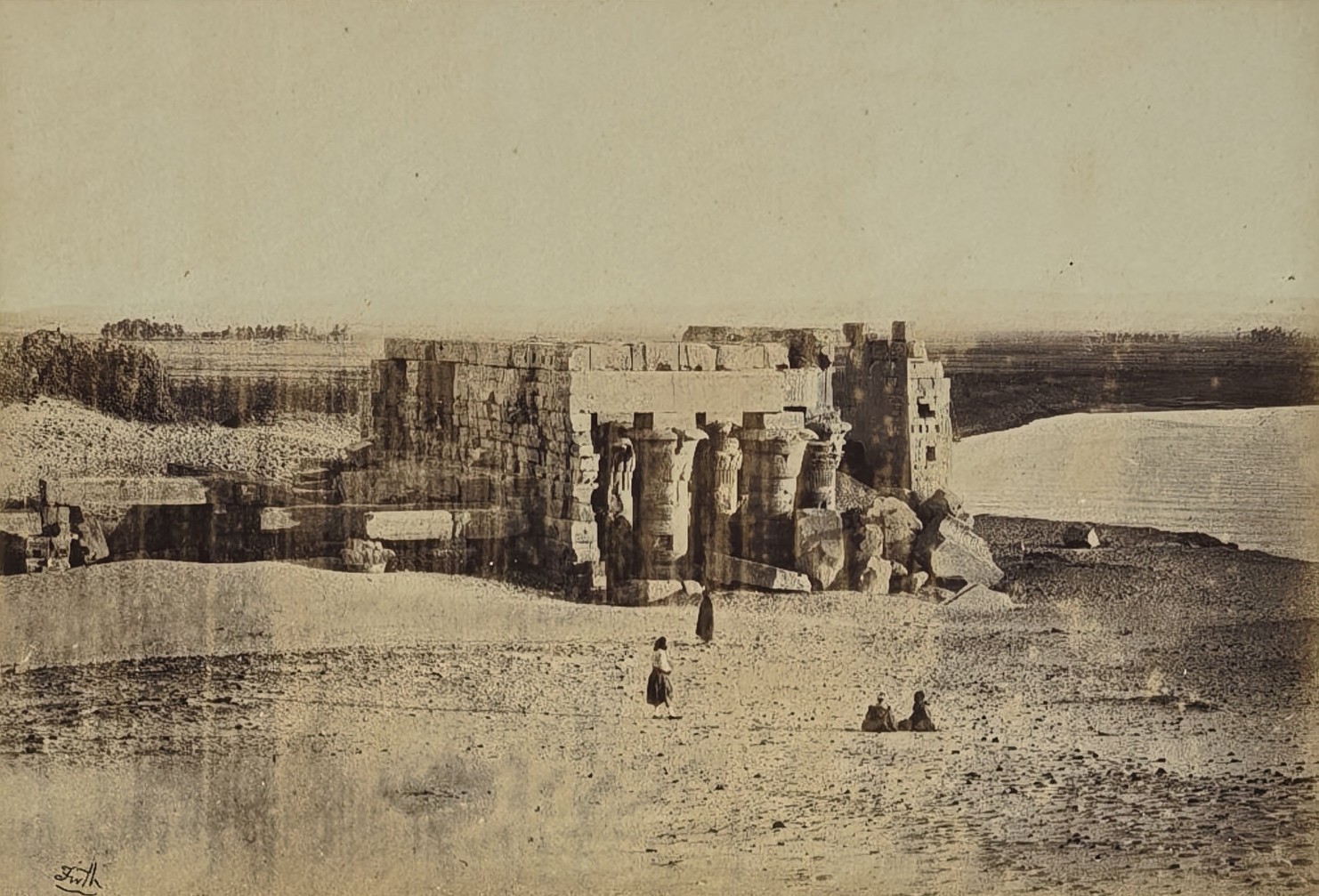
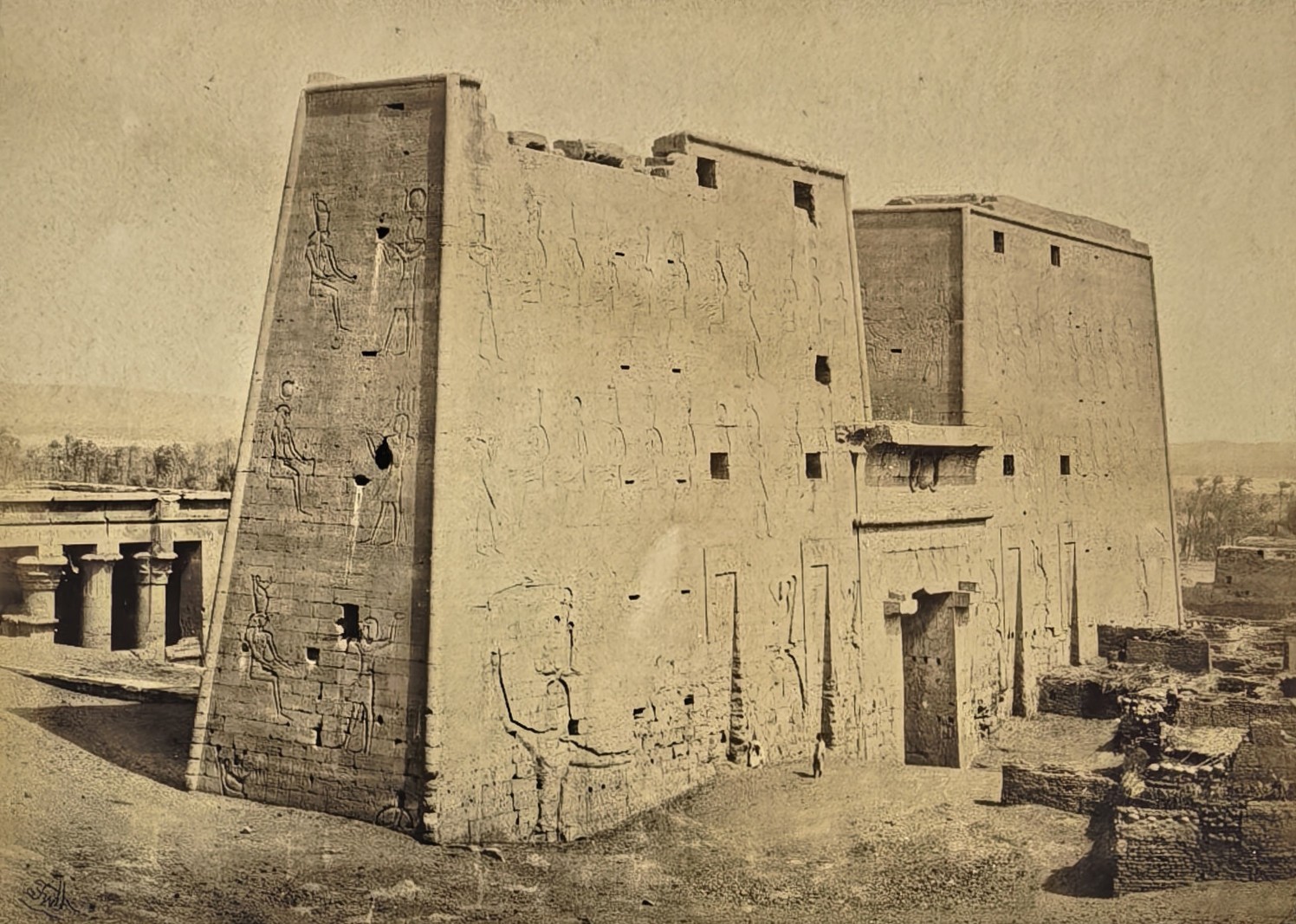
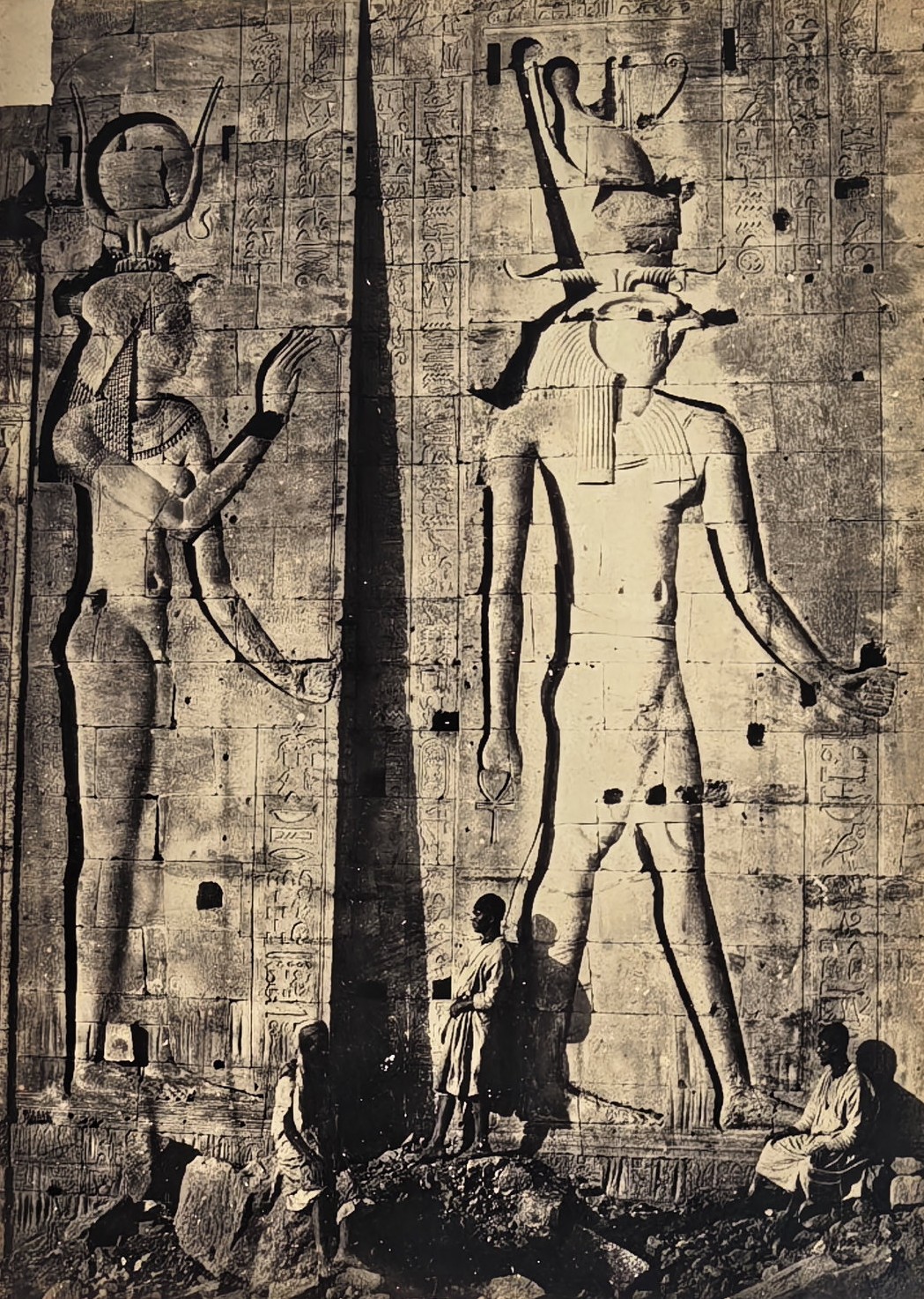
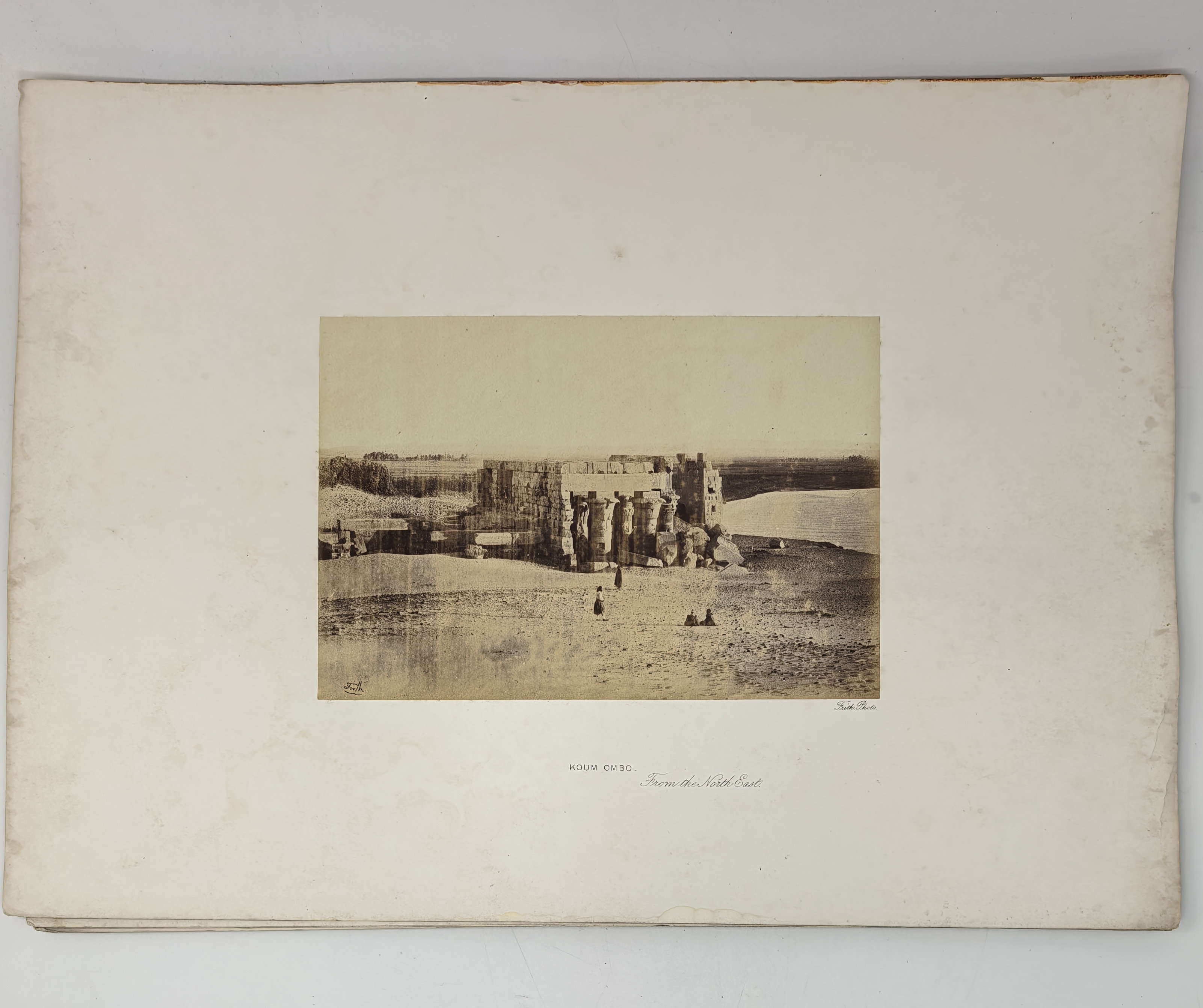
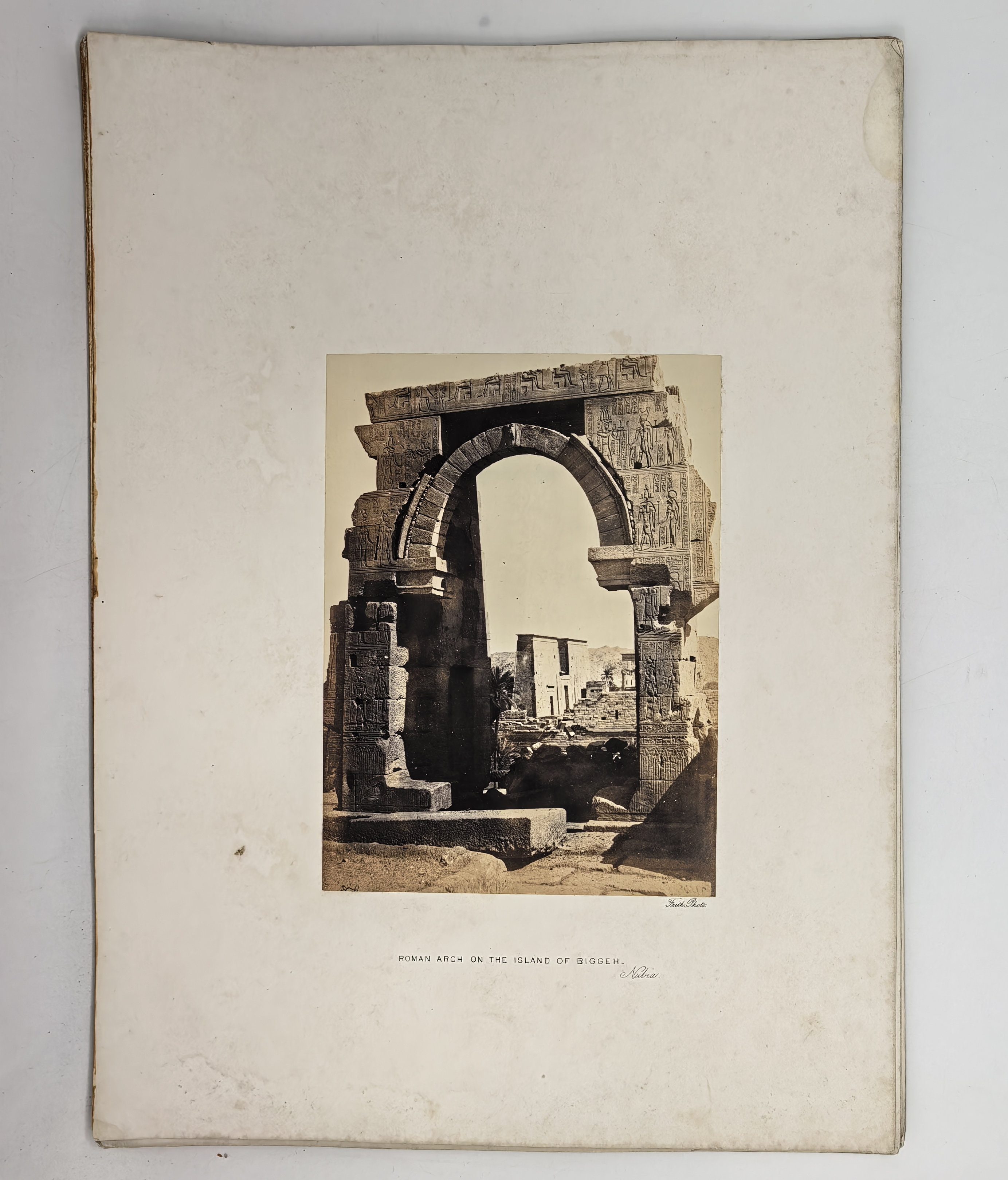
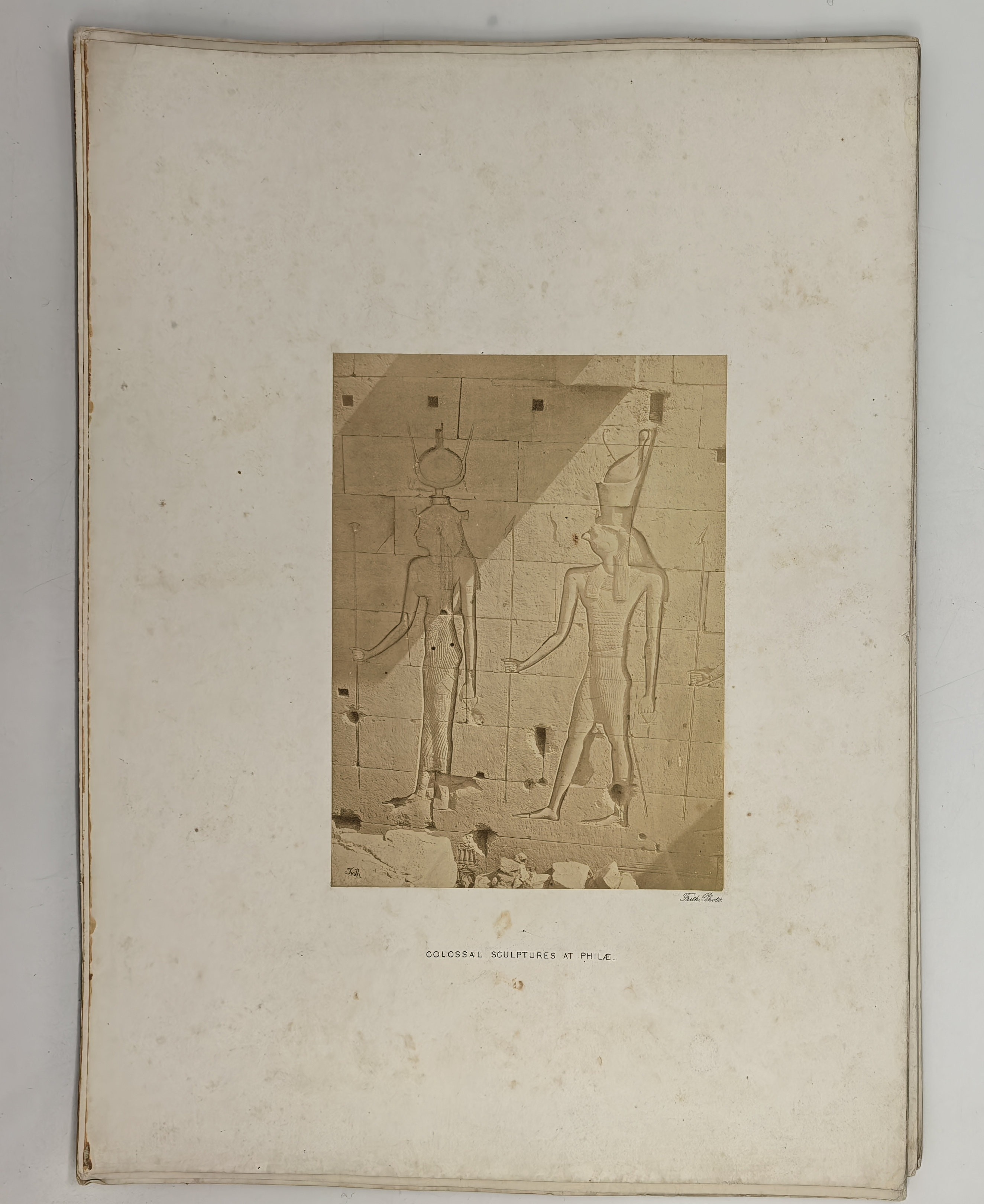
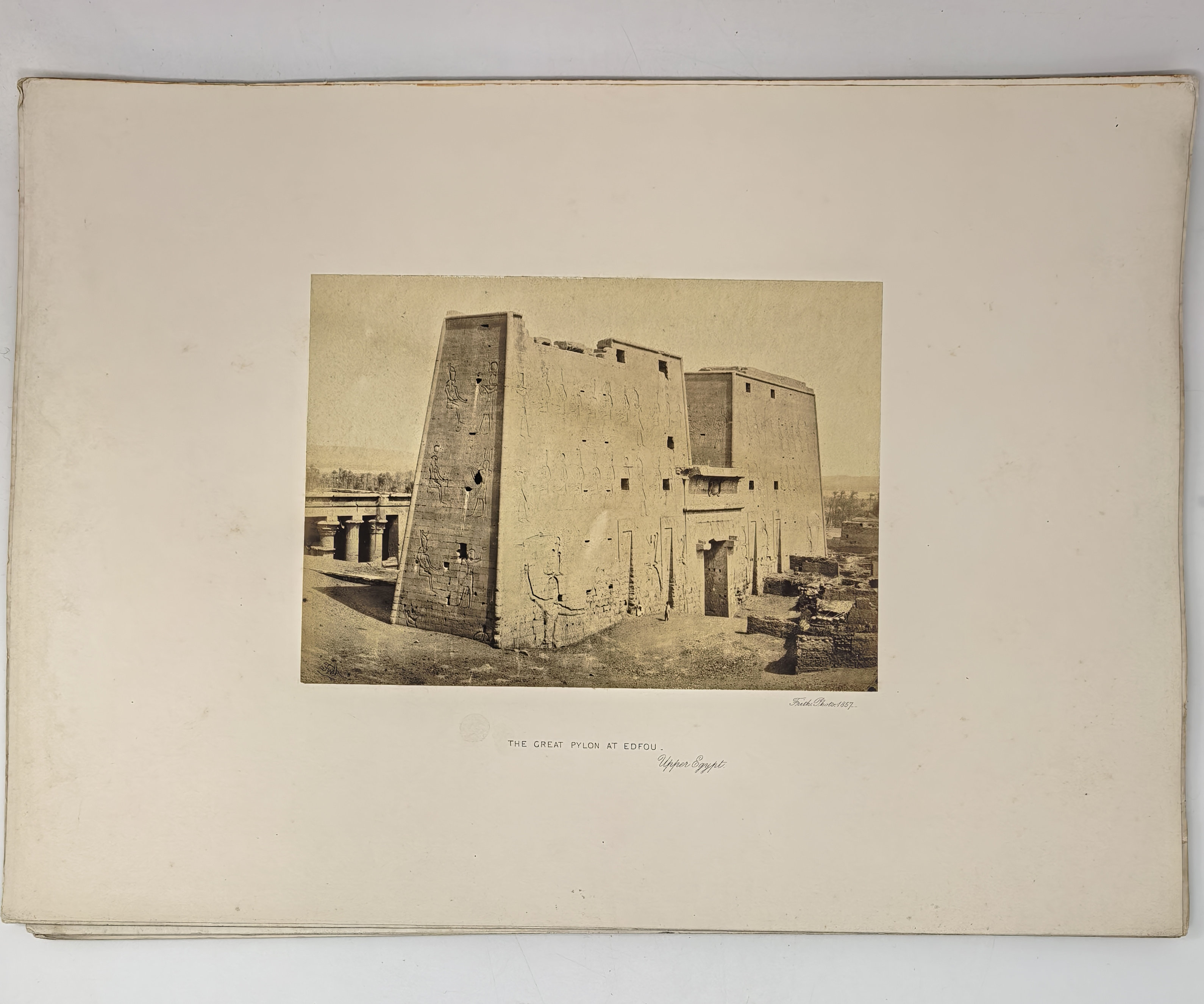
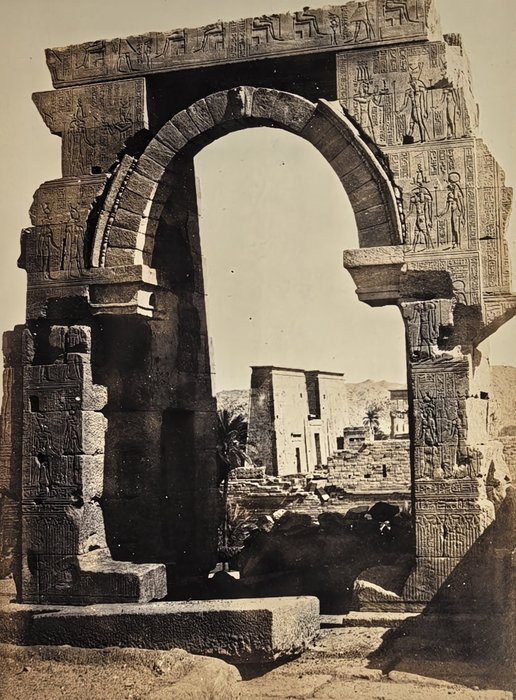
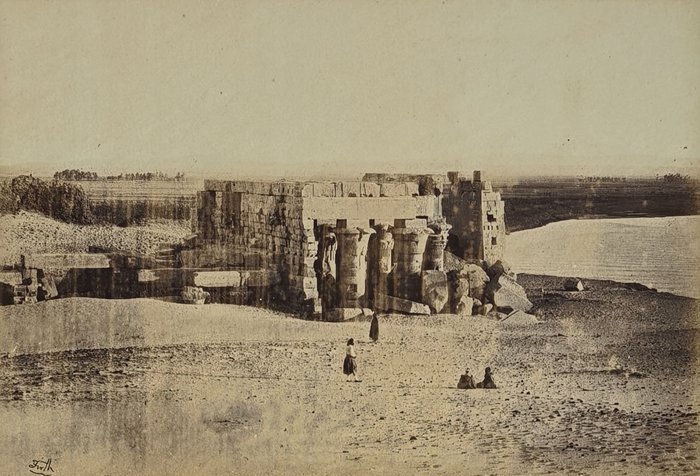
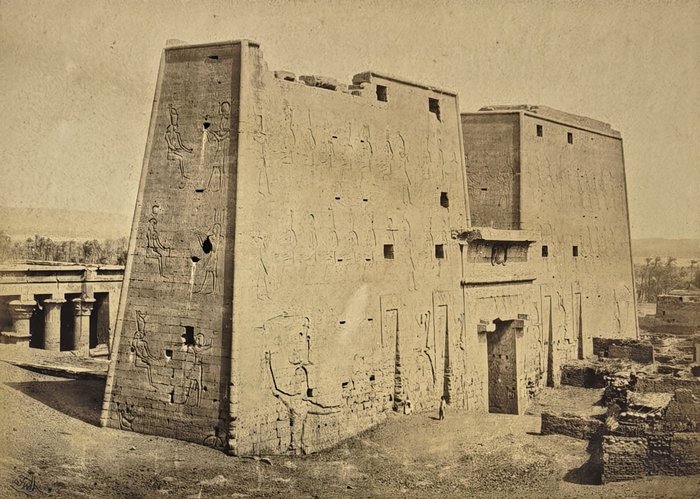
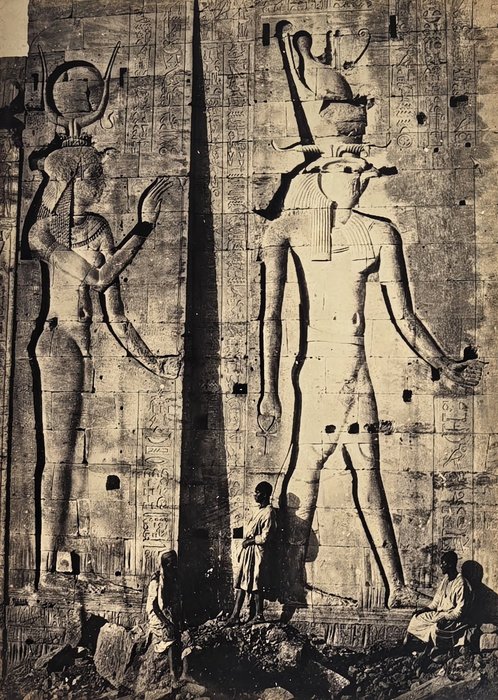
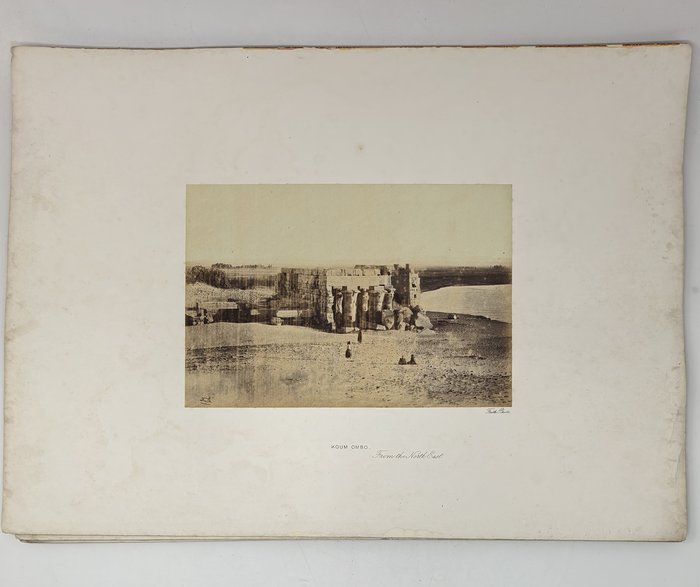
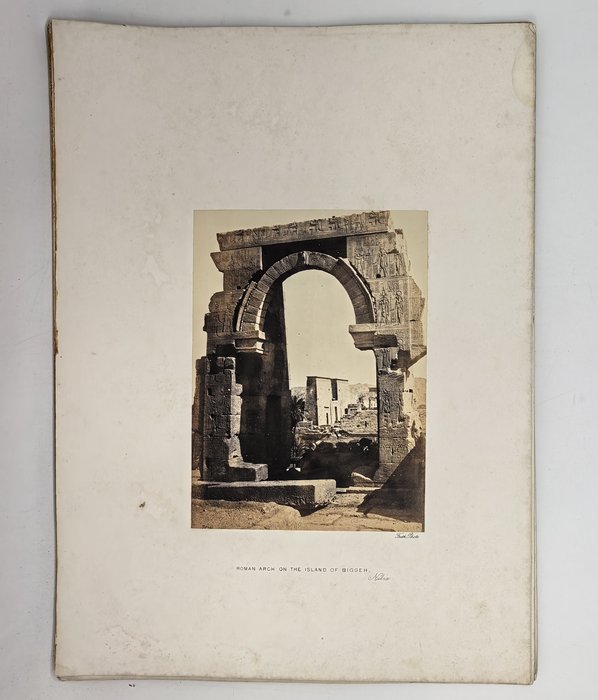
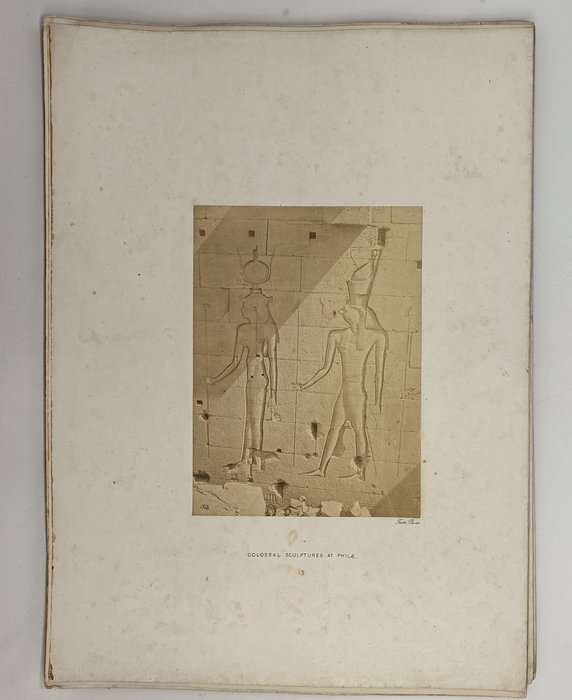
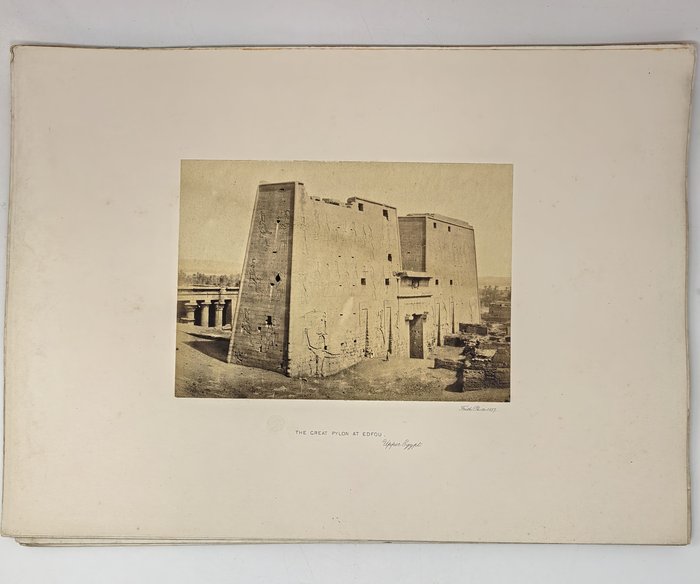
Other photos show “Antiquities at Biggeh opposite Philae” (Bigeh Island near Philae, believed to be the burial site of Osiris, housed the ruins of temples of Osiris and Hathor, partly submerged by the Aswan Low Dam in 1902); “Roman Arch on the Island of Biggeh” (Roman arch added on an earlier Egyptian structure with the entrance to the temple of Isis on the Philae Island in the background), “The Great Pylon at Edfou” (first pylon of Edfu temple, partly covered in sand; excavations by Auguste Mariette started in 1860); “View in the quarries at Hager Silsili” (ancient sandstone quarries at Gebel el-Silsila, between Edfu and Kom Ombo, which was used since the 18th Dynasty of Egypt); “Koum Ombo” (general view of Kom Ombo temple, partly ruined and buried in sand, wide-scale excavations took place in the 1890s); “Koum Ombo” (close-up view of the entrance colonnade before the major excavations); and “Assouan” (Aswan waterfront with merchant boats and dahabiyas moored on the Nile bank). The image titled “Colossal Sculptures at Philae” actually shows bas-reliefs of Isis and Horus in the Kalabsha Temple (originally located on the Nile’s West Bank south of Aswan, moved in the 1960s during the construction of the Aswan High Dam).
Overall a nice collection of early original photos of Egypt and its temples, taken before major excavations or relocations of the late 19th – 20th centuries.
Frith “was born on December 7th 1822 in Chesterfield, Derbyshire, England, to a Quaker family (Sackett 1994). He was educated at Ackworth School and Quaker Camp Hill School in Birmingham (Browne and Partnow 1983, p.212). After serving an apprenticeship with a Sheffield cutlery firm, he began a wholesale grocery firm, Liverpool, and later a printing firm (Sackett 1994). He took up photography in 1850 and in the mid-1850s retired from his successful business career. In 1853 he was one of the founders of the Liverpool Photographic Society (Turner 1995, p794). He made his first photographic visit to Egypt in 1856-57. He travelled on the Nile and photographed from Cairo to Abu Simbel. On his return he published a series of views which were enthusiastically received. He made a second trip with his assistant Frank Mason Good in late 1857. A third photographic trip was made in 1859 when Frith travelled beyond the Sixth Cataract. On his return from this third trip Frith set up as a photographer and publisher. His company produced a detailed record of English villages and towns, eventually becoming the largest mass production company in Europe” (Frith, Francis/ University of Cambridge Archives).