
#MD60
Ca. 1860s-1890s
Historically significant extensive archive of a famous German Egyptologist Heinrich Brugsch, a pioneer decipherer of the Demotic ancient Egyptian script and author of several fundamental works on ancient Egyptian history and hieroglyphs: “Grammaire demotique” (Berlin, 1855), “Histoire d’Égypte des les premiers temps de son existence jusqu’a nos jours” (Leipzig, 1859), “Hieroglypisch-demotisches Wörterbuch” (Leipzig, 1867-82, 7 vols.), “Geschichte Ägyptens unter den Pharaonen” (Leipzig, 1877), "Dictionnaire géographique de l'ancienne Égypte” (+ Supplement, Leipzig, 1879-1880), “Thesaurus inscriptionum aegyptiacarum” (Leipzig, 1883-91, 6 vols.), and others.
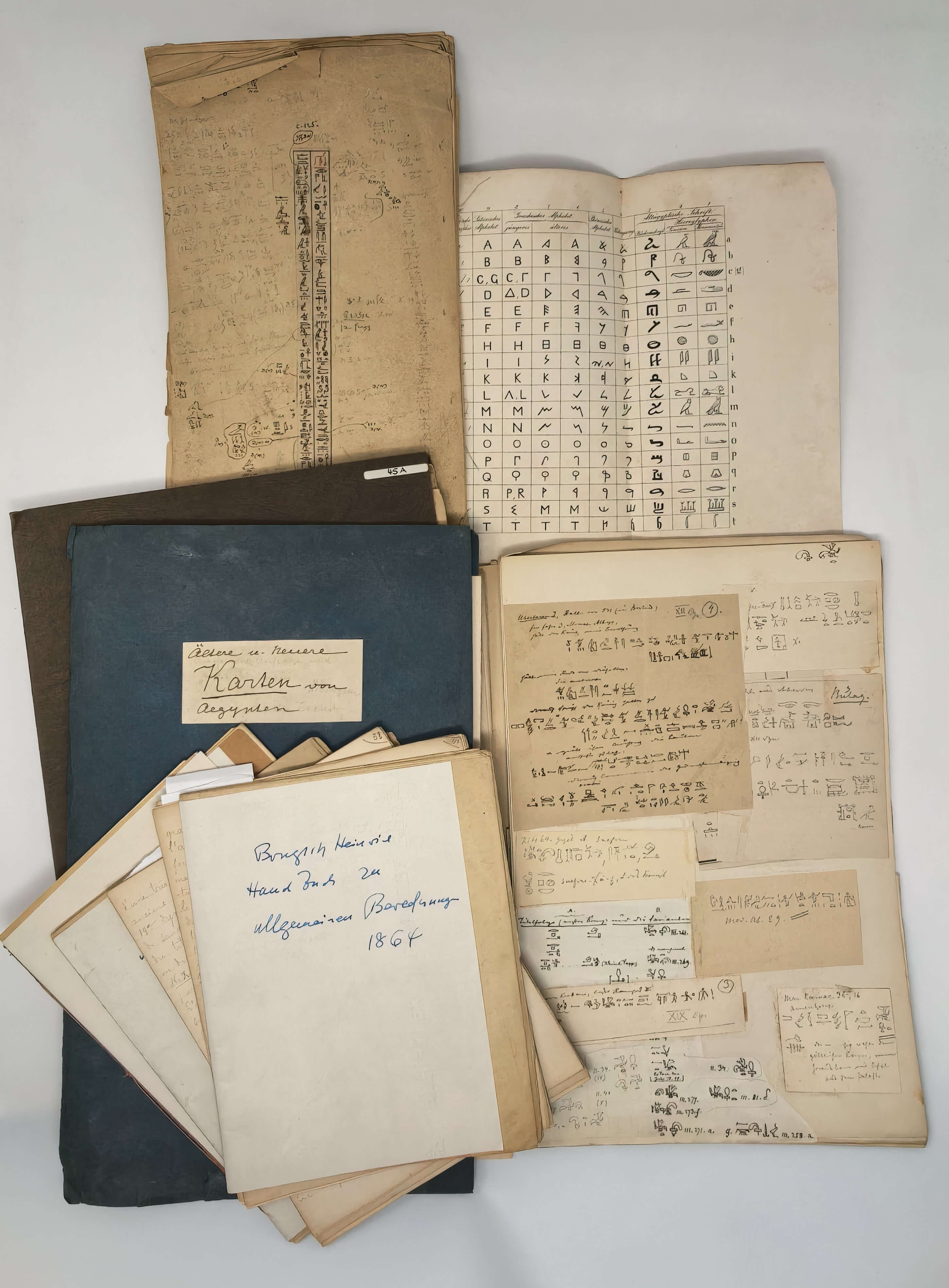
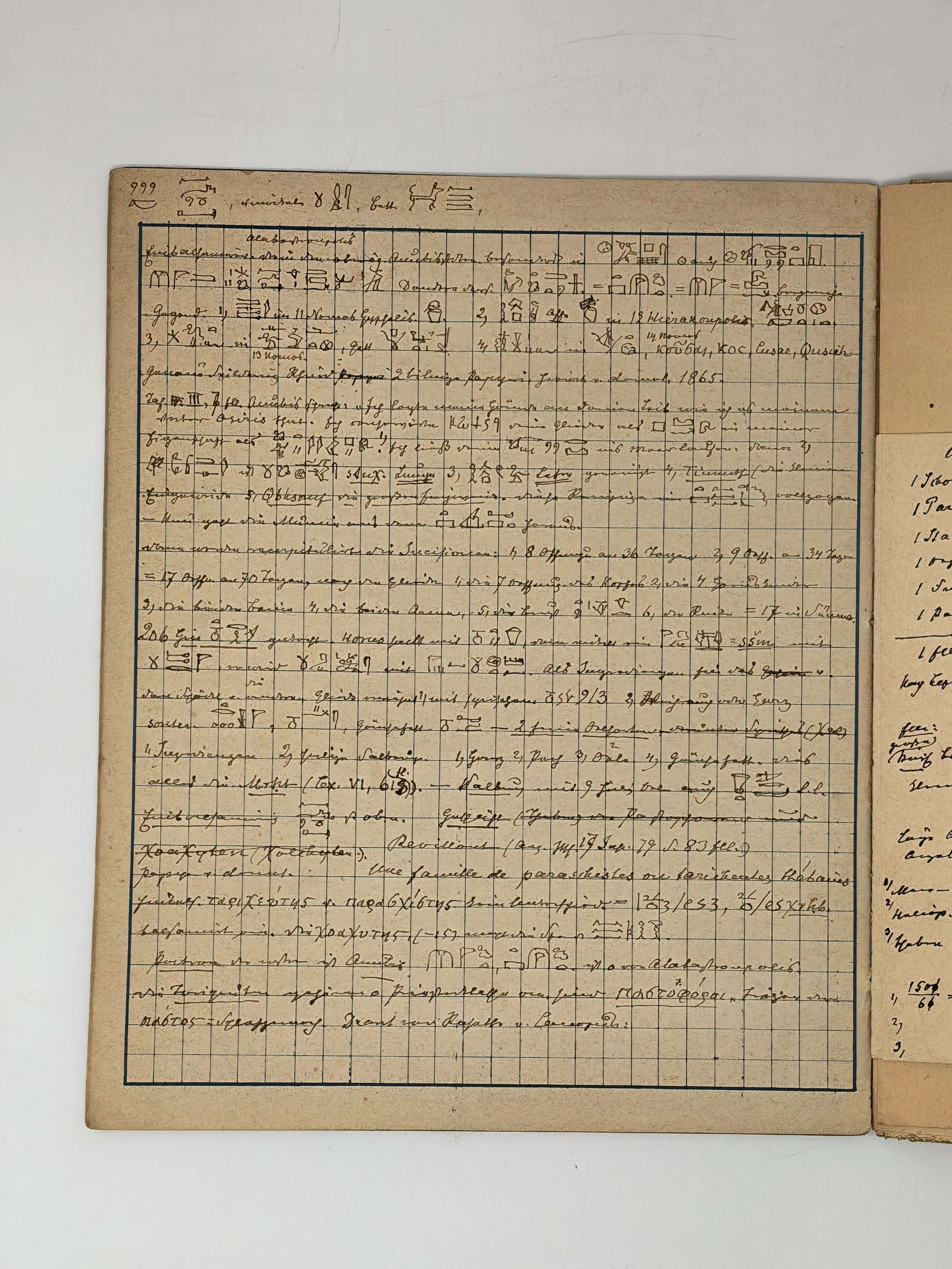
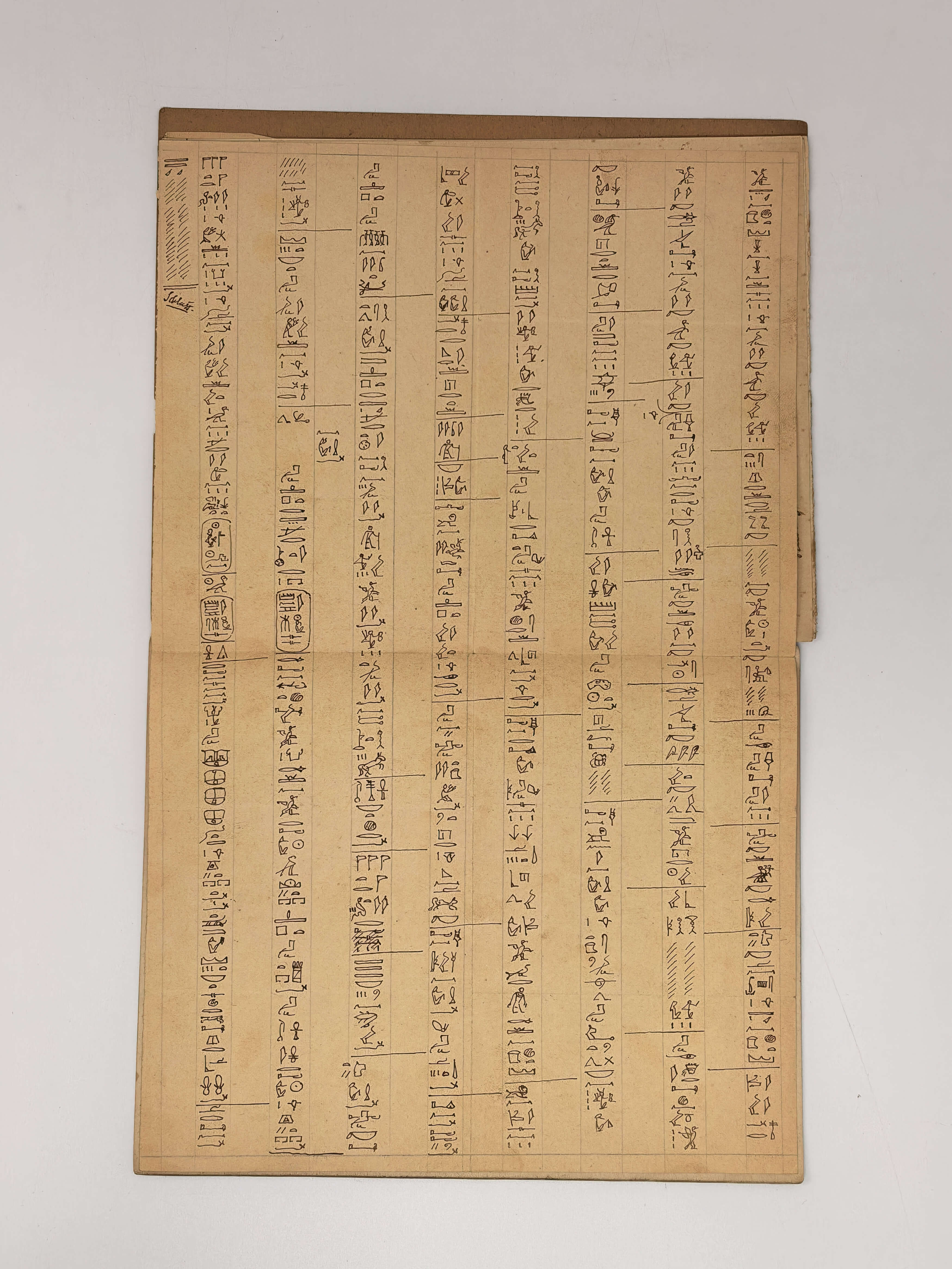
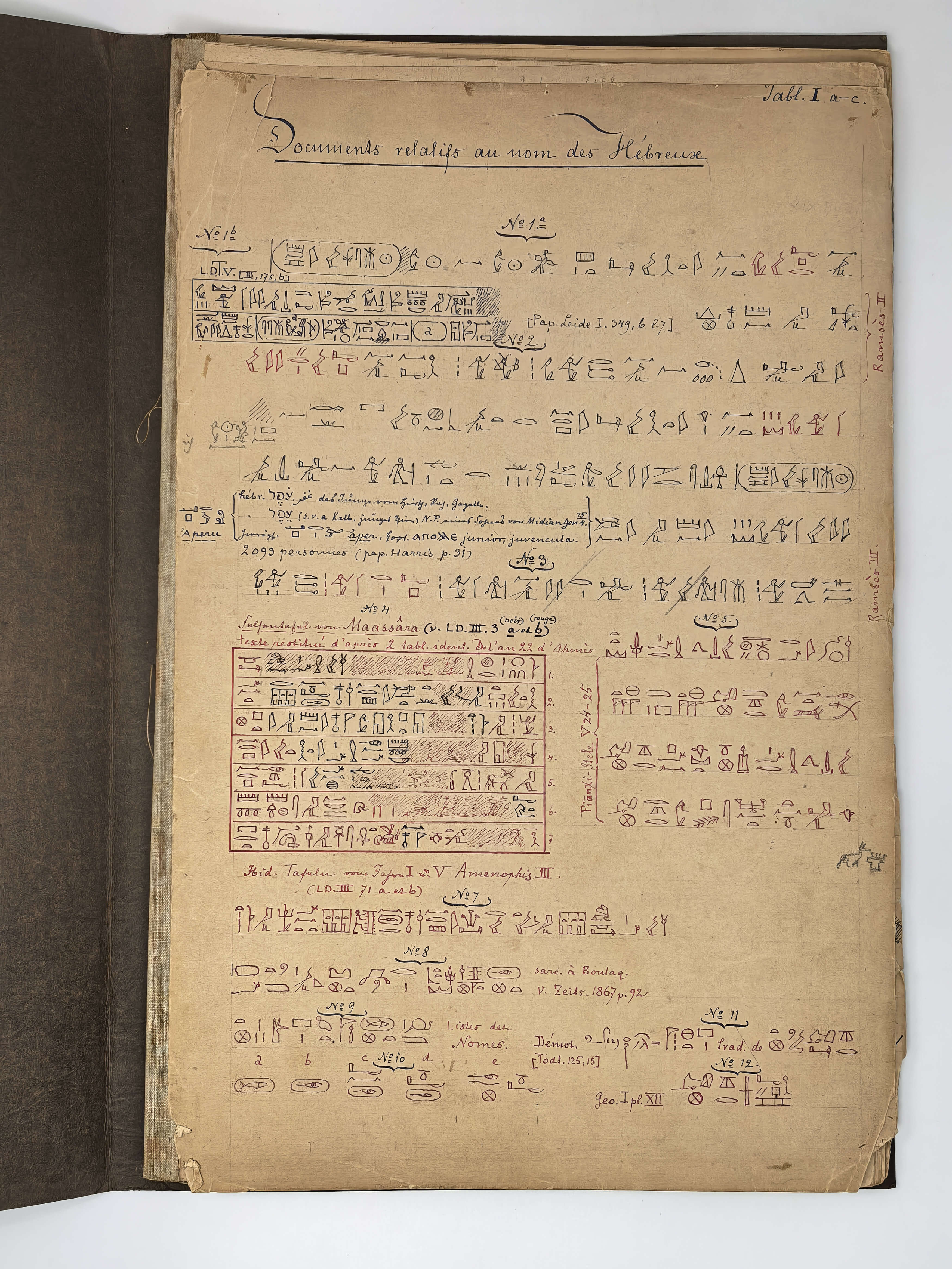
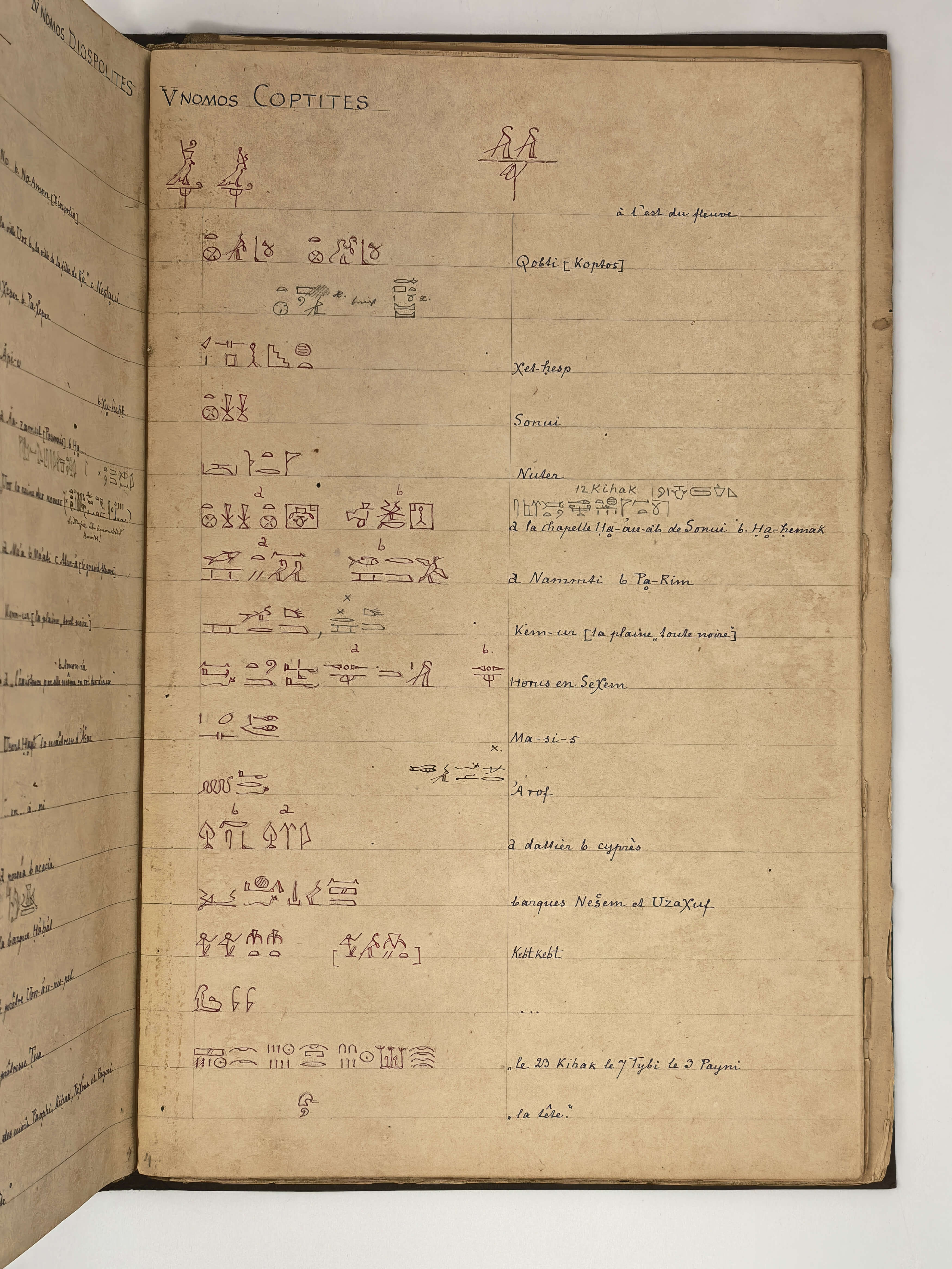
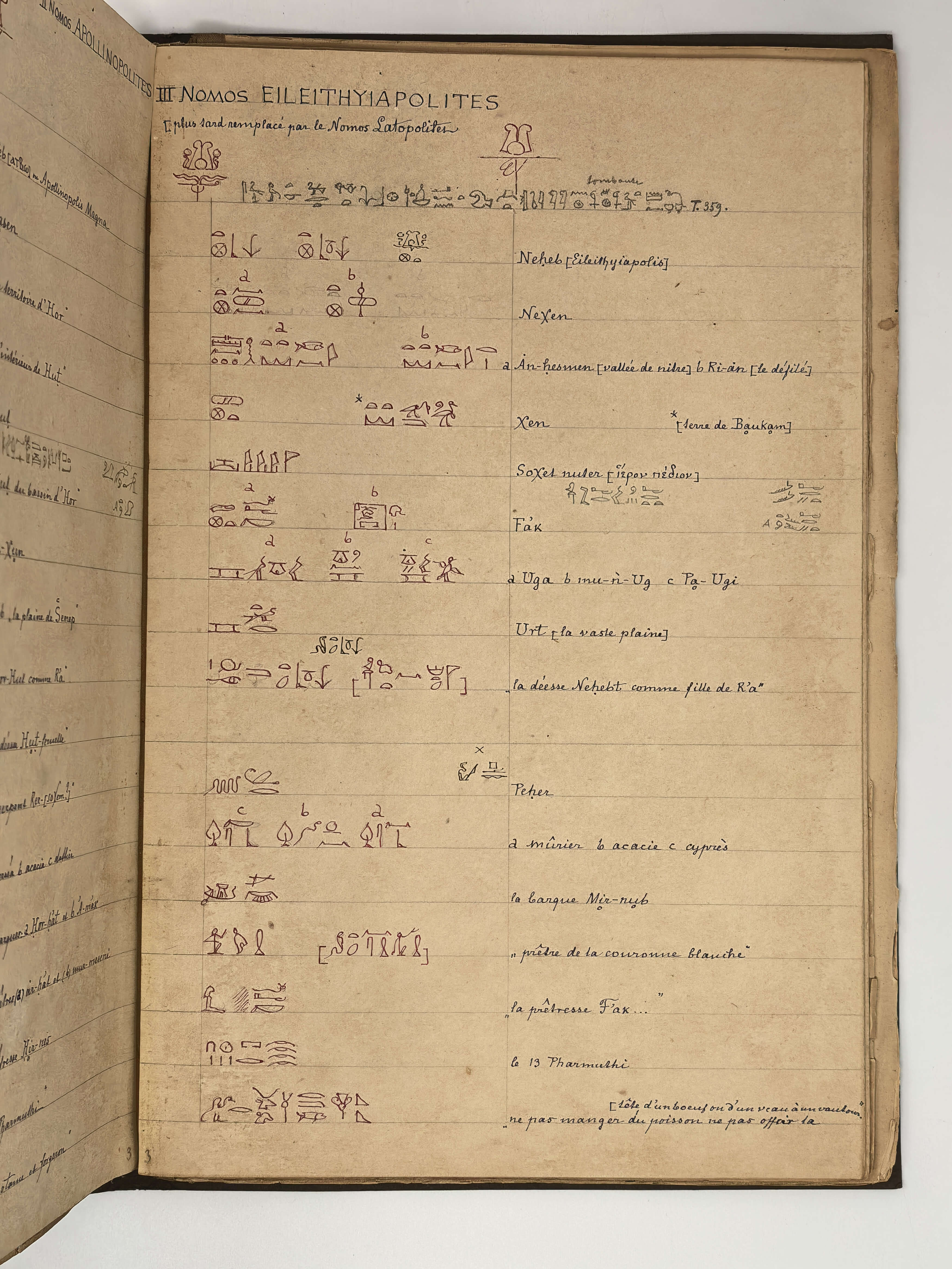
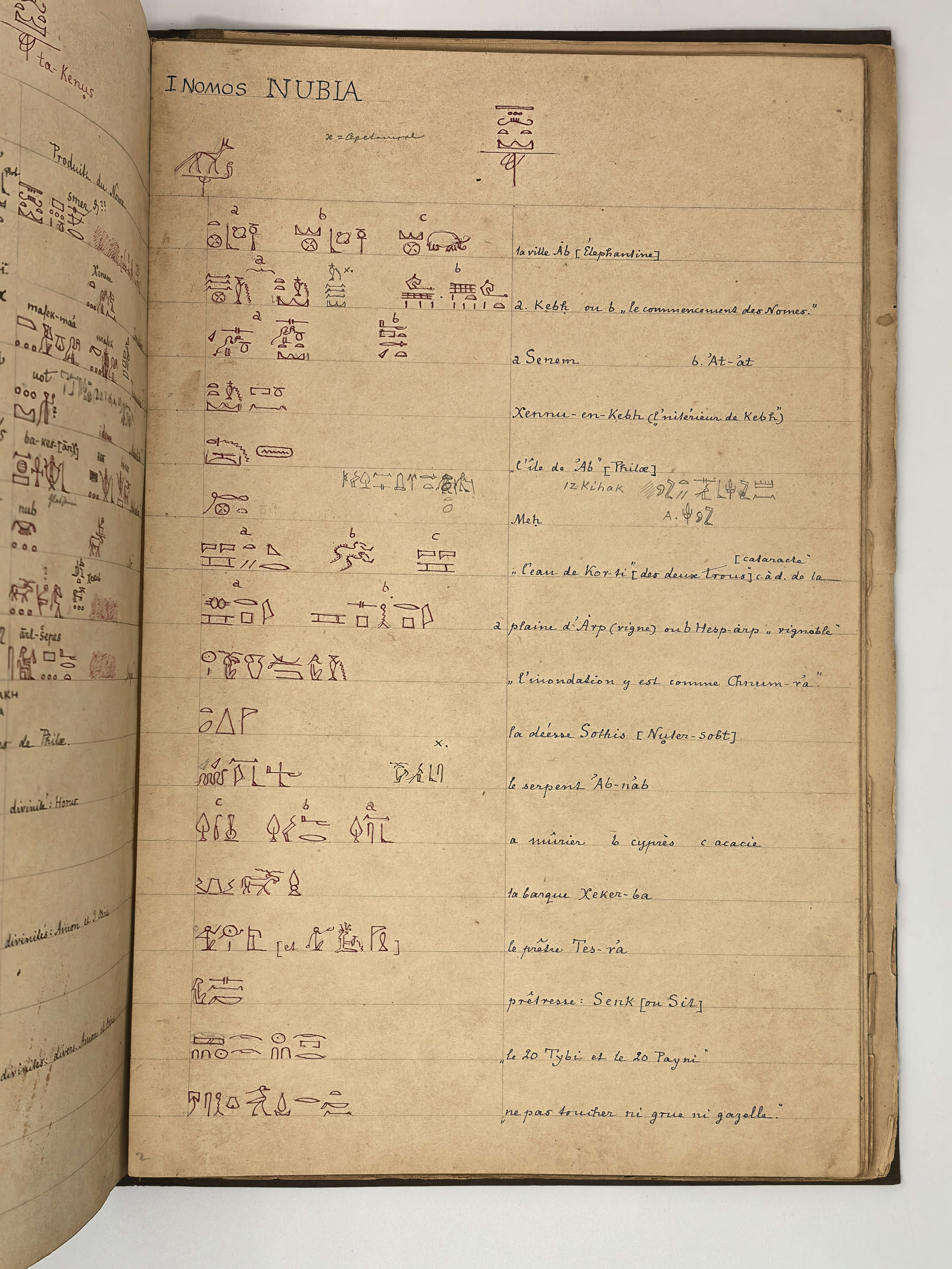
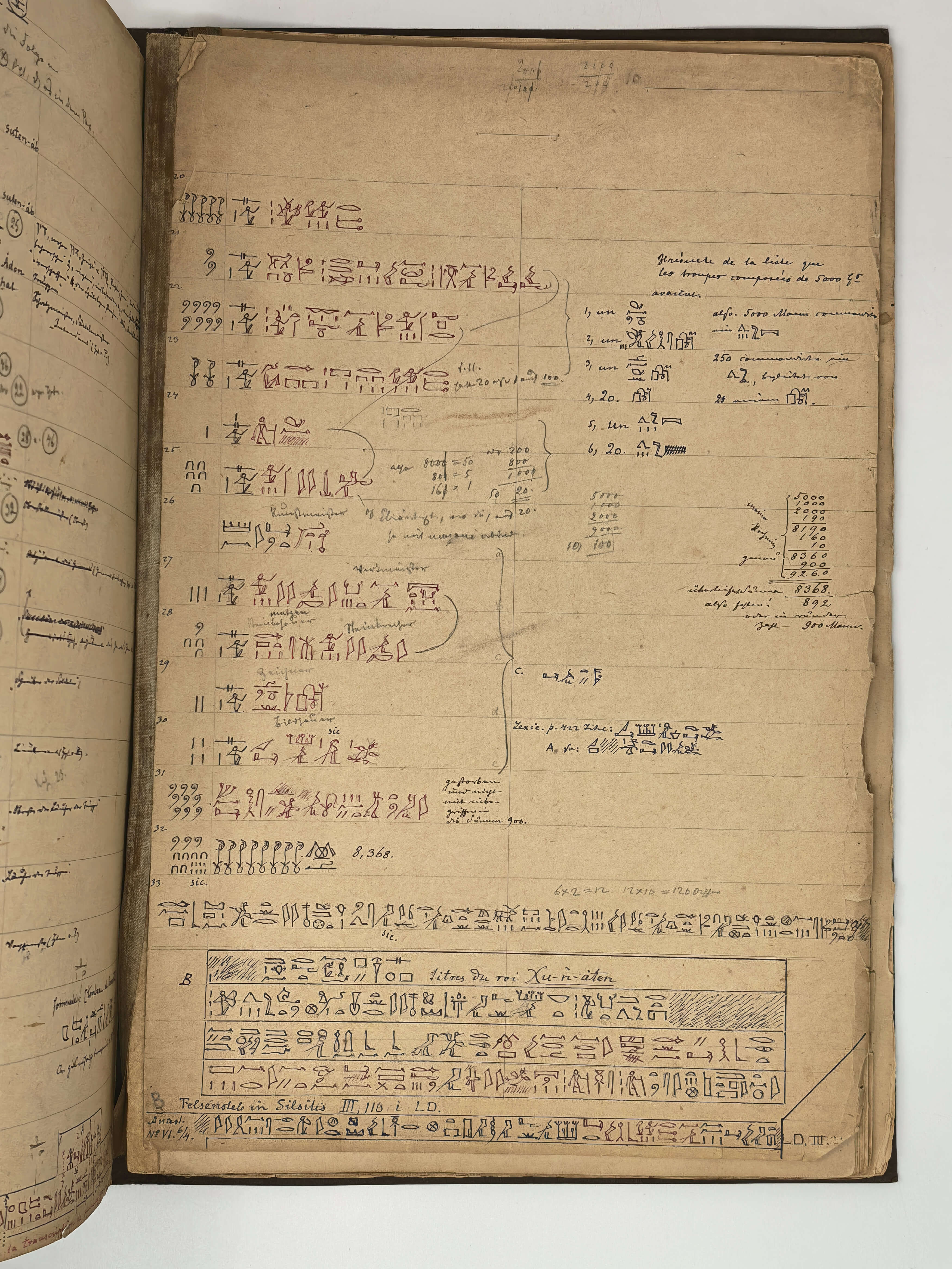
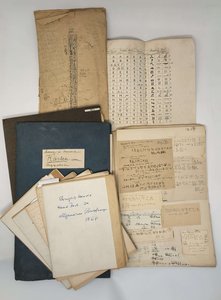
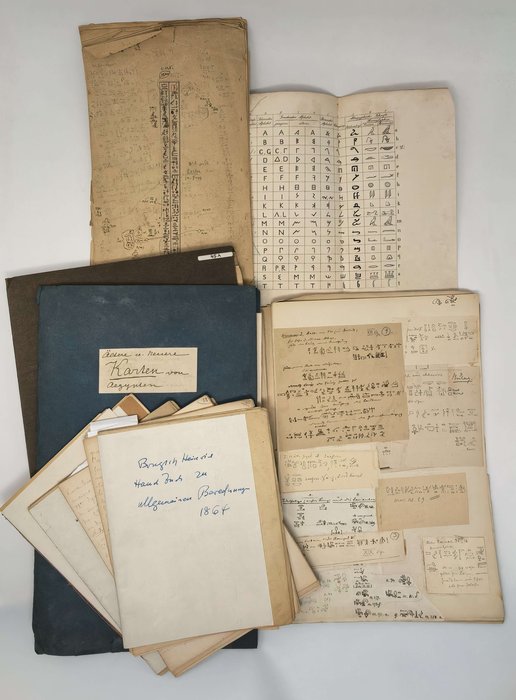
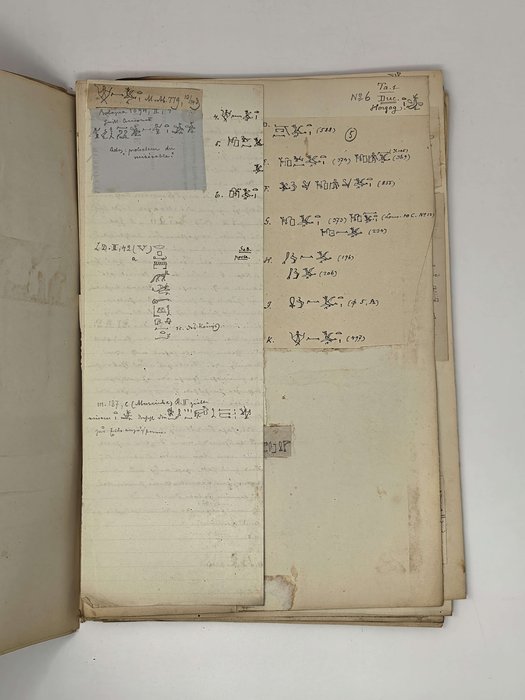
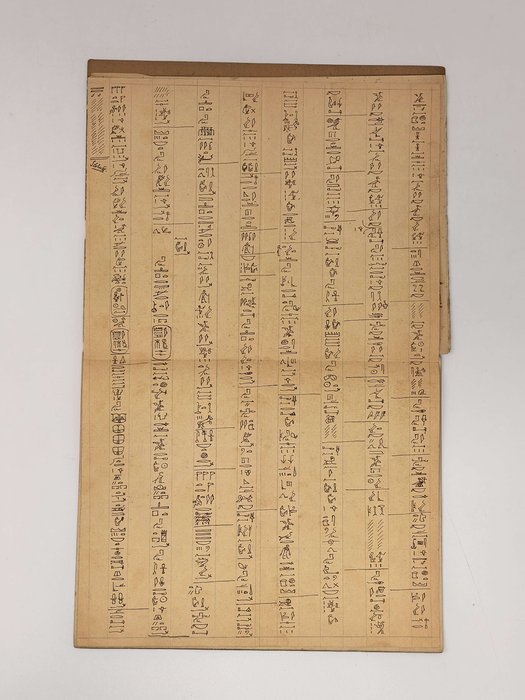
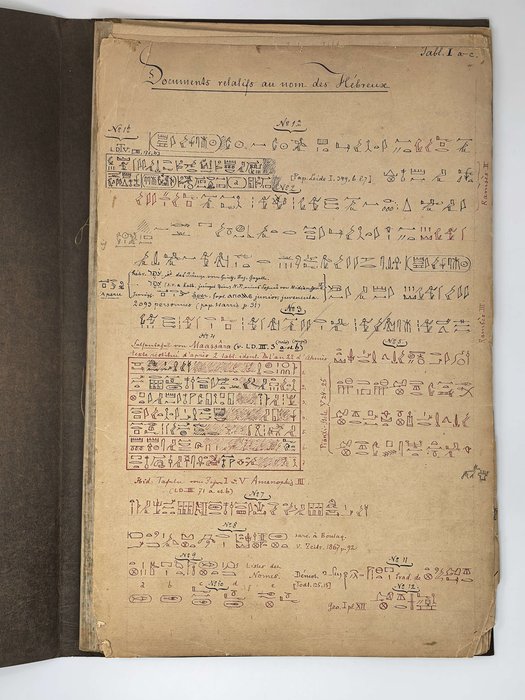
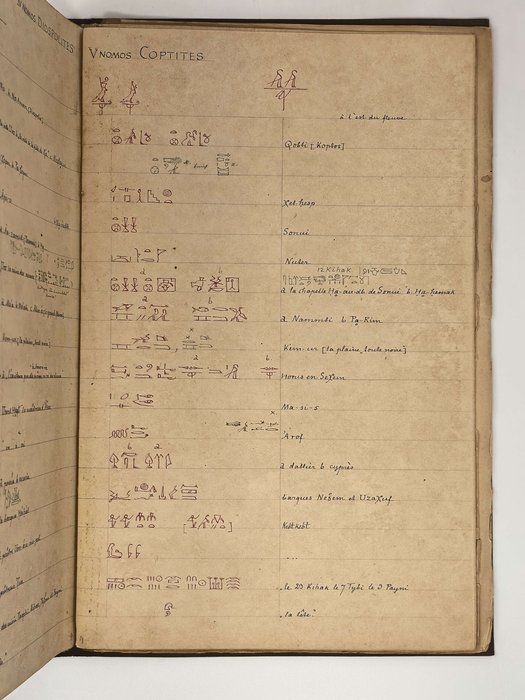
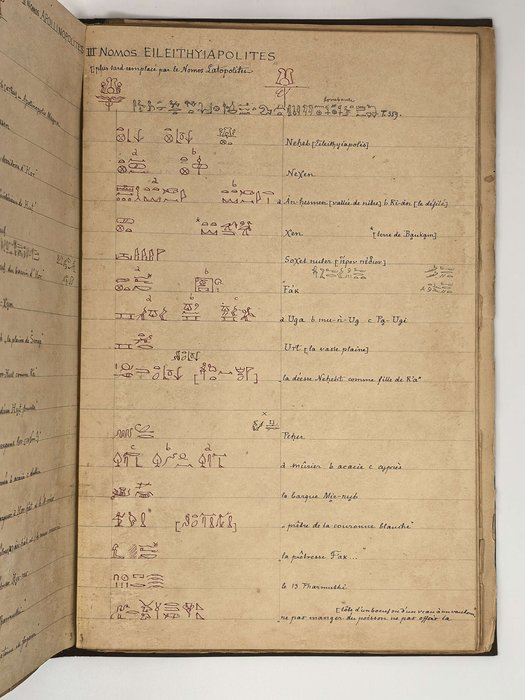
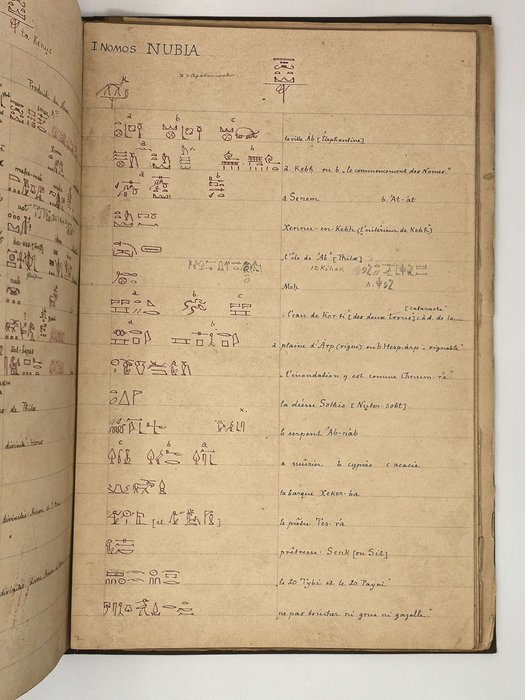
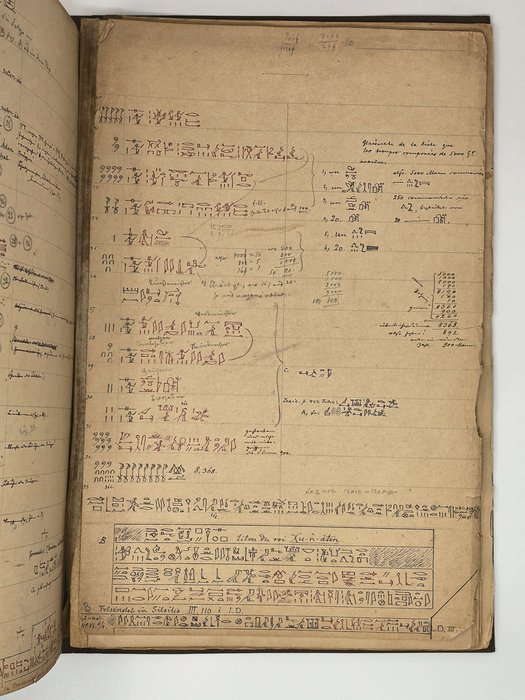
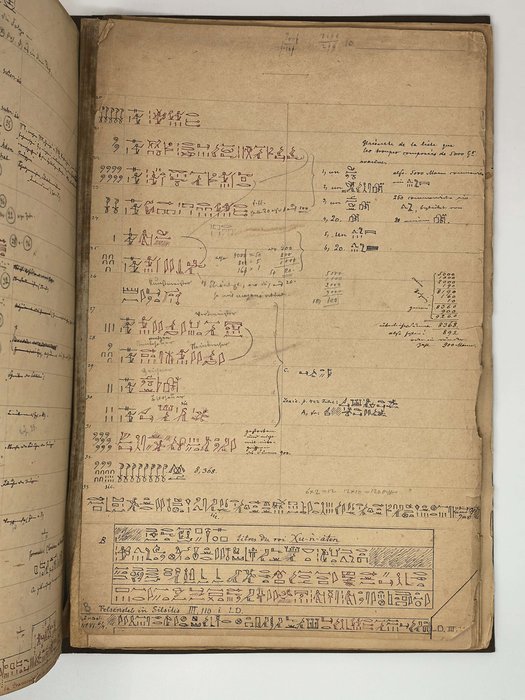
The archive includes seven original manuscripts, apparently compiled in the course of Brugsch’s work on several of his important publications. The Folio manuscript, titled “Les Nomes de la Haute-Egypte” (together with loosely inserted “Documents relatifs au nom des Hébreux”) was most likely prepared during his work on the "Dictionnaire géographique de l'ancienne Egypte." The manuscript lists and explains the hieroglyphs defining 22 noms (administrative divisions) of Upper Egypt (Nubia, Apollinopolis, Eileithyiapolis, Diospolis, Coptus, Tentyra, Diospolites, &c.), same as in Brugsch’s "Dictionnaire géographique…” (p. 15; see more).
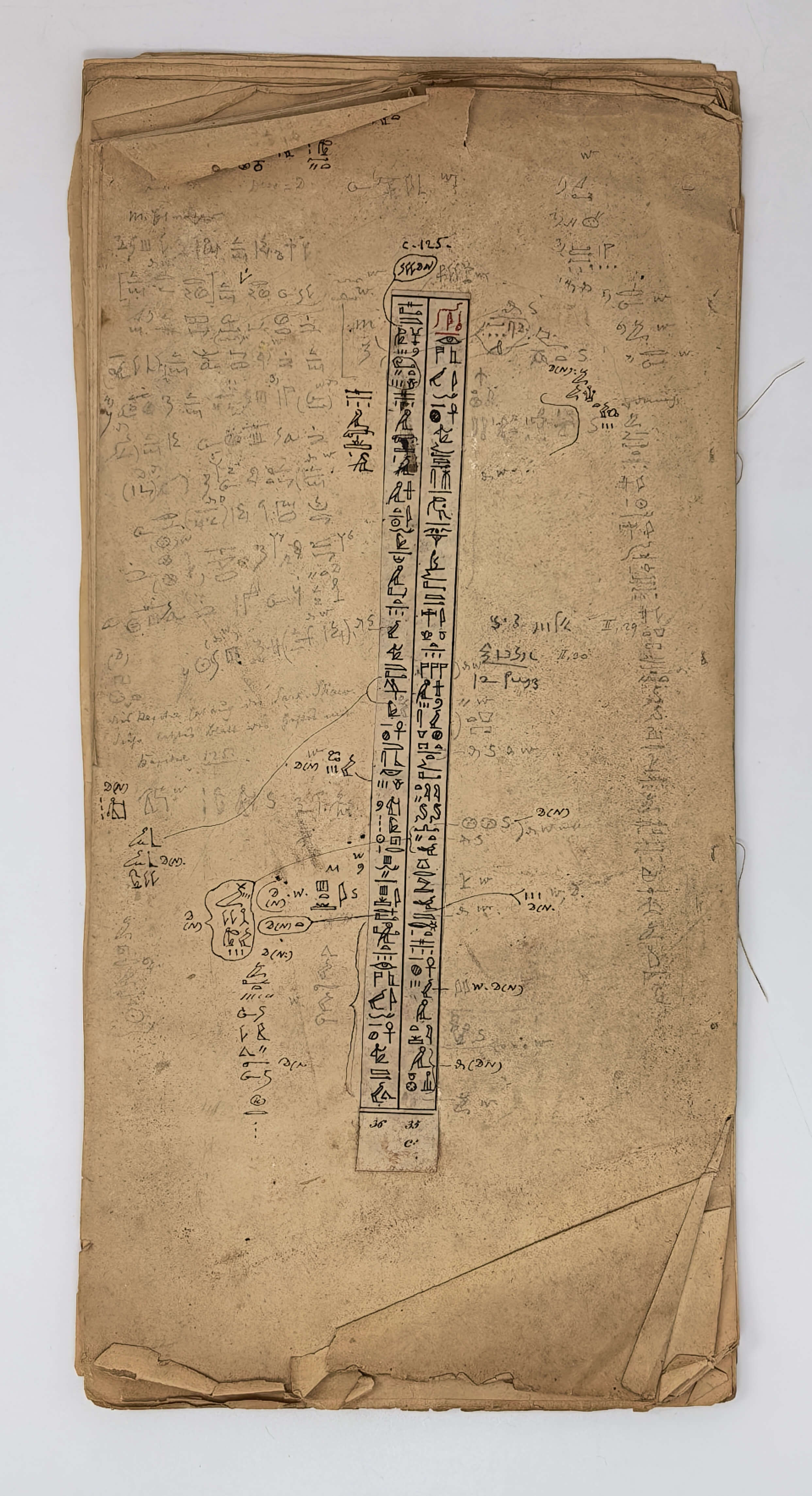
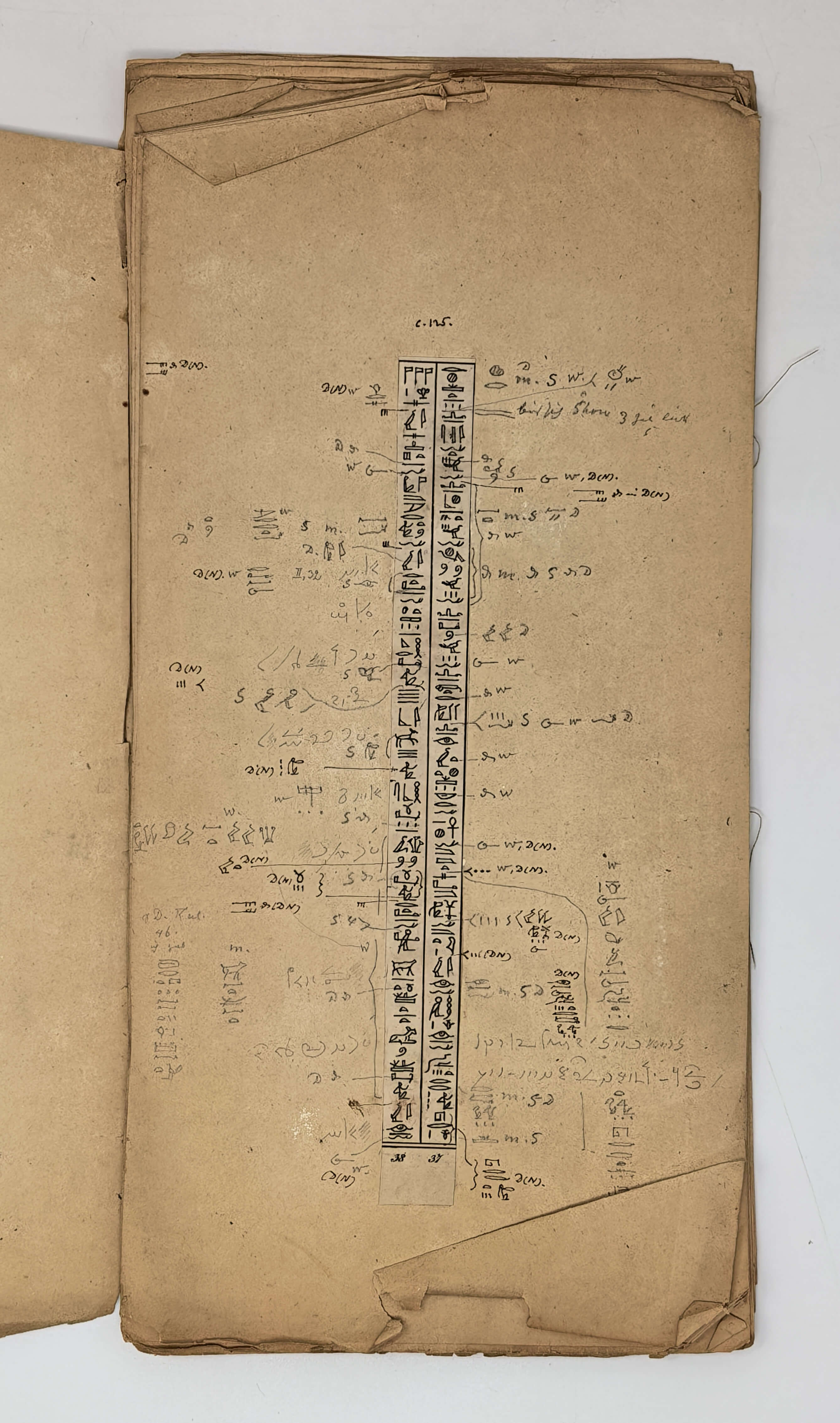
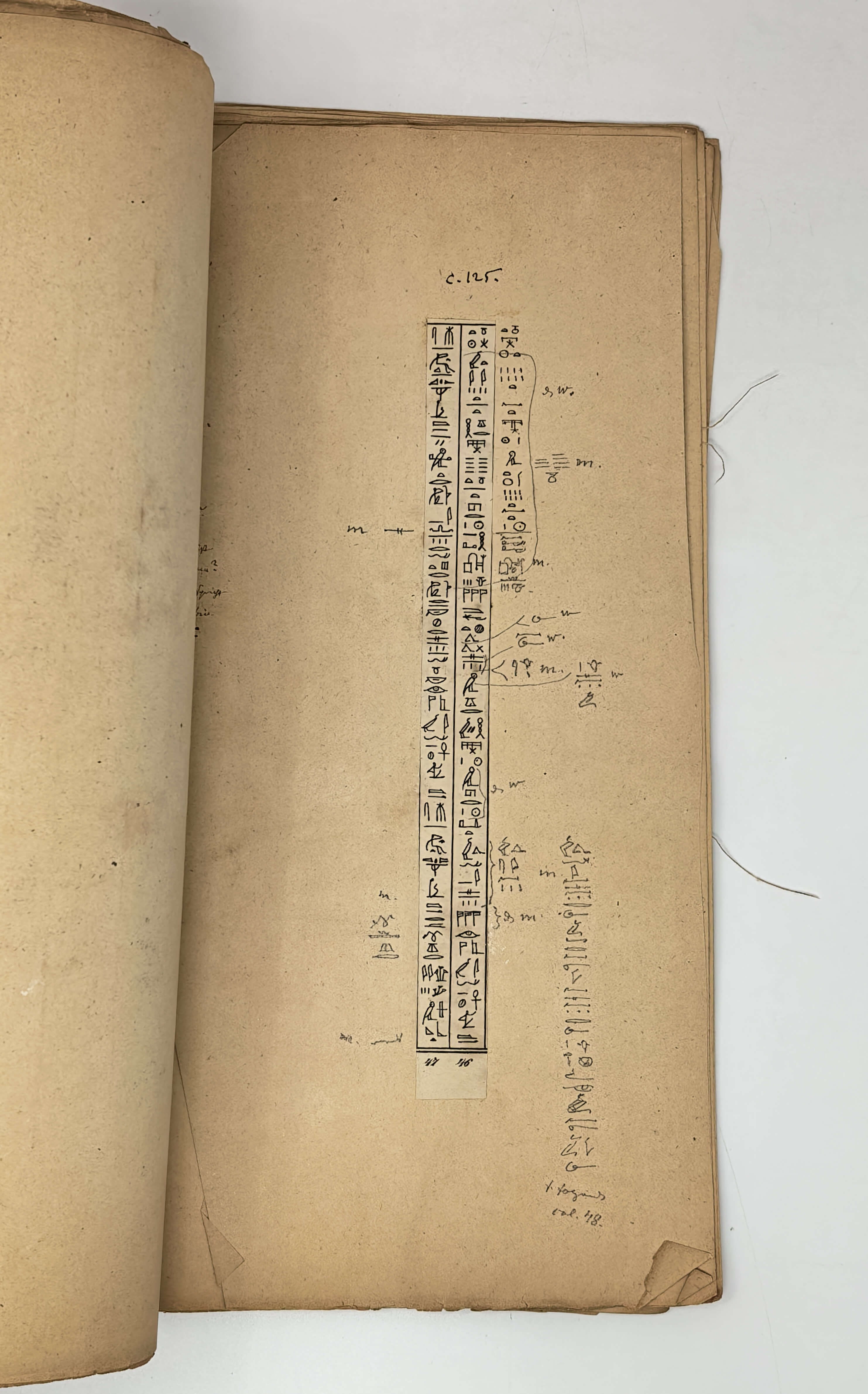
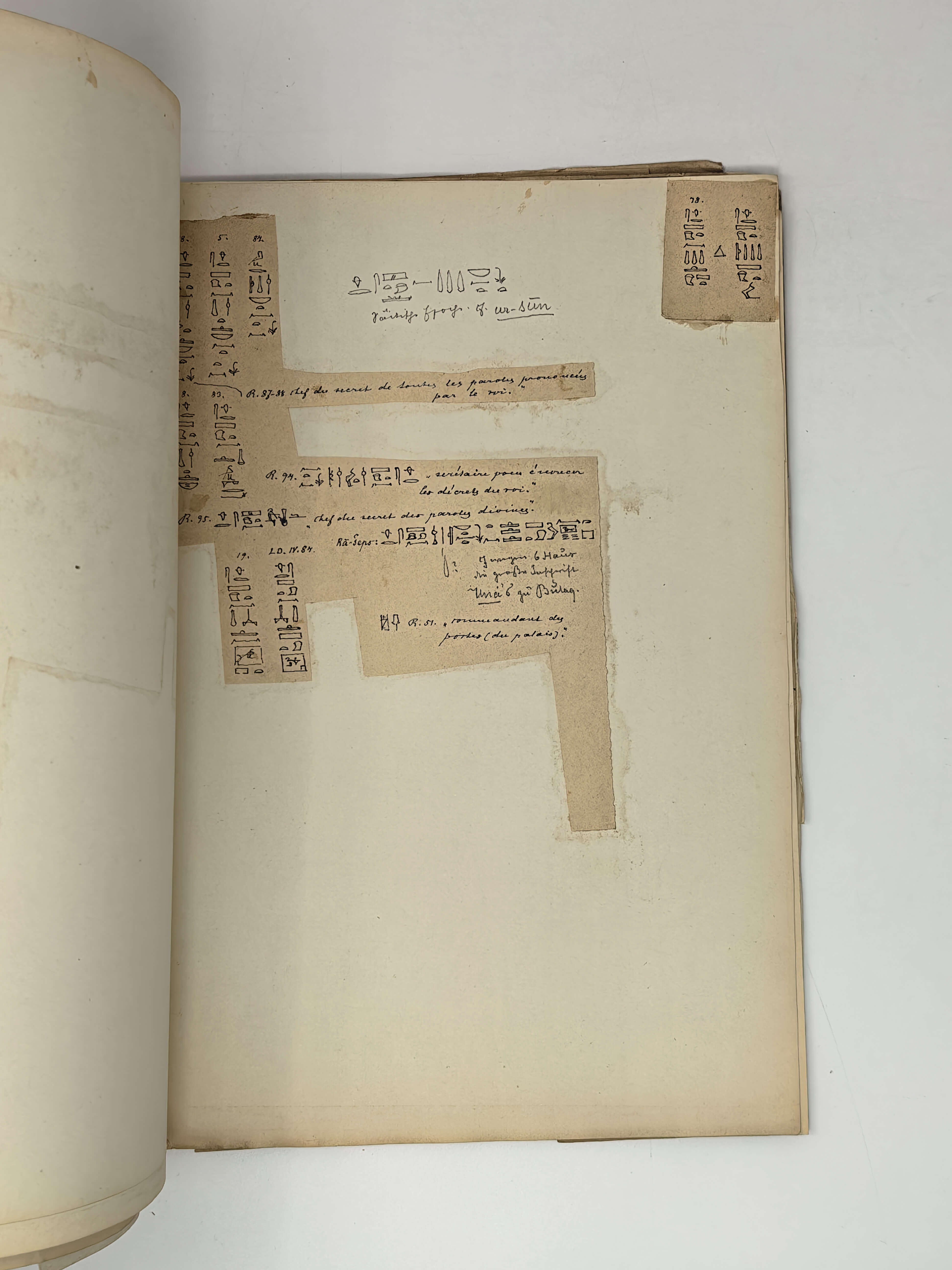
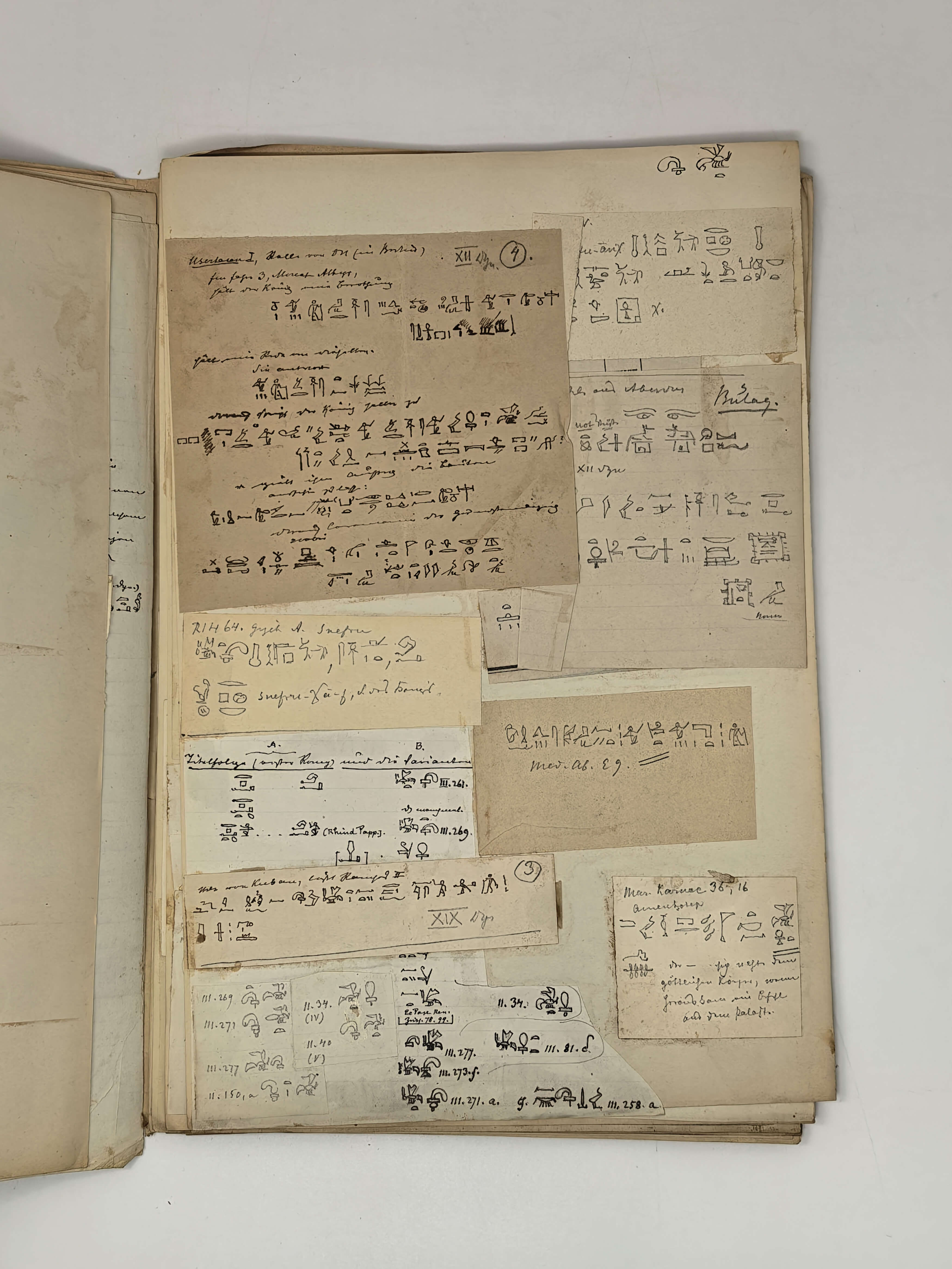
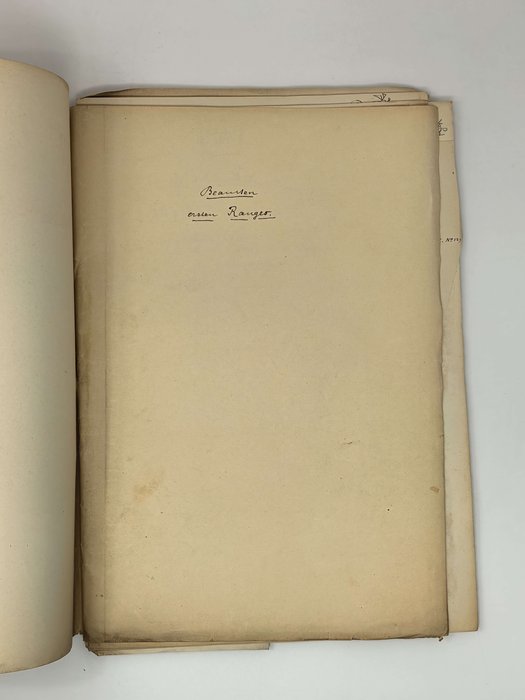
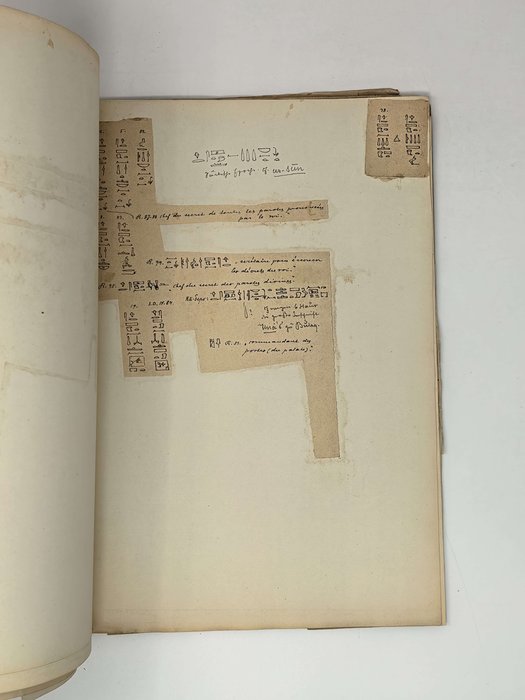
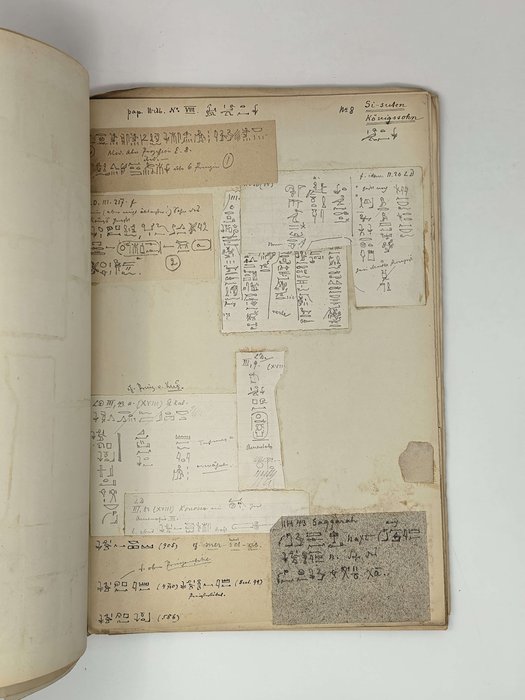
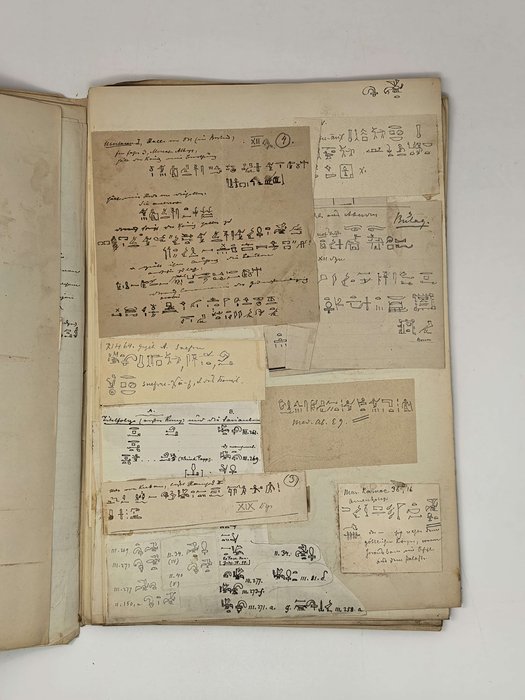
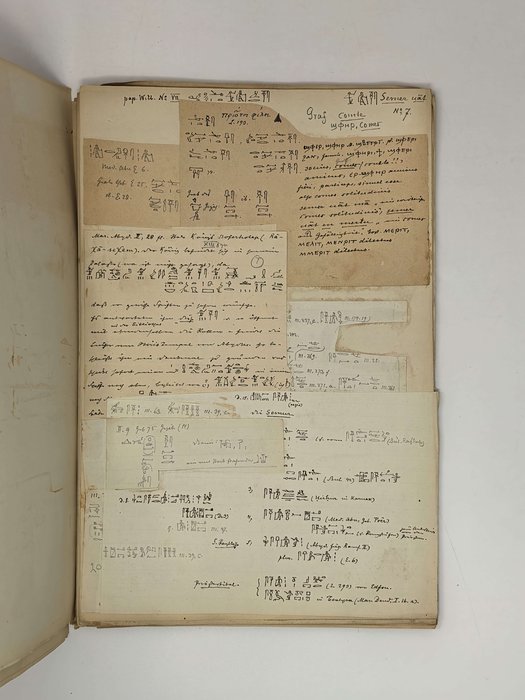
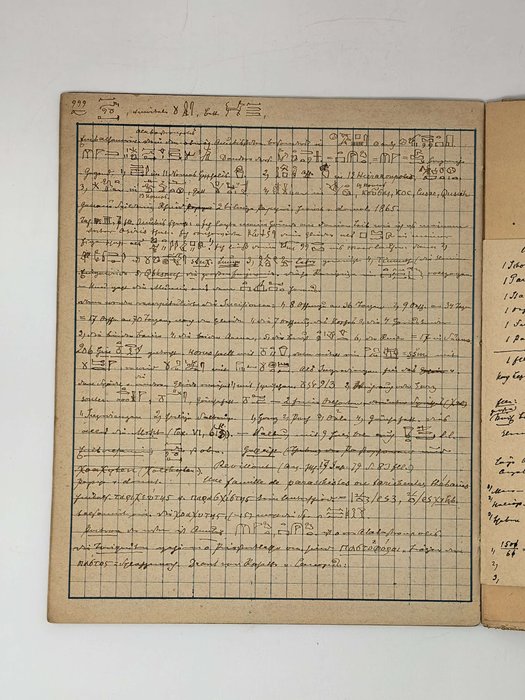
Two manuscripts – “Beauten Ersten Ranges. Fonctionnaires de la Cour” and an untitled collection of 24 leaves with mounted printed Egyptian hieroglyphs and dense manuscript notes on the margins – were possibly compiled during Brugsch’s work on his multi-volume “Thesaurus inscriptionum aegyptiacarum.” The manuscripts contain extensive notes and commentaries on hieroglyphs, with the material in the “Beauten Ersten Ranges” seemingly organized in a vocabulary-like manner.
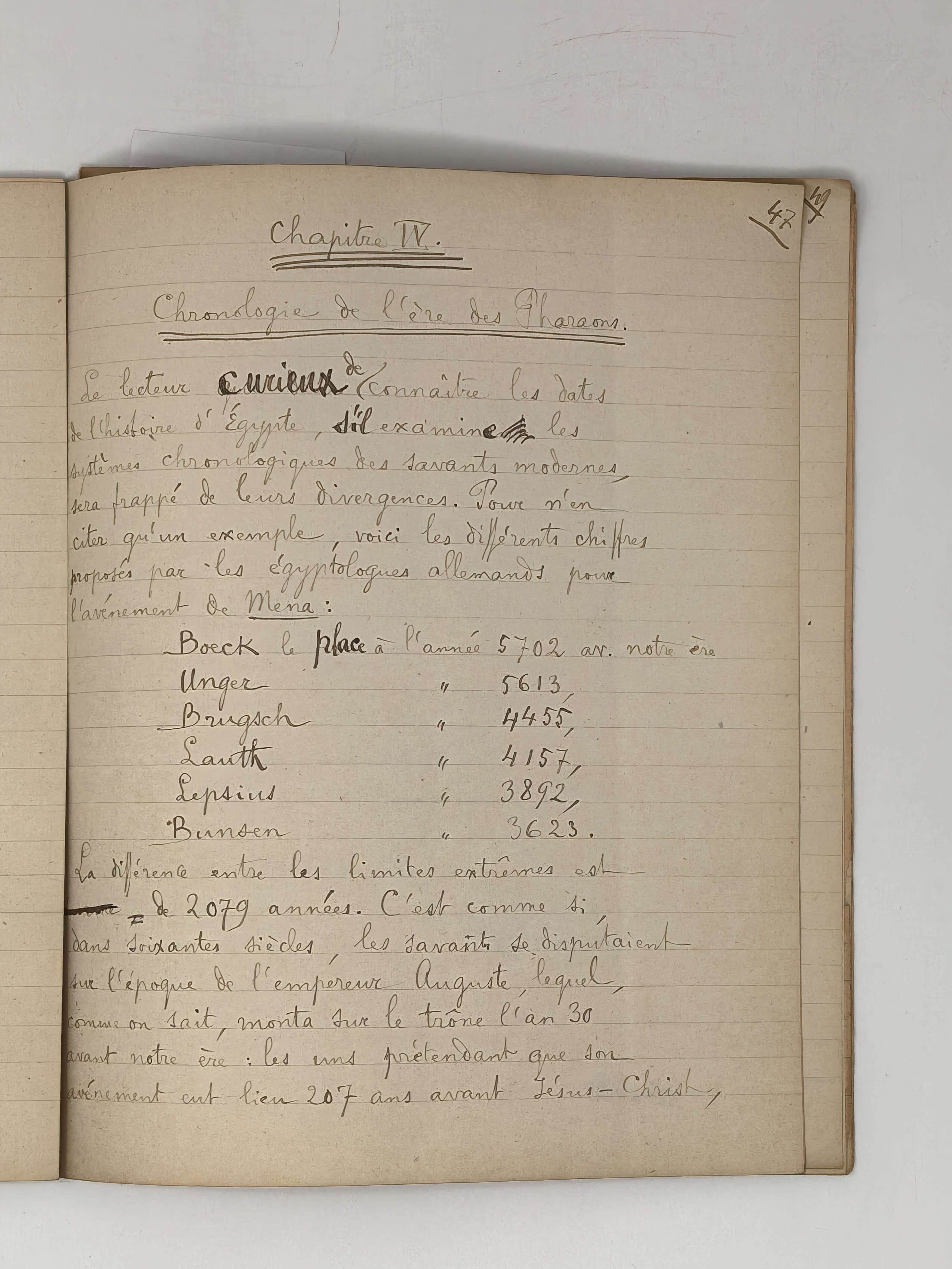
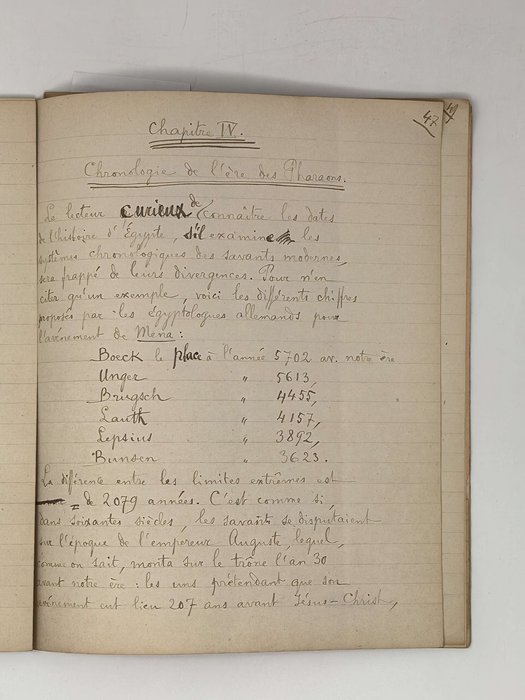
Two notebooks with manuscript notes on the history of ancient Egypt in German and French, respectively, could have been prepared in the course of Brugsch’s work on the “Histoire d’Égypte des les premiers temps de son existence jusqu’a nos jours” or its later German-language version “Geschichte Aegyptens unter den Pharaonen.” One of the manuscripts (a fragment of a larger work with pages numbered from 41 to 98) contains complete chapters “IV. Chronologie de l’ère des Pharaons,” “V. Le premier pharaon Mena et l’ancien empire,” and “ VI. Les successeurs de Mena.”
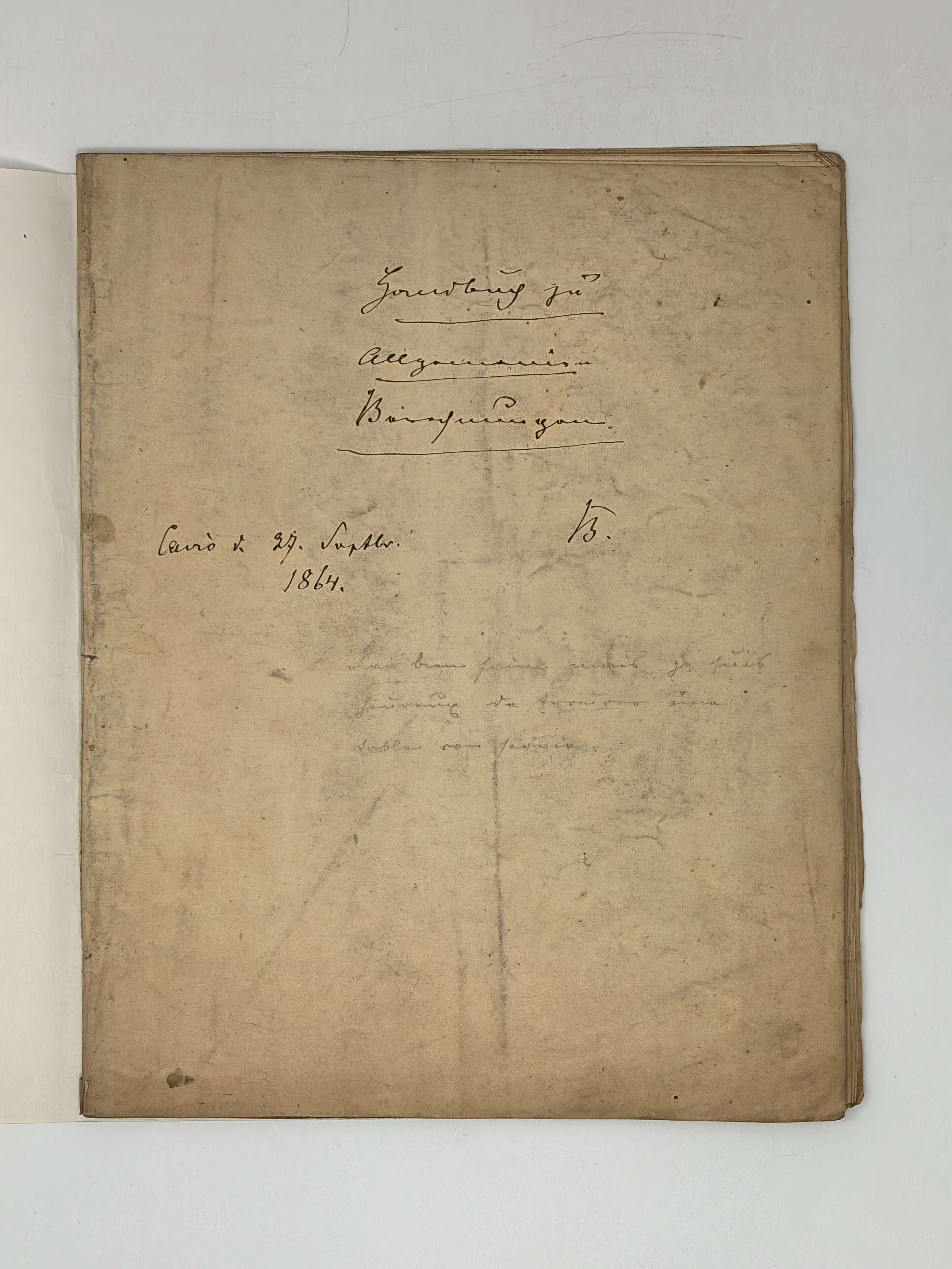
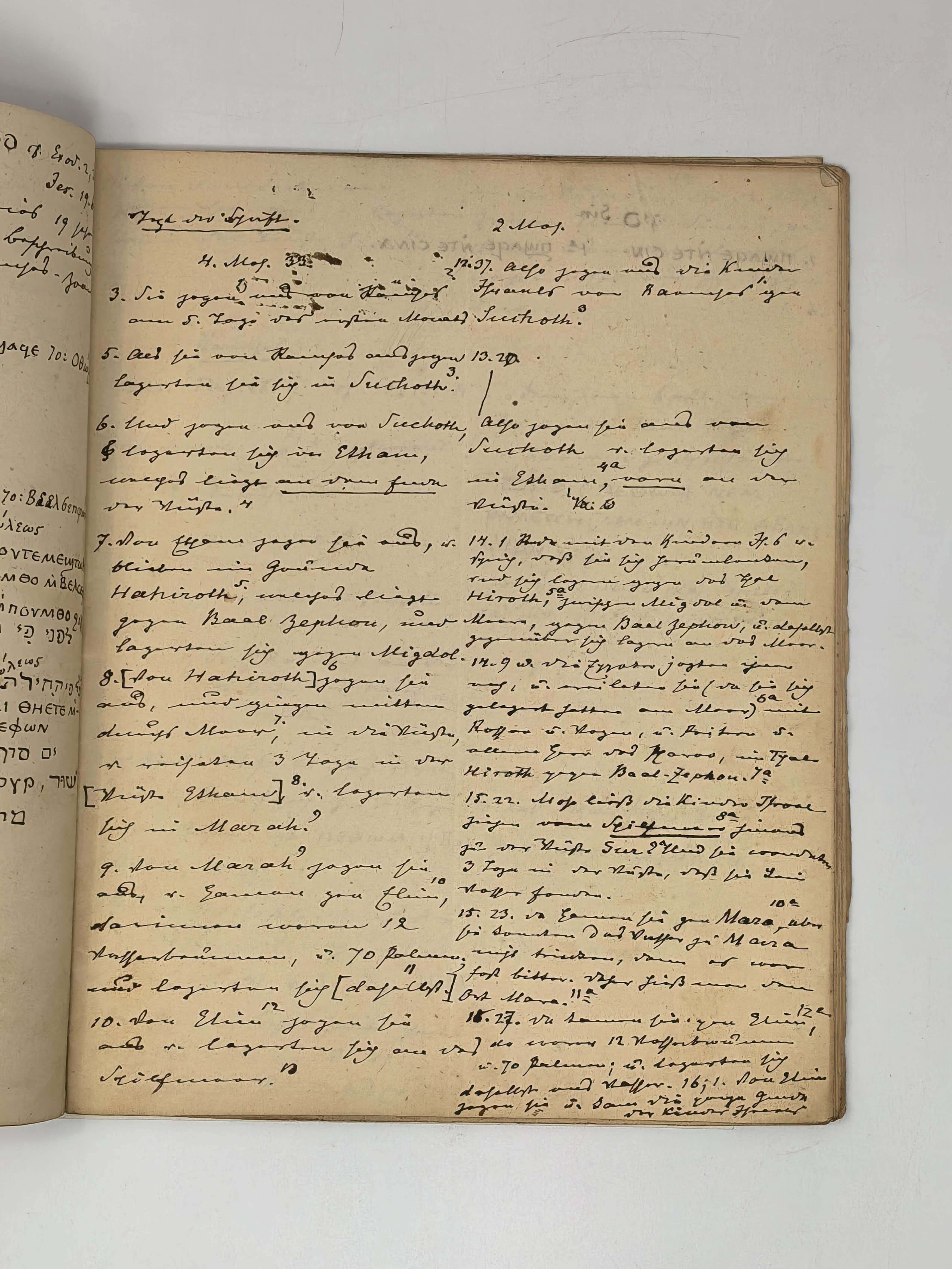
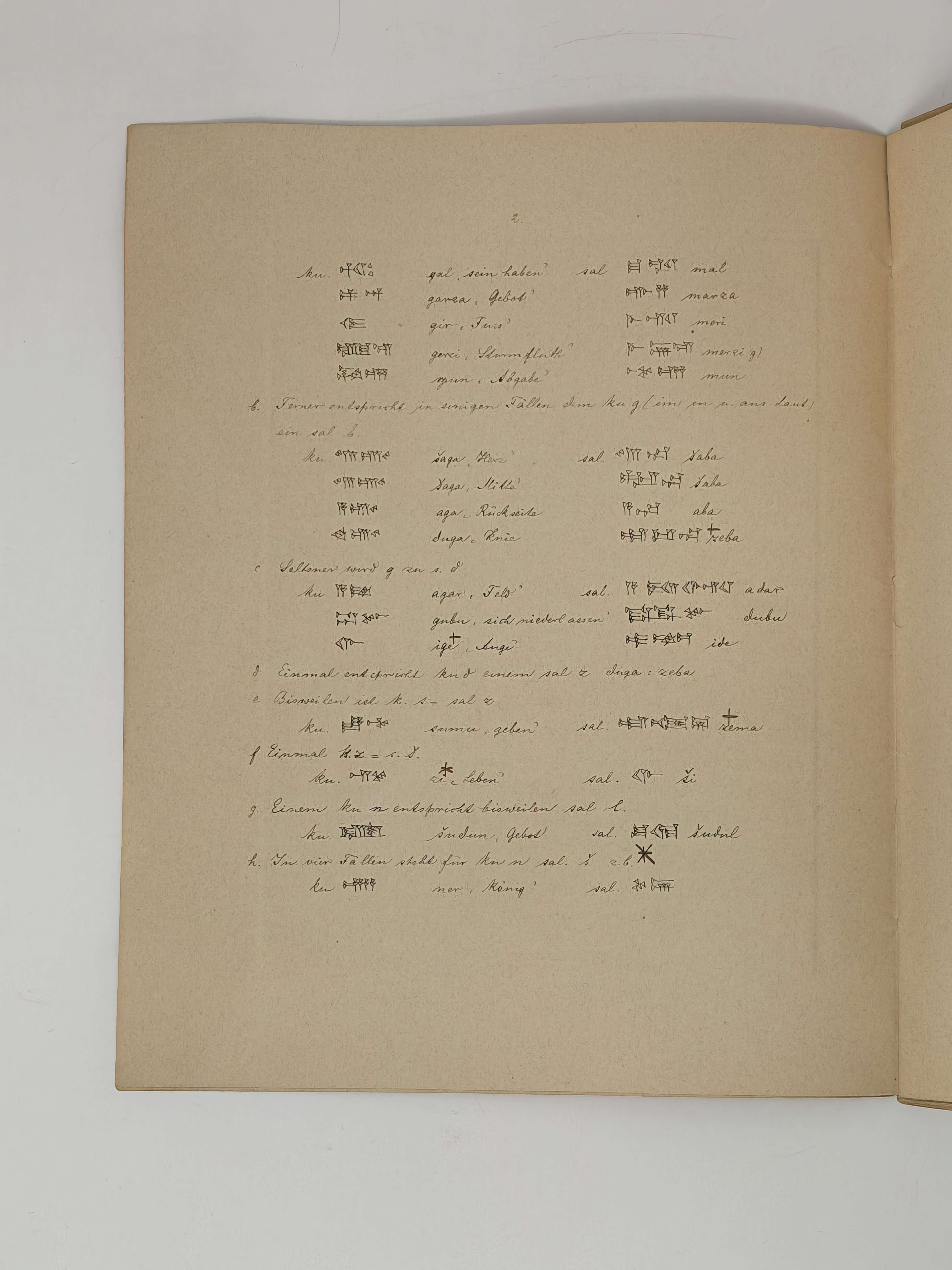
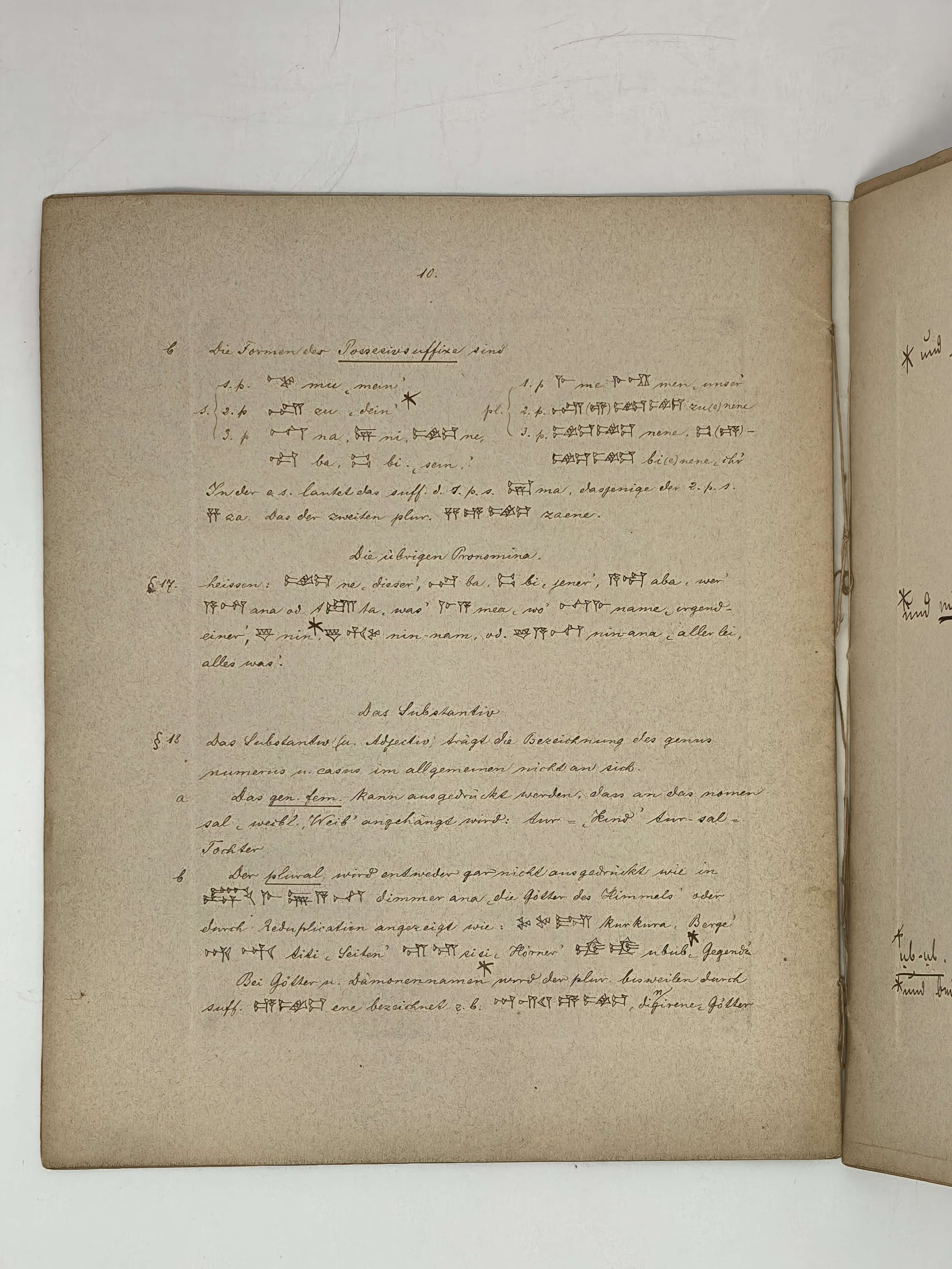
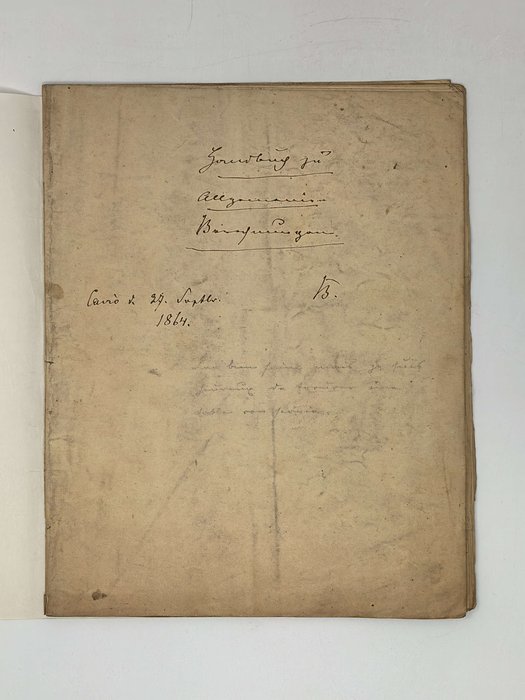
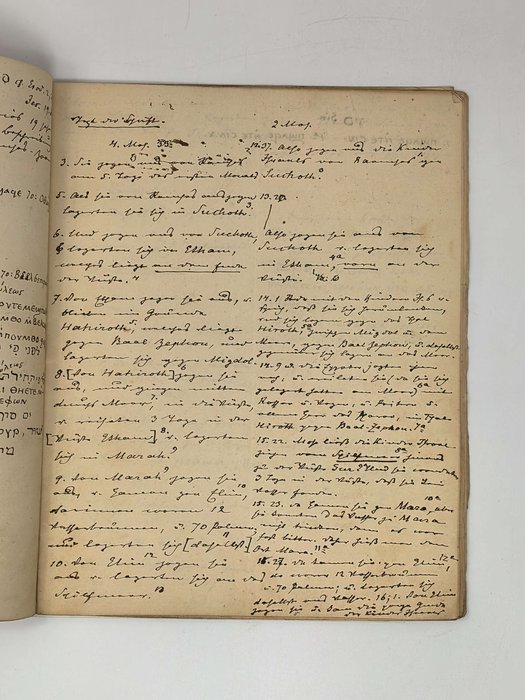
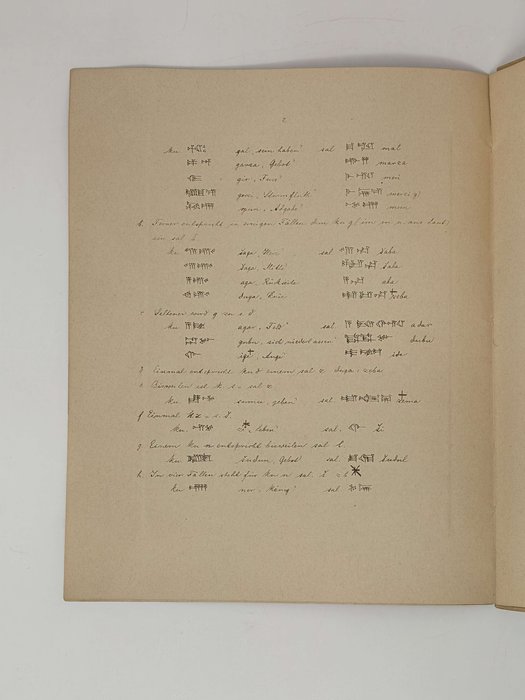
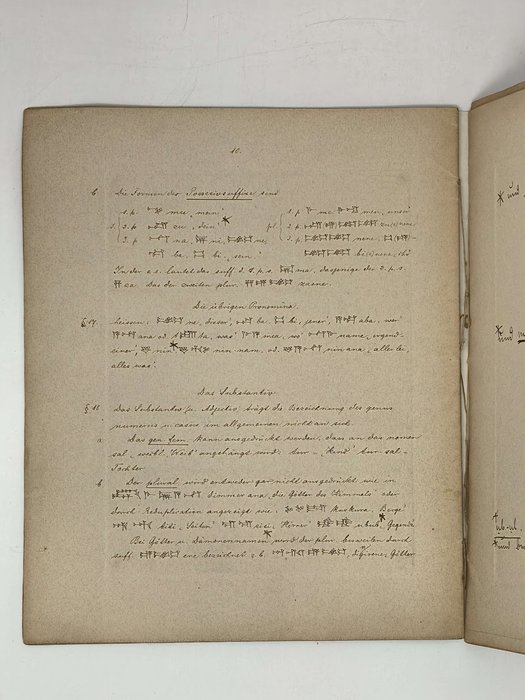
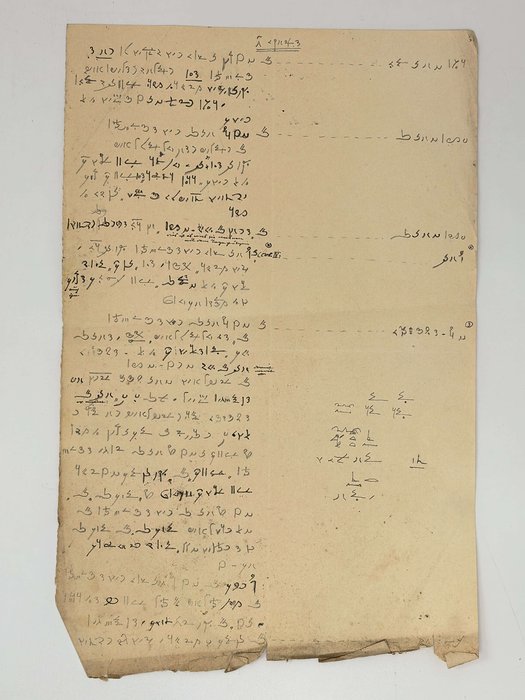
The archive also includes an early Brugsch’s manuscript, titled “Handbuch fur allgemeinen Beredungen” (dated Cairo, 27 September 1864) with passages on hieroglyhs, and parallel notes in Greek, Hebrew and German; Brugsch’s article “Über den Ursprung unserer Schriftzeichen” (About the origin of our writing system), from “Zeitschrift für Stenographie und Orthographie in wissenschaftlicher, pädagogischer and prakticher Beziehung” (Leipzig, 1864. Vo. XII, No. 3, pp. 70-79 [= 10 pp.); and a manuscript on the Babylonian-Assyrian cuineform script with Brugsch’s extensive commentaries.
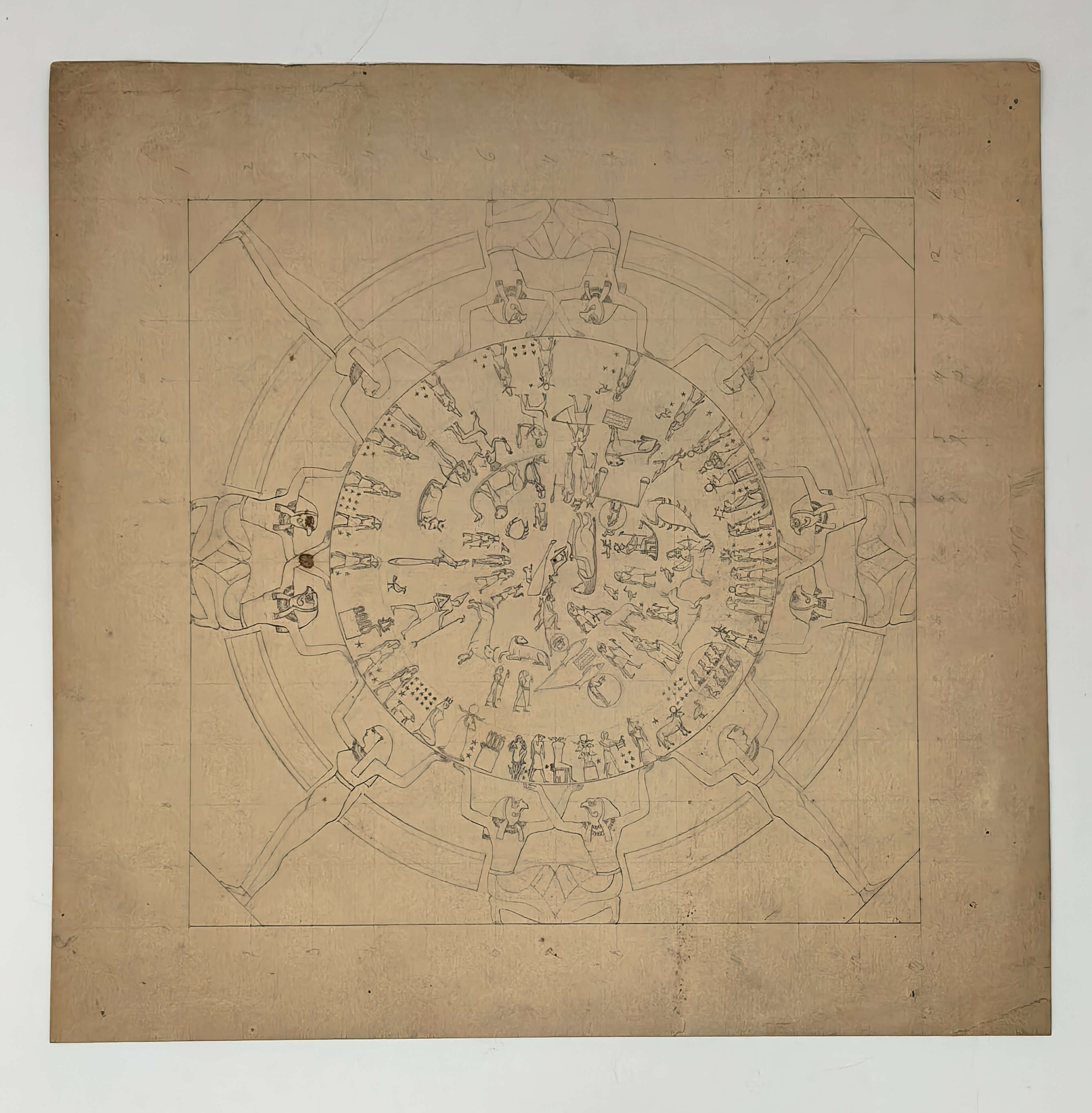
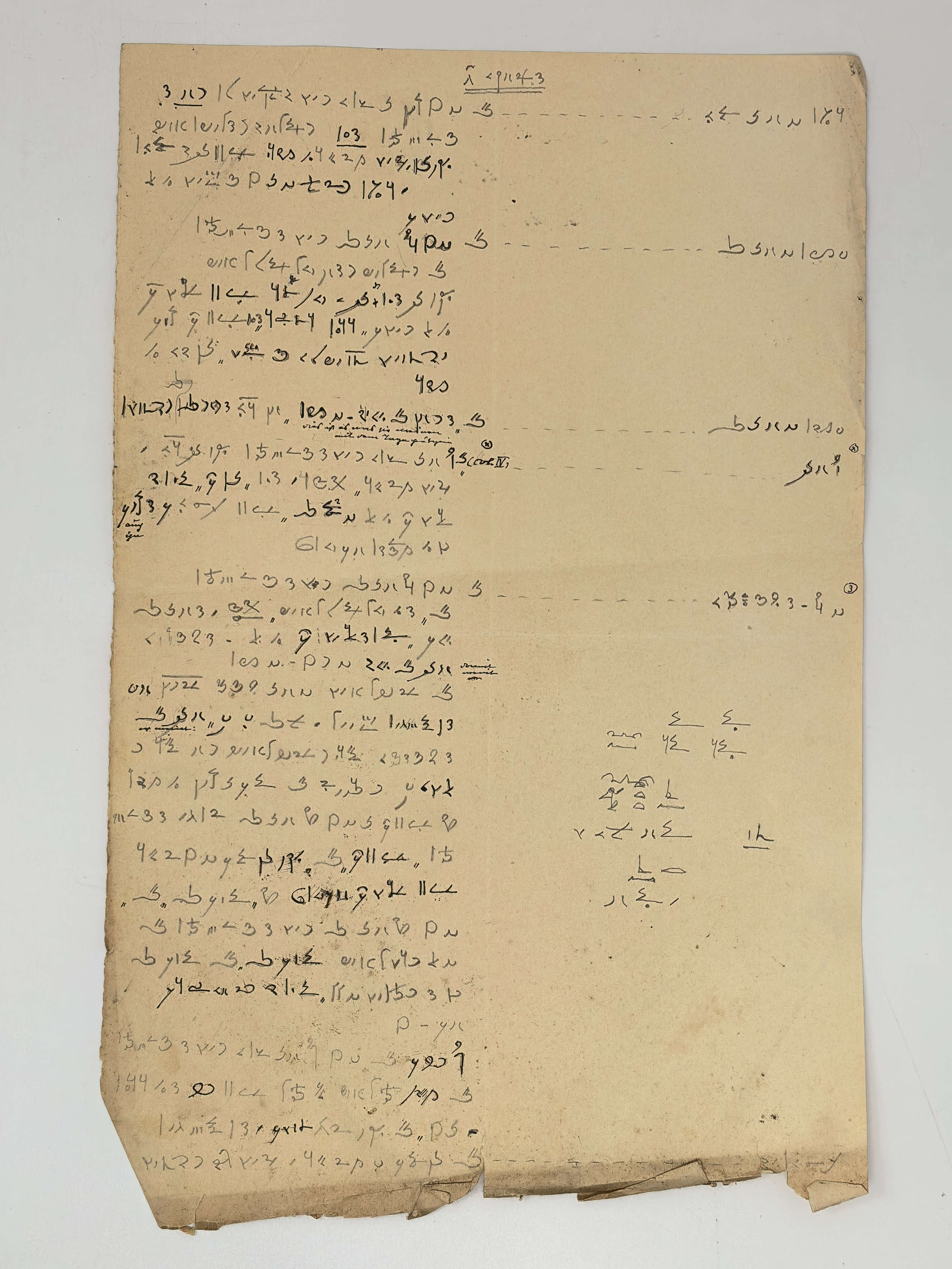
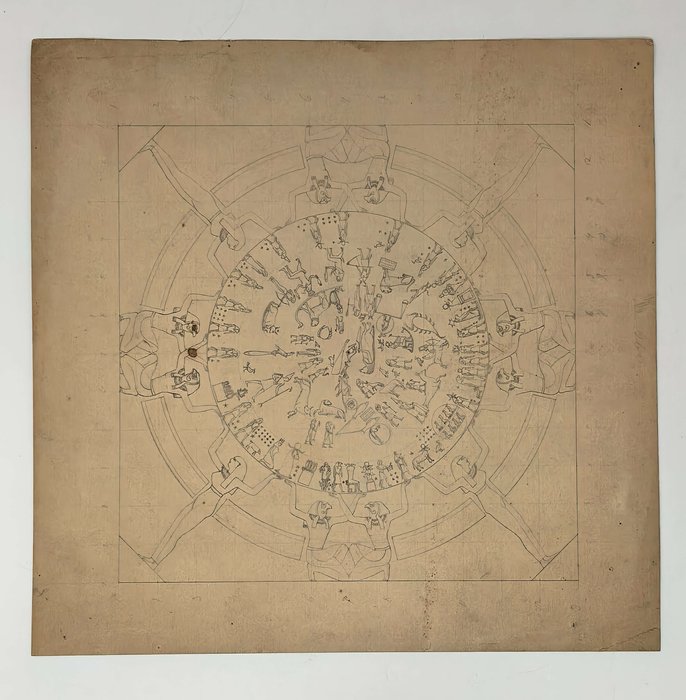
The collection also contains a folder with over a dozen leaves of miscellaneous manuscript materials, including an autograph letter to “Herrn. Kais. Legationrath Prof. Dr. H. Brugsch-Pacha” from an Alexandria lawyer “Fr. von Dumreicher” (dated 2 March 1894), regarding the state of affairs of Brugsch’s deceased son Alex (with the original envelope); a telegram from Brugsch’s brother Emile (sent from Cairo in February 1894, likely on the same occasion); leaves with accounting of Brugsch’s expenses (one dated “24.10.94”); a pencil-drawn plan of the Temple in Heliopolis; a pencil drawing of the famous Dendera Zodiac bas-relief, &c. There is also an eight-page offprint from “Zeitschrift für Assyriologie und Verwandte Gebiete” with P. Jensen’s article, titled “Napahu = “aufleuchten,” “wiedererscheinen” ” (Leipzig, 1886, vol. 1. pp. 450-457).
Overall, an important, extensive archive of original manuscripts by a famous 19th-century German Egyptologist, shedding light on the methods and scope of his research into Egyptian history and hieroglyphs.
A list of larger manuscripts and Brugsch’s magazine article:
[BRUGSCH, H. Manuscript, Titled]: Les Nomes de la Haute-Égypte; WITH: [Loosely Inserted Manuscript, titled: Documents relatifs au nom des Hébreux]. Ca. 1870s. Folio (ca. 36x23 cm or 14x9 in). 26 leaves put together in an accordion-like manner; plus 2 leaves of the second manuscript. In all 30 pp. of text. Blue and red ink on thick album leaves; text in French; some names in Greek; occasional period pencil notes in text. Brown and black ink on creamy lined paper. Paper slightly age-toned, several leaves detached from the sequence and loosely inserted, occasional tears and chipping on extremities, but overall very good manuscripts.
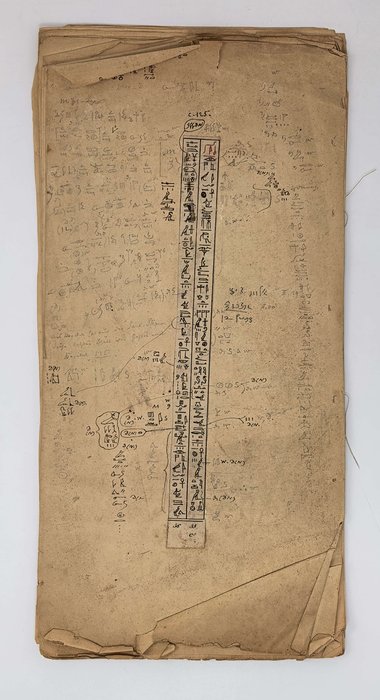
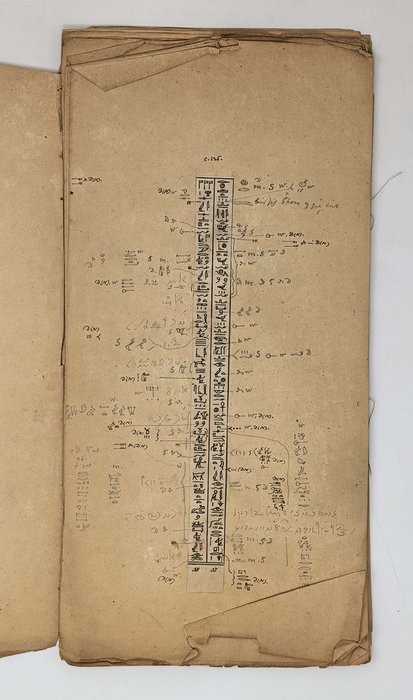
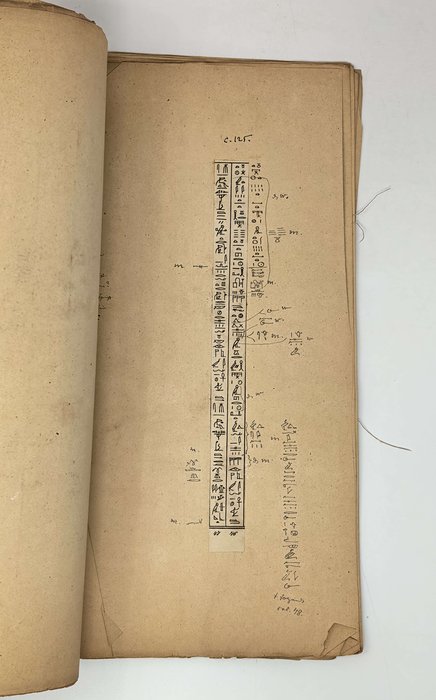
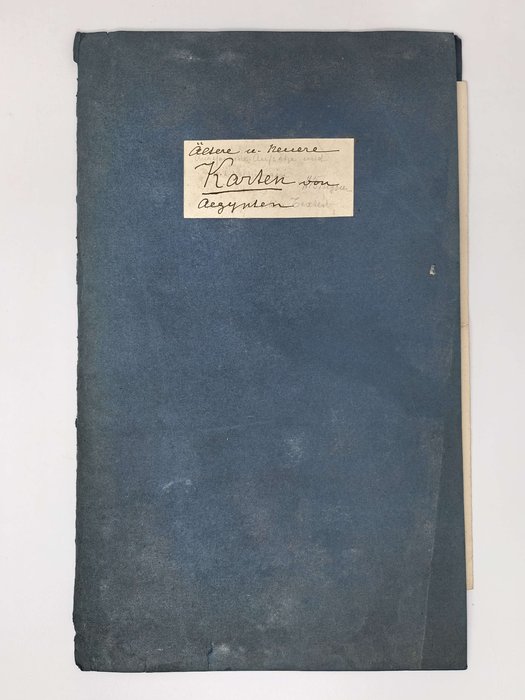
[BRUGSCH, H. Folder, titled]: Beauten Ersten Ranges. Fonctionnaires de la Cour. Ca. 1880s. Folio (ca. 34x16,5 cm or 13 ½ x 6 ½ in). Paper folder with 25 loose leaves with numerous mounted pieces of paper with ink-drawn Egyptian hieroglyphs and dense manuscript comments in German (in ink or pencil). Paper slightly age-toned, minor creases or tears on extremities, but overall very good.
[BRUGSCH, H. Manuscript with Mounted Printed Egyptian Hieroglyphs and Dense Manuscript Notes on the Margins]. Ca. 1880s. Folio (ca. 33x22,5 cm or 13 x 8 ¾ in). 24 paper leaves; all with mounted clippings with printed hieroglyphs and period manuscript ink or pencil notes in German and more hieroglyphs on the margins (filled in on versos). Leaves originally sewn together, but the thread is broken; one of the clippings partly detached from the mount; paper slightly age-toned, minor tears or chipping on the extremities, not affecting the text; overall very good.
[BRUGSCH, H. Notebook with Manuscript Notes on the History of Ancient Egypt]. Ca. 1870s-1880s. Quarto (ca. 21x17 cm or 8 ¼ x 6 ¾ in). 12 paper leaves filled in on recto and verso in German cursive (24 pp. of text). Black and brown ink on squared paper. With nine loosely inserted leaves of various sizes with period ink notes in German on ancient Egypt and hieroglyphs. Original brown wrappers. Paper slightly age-toned, but overall a very good notebook.
[BRUGSCH, H. Manuscript, Titled:] Handbuch für allgemeine Beredungen. Cairo, 27 September 1864. Octavo (ca. 21x17 cm or 8 ¼ x 6 ½ in). Black ink and pencil on creamy wove paper; text in German cursive; occasional passages in Greek. [15] pp. Leaves sewn together with a thread, no wrappers. Paper slightly age-toned, occasional creases, but overall very good.
[BRUGSCH, H. Fragment of a Manuscript on the History of Egypt]. Ca. 1860s.-1870s Octavo (ca. 22x17 cm or 8 ¾ x 6 ¾ in). Six notebooks put together to form one text. Brown and black ink, creamy lined paper. 41-98 numbered leaves [8, 9, 13, 10, 9, 9 = 58 pages of text in French]. Numerous period manuscript notes and corrections in text. Paper slightly age-toned, occasional creases, but overall very good.
BRUGSCH, H. Über den Ursprung unserer Schriftzeichen [About the Origin of Our Writing System]// Zeitschrift für Stenographie und Orthographie in wissenschaftlicher, pädagogischer und praktischer Beziehung. Leipzig, 1864. Vo. XII, No. 3, pp. 70-79 [= 10 pp.]. Small Octavo (ca. 23x14 cm or 9 x 5 ½ in). Period blue wrappers.
[Manuscript on the Babylonian-Assyrian Cuneiform Script]. Octavo notebook (ca. 21,5x17,5 cm or 8 ½ x 6 ¾ in). 18 numbered pages. Brown ink on creamy wove paper; blind-stamped rectangles in central areas. Text in German cursive. With manuscript ink comments on seventeen corresponding pages. Leaves sewn together with a thread, no wrappers. Paper slightly age-toned, occasional creases, but overall very good.
“Heinrich Karl Brugsch was a German Egyptologist who pioneered in deciphering demotic, the script of the later Egyptian periods. He is considered one of the greatest Egyptologists of the 19th century. Brugsch became interested in Egypt as a schoolboy, and he published his first work on Egyptian language at age 16. He was a protégé of the German naturalist and explorer Alexander von Humboldt, who subsidized Brugsch’s early publication and facilitated his travel. He was sent to Egypt by the Prussian government in 1853 and met there the noted French Egyptologist Auguste Mariette. Upon his return to Germany, Brugsch continued his writing and worked in the Berlin Museum. In 1860 he was sent to Persia; in 1864-66 he was consul at Cairo; and from 1867 he was professor at Göttingen, Germany. When the khedive founded the Cairo School of Egyptology (1870), Brugsch was appointed director, a post he held for nine years. Although he returned to live in Germany, he traveled extensively until his death.
Brugsch wrote prolifically throughout his career. His “Grammaire démotique” (1855; “Demotic Grammar”) was the first study of that script. In 1863 he founded the pioneering journal “Zeitschrift für ägyptische Sprache und Altertumskunde” (1863–1939; “Journal of Egyptian Languages and Archaeology”). His greatest work was the seven-volume “Hieroglypisch-demotisches Wörterbuch” (1868–82; “Hieroglyphic-Demotic Dictionary”)” (Encyclopedia Britannica).