
#PF8
Ca. 1906
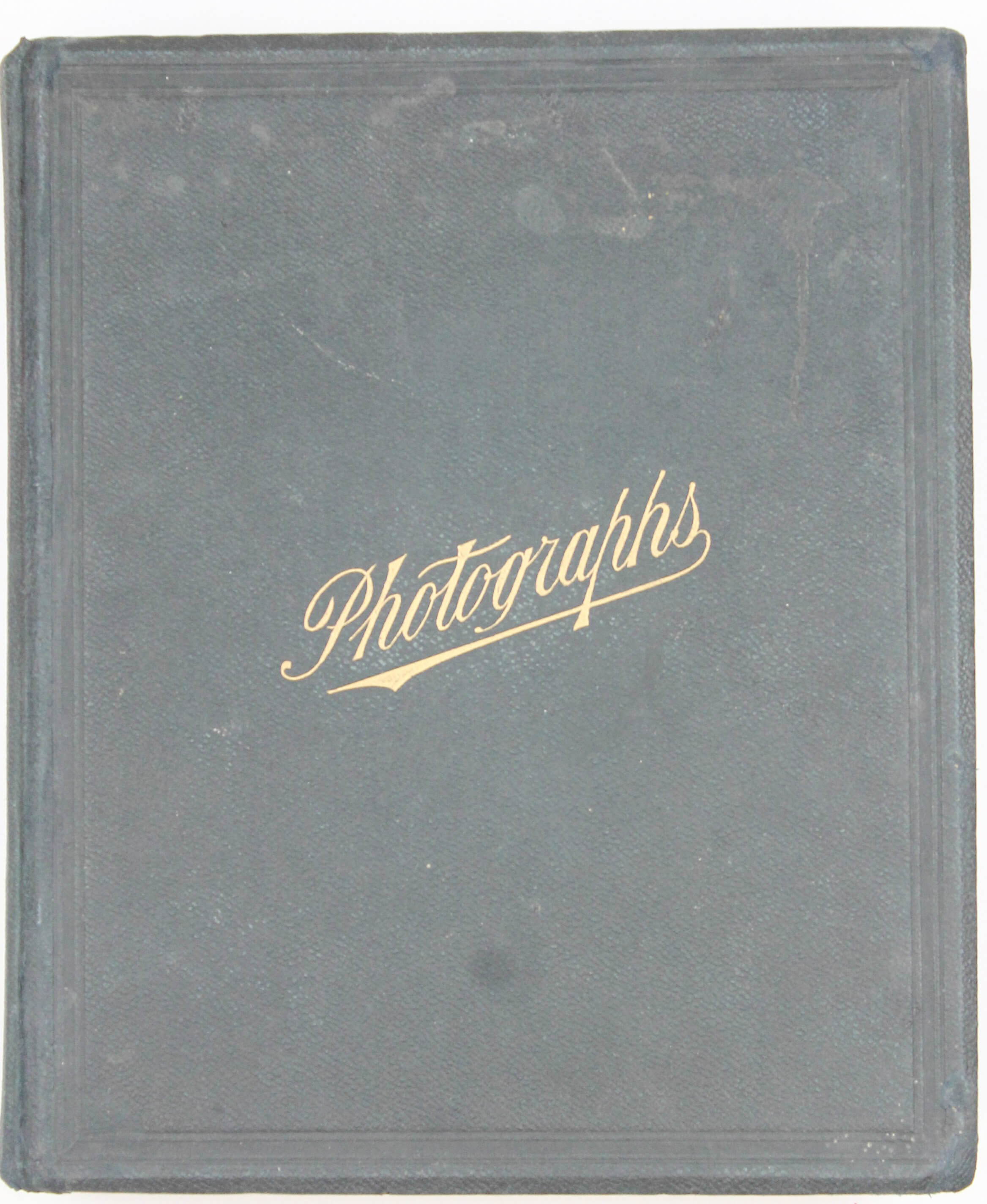
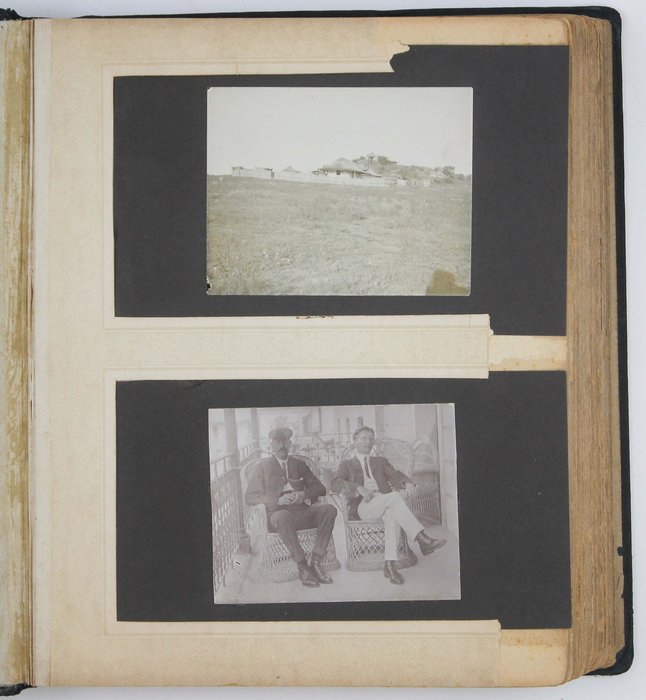
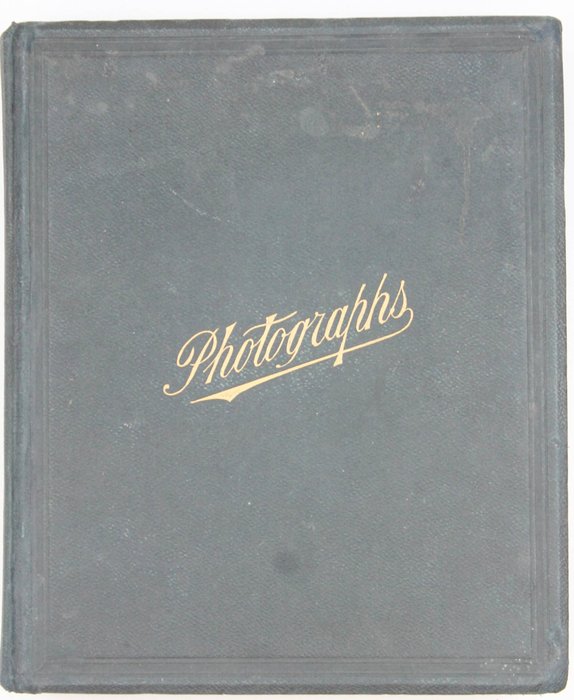
Quarto album (ca. 31x25,4 cm). 18 card stock leaves. With 85 original gelatin silver photographs (including two loose) from ca. 8,4x14,4 cm (3 ¼ x5 ½ in) to ca. 8,7x8,4 cm (3 ½ x 3 ¼ in); with one loosely inserted real photo postcard ca. 8,8x13,7 cm (3 ½ x 5 ½ in). Several photos with English captions on the mounts. Period dark blue cloth album with the gilt-lettered generic title “Photographs” on the front cover. Professional restoration of the block. Binding slightly worn, the first cart stock leaf lacks small fragments of paper, photos age-toned, but otherwise a very good album with strong, interesting photos.
Historically significant collection of lively vernacular photographs illustrating the administrative and commercial activities of the British South Africa Company (BSAC) in Lukona, Barotziland–North-Western Rhodesia (today’s Zambia), in the early 20th century.
In 1899, Cecil Rhodes’ BSAC was granted a royal charter to administer Barotziland–North-Western Rhodesia, combining governmental authority with commercial interests. The company enforced law, collected taxes, and developed infrastructure to support trade and resource extraction, relying extensively on coerced African labor through hut taxes, compulsory service, and punitive policing. In 1906, Lukona was designated the administrative center of Kalabo District, housing the first Resident Commissioner, R. H. Palmer. It served as a base for the Barotse Native Police, district administration, and frontier trading operations, until the transfer of authority to the British Colonial Office in 1924.
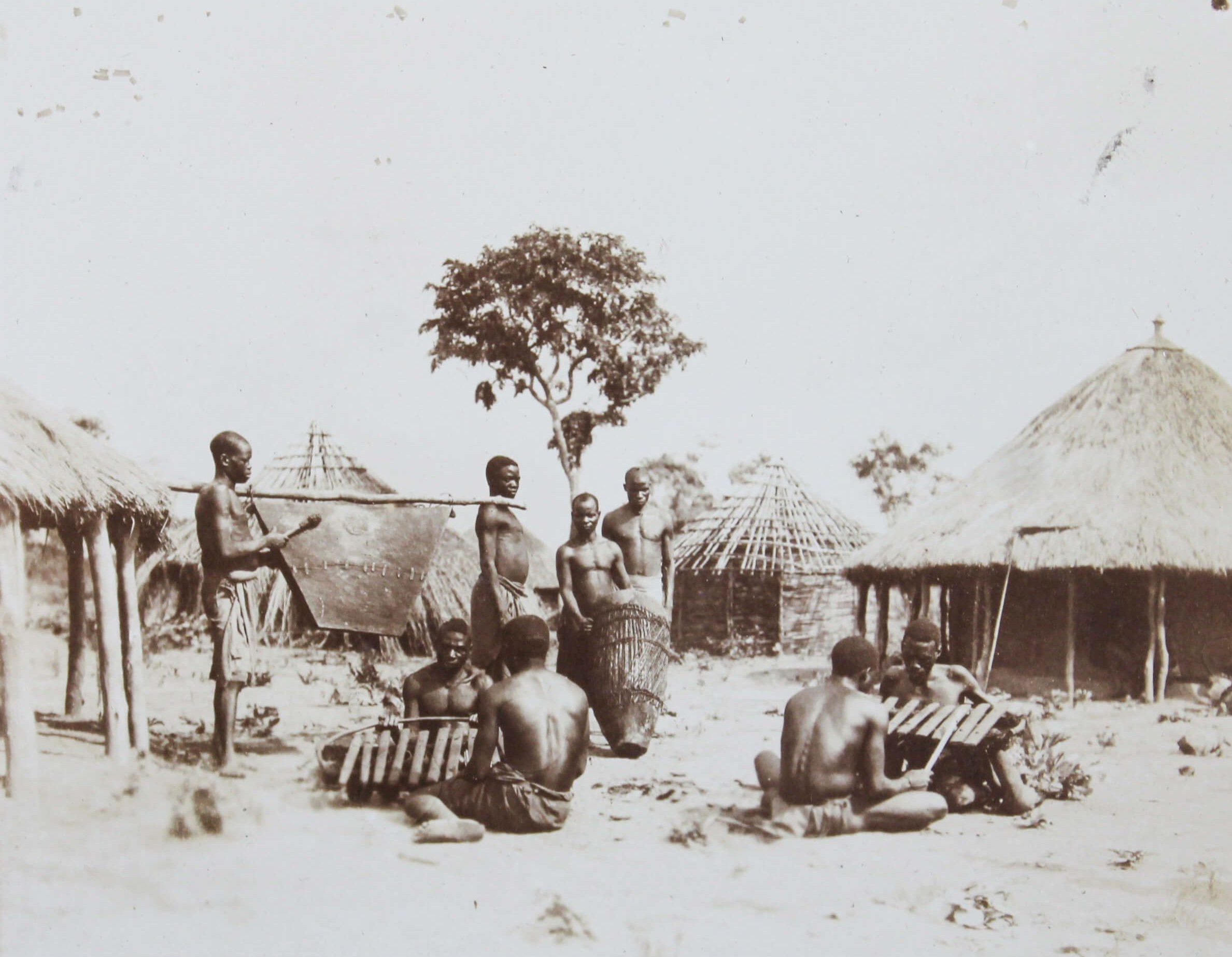
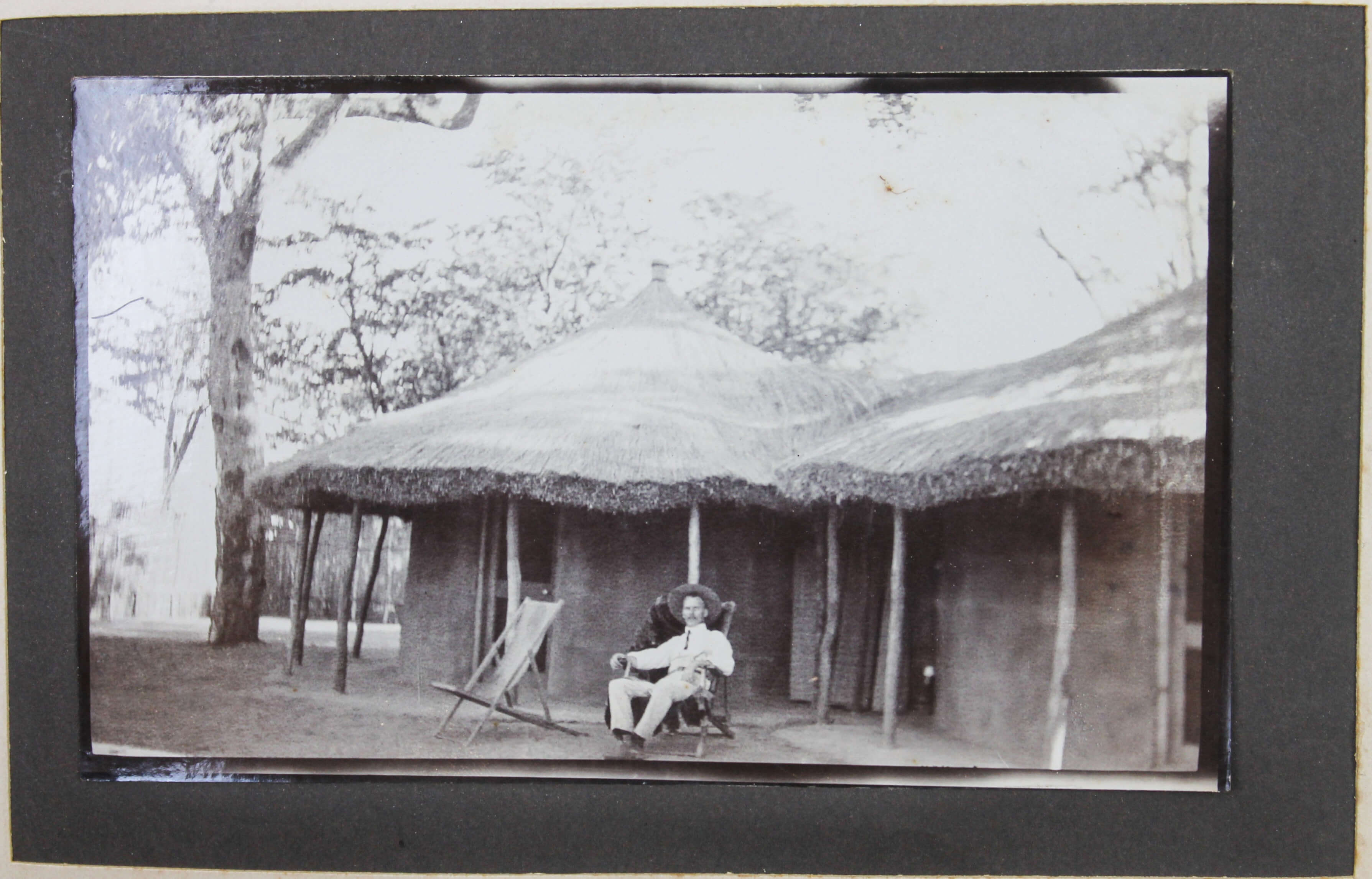
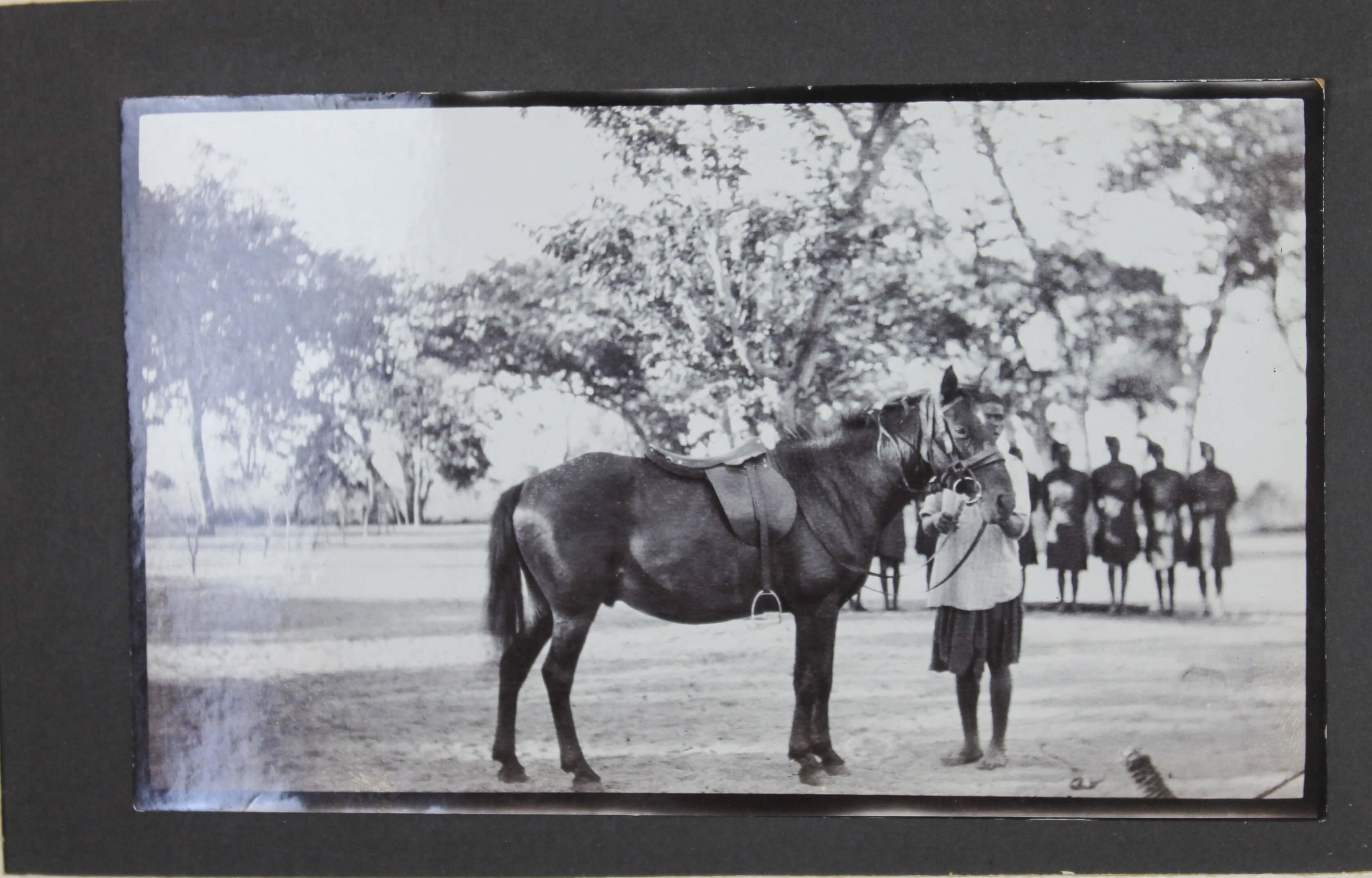
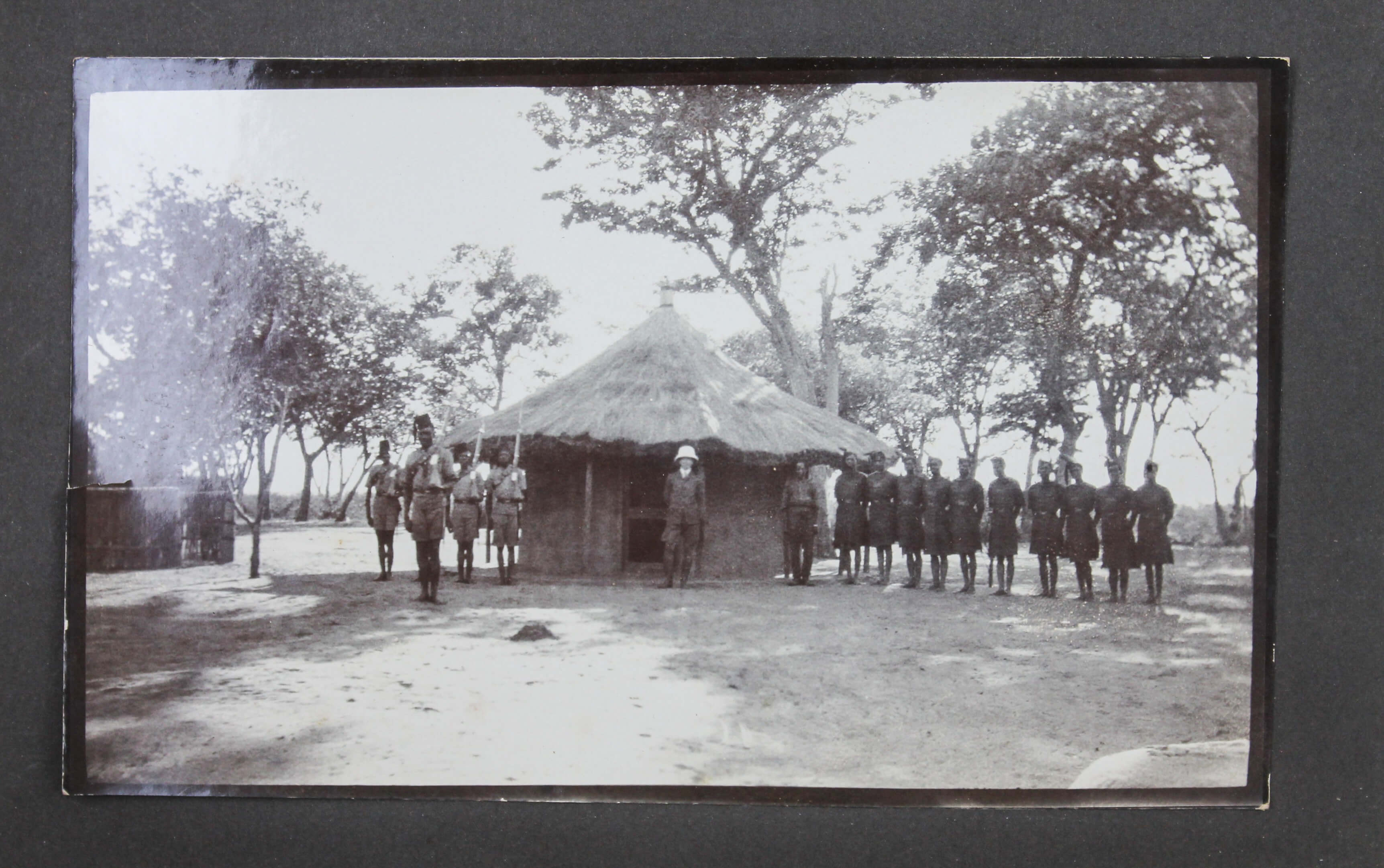
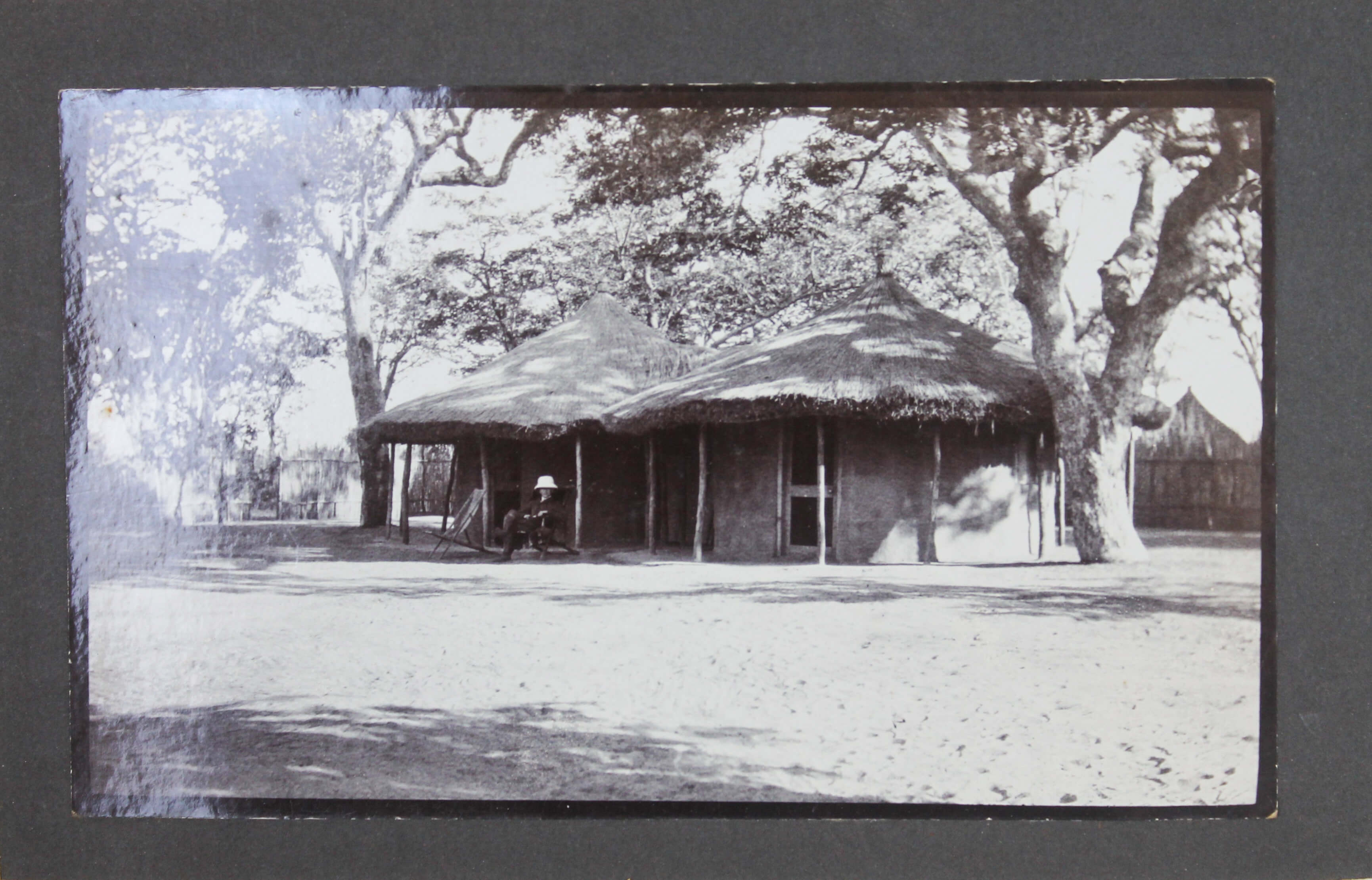
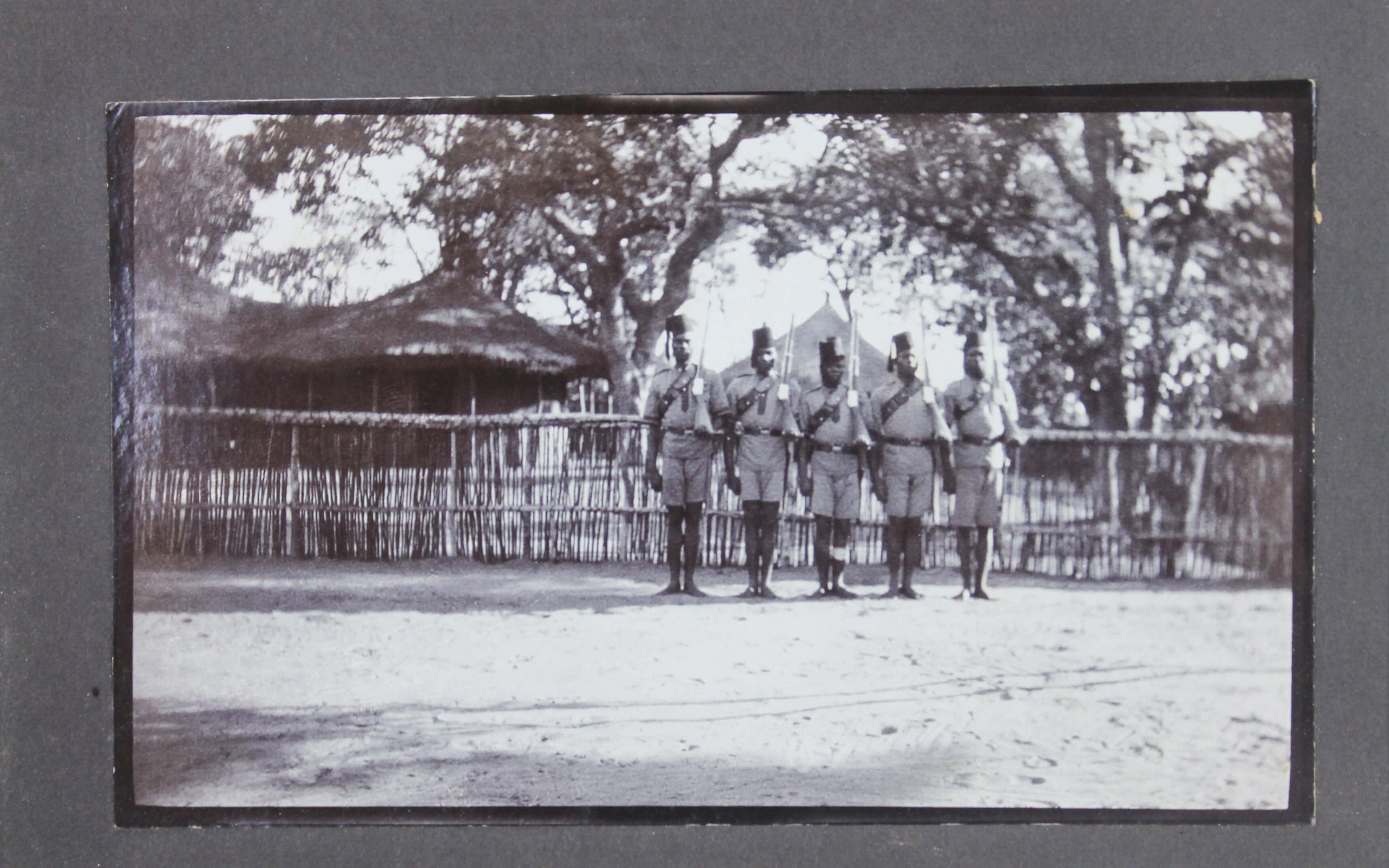
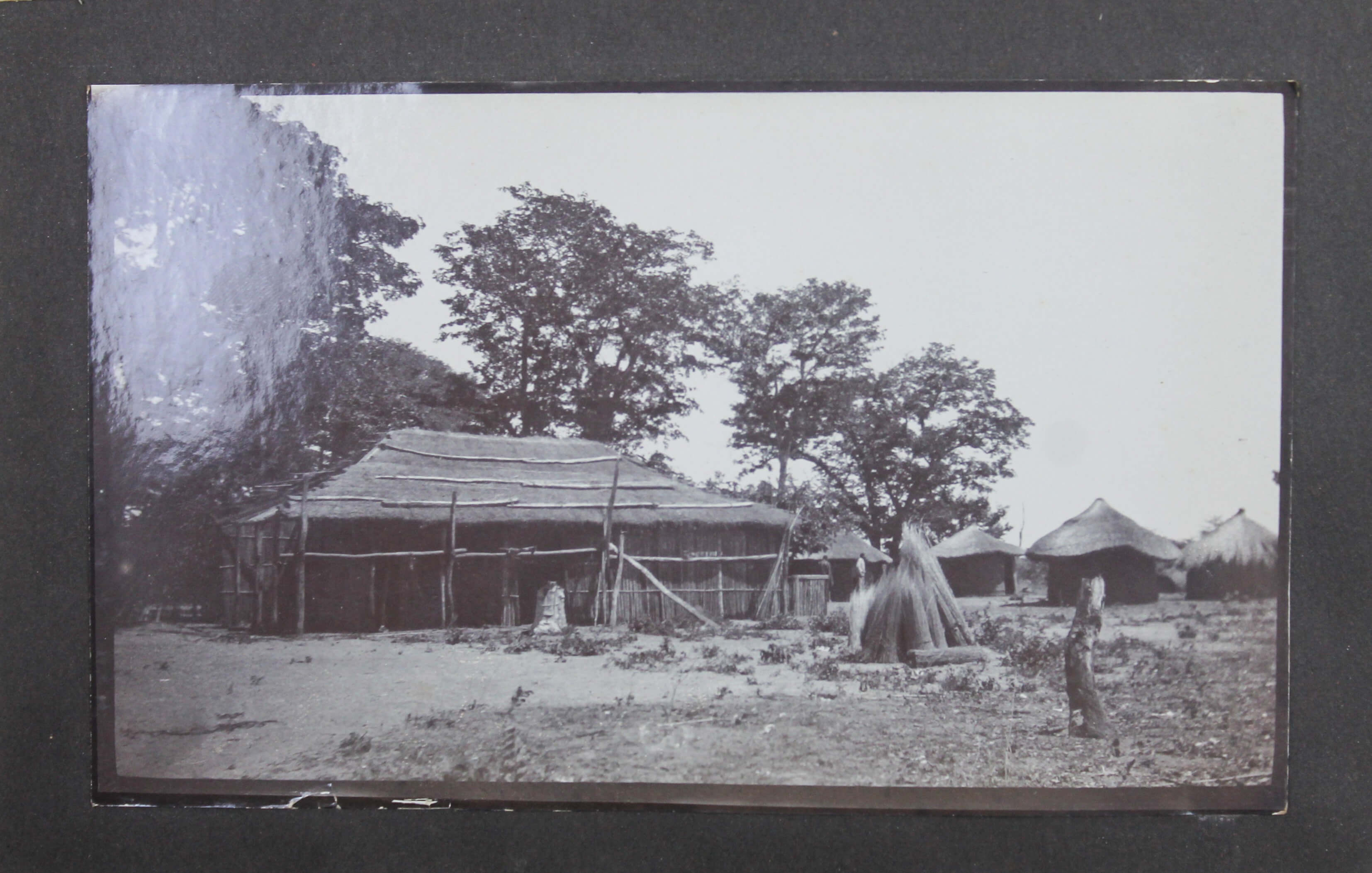
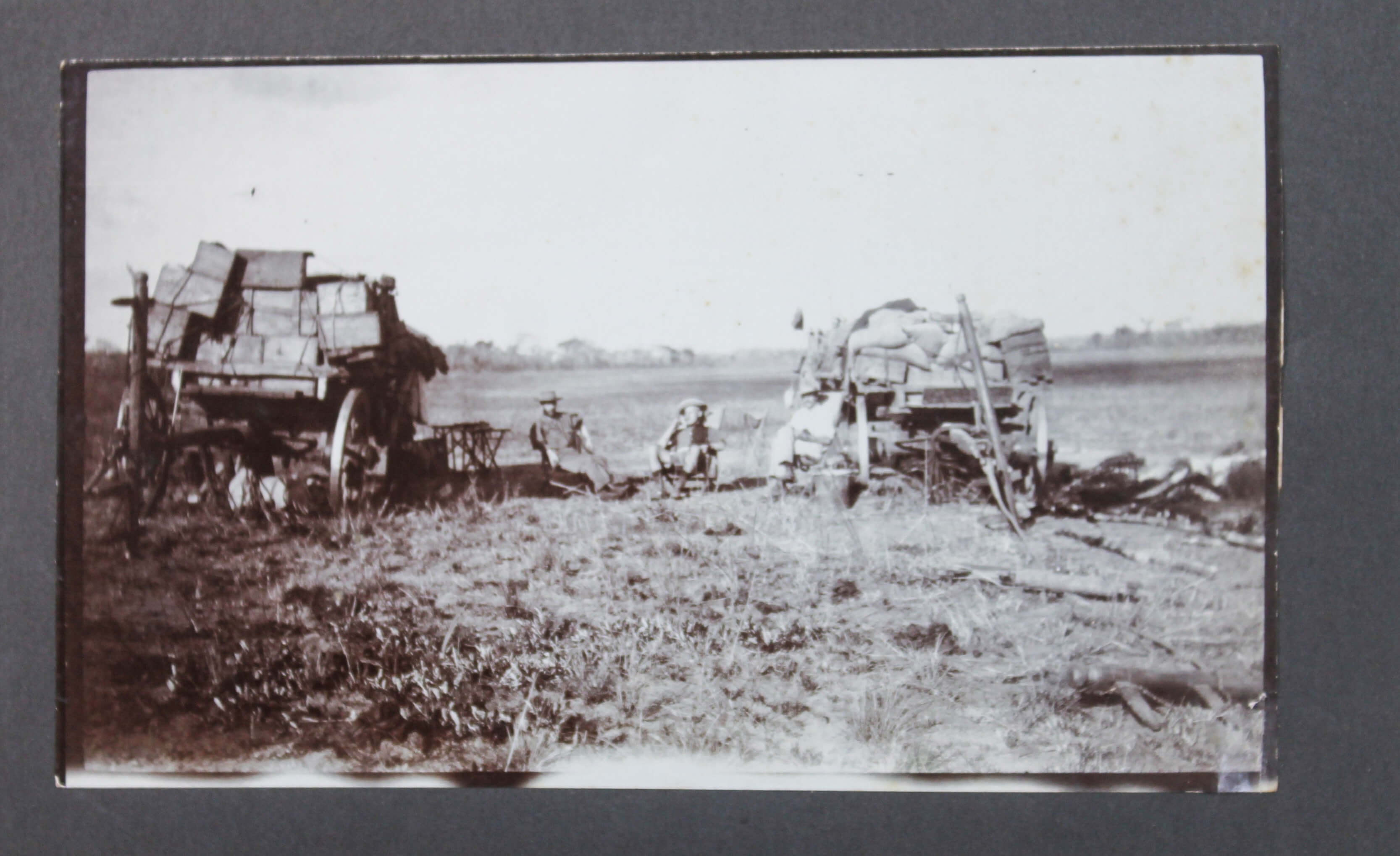
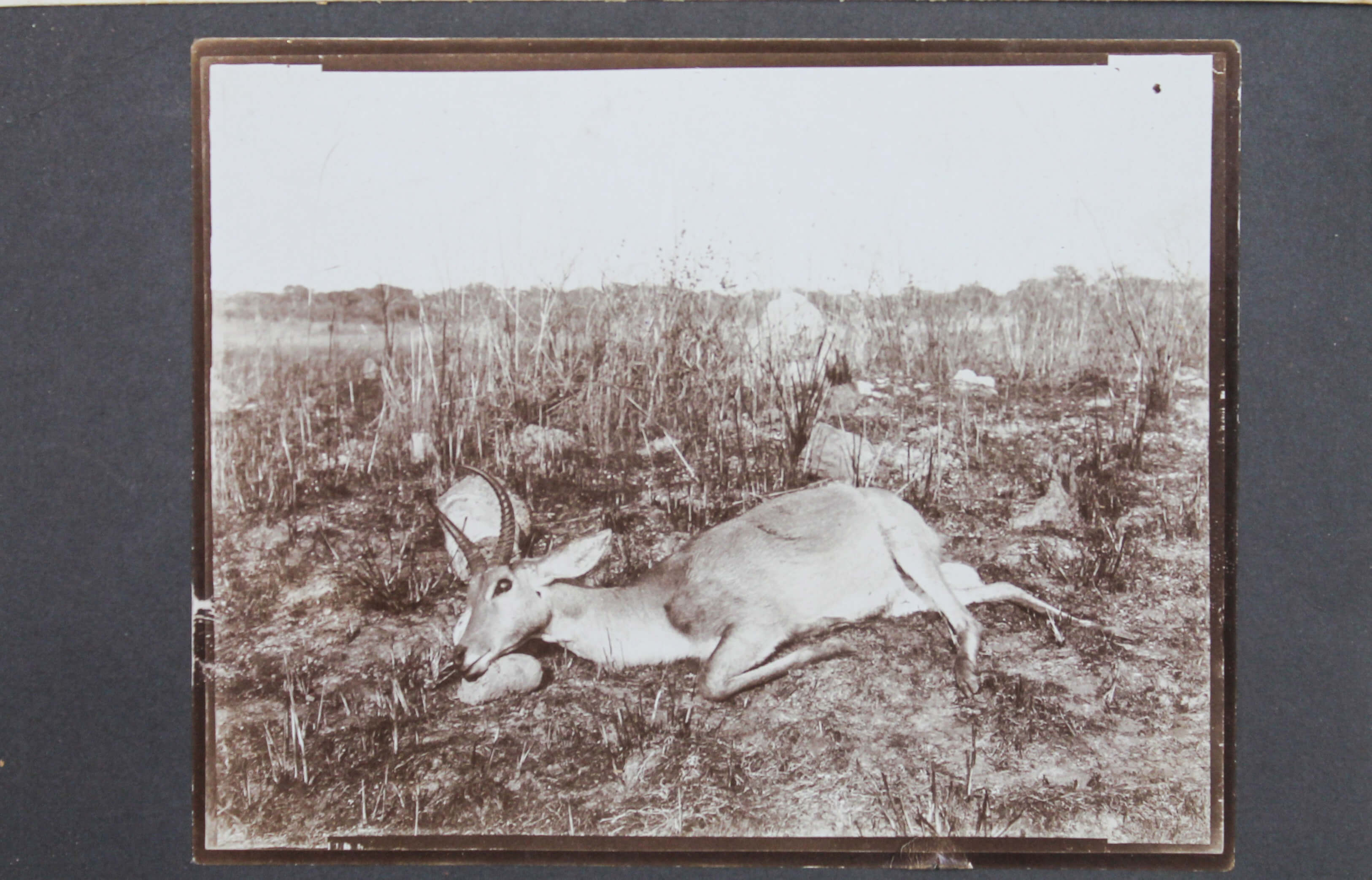
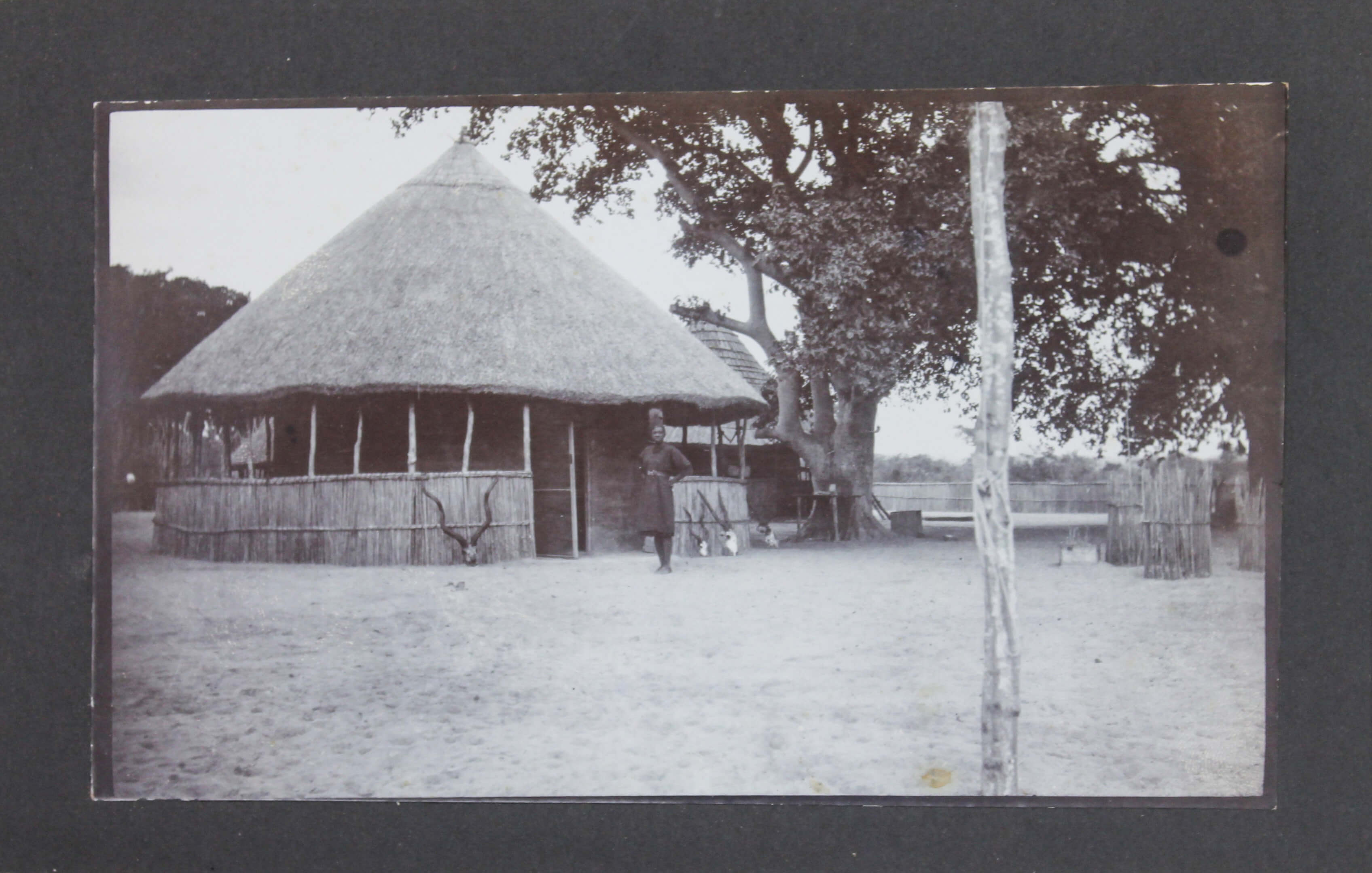
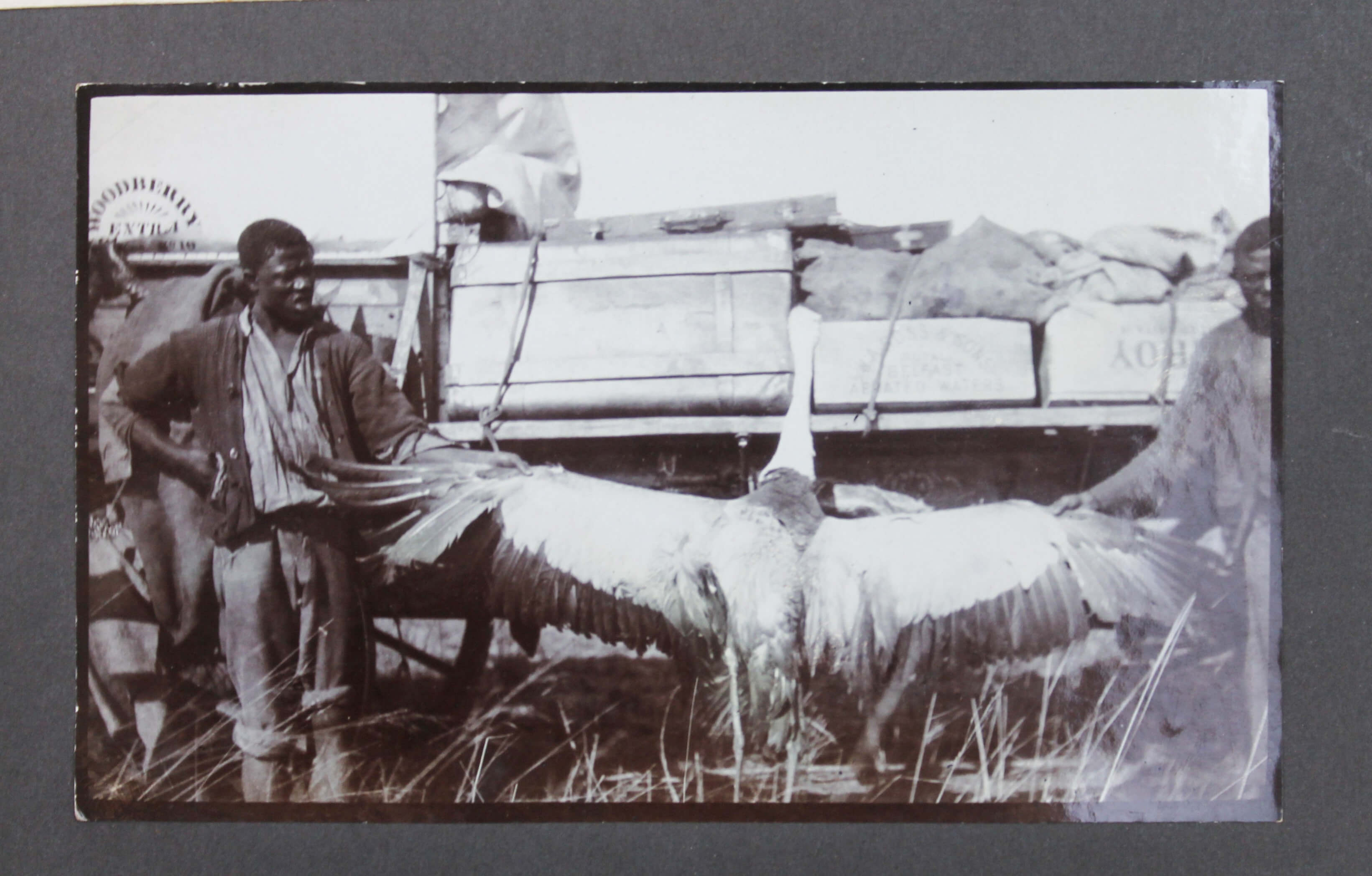
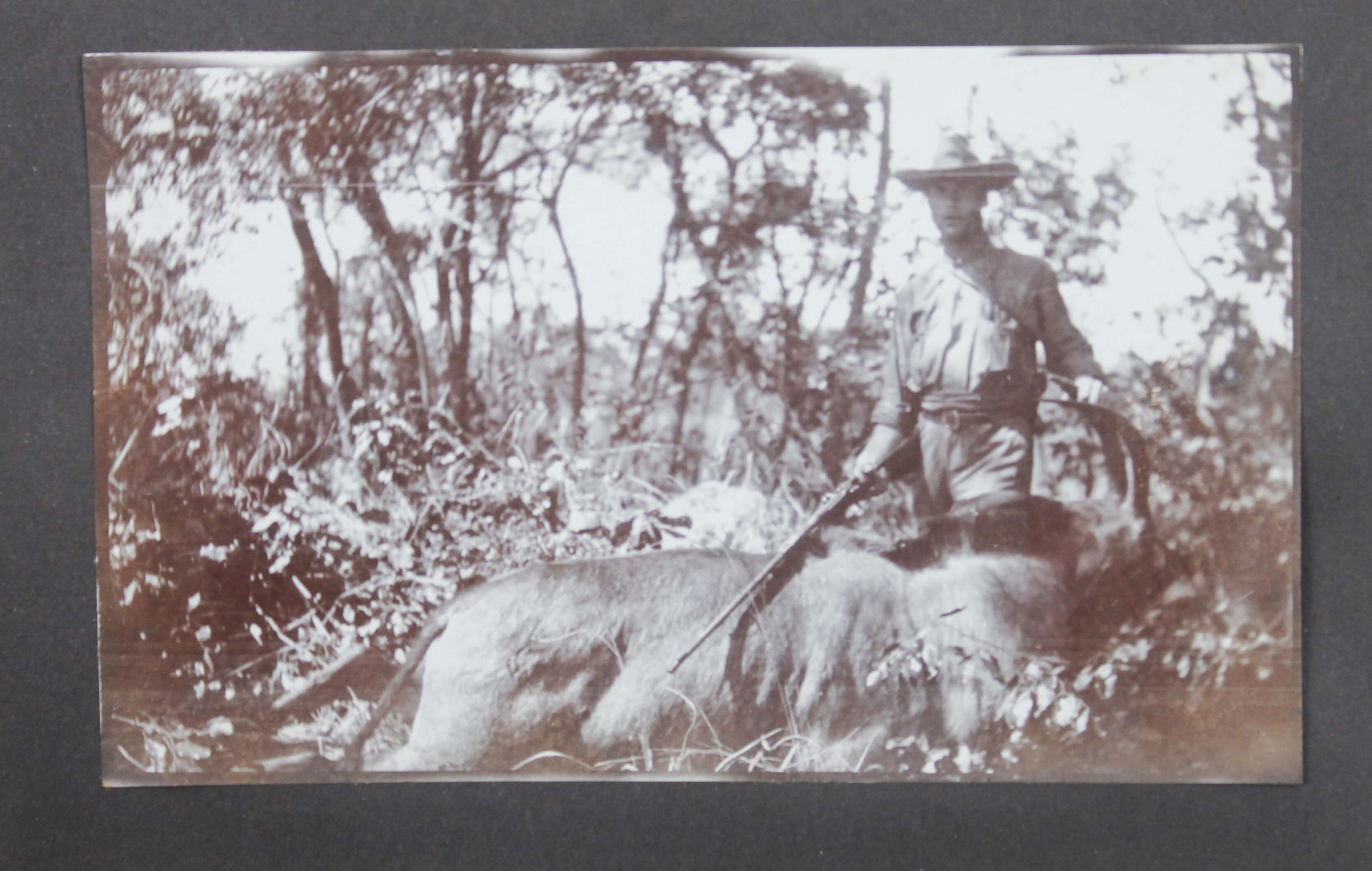
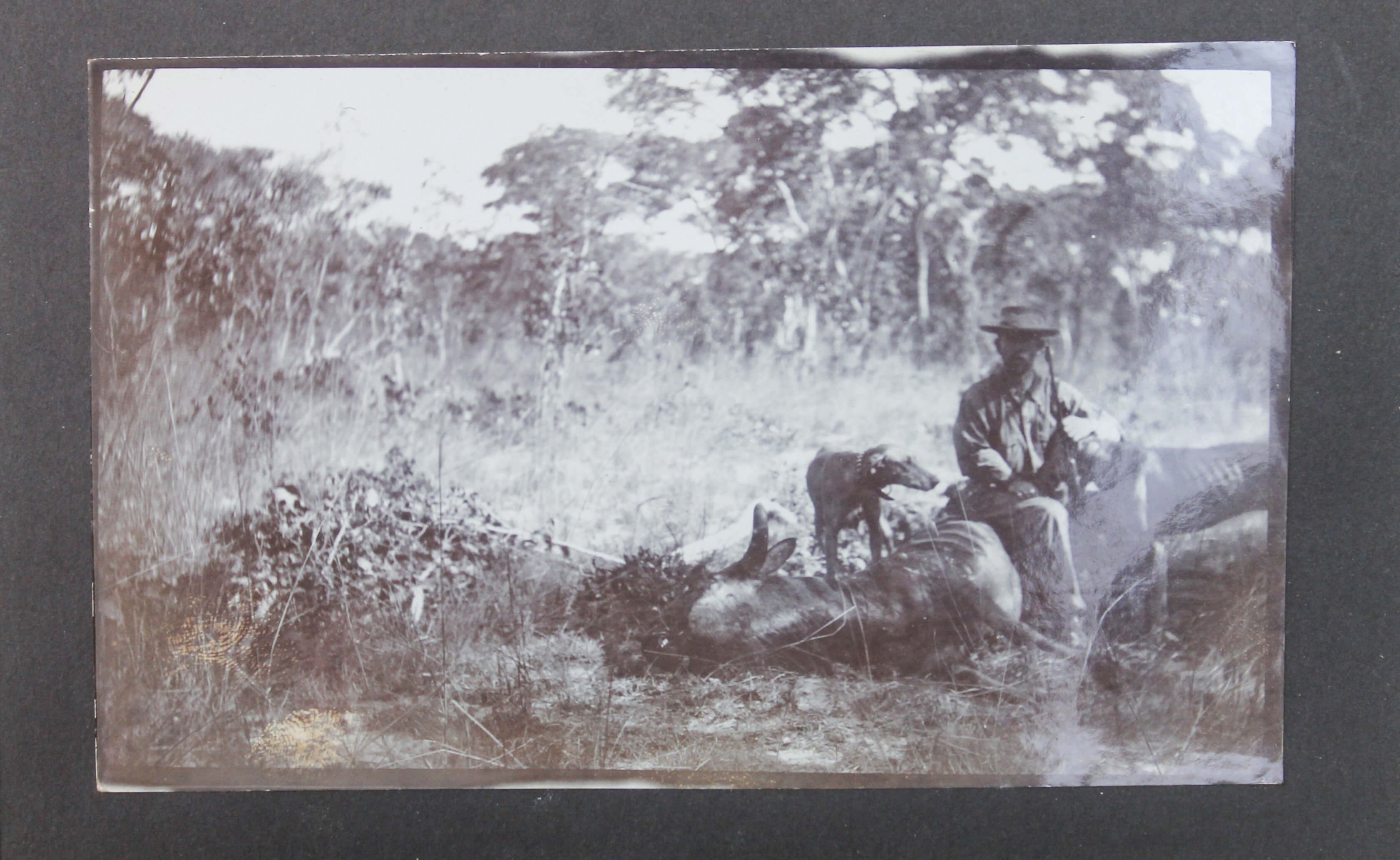
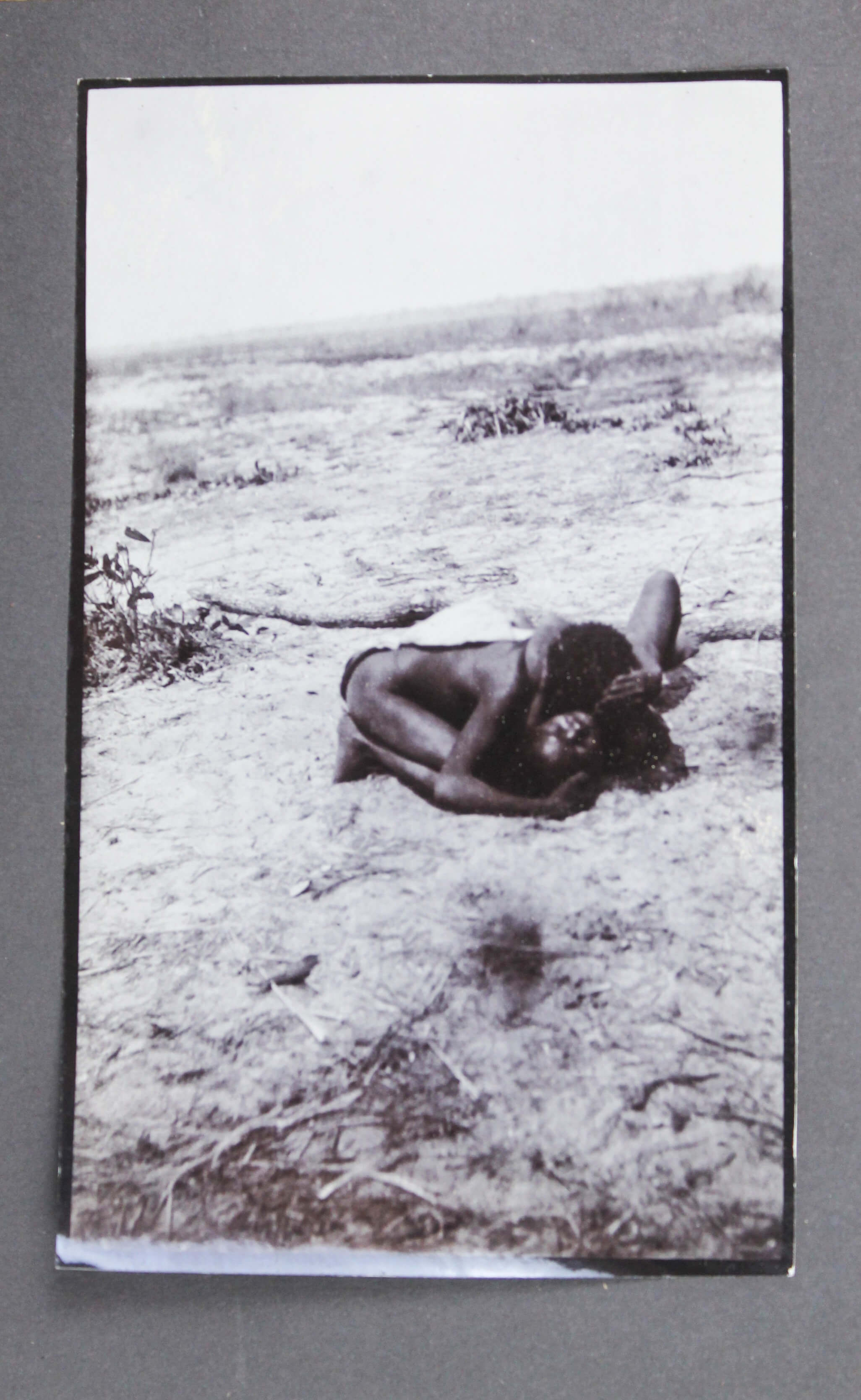
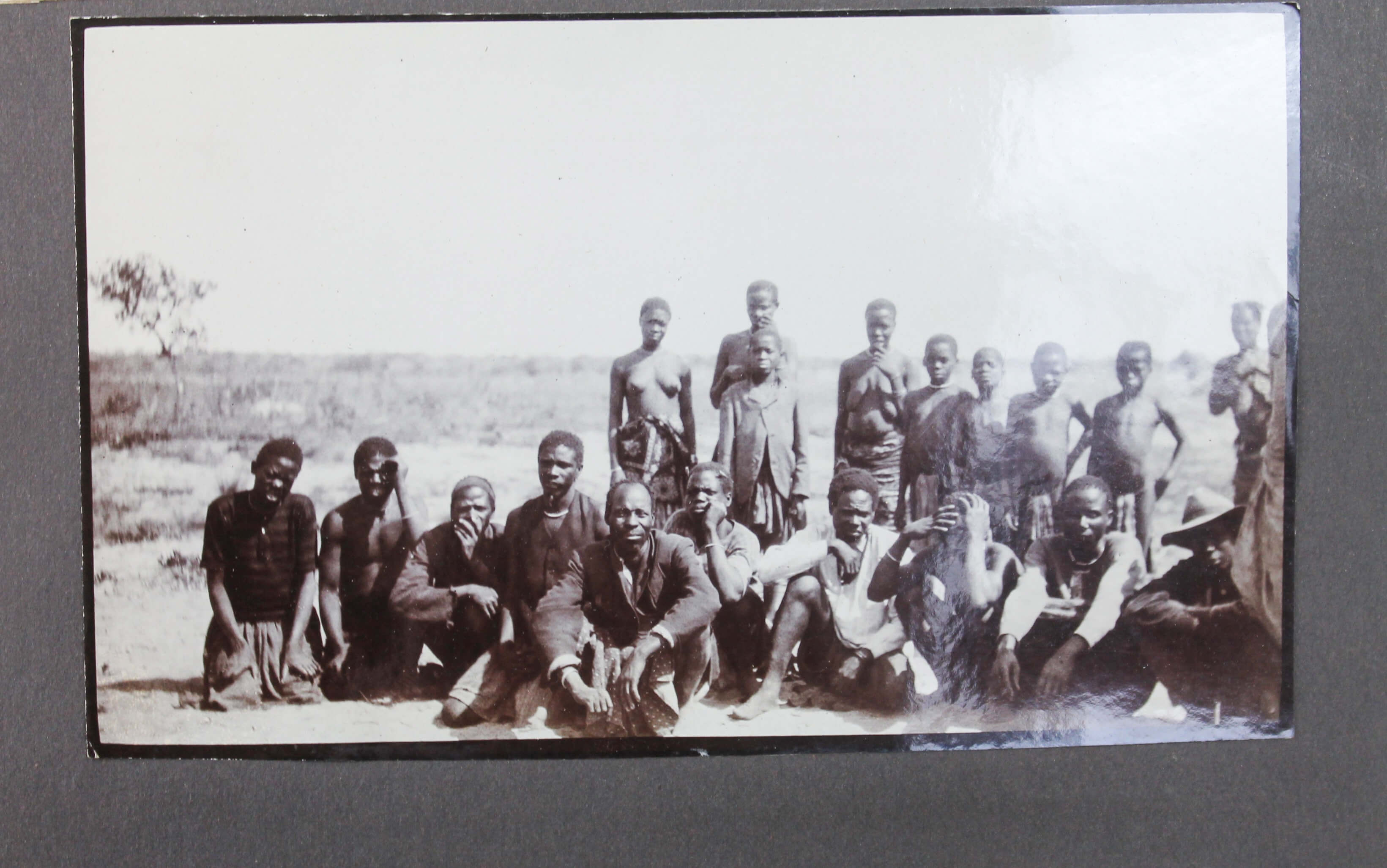
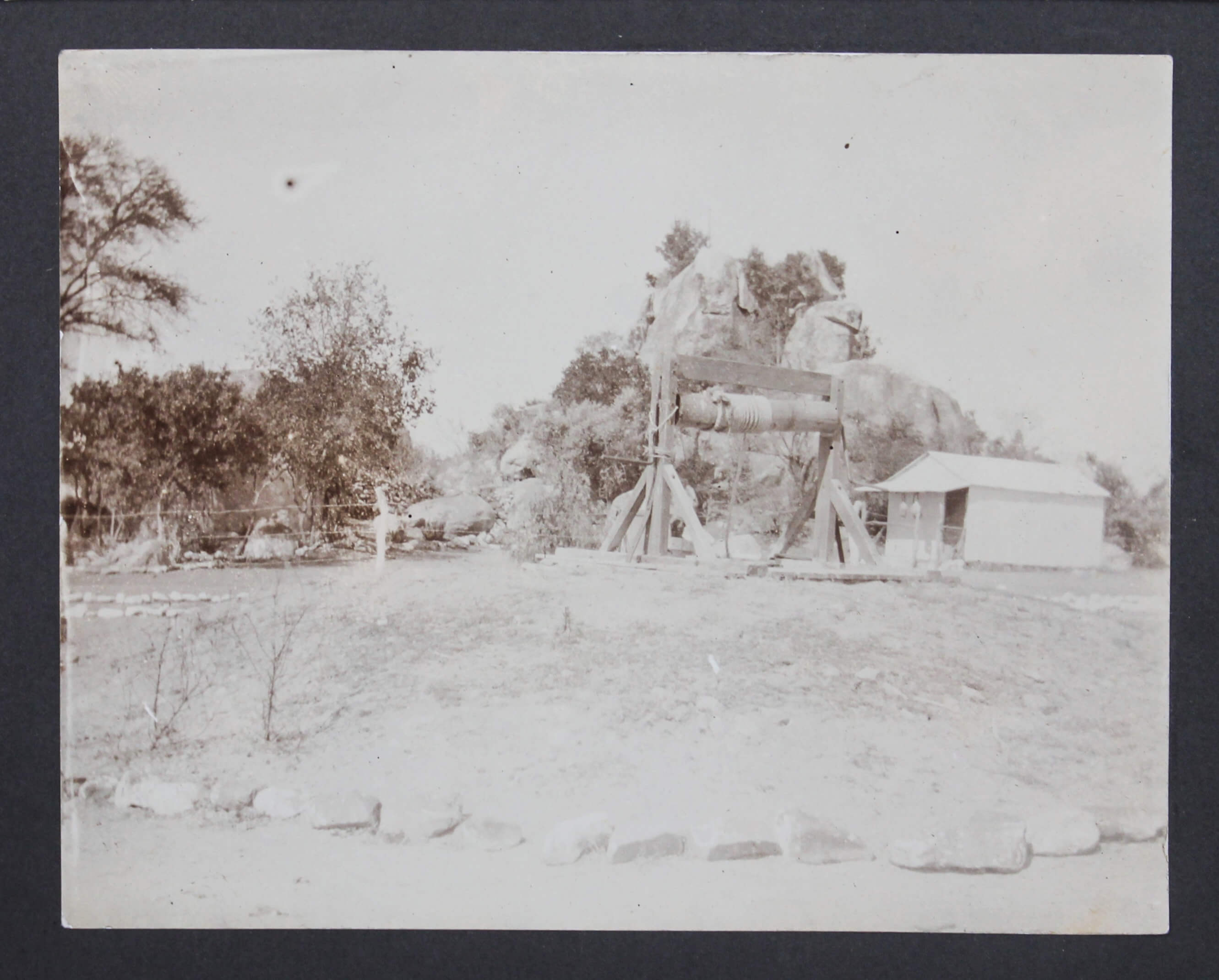
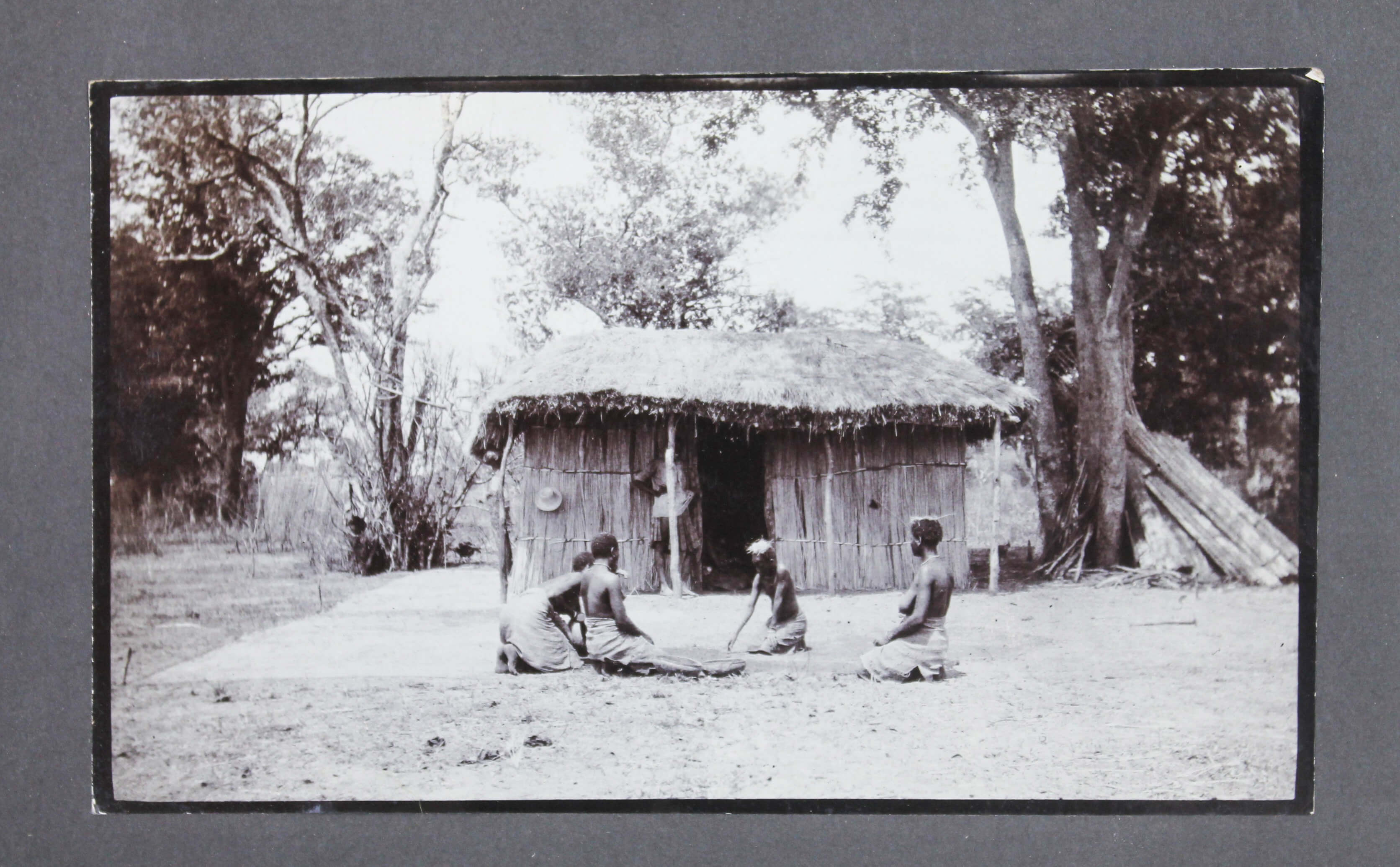
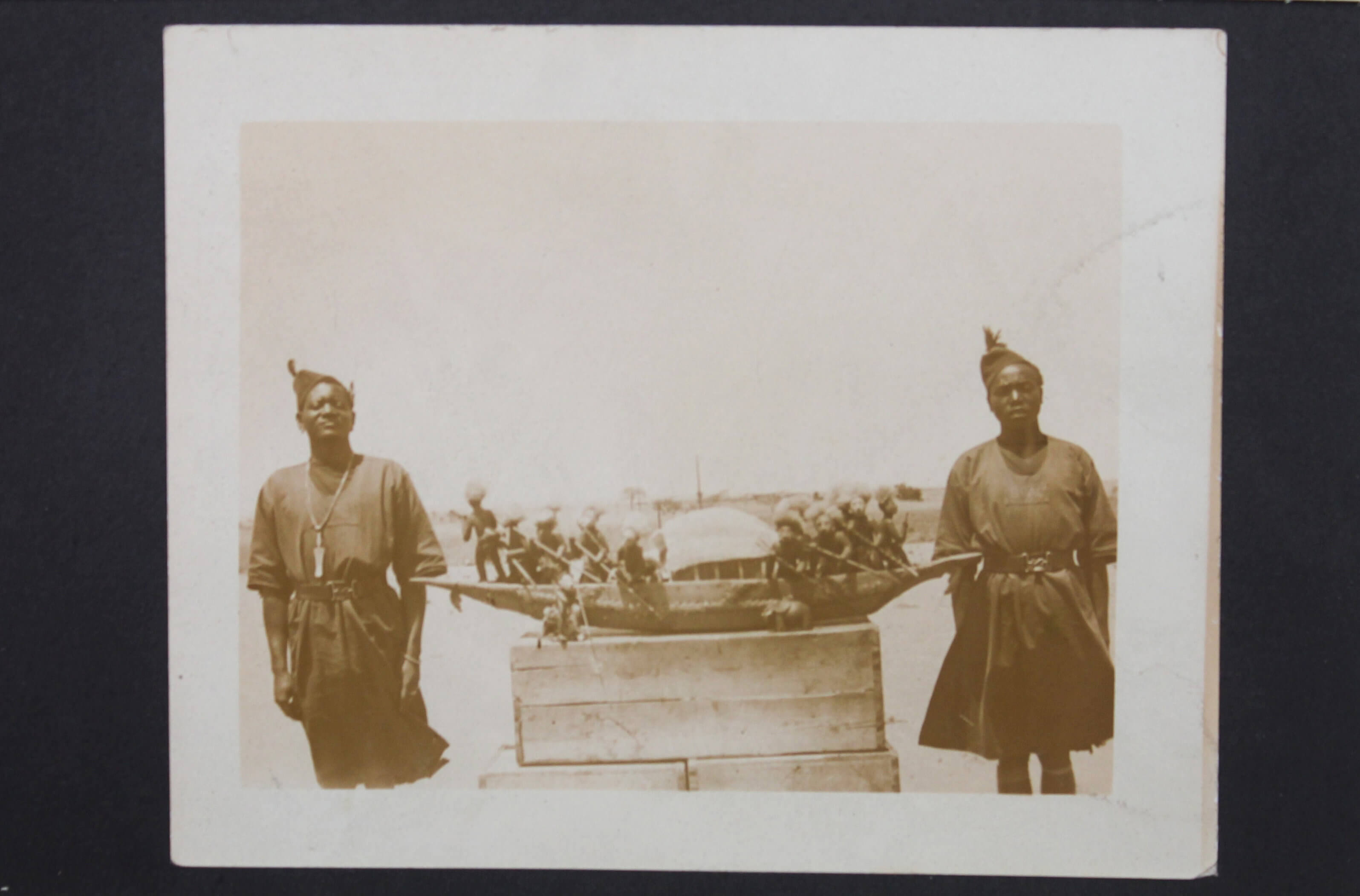
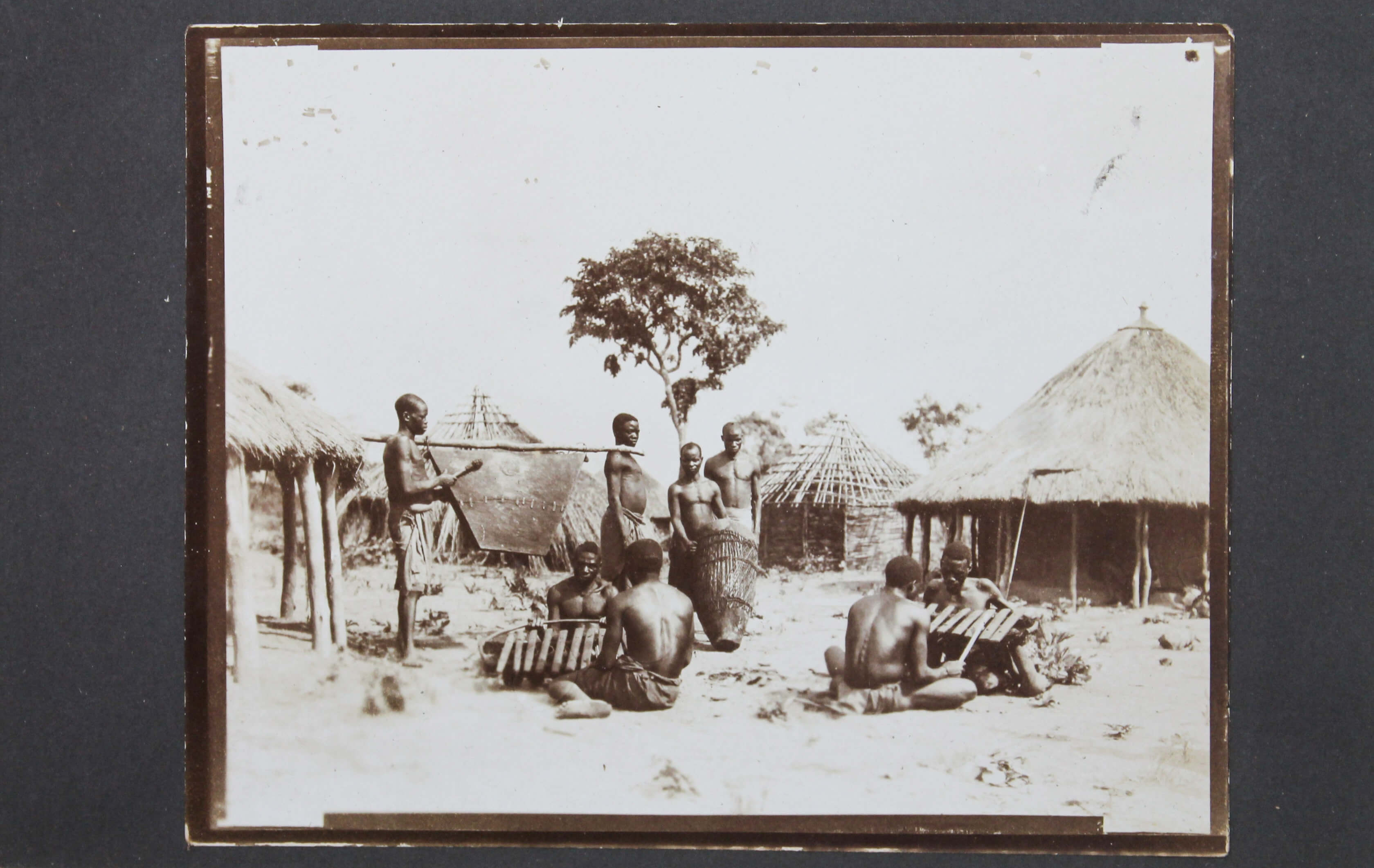
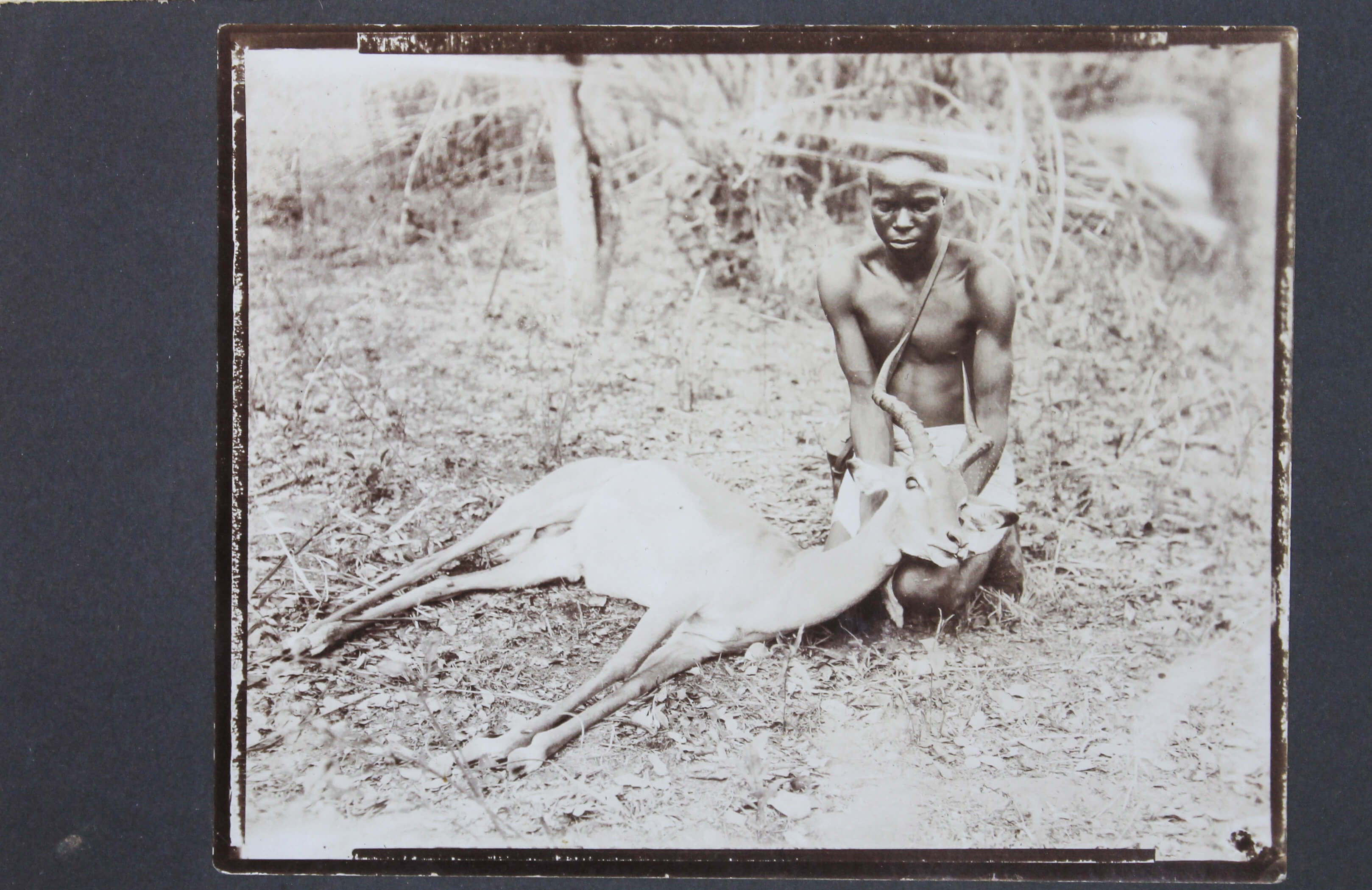
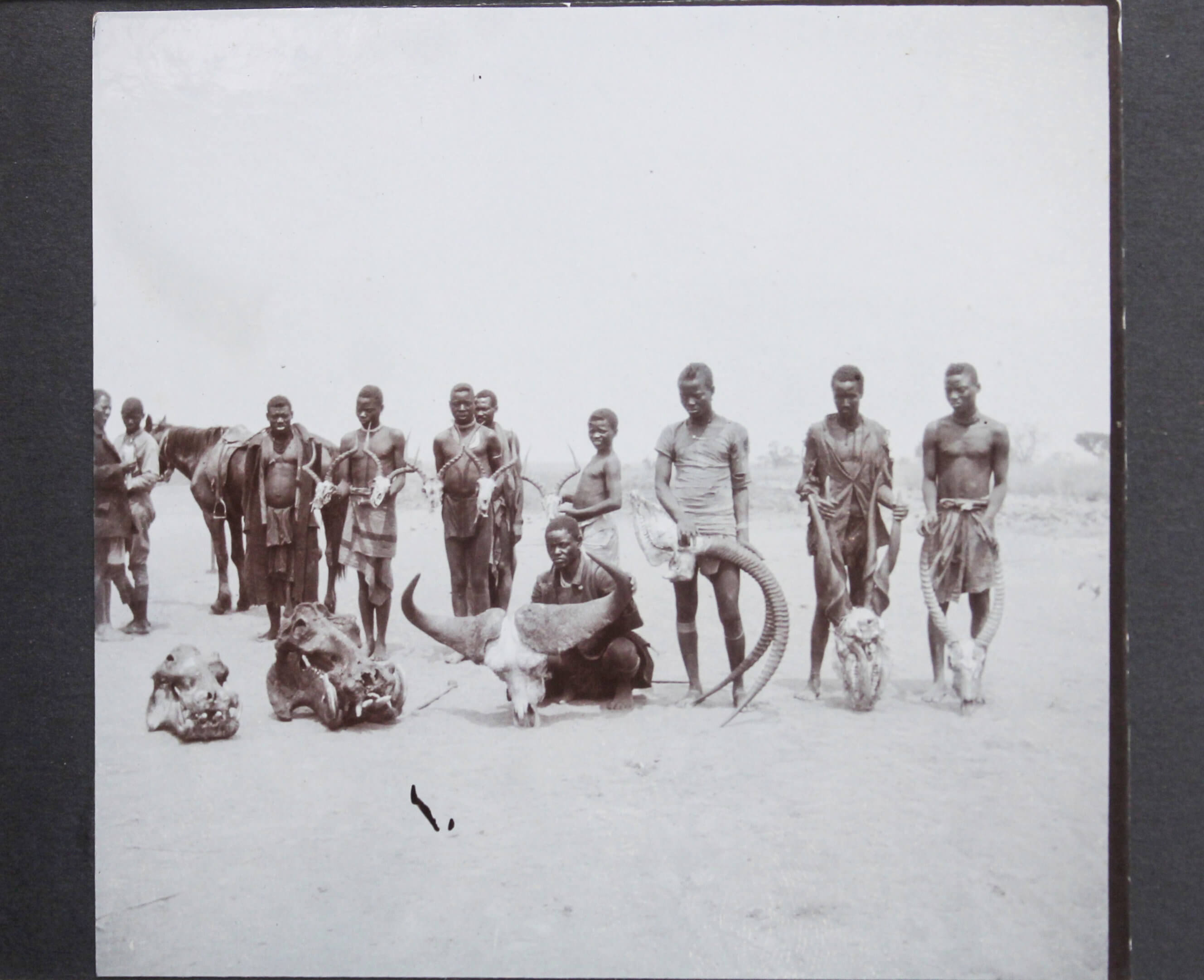
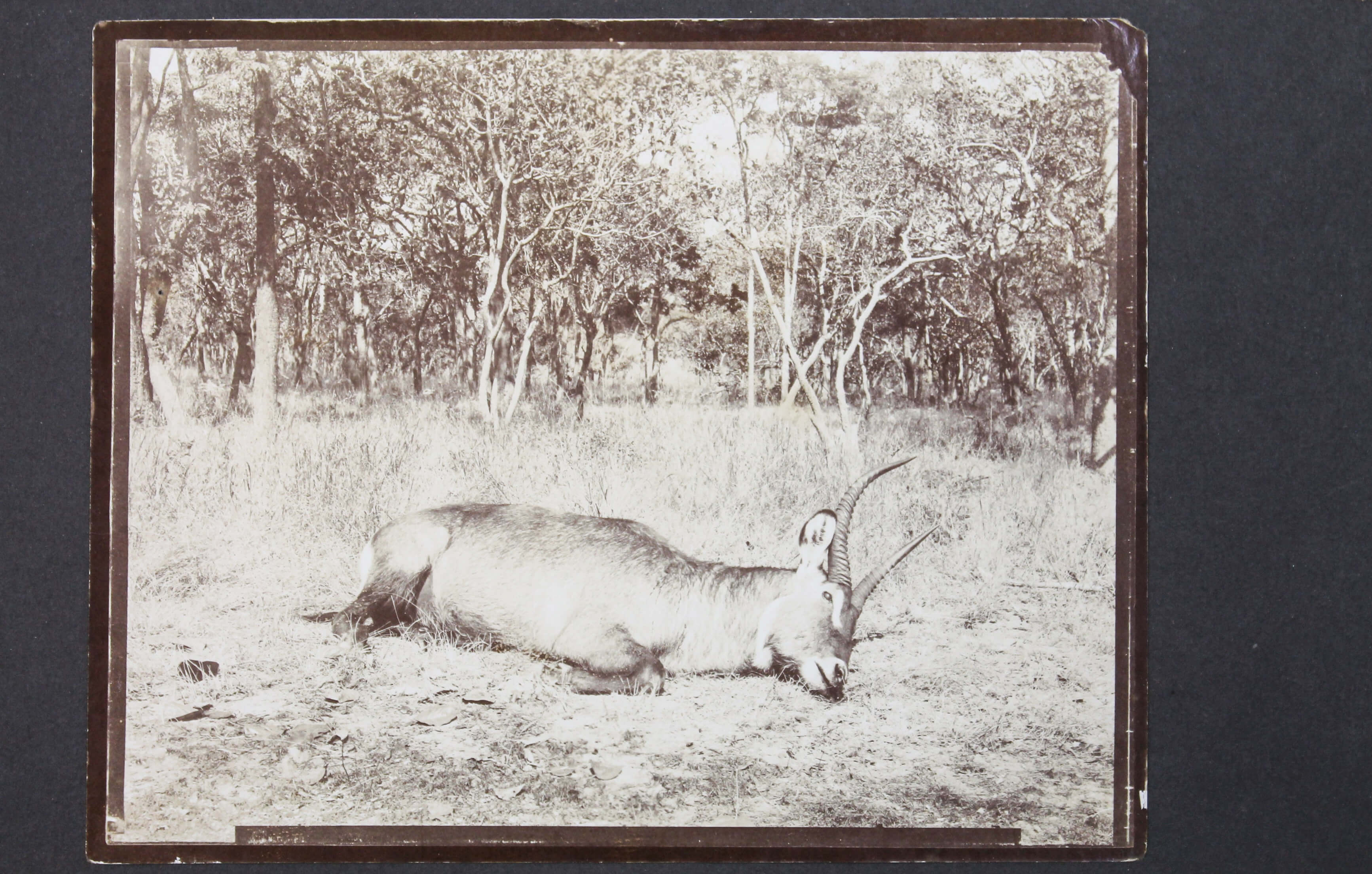
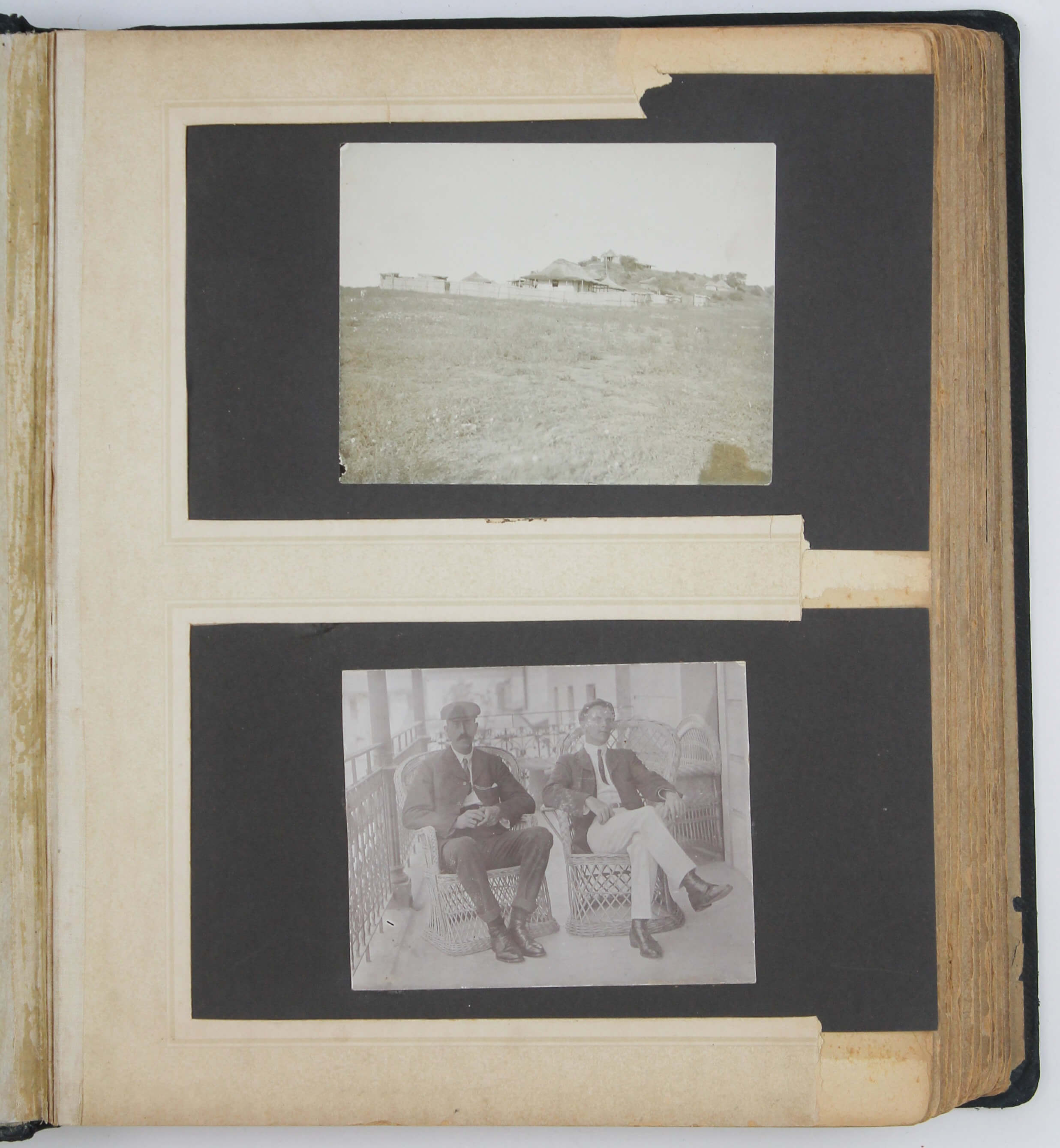
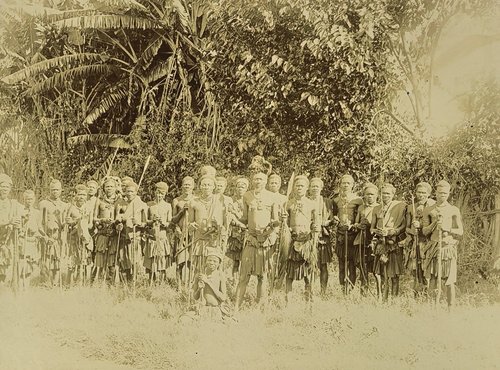
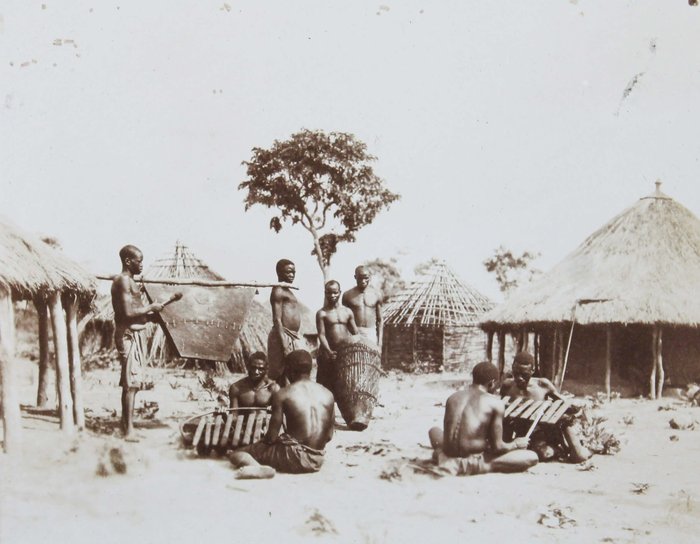
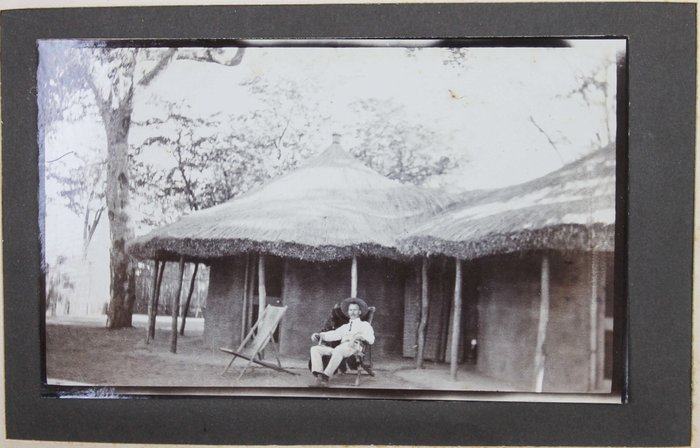
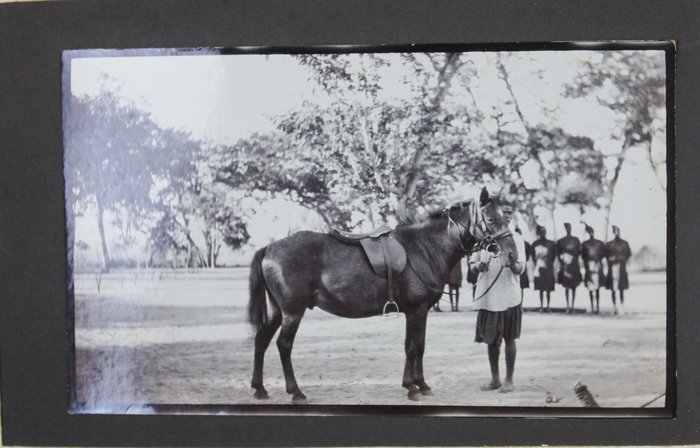
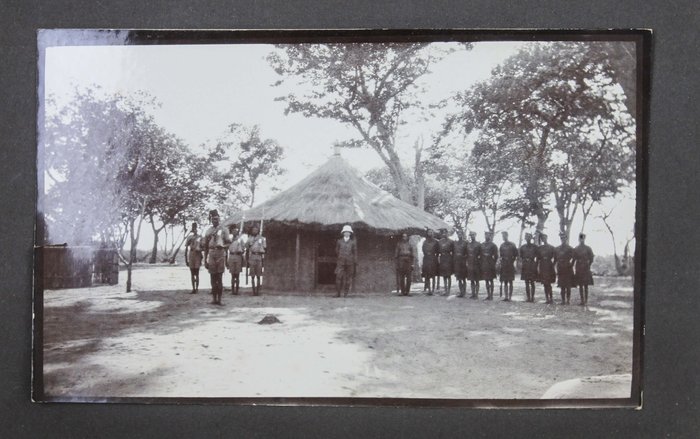
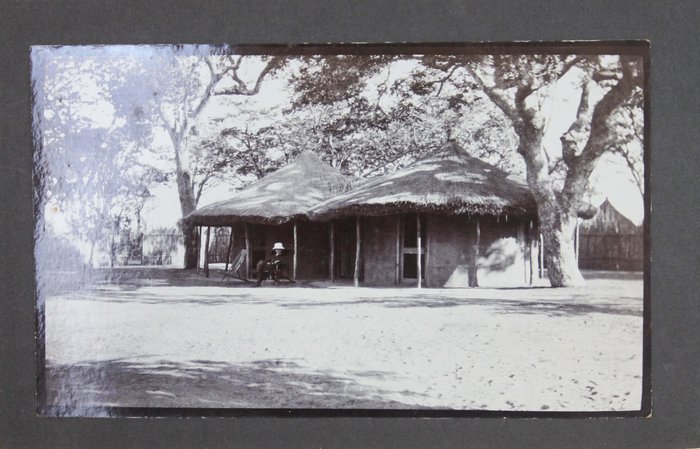
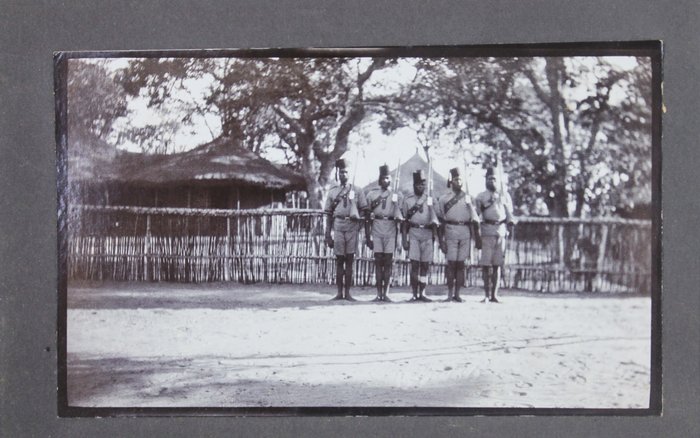
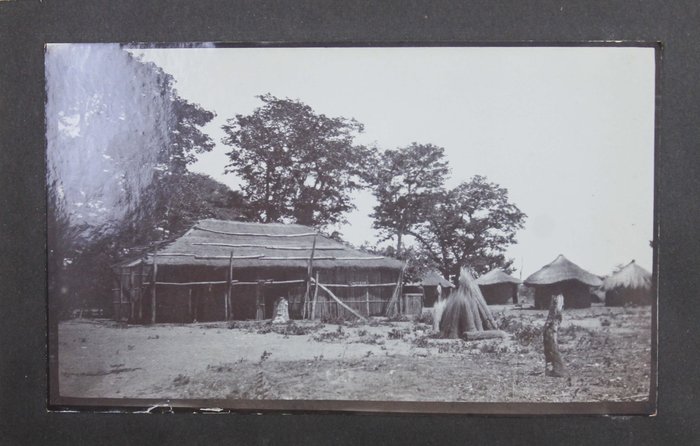
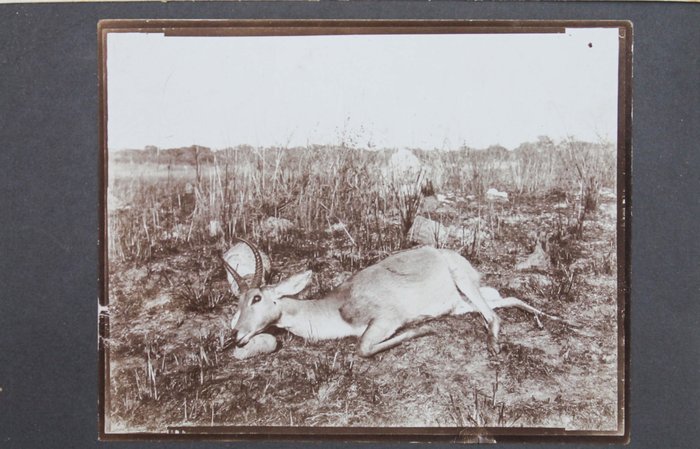
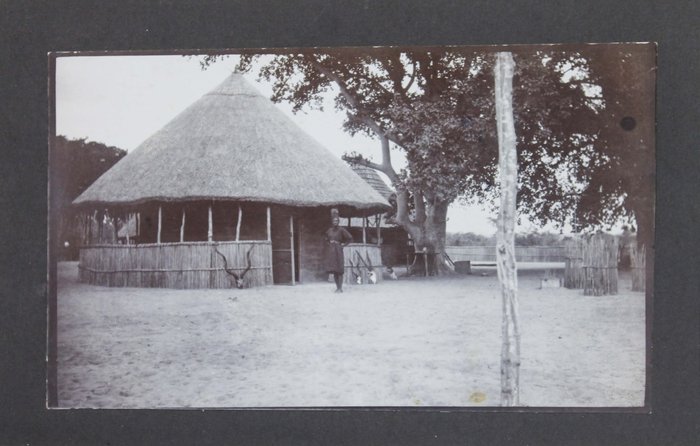
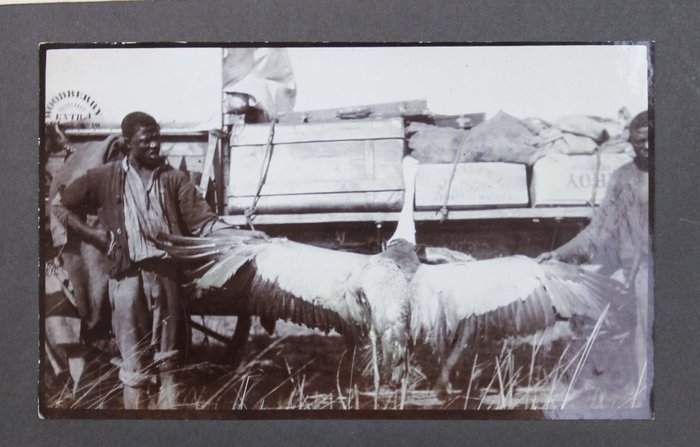
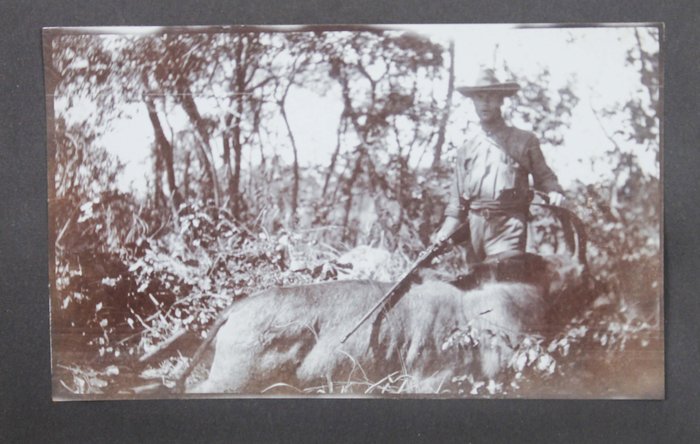
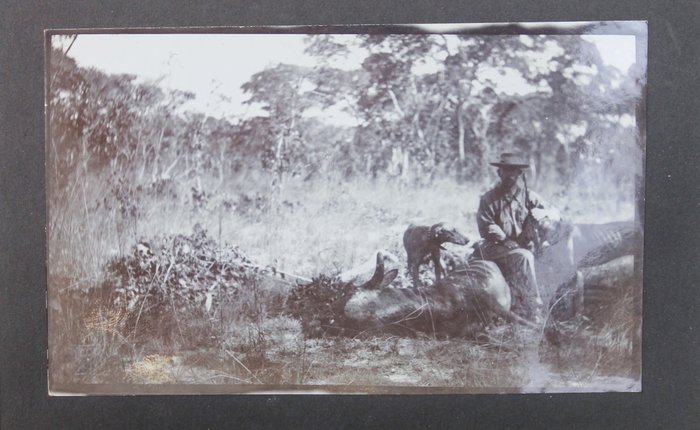
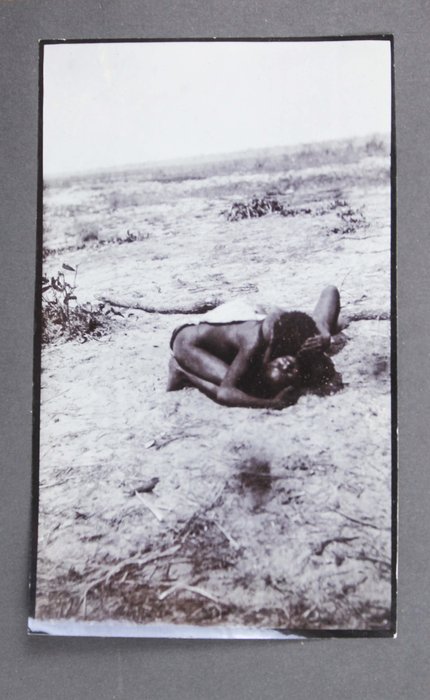
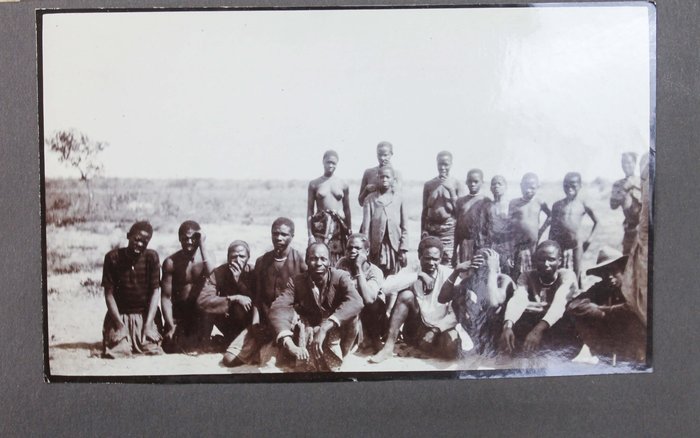
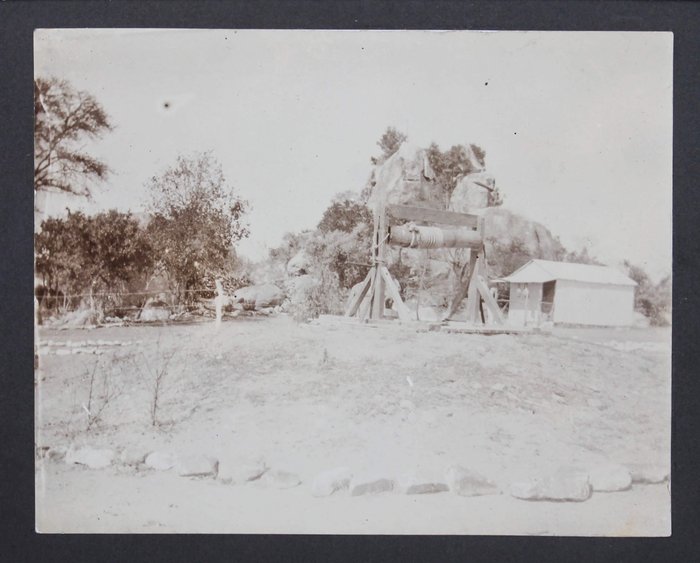
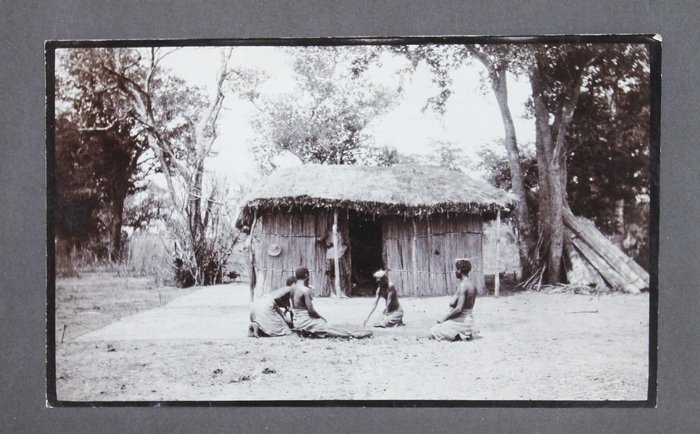
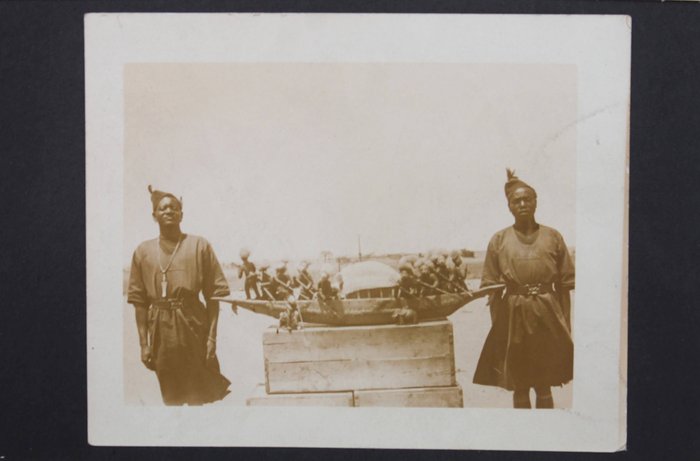
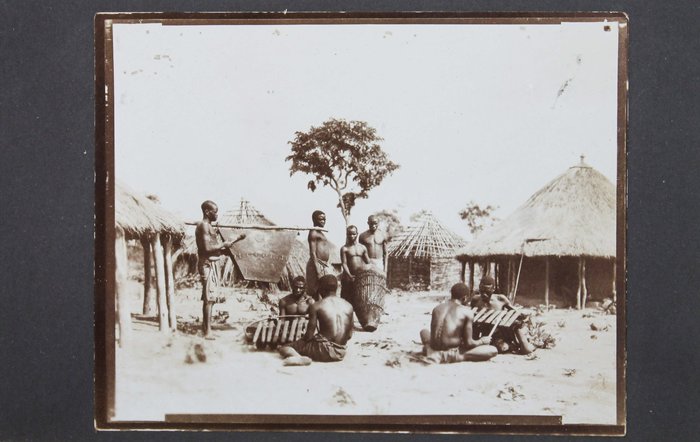
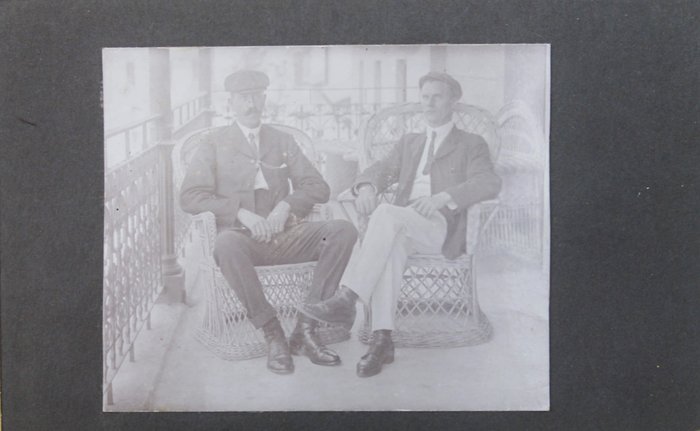
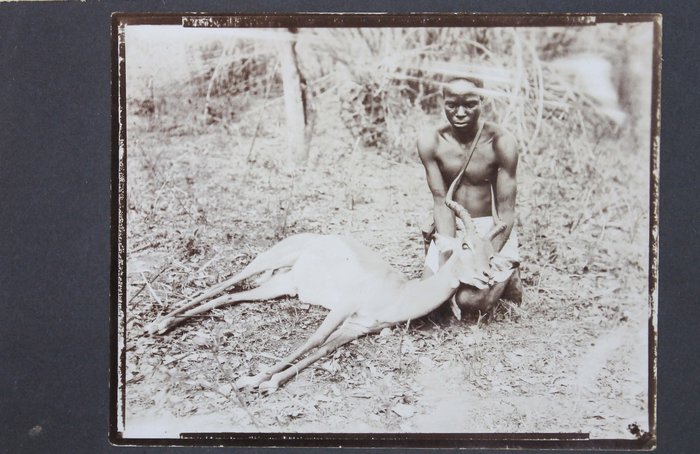
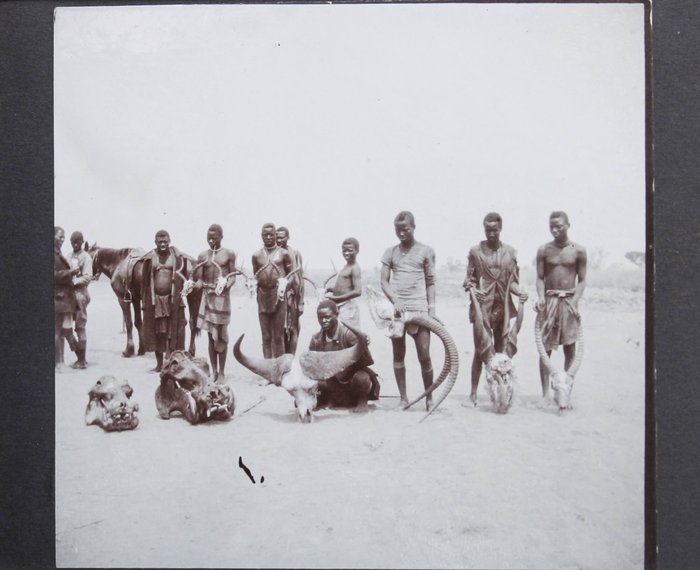
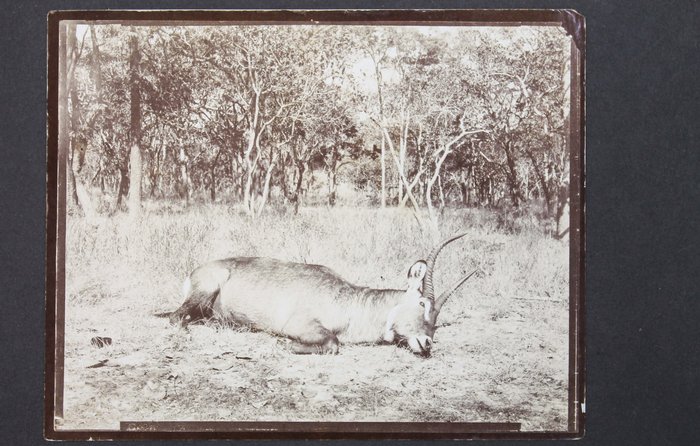
The collection features eighty-five vibrant photographs, apparently taken by a BSAC employee stationed in Lukona in 1906. About twenty well-executed images document the undeveloped grounds of the station, including “Palmer’s Camp,” a “collection point,” the “old store,” the “new store being built,” “our mansion,” and thatched-roof huts. Two excellent candid urban scenes show partially unclothed locals playing drums and large wooden xylophones with mallets, as well as a group of tribesmen posing for the camera. Especially interesting are about ten photographs of the uniformed native police guarding the Resident Commissioner Palmer and Lukona messengers overseeing the government camp. The collection also includes about forty graphic hunting scenes, showing BSAC employees and local men with guns proudly displaying their catch (lions, elephants, etc.). One dramatic photograph depicts a local man killed by an elephant, with a companion grieving over the body.
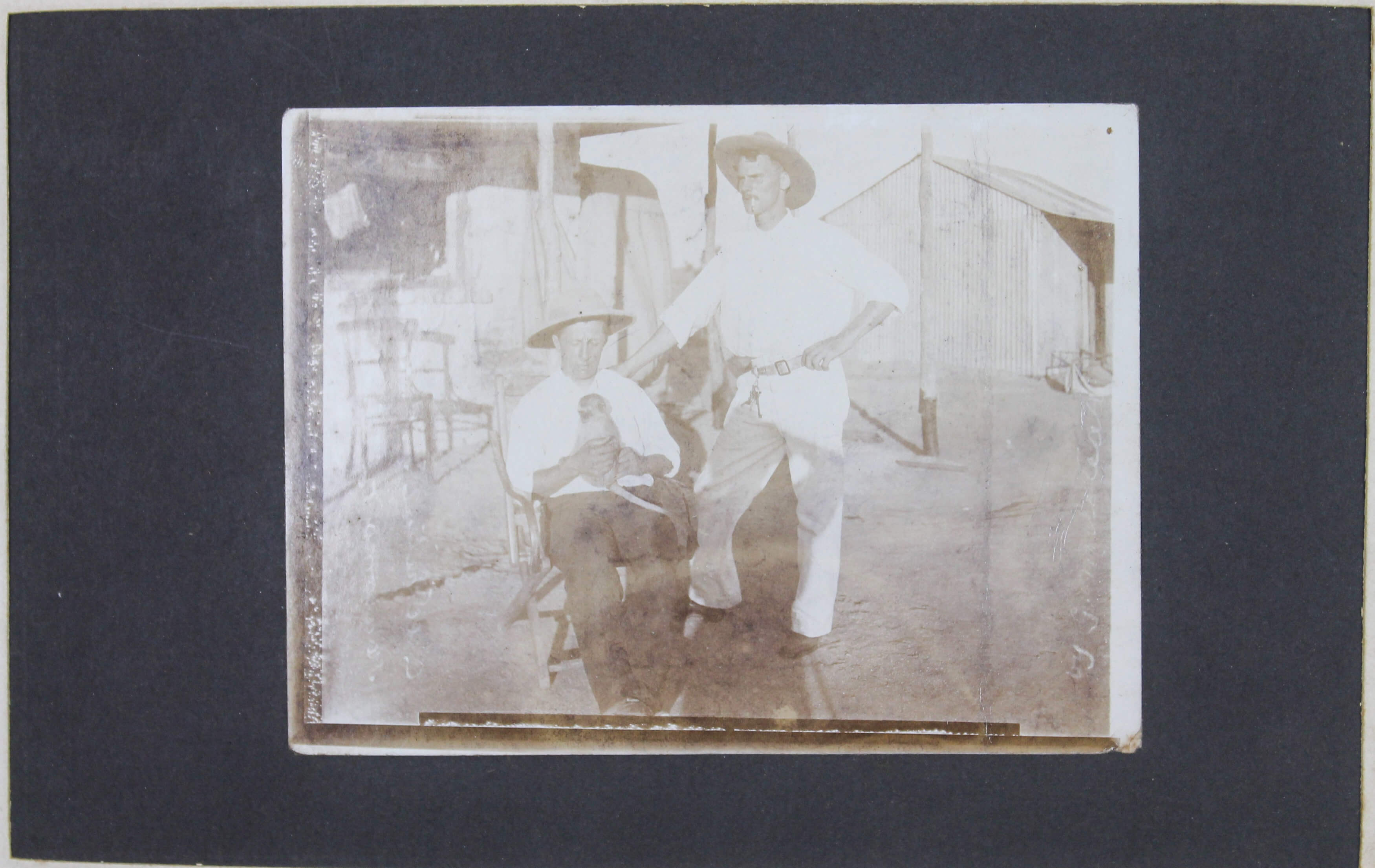
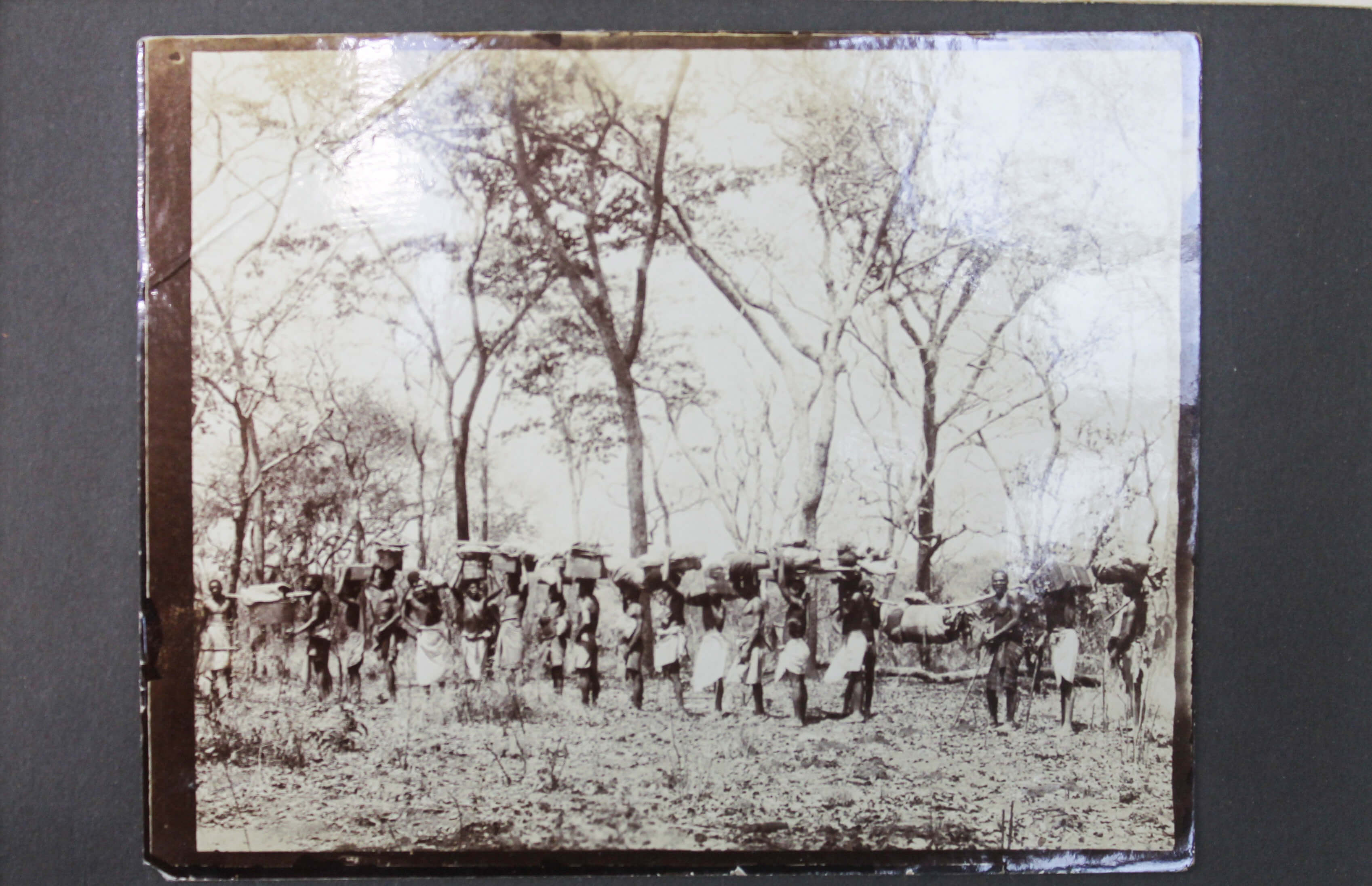
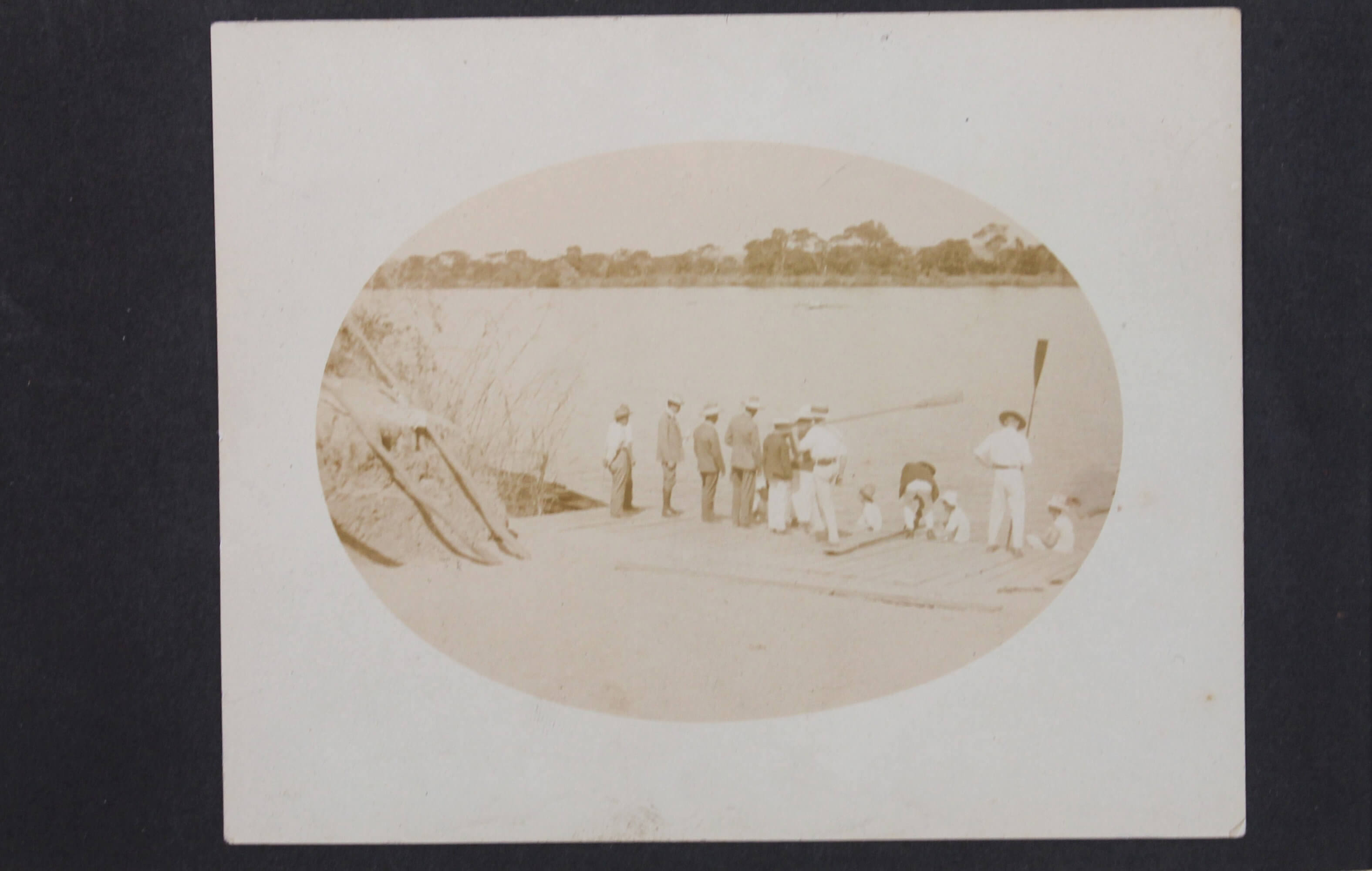
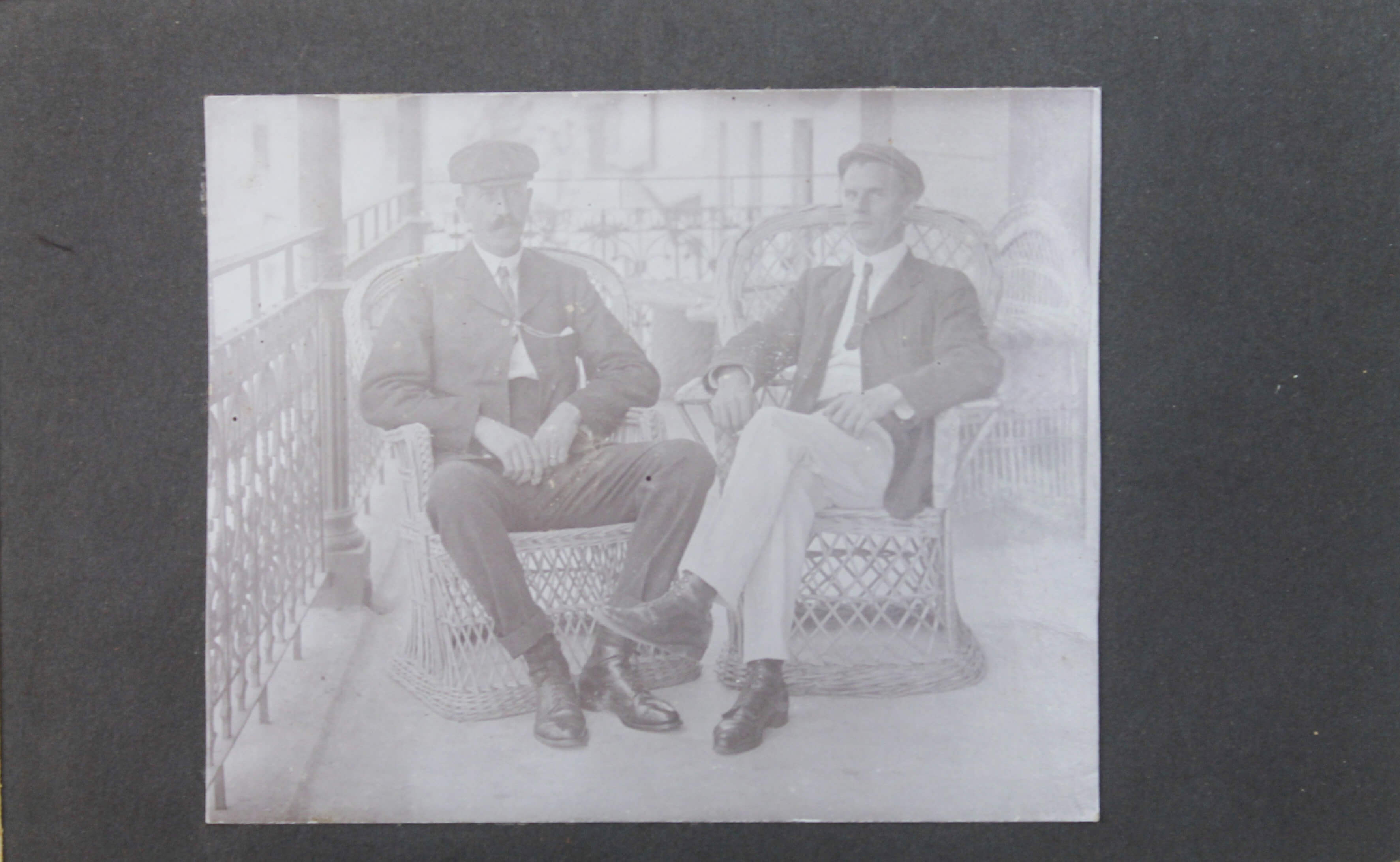
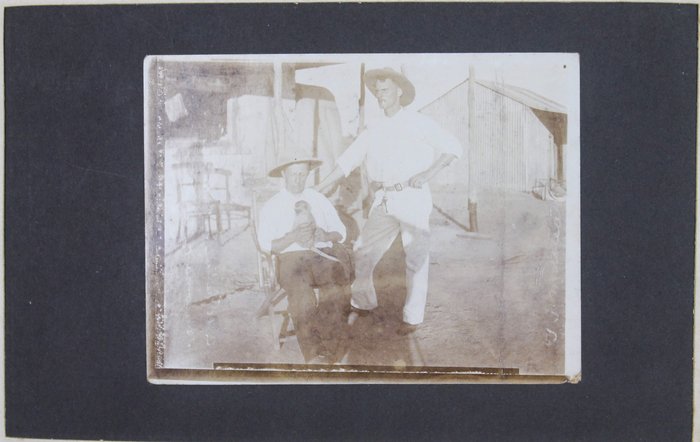
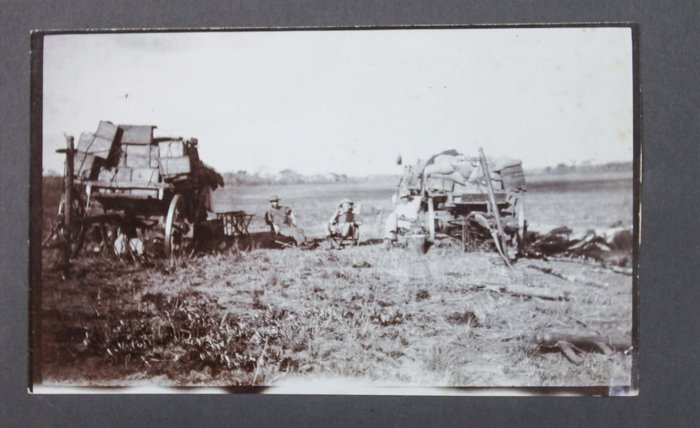
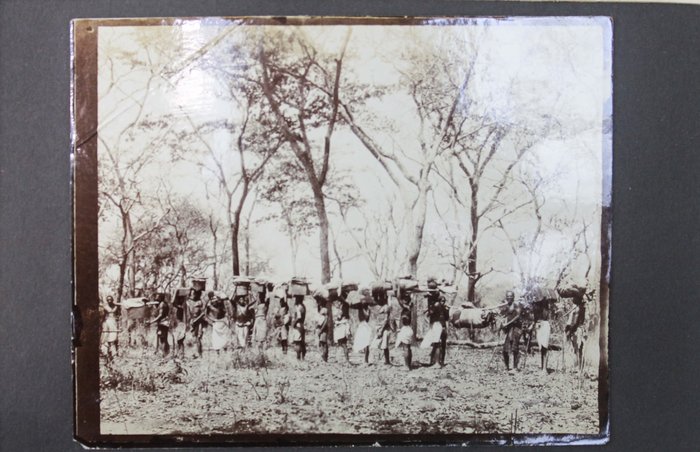
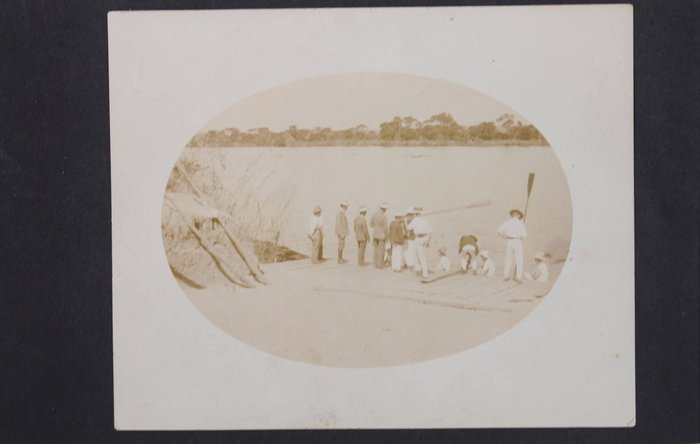
Other interesting scenes feature locals carrying goods on their heads to supply the railway company, staff at “F&C White Store” posing with a monkey, groups resting between camps, well-dressed BSAC employees, and views of the Second Zambezi Regatta held in July 1906 (Regatta was an annual sporting festival that brought together visitors from across Rhodesia for competitive rowing matches, traditional native canoe races, and equestrian gymkhana events).
Overall, historically significant collection of lively vernacular photographs illustrating the administrative and commercial activities of the British South Africa Company (BSAC) in Lukona in the early-20th century.