
#PD36
Ca. 1914-1917
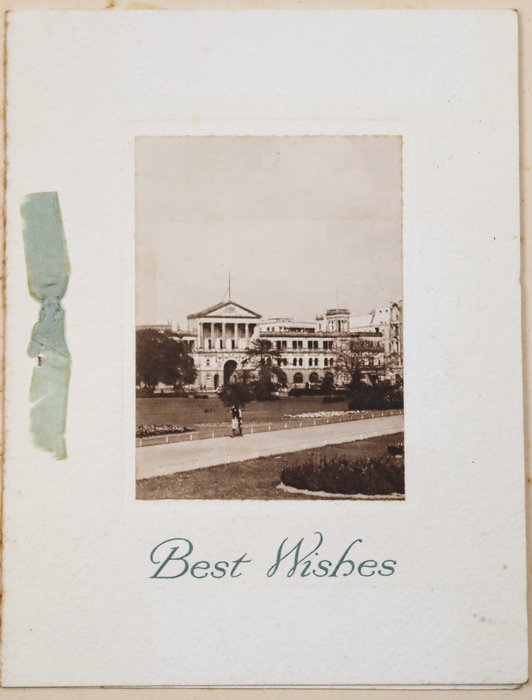
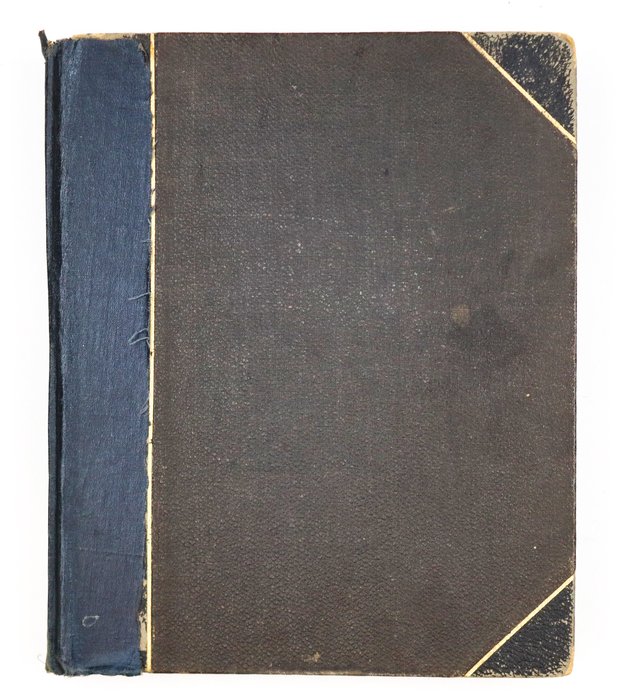
Quarto album ca. 24,9x20,5 cm (9 ¾ x 8 in). 24 card stock leaves. (including 4 blank) With 69 mounted original gelatin silver photographs from ca. 8,7x13,9 cm (3 ½ x 5 ½ in) to ca. 2,9x5,6 cm (1 x 2 ¼ in). Most photos with period English captions either on the mounts or in negative; at least one photo dated; with ca. 10 period printed postcards ca. 8,4x13 cm (3 ¼ x 5 in); two greeting cards (one signed by “Herb” from Poona, India, in 1914); and a souvenir fold-out set of 10 postcards, each ca. 3,4x6,8 cm (1 ¼ x 2 ¾ in). Half-leather binding with a cloth glued on the spine. Binding worn and rubbed, first page is detached from the main block, at least one photo missing, age-toning, but otherwise a very good album with strong photos.
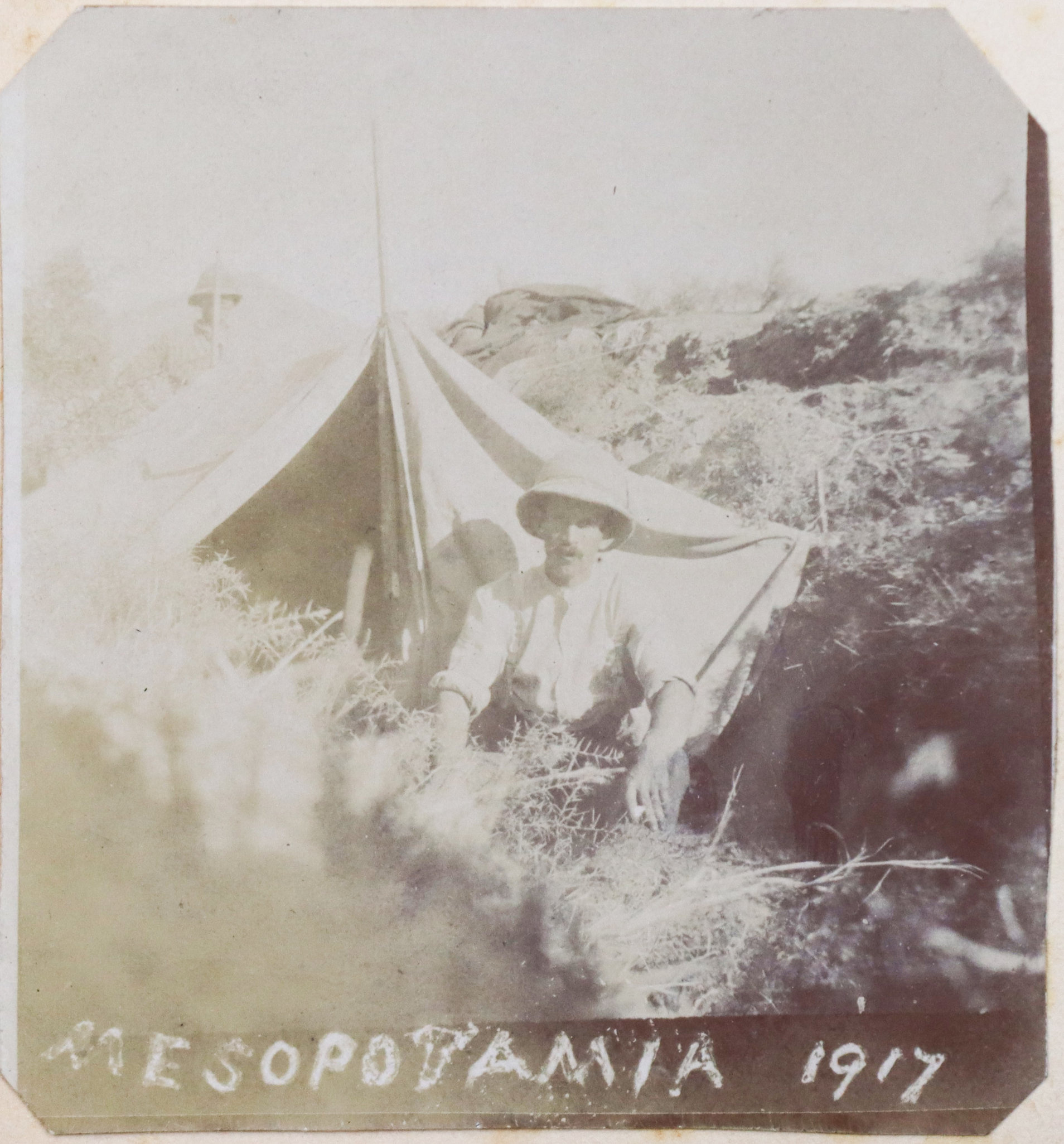
Historically important collection of original gelatin silver photographs, compiled by a British soldier associated with the 1/4th Hampshire Regiment during the Mesopotamian campaign of World War I.
The Mesopotamian campaign (1914–1918) was a strategic offensive for control over Ottoman-held Iraq, primarily managed by British and Indian forces. For the 1/4th Battalion, Hampshire Regiment, service began with a 1914 deployment to India for garrison duty at Rawalpindi and Lucknow. In early 1915, the battalion joined the 33rd Indian Brigade for the invasion of the Persian Gulf, advancing from the deltas of Basra into the arid interior. The unit participated in grueling operations along the Tigris, including the 1916 attempts to relieve the besieged garrison at Kut-al-Amara. Following a logistical reorganization under General Maude, the battalion joined the 1917 offensive that eventually captured Baghdad.
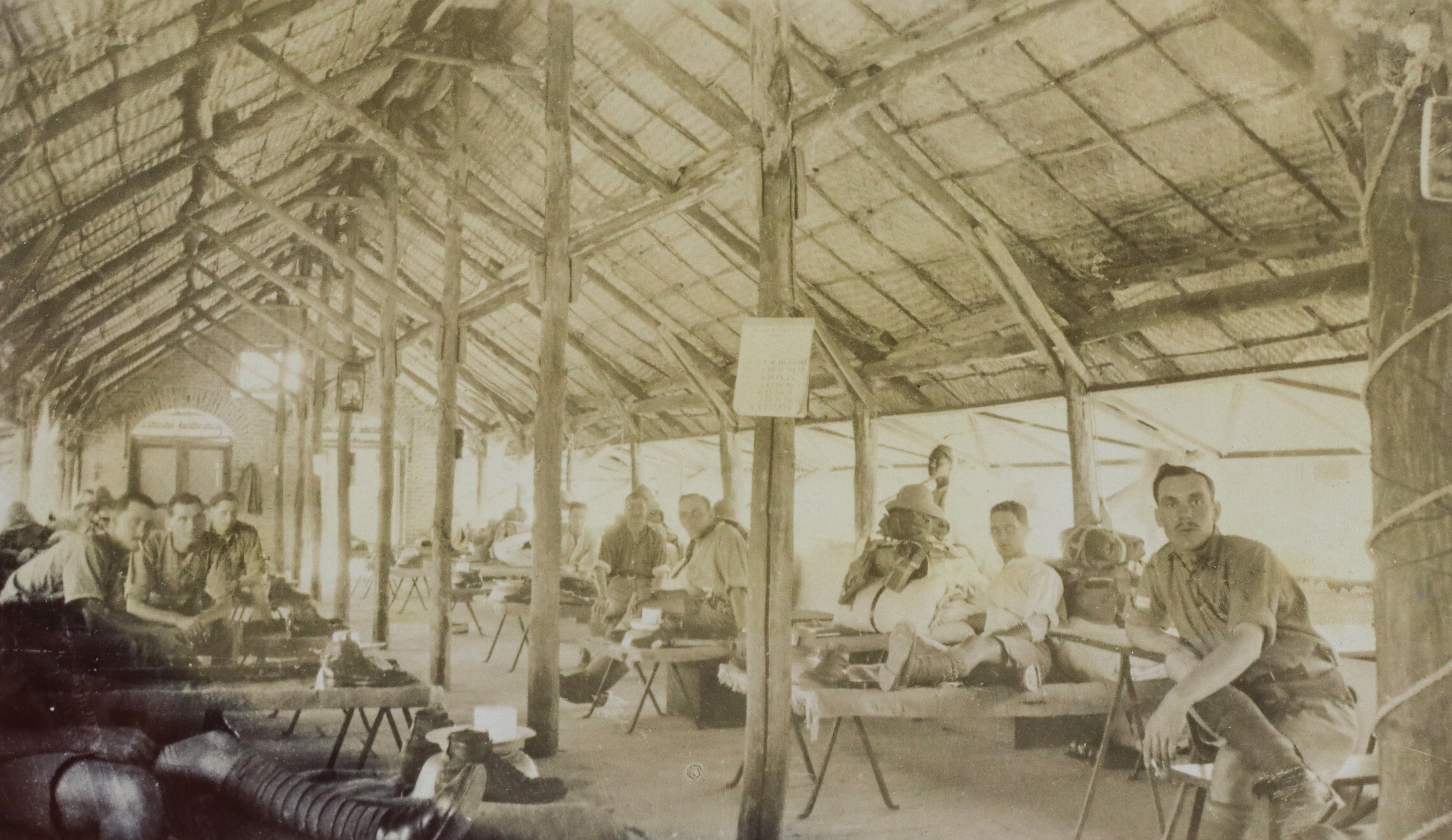
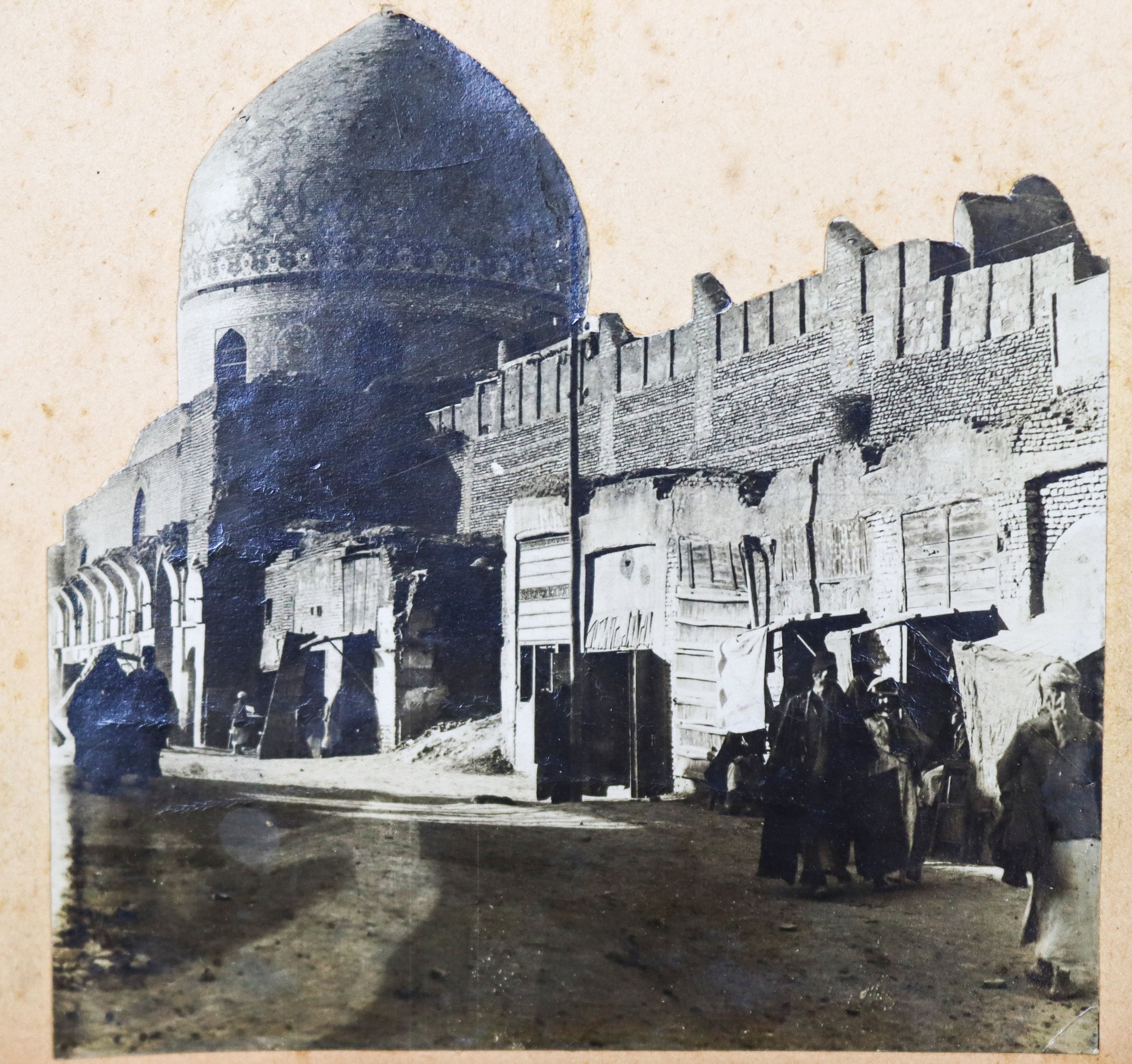
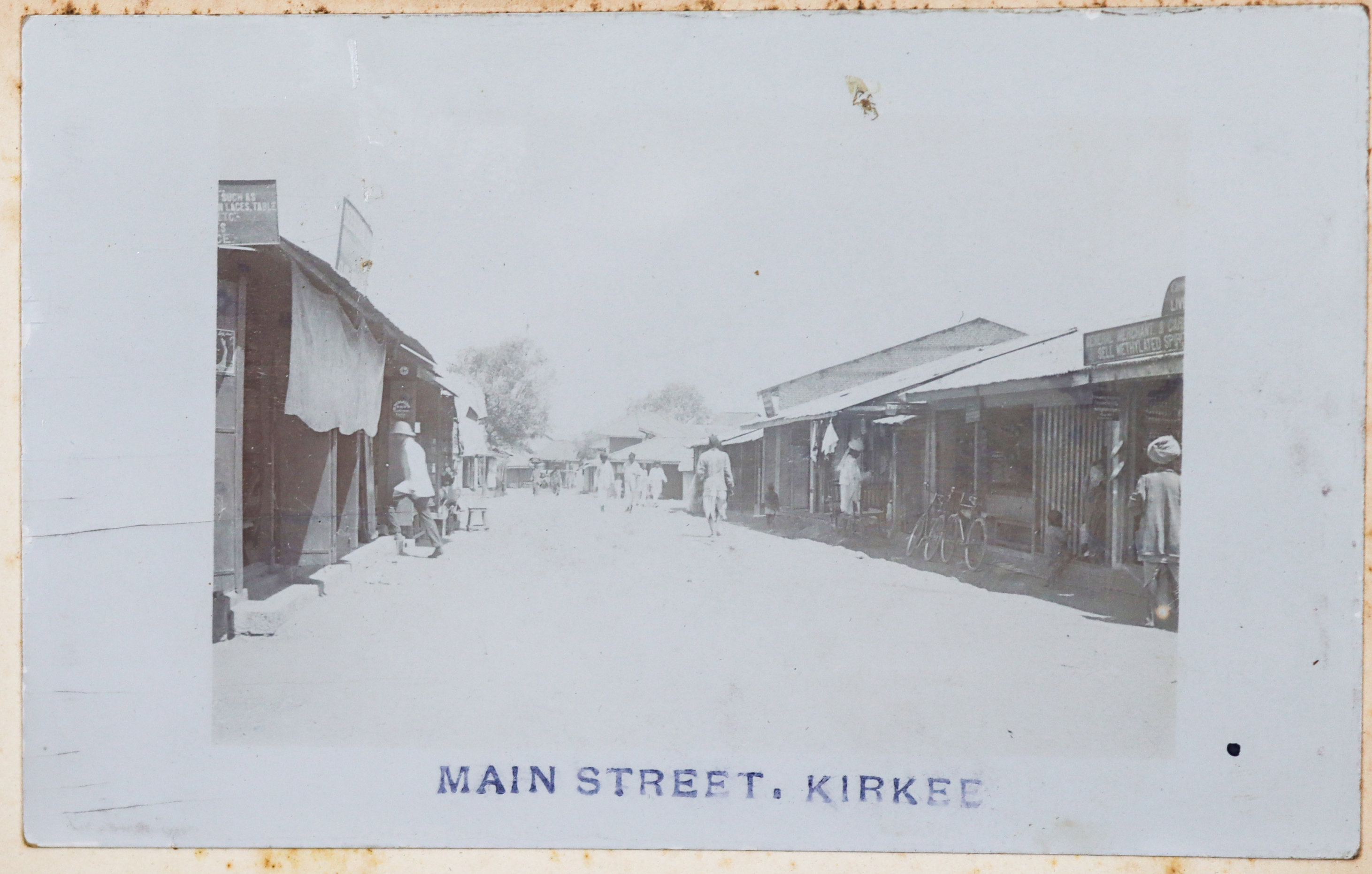
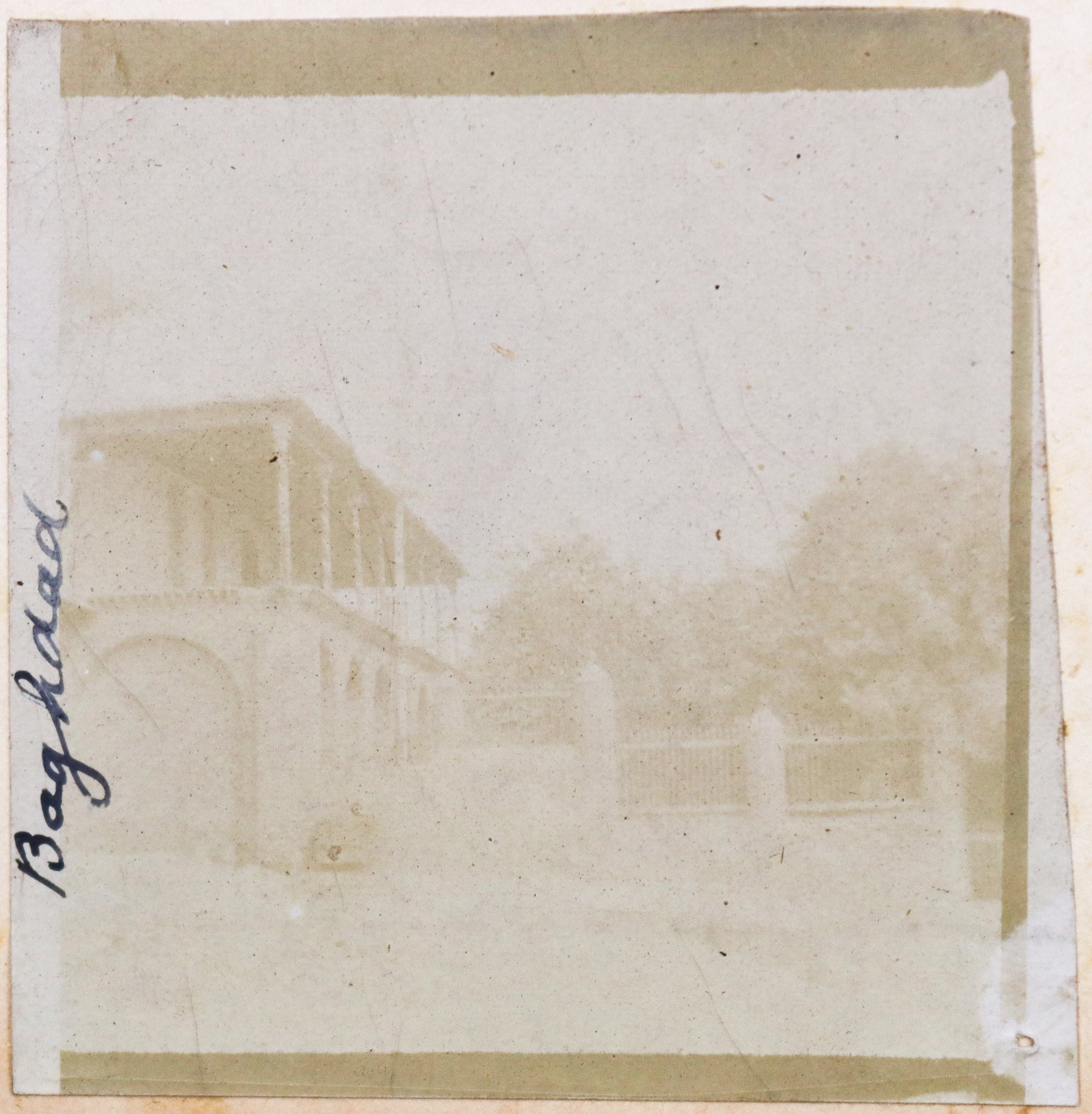
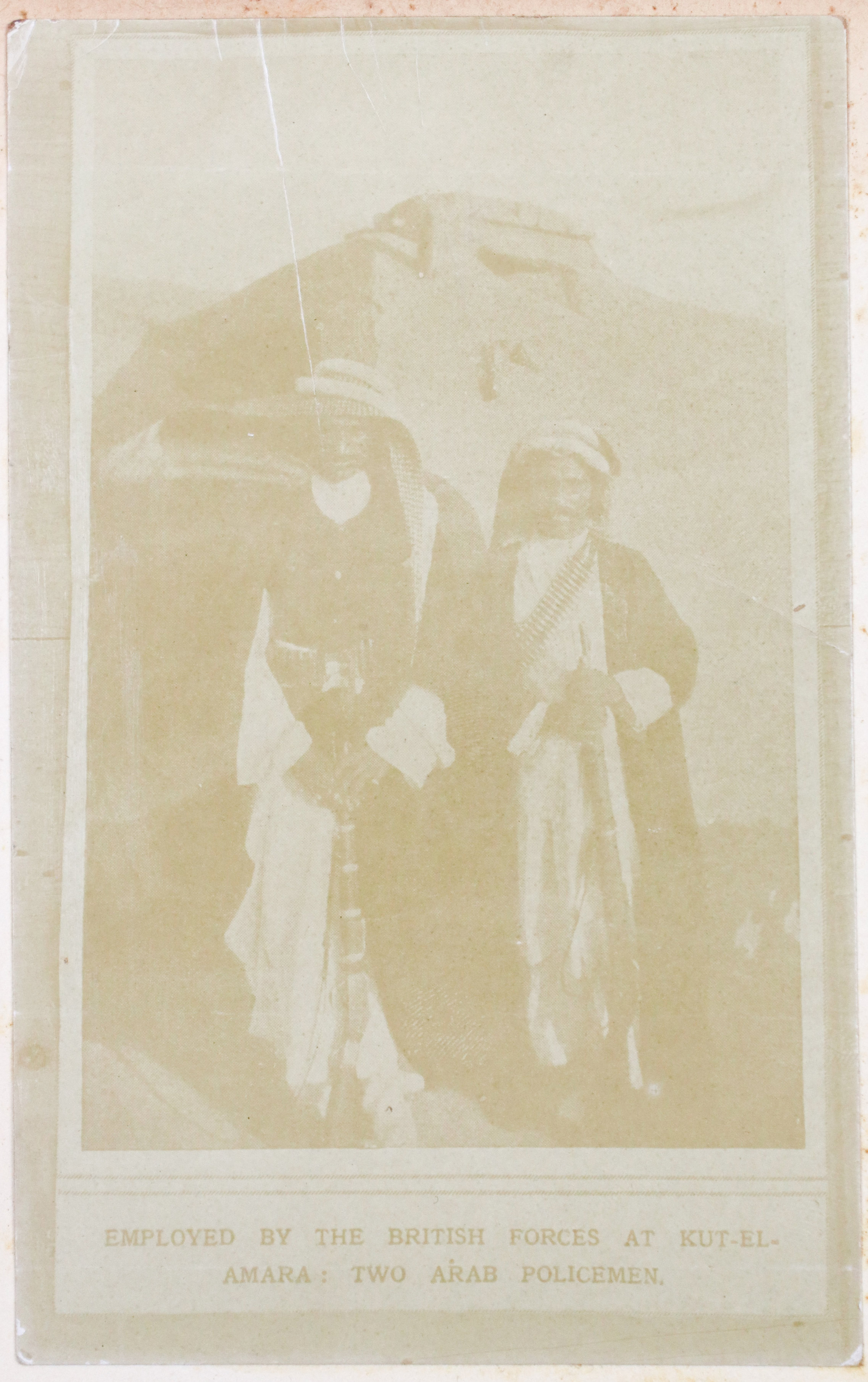
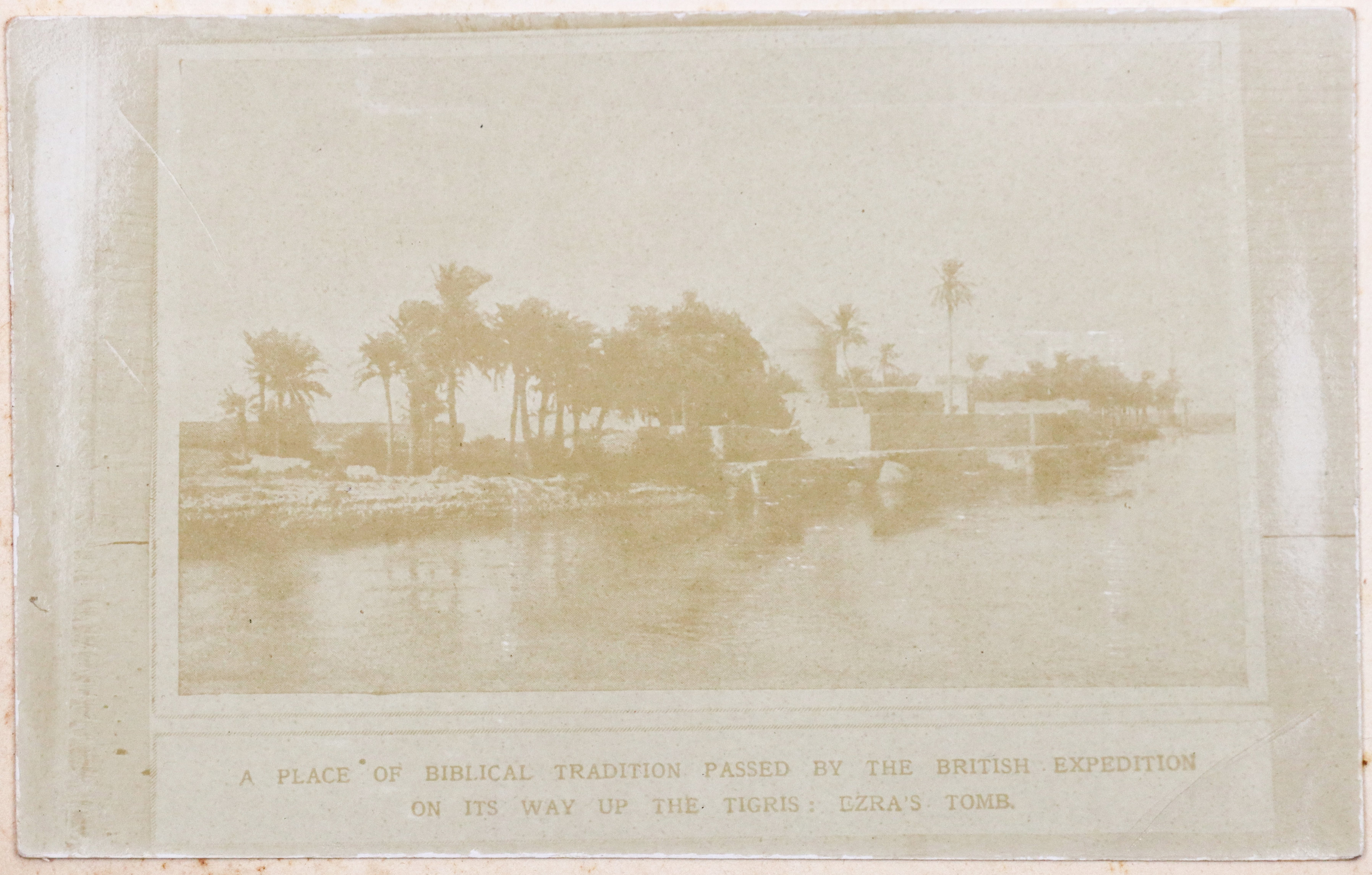
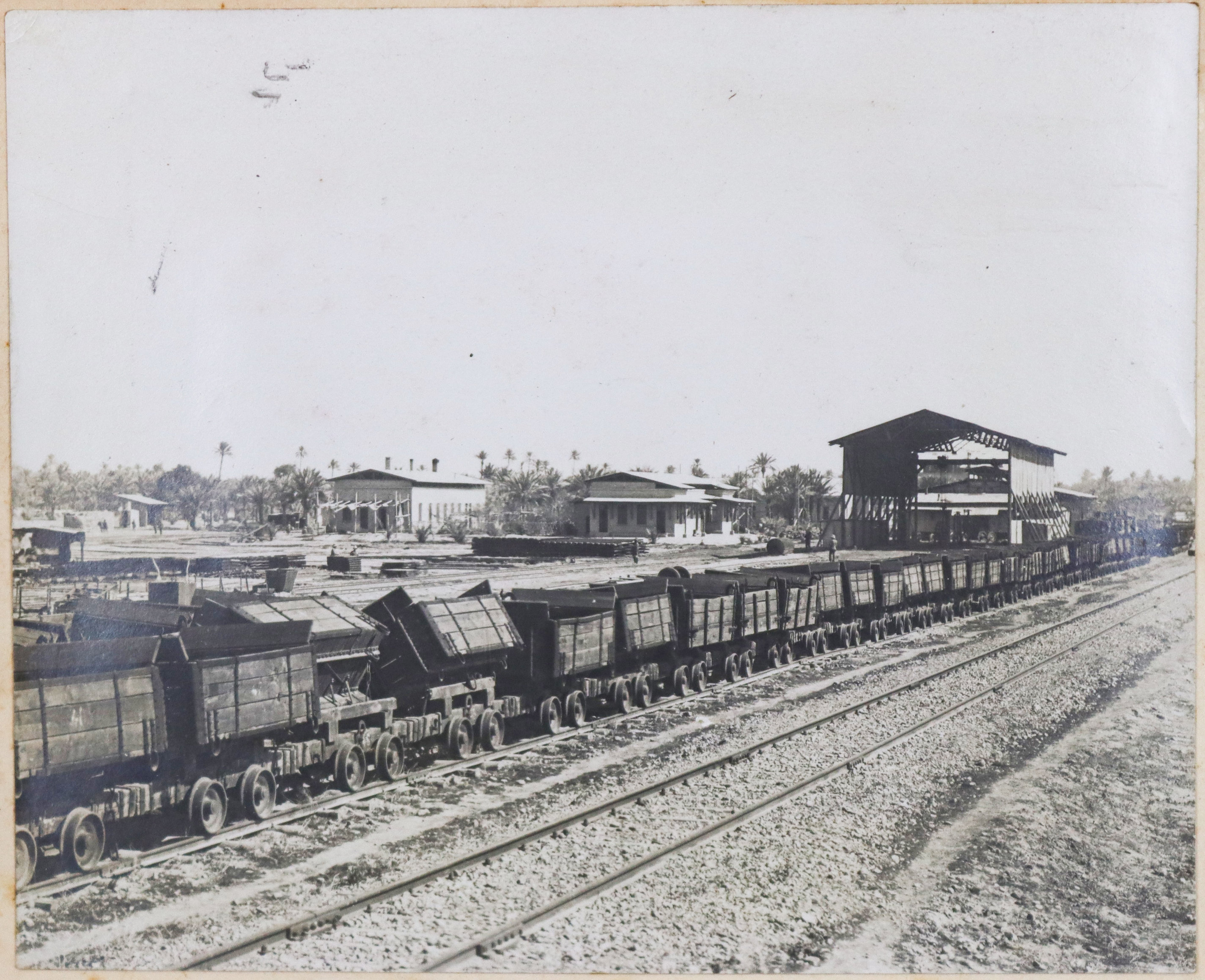
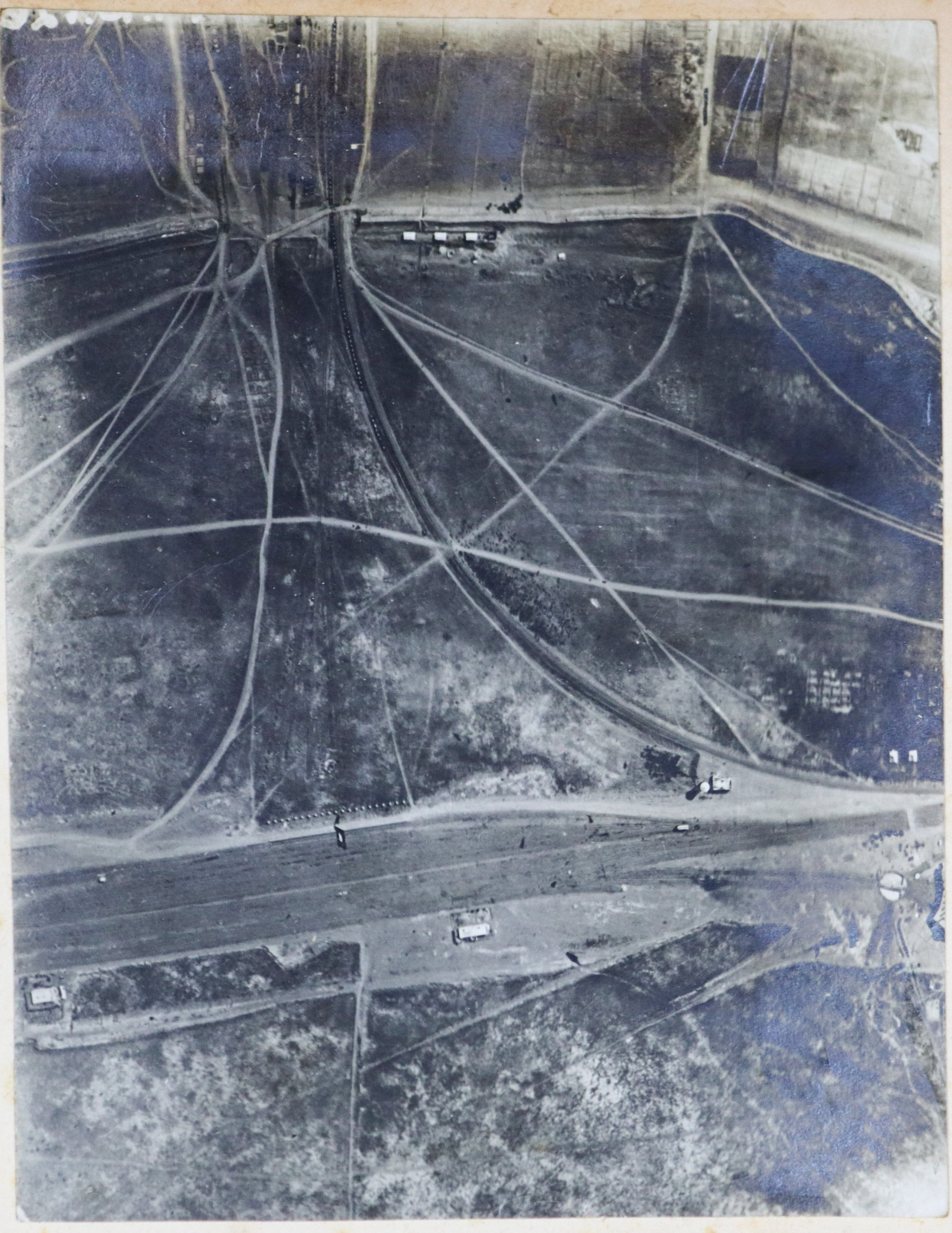
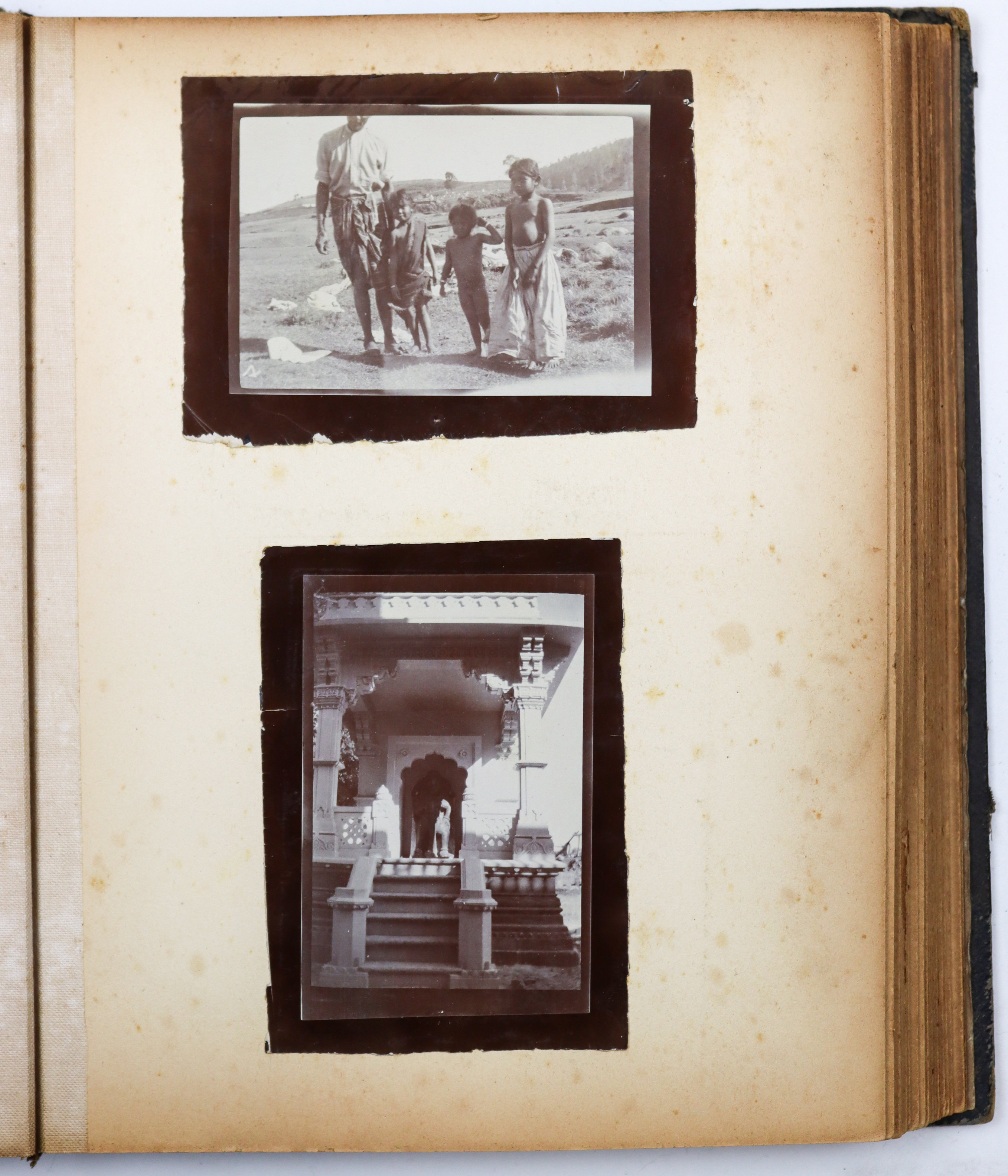
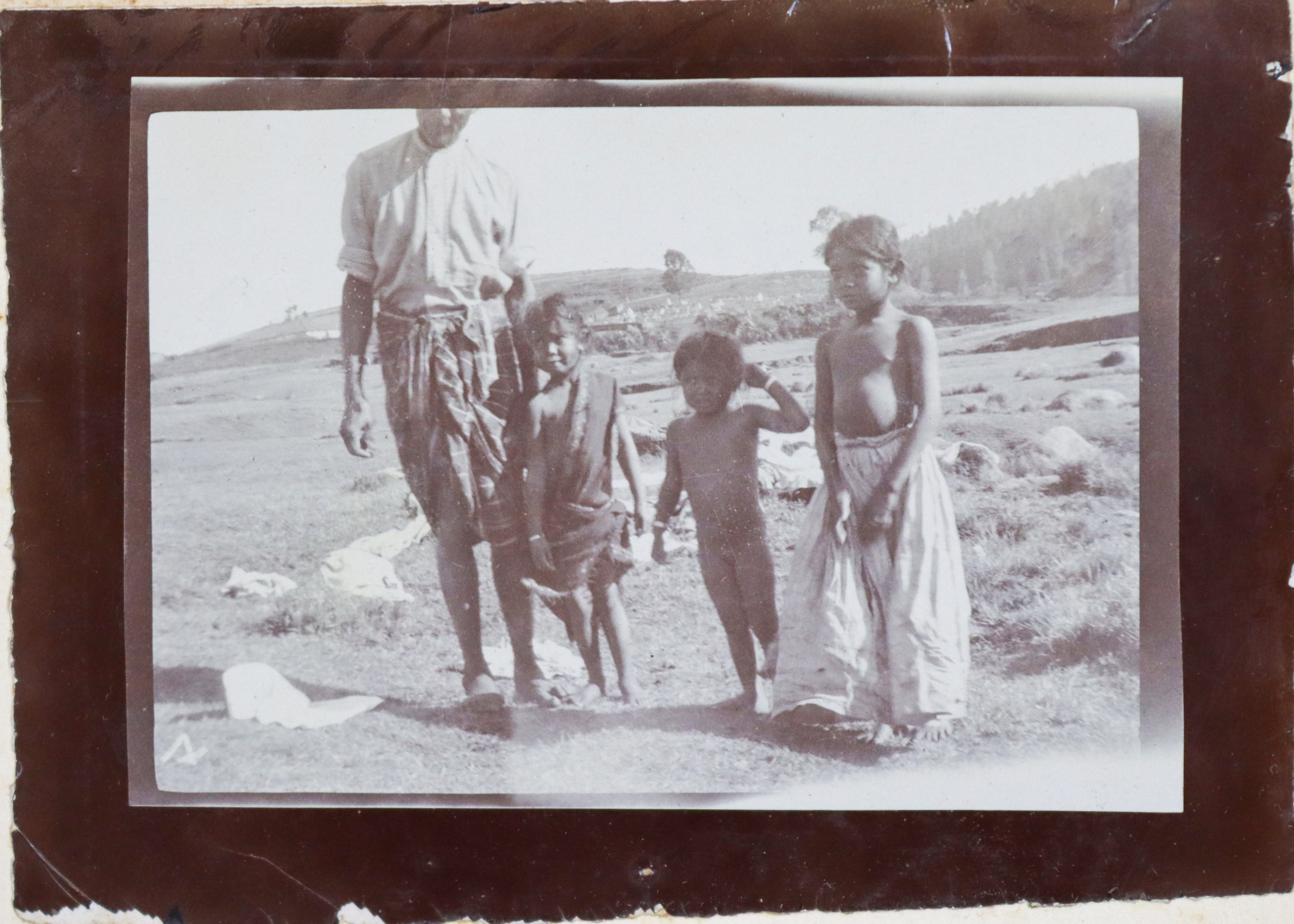
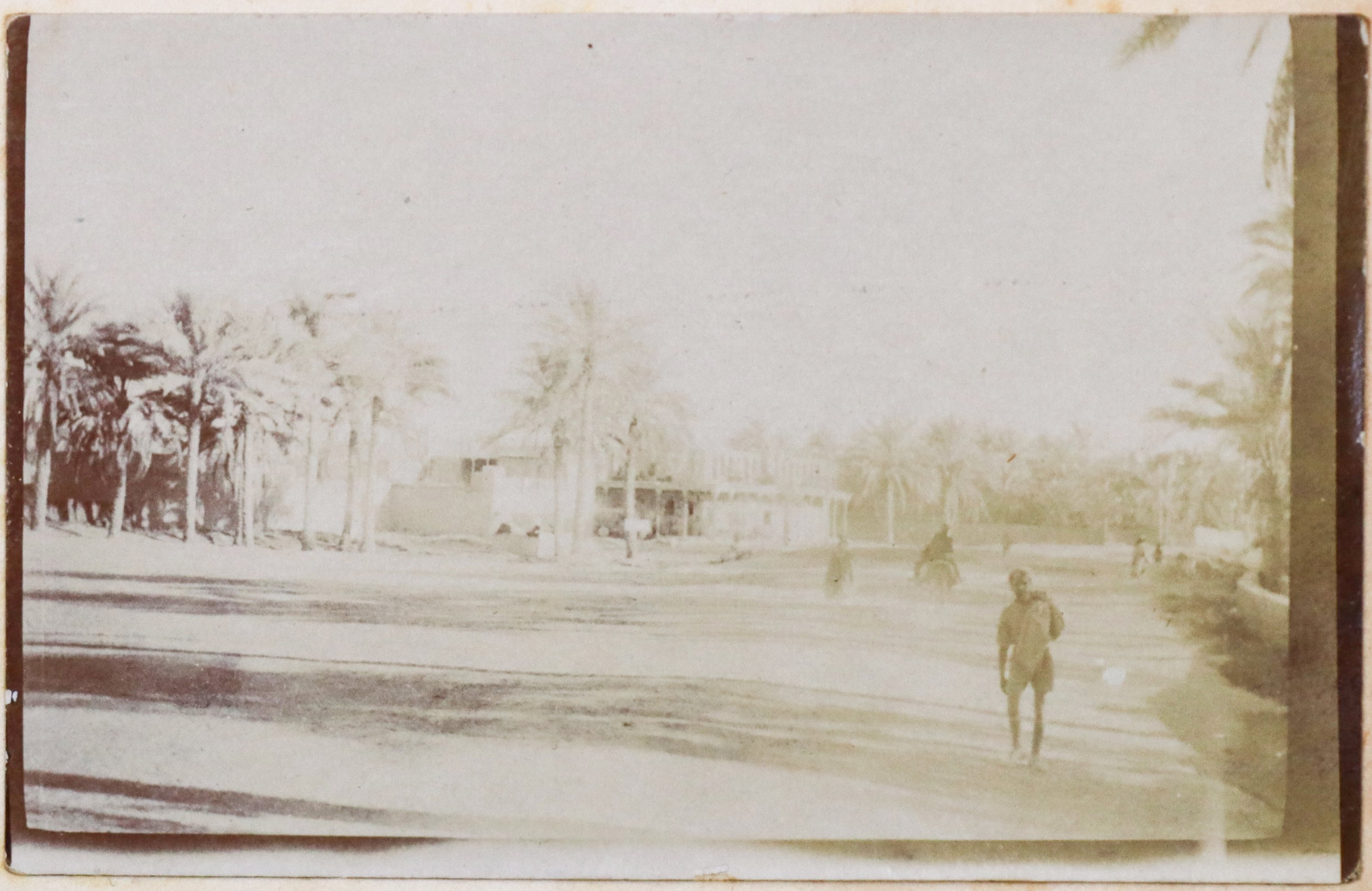
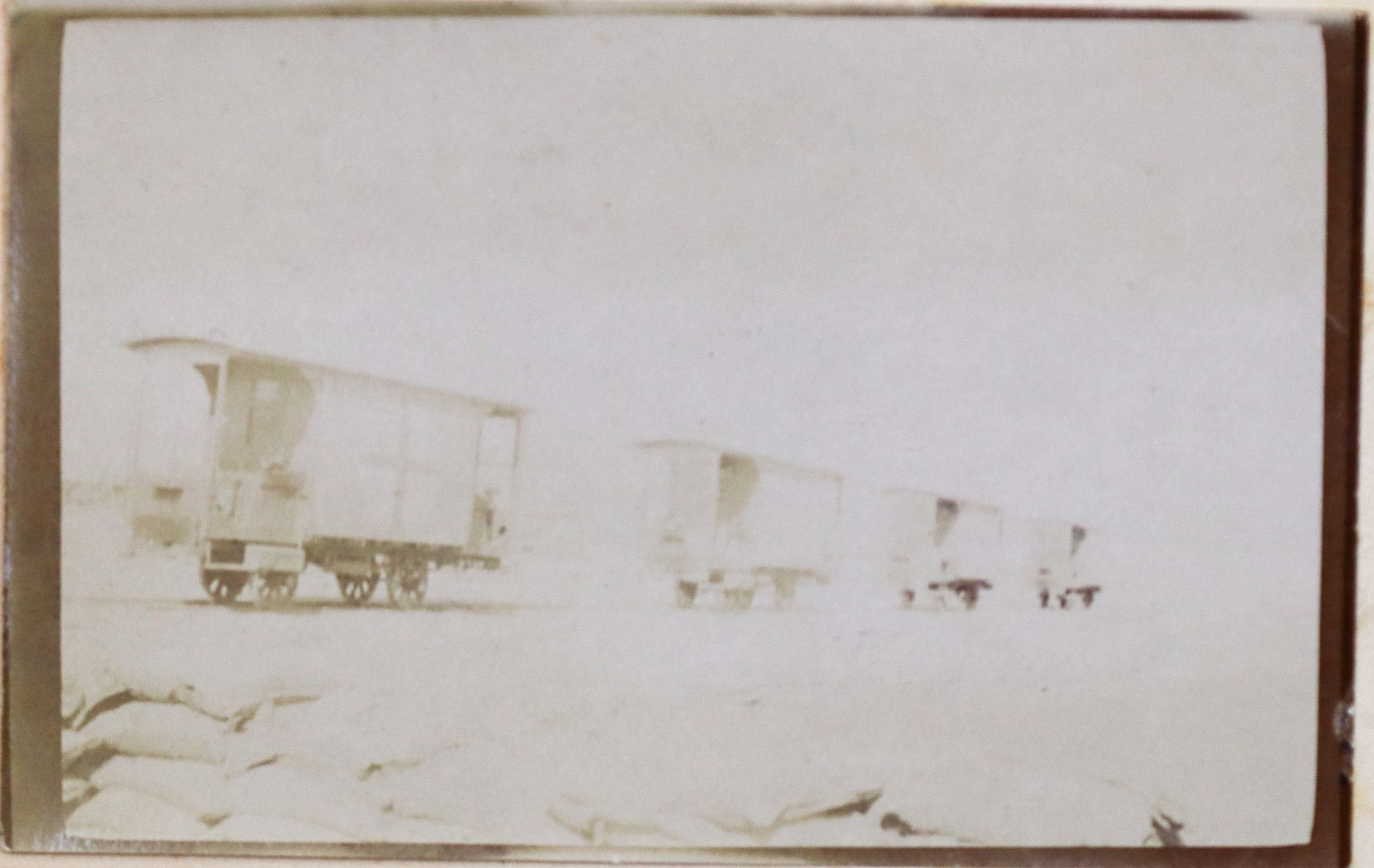
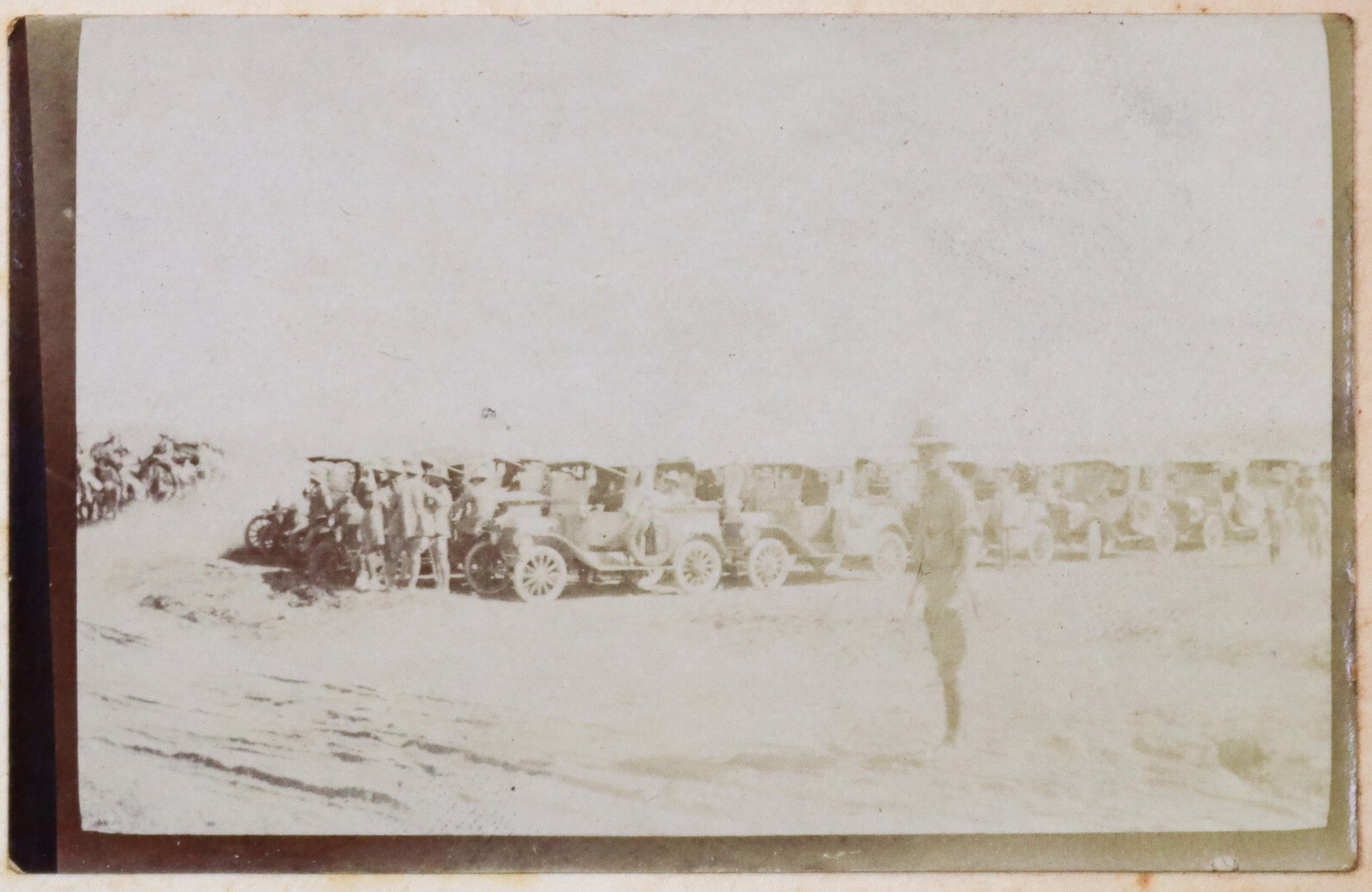
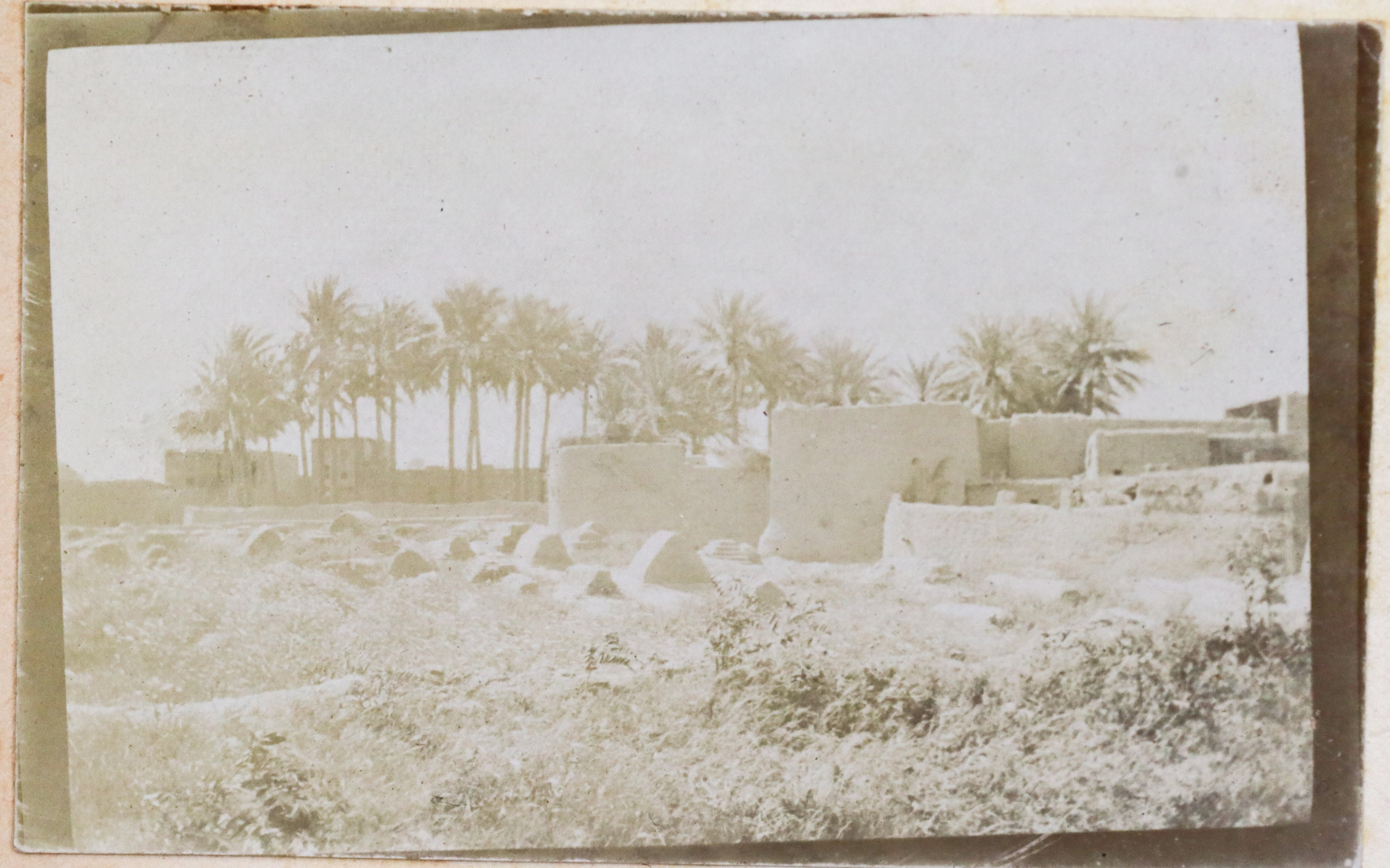
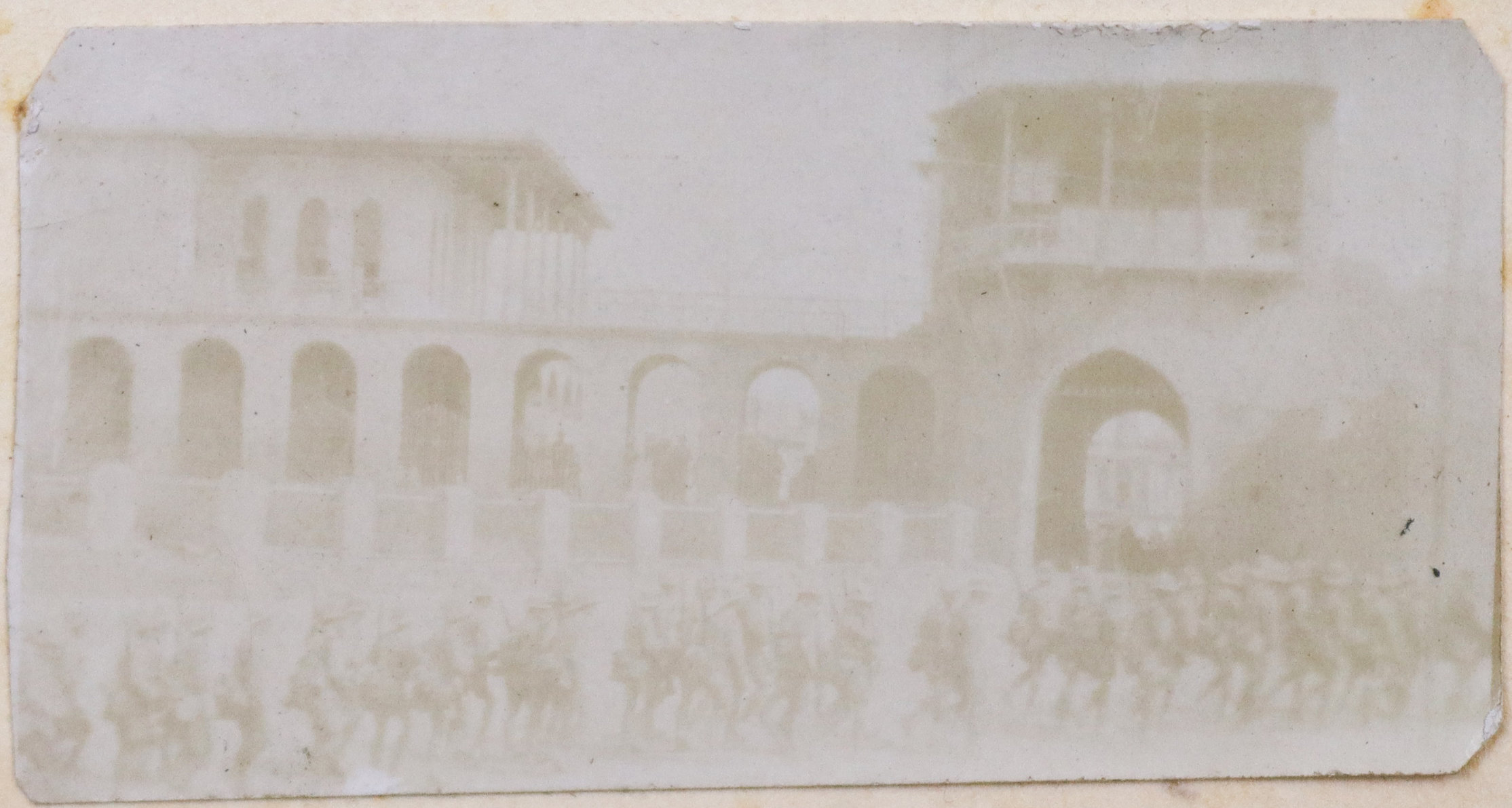
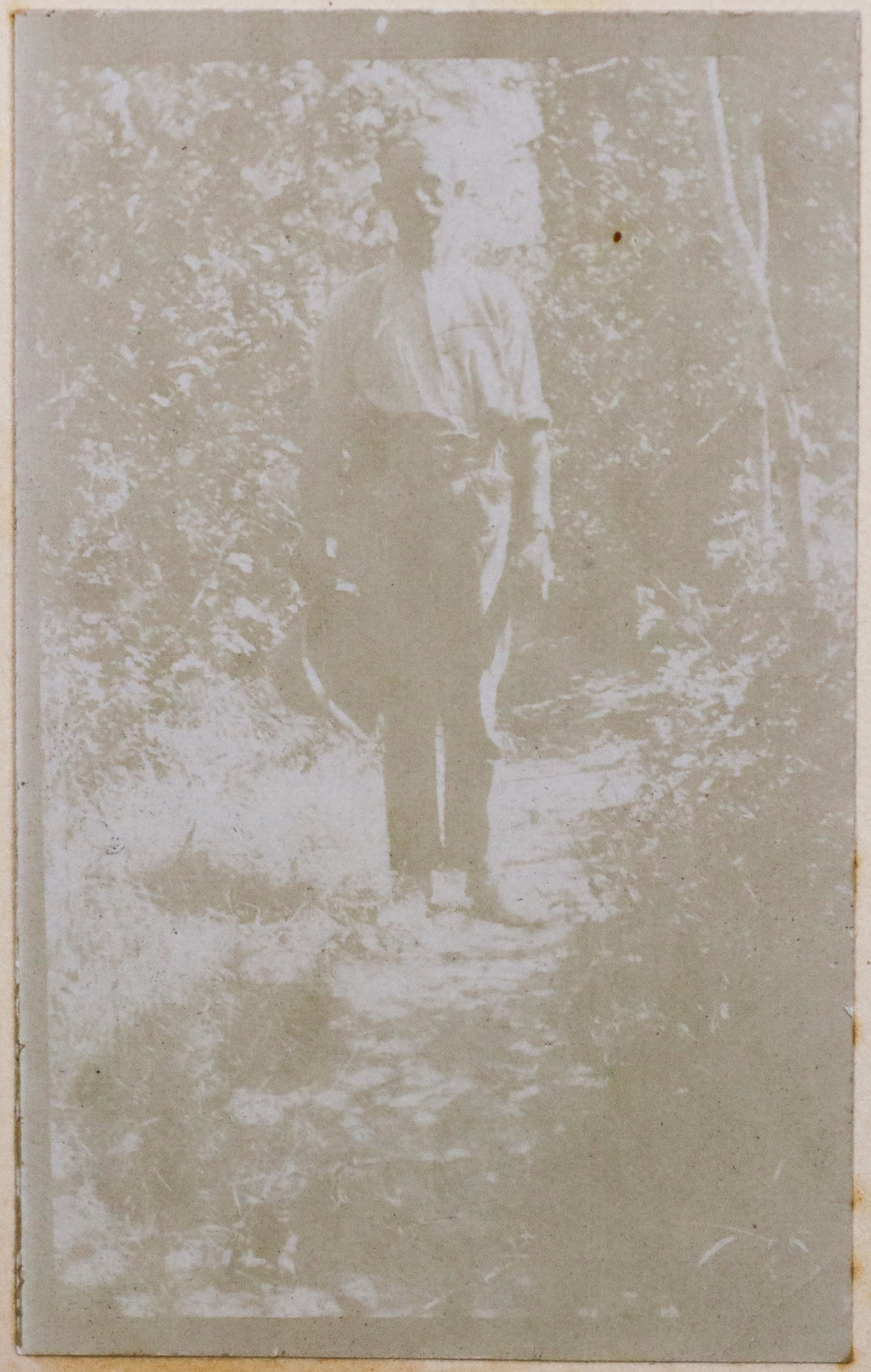
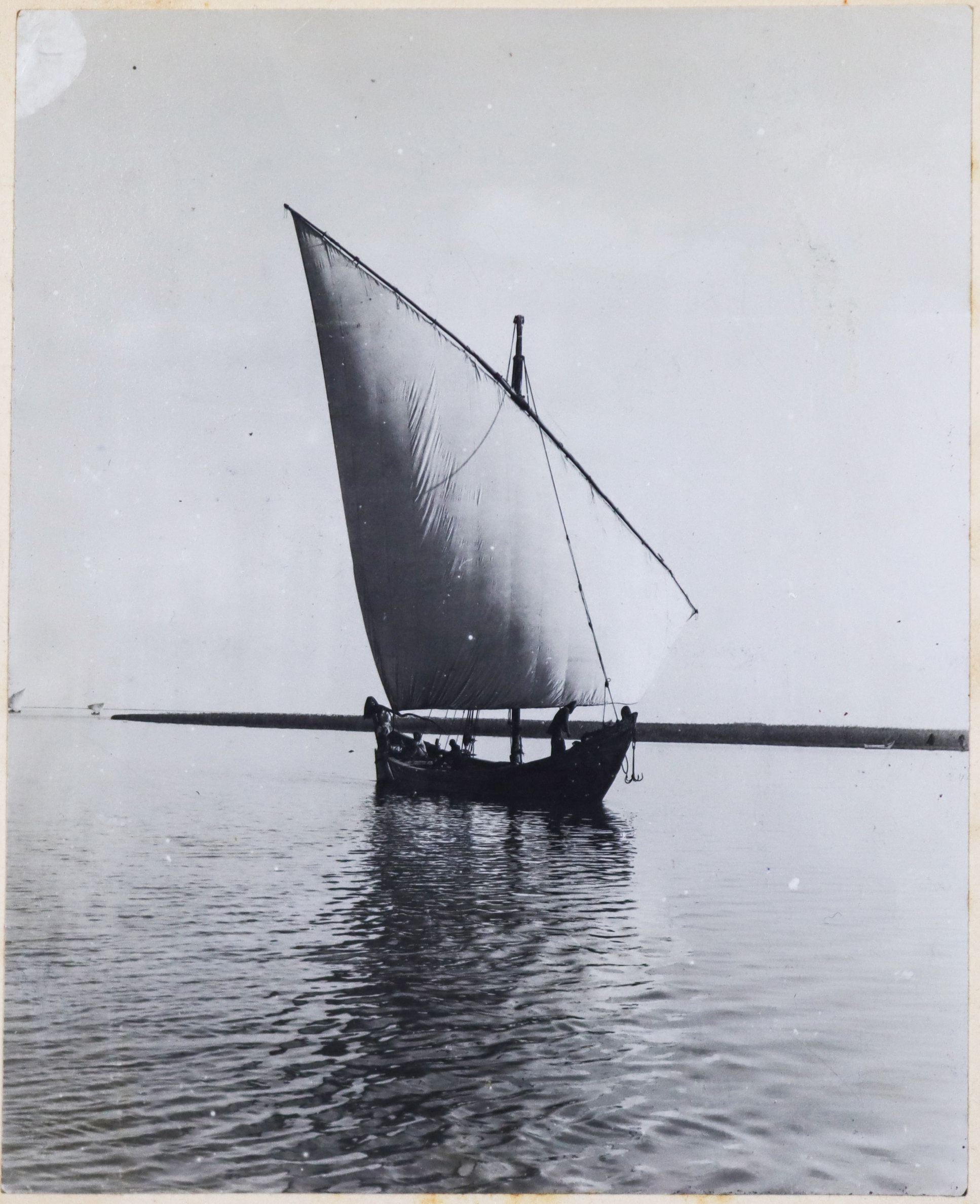
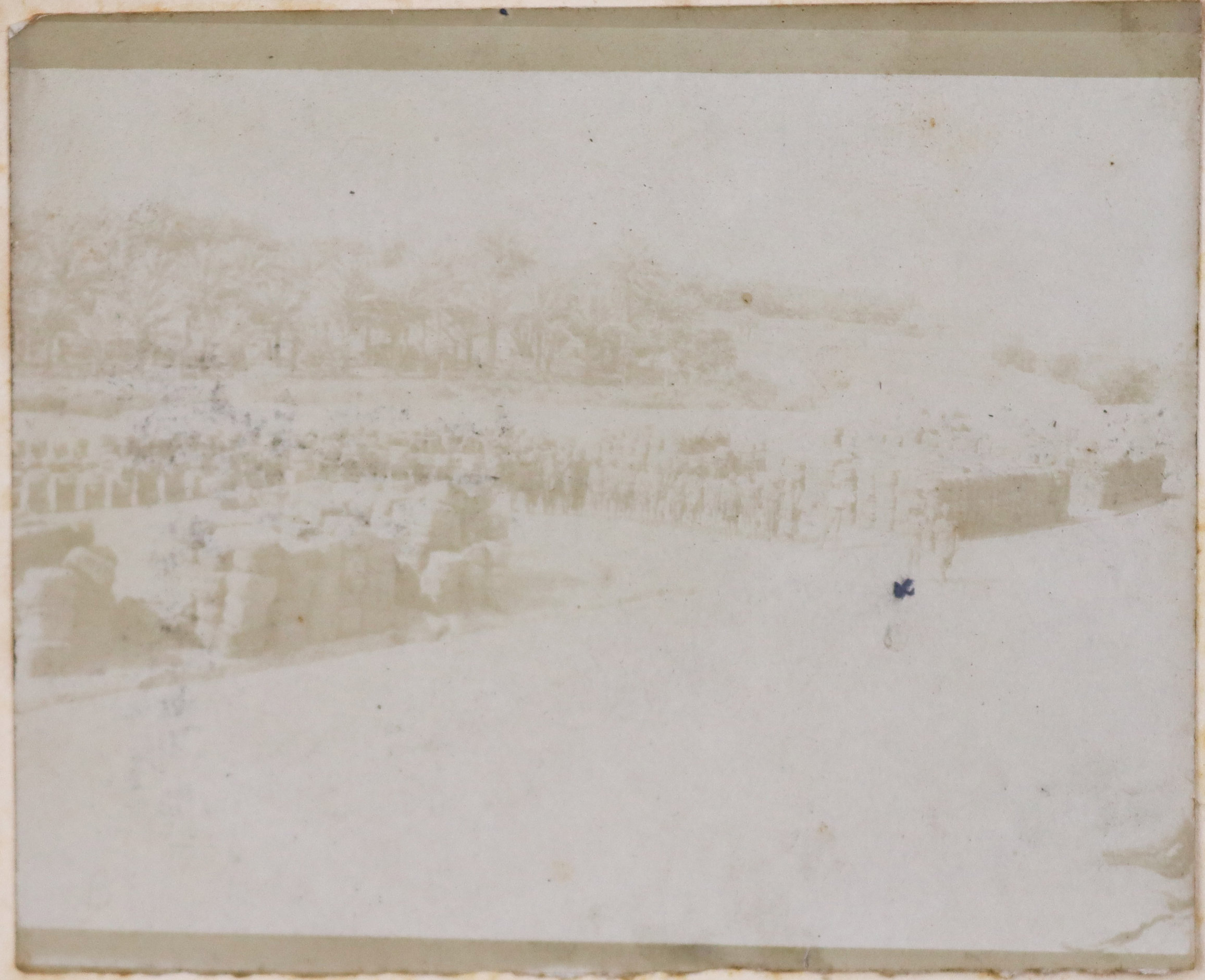
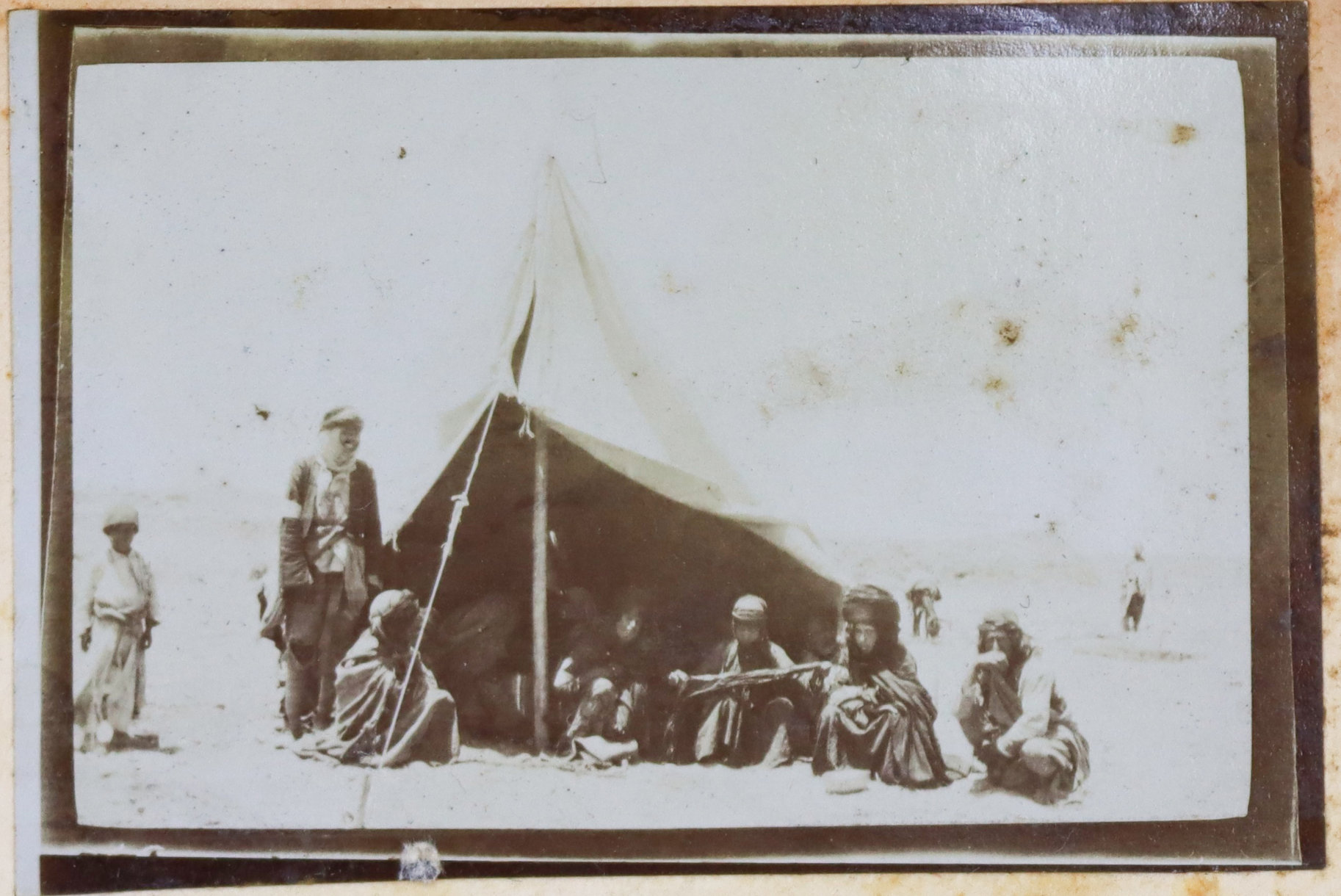
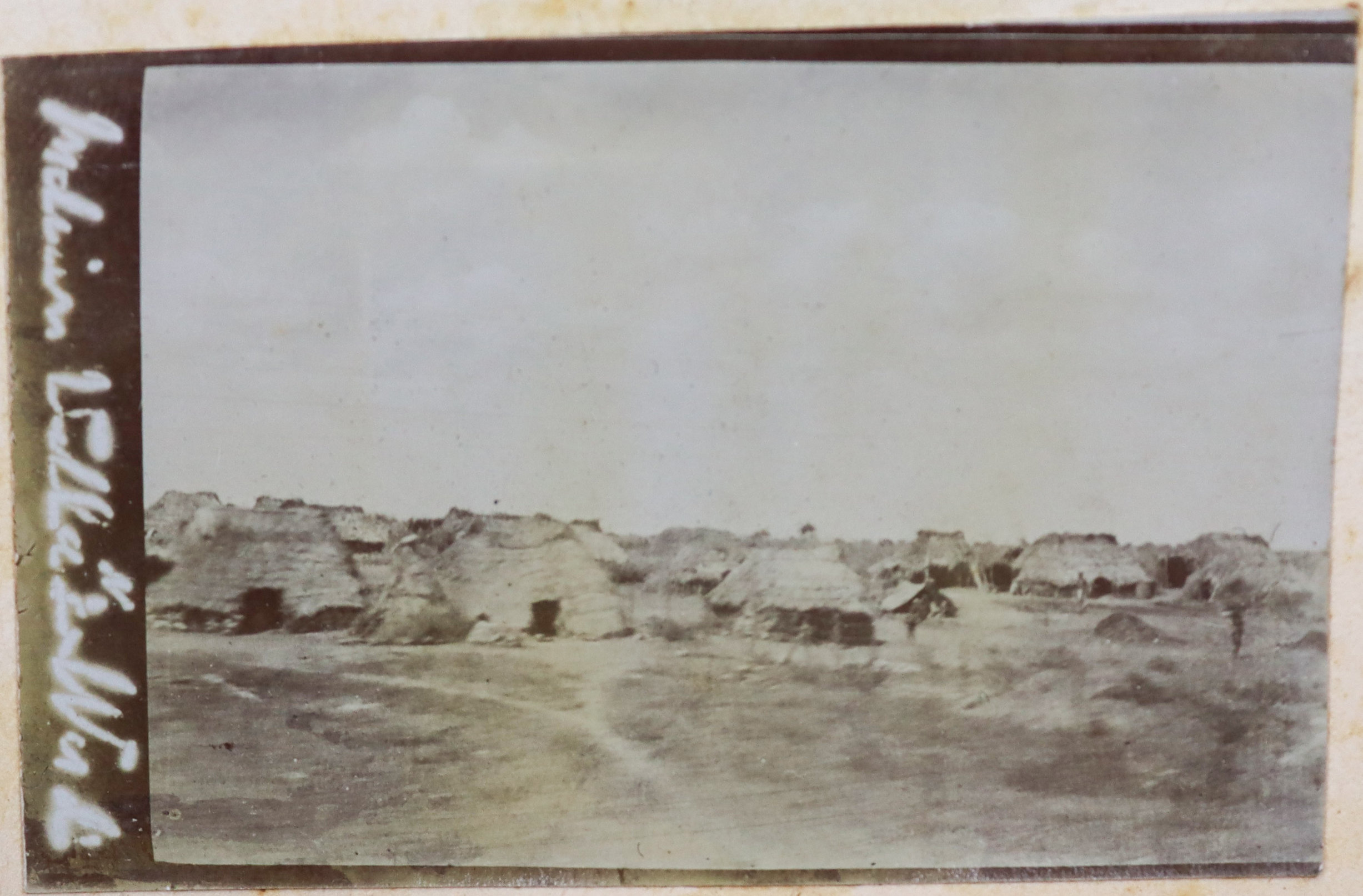
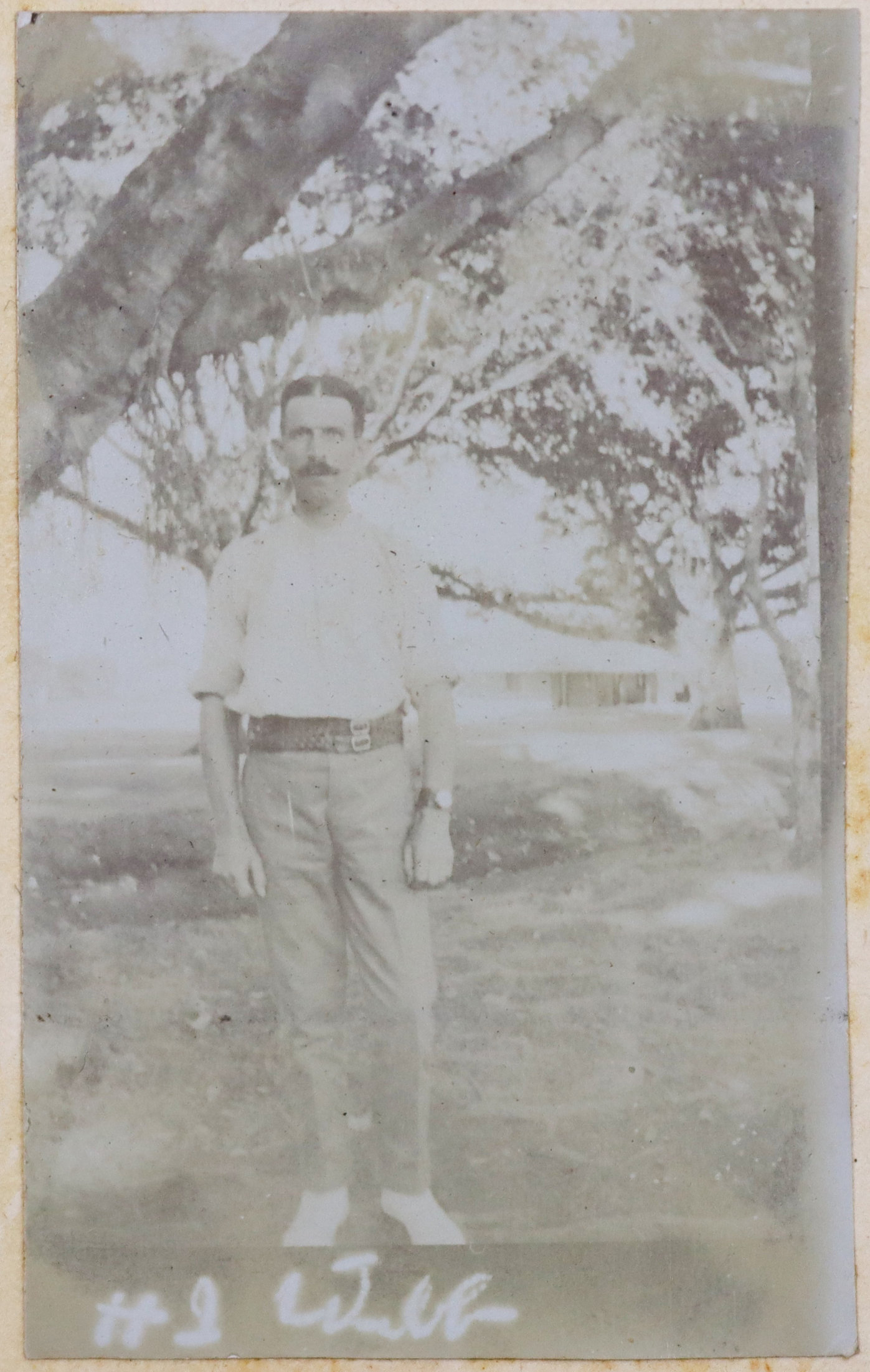
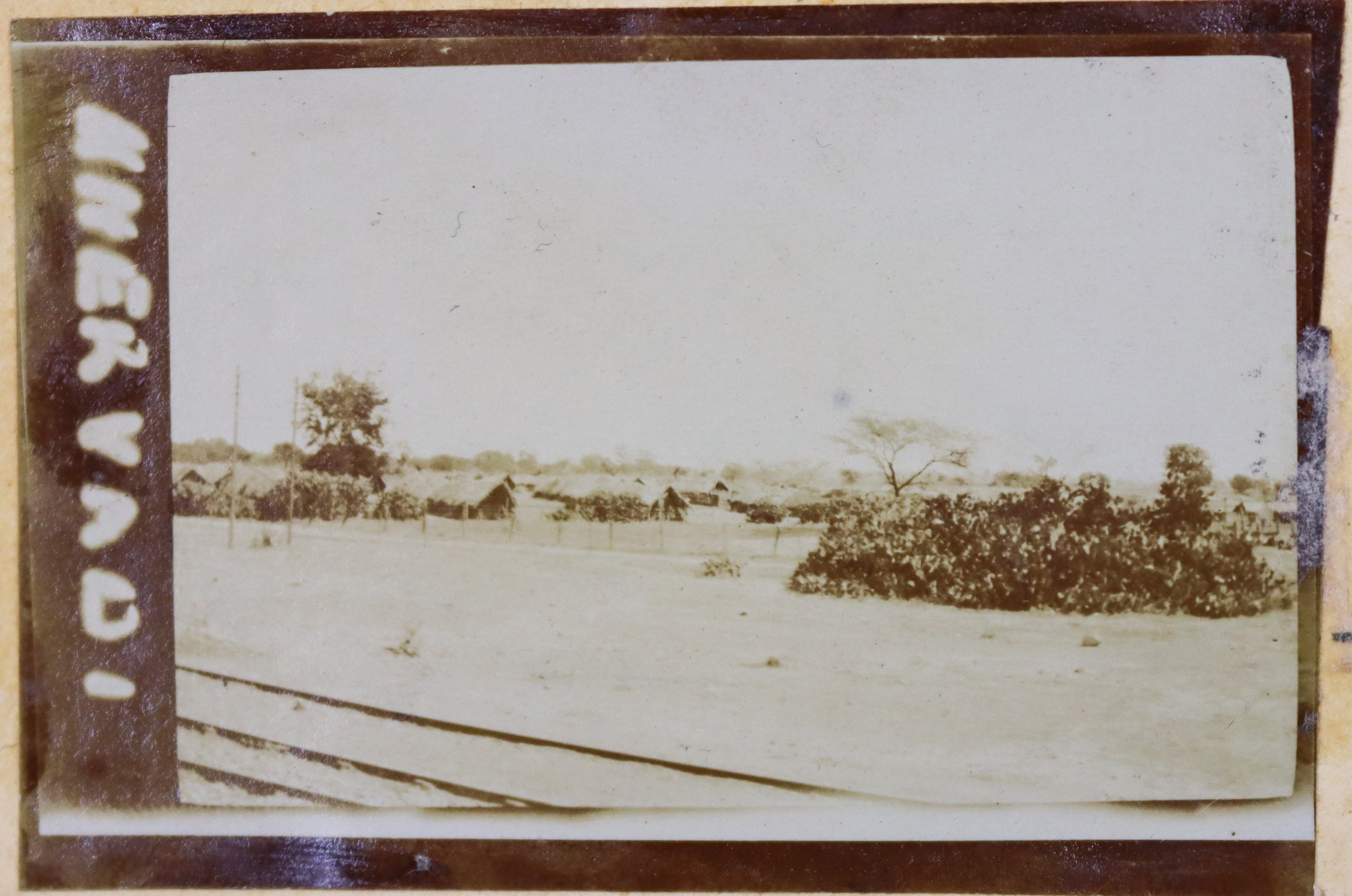
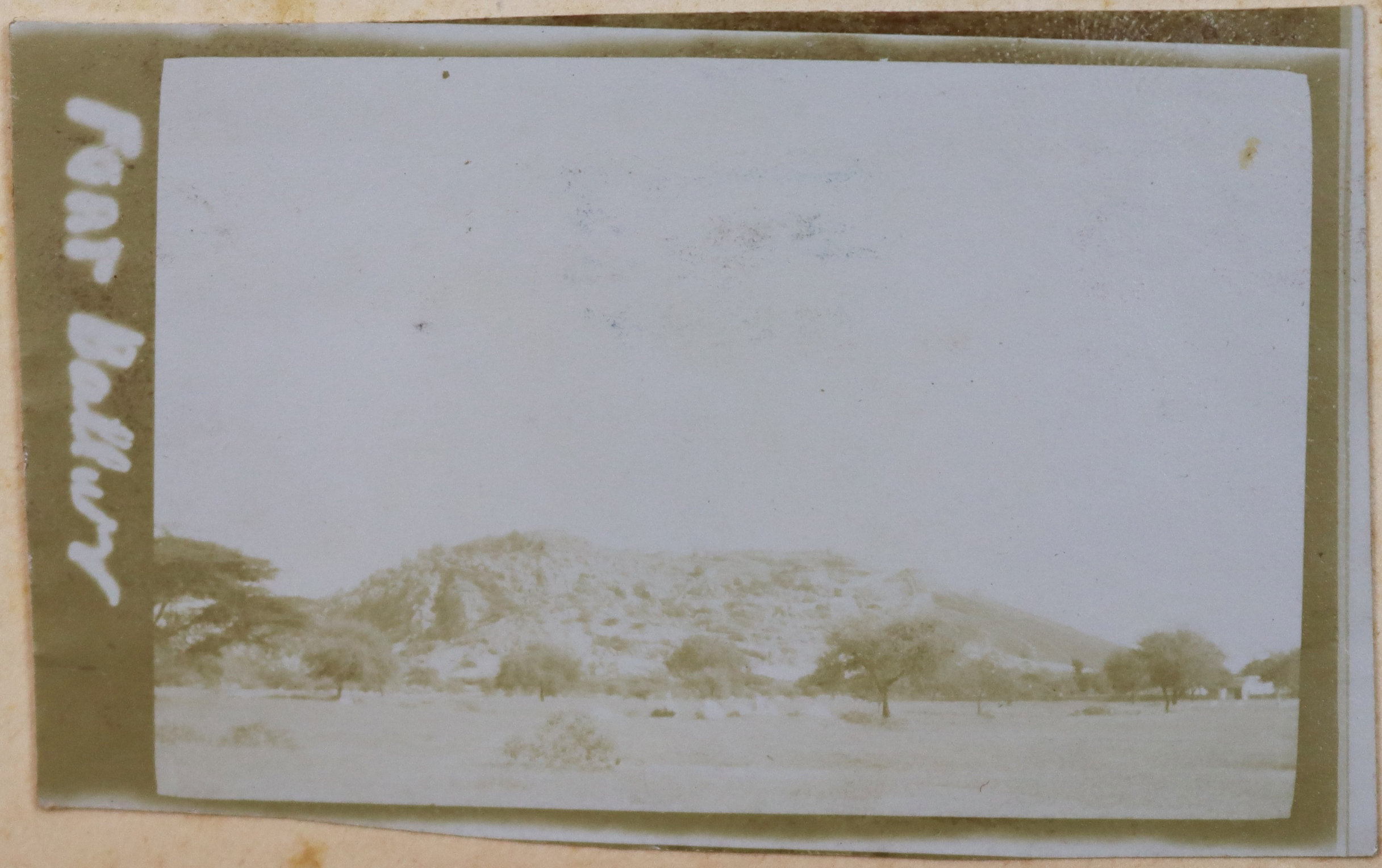
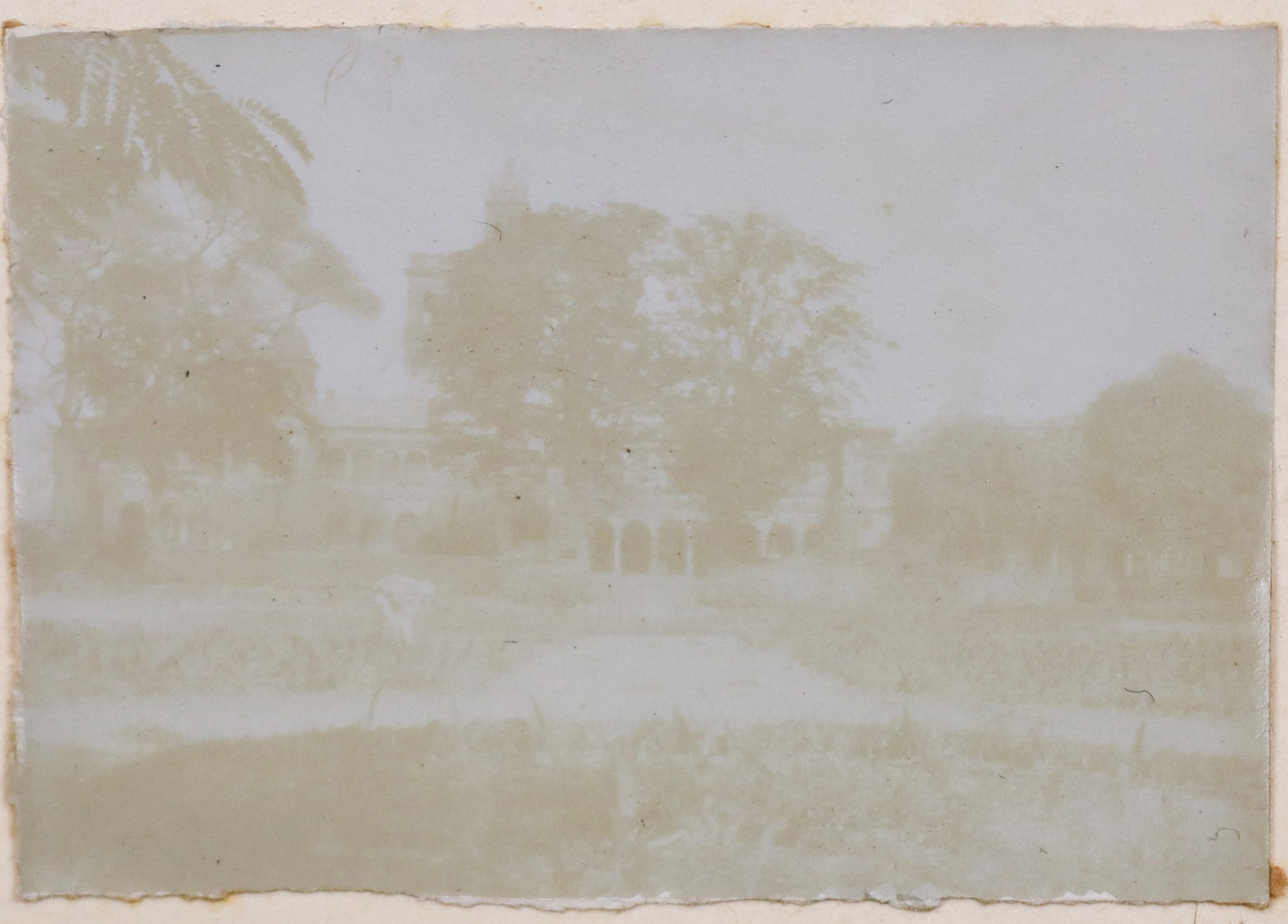
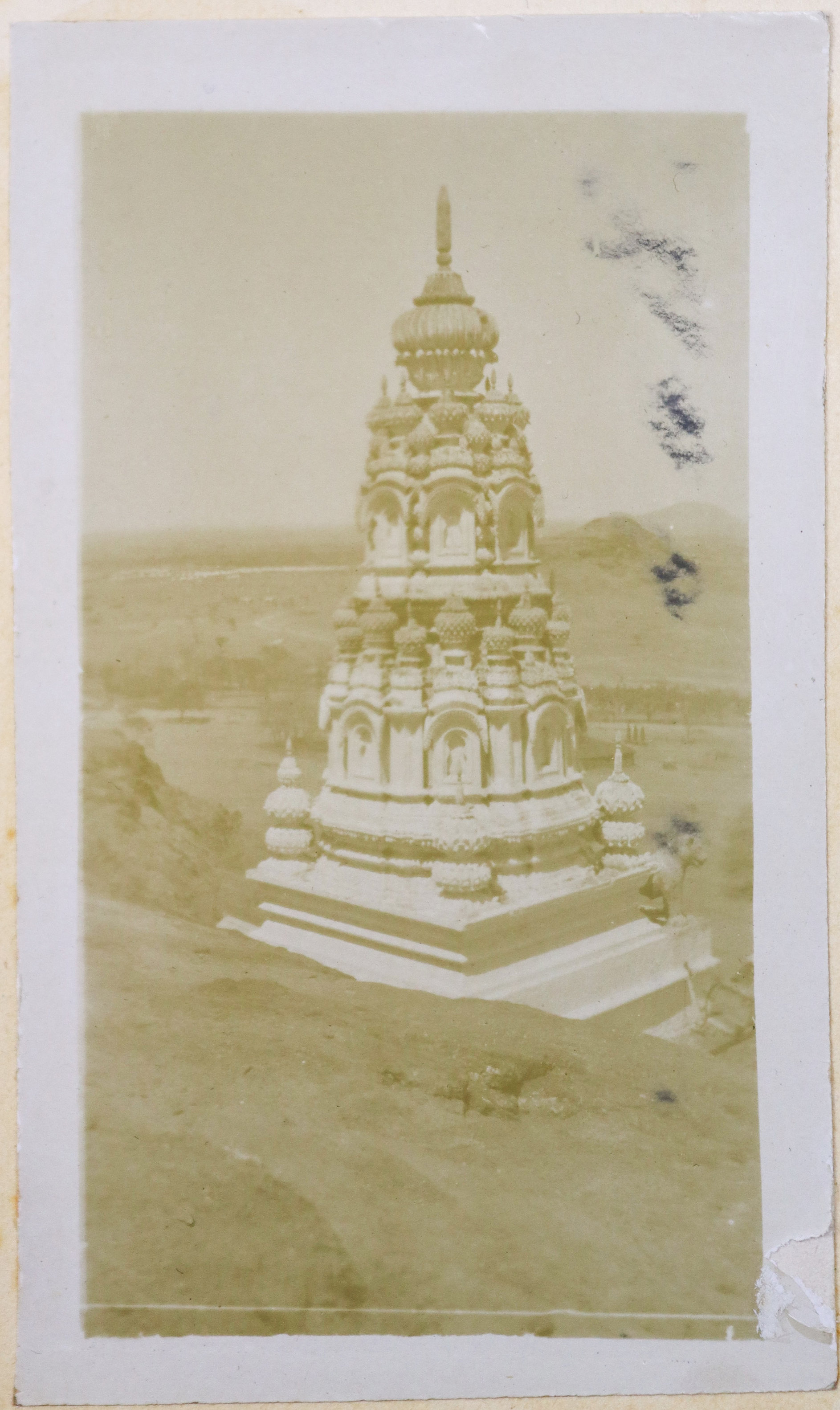
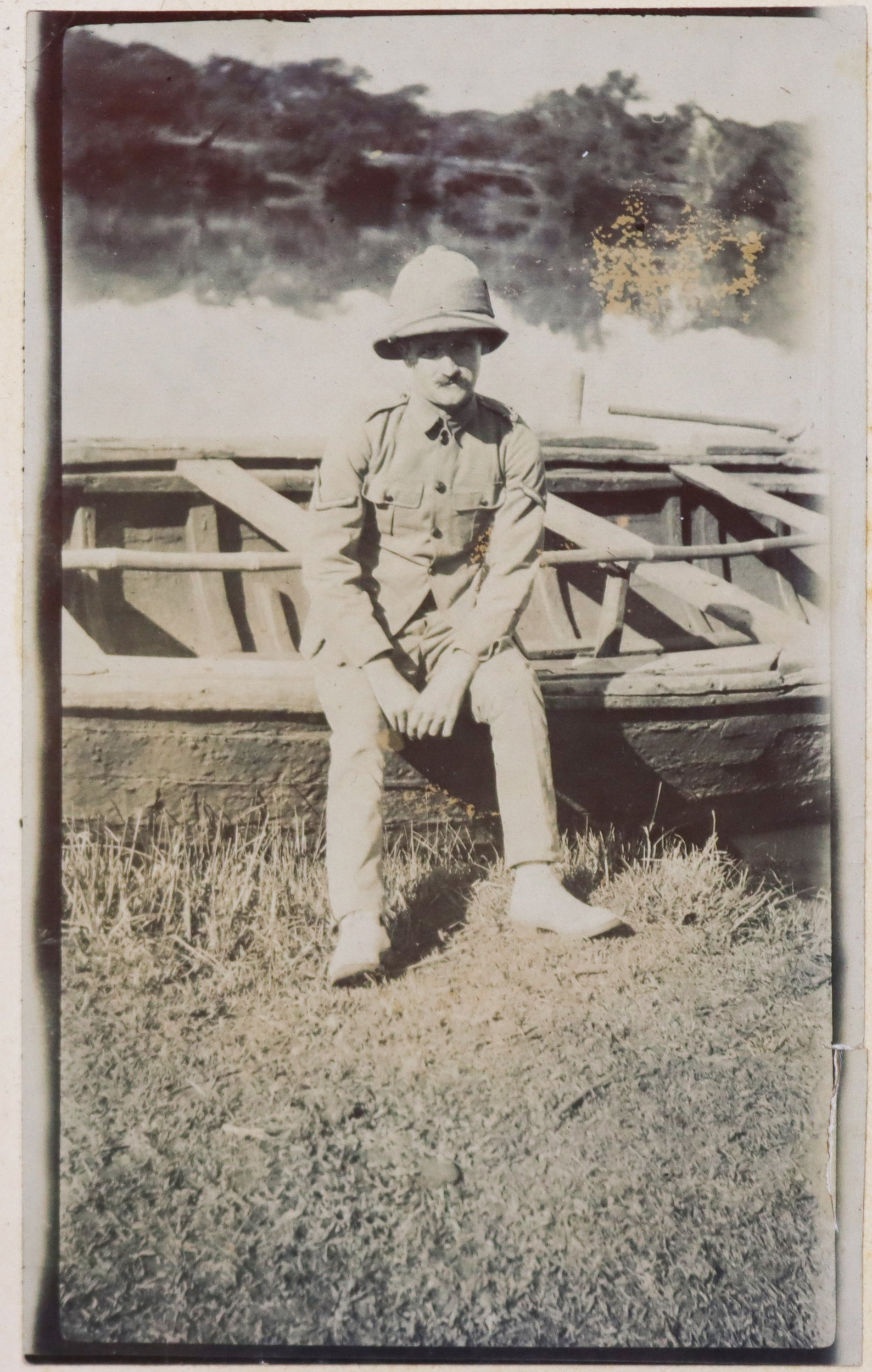
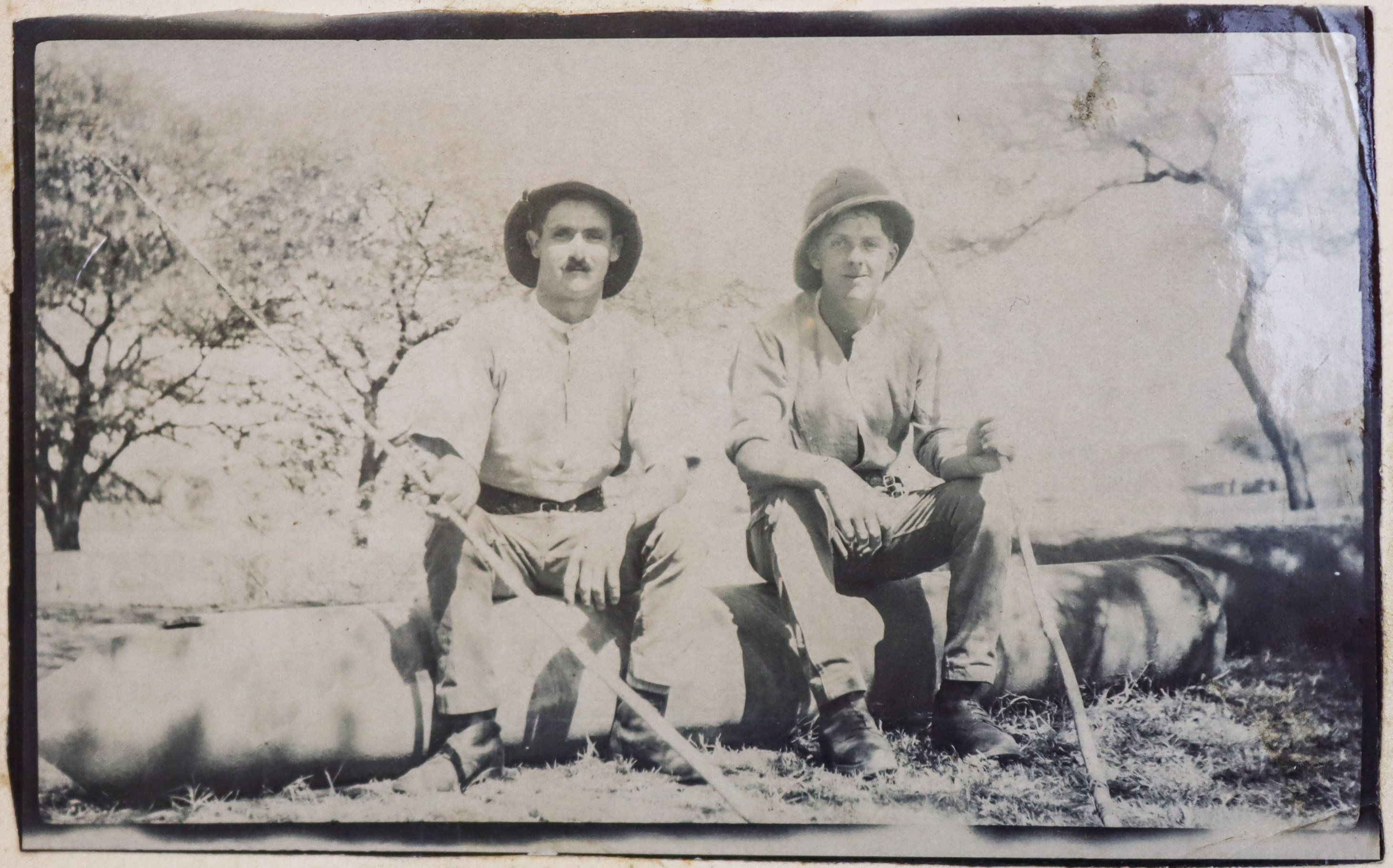
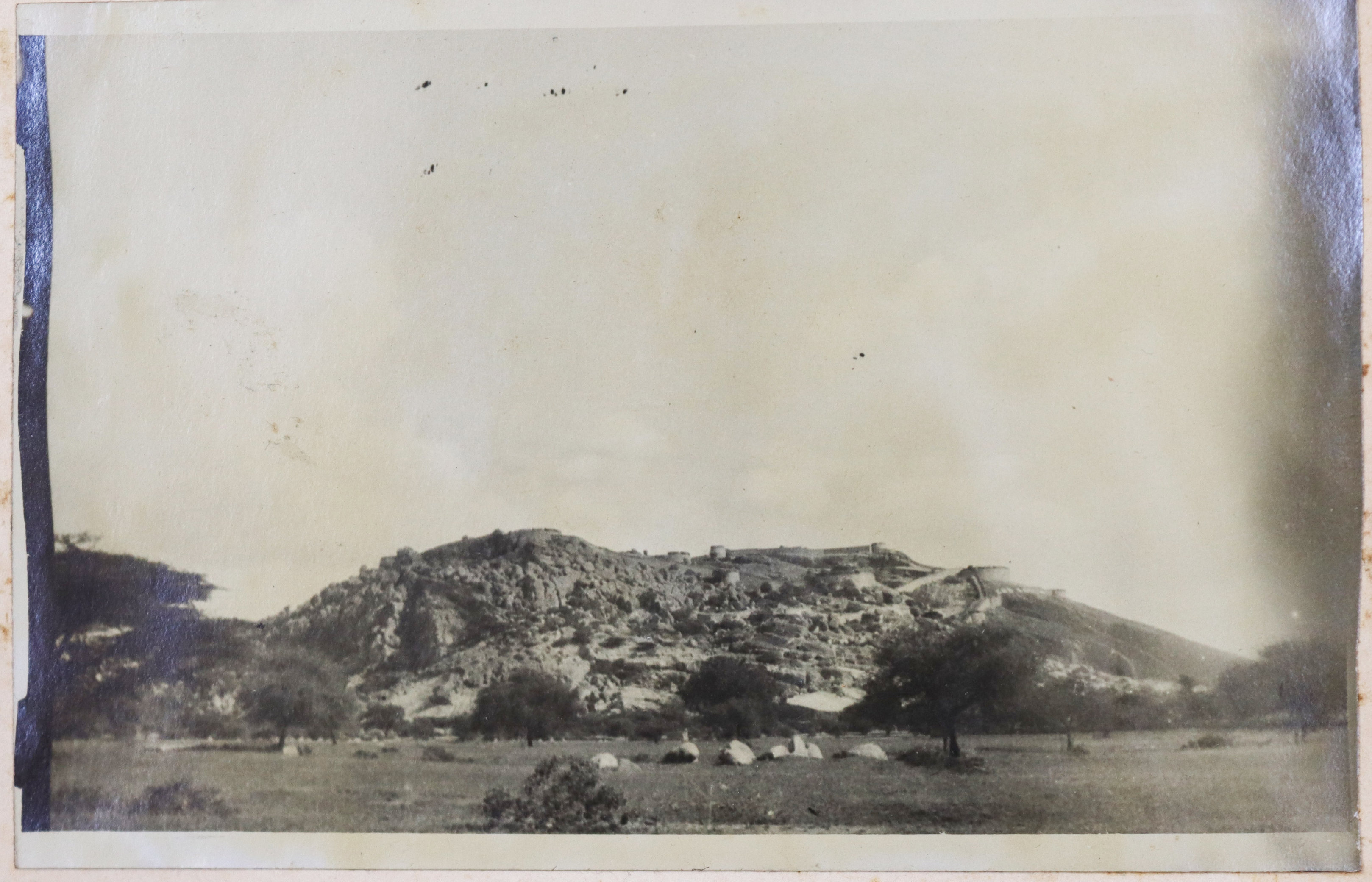
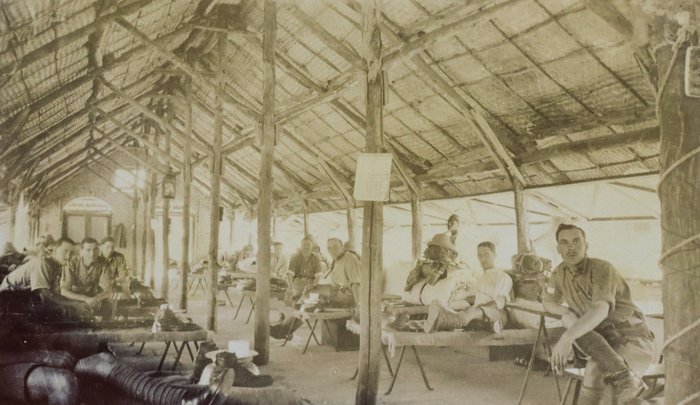
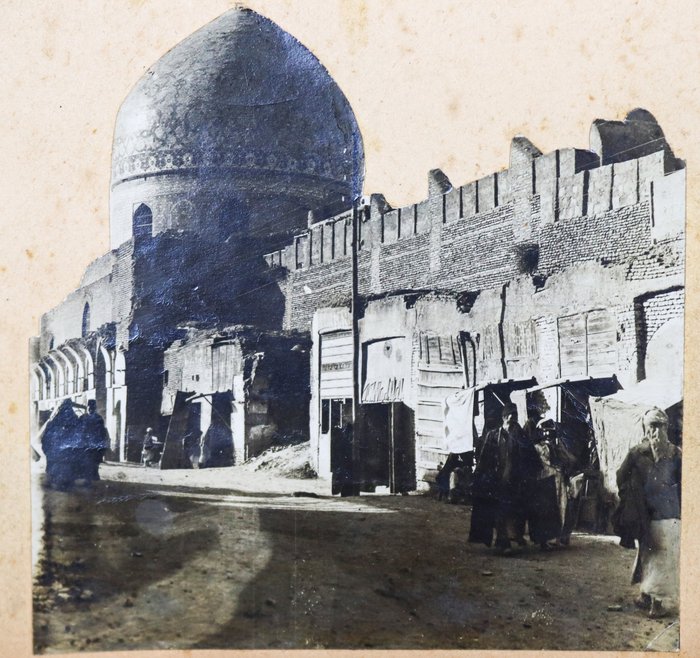
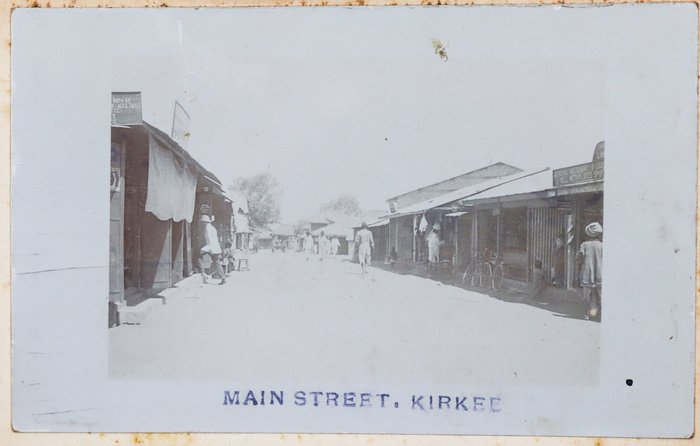
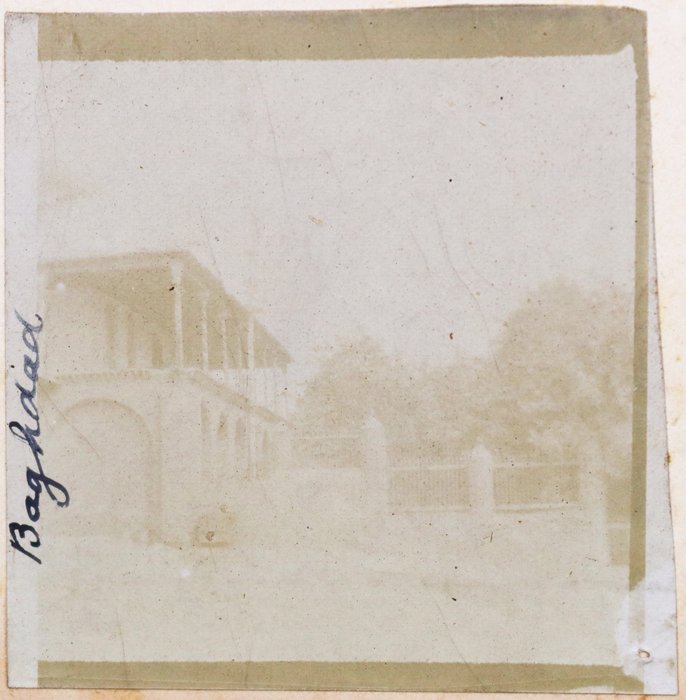
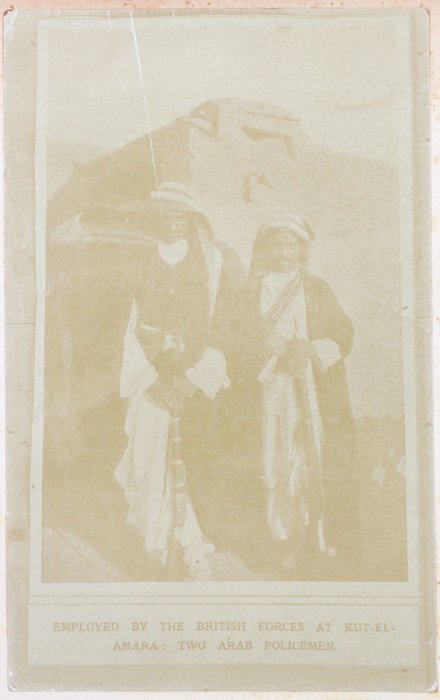
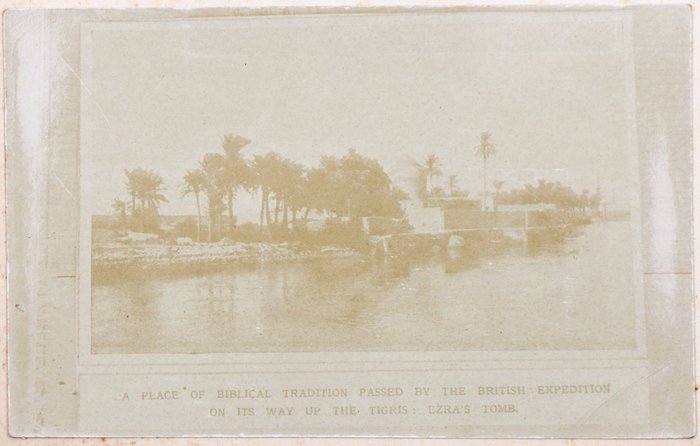
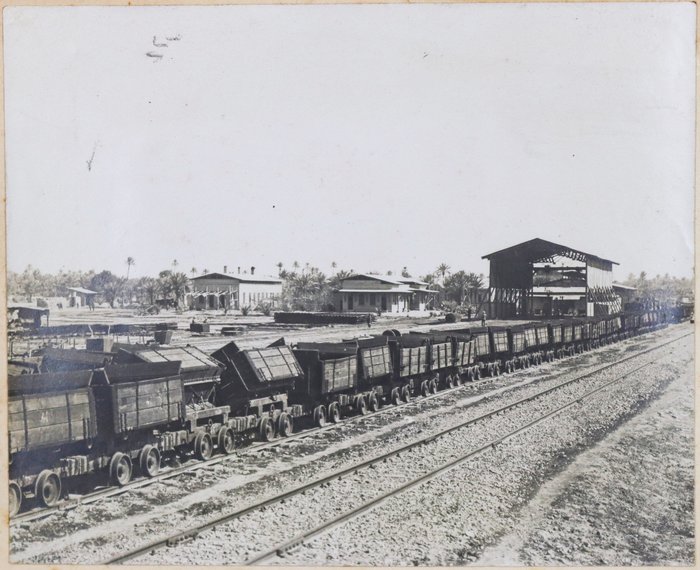
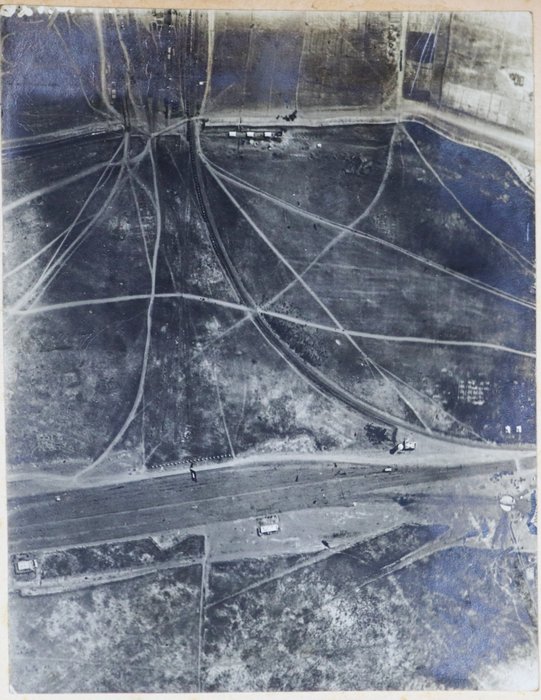
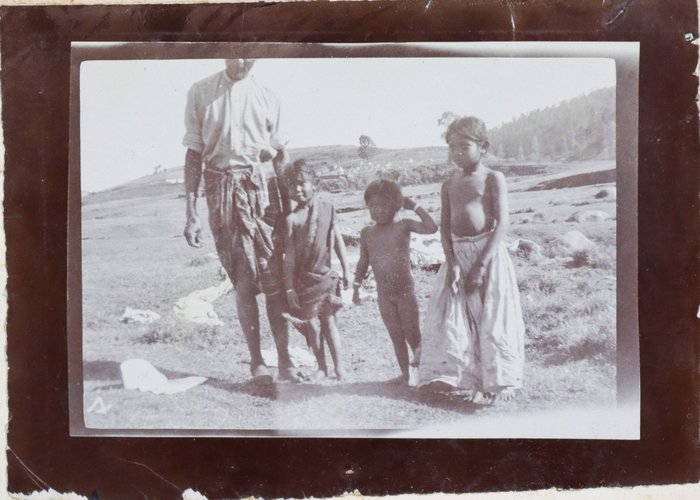
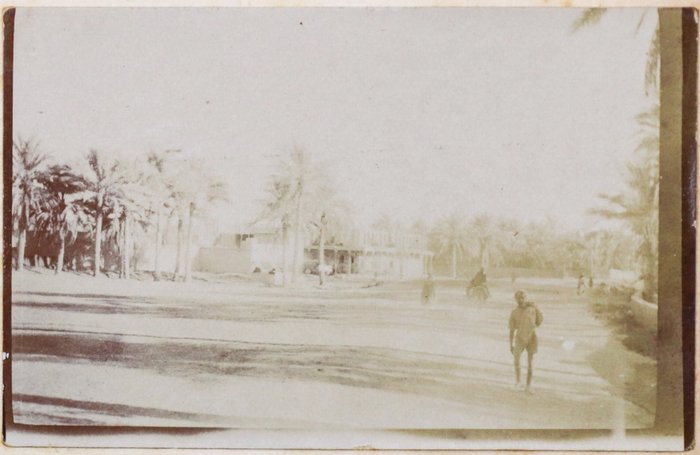
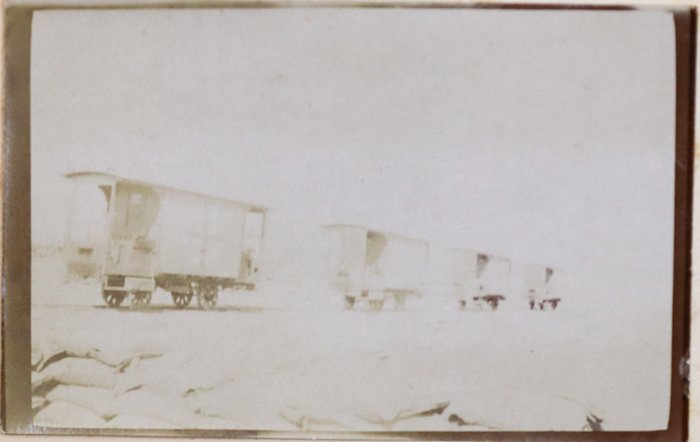
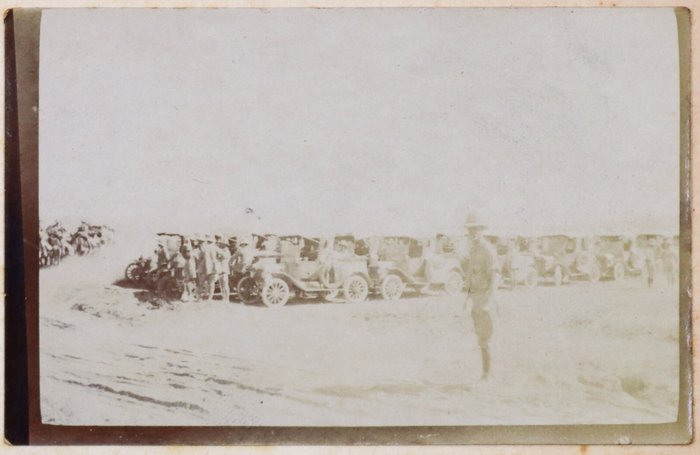
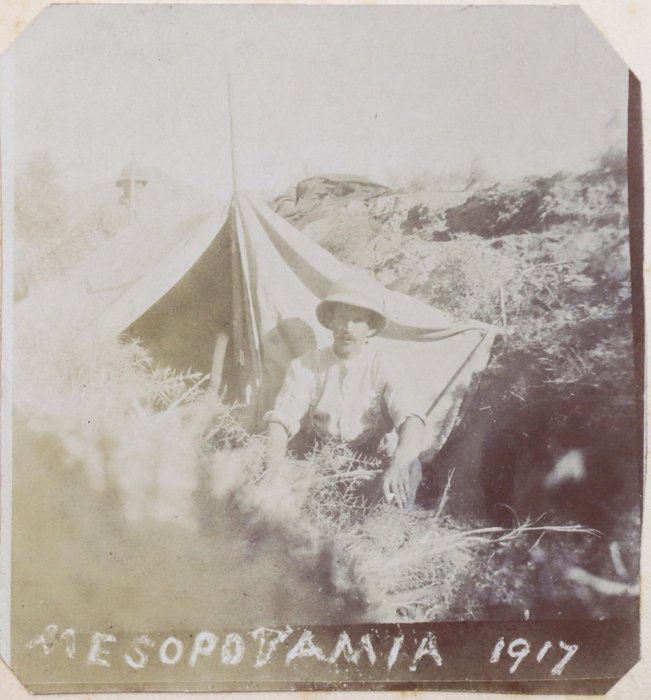
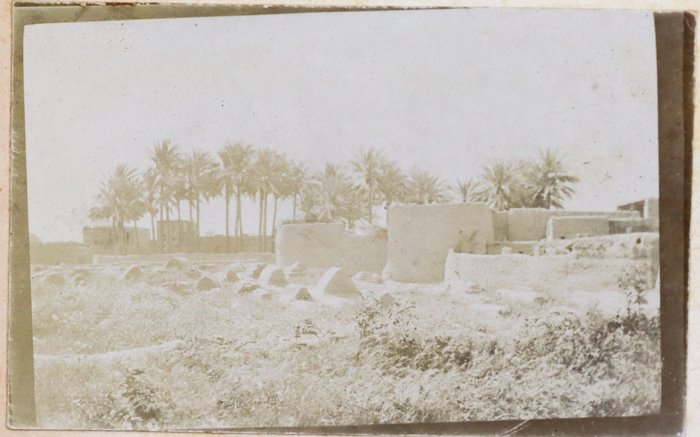
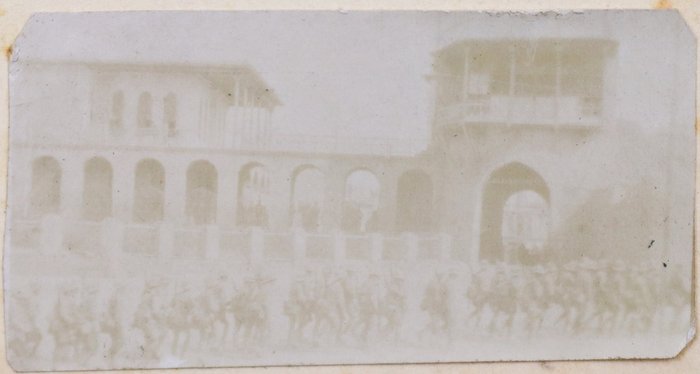
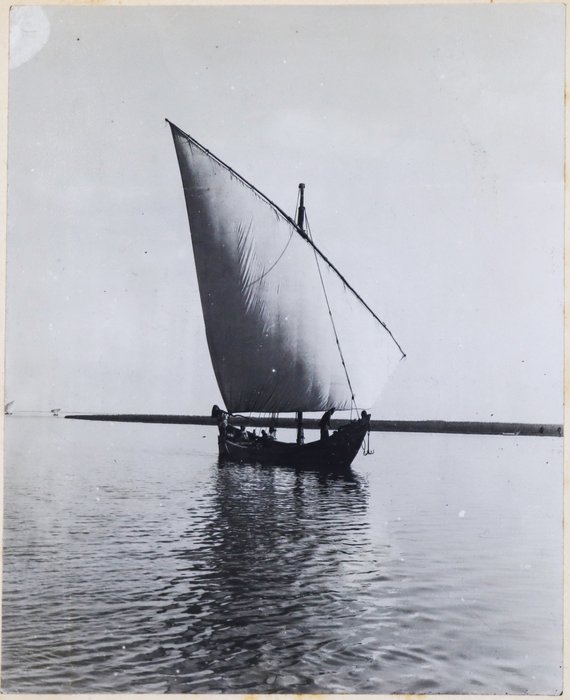
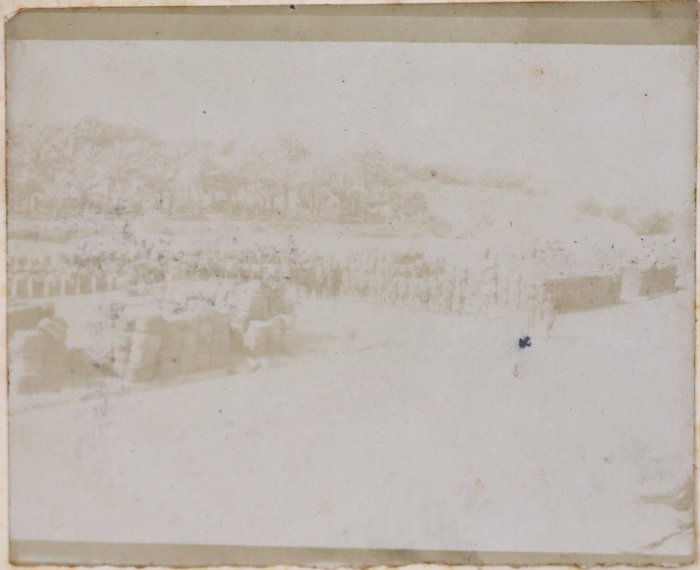
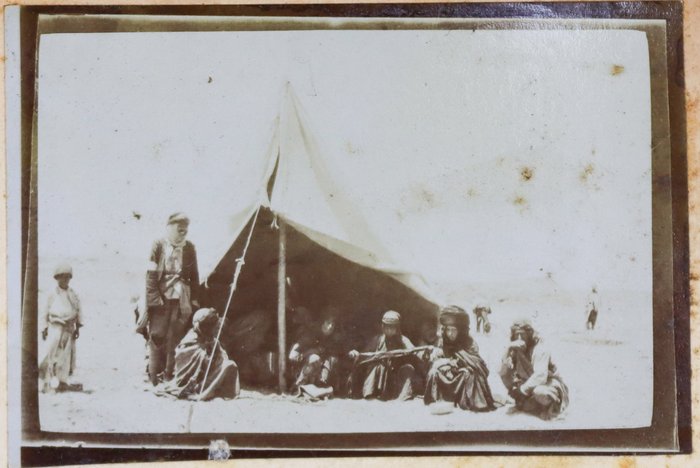
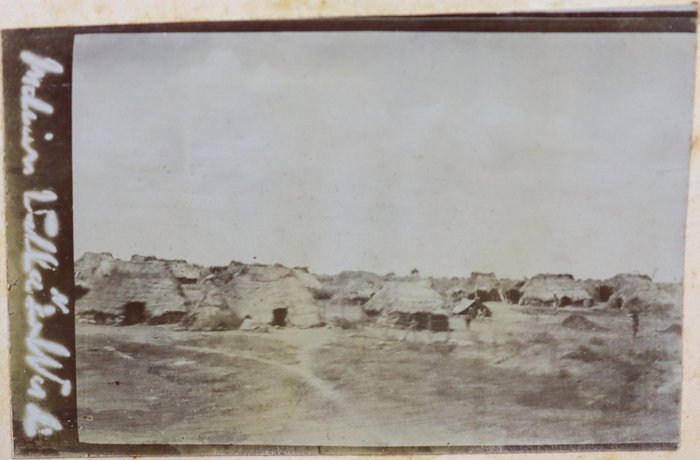
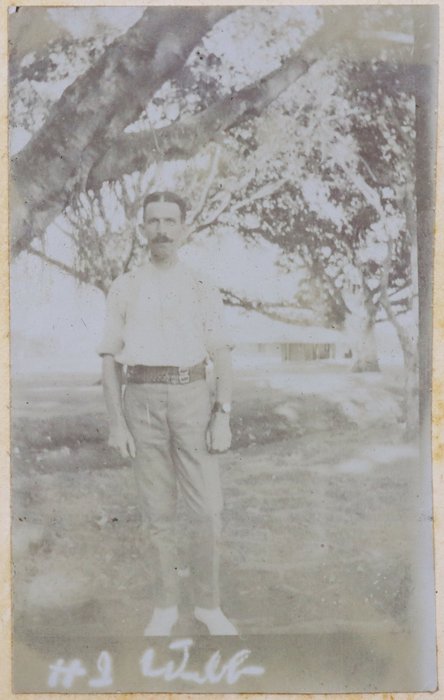
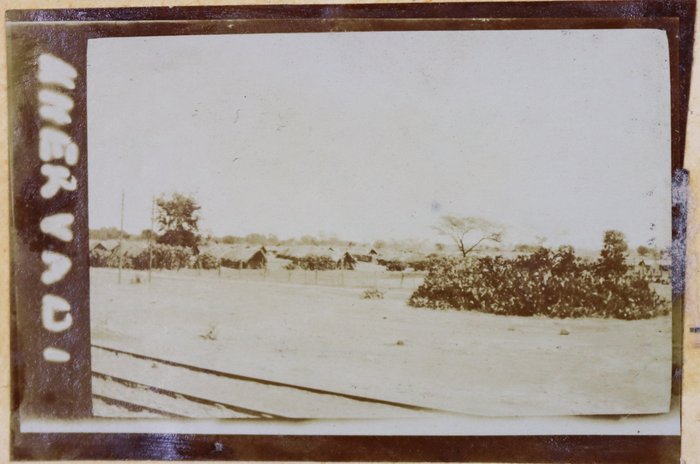
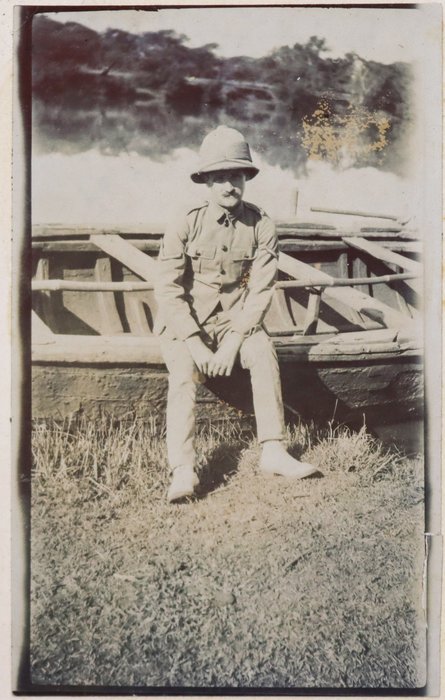
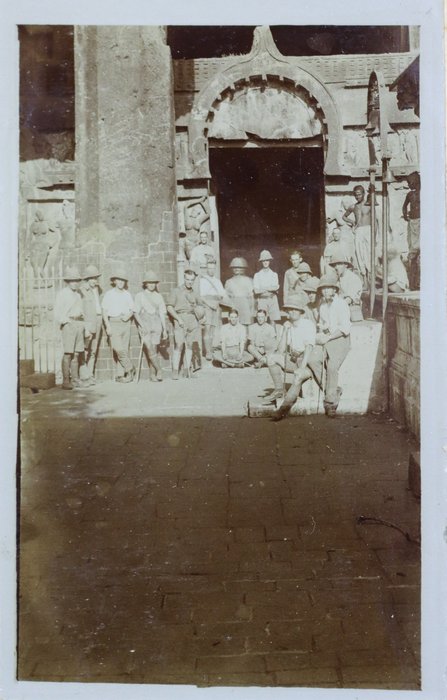
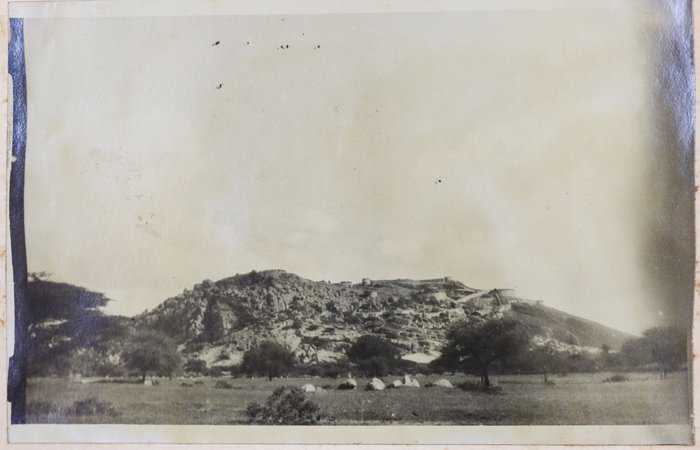
The album contains ca. 69 early amateur photographs, with most images taken in Mesopotamia (today’s Iraq) in the mid-1910s. Especially interesting are about five rare photographs of Baghdad captured shortly after the British occupation of the city. The images show Khalil Pasha Road or New Street (with the clearly visible Haydar Khana Mosque), a railway goods yard, the outskirts of the city photographed from an airplane, and the iconic ceremonial entry of the 1/4th Battalion, Hampshire Regiment, watched by locals lining the street. The last scene was apparently staged, with the battalion marching from a camp outside the city specifically for propaganda purposes. Other lively vernacular photographs from Mesopotamia include two heavily armed Arab policemen posing for a cameraman in Kut Al Amara, officers of the 1/4th Battalion, Hampshire Regiment, joyfully playing football in Tal Afar, and an apparent compiler posing with local children. The rest of the Mesopotamian series mostly shows local landmarks and architecture in Al-ʻUzair (Ezra’s Tomb), Al-Qurnah (the traditional site of the Garden of Eden), Kirkuk (main street view with English shop signs, factory barracks, and government house), Tal Afar (motor convoy), and Baqubah (a double pontoon bridge crossing the Diyala River, ambulance cars at the railroad, etc.)
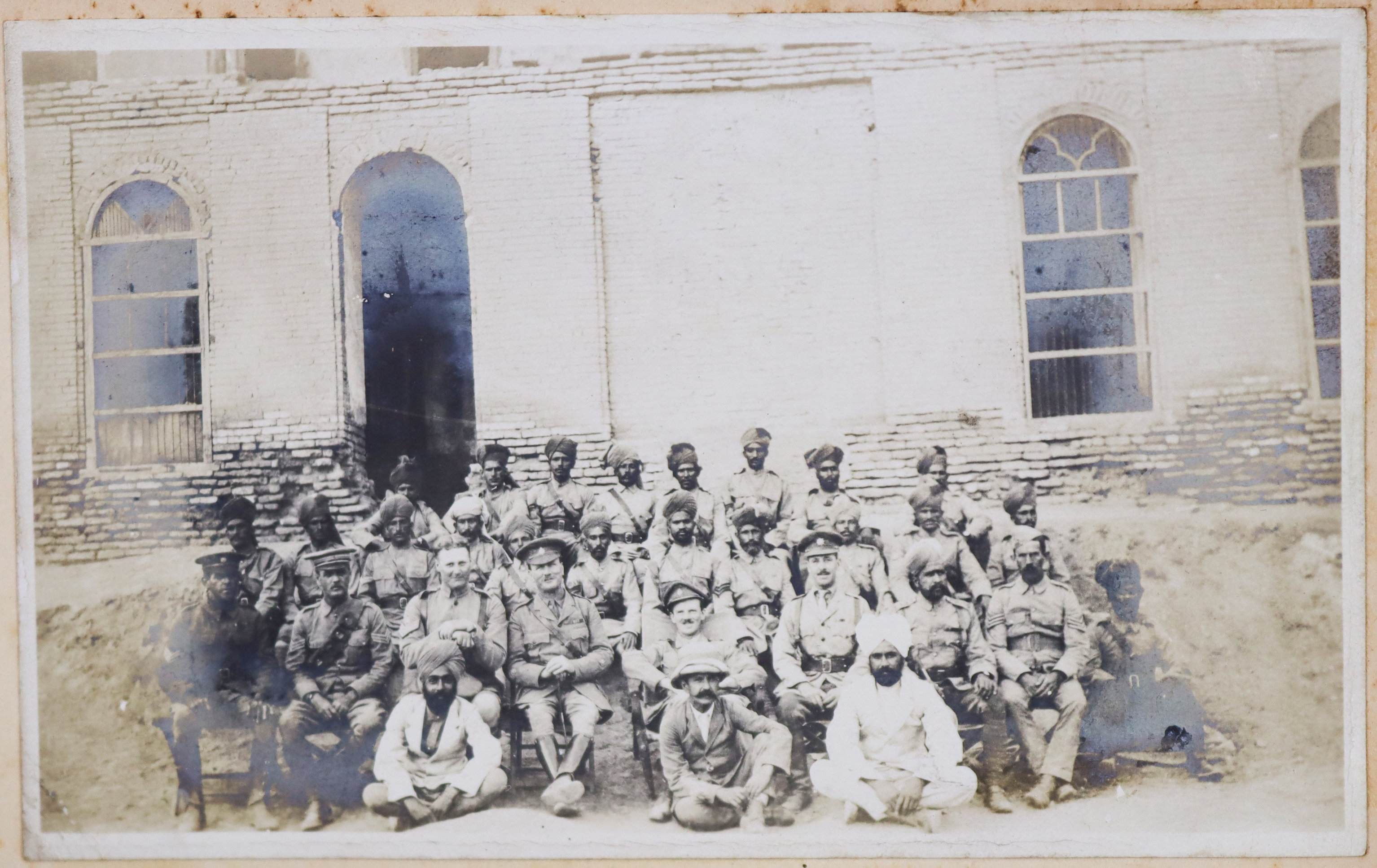
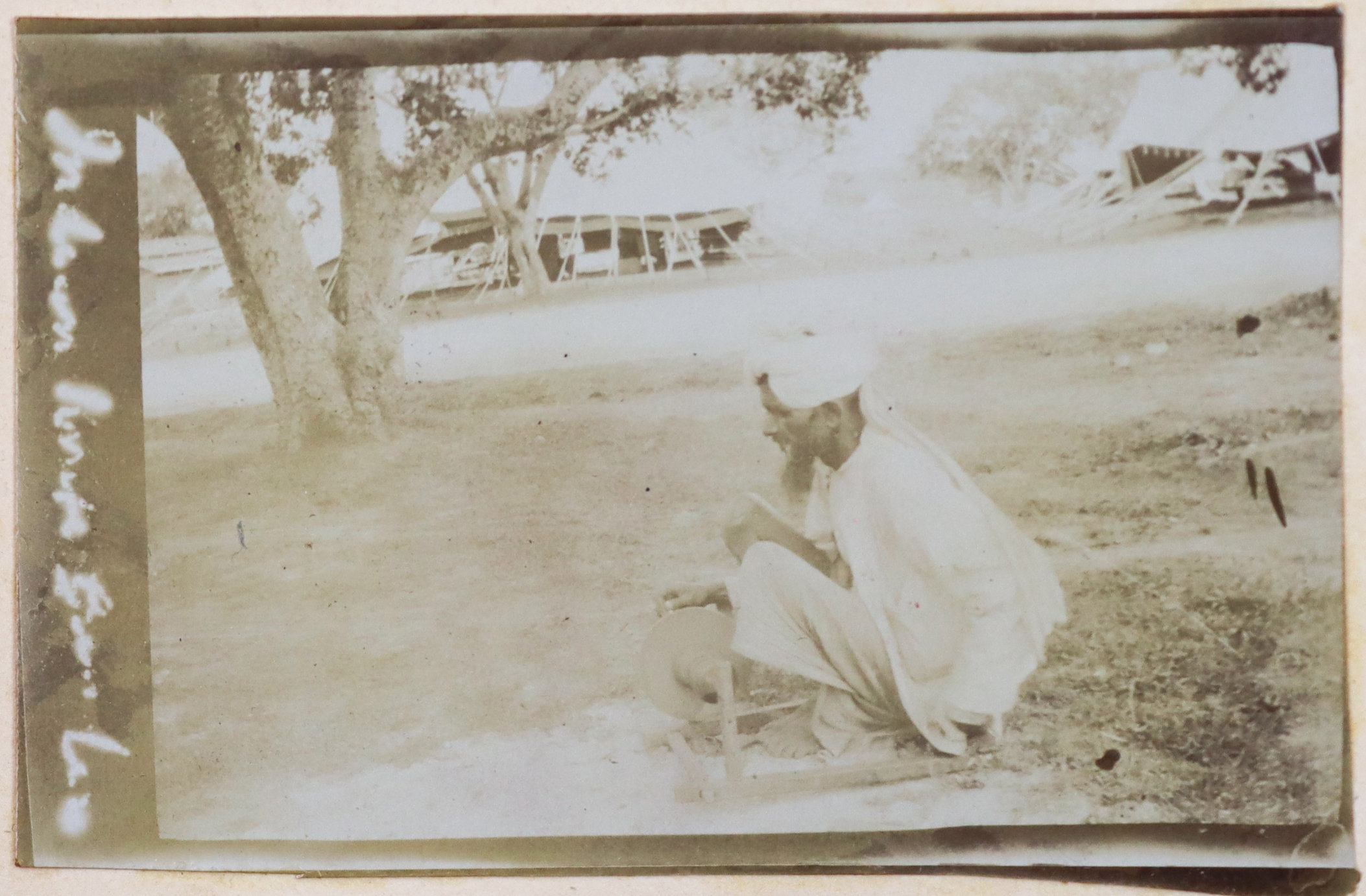
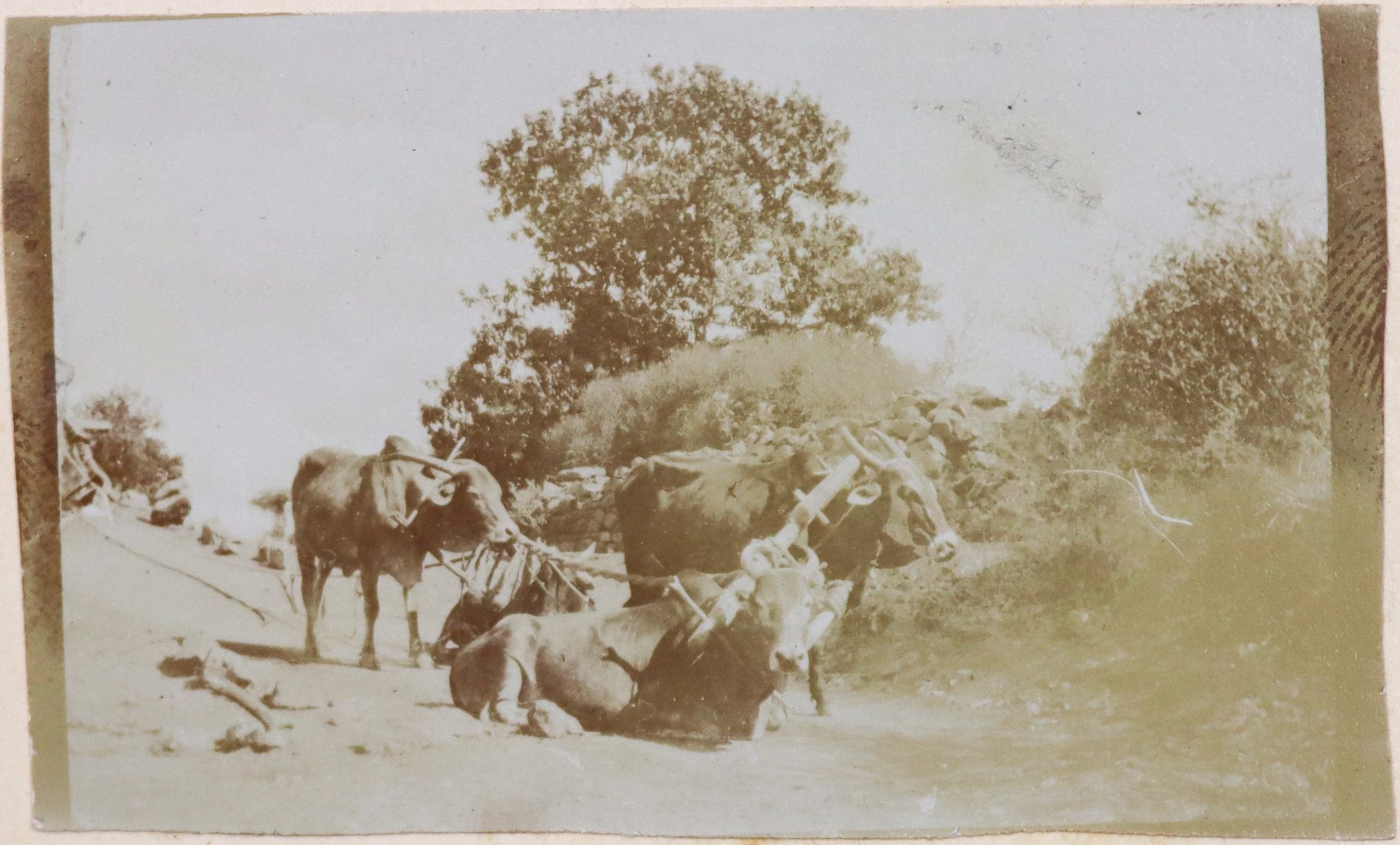
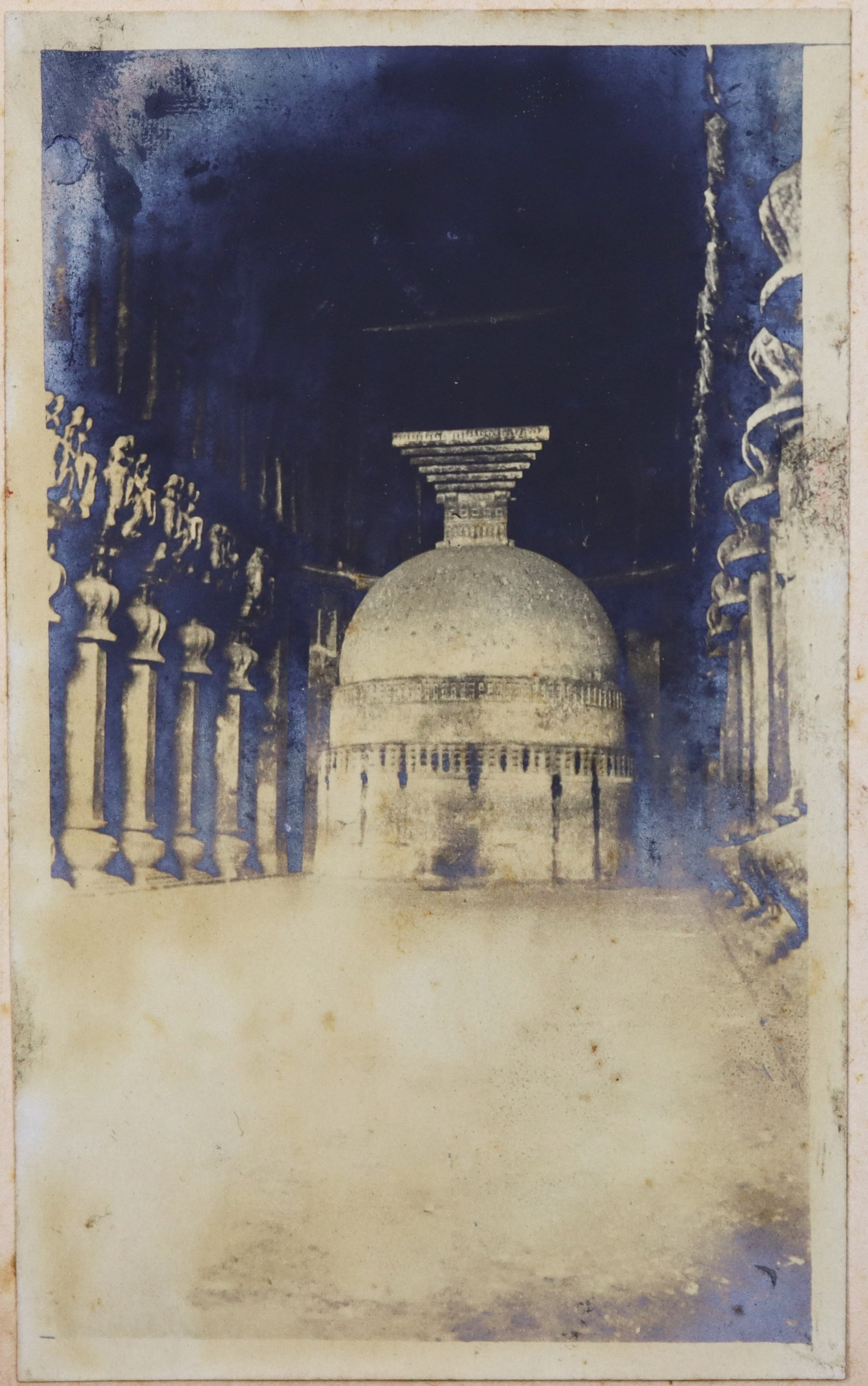
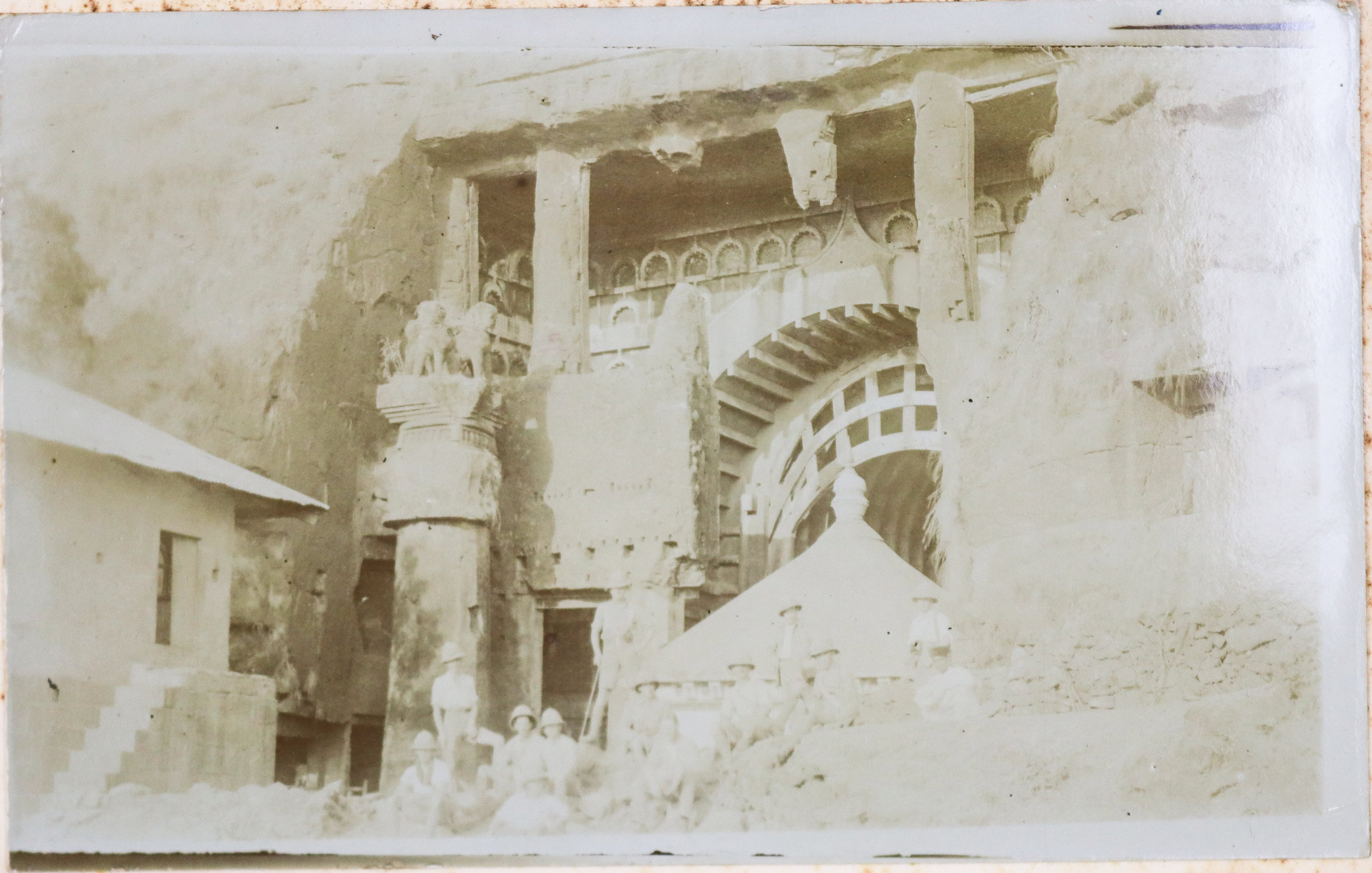
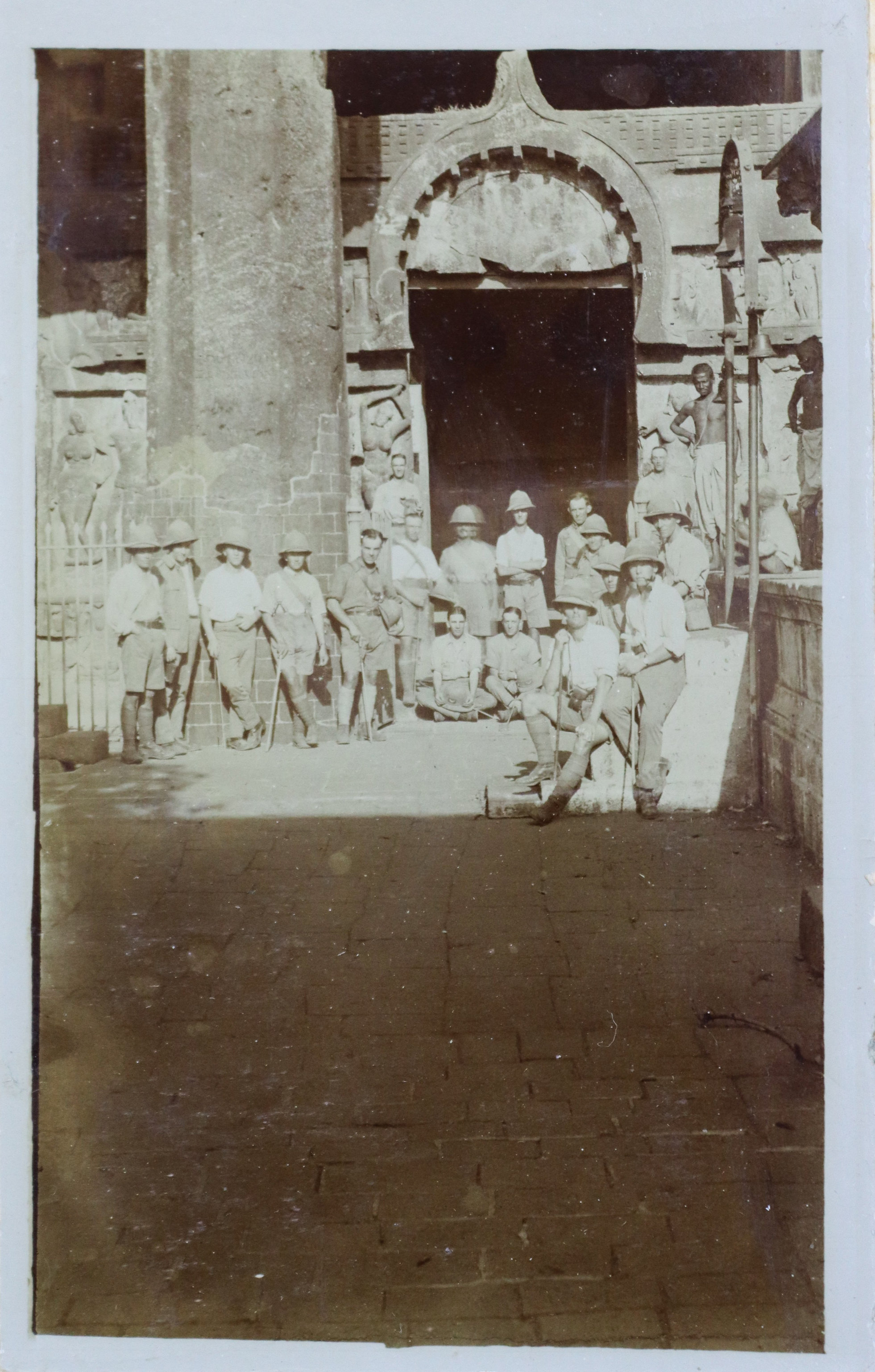
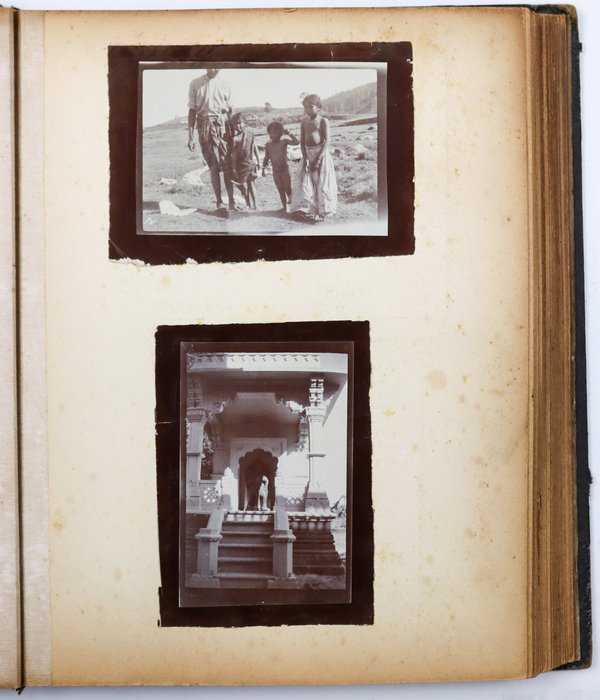
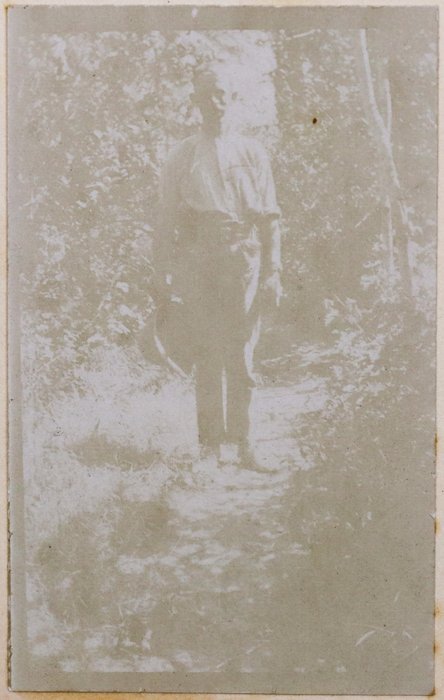
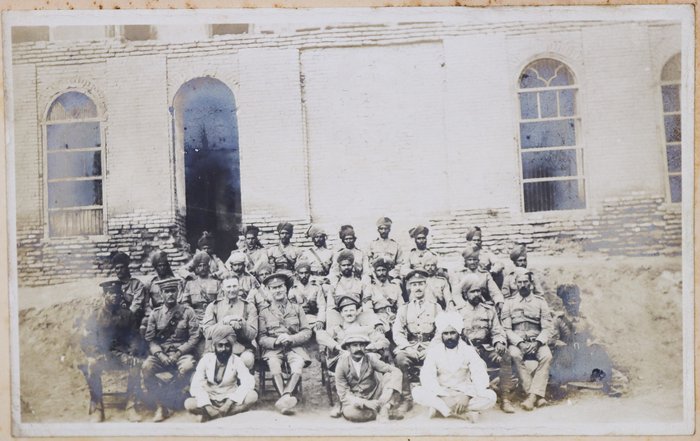
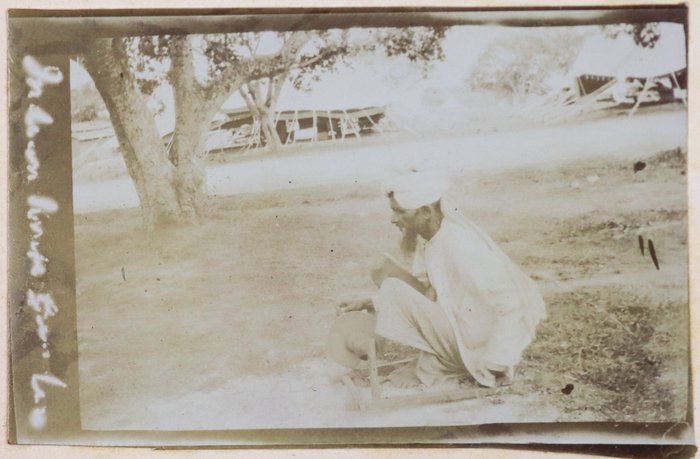
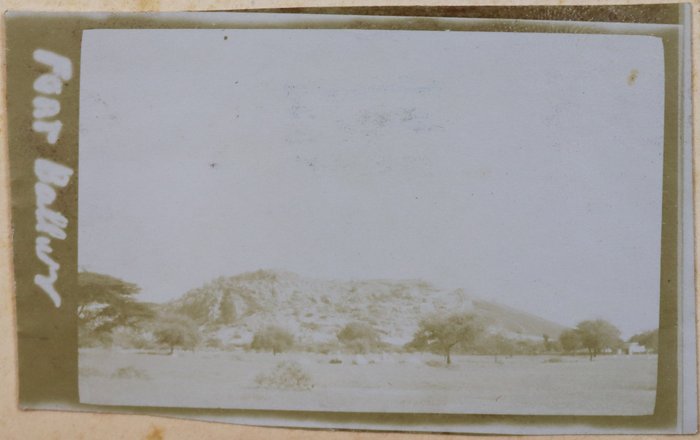
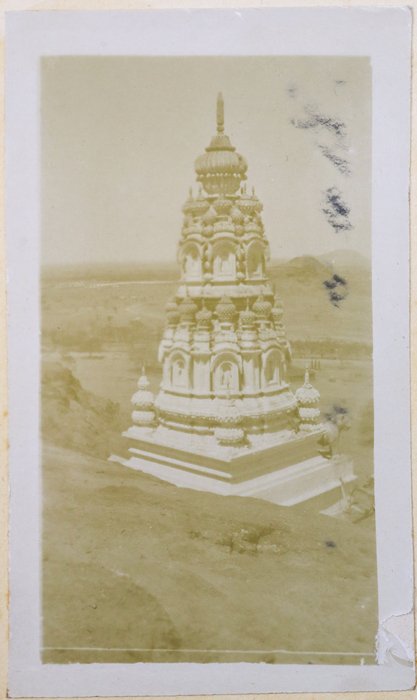
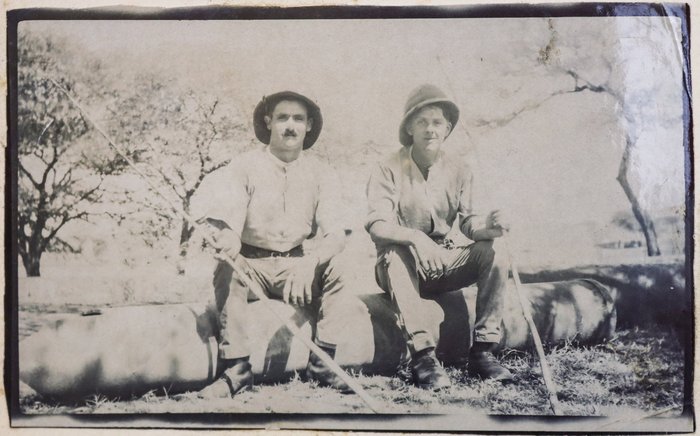
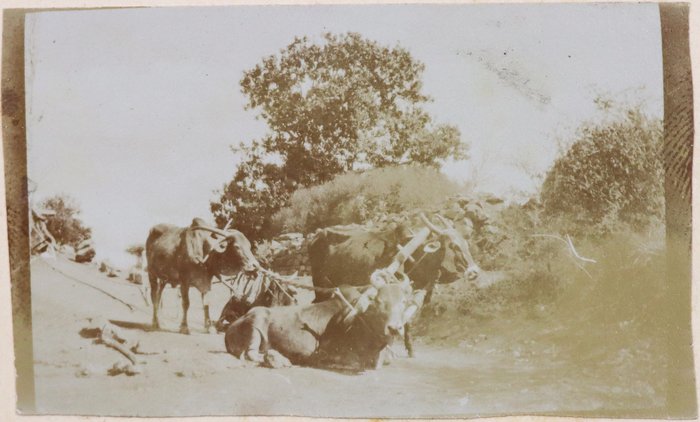
About twenty-five photographs of India were taken and collected by the compiler prior to the 1/4th Hampshire Regiment’s deployment to Mesopotamia. Interesting images include group portraits of British and Indian soldiers, Parsi haymakers in traditional attire clustered near barracks, and soldiers landing mules in Parsik Hill. Other photographs primarily depict the compiler and his companions, local children, the YMCA quarters in Deolali, nature views, and scenes of oxen drawing water from a well.
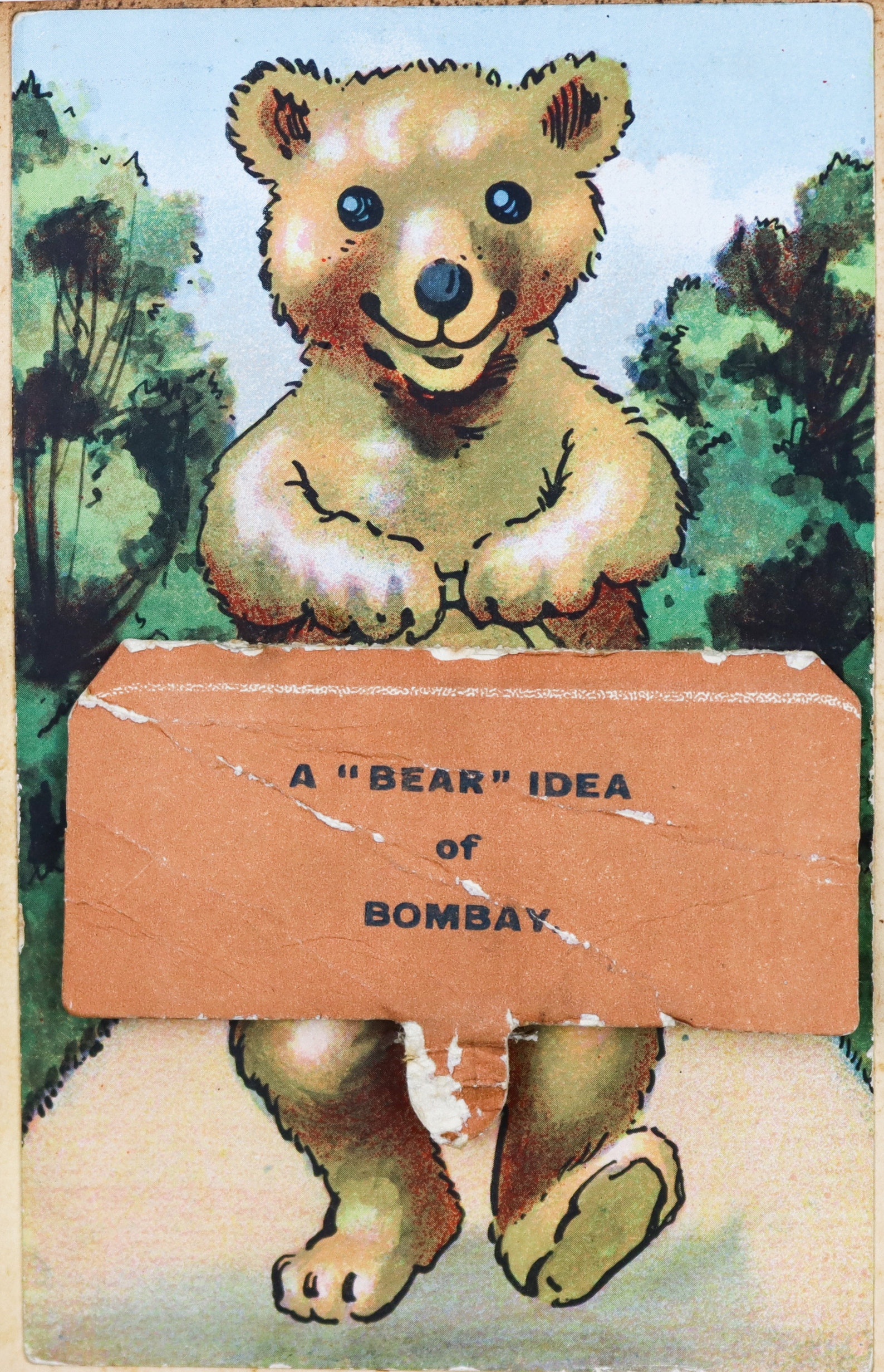
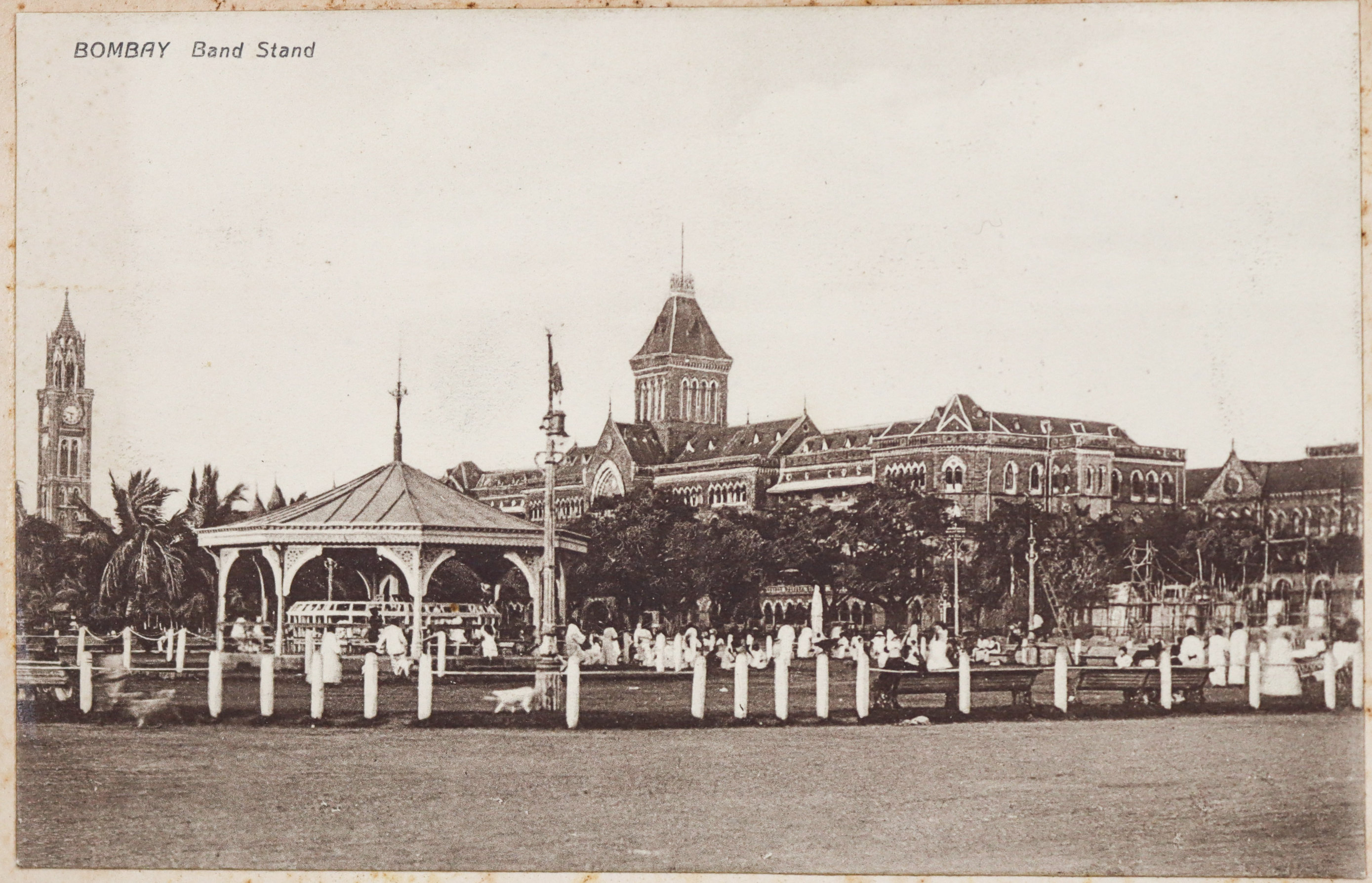
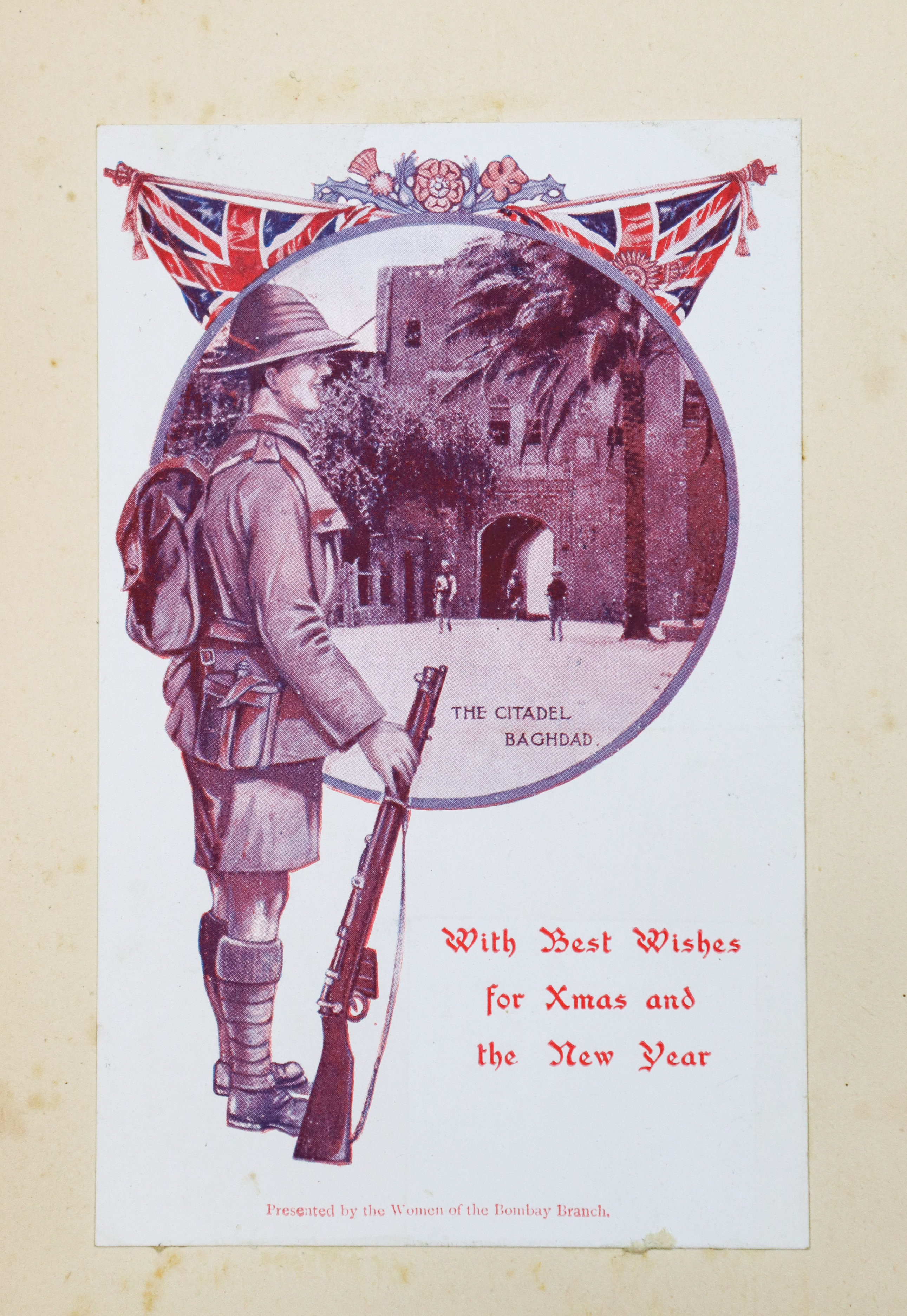
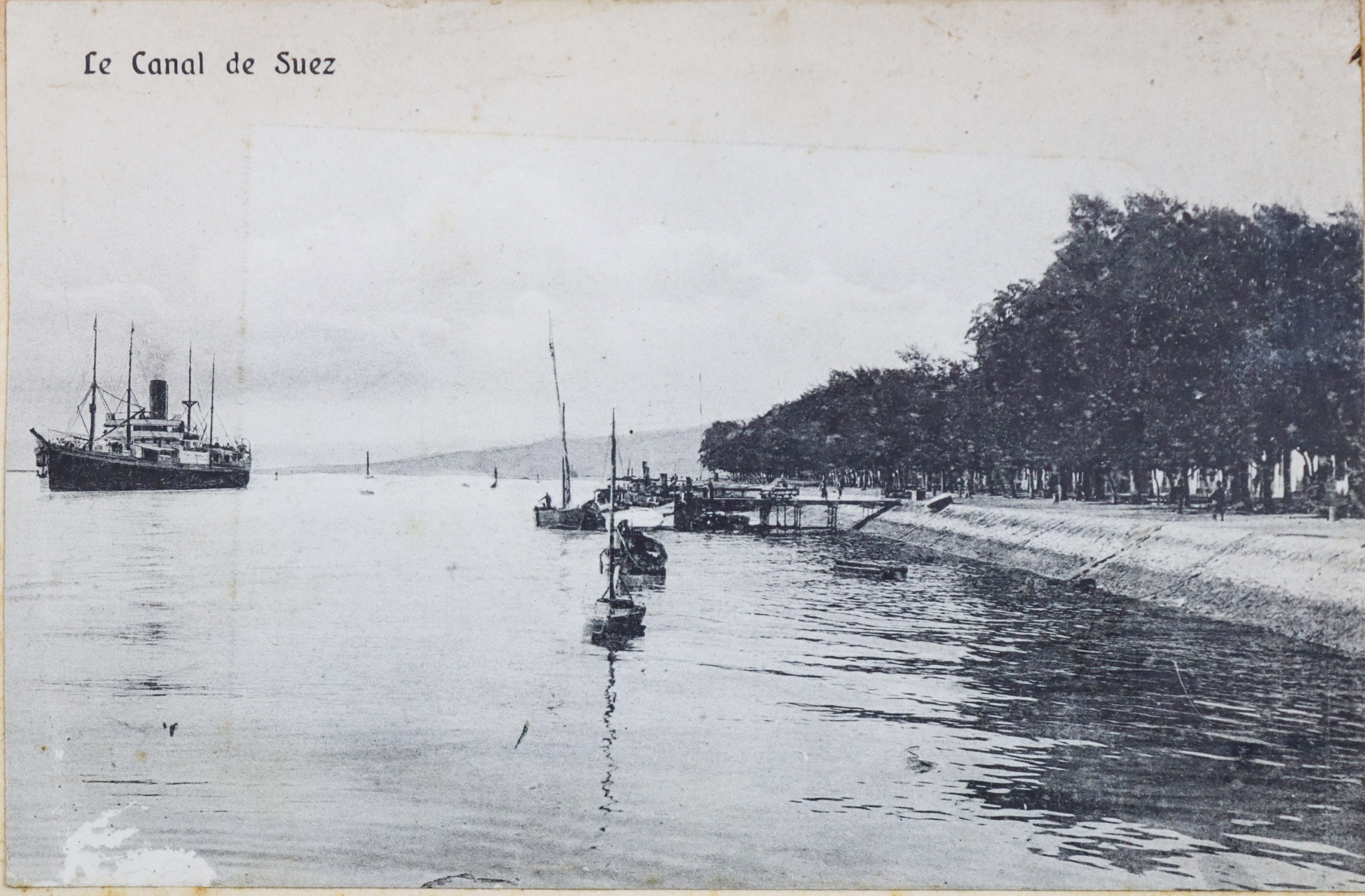
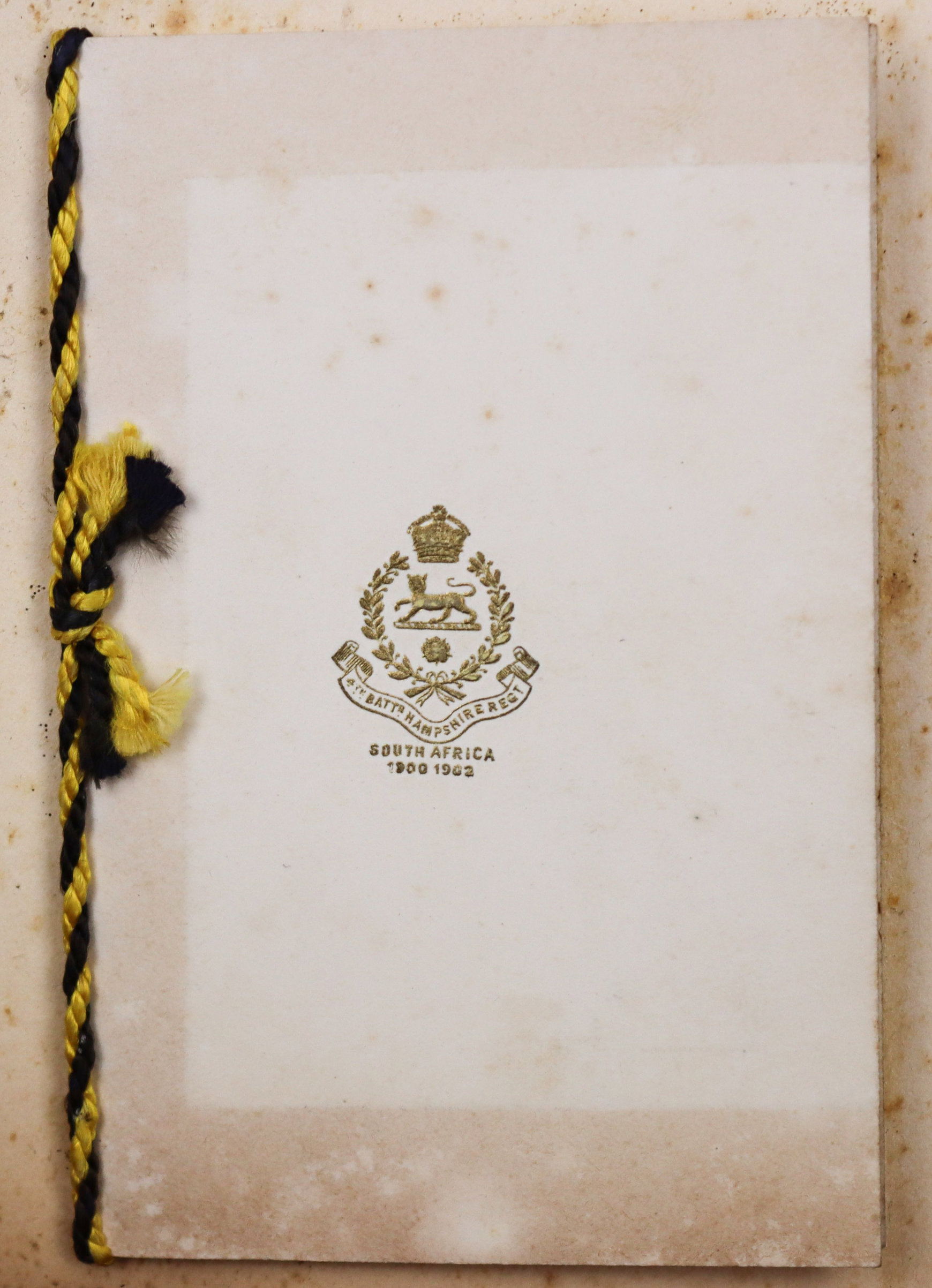
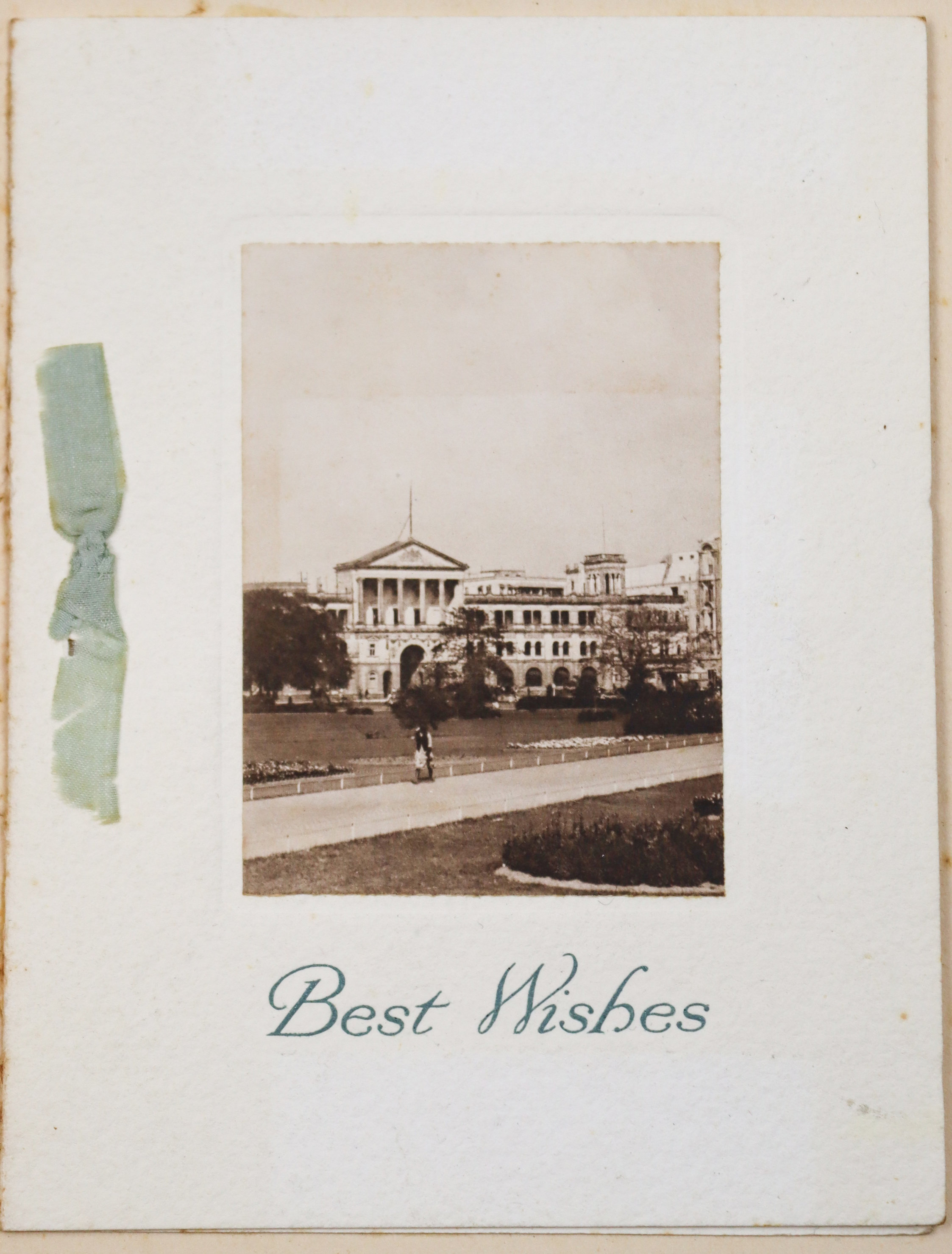
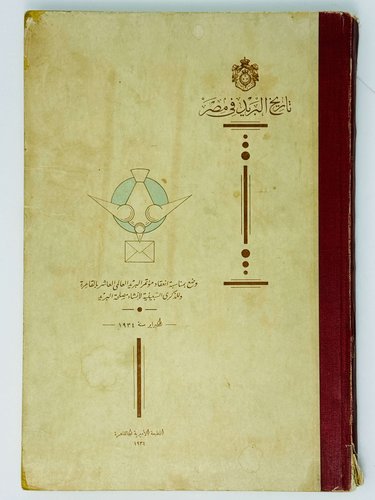
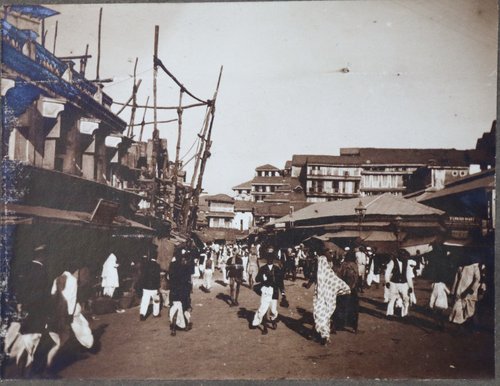
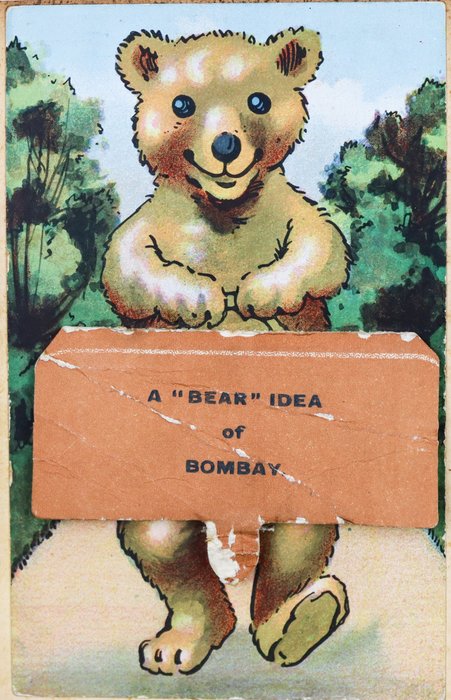
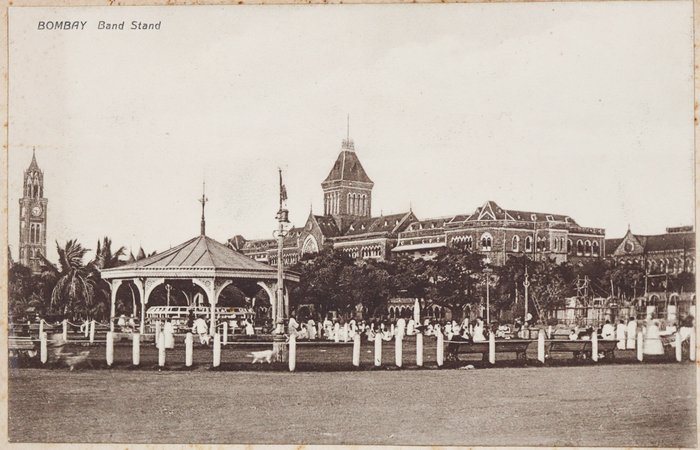
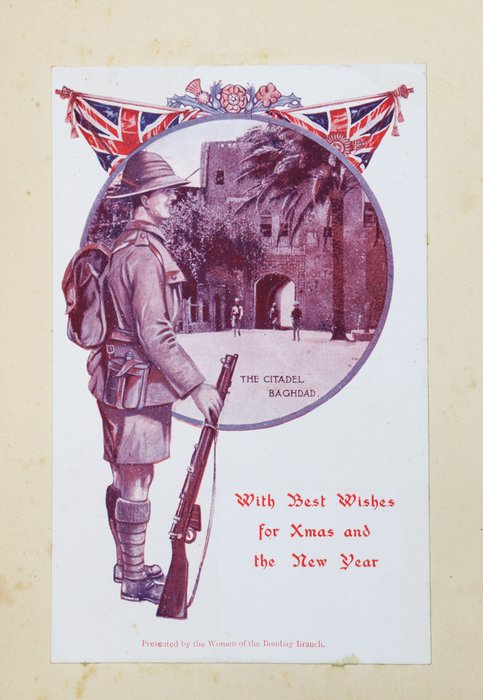
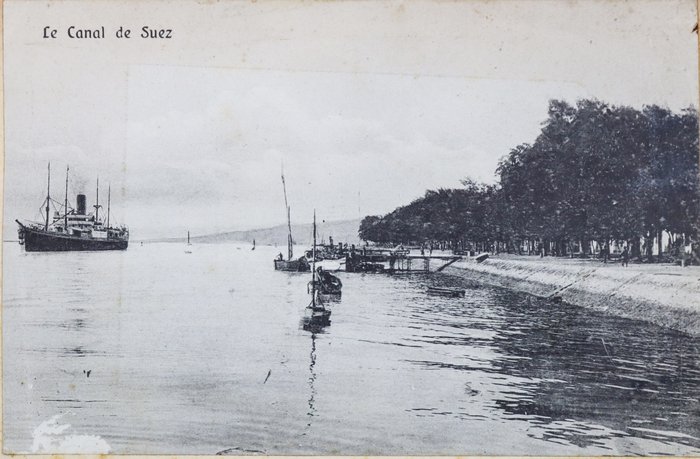
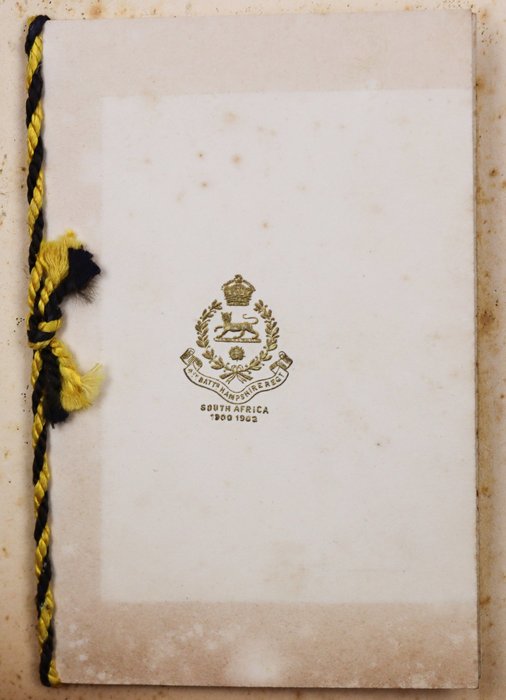
The collection also features about ten printed postcards of Mumbai and the Suez Canal; a WWI Christmas postcard; a New Year card from the 4th Battalion Hampshire Regiment signed by "Herb;" and a vintage "pull-out" souvenir postcard shaped like a bear holding an "A ‘Bear’ Idea of Bombay" sign; the flap reveals twelve small black-and-white views, including Queens Road, Null Bazar Street, Apollo Bunder, and Victoria Gardens.
Overall, historically important collection of original gelatin silver photographs, compiled by a British soldier associated with the 1/4th Hampshire Regiment during the Mesopotamian campaign of the Great War.