
#OA22
1848
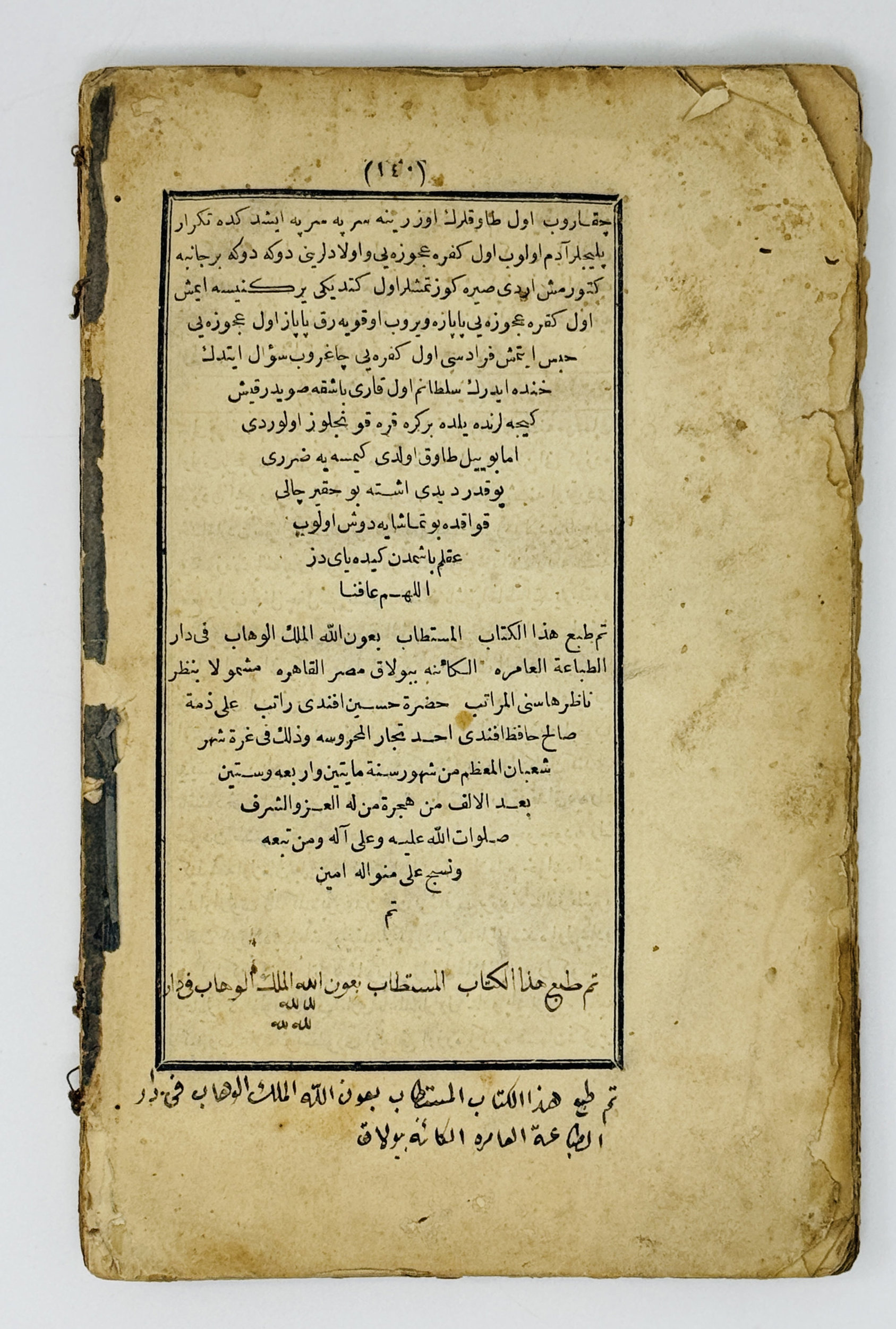
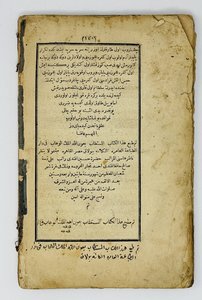
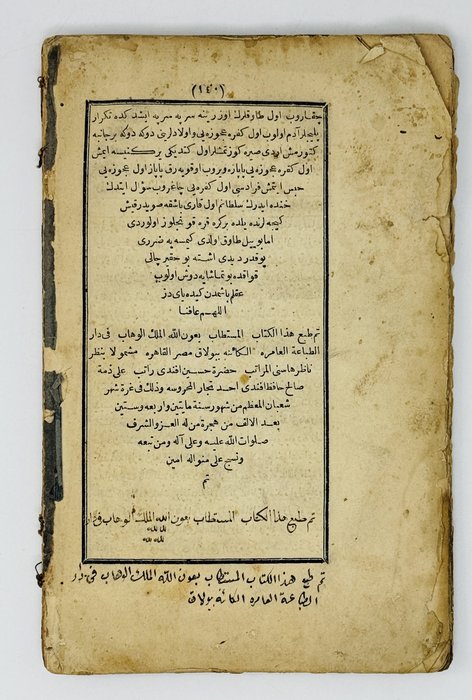
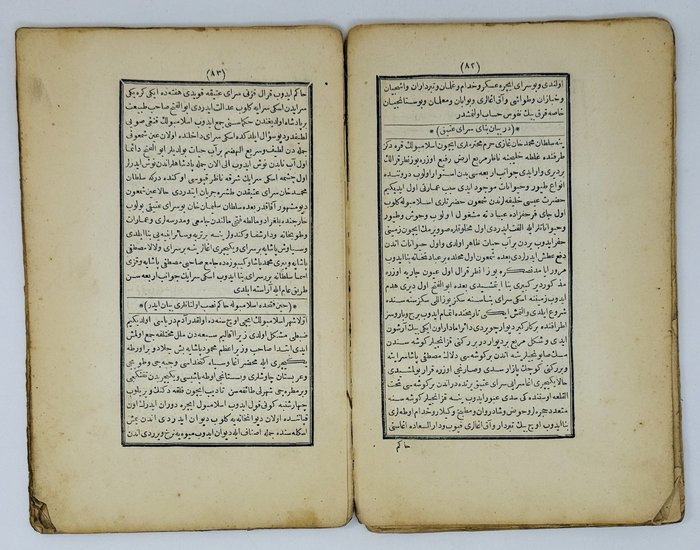
[4], 140 p. 22,7x14,5 cm. No wrapper or binding. Few pages are detached, otherwise in good condition. Two handwritten inscriptions in Arabic on the last page in contemporary hands, indicating, that the book was printed in Bulaq.
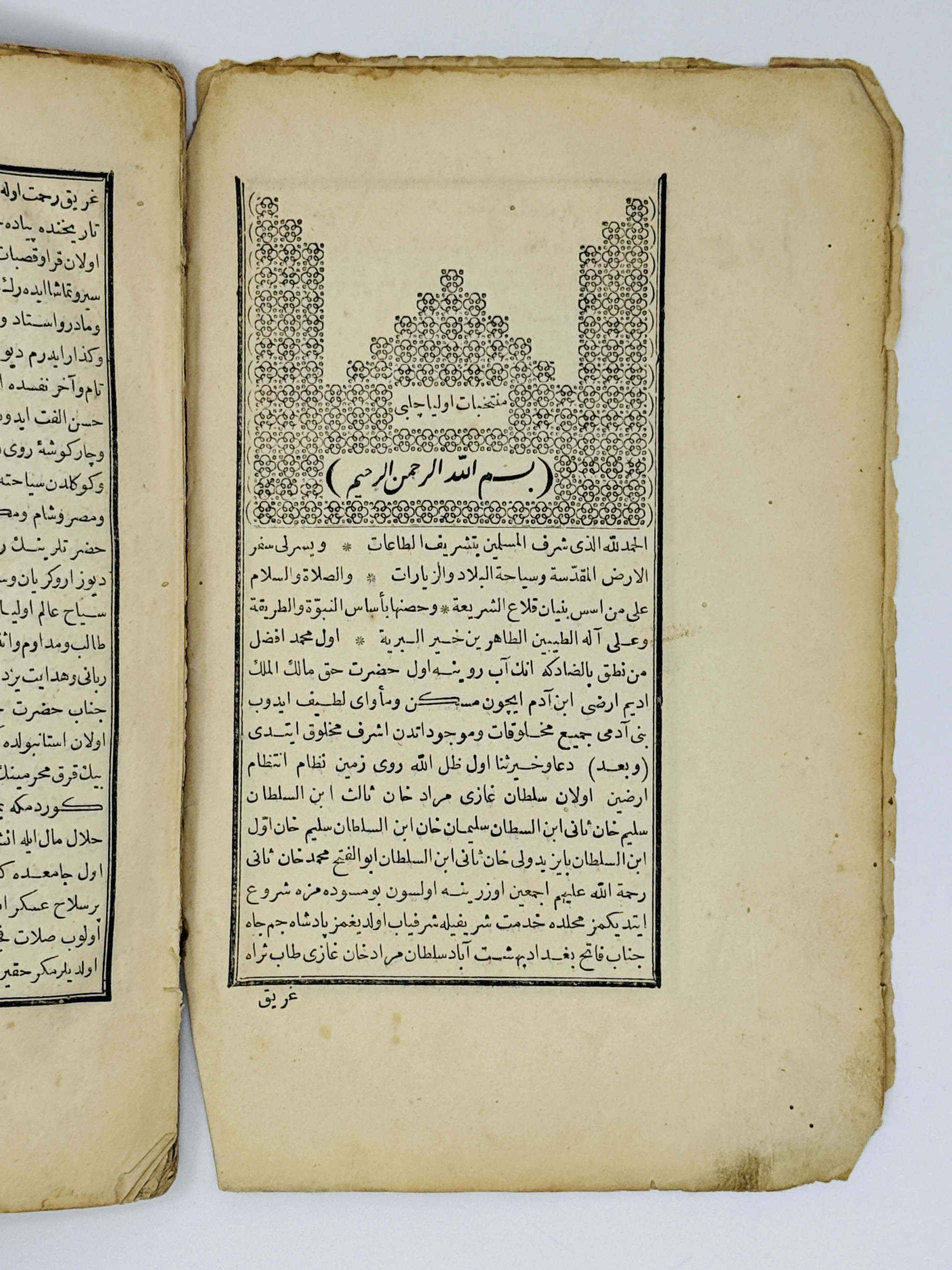
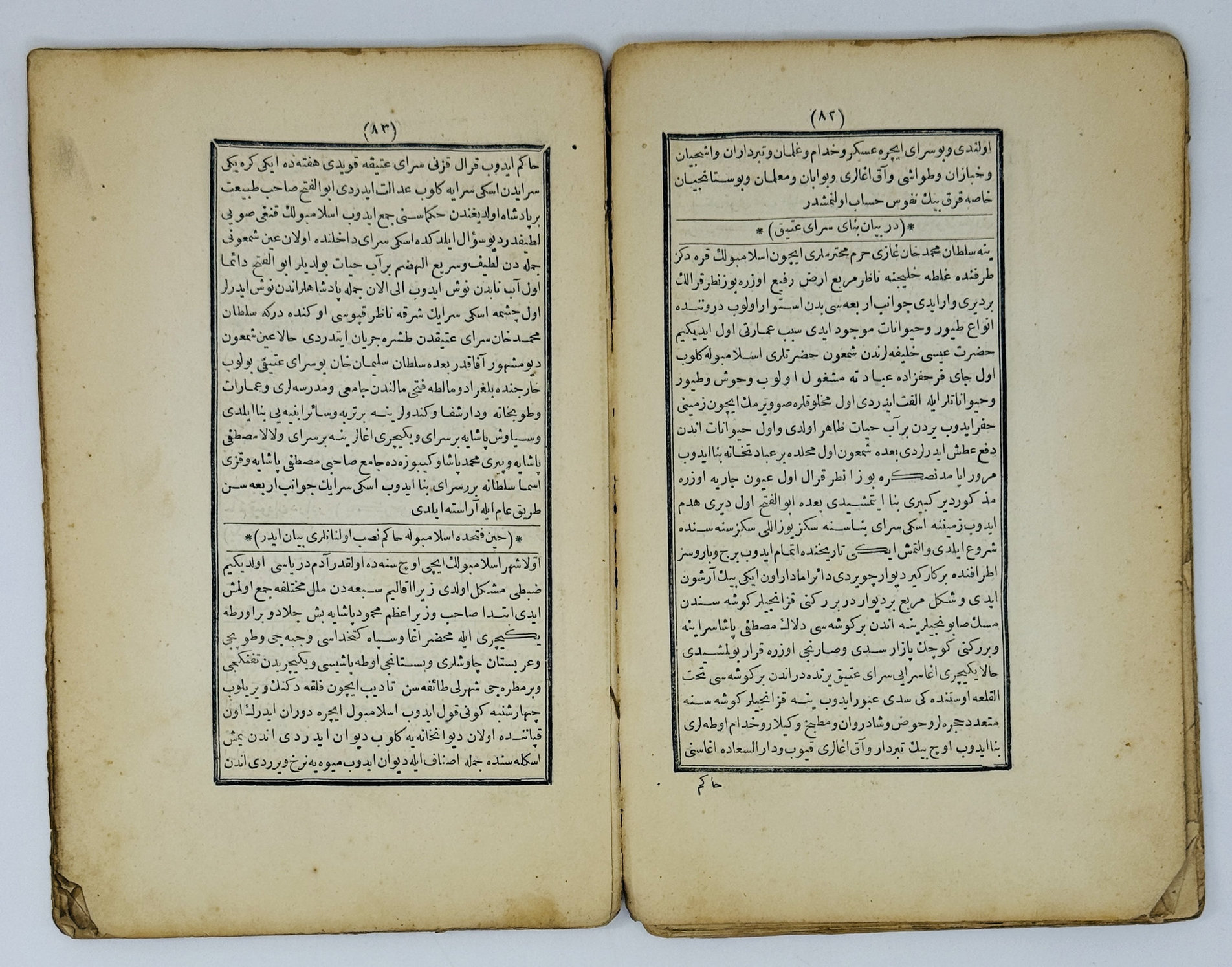
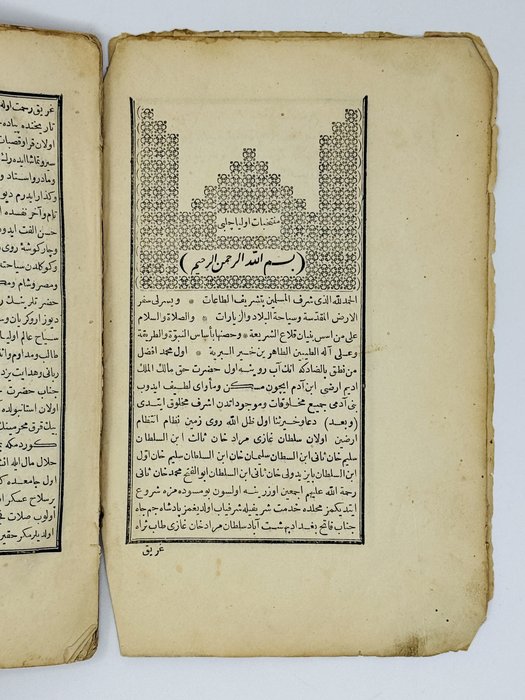
First edition of the famous The Seyahatname ( Ottoman Turkish : سياحت نامه ) by Evliyâ Çelebi, one of the most influential travelogues of the 17th century Ottoman Empire. The edition included first volume, which describes Istanbul.
Evliya Çelebi stands among the relatively few seventeenth-century Ottoman prose writers who recorded the places he visited in an unmistakably personal and highly literary voice. His monumental ten-volume Seyahatname (Book of Travels) preserves exceptionally rich information on the diverse lands through which he journeyed and consequently occupies a central position in the history of Turkish cultural life and the broader tradition of travel writing.
The Seyahatname constitutes a unique source for the historical geography of the Ottoman world in the seventeenth century, as well as for the Turkish language and its regional varieties as they were spoken in that period. Evliya’s descriptions encompass the general conditions of the localities he visited, their geographical situation and historical development, and the social characteristics of their inhabitants, including language, religion, dress, artistic production, and everyday customs. In addition, the work provides valuable material for comparative geography, art history, and ethnography.
Of particular significance is its detailed documentation of Muslim–non-Muslim relations within Ottoman society. Evliya offers extensive observations on the daily lives of non-Muslim communities, including their demographic presence, economic and cultural circumstances, places of worship, religious practices, and communal traditions. His account further preserves a wide corpus of vernacular cultural expression—stories, folk songs, folk poetry, legends, fairy tales, and rhymed couplets—together with notes on dialectal variation, folk dances, clothing styles, wedding customs, entertainment practices, and patterns of neighborhood interaction and social conduct.
Equally noteworthy is the breadth of architectural and topographical information found throughout the travelogue. Evliya records the distinguishing features of structures such as houses, mosques, prayer halls, fountains, inns, palaces, mansions, baths, churches, monasteries, towers, castles, fortifications, roads, and synagogues, often including remarks on their construction, later repairs, patrons, builders, and restorers. He also supplies data on regional culinary culture, local administration, prominent families and notable individuals—including poets, performers, and officials of various ranks—while occasionally offering insight into the tools and material equipment characteristic of seventeenth-century Ottoman life.
Paper copies are rare. Worldcat shows copies at UC Berkeley Libraries, Stanford University, Concordia College Library, Dallas Theological Seminary, University of Chicago Library, University of Notre Dame.