
#FRE30
1896-97
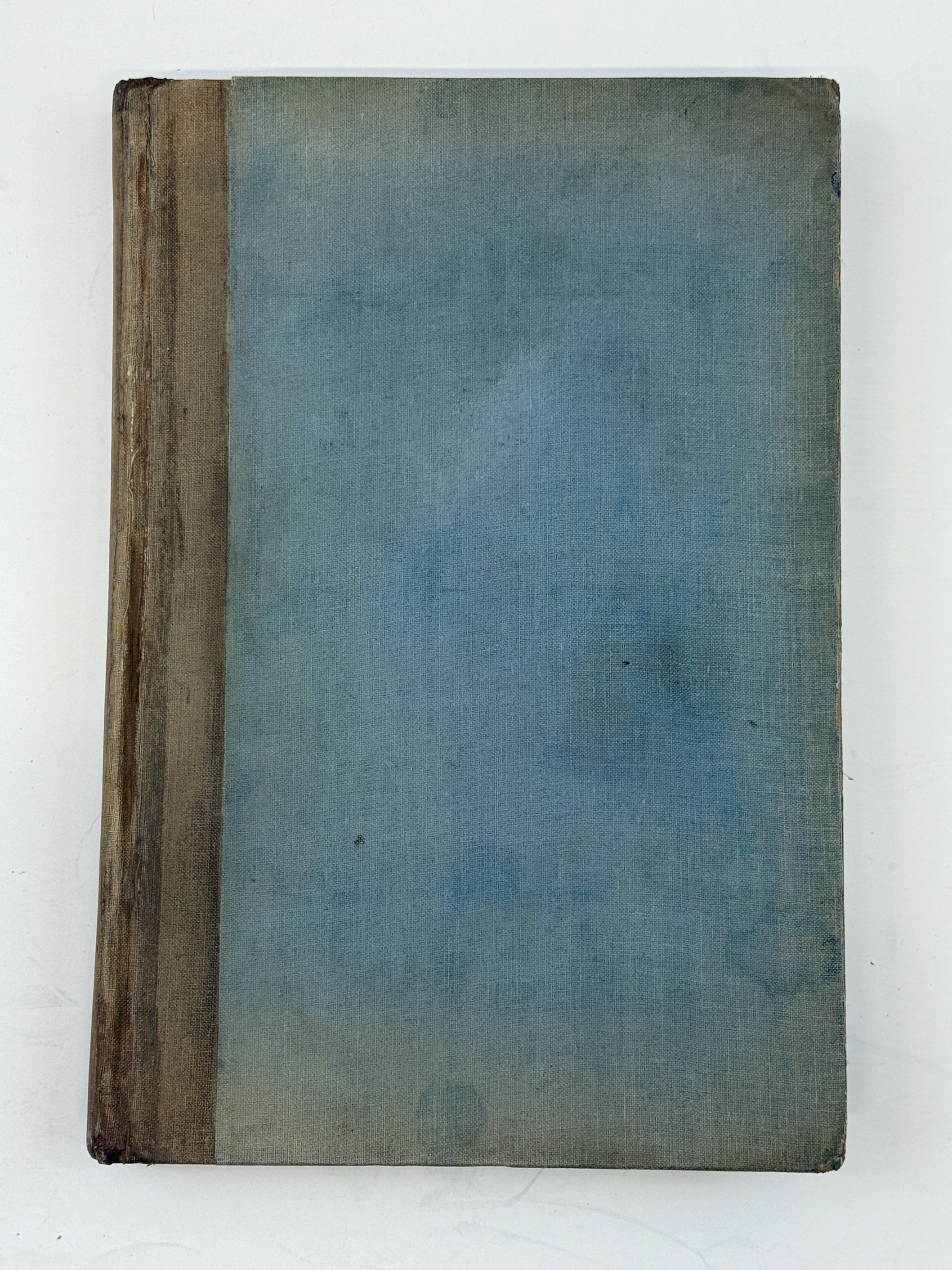
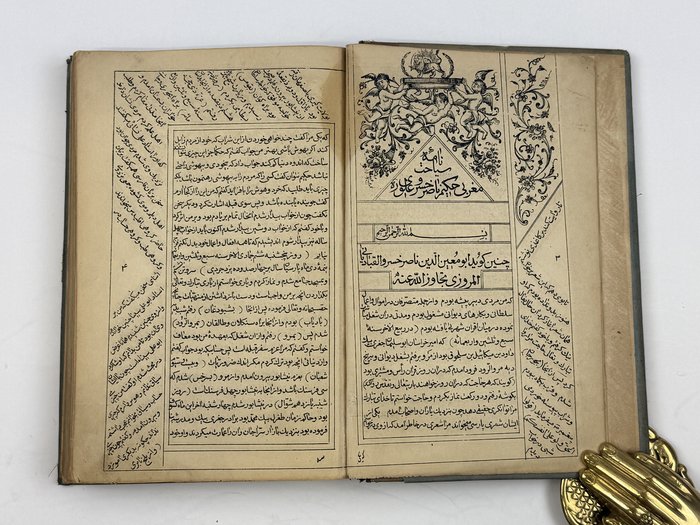
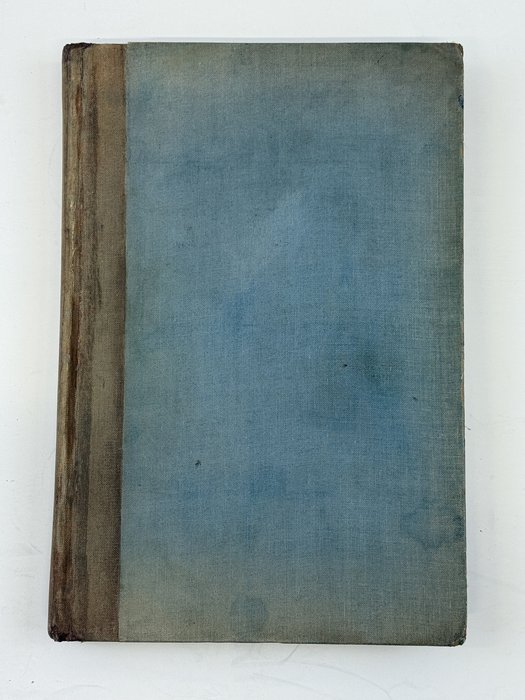
82, 321 pp. f. Octavo (25.5 × 17 cm) [10 × 6¾ in]. Contemporary paper-covered cardboard boards. Corner of the final leaf professionally restored without loss of text; spine strengthened. Otherwise in very good condition.
Provenance: Signature ‘V.Puturidze’ in Georgian on the first endpaper, the same signature in Farsi on the next page. Vladimir Puturidze (1893–1966), a distinguished Georgian orientalist, philologist, and specialist in the languages and literatures of the Near East. Puturidze was the founder of Persian paleography in Georgia.
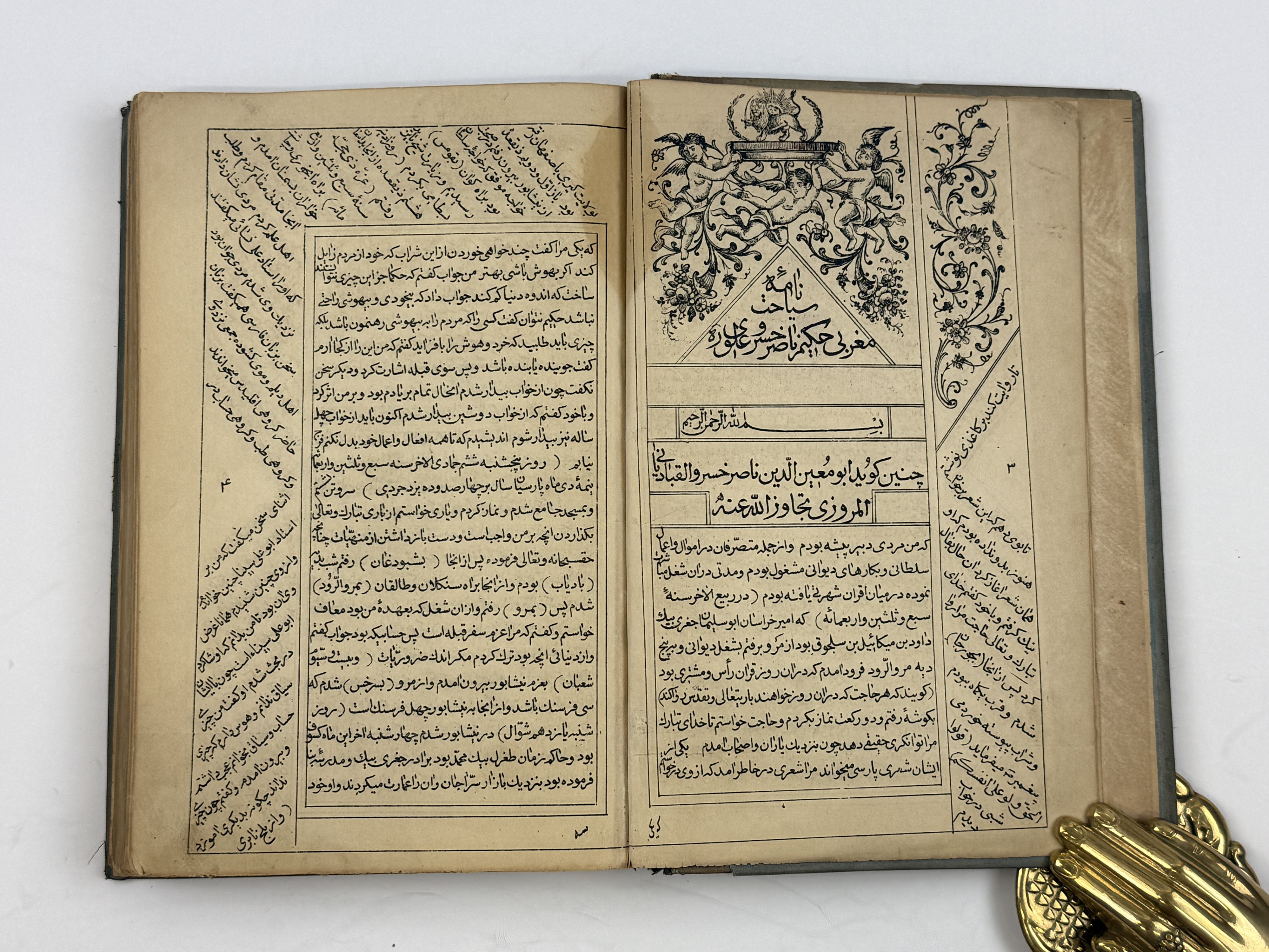
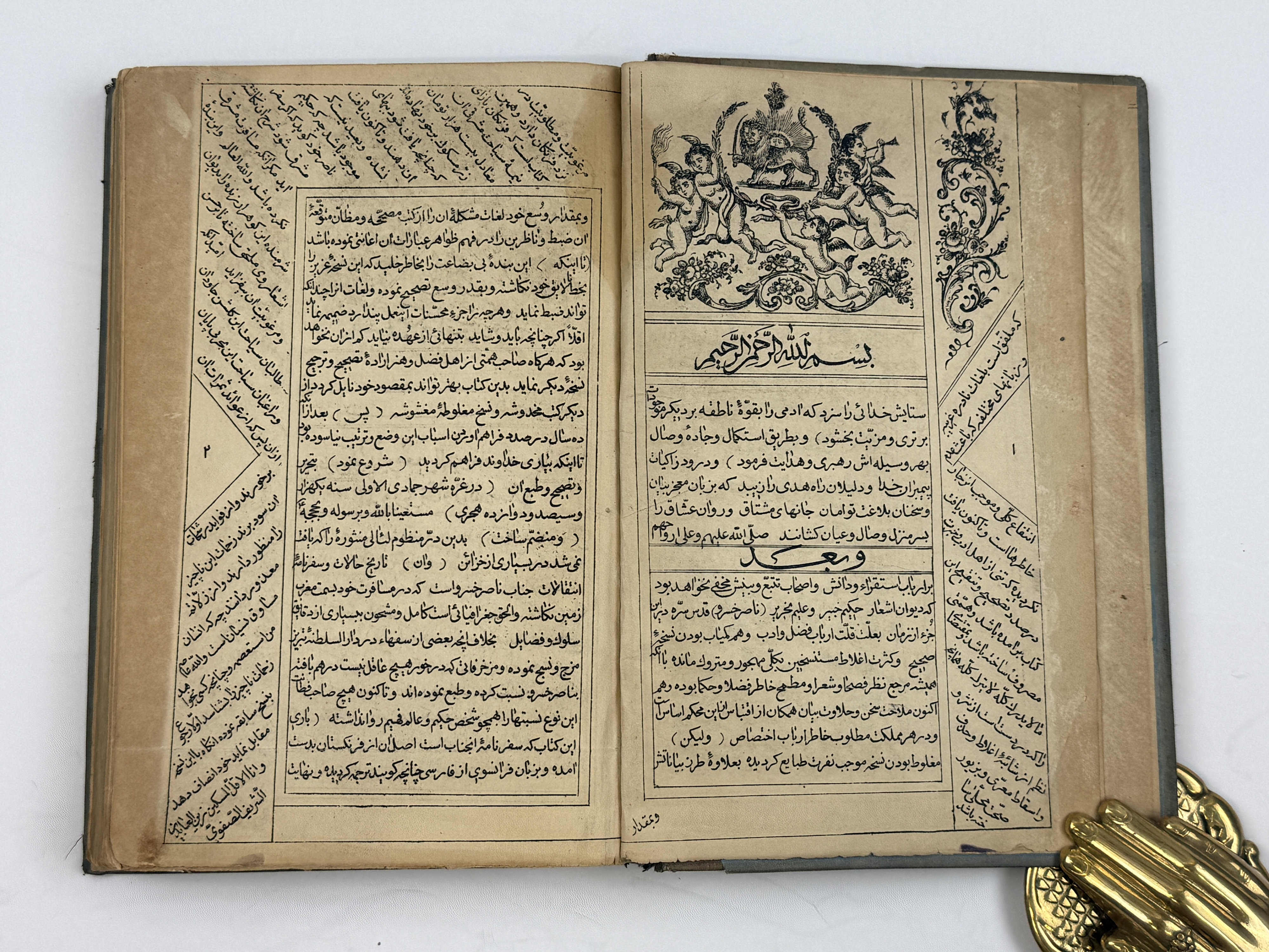
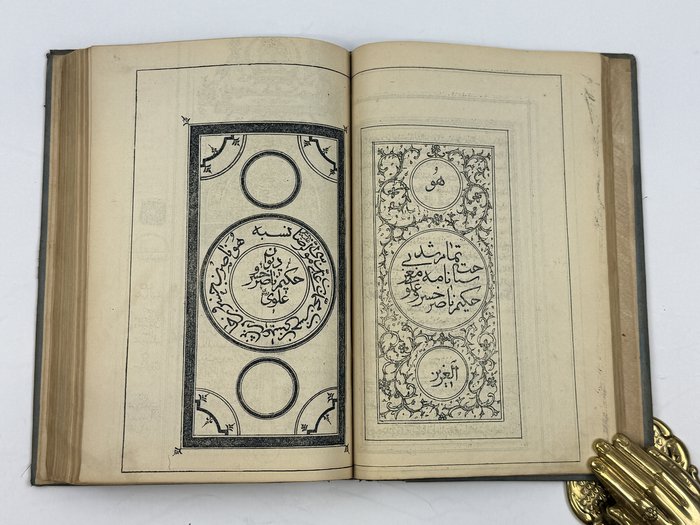
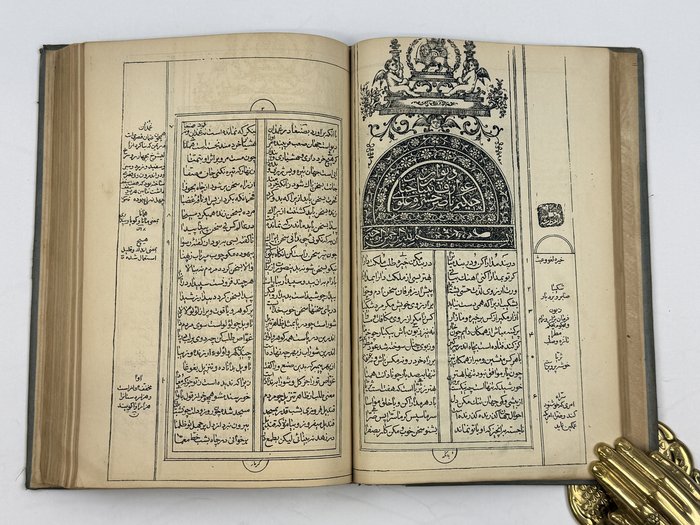
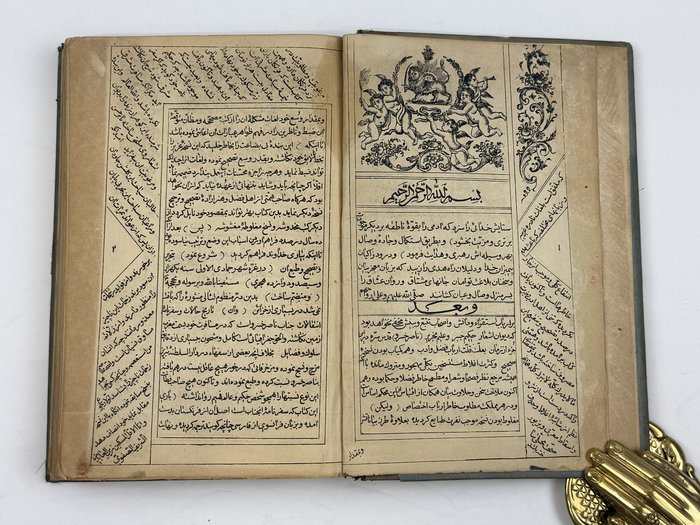
Lithographed throughout in elegant nastaʿlīq calligraphy by Fakhr al-Ashra.
Second edition. The first edition was published in Tehran in 1286 AH [1869]. Until the appearance of Wheeler Thackston's complete English translation in 1986, the Safarnama remained largely inaccessible to English-language readers, with only partial translations available, most notably Guy Le Strange's 1893 rendering of the sections devoted to Syria and Palestine.
One of the most important Persian travel narratives ever written, the Safarnama records the celebrated seven-year journey of the philosopher, poet, and Ismaili scholar Nasir Khusraw (1004–ca. 1077).
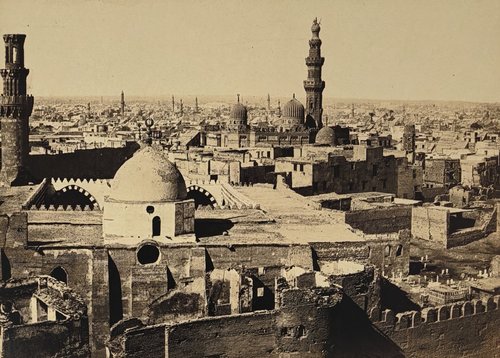
Beginning in his native Khurasan, Nasir Khusraw travelled extensively through the lands of present-day Tajikistan, Uzbekistan, and probably Turkmenistan, before continuing across northern Iran, Armenia and Azerbaijan in the Caucasus, Syria, Palestine, Egypt, and Arabia. His observations extend far beyond pilgrimage, providing remarkably detailed accounts of cities, trade, architecture, irrigation, administration, taxation, markets, and everyday life across the medieval Islamic world. The Safarnama remains an indispensable primary source for the history and geography of Central Asia, the Caucasus, and the Middle East.
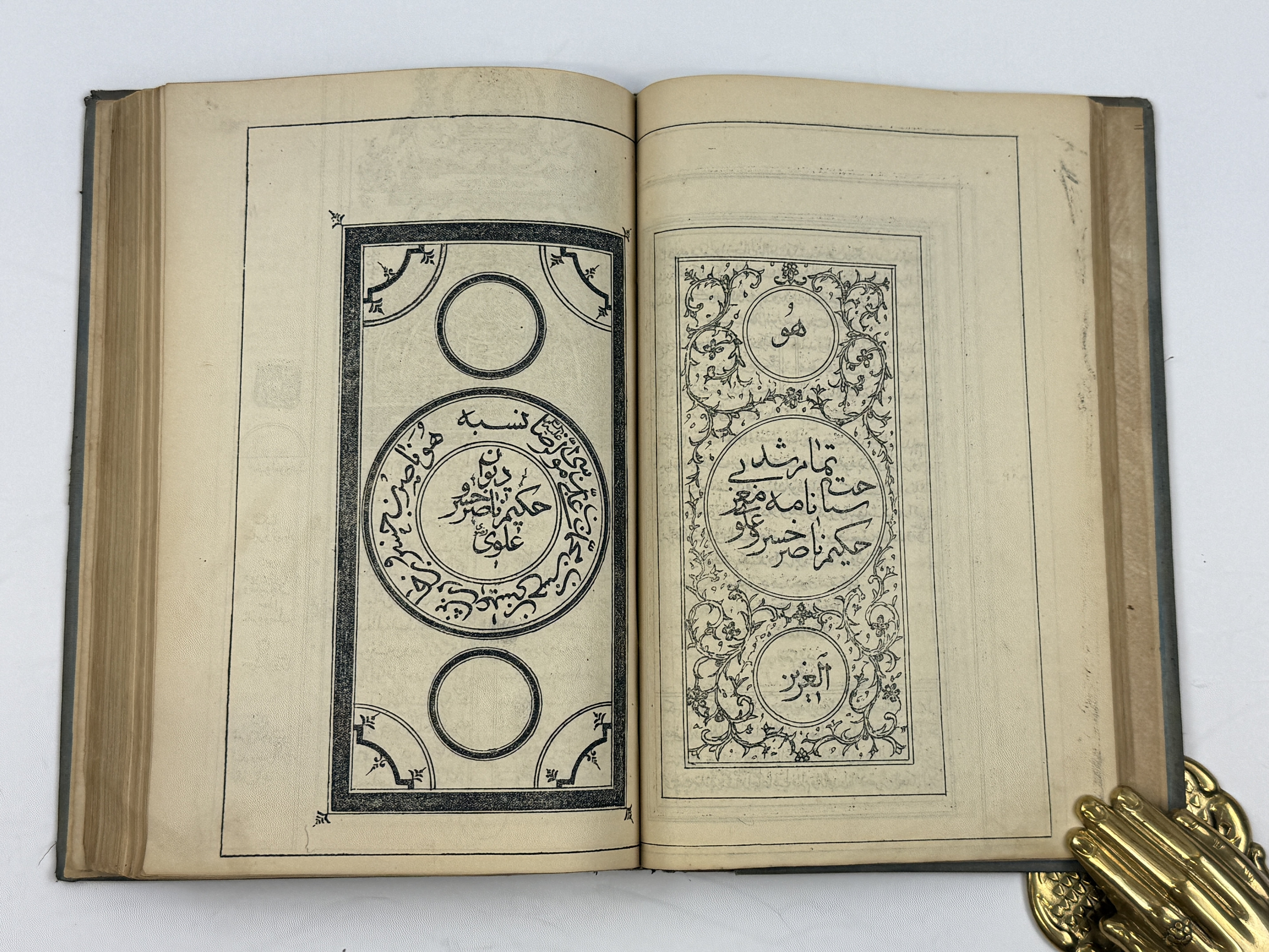
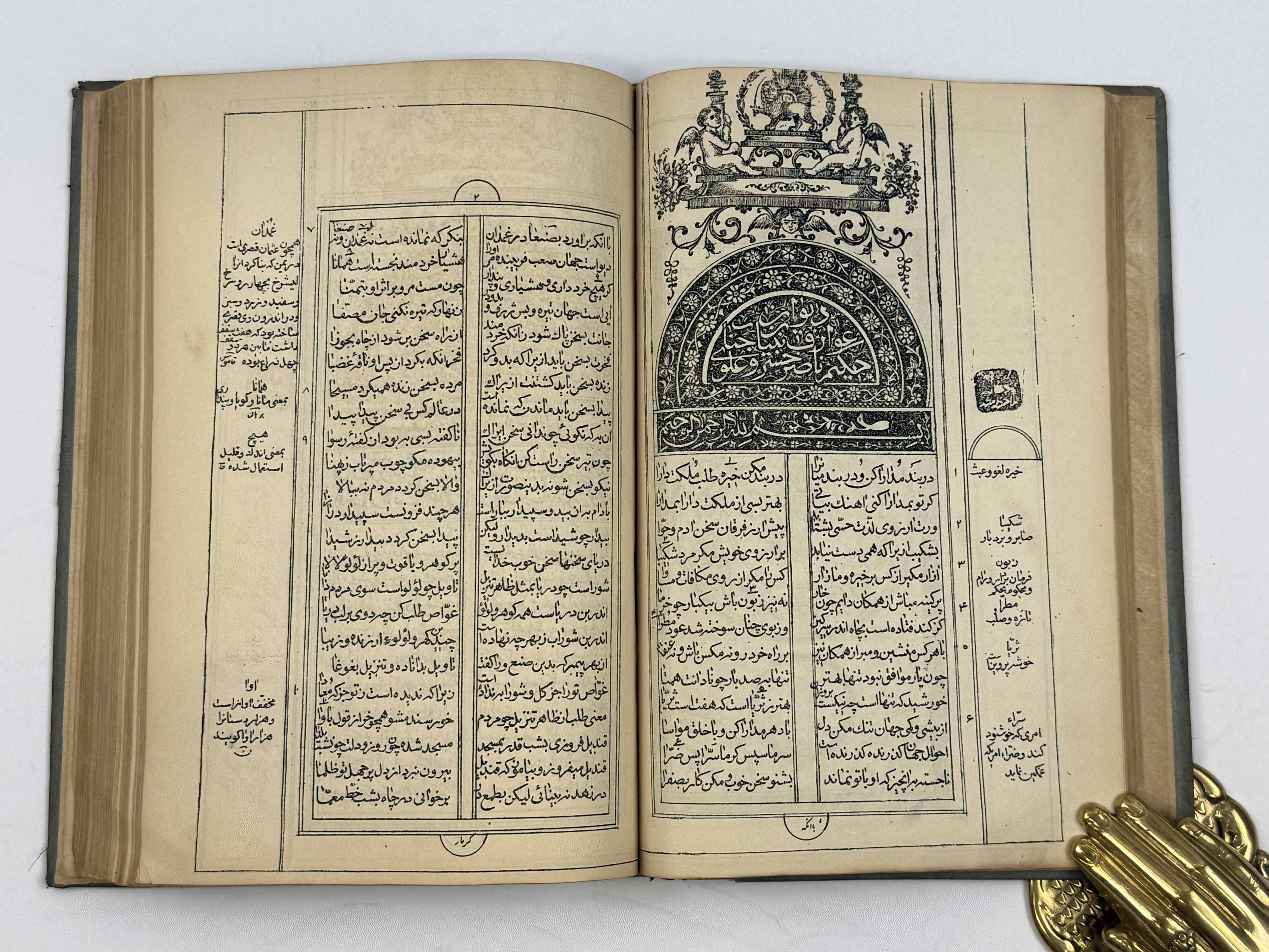
The accompanying Divan, comprising more than 15,000 lines of poetry, established Nasir Khusraw as one of the foremost masters of classical Persian literature. Written largely during his years of exile in the mountains of Badakhshan after persecution for his Ismaili beliefs, the poems combine philosophical reflection, moral instruction, and deeply personal meditations on exile, homeland, and faith. Together, the Safarnama and the Divan represent the complete literary portrait of one of medieval Persia's greatest thinkers.
Rare in the market in its complete Qajar lithographed form.
WorldCat records copies at: the National Library of Israel; Princeton University Library; Harvard University; Yale University; University of Michigan; Indiana University; University of California, Los Angeles; University of Toronto; Staatsbibliothek zu Berlin; and Bibliothèque nationale de France.
Reference: Alice C. Hunsberger, Nasir Khusraw: A Portrait of the Persian Poet, Traveller and Philosopher (2003).