
#MD87
1913, ca. 1930s-1940s
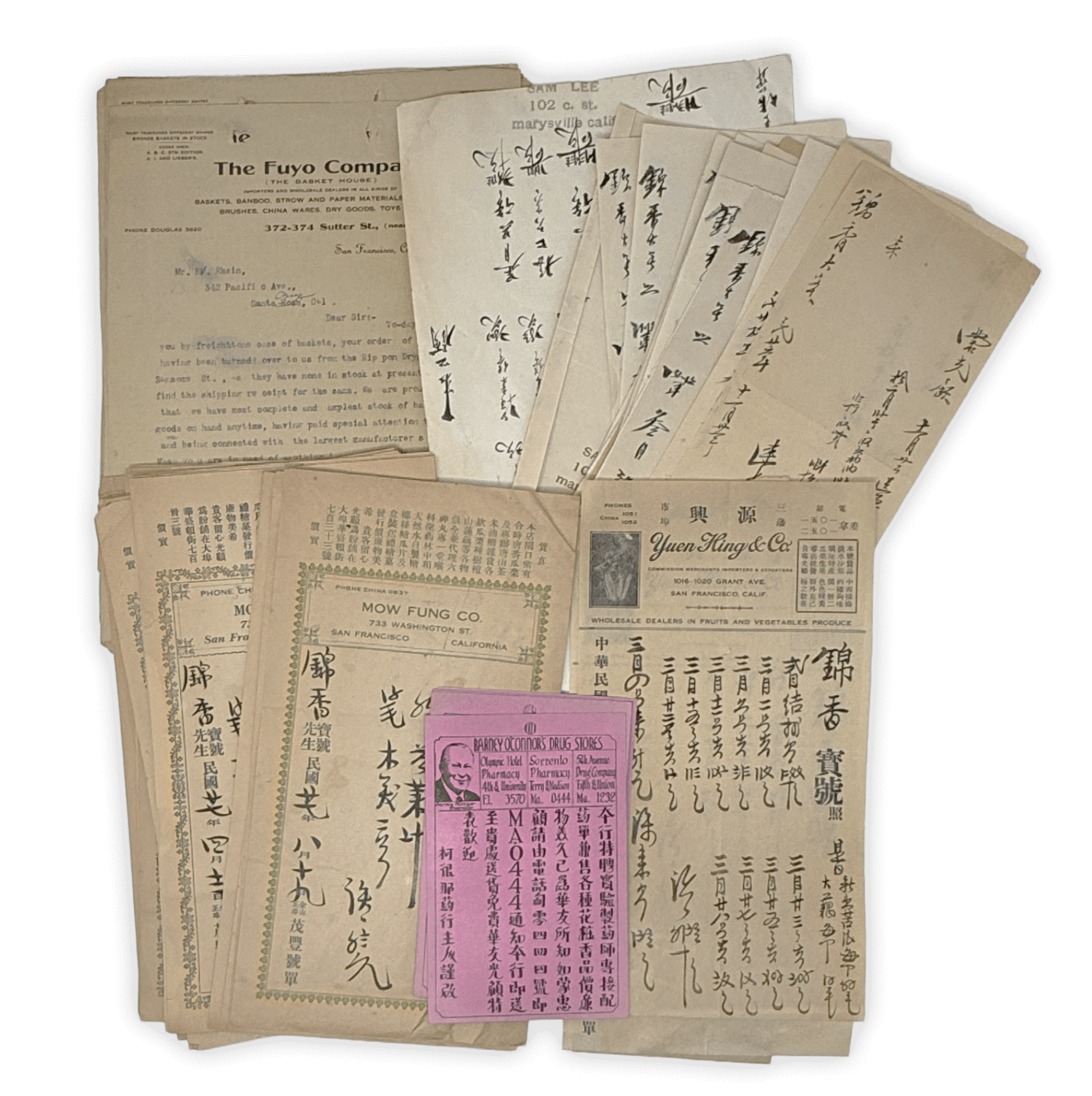
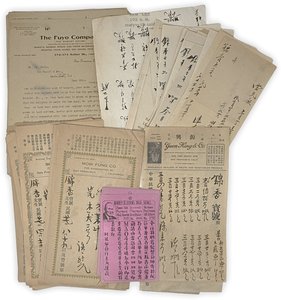
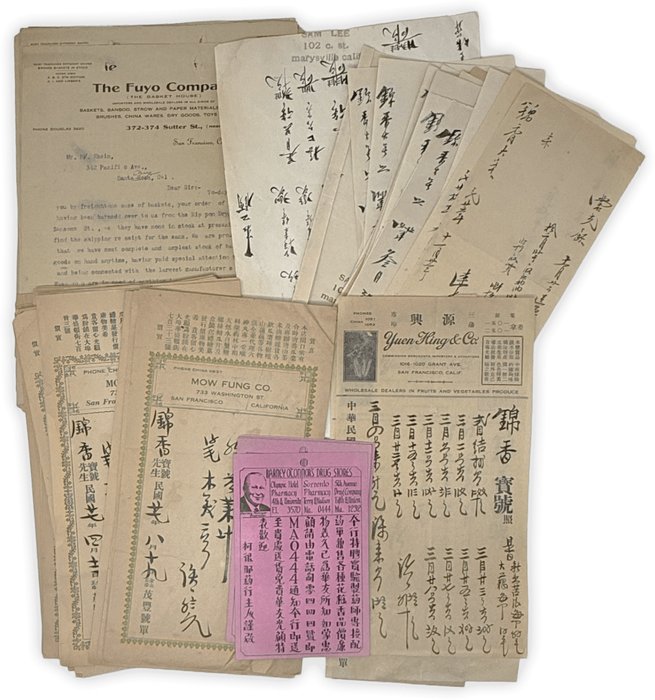
Interesting extensive archive of manuscript and printed ephemera, documenting the Chinese and Japanese enterprises in California and Seattle during the first half of the 20th century. The materials were apparently collected by a local businessperson, clerk, or employee connected to these West Coast Chinese and Japanese businesses, possibly for record-keeping or commercial purposes.
The collection features the following documents:
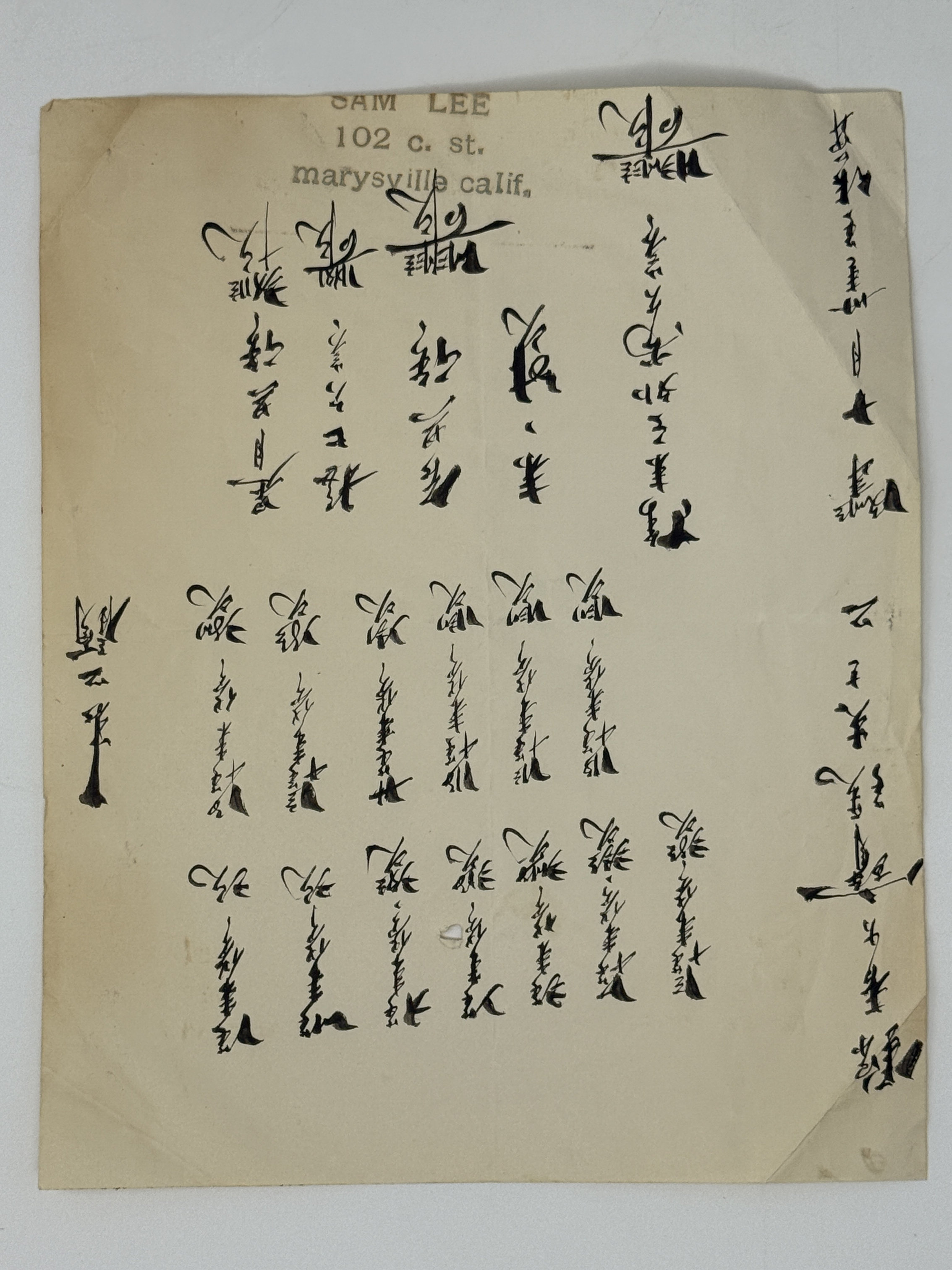
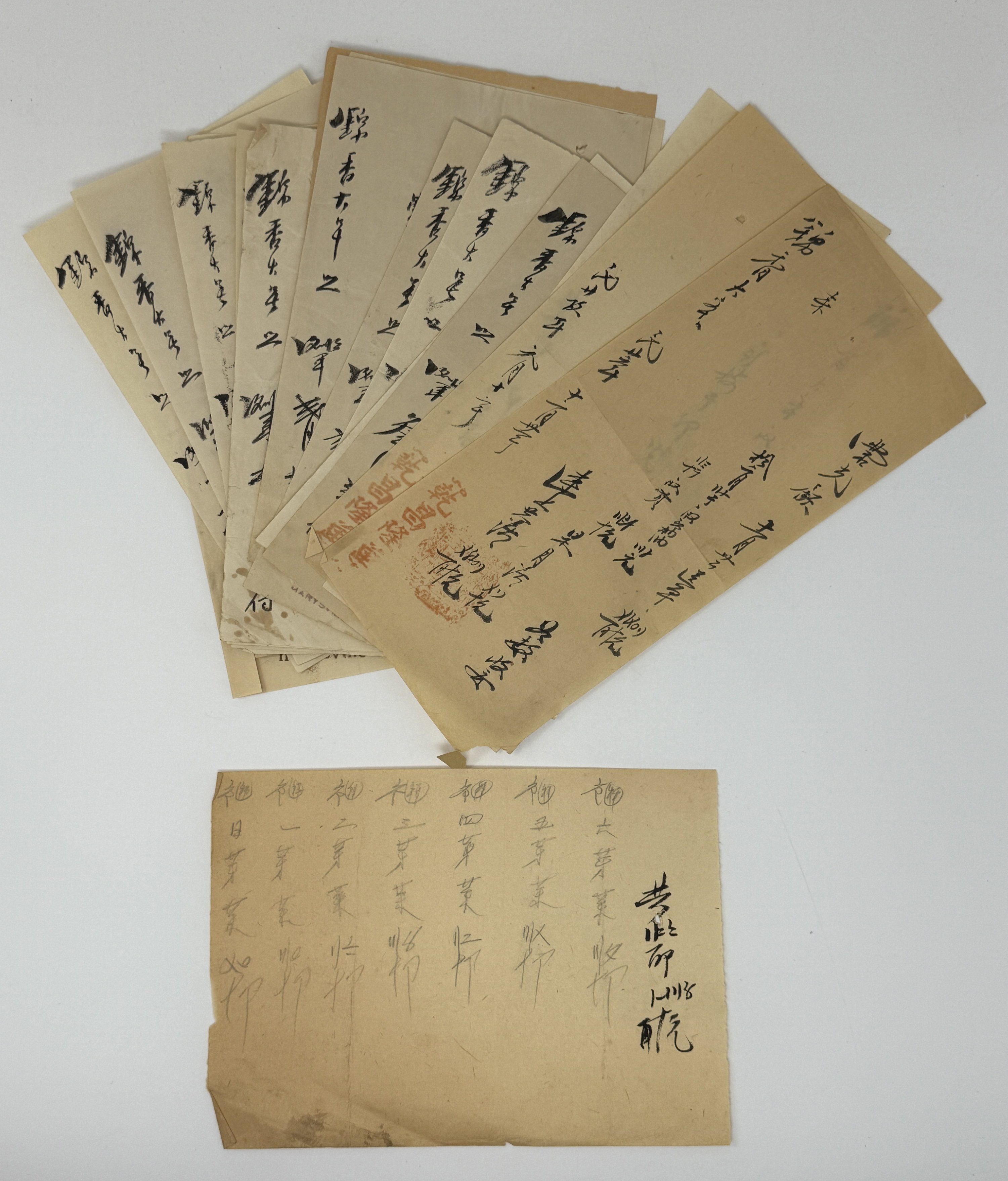
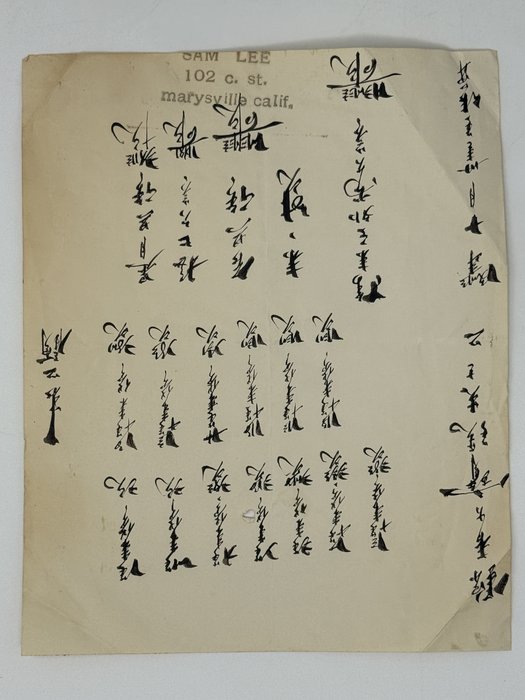
1) Sam Lee [Twenty-Five Retail Receipts]. Marysville, ca. 1940s. Most ca. 8 x 5 in, larger one ca. 9 ¾ x 8 in. Most receipts are ink-stamped: “Sam Lee, Marysville, Calif.” (these with an additional stamped line of Chinese script, likely referring to Marysville as the “Third City” of Californian Chinese diaspora after San Francisco and Sacramento); and a few “Sam Lee 102 C. St. marysville calif.”, three with indistinct Chinese stamps in red, all with jottings or repetitive script in indistinct Chinese characters in black ink or graphite. Age toning, stamped text fading, creases and folds, most pierced by a retailers’ or office spike, in good condition.
Twenty-five retail receipts in Chinese, issued in the 1940s by the Marysville-based “Sam Lee” to various clients. Although the exact nature of the operation cannot be determined with certainty, it was likely related to a laundry business.
The apparent proprietor, Sam Lee, had previously operated a restaurant in the 1920s at 222 C Street. In 1922, he was arrested following a raid on the establishment. Contemporary reports state that when officers entered the premises, a young boy, Elmer Lim, attempted to conceal a cache of narcotics in a prearranged hiding place. According to these accounts, the boy said he had been required to remain at the restaurant to sell cocaine and morphine to customers. In 1924, Lee was sentenced to four years’ imprisonment at San Quentin. The laundry business documented in the 1940s receipts appears to have been established after his release.
In the late nineteenth and early twentieth centuries, Marysville was home to a substantial Chinese immigrant community, many of whose members had arrived during the Gold Rush. The city developed the state’s third-largest Chinatown, then regarded as one of the most important in the United States. Early settlers called Marysville Sanfow (“third city”), reflecting its position as the third river port on the route to the goldfields. Restricted by discriminatory measures such as the Chinese Exclusion Act, Chinese residents were largely confined to laundries, restaurants, and small retail enterprises. With the passage of the Harrison Narcotics Tax Act, federal oversight of narcotics intensified. Although cocaine use extended across American society, enforcement efforts and press coverage often fell disproportionately on immigrant communities, including Chinese-owned businesses.
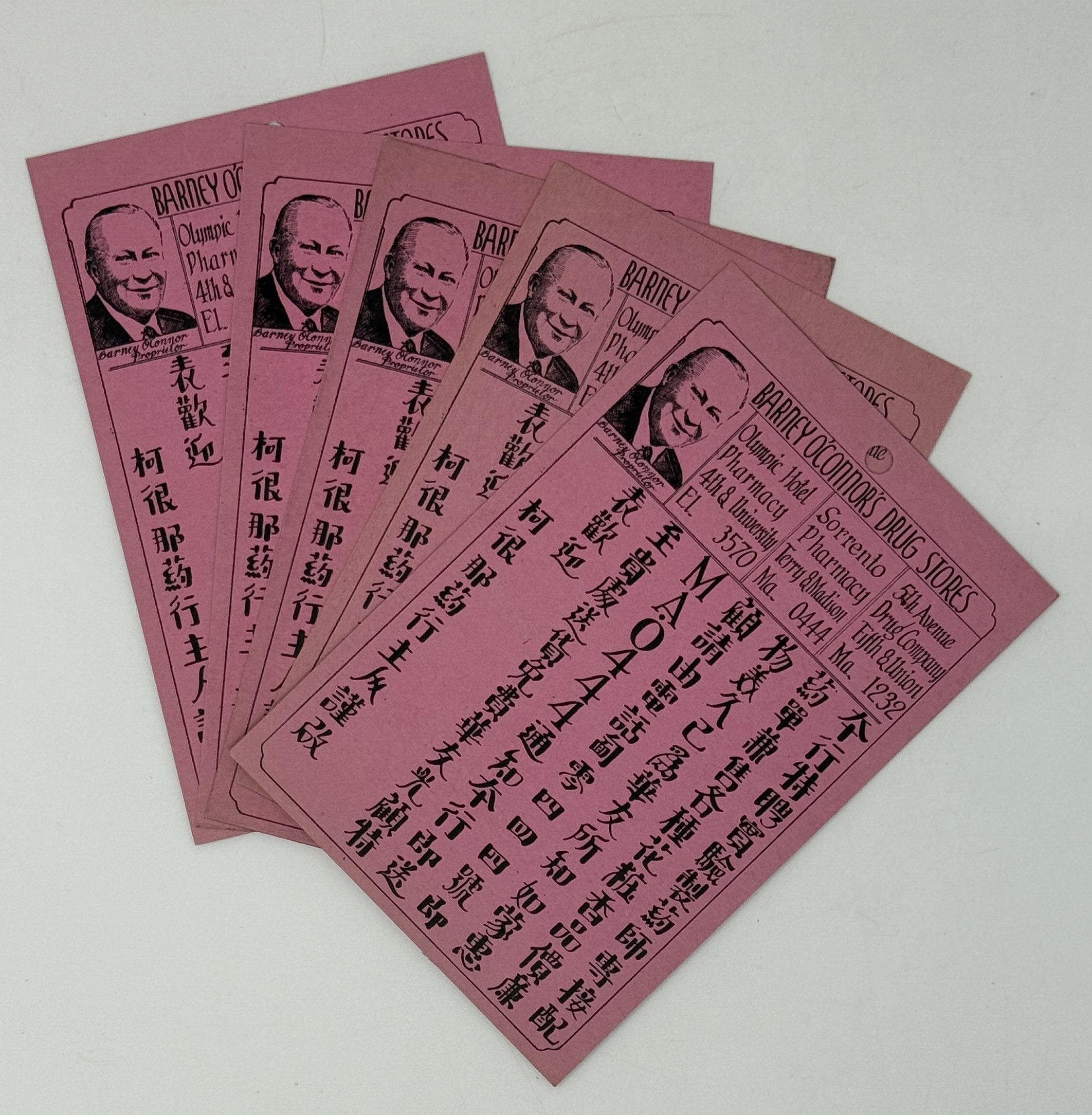
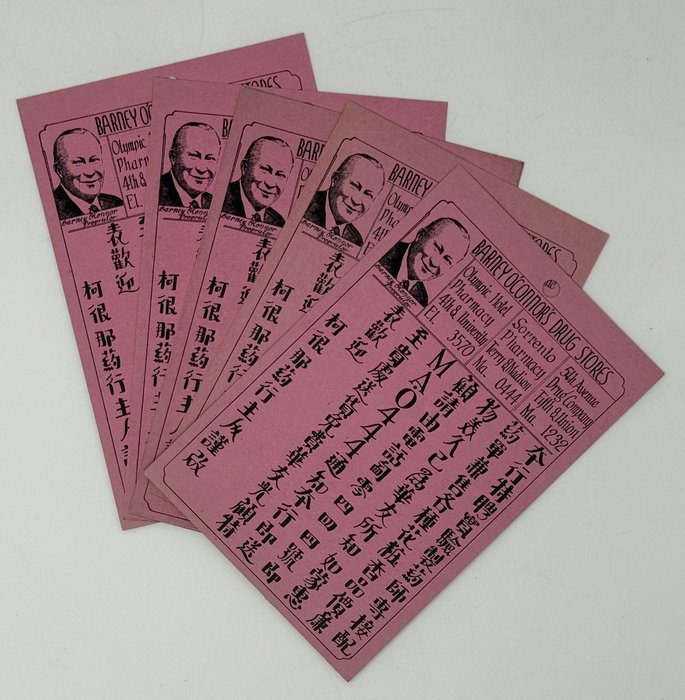
2) [Five Advertisements for Seattle Pharmacies Linked to Barney O’Connor]. Seattle, ca. 1937. Stiff pink cards. Cards are little faded, lower corner of one a little creased, but overall in very good condition.
Five Chinese advertisements for Barney O’Connor’s three Seattle-based pharmacies (the Olympic Hotel Pharmacy, Sorrento Pharmacy, and Fifth Avenue Drug Company) located in and around Chinatown, specifically inviting “Chinese friends” to utilize their services. Each ad features a header with O’Connor’s portrait alongside details for his three locations. Beneath the header, eight columns of printed Chinese script list the main telephone number for the Sorrento store (MA 0444) and detail the available pharmaceuticals, fragrances, and delivery terms.
Chinese settlers first arrived in Seattle during the 1860s, establishing an early presence near Pioneer Square that later shifted toward the modern International District. Despite facing the 1886 forced expulsion and the constraints of the Chinese Exclusion Act, the community persevered through the leadership of figures like Goon Dip, who spearheaded the construction of the landmark Kong Yick Buildings in 1910. By 1930, the population had grown to over 3,300 residents, maintaining a vital economic role while joining Japanese and Filipino neighbors to challenge discriminatory housing and marriage laws.
Born in Philadelphia, Barney O’Connor (ca. 1888-1958) graduated from the nation's first pharmacy college before moving to Seattle to study business at the University of Washington. During World War I, he served as a pharmacist for Base Hospital 50, returning to the U.S. in 1919 to marry Irene, a military nurse. After the war, O'Connor rose from a drug salesman to the owner of a successful Seattle pharmacy chain, including the Olympic Hotel and Sorrento pharmacies. A dedicated member of the veterans' community, he remained active in the American Legion until his death in 1958 at age 69.
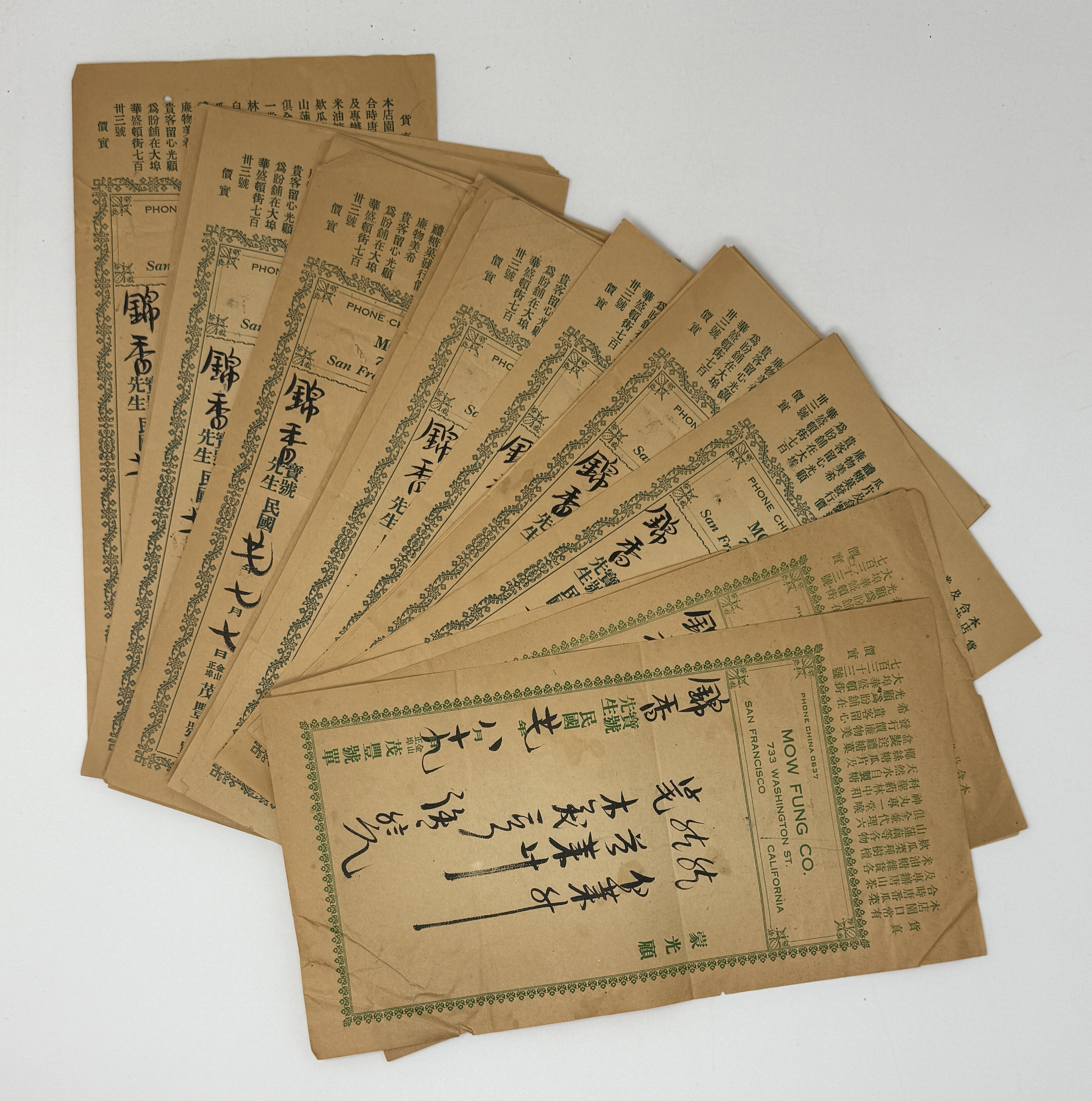
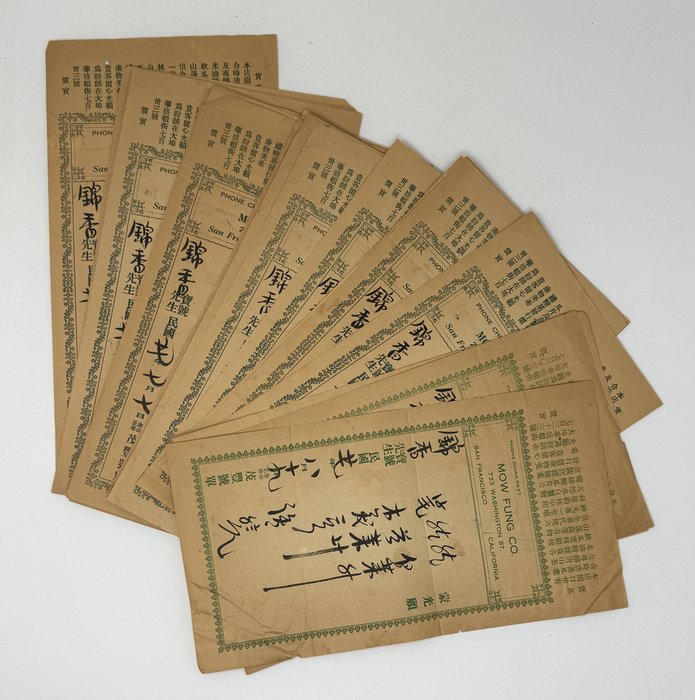
3) Mow Fung Co. [Thirty Printed Letterhead Retail Receipts]. San Francisco, ca. 1940s. Ca. 11 x 5 ¾ in. With workings and notes completed in Chinese script in black ink. Each sheet with a printed scrolling or foliate border in green (three in a lighter shade), Mow Fung Co.'s details printed at the top with their specialties printed in Chinese script in 19 short columns. Paper rather toned, most pierced by a grocer's spike, original folds & creases, some edge chips, the paper stock age-toned, but in good condition.
Thirty printed retail receipts in Chinese from Mow Fung Co., a prominent Chinese wholesale firm located on Washington St. in the heart of San Francisco’s Chinatown. Founded in the early 1910s by the father of co-owner Albert C. Lim, the business flourished under a partnership that included Lee Hoo, Harry L. F. Gin, and Lim Park Wah. The company specialized in coconut sugar, melon slices, traditional vegetables, and herbal remedies, and served as a nationwide supplier for stores and restaurants. By 1949, Mow Fung Co. was a fixture in the San Francisco Chinese American Directory, reflecting its prosperity through plans to expand operations to Dabu in Guangdong Province.
Chinese immigrants first arrived in San Francisco during the California Gold Rush, establishing the oldest Chinatown in North America. While initially utilized as a cheap labor force, they faced a violent backlash when the Panic of 1873 triggered national unemployment and fueled full-blown race riots. Targeted by mobs and further marginalized by the 1882 Chinese Exclusion Act, the community also suffered extensive damage during the 1906 earthquake. Despite these trials, thousands of immigrants navigated the Angel Island immigration station between 1910 and 1940, often entering as "paper sons" to bypass restrictive laws. By the time the Exclusion Act was repealed during World War II, the diaspora had evolved from a marginalized workforce into a powerful cultural presence that expanded throughout the city.
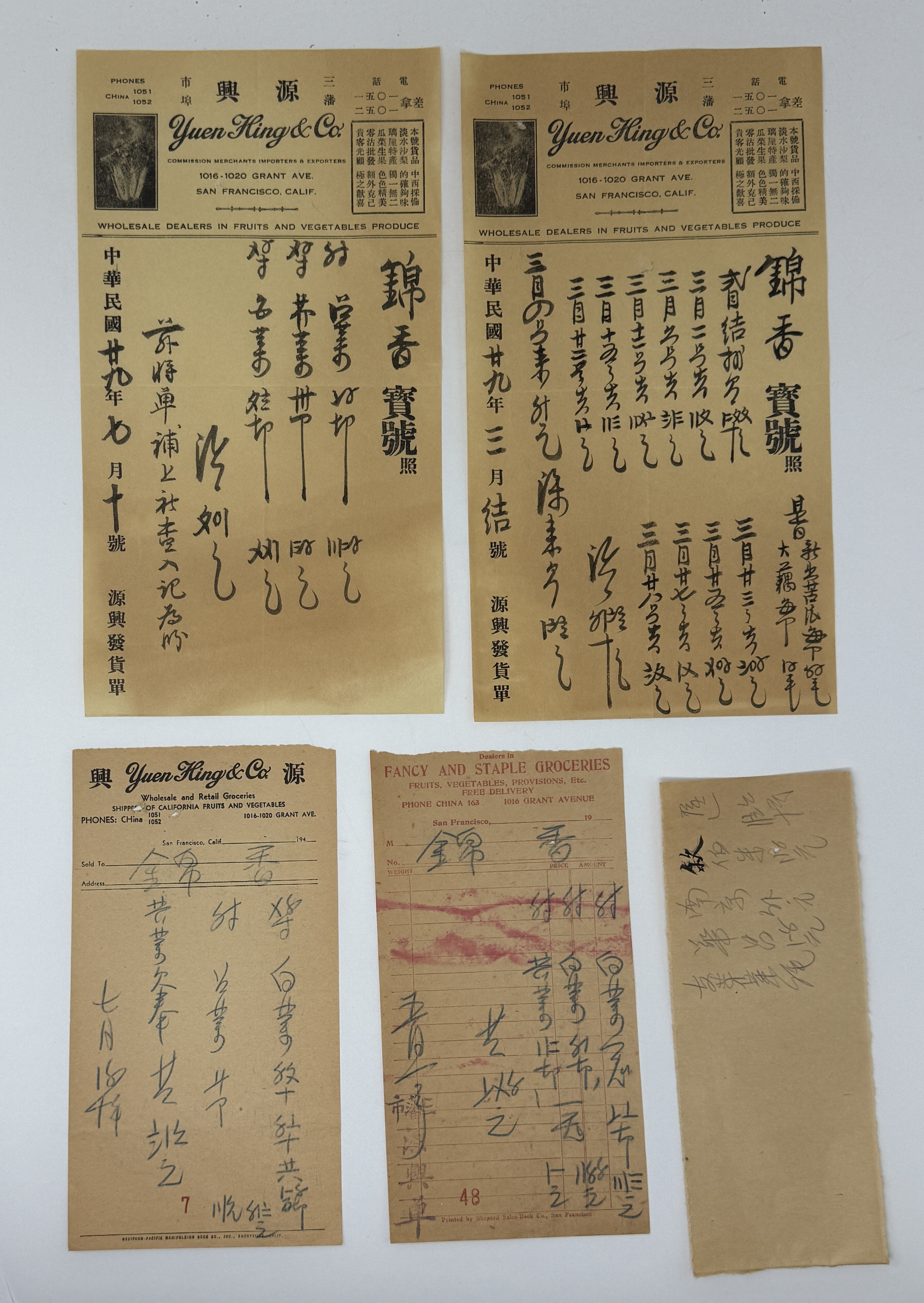
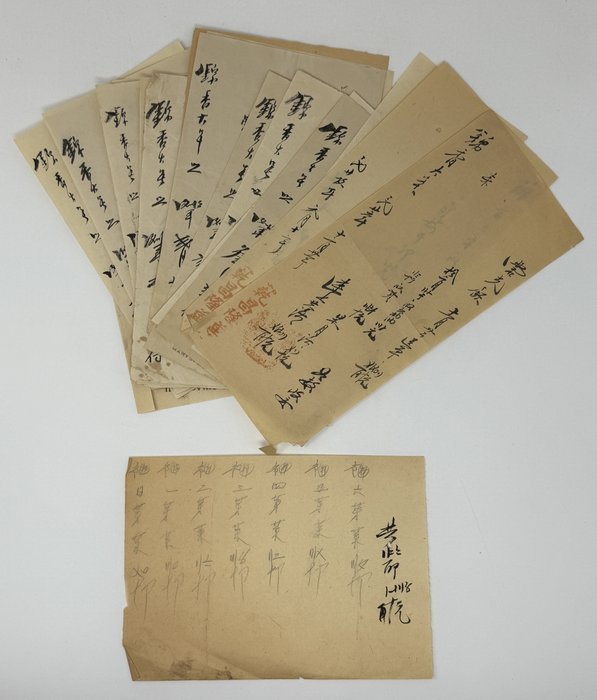
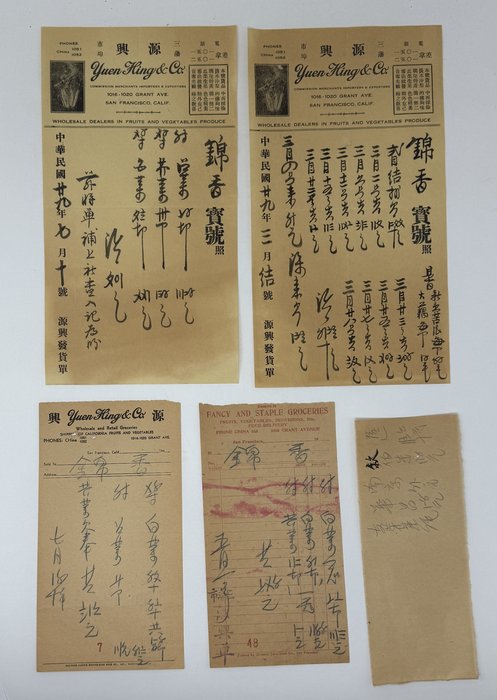
4) Yuen Hing & Co. [Two Letterhead Invoices, Two Merchant Receipts and One Handwritten Scrap]. San Francisco, ca. 1930s. Letterhead ca. 10 ½ x 5 ¾ in. Receipts 7 ½ x 4 in. Completed in ink and graphite. Letterheads with light browning and wear, each with pin holes (likely from a grocer's spike), receipt torn with no loss, overall all in good condition.
Two letterhead invoices, two merchant receipts, and a handwritten scrap in Chinese related to Yuen Hing & Co., a San Francisco firm of "Commission Merchants, Importers & Exporters" and "Wholesale Dealers in Fruits and Vegetables." Located at 1016–1020 Grant Avenue, the company sat at the center of San Francisco’s Chinatown. By the mid-1930s, Grant Avenue had become an essential destination for travelers, featuring a vibrant mix of Chinese and Japanese-owned businesses.
Among the featured documents are a summary statement or "delivery note" addressed to Jin Xiang and a monthly ledger dated March 1940 that records daily transactions. The collection further includes a specific Yuen Hing & Co. receipt for Jin Xiang detailing individual items and a final total, alongside a red-lined receipt for "Fancy and Staple Groceries." This latter document, likely from a specialized branch of the firm, lists various produce such as Chinese cabbage, ginger, green onions, garlic, and potatoes.
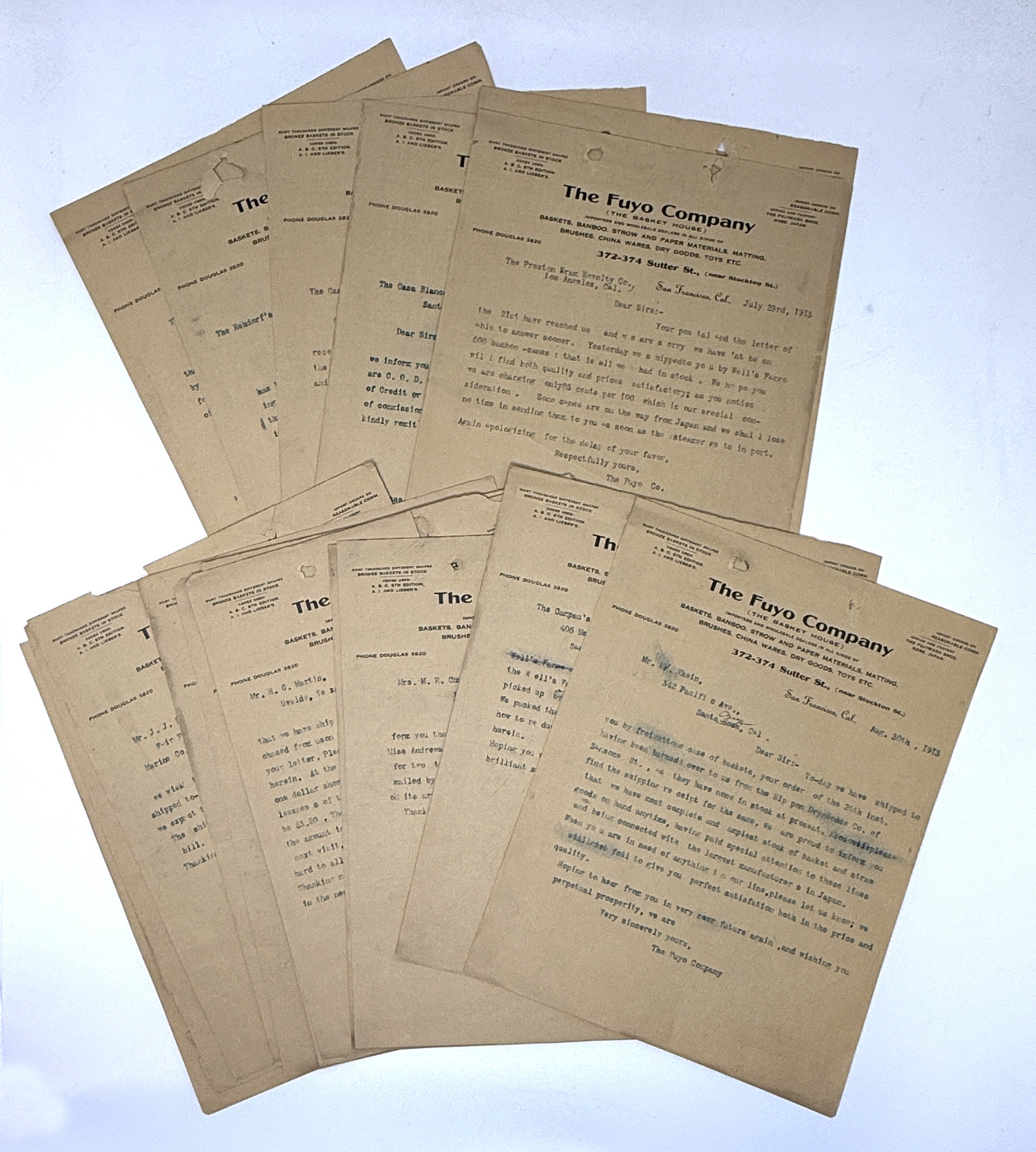
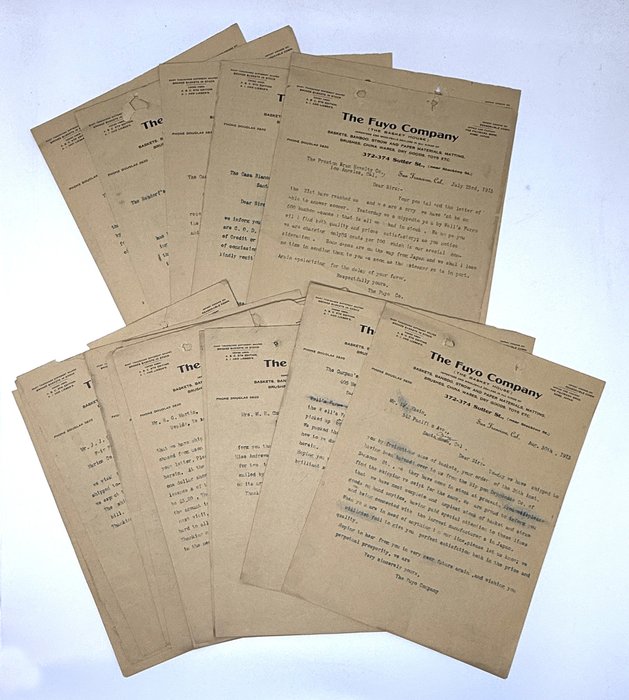
5) The Fuyo Company (The Basket House) [Twenty Carbon Typescripts on Business Letterhead]. San Francisco. July – December 1913. Ca. 10 ¾ x 8 ⅓ in. Mail order bond paper, all with dual file punch holes at the top, some with corrections in pencil or pen. Age-toned, minor edge tears and wear, overall in good condition.
Twenty courtesy dispatch letters (with manuscript corrections) in English from the Fuyo Company, a Japanese-owned firm located at 372–374 Sutter Street in San Francisco. Headquartered in Kobe and owned by the Fujiwara family, the company served as a major importer of Japanese goods, boasting an inventory of "many thousands" of baskets in diverse shapes, including specialized bronze varieties. The correspondence spans a period of about six months and documents the wholesale trade of baskets, bamboo ware, and straw goods to diverse clients, such as the Preston Kram Novelty Co. in Los Angeles and Rehdorf’s Exclusive Wicker-Ware Shop in San Jose. Especially interesting is a letter addressed to an academic client, Miss Jessie Rambo of the Department of Home Economics at West Texas State Normal College. In response to her plans for a Japanese-themed event, the company highlights its stock of “Sho-Yu” sauce, recommending it as an indispensable and delicious staple of Japanese cuisine.
Japanese immigrants first arrived in San Francisco in 1869, establishing an early presence on the edges of Chinatown and South of Market. The community’s economic footprint expanded rapidly, with the number of Japanese-owned businesses jumping from 90 in 1900 to 545 by 1909. Following the 1906 earthquake, residents relocated to the Western Addition and South Park, laying the groundwork for today’s Japantown. Despite this growth, the diaspora faced intense systemic exclusion, including the 1907 Gentlemen's Agreement which restricted migration following a school segregation crisis. Further marginalization arrived with the 1913 Alien Land Law, which barred Asian immigrants from land ownership and forced many Issei to secure property through their U.S.-born children.
Overall, historically interesting, extensive collection of printed ephemera mostly related to the lesser-known Chinese and Japanese businesses of the West Coast, including California (San Francisco, Marysville) and Washington (Seattle).