
#FRE40
Ca. 1909-1913
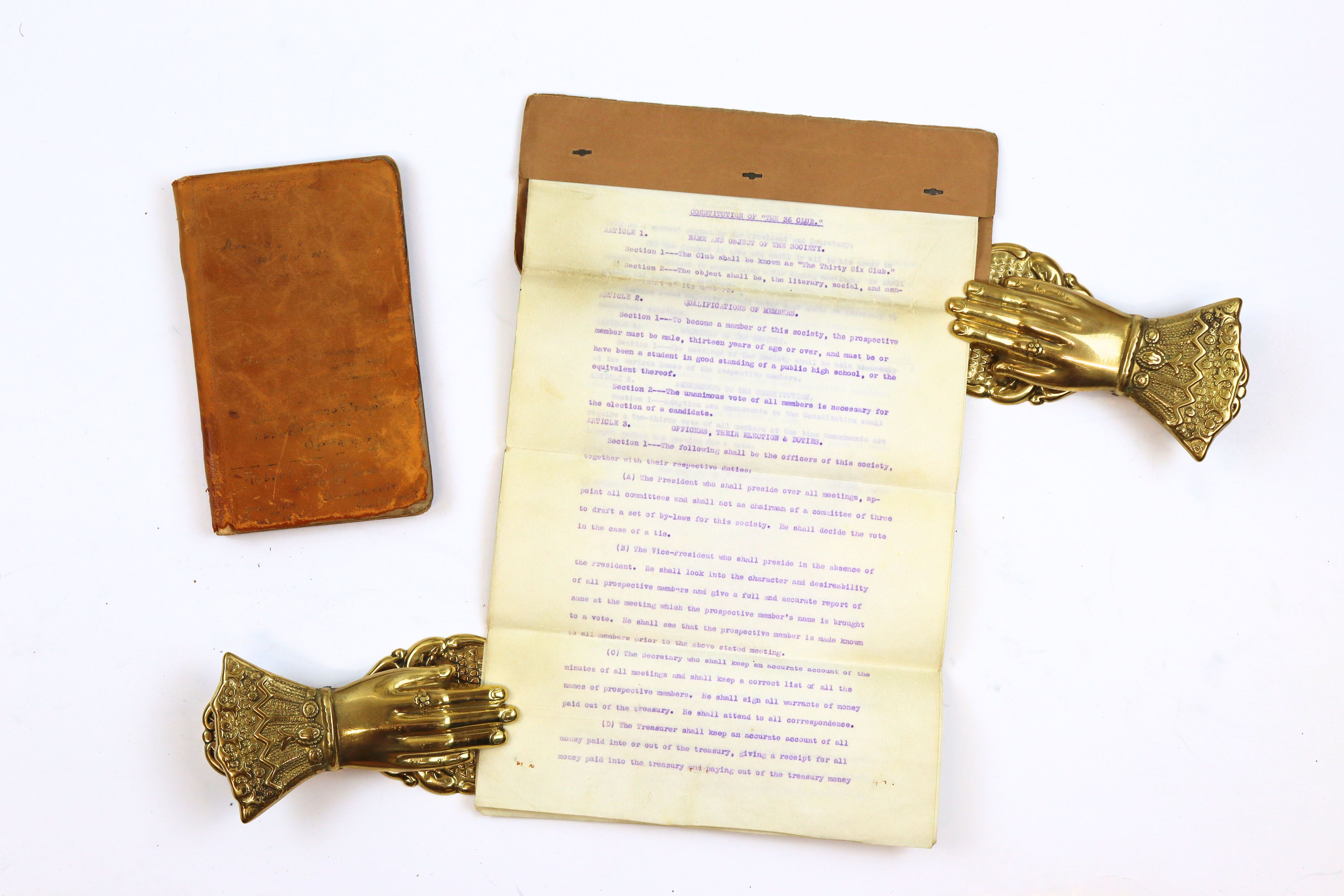
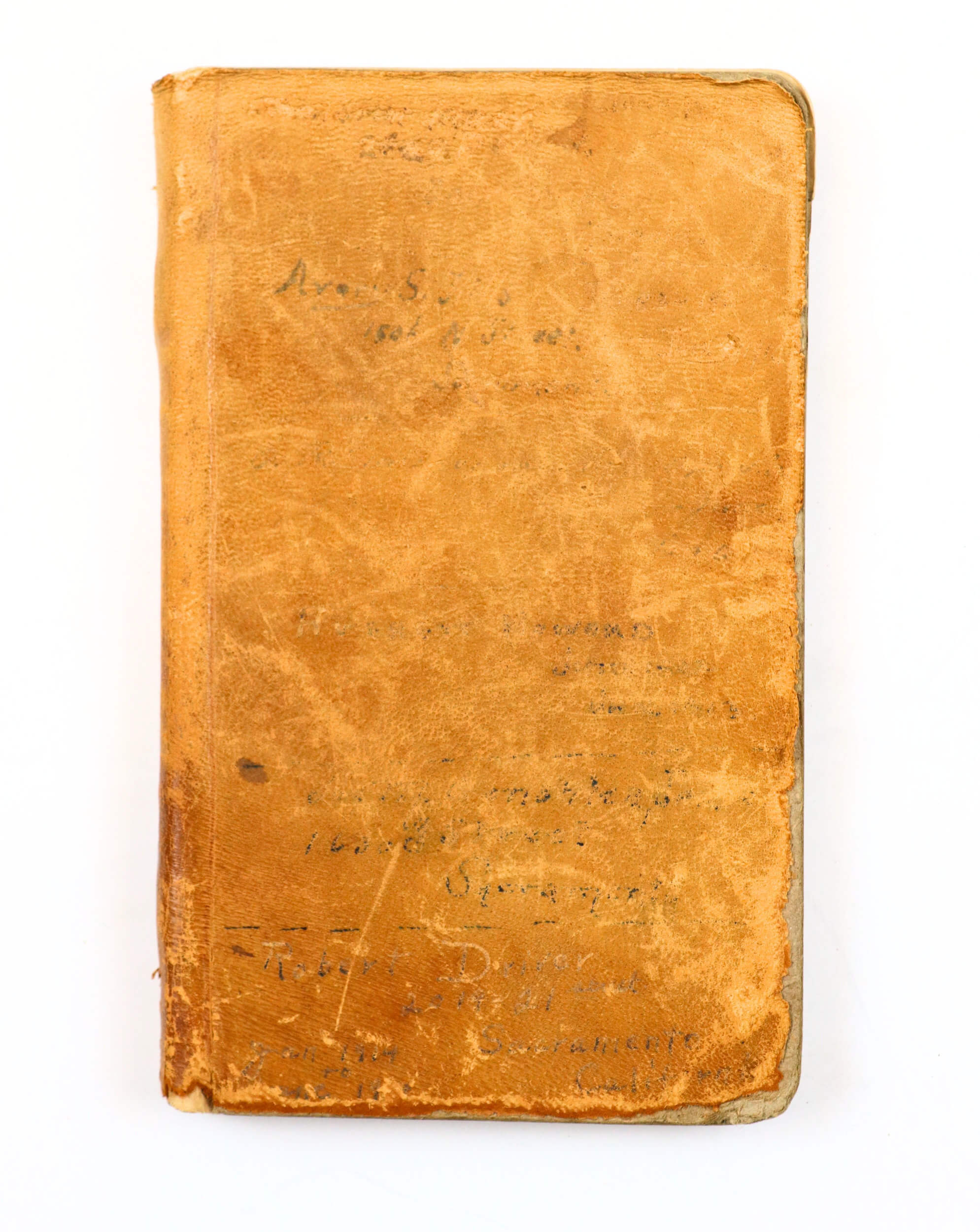
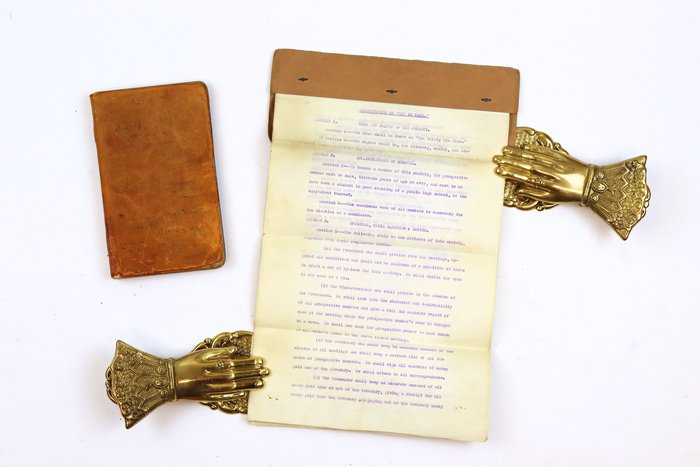
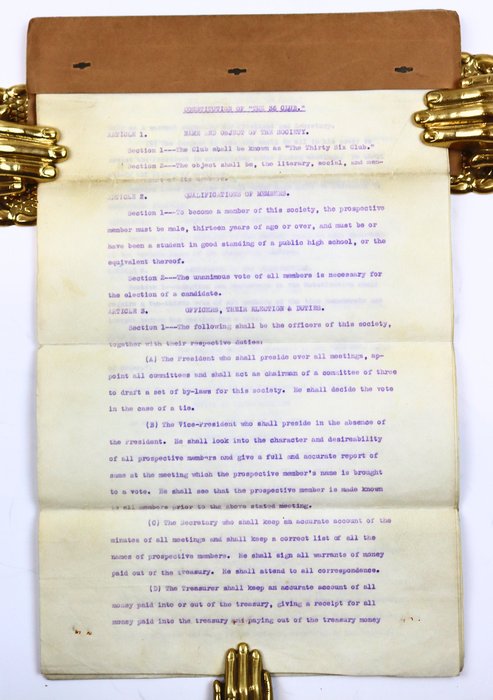
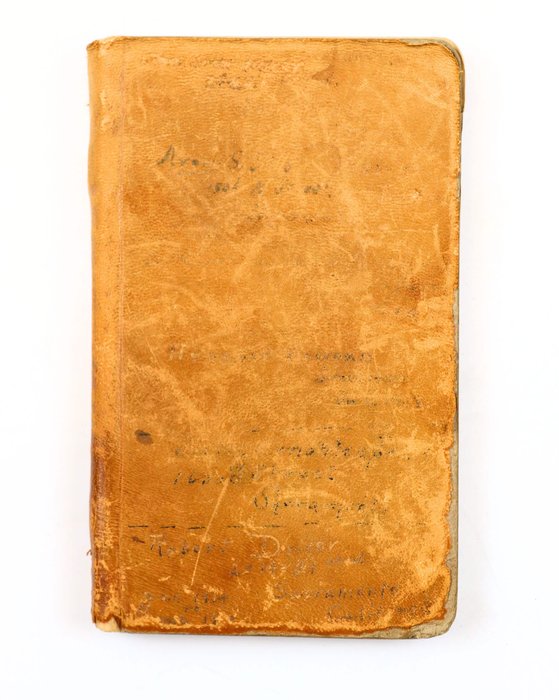
16mo (ca. 16,9x10,3 cm or 6 ½ x 4 in). About 96 pp. of handwritten (in ink and pencil) text. Period full-leather binding with traces of ink inscriptions (ownership signatures and location markings) on both covers; with a hectograph copy of the club’s constitution (ca. 1914), 16 pp. 34,5x21,3 cm (13 ½ x 8 ½ in). Notebook covers worn, loss of small fragments at the edges, several pages torn out, one page with an open tear, constitution with fold marks and occasional soiling, but otherwise a very good collection.
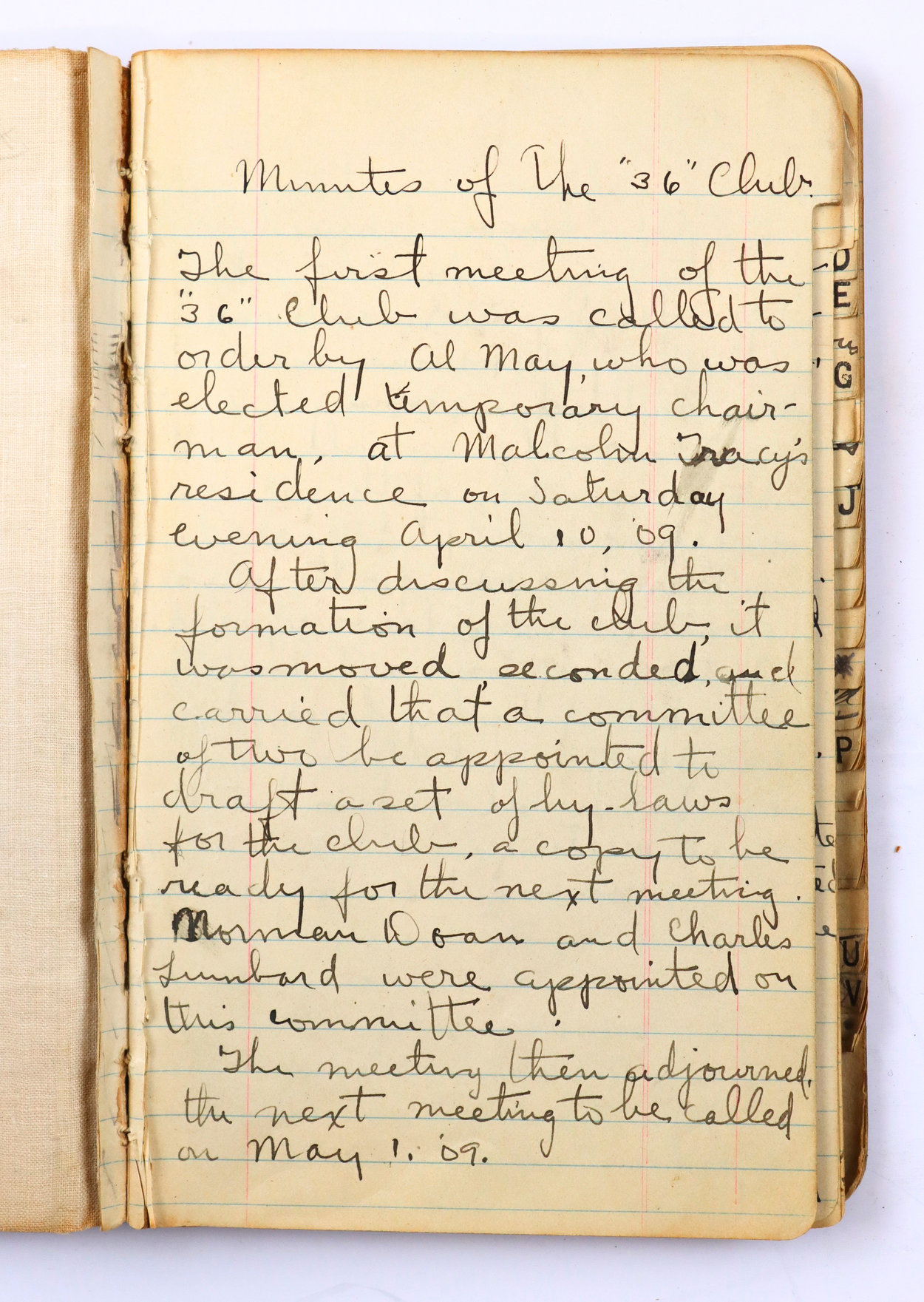
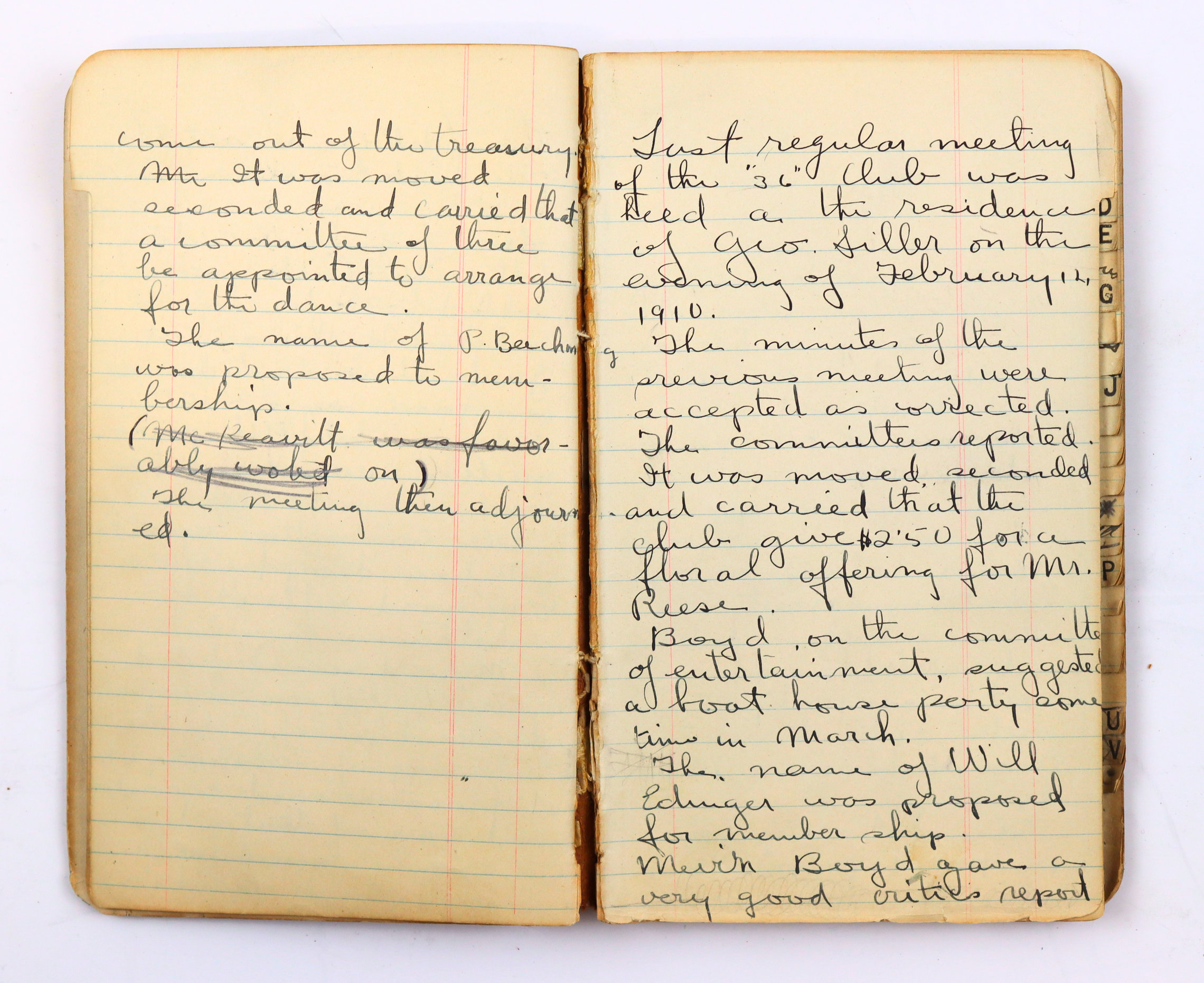
Historically interesting pocket-size logbook of “The Thirty-Six Club,” a male-only literary and social society at Sacramento High School, documenting the activities of an early California student fraternity during and after the 1909 ban on public high school secret societies.
The California Anti-Fraternity Act of 1909 was part of a nationwide movement to abolish secret student organizations in public schools, banning elementary and secondary students from joining fraternities, sororities, and similar societies. According to The Sacramento Bee (1911), the Thirty-Six Club at Sacramento High School was formed by former members of the Gamma Etta Kappa fraternity, who reorganized as an administration-approved literary club to comply with the law. The group met twice monthly, required literary exercises, unanimous approval for admission, and a moral pledge against gambling, and organized dances, skating parties, and other social events.
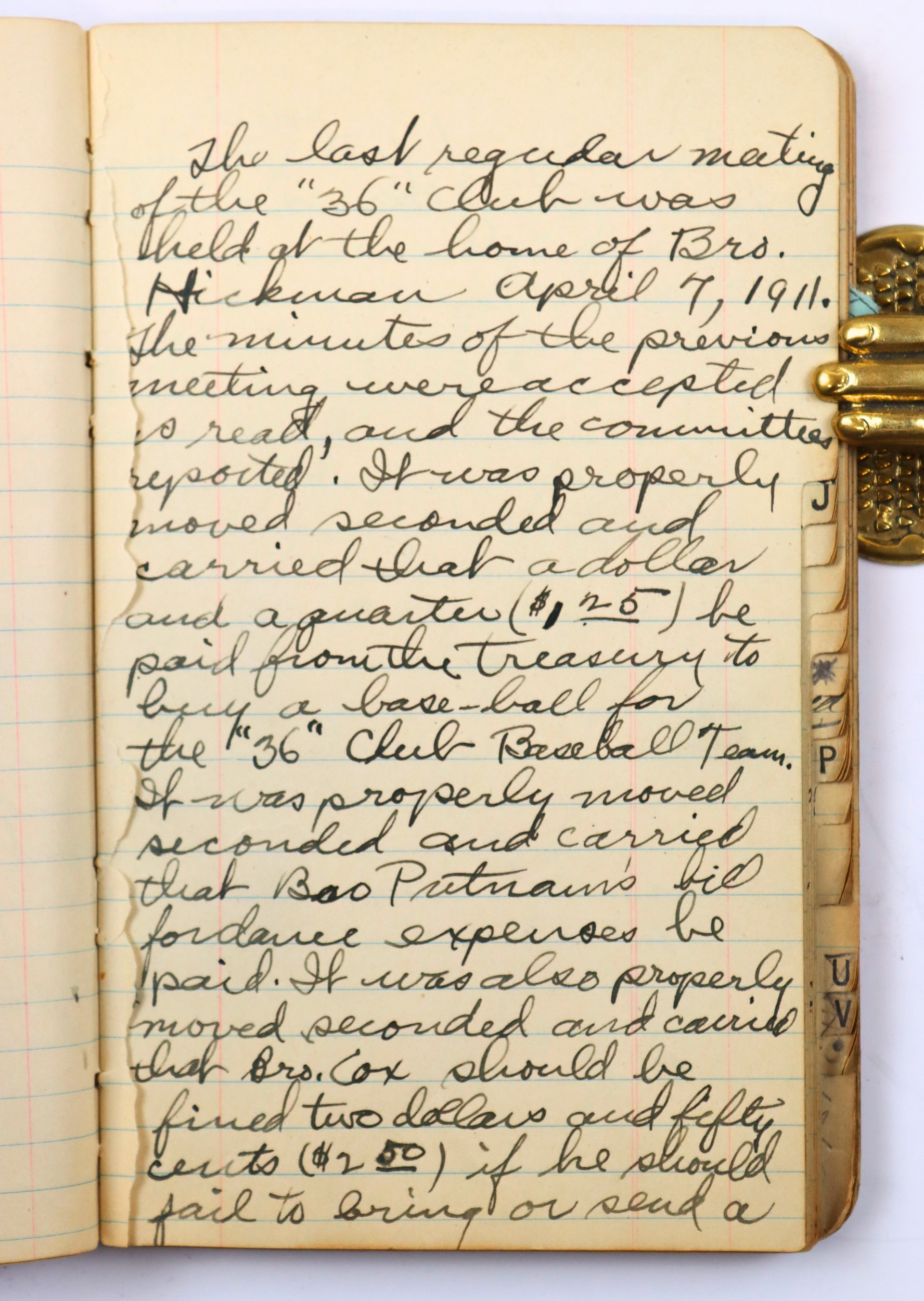
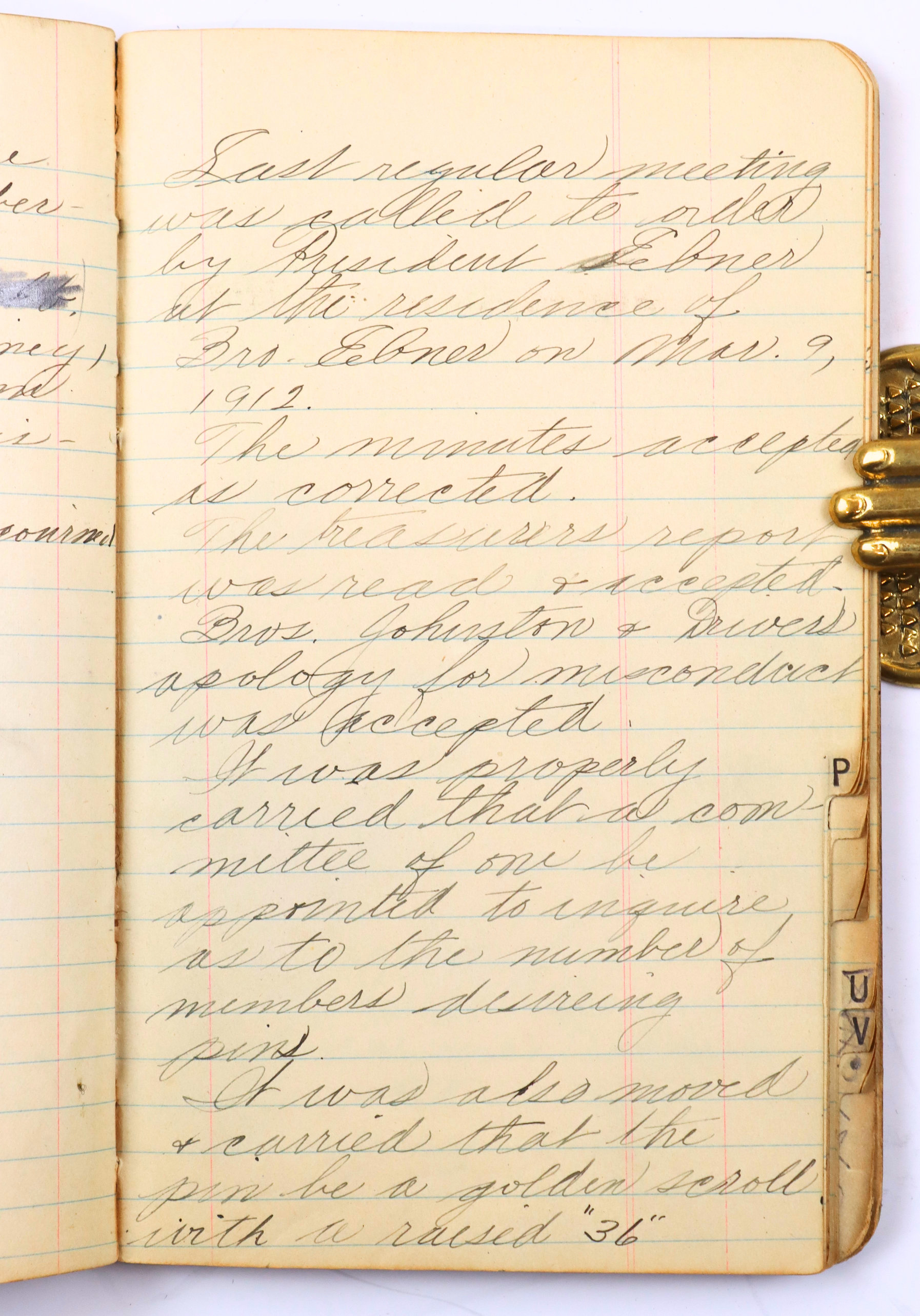
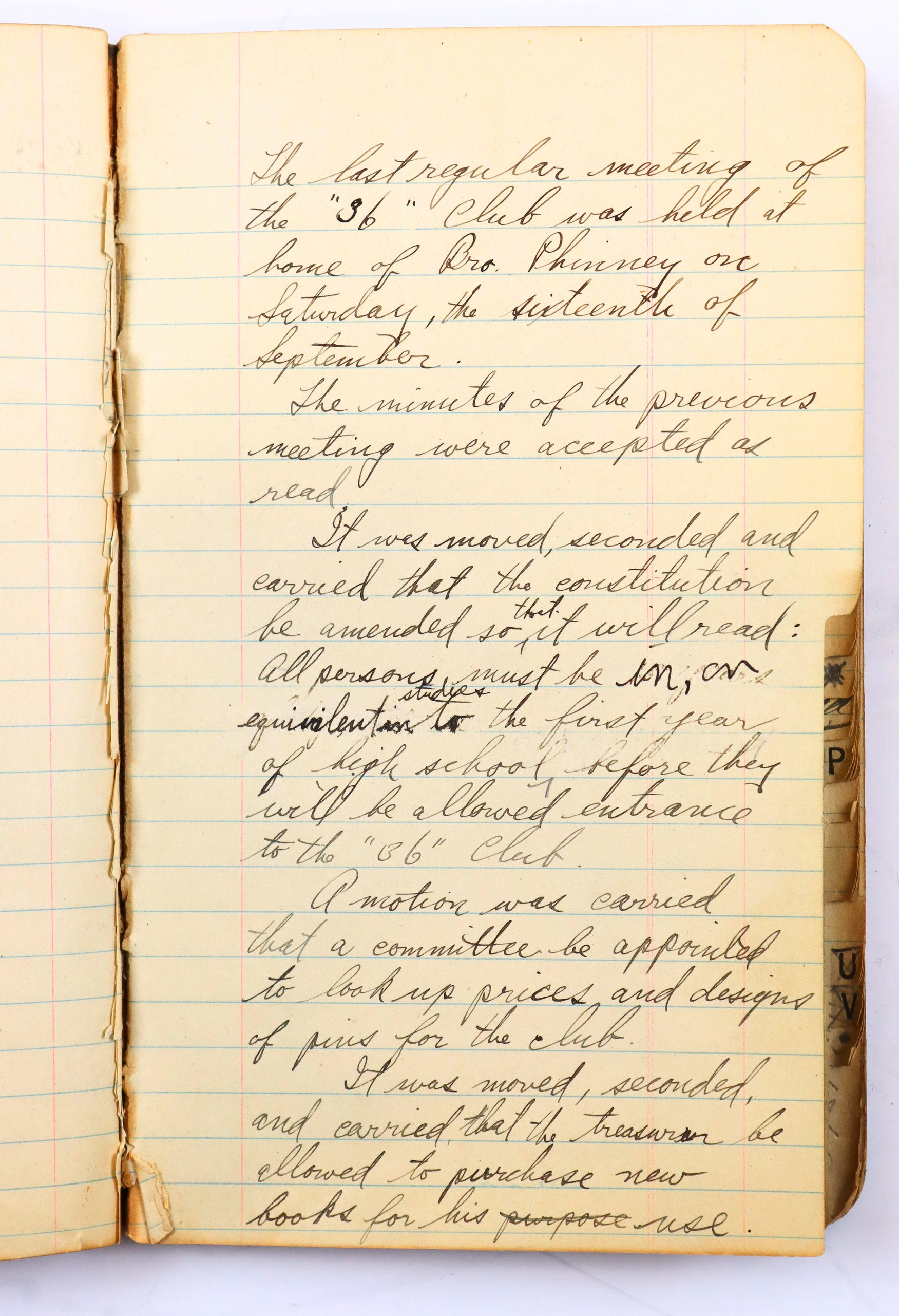
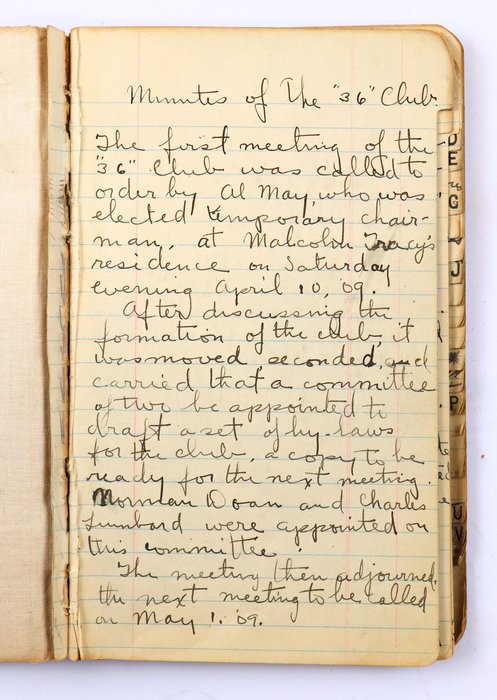
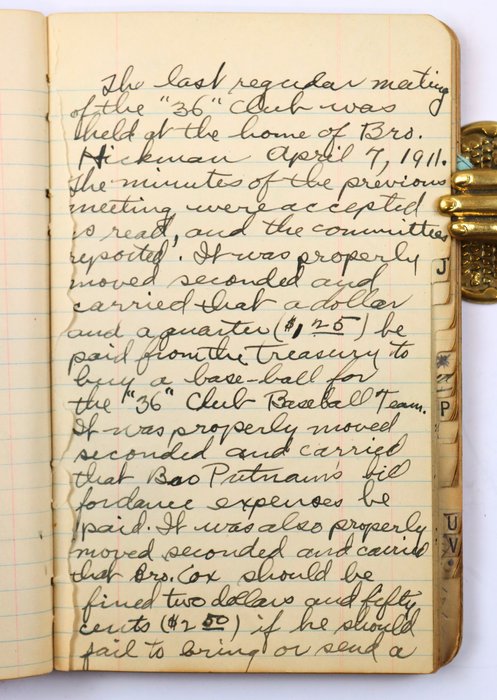
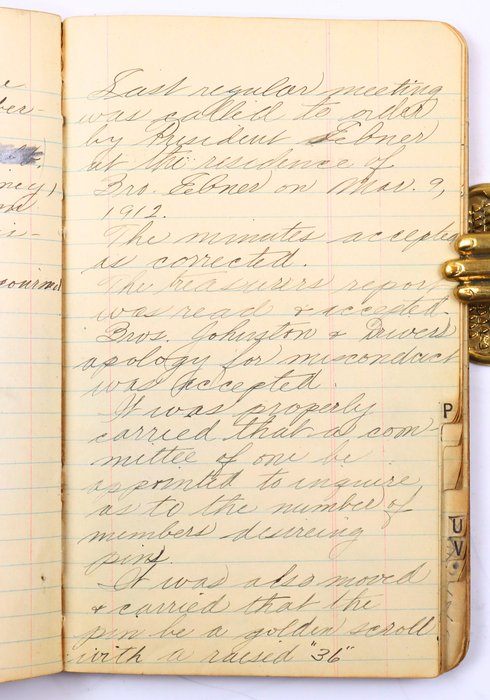
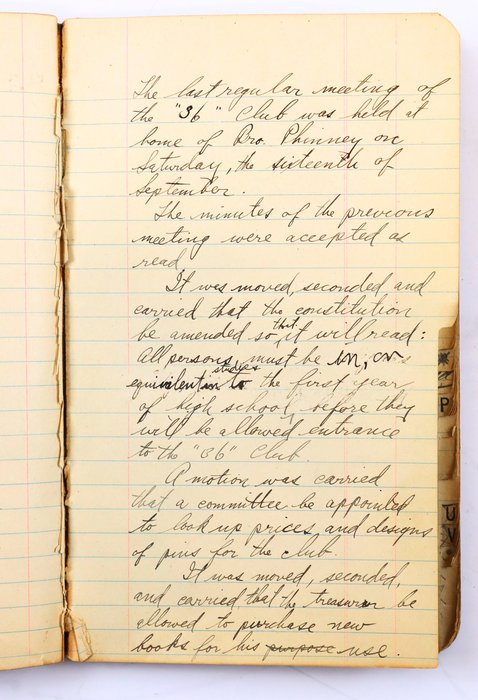
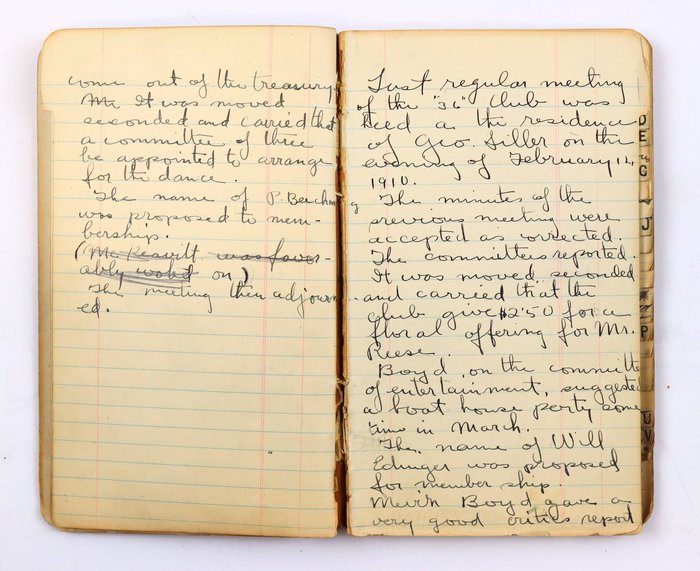
The notebook contains minutes of semi-monthly meetings held from April 10, 1909, to January 25, 1913, apparently recorded by the elected club secretaries. All members came from prominent early Sacramento families, including Avery S. Hills, Melvin Boyd, Morton Arnold, and Norman E. Doan (ca. 1886–1918). Doan later became a respected local figure, serving as County Law Librarian before joining the military as a cadet and sergeant at Mather Field. He died at the age of 32 after contracting influenza nephritis while stationed there during the influenza outbreak of 1918.
The notebook outlines the club's proceedings, including new memberships, resignations, treasury reports, and disciplinary fines. Among the group's strictest financial regulations was a rule dictating that any member with an outstanding debt of $1.50 or more would be barred from the privilege of voting. Interestingly, the entries also mention Principal H. O. Williams of Sacramento High School, one of the most vigilant activists against school fraternities. While the club members initially considered submitting their new constitution to the Principal for formal approval, the minutes reveal that they ultimately withdrew this decision to protect their autonomy. Other entries reflect the club’s social and practical activities such as dance planning, roll calls, fundraising for baseball equipment, wedding gifts, and the adoption of a new club pin.
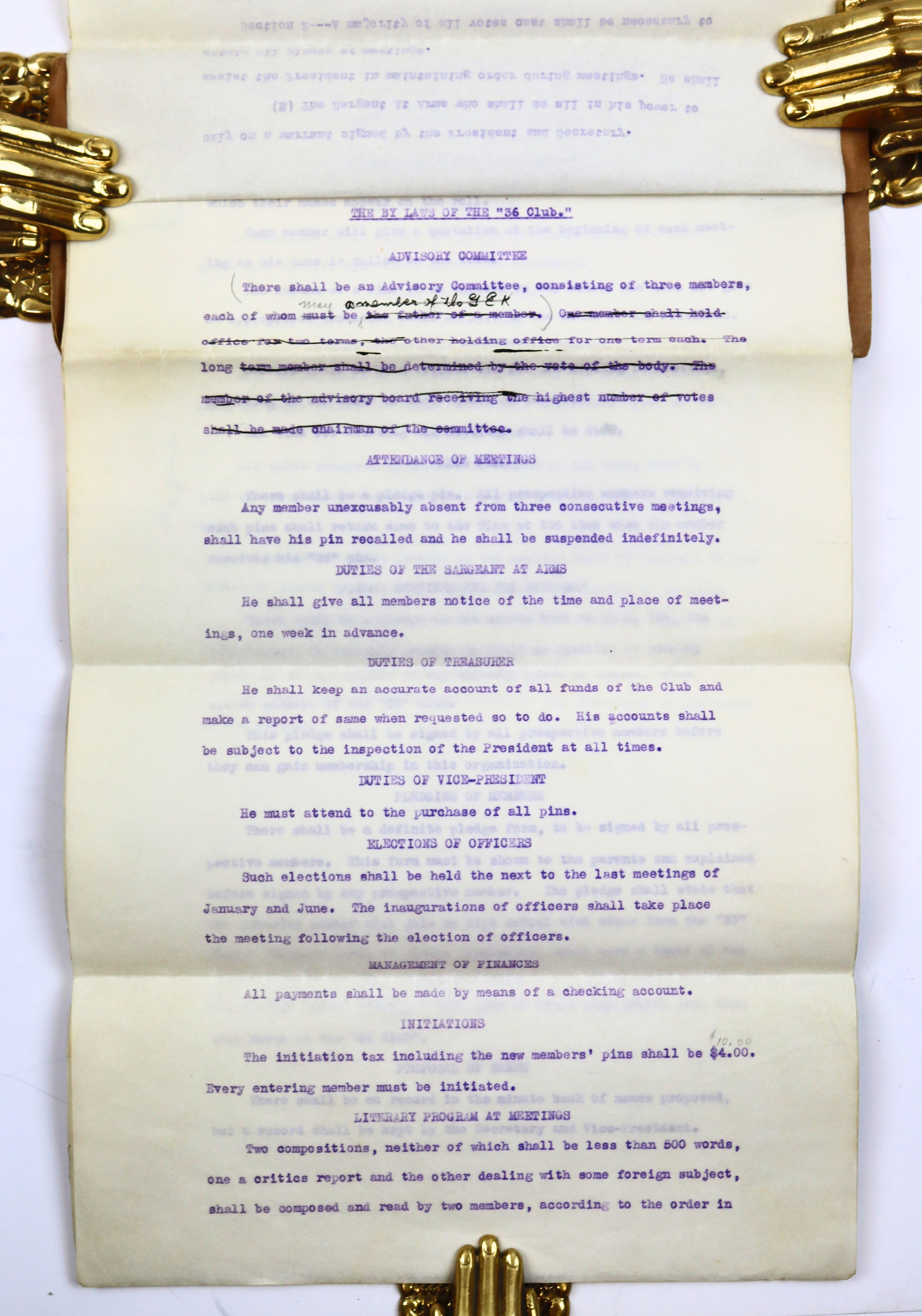
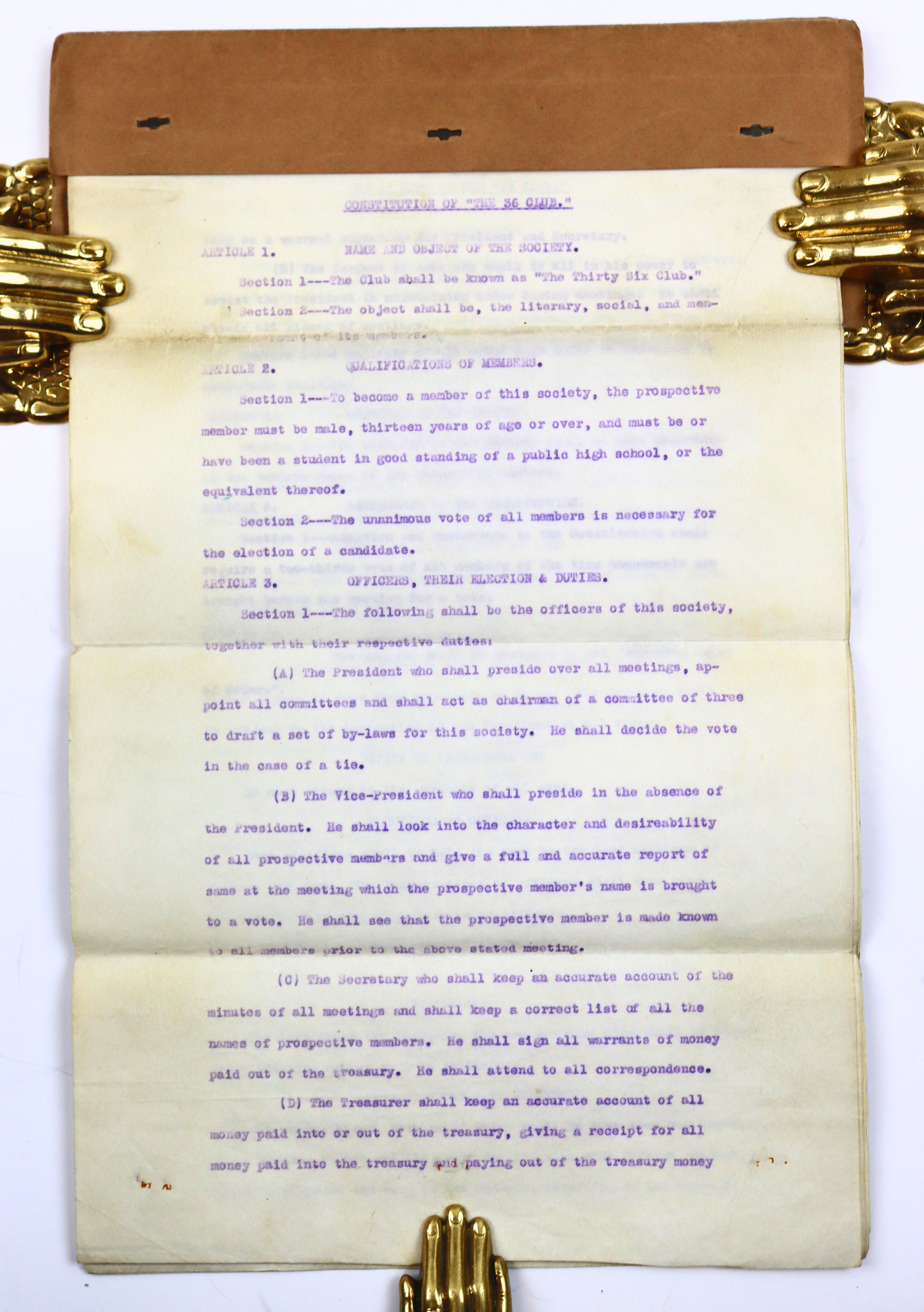
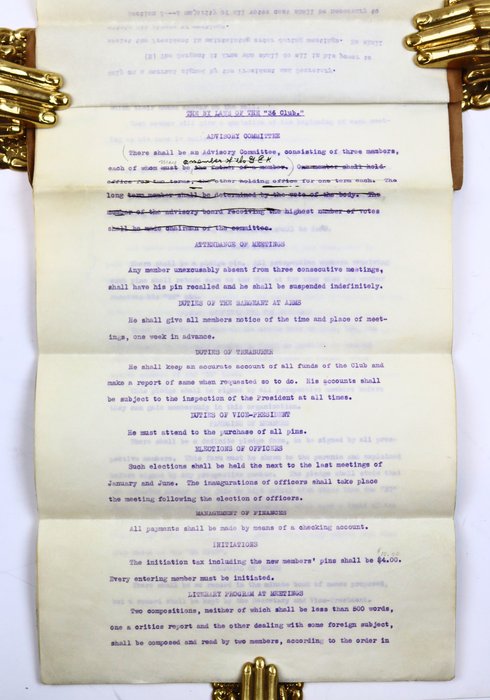
The notebook is supplemented by an original hectograph copy of the “Constitution of the 36 Club” and its accompanying by-laws, drafted to comply with California’s 1909 anti-fraternity legislation. To avoid classification as a prohibited “secret, oath-bound fraternity,” the organization officially redefines itself as a “literary, social, and men-promoting” society, while the Advisory Committee provision is altered in manuscript to require all members to belong to the G.E.K. (Gamma Etta Kappa). The constitution also establishes a standing committee responsible for placing flowers on the graves of deceased members, including Elvin Ernst, who died at age seventeen in 1912 after being struck in the abdomen by a schoolmate, and Thomas Beach, who died following a spinal injury sustained during a football game in 1914.
Overall, historically interesting pocket-size logbook of “The Thirty-Six Club,” a male-only literary and social society at Sacramento High School, documenting the activities of an early California student fraternity during and after the 1909 ban on public high school secret societies.