
#FRE42
Ca. 1879-1880
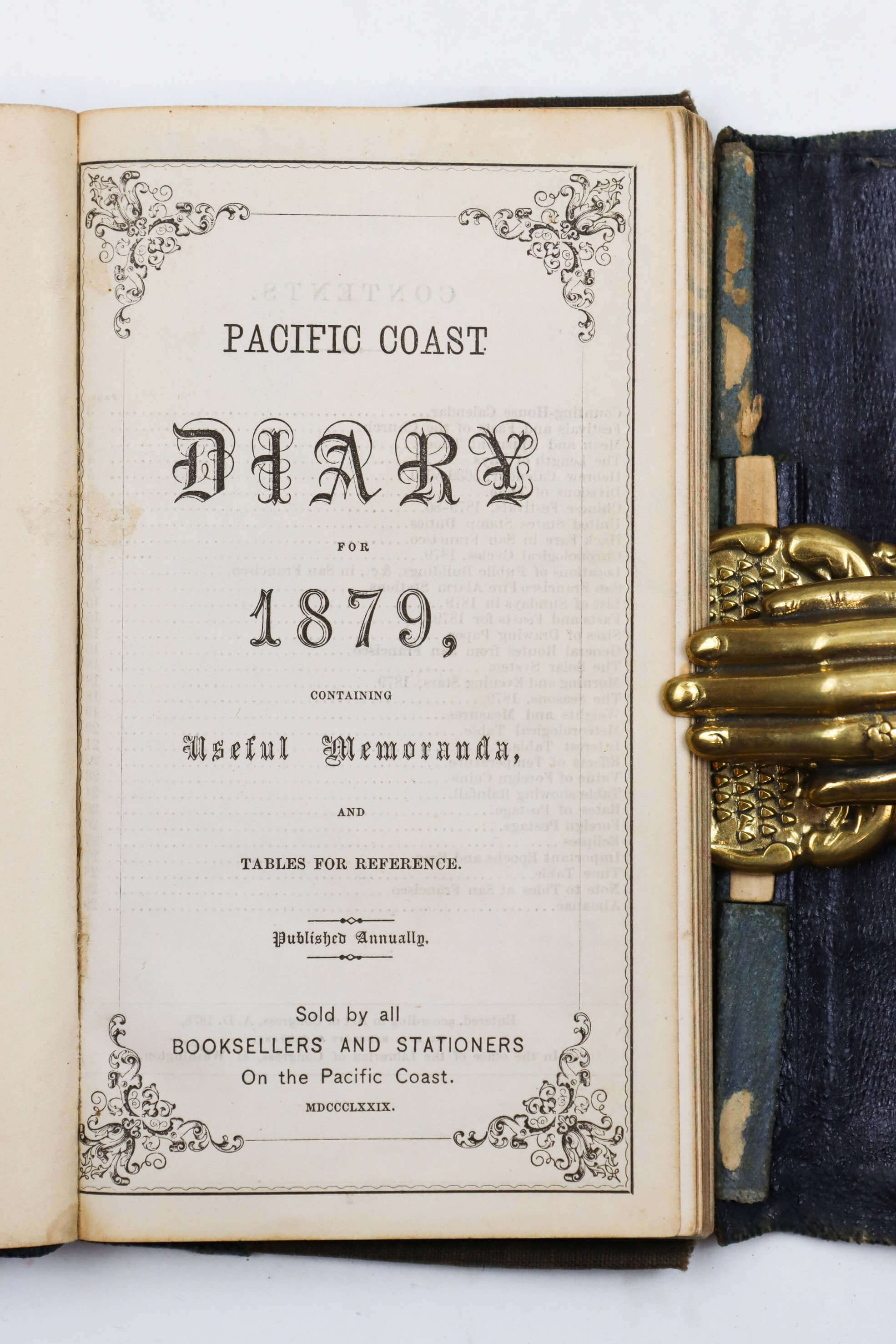
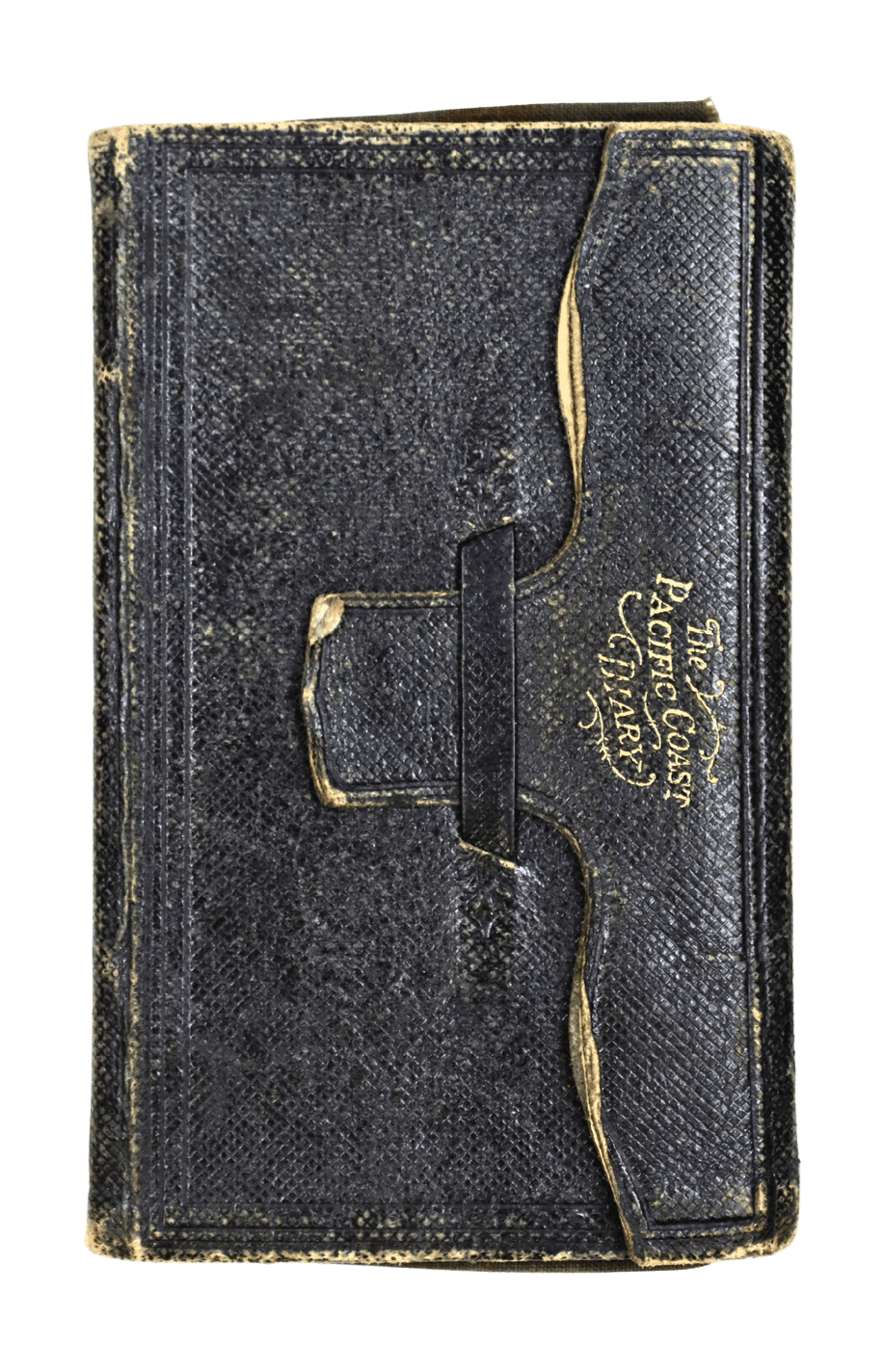
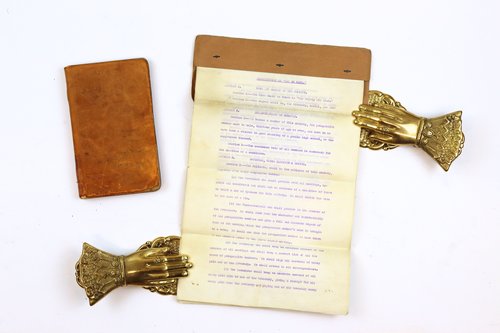
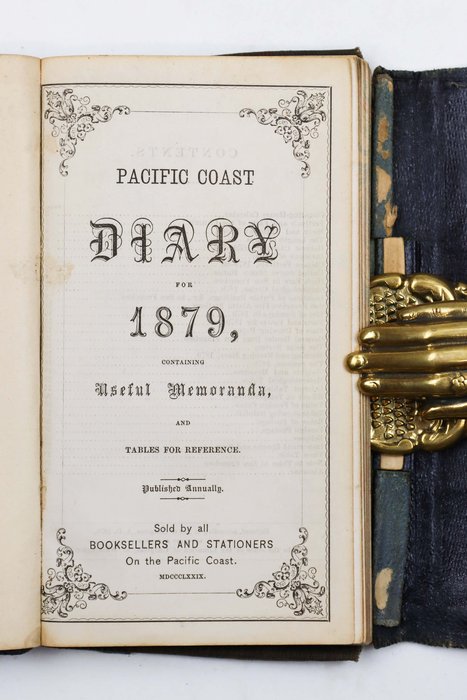
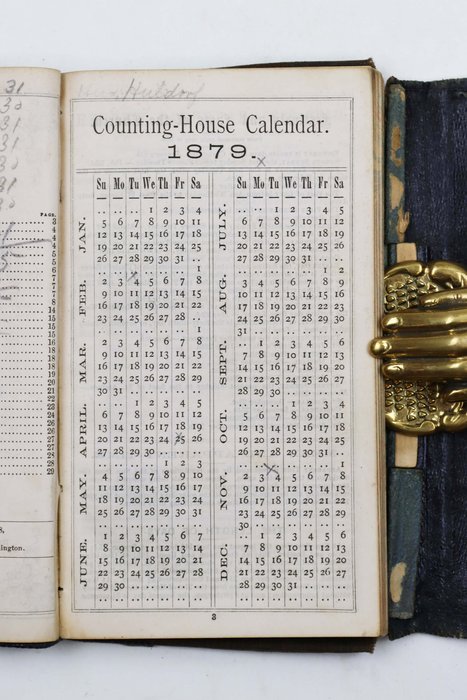
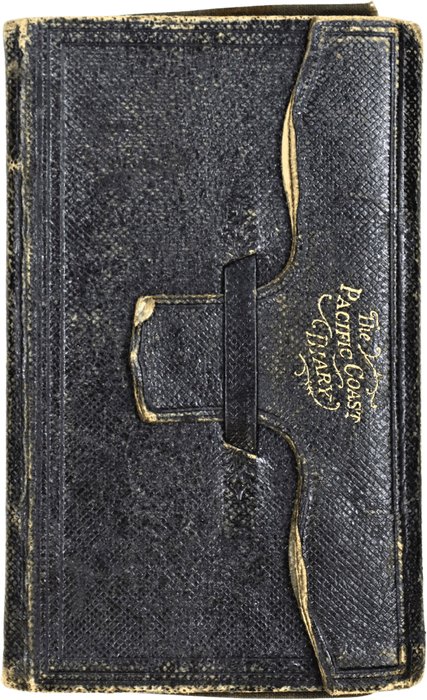
Oblong 16mo diary ca. 15,2x9,4 cm (6 x 3 ¾ in). 40, [168] pp. (including ca. 60 pages of text). Period original black leather binding with gilt-lettered title “The Pacific Coast Diary” on the right-hand flap closure. Binding rubbed and worn, but otherwise a very good private diary with interesting early notes.
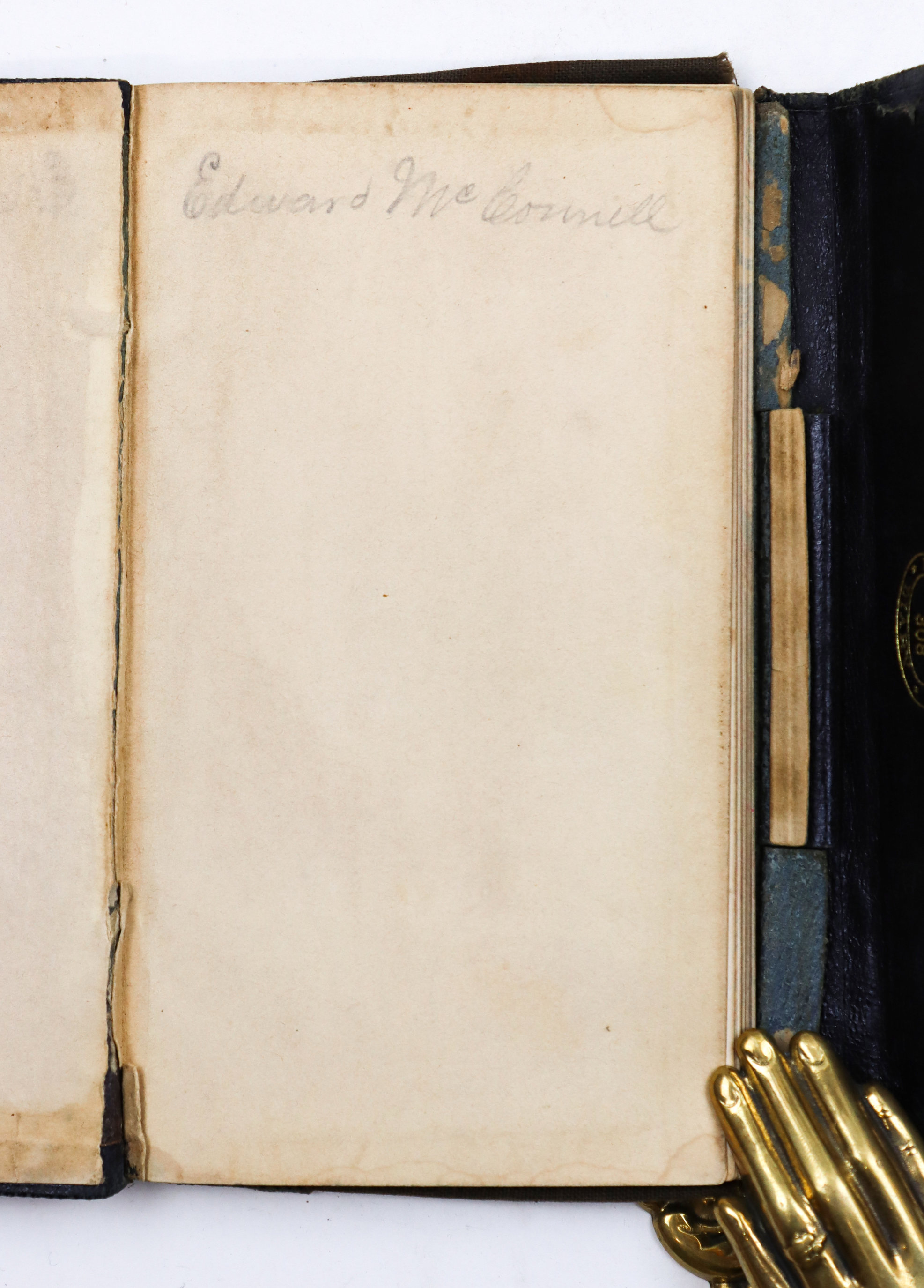
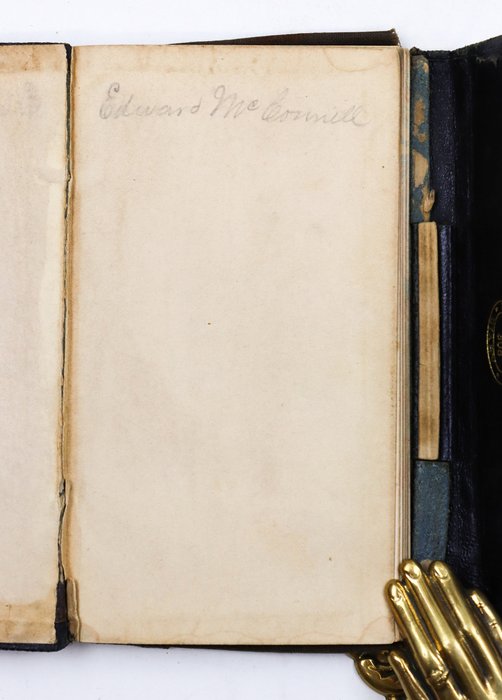
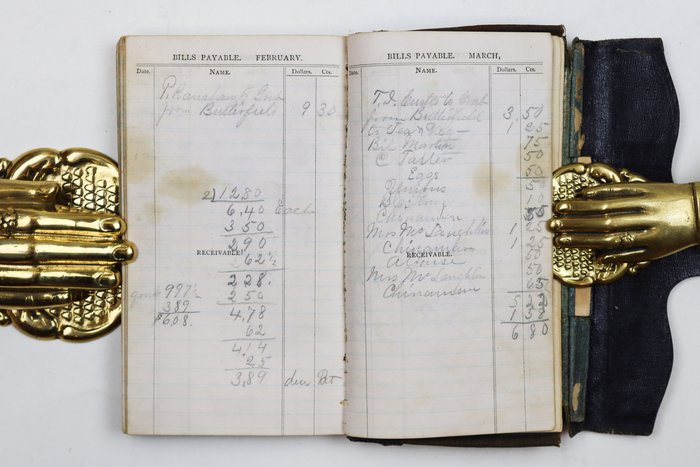
Historically interesting pocket diary of Edward William McConnell (ca. 1863–1928), offering a rare glimpse into the life of a young gold miner in the 1870s California.
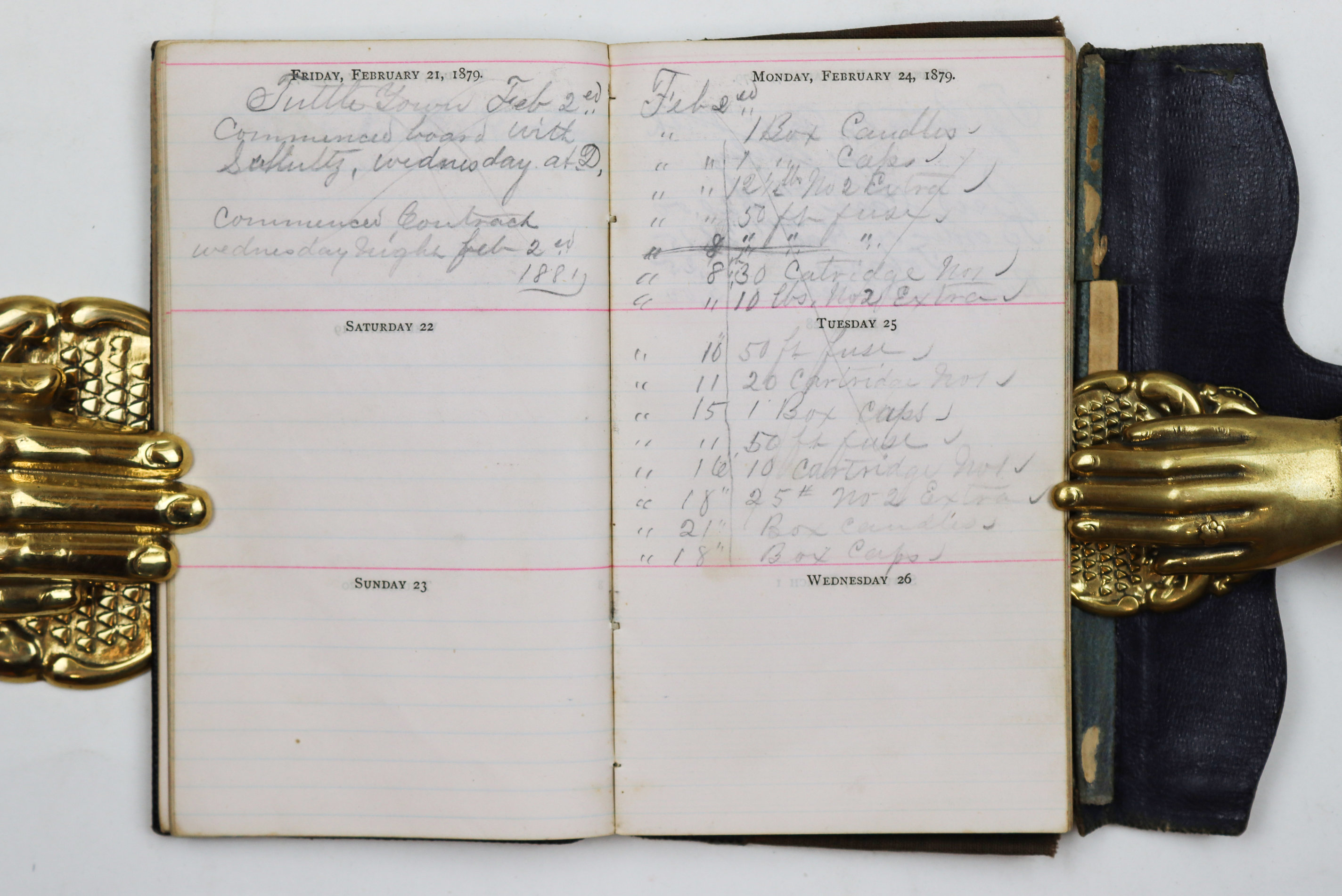
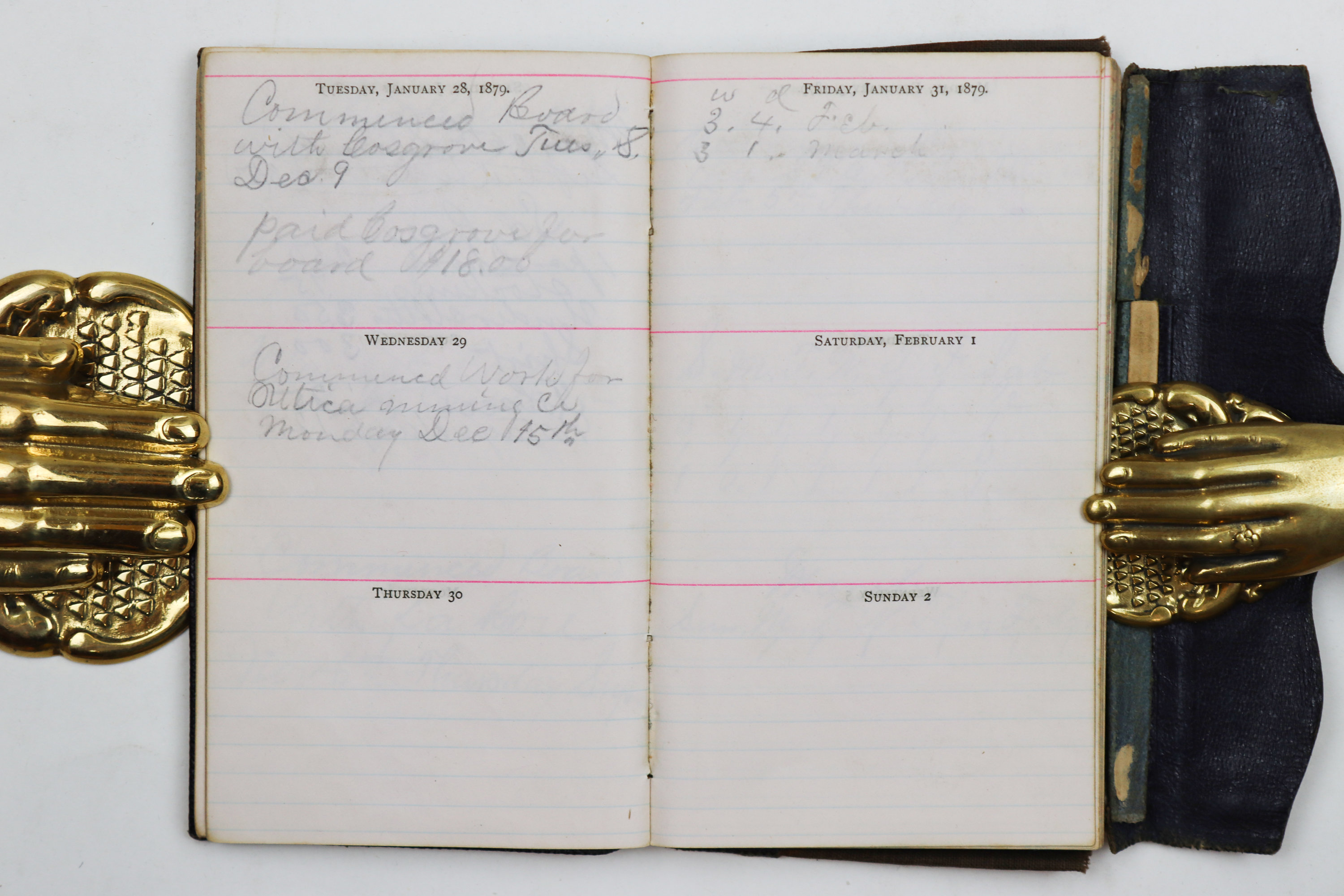
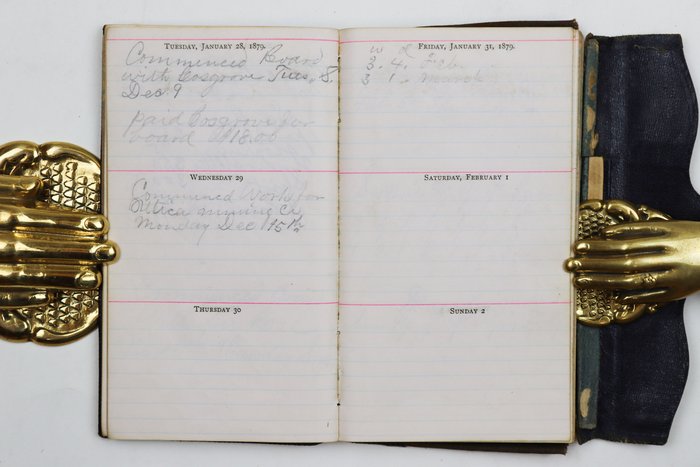
The author, a miner and laborer, was born in Grass Valley, California, in November 1863 to Jackson and Elizabeth McConnell. The diary traces the early years of his working life, documenting employment with the Utica Mining Company in San Luis Obispo and later contract work in Tuttletown (Tuolumne County) and the booming mining camp of Bodie (Mono County). In 1893, he married Anna C. “Nina” Scanlon in Silver Bow, Montana, and the couple had two children. McConnell died in 1928 at the age of sixty-five.
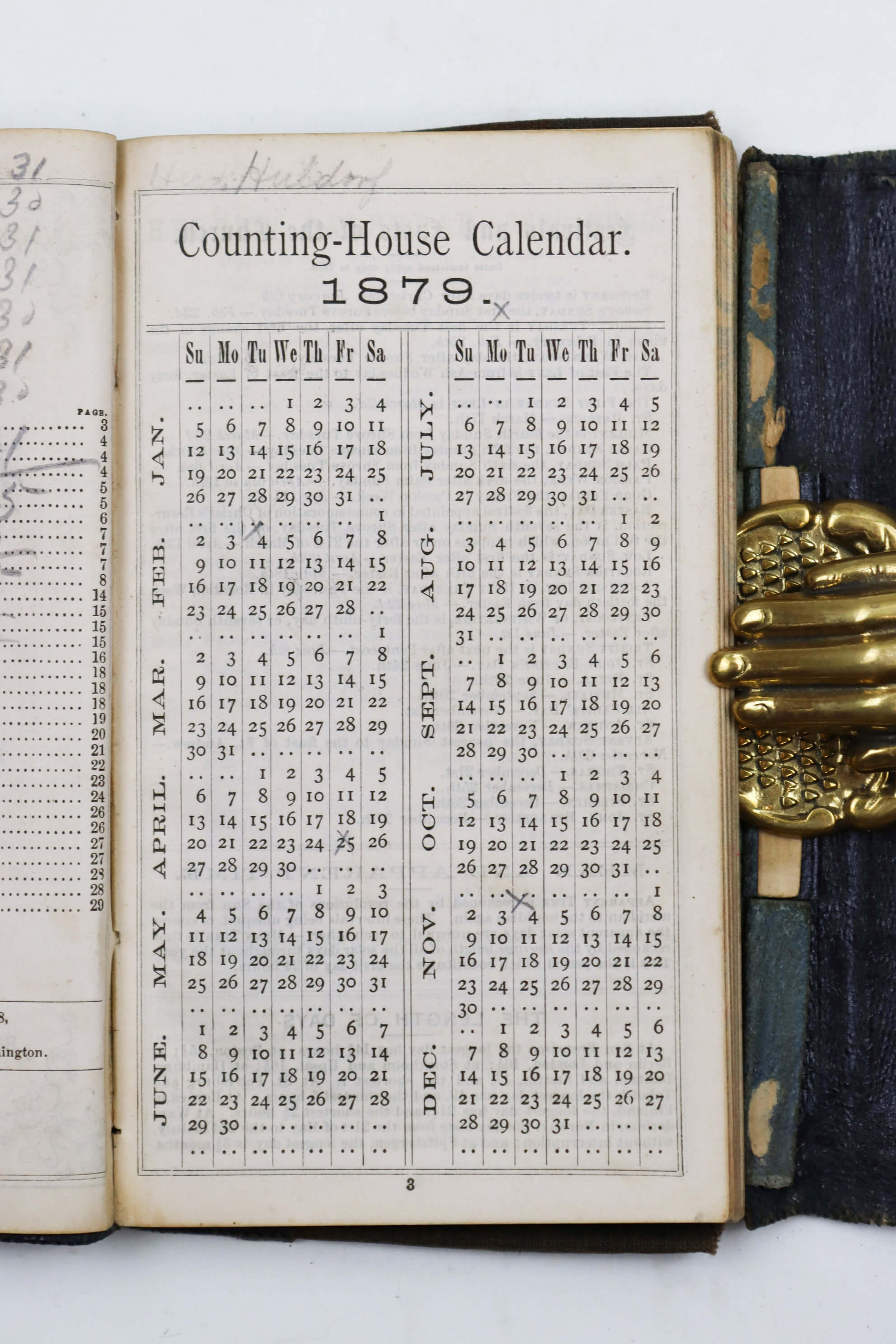
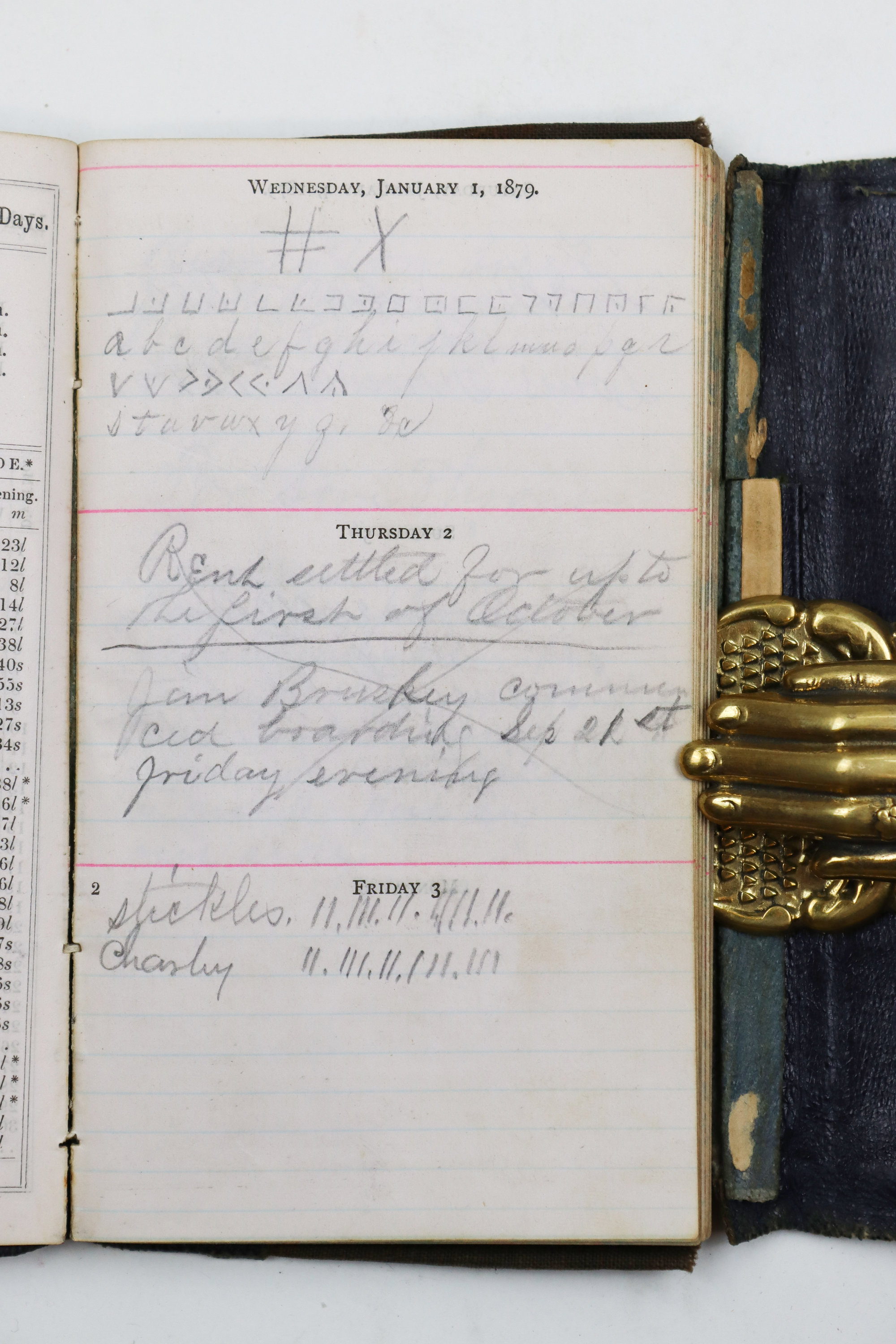
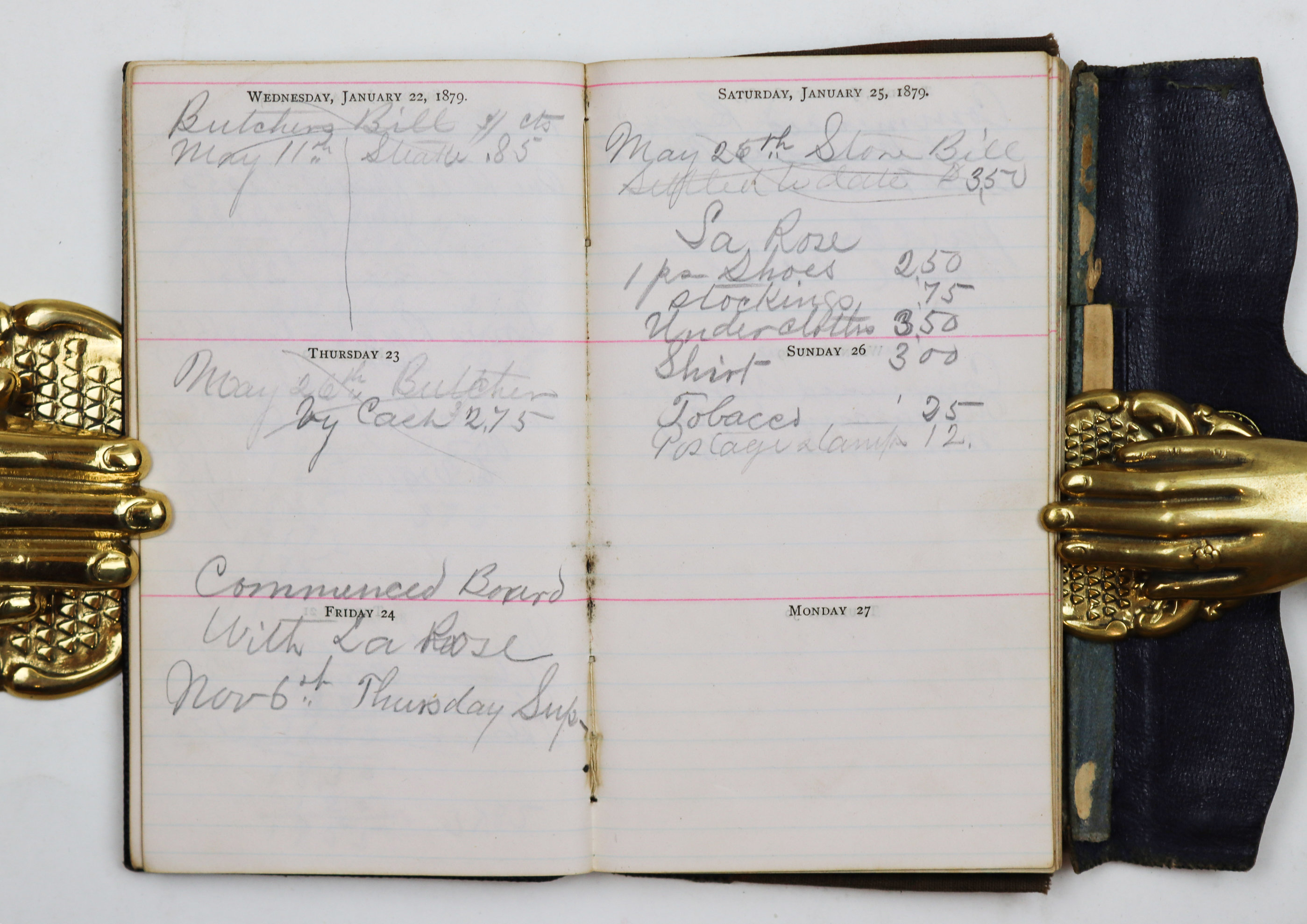
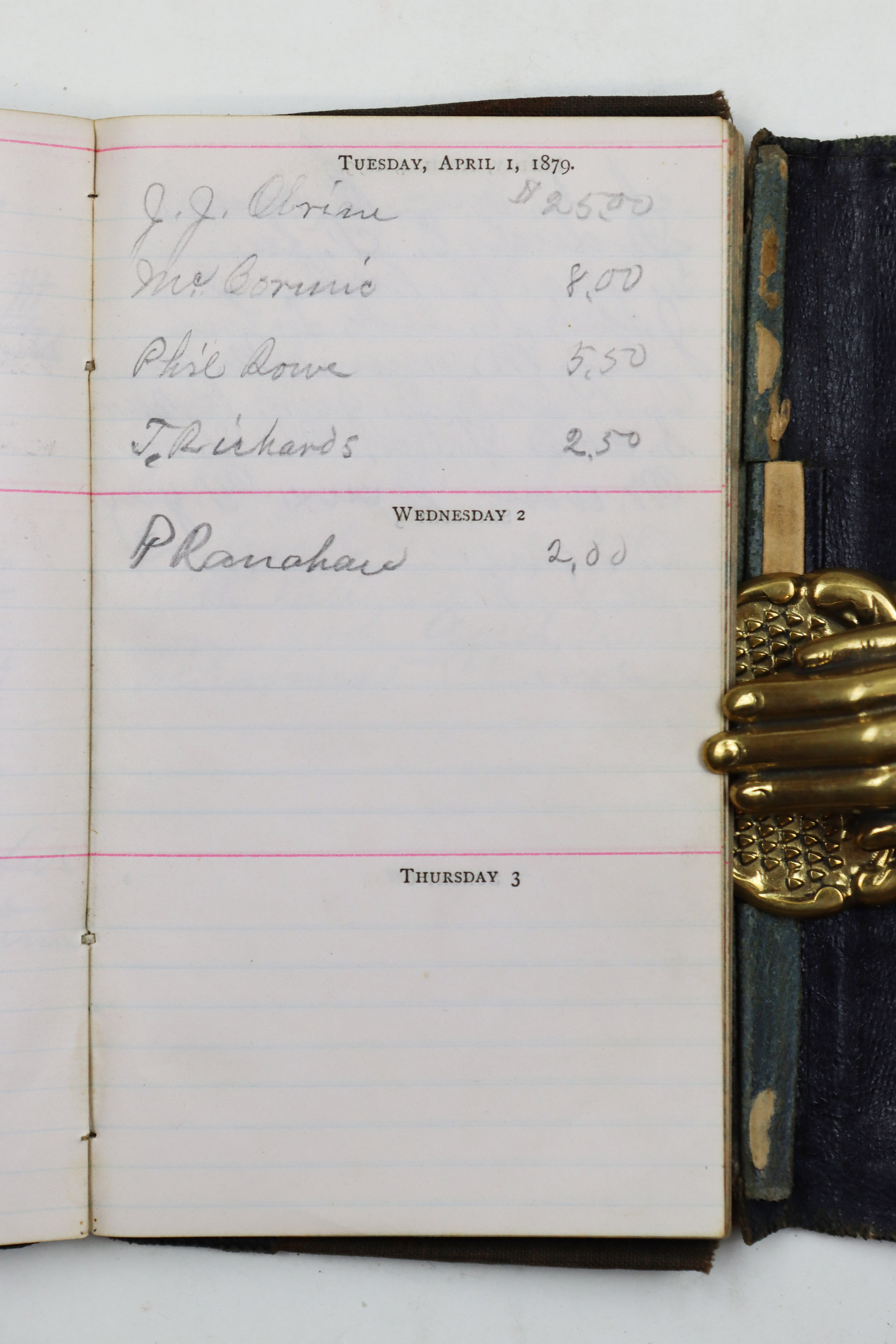
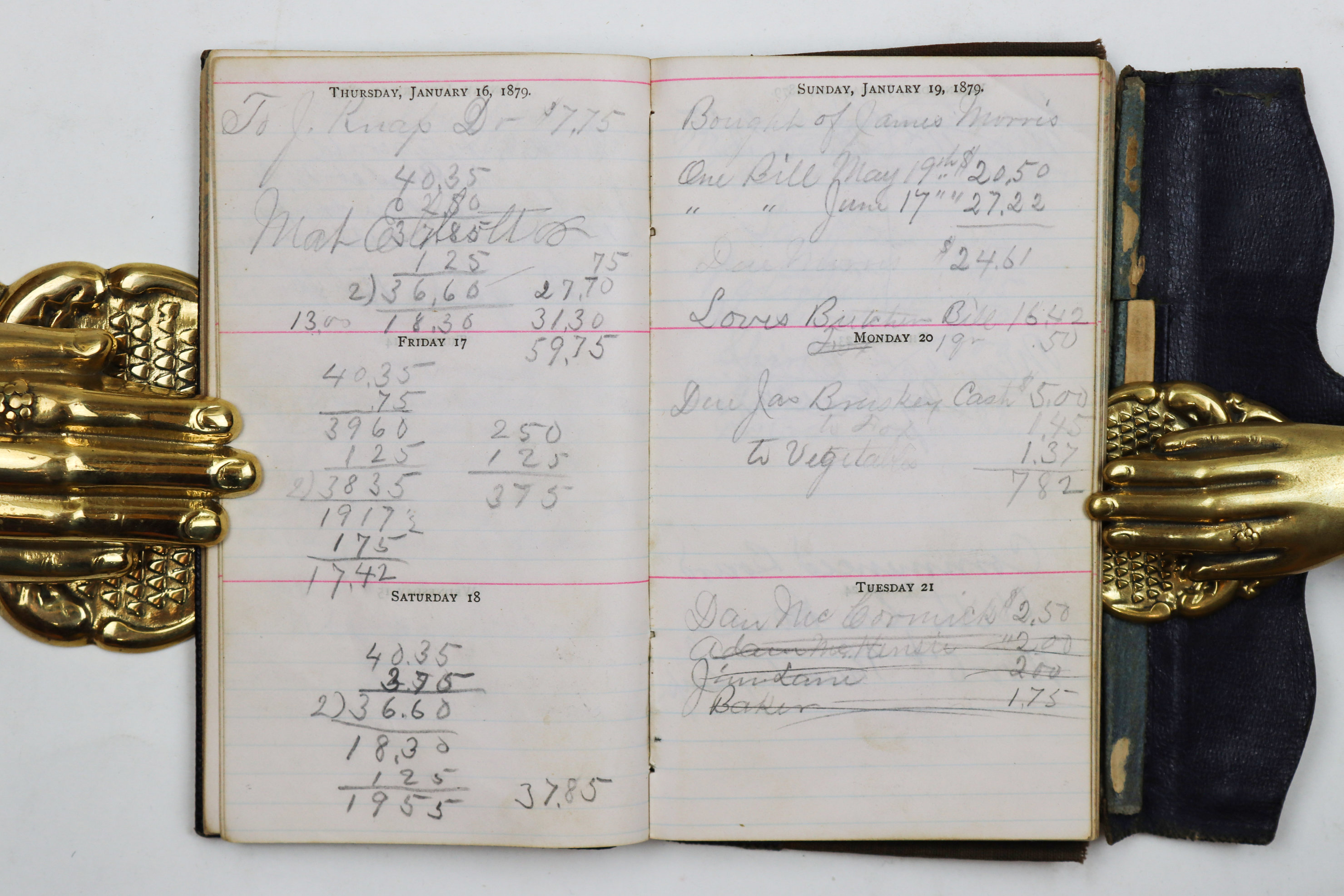
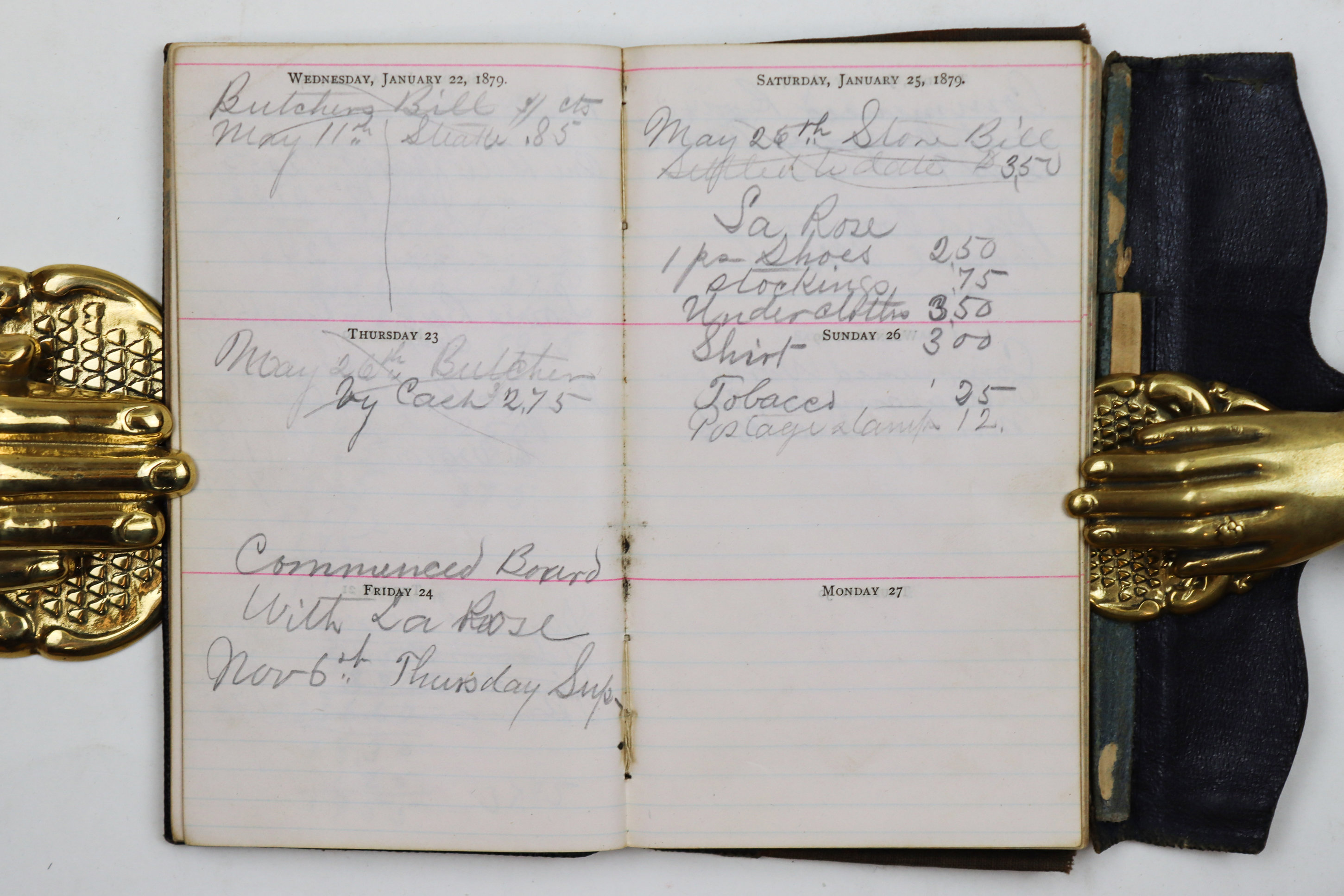
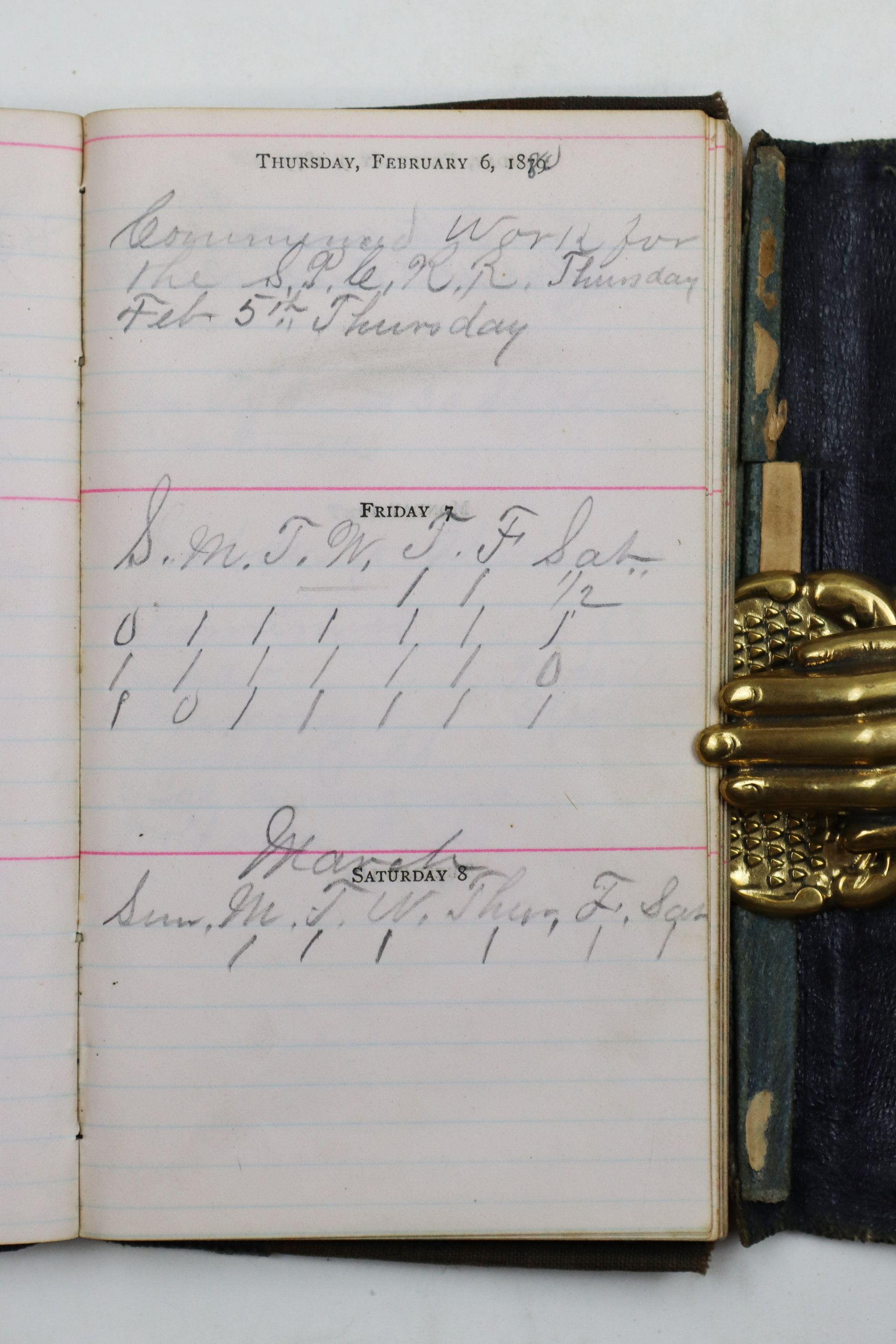
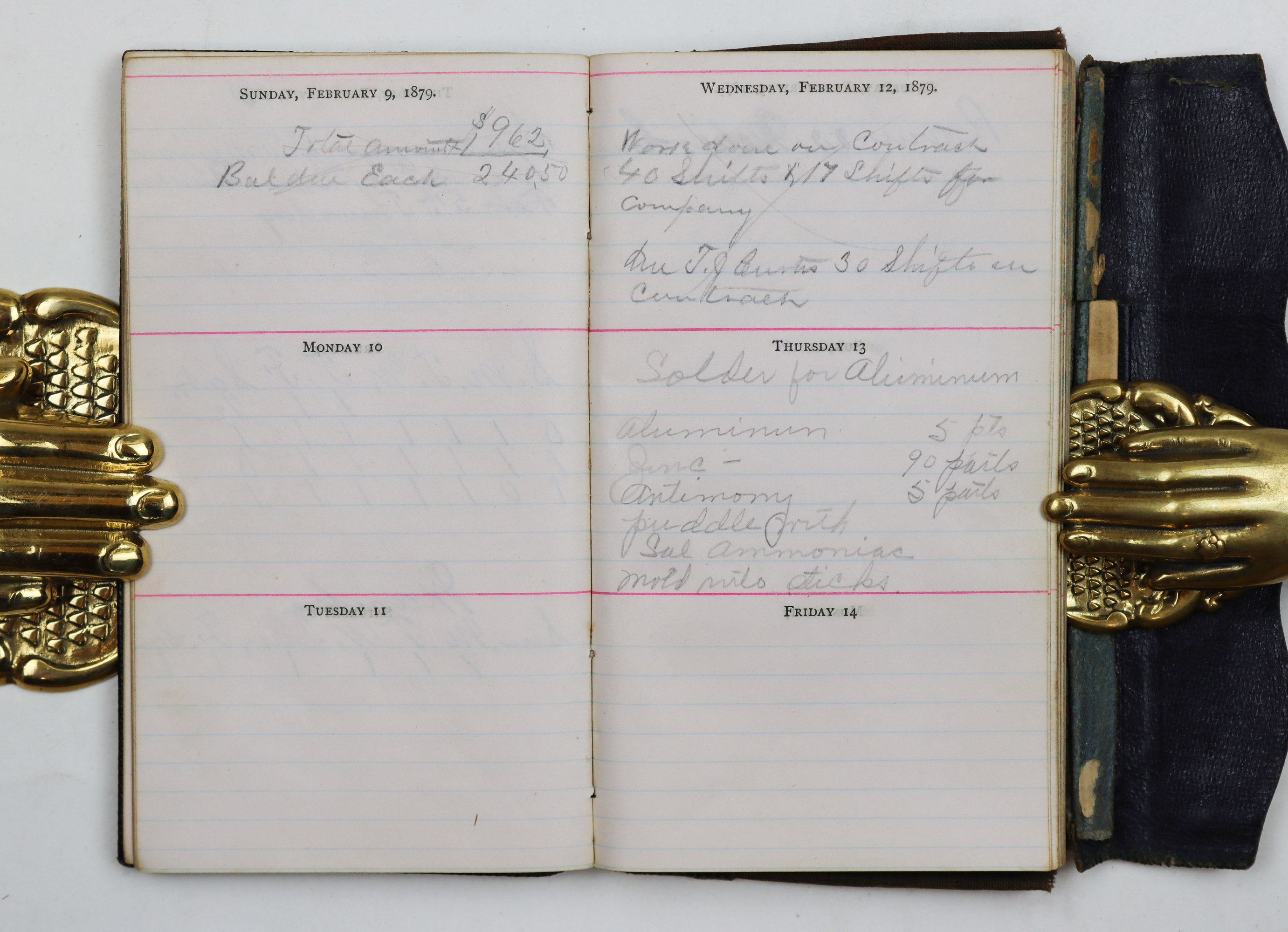
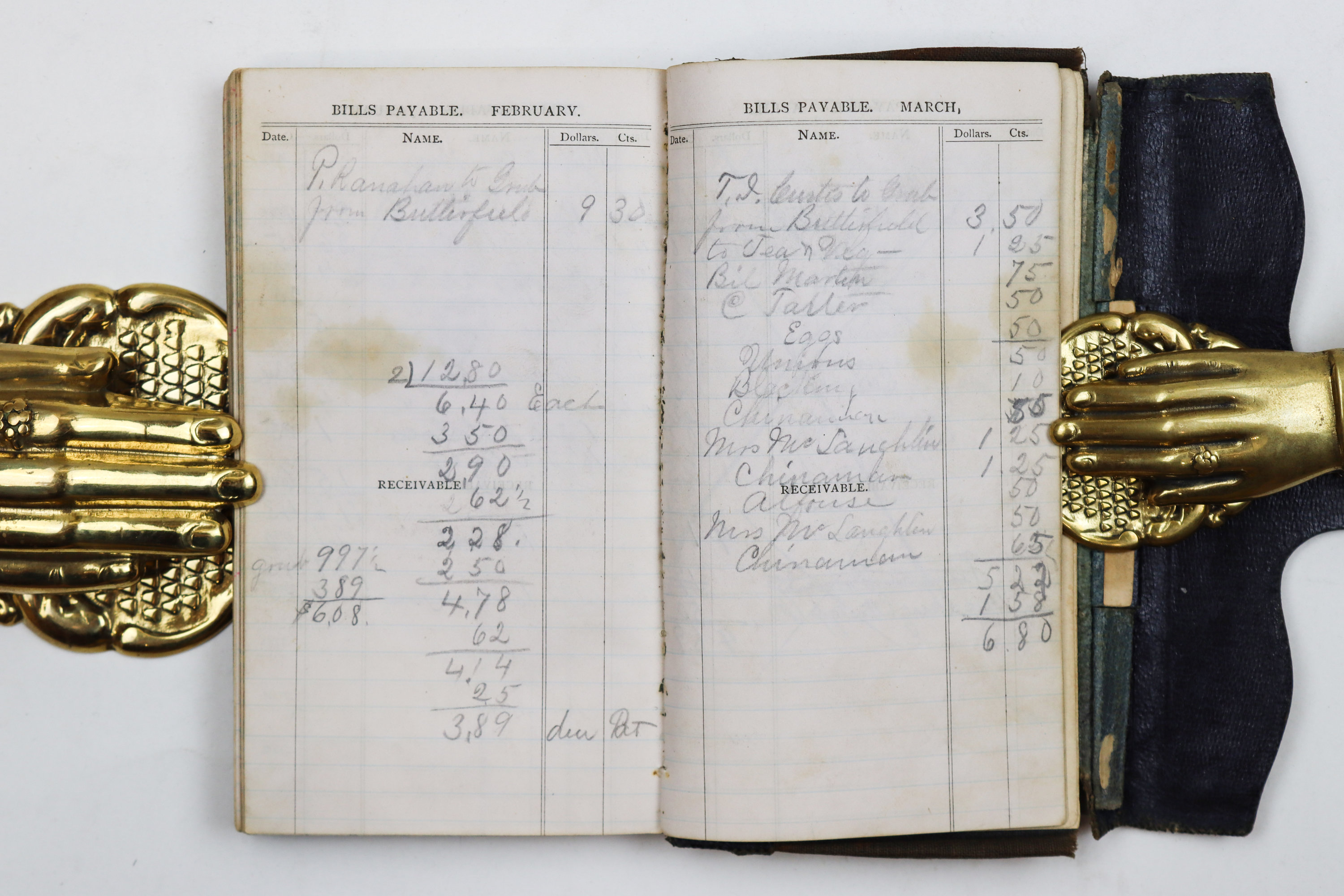
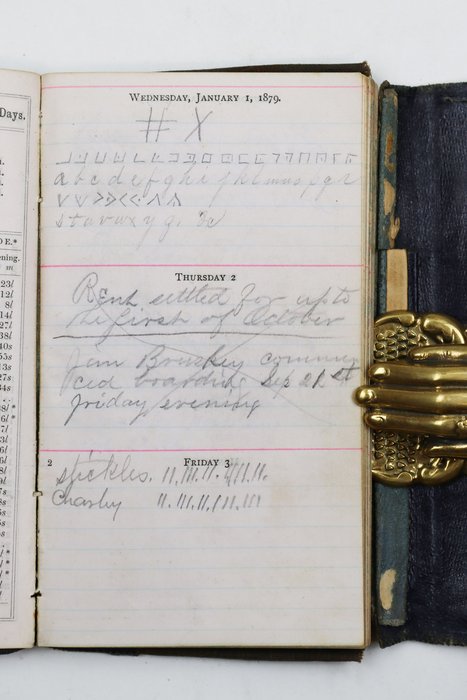
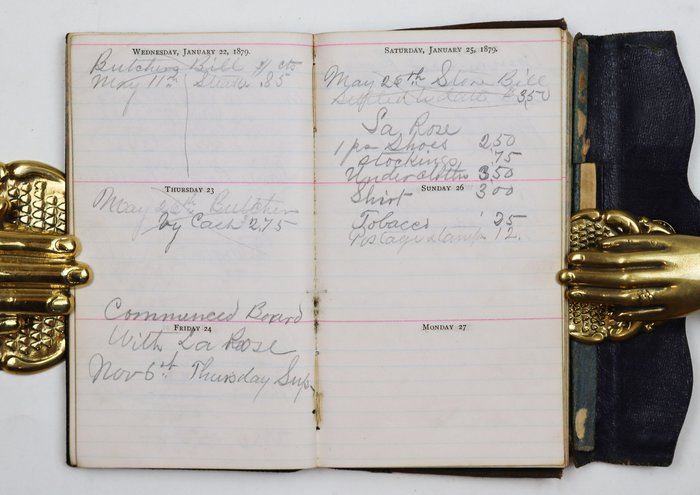
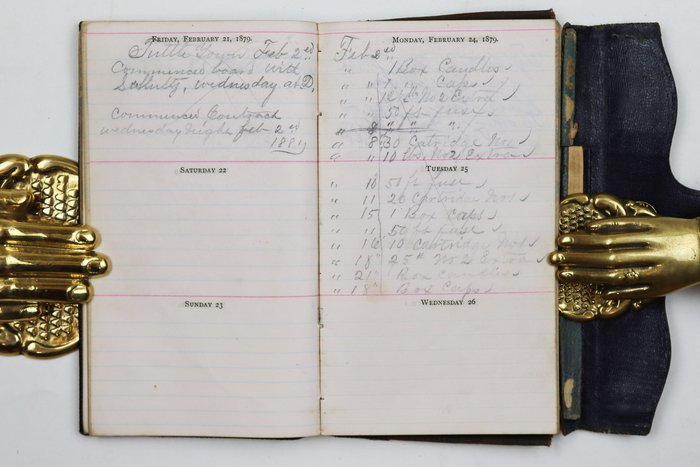
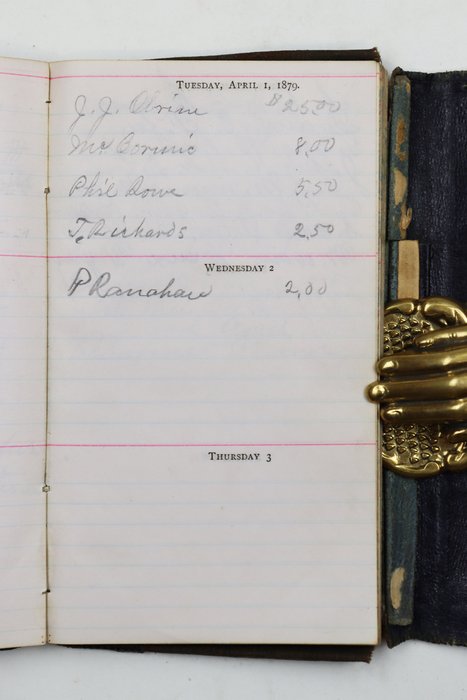
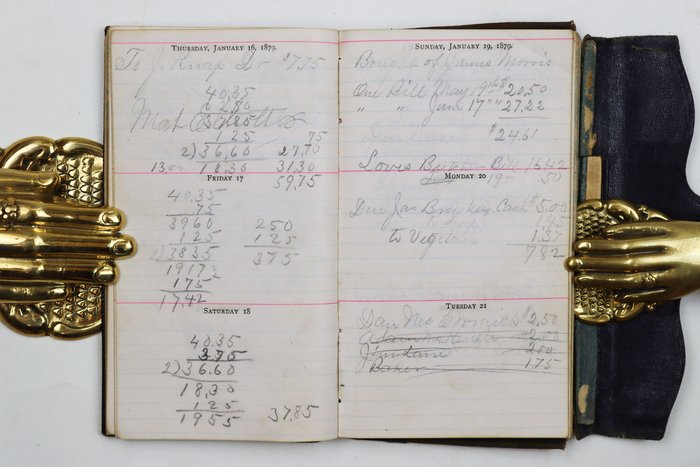
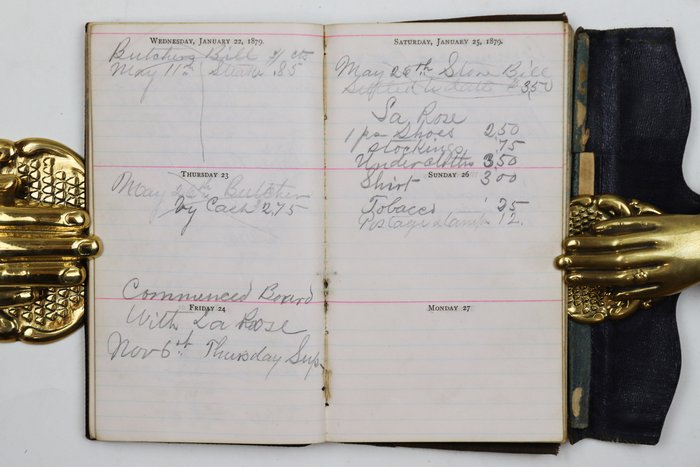
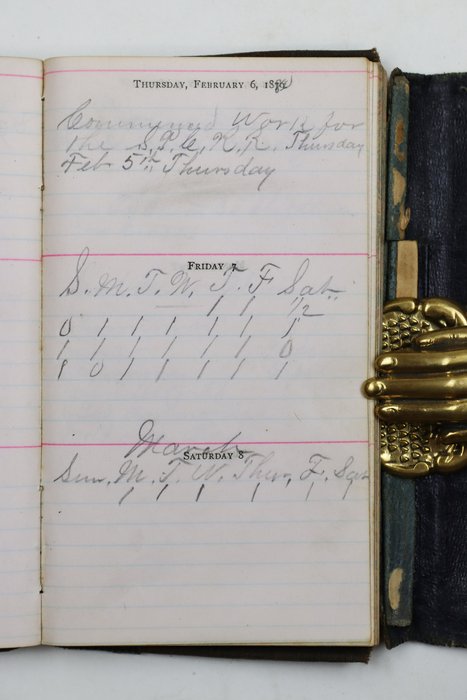
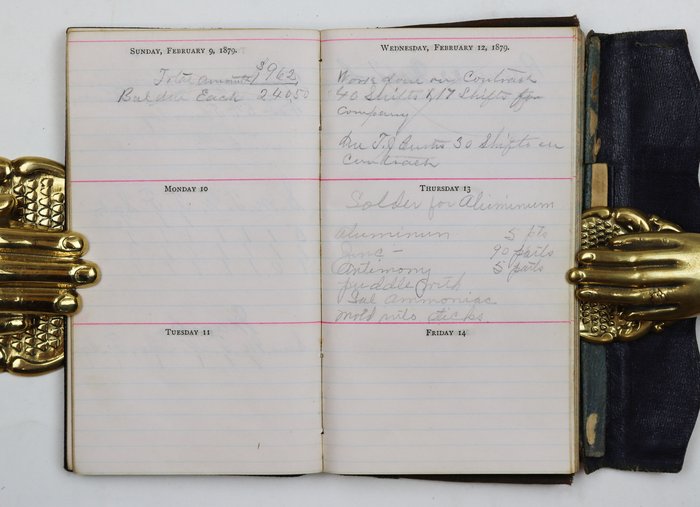
The diary functions primarily as a detailed operational ledger of a young laborer in the California mining boom. Its compact pocket size suggests it was carried directly to mining sites, serving as a practical field notebook used in real time. The author records employment across multiple sites, with exact dates of “commencing work” for the Utica Mining Company, the South Pacific Coast Railroad, and T. J. Kurtis, a pioneering merchant of Bodie, Mono County. To maintain an accurate account of labor, the writer uses a handwritten calendar grid with daily tally marks tracking full, half, or missed shifts. Alongside work records, the notebook contains technical and industrial entries typical of an early gold miner, including specific formulas for blasting explosives (nitro-glycerine, etc.), mixtures for tempering and hardening steel drill bits, and guidance for producing aluminum solder. It also preserves a detailed financial record of a gold miner's frontier life, tracking wages, daily expenses, and boarding costs alongside purchases of food, clothing, and basic provisions (meat, tobacco, potatoes, underclothes, etc.) The diary further maps a network of debts and obligations among miners, listing California pioneers (Dan McCormick, Thomas May, etc.) and recording who owed money for labor, boarding, or supplies.
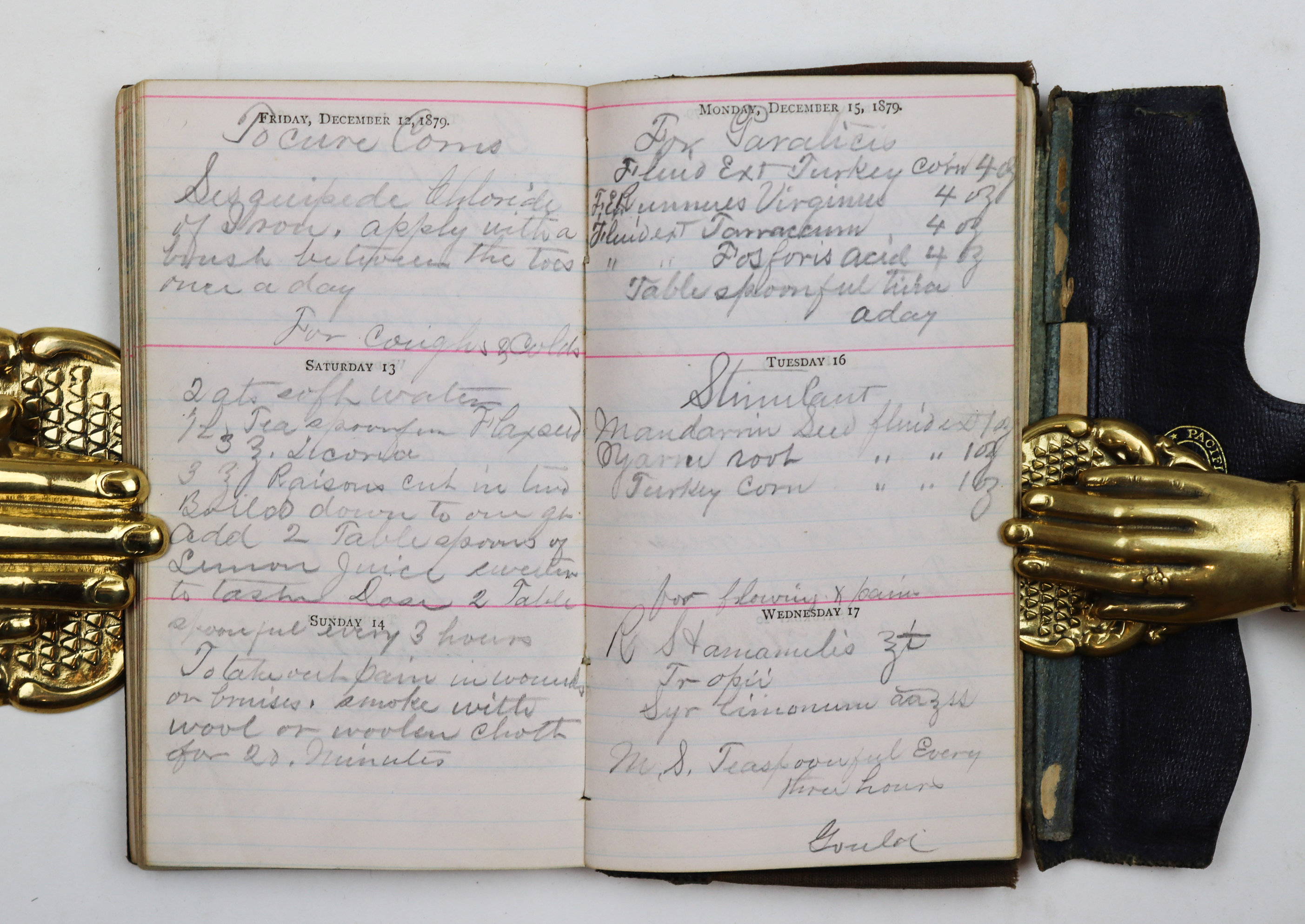
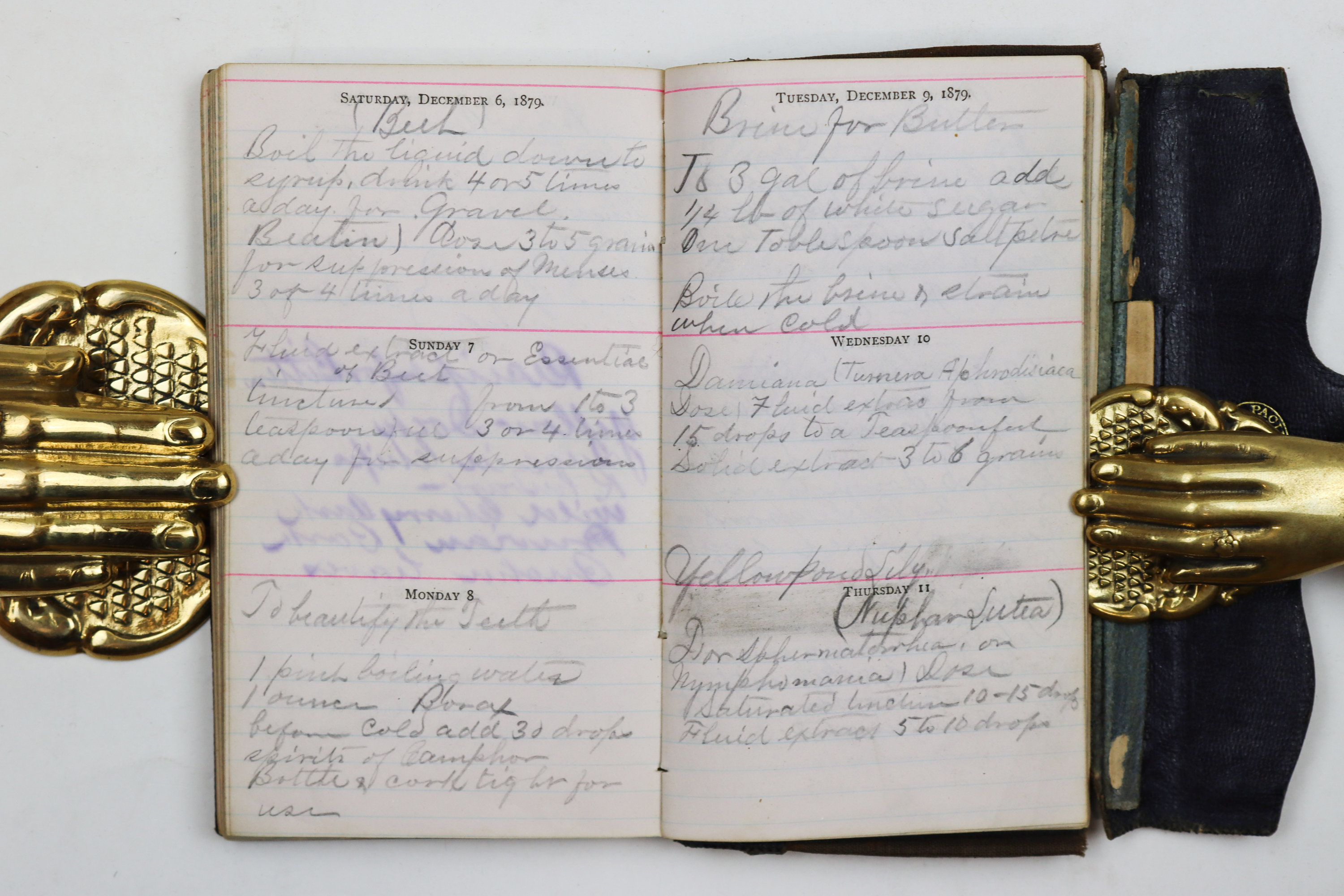
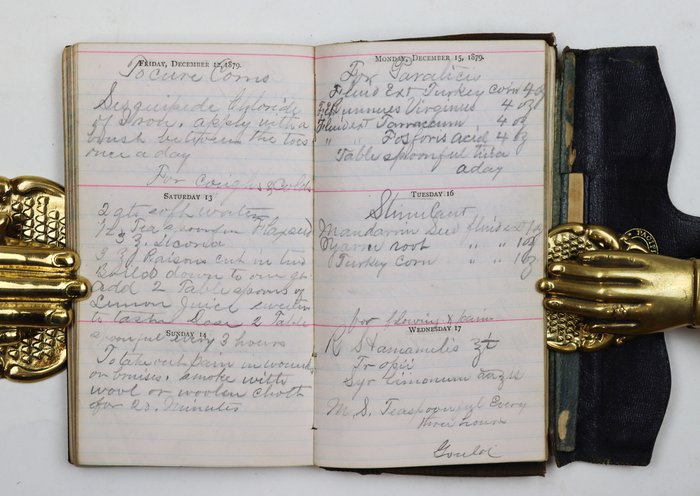
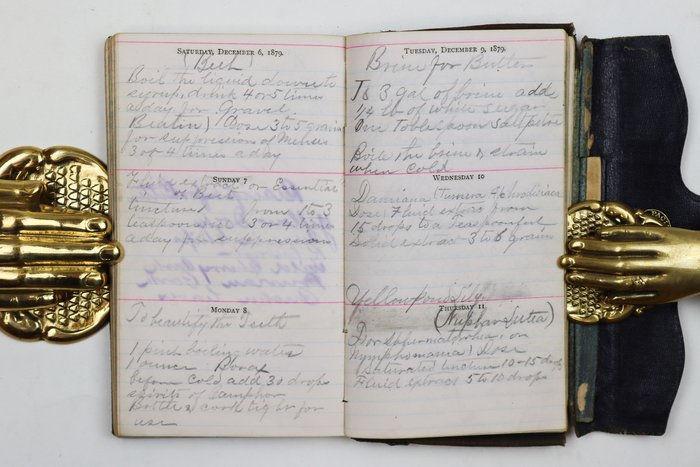
The notebook also serves as a practical household and medical encyclopedia, documenting 19th-century folk remedies for ailments ranging from nymphomania, croup, scarlet fever, and poison oak exposure to paralysis and rheumatism. It includes potent botanical preparations now known to be highly toxic (oil of savin and ergot), alongside recipes for bitters, hair restoration, dental beautification, and other practical matters. In the other parts, the diary features curious rules of “handkerchief flirtation,” a geometric Pigpen cipher, romantic poetry, excerpts from old testimony, and other texts of interest.
The diary closes with an intimate, multi-generational family registry spanning four decades on a dedicated memoranda page. Long after its initial use in 1879, the notebook was apparently preserved as a family heirloom to meticulously log a sequence of birth dates for children born into the family.
Overall, historically interesting pocket diary of an early California miner.