
#PE57
Ca. 1880s-1890s
Folio album (ca. 32x26 cm or 12 ¾ x 10 ¼ in). 15 card stock leaves. With 31 original albumen photos, mostly large images ca. 19x25 cm (9 ¾ x 7 ½ in); two smaller photos are ca. 13x19 cm (5 x 7 ½ in). Four images with the studio credits in negative (“A. Briquet” or “E.J. Kildare. Foto. Guatemala”). Period style black half sheep album with cloth boards. Mounts slightly waved and age-toned, a few photos mildly faded, but overall a very good album of interesting photos.
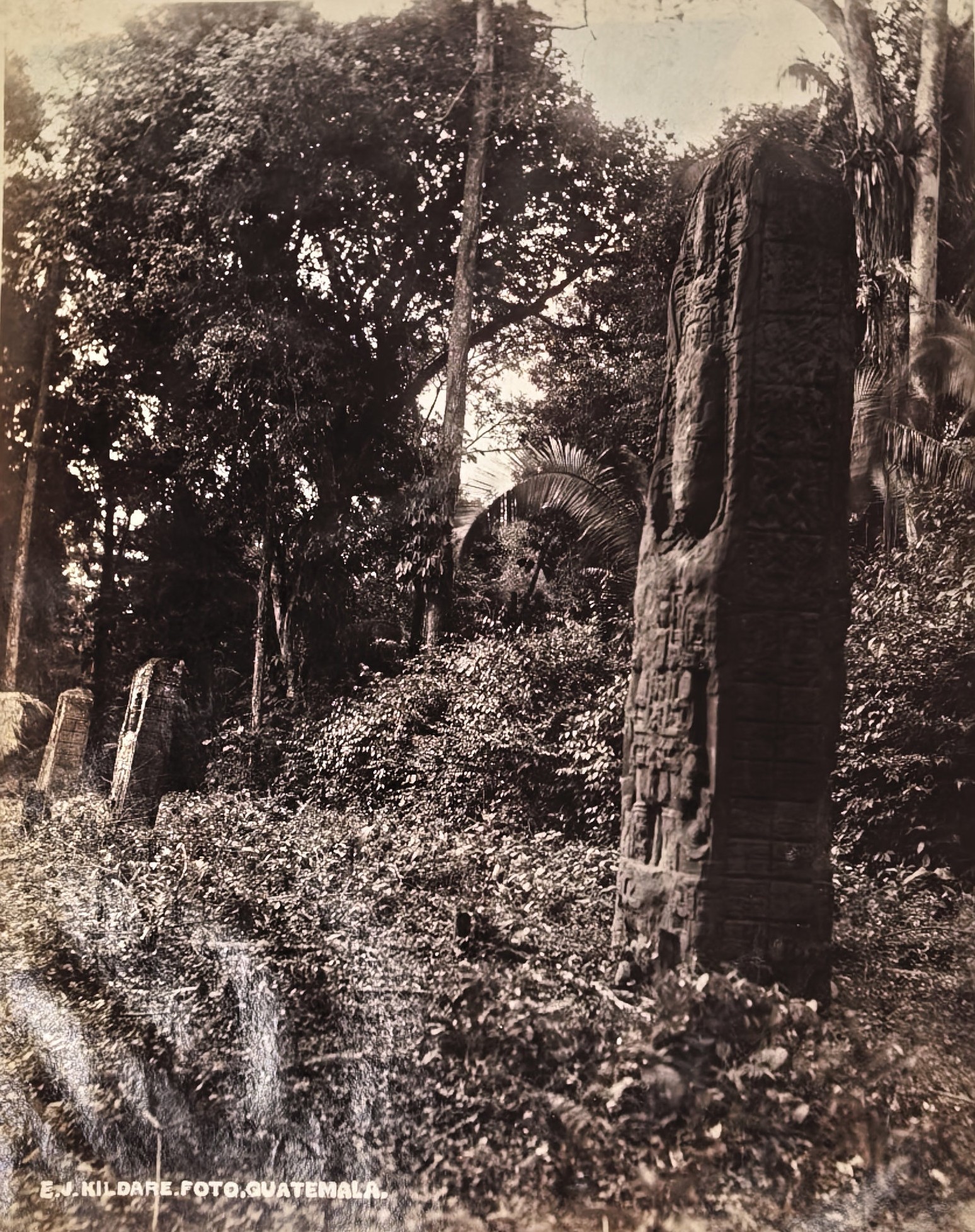
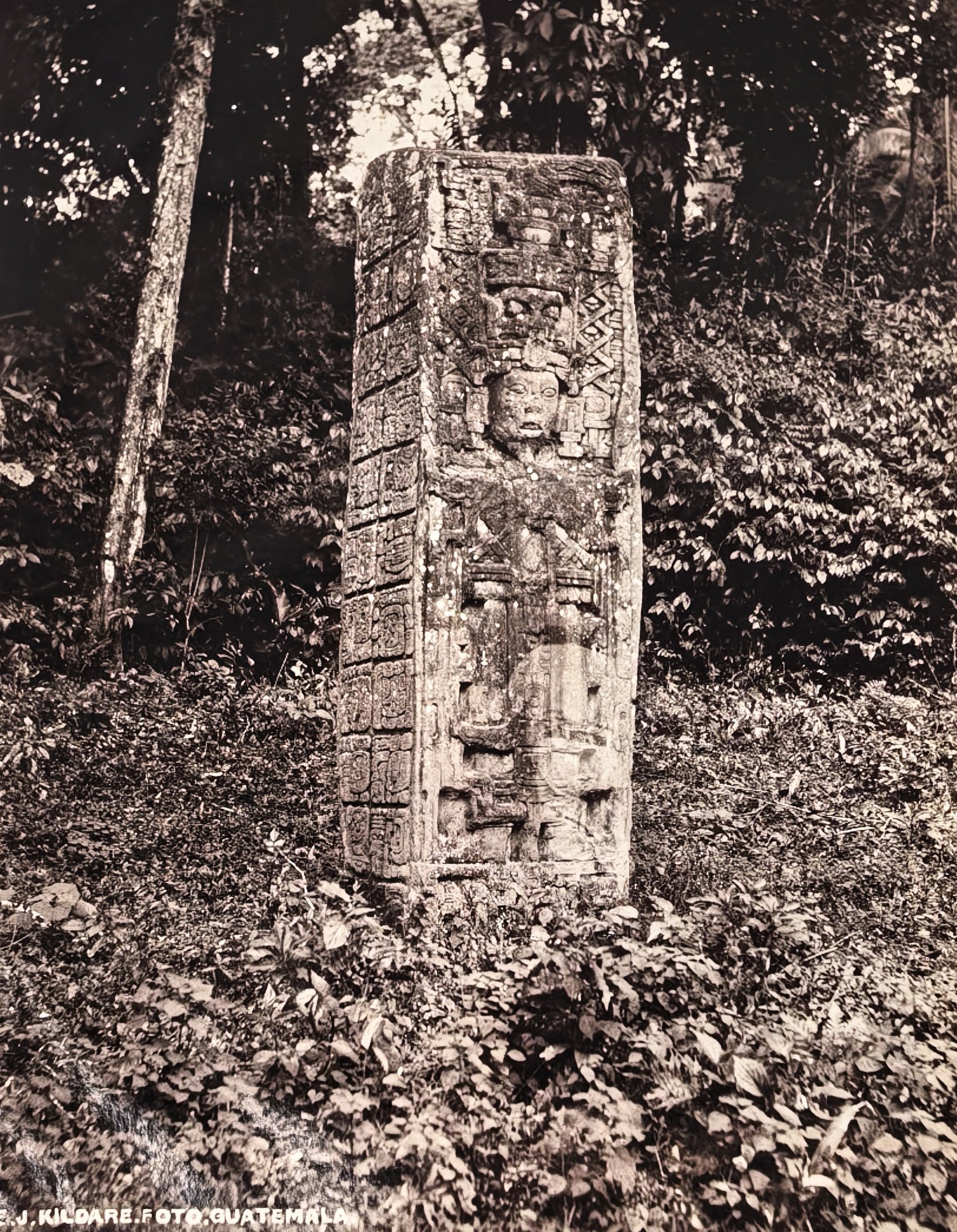
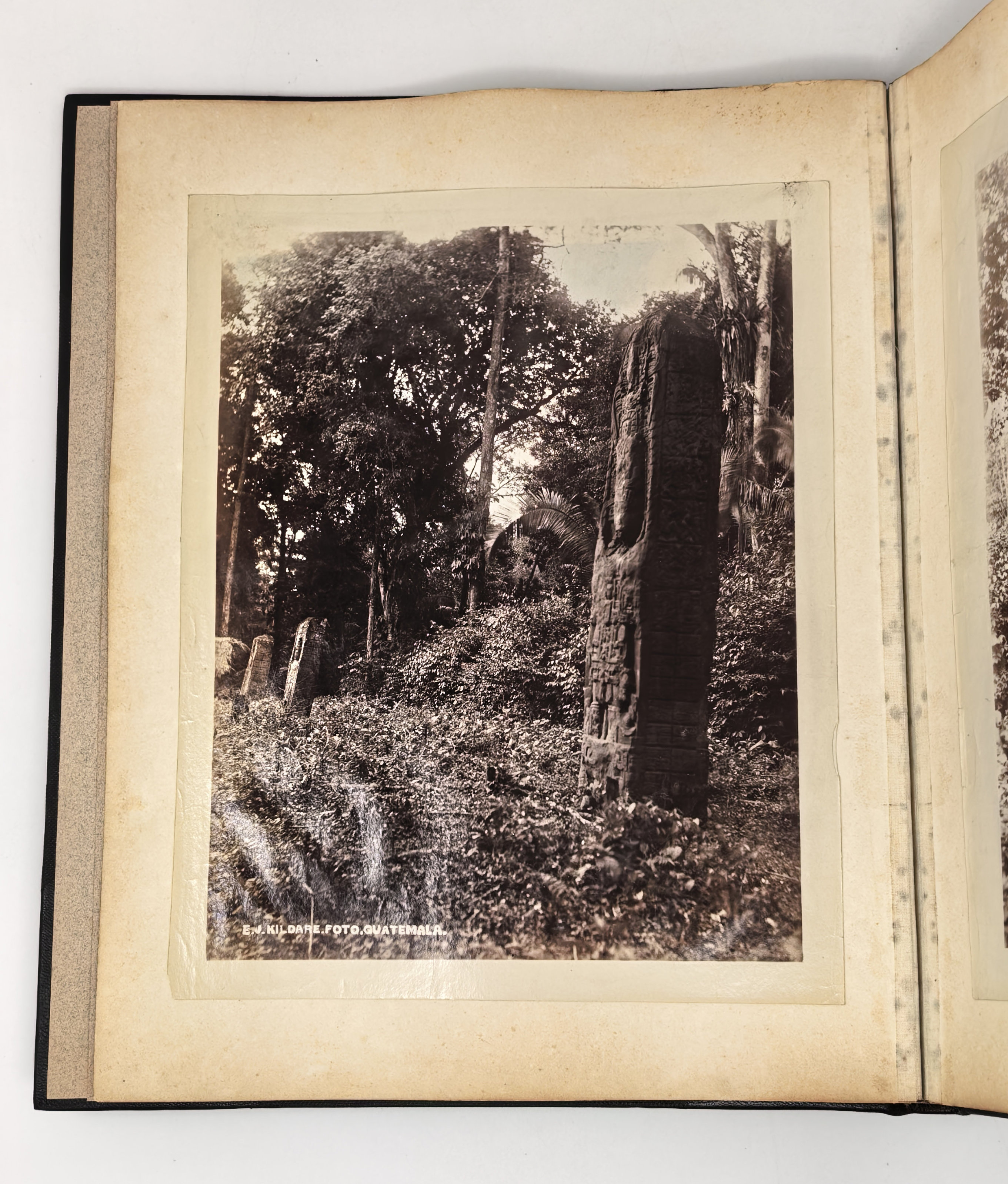
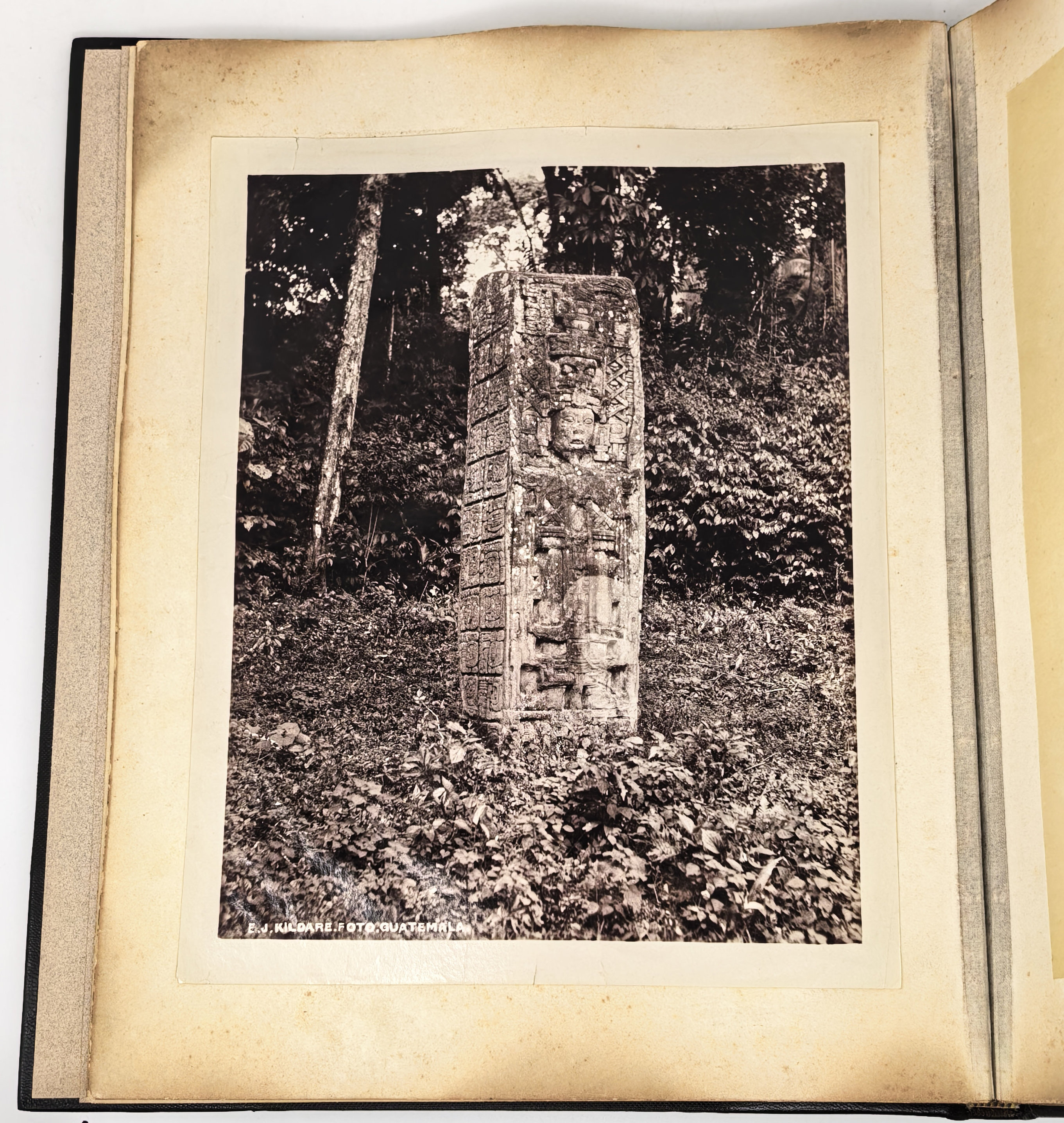
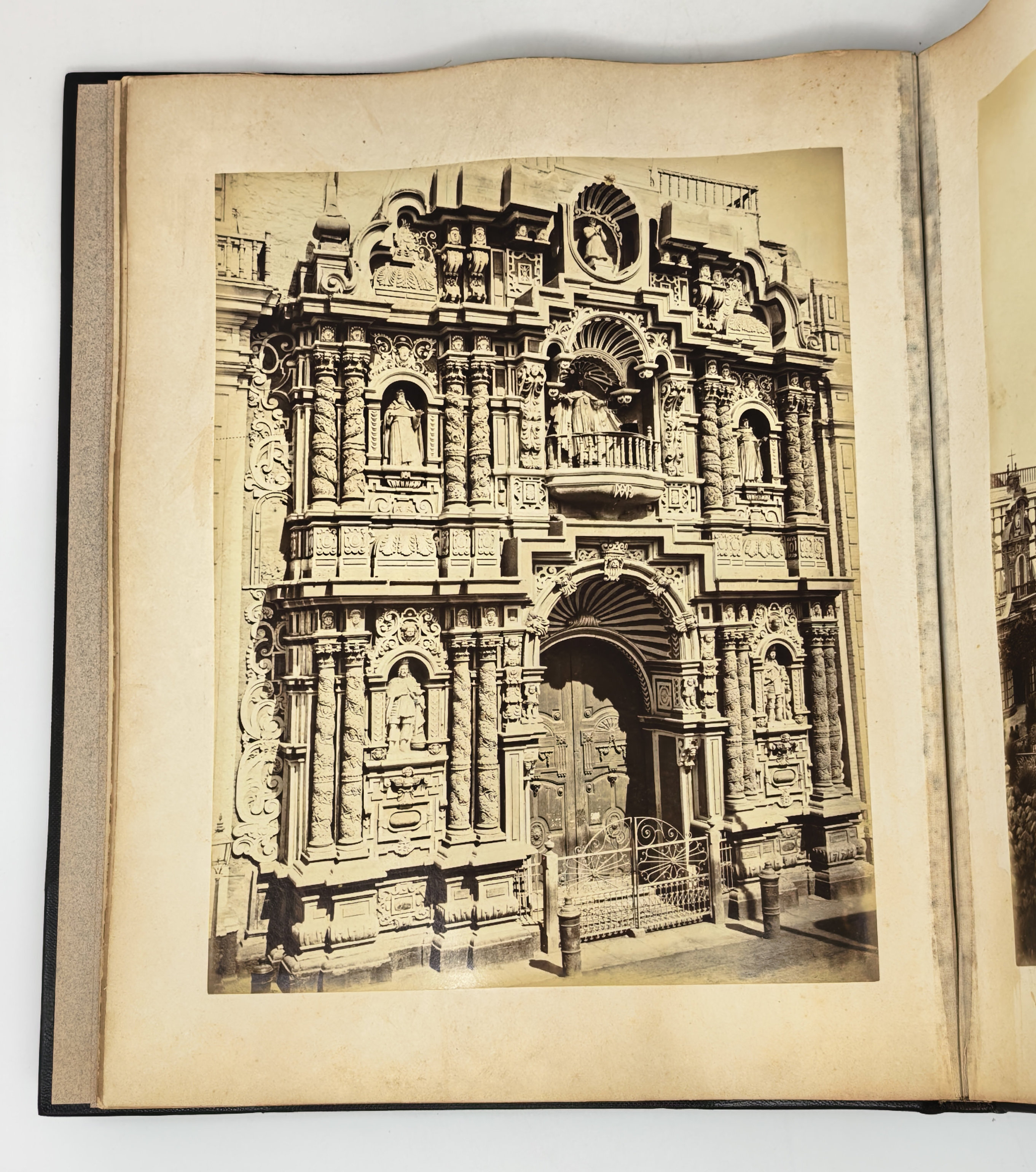
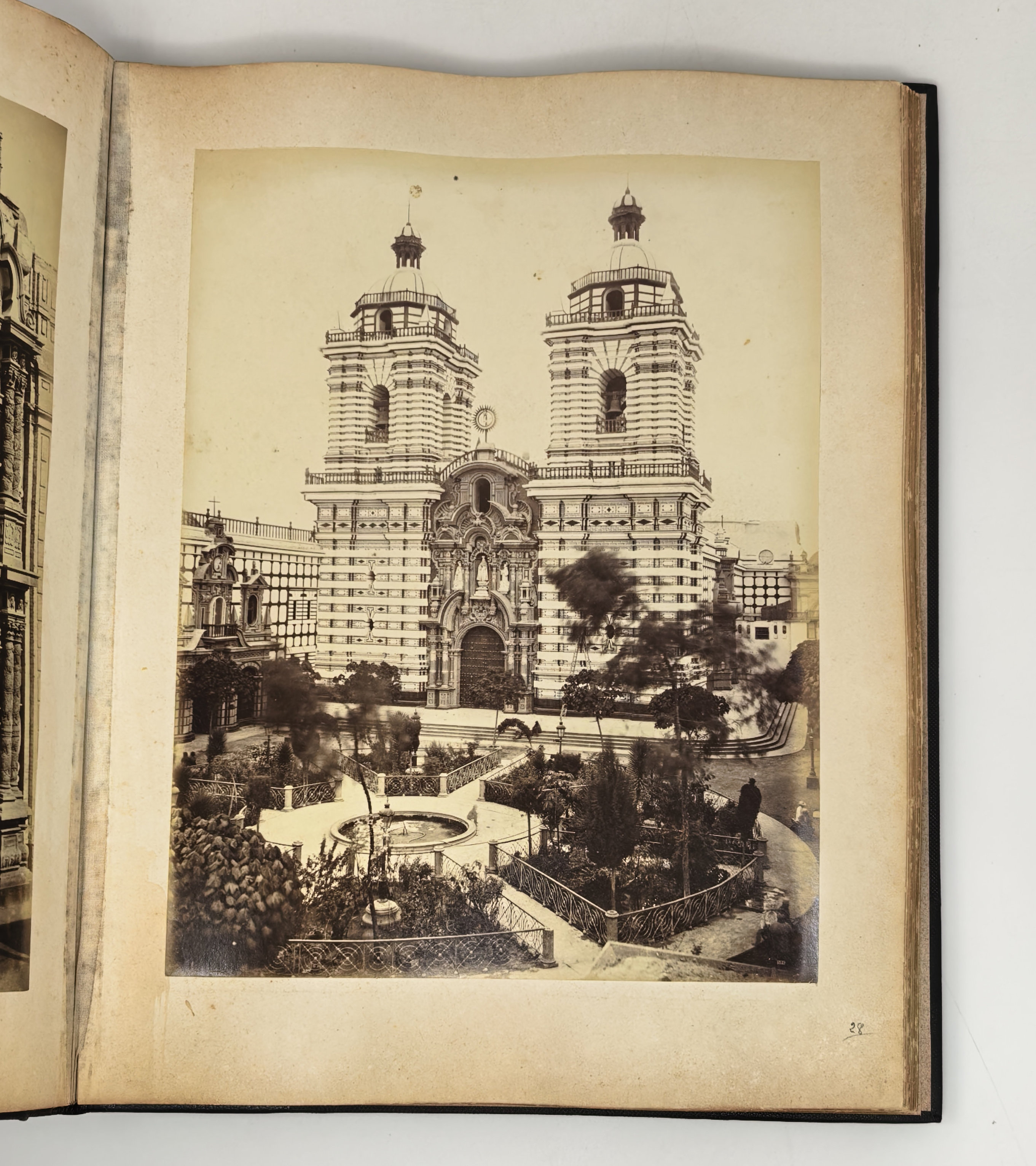
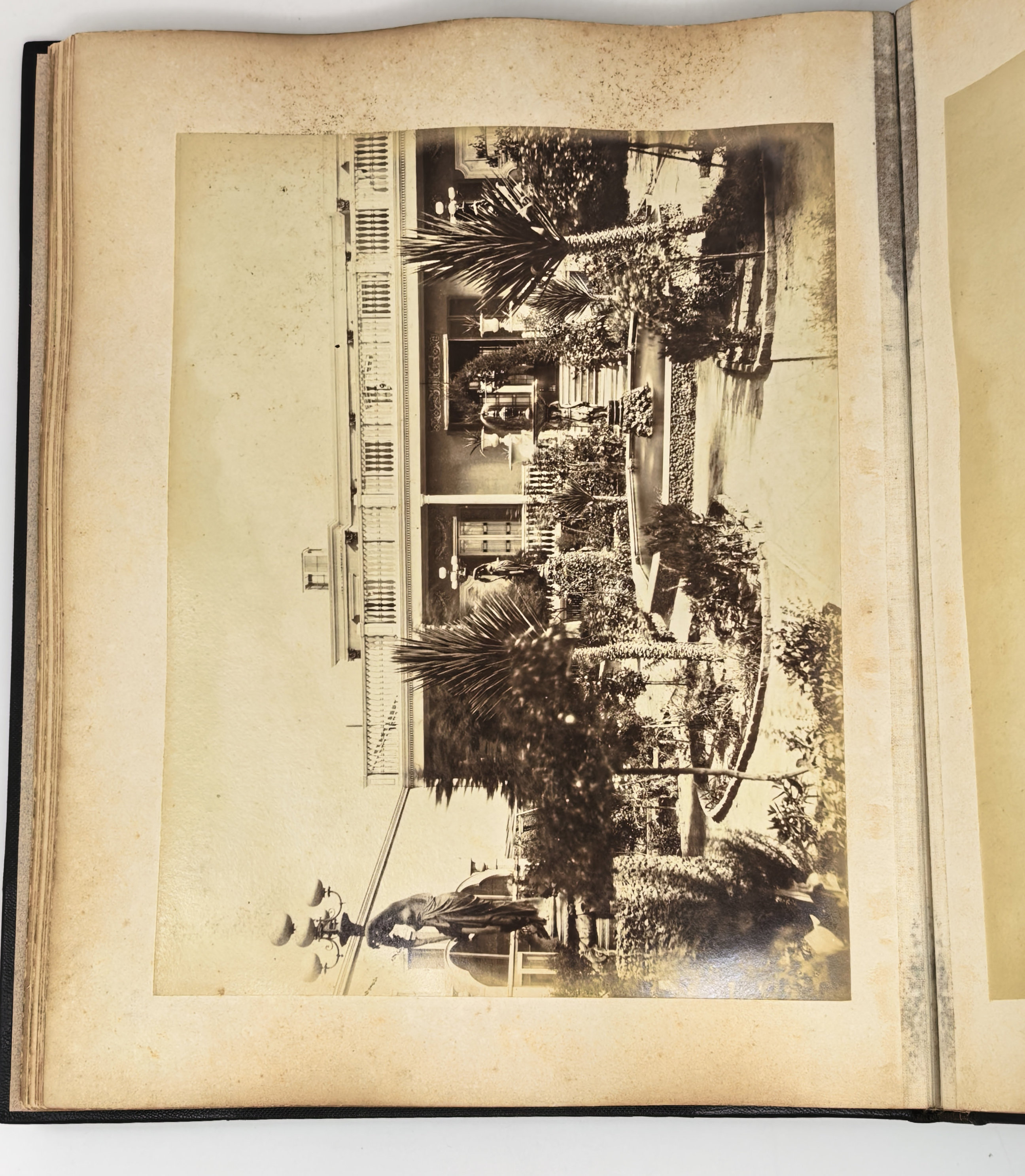
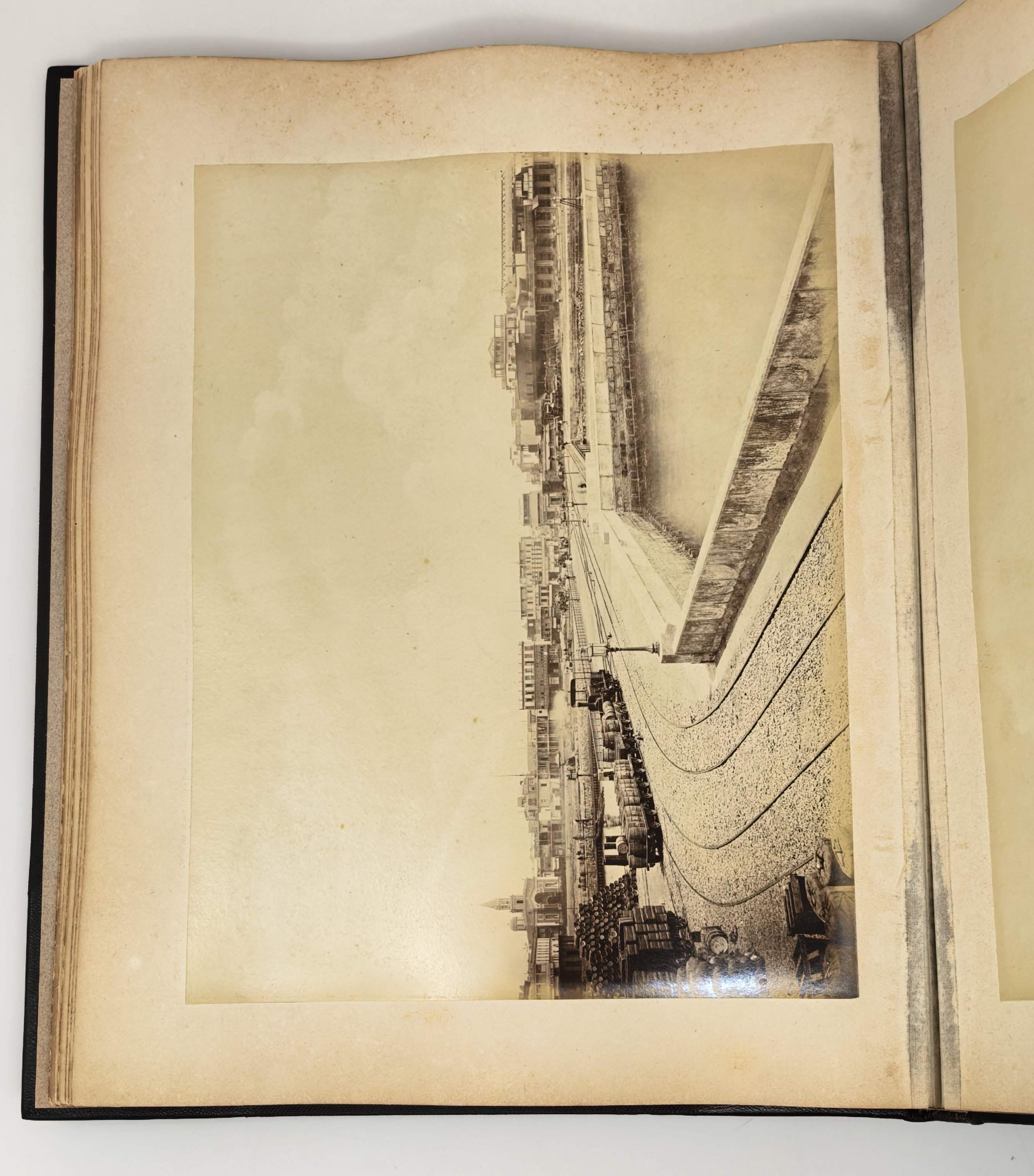
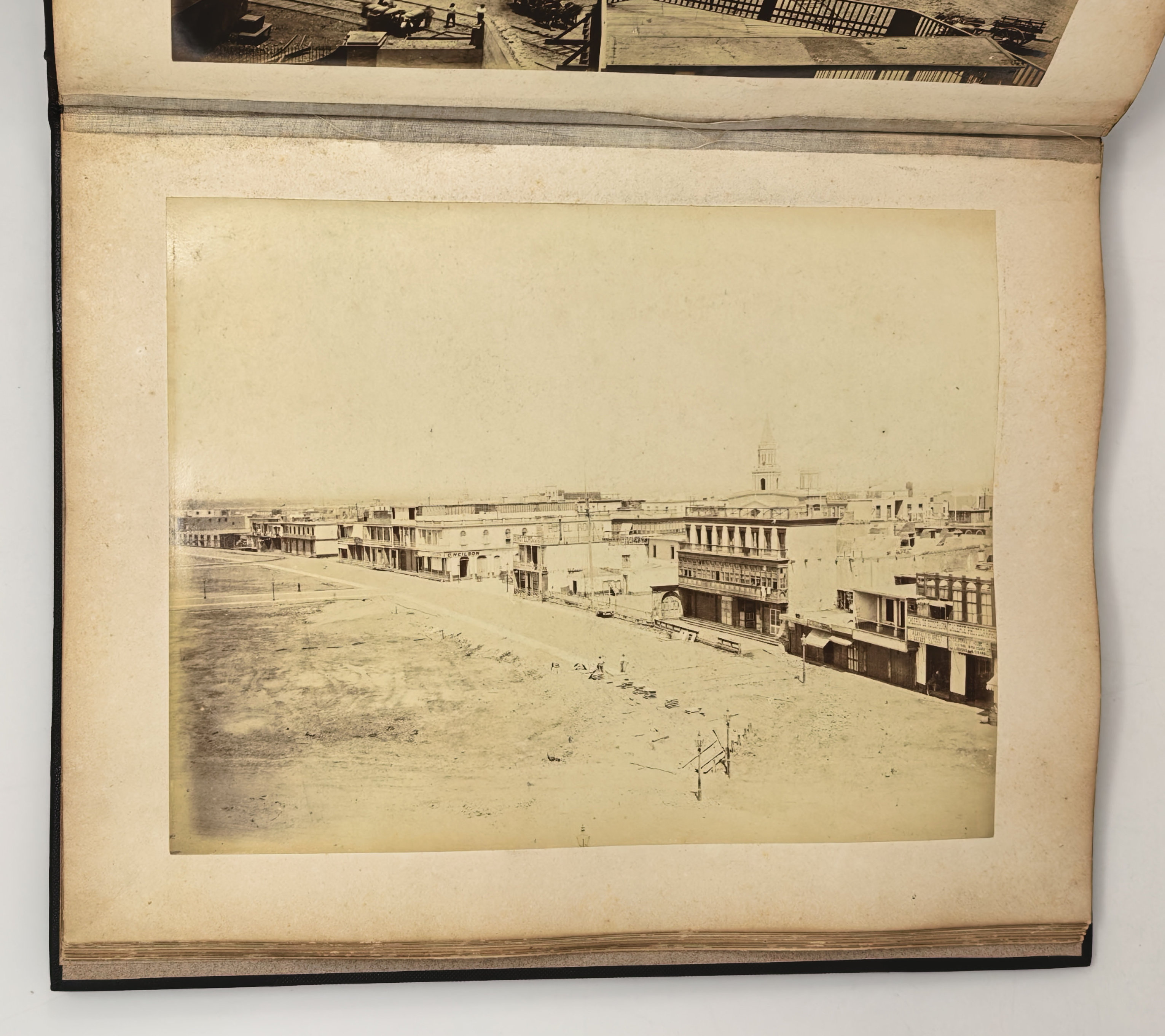
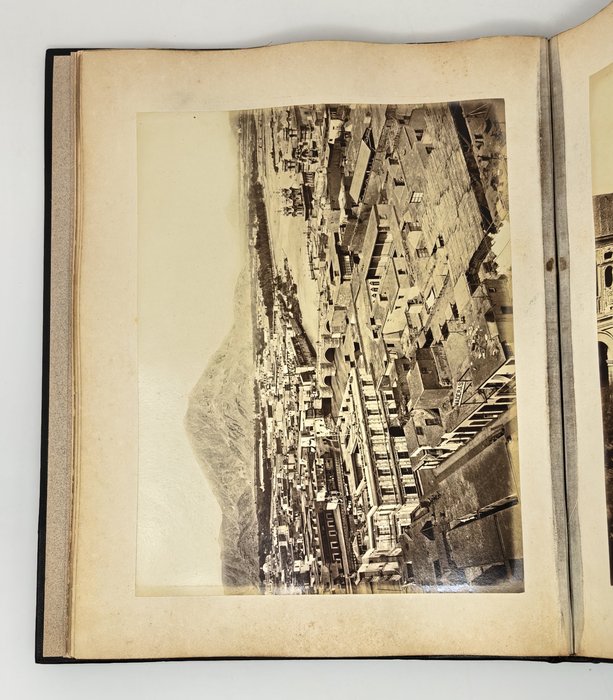
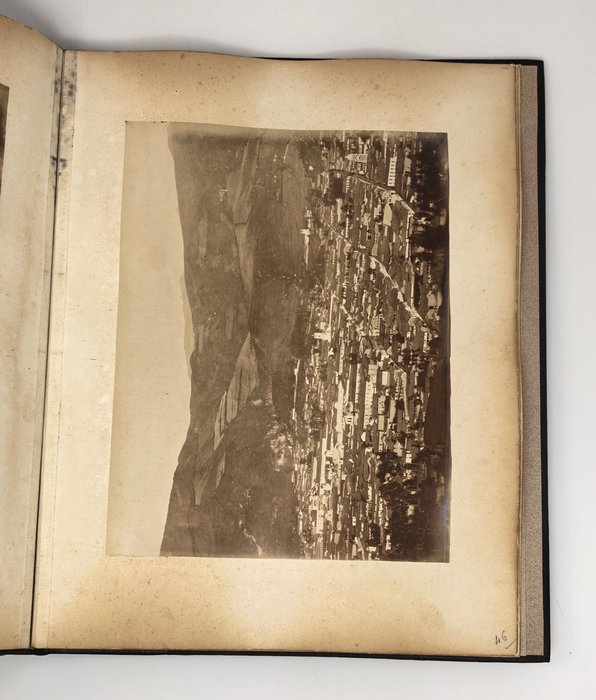
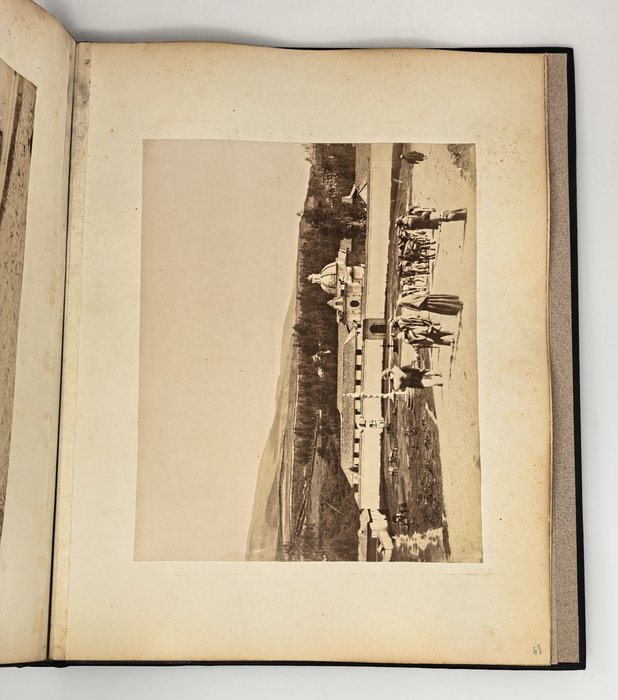
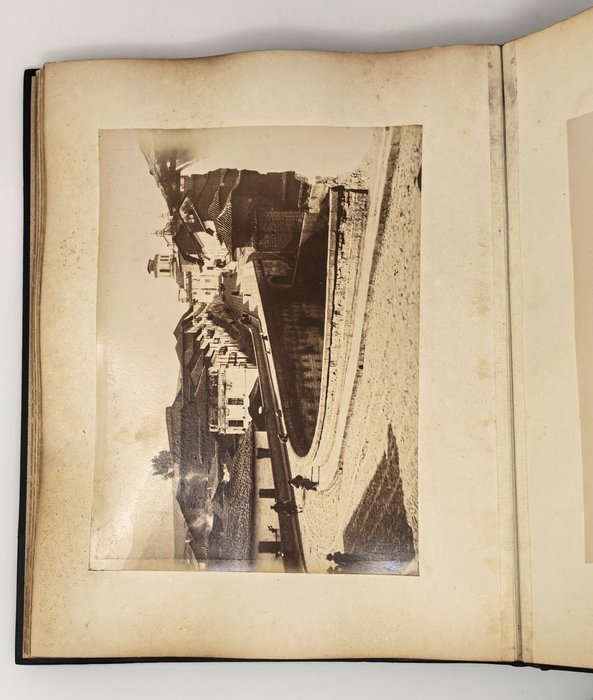
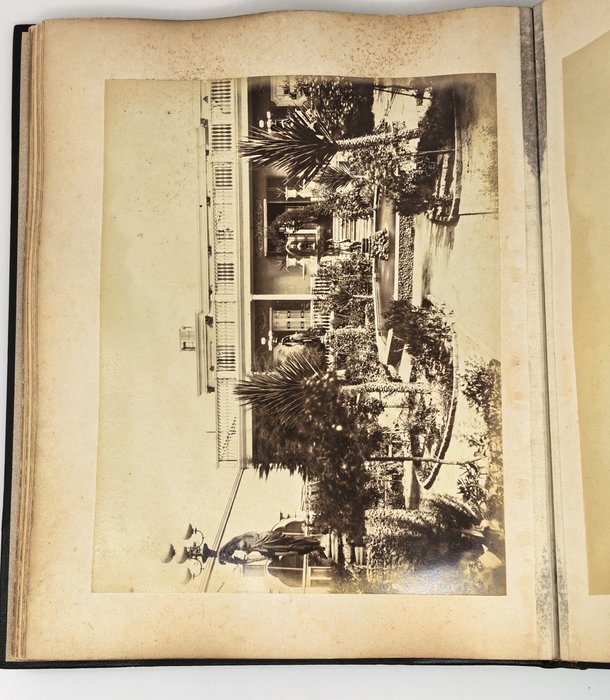
Historically significant collection of early, well-preserved albumen studio photographs of South and Central America, including interesting views of Lima, Chorillos, bridges and towns on the route of “Callao, Lima & Oroya Railway,” Quito and the Quirigua archaeological site in Guatemala.
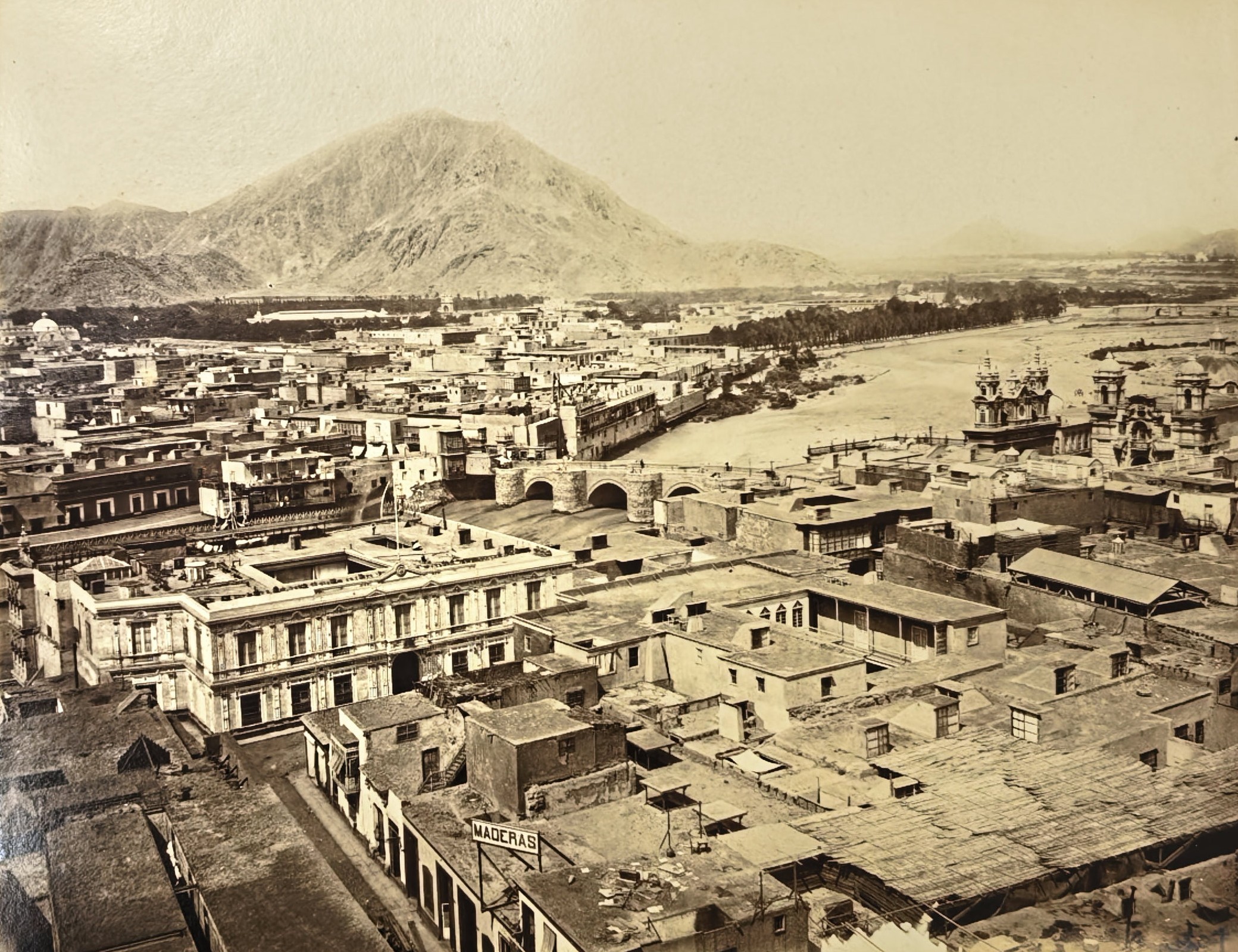
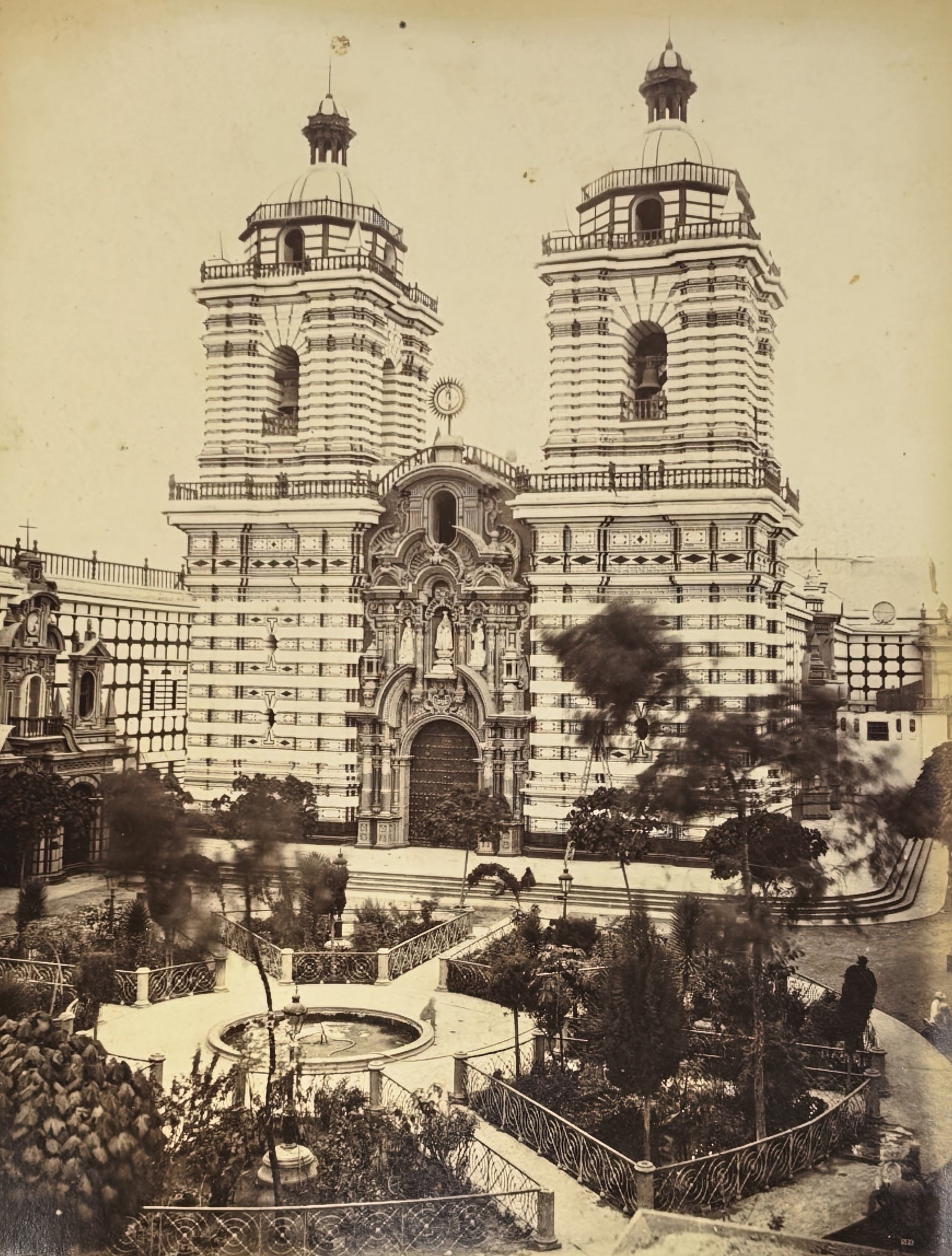
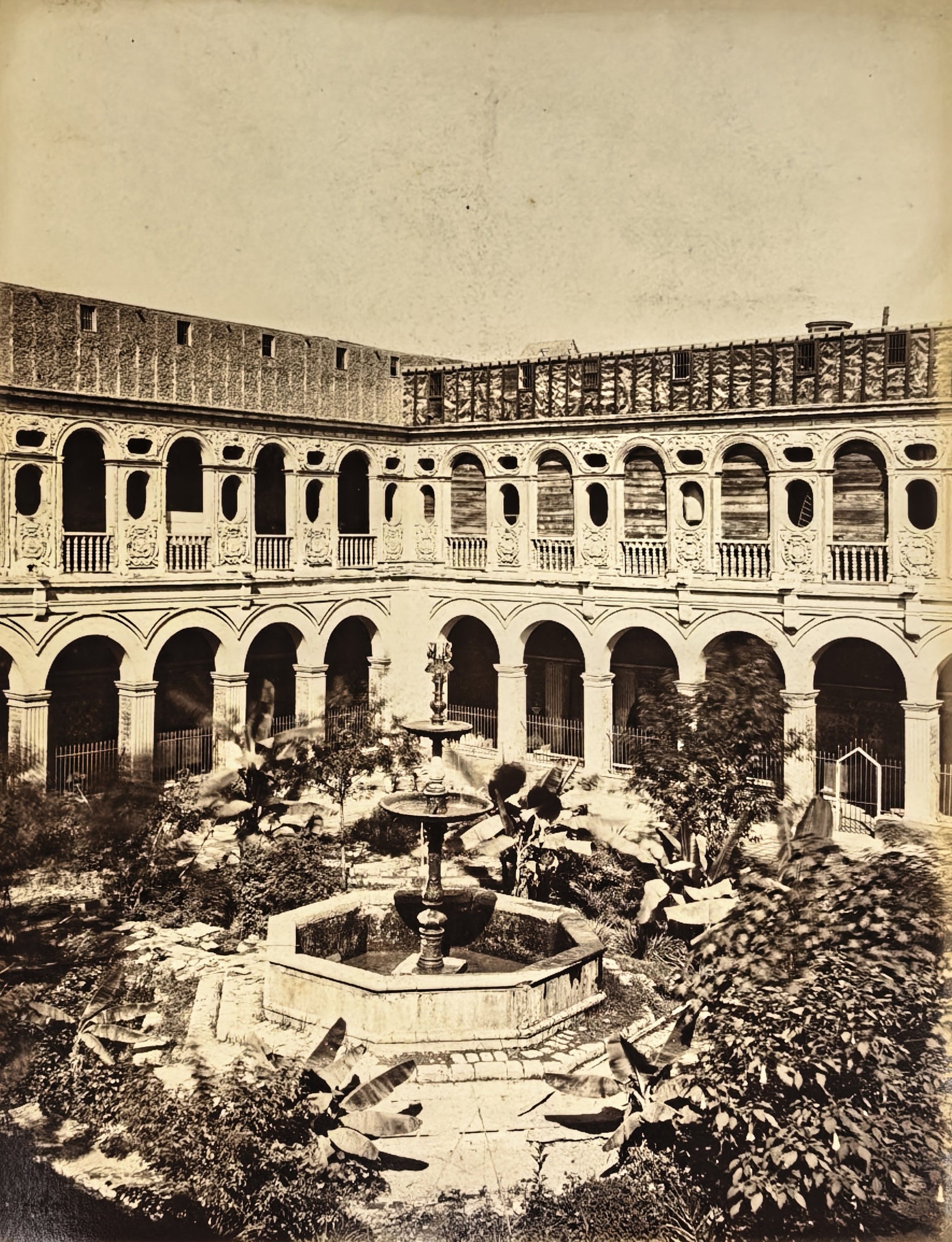
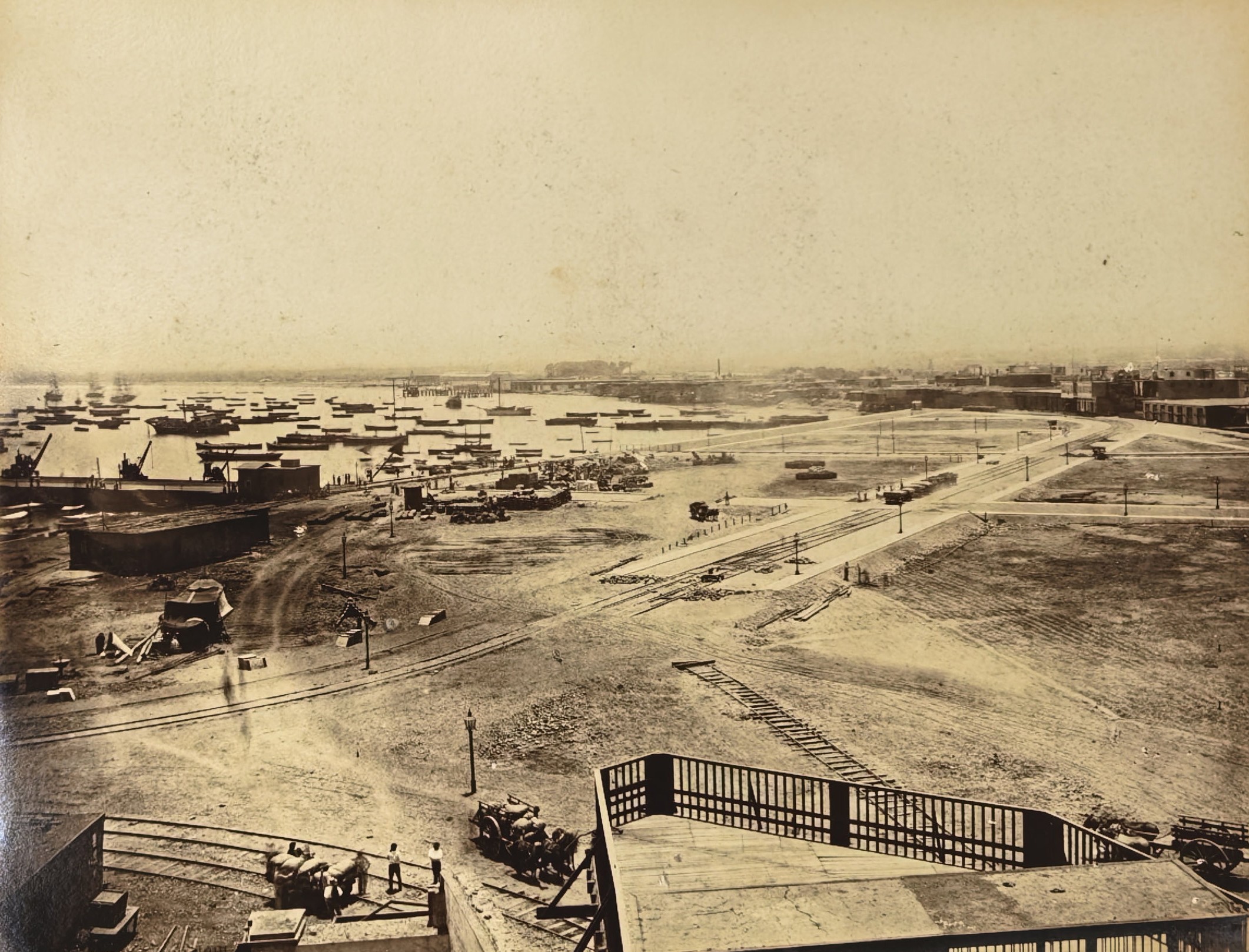
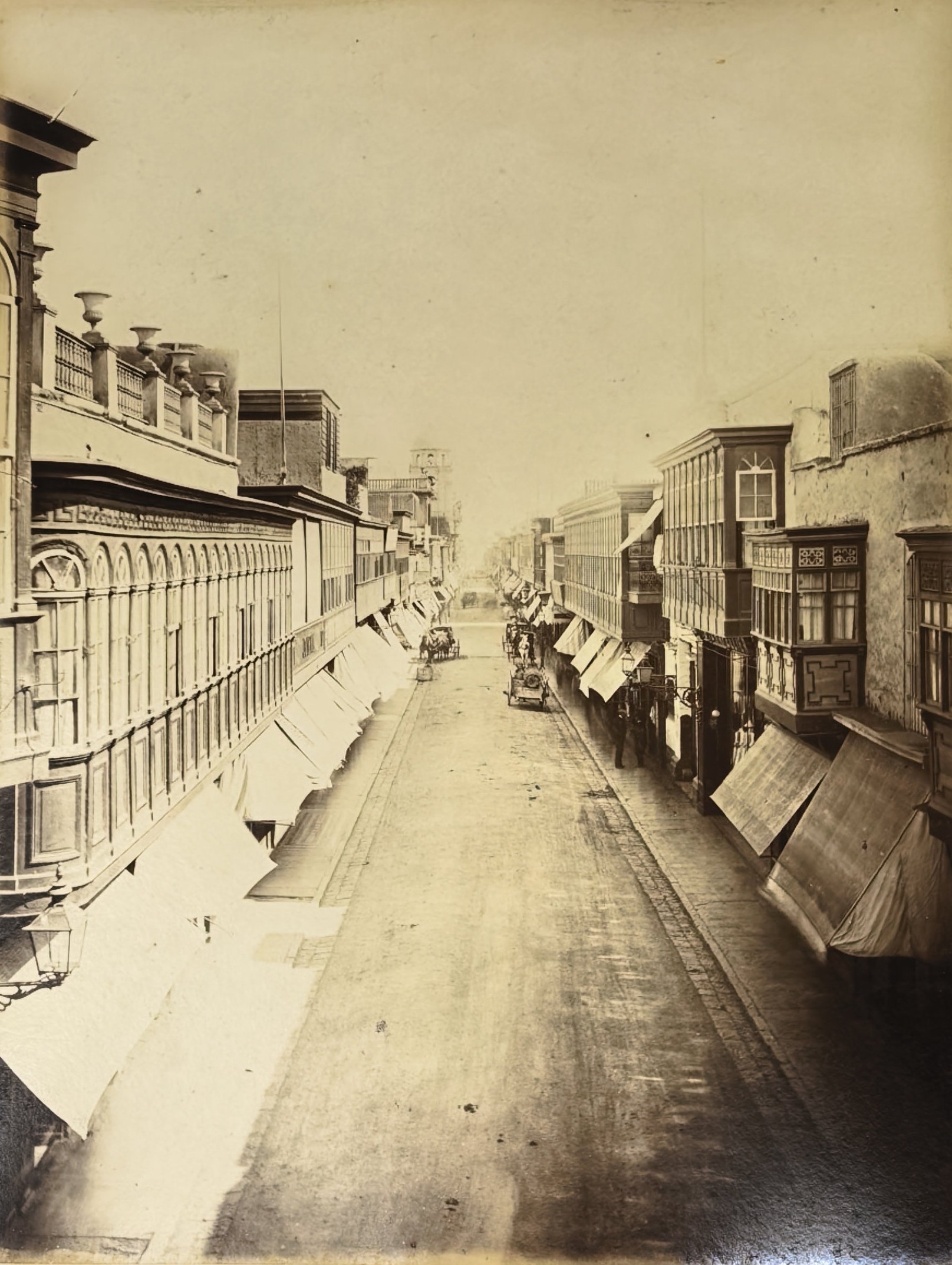
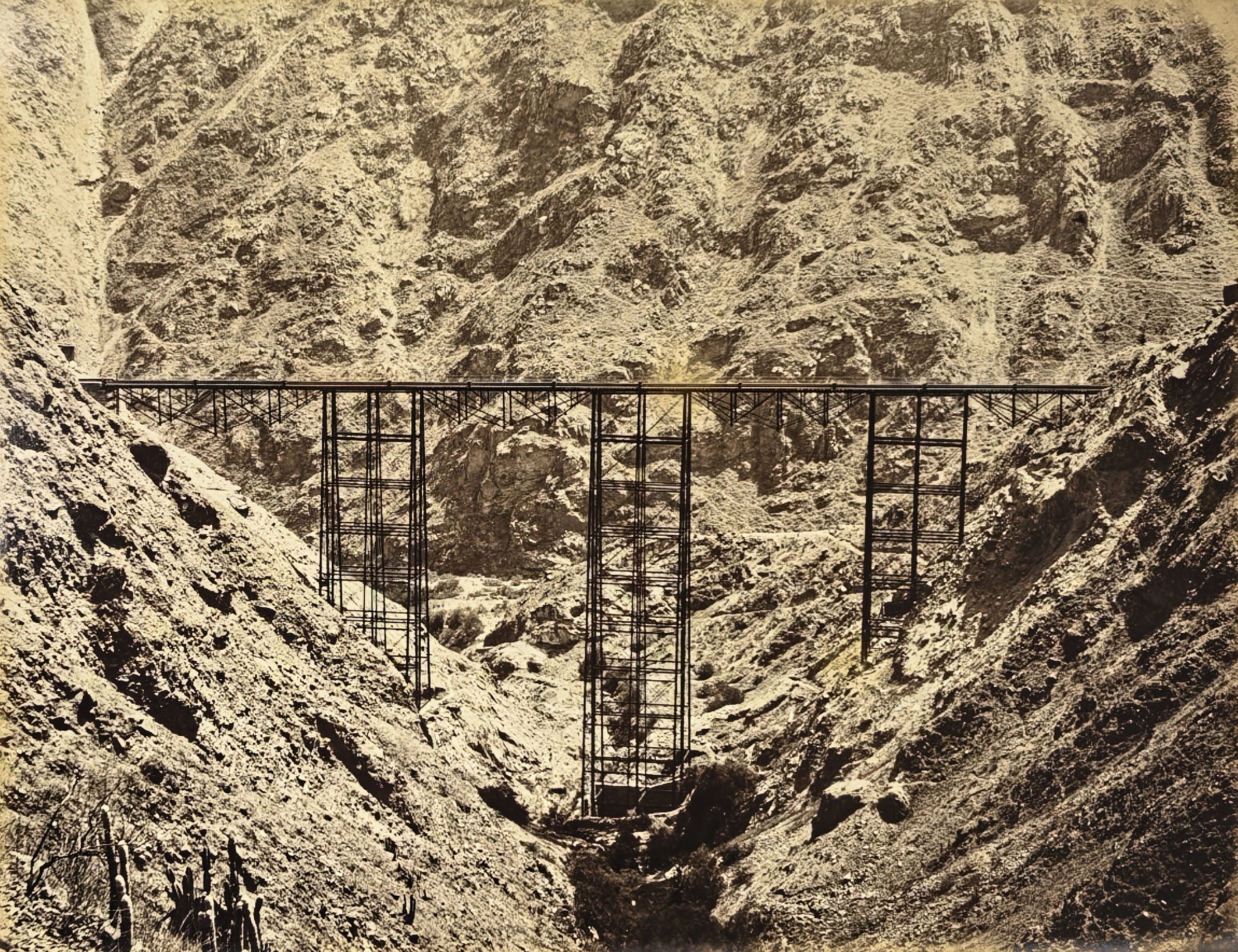
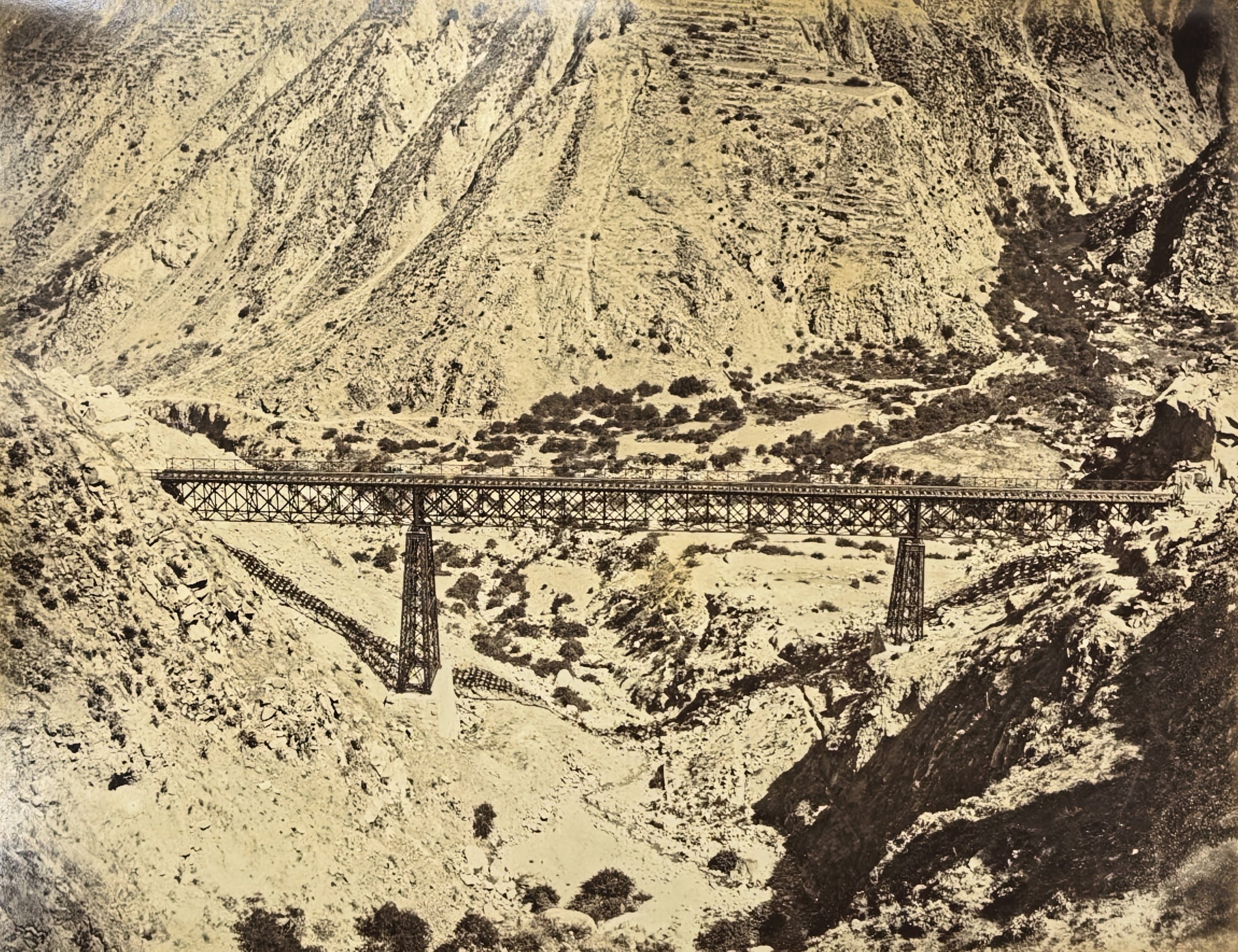
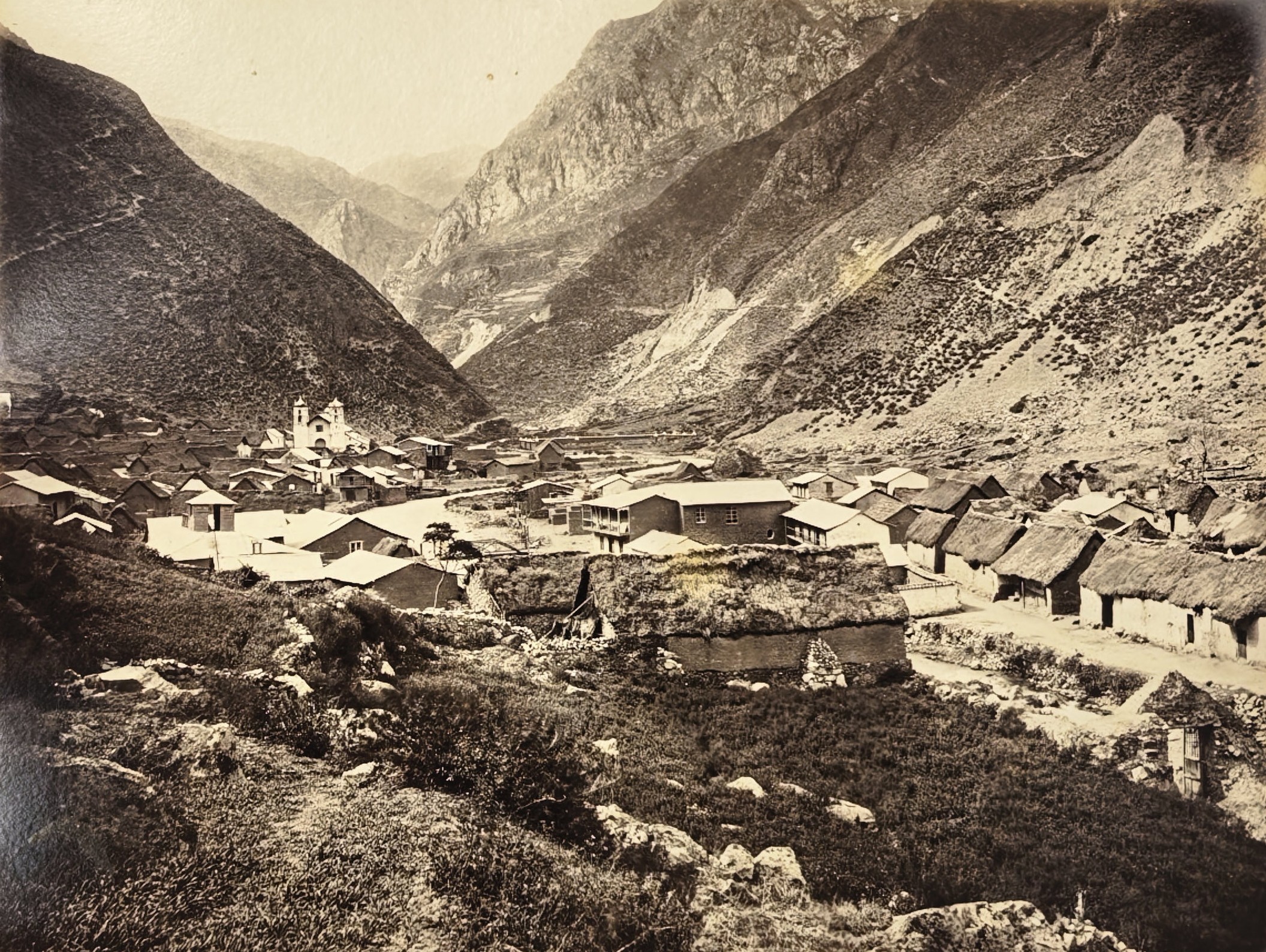
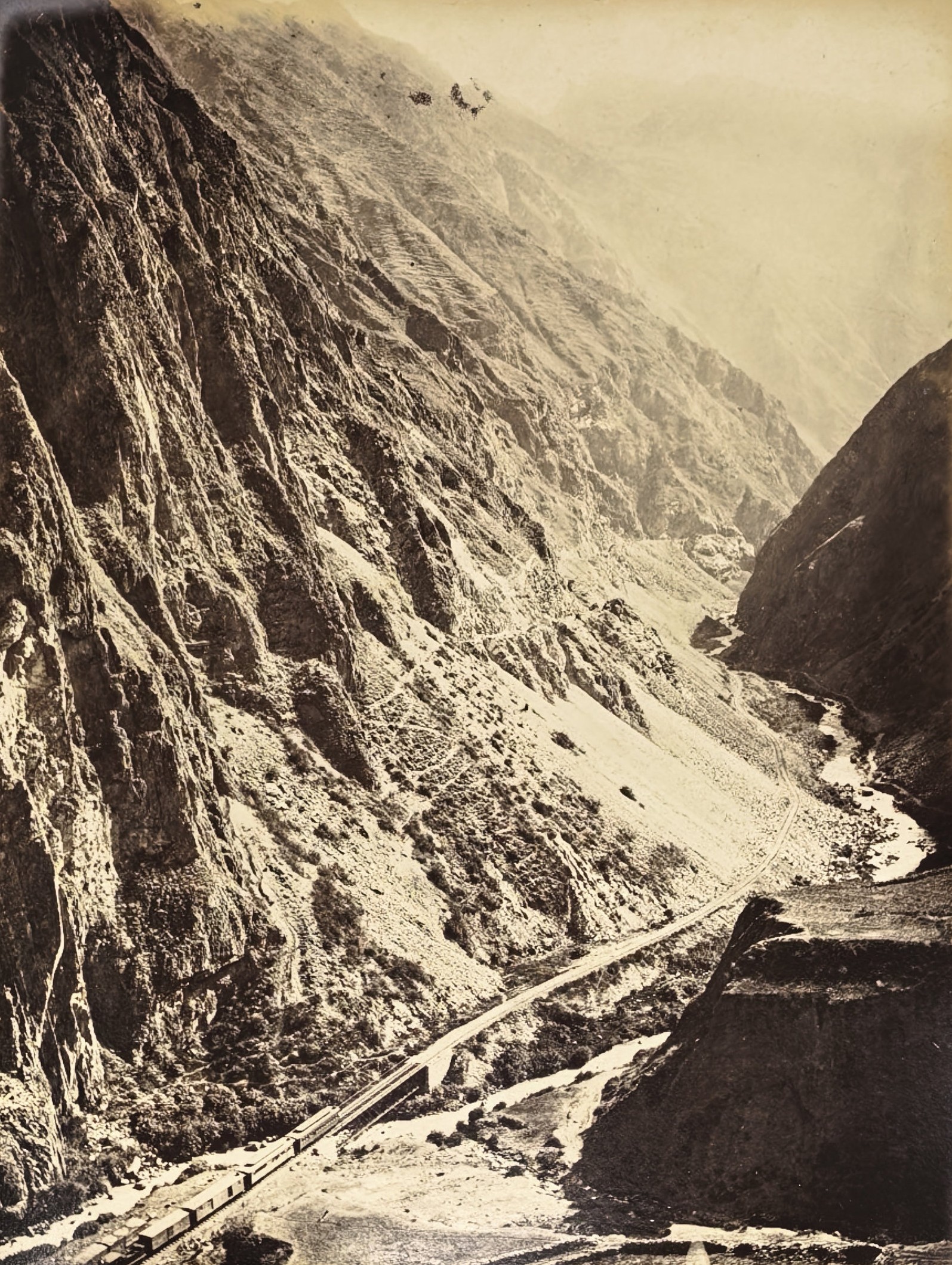
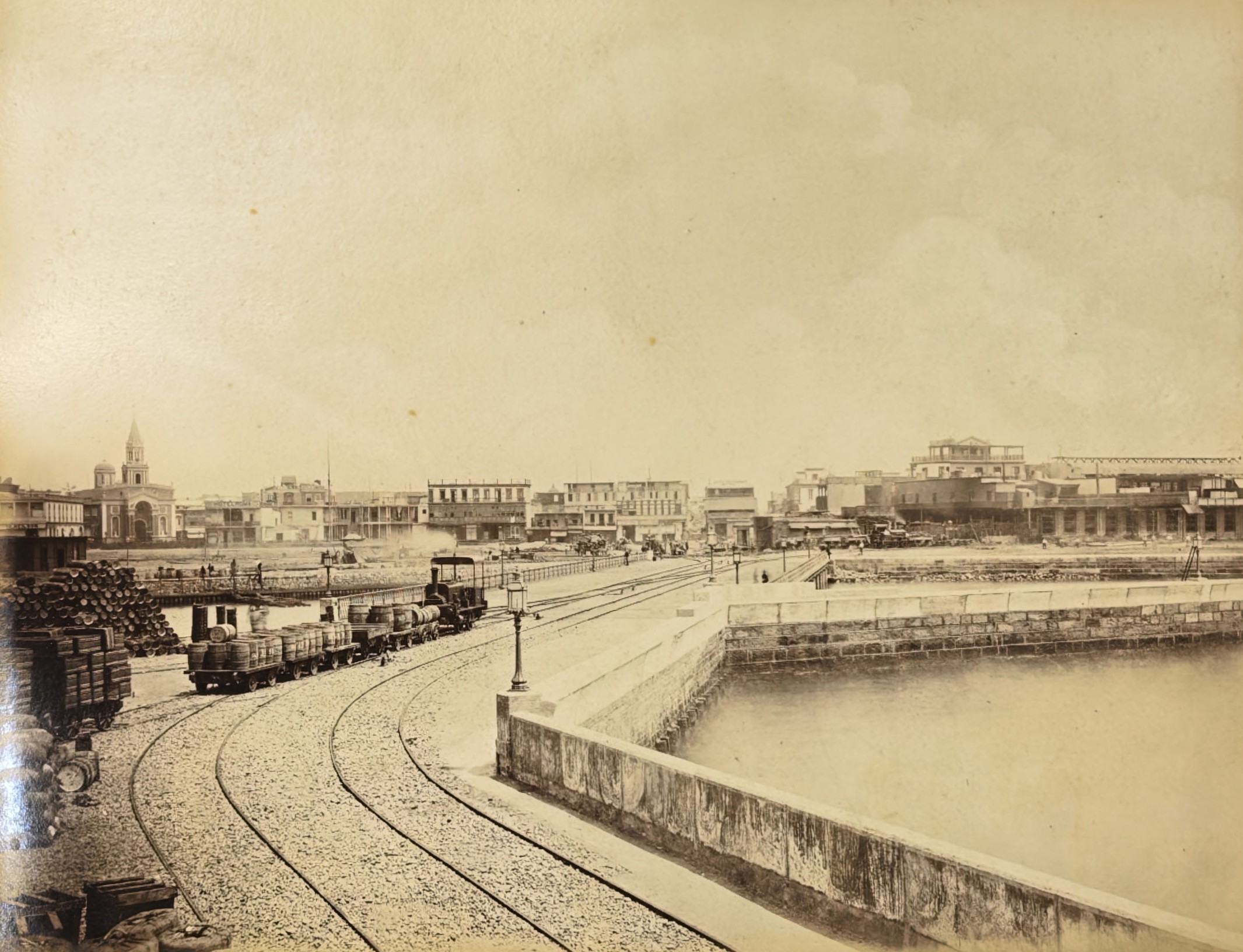
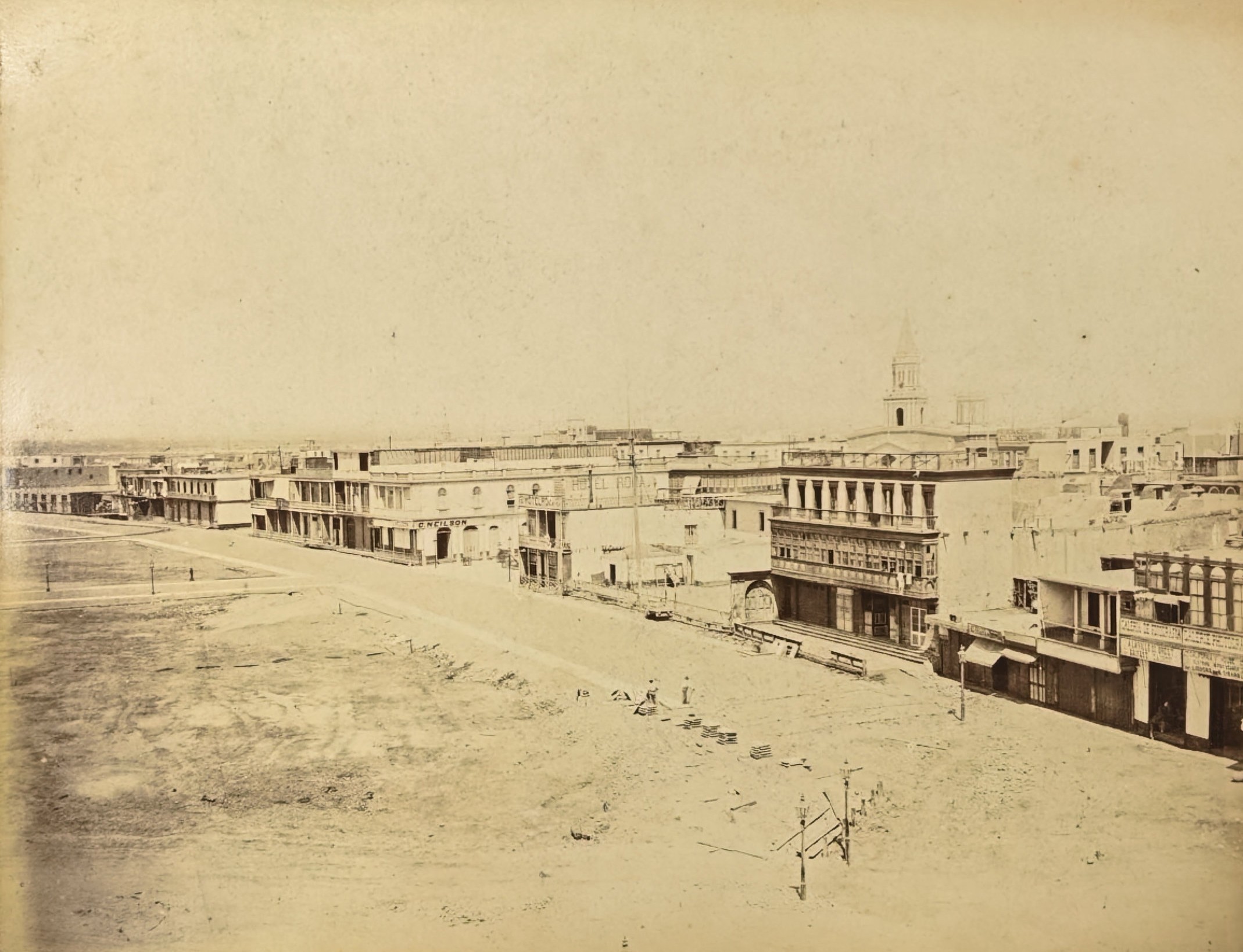
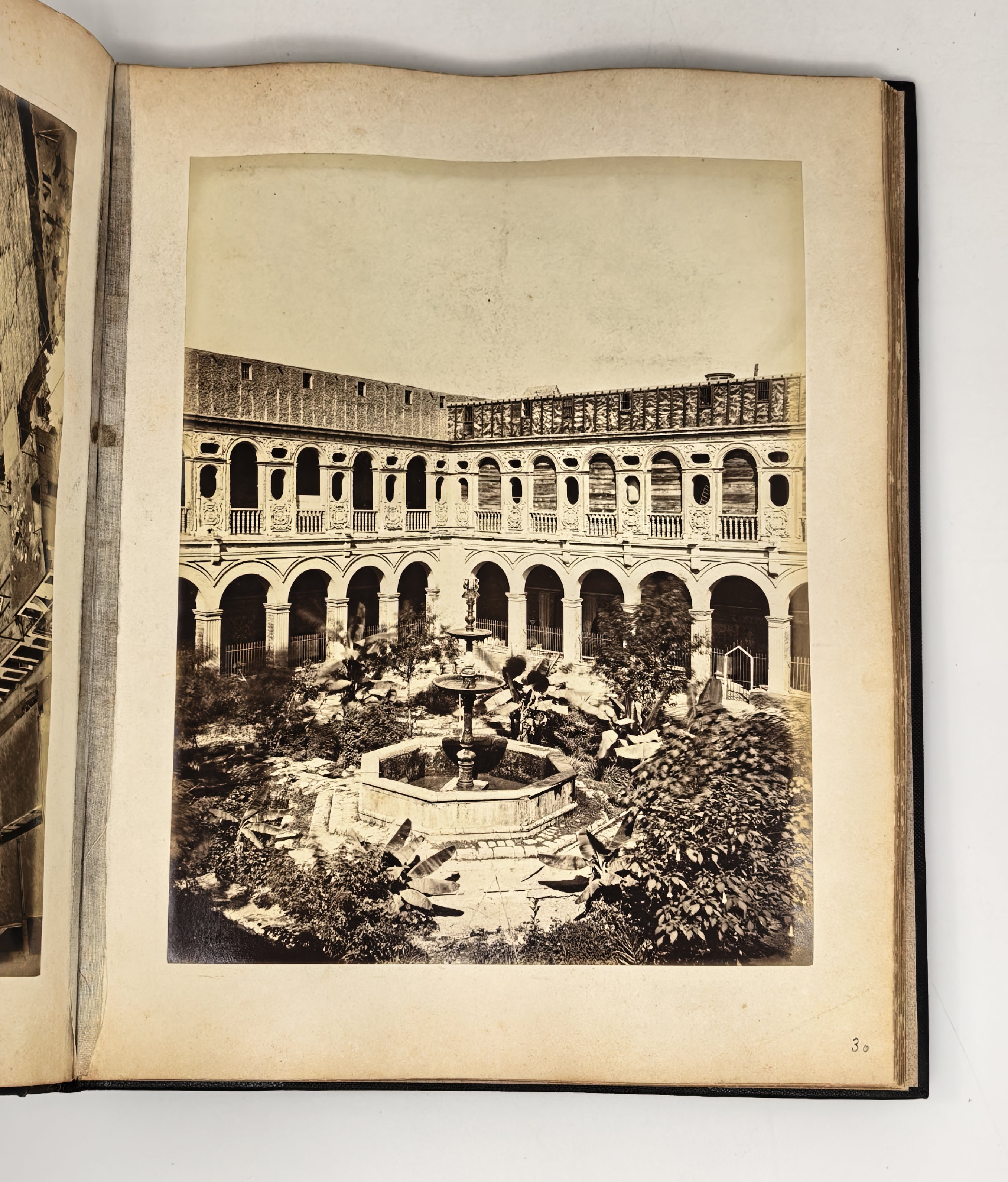
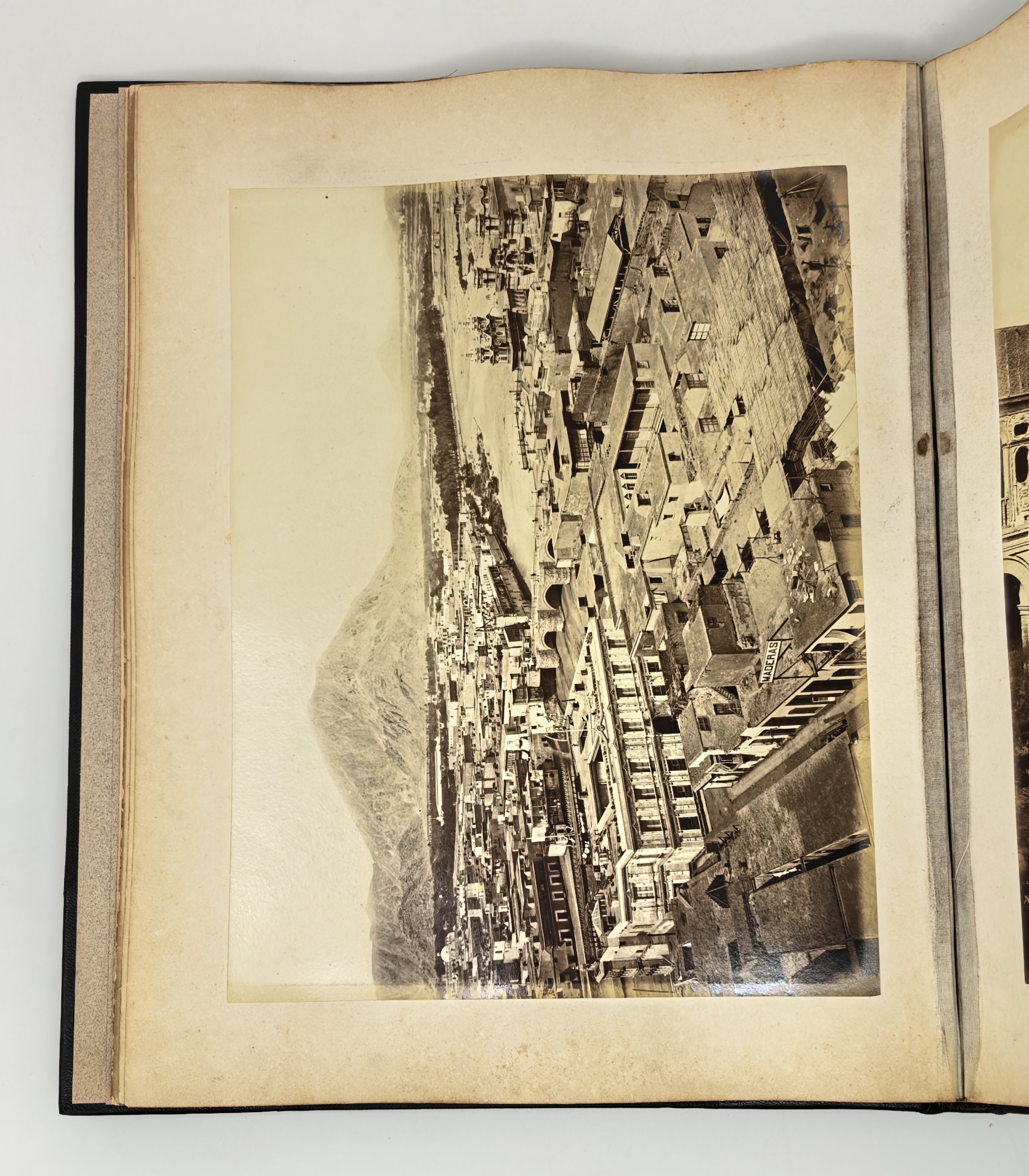
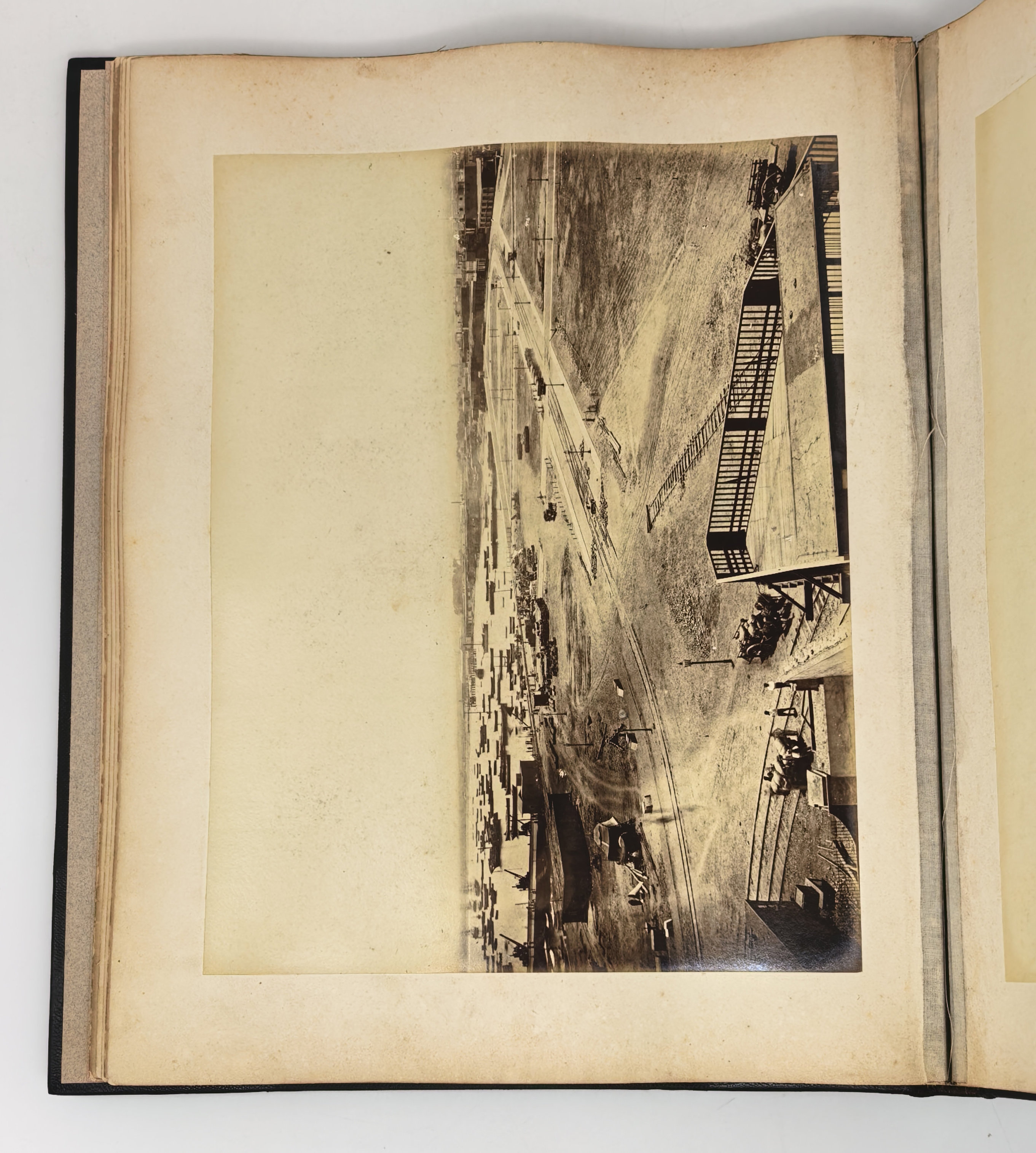
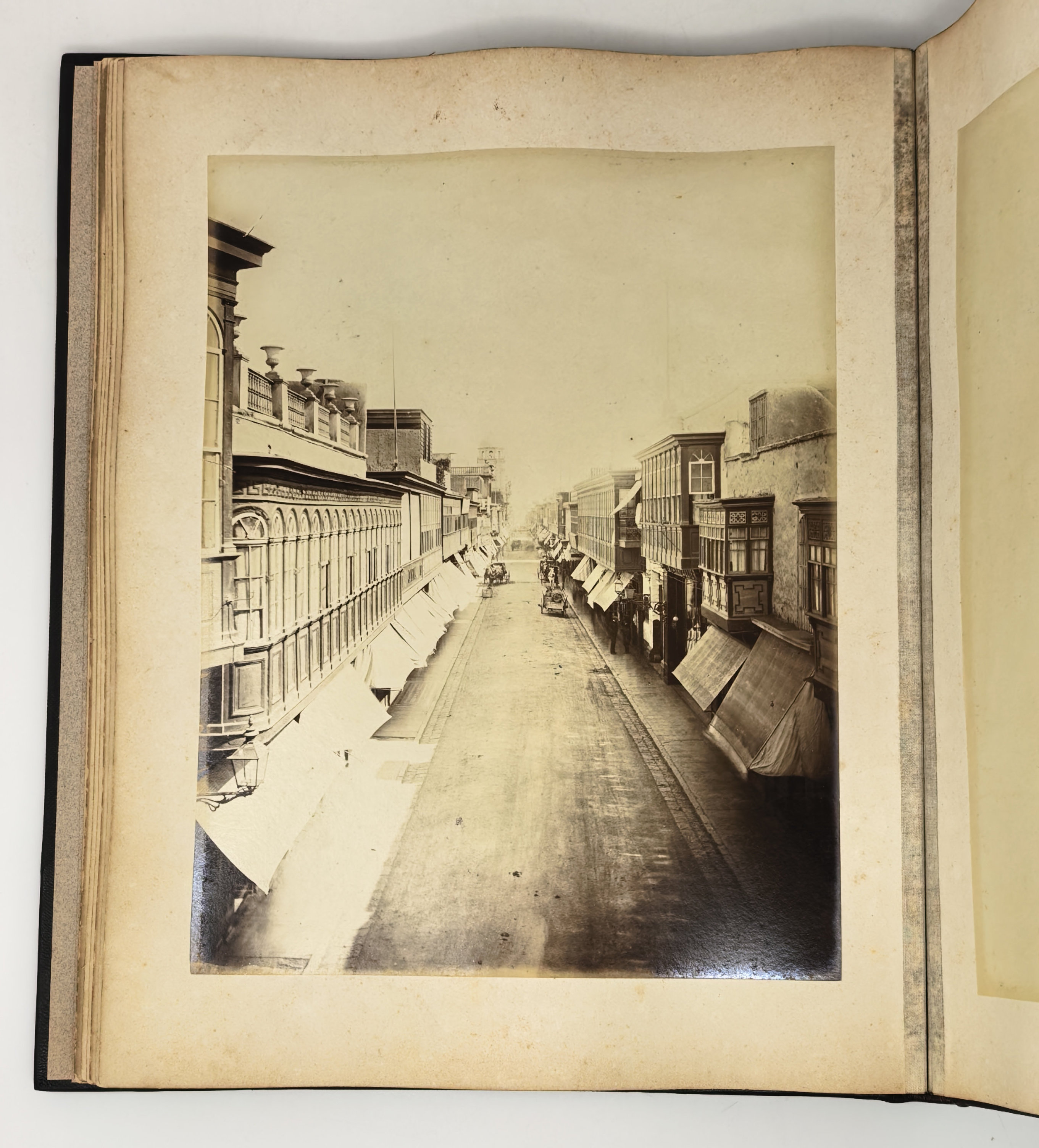
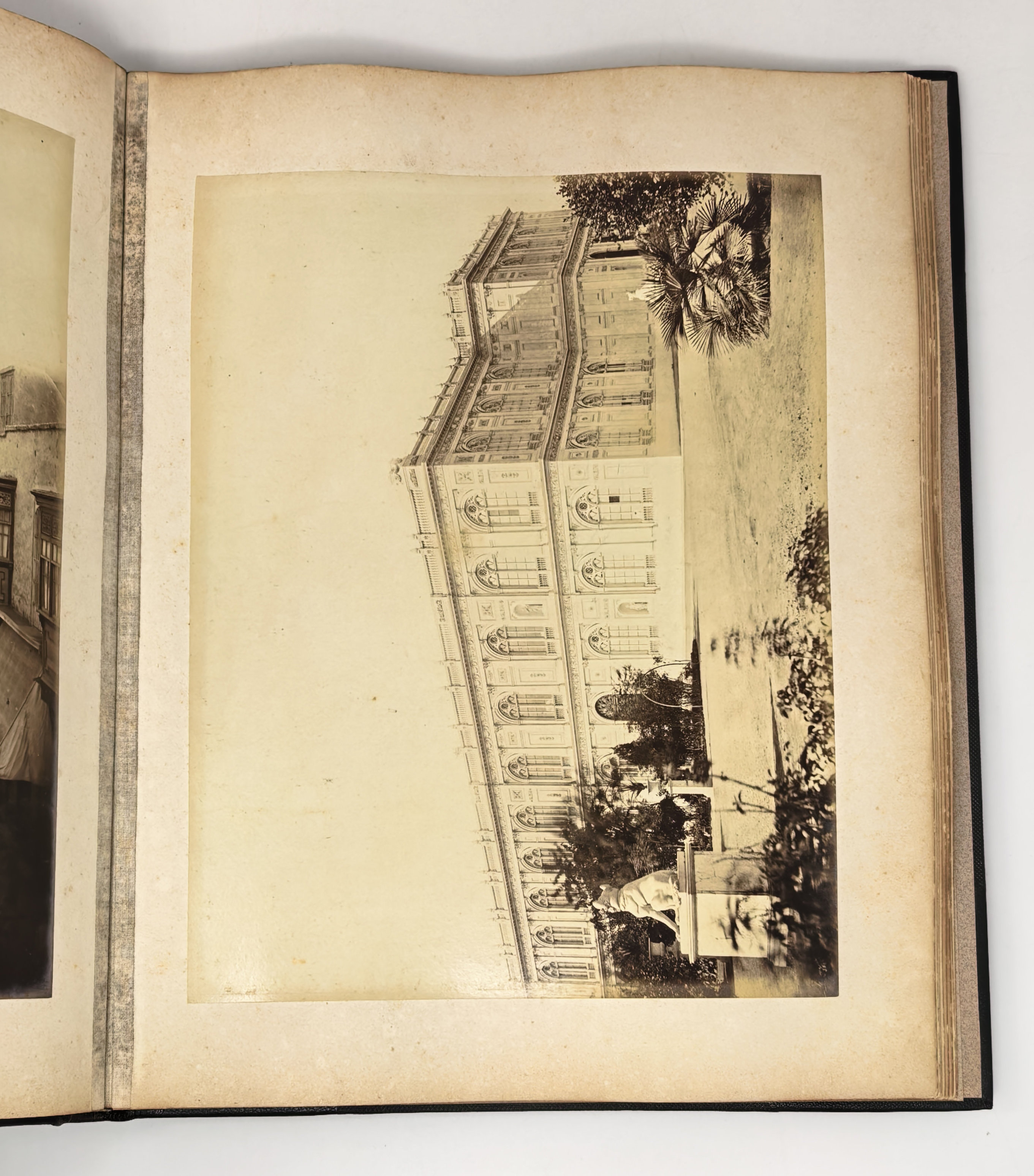
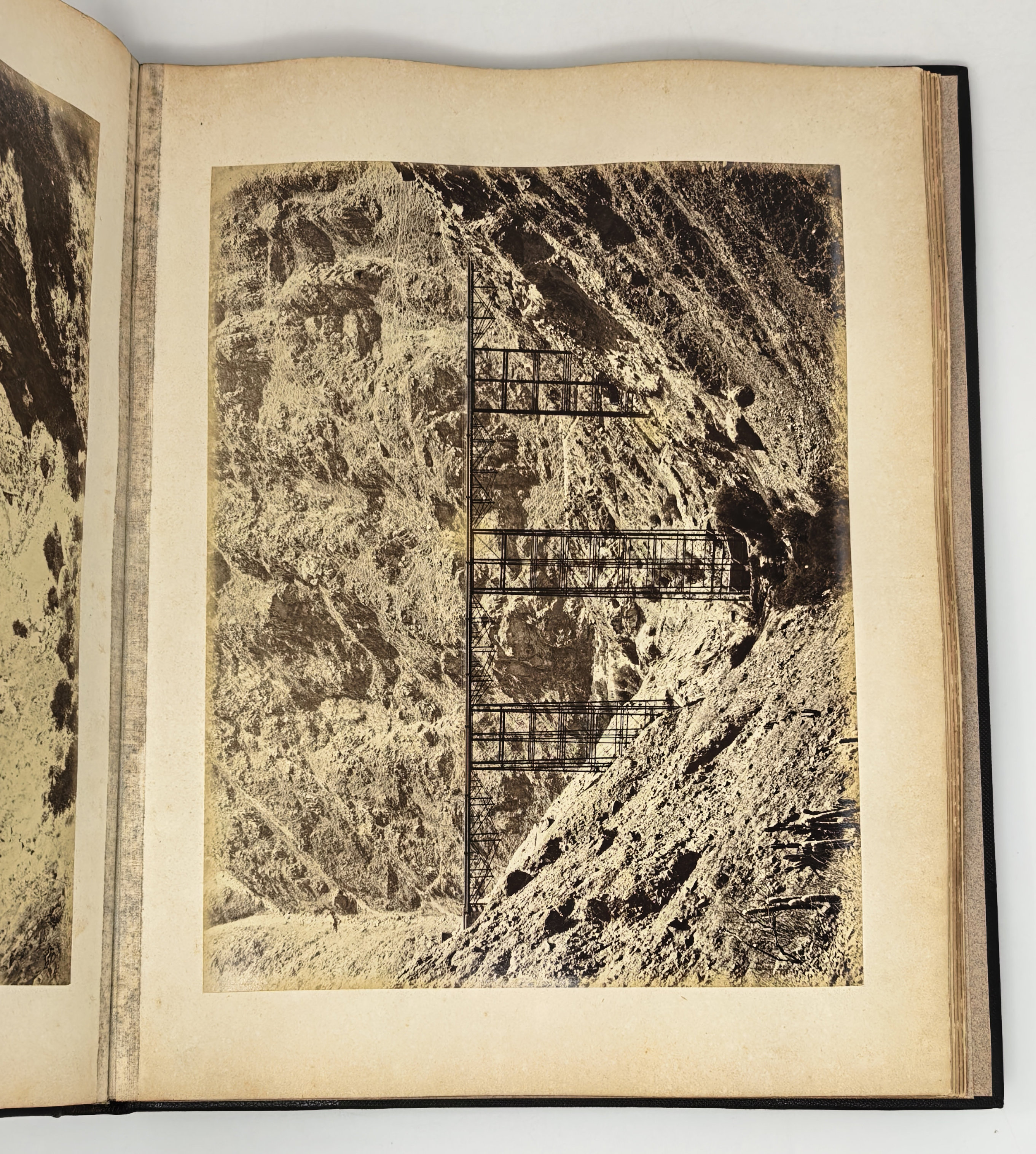
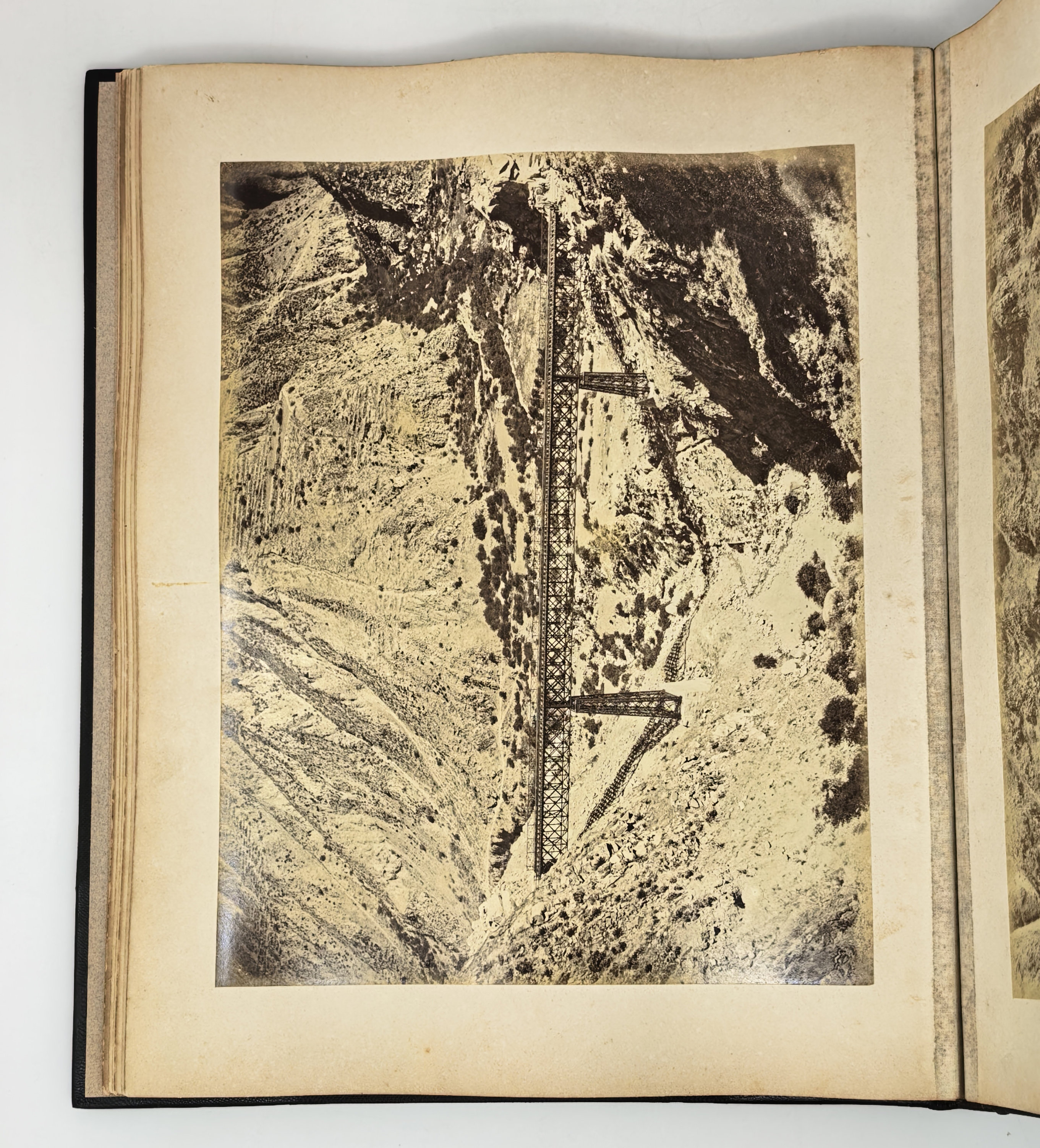
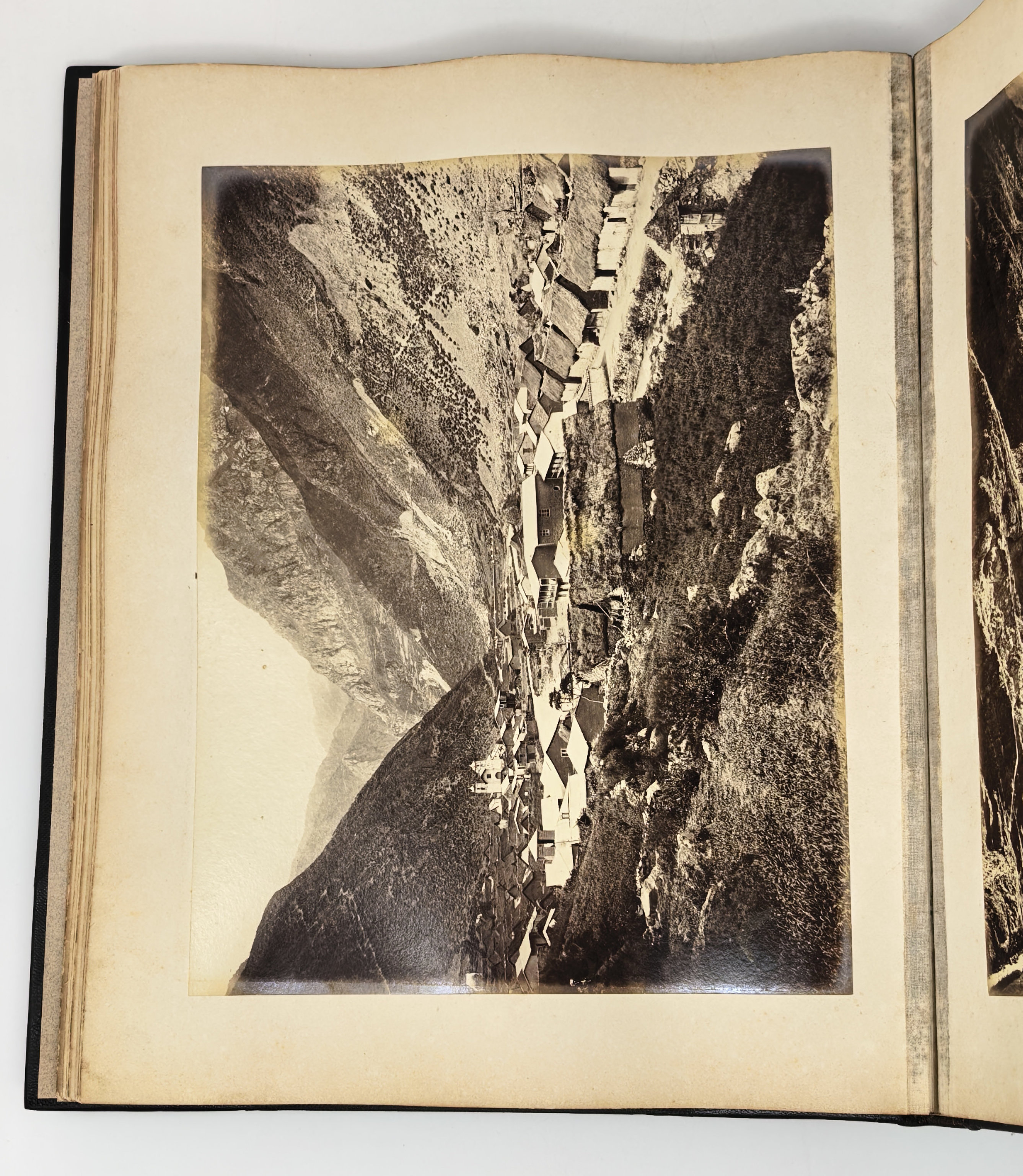
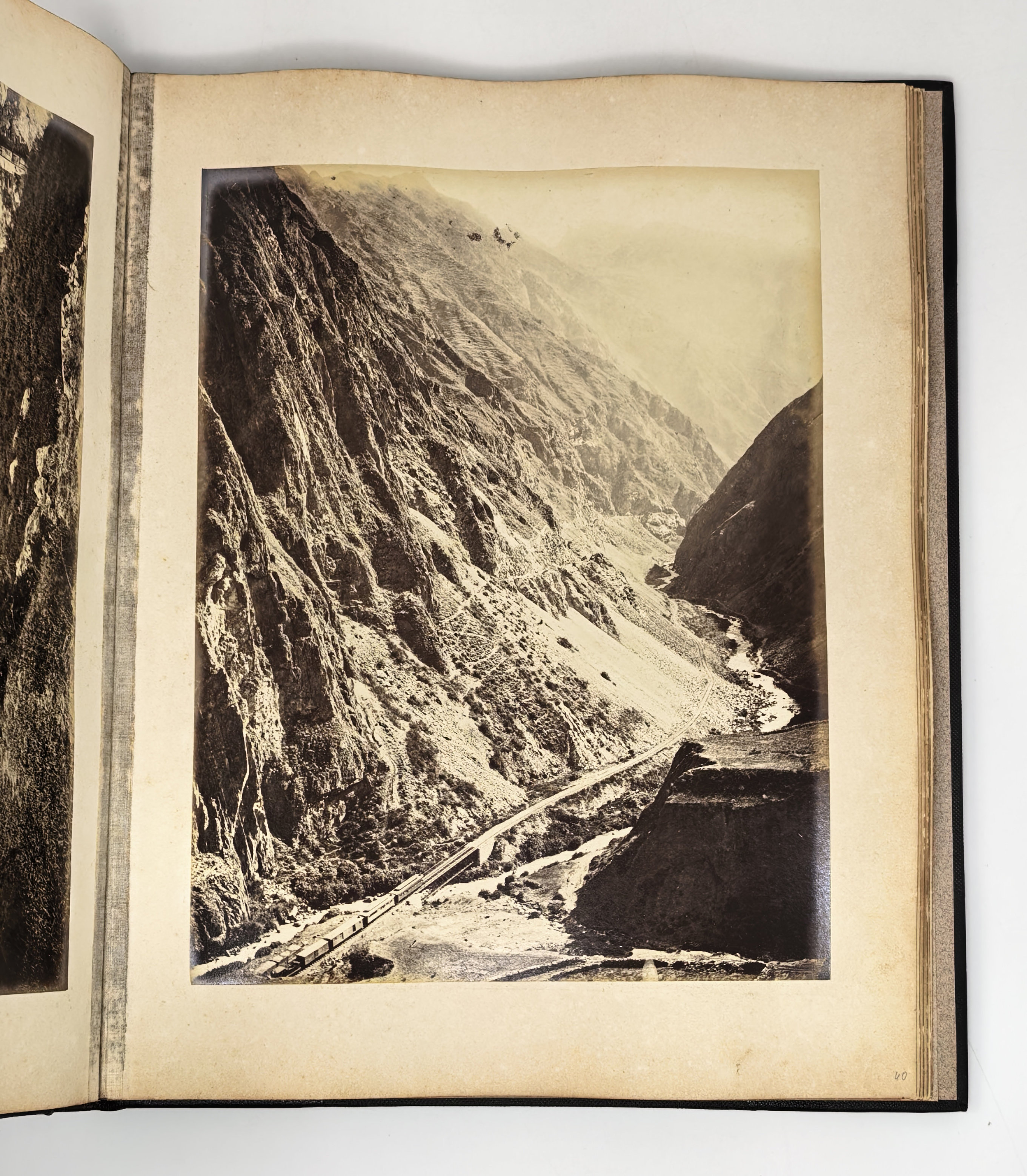
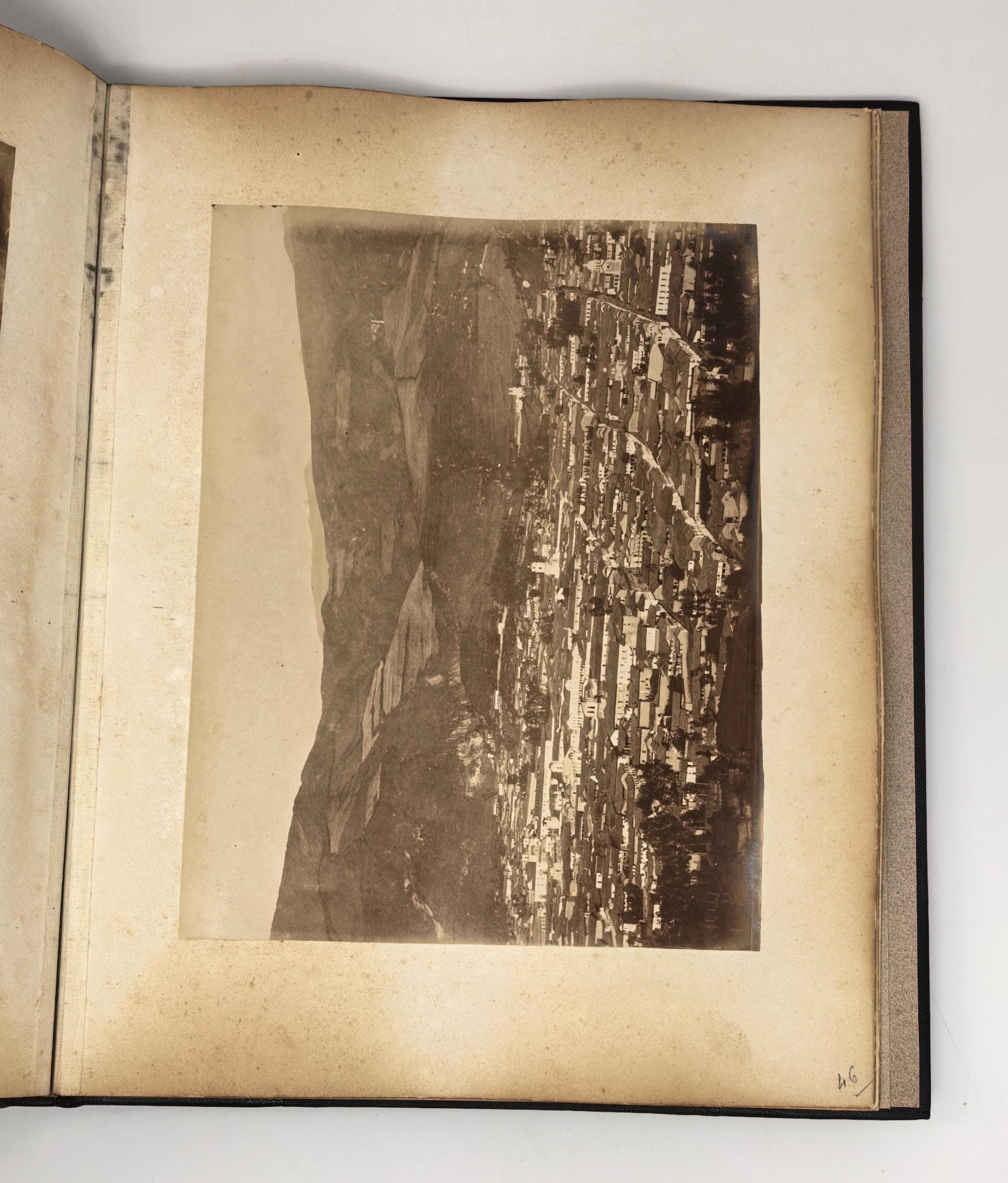
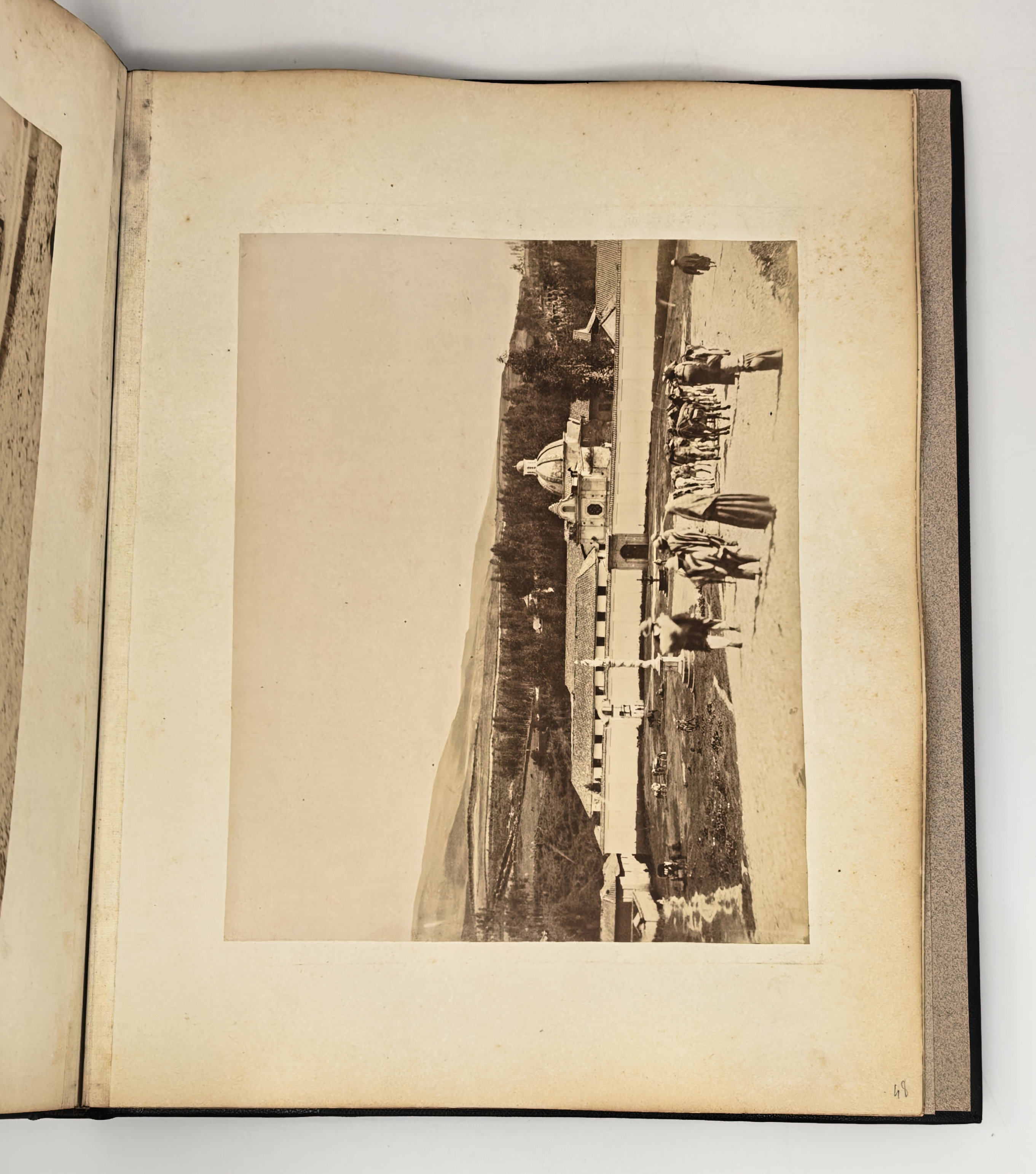
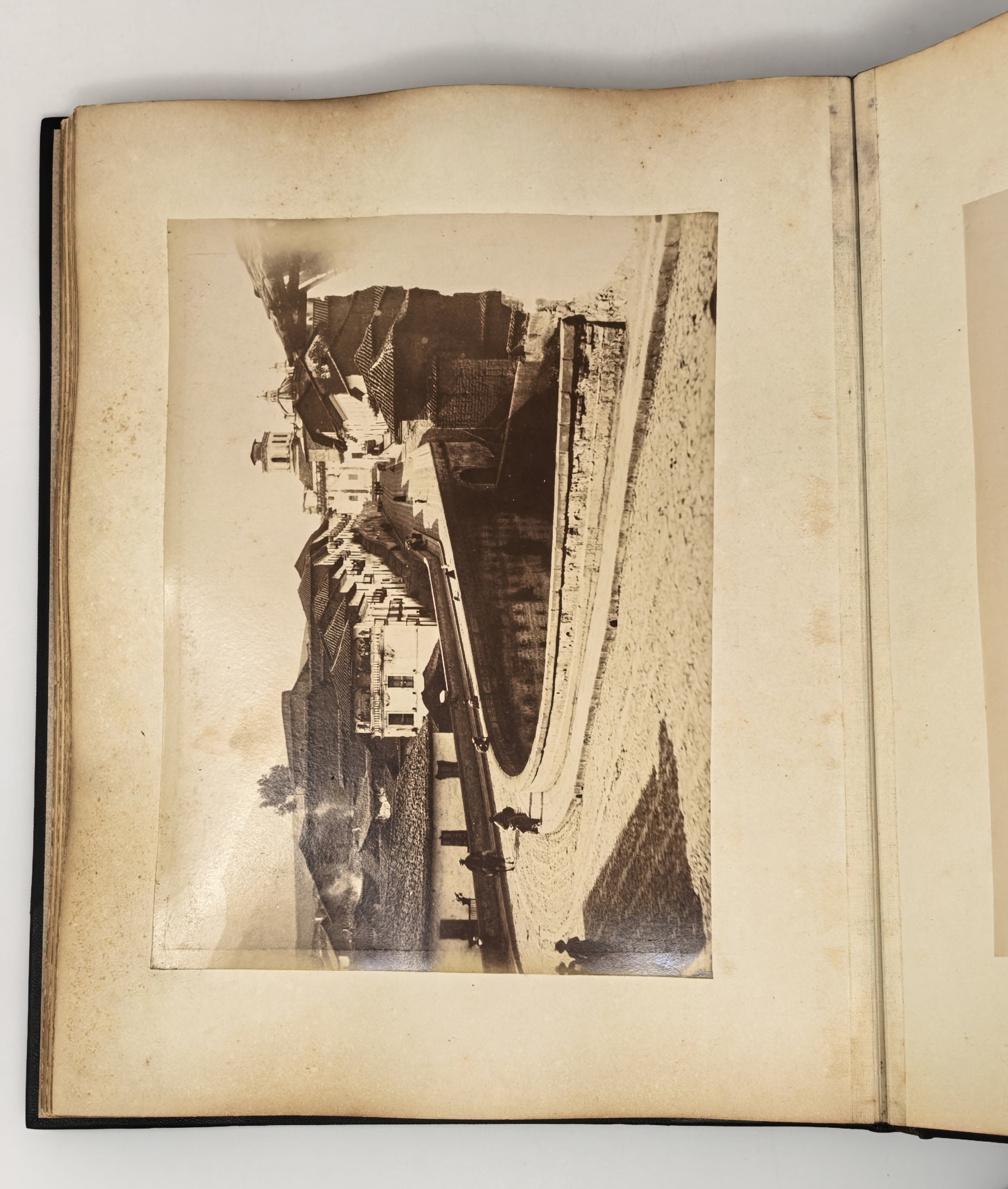
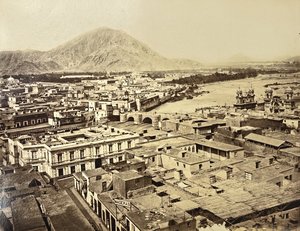
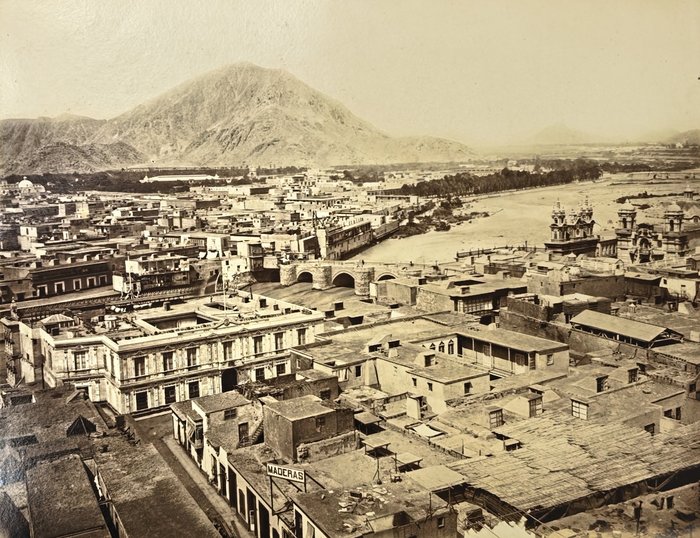
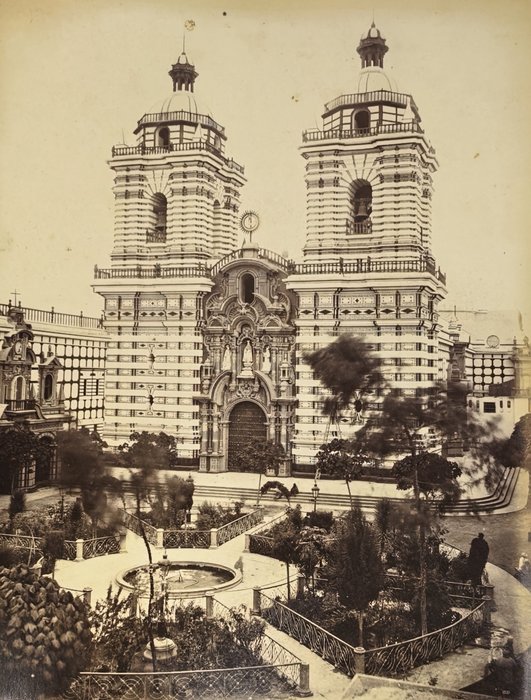
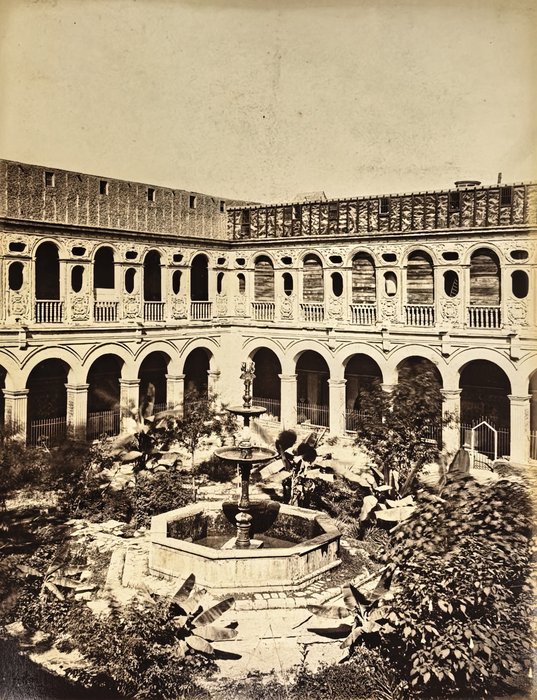
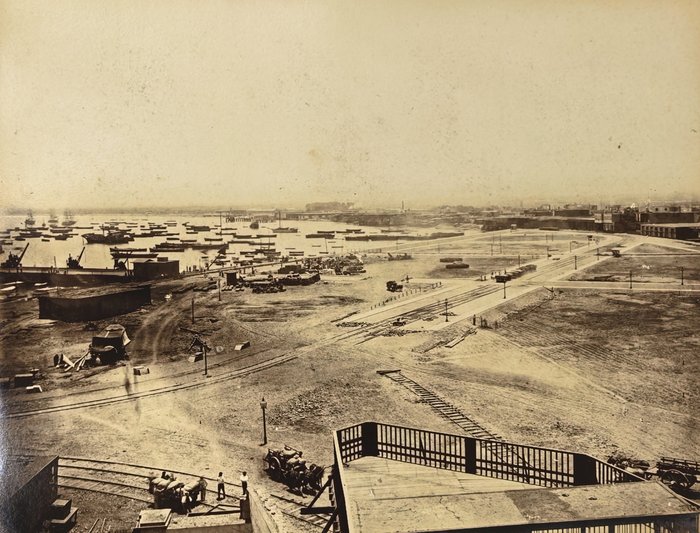
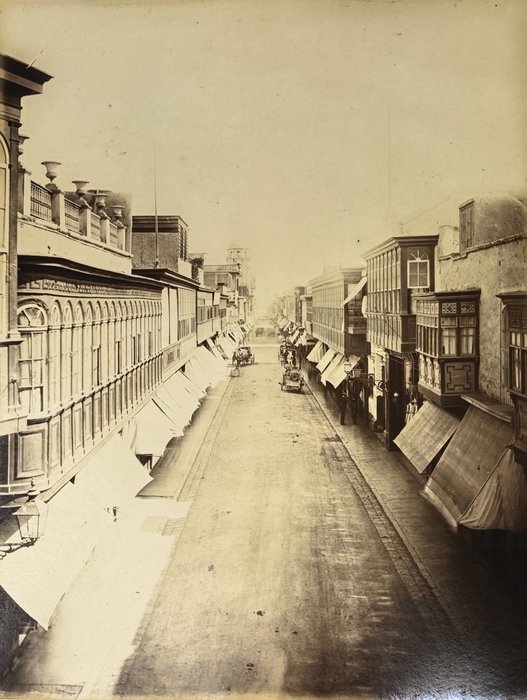
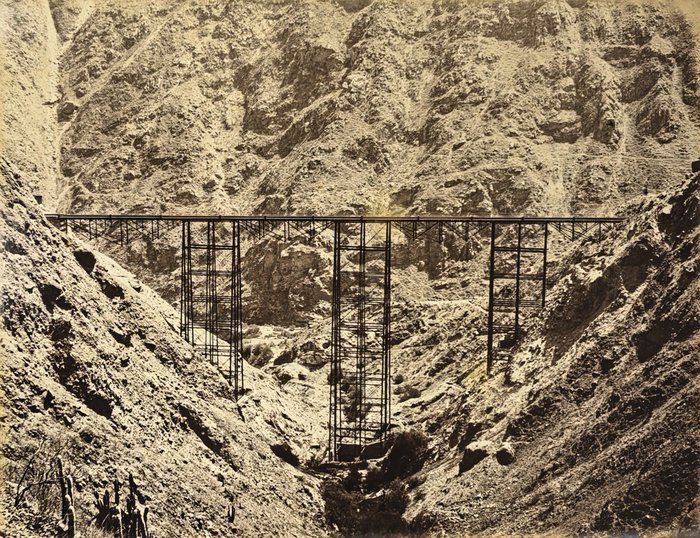
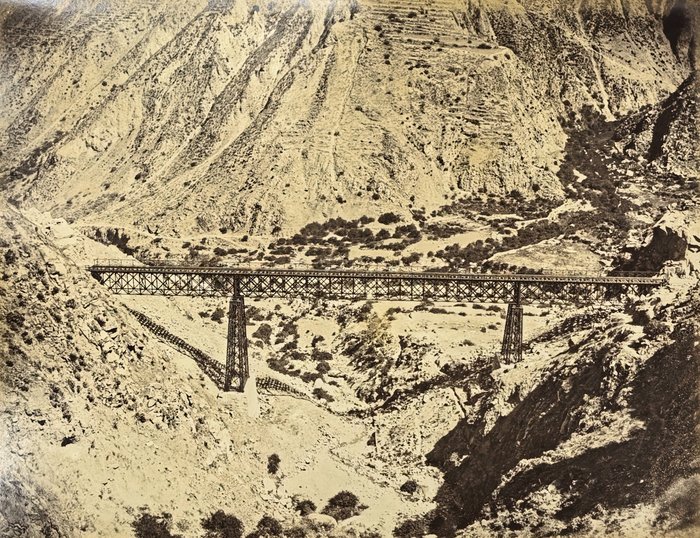
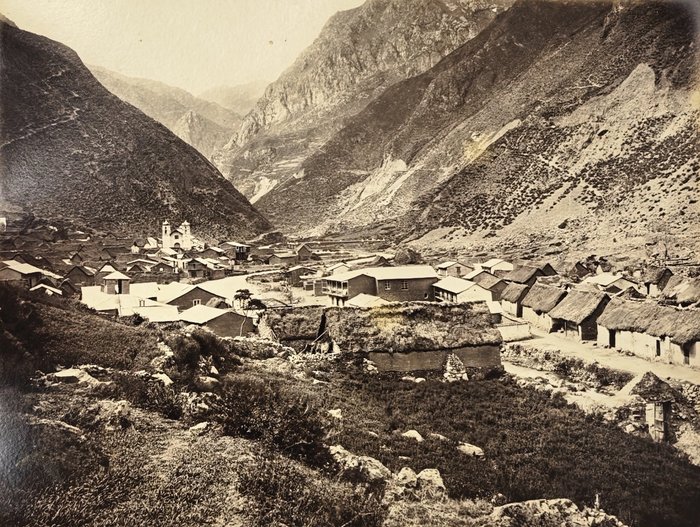
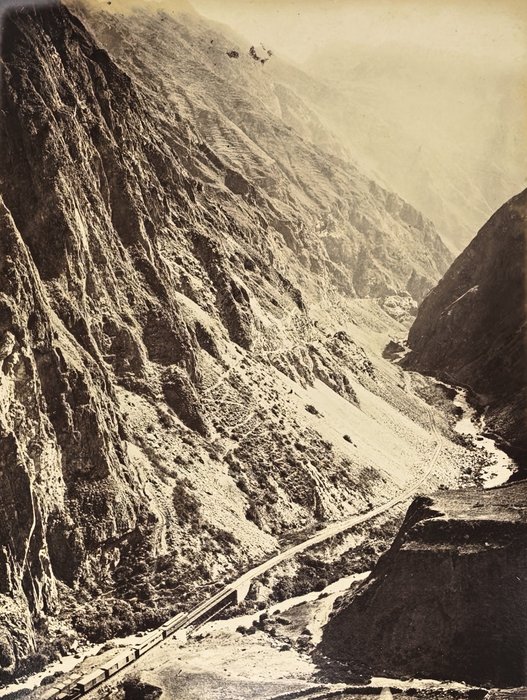
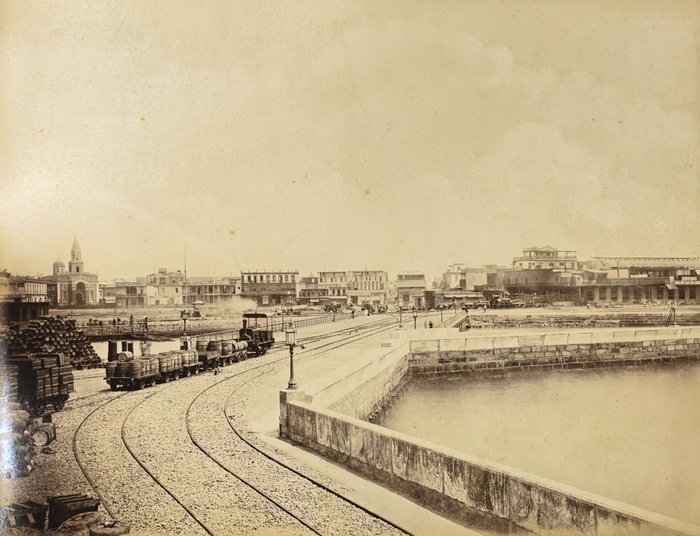
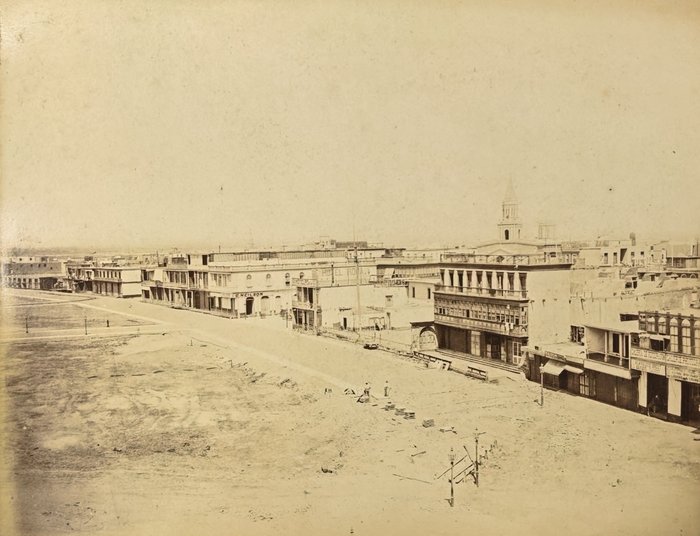
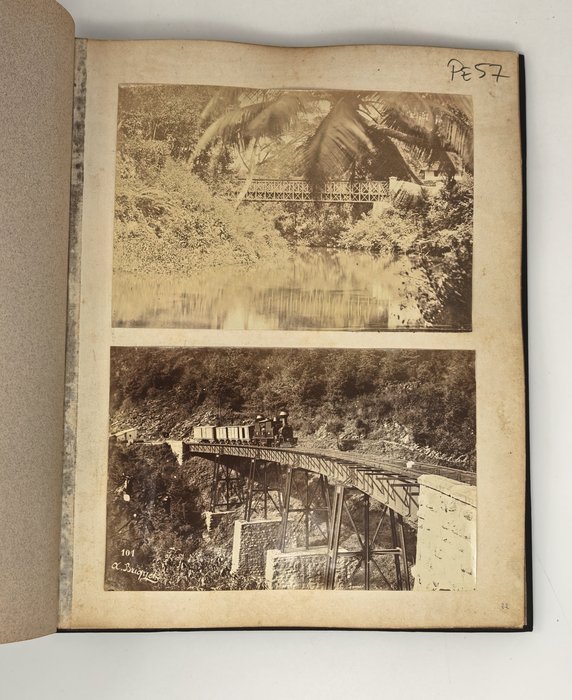
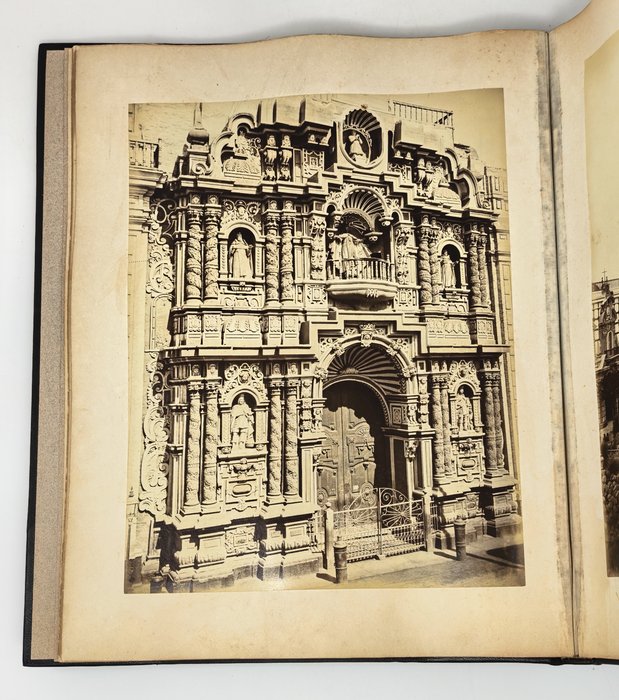
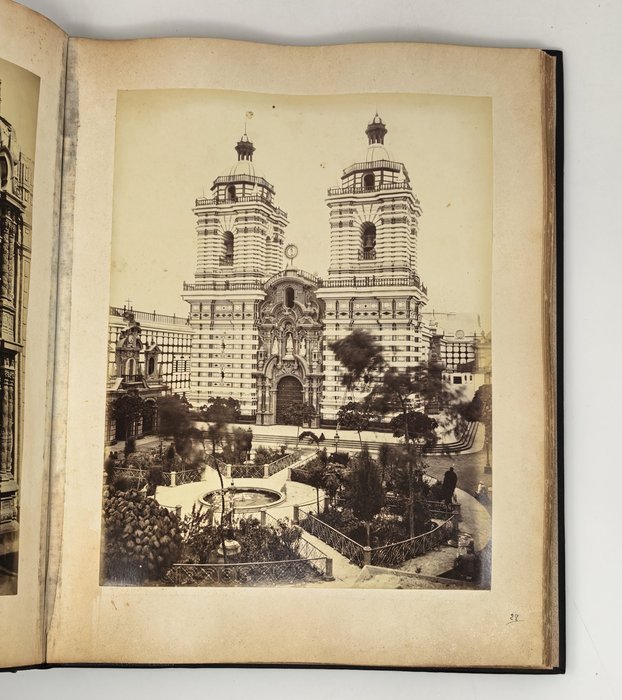
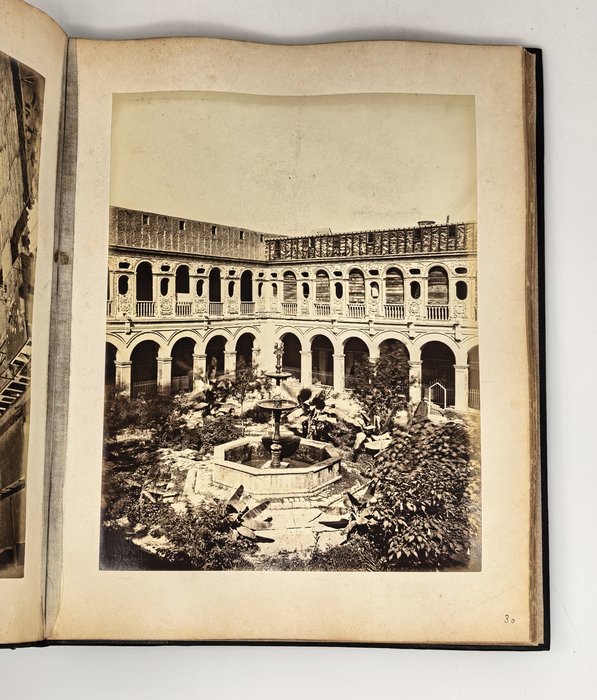
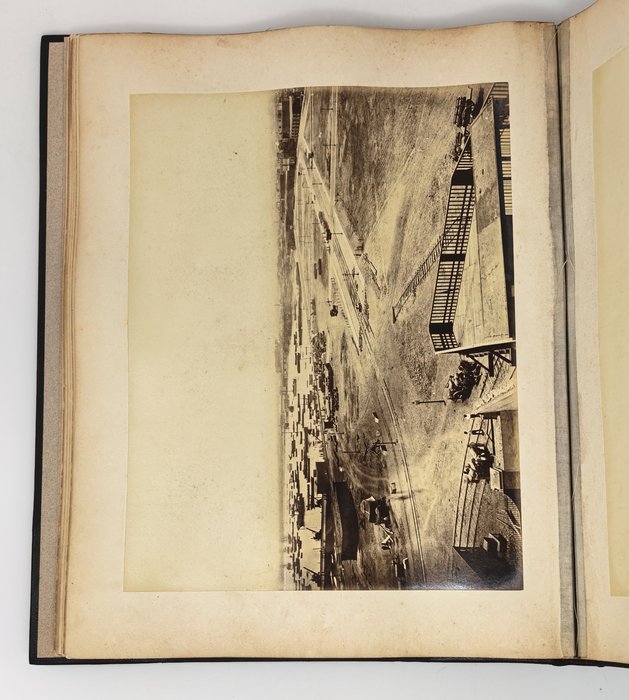
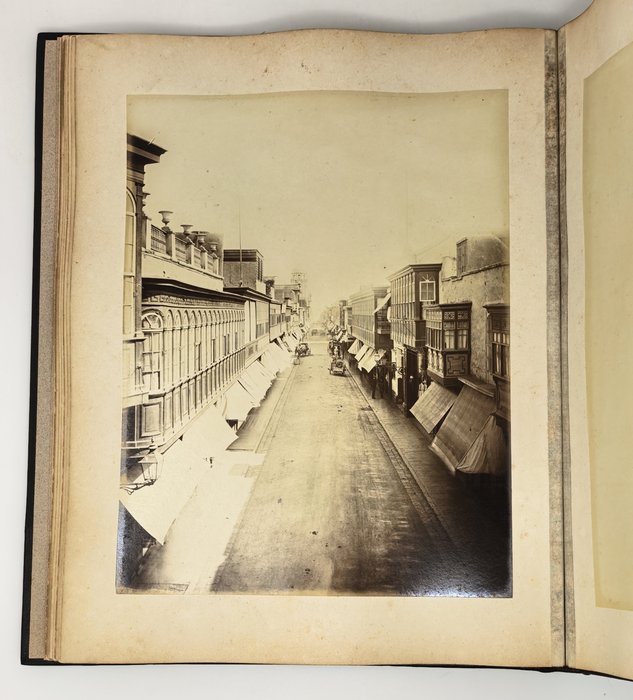
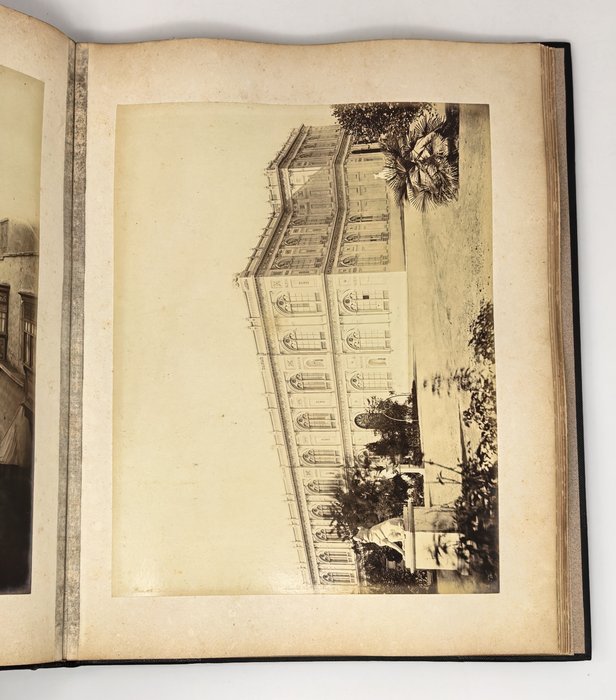
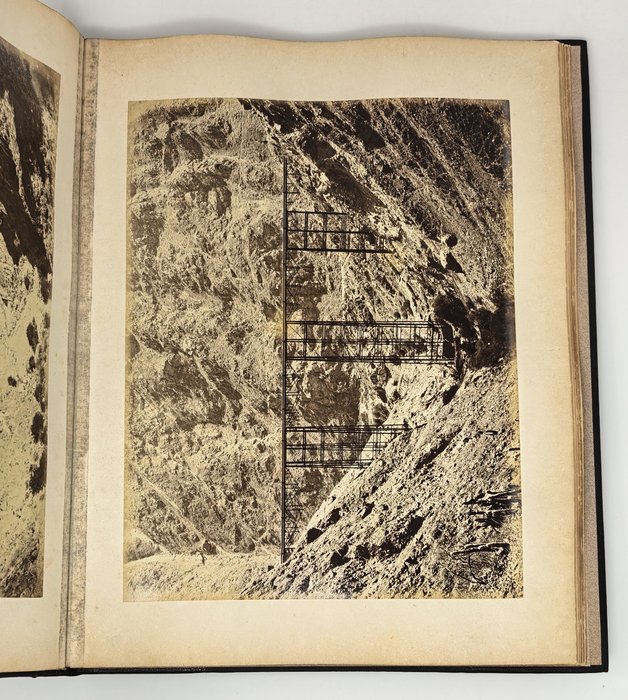
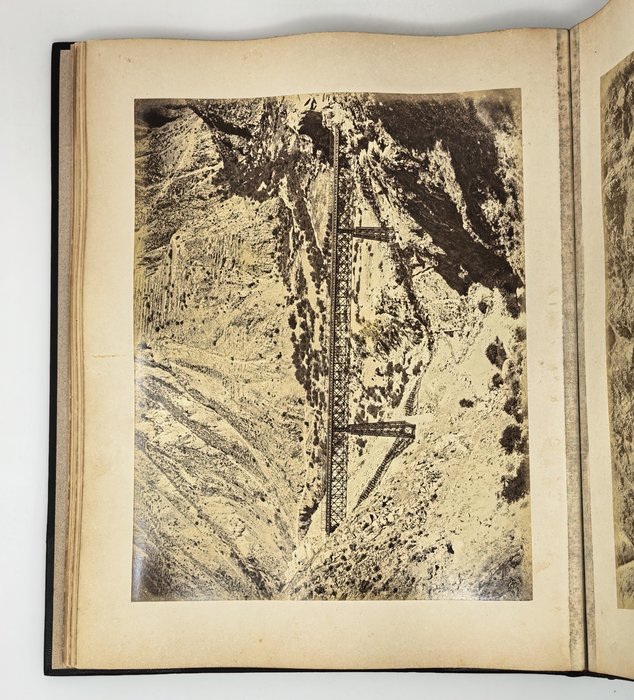
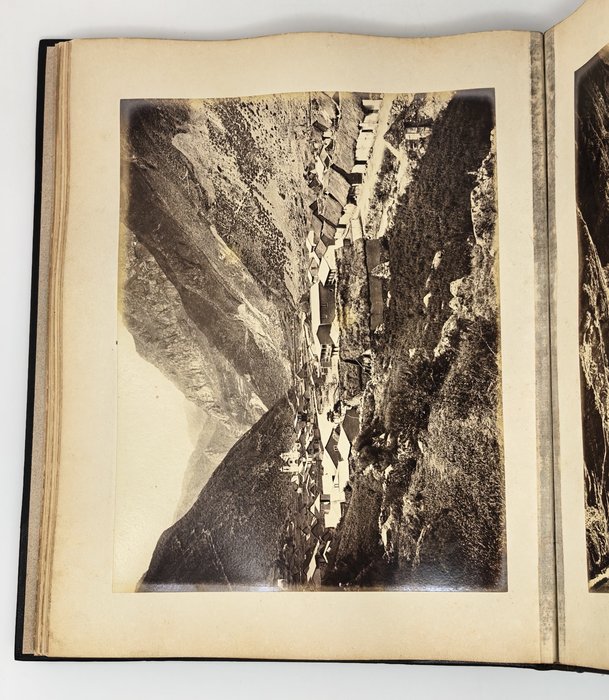
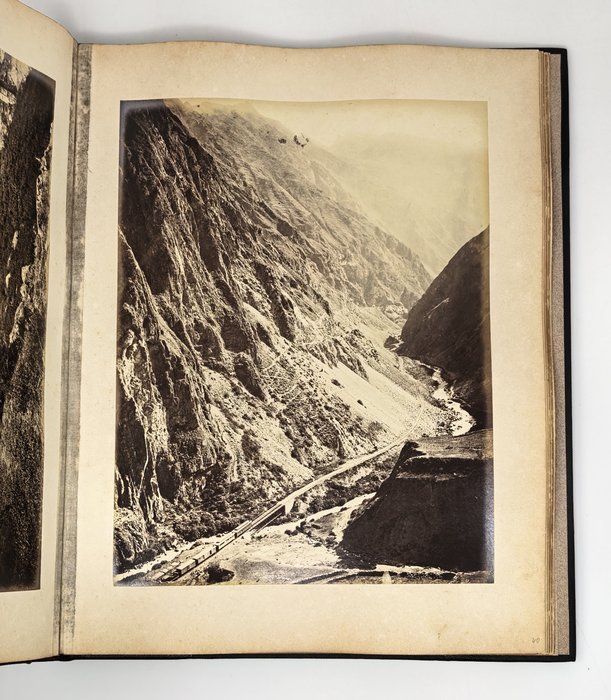
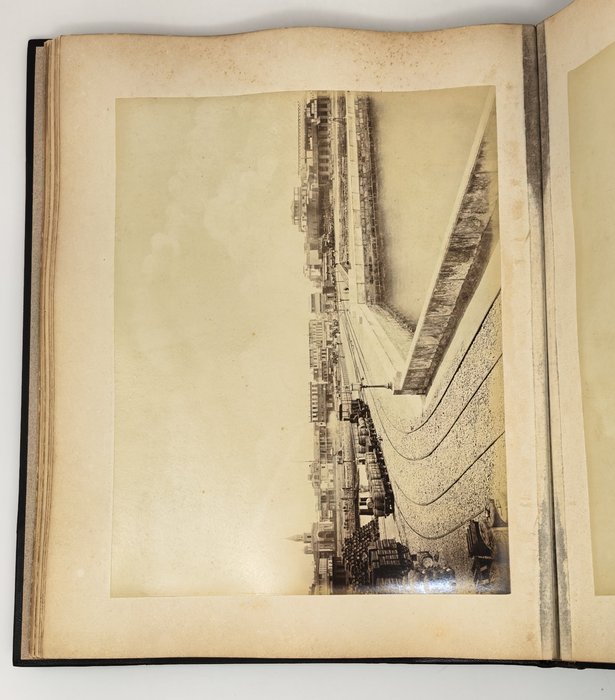
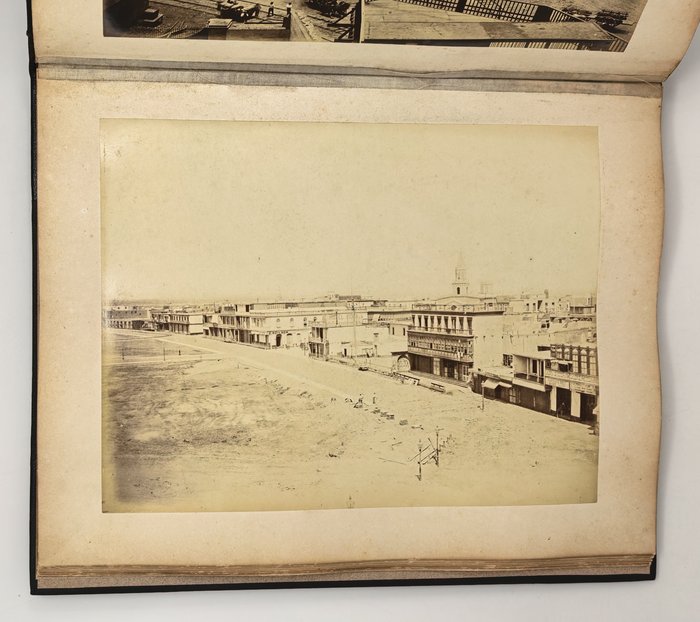
Nineteen views of Peru include a series of photos of Lima: general view of the city with Rimac River, Puente de Piedra and Cerro San Cristobal in the background, Plaza Mayor with Metropolitan Cathedral, ornate Baroque decorations of the entrance gate to Basilica of Nuestra Señora de la Meced, Basilica and Convent of San Francisco (front view, inner courtyard with a fountain), Alameda de los Descalzos with Santa Liberata church in the left and Cerro San Cristobal in the background, Calle de Mercaderes, Malecon de Miraflores esplanade, three views of a waterfront with port facilities and businesses, likely in Callao, and Palacio de la Exposicion (the latter was attributed to Eugenio Courret). Very interesting is a historic view of the town of Chorillos (today a part of Metropolitan Lima), taken before the city was destroyed and looted by the Chilean Army during the War of the Pacific (Battle of Chorillos took place on January 13, 1881). Several photos show views on the route of the Callao, Lima & Oroya Railway: Verrugas Viaduct (this is the second version of the bridge, constructed in 1891 after the first bridge collapsed in a flood in 1889), a town in the mountains (possibly, Chicla), a railway on a mountain slope, and a trestle railway bridge.
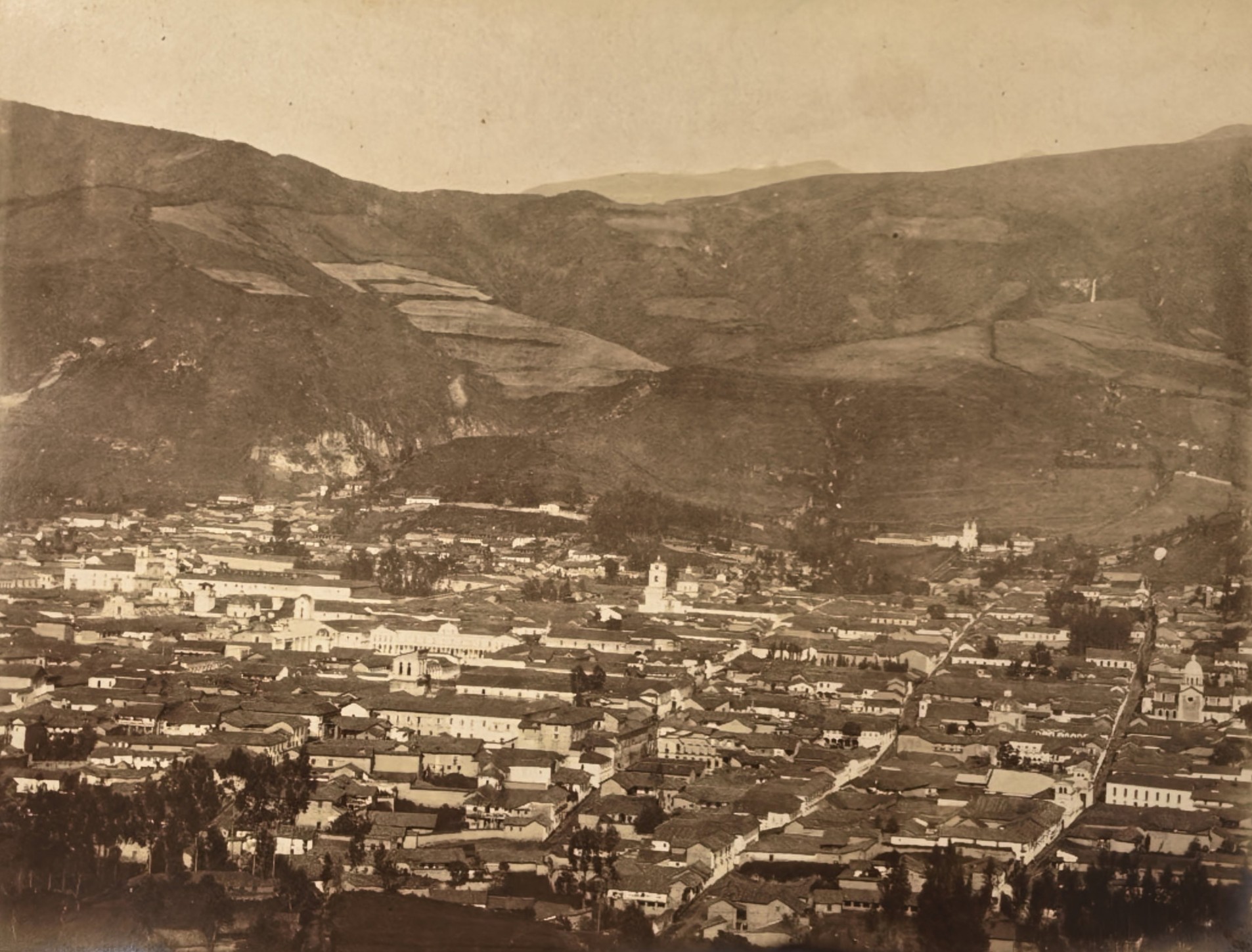
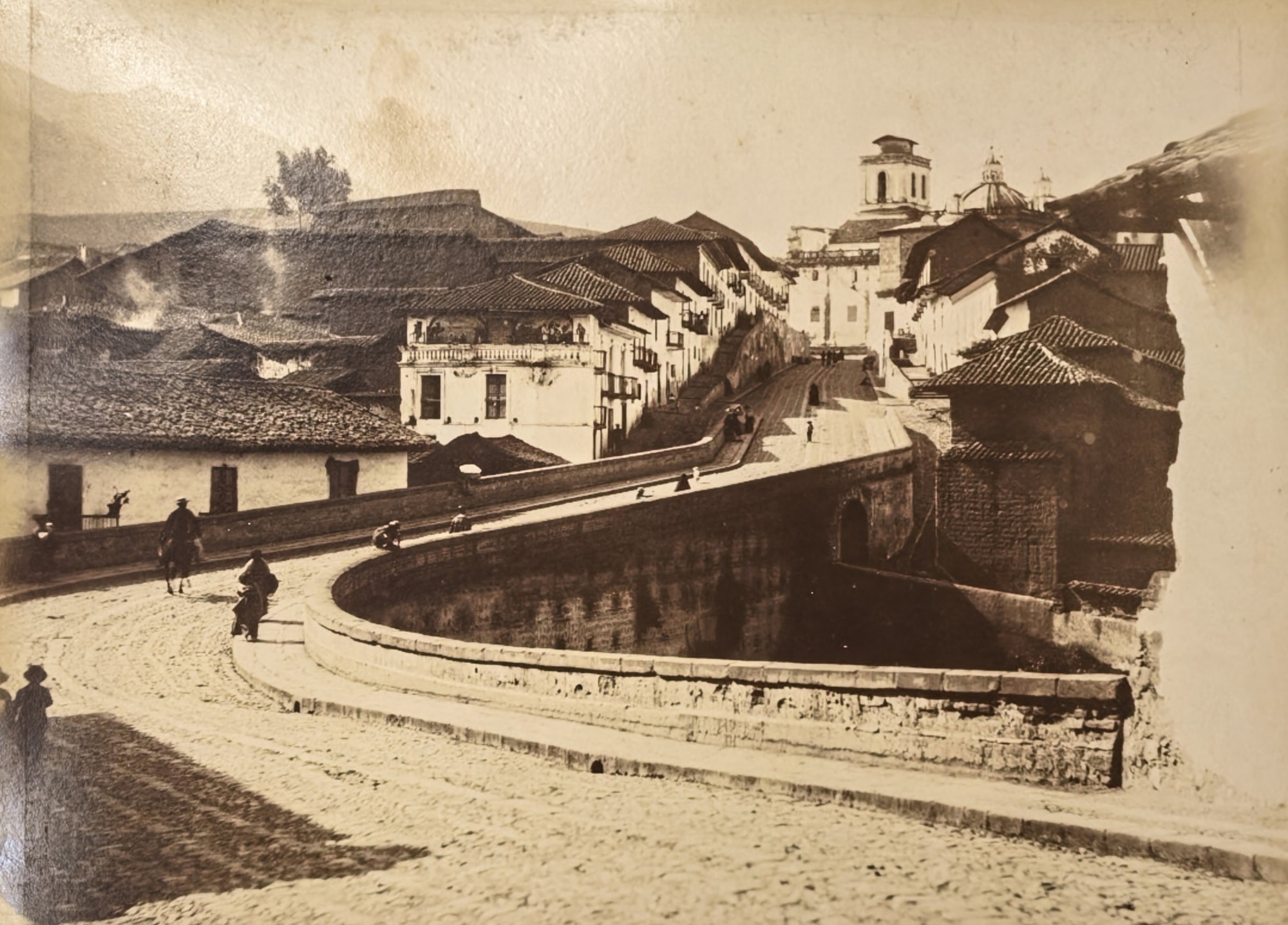
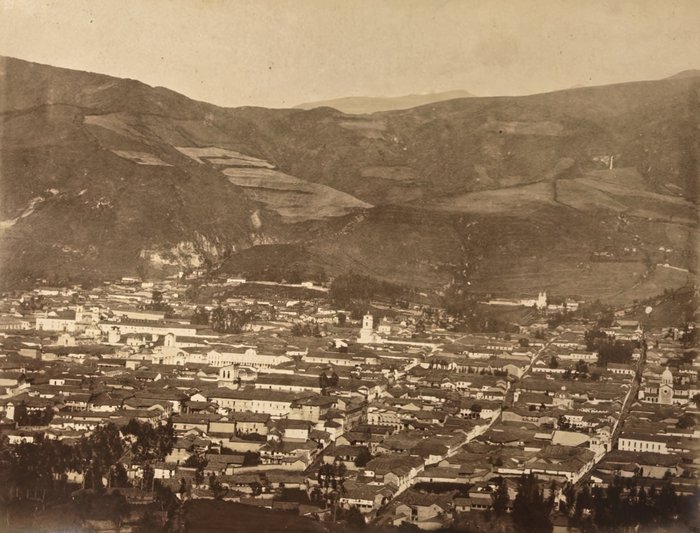
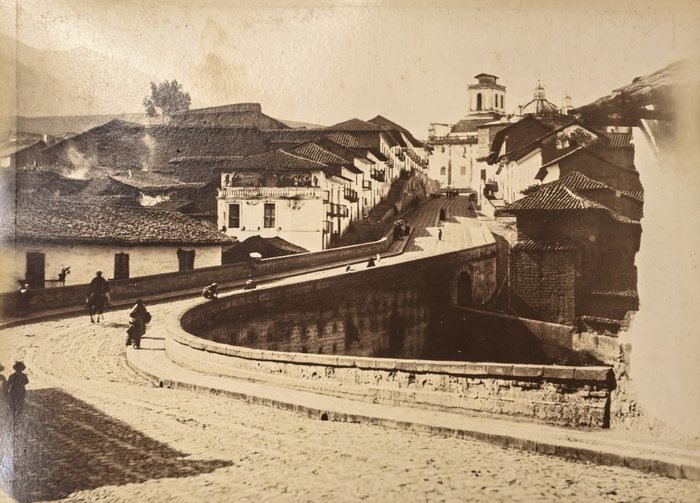
There are also six identified photos of Quito: two general and two close-up views featuring 17th-century La Recoleta convent (one – also Plaza del Centenario in the foreground), Sucre National Theatre (built in 1879-1886) and a public event on a central square (possibly, Plaza de la Independencia). A photo of a convent, closing the album, possibly also depicts a Quito landmark.
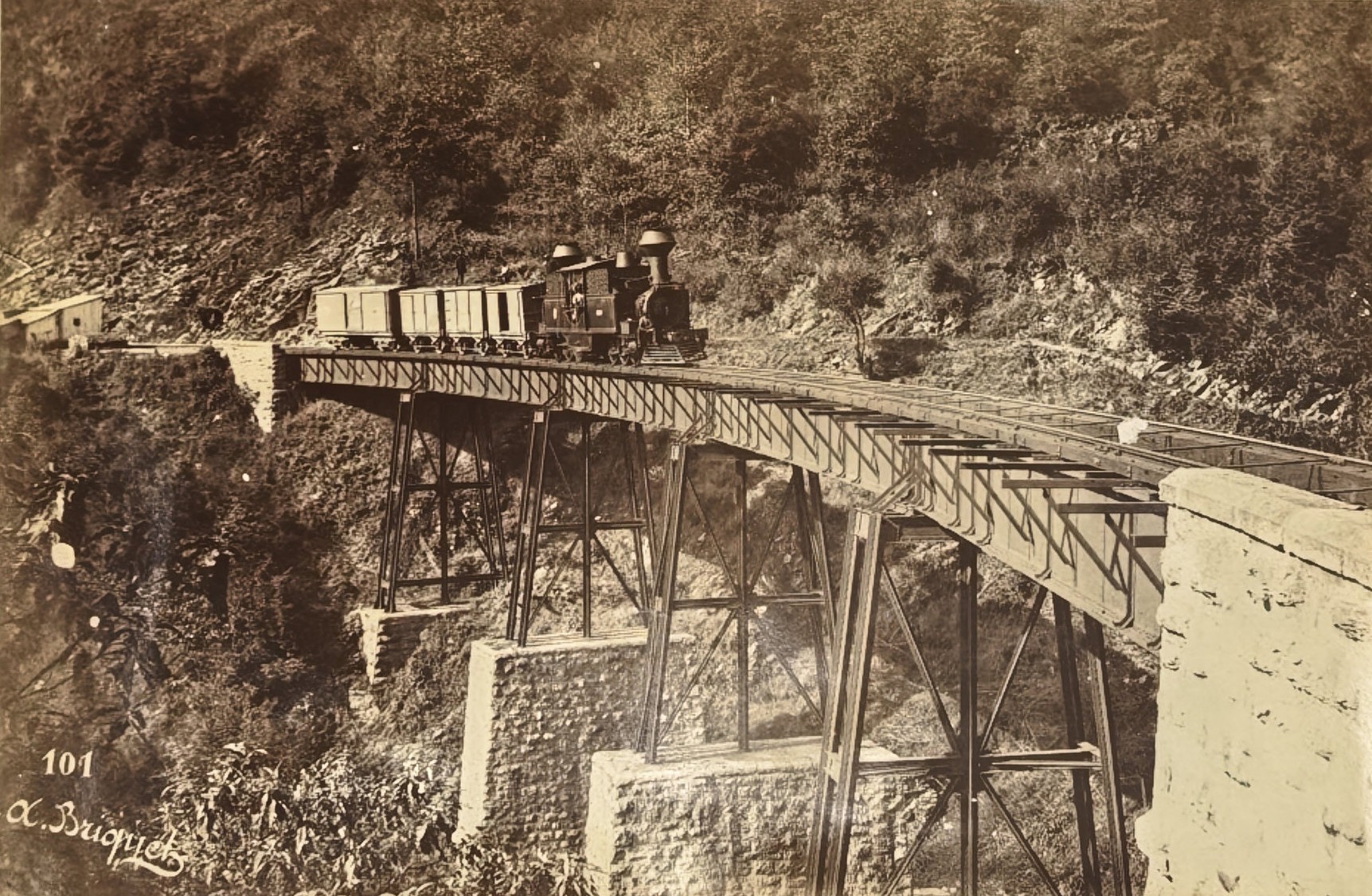
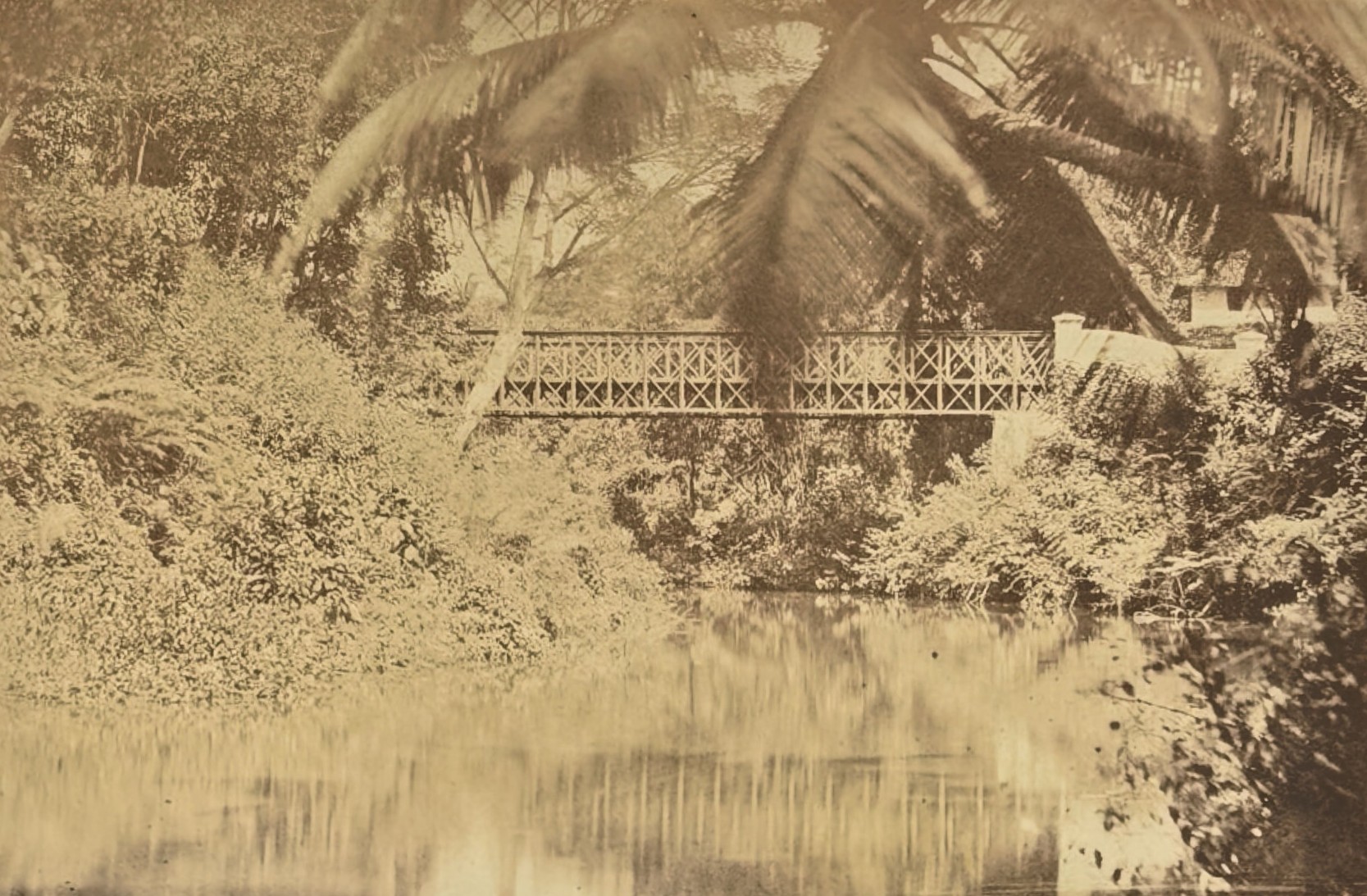
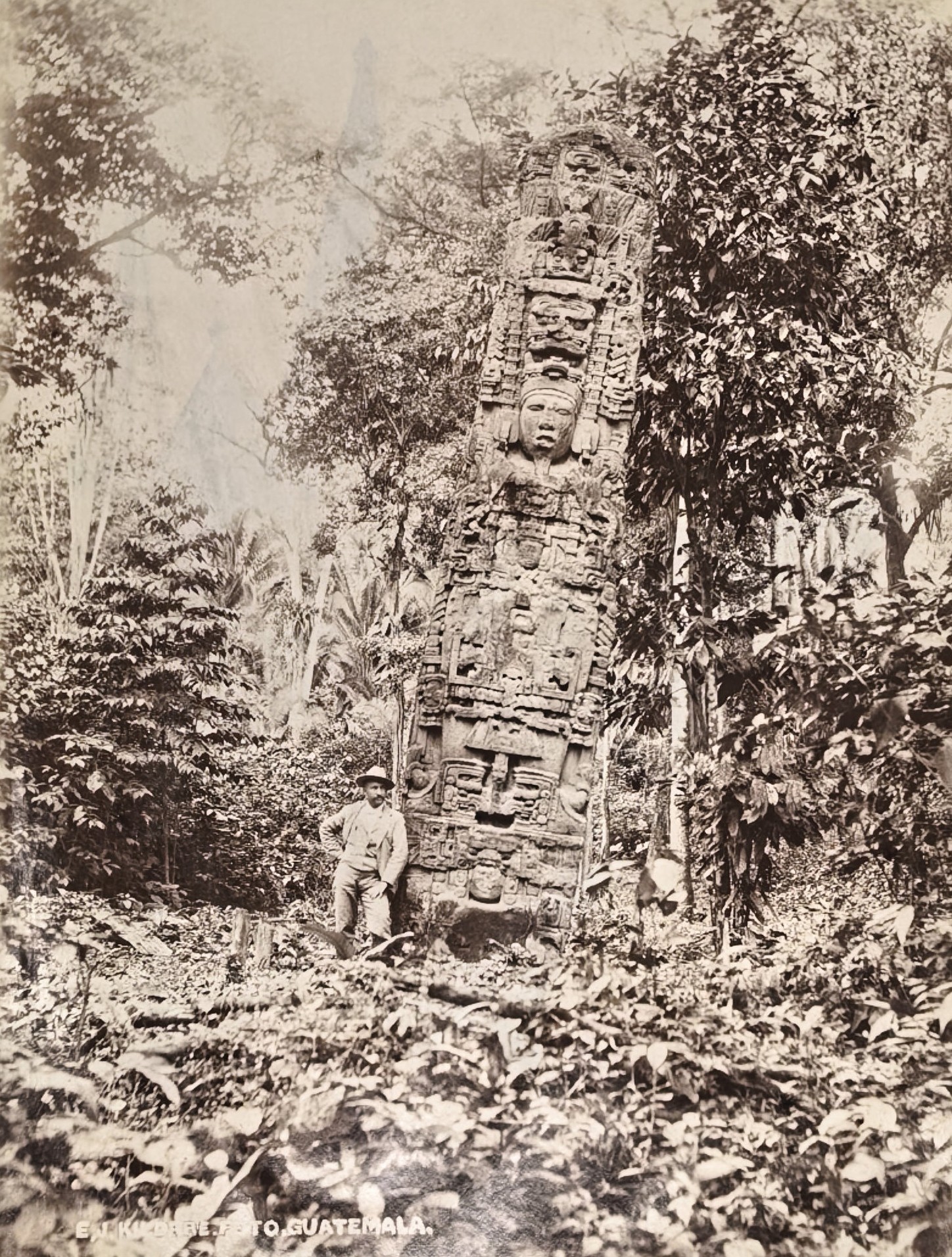
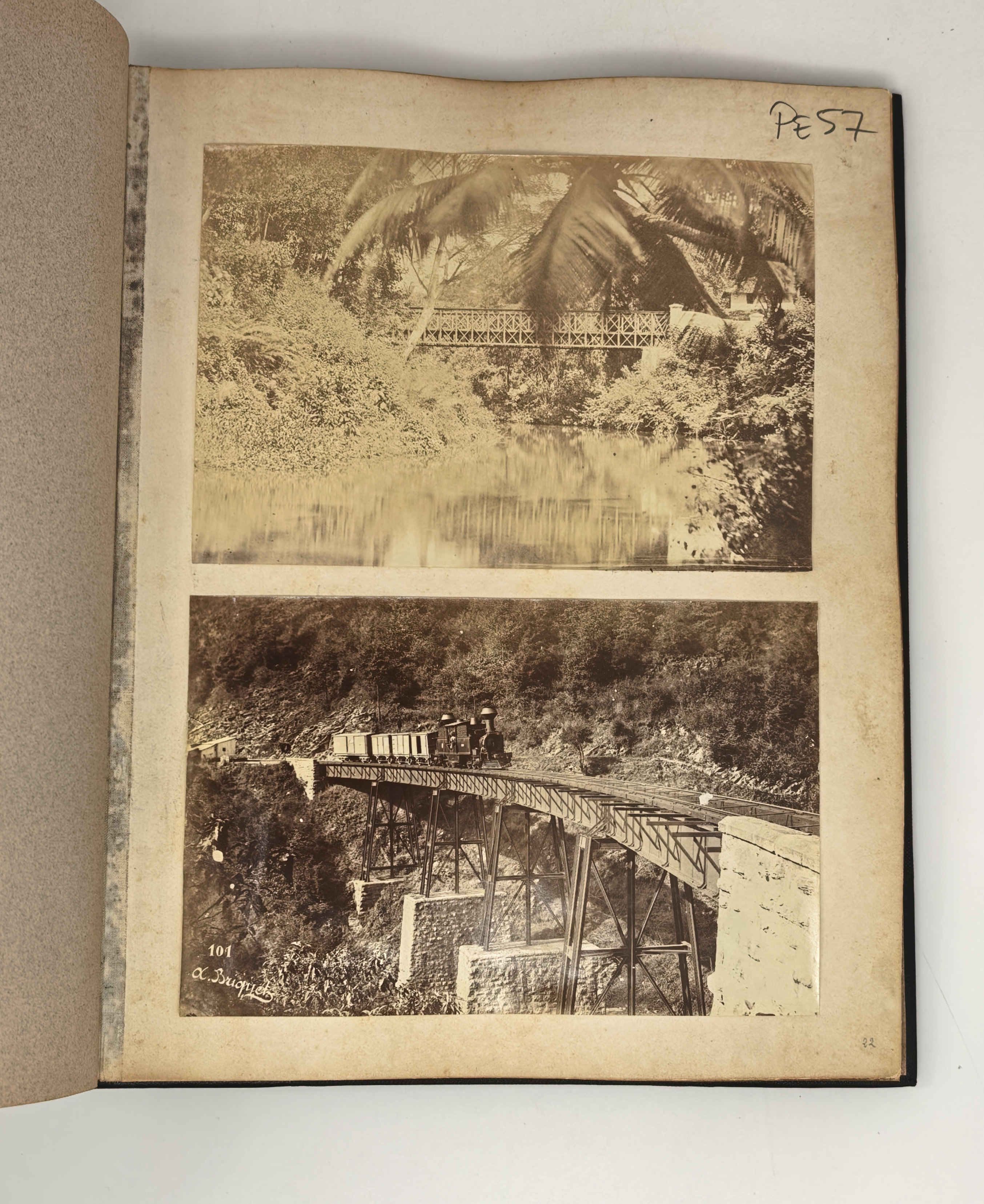
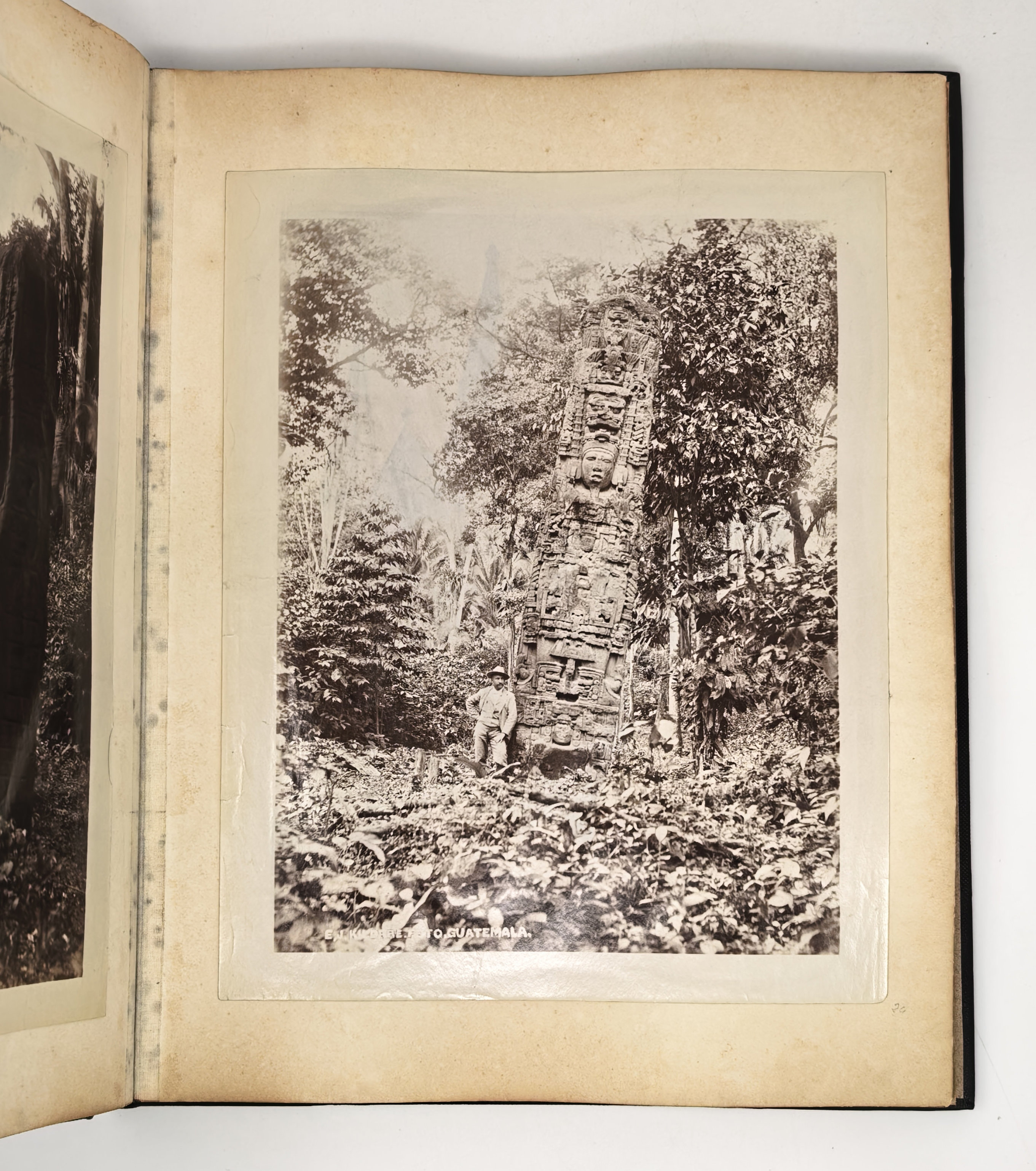
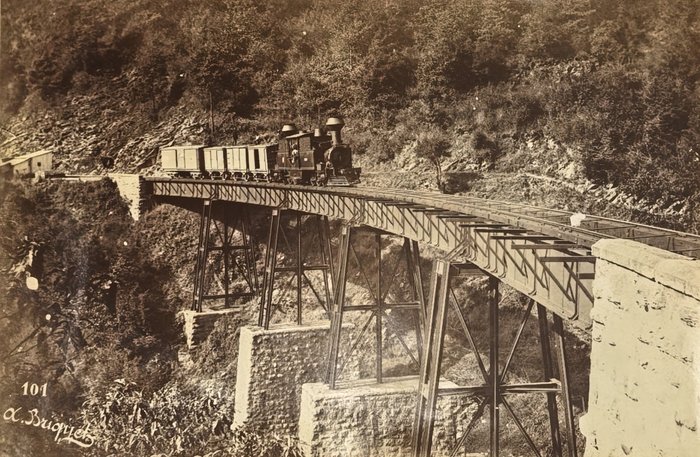
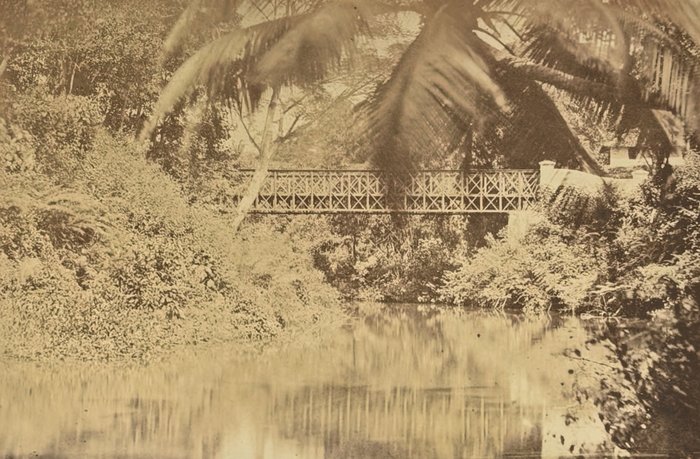
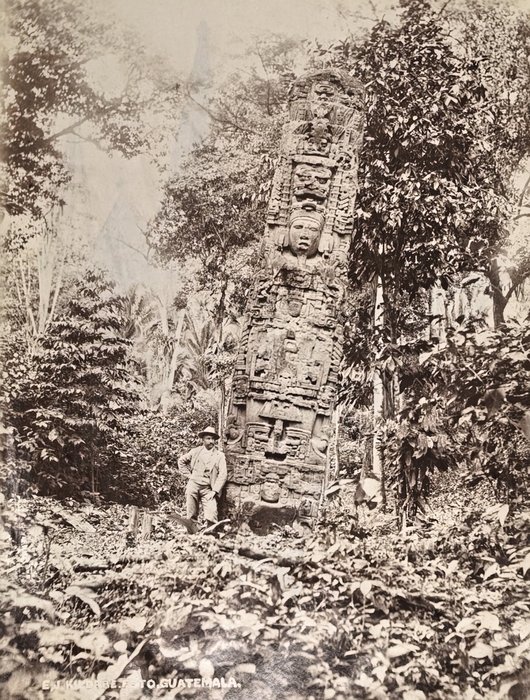
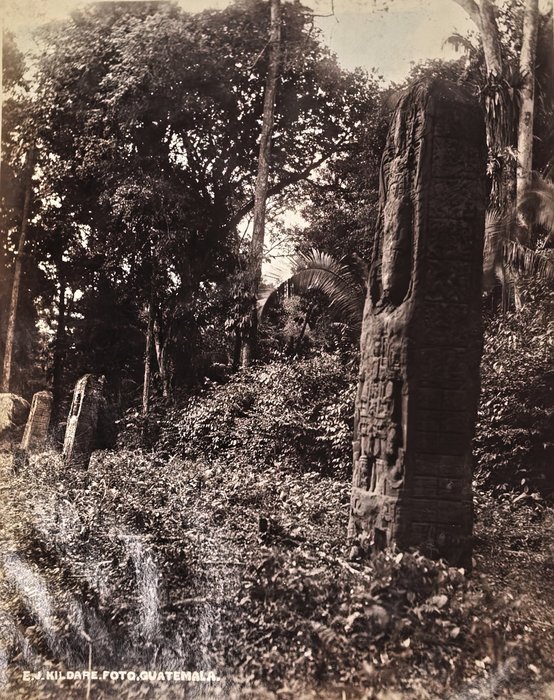
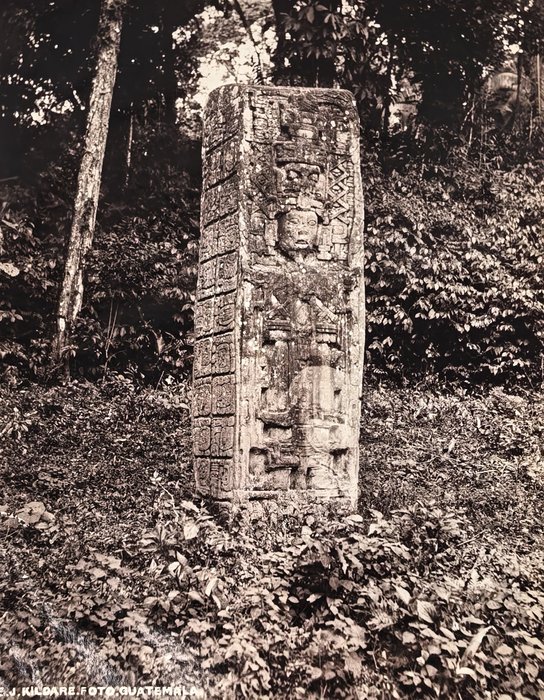
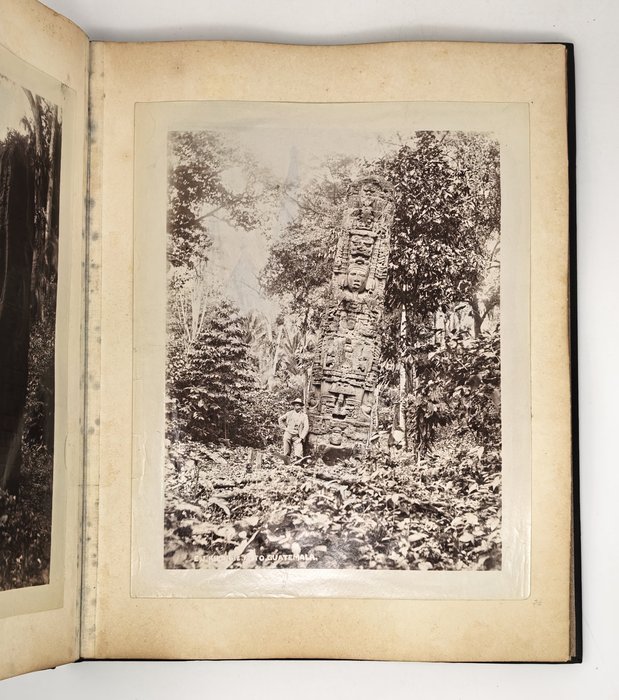
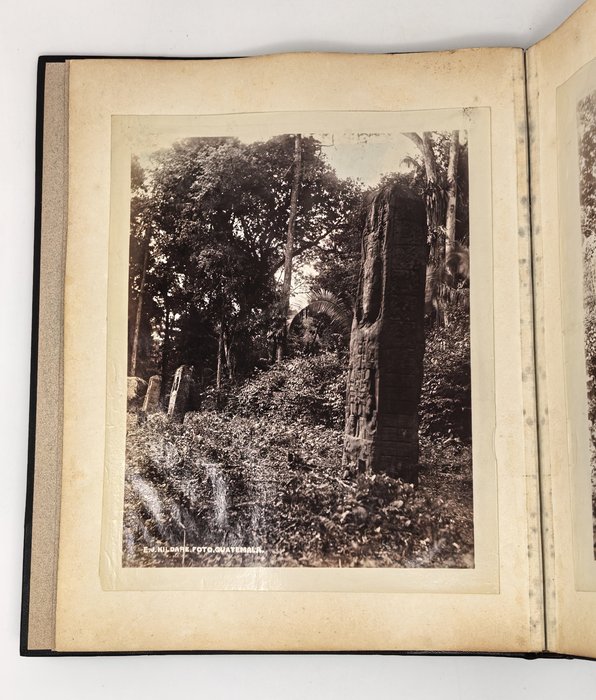
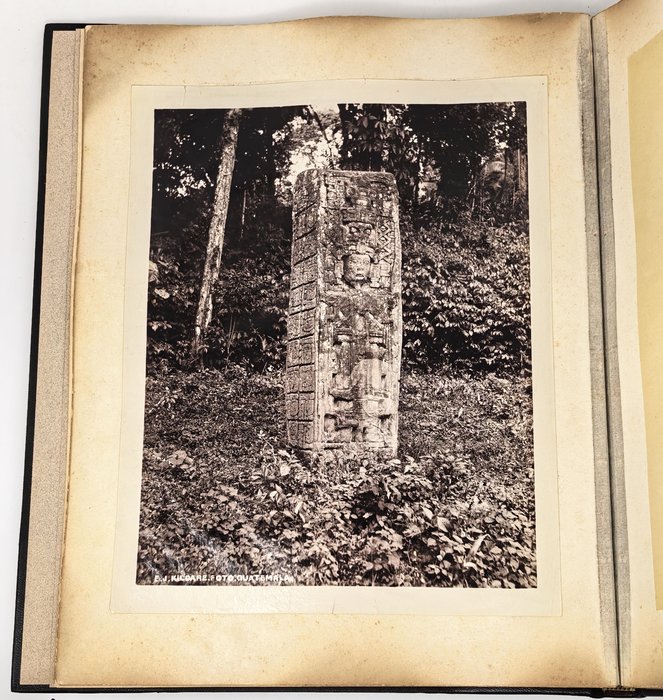
Three rare photos by Edward Kildare show Maya stone stelae in the Quirigua archaeological site in south-eastern Guatemala, including close-up views of Stelae A and F, bearing the representations of the king of Quirigua, Kʼakʼ Tiliw Chan Yopaat. Two smaller photos show a train going on a viaduct in Mexico (from Abel Briquet’s “Vistas Mexicanas”) and a steel bridge over a river.
Overall an interesting album with rare original views of South American cities and sites in the late 19th century.
“Edward James Kildare was a photographer who worked for Bradley & Rulofson, Taber, and Thomas Boyd. In the early 1880s, he moved to Guatemala City where he worked for Emilio Herbruger at Fotografía Imperial. He then set up his own studio, 'Palacio de Artes', with Alberto Valdeavellano” (Bodleian Archives & Manuscripts).
“The French photographer Eugenio Courret (1841-190?) was associated with the photography studio of Manoury y Ca. in Lima, Peru from 1861 until 1863, when he established the Fotografía Central studio with his brother Aquiles (Aguiles; 1830-?). Eugenio was the photographer and Aquiles managed the business that became known as Courret Hermanos. Aquiles left the firm in 1877. Eugenio returned to France in 1892, eventually selling the firm to Adolfo Dubreuil, whose family ran the studio under the Courret name until 1934” (Getty Research Collections).
"The Frenchman Alfred Saint Ange Briquet (1833-1926), better known as Abel Briquet, is considered to have been one of the first modern commercial photographers in Mexico. <…> He became known to a wider audience through his work in Mexico in the 1870s, where he was commissioned to photograph the new railway. In 1885, he opened a photography studio in Mexico City. Over the next 25 years, he published 13 successful photographic series on behalf of different contractors or developed them himself. His works typically show landscapes, cityscapes and “typical” scenes, as well as flora and fauna” (Thiel, F. Abel Briquet’s Photograph Collection// Exploring the Archive: Historical Photography from Latin America. The Collection of the Ethnologisches Museum Berlin. Böhlau Verlag, 2015. P. 361).