
#NY010
Сa. 1914
Six loose original albumen photos, all ca. 8x14 cm (3 ½ x 5 ½ in). Each photo is mounted on the original card ca. 9x15 cm (4 x 6 in). All photos are captioned in negatives in Japanese. Mounts slightly age-toned and waved, one photo is mildly faded, but overall a very good collection of early photos.
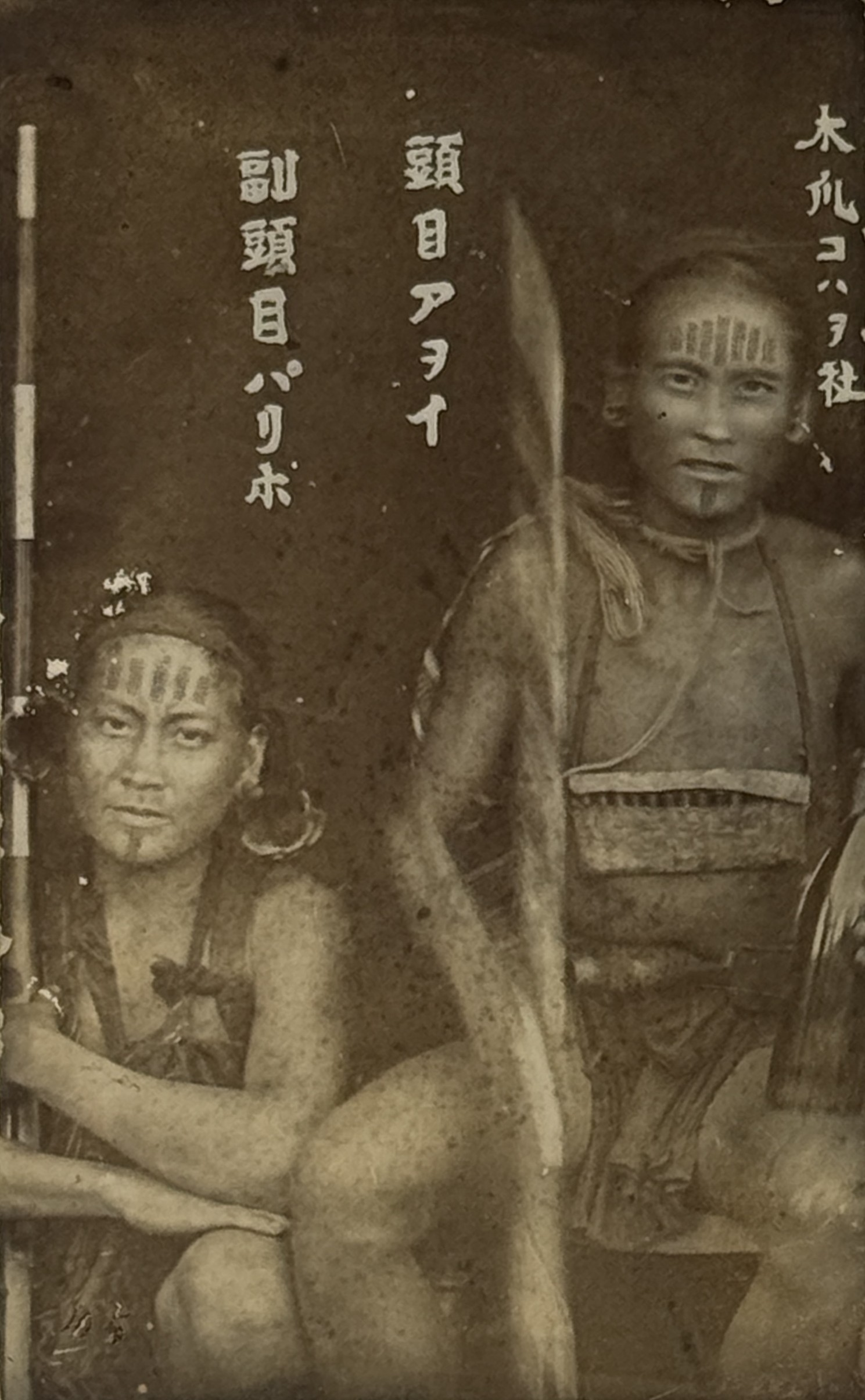
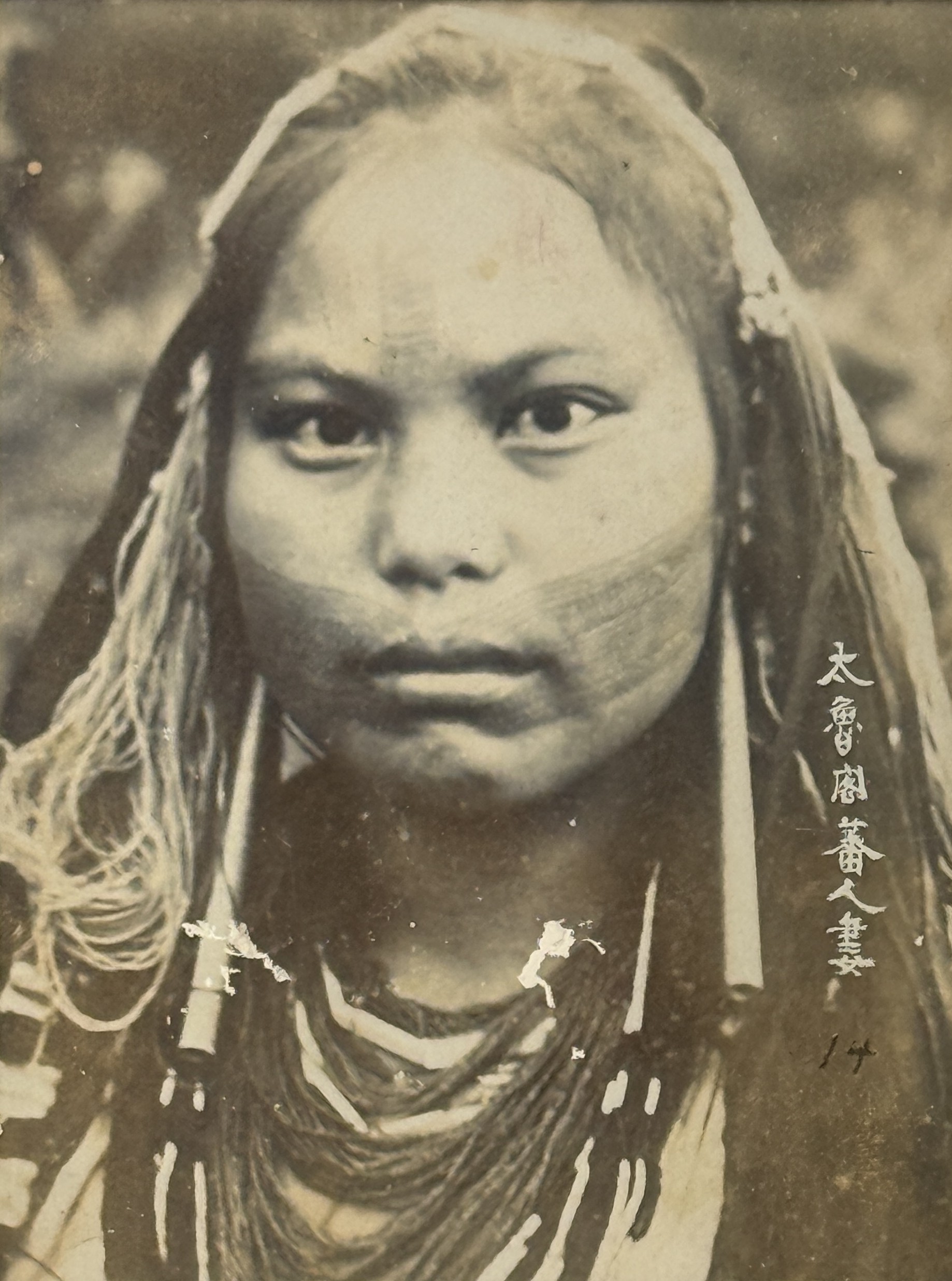
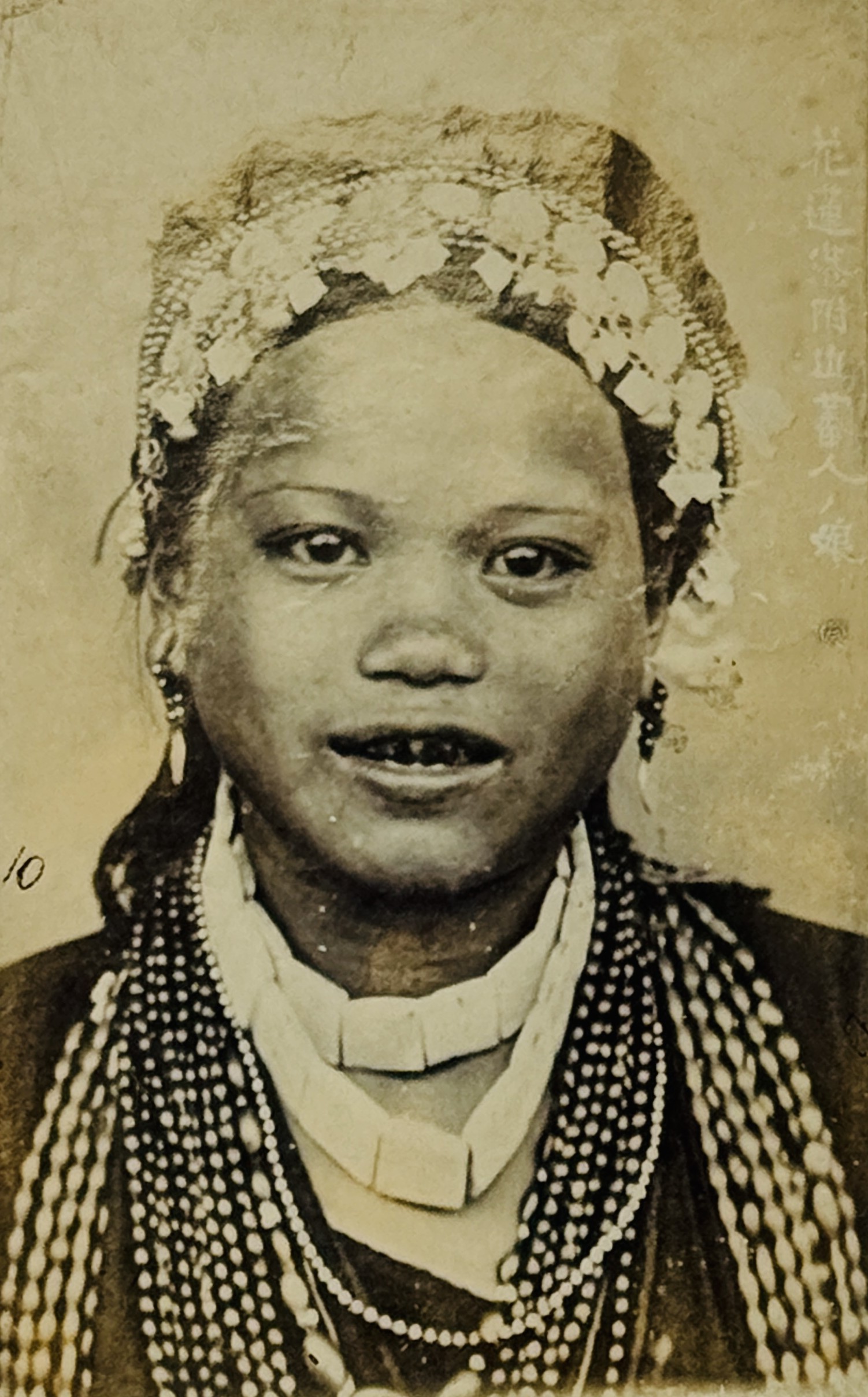
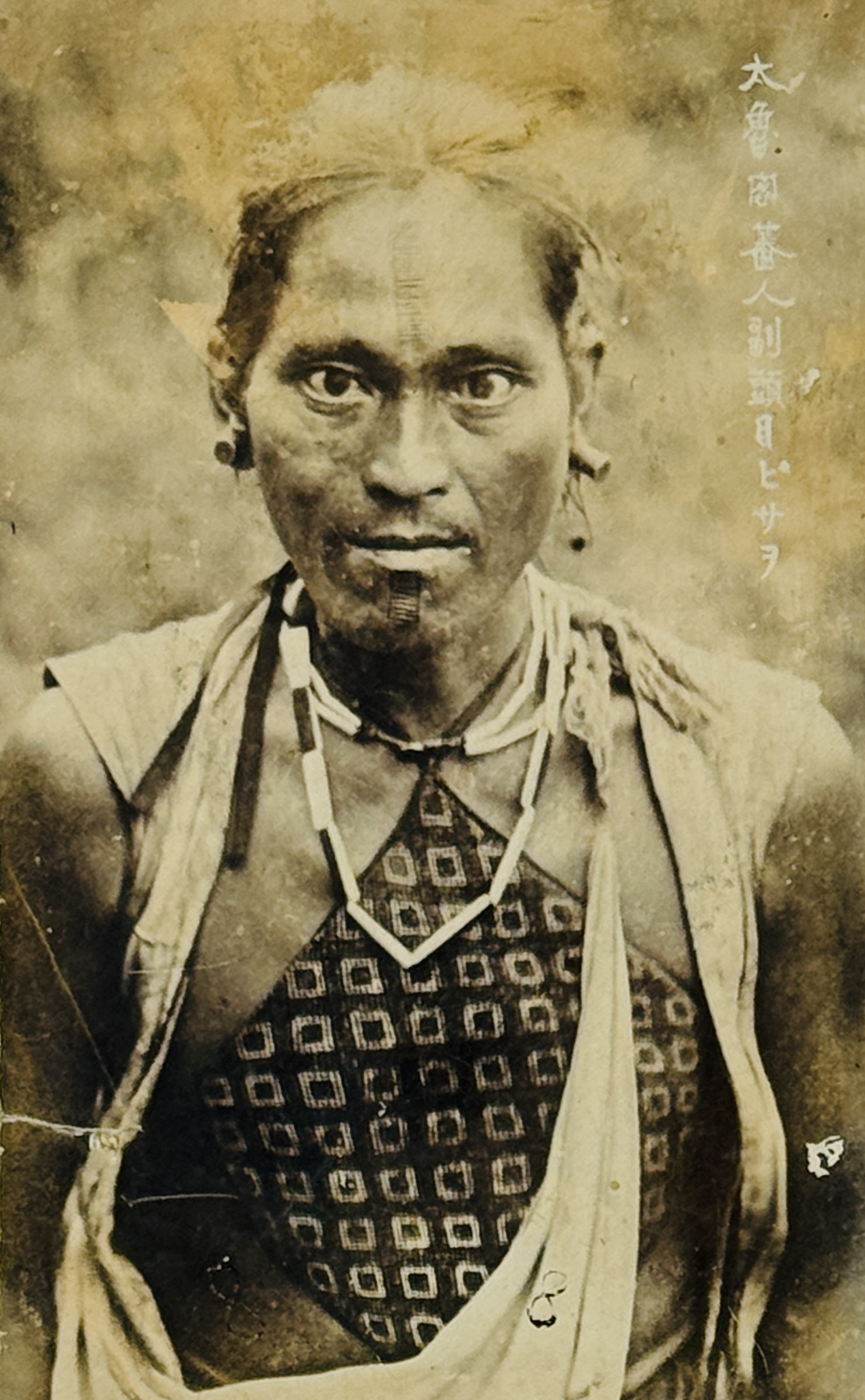
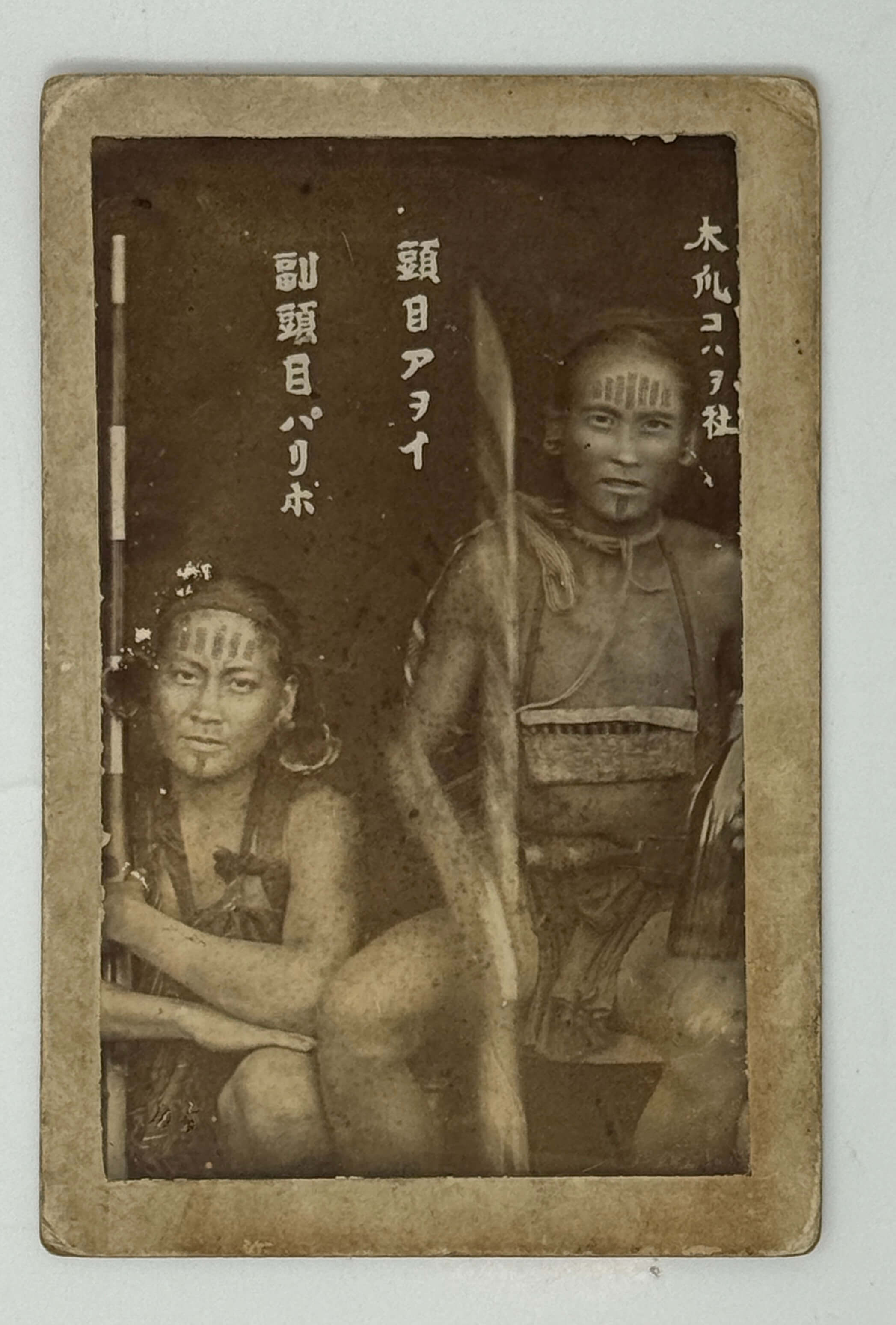
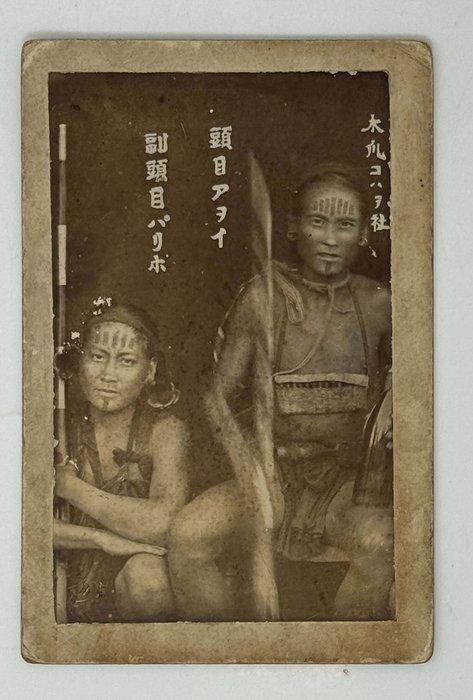
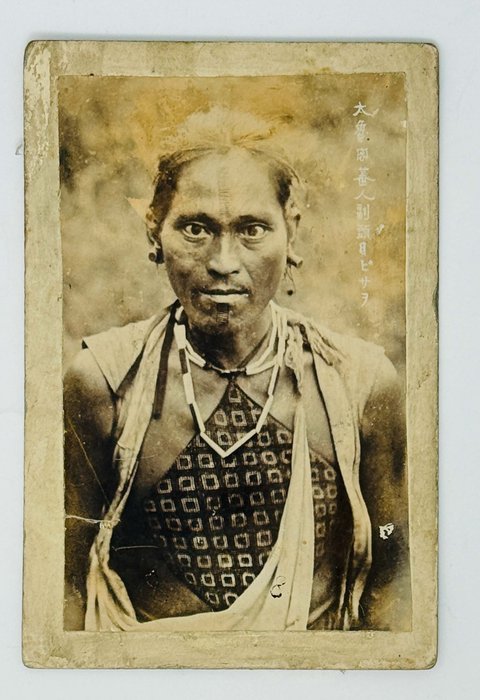
Historically significant collection of early photo portraits of Taroko (Turku) people of eastern Taiwan,, likely being taken shortly after the Truku War - the successful campaign by Japanese army on the island, which main goal was to get the hostile aboriginal group under control.
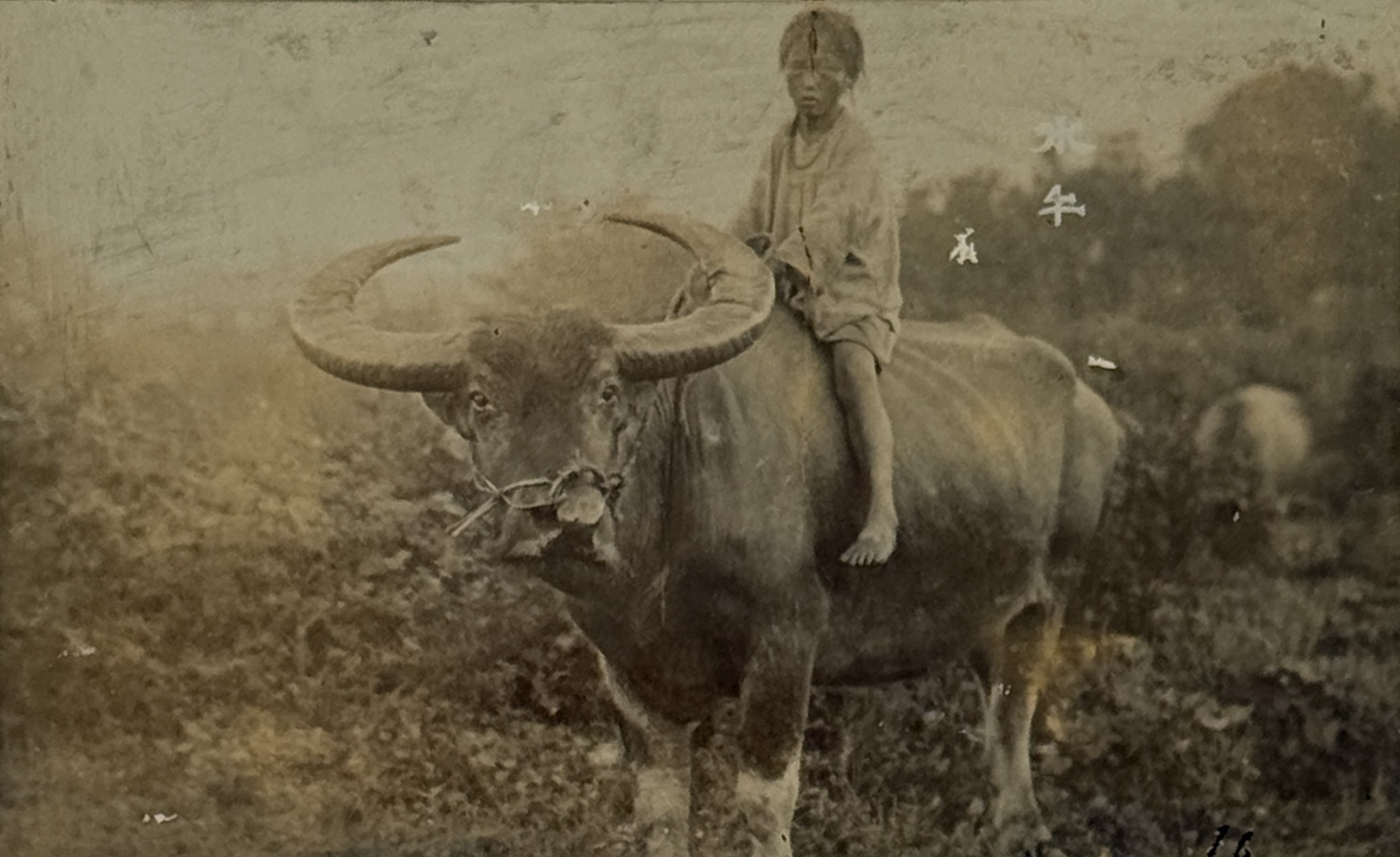
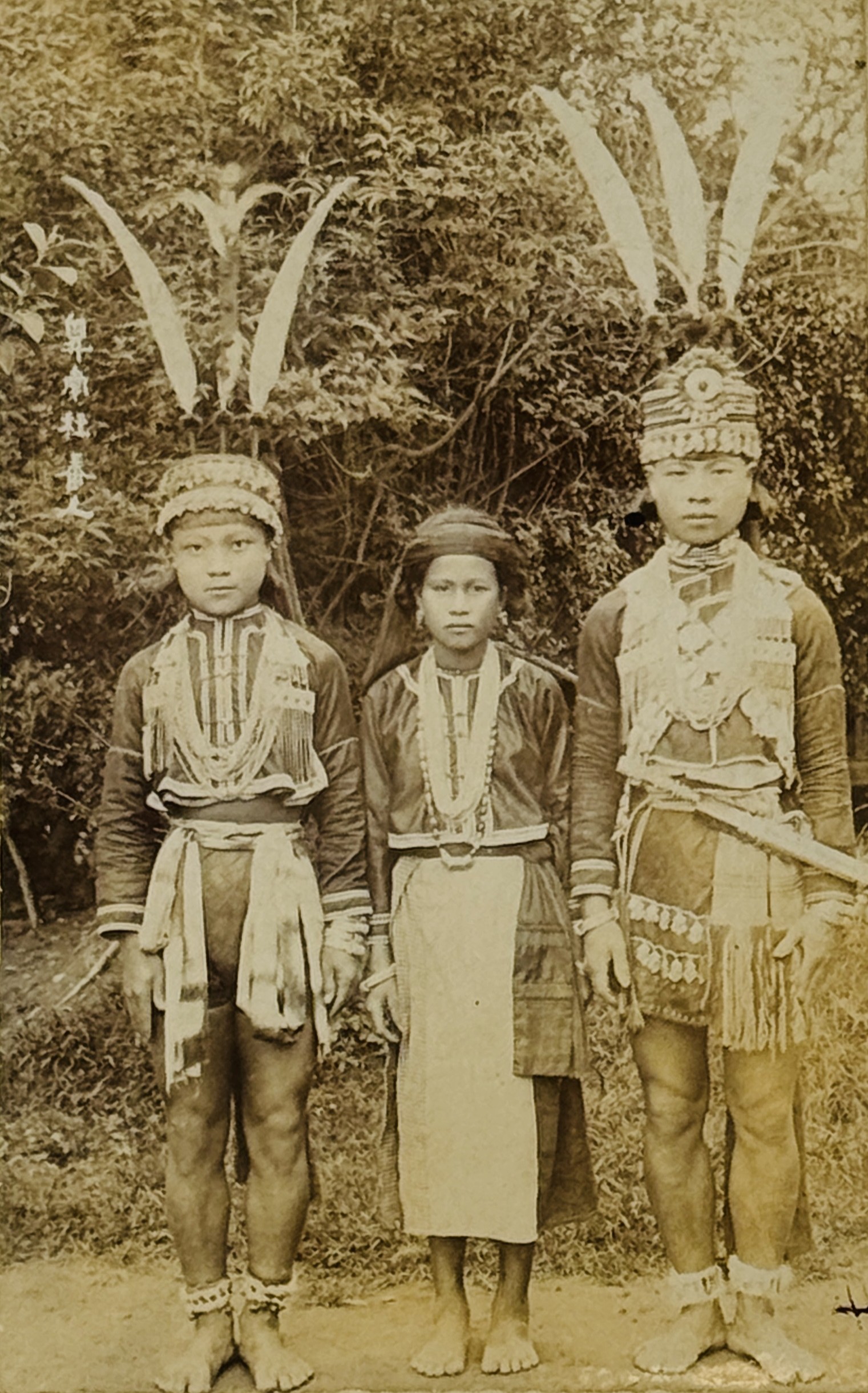
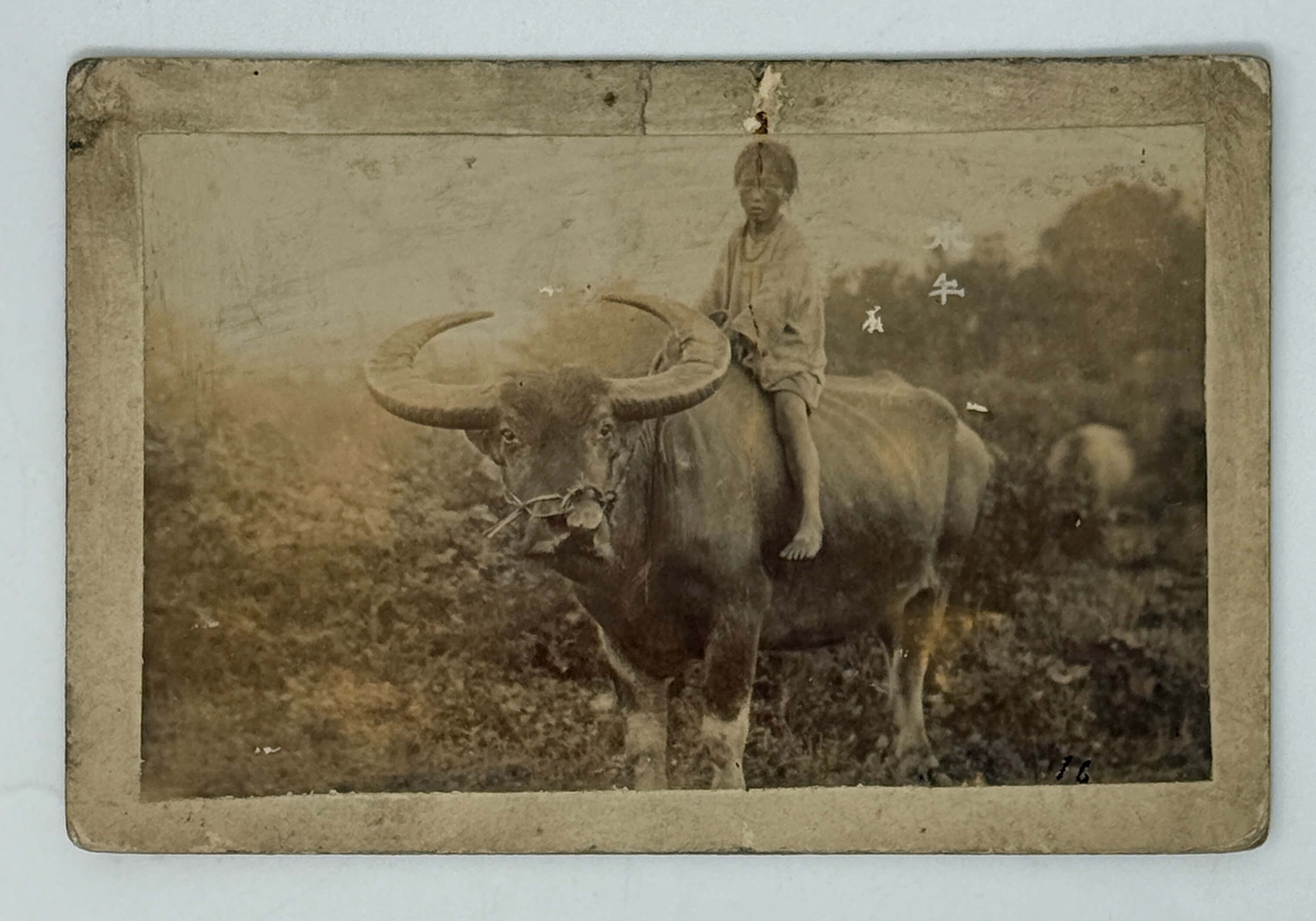
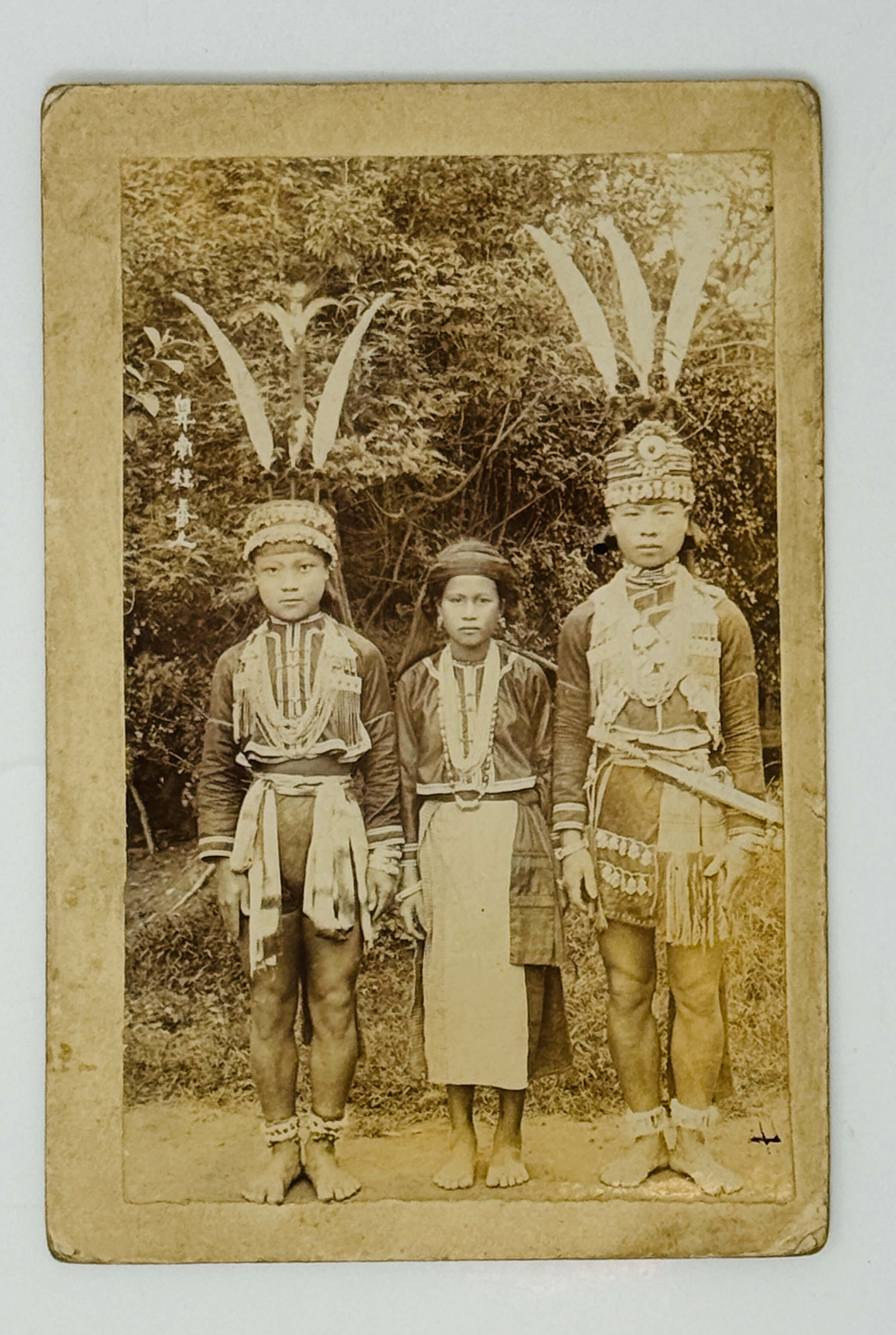
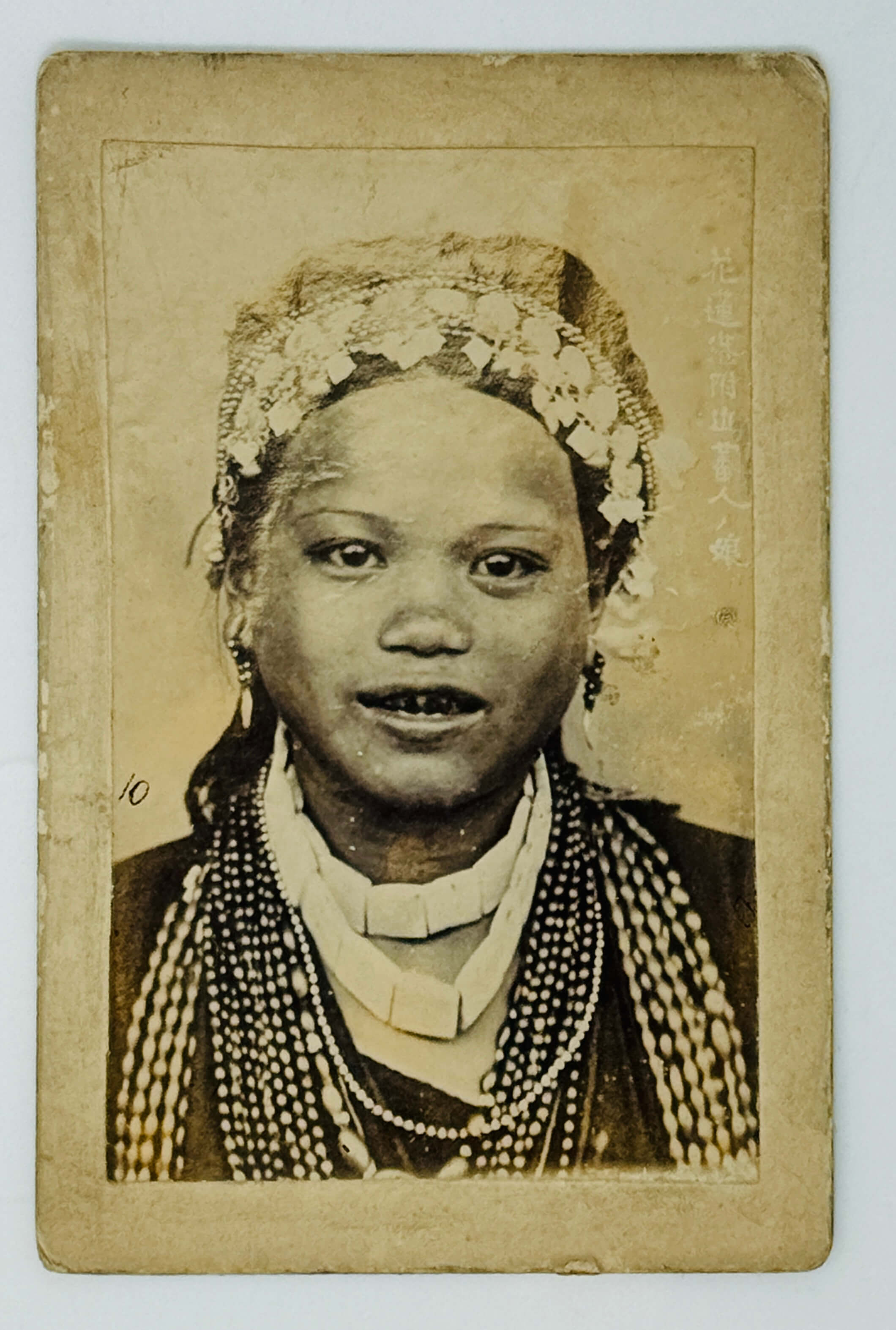
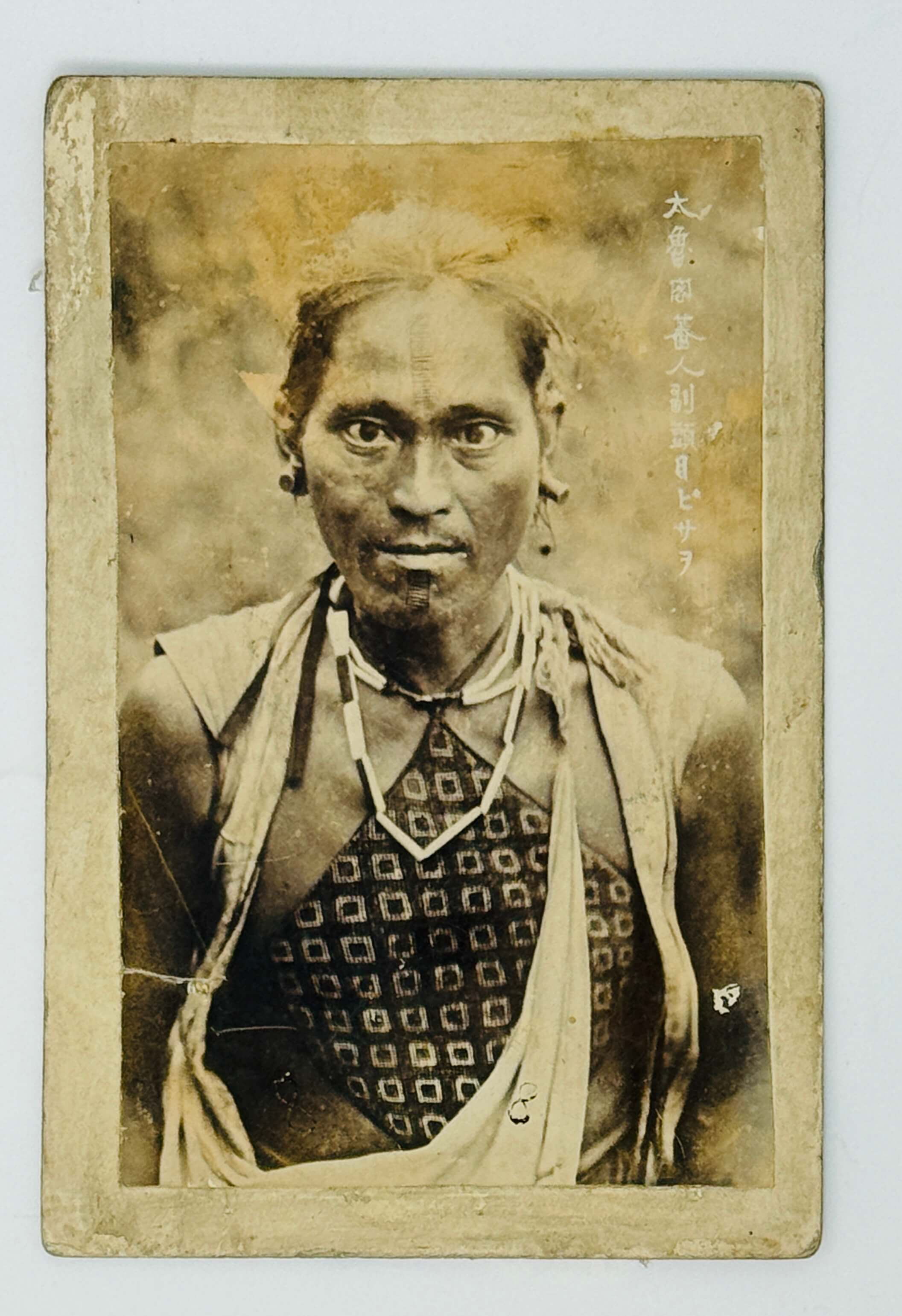
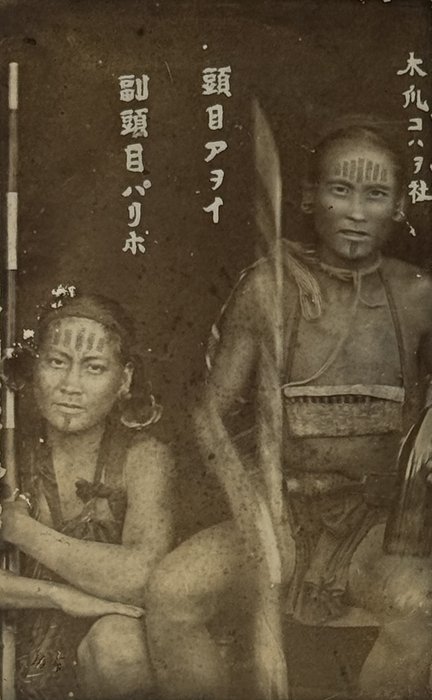
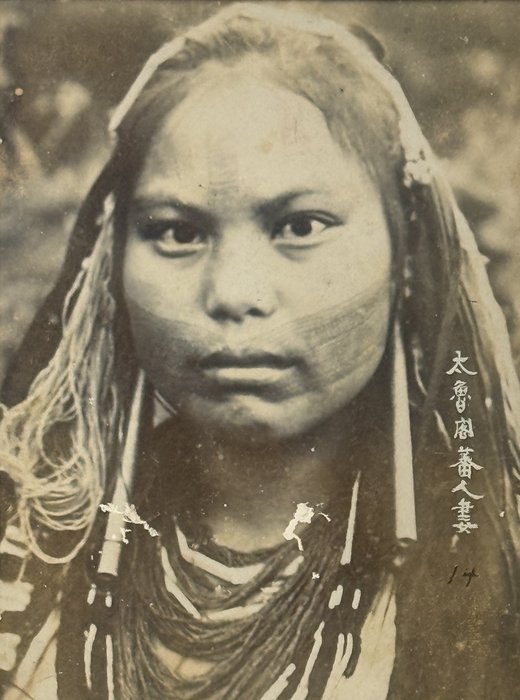
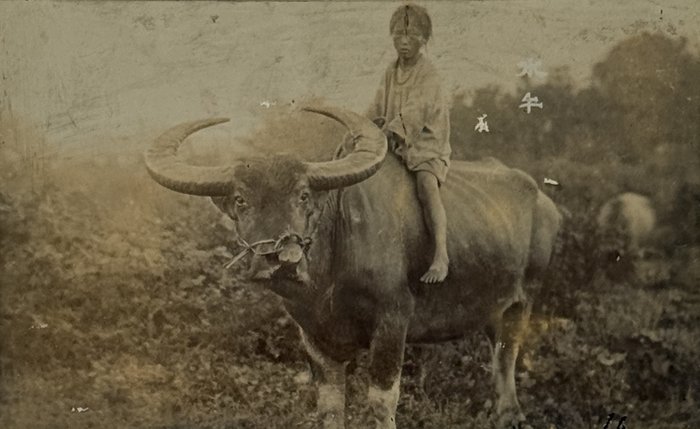
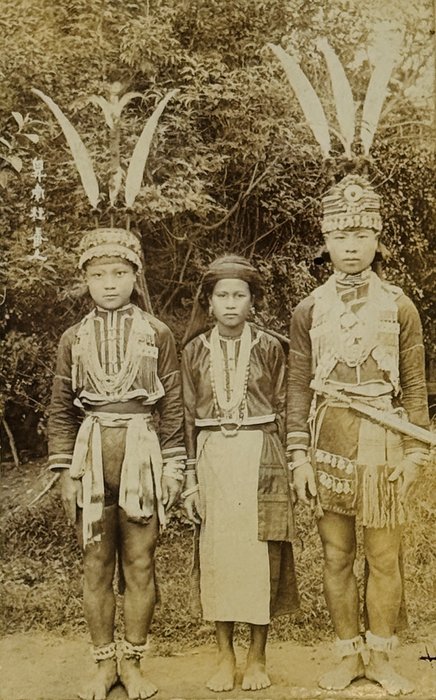
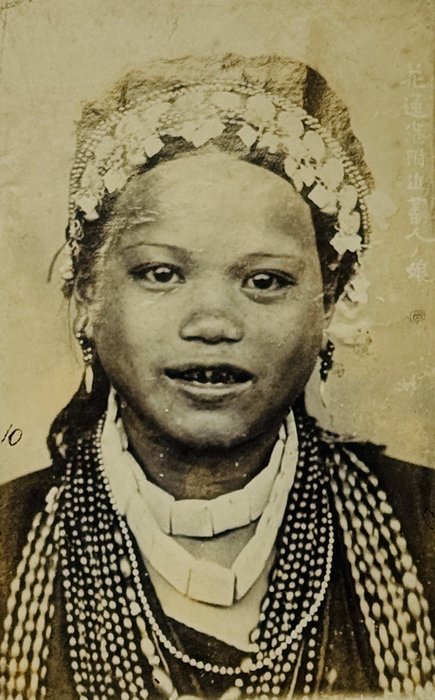
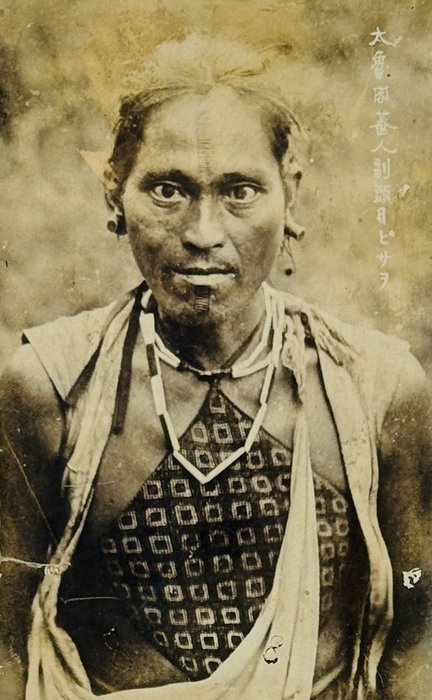
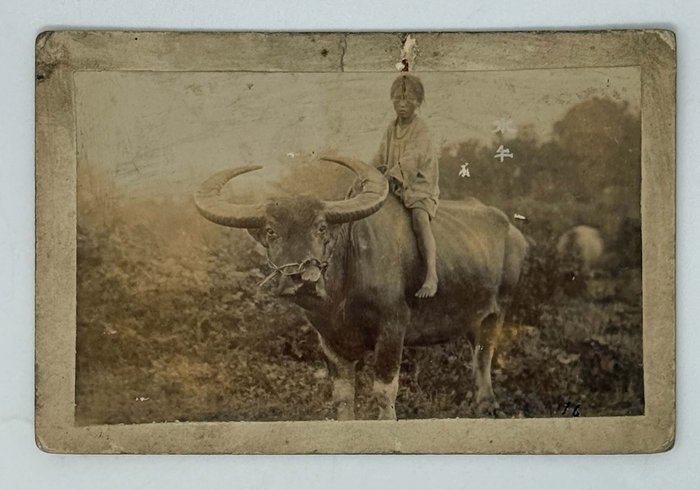
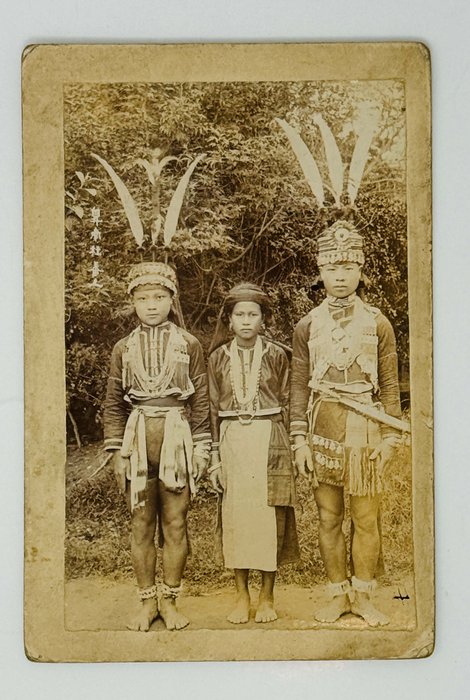
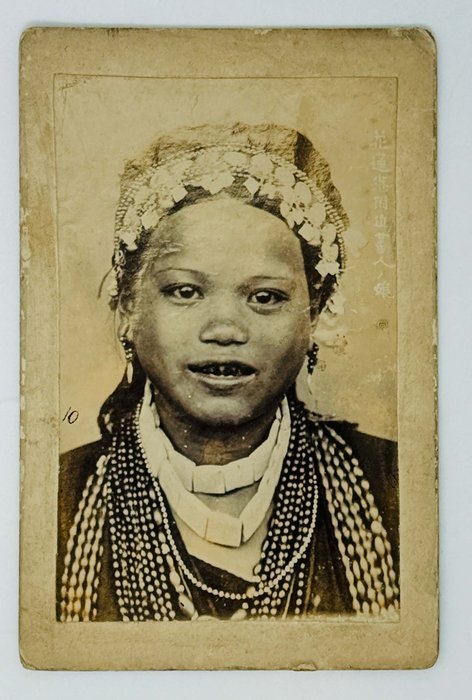
The photos include nine portraits: an image of ‘Pisao’, the deputy chief of the group, in traditional attire, with face tattoos, portrait of a woman wearing head decorations and jewelry , two warriors photographed with their weapons, children wearing festive attire (this photograph might be showing Puyuma people of Taiwan, as the clothes are similar to their tradition), a boy on a buffalo and portrait of a younger women, titled ‘the wife of Taroko aboriginal’.
Originally inhabiting the mountainous and forested regions of eastern Taiwan, particularly the steep valleys and river gorges of what is now Taroko National Park, the Taroko people (Truku) were later subjected to periods of displacement and resettlement under Japanese colonial rule and subsequent administrations, which relocated many communities into more accessible lowland or roadside settlements.
The Taroko War formed the culminating phase of a prolonged series of conflicts between the Taroko (Truku) people and Japanese colonial forces following the latter’s occupation of Taiwan in 1895, with intermittent hostilities beginning in 1896 and intensifying under the colonial “Five-Year Plan to Control the Aborigines.” The decisive campaign took place between May and August 1914 in the mountainous Taroko region, where the Japanese authorities—seeking to secure access to timber, minerals, and strategic routes—launched a large-scale military operation involving thousands of troops, police, and auxiliary laborers against a much smaller indigenous force. Despite limited weaponry, the Taroko fighters employed terrain-based tactics, including ambushes, fortifications, and guerrilla warfare, effectively exploiting the rugged gorge landscape to resist the advance. Nevertheless, the overwhelming disparity in manpower and modern arms led to Japanese victory, after which colonial administration was extended into the highlands, infrastructure such as roads and police posts was established, and large portions of the Taroko population were forcibly relocated from their ancestral mountain settlements into controlled lowland areas, profoundly disrupting traditional social structures and ways of life.
Textile production (tminun) of Taroko inclue hand-spun fibers dyed in symbolic colors and woven into cloth marked by geometric and diamond patterns representing the “eye” of ancestral spirits and offering protection. Mastery of weaving historically signified maturity and social status, even determining eligibility for facial tattooing and marriage. Their clothing—often based on white cloth with patterned ornamentation, including shell-adorned garments for leaders—embodies both aesthetic and ritual meaning.
Overall a significant collection of photographs, showing the aboriginal people of Taiwan during the period of Japanese occupation of the island.