
#OA49
1830
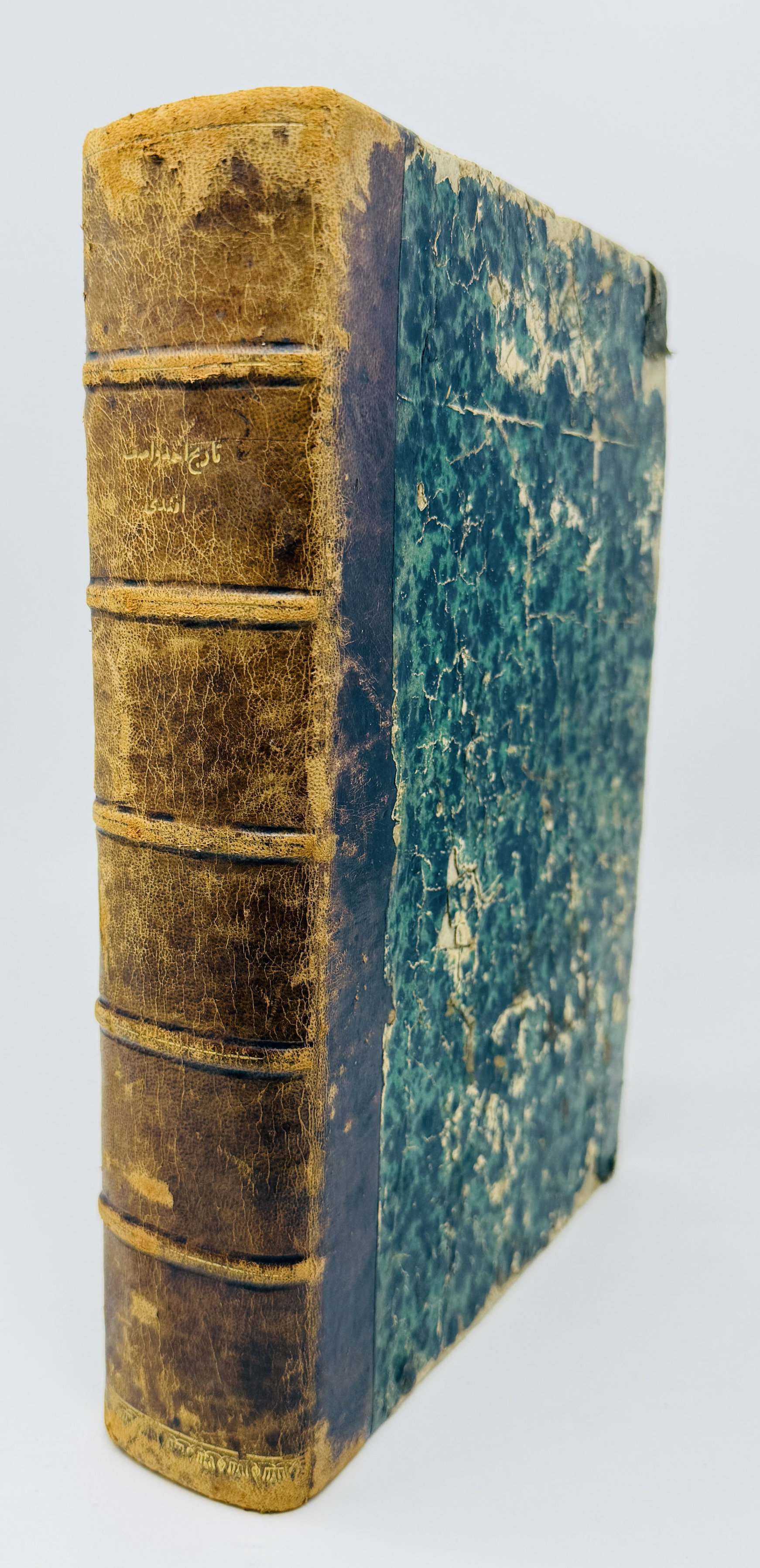
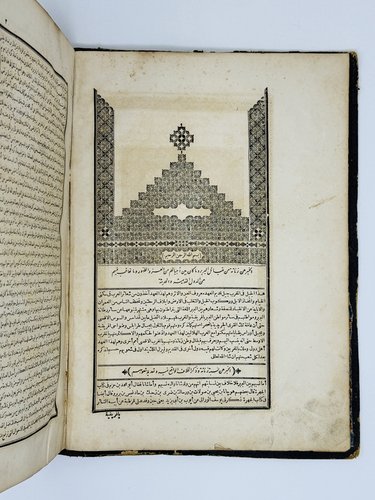
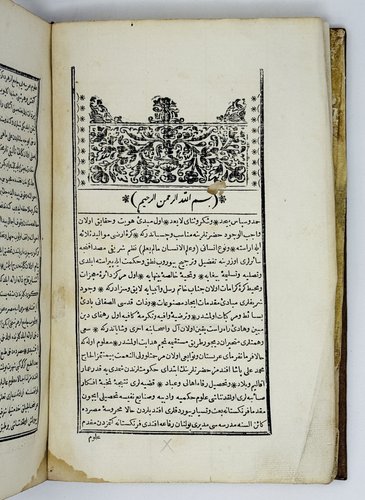
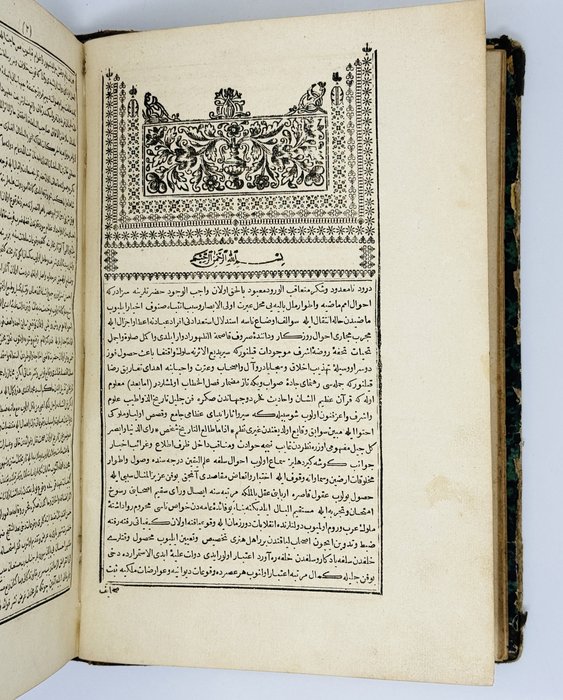
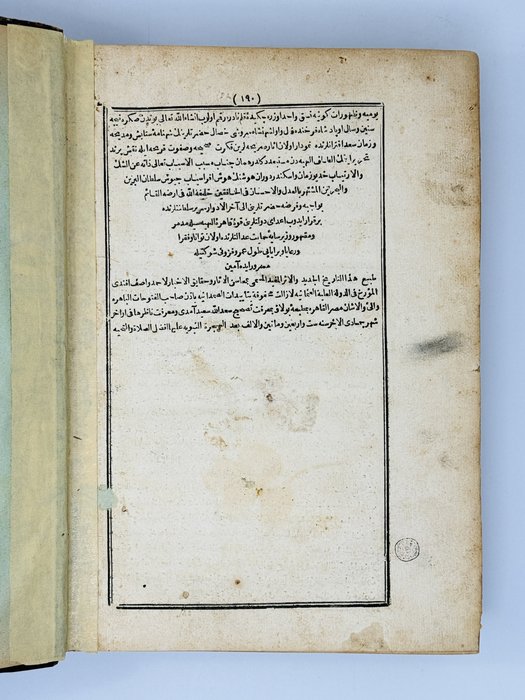
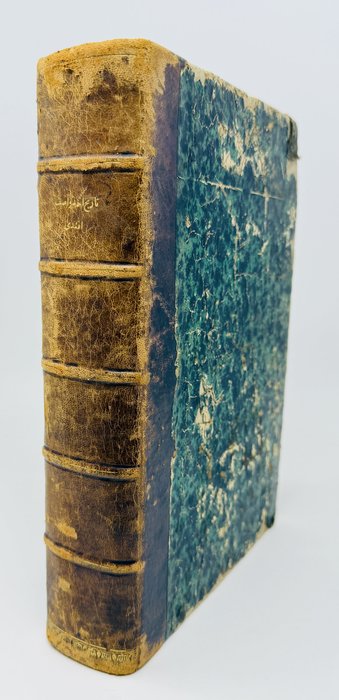
14, 310, 7, 190 p. Octavo (29x19,5 cm.) Original Bulaq quarter-leather binding with marbled boards. Raised bands, gilt lettering on the spine. Loss of small fragments of paper from the boards, corners are bumped. Very good and clean inside. In Ottoman Turkish (Arabic script).
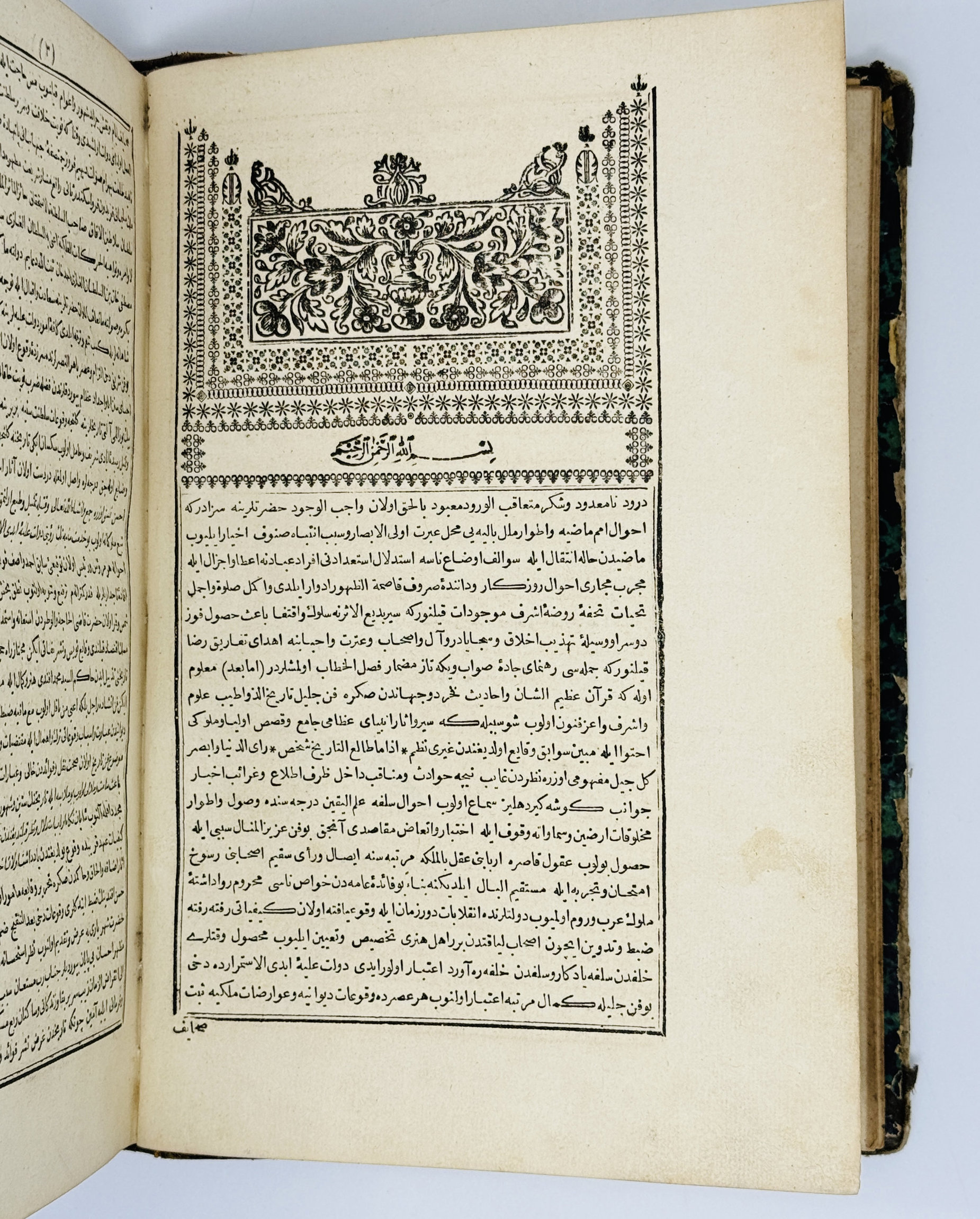
Rare second Bulaq edition and third Ottoman overall. Set of two volumes bound together. Worldcat locates no paper copies.
An important text, covering history of the Ottoman Empire by Ahmed Vâsıf Efendi (1740-1806). He was born in Baghdad, where he received his early education and, at a young age, developed a particular expertise in bibliography. In his formative years, he was employed in private libraries in Baghdad and supported himself in part through the copying of manuscripts. After leaving Baghdad, he traveled first to Van and subsequently to Aleppo. In Aleppo he entered the service of the city’s governor, Gül Ahmedpaşazâde Ali Pasha, acting as his librarian.
He was later appointed secretary to Abaza Mehmed Pasha, the commander-in-chief on the Hotin front. In this role, he was an eyewitness to the Ottoman–Russian War of 1768–1774 and to the conflict over Crimea. During the Russian capture of Yenikale in 1185/1771, he was taken prisoner and transported to St. Petersburg. At that time the Russian court was unsettled by the Pugachev rebellion, which threatened to develop into a large-scale uprising. He was ultimately released in order to convey a letter from Empress Catherine II, proposing an armistice, to the Ottoman headquarters. With the conclusion of a ceasefire between the two empires at Yergöğü on 29 May 1772, his nine-month captivity came to an end.
In November 1772, following the appointment of the Chief Scribe Abdürrezzak Bahir Efendi as chief plenipotentiary to resume peace negotiations in Bucharest, Vâsıf joined the delegation in the capacity of secretary. These negotiations, which extended over approximately six months, likewise failed to produce an agreement, owing largely to Russia’s ambitions with regard to Crimea. In subsequent years, Vâsıf served on several fronts and was an eyewitness to the Ottoman defeat at Kozluca in 1774. At the time when the text of the Treaty of Küçük Kaynarca was being prepared for signature in Istanbul, Vâsıf was once again dispatched—this time to Field Marshal Rumyantsov in Iași—to communicate the concerns of the Crimean population to the Russian side, particularly regarding the clause proclaiming the independence of Crimea, which was feared to pave the way for a future Russian occupation. This mission, however, proved unsuccessful, and he returned without securing any tangible concessions.
In 1784 he has managed to revive the book publishing in Istanbul: the printing press of Ibrahim Mutaferrika, that was not used since his death in 1747, was bought by Efendi, he has secured the permission of Grand Vizier Halil Hamîd Pasha and Sultan Abdülhamid I to produce books and in 1784 Târîh-i Sâmi, Şâkir ve Subhî was printed. In the same year he was appointed the official chronicler of the Empire, and started to work on this book, the official history from 1752 to 1774 of the events in many of which he took part personally.
The events of Muharram 1166 (November 1752) - Dhu al-Hijjah 1183 (April 1770) constitute the first volume, and the part up to Rajab 1188 (September 1774) constitutes the second volume. The later periods are also were documented by Efendi, but were not prepared for the publication at the time and remain in Turkish archives.
In these volumes, he sought to embellish his subject matter with invocations, Qurʾanic citations, and, at times, rhymed passages, reinforcing the narrative through the deliberate use of appropriate poetic expression. His sections devoted to obituaries and biographical notices are particularly noteworthy, marked by an unapologetic readiness to commend those he admired and to censure those he regarded unfavorably. This approach found its most enthusiastic reception in Sultan Selim III, who, upon reading the work, is reported to have remarked, “I enjoyed it very much,” and subsequently commissioned him to rewrite the historical periods covered by his predecessor.
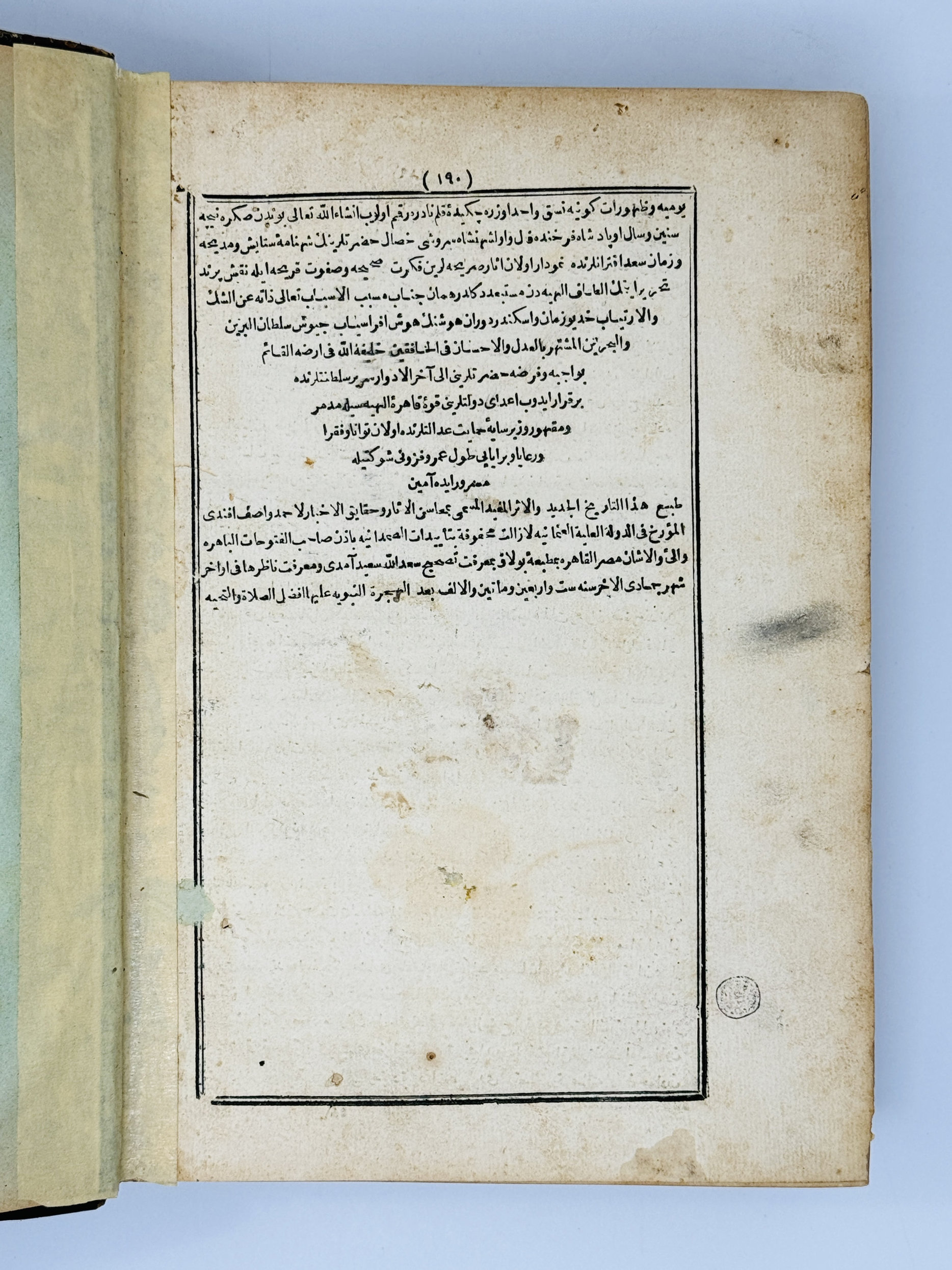
The edition is one of the last one prepared by Sadullah Said Âmedî (1759-1831), who was in charge of Bulaq press since 1821. He was a Turkish poet who later served as a Divân kâtibi (imperial court clerk) and subsequently held the position of Tabhâne-i Mısrî Bas Musahhihi (chief corrector/editor of the Egyptian printing house). This latter appointment was made by Kavalalı Mehmed Ali Pasha (1769–1849), the Ottoman governor of Egypt, under whose patronage he assumed editorial responsibility for the press.
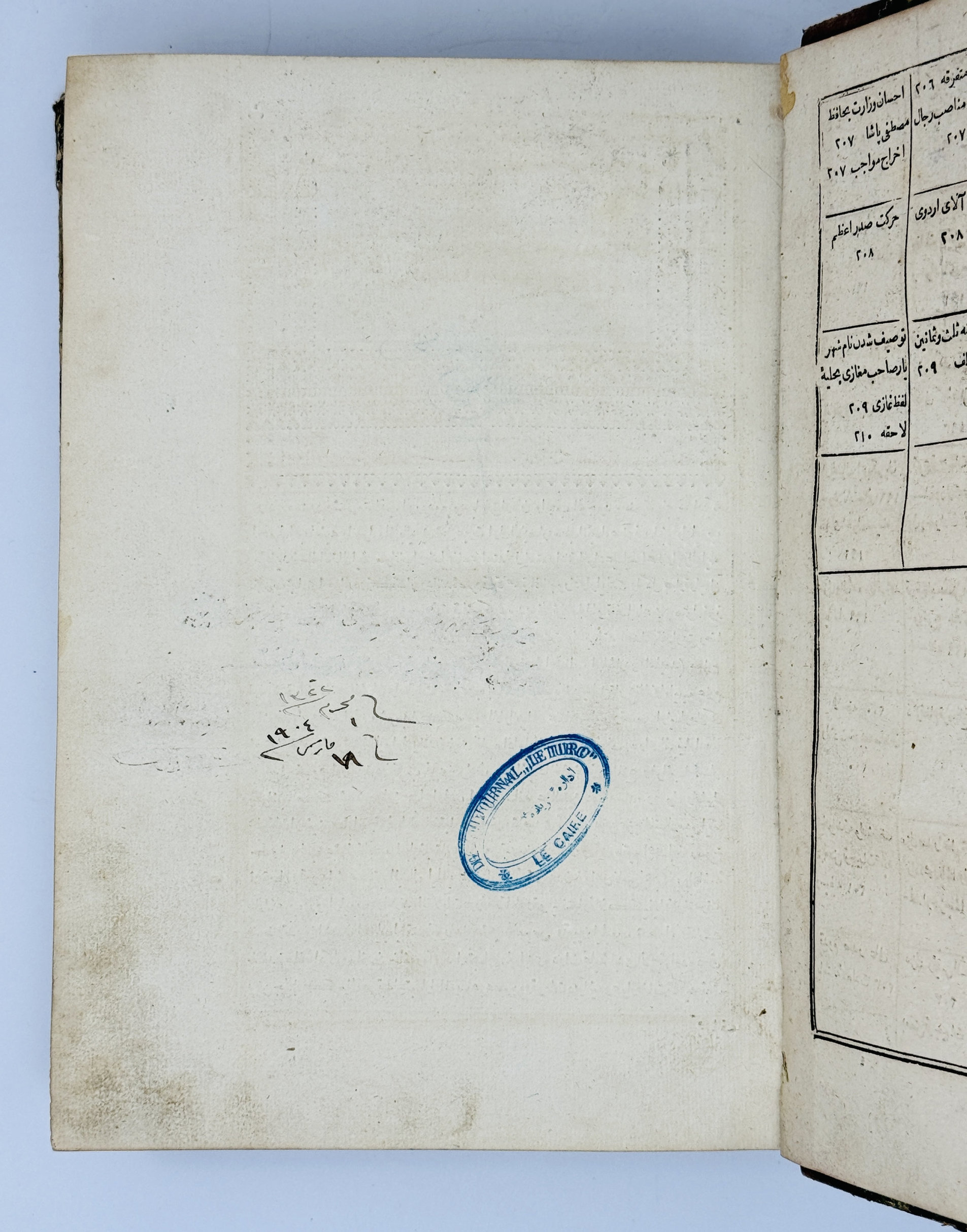
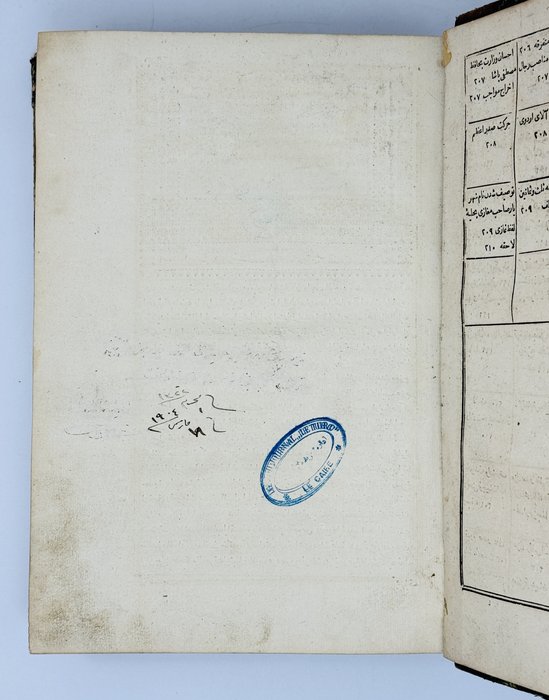
Provenance: from the library of ‘Journal “le Turco”, in Cairo, the leading Algerian publication for illustrated satirical press at the end of the 19th century.
Özege 22519, TBTK 2523