
#PD99
Ca. 1890s
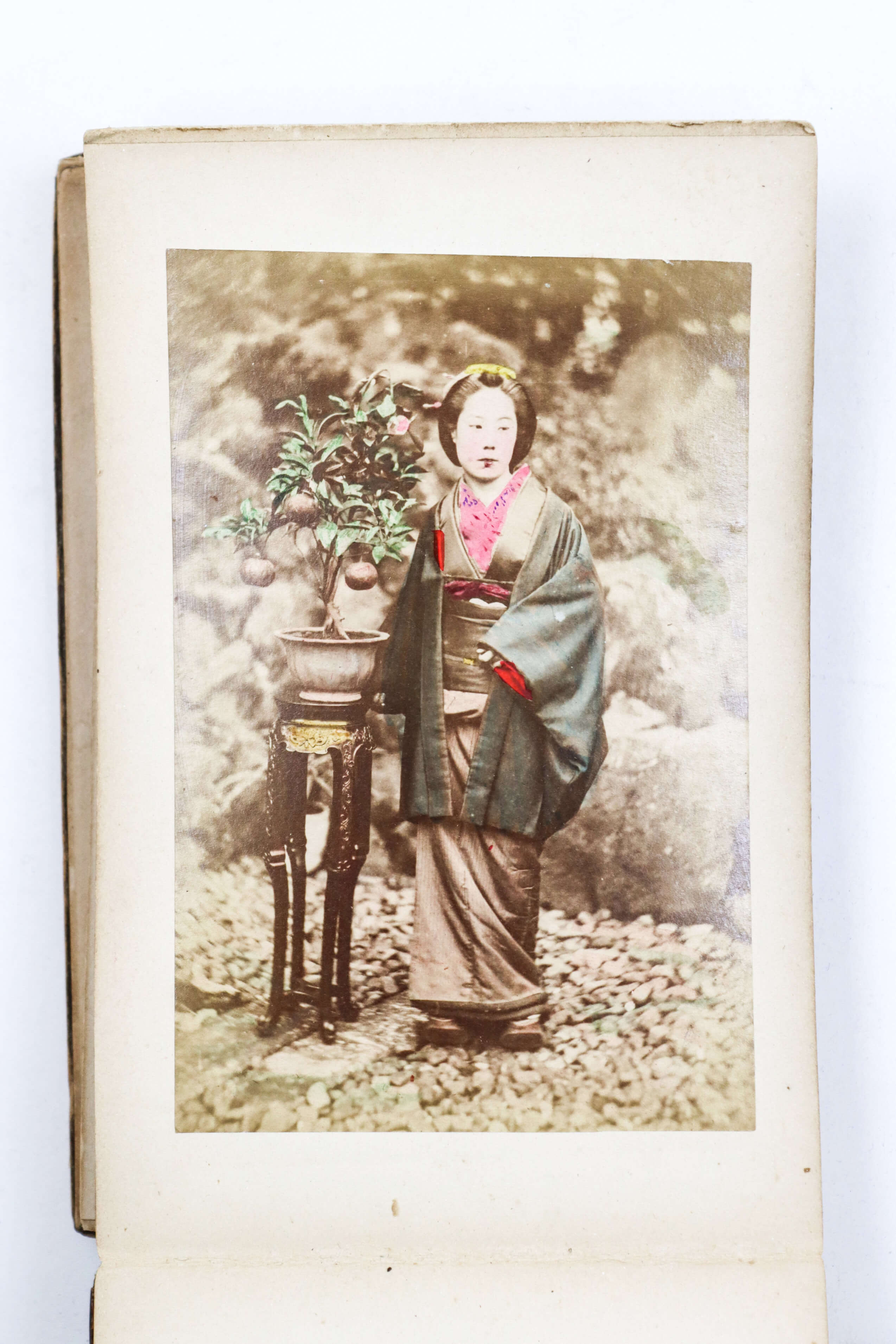
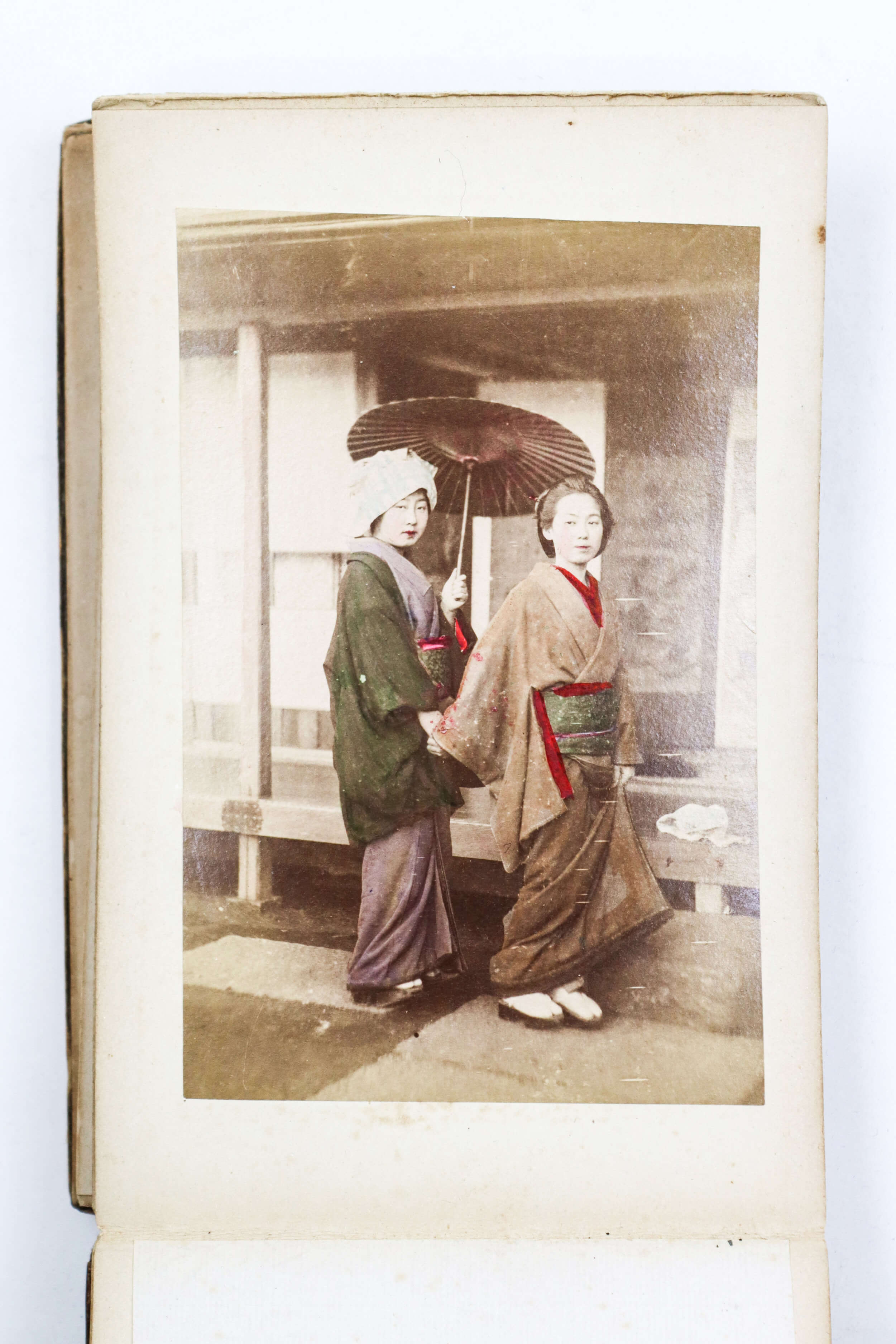
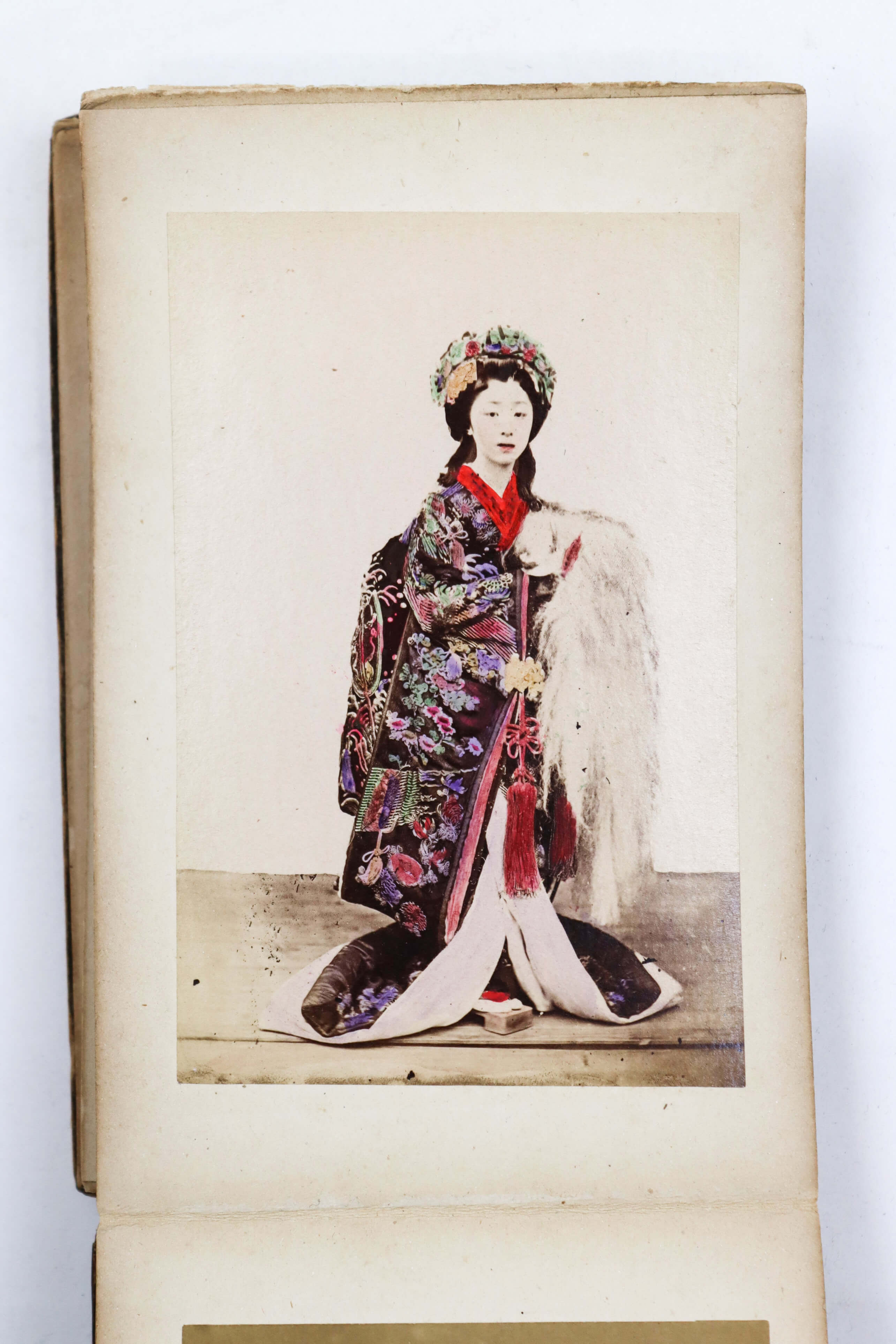
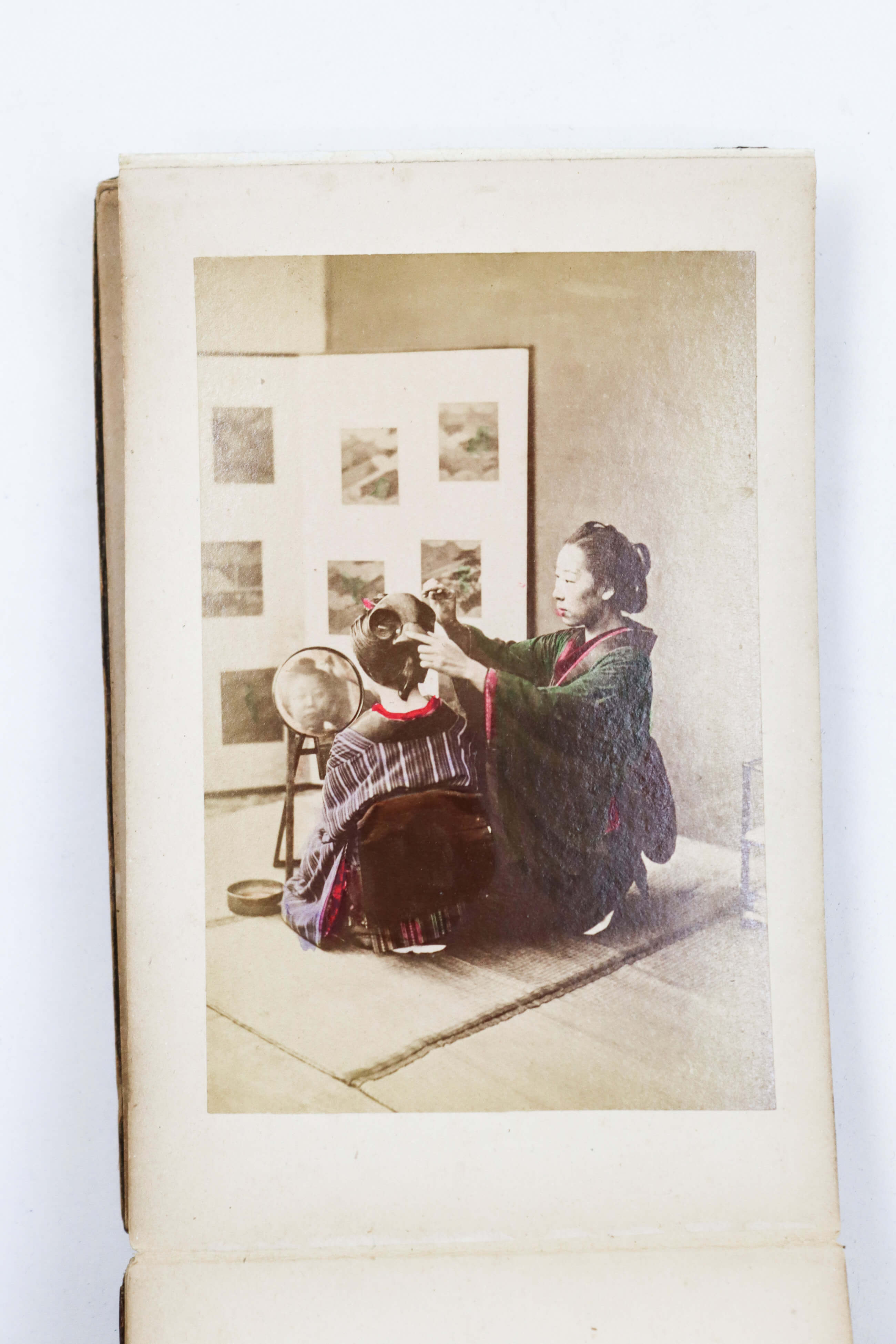
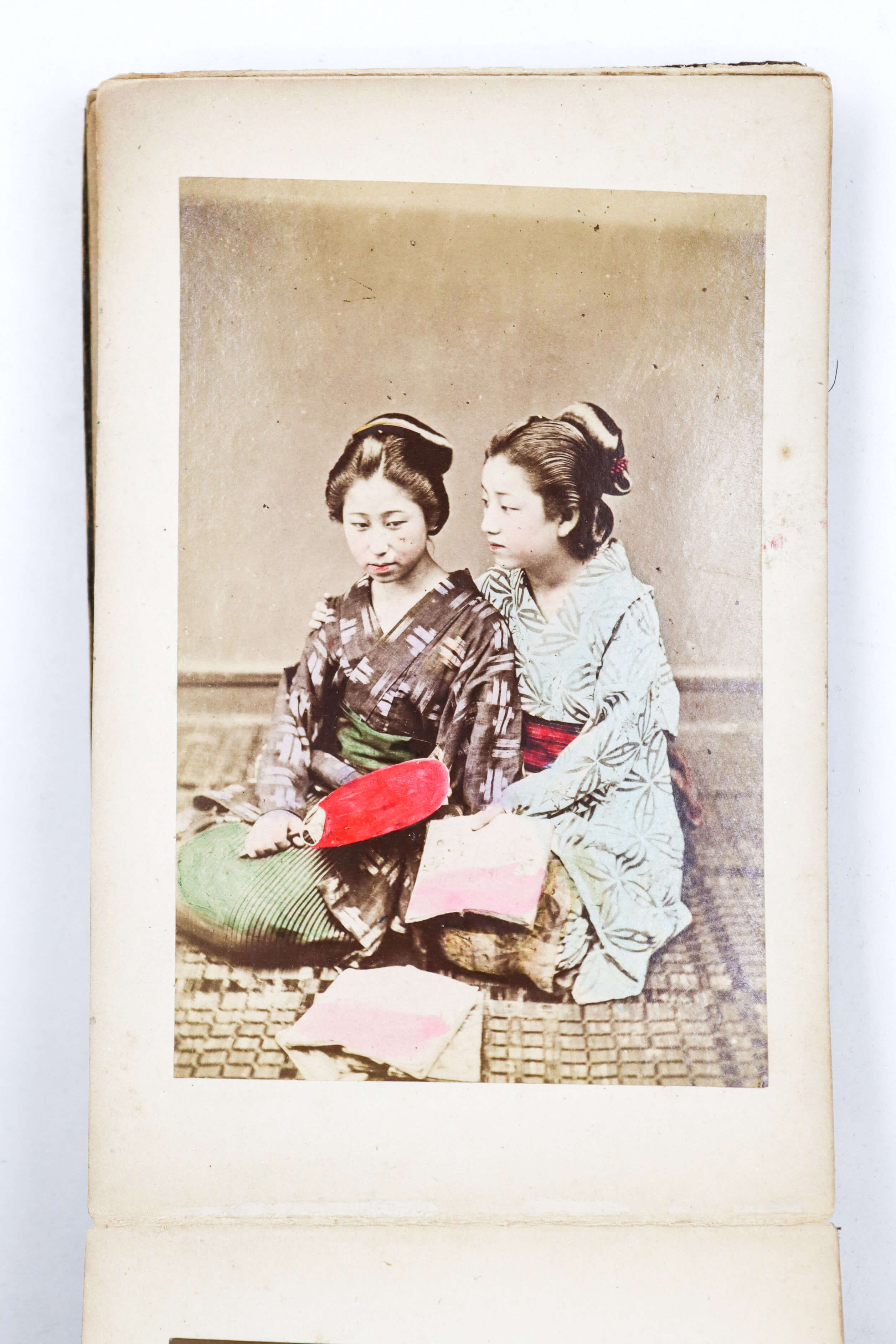
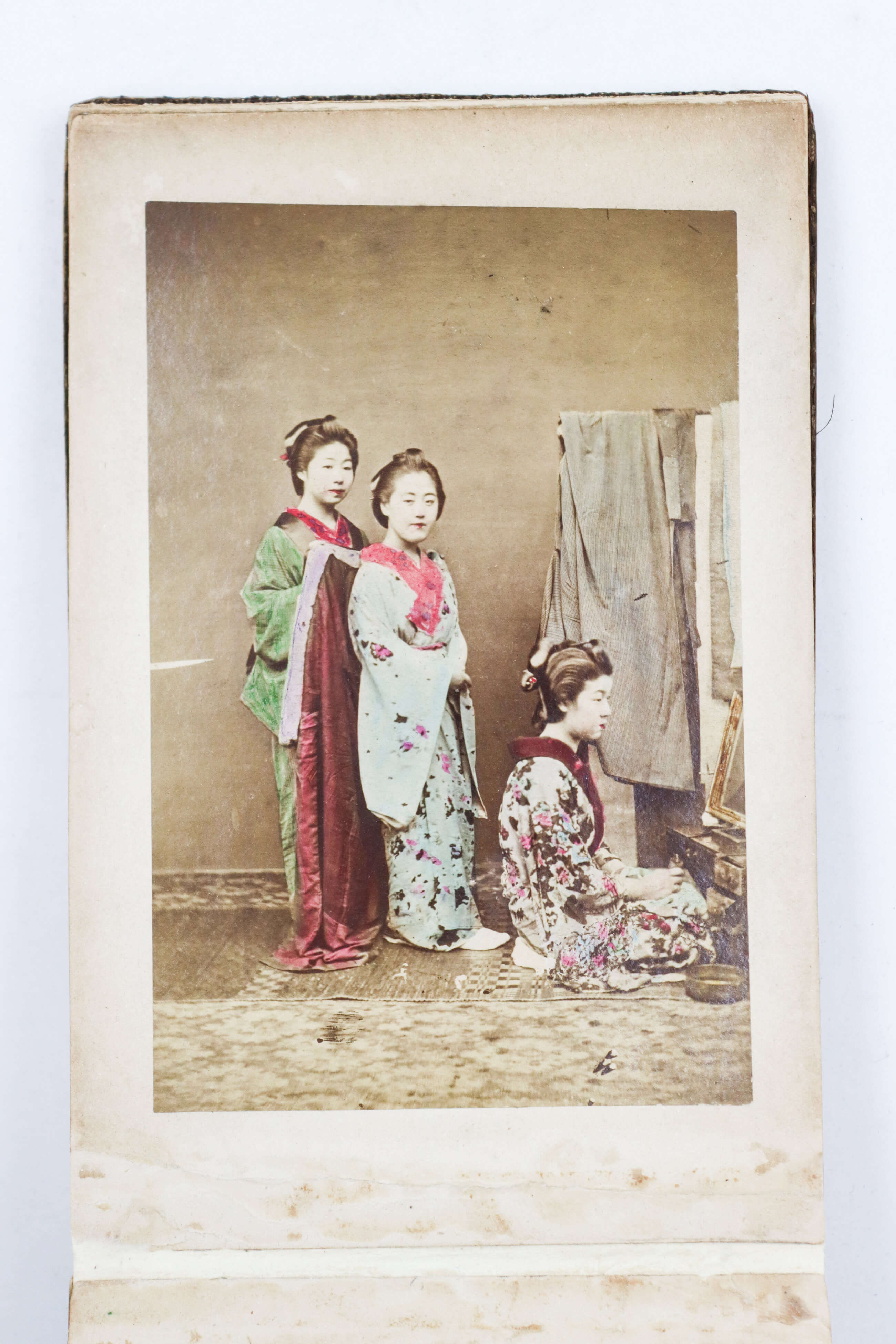
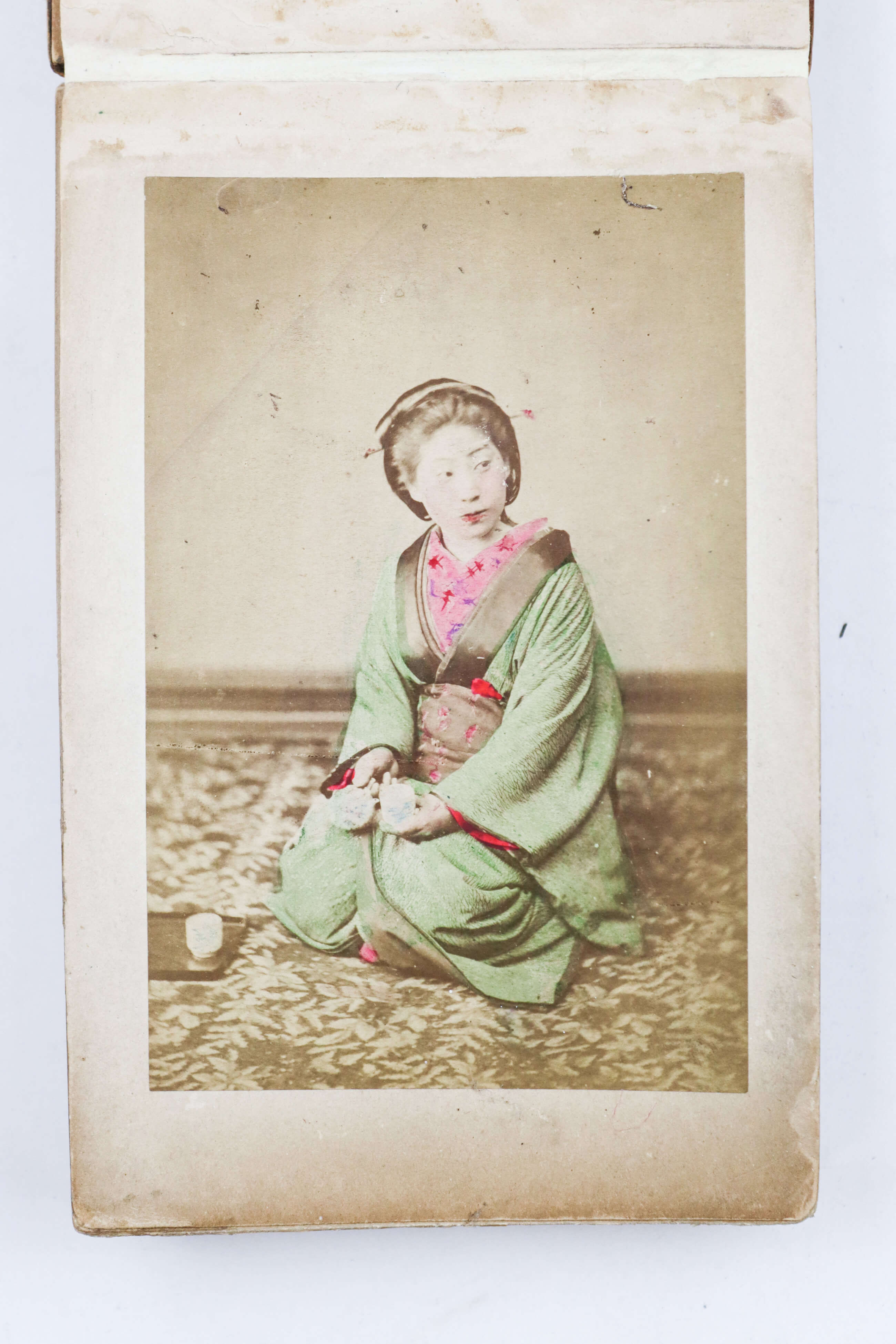
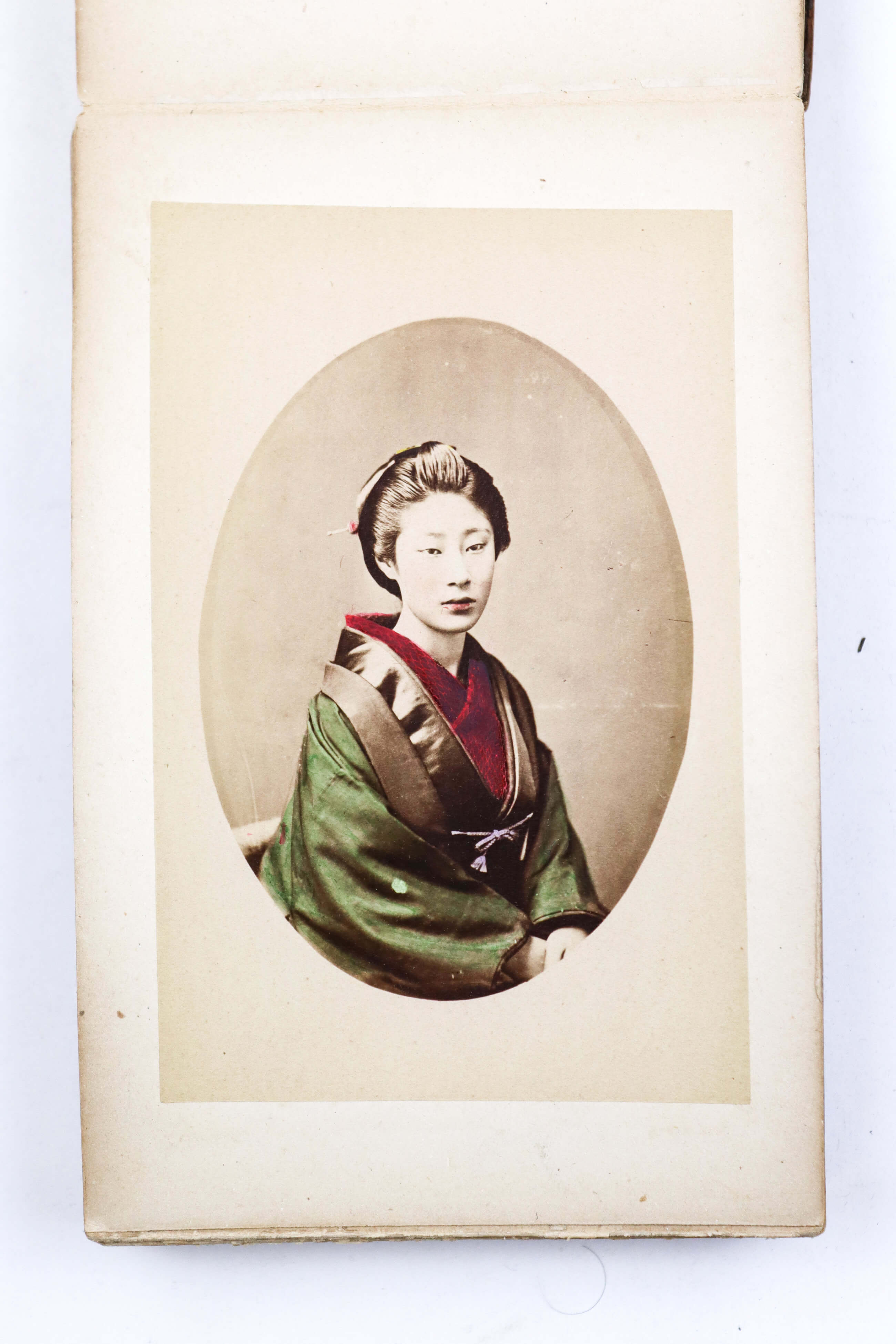
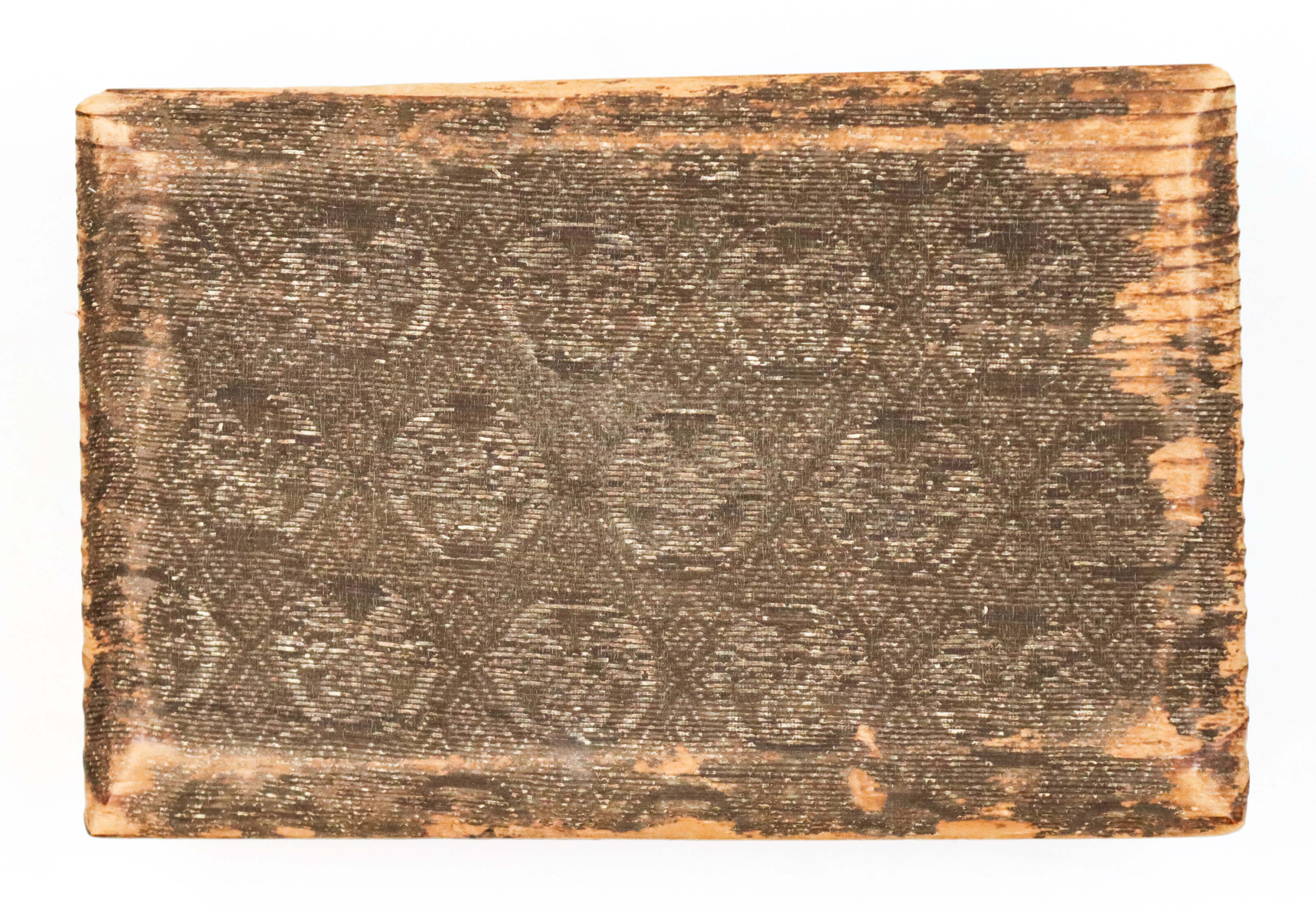
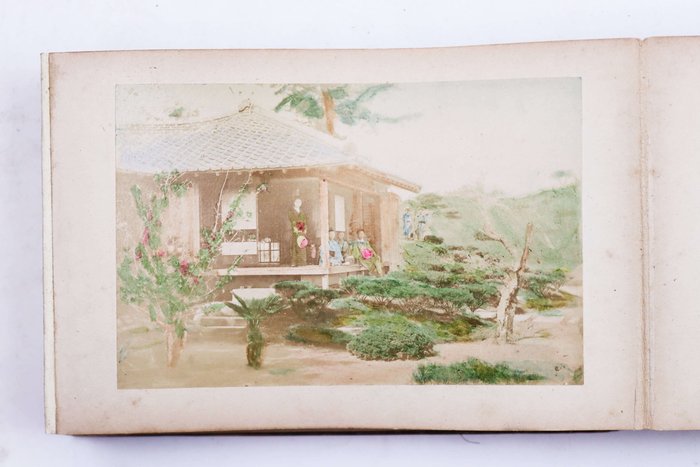
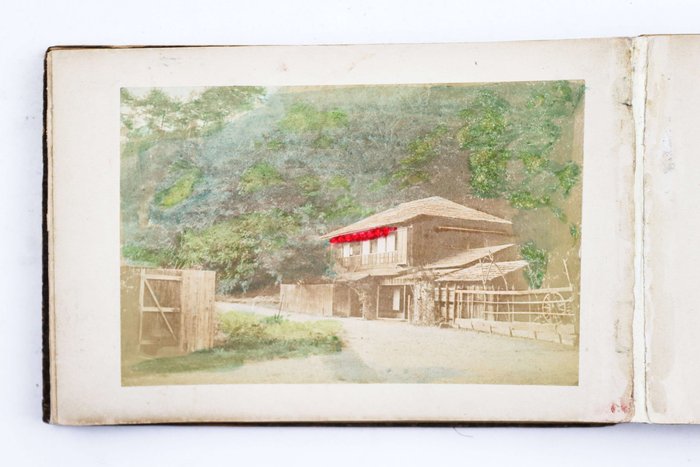
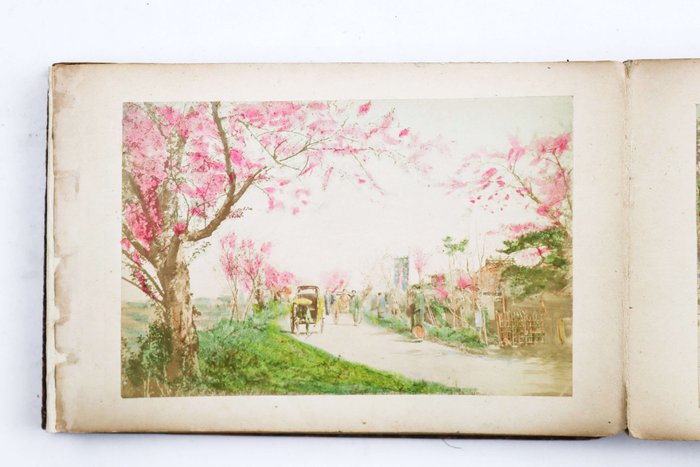
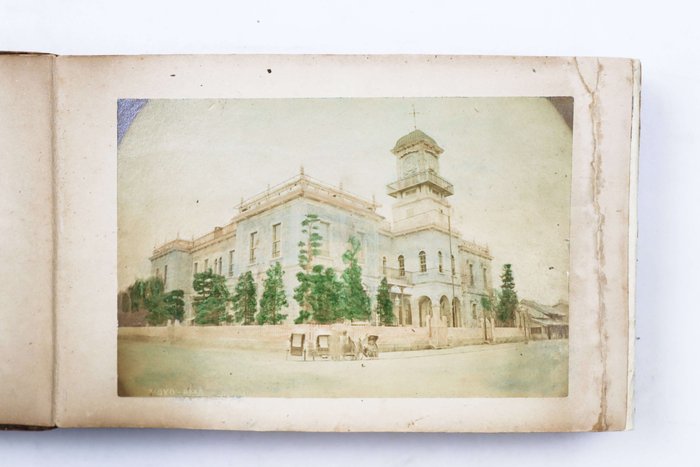
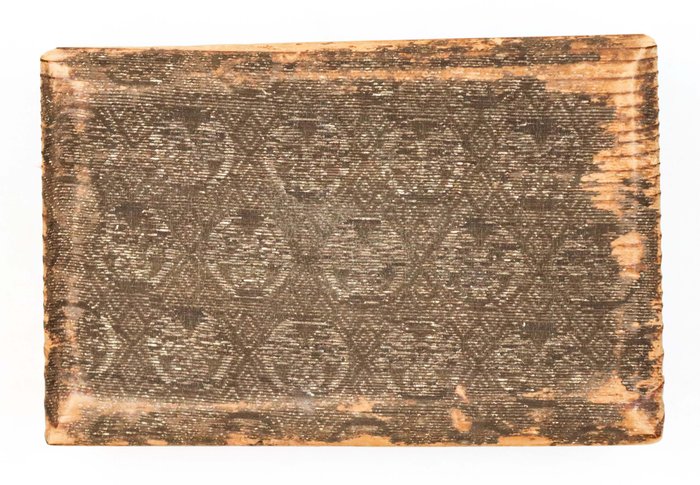
Fifty hand-tinted albumen photos ca. 9x13,6 cm (3 ½ x 5 ¼ in) mounted on concertina style thick cardstock leaves. About five photos with English captions in negatives. Accordion style wood boards covered with cloth. One tissue paper preserved. Cloth is worn and lacking in various spots, photos slightly age-toned, but overall a very good album with strong, interesting photos.
A beautiful keepsake photo album with fifty excellent albumen prints, documenting Honshu Island, Japan, shortly before the Great Kantō Earthquake of 1923. (The Great Kantō Earthquake was a powerful megathrust quake that struck the Kantō Plain on Honshu on 1 September 1923. With an estimated magnitude of 8.0 (Mw), it and the subsequent firestorms roughly devastated most of Tokyo and Yokohama).
The album was produced in the Yokohama studio of Tamamura Kozaburo in the late-19th century. Kozaburo was a pioneering Japanese photographer and a key figure in the development of Yokohama shashin, hand-colored photographs issued for foreign visitors during the Meiji period. Trained under Genzo Kanamaru, he opened his first studio in Asakusa in 1874 and moved to Yokohama in 1883. By the 1890s, his studio produced thousands of meticulously hand-colored albumen and collotype prints of Japanese life and customs, often compiled in elegant souvenir albums with lacquer covers.
The present album likely belonged to a foreign traveler or visitor to Japan, possibly a sailor, businessman, or tourist, who acquired it as a keepsake of their journey.
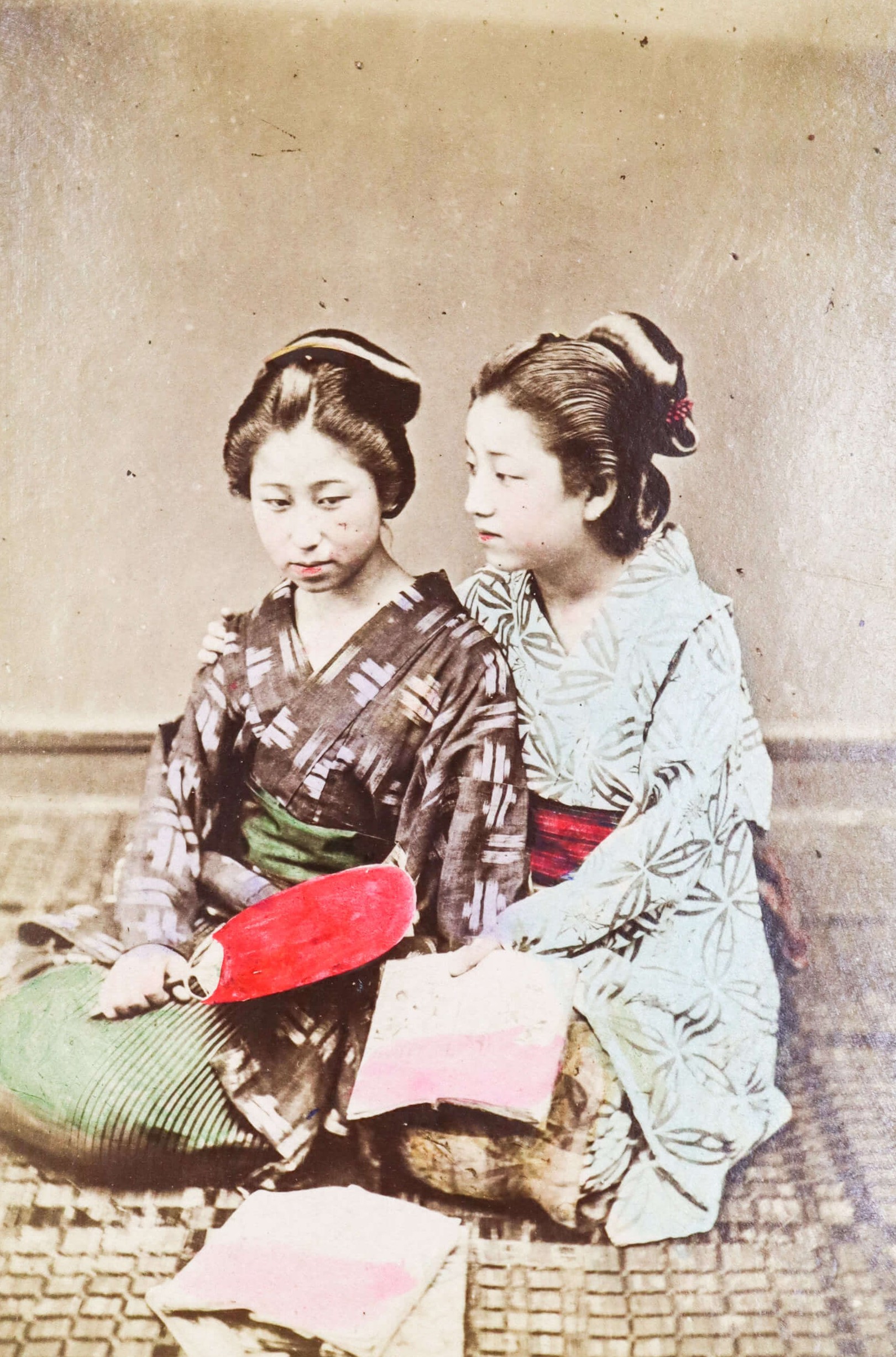
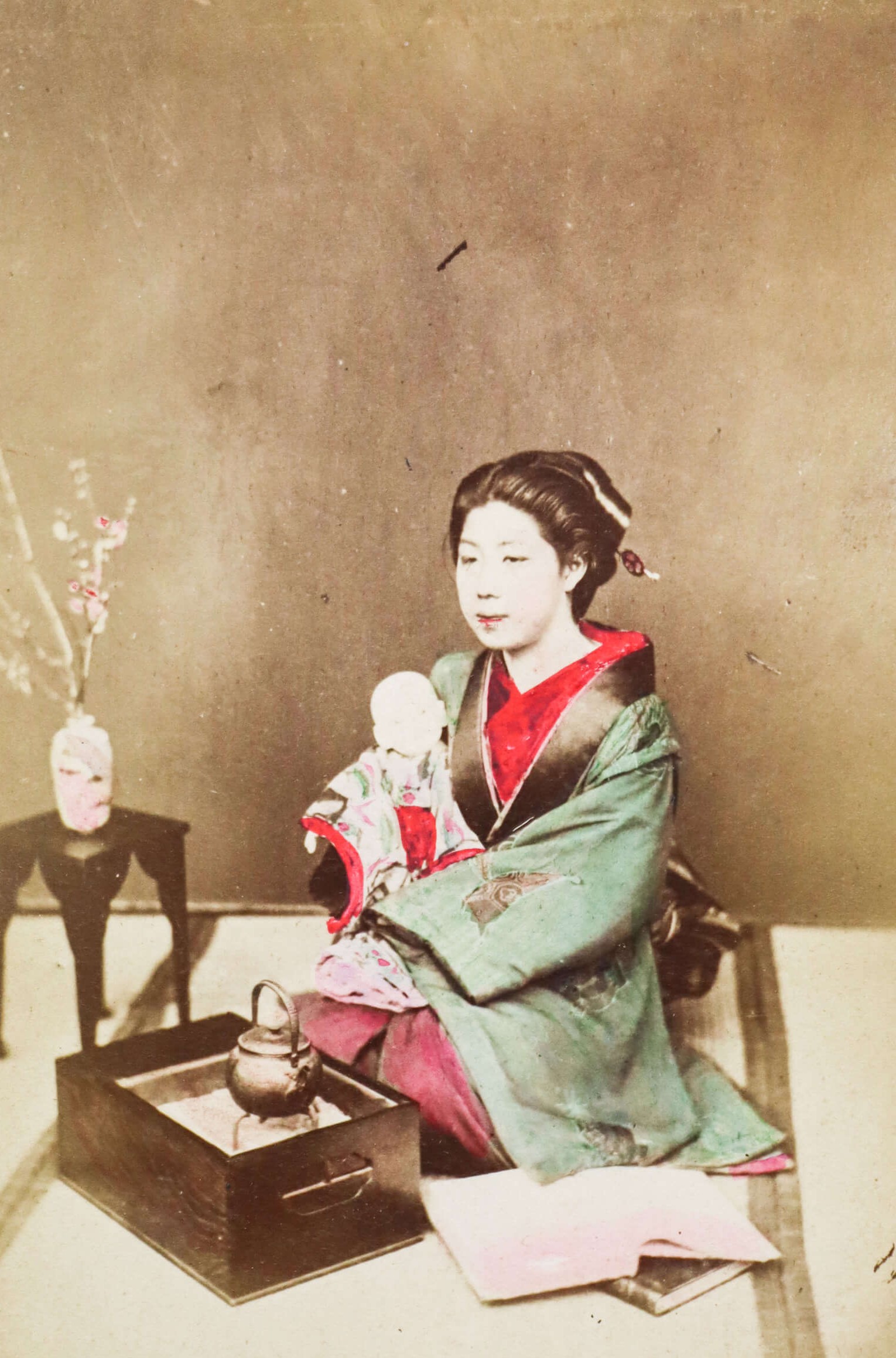
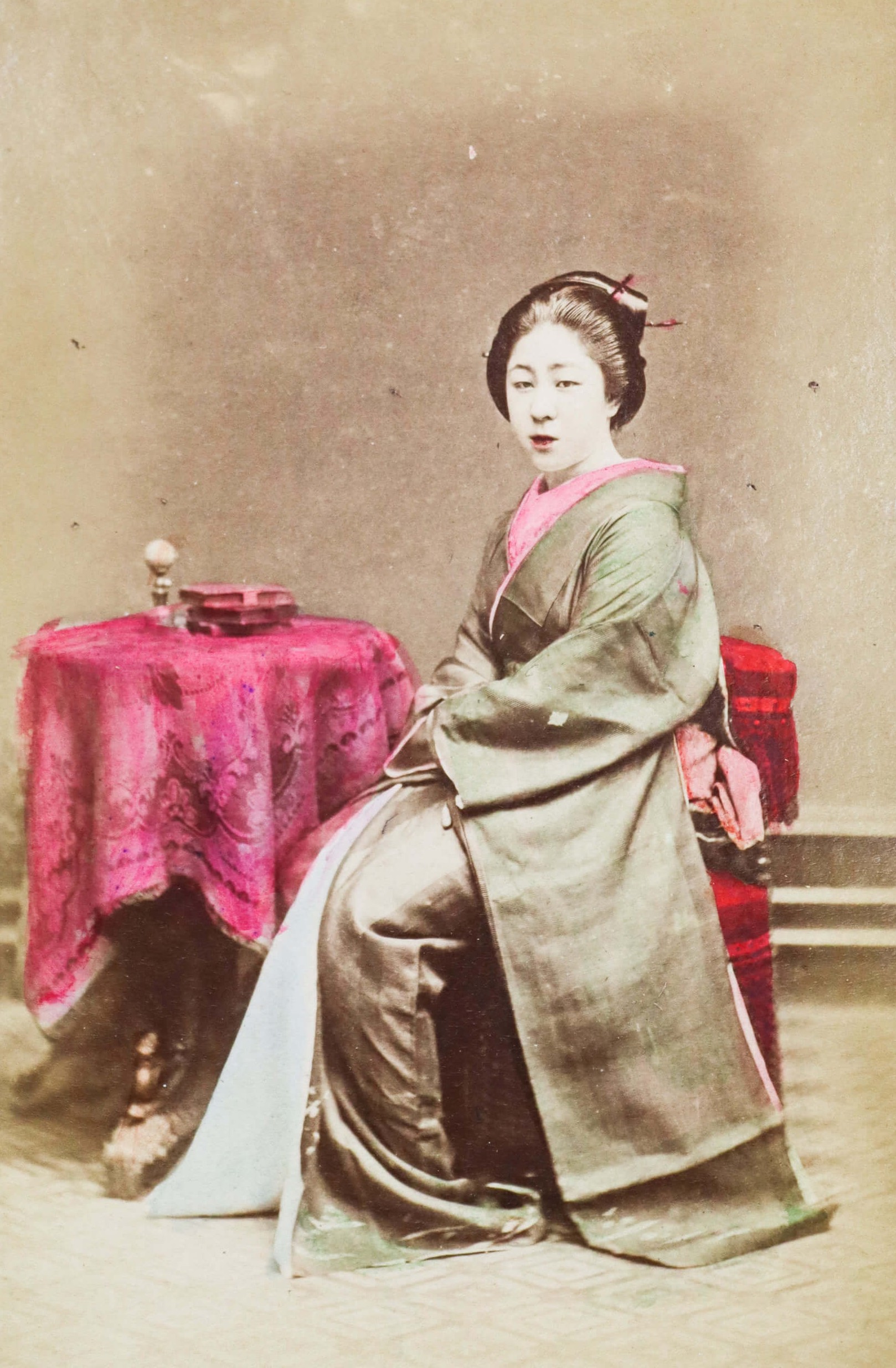
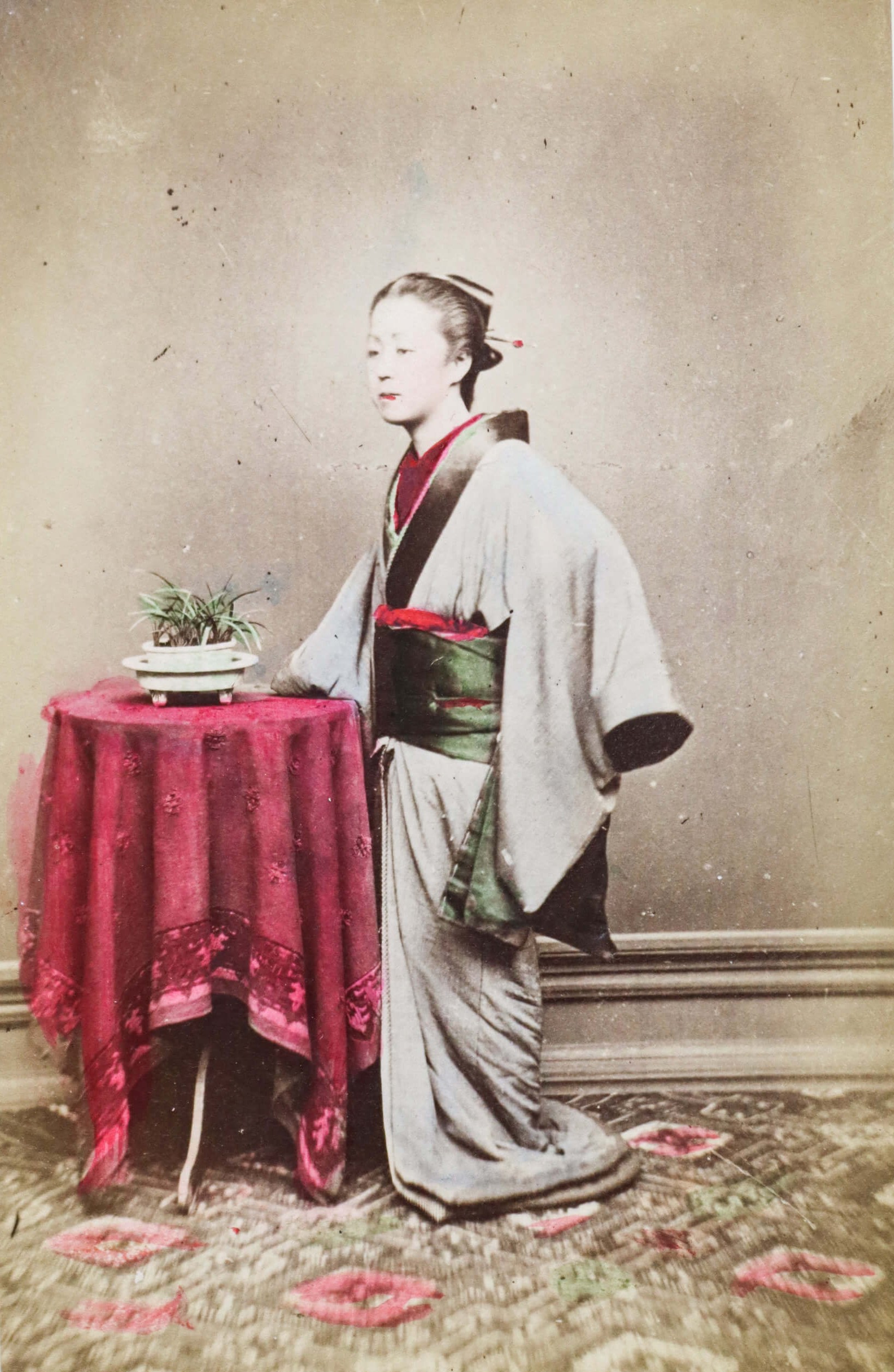
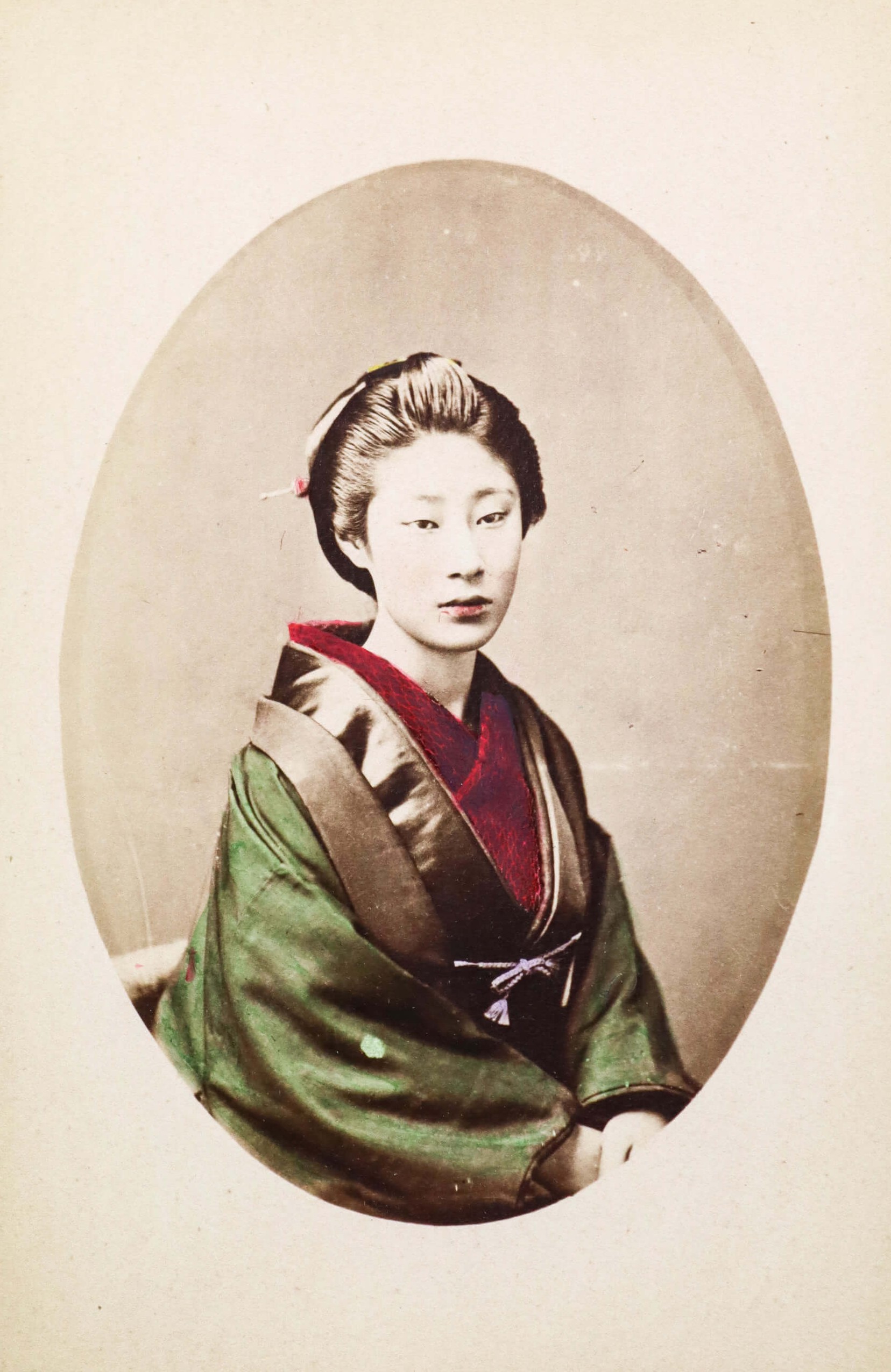
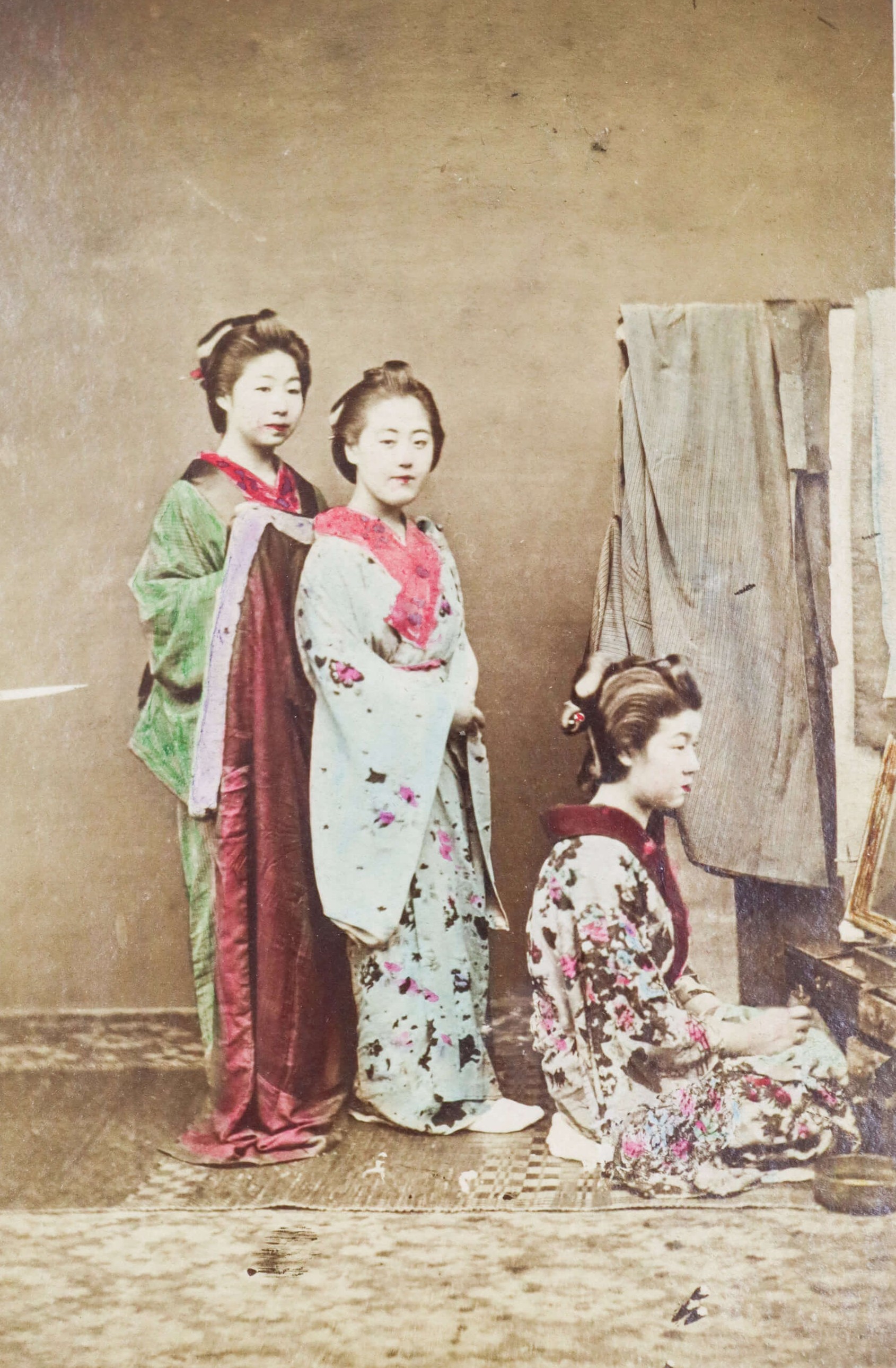
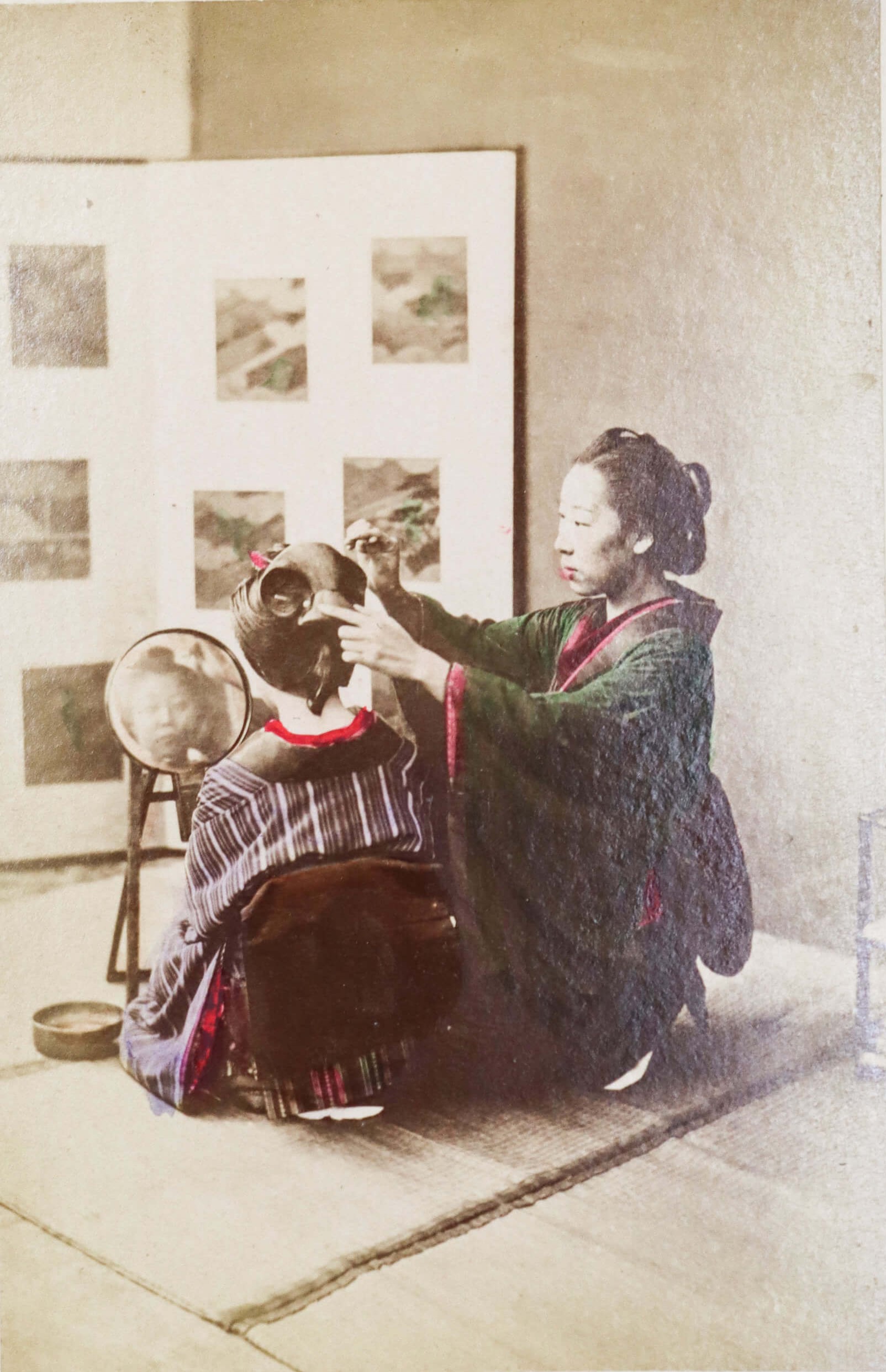
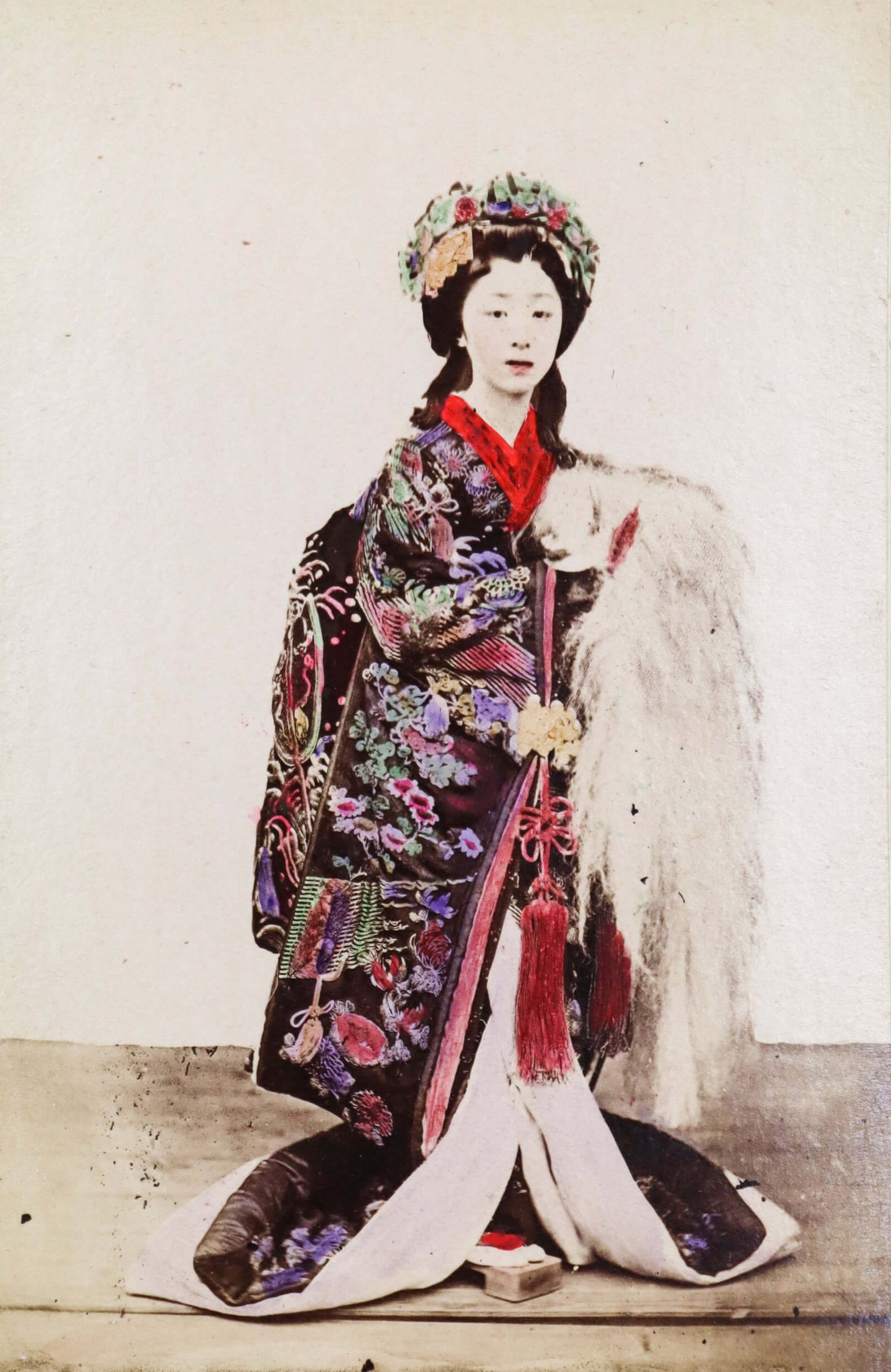
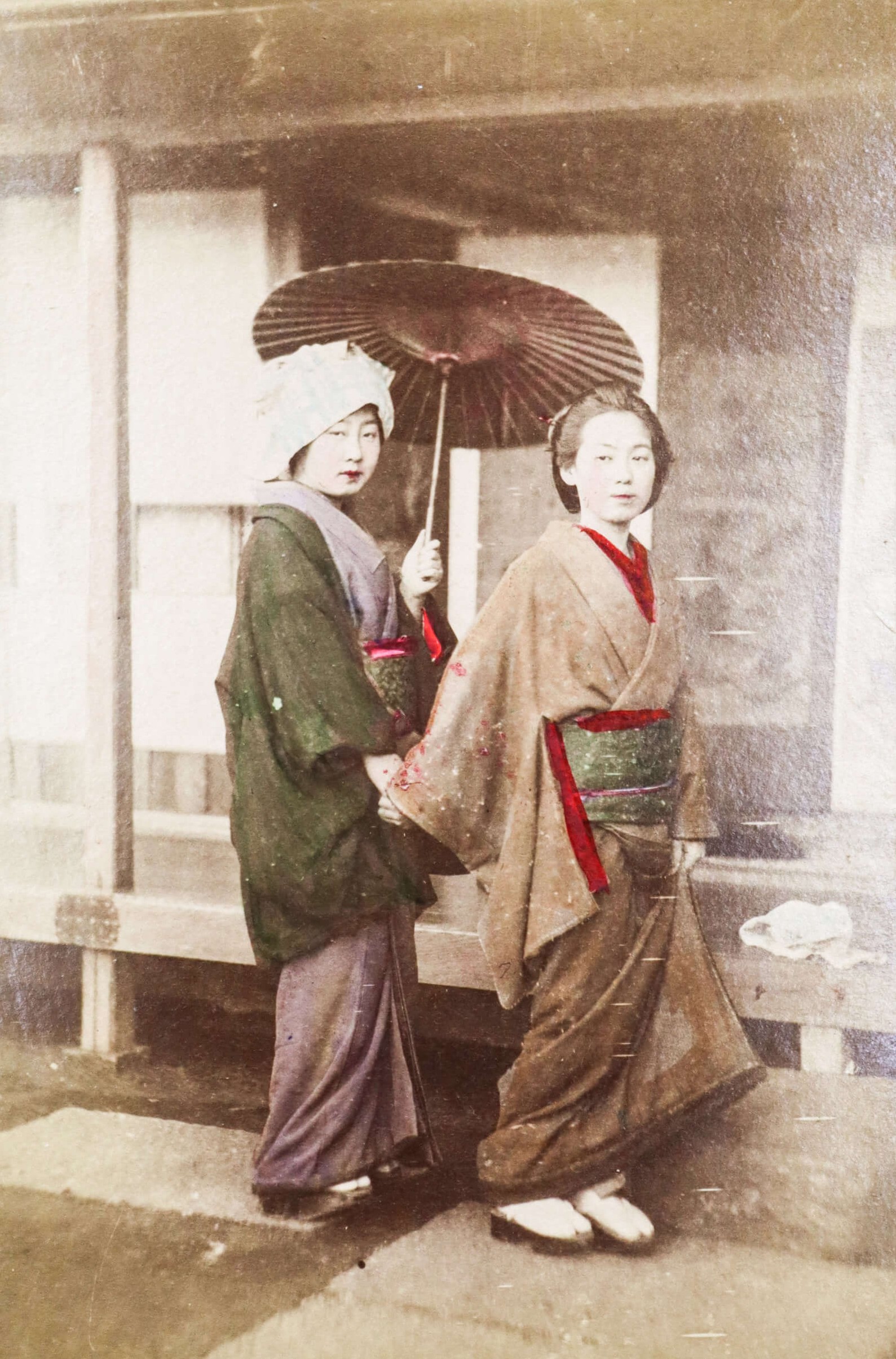
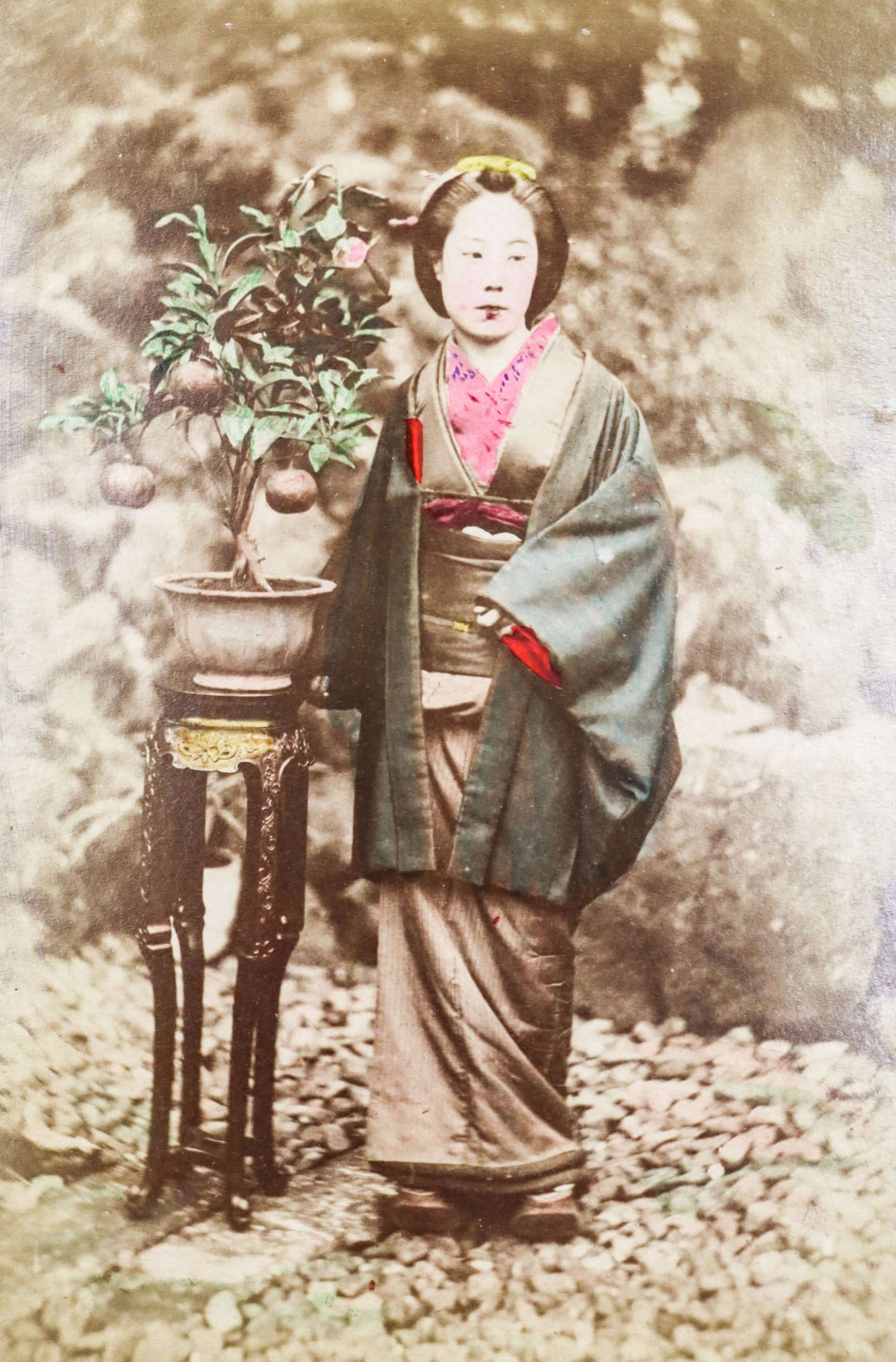
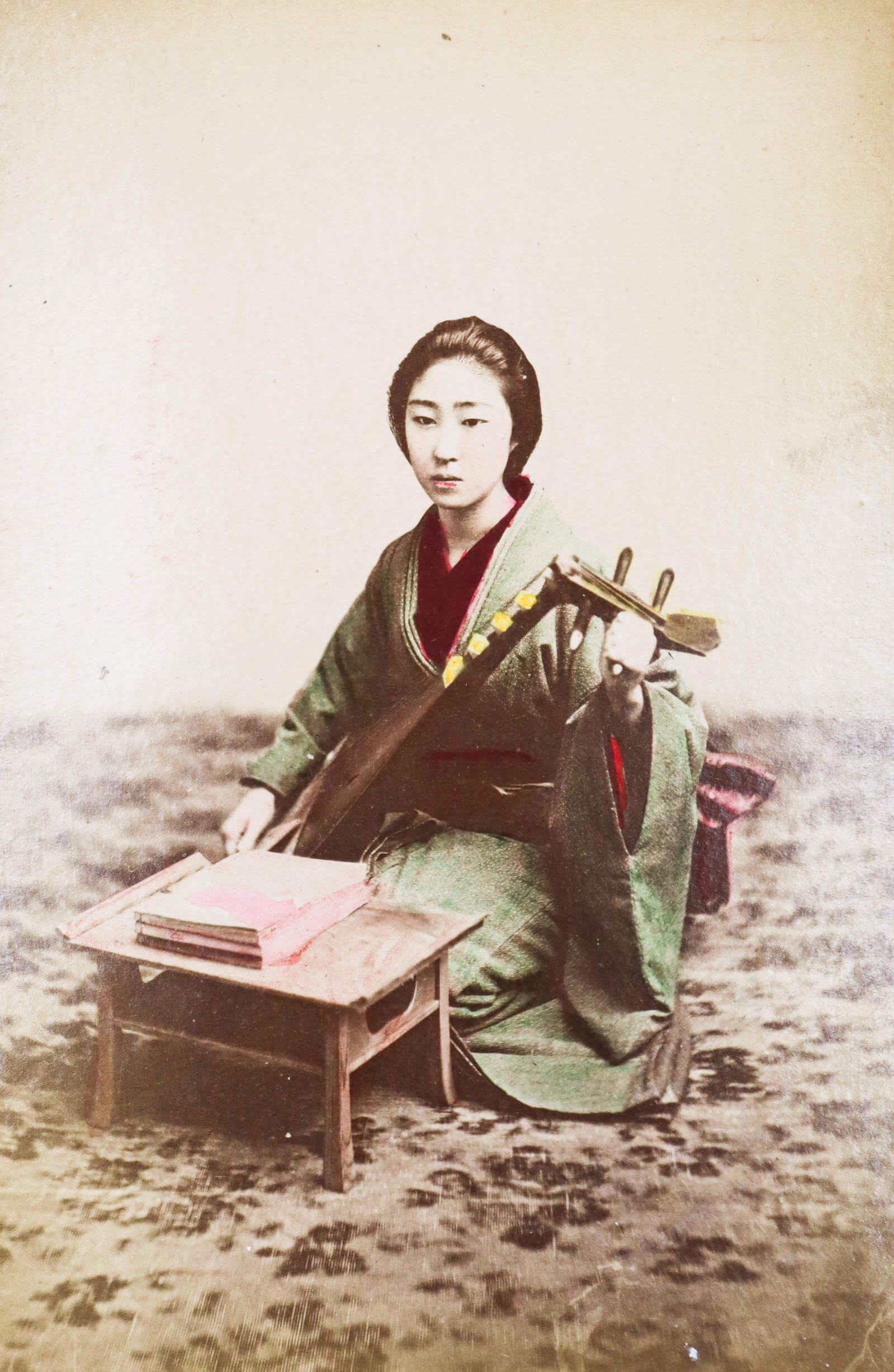
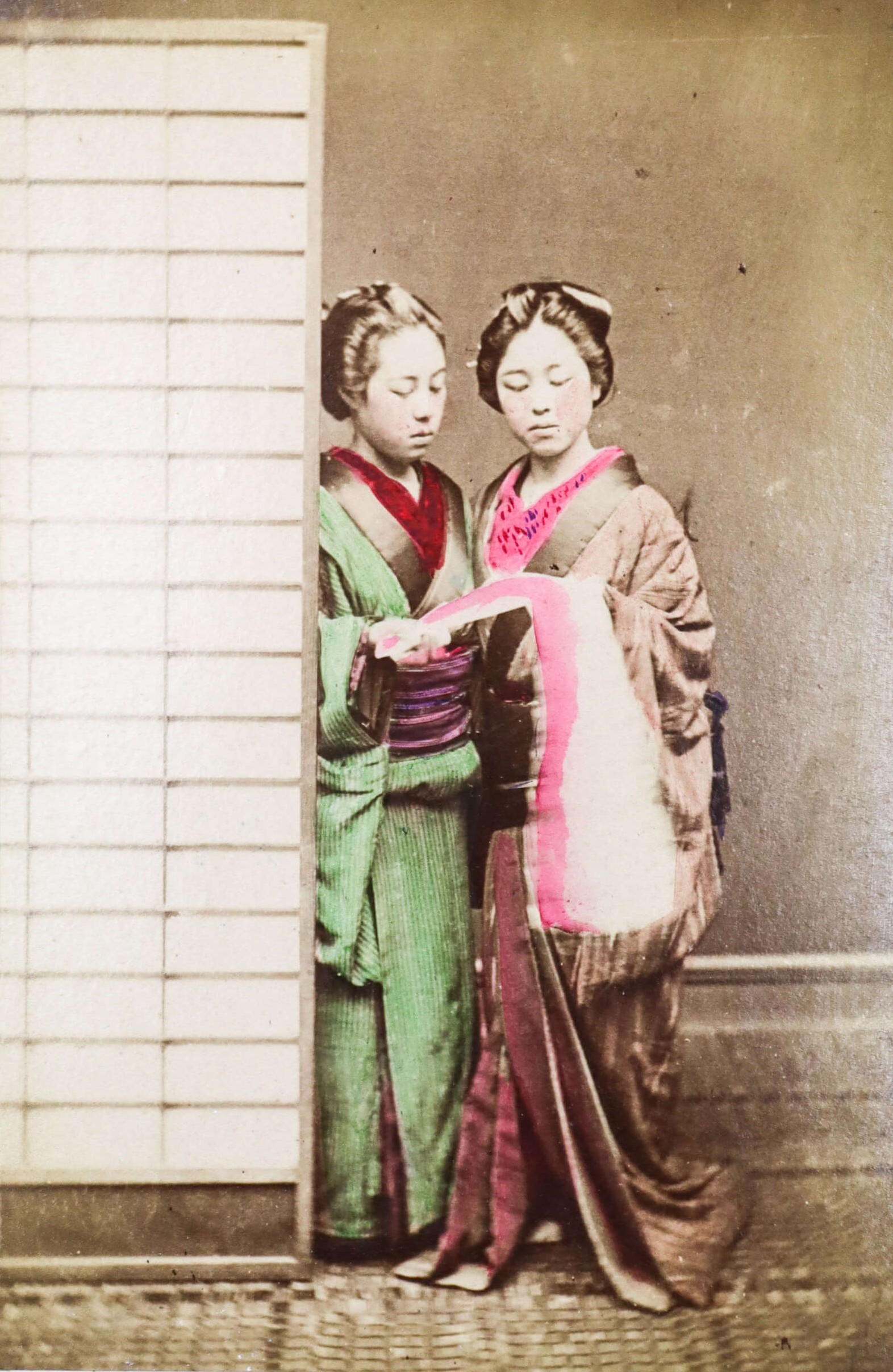
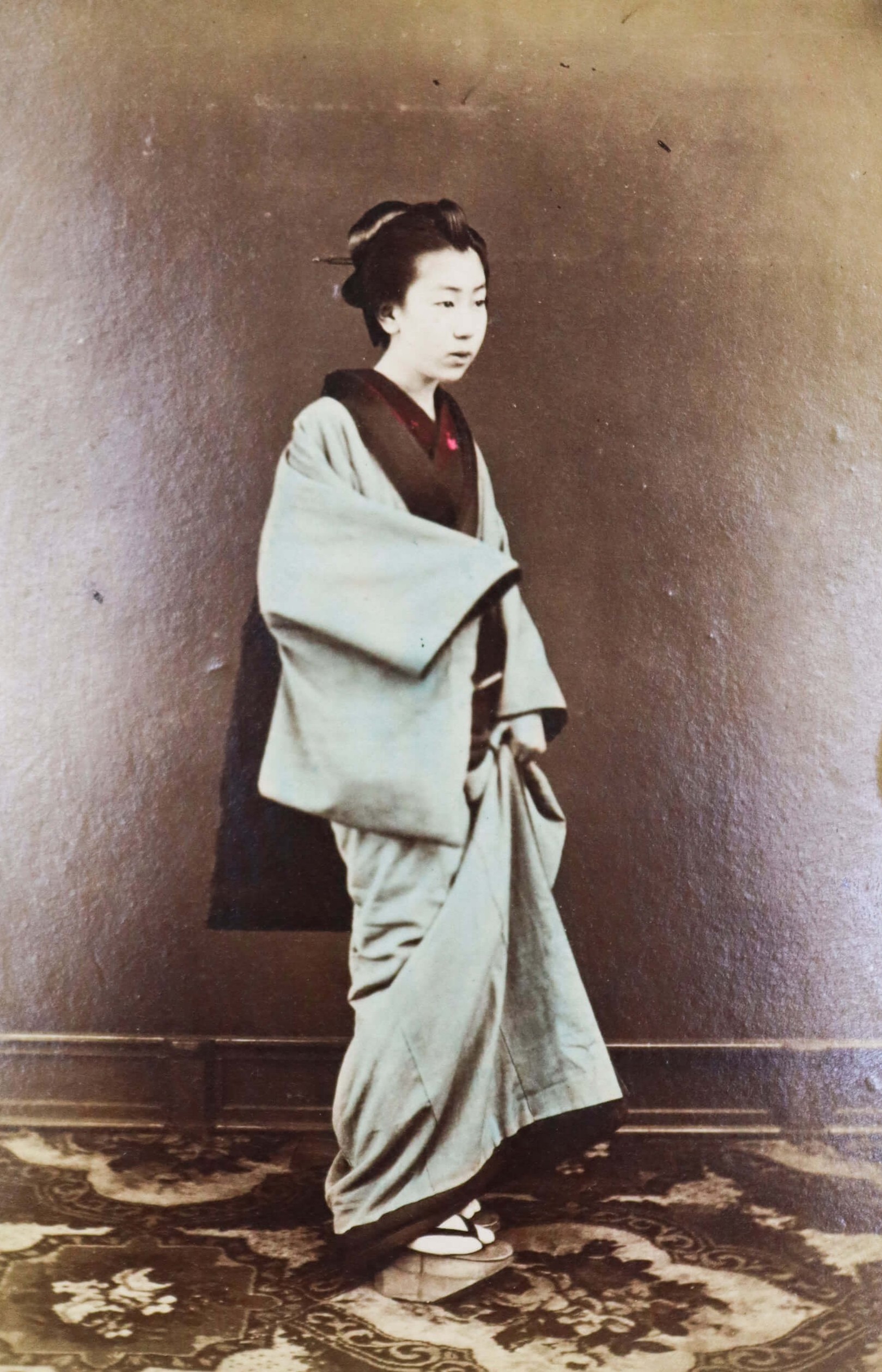
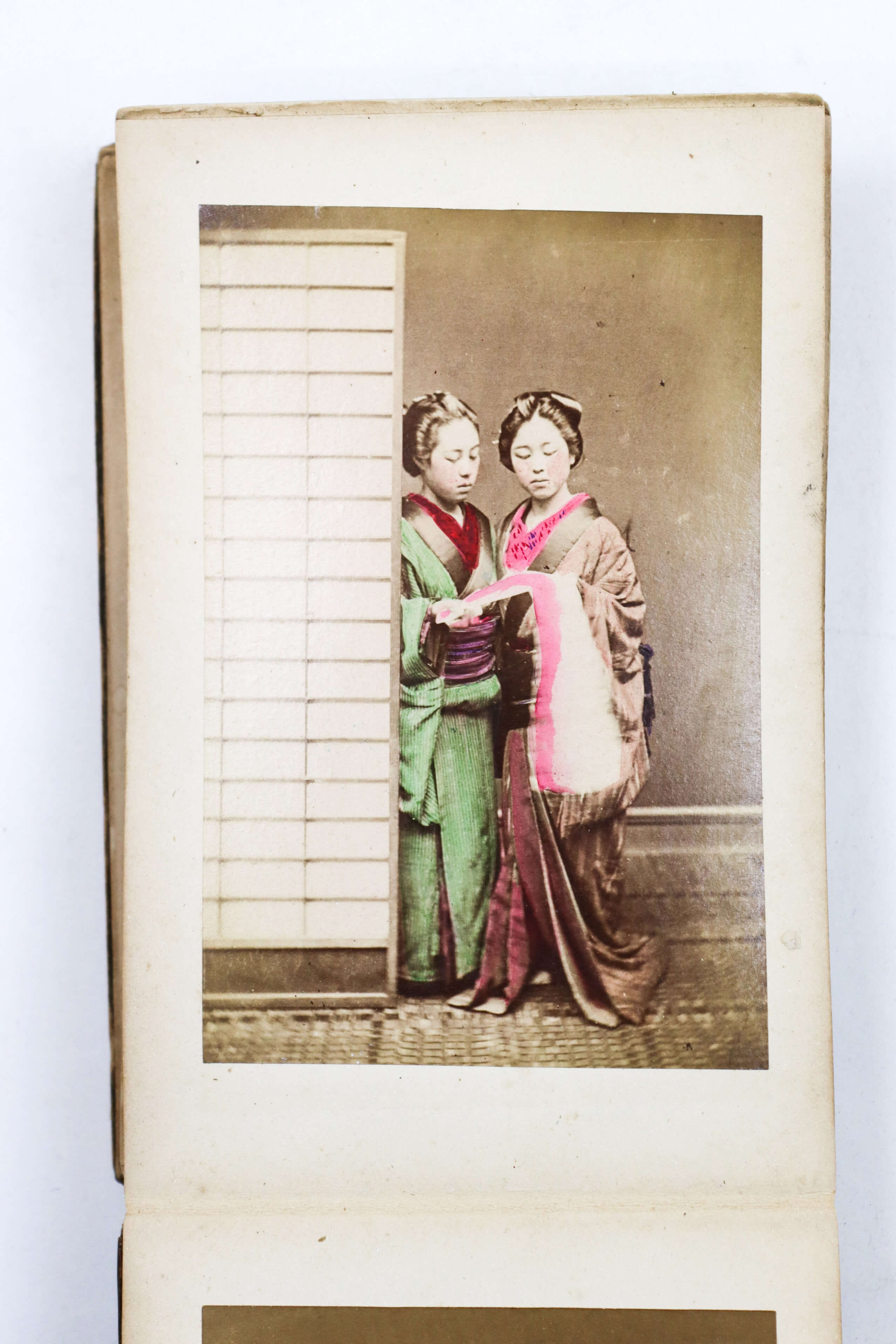
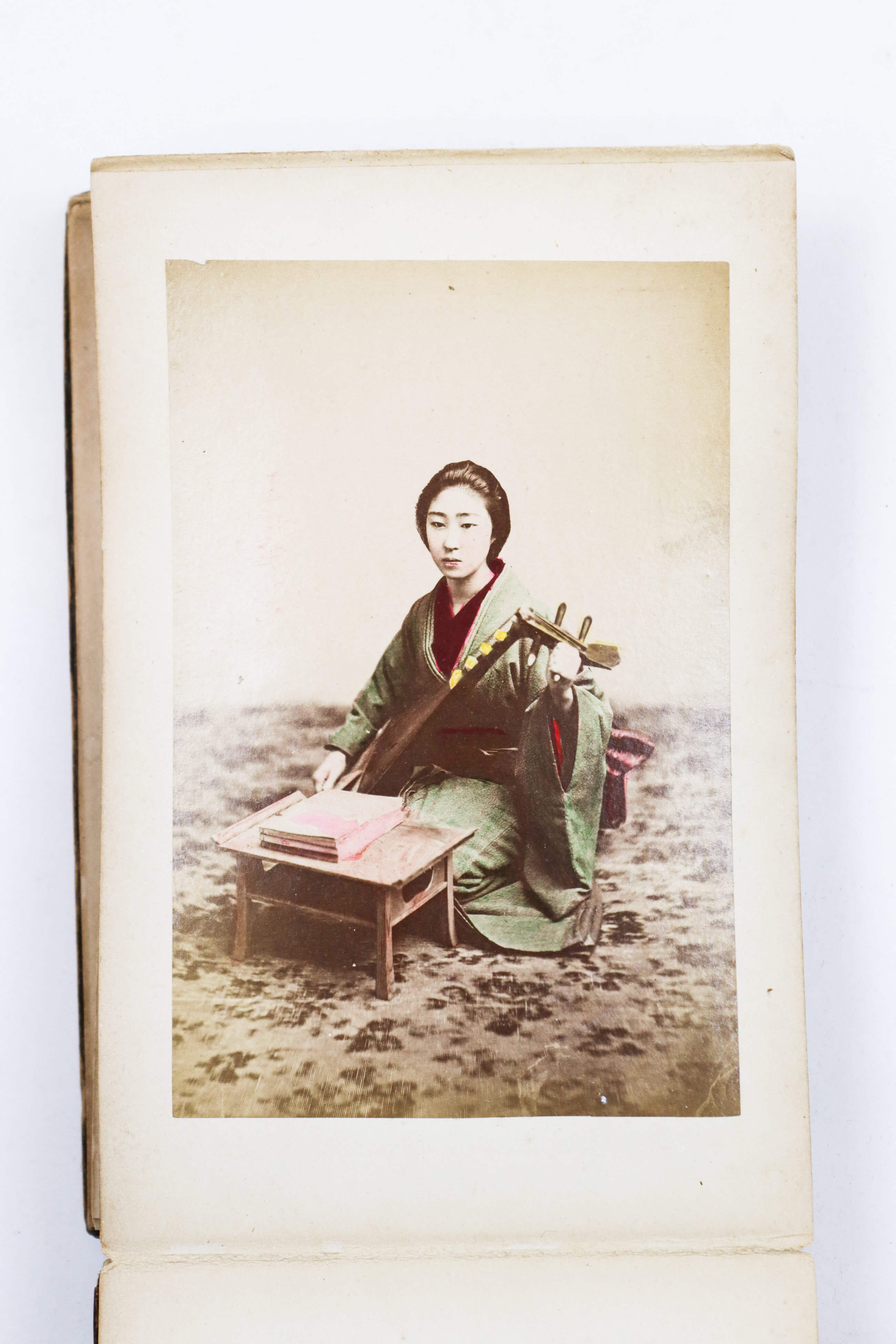
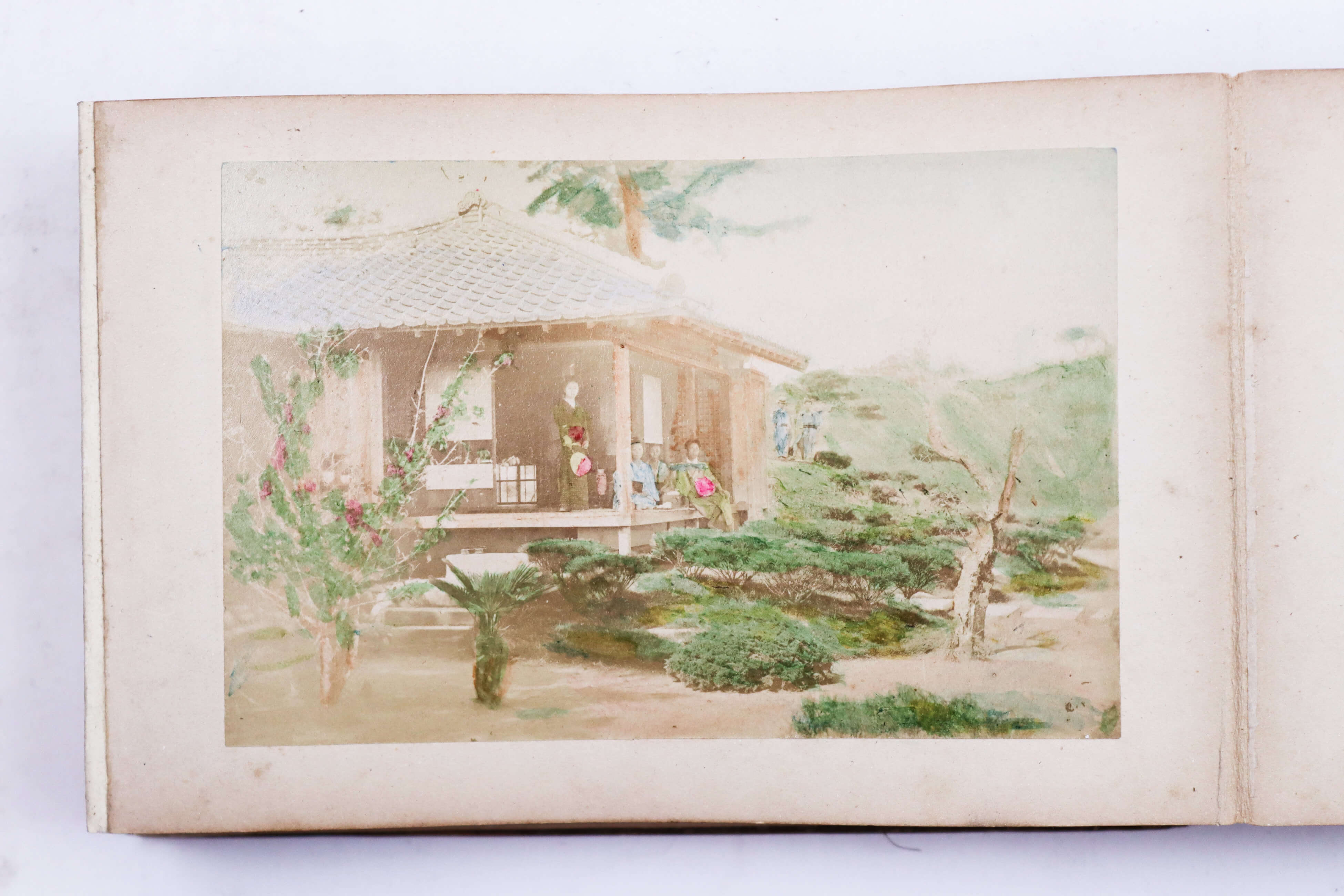
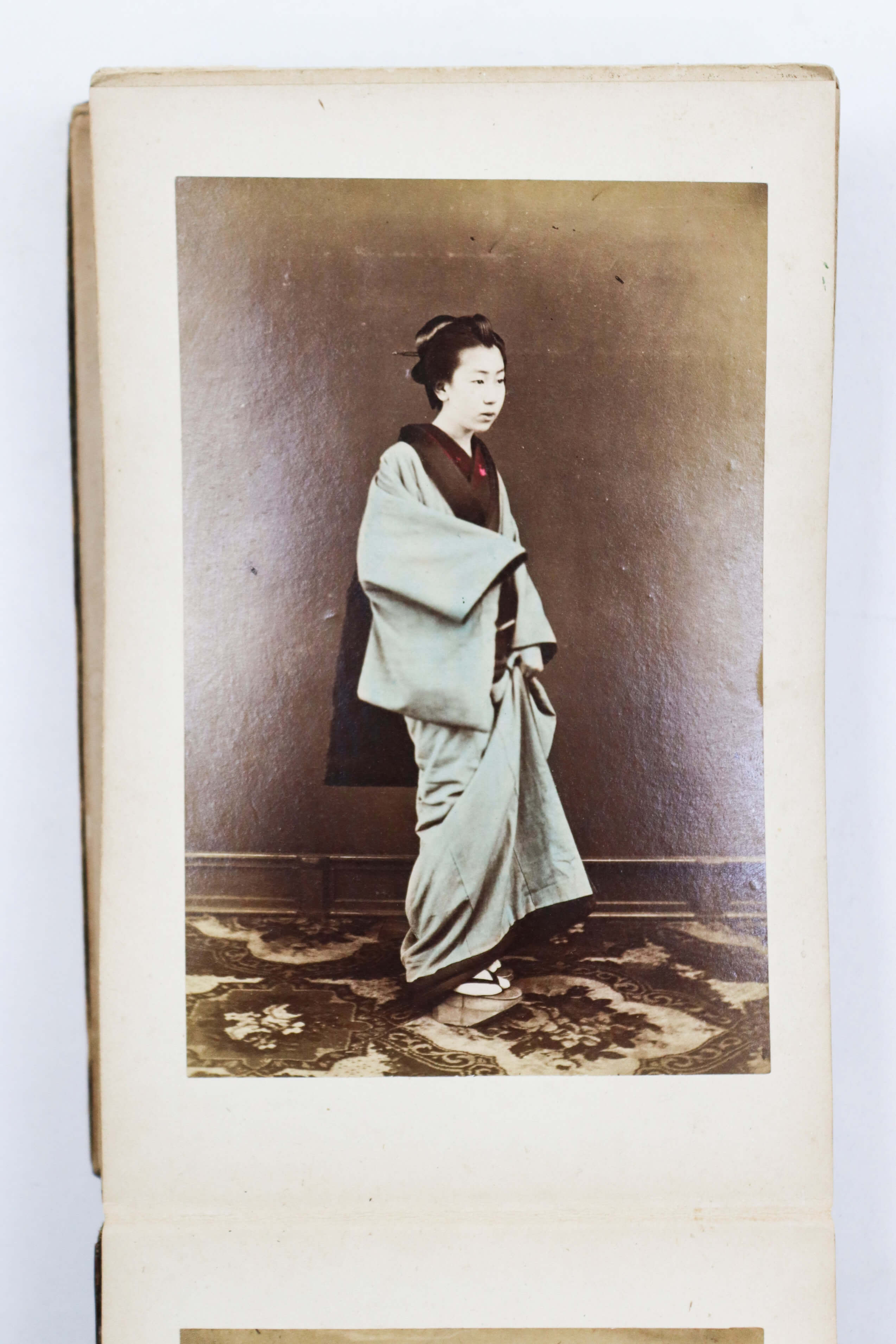
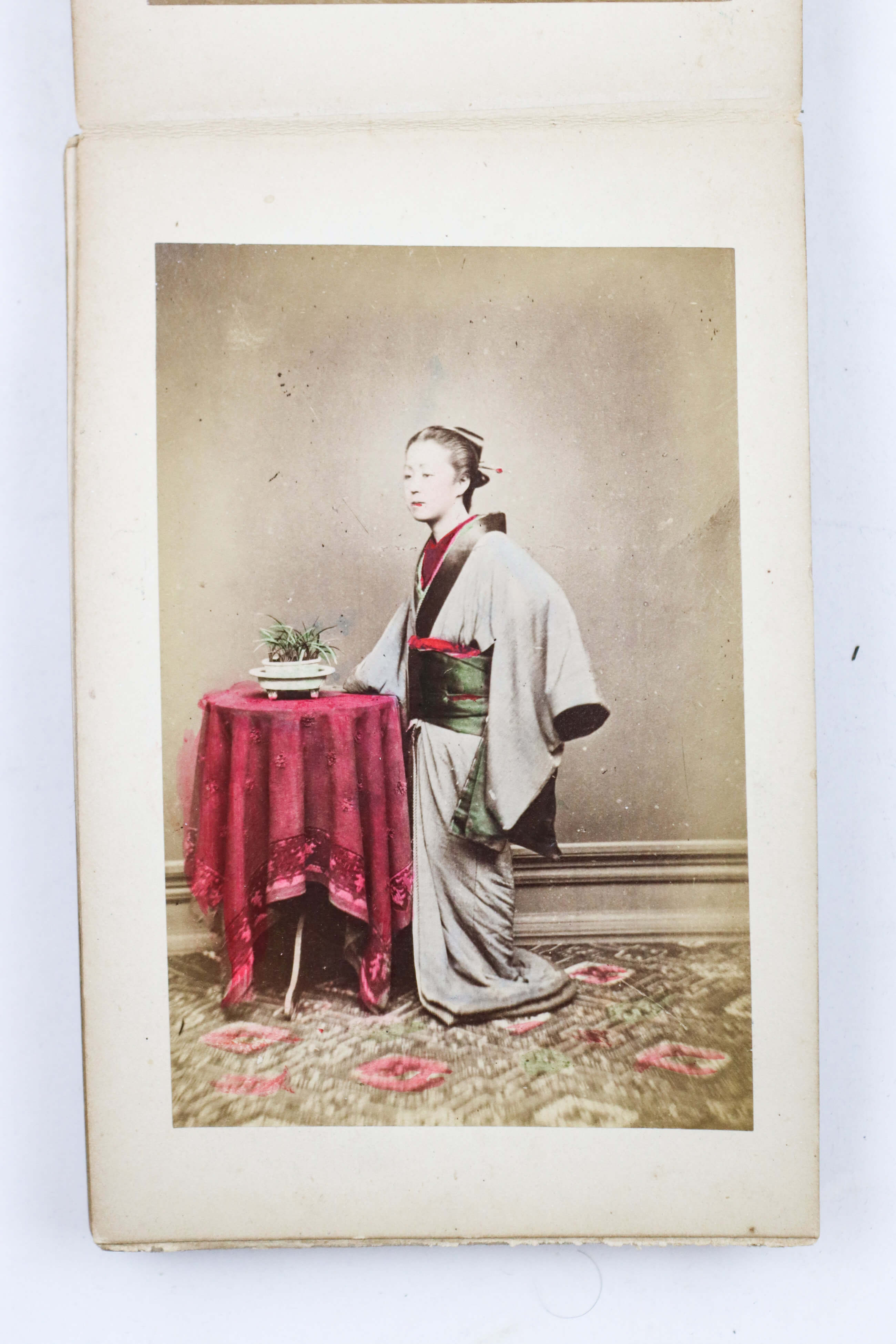
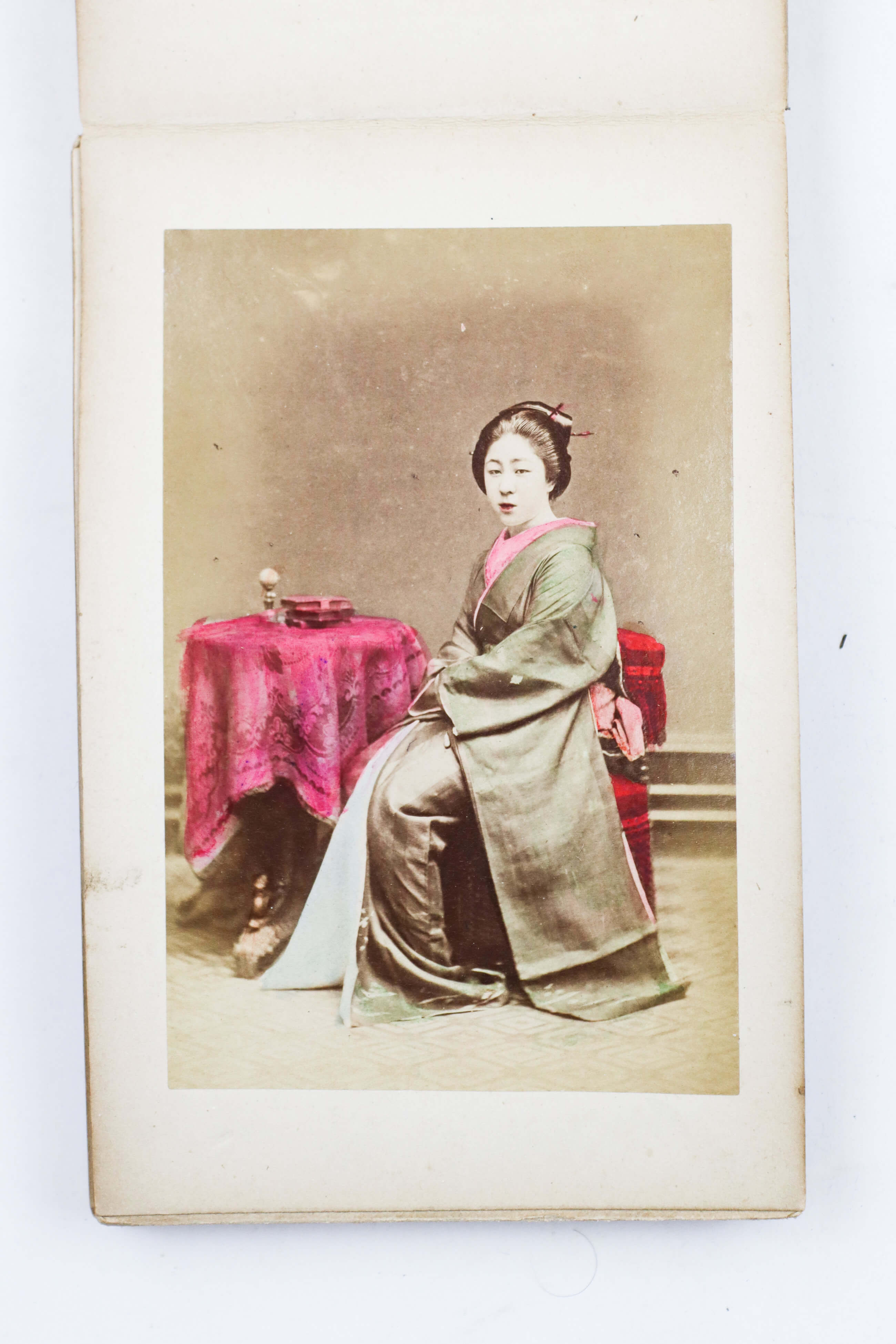
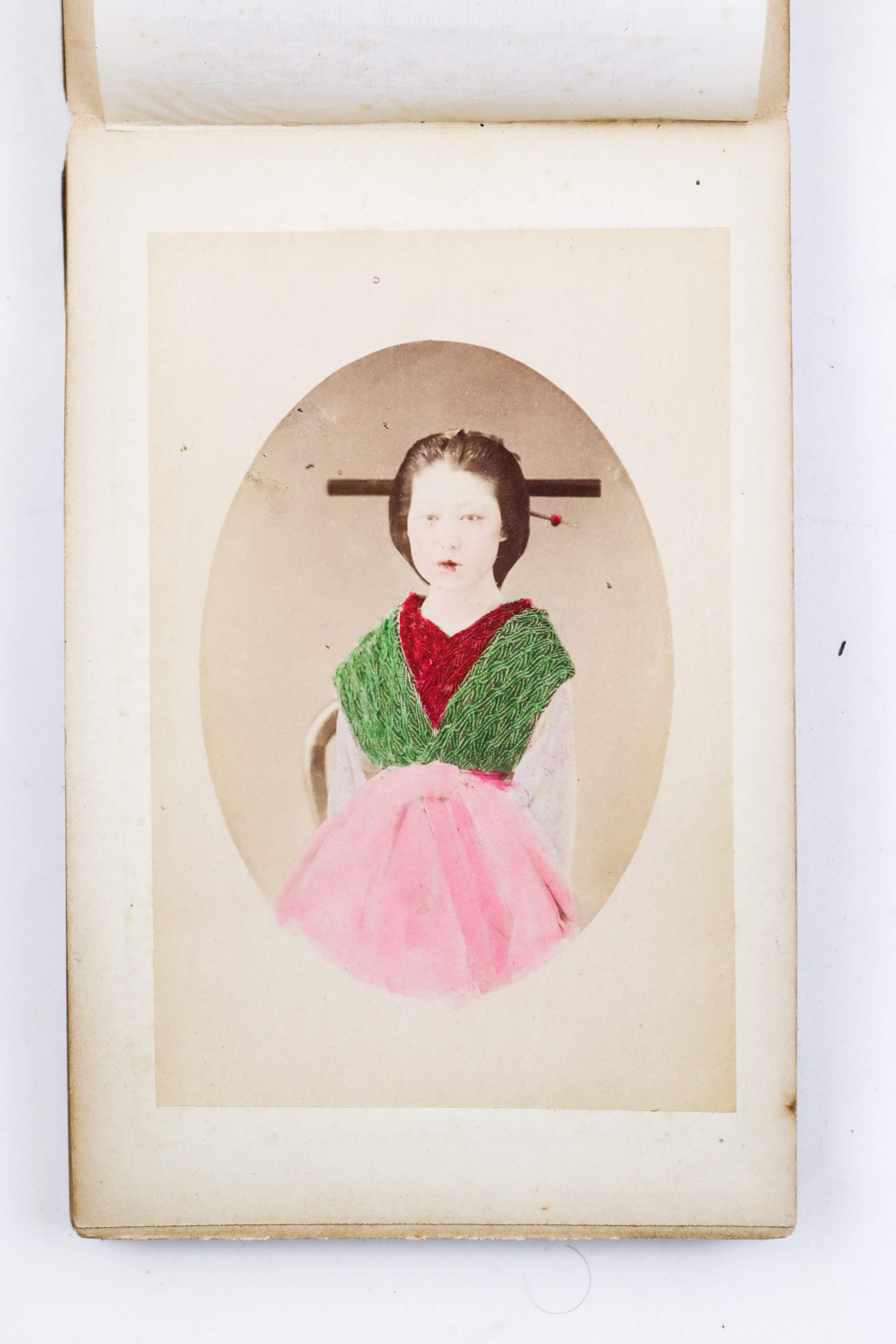
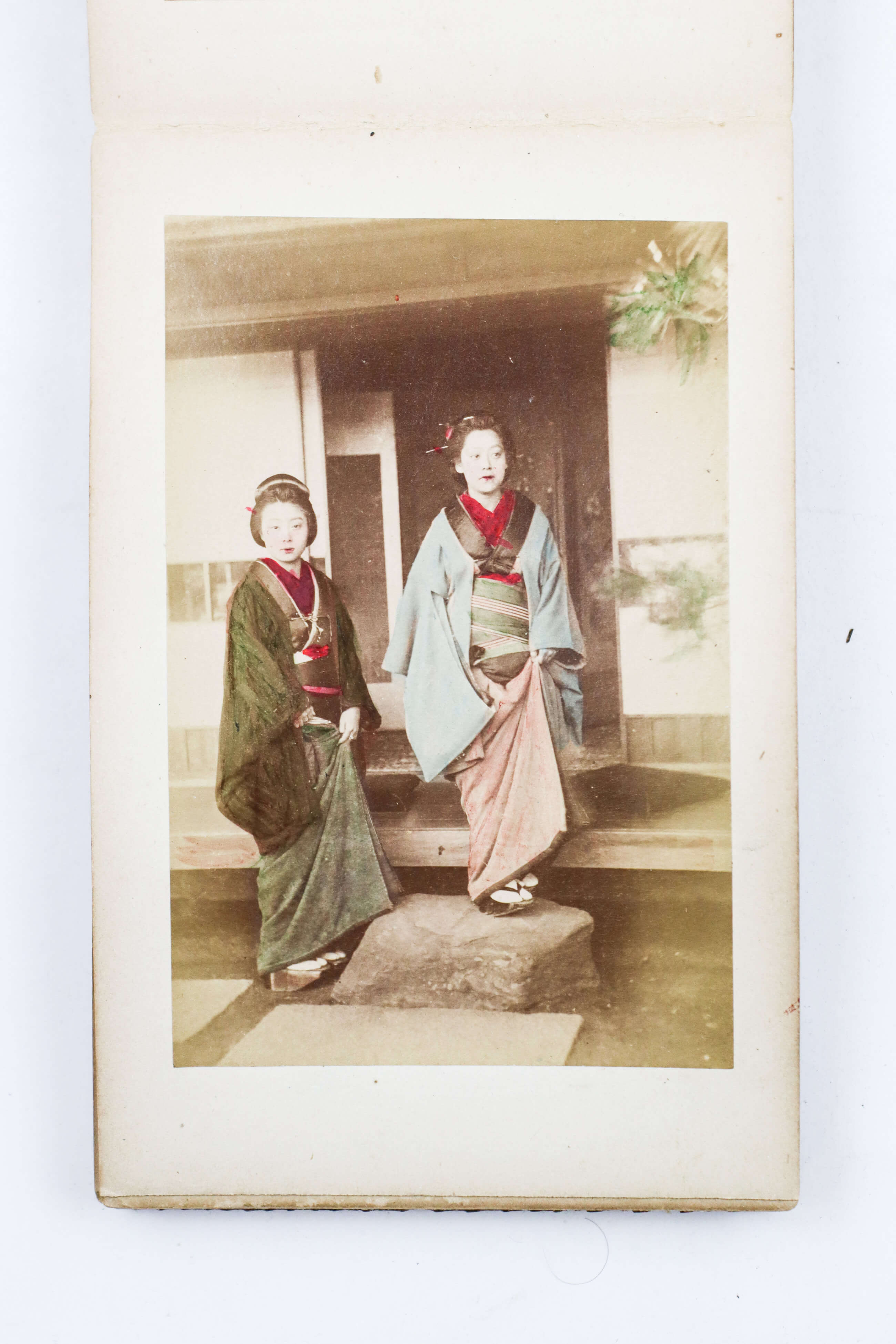
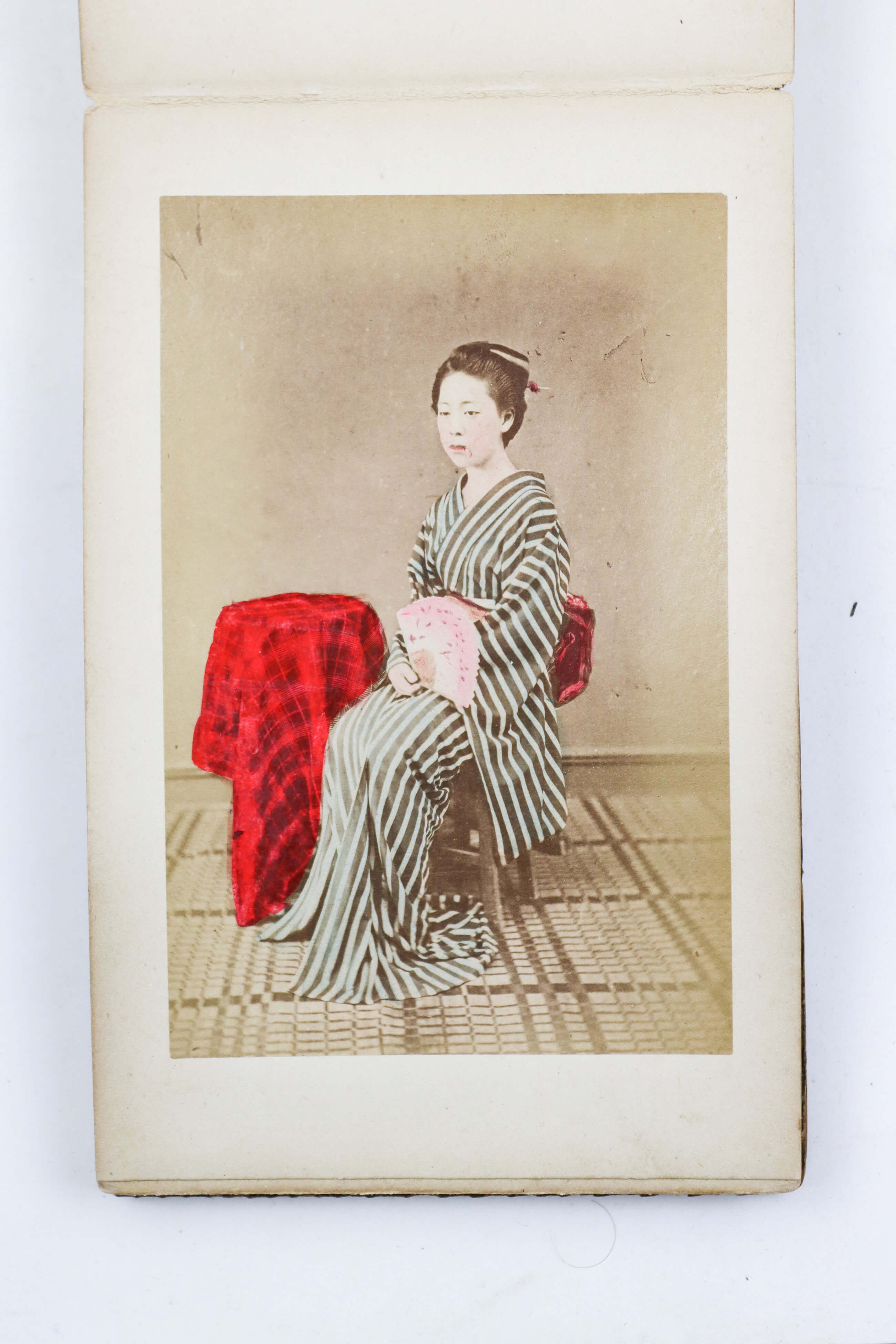
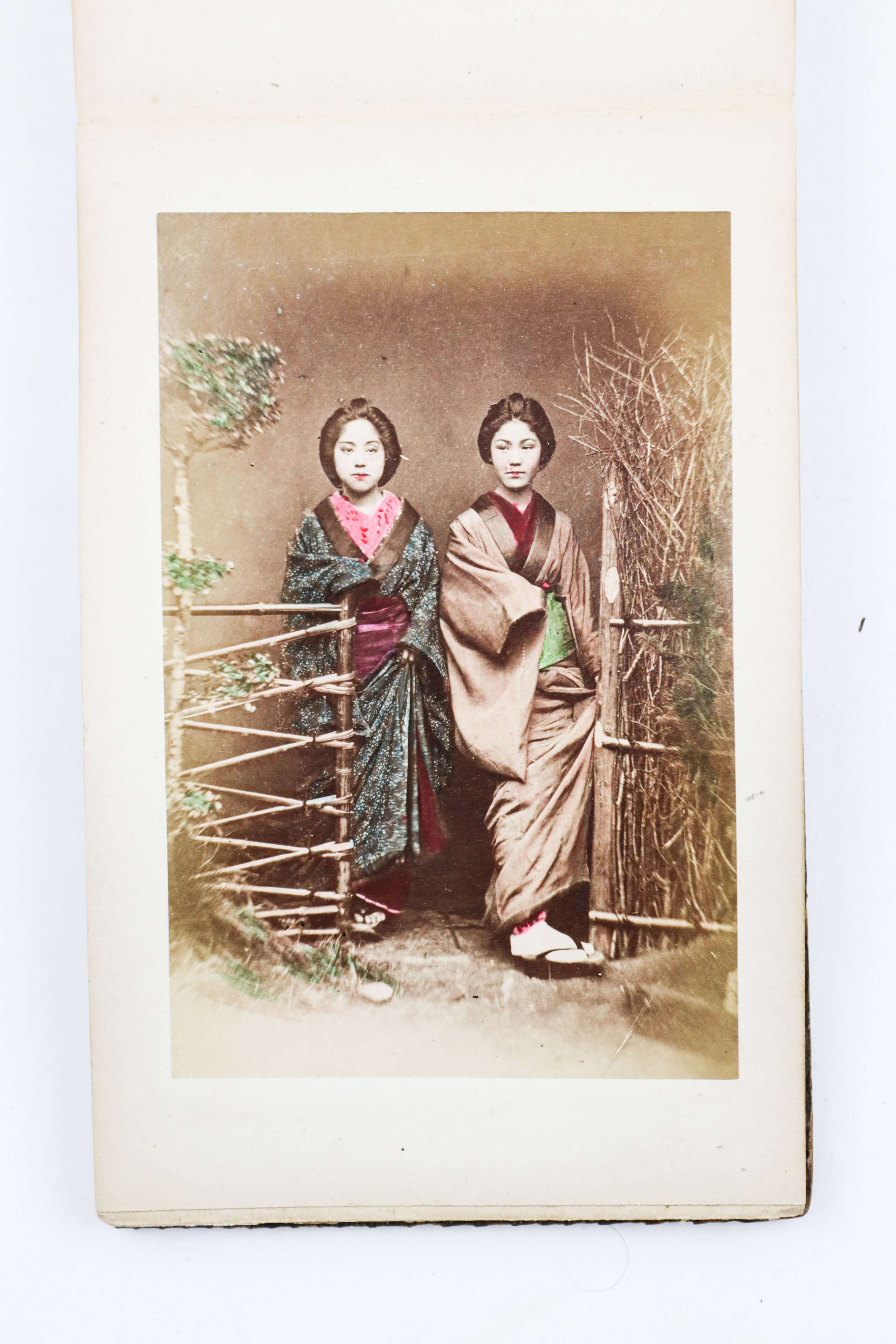
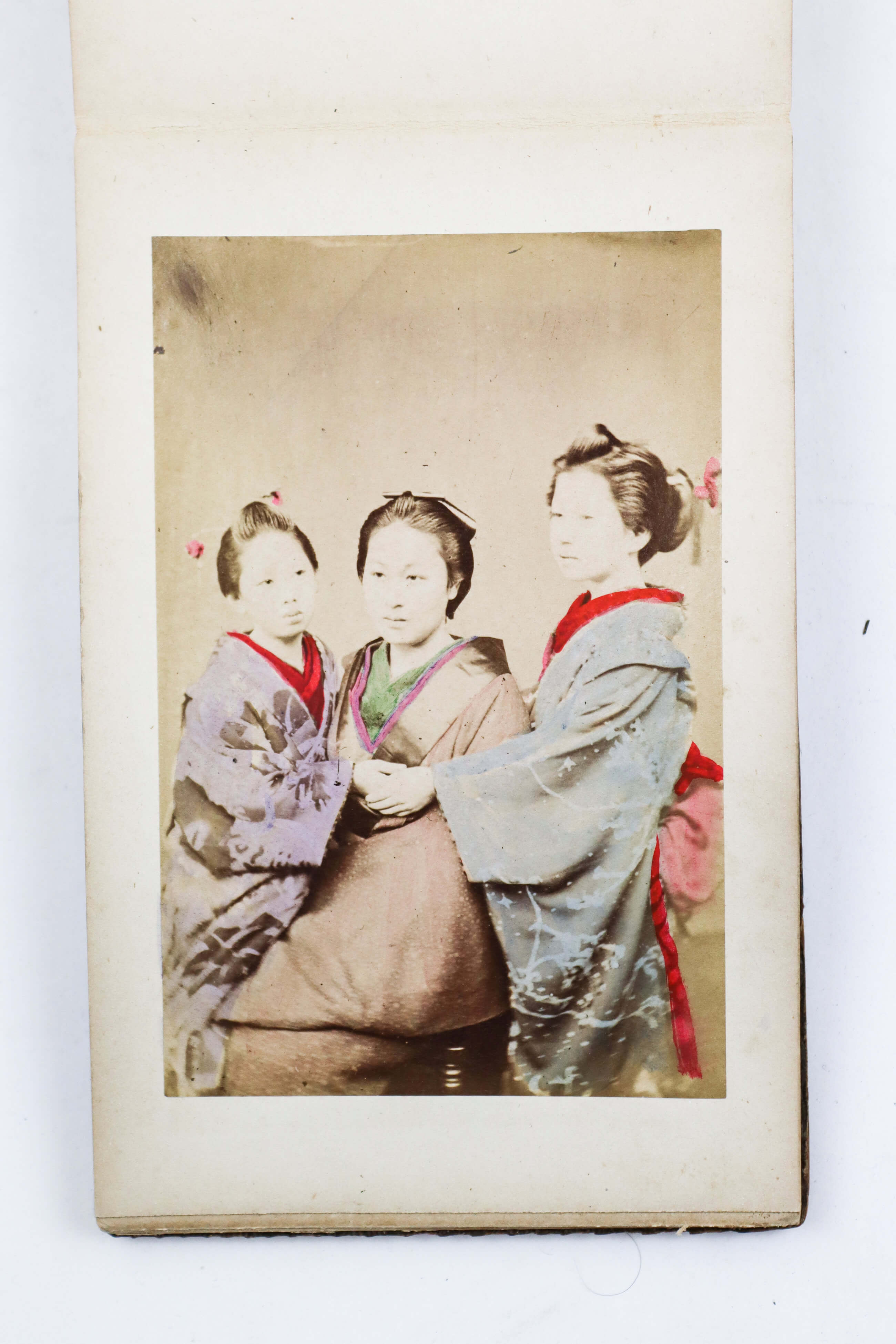
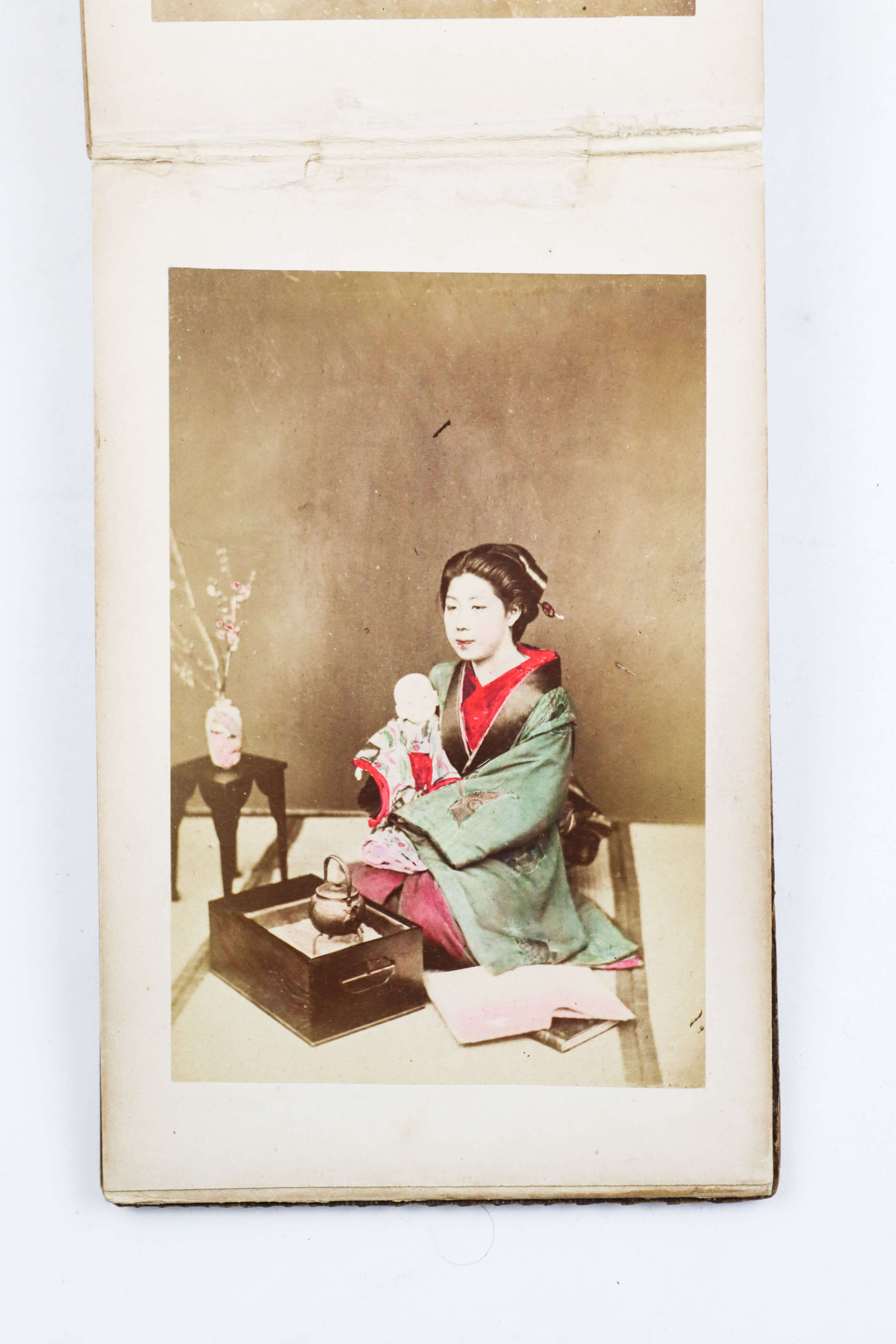
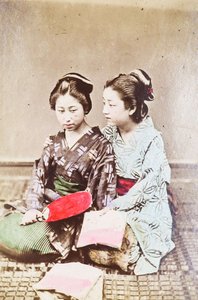
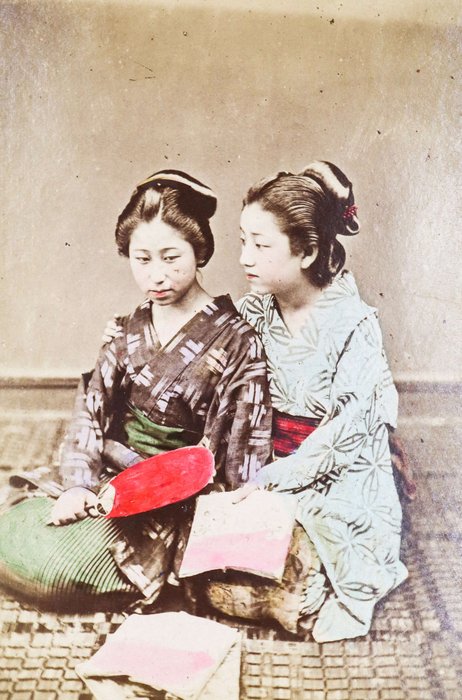
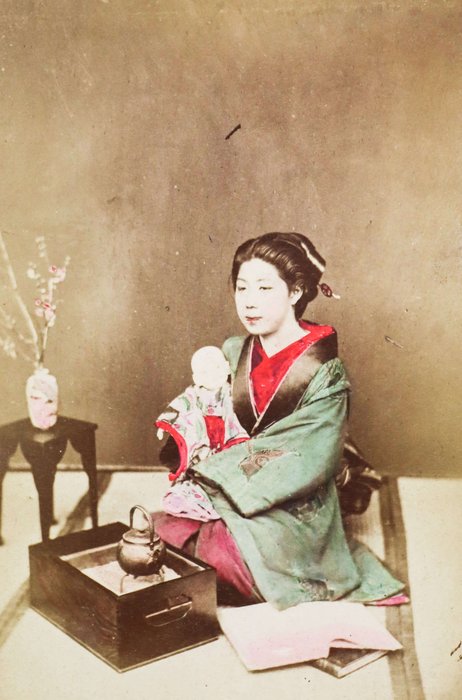
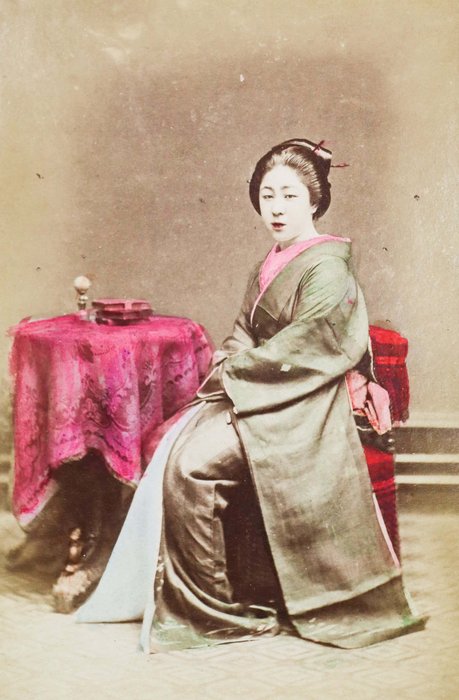
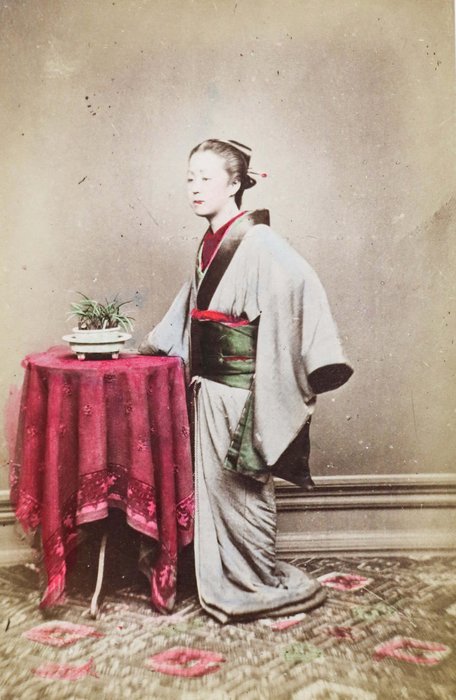
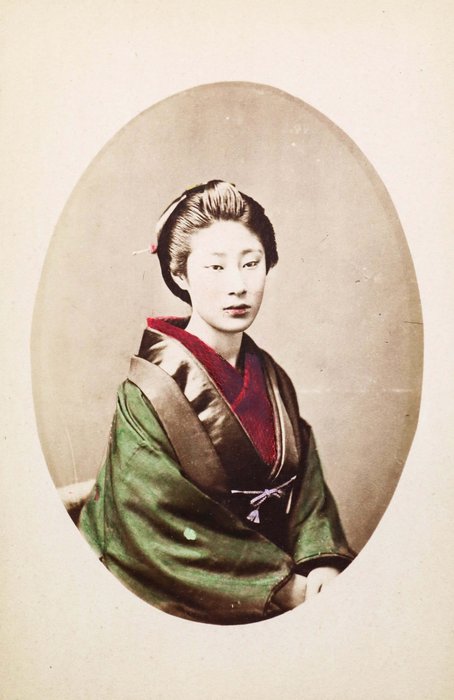
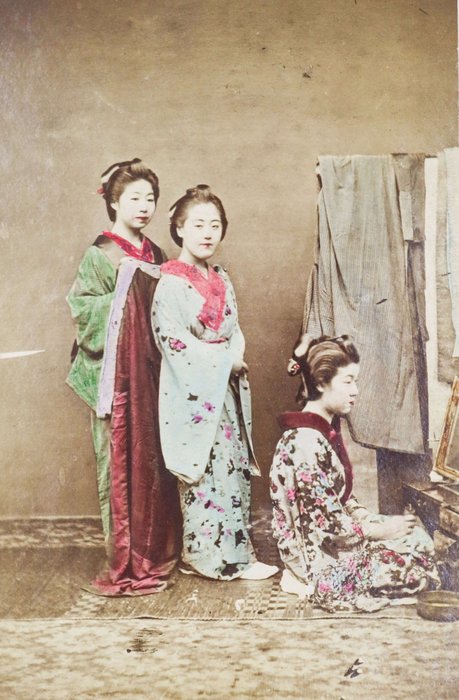
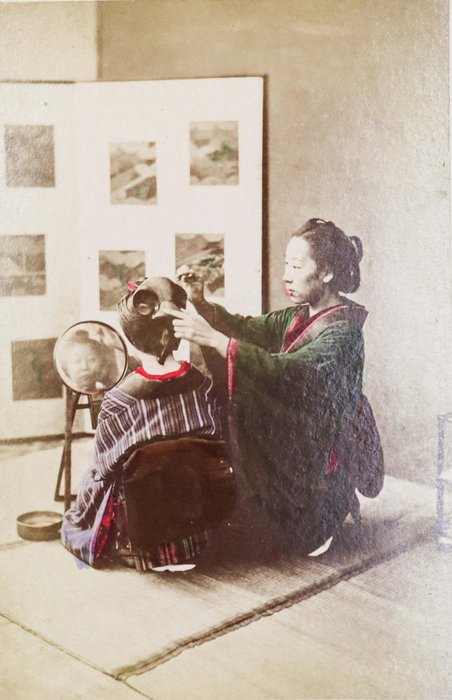
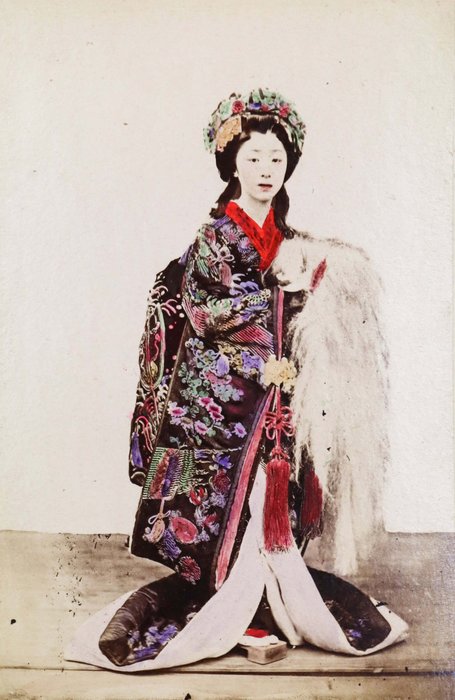
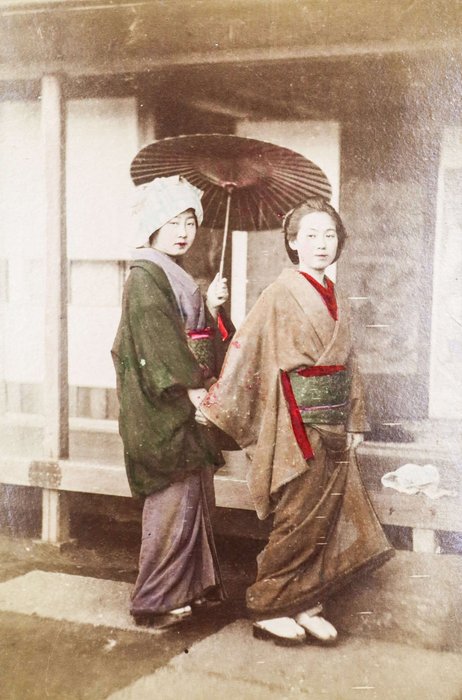
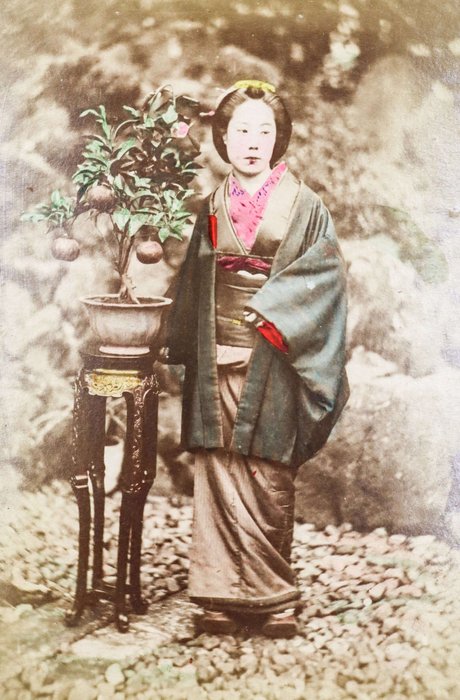
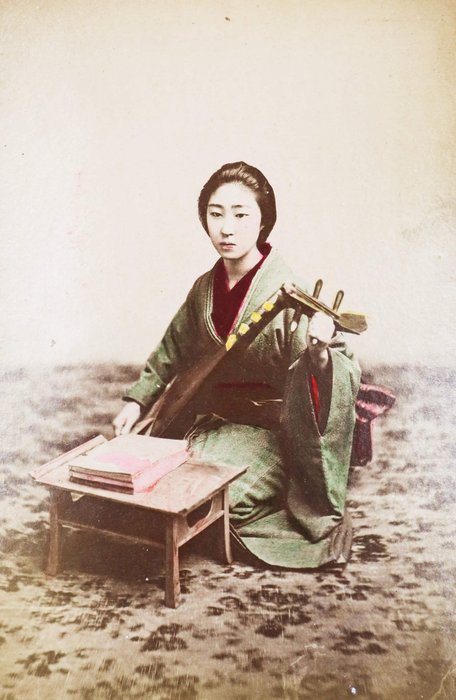
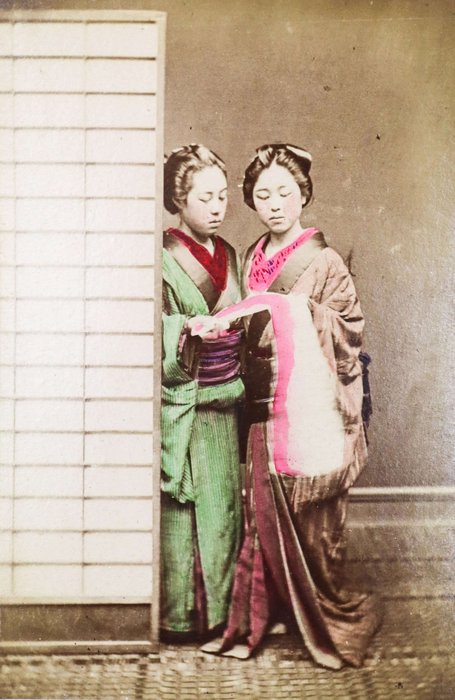
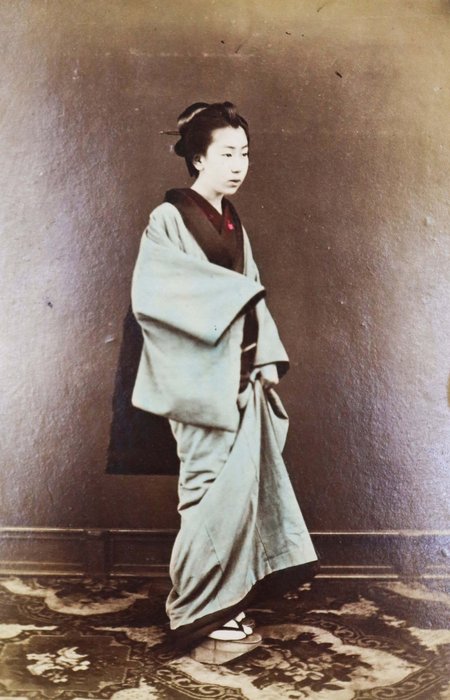
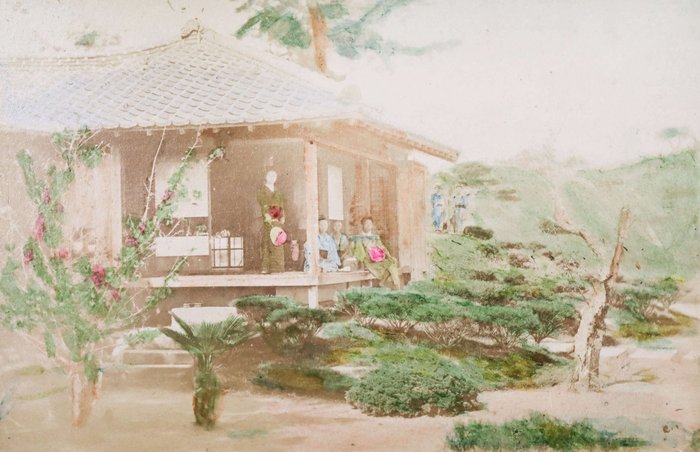
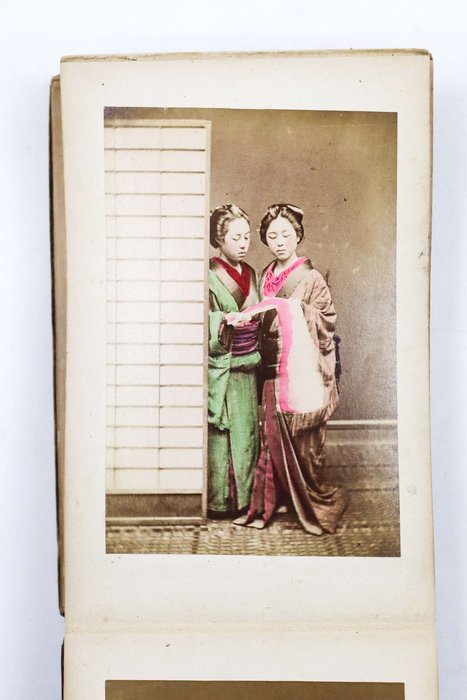
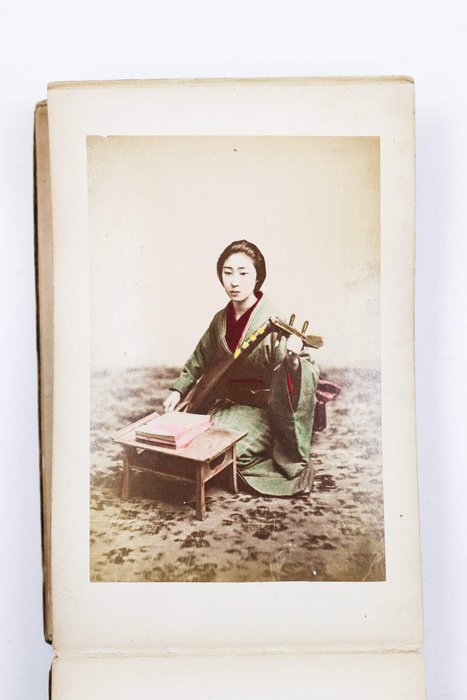
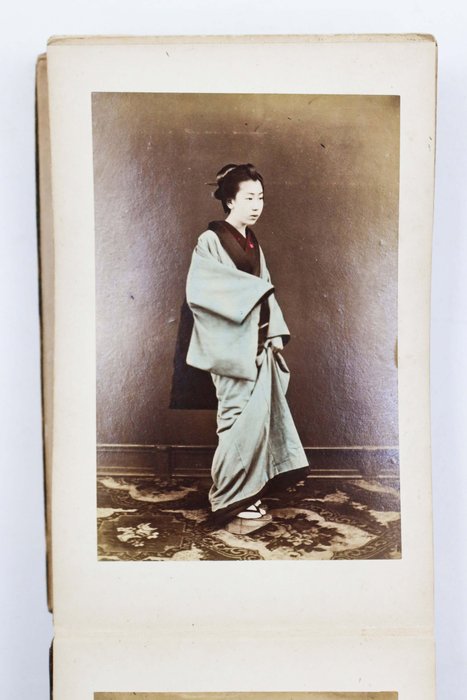
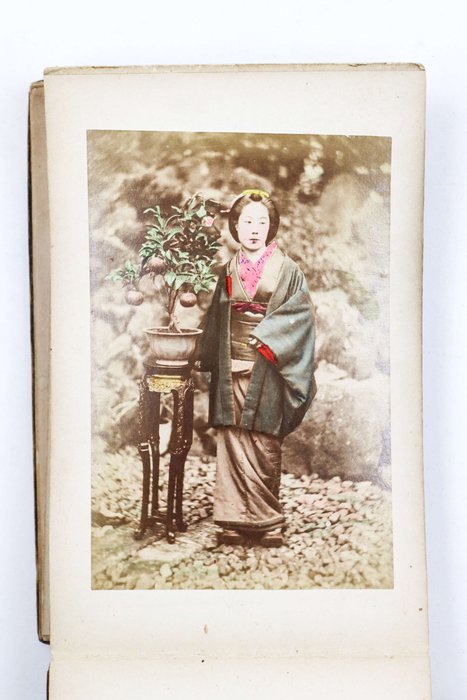
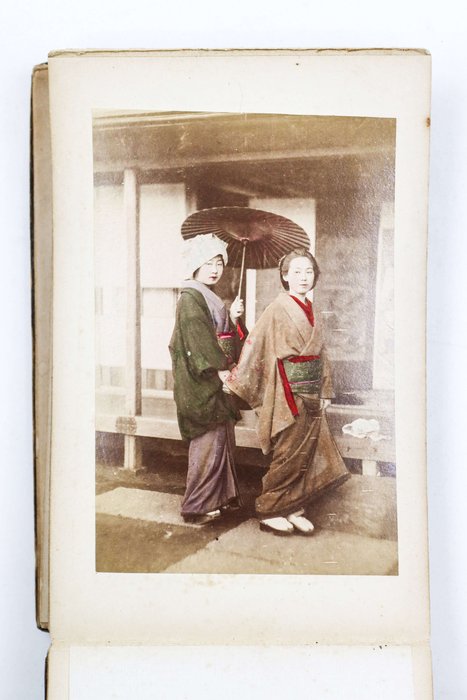
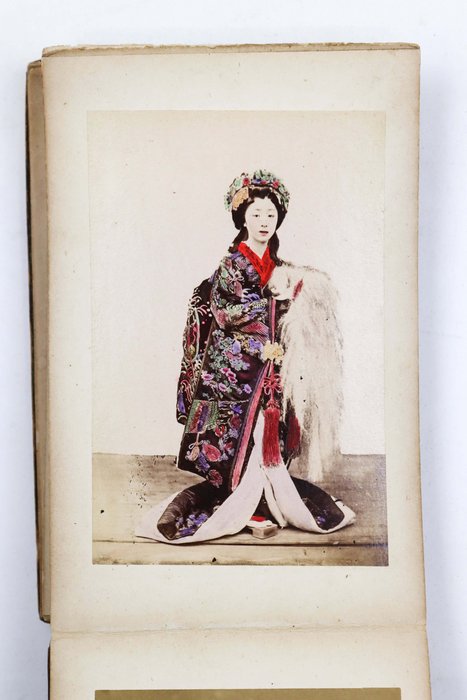
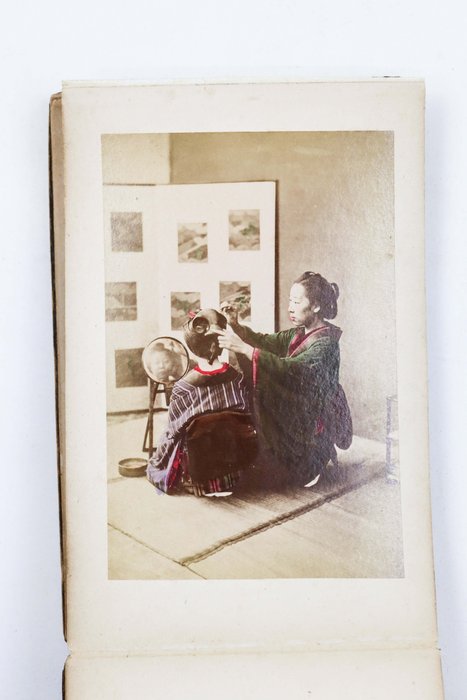
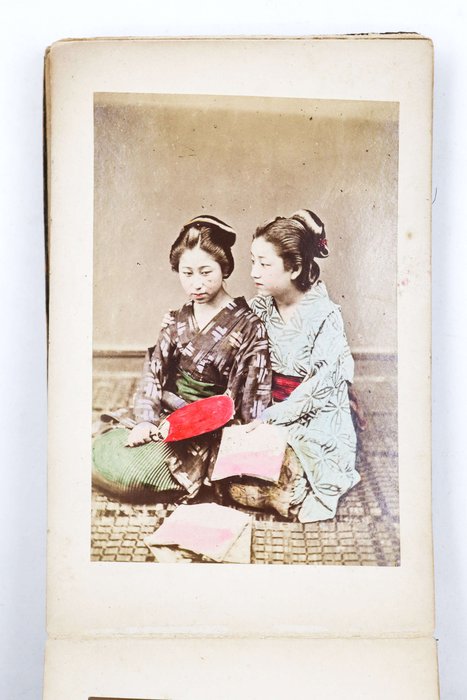
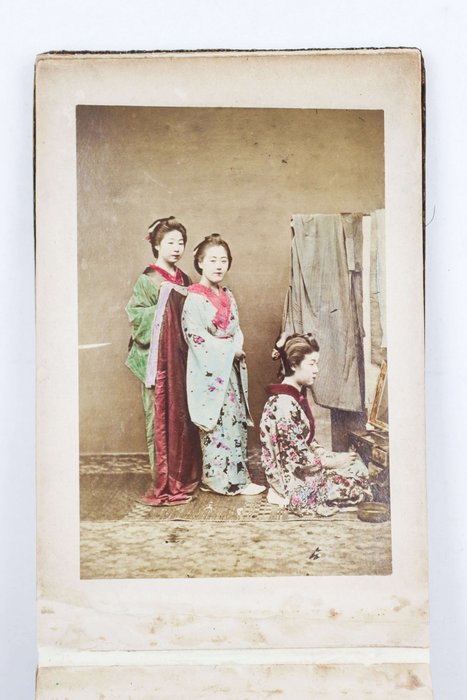
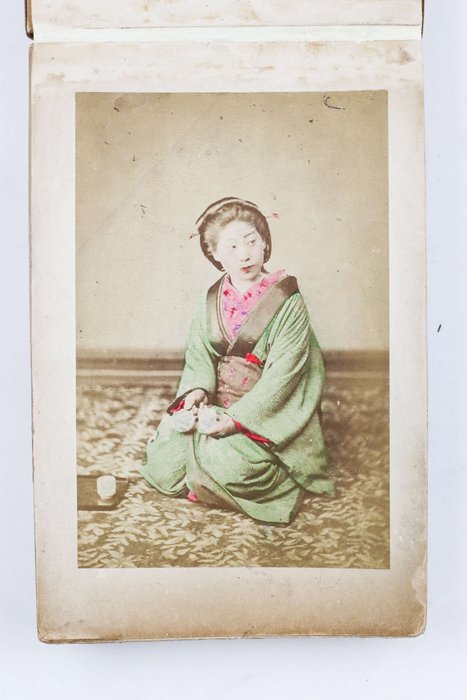
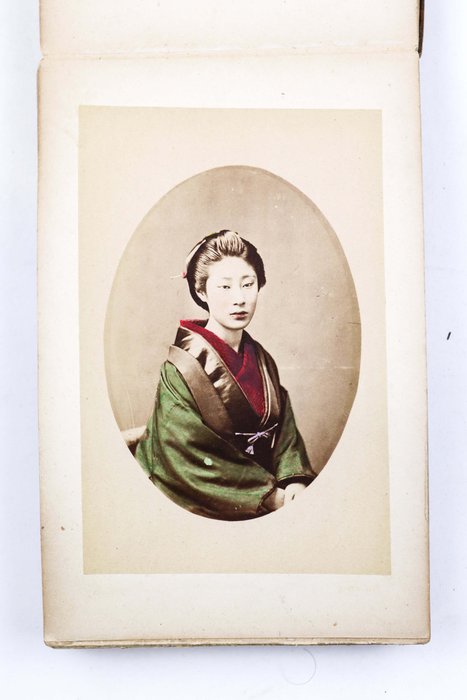
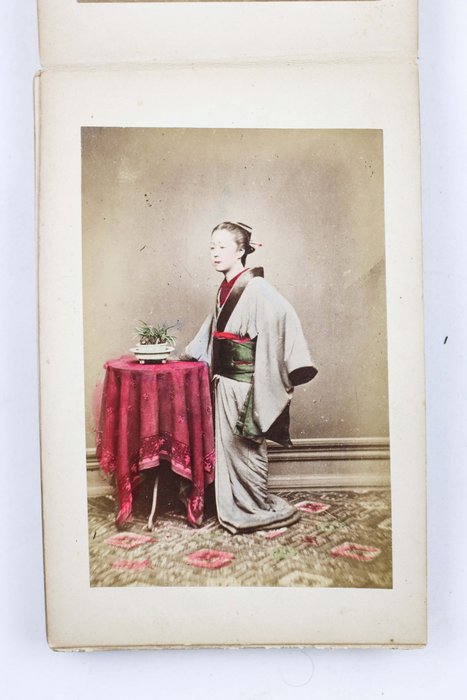
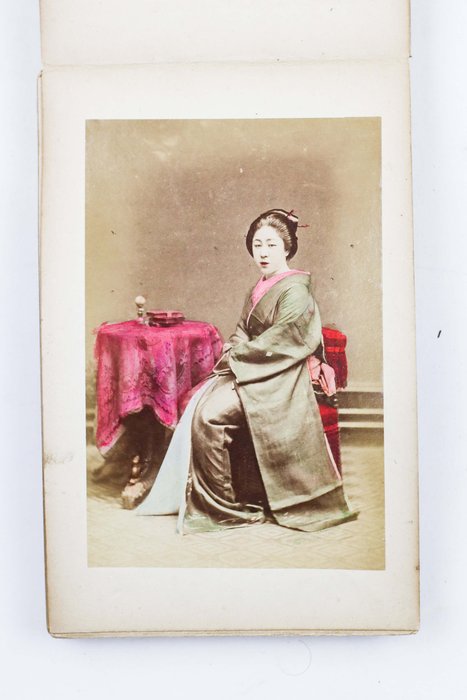
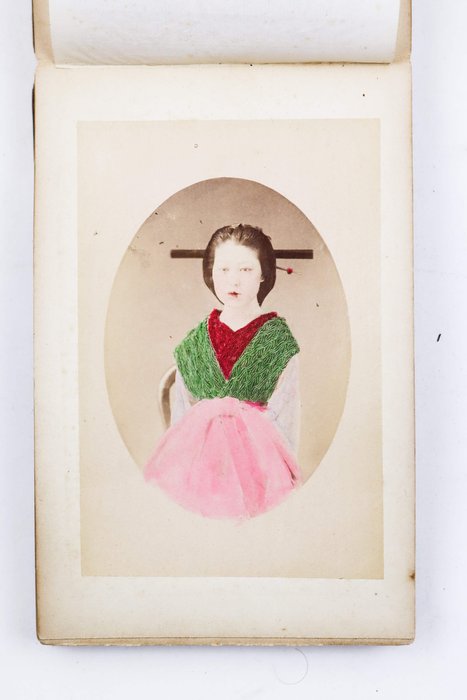
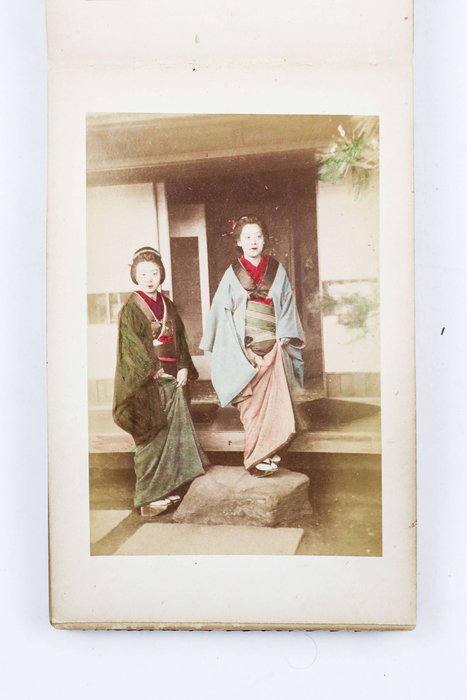
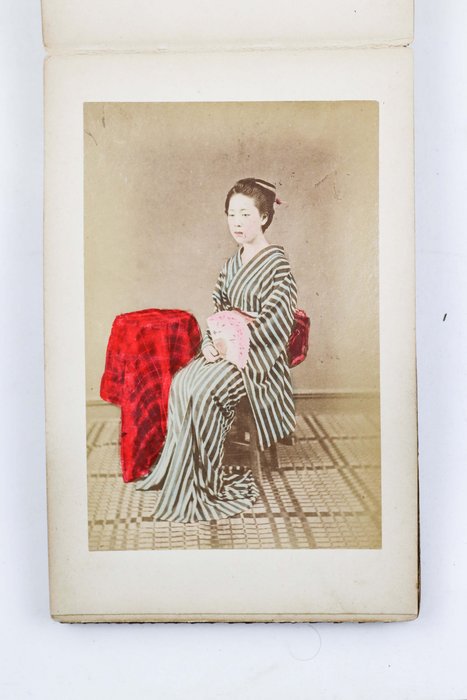
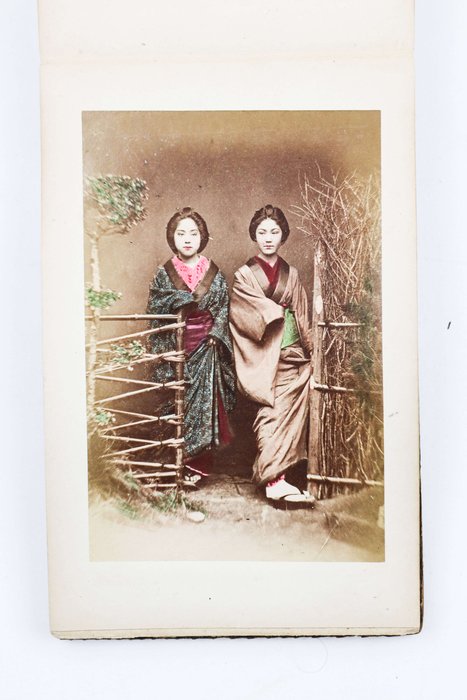
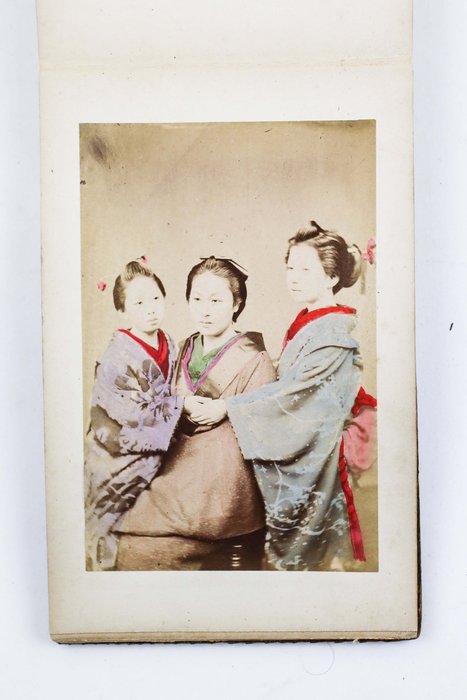
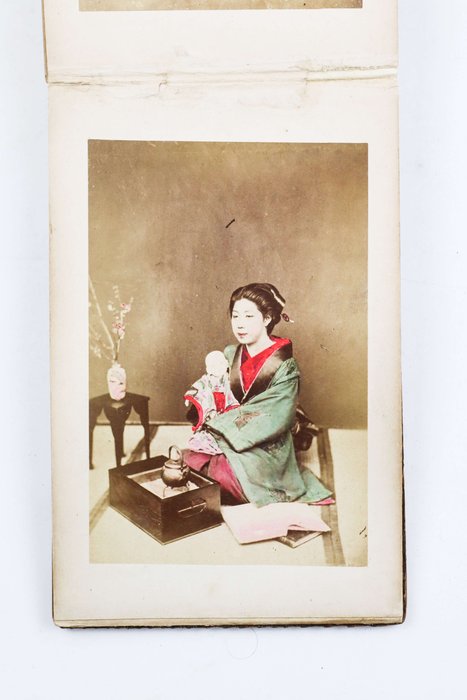
The collection contains fifty well-executed professional photographs of Japan. Twenty-five excellent prints likely depict maikos from the world-famous No. 9 brothel in Yokohama. Immensely popular with both Japanese and foreign visitors, the No. 9 (Jinpuro) remained one of Yokohama’s most renowned houses of prostitution until its total destruction during the Great Kantō Earthquake. The photographs show maikos in traditional kimonos and hairdos holding Ichimatsu dolls, hand fans & musical instruments, umbrellas, washing clothes, serving tea, posing by flowers, seated, in groups, etc.
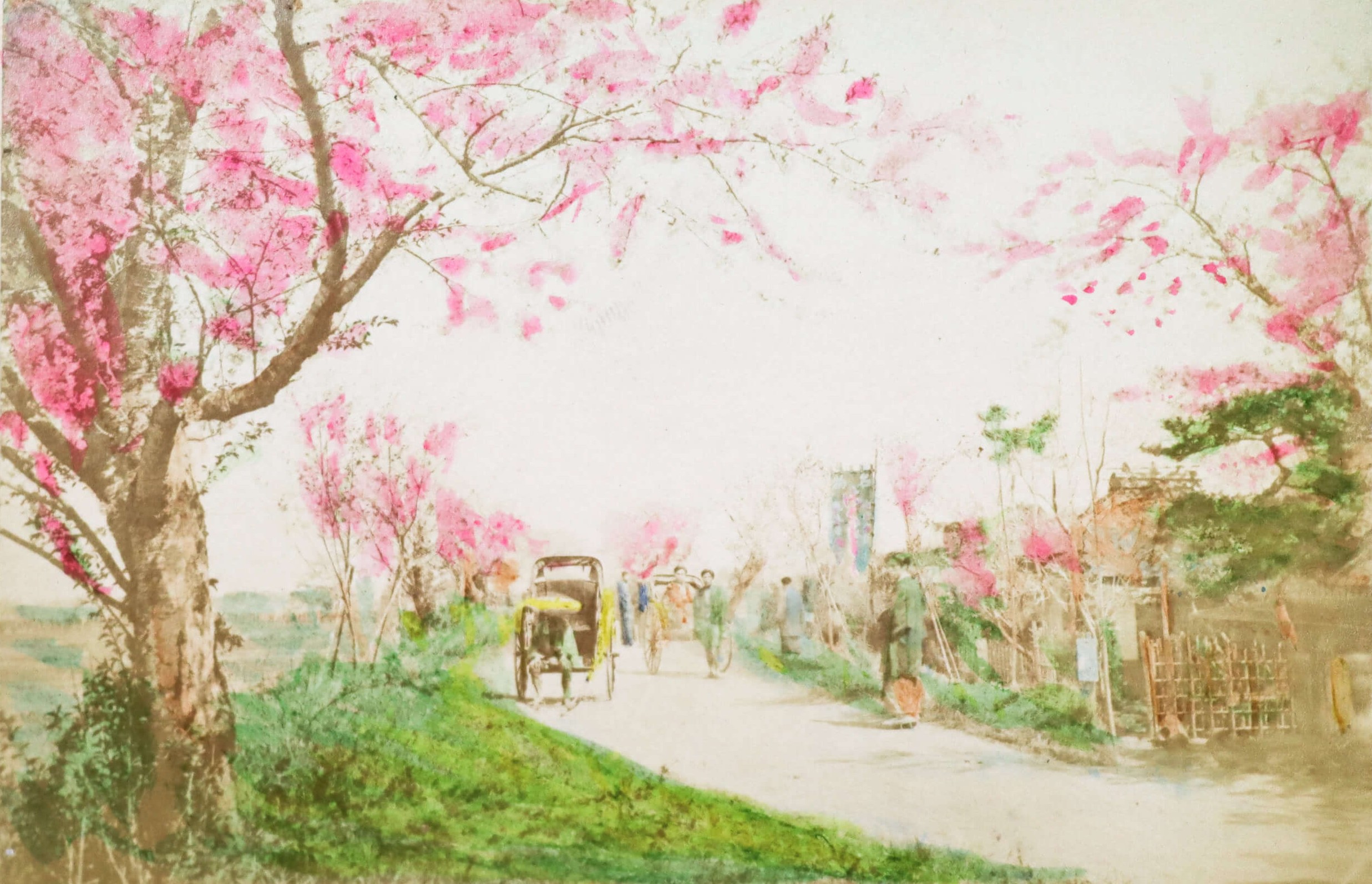
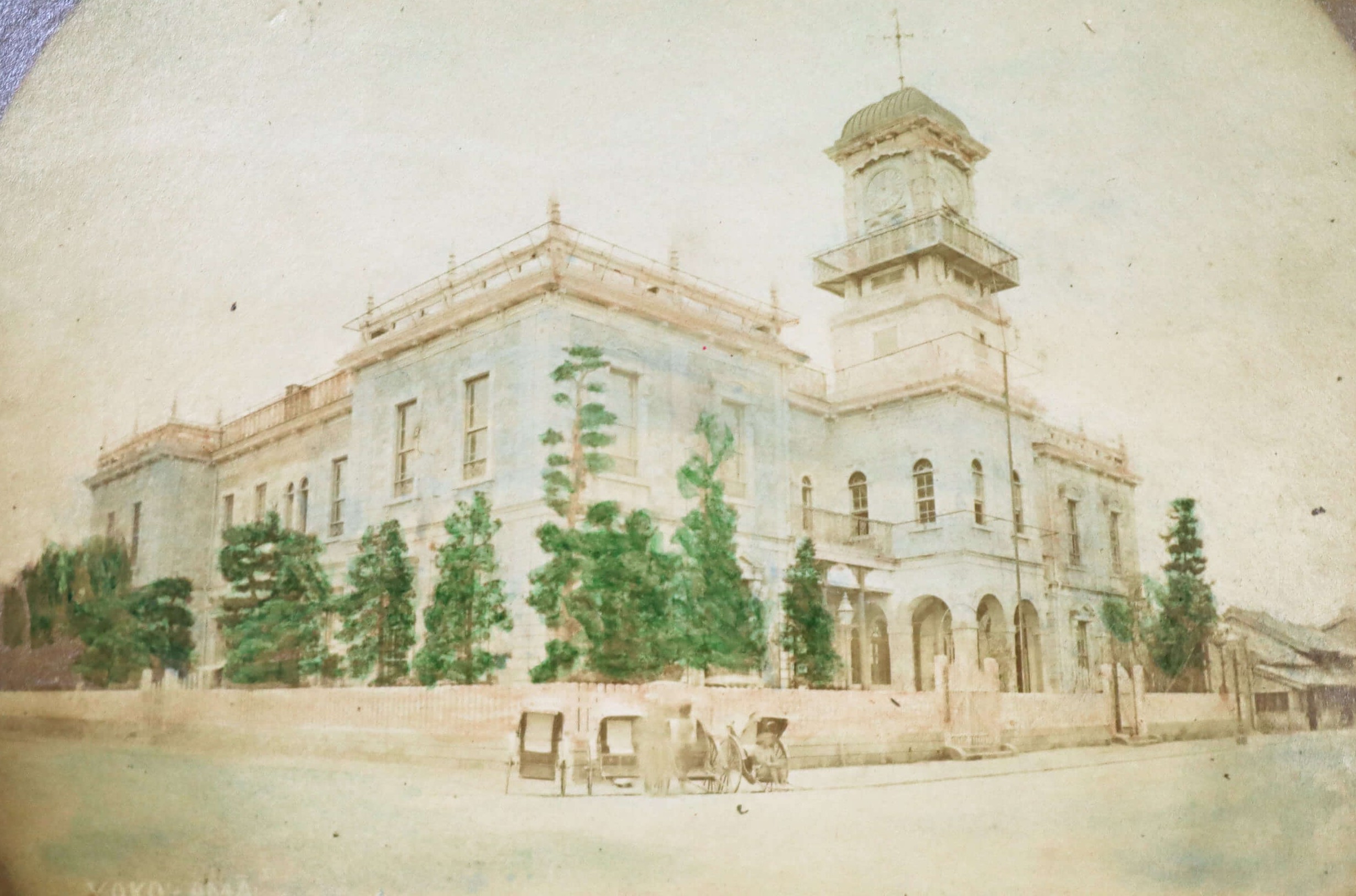
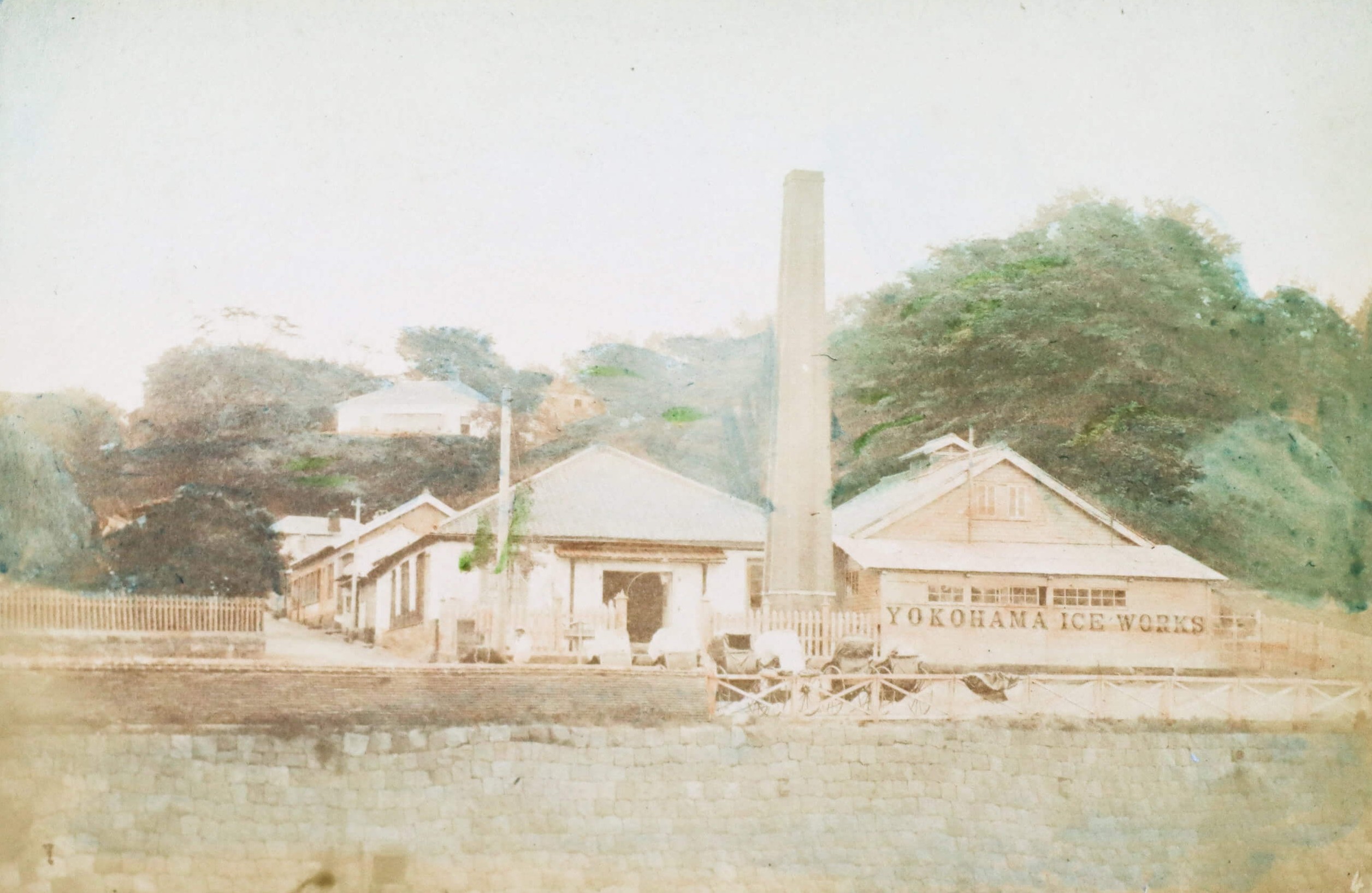
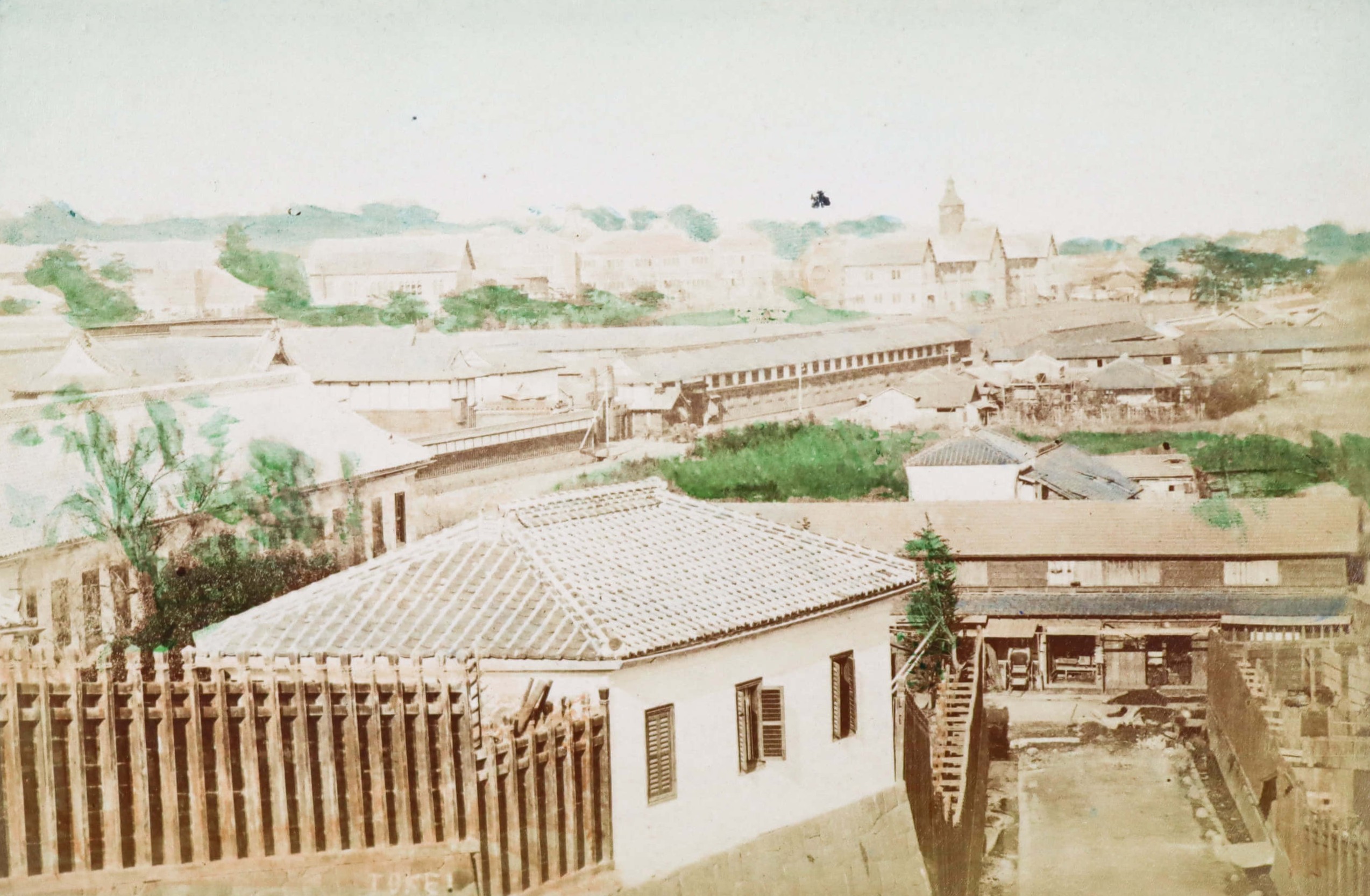
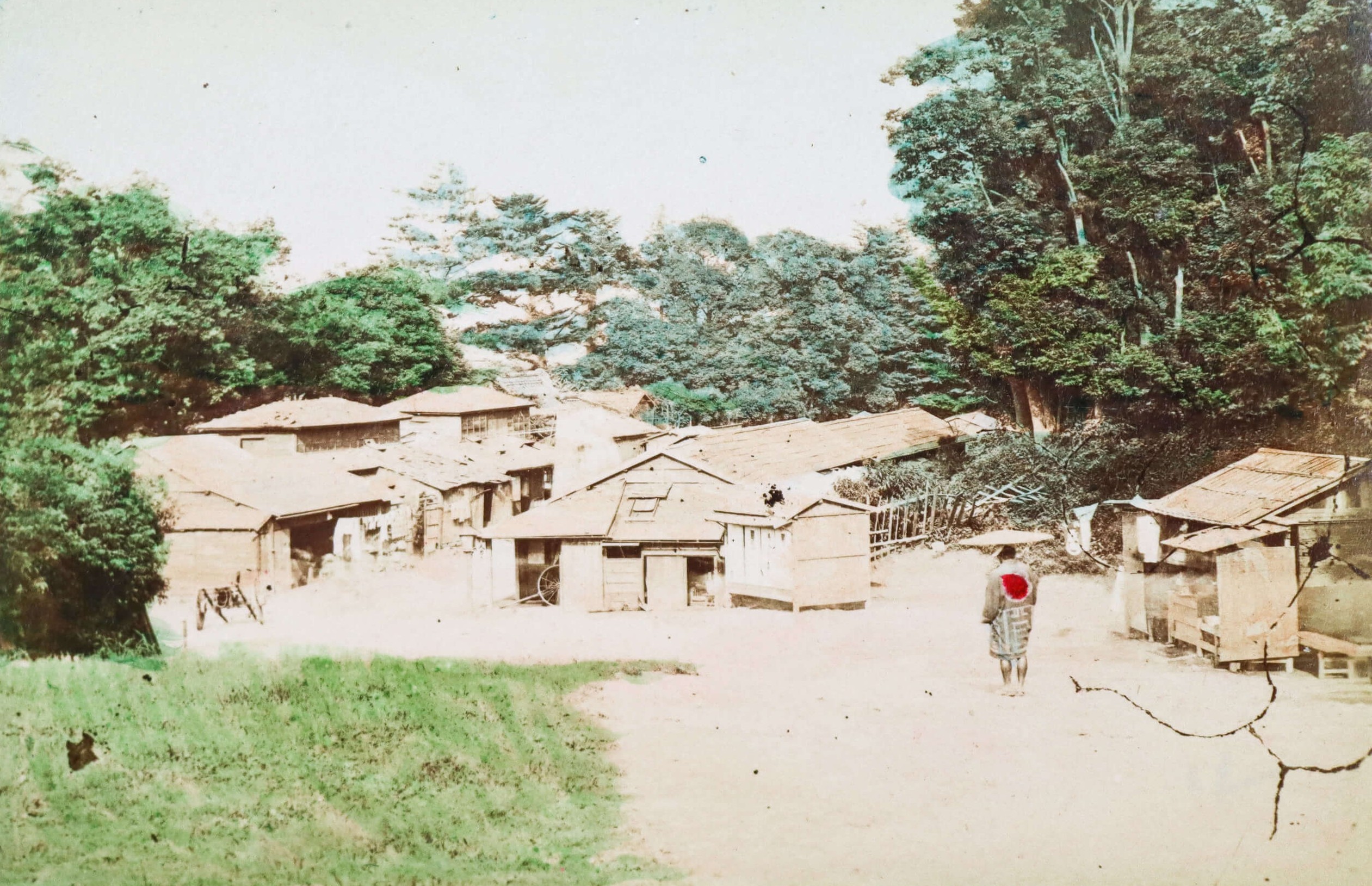
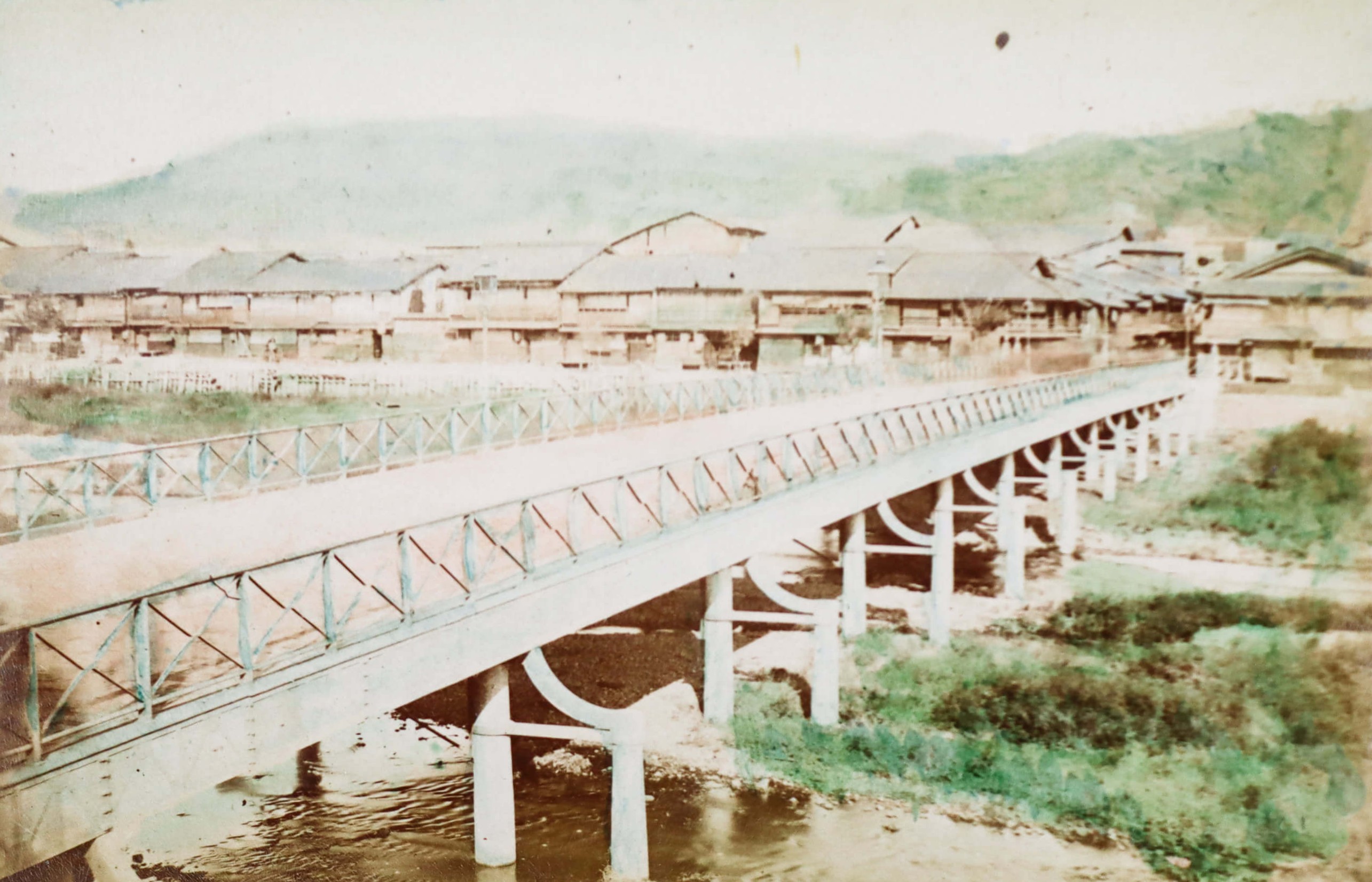
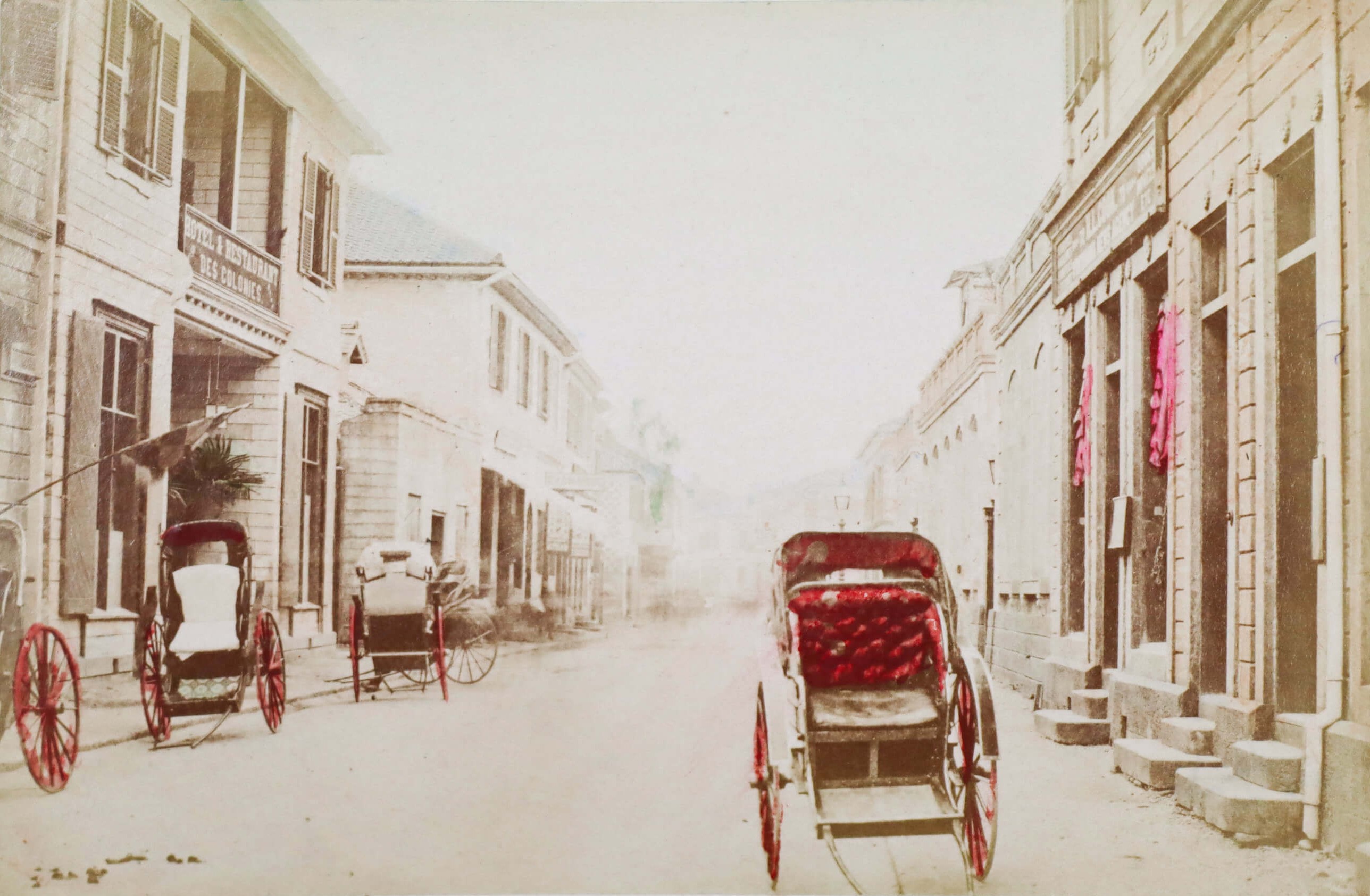
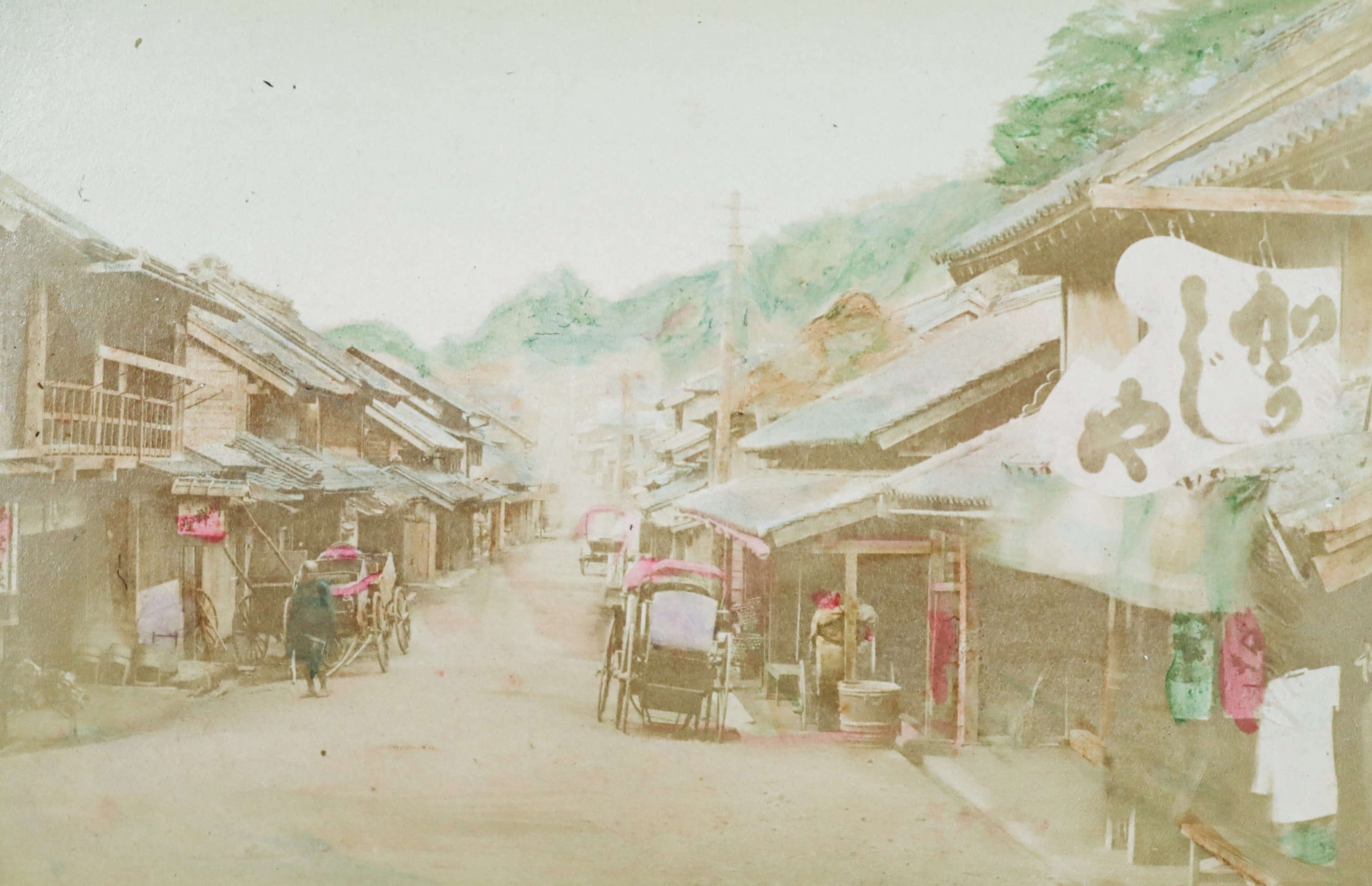
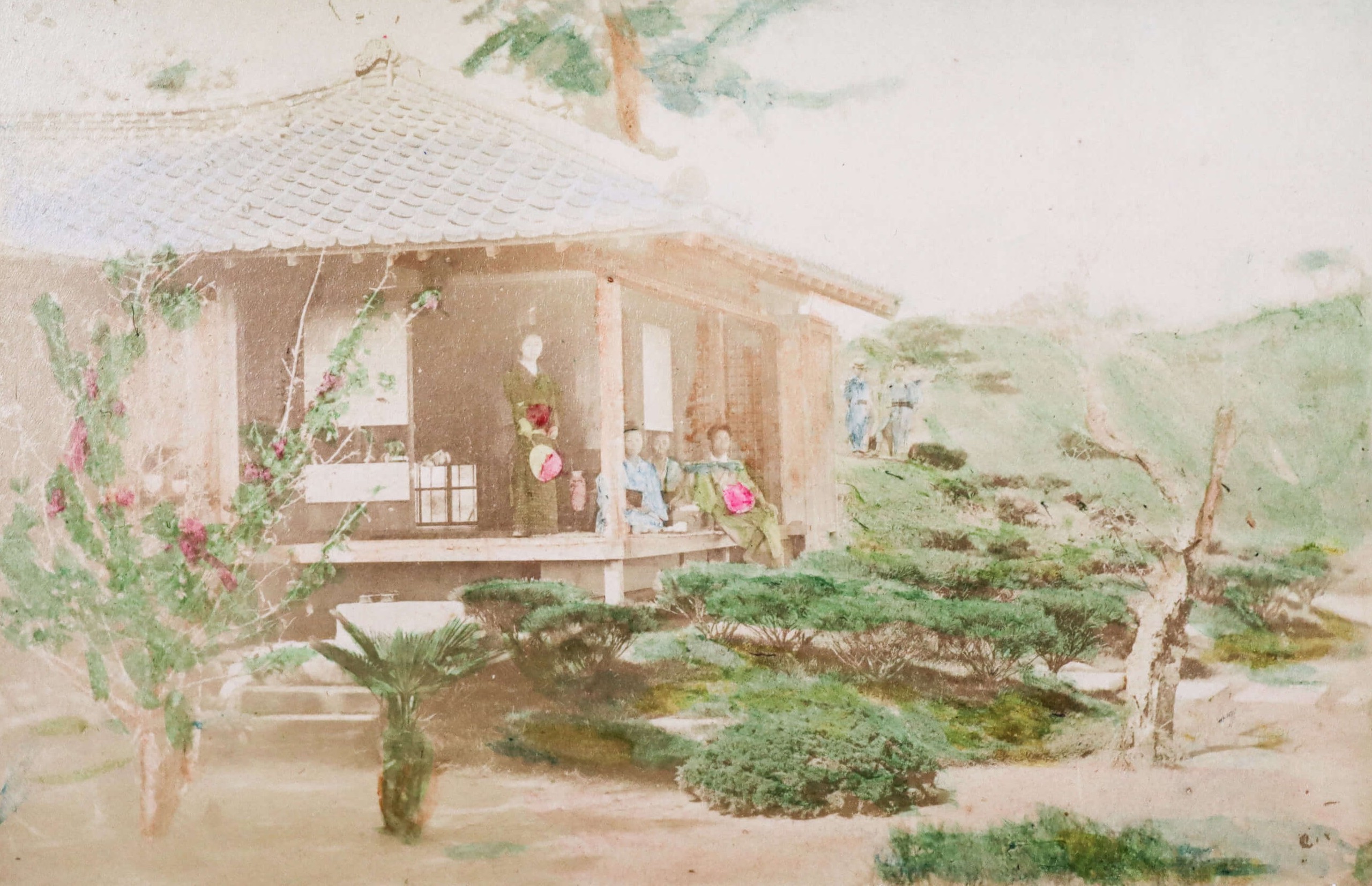
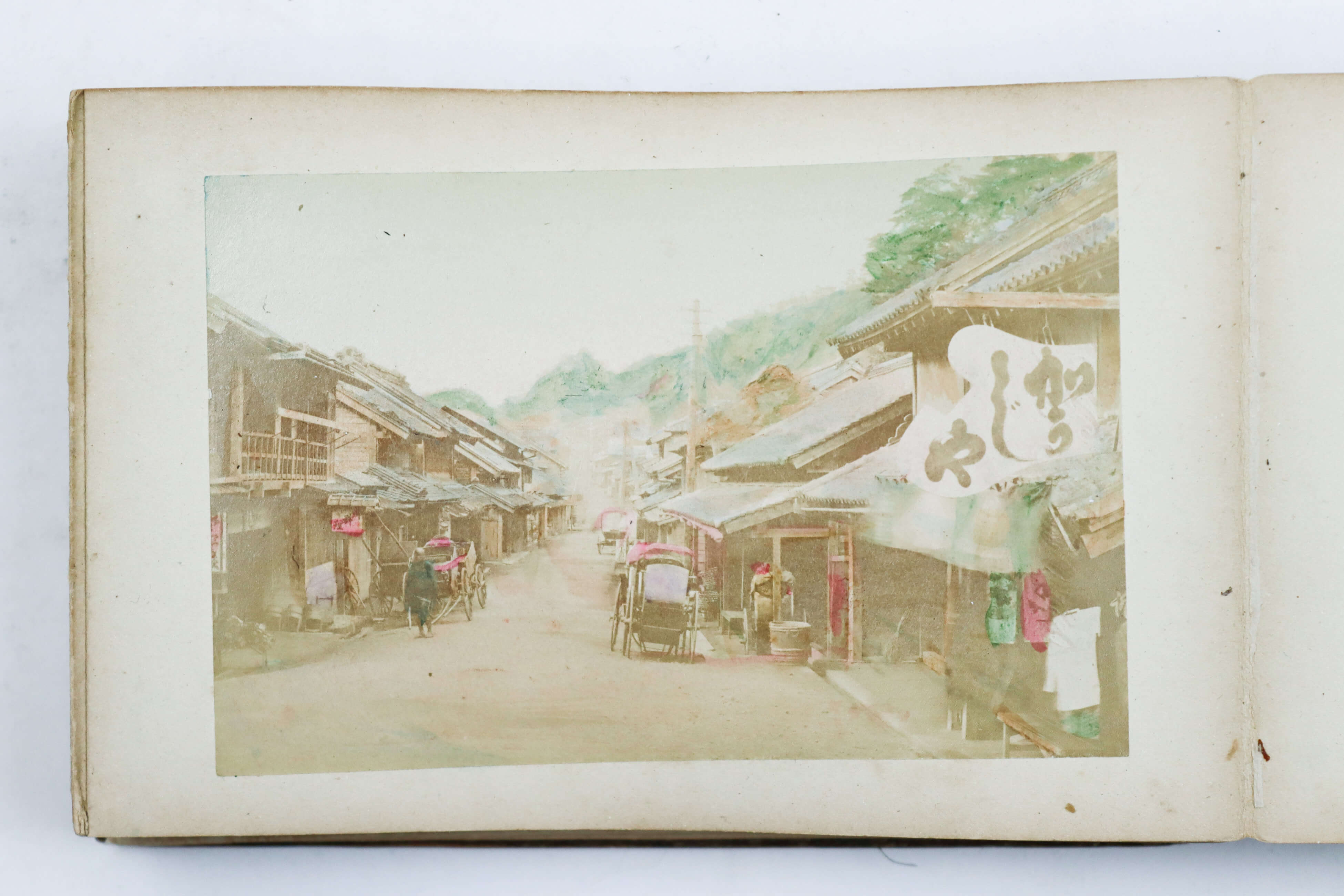
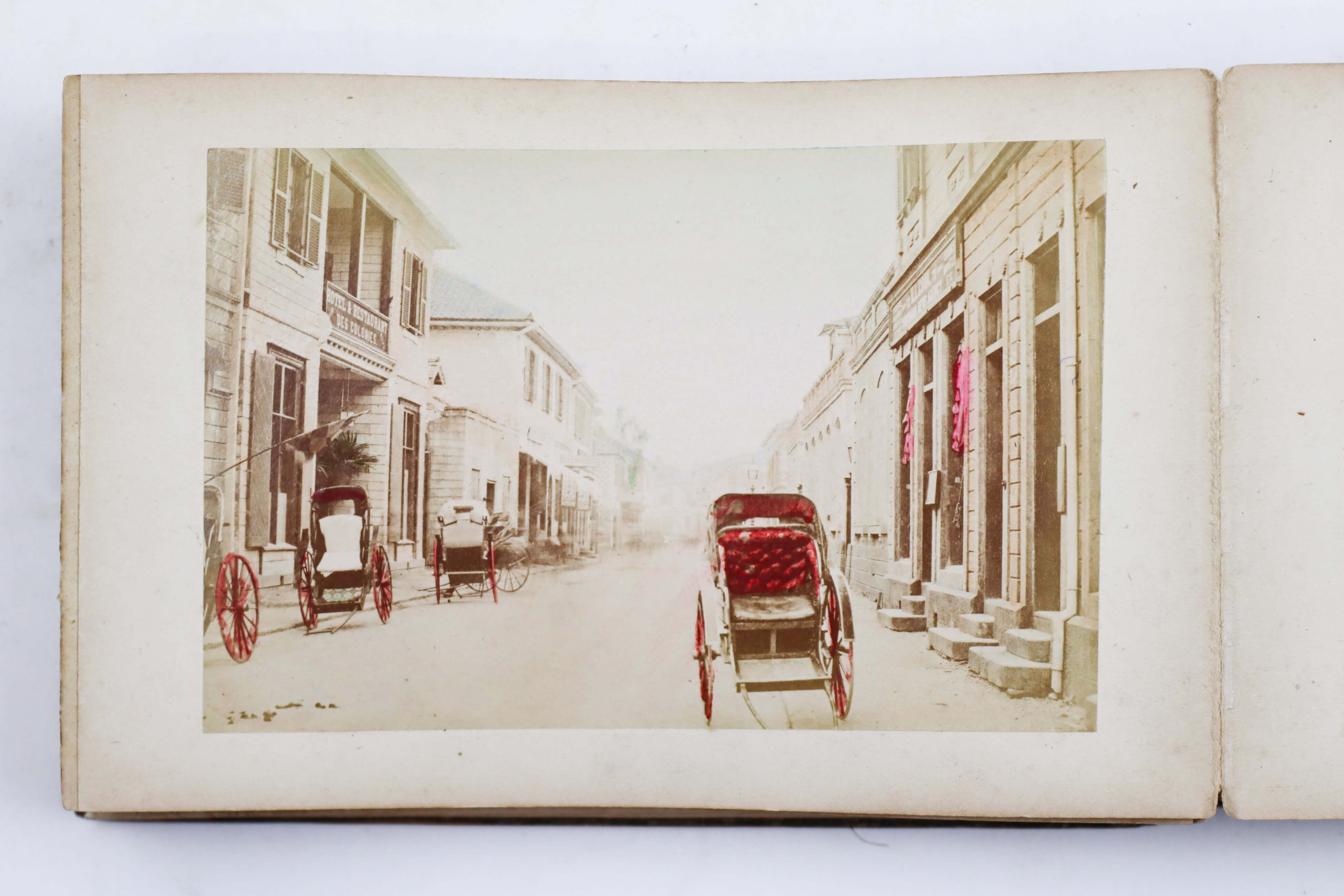
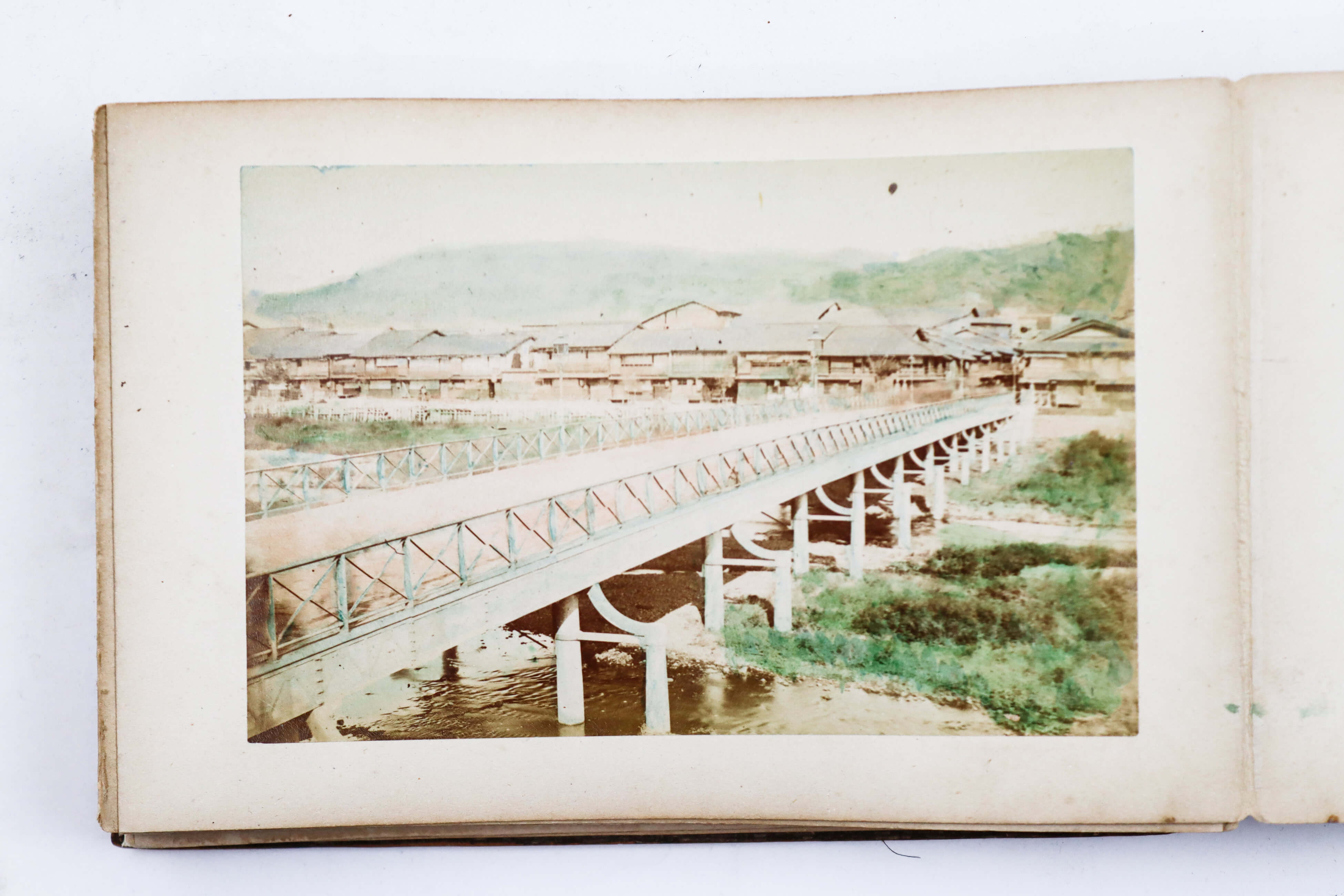
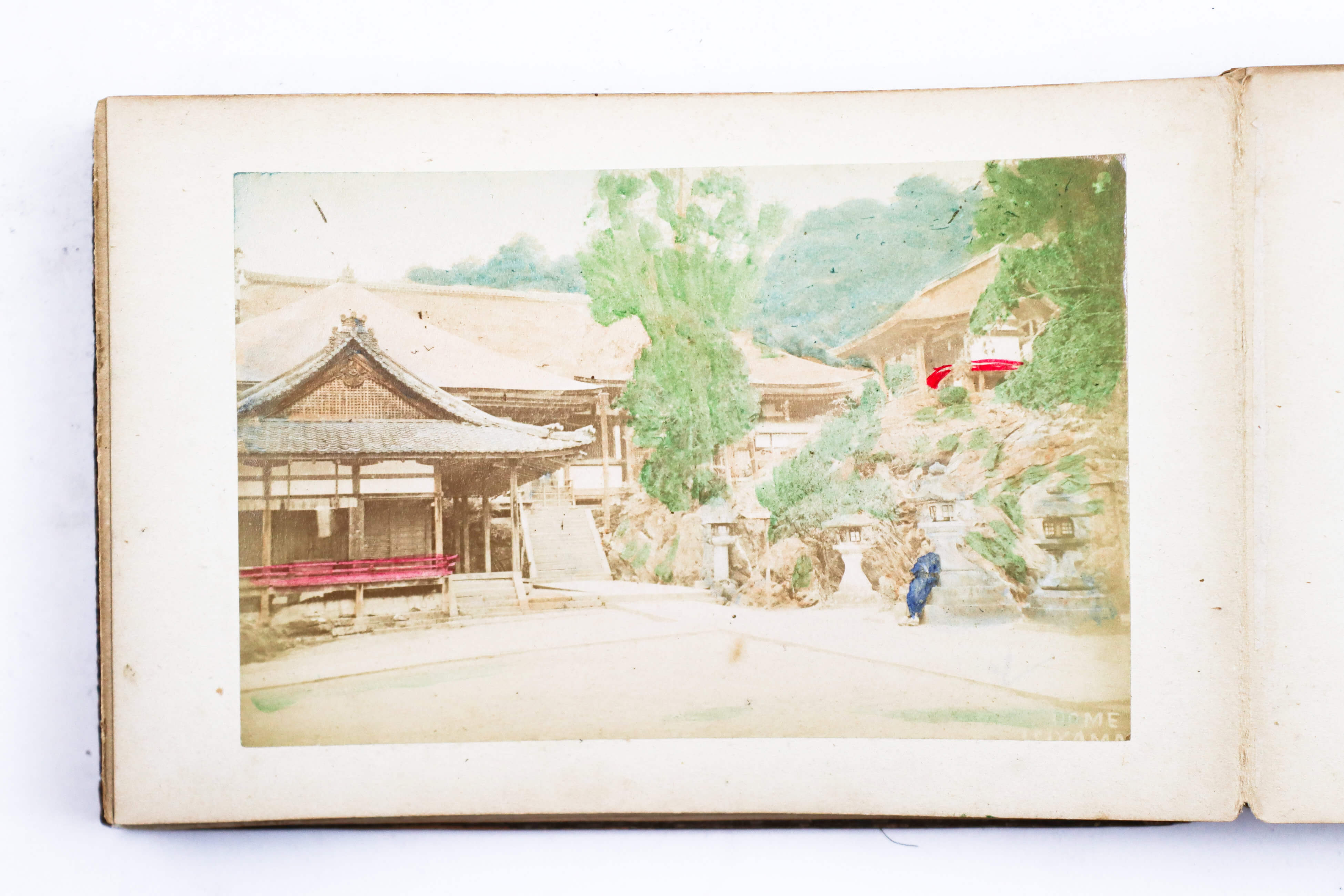
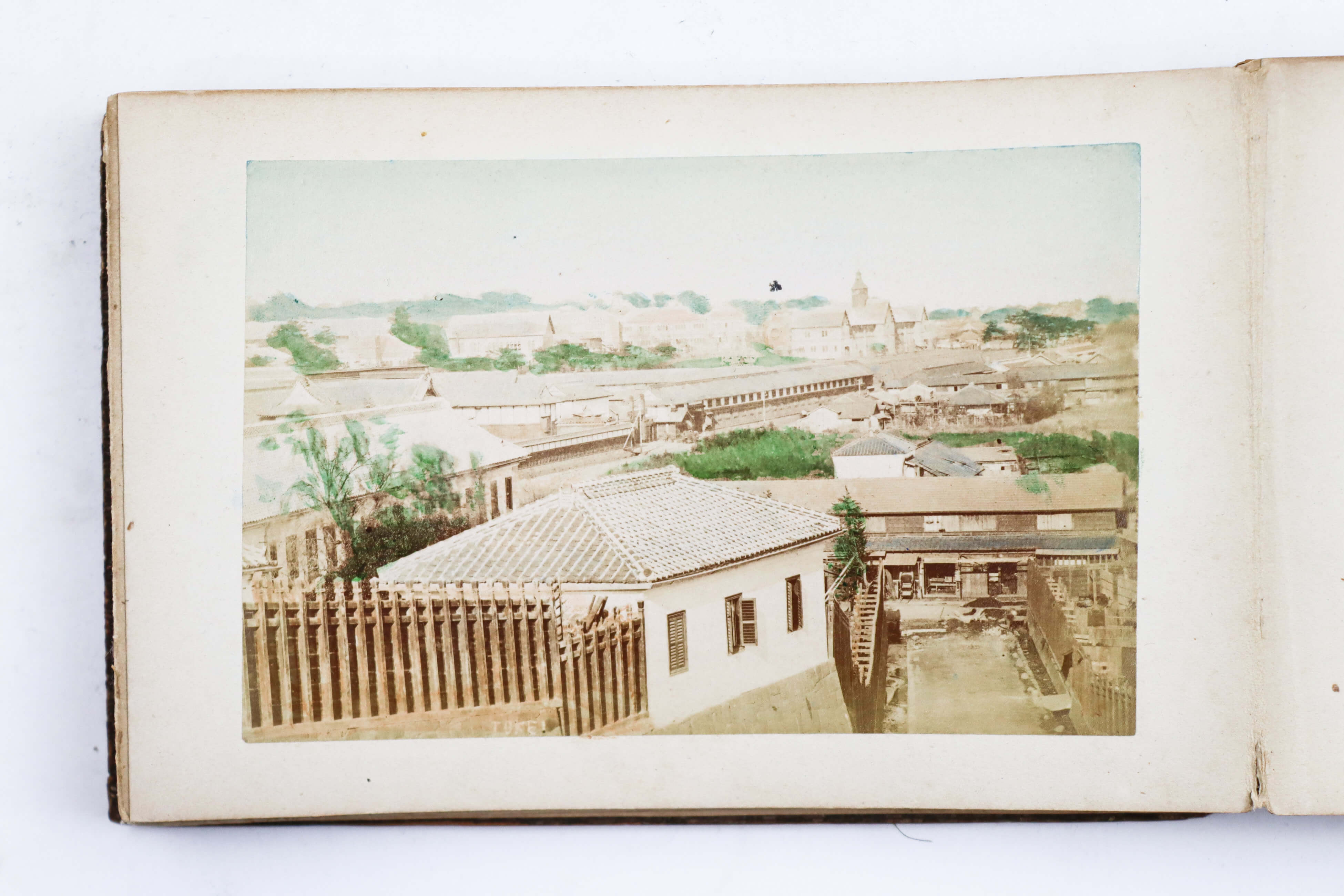
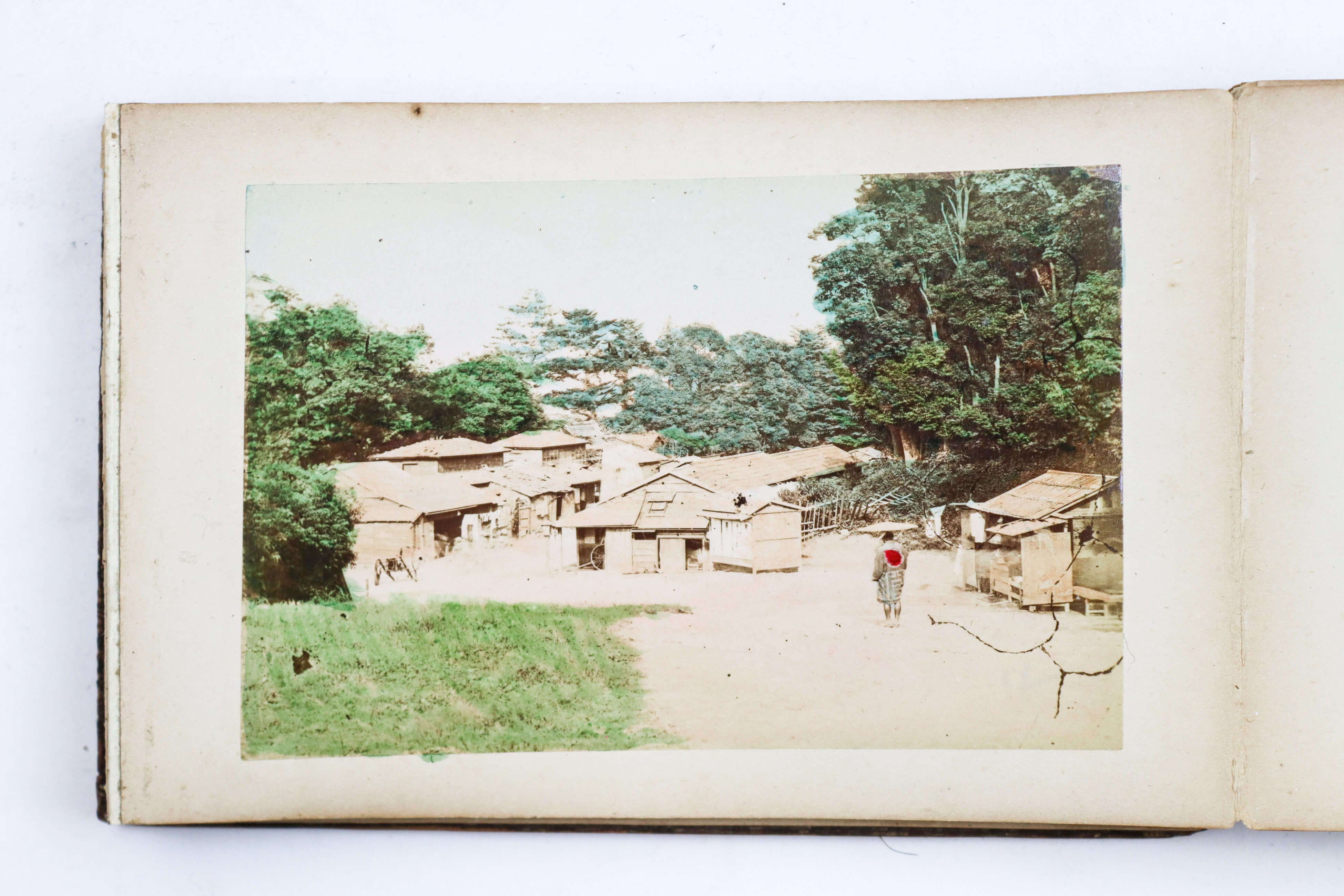
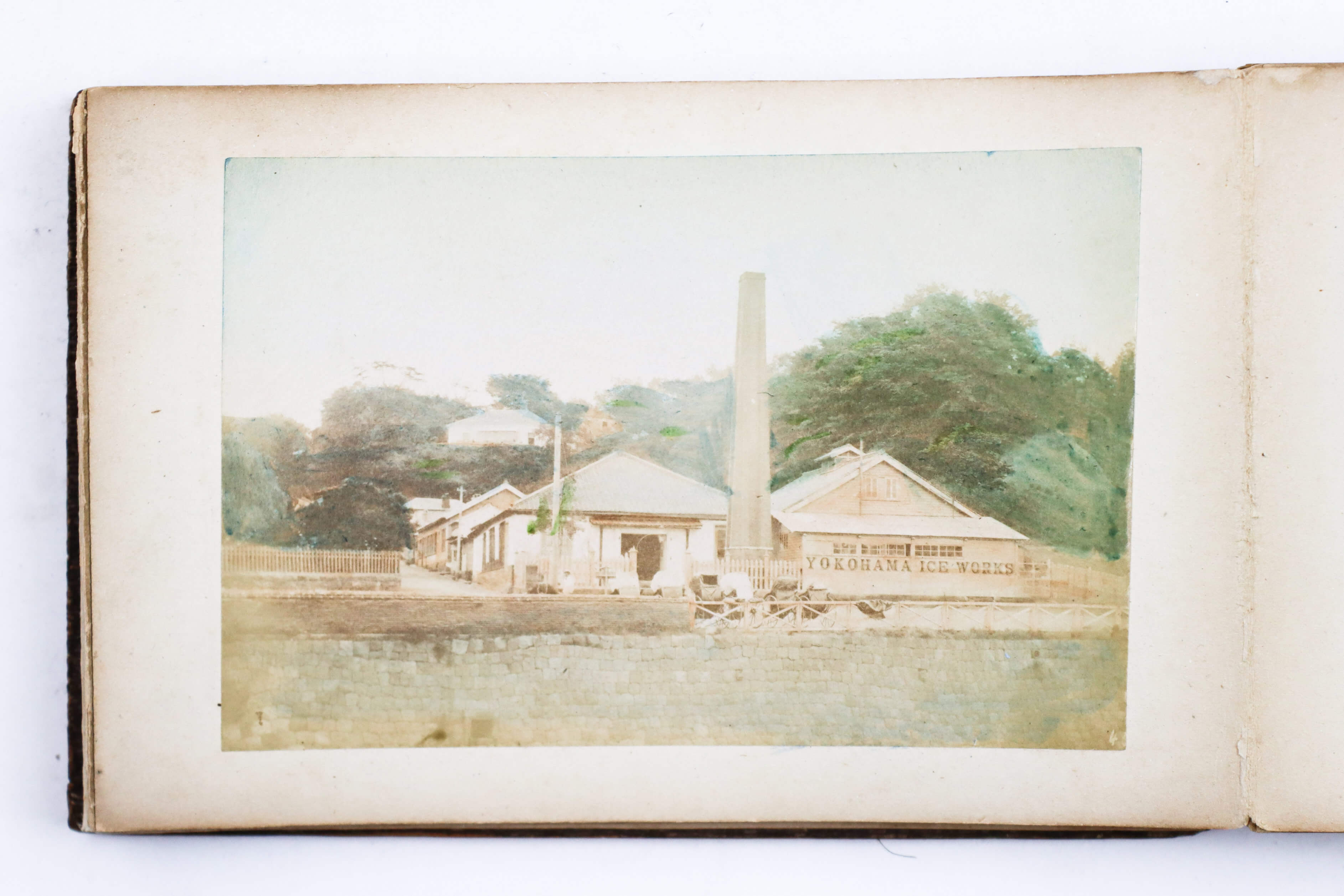
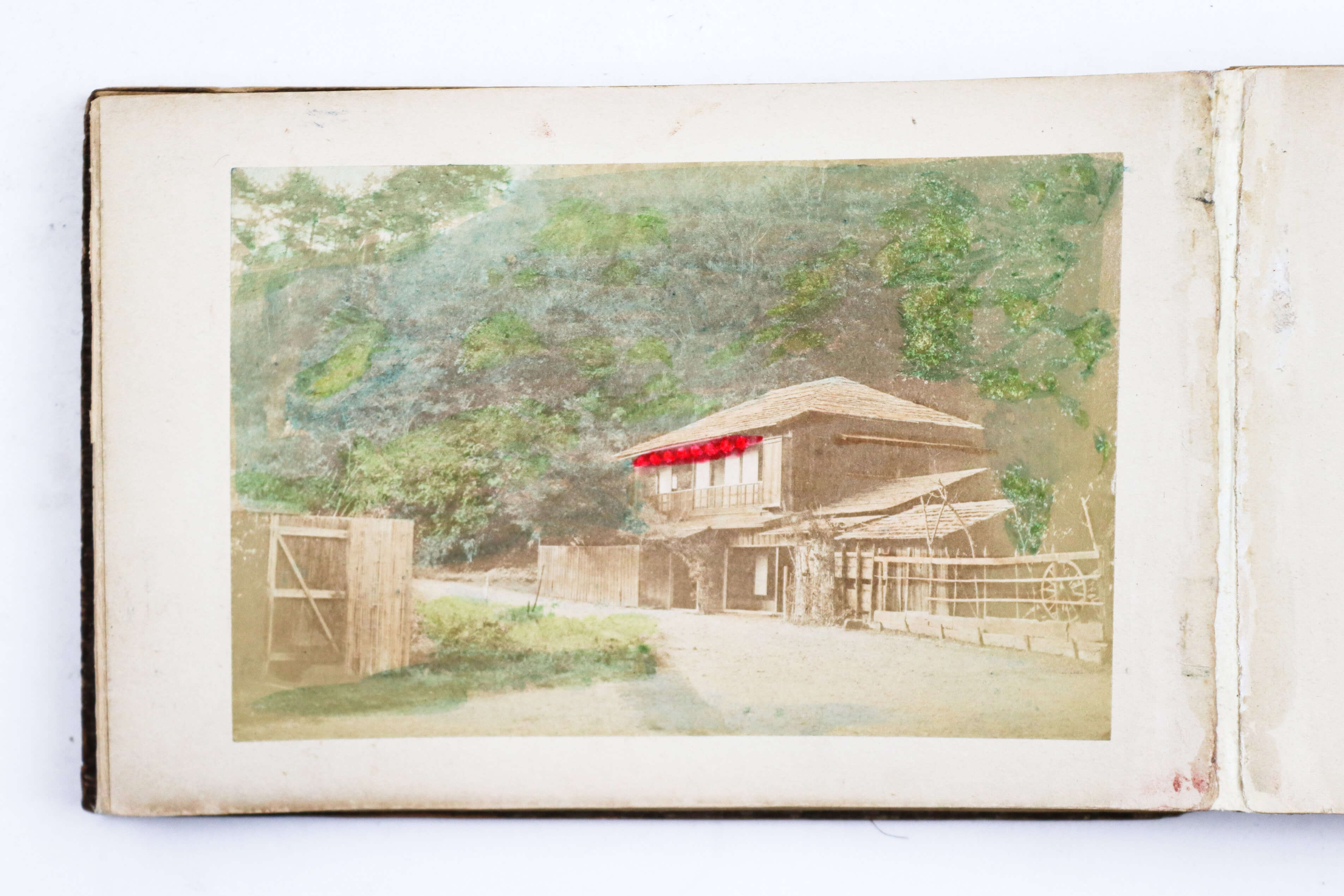
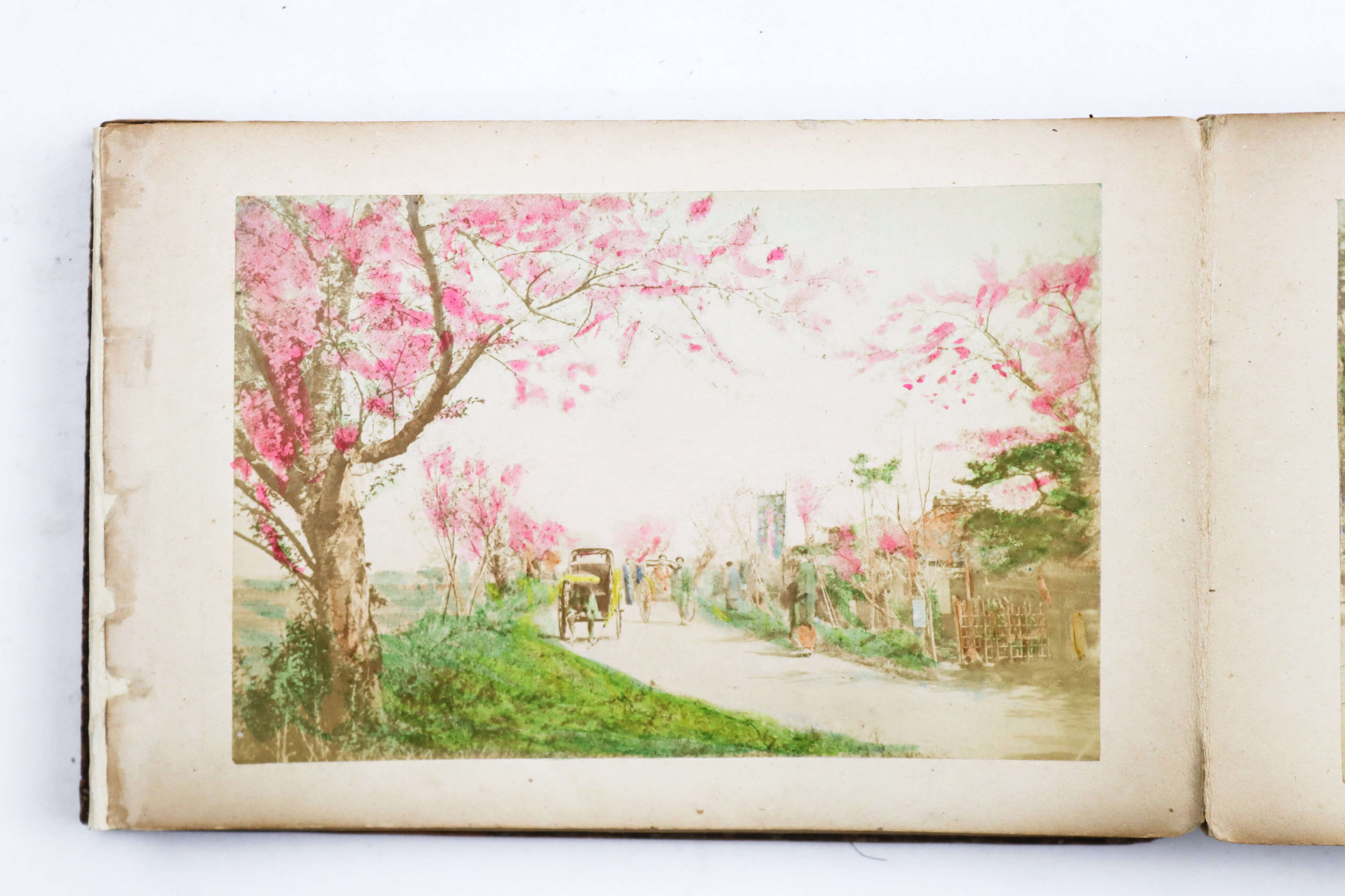
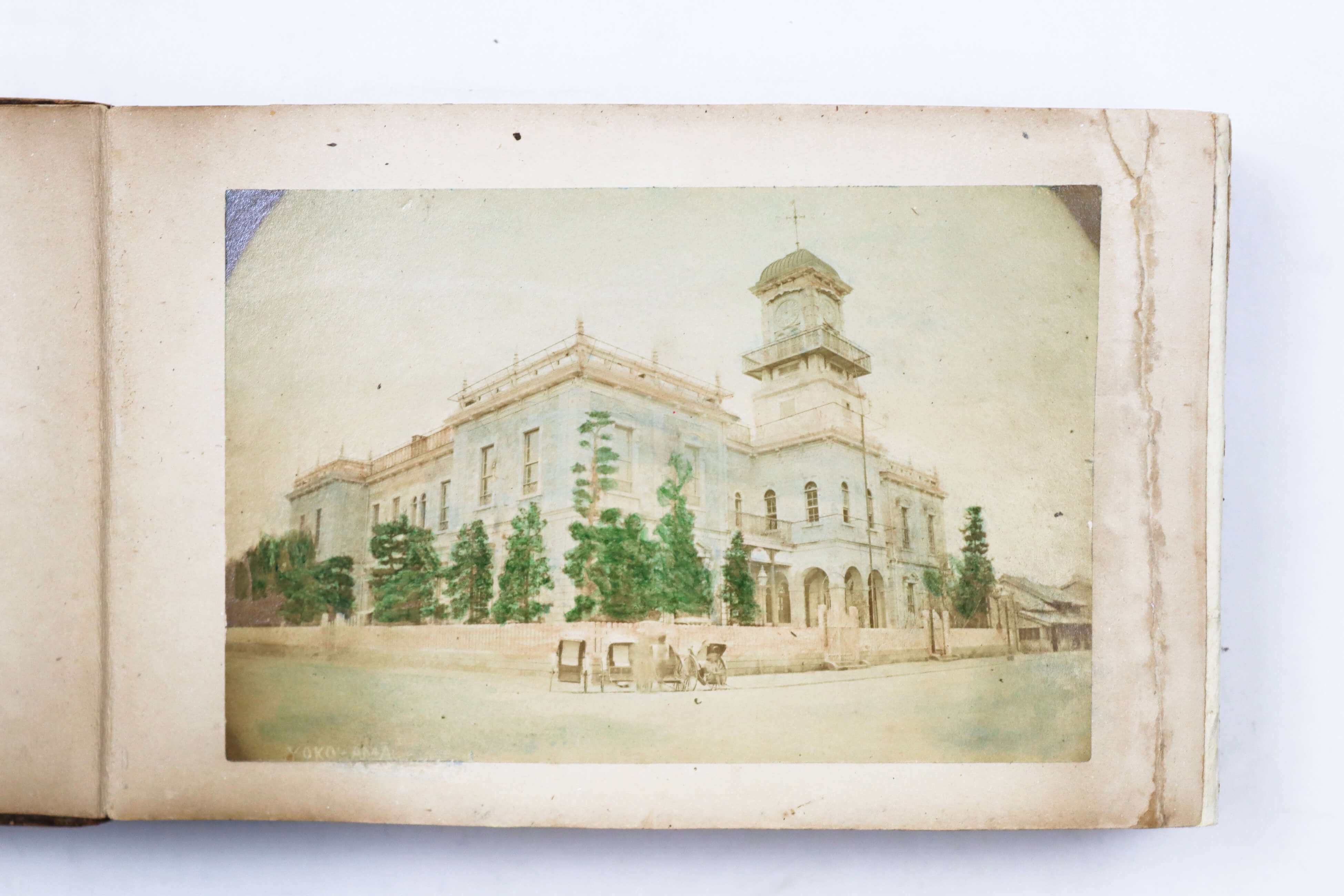
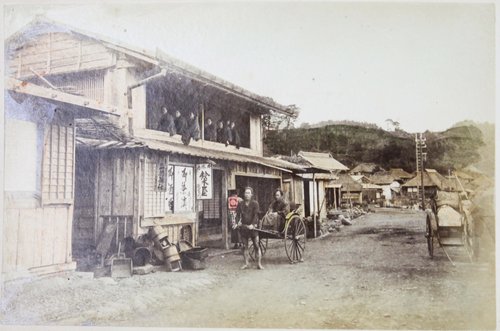
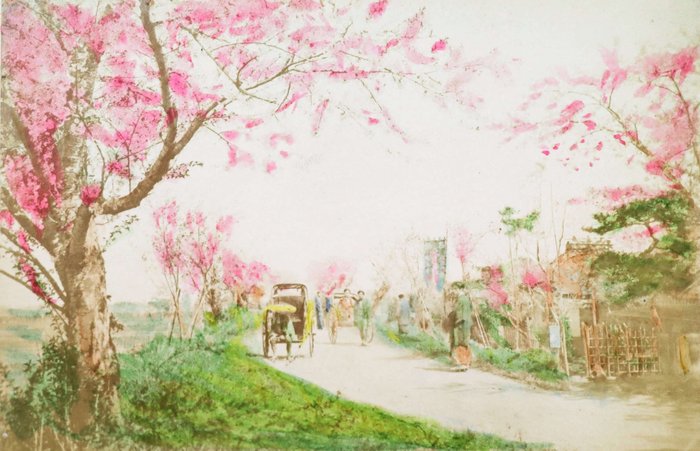
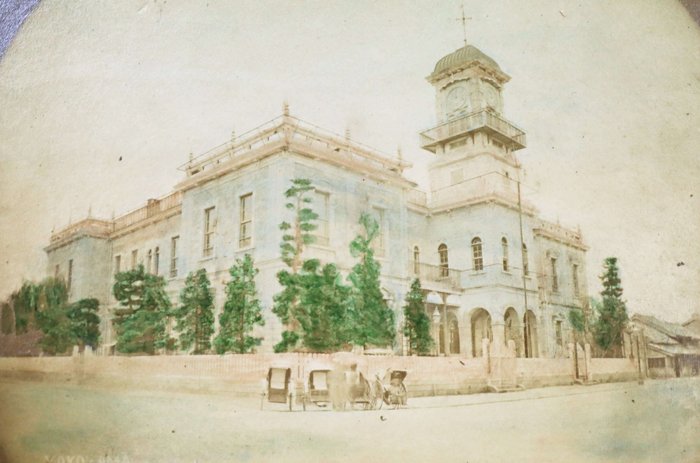
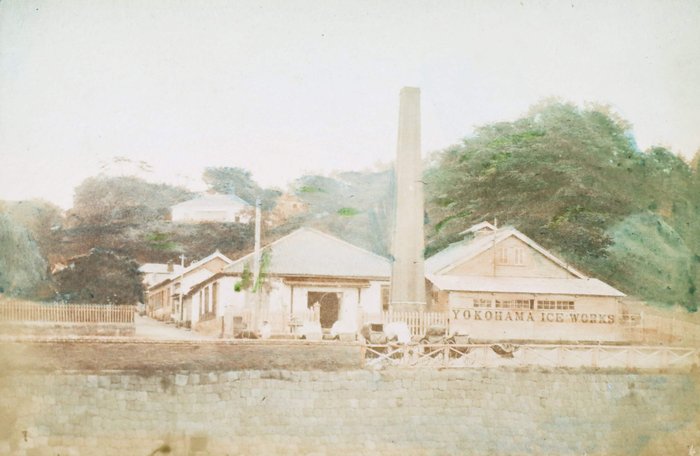
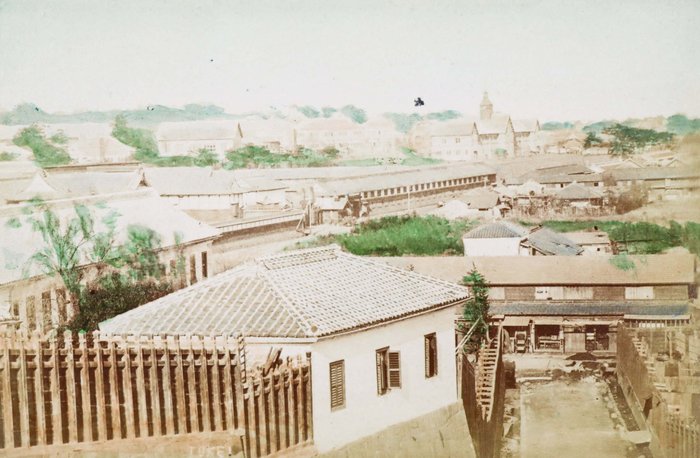
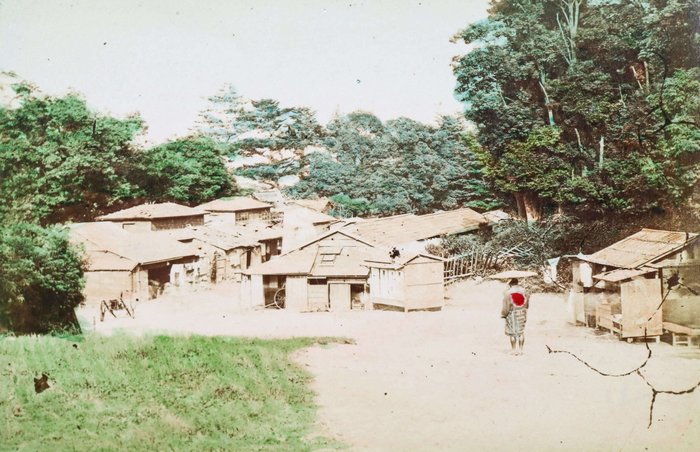
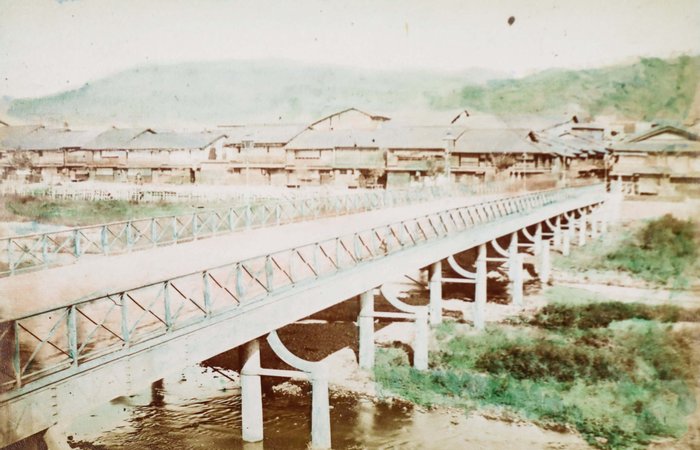
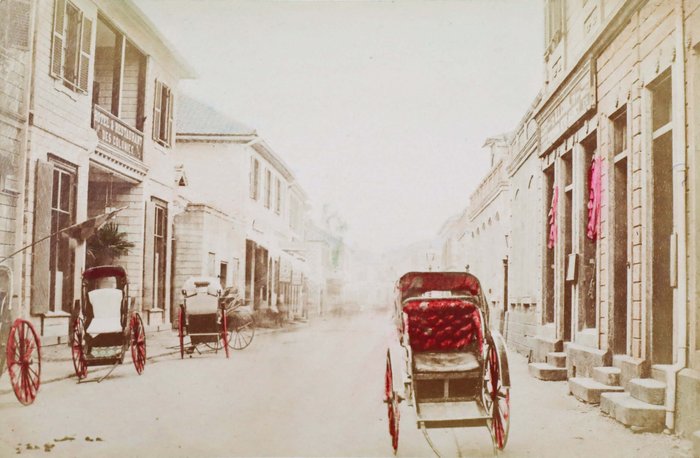
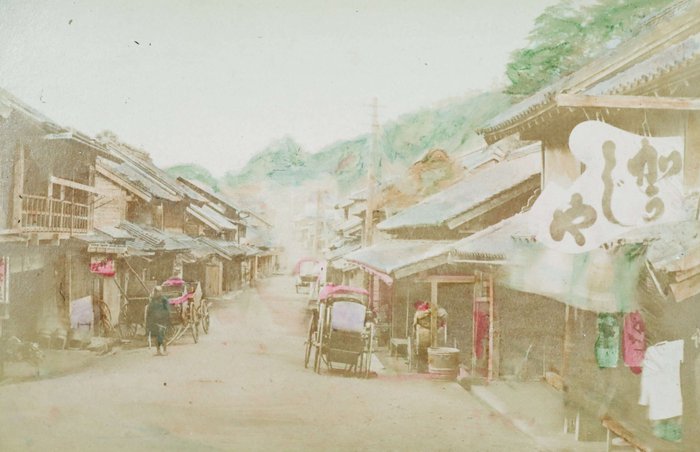
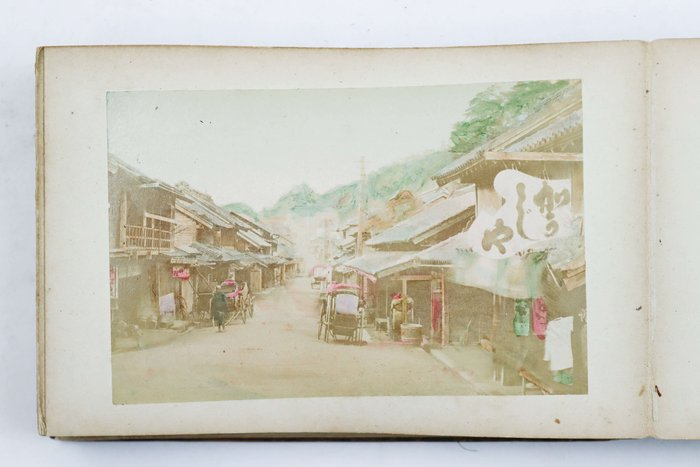
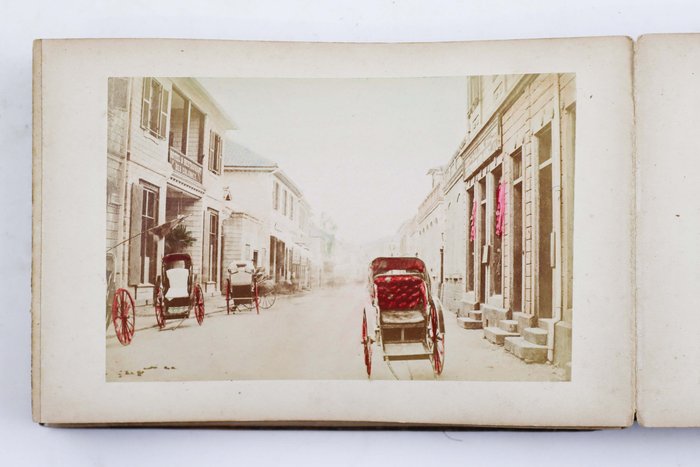
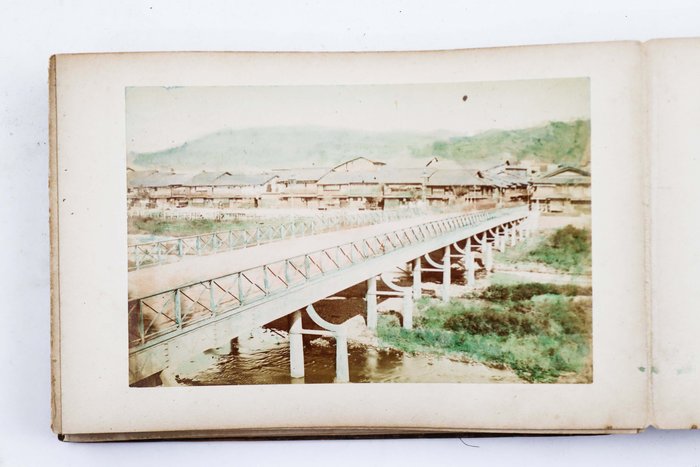
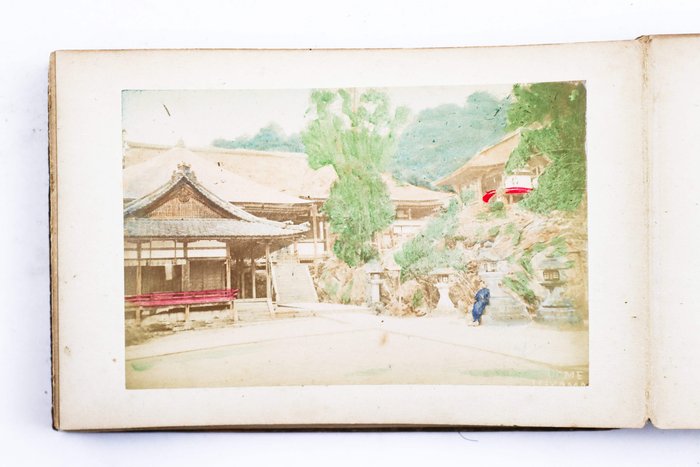
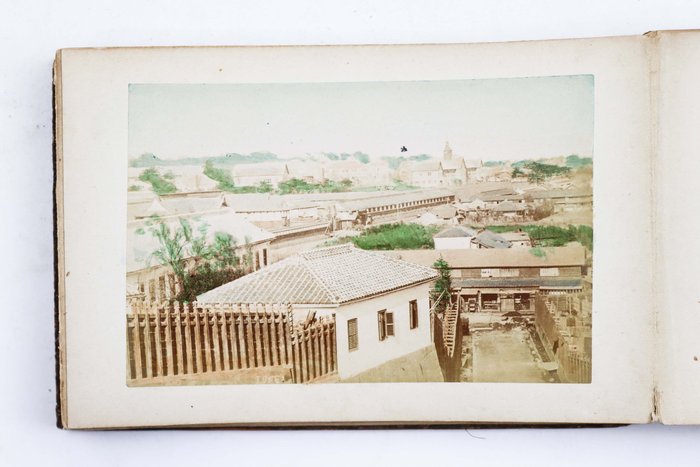
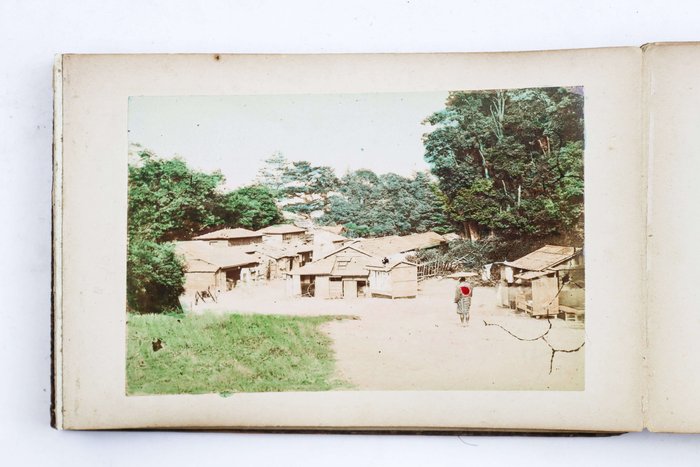
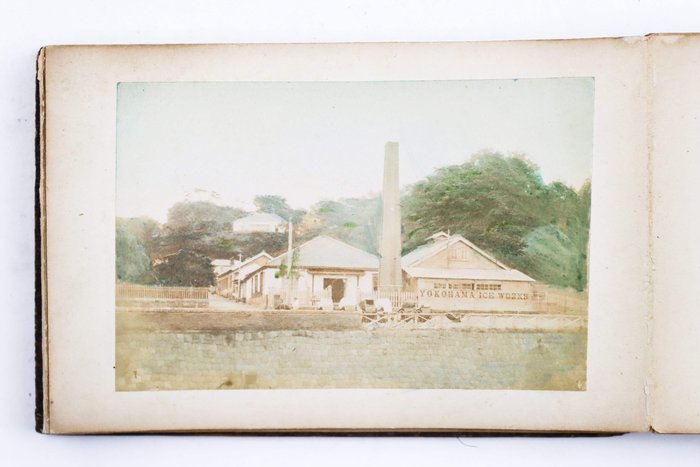
The other twenty-five prints illustrate early Japanese landscapes, documenting pre-modern Japan across Southeastern and Southcentral Honshu. Especially important among identified photos are pre-quake views of Yokohama (Clock Tower, Yokohama Ice Works, Victorian Western Cemetery, a steamship inn at Benten Dori) and Tokyo & environs (Meguro, a village near Tokyo, general view of the city, Zojoji Buddhist Temple). Other photographs portray Kyoto (Imperial Palace, Castle of Nijho), Kobe (Moon temple at Mayasan), Osaka (Shijo Ohashi bridge), and Nikko (Kanaya Hotel History House, Yashamon Gate). There are also several candid urban scenes of locals in traditional attire pulling carts, as well as women in kimonos standing on the balcony of a local tea house.
Overall, a beautiful souvenir photo album with fifty hand-colored albumen prints of Japanese landscapes and maikos, produced before the Great Kanto Earthquake of 1923.