
#OA58
1889
First edition.
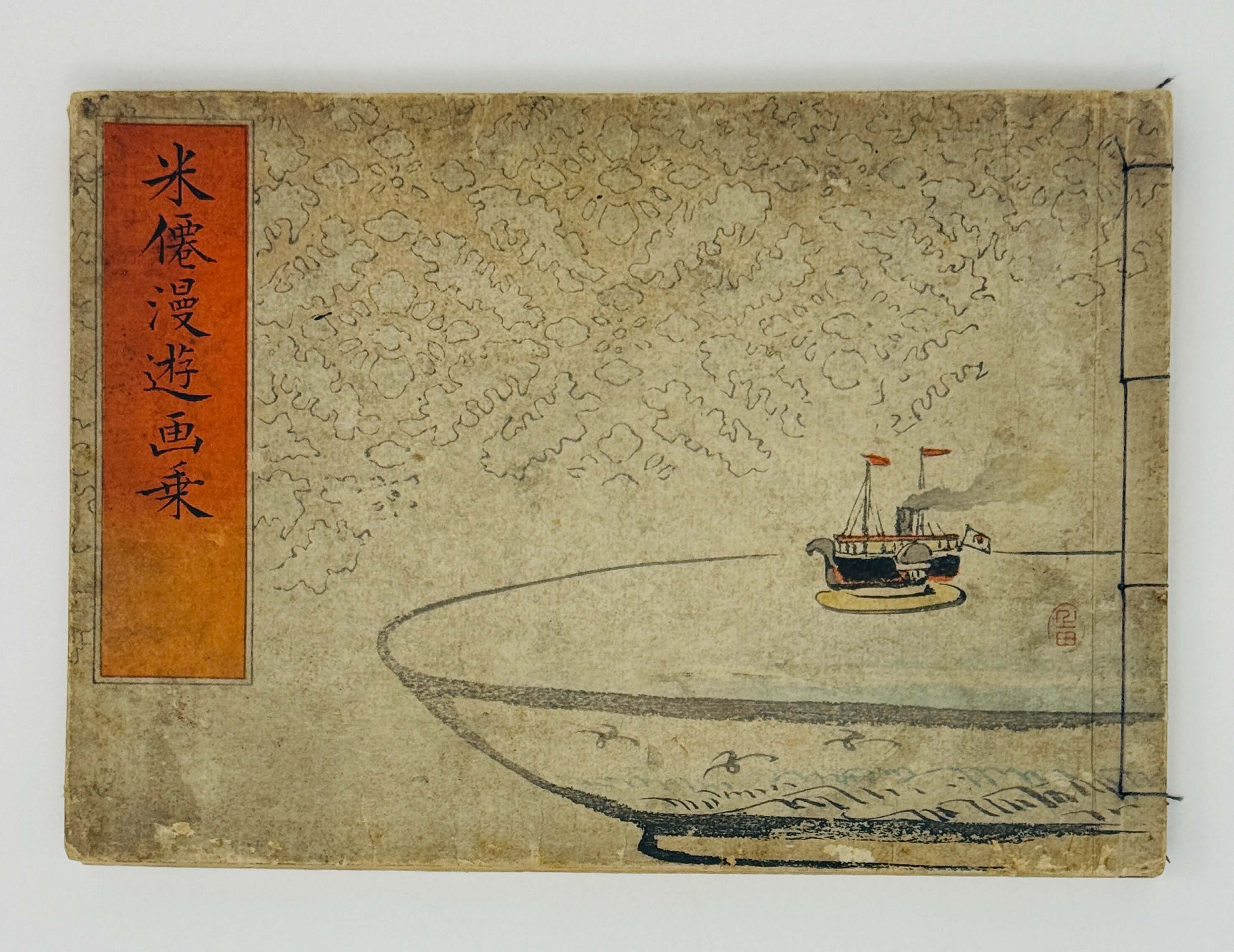
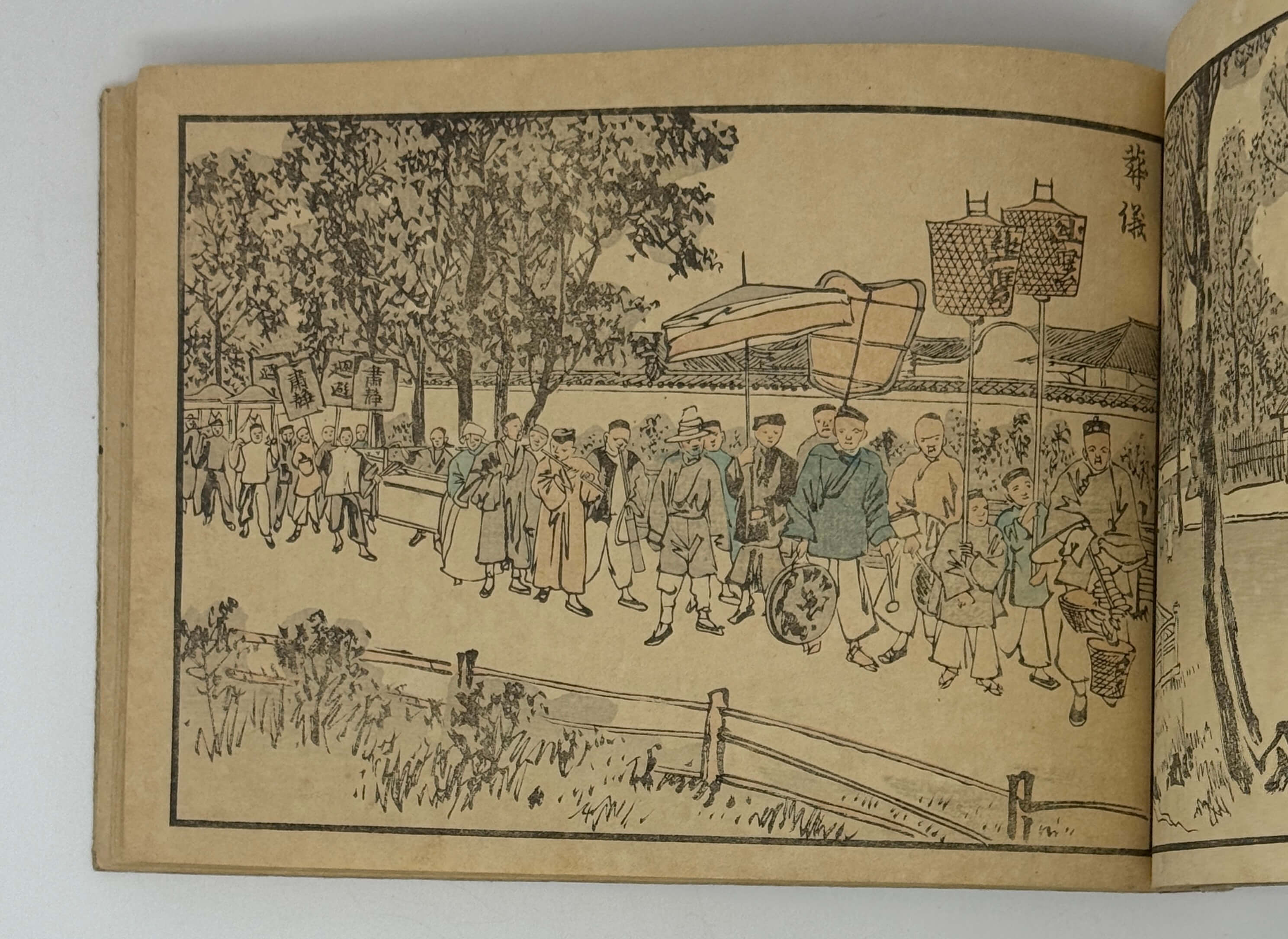
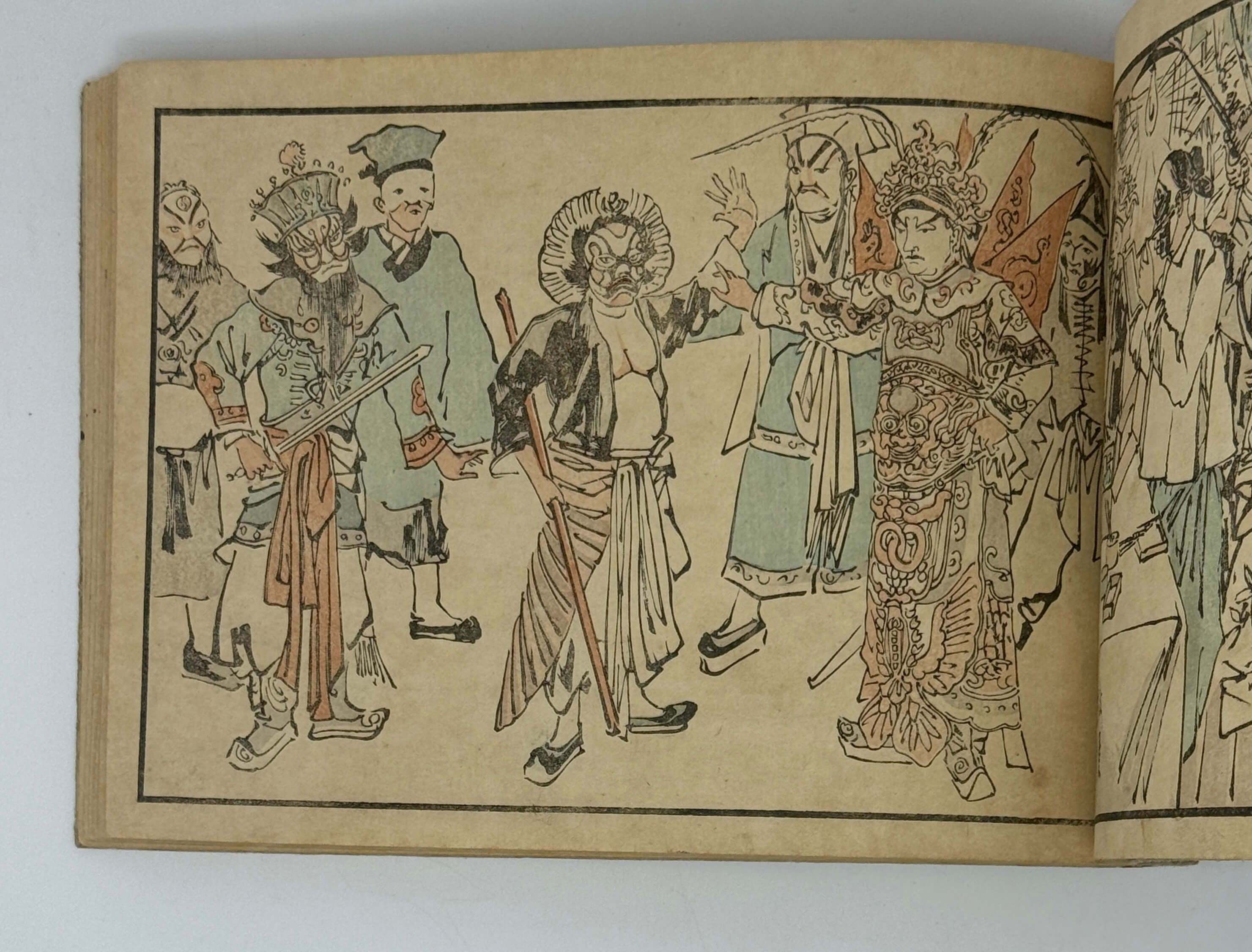
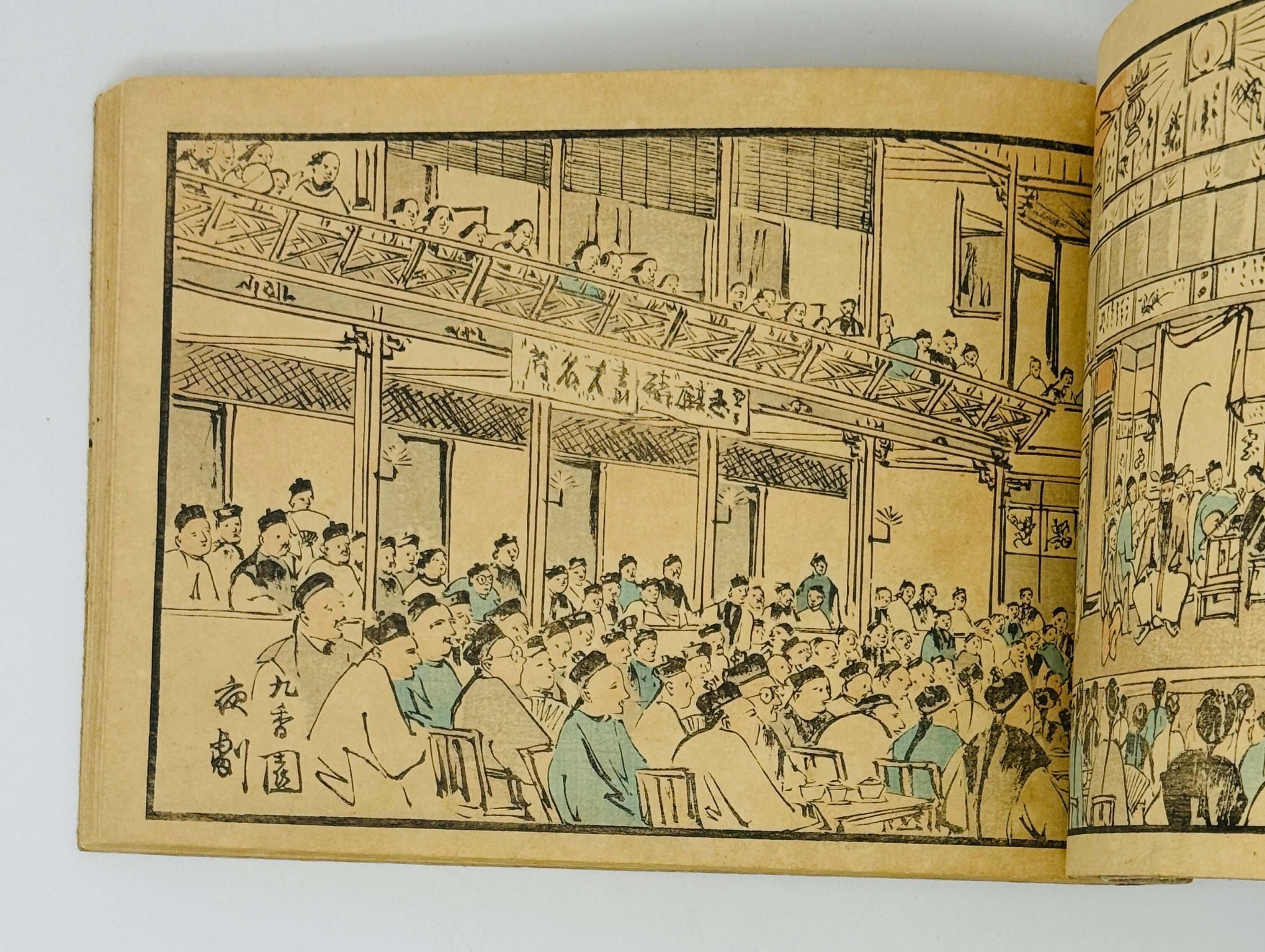
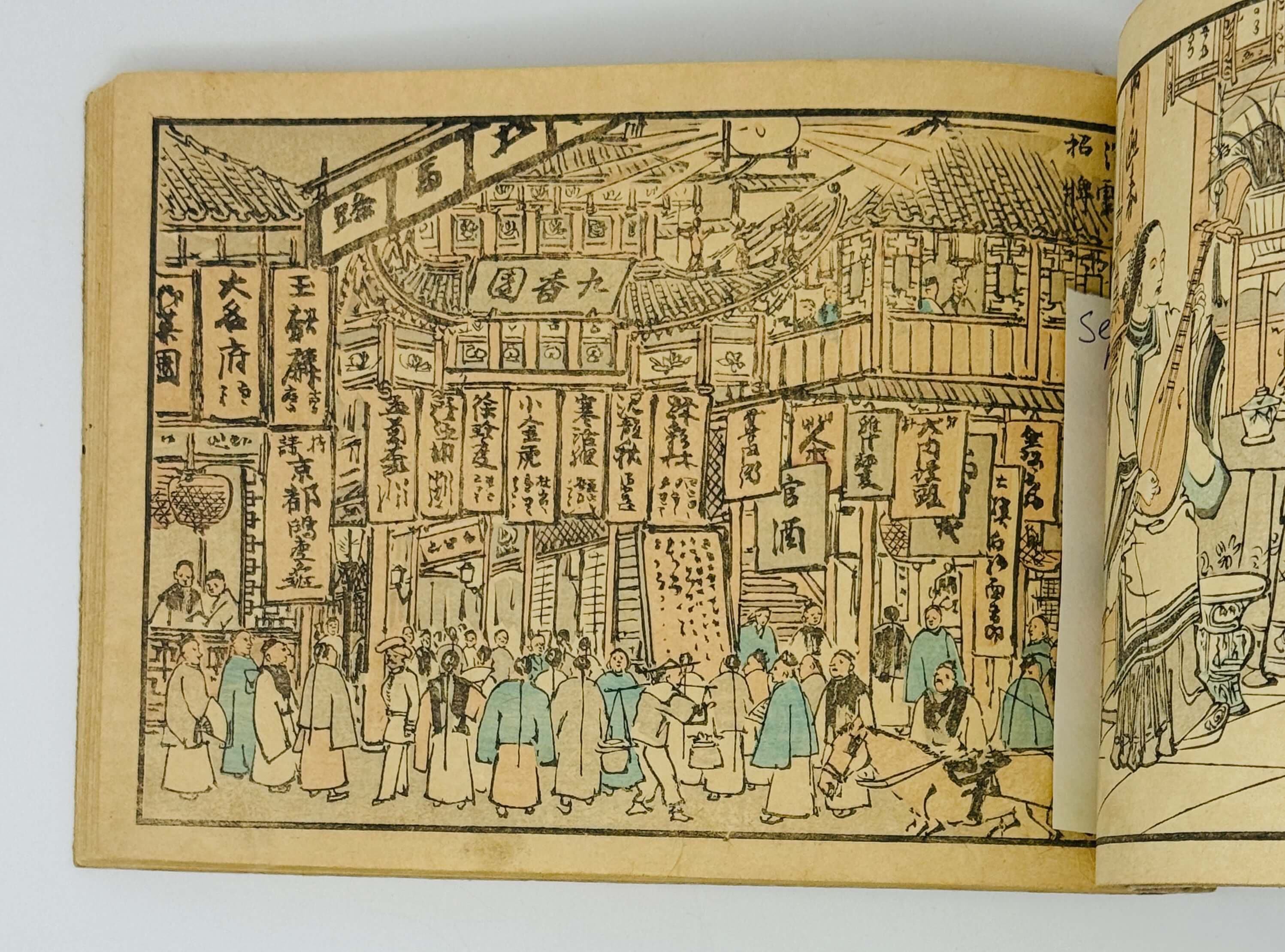
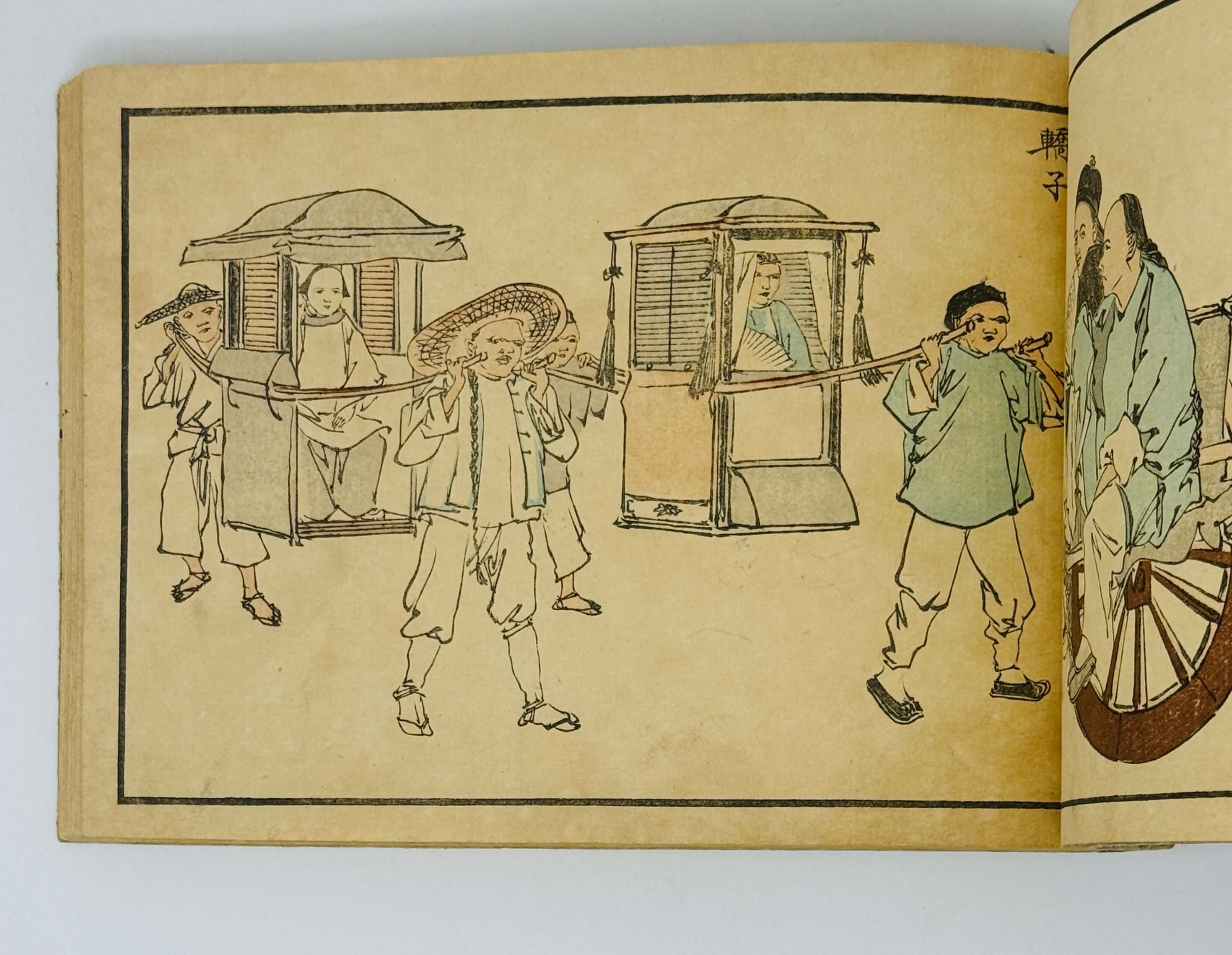
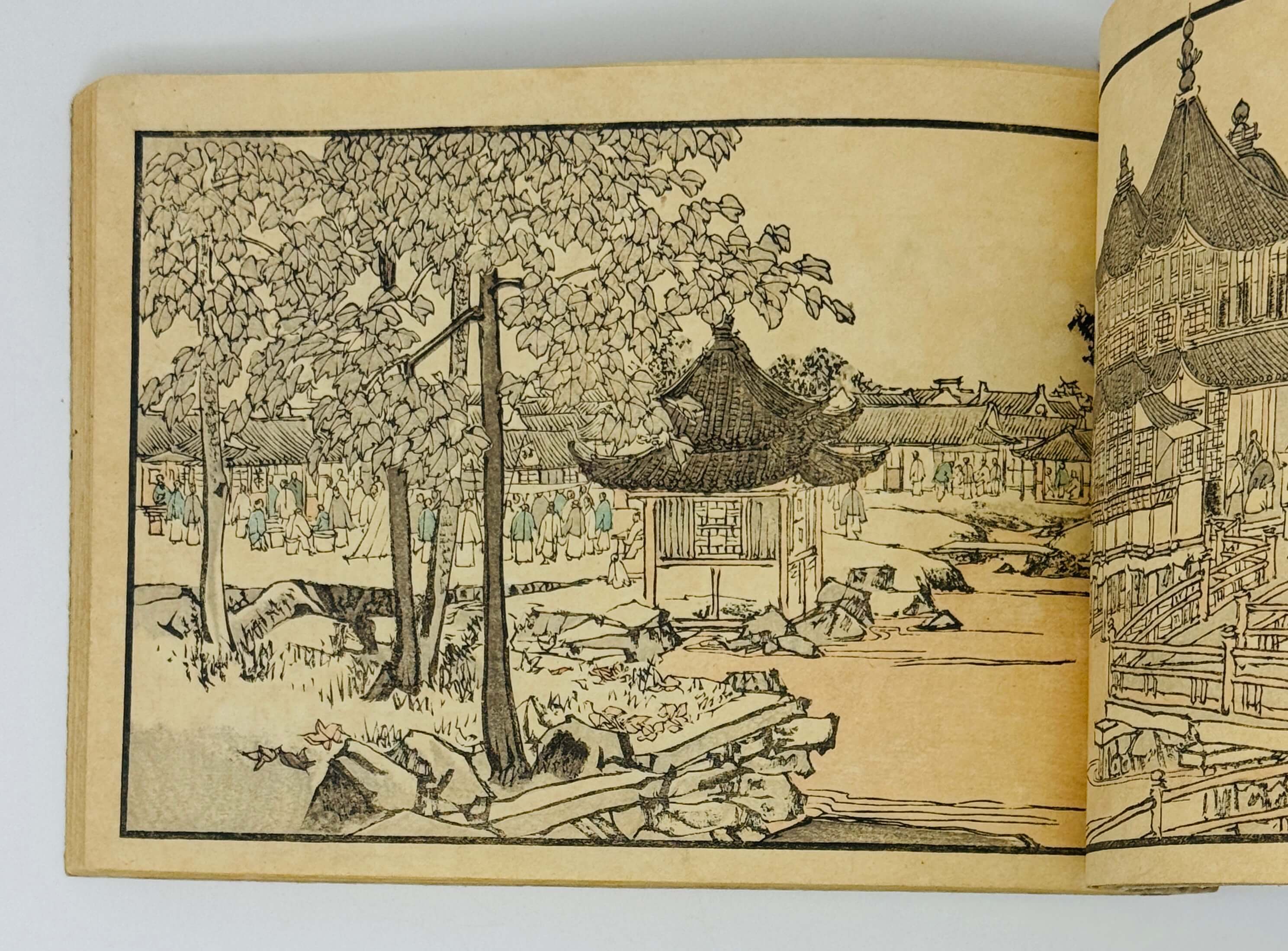
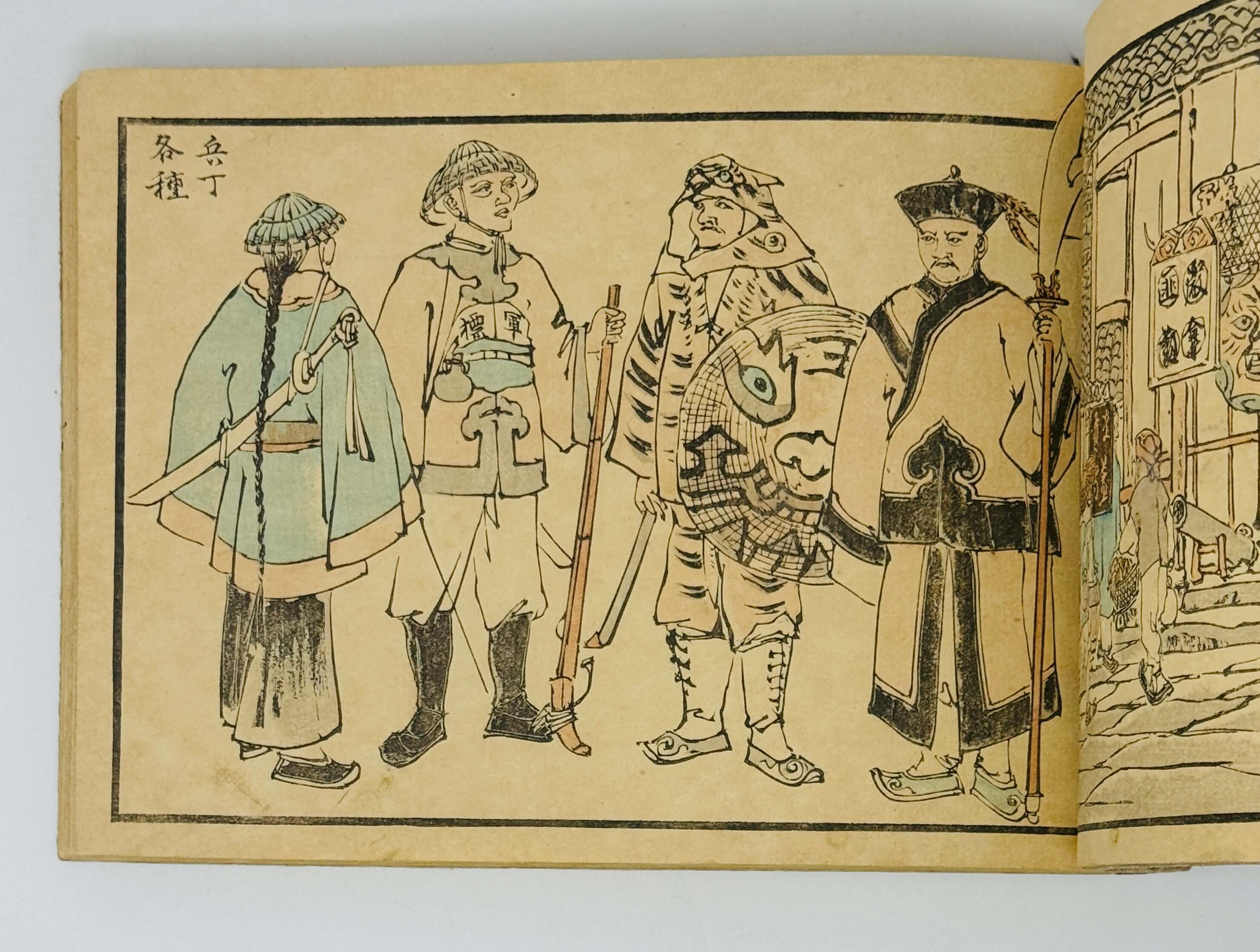
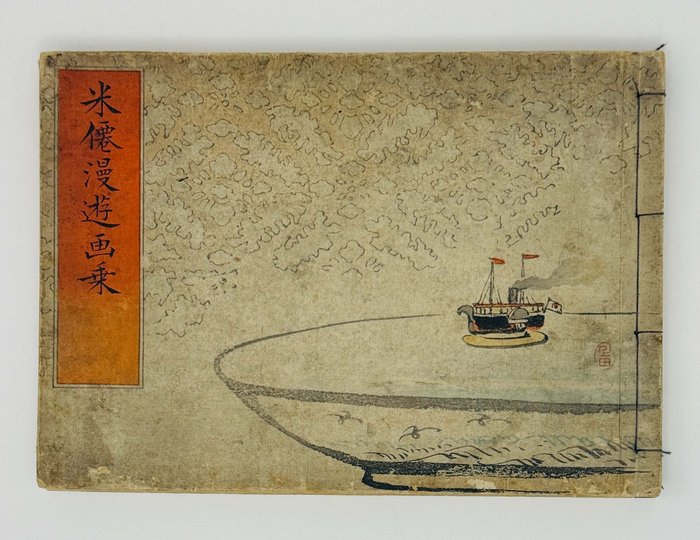
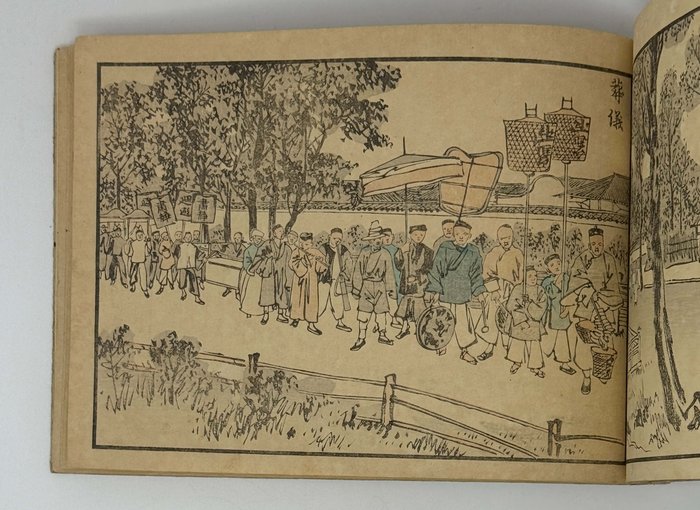
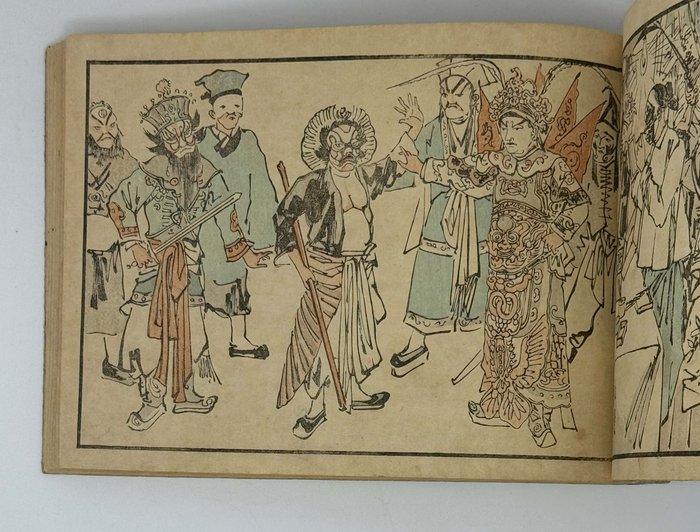
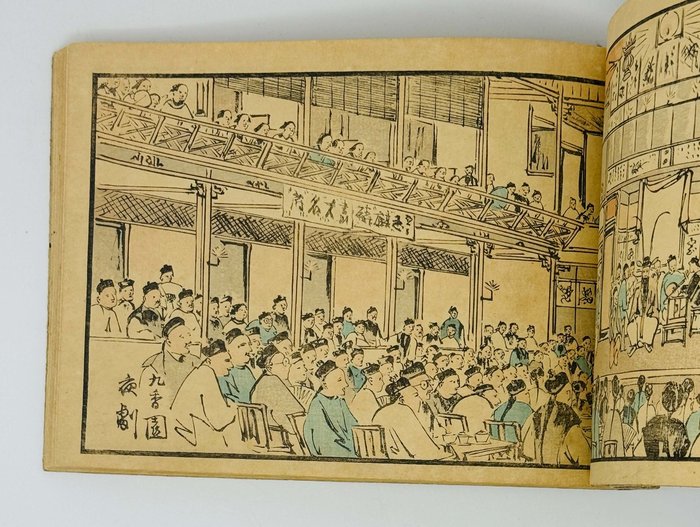
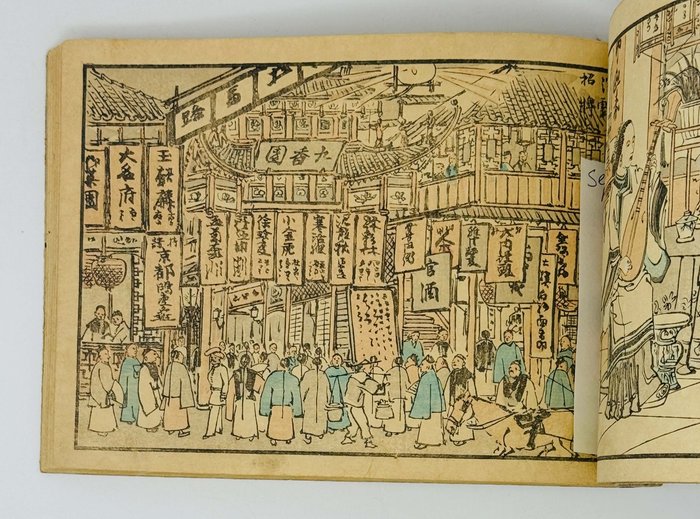
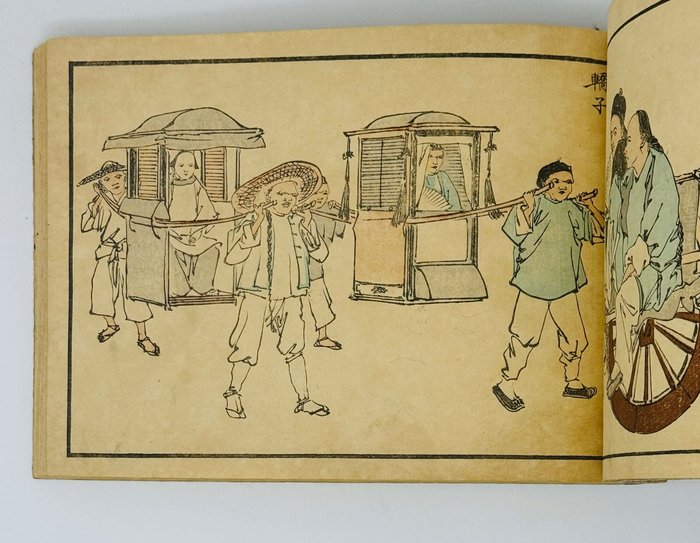
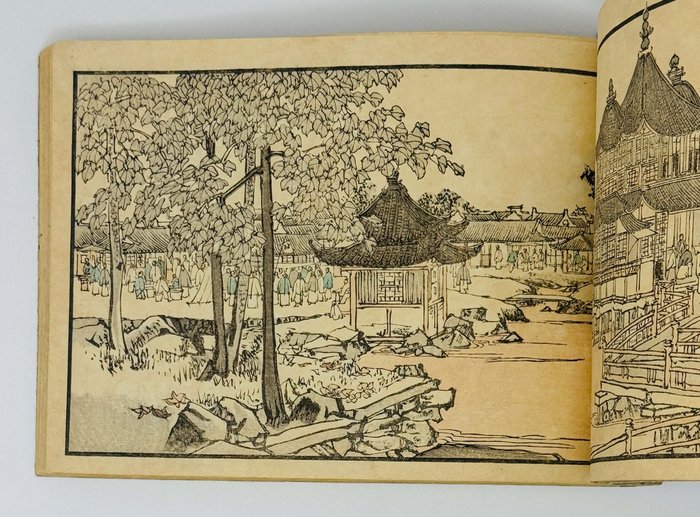
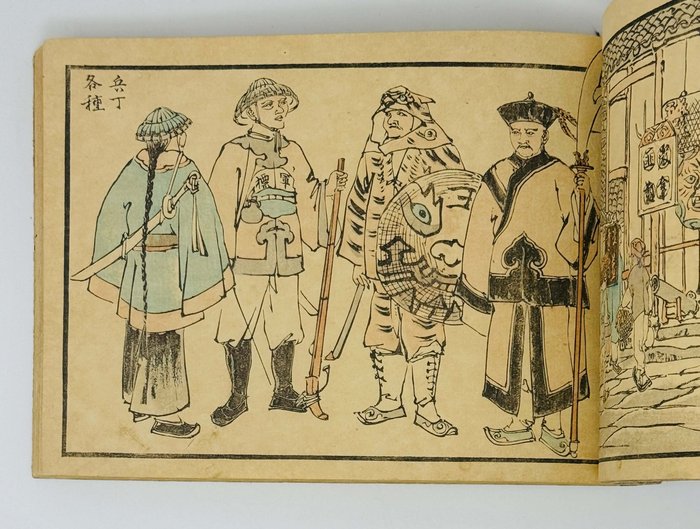
16,5x23,2 cm. 25 double page woodblock illustrations in colour. Paper oxidized. Fukuro toji binding. Woodblock printed paper wrappers, soiled and rubbed. Original title slip. Kubota’s stamp in red ink is one the front cover. Hanagire, i.e. purple silk corner protectors, are worn. Very good condition.
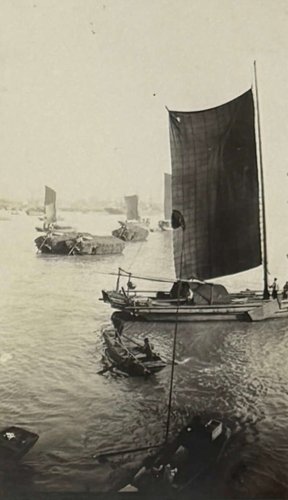
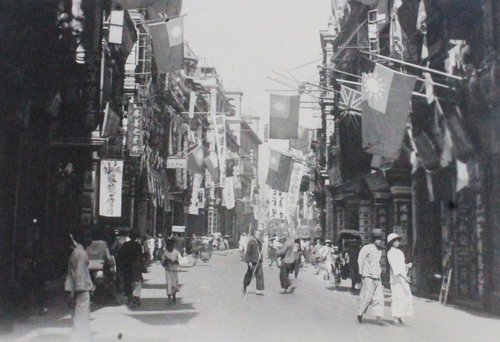
Beisen Manyū Gajō (1889–90) by Kubota Beisen is a travel-album of colour woodblock prints documenting his journeys to Shanghai, Hong Kong and Annam (today’s Vietnam).
Kubota Beisen (1852–1906) was a Kyoto-born painter and illustrator, later recognised as one of the pioneers of modern Nihonga. Initially discouraged from pursuing art, he eventually studied under Suzuki Hyakunen and Kōno Bairei, though his style is widely regarded as largely self-developed. Beisen became known for his bold line, use of Western perspective, and freedom from traditional academic rules.
He taught at the Kyoto Prefectural Art School, co-founded the Kyoto Young Painters Study Group (1886), and contributed decorative work to the Imperial Palace. From the late 1880s he travelled widely: he visited France for the 1889 Exposition Universelle (winning a gold medal), later travelled to the United States, and worked as an illustrator for major newspapers, becoming Japan’s first prominent newspaper artist. In 1893 he served as artist-correspondent at the World’s Columbian Exposition in Chicago.
Beisen also reported from the Sino-Japanese War (1894) with his sons Beisai and Kinsen; their field sketches provided source material for many contemporary woodblock triptychs. Celebrated by students and critics, Beisen was described as one of the most gifted and innovative painters of his generation.
“Kubota Beisen <...> is one of the most celebrated artists of Modern Japan. He was born at Kyoto, the ancient capital and well- known seat of fine arts; but unlike the works of so many artists from that city, his creations are characterized rather by bold design and lightness of touch that by elegance and elaborate finish. We may say that he is the first painter in the Japanese style who has freed himself from the fetters of the old rules. A gold medal was awarded to him by the committee of the Paris Exposition of 1889. In the Columbian Exposition, also, he received a first-class medal. During the late war [First Sino-Japanese War of 1894-95] he went to the battlefields with the Japanese army. After his return from the front, His Majesty the Emperor was pleased to order him to draw in the Imperial presence, which is a favour very rarely accorded to an artist in this country. Since 1892 Kubota Beisen has been, and still is, attached to the Kokumin Shimbun, each number of that daily newspapers being richly illustrated by his work. It was in his capacity as special art correspondent of the Kokumin Shimbun that he was allowed to accompany the expeditionary forces” (The Far East: An English Edition of the Kokumin-No-Tomo. Vol. 1. No. 1. February 20th, 1896, Tokyo, p. 29).