
#OA59
1896
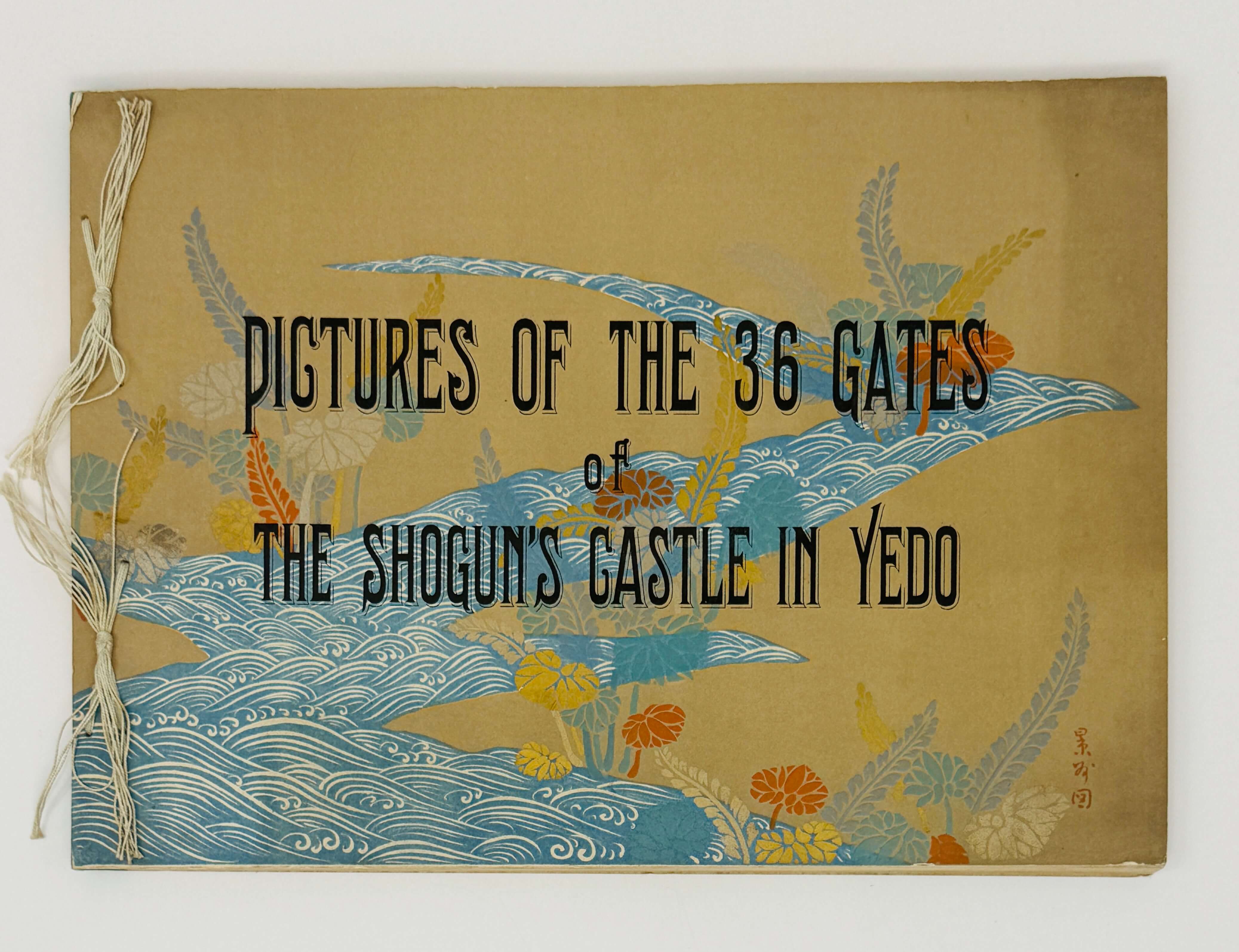
1 volume, complete. First edition.
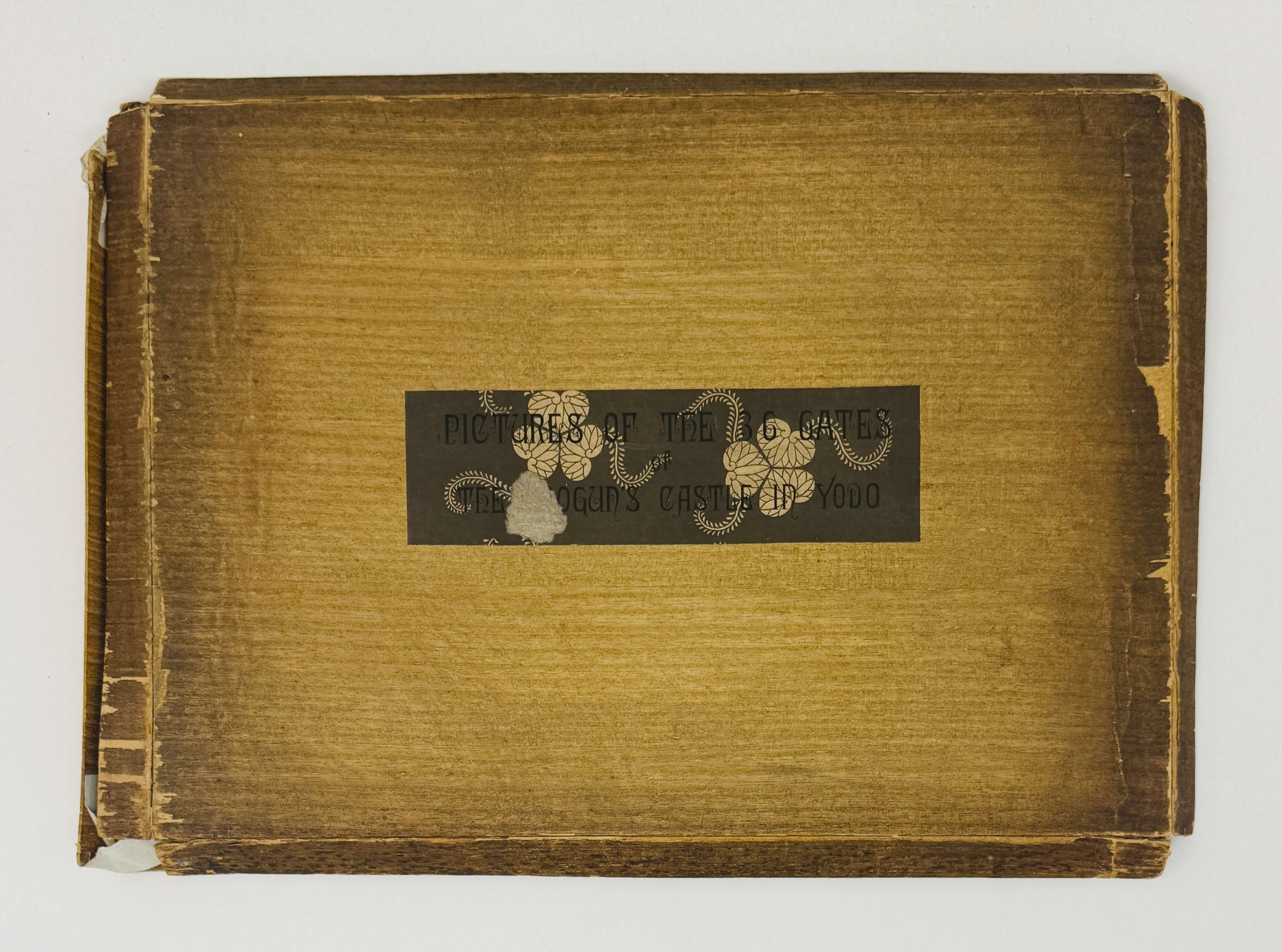
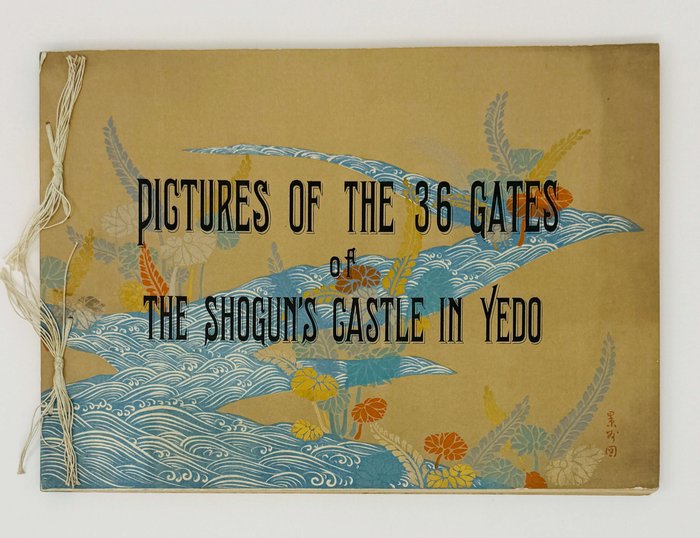
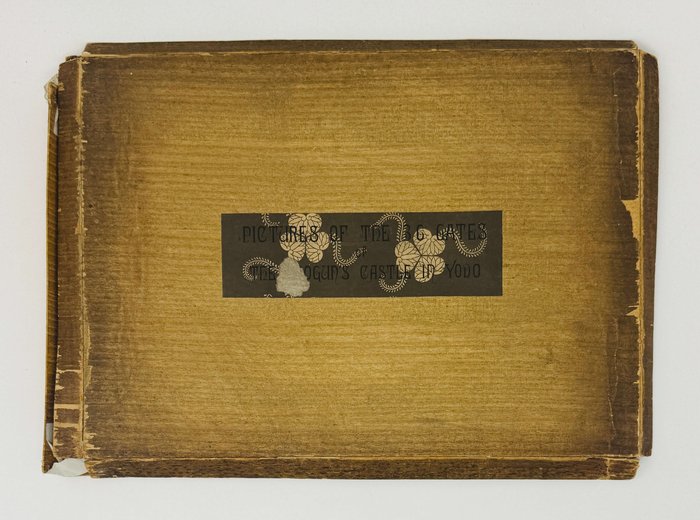
22x31cm. 36 leaves of chromolithographs, 1 composition in monochrome and one black-n-white map. Text in English printed on protection paper. Some minor foxing and soiling. Illustrated paper wrappers with floral motifs. Silk threads, silk corners hanagire. Protecting envelope and original clamshell box are presents but in need of restoration (the box is torn at the corners). Overall very good condition.
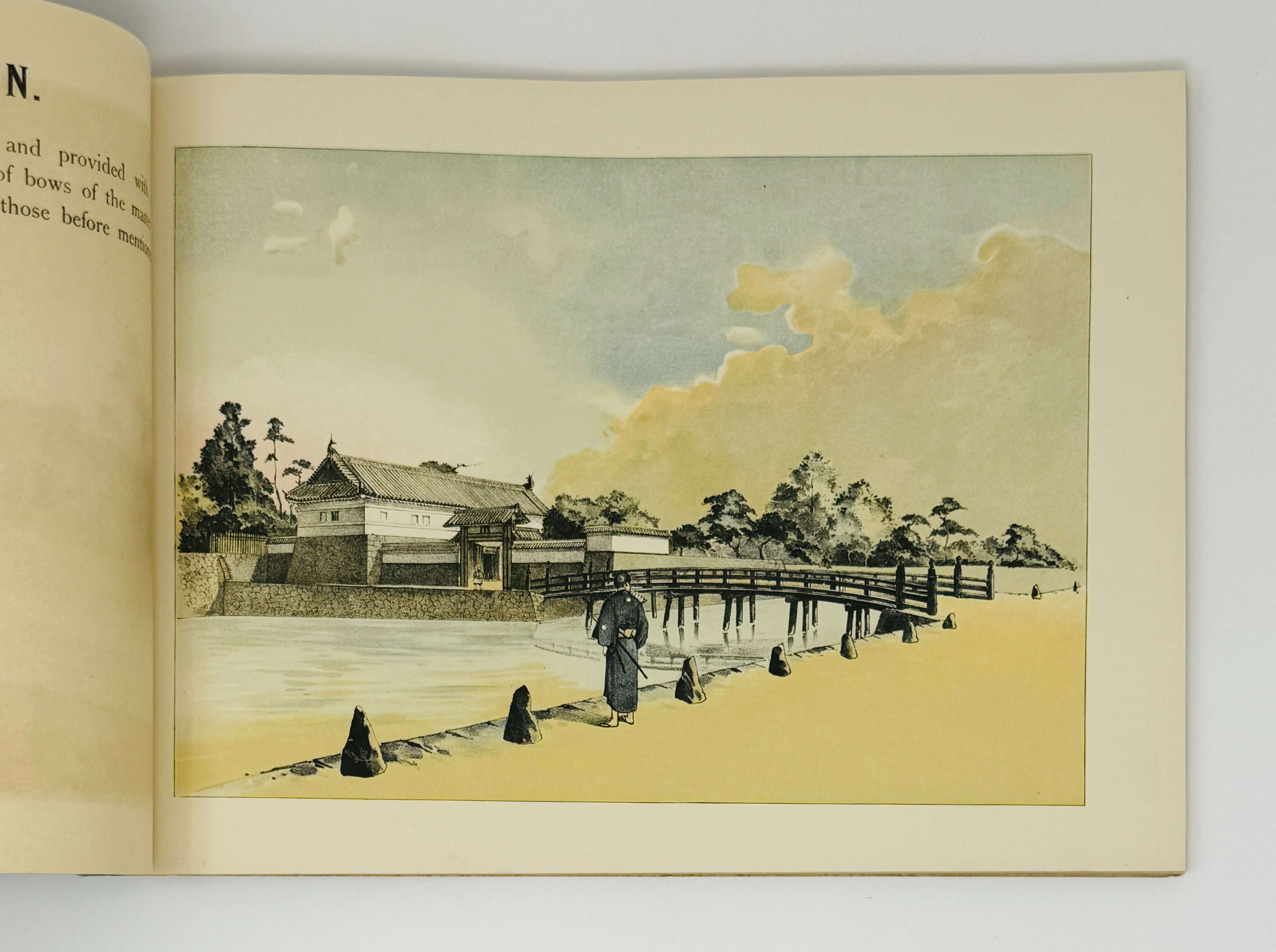
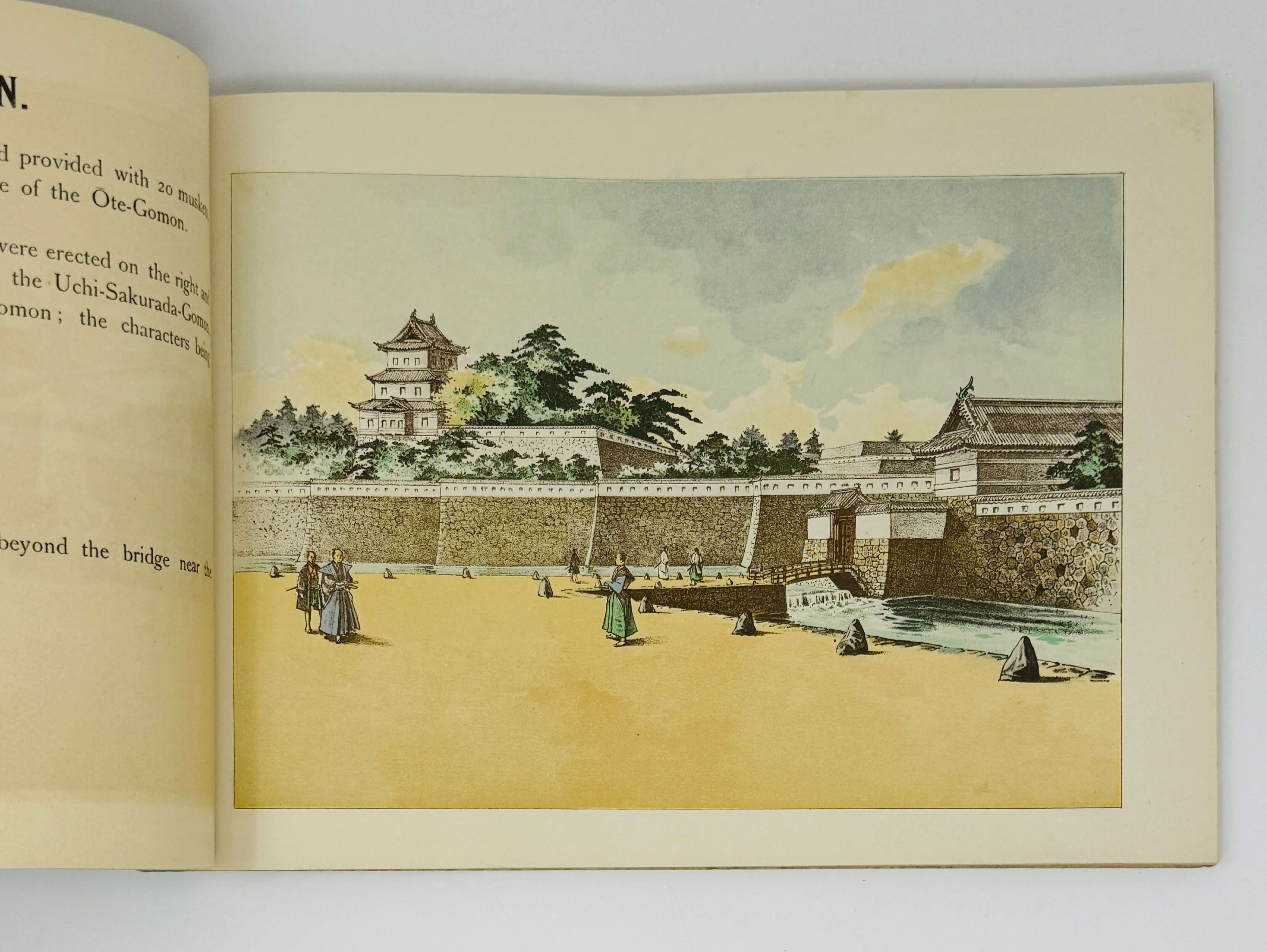
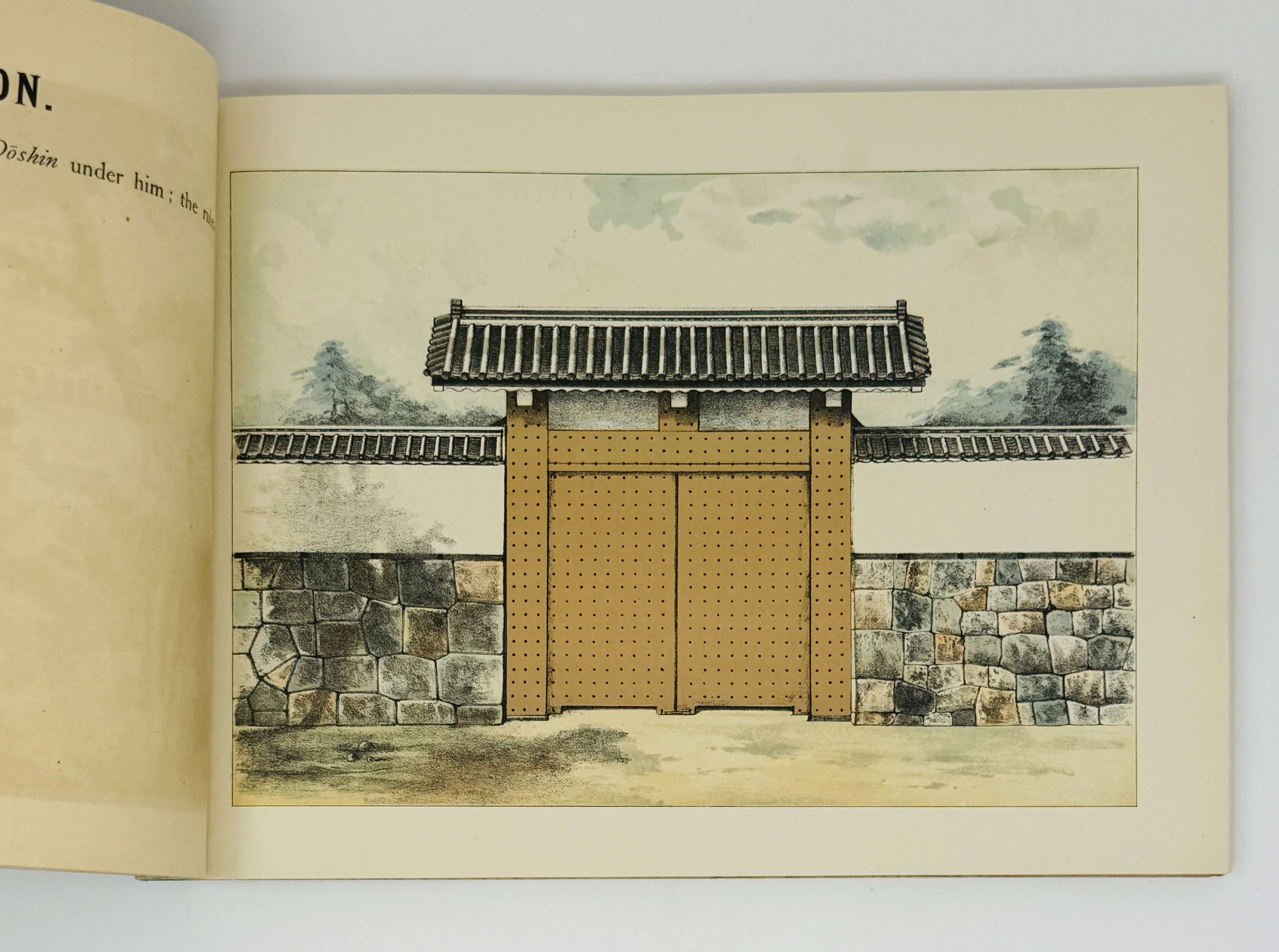
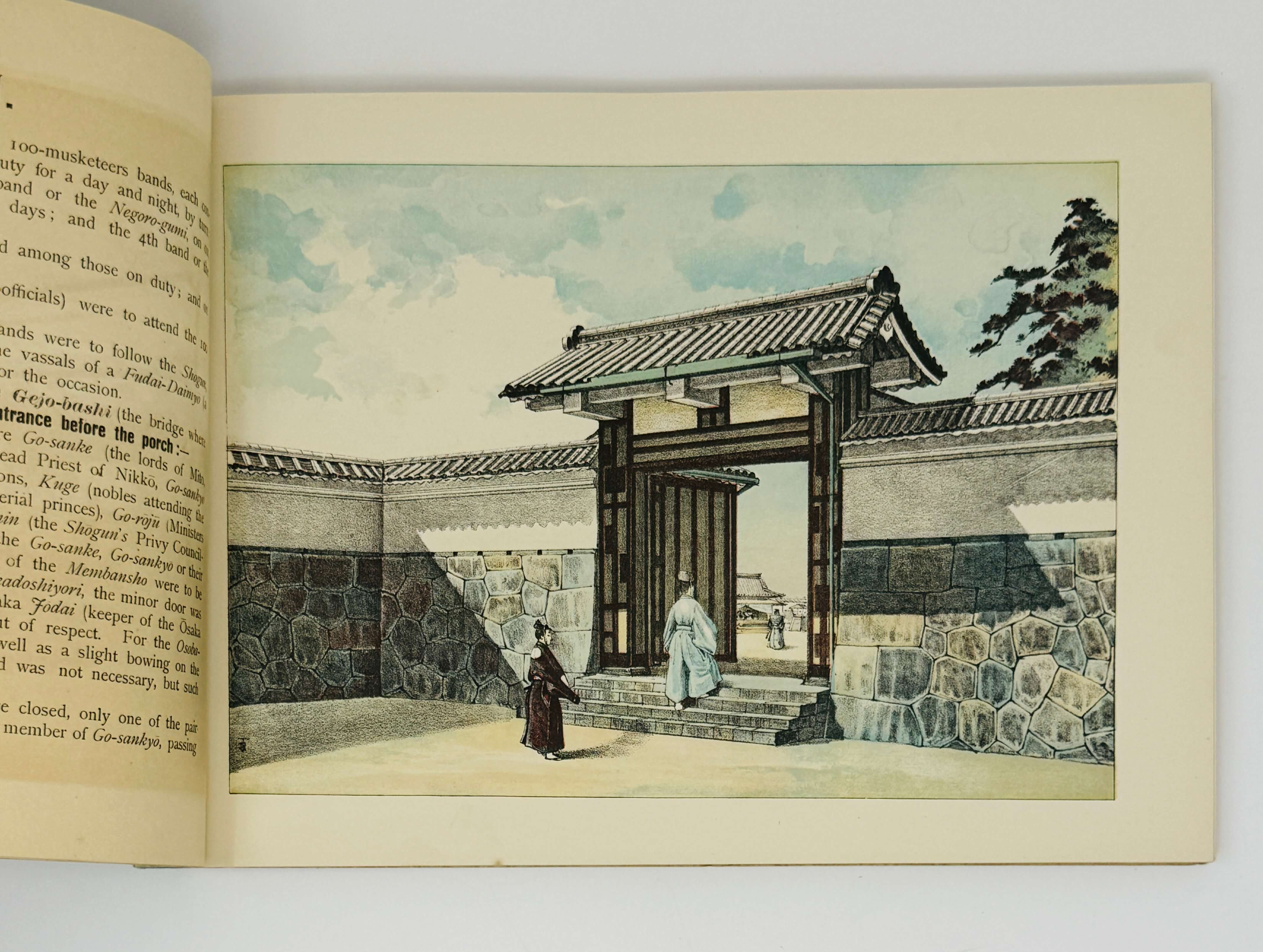
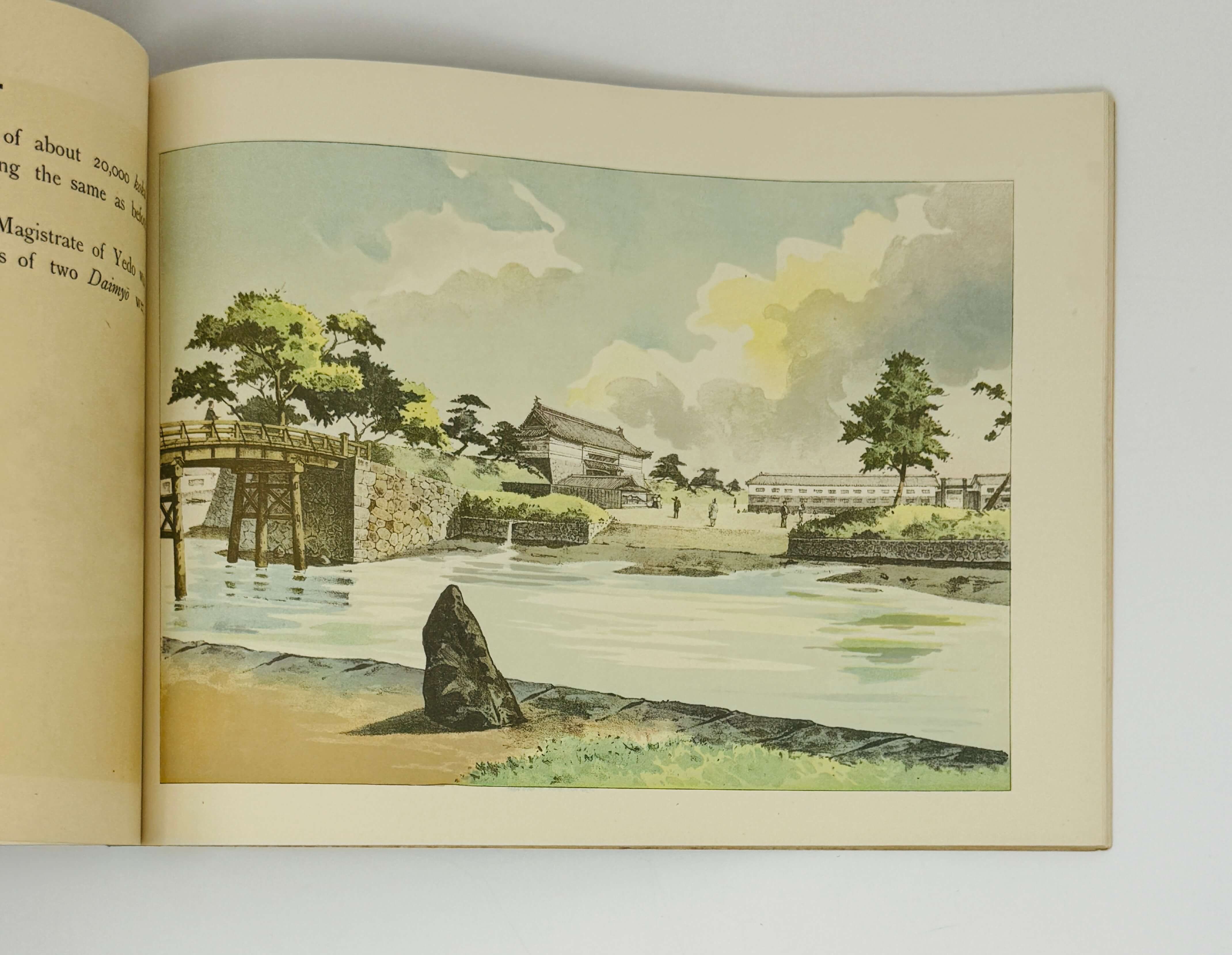
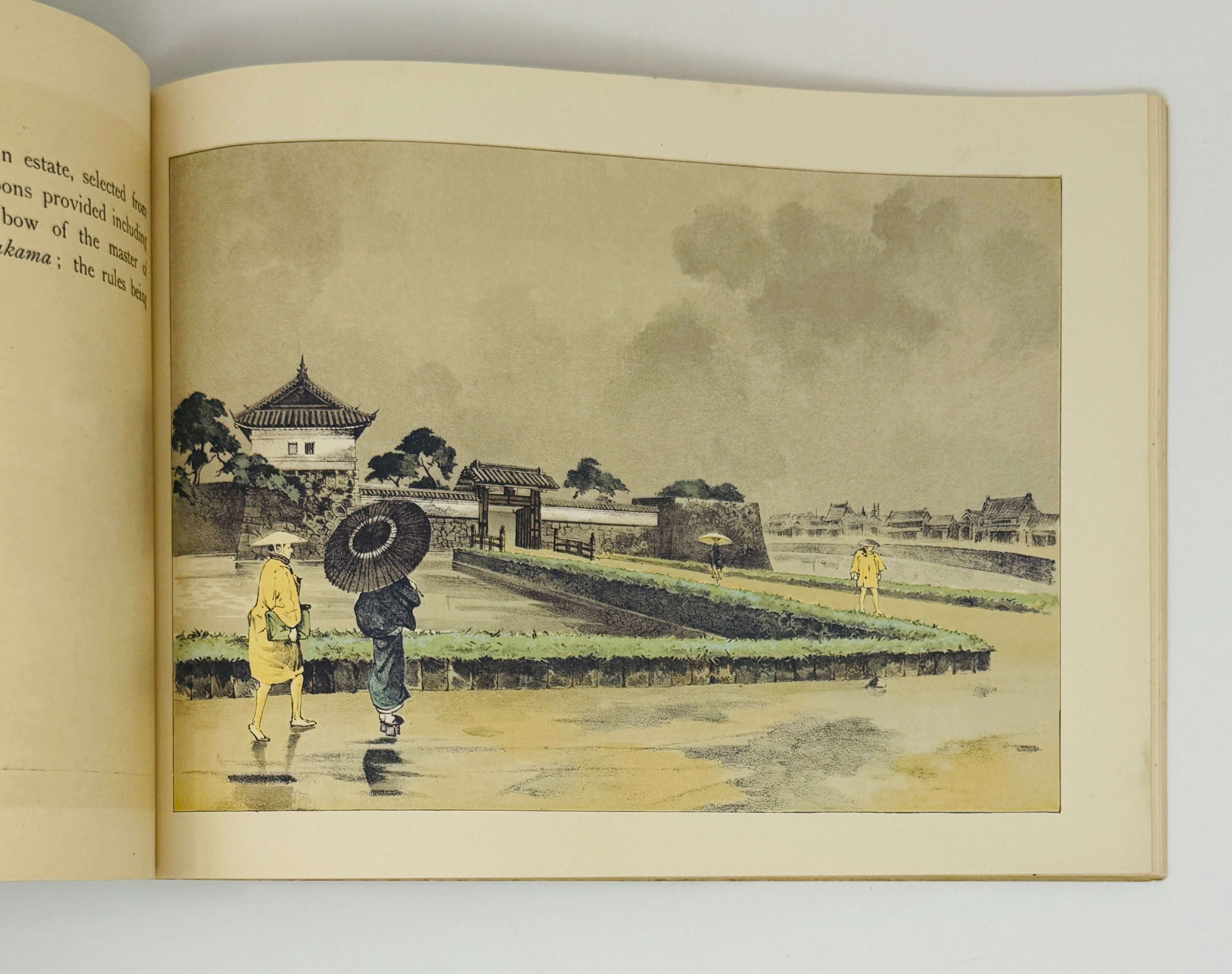
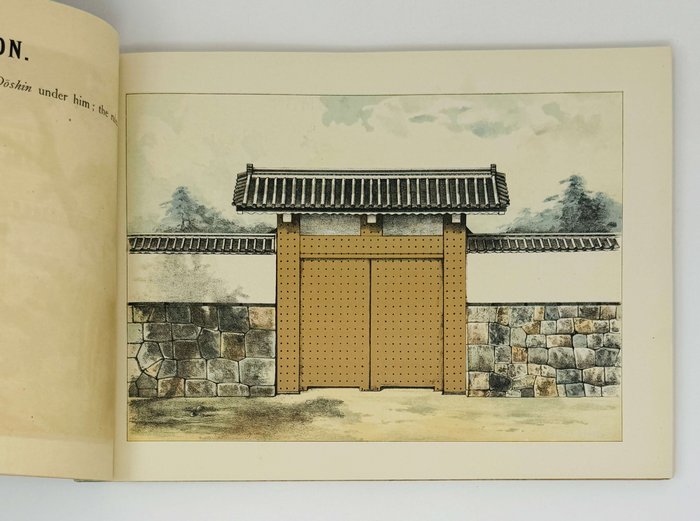
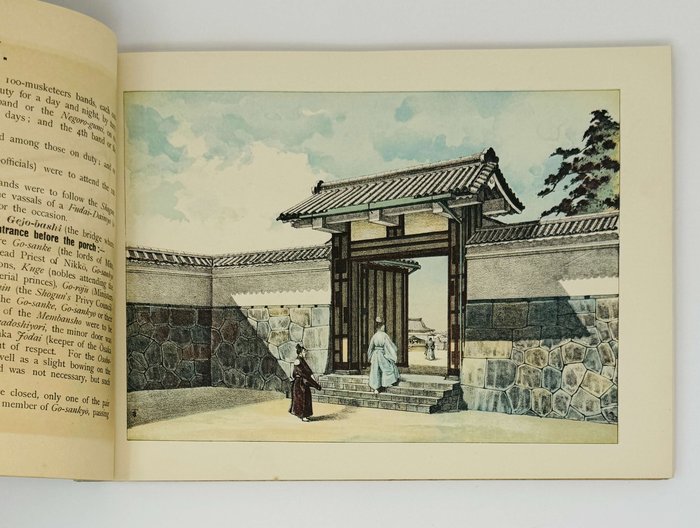
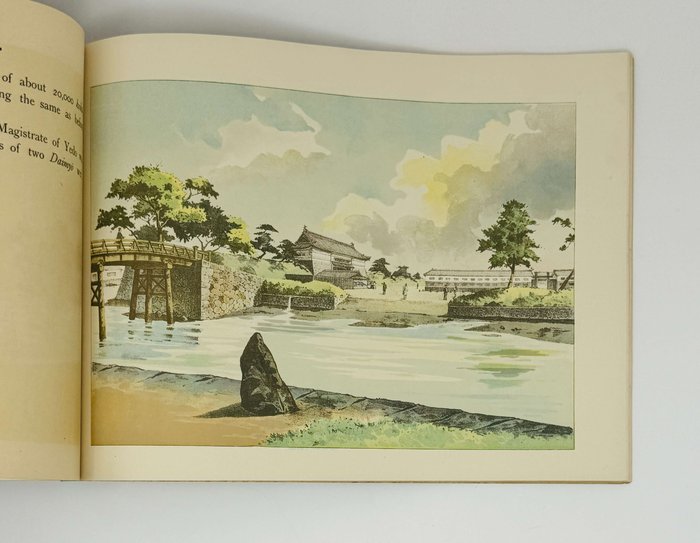
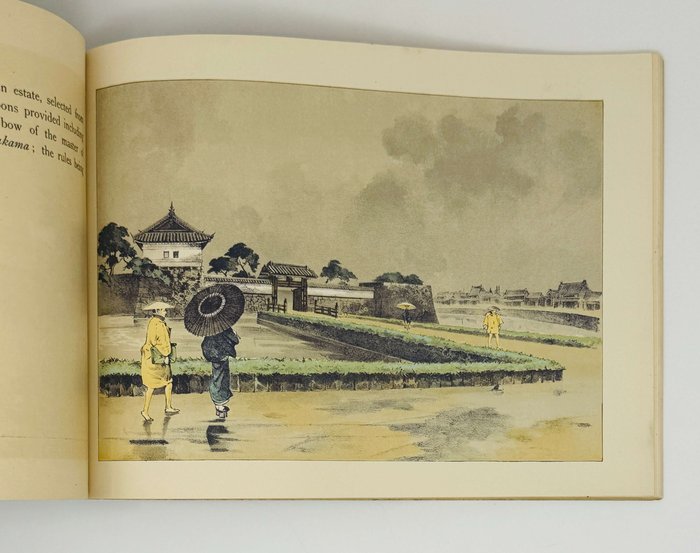
This magnificent album presents a complete pictorial record of the thirty-six gates of Edo (Yedo) Castle (江戸城三十六見附), the colossal fortress that defined the political heart of Tokugawa Japan. Originally built in 1457, Edo Castle transformed the small fishing village of Edo into the administrative and cultural center of the shogunate. When Tokugawa Ieyasu established his rule in 1603, the castle underwent a forty-year reconstruction, becoming the largest castle in the world, with a defensive perimeter of over ten miles formed by inner and outer moats crossed by thirty-six heavily guarded gates. Edo Castle served as the official residence of the Tokugawa shoguns until 1867. With the Meiji Restoration, the shogunate fell, and Emperor Meiji occupied the castle until 1888.
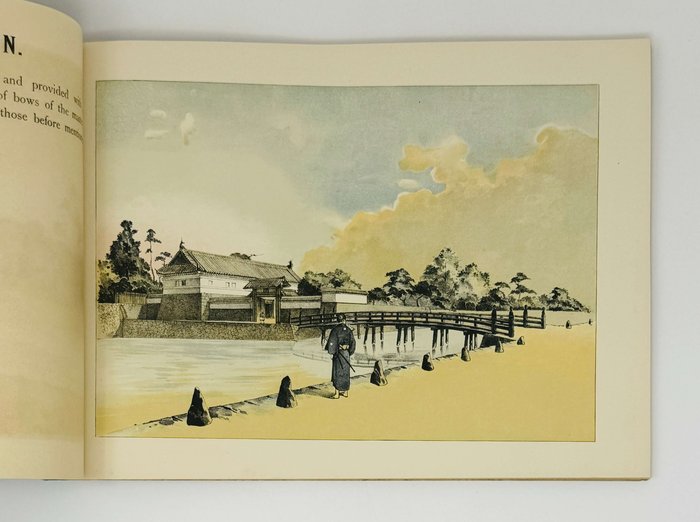
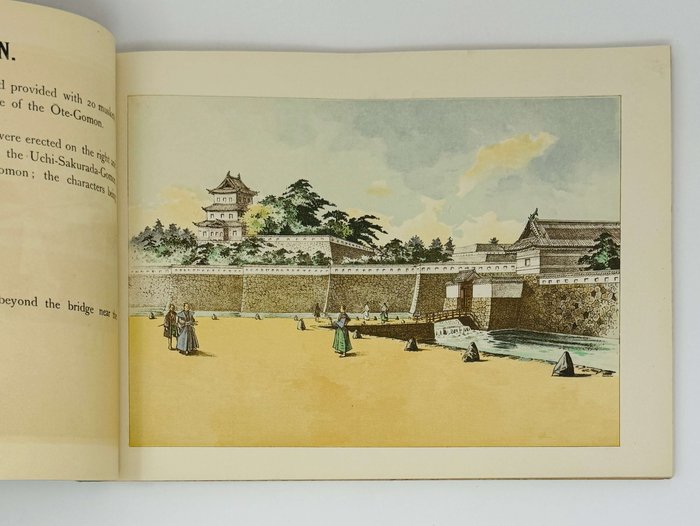
The images depict major gates. They are Chujaku-Gomon, Nakano-Gomon, Ote-San-no-Gomon, Momijiyamashita-Gomon, Ninomaru Do-Gomon, Ote-Gomon (The main Castle-gate), Nishimaru Ote-Gomon, Ushisakurada-Gomon, Soto-Sakurada-Gomon, Hirakawaguchi-Gomon, Sakashita-Gomon, Wadagura-Gomon, Babasaki-Gomon, Kandabashi-Gomon, Hitotsubashi-Gomon, Kijibashi-Gomon, Takebashi-Gomo, Shimizu-Gomon, Tayasu-Gomon, Hanzo-Gomon, Hibiya-Gomon, Sukiyabashi-Gomon, Kajibashi-Gomon, Gofukubashi-Gomon, Tokiwabashi-Gomon, Saiwaibashi-Gomon, Yamashita-Gomon, Torano-Gomon, Akasaka-Gomon, Yotsuya-Gomon, Ichigai-Gomon, Ushigome-Gomon, Koishikawa-Gomon, Sujikaibashi-Gomon, Asakusa-Gomon, Hama Ote-Gomon. Rendered in a topographical yet picturesque manner, it serves both as an architectural record and as a visual souvenir of the political and urban center of early modern Japan.
Produced in the late nineteenth century, this lavish publication sought to document the magnificence of the castle at a moment when much of it was already disappearing. Each of the thirty-six gates is depicted in color and accompanied by a concise historical note, offering both tourists and scholars a rare visual record of Edo Castle’s original form. The album is valuable today because many of the original gates were destroyed by fires, earthquakes, or Meiji-period redevelopment, making such illustrated series one of the few surviving visual records of Edo Castle’s original structure.
According to the OCLC, the album is rare, recording one copy in the National Diet library and another in Australian National University.