
#OA66
1860-1861
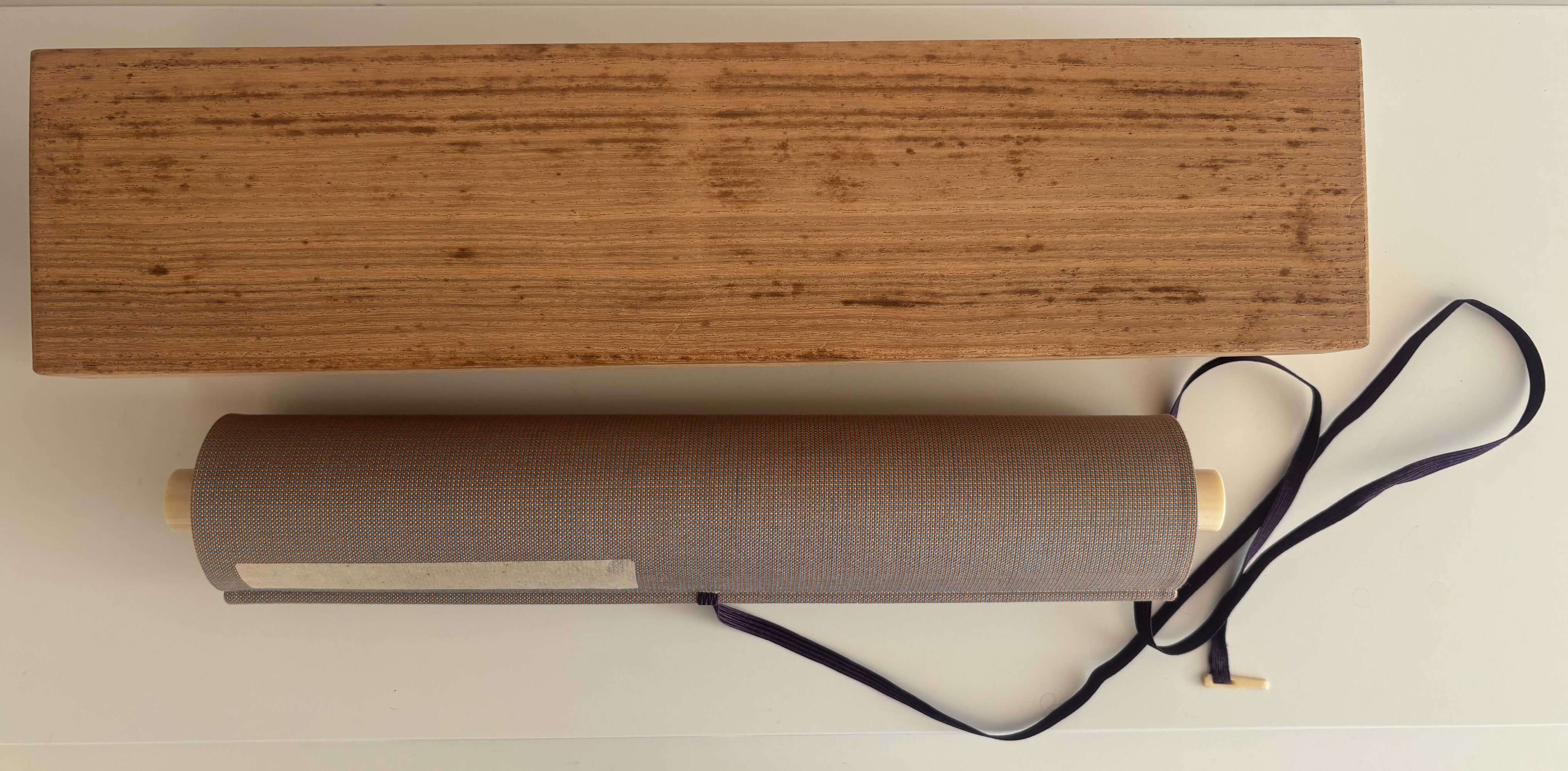
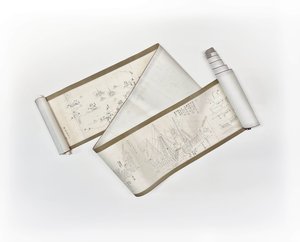
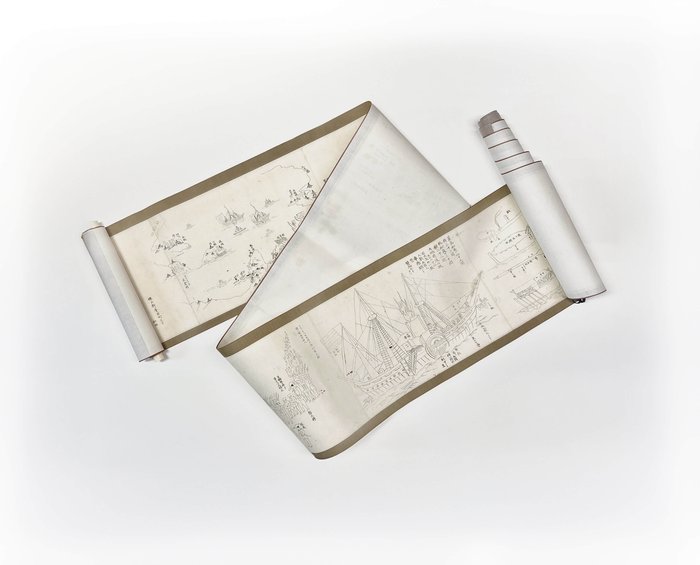
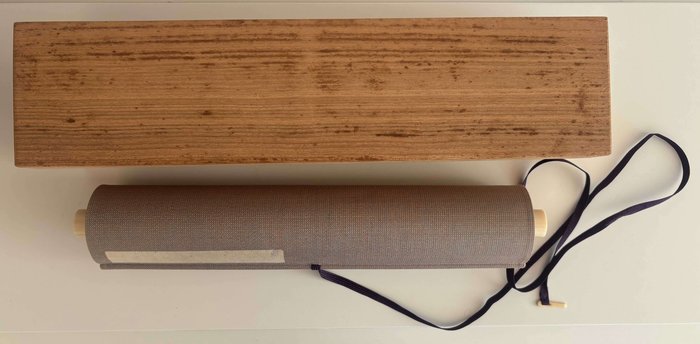
1 handscroll. Image size 27x306,1cm; Overall size 31,2x417,6 cm. Monochrome hand painted scroll. Moderate foxing. Restored and mounted on silk brocade in the 20th century. Comes with a wooden custommade box. Text in Japanese.
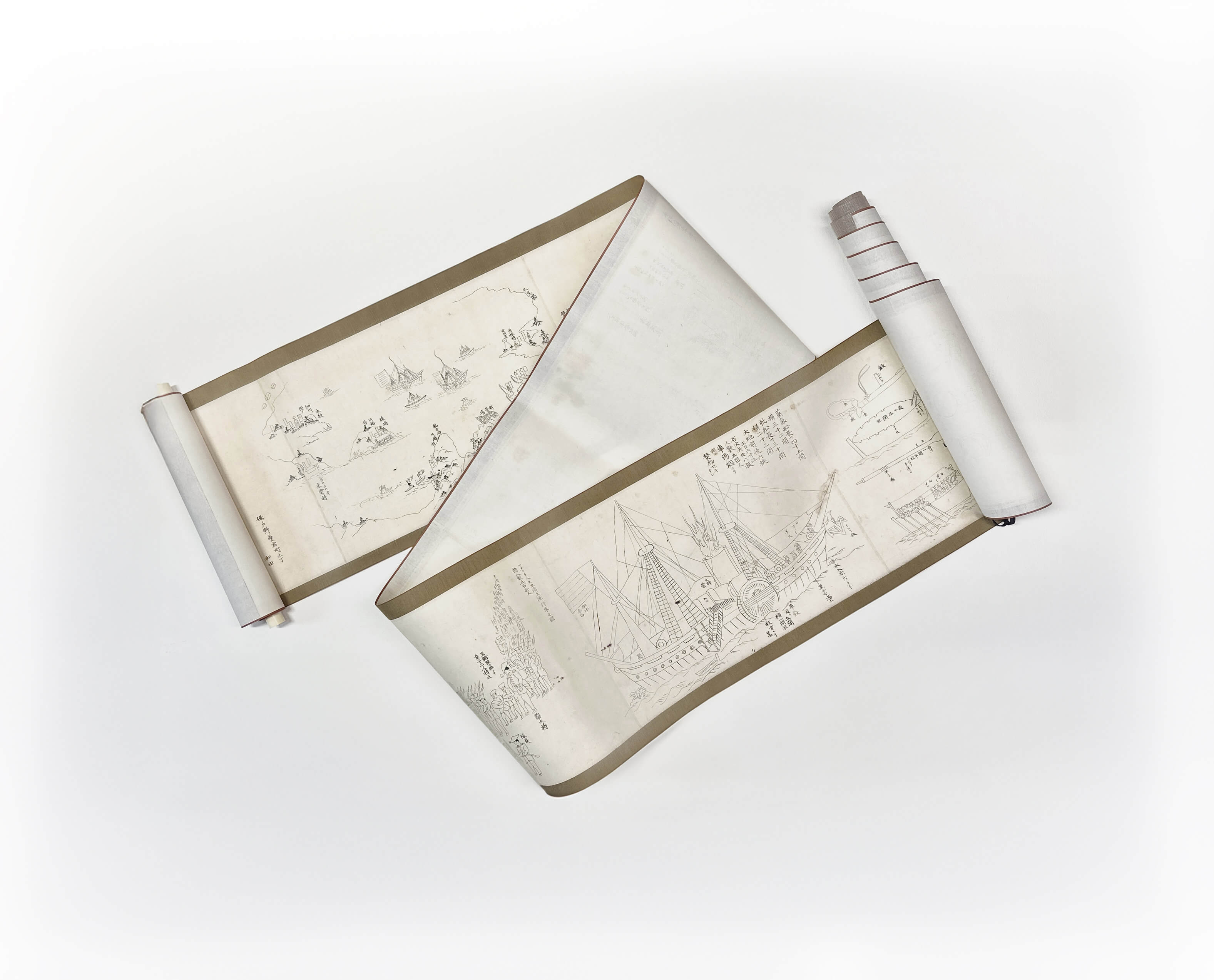
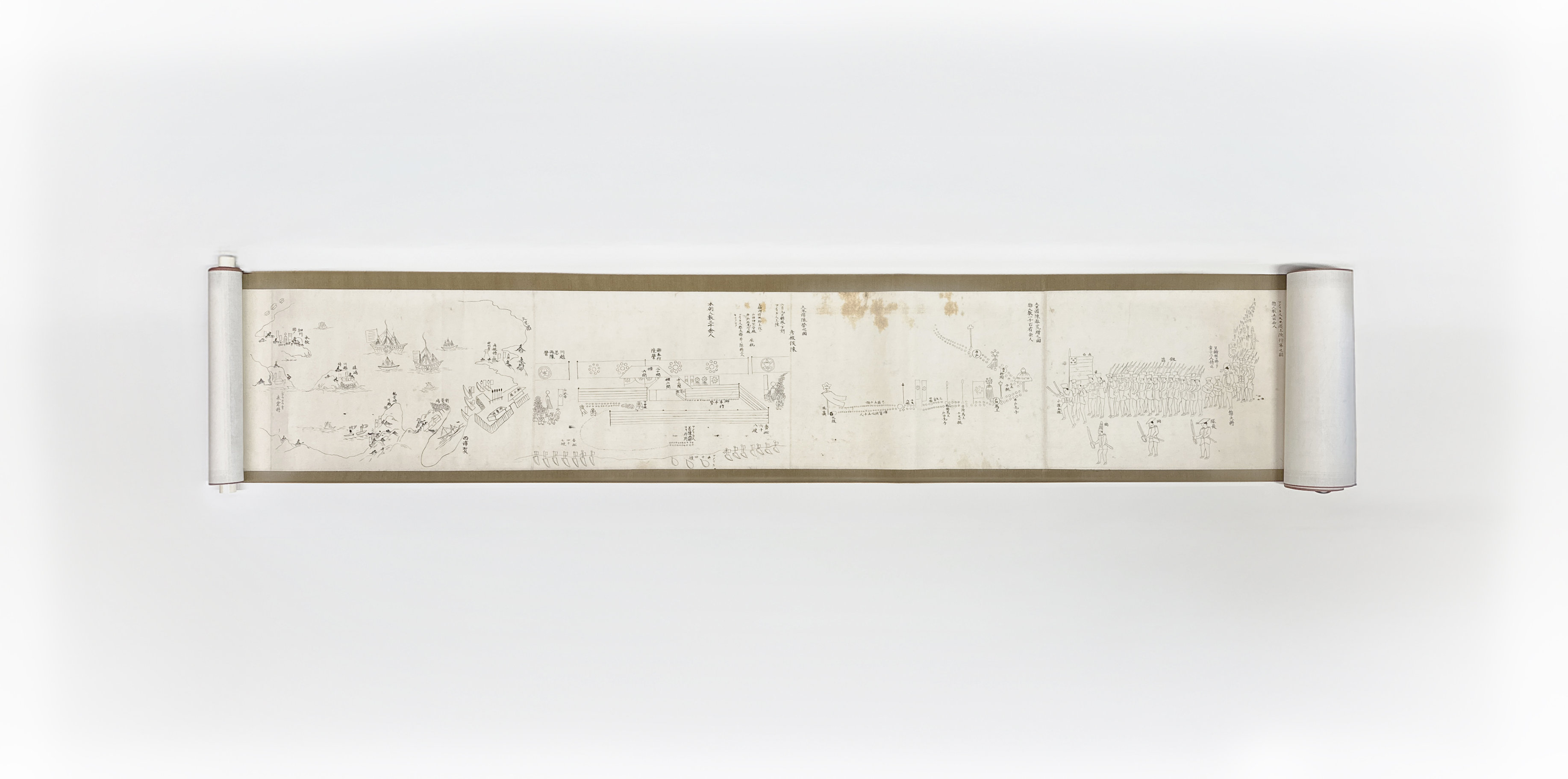
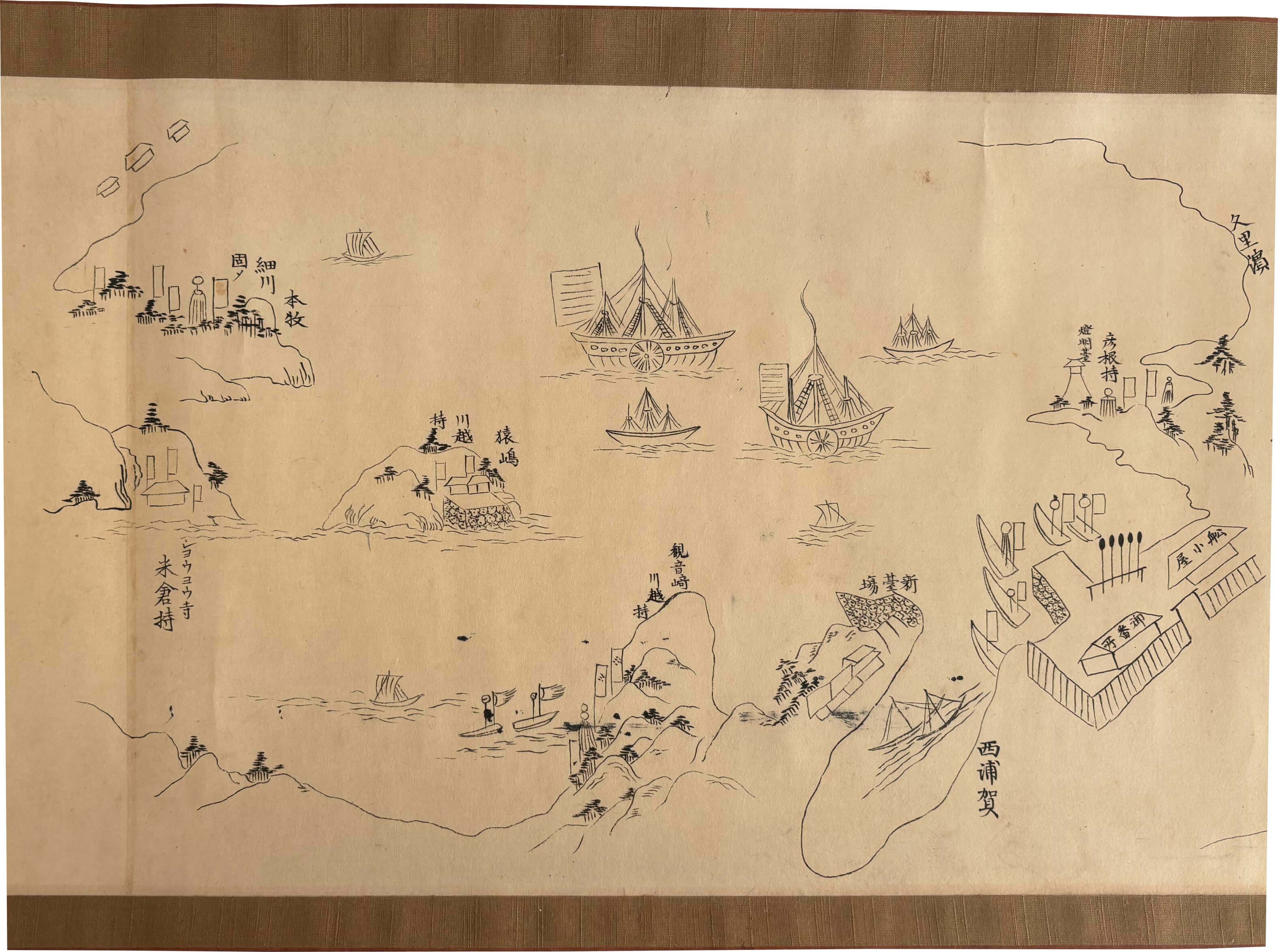
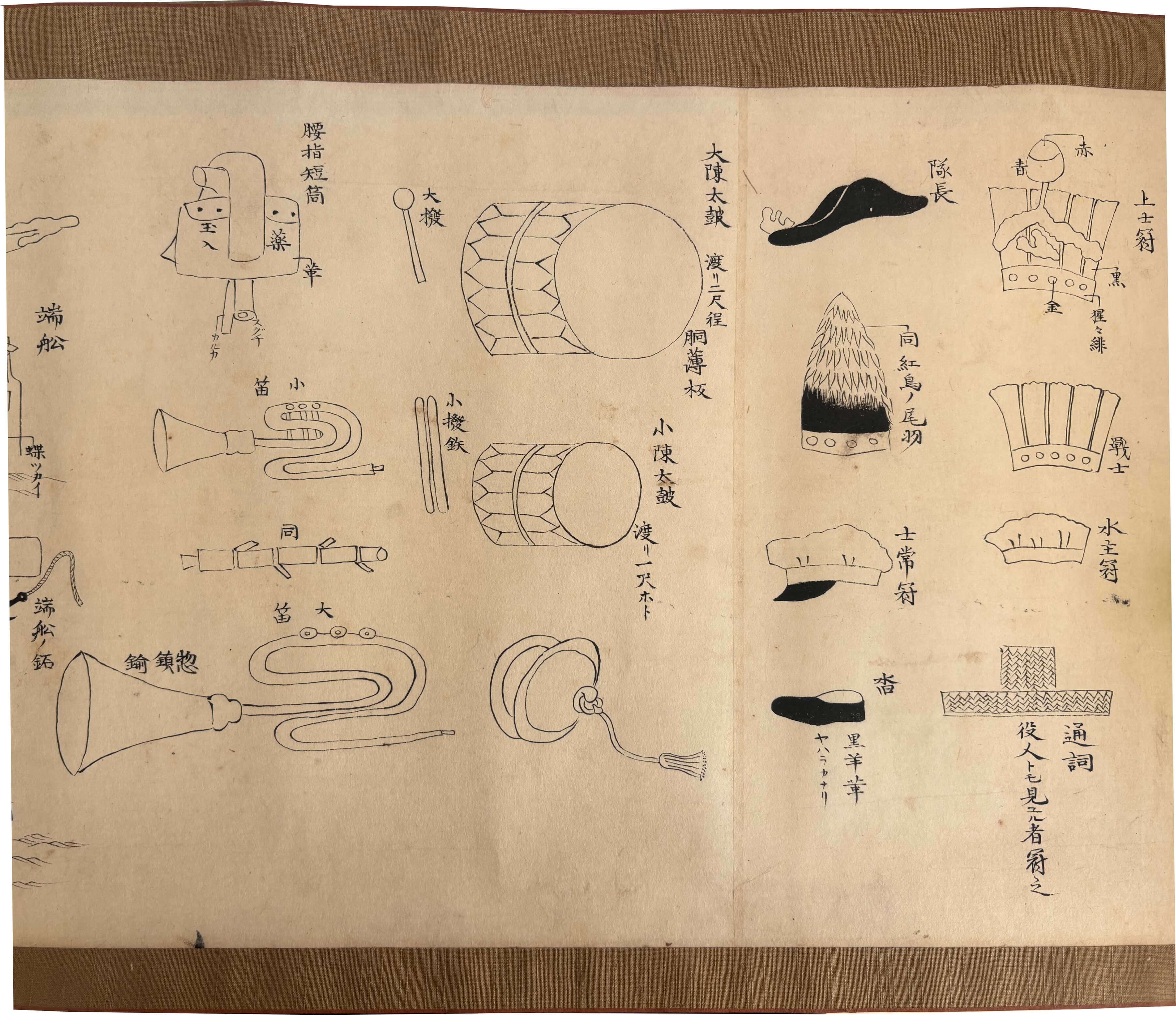
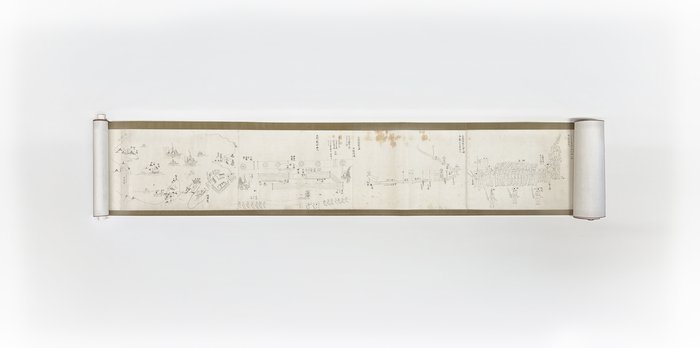
A superb example of late-Bakumatsu visual intelligence production, combining coastal cartography, technical ship schematics, and ethnographic observation into a single continuous narrative scroll devoted to Commodore Perry’s 1853 landing at Uraga.
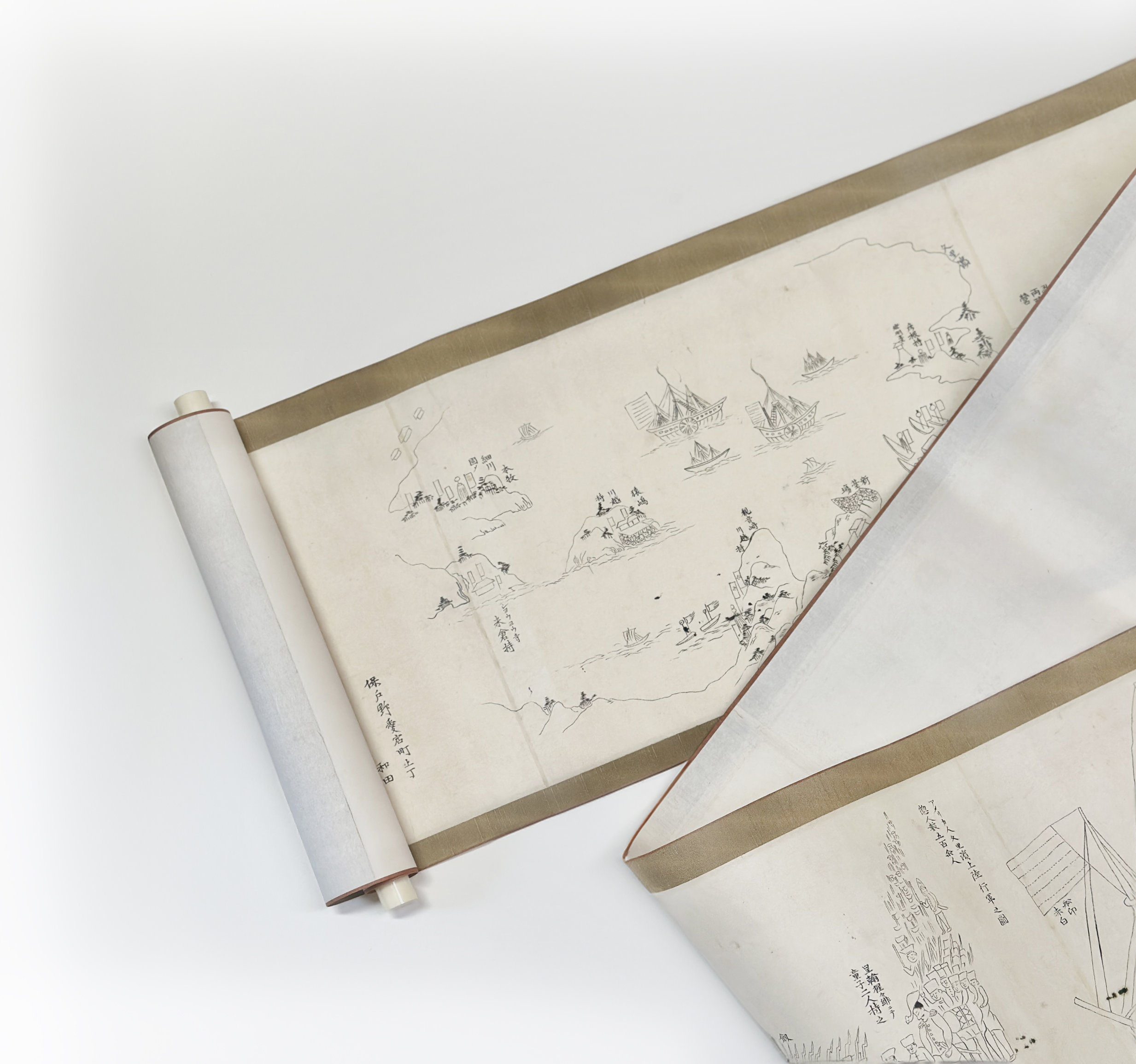
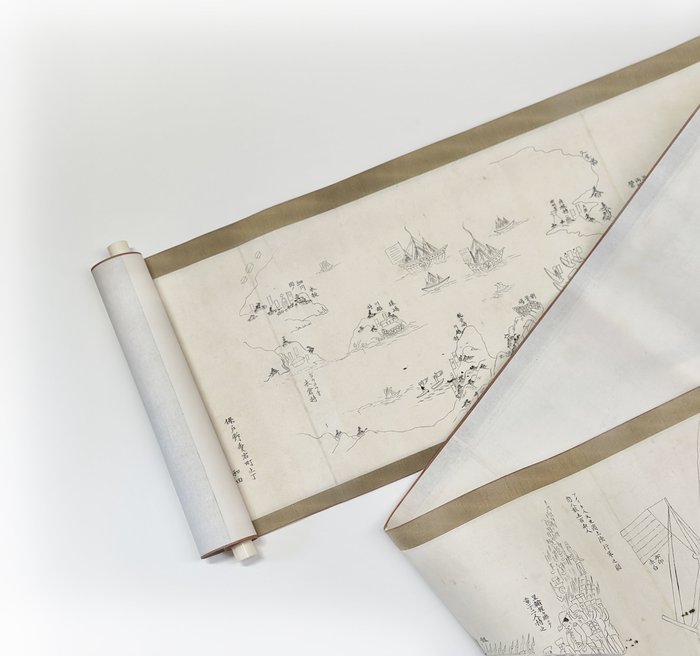
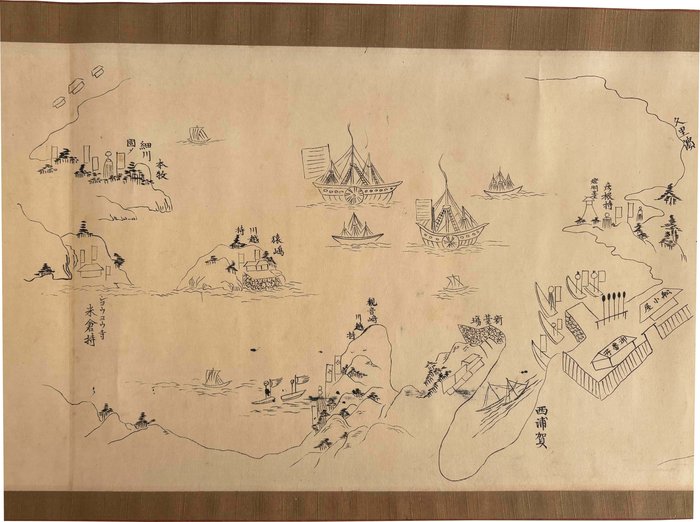
The opening section maps the coastline of Uraga Bay, with named sites such as Kurihama (久里浜), Kannonzaki (観音崎), Nishi-Uraga (西浦賀) and nearby temples and guard stations, situating the American squadron spatially within the defensive geography of Sagami Province. Steam paddle-wheel frigates are depicted at anchor, while Japanese guard boats and landing stages are carefully plotted, revealing the bakufu’s concern with surveillance, approach routes, and crowd control.
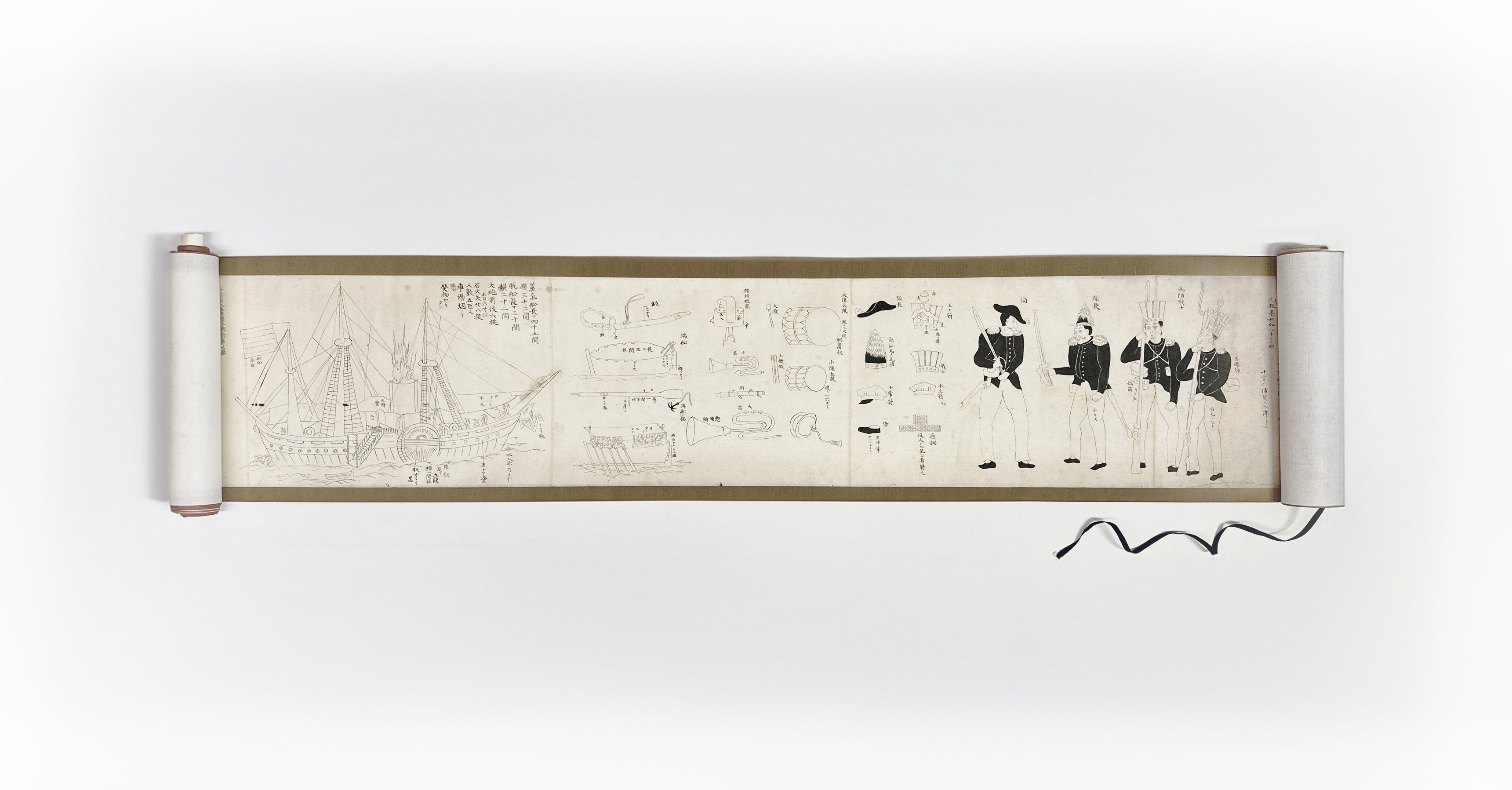
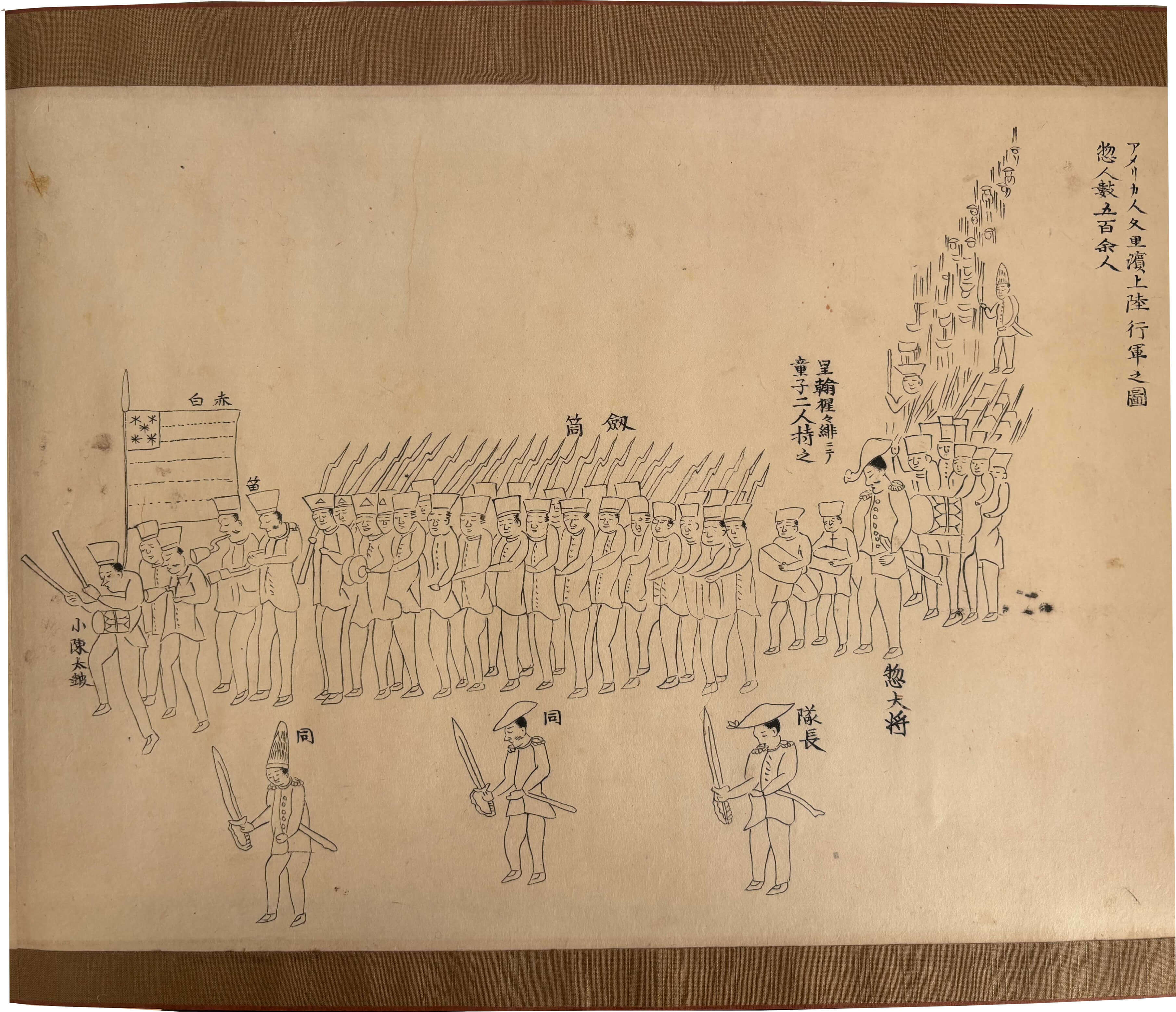
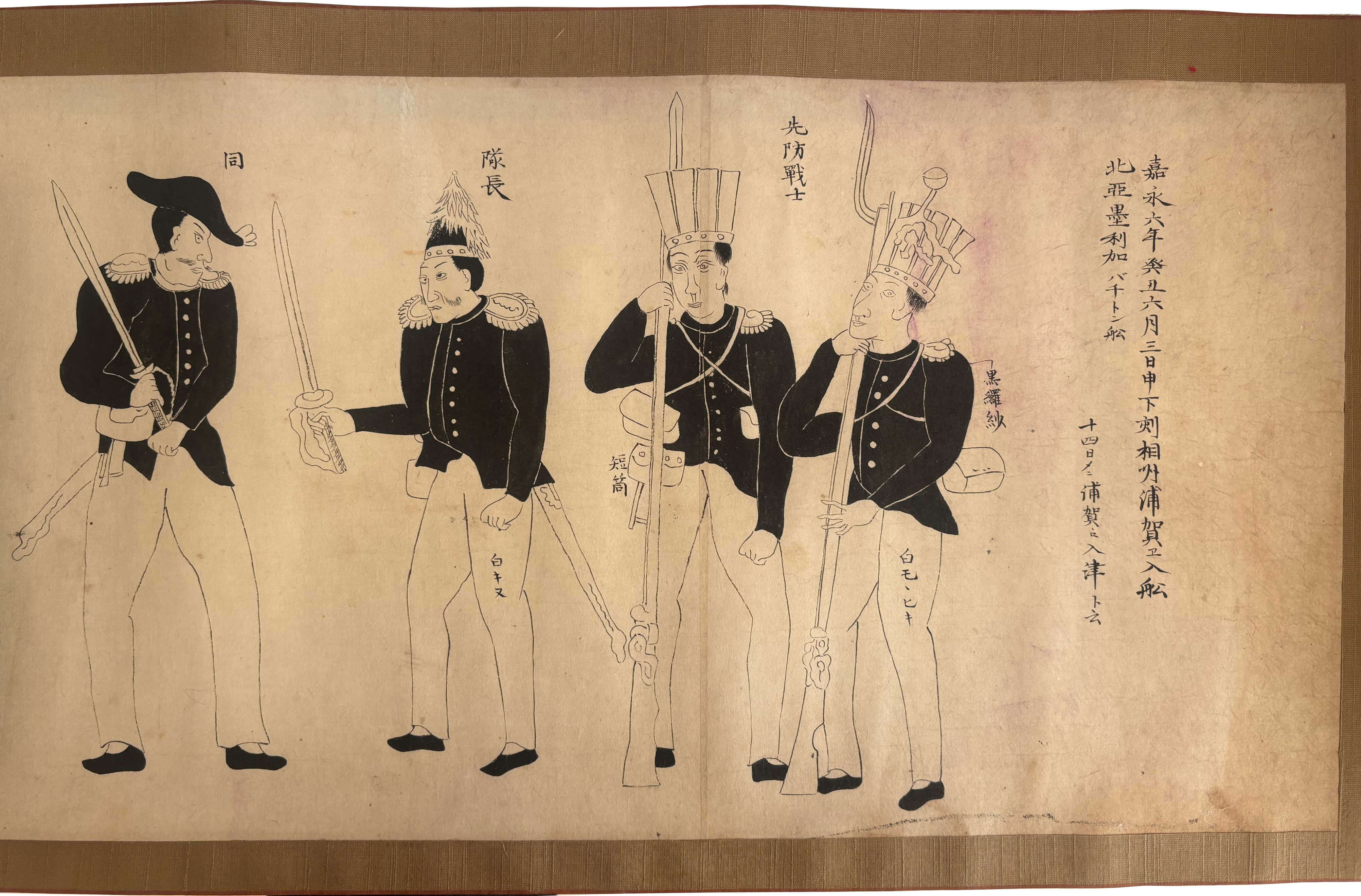
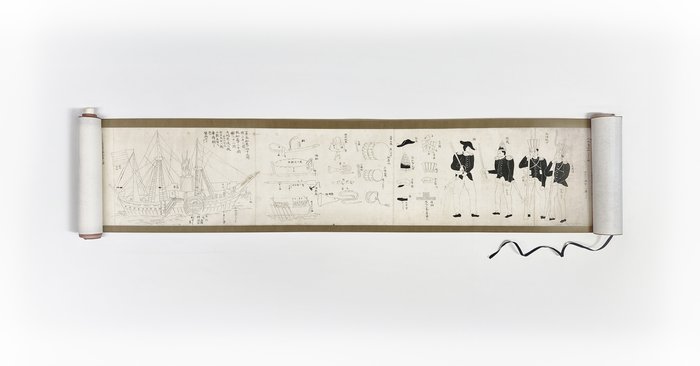
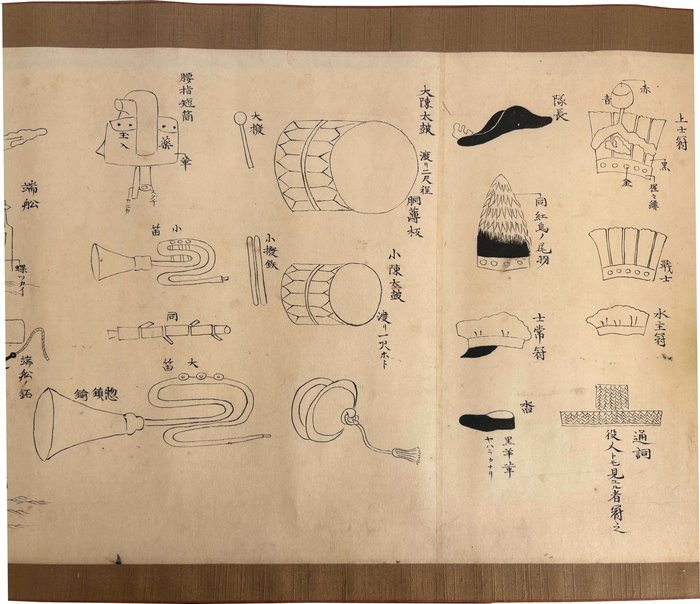
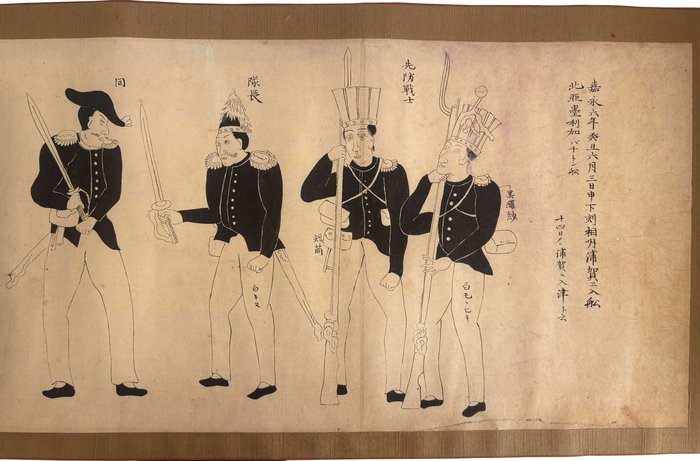
This is followed by highly analytical technical plates of the American ships: the paddle wheel system, hull construction, anchors, guns, funnels, rigging, drums, trumpets, signal equipment, and detailed diagrams of naval uniforms, hats, epaulettes, and insignia. Notably, the soldiers themselves are not hand-coloured; instead, the intended colours of their uniforms are carefully written out beside the figures, as if providing a working guide for a copyist or woodblock printer who would later execute the images in colour. Each object is isolated, labelled, and measured, transforming the foreign fleet into a catalogue of reproducible components rather than a distant spectacle.
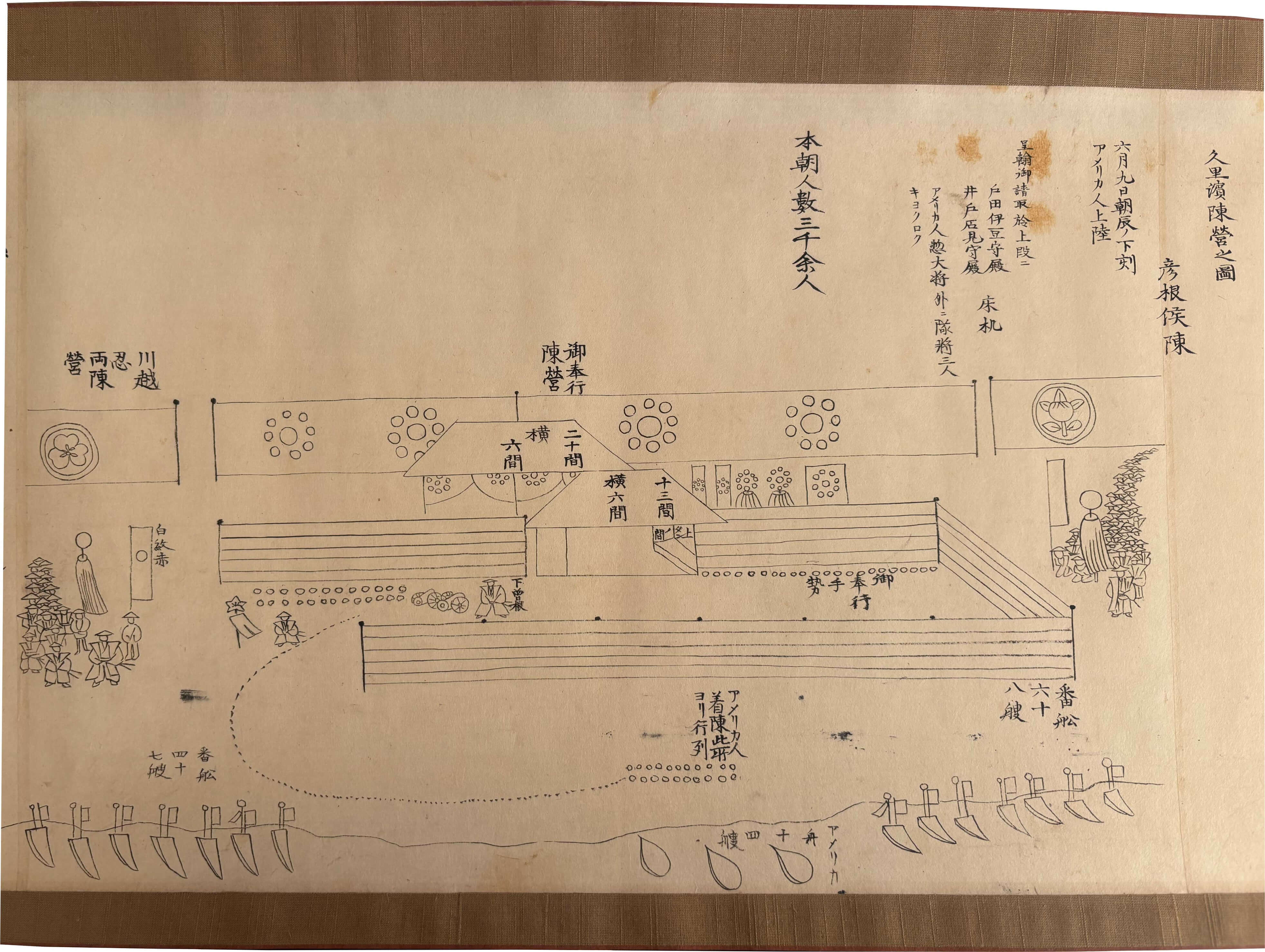
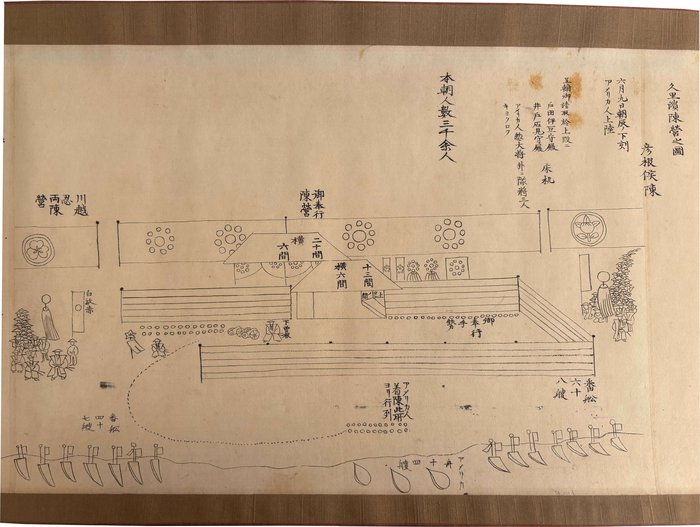
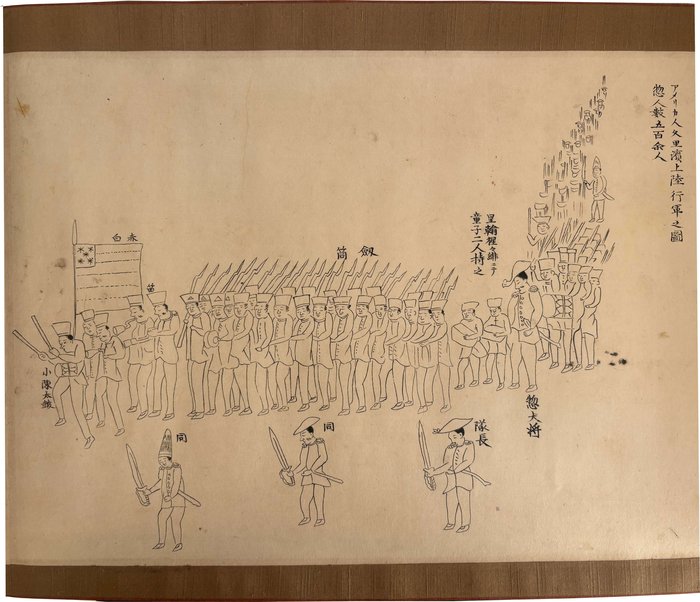
The final sections record the ceremonial procession of the American landing party at Kurihama on 14th day of the 6th month of Kaei 6 (嘉永六年六月十四日, 9 July 1853). Lines of sailors armed with rifles and sabres advance under the Stars and Stripes, while officers are individually identified by rank and dress. The accompanying annotations state that “more than three thousand Japanese” were mobilised, with contingents from the domains of Aizu, Oshi, Hikone, and Kawagoe, and that Uraga magistrates Toda Izunokami Ujiyoshi (戸田伊豆守氏栄) and Ido Iwaminokami Hiromichi (井戸石見守弘道) formally received the American party.
Rather than merely illustrating an event, the scroll operates as an epistemic device: a systematic attempt to absorb the unprecedented shock of the Black Ships into an ordered visual archive. Geography, technology, costume, weaponry, protocol, and crowd movement are rendered with bureaucratic precision, making this work not a souvenir of Perry’s arrival, but a working document of state knowledge at the very moment when the Tokugawa order was beginning to unravel.
An ink inscription on the scroll reads 保戸野変宿町上下 和田 (Hodono henshuku-chō jō-ge, Wada), identifying the owner or copyist as Wada, resident of the Henshuku quarter in Hodono, a district of Kubota (present-day Akita). The term henshuku-chō refers to a quarter designated for temporary or service accommodation of officials and retainers, indicating that the scroll circulated within a provincial administrative environment rather than solely in Edo. This provenance strongly suggests that the handscroll functioned as a working document within a domainal bureaucratic or military context, used to disseminate concrete visual intelligence about the American fleet to regional authorities in northern Japan.