
#MD39
1923
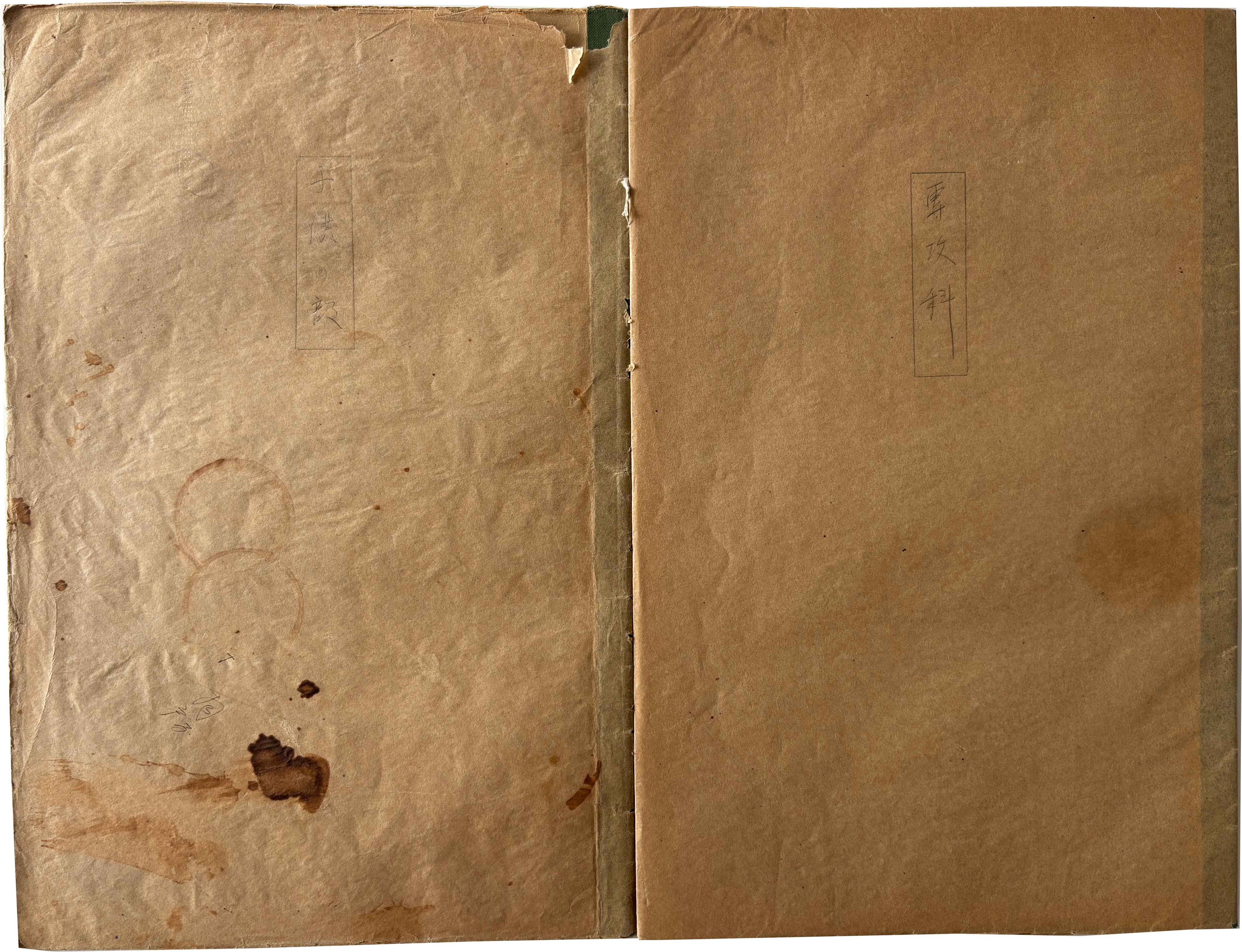
Two large, slim folio volumes (43pp.); paper wrappers.
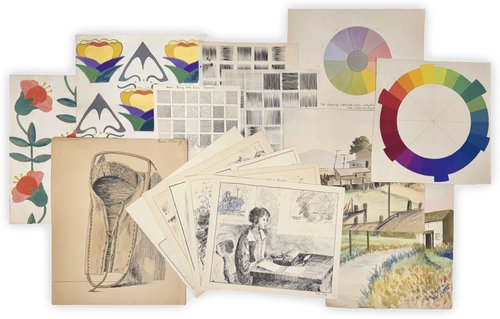
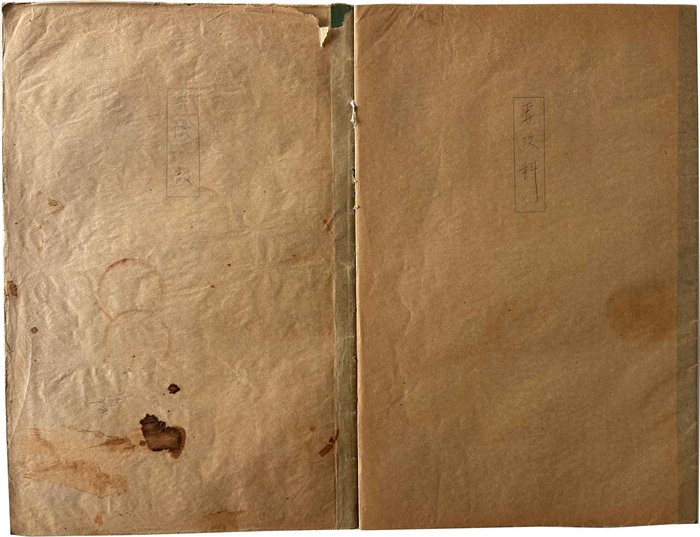
Books protected in hand-made craft paper dust jackets; both volumes filled to completion with color pencil designs annotated throughout in pencil in Japanese and English. A dust jacket of one volume soiled and starting to chip along the spine edge. Very good to near fine condition.
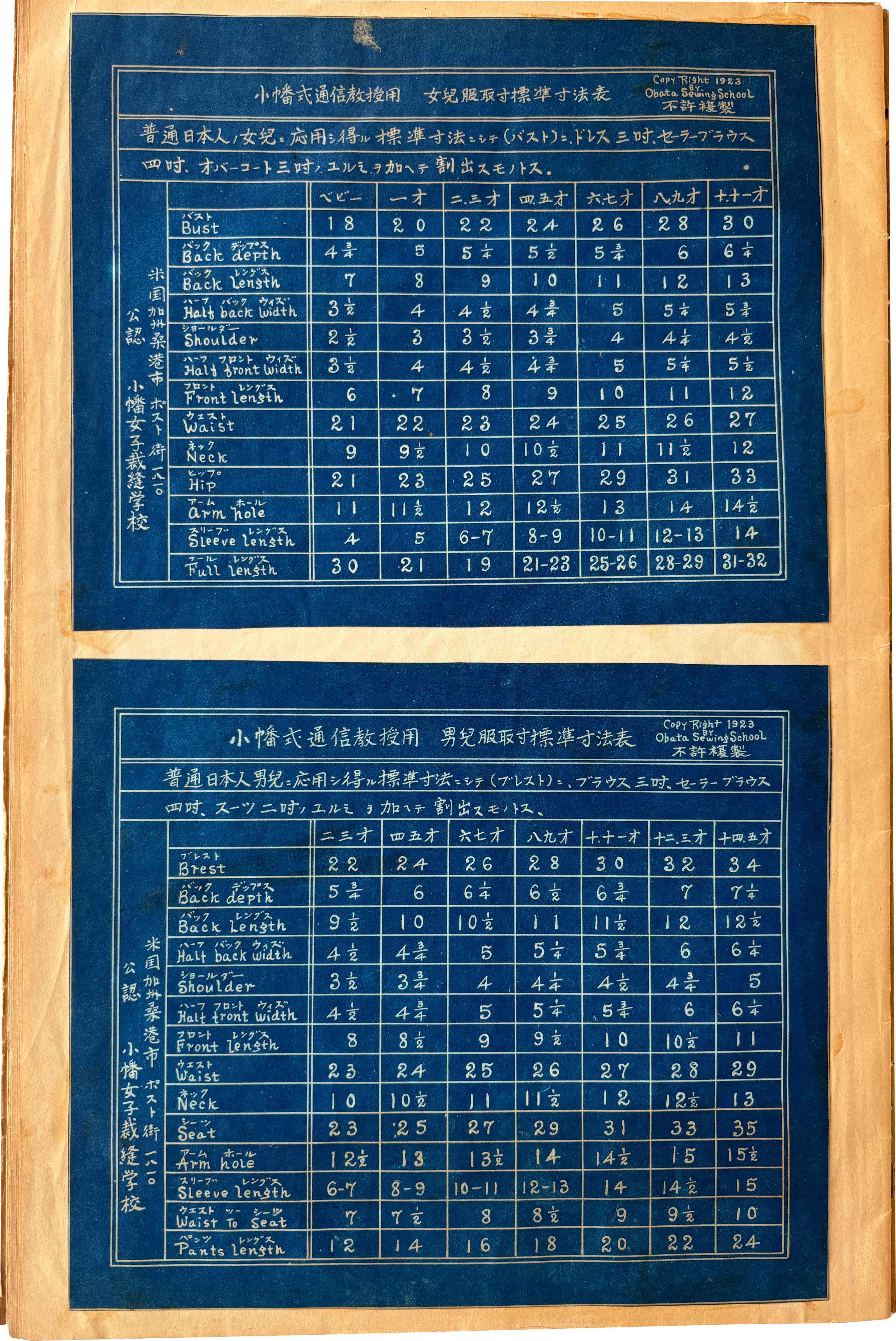
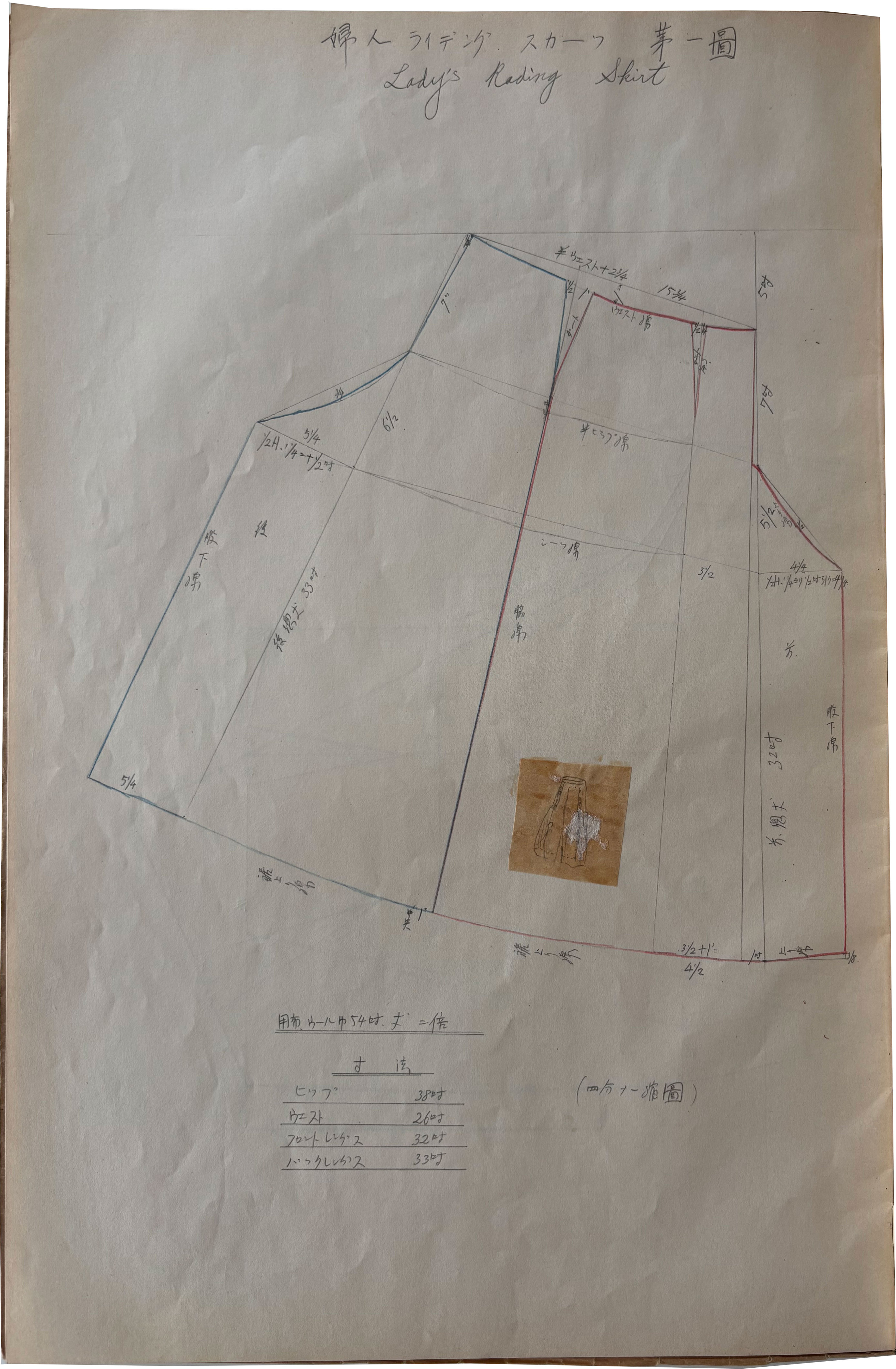
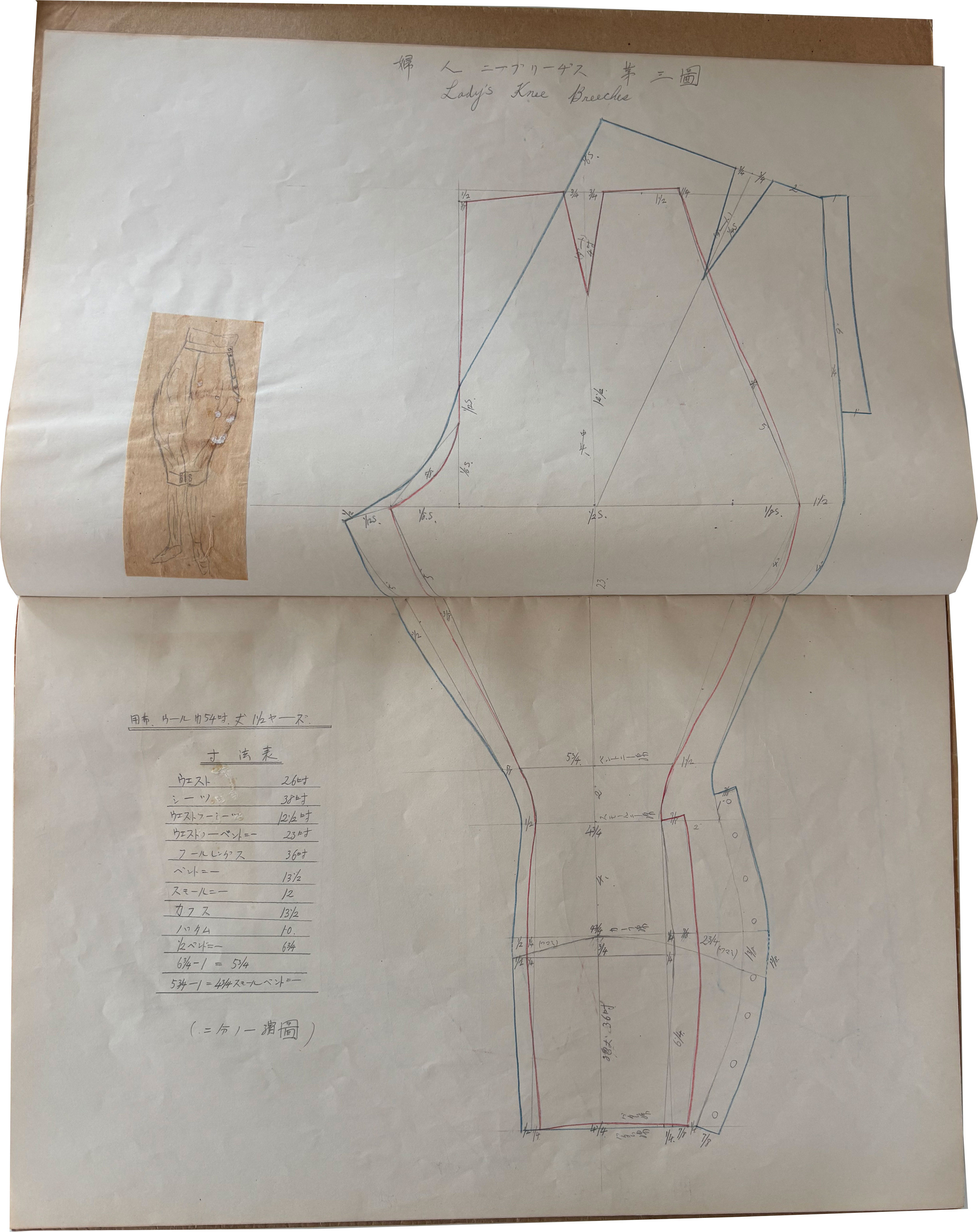
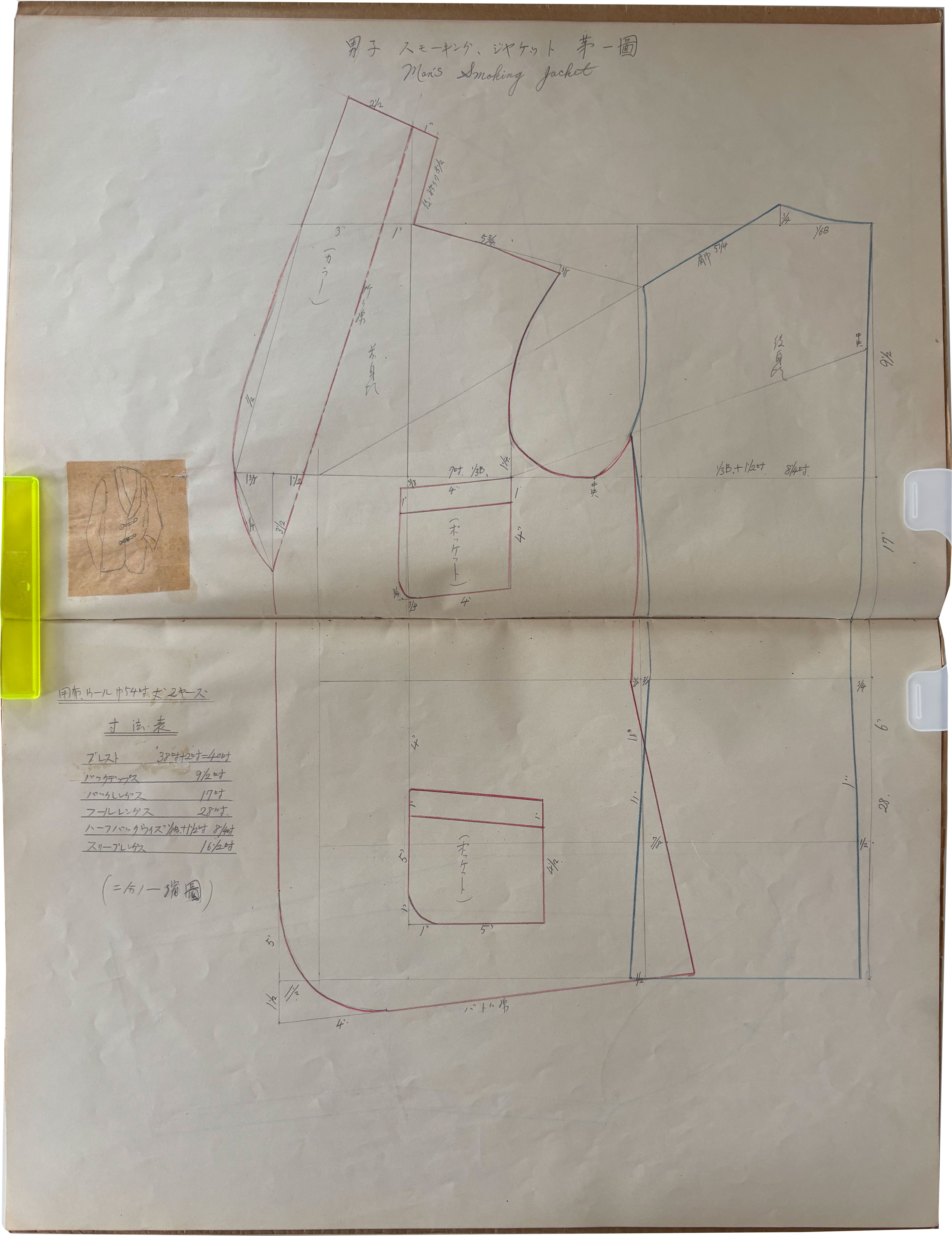
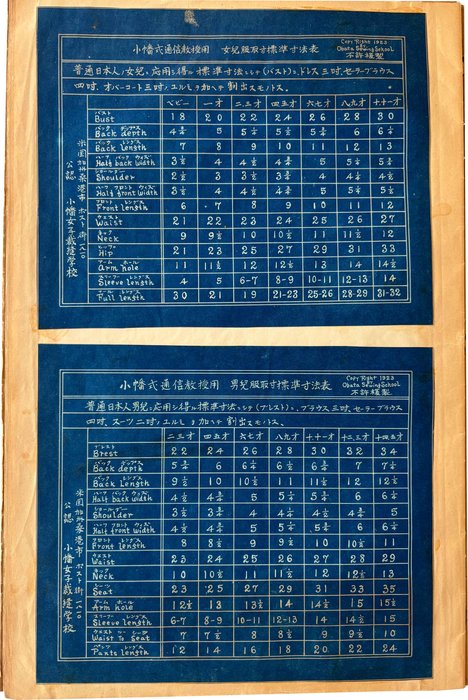
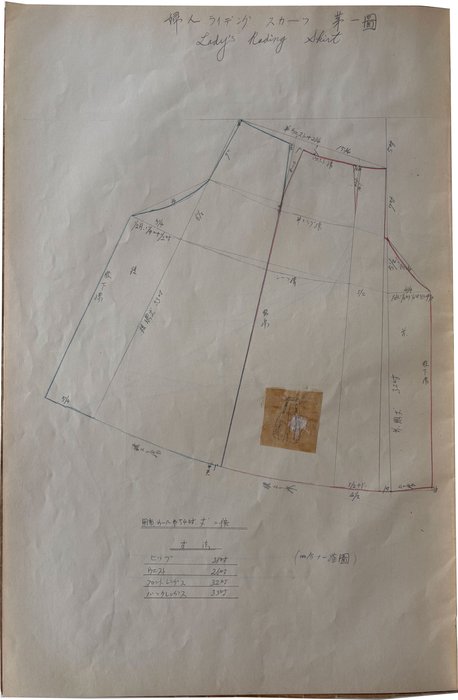
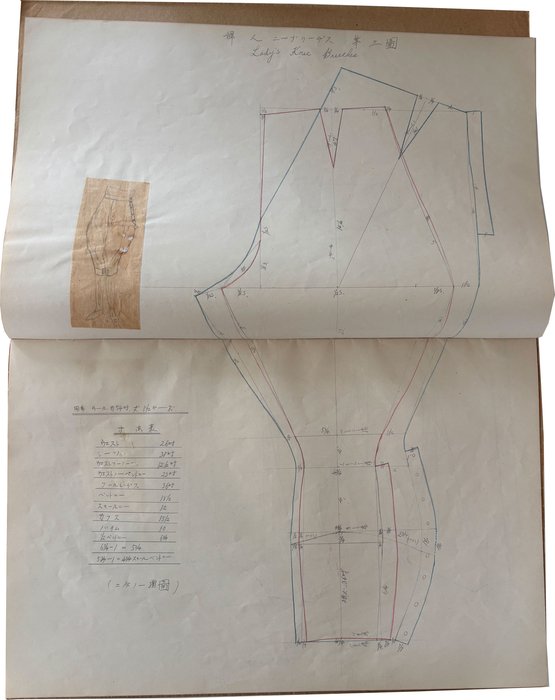
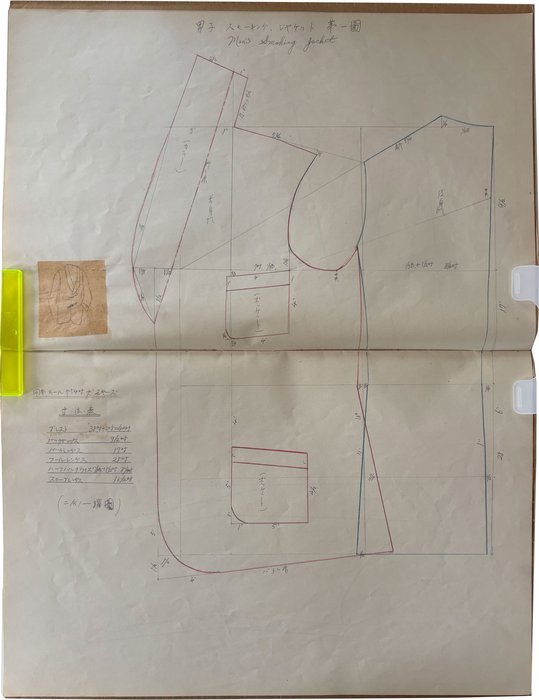
Two volumes compiled by a student at the Obata Sewing School in San Francisco, providing approximately 50 designs, 27 of which are accompanied by pasted-in pencil sketches of the finished product. Date of publication based on the three Obata Sewing School blueprint designs copyright 1923 pasted into one of the volumes.
Designs include patterns for everyday garments like a baby's dress, bib, and cape; boy's and girl's sailor suits; a bicycle costume with a divided skirt; man's vest, smoking jacket, and sack coat; and lady's breaches and knickerbockers. There are also several designs for hats, mostly berets and caps.
Obata Sewing School was a private sewing school operating in San Francisco in the early decades of the 20th century, serving primarily women of the Japanese immigrant (Issei) community, and later the second generation (Nisei). Institutions of this kind played a crucial role in the social and economic life of Japanese American communities on the U.S. West Coast prior to World War II.
The school offered practical training in Western-style dressmaking and tailoring, enabling Japanese immigrant women to acquire marketable skills at a time when access to formal American education and professional employment was limited. Sewing schools such as Obata Sewing School provided not only vocational instruction, but also a socially acceptable pathway to economic independence, home-based labor, and small-scale entrepreneurship.
Beyond its practical function, Obata Sewing School also served as a community space for women, embedded within the broader network of Japanese-language schools, religious institutions, and mutual-aid associations that structured life in San Francisco’s Japantown (Nihonmachi). The curriculum reflected a broader process of cultural adaptation, combining Japanese craftsmanship with Western clothing forms required by everyday life in the United States.
Like many Japanese American educational and cultural institutions, Obata Sewing School ceased operations during World War II, following the forced removal and incarceration of Japanese Americans under Executive Order 9066 (1942). As a result, surviving documentation related to the school - certificates, photographs, printed ephemera - is rare and often preserved only in private or family archives.
Material associated with Obata Sewing School offers valuable insight into women’s labor, immigrant education, and the material culture of the Japanese American diaspora, illuminating an often-overlooked infrastructure that supported daily life, resilience, and adaptation in prewar immigrant communities.