
#MD50
Сa. 1913-1938
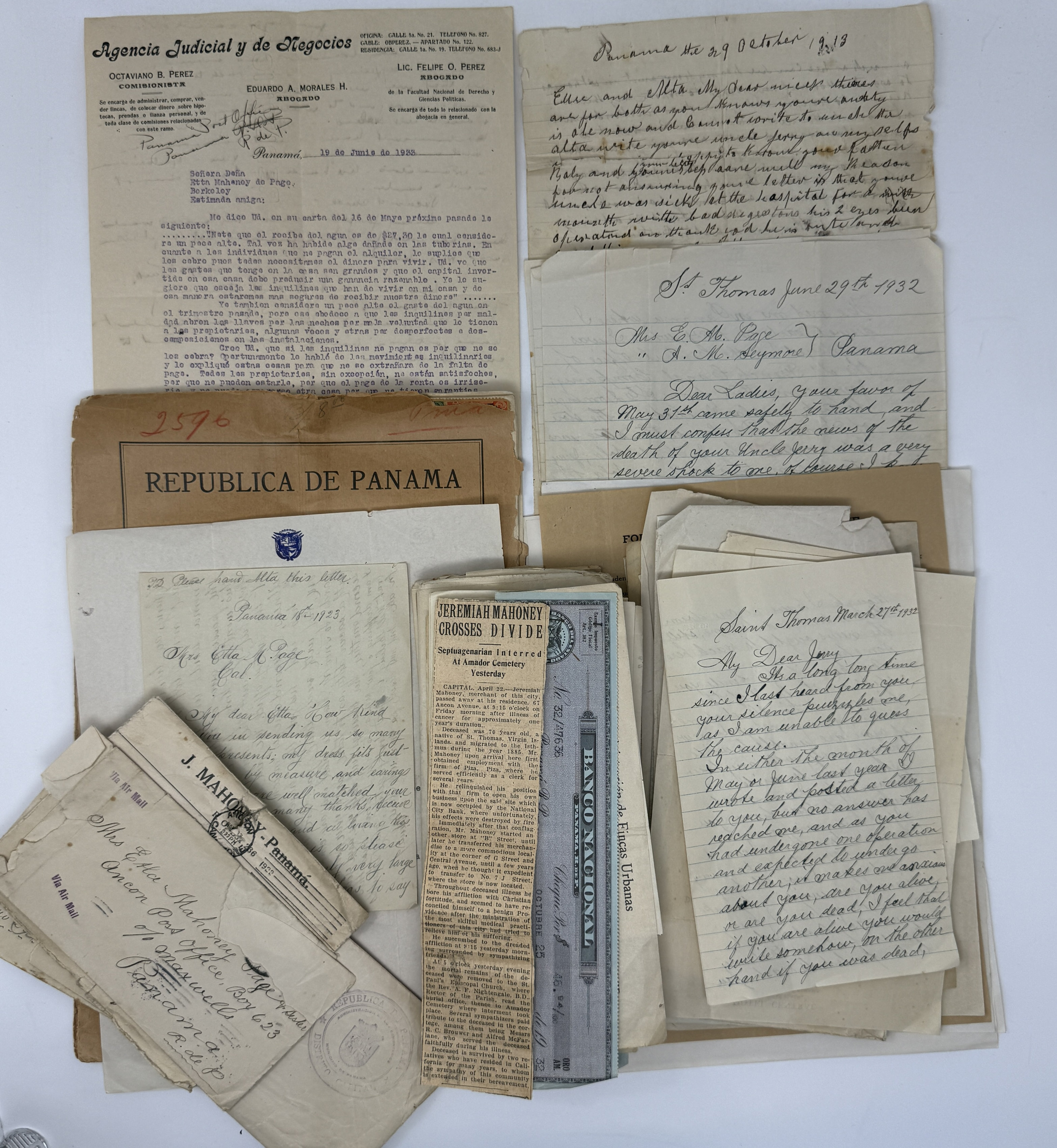
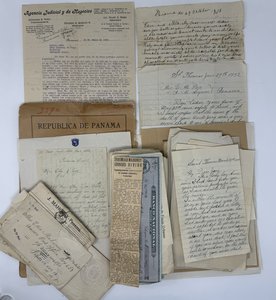
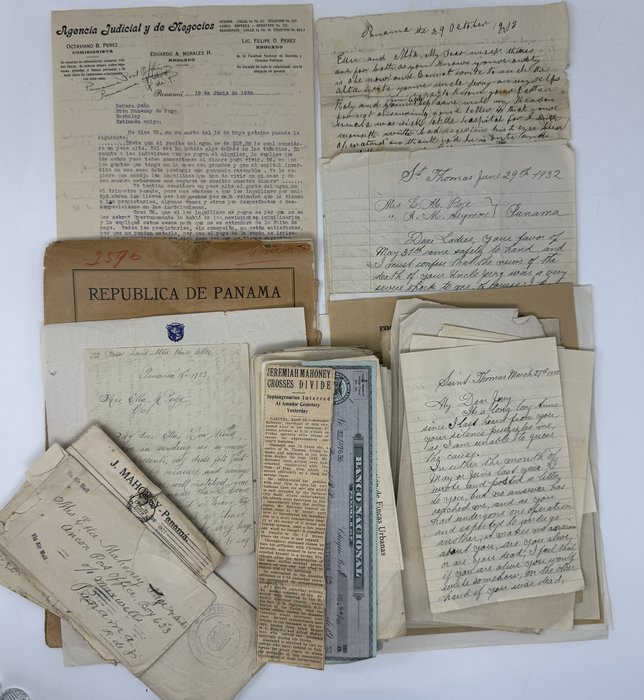
Ca. 54 period documents, including manuscript letters, deeds, powers of attorneys, receipts, other official documents and statements, from ca. 34 x 23 cm (13 ¼ x 9 in) to ca. 17x11 cm (6 ¾ x 4 ¼ in). In all ca. 101 pp. Occasional folds and creases, minor tears, but otherwise a good archive; most of the documents are in very good condition and written in legible hand. In English and Spanish.
Historically significant archive from the Mahoney family, documenting the early Caribbean diaspora in Panama, Virgin Islands, and California.
Jeremiah ‘Jerry’ Mahoney (1855–1932) was born in Christiansted, Virgin Islands. In 1885, he joined the Caribbean diaspora migrating to Panama, where he initially worked as a clerk in various shops before establishing his own successful business. His enterprise first opened on ‘B’ Street in Panama City and later relocated to ‘J’ Street. Though he had no children of his own, in the 1910s he reconnected with his nieces, Etta and Alta of Oakland, California. The sisters began visiting their uncle in Panama, and correspondence in this archive reveals that one sister considered moving there permanently in the 1920s. However, she faced unexpected roadblocks when a local councilman named Morales requested a 150 USD fee. Their brother, Henry, also expressed interest in relocating; Jerry advised him through the sisters to seek employment with the Panama Canal. Upon Jerry’s passing in 1932, the sisters inherited his estate, which included significant land holdings in Panama City leased to the Panama Canal Company and the Panama Railroad Company, as well as the building housing his shop. To manage the estate, the sisters corresponded with Jerry’s friends in Panama and the Virgin Islands to piece together the early lives of their uncle and father. For business purposes, they requested their father's birth certificate from the Virgin Islands and explored selling their Panamanian property to the canal and railroad companies.
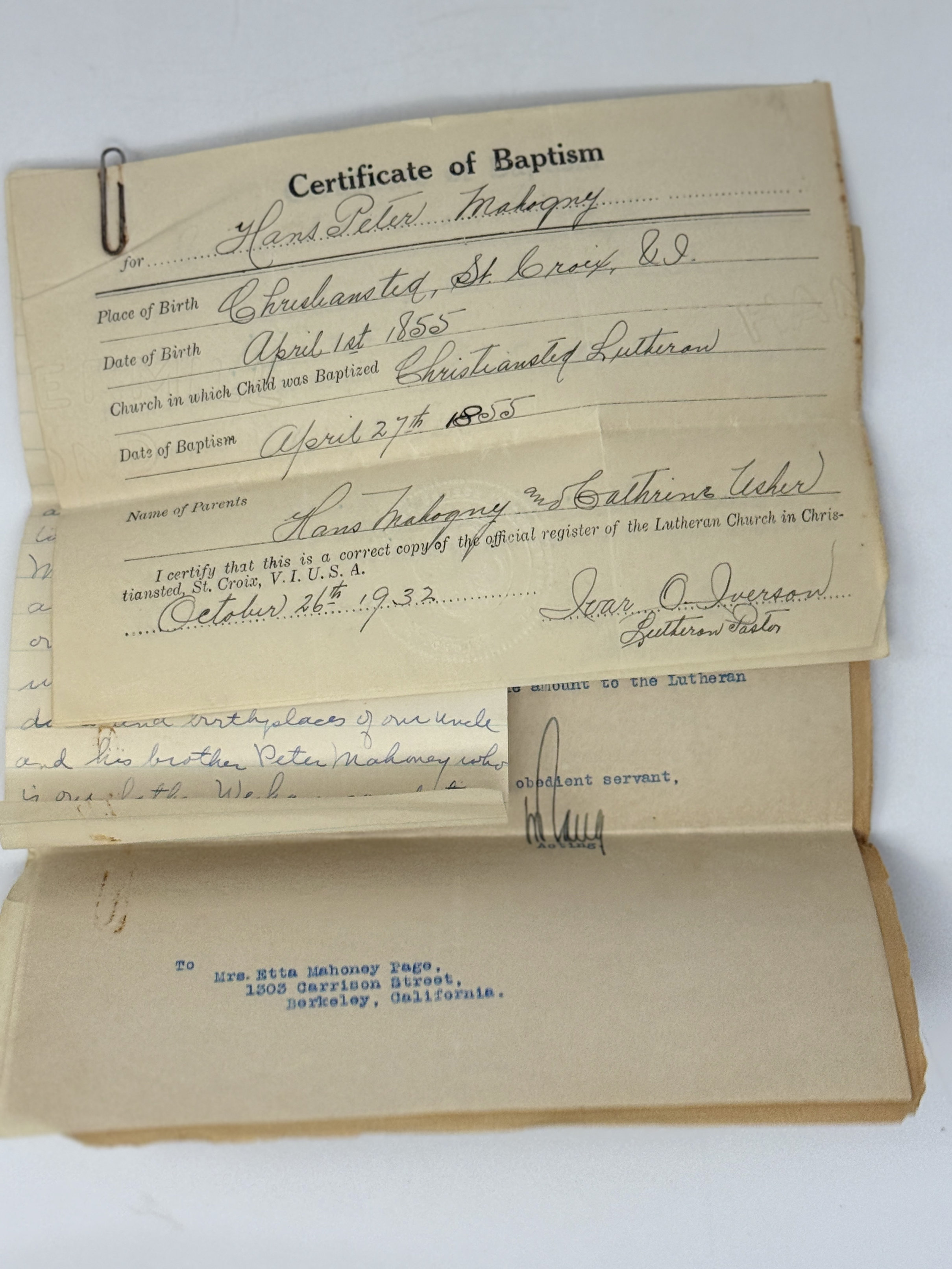
While little is known about the sisters themselves, records indicate they were born in San Francisco in the late 19th century. Etta’s husband, Peter, is mentioned in a 1920 issue of Oakland’s Western Outlook, and the Oakland Tribune noted her return from Panama in 1930. The 1920 United States Federal Census lists Etta Page (born ca. 1893) as a Black resident of Oakland. While the census mistakenly lists her father Peter’s birthplace as California and her mother’s as Mississippi, the baptismal certificate within this archive confirms that Peter was actually born in Christiansted, Virgin Islands.
The archive consists of 34 letters handwritten and typewritten letters with 6 stamped envelopes, totaling 53 pages, including:
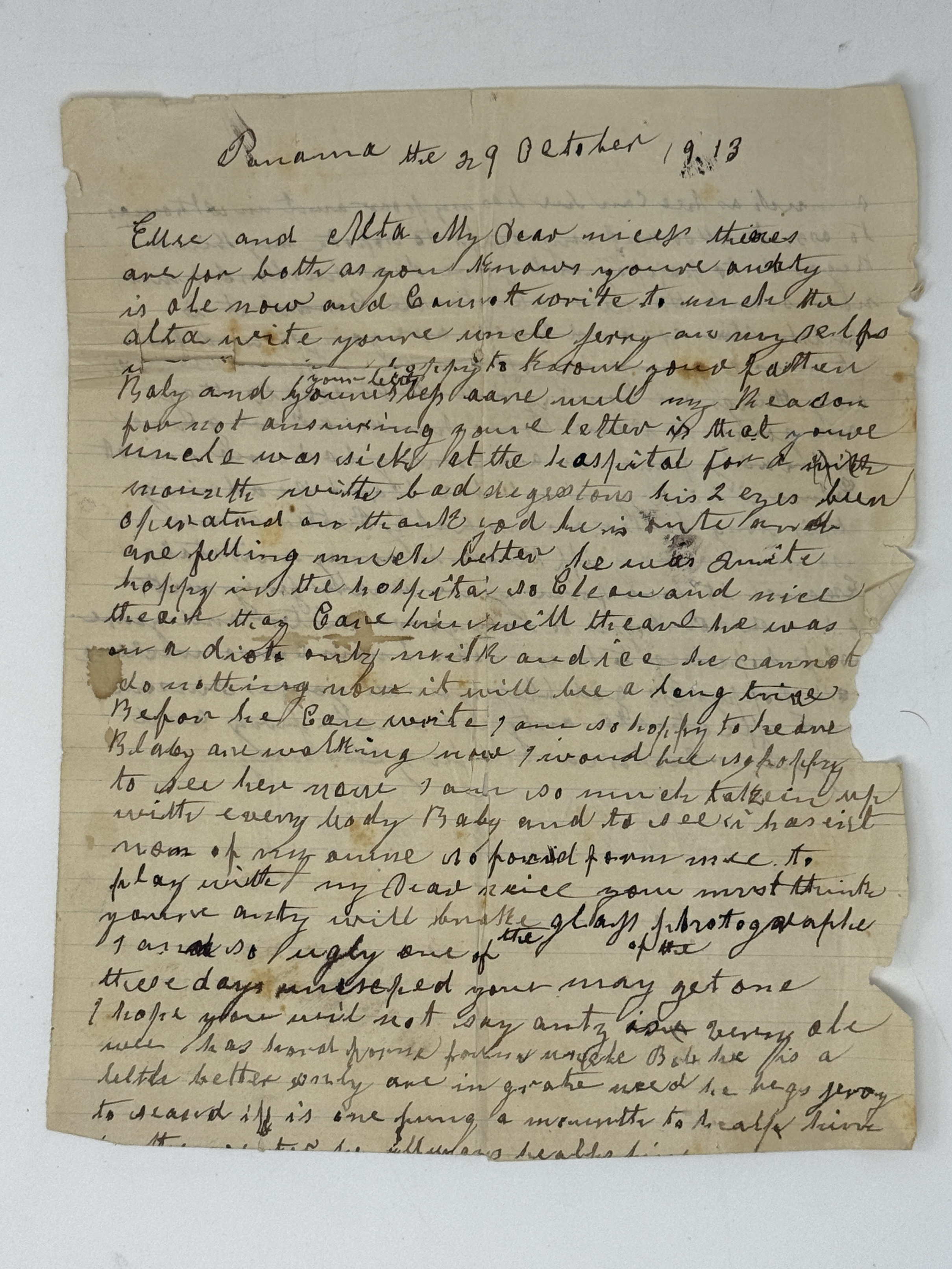
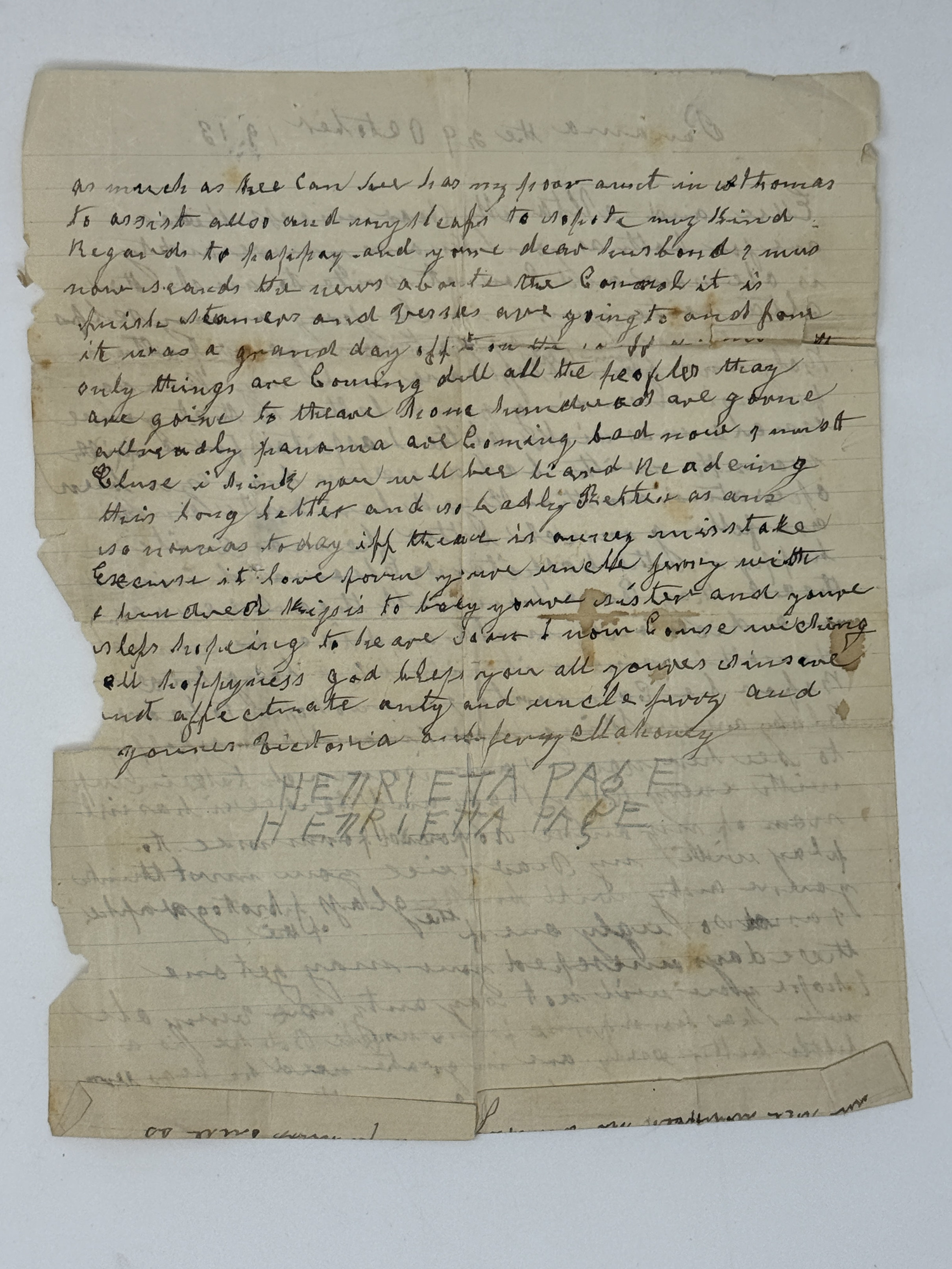
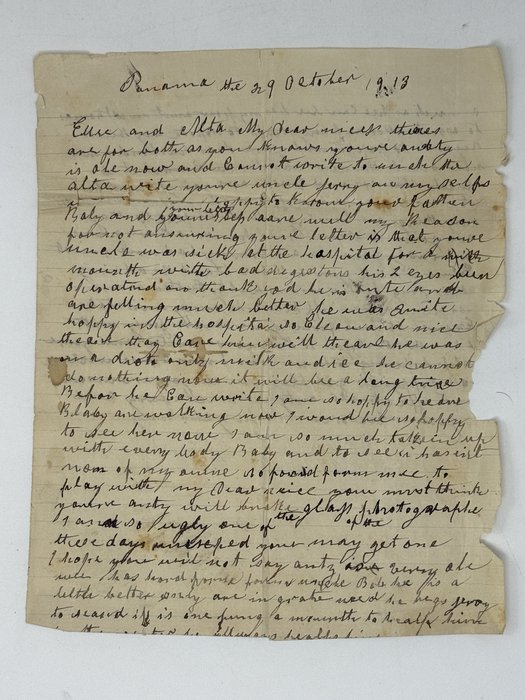
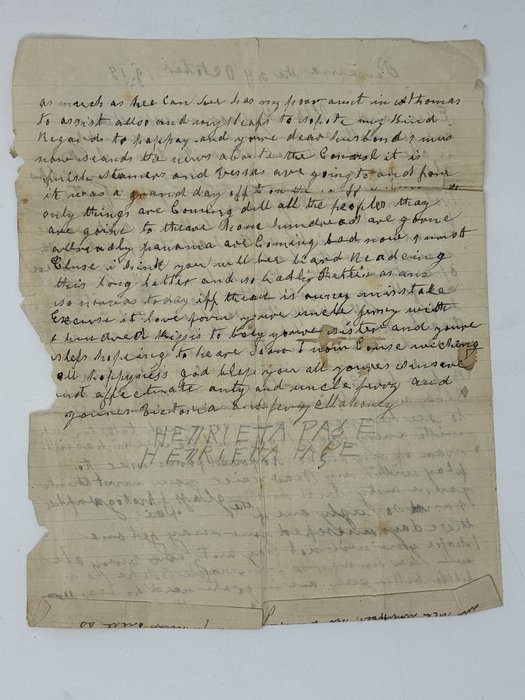
The earliest letter in the lot, written by Jerry’s sister, Henrietta in Panama in 1913, and addressed to Etta and Alta. In the text, she informs them of their uncle’s illness (an eye operation) and news regarding relatives in St. Thomas, while sharing her concerns that "Panama is becoming bad." The letter was written by someone one who took dictation with numerous grammatical errors; Henrietta signed her name in capital letters at the bottom;
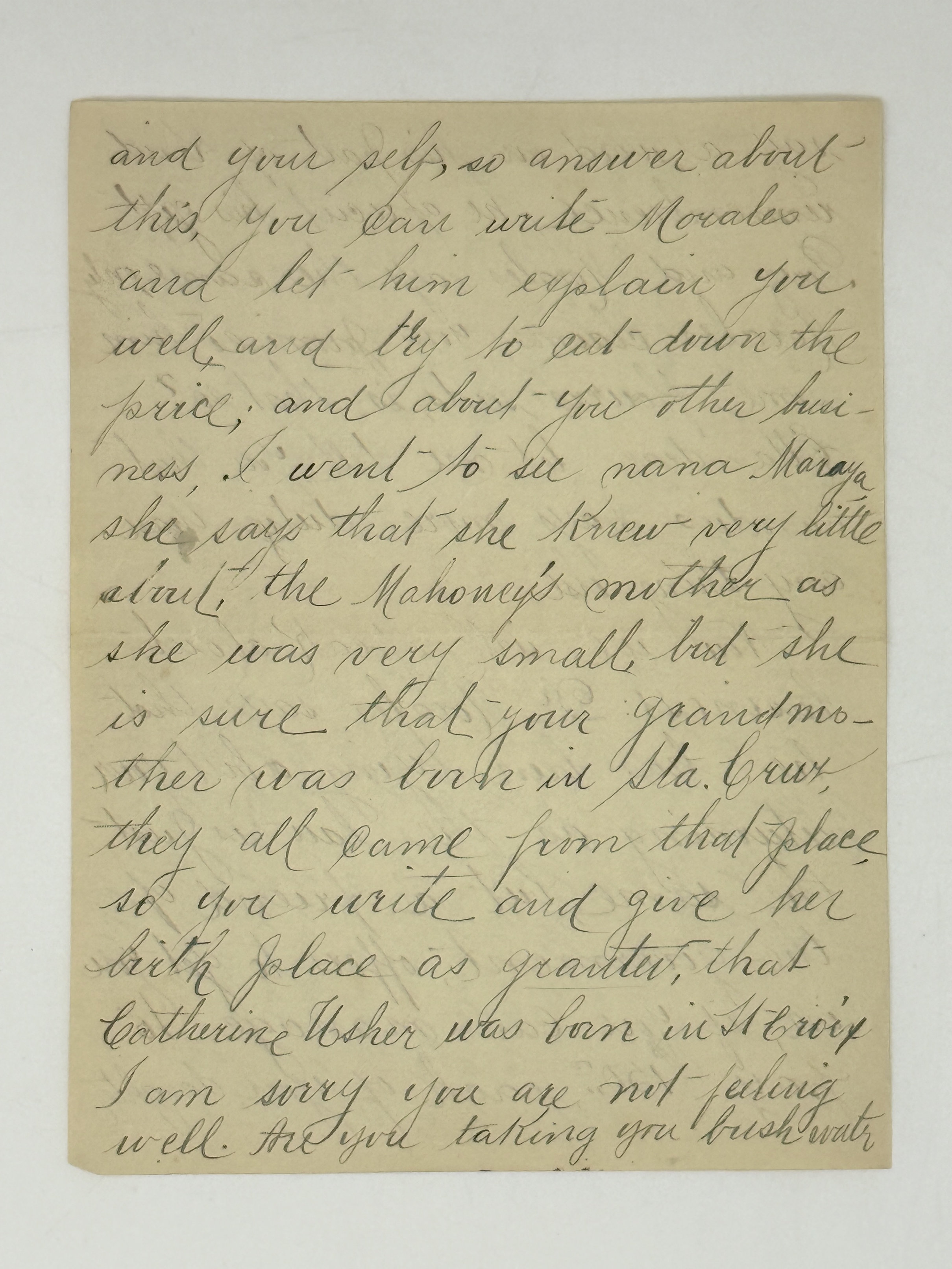
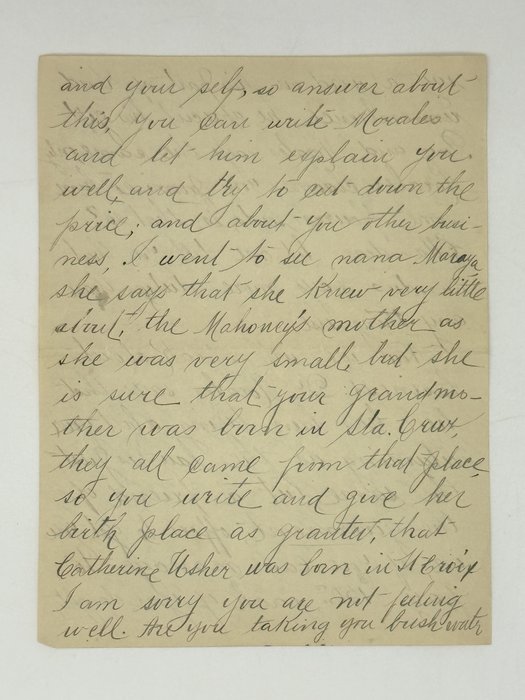
A 1923 handwritten letter from a friend discussing Etta’s possible return to Panama. The writer mentions that "a friend of the government offers to get you in, if you can manage to pay $150 each," suggesting they write to a councilman named Morales to "try to get down on the price;"
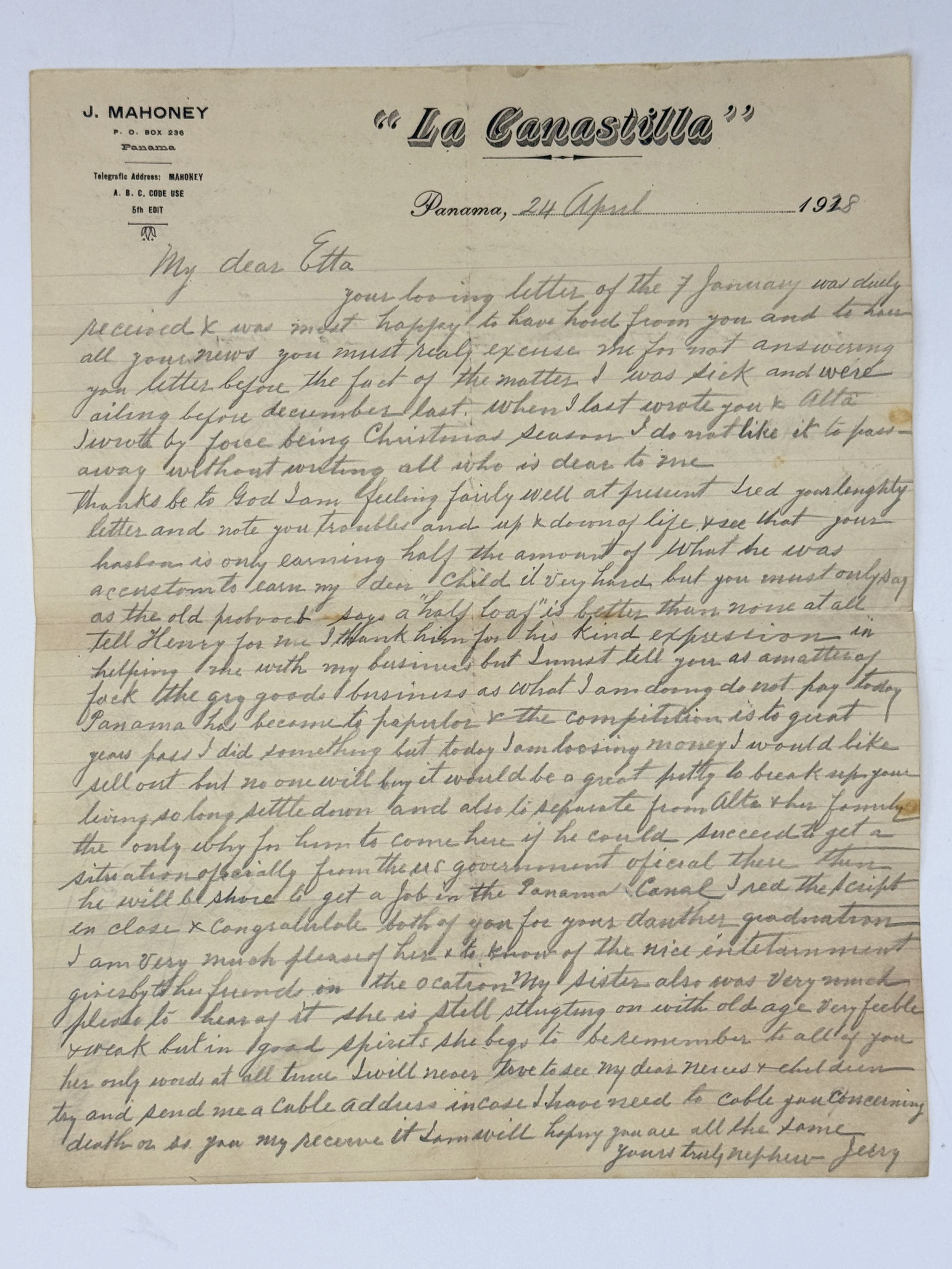
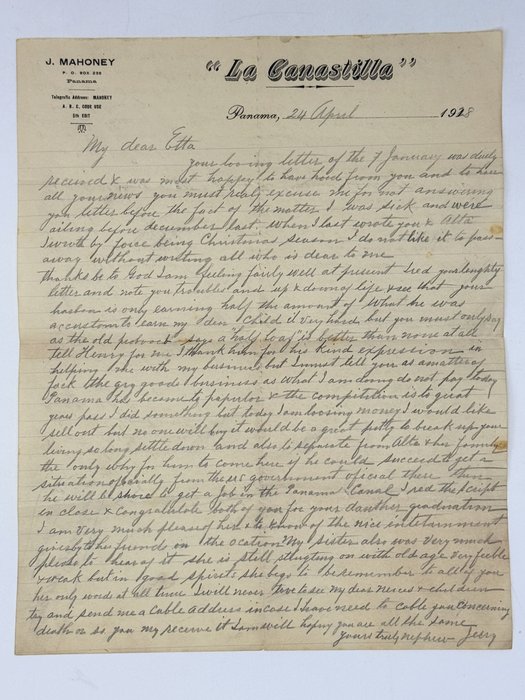
A 1928 handwritten letter from Jerry to Etta. In the text, the author he declines the possibility of his brother, Henry, assisting him with his shop, complaining that "Panama has become so popular now, the competition is too great." He notes that while he once made a profit, he is now losing money, and suggests that if they wish to immigrate, they should secure a job at the Panama Canal from California before arriving;
A 1930 handwritten letter from Jerry to Etta, describing his health and listing the expenses he has to go through to keep the shop afloat;
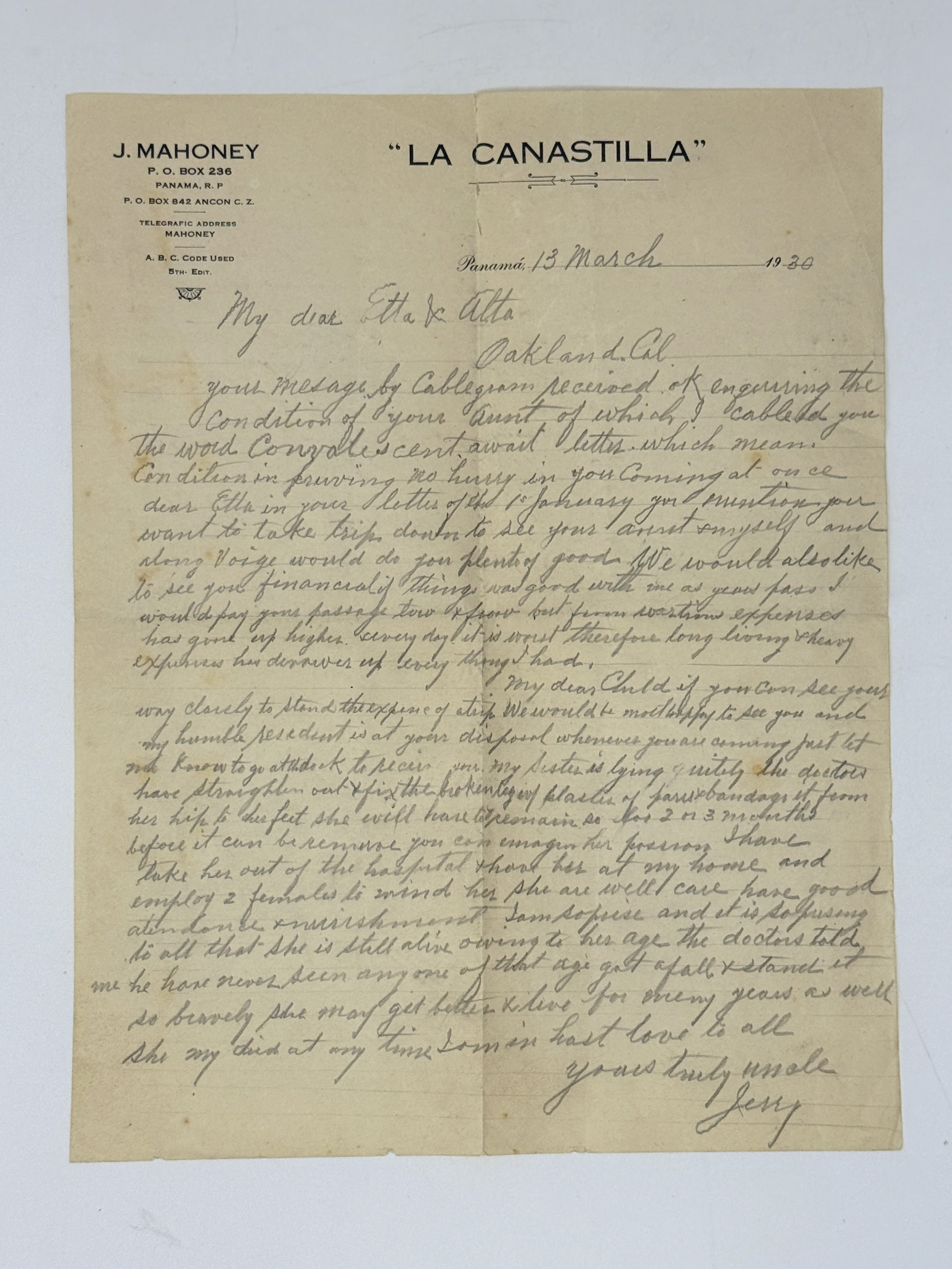
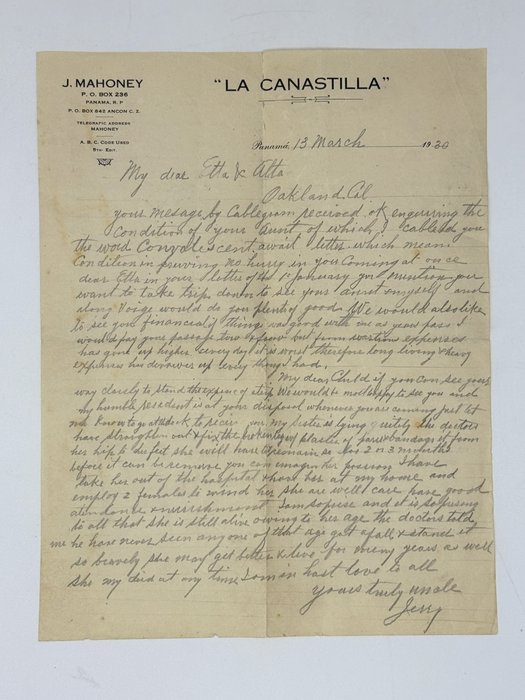
A 1930 handwritten letter from Jerry to both Etta and Alta, offering to pay for their voyage and mentioning possible immigration plans for one of the sisters;
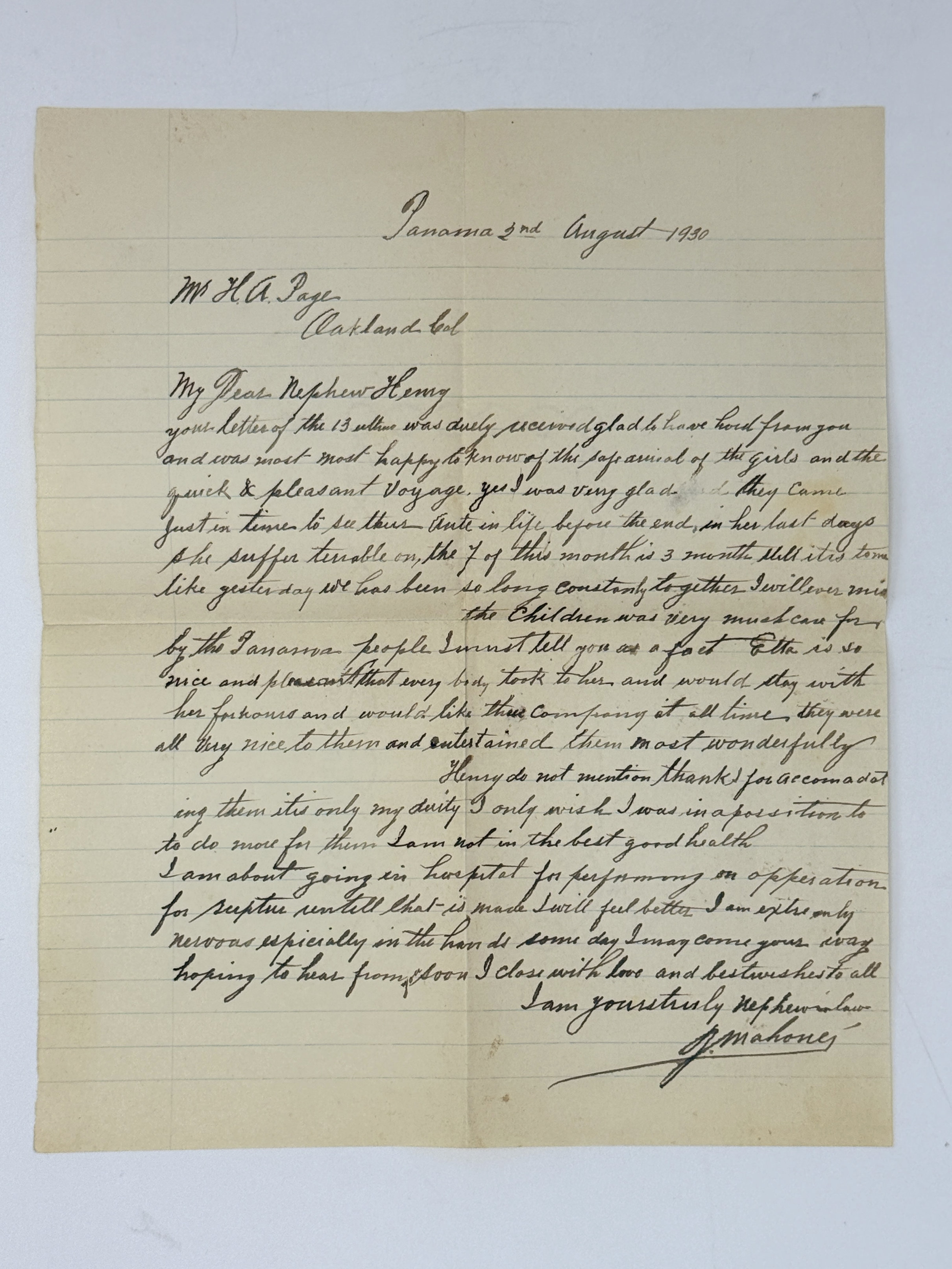
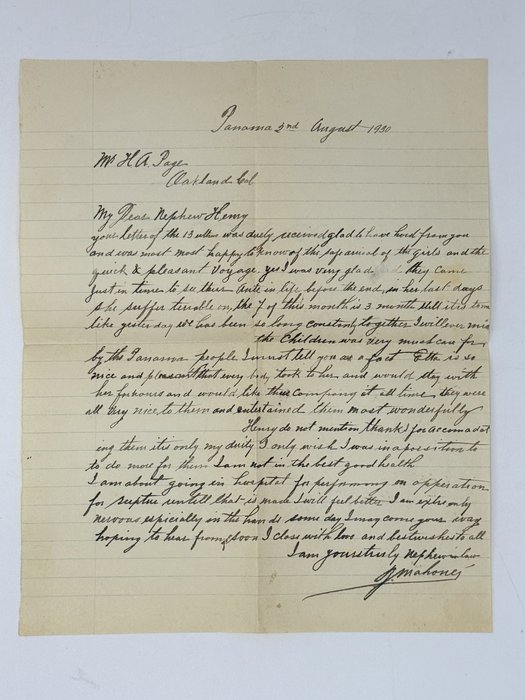
A 1930 handwritten letter from Jerry to his nephew, Henry, in Oakland, describing a recent visit by Etta and Alta. He notes that "the children was very much cared for by the Panama people" and remarks that "Etta is so nice and pleasant that everybody took to her;"
A 1930 handwritten letter from Jerry to both sisters citing health problems;
A 1931 handwritten letter from Jerry to Etta about the deceased uncle Henrietta (Jerry’s sister);
A 1932 typewritten letter from ‘George’ notifying the sisters about the passing of their uncle;
A handwritten letter to Jerry from a friend in St. Thomas, Virgin Islands, describing harsh living conditions. He mentions his brother, Edmund Henessey, in Nicaragua, whom he hasn't heard from in five years, doubting he survived "the troubles" (the Nicaraguan Civil War of 1926–1927). This was sent on 27 March 1932, less than a month before Jerry died;
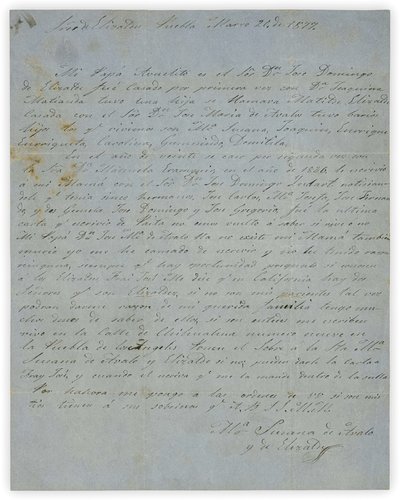
A 1932 long handwritten letter from the same friend to the sisters following Jerry’s death. It mentions most of biographical details we know about Jerry, reflecting on a 45-year friendship and the years when Jerry and his brother first left the Virgin Islands;
A 1932 typewritten letter from a friend, "Elena," to Etta regarding the inheritance and the lawful process for the sisters to claim their rights to the estate.
Other handwritten and typewritten letters include:
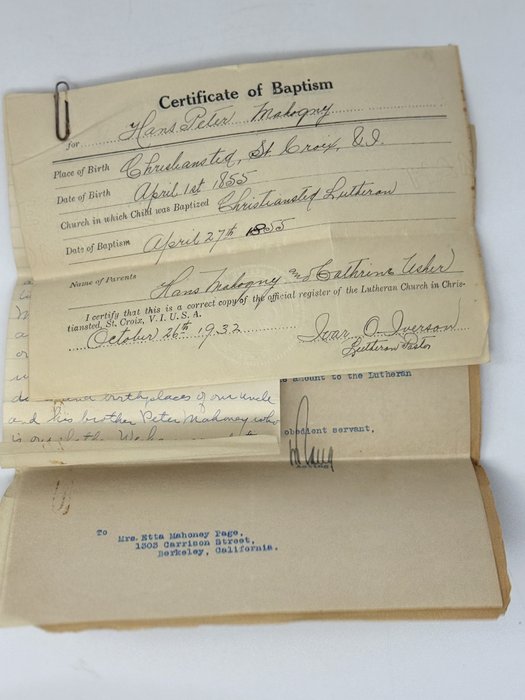
Certificates of Lutheran baptisms of Hans Peter Mahoney and Jeremiah Frances Mahoney in 1855 and 1861 in Christiansted, V.I., accompanied by their 1930s copies and a correspondence with local officials regarding their acquisition;
A series of six letters regarding Etta’s request to sell the family building in Panama to the Panama Railroad Company, including the official reply and a formal evaluation of the property;
A letter from the Panama Canal Executive Department stating the company is satisfied with the repairs made to the building owned by Alta and confirming the renewal of the lease;
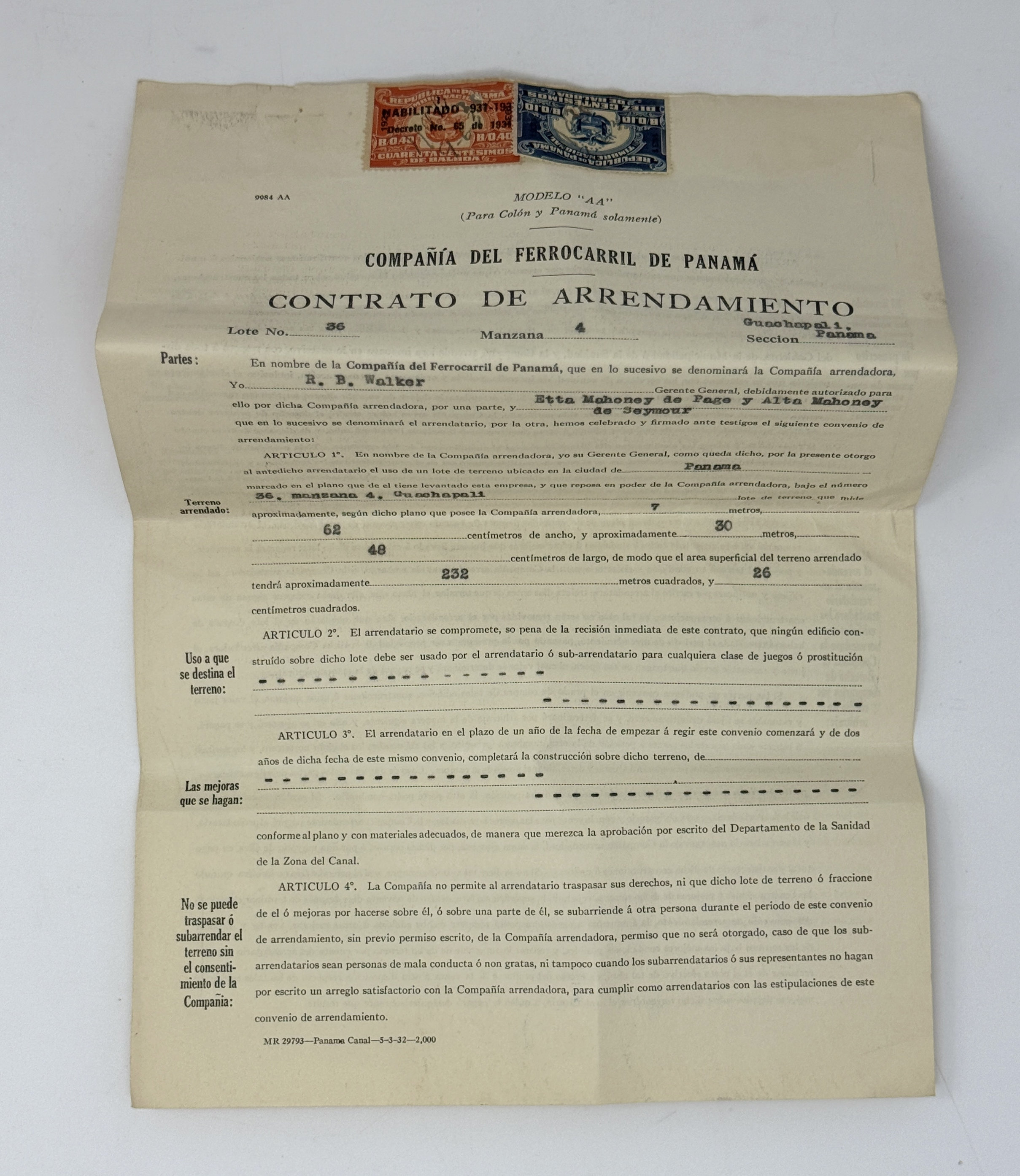
A 1913 lease agreement for a lot in the Calidonia neighborhood of Panama City;
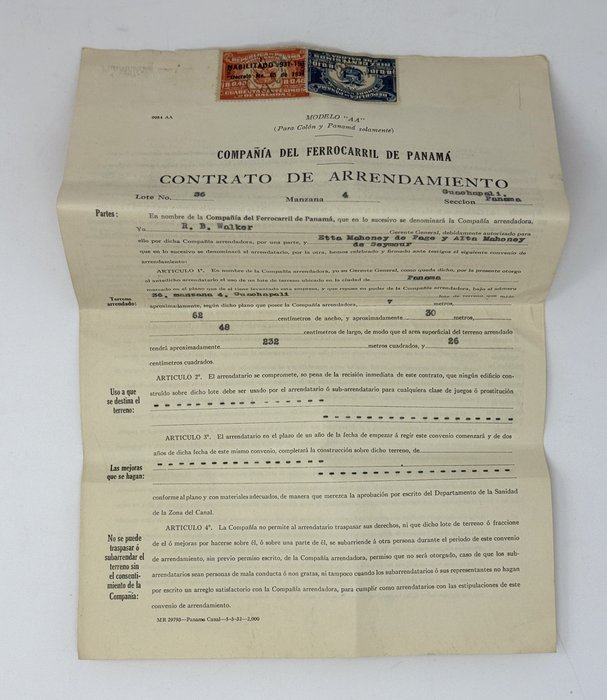
Lease contract of a block of land in Panama City;
Typewritten Last Will of Jeremiah Mahoney and its translation to English;
Documents on the estate of Jeremiah Mahoney, a business card of L. K. Purdom, an American lawyer in Panama;
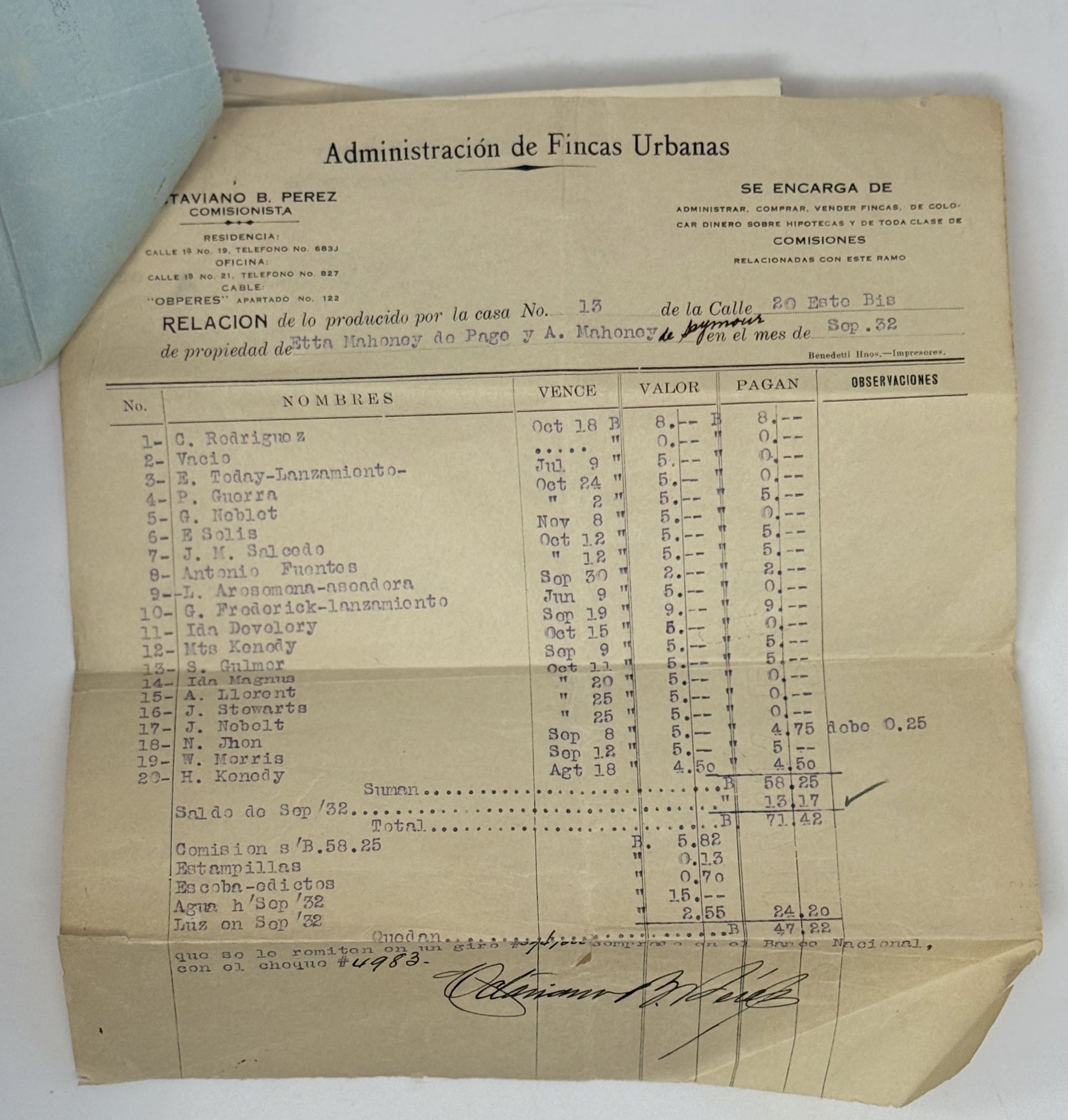
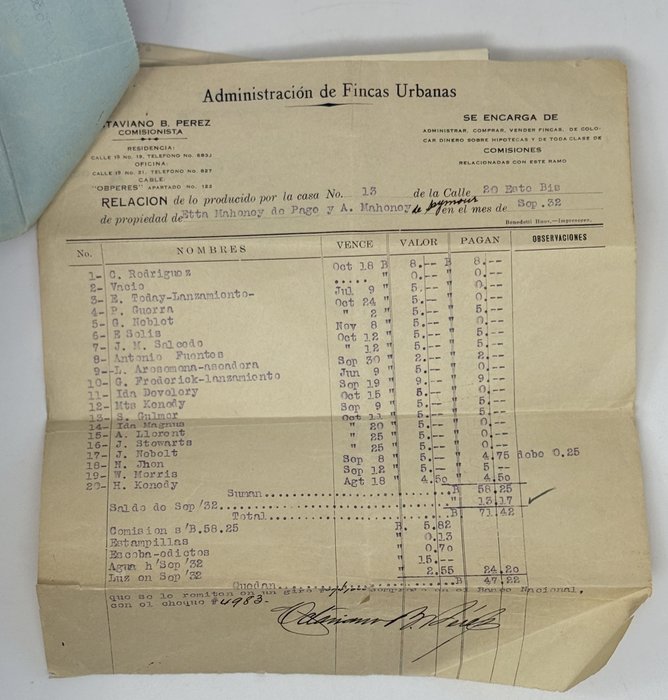
Financial statements for the leased properties and bank receipts for the payments;
Newspaper clippings about Jerry’s death.
Overall, historically significant archive of a family from the Caribbean diaspora, with corresponding between Oakland, Panama City and St. Thomas.