
#OA62
1893
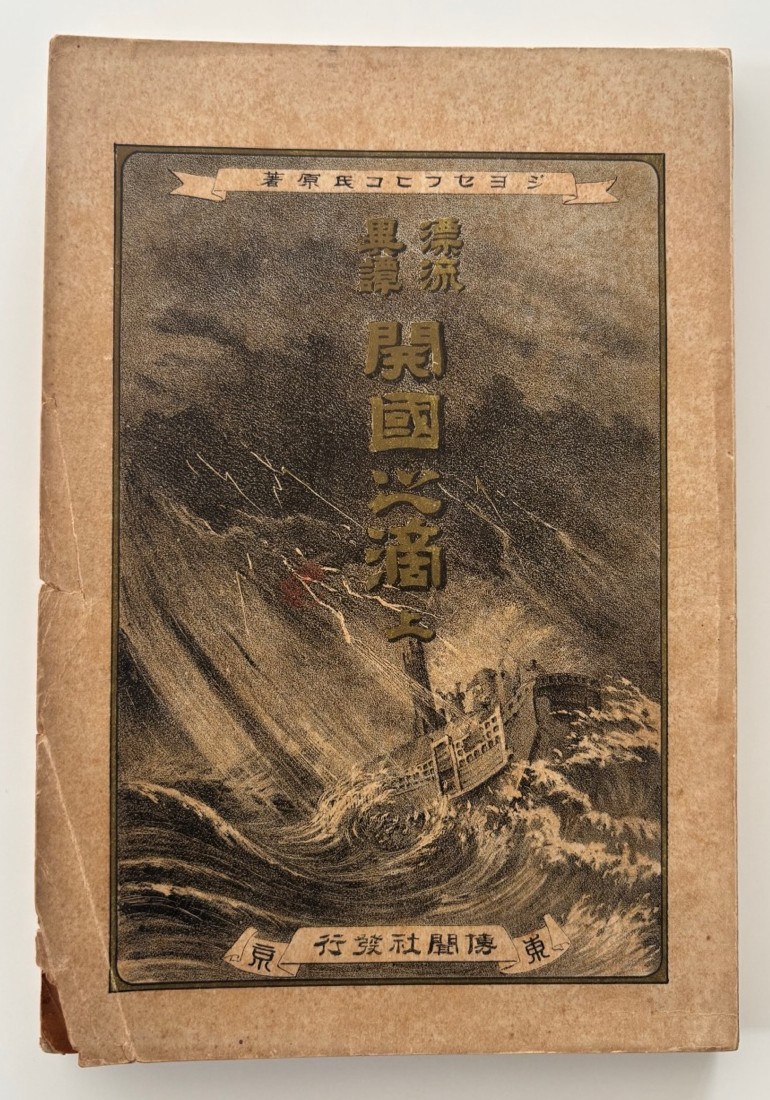
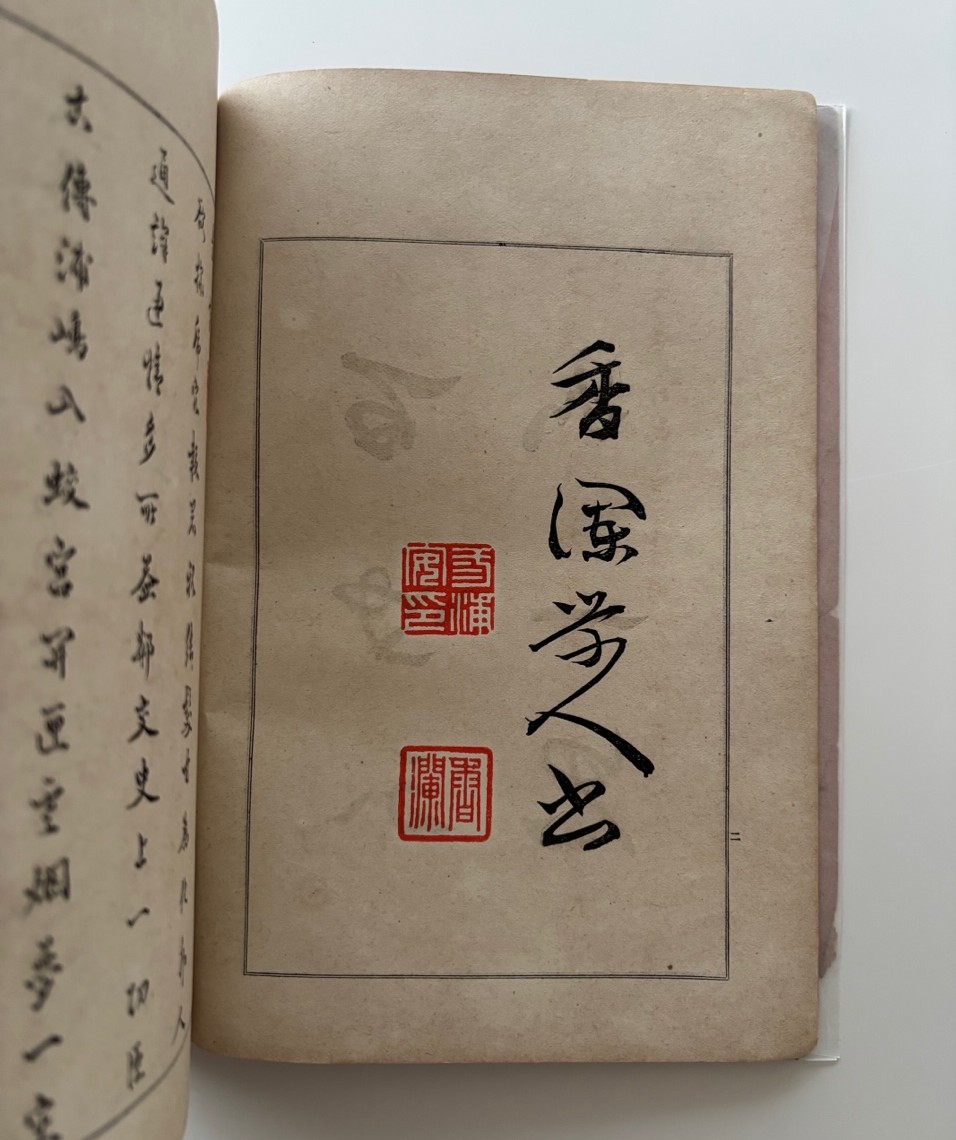
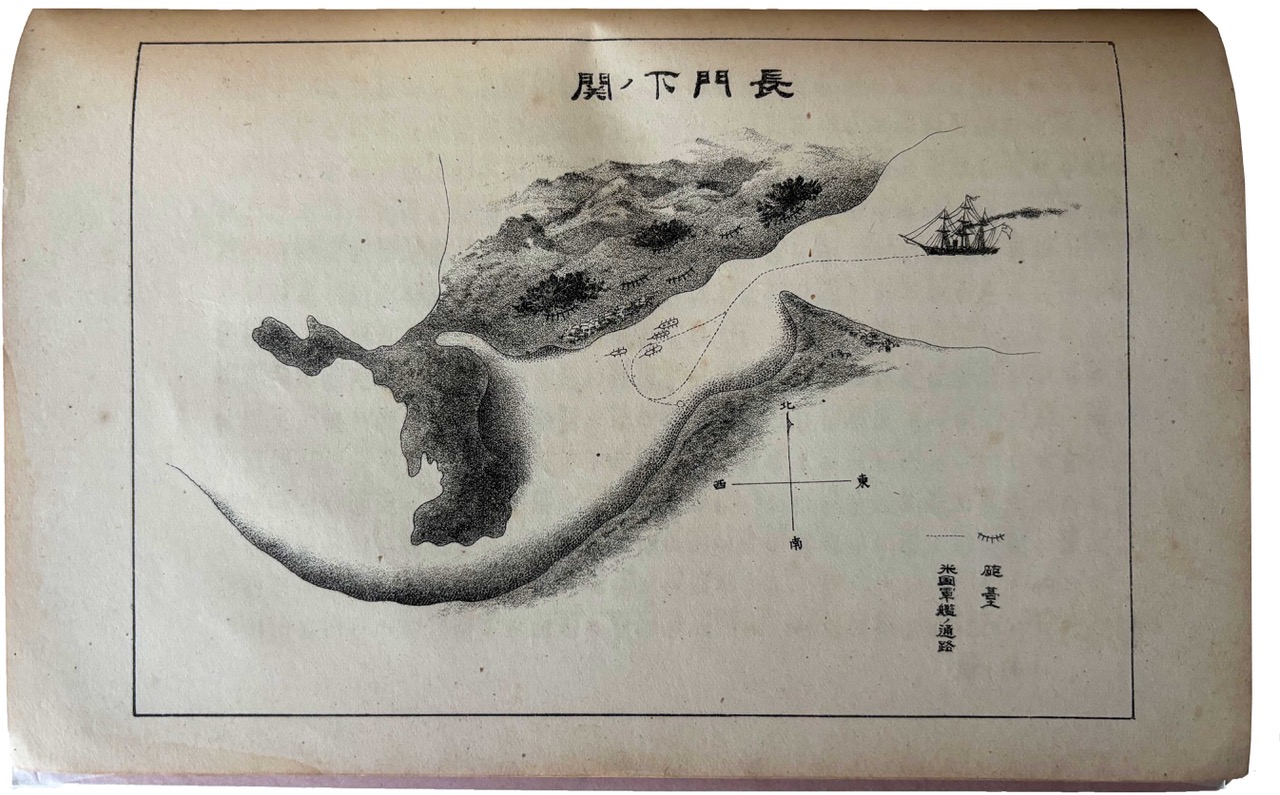
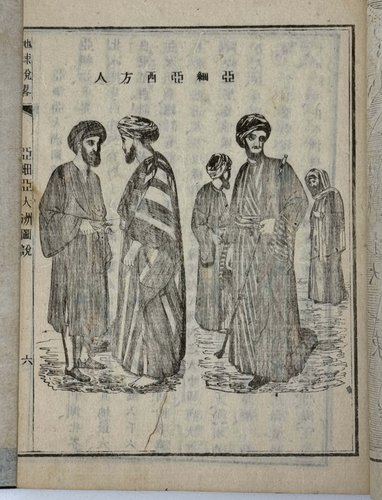
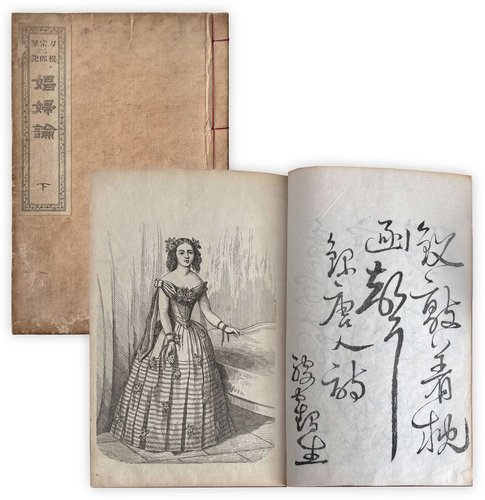
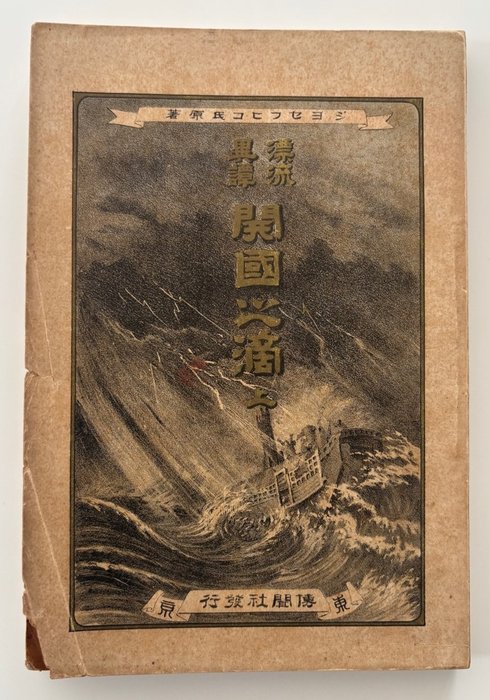
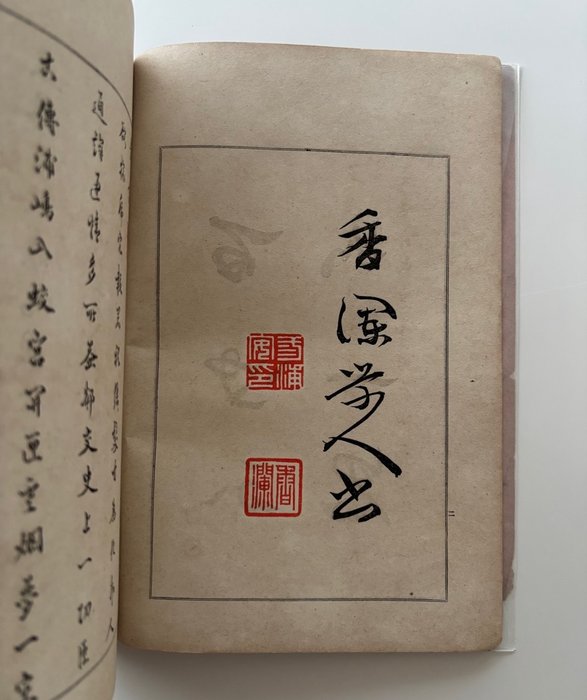
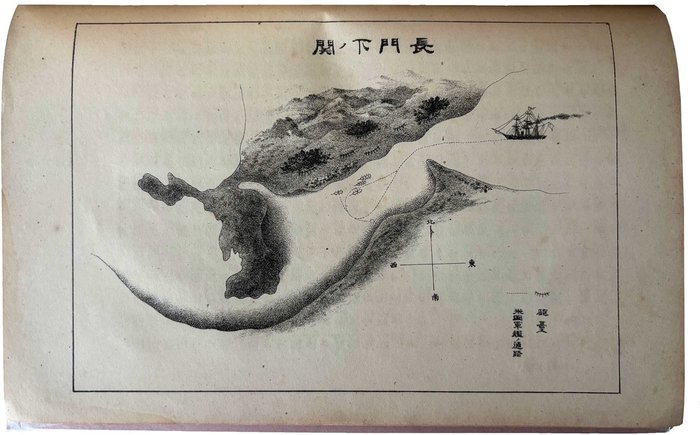
1 volume. 22,2x15cm. 2,2,2,236 pages. 3 full-page lithographed illustrations (monochrome). The pages are oxidized and feature extensive underlining in black pen. The pictorial paper wrappers are creased, and the cover shows wear with losses to the edges. Very good condition. In Japanese.
Joseph Heco (also Hiko, born 浜田彦蔵, Hamada Hikozō, 1837–1897) was the first Japanese person to be naturalized as a United States citizen and the first to publish a Japanese-language newspaper.
The book is his autobiography, in which he shares his memoirs about the shipwreck, his life in the U.S., and his diplomatic career in Japan. According to his biographers, the first autobiography was published 1863, included 2 volumes, was vividly illustrated and was based on his memoirs regarding the shipwreck and later his diaries. In 1892 he published an extensive, but not identical autobiography in English “The Narrative of a Japanese” (Yokohama, 1892, 1895), edited by a British historian James Murdoch.
The present book, written in Japanese, is a translation of Murdoch’s version and was intended to be a two-part series, though the second part was never published. The life of Joseph Heco — adventurous and full of action — is presented here in the form of a diary. It recounts his childhood: Hikozo was the younger son in his family, which meant he was not considered the legal heir. Therefore, he was sent to work in Himeji, a port in the Western part of Honshu. He had no plans to travel overseas, especially since such journeys were forbidden under Tokugawa law. However, following a shipwreck, he found himself in San Francisco in 1851 at the age of thirteen. As a teenager, he quickly learned English, was baptized as a Catholic in 1864, and in 1858 became the first naturalized U.S. citizen of Japanese origin. This first volume tells his story up to the point when he returns to Japan through the port of Yokohama, and witnesses one of the Tokugawa battles with the Choshu clan in 1863.
His experiences in Hawai‘i form an important but often underrepresented chapter of his life and writing. He visited Hilo on Big Island in 1852, and later Honolulu in 1858 and again in 1862. These encounters with the Pacific world provided Heco with first-hand observations of imperial power, racial hierarchies, and colonial governance, which he recorded in his notebooks in considerable detail.
During in 1858 visit Heco described and even sketched Oahu College, visited the Hawaiian Parliament, and commented on the collaborative governance of native Hawaiians and naturalized foreigners. Before appointing Eugene Miller Van Reed (1835-1873) as Hawaii’s consul general in Japan, Foreign Minister Robert Wyllie wrote to Joseph Heco, asking him if there were “agricultural labourors with their wives and families” in Japan who would be willing to immigrate to Hawaii.According to Hawaii’s Bureau of Immigration, “Japanese were more like the natives of these islands than any others . . . [and] there was not the slightest doubt that they would most readily amalgamate.” Clearly, Hawaiian officials hoped that a treaty between Hawai‘i and Japan would at once develop the economy and repopulate the islands. Heco was used as a influence tool to support the campaign for brining laborers to Hawai‘i.
Worldcat shows only one copy located at UC Berkeley Libraries.
Additional reading:
Humanity above nation : the impact of Manjiro and Heco on America and Japan. Honolulu, Hawaii: Japanese Cultural Center of Hawaii, 1995.
Hikozo. Hyoryu Ki = Floating on the Pacific Ocean. LA: Glen Dawson, 1955. [Transl. from the 1863 edition by Tosh Motofuji]
Hsuan L. Hsu Personality, Race, and Geopolitics in Joseph Heco's Narrative of a Japanese // Biography, Volume 29, Number 2, Spring 2006, pp. 273-306. University of Hawai'i Press.