
#MD82b
Ca. 1868-1869
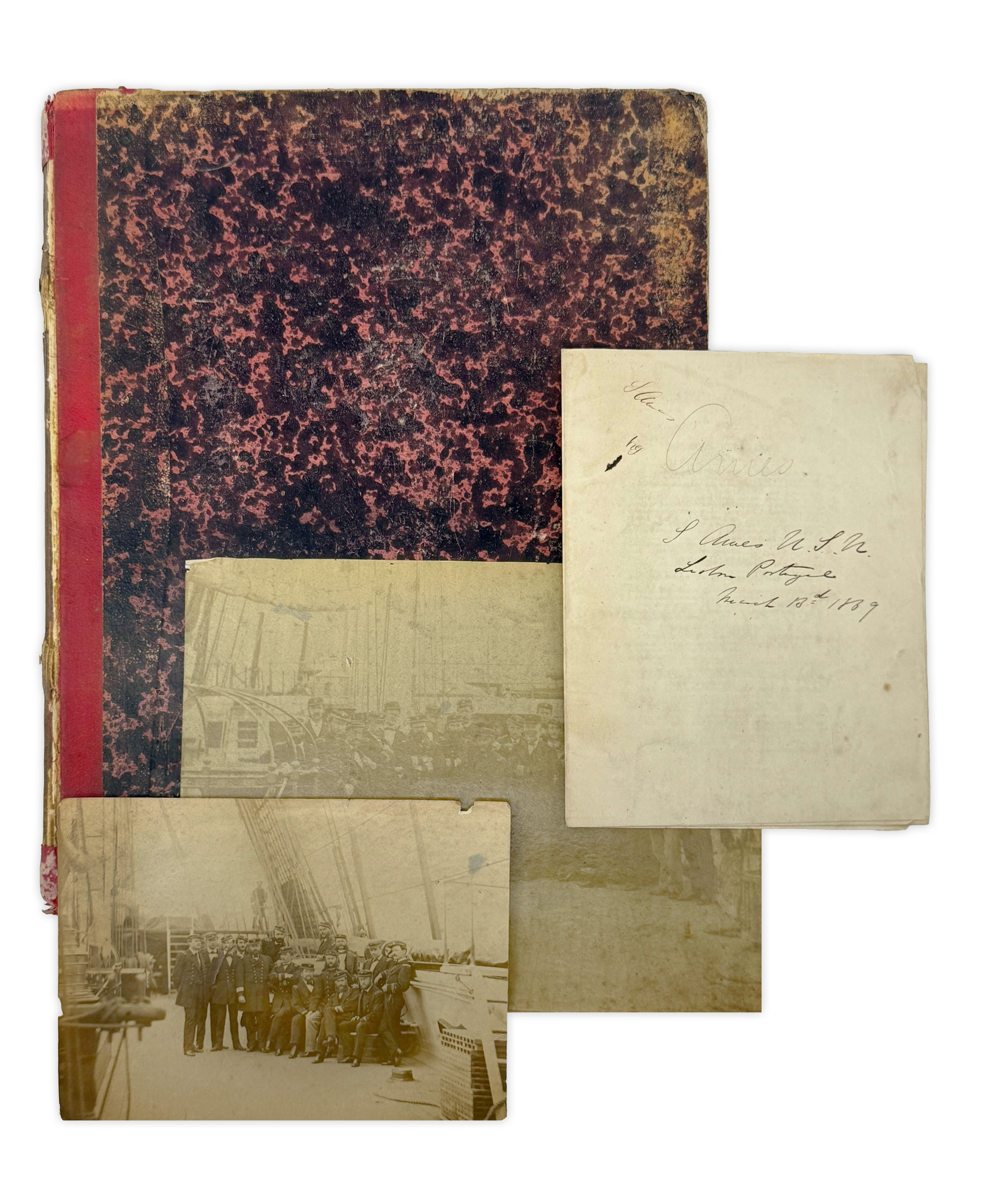
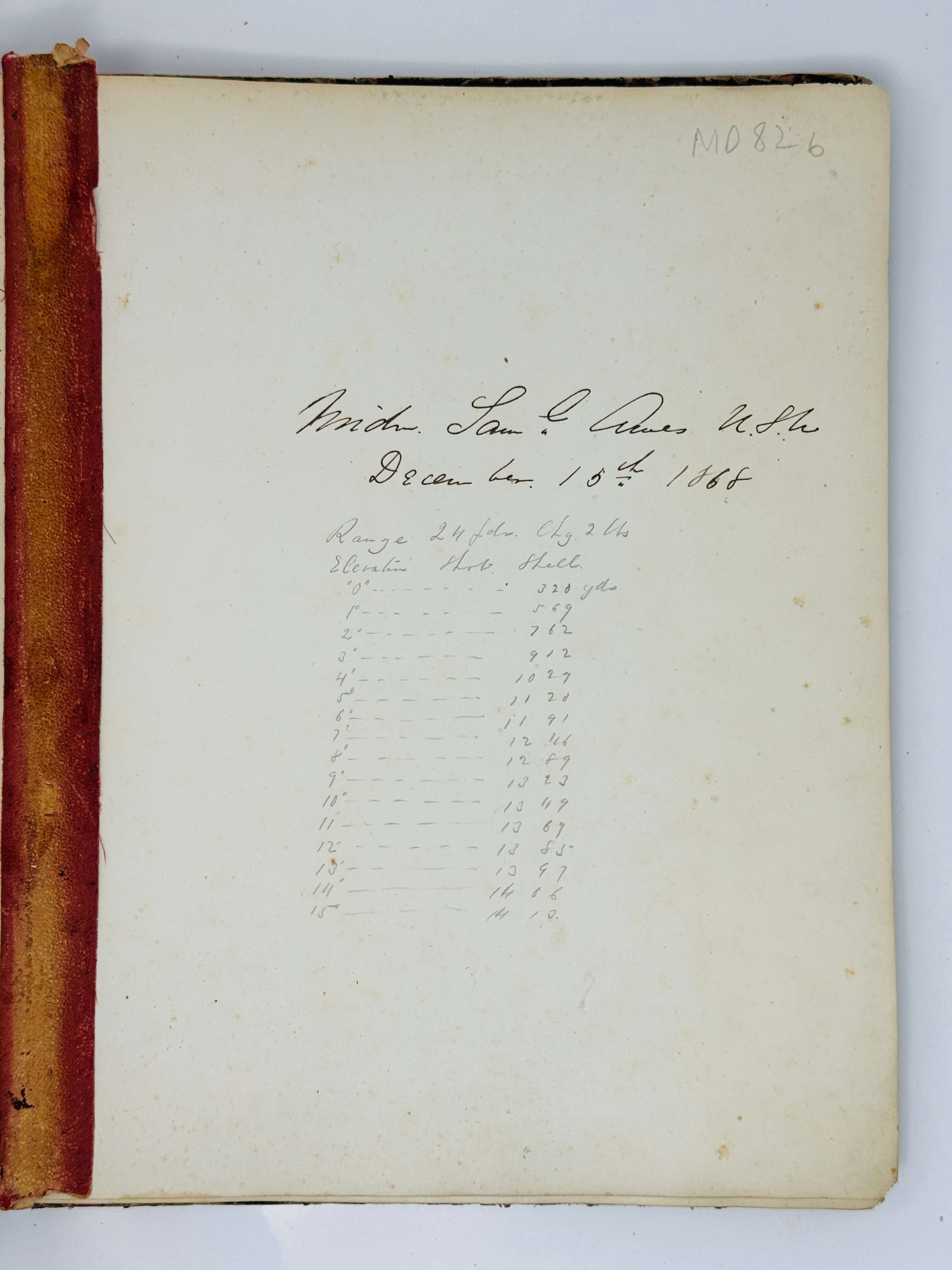
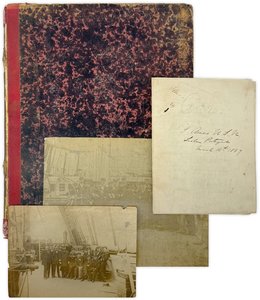
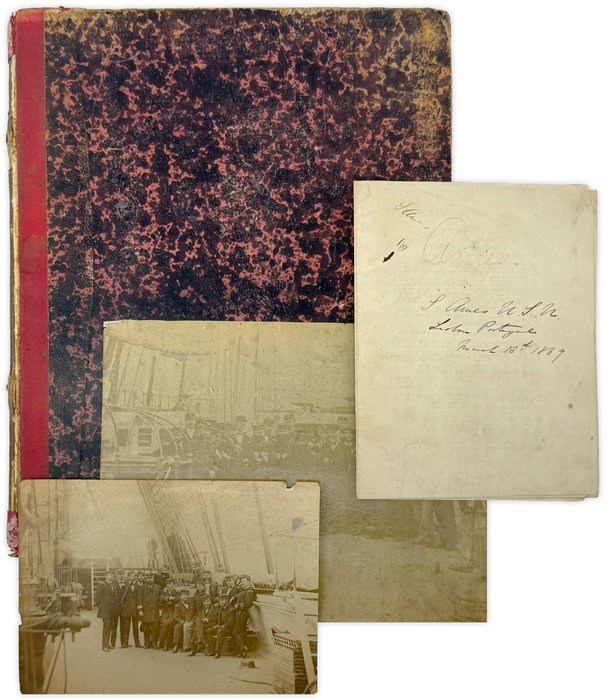
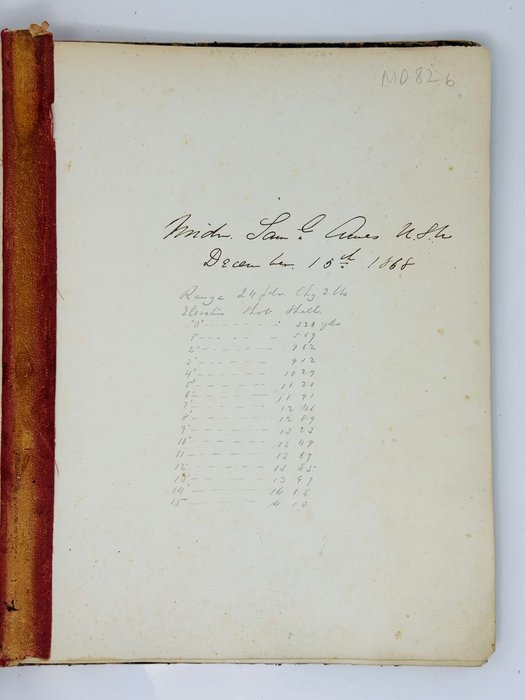
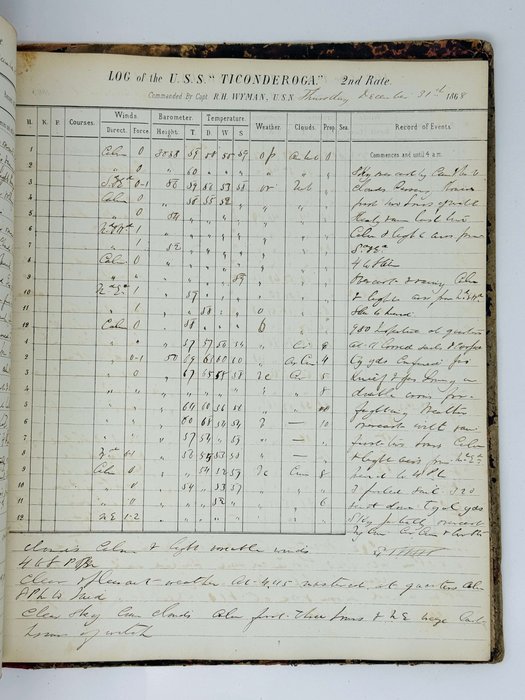
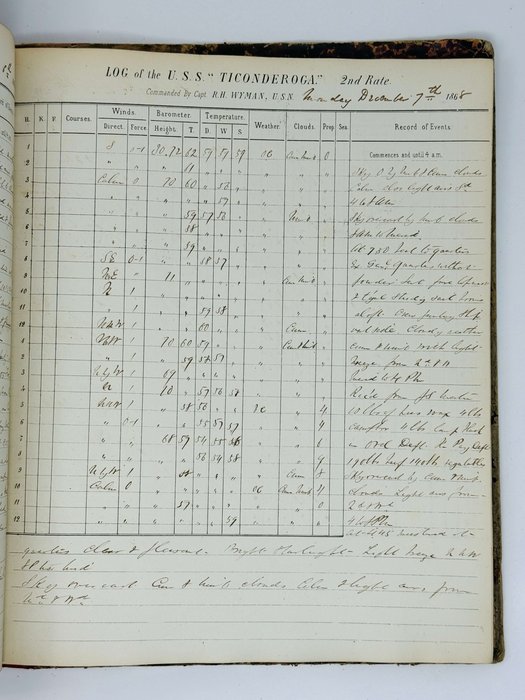
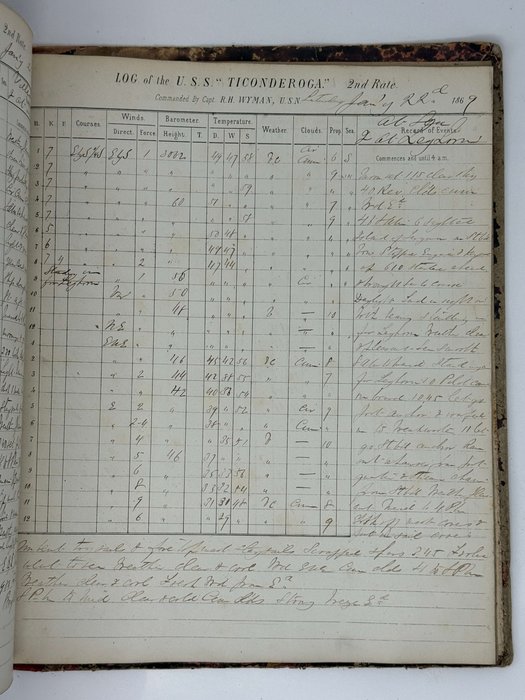
Folio logbook (ca. 34x27 cm or 13 ¼ x 10 ½ in). Ca. 62 leaves with printed forms completed in hand, filled in on recto and verso; in all ca. 124 pp of text; with 12 blank leaves at the rear. Brown ink on lined paper. Original red quarter cloth journal with marbled papered boards; spine detached from the stub and loosely inserted. Compiler’s period ink note “Midn. Saml. Ames Jr., U.S.N., December 15th, 1868” on the first blank leaf. Binding rubbed on extremities, corners slightly bumped, but overall a very good, internally clean journal with legible text.
Booklet with instructions: Small Octavo (ca. 20x15,5 cm or 7 ¾ x 6 in); 10 pp. Period ink inscription “S. Ames, U.S.N., Lisbon, Portugal, March 13th 1869” on the first page. First page slightly soiled, otherwise very good. With two loose albumen photos ca. 18,5x24 cm (7 ¼ x 9 ¼ in) and ca. 13x18 cm (5 ¼ x 7 in); no captions, larger image with a couple of minor tears and losses on extremities.
Historically significant original logbook, recording the Mediterranean cruise of the U.S. steam sloop “Ticonderoga” in October 1868 – February 1869. Having taken an active part in the American Civil War (including the First and the Second Battles of Port Fisher), the ship joined the U.S. Navy European Squadron in 1866. Formed as the Mediterranean Squadron in 1801, it was reorganized after the American Civil War in 1865 to reestablish the U.S. naval presence in European waters. Commanded by Captain Robert H. Wyman (1822-1882), a veteran of the Mexican–American and Civil Wars, “Ticonderoga” remained with the squadron through 1869 and returned to the States for repairs in 1870.
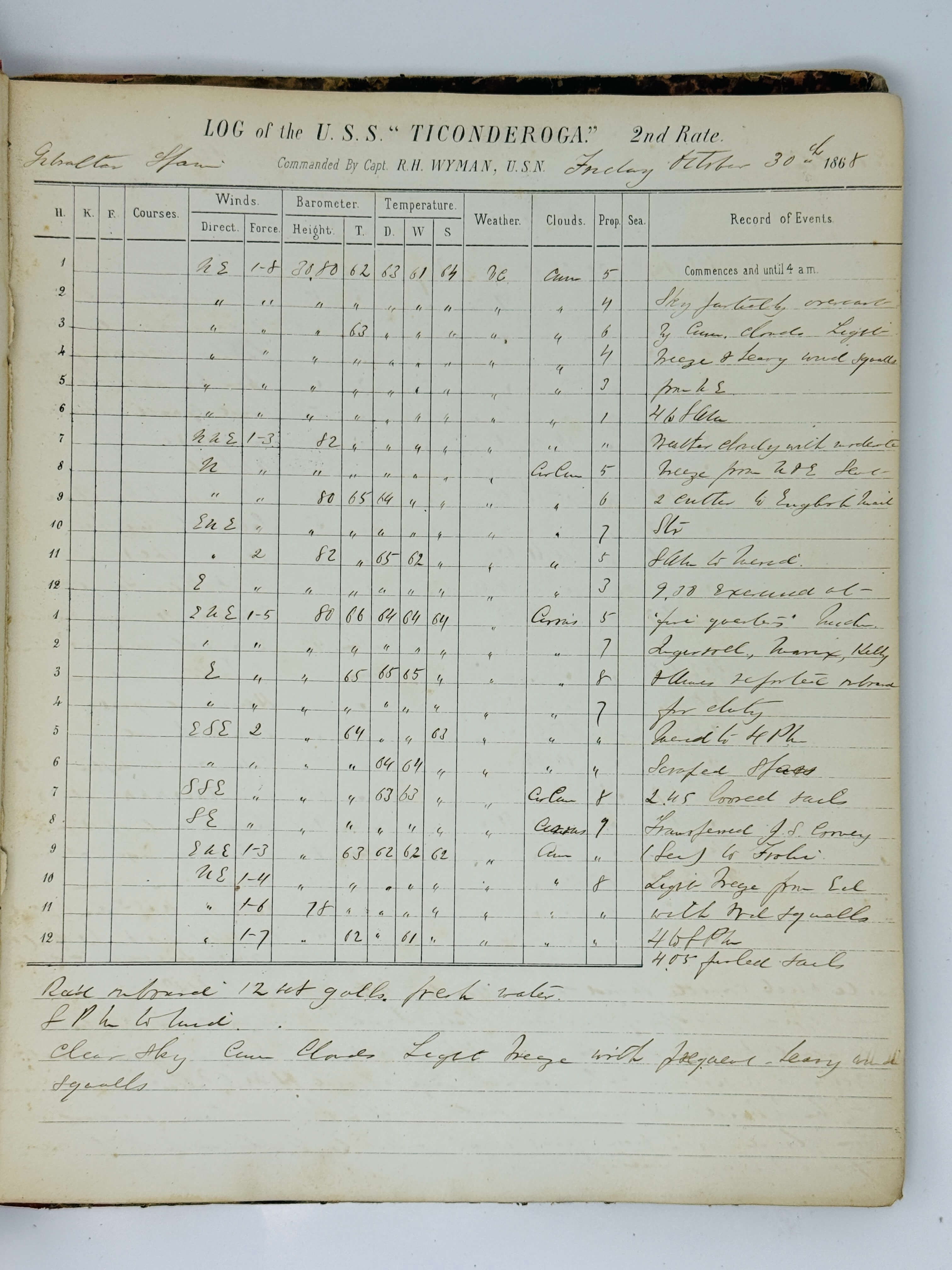
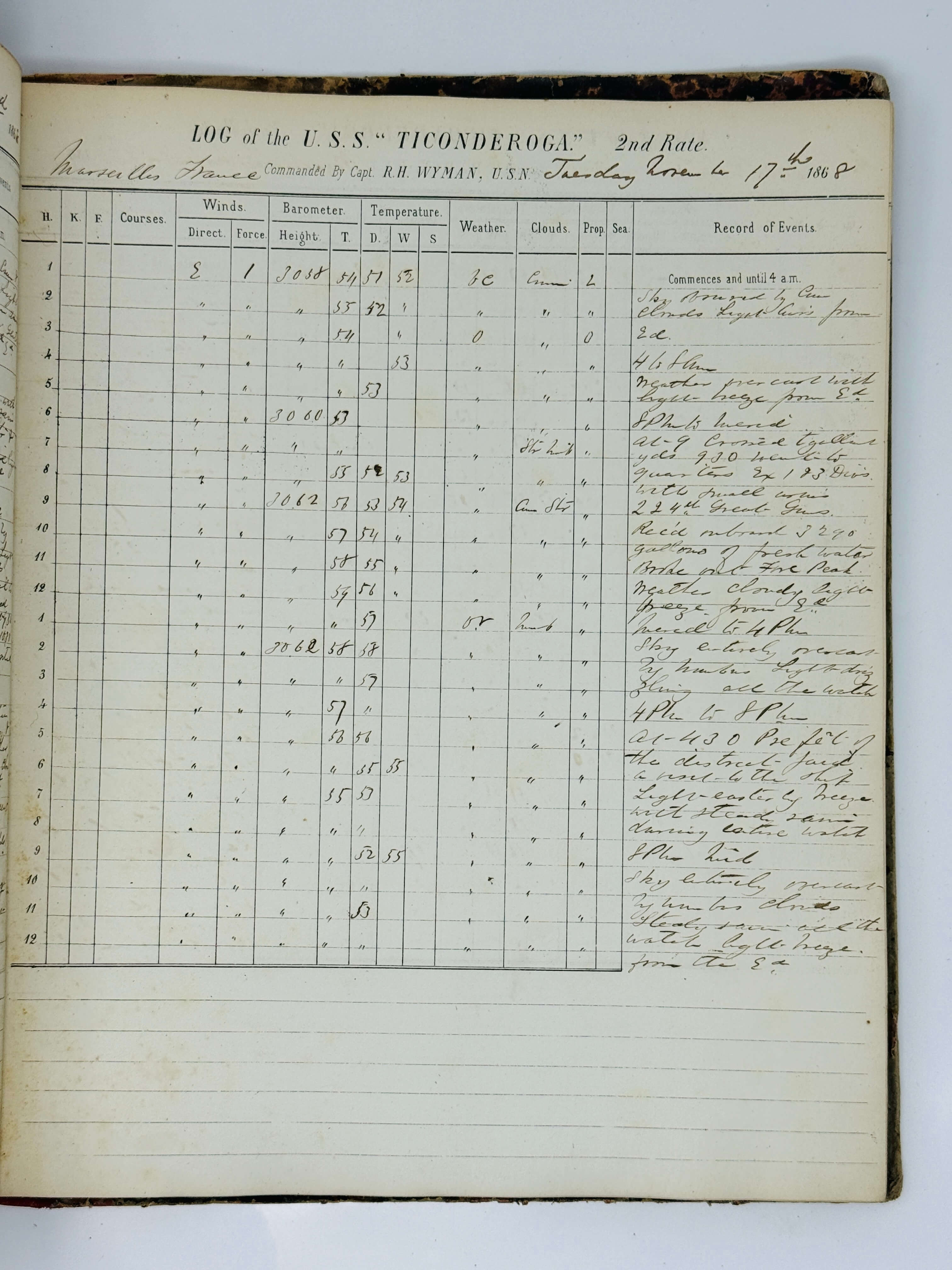
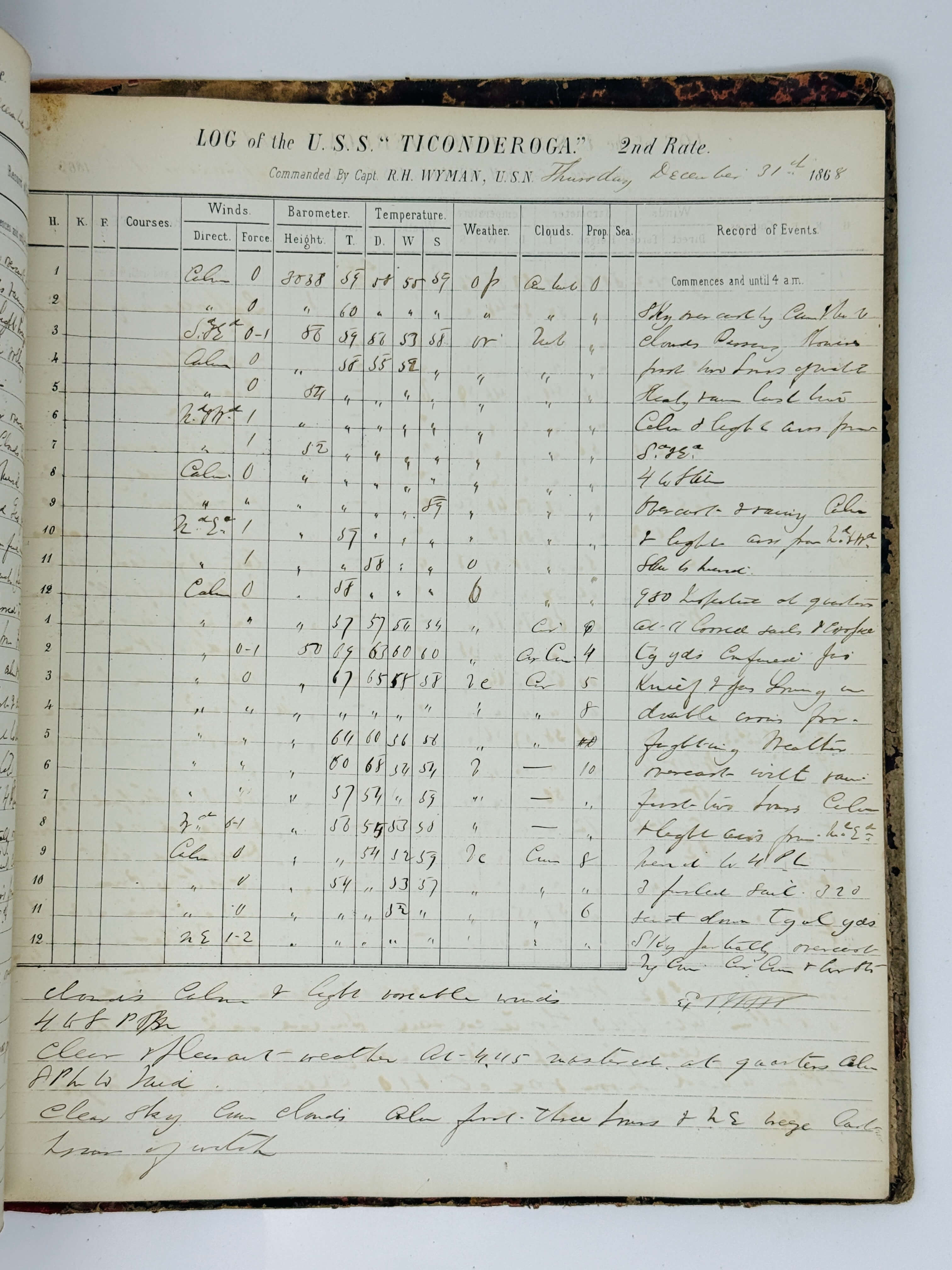
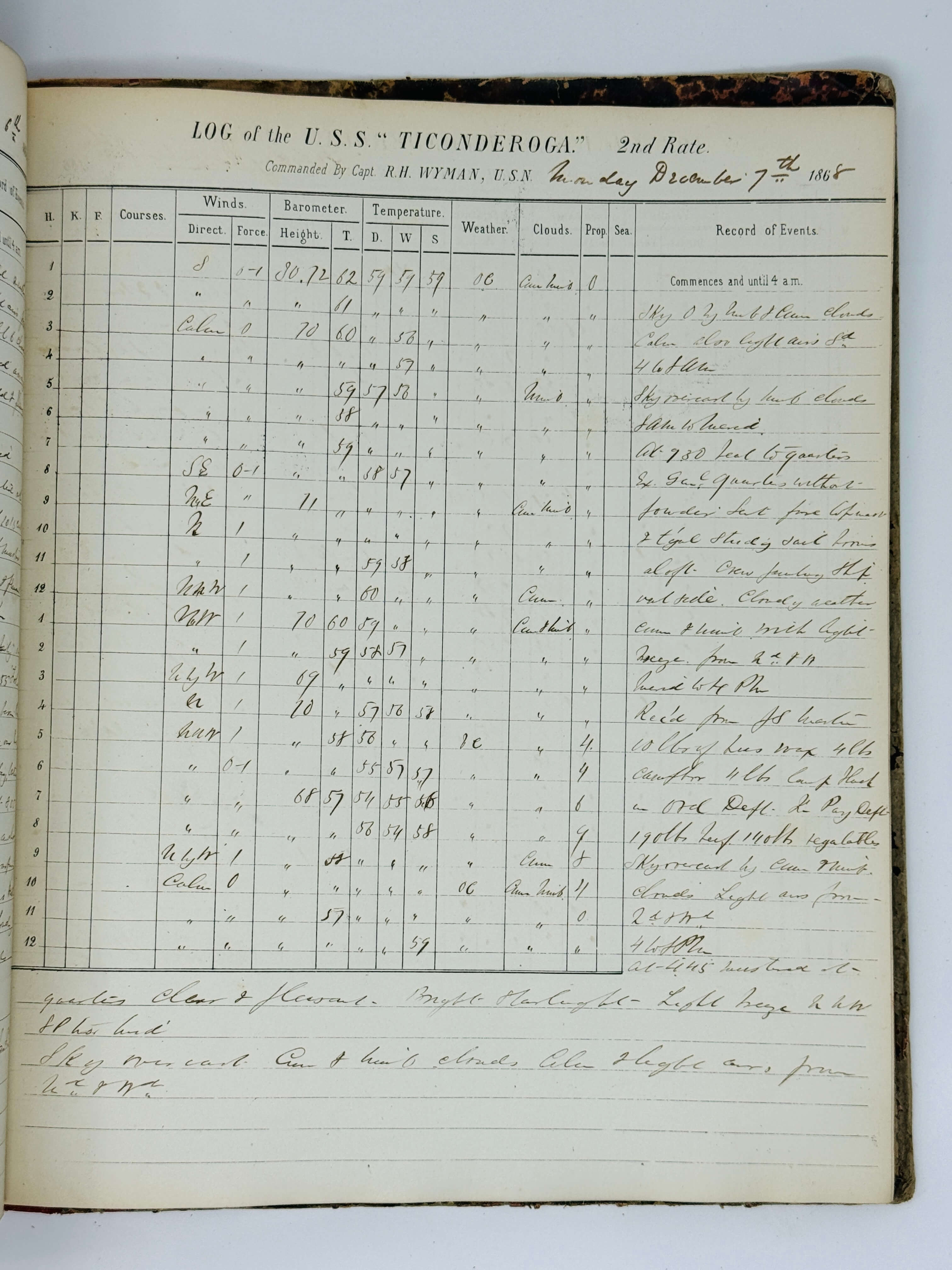
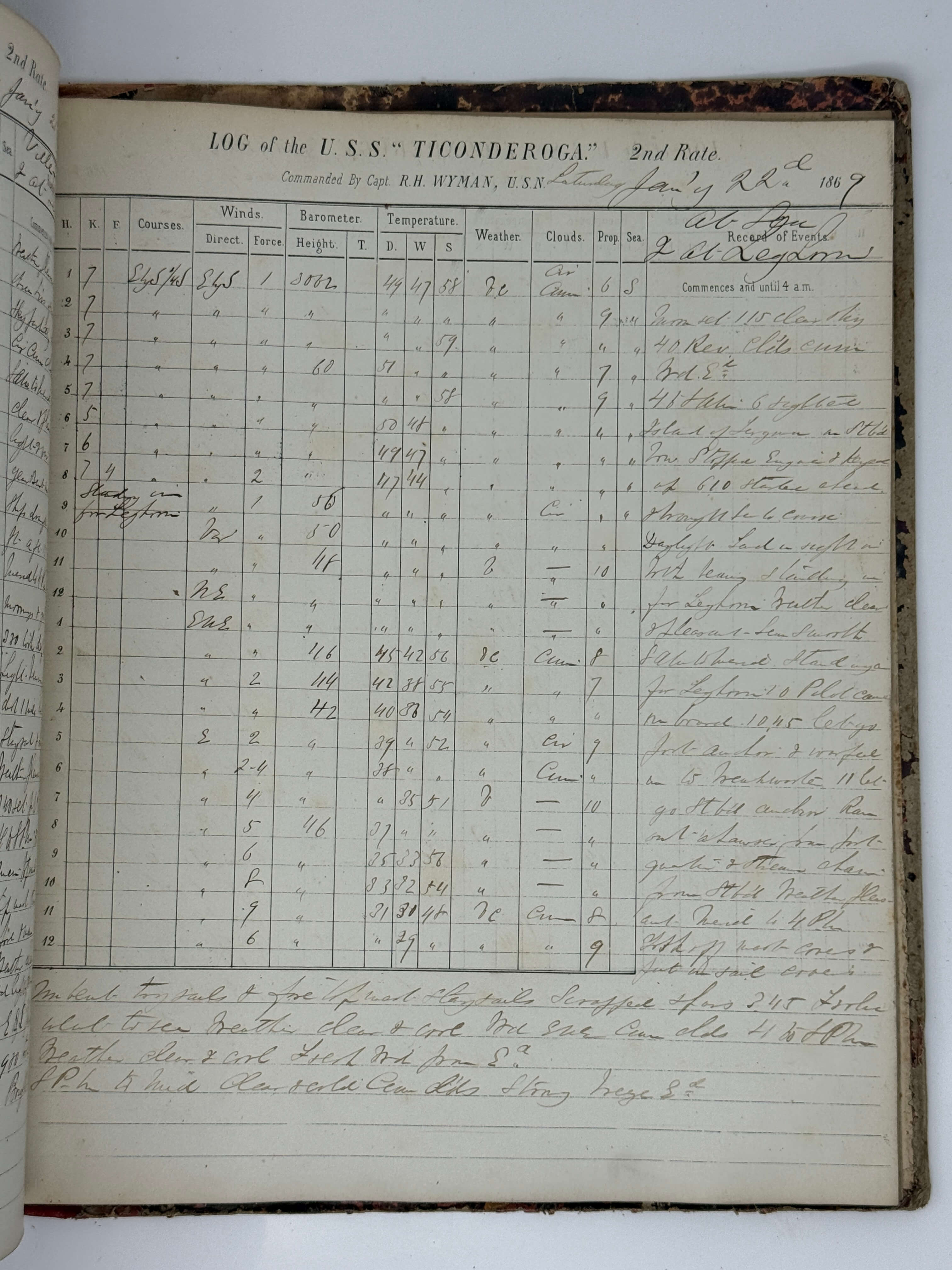
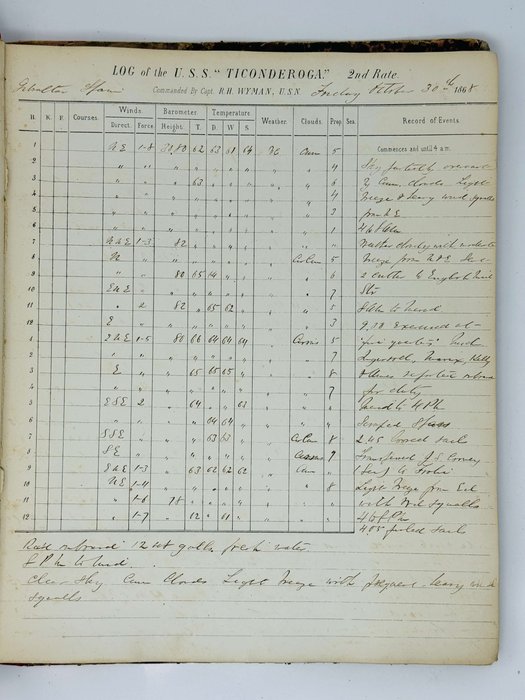
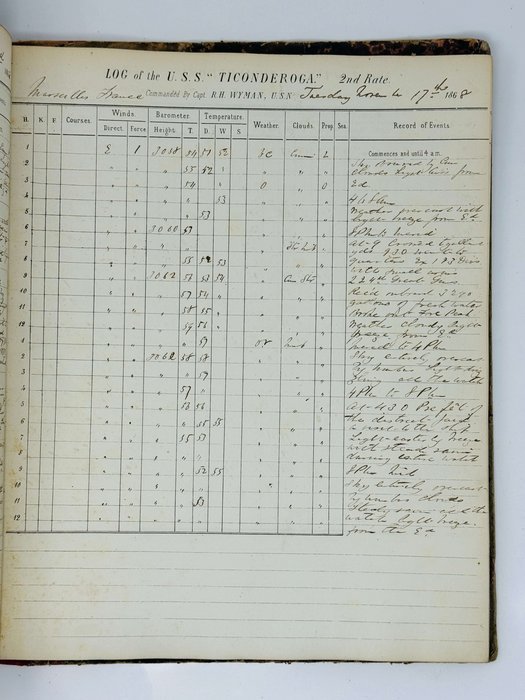
The logbook opens with “Ticonderoga” docked at Gibraltar (October 30 - November 4) and follows her cruising around the Mediterranean Sea, with stops at Barcelona (November 9-14), Marseille (November 15 - December 27), Villefranche-[Sur-Mer] (December 28 - January 1), the Island of Milo (January 7-8), Piraeus (the main port of Athens, January 9-13), Messina (Sicily, January 15), Villefranche (January 18-21), Leghorn (Livorno, January 22-29), Toulon (January 30 - February 18), Barcelona (February 20-23), Gibraltar (February 25-26), and ends with “Ticonderoga’s” arrival to the port of Lisbon on February 28.
The logbook contains the data about the ship’s course, weather conditions, winds, air temperature, barometer readings, operations with sails, depths of the ship’s anchorages; records crew members “going on liberty” and returning to the ship, “reporting for duty” or transferring to other ships, government officials and naval officers visiting the ship (Spanish governor in Barcelona, American consuls in Barcelona, Marseille and Toulon, French and Russian naval officers in Piraeus, French prefect in Toulon, &c.), received supplies (water, fresh beef, vegetables, coal, wood, bees wax, &c.), gun exercises, infantry drills, read articles “for better government of navy”; cleaning, scrubbing, caulking, and coaling the ship, &c. There are often notes of administered punishments (usually confinement in single or double irons, sometimes “confined on bread and water”) for a variety of violations - “disobedience of orders and disrespect to superior officer” (Nov. 19), “making disturbance on berth deck” (Nov. 23), “drunkenness” (Nov. 28), “sleeping on watch” (Dec. 16), “leaving ship without permission” (Dec. 26), “smuggling liquor” (Jan. 13), “stealing provisions” (Jan. 15), “being drunk on duty” (Jan. 25), “overstaying liberty” (Feb. 11), &c. Quite often there are notes on encountered naval ships of European nations (British, Italian, French, Freek, Russian, and others) and other ships of the U.S. European Squadron - mostly, U.S.S. “Canandaigua” (1862) and U.S.S. “Frolic” (formerly, U.S.S. “Advance,” 1862).
The logbook was kept by a 19-year-old Samuel Ames Jr., “the youngest son of the late Samuel Ames, Chief Justice of the [Rhode Island] Supreme Court from 1856 until his death in 1865, and of Mary Dorr, daughter of Sullivan Dorr, and sister of Thomas W. Dorr, leader of the People’s party and of the Dorr Rebellion of 1842. <…> [He graduated from] the United States Naval Academy in Annapolis <…> in 1868. He was passed through the grades of midshipman, ensign and master before he became convinced that his tastes were not for the sea, and after five years in the navy he resigned. [Ames graduated from Harvard Law School in 1875 and was admitted to the Rhode Island bar]. He was a leader in the reform movement that brought forth the Municipal League and was one of the founders of that organization. With its endorsement, he served one term in the General Assembly as a representative in 1879-78” (Recent Deaths: Samuel Ames, Providence Lawyer// Boston Evening Transcript. October 26, 1900, p. 9).
The journal also contains a three-day logbook of the U.S.S. “Franklin”, the flagship of the European Squadron (then commanded by Captain Christopher R. Rodgers, future Commander of the Pacific Squadron). Kept by Samuel Ames while the ship was docked in Lisbon (March 4-6, 1869), the logbook contains the usual records of the weather and winds, receiving supplies, cleaning the ship, ships leaving the harbour (H.M.S. “Pallas” & others), and several crew members reporting for duties, including “S. Ames” (March 4). The collection is supplemented with a printed booklet with instructions to the crew of U.S. naval ships, inscribed by Samuel Ames during his service in Lisbon (March 13, 1869), and two albumen group portraits of U.S. naval officers posing on decks of American naval ships in the late 1860s-1870s.
Overall an interesting, content-rich original source on the history of the U.S. Navy European Squadron in the first decade after the American Civil War.