
#NY012
Ca. 1880s-1990s
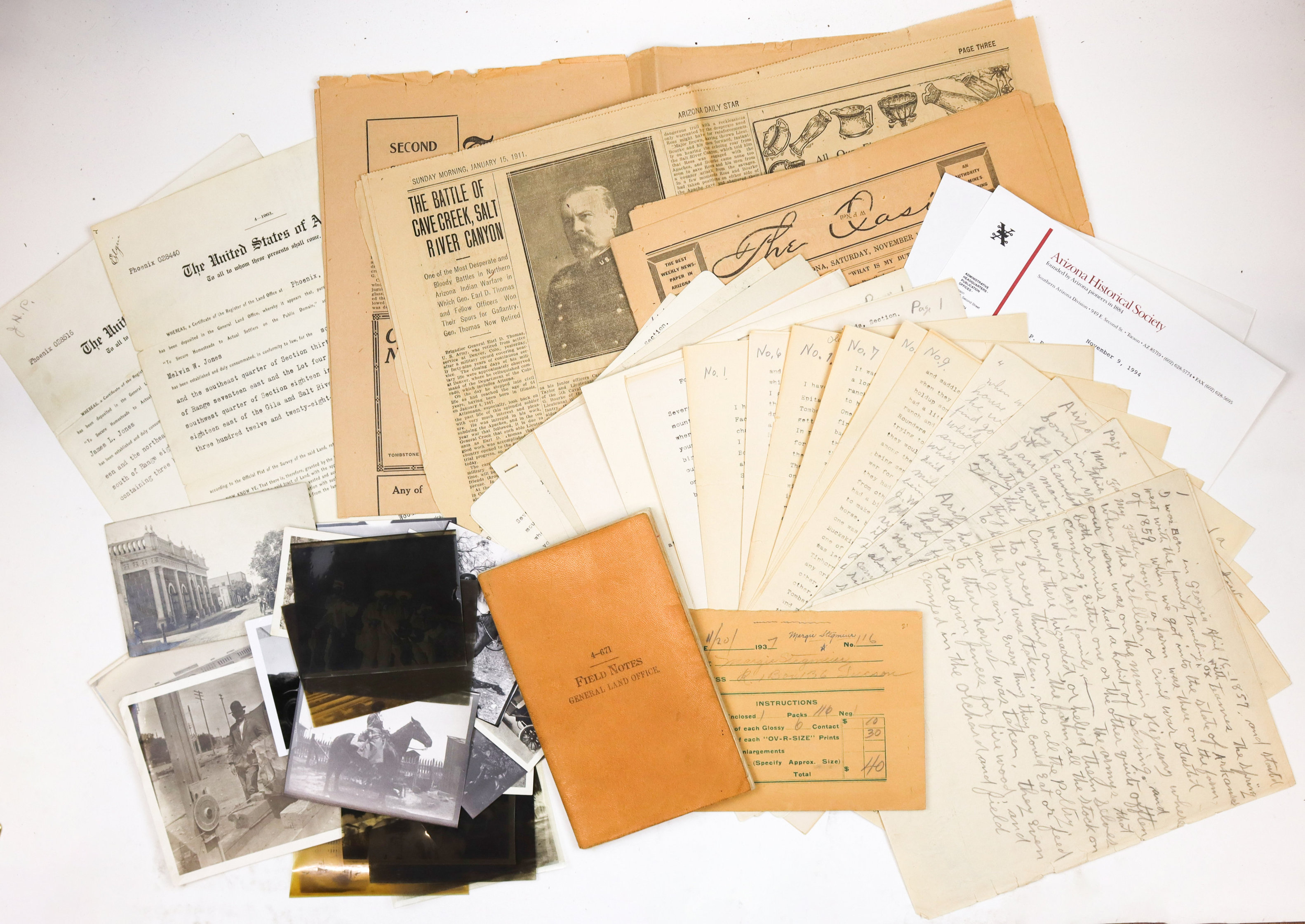
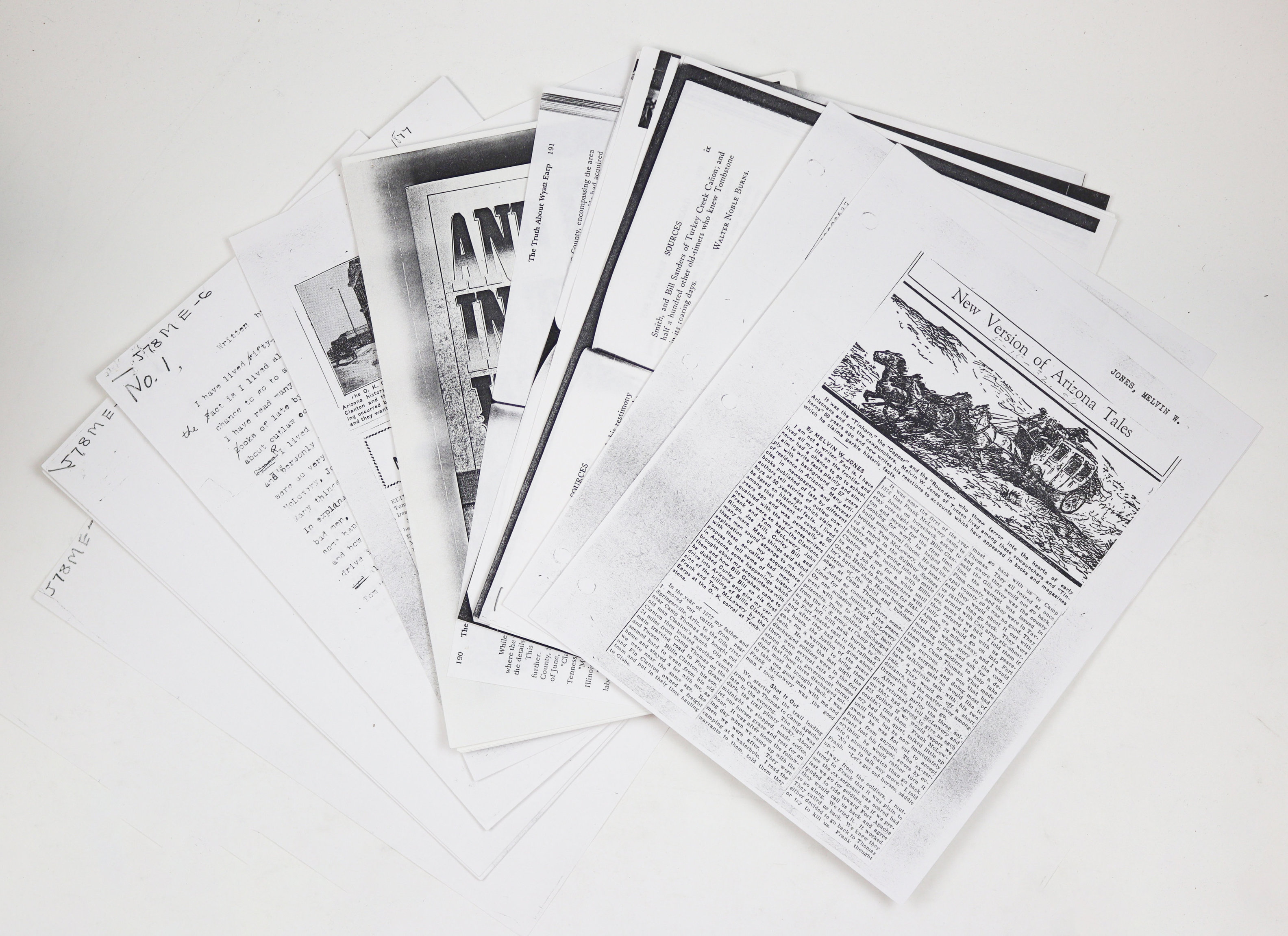
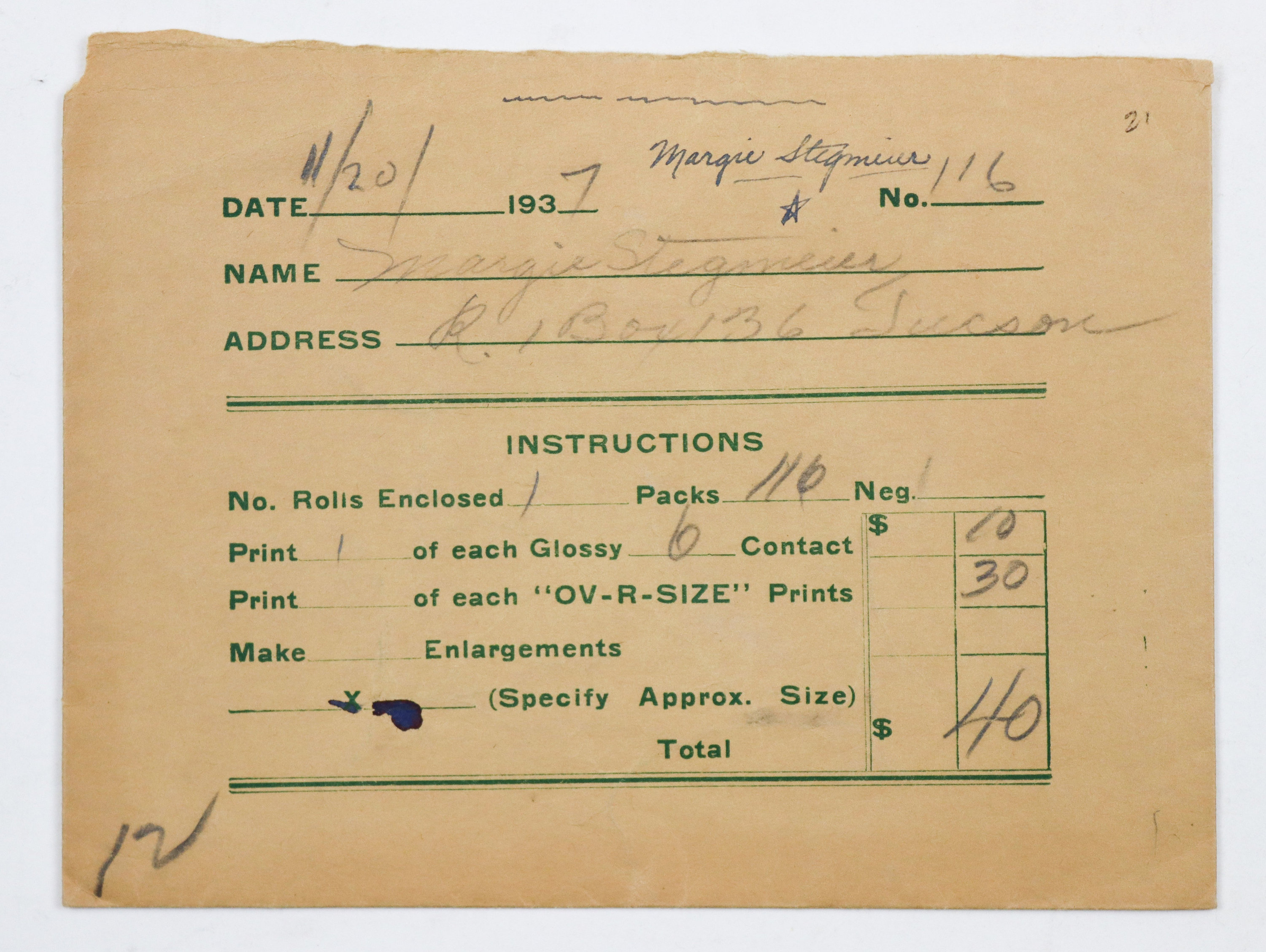
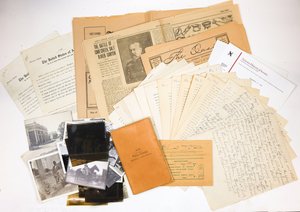
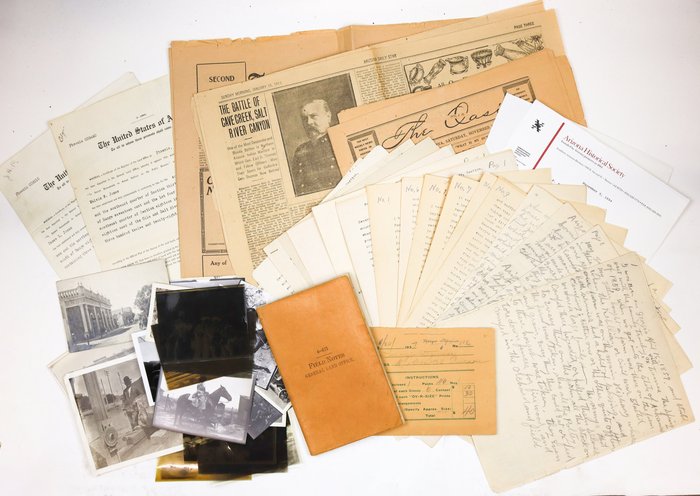
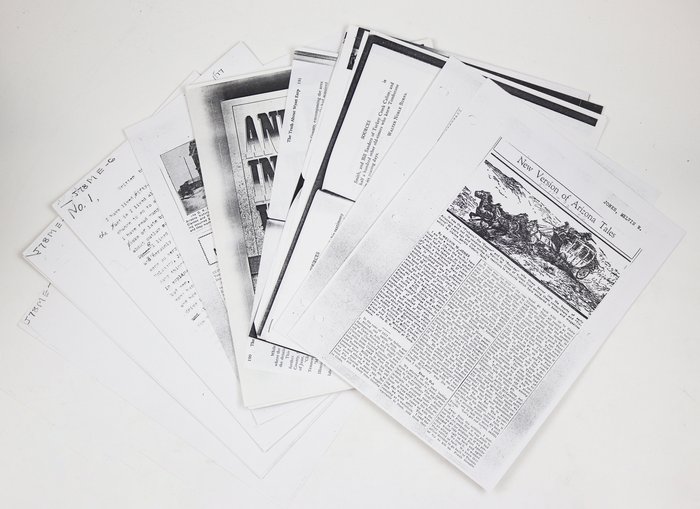
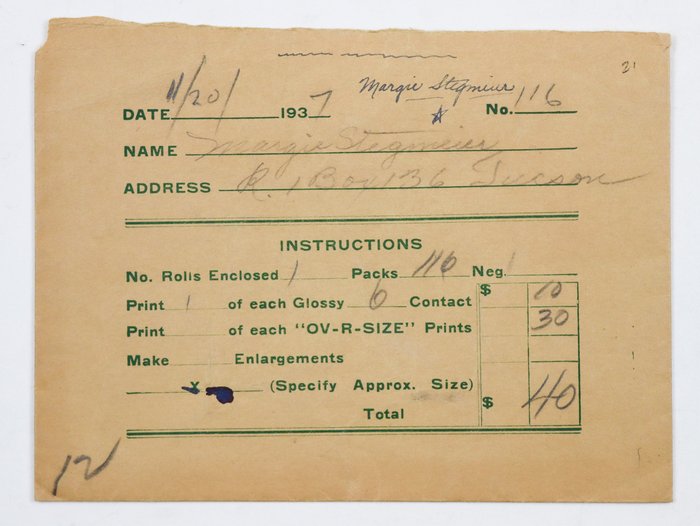
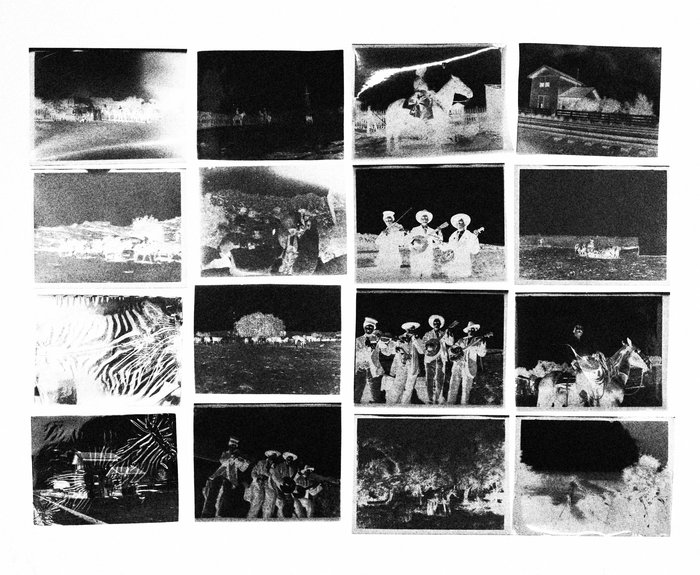
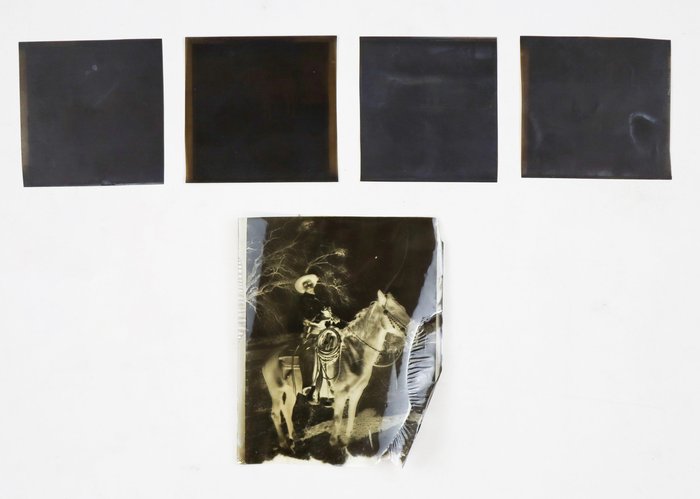
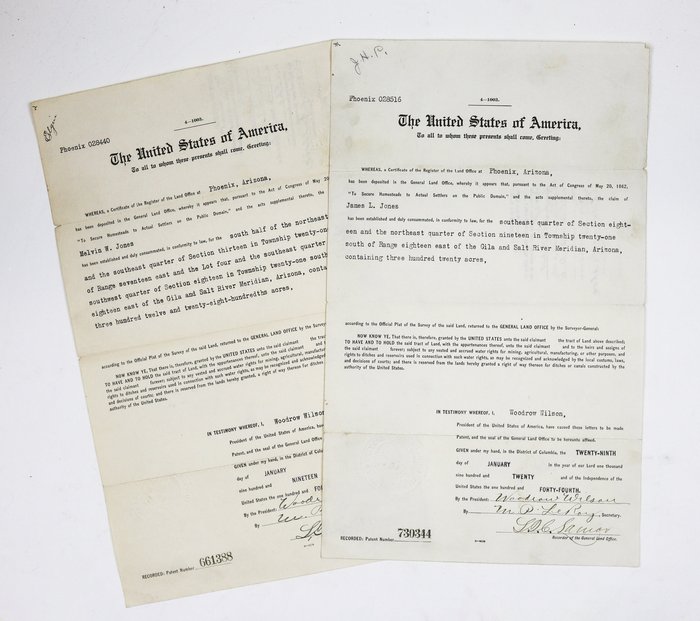
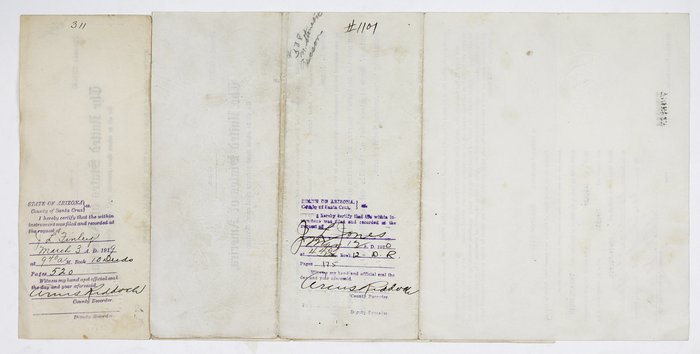
Ca. 8 pages of autograph manuscript text (in pencil), ca. 20 pages of typed manuscript text, and ca. 12 pages of typed manuscript carbon text, in all ca. 40 pages ca. 25,4x20,3 cm (10 x 8 in); 17 loose original gelatin silver photographs from ca. 12,6x17,7 cm (5 x 7 in) to 6,4x8,6 cm (2 ½ x 3 ¼ in), 21 photo negatives from ca. 8,5x10,8 cm (3 ½ x 4 ¼ in) to 5,7x5,9 cm (2 ¼ x 2 ¼ in); 1 real photo postcard ca. 8,8x13,7 cm (3 ½ x 5 ½ in) signed, addressed, and stamped; 1 period photographic film processing envelope ca. 12,6x17 cm (5 x 6 ½ in) filled in pencil to “Margie Stegmeier 11/20/1937”; 2 land patents ca. 35,5x21,4 cm (14 x 8 ½ in) with secretarial signature of Woodrow Wilson and blind-embossed seal of the United States Land Office, in all 4 pages of text; “Field Notes General Land Office Leather Notebook” ca. 18,6x11,4 cm (7 ¼ x 4 ½ in) with 11 pages of manuscript text and six newspaper clippings from ca. 15,9x8,5 cm (6 ¼ x 3 ¼ in) to ca. 2x5,8 cm (0 ¾ x 2 ¼ in); ca. 18 pages of period newspapers (including newspapers “Tombstone Epitaph” (second section) of December 26, 1926 and “The Oasis” of November 17, 1927) and two newspaper clippings mounted on a paper; with two signed letters (including one carbon copy) ca. 28,2x 21,6 cm (11 x 8 ½ in) exchanged between Robert P. Palazzo and Arizona Historical Society; and ca. 56 pages of xerox copies of Melvin’s articles, obituaries, reminiscences, his mentions in the writings of different authors, etc. Manuscript leaves mostly toned with some wear, one leaf lacks a small fragment at the lower left corner (no text affected); typed manuscripts and carbon copies with occasional fold marks and pencil/pen corrections; photographs slightly age-toned; envelope worn; field notes leather notebook with glue marks and the loss of a small fragment at the corner of the first page (no text affected), newspapers with minor tears at the edges and fold marks, but overall a very good historically interesting archive.
An important, extensive archive of original and typed manuscripts, official documents, newspapers, field notes, gelatin silver photographs, and photo negatives from the pioneer days of Arizona Territory, with interesting notes about early Apache raids and violent killings of local settlers, the alternative story behind the O.K. Corral Gunfight, and the origins of Tombstone, also known as “the deadliest town in the West.”
Arizona, formerly part of the New Mexico Territory, was organized as a separate U.S. territory in 1863. In the early 1860s, it became a peripheral theater of the Civil War, with Confederate forces briefly occupying Tucson before being driven out by the Union’s California Column. The following decades saw rapid growth driven by migration and discoveries of gold near Prescott in 1863, silver at Tombstone in 1877 and copper at Bisbee. This expansion unfolded amid frequent conflict with Apache groups and widespread frontier lawlessness, with raids and outlaws shaping daily life. The arrival of the railroad in 1880 accelerated development, and by the early 20th century the population exceeded 100,000, leading to statehood in 1912.
The archive relates to Arizonian pioneer Melvin W. Jones (ca. 1859-1933), born in Georgia in 1857. He came west to Arizona Territory with his family in 1875 and settled near Fort Thomas where his father bought a ranch from the local outlaw Ike Clanton (ca. 1847-1887). In this early frontier setting Melvin became acquainted with many criminals of the Tombstone era, including Billy Clanton (ca. 1862-1881), Frank (ca. 1849-1881) and Tom McLaury (ca. 1853-1881) (participants in the O.K. Corral gunfight – a brief 1881 shootout in Tombstone, Arizona, between the Earp brothers and Doc Holliday on one side and the Clanton–McLaury gang on the other), Johnny Ringo (ca. 1850-1882), Joe Hill (ca. 1849-1884), and “Curly Bill” (ca. 1845-1882) (all associated with opposition to the Earp/Holliday faction). Jones later served as Justice of the Peace at Fort Thomas, ran a ranch on the Gila River, and frequently visited Tombstone during its most turbulent years. He eventually settled in Tucson, where he operated a monument business with his son James and later wrote newspaper articles on early Arizona life.
The collection offers a first-hand account of Arizona Territory written and collected by one of its earliest settlers and includes:
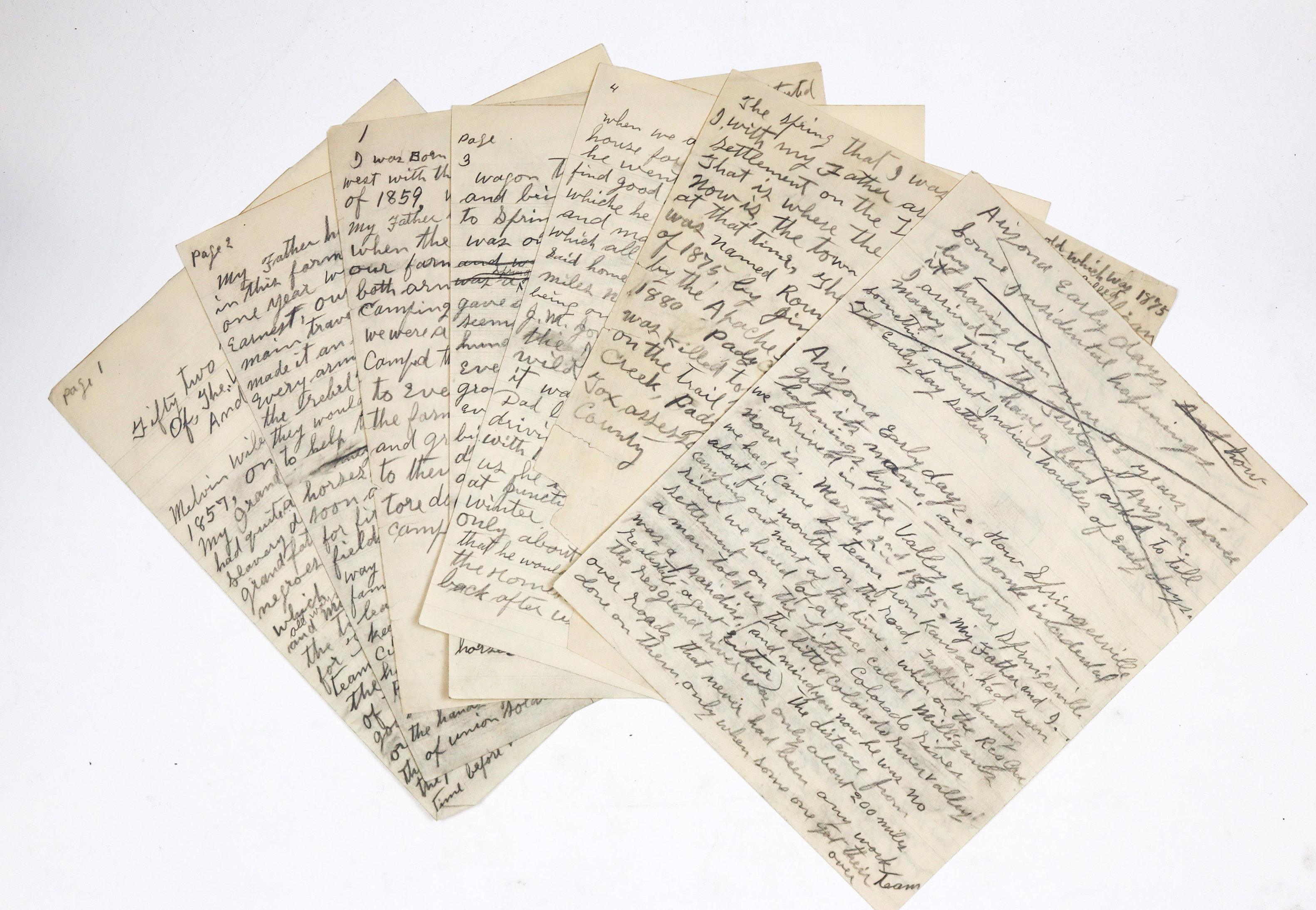
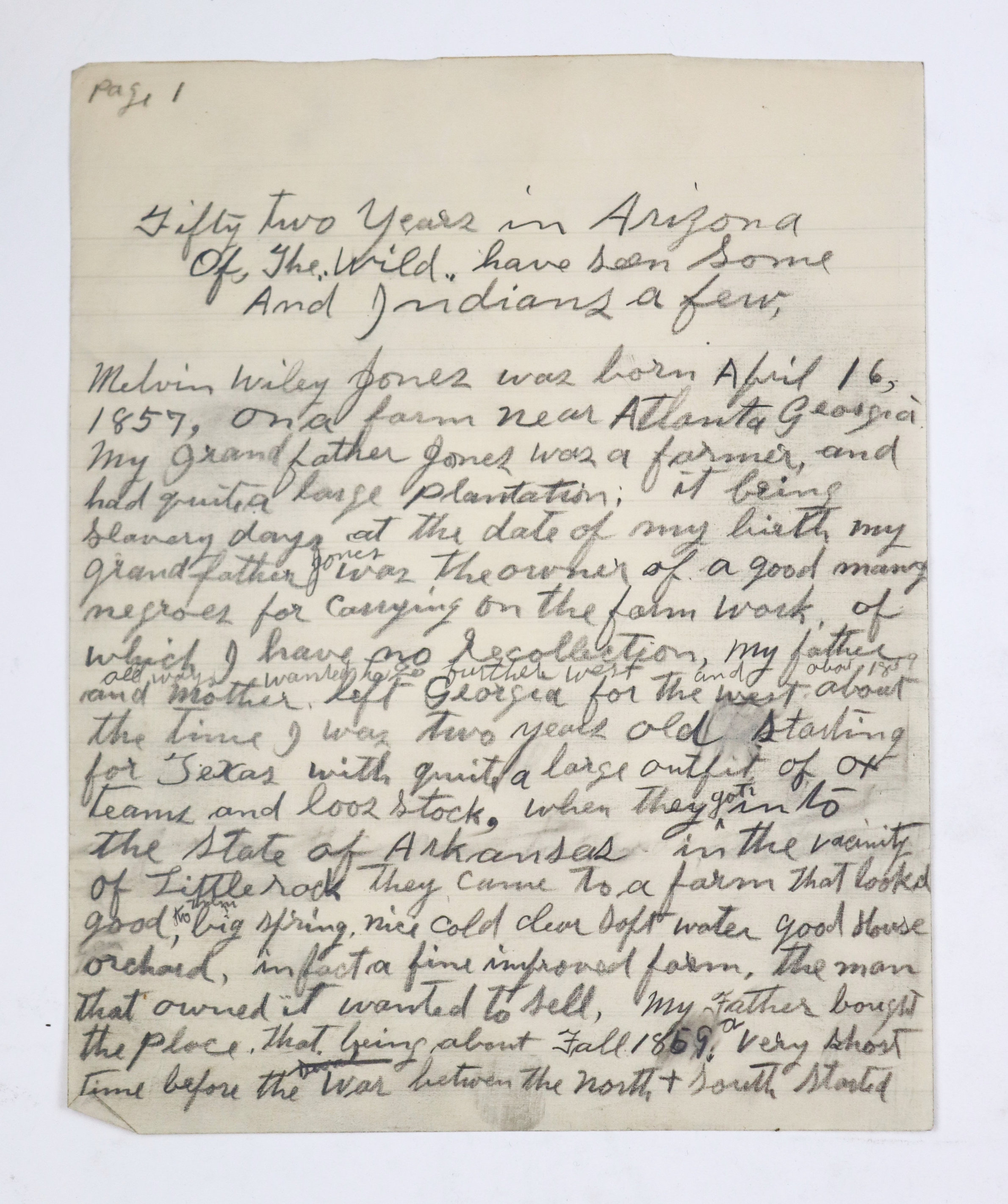
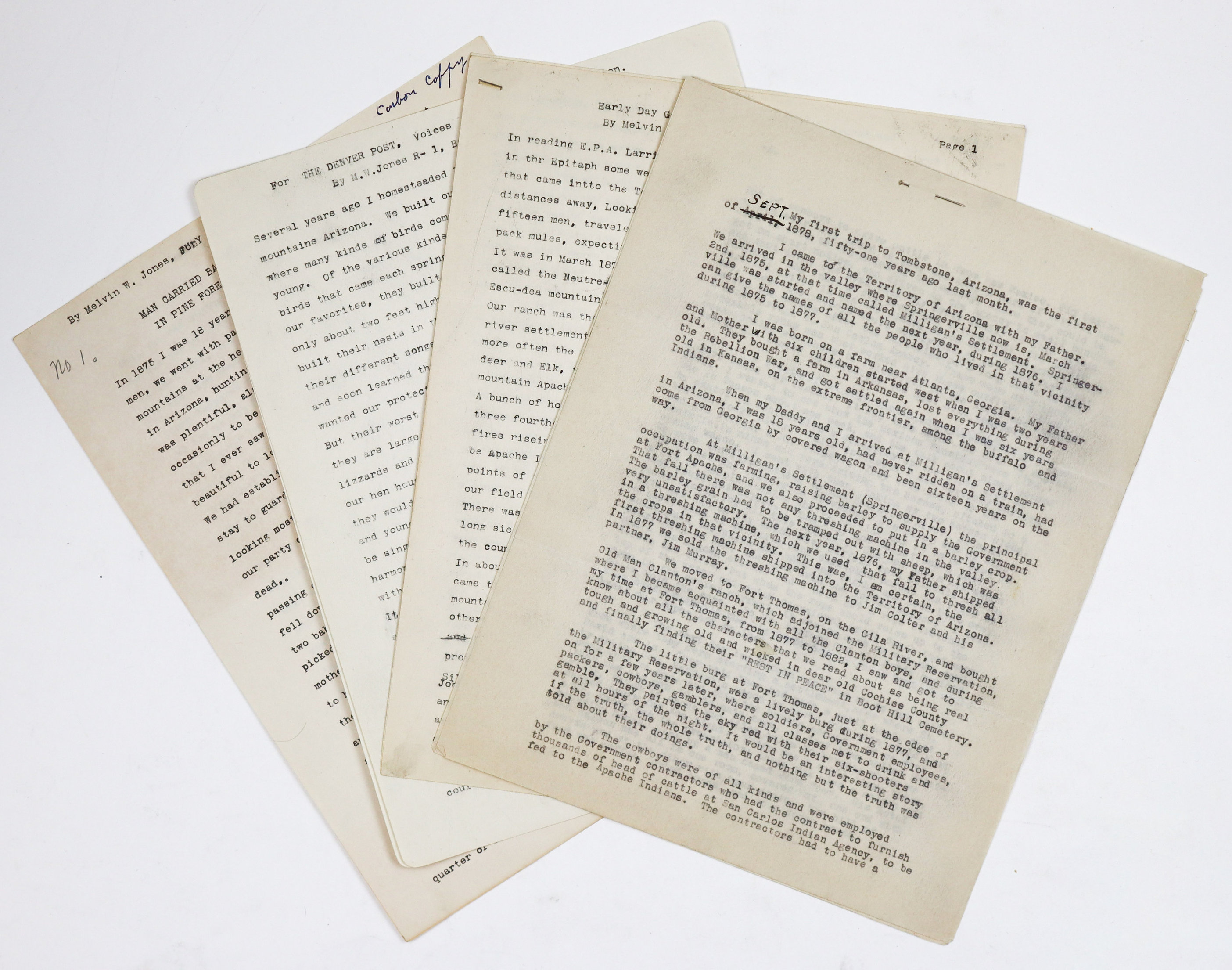
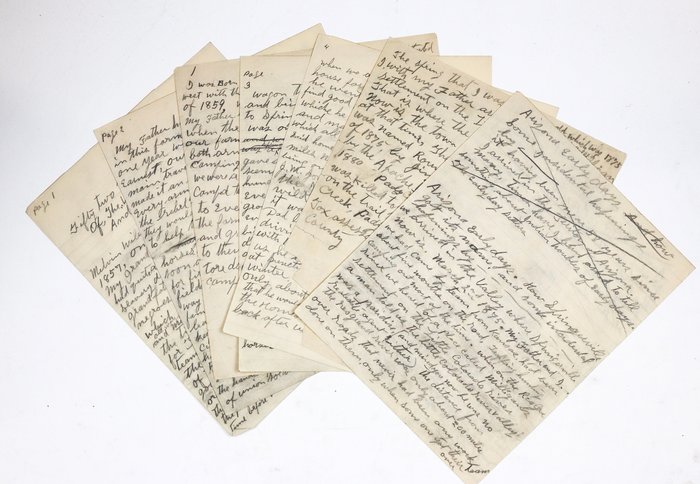
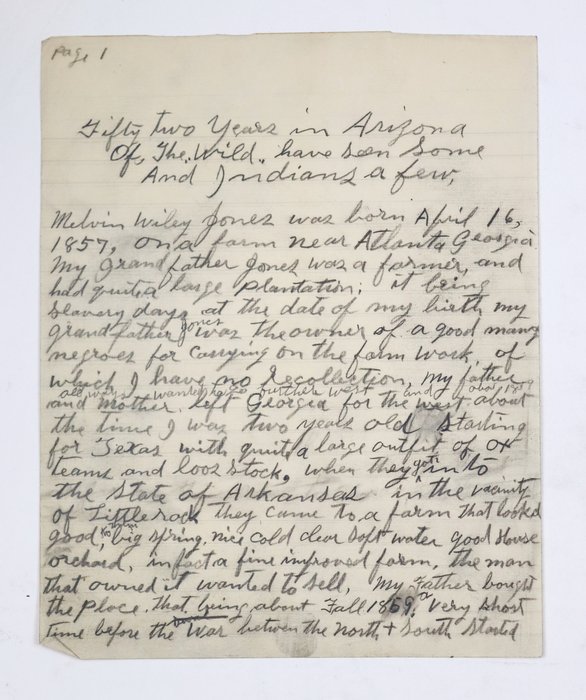
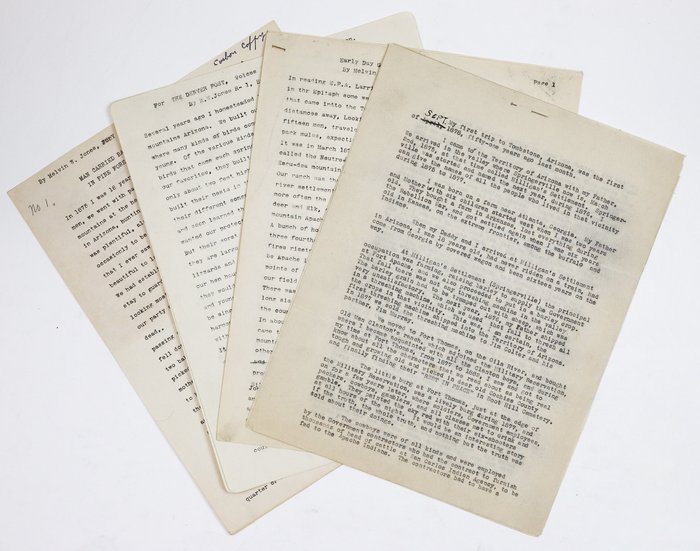
— About eight pages of autograph manuscripts written by Melvin and spanning the period from 1857 to 1875. In this autobiographical account, the author describes his early life in Georgia and notes owning “a good many negroes” who worked at the family farm. He then describes the family’s westward migration, their rise to prosperity in Arkansas, and the disruption of the Civil War. Importantly, Melvin complains how both Union and Confederate troops devastated their property, and mentions a gang of outlaws who “went around the country taking everything they wanted.” The account continues with the family’s forced removal by Union soldiers to a refugee camp in Missouri and their journey to the Little Colorado River valley (Arizona), which Melvin notes was named by Jim Richmond, a later victim of Apache Indians.
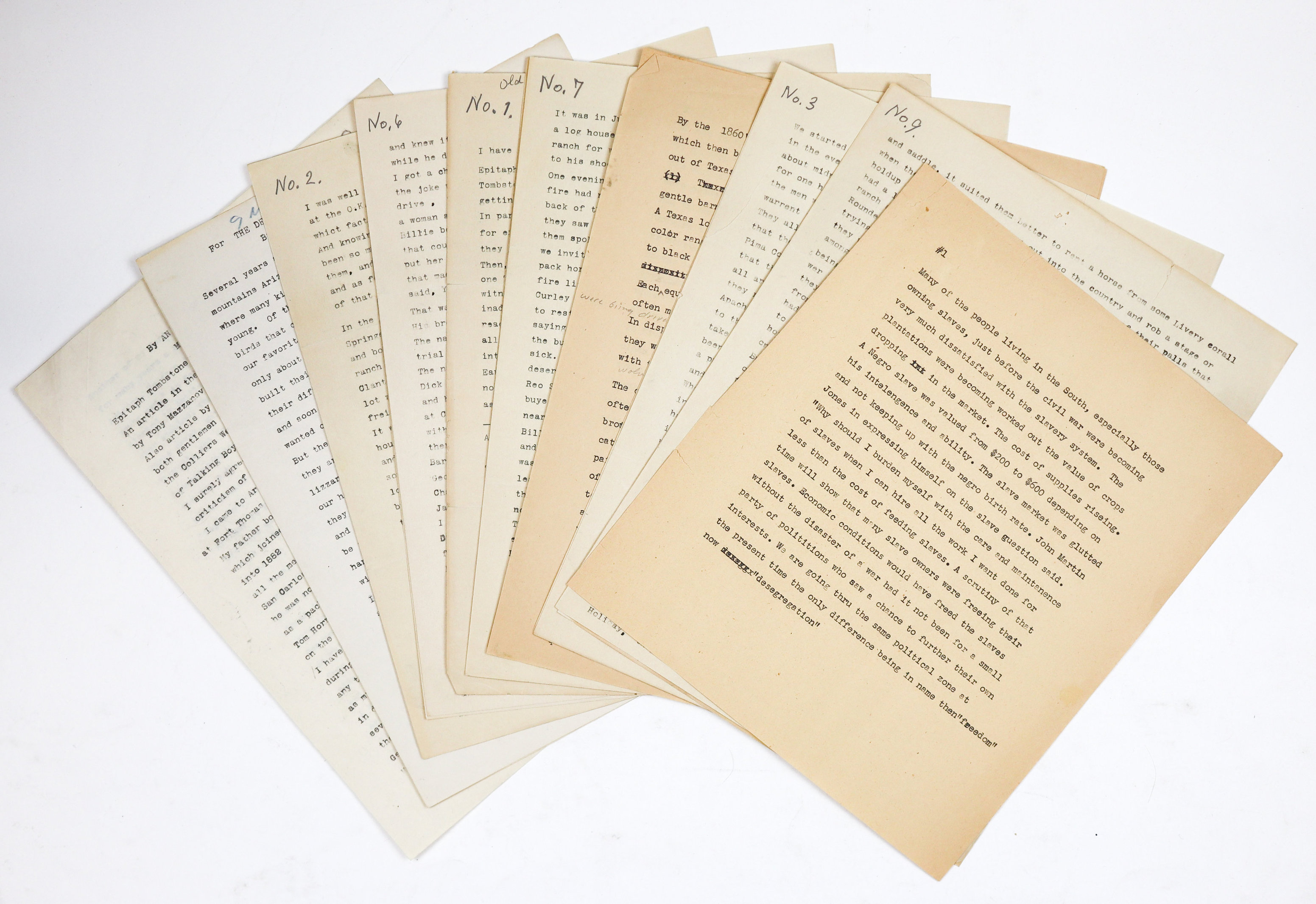
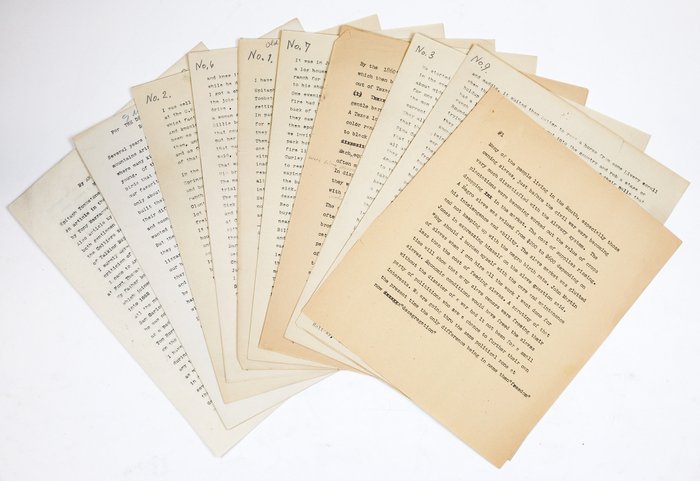
— About twelve pages of typed manuscript carbons shift to a first-hand account of early days in Arizona, with interesting references to Native Tribes near Springville and Fort Thomas. In the text, the author talks about peaceful encounters with Zuni Indians, the pervasive fear of White Mountain Apache raids, and the forced migration of established ranchers to Tombstone. Especially interesting are Jones recollections of the newly-founded San Carlos Indian Agency aka “Hell’s Forty Acres” and the violent killing of its Chief of Indian Police (George Sterling) by local Indians. Importantly, he also notes the early practice of the government contractors driving herds of cattle from New Mexico for forcibly relocated Apaches. The author also mentions several pioneer settlers, including James Lamb (ca. 1821-1884), P Al Sieber (ca. 1843-1907), Perry McMurran, William O. Tuttle.
Another interesting section of Jones’ writings concerns some of the most famous local outlaws and the notorious Gunfight at the O.K. Corral. In the text, the author describes his close ties with Frank McLaury and controversially suggests the Tombstone shootout stemmed from “dark secrets” McLaury held against the Earp brothers. Melvin also discusses the real identity of “Curley Bill,” recalling his encounter with the wounded outlaw and the lesser-known origin of his nickname. In the rest, he goes on to defend working “cowpunchers” against “tinhorn” gamblers and refers to Curly Bill’s alleged involvement in the death of Marshal Fred White (ca. 1849-1880). Among other early Arizonian criminals mentioned are Tom McLaury, Doc Holliday (ca. 1851-1887), and Dick Lloyd (?-1881).
Importantly, the typescript also includes Melvin’s description of his 1878 expedition to the Schieffelin silver mines, documenting the origins of Tombstone (est. in 1879) through the eyes of its pioneer prospector. Melvin portrays “Waterville” (precursor to Tombstone) as an undeveloped settlement of bear-grass shacks, describes its early buildings (store, saloon, boarding house), and details prospectors’ usual meal (coffee, sourdough, and bacon). The narrative concludes with his decision to decline a share in a promising claim and continue on to Warren’s Camp (later Bisbee). It also describes the early craze over the “Adams Lost Mine” and Melvin’s unsuccessful 1876 expedition to locate its gold using a dead man’s map from San Francisco.
In the rest of the text, the author discusses the value of enslaved people before the Civil War and growing dissatisfaction with slavery in the South, the importation of one of the first threshing machines into Arizona, an encounter with Quantrill in Bisbee, sightings of jaguars in the pine forests at the headwaters of the Little Colorado River (now largely extirpated from the United States), the crossing of the flooded San Pedro River with the help of Mormon settlers, and different types of birds in his homestead in the Huachuca mountains, among other episodes.
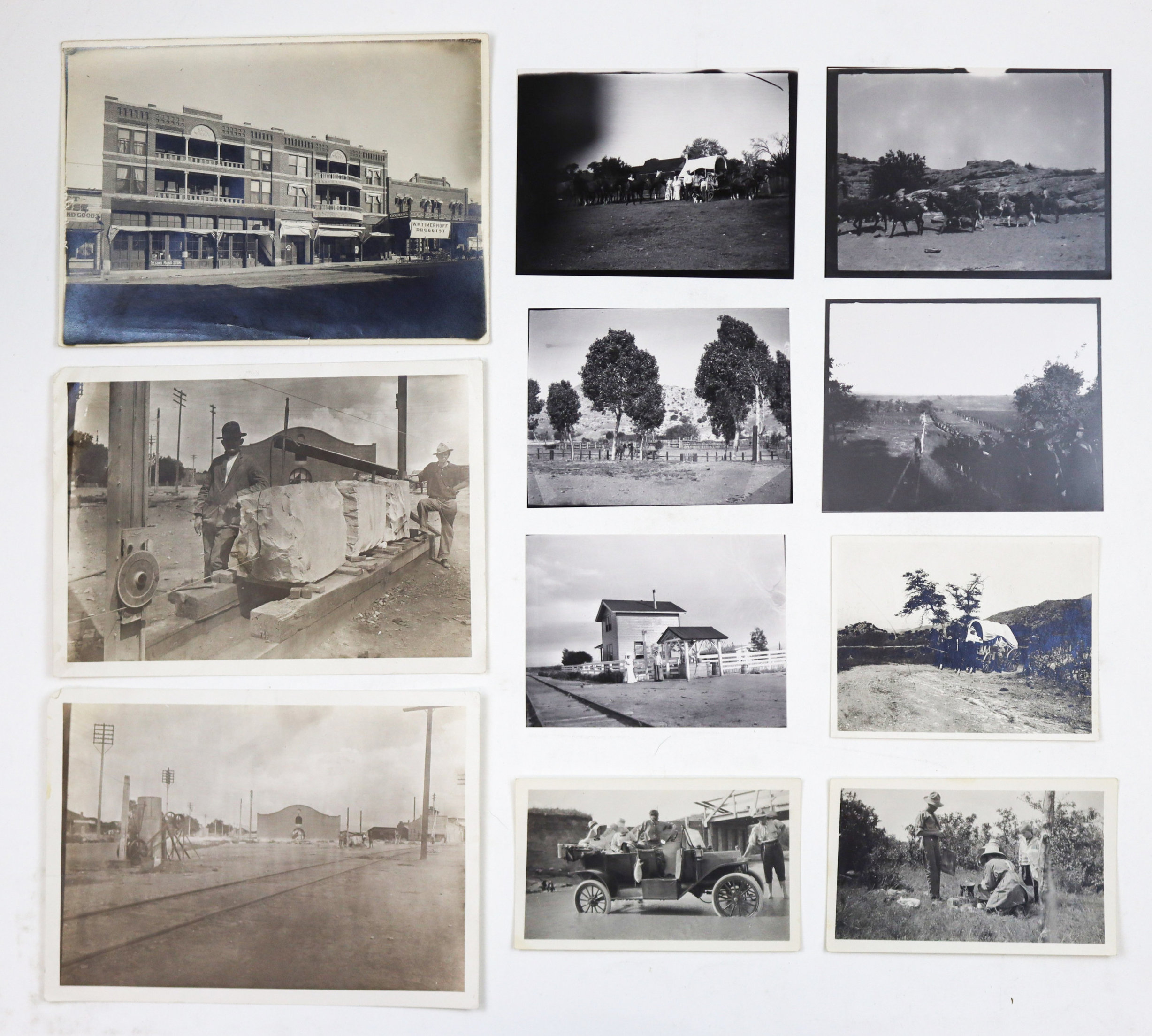
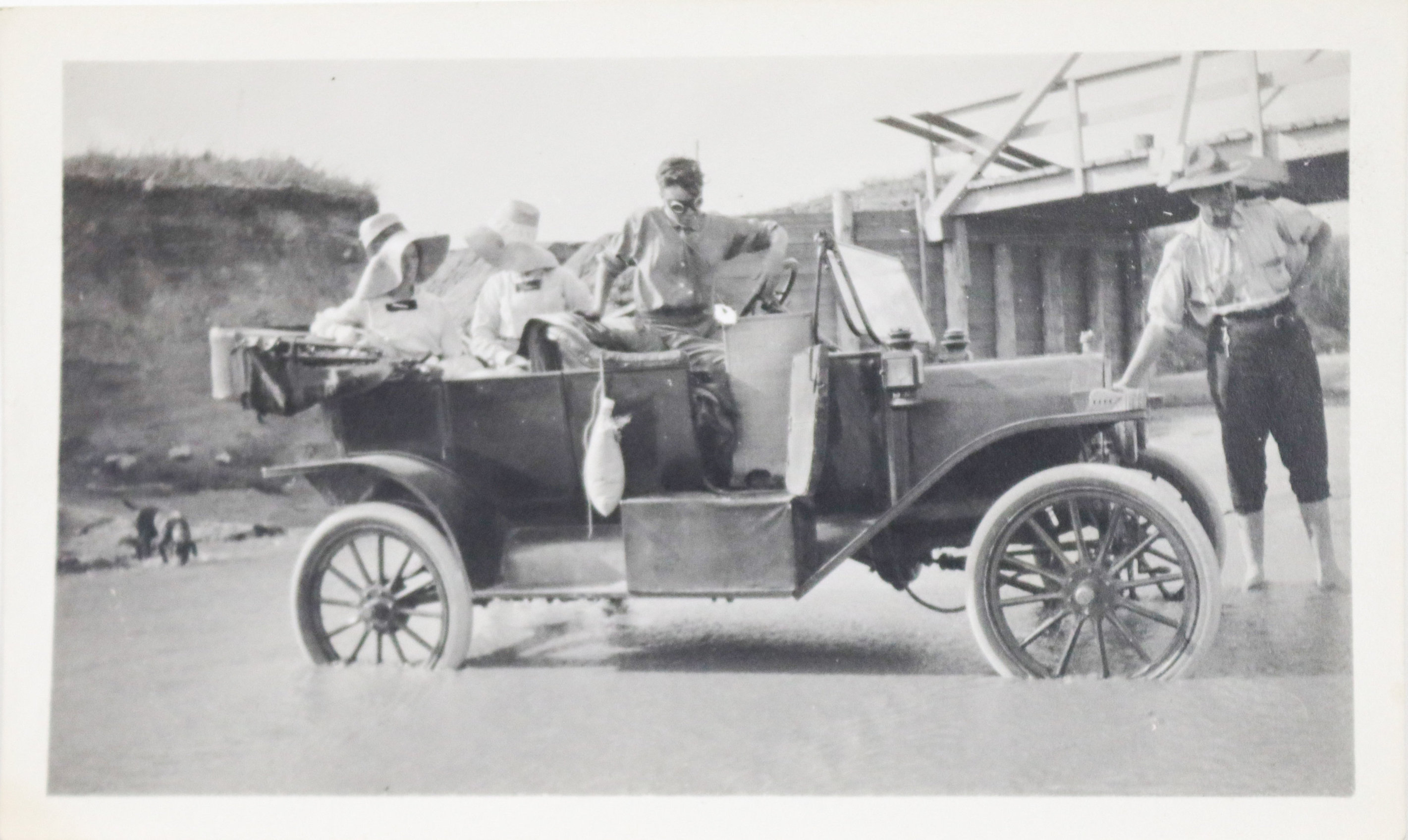
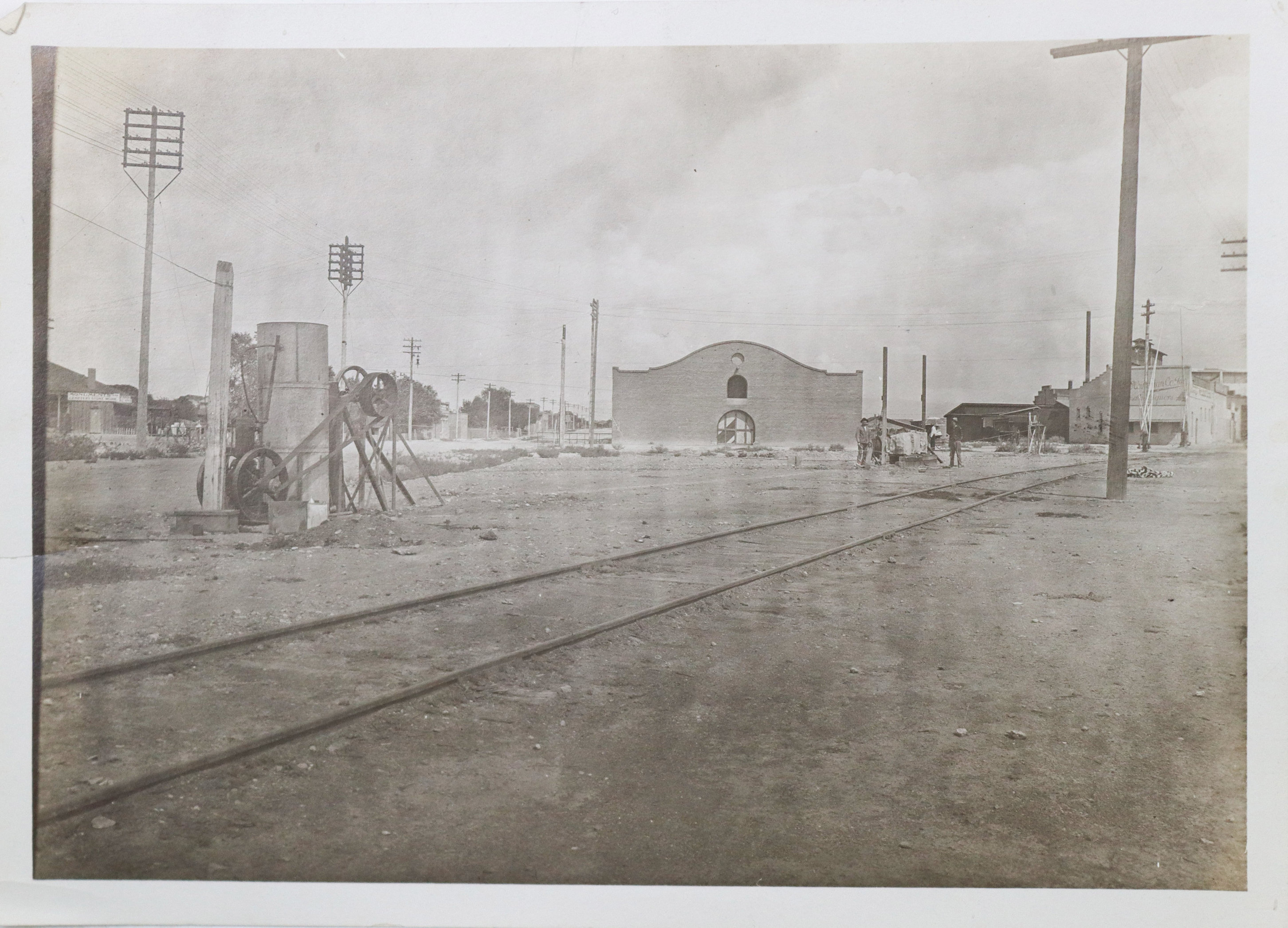
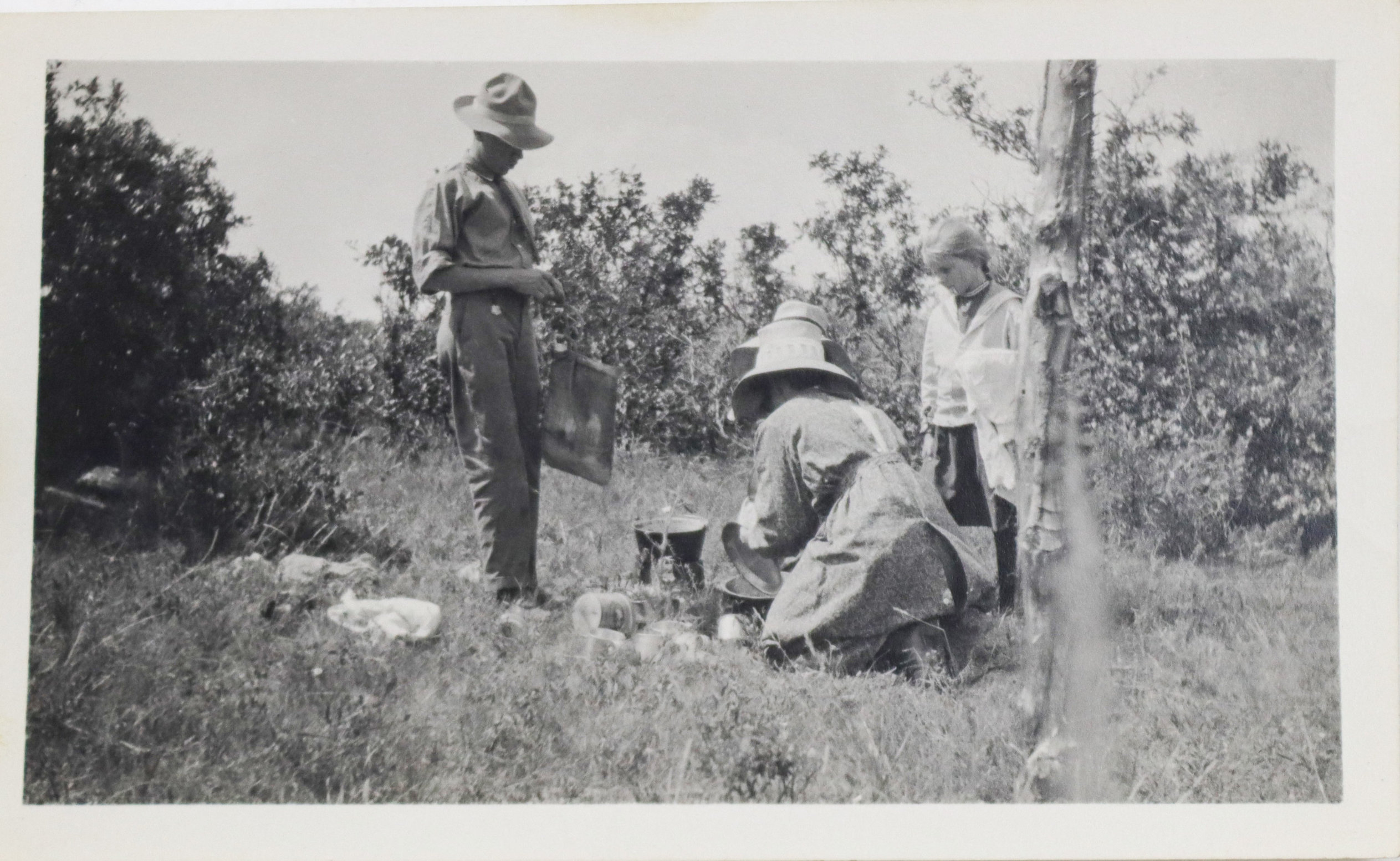
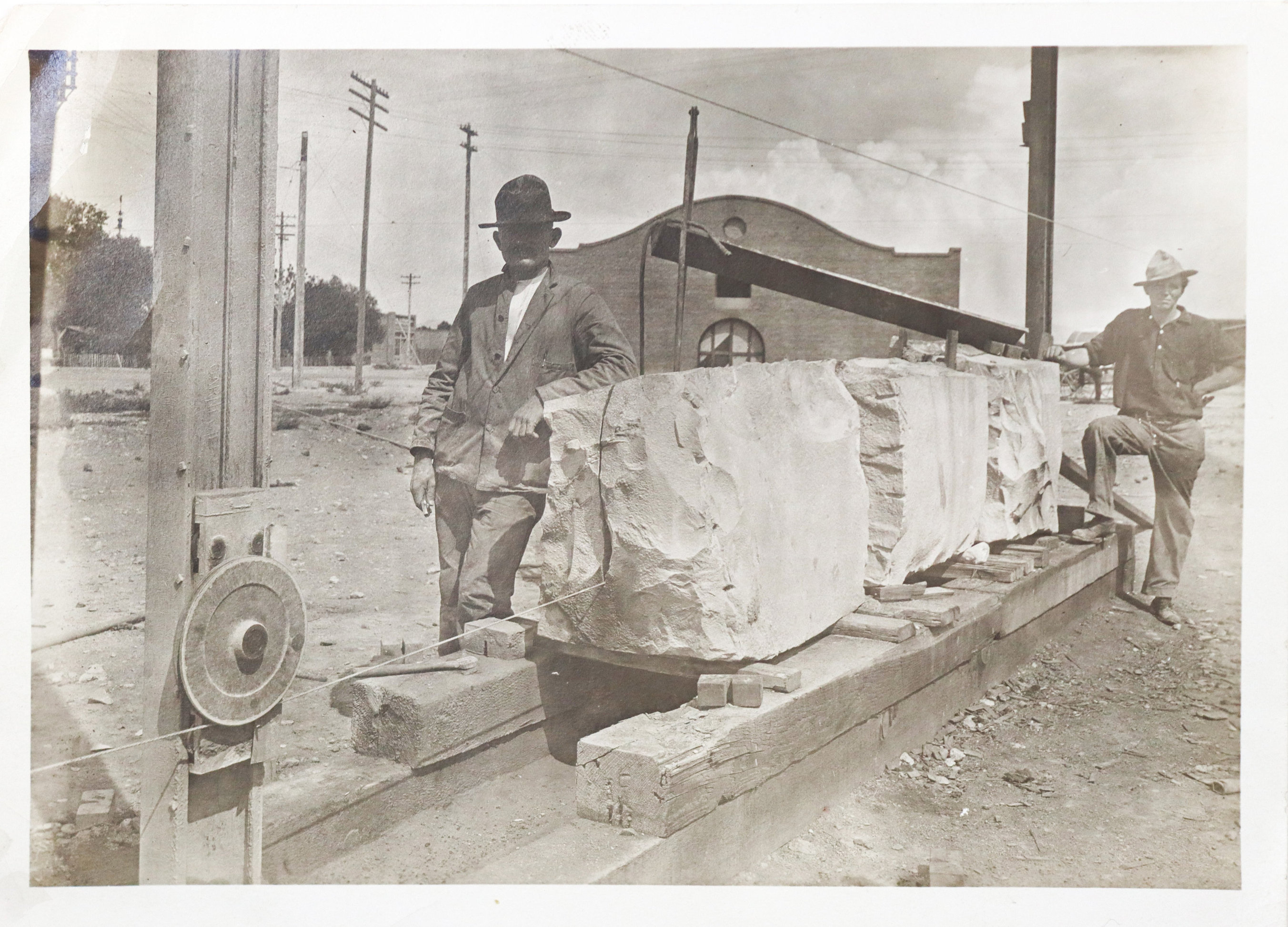
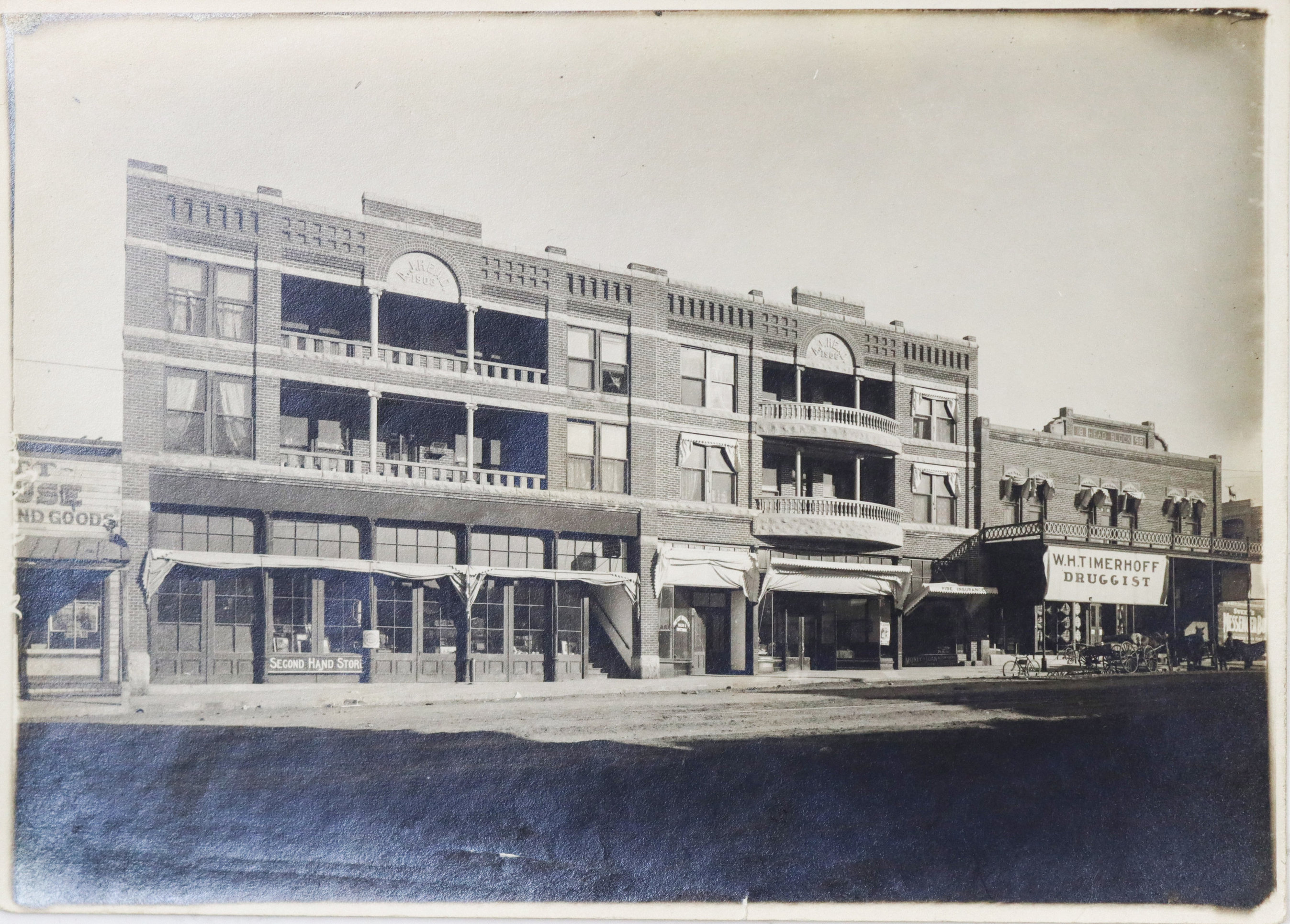
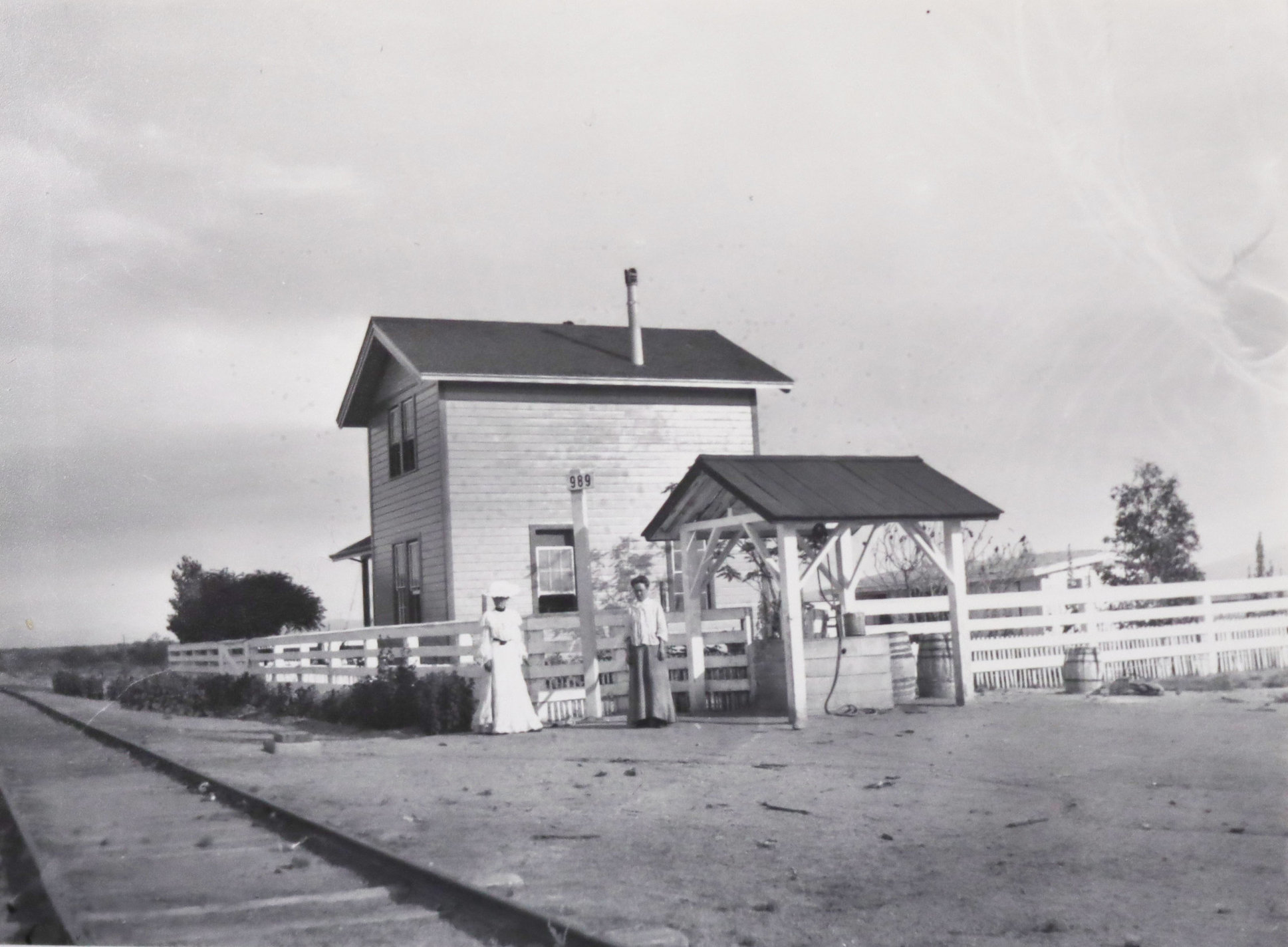
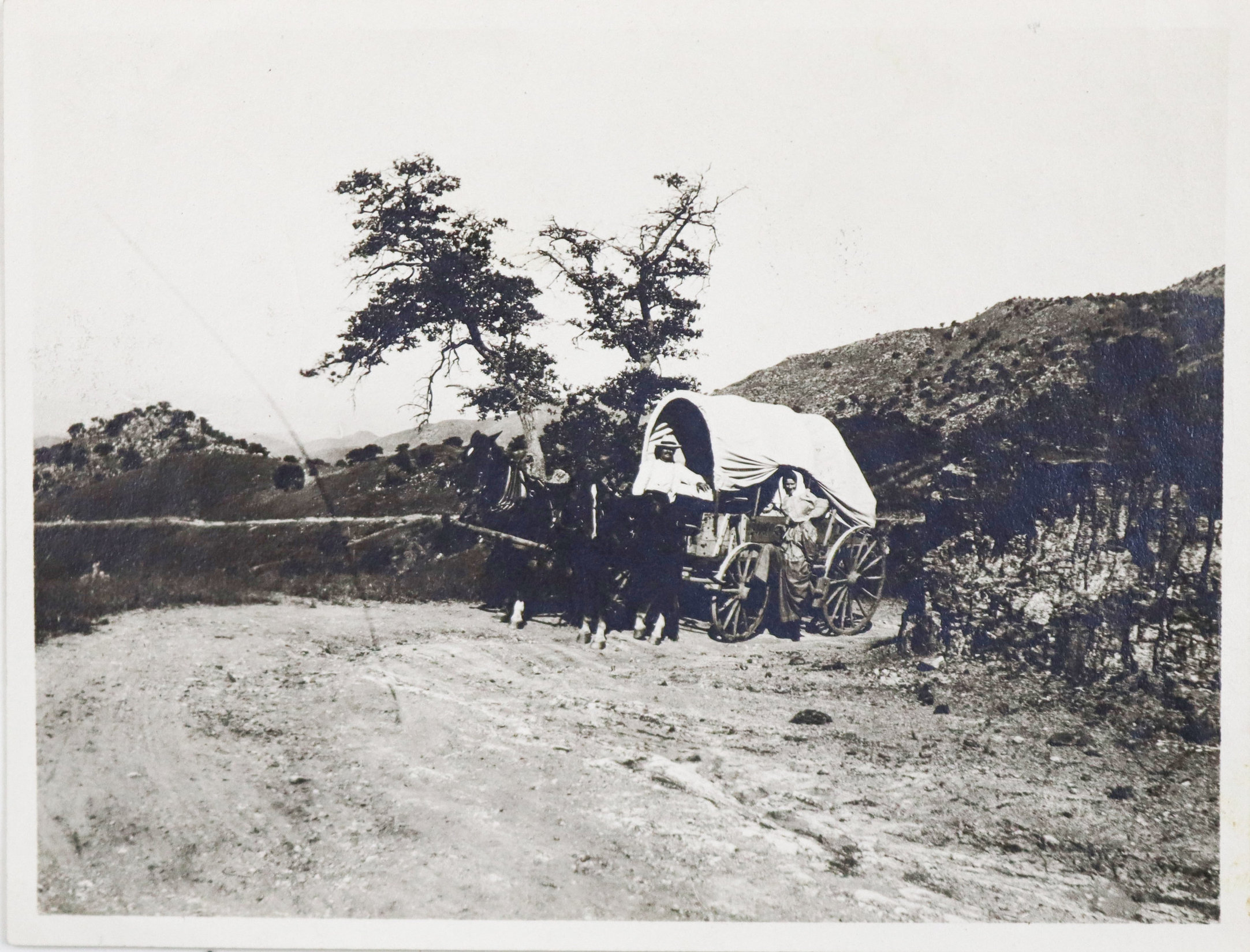
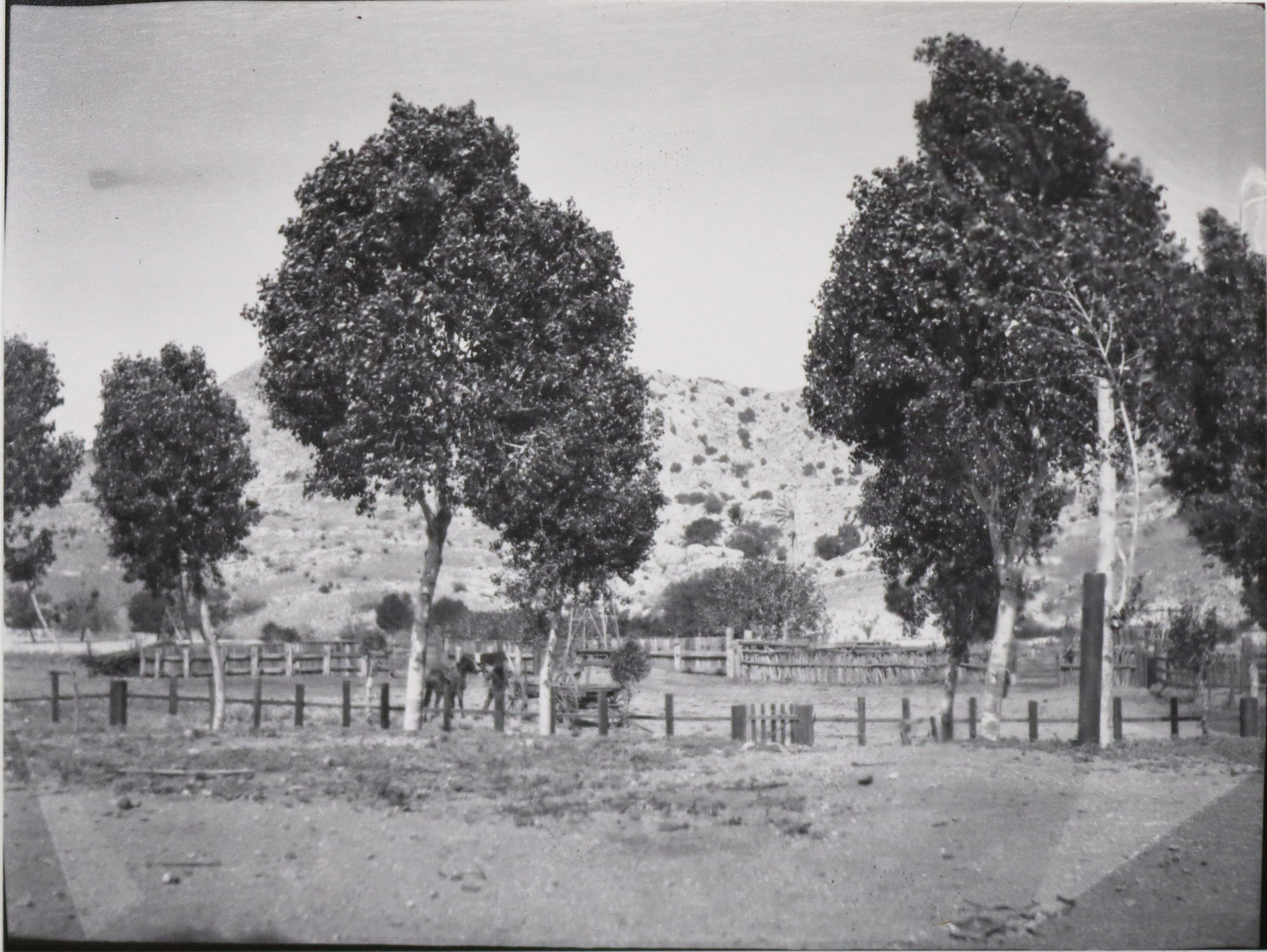
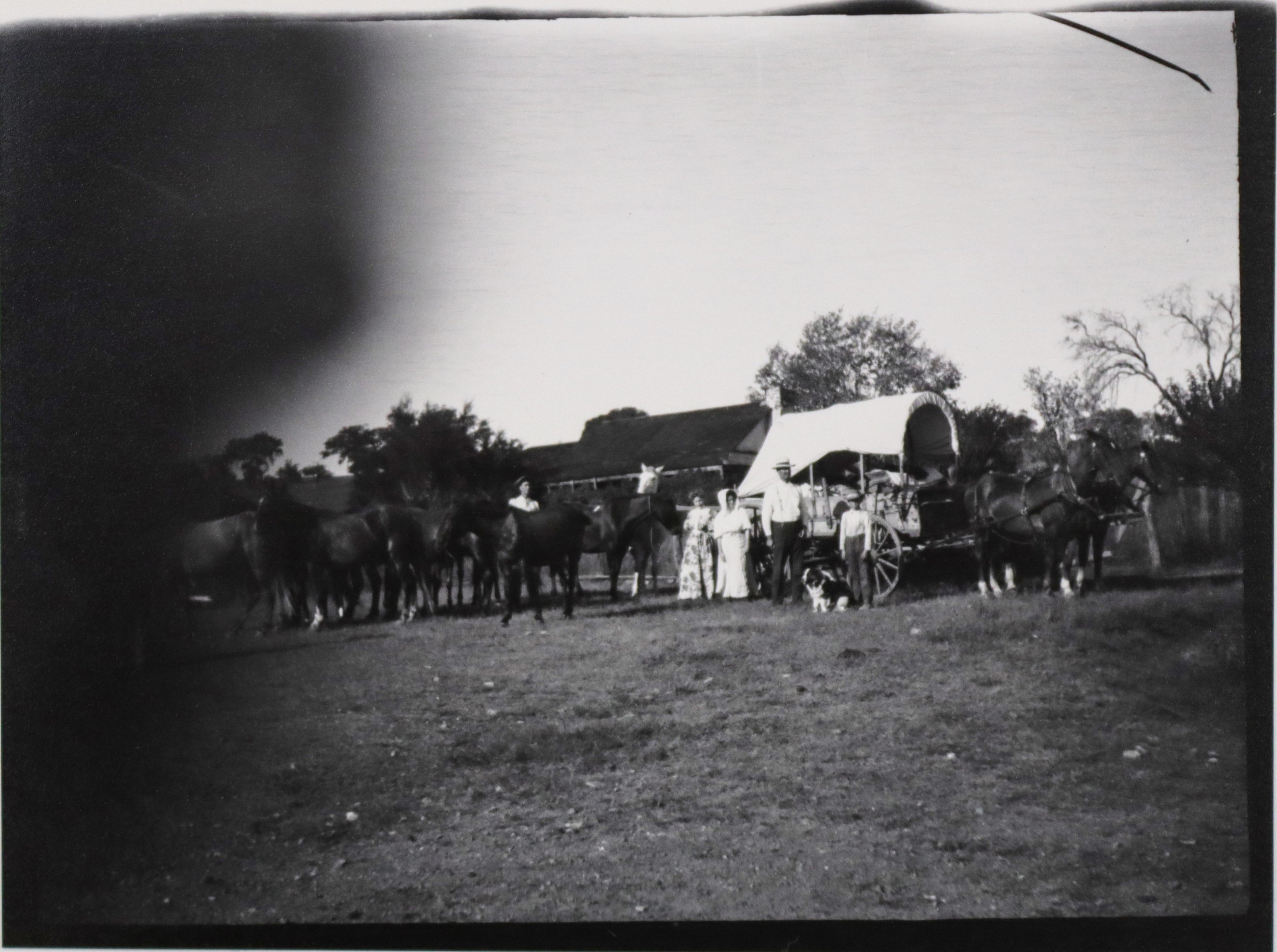
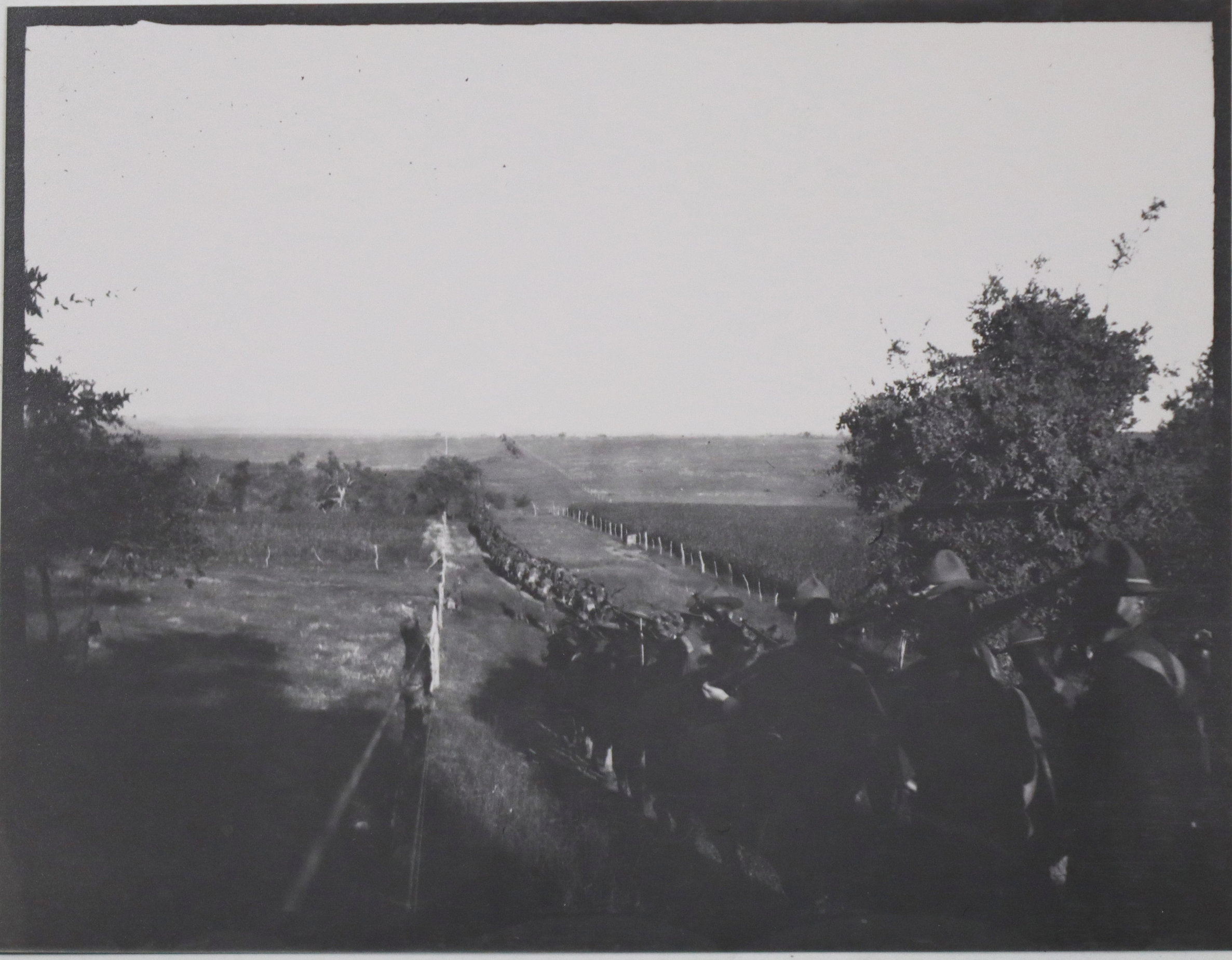
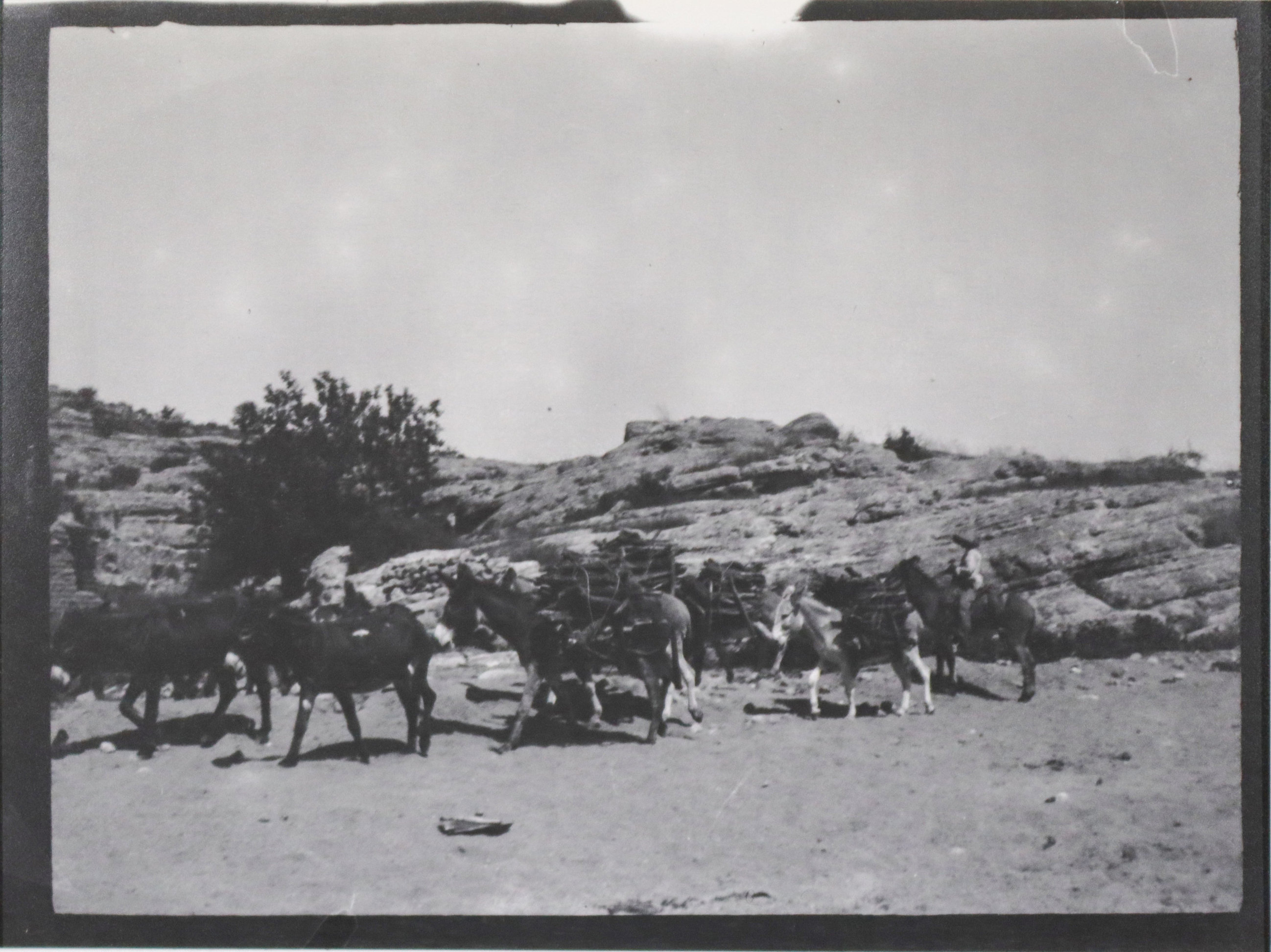
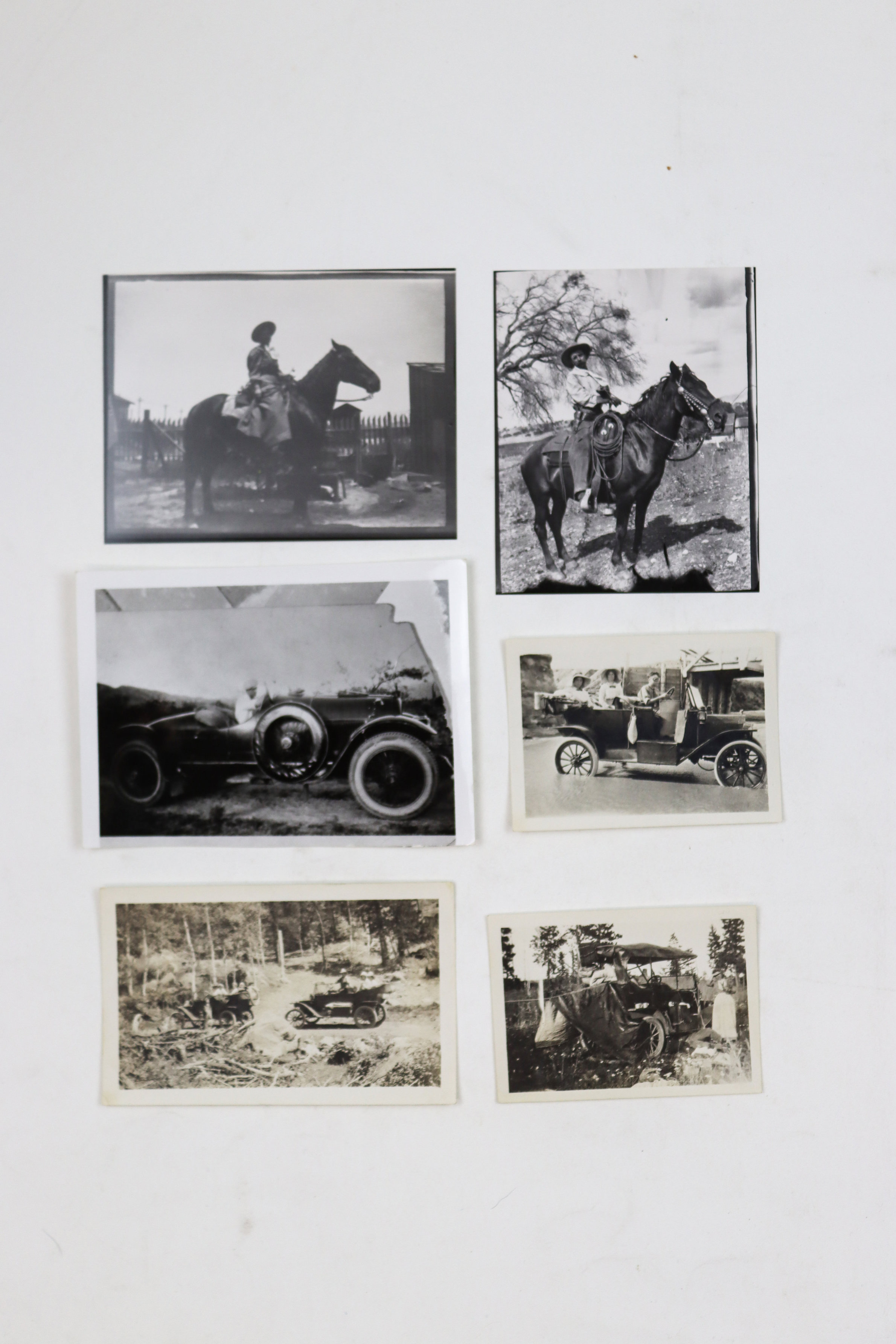
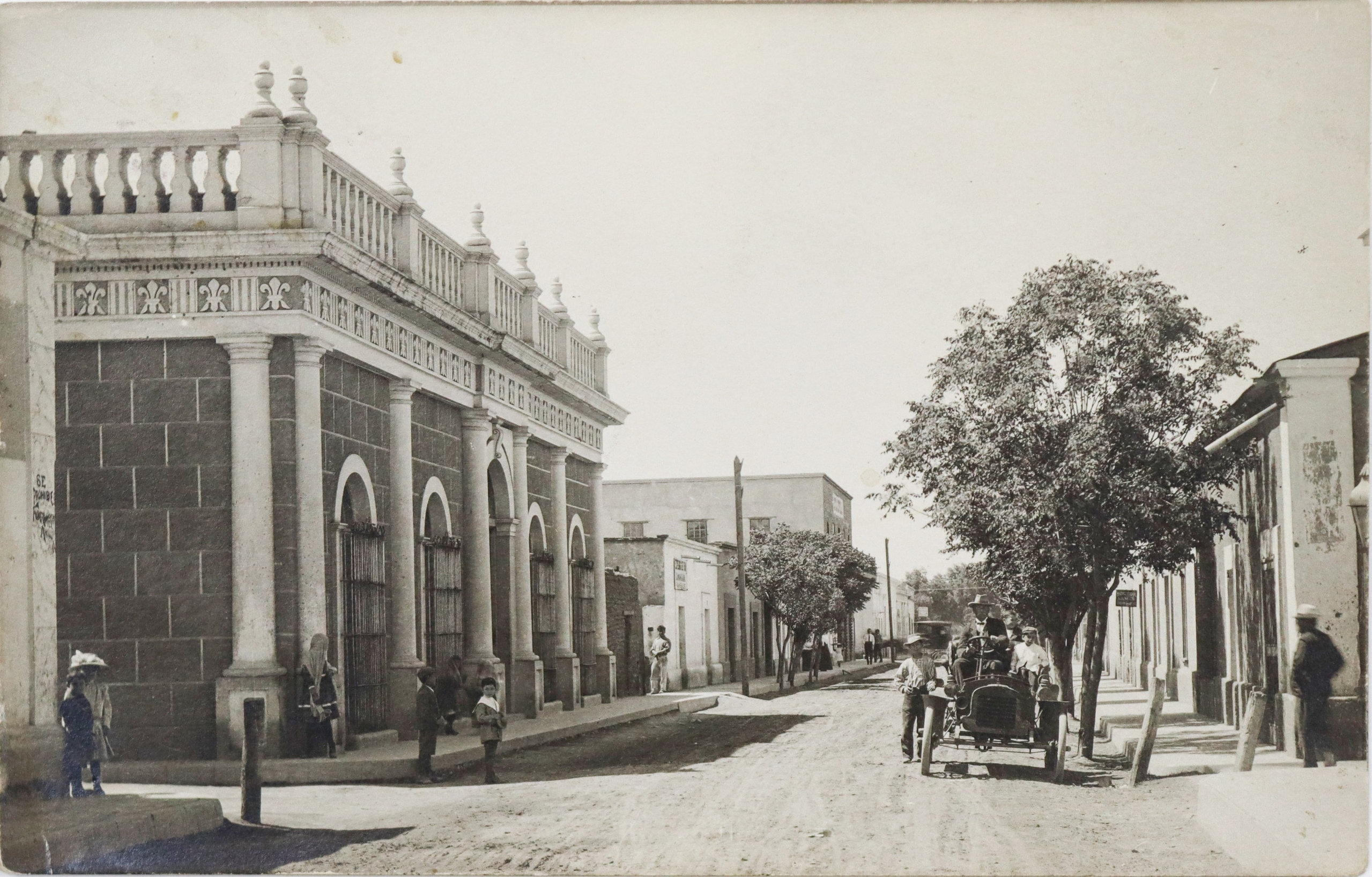
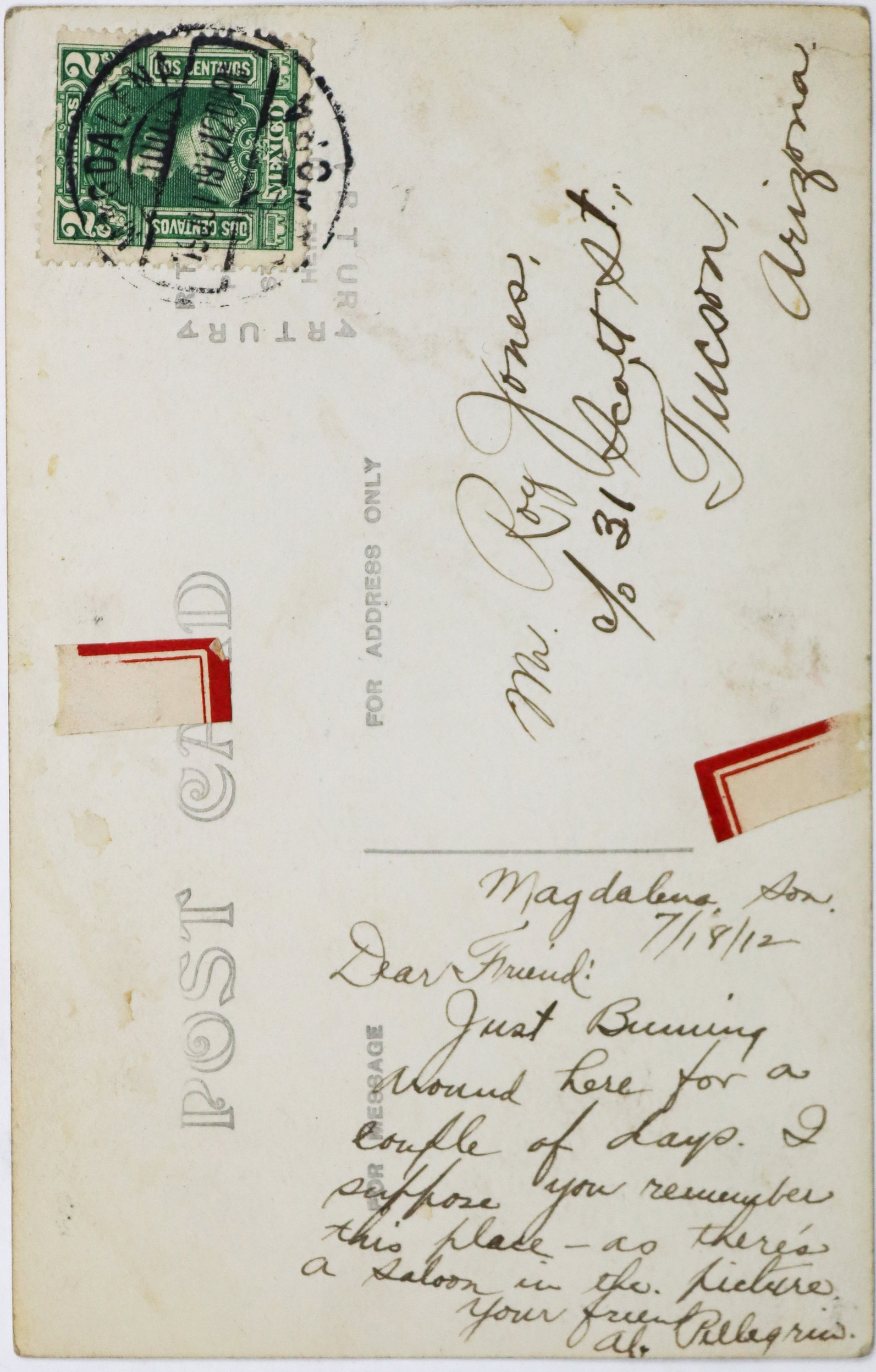
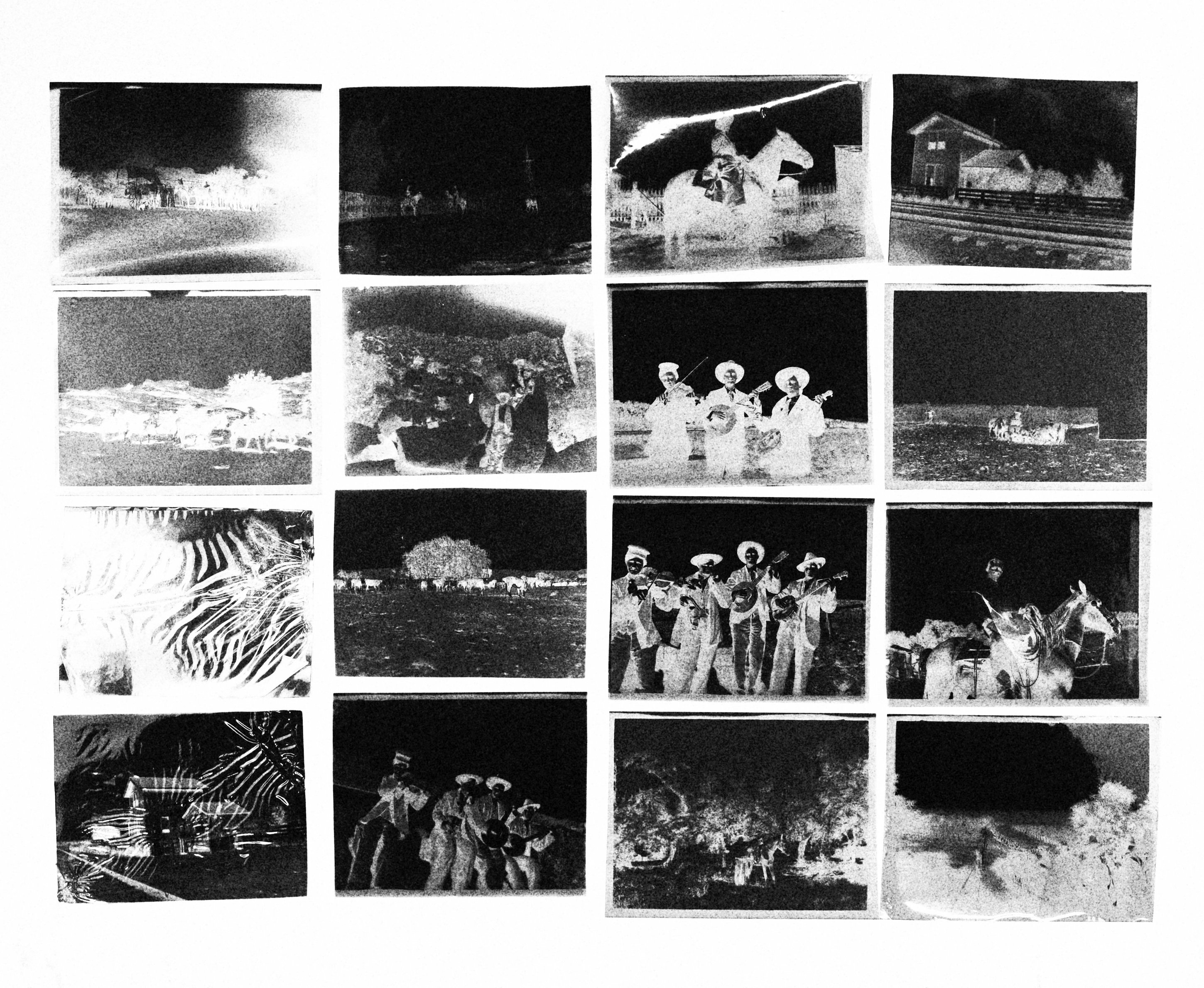
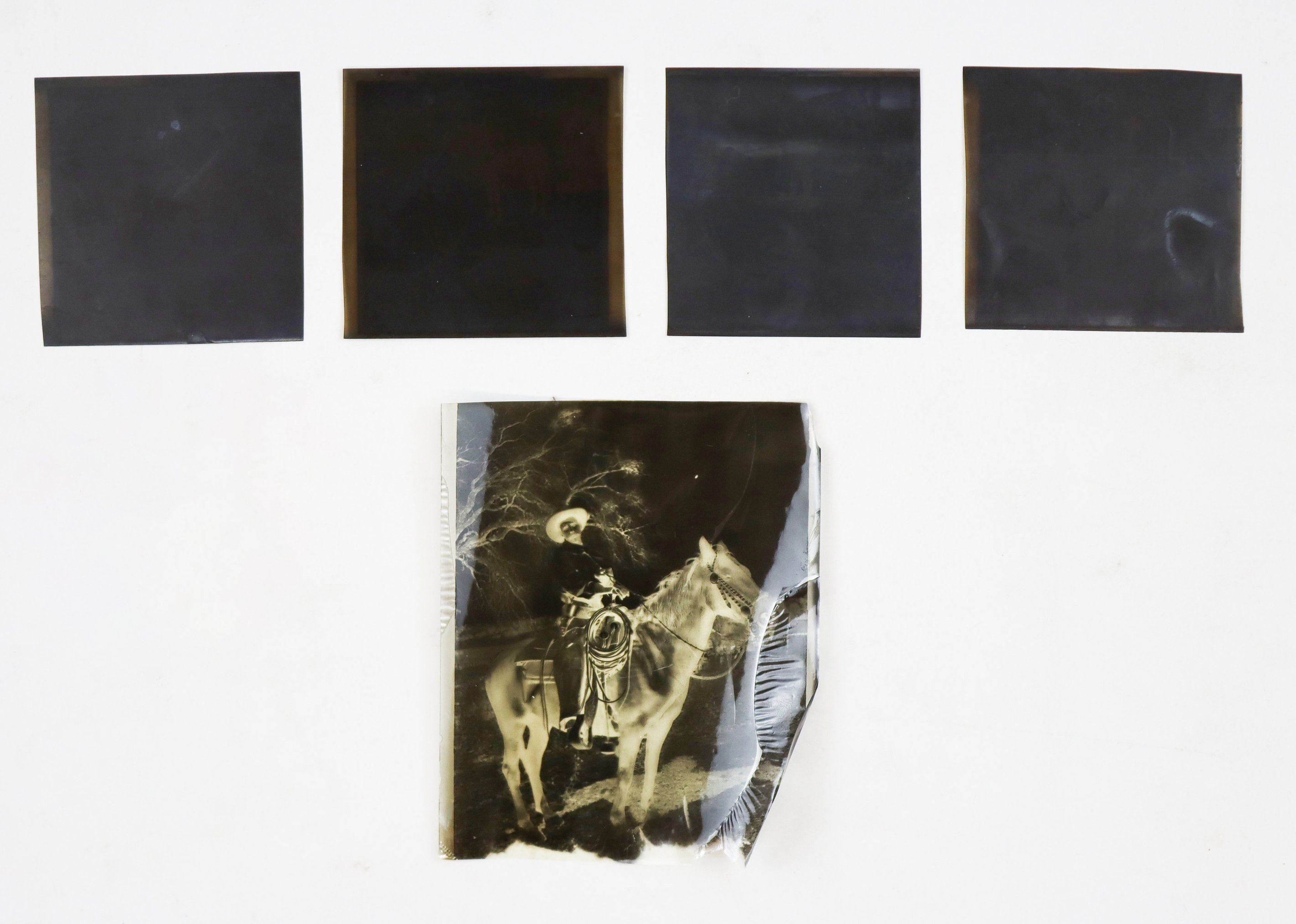
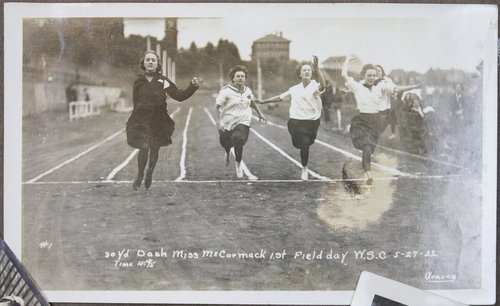
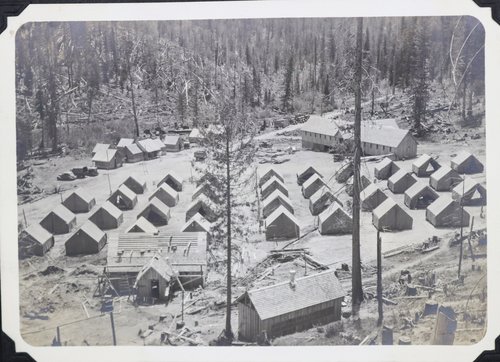
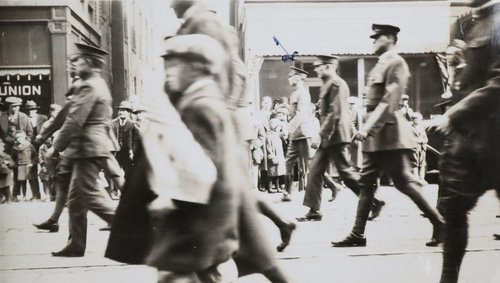
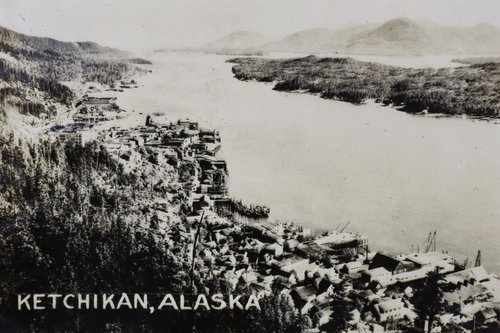
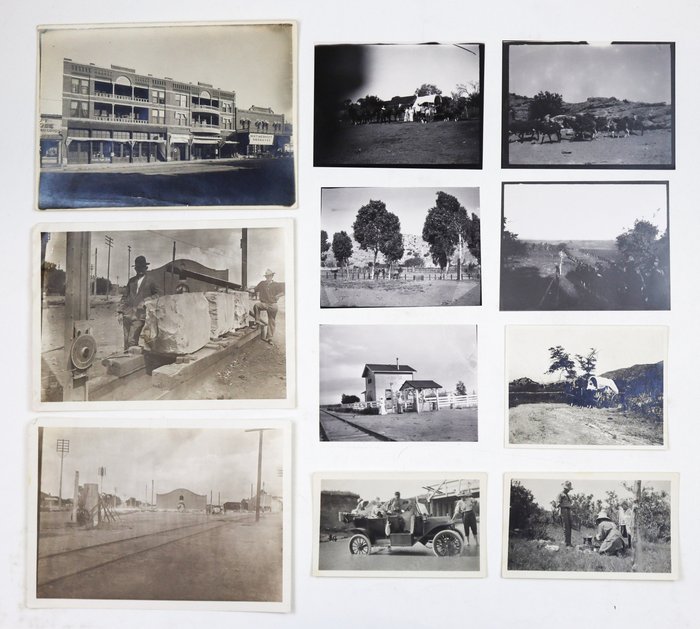
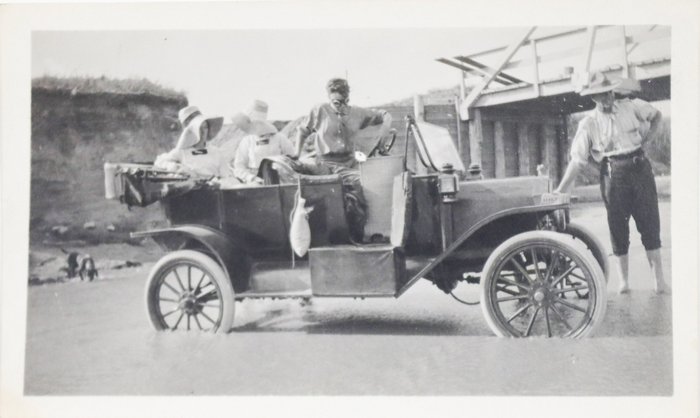
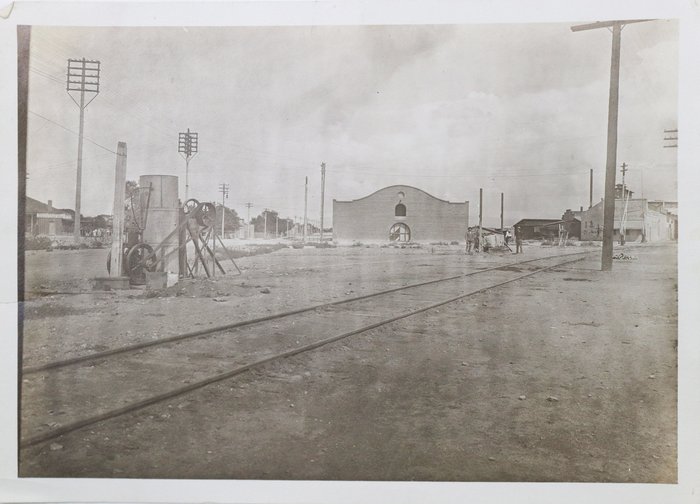
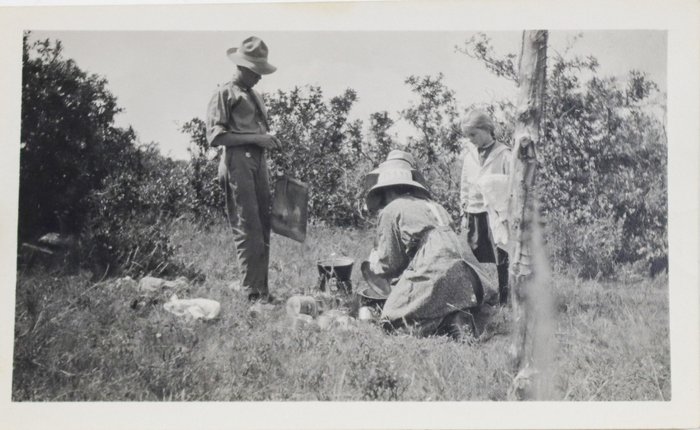
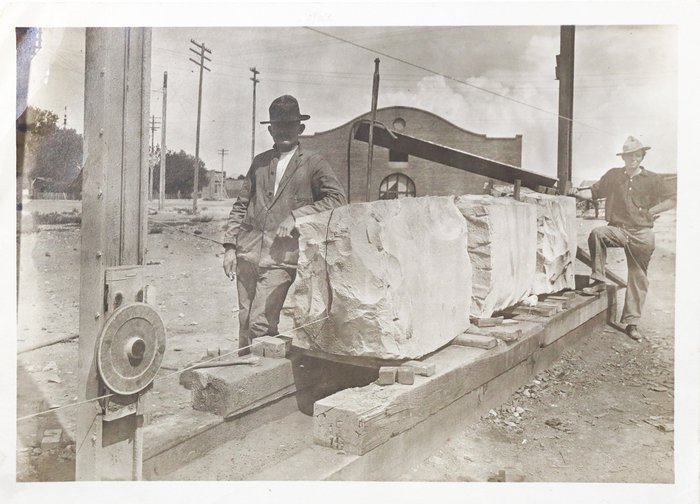
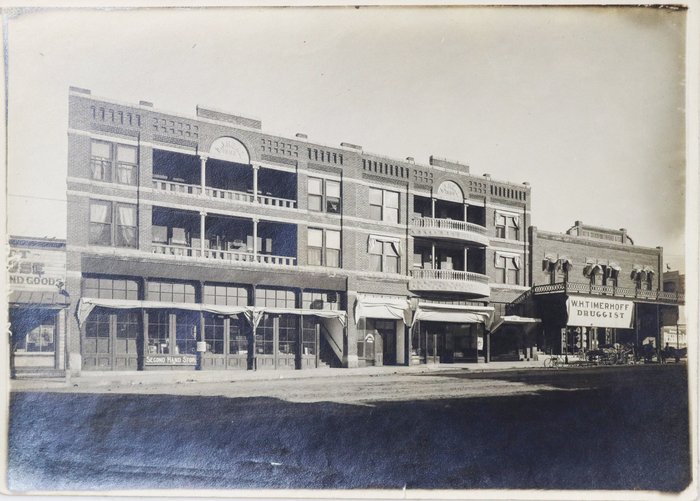
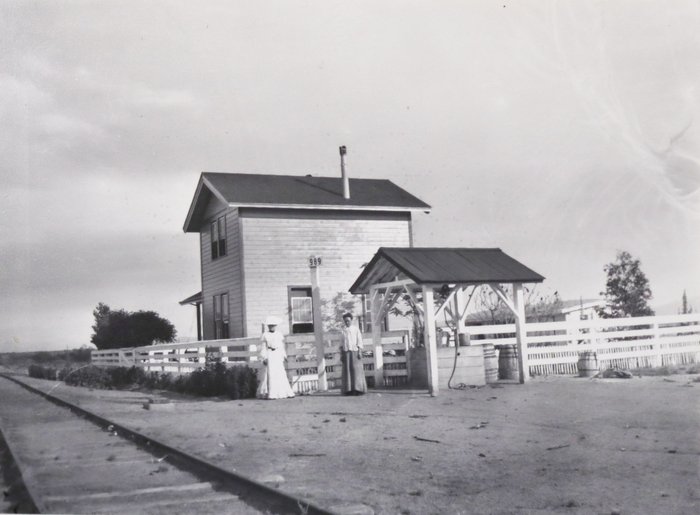
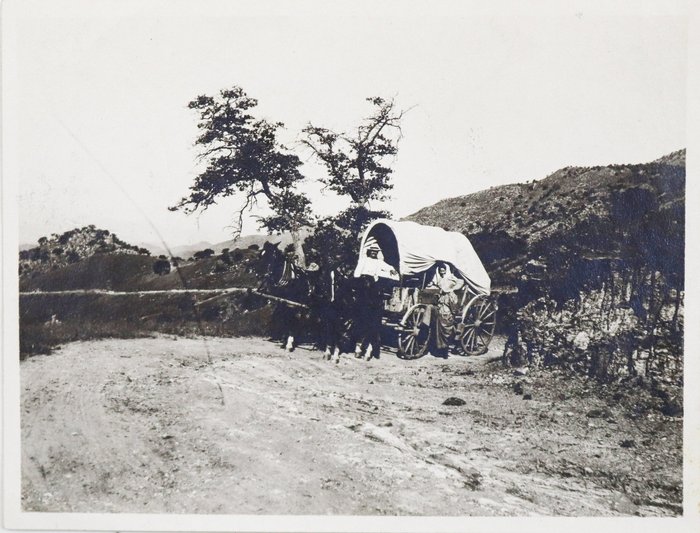
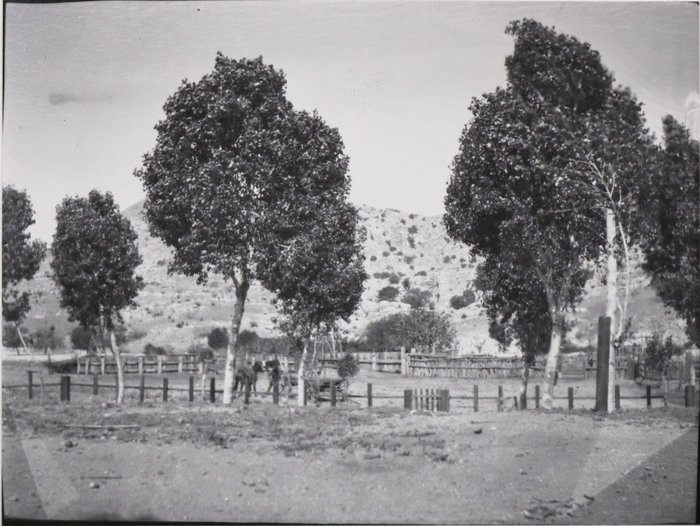
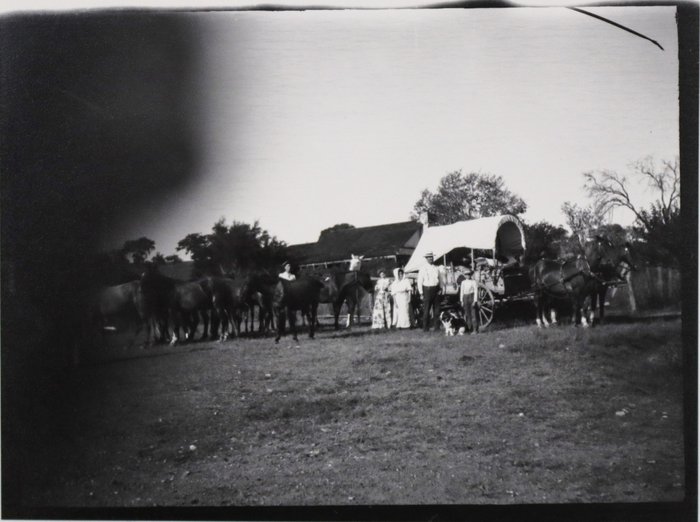
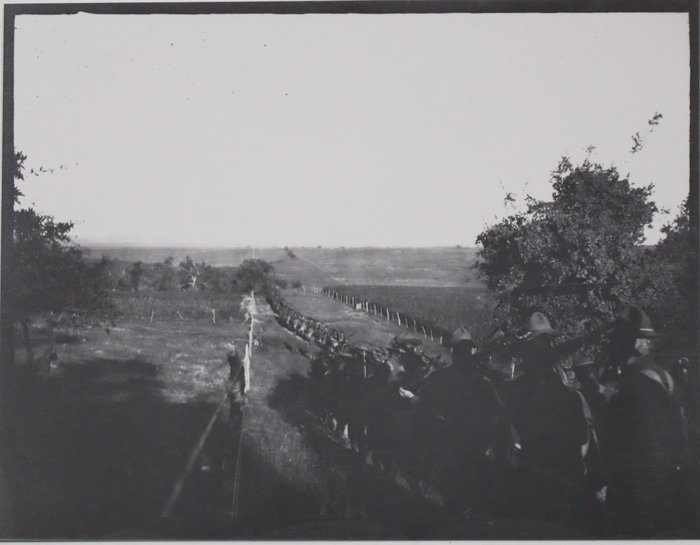
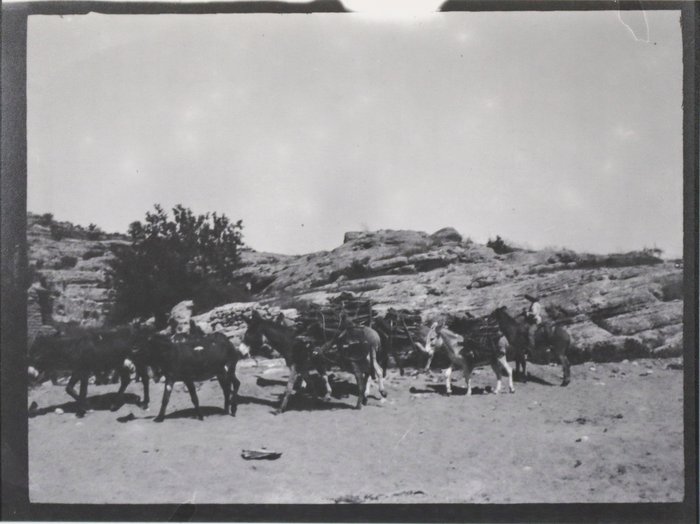
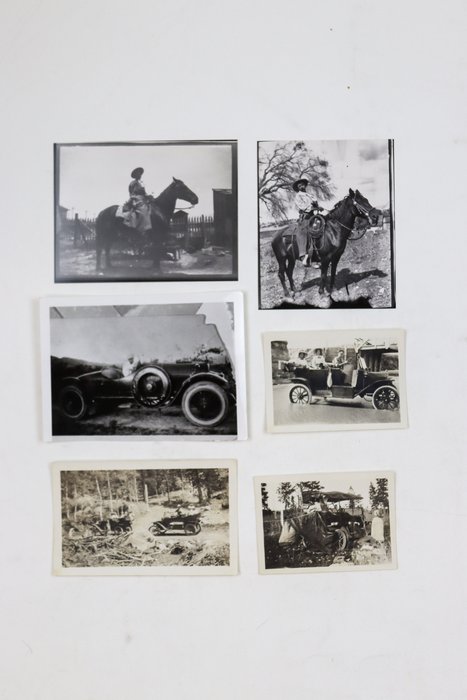
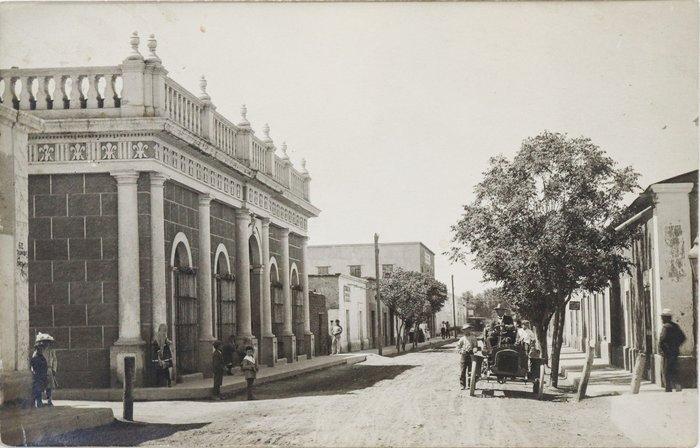
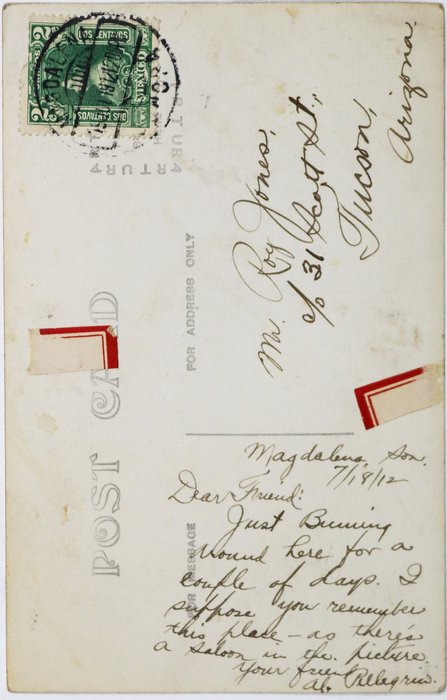
— Ca. 40 loose original gelatin silver photographs and negatives, likely taken and collected in the 1910s–1930s, and documenting early Arizona. The photos show cowboys, early automobiles, camping scenes, local buildings (ex.: Head Hotel in Prescott) and the operations of Melvin Jones’s and his son’s monument business, including stone cutting, mechanical saws, and workers handling large blocks of rough-cut stone. One real photo postcard, addressed to Roy Jones (an apparent relative of Melvin) in Tucson, includes a 1912 message from A. Pellegrin of Magdalena, Sonora, noting a brief stay and mentioning a recognizable saloon in the image.
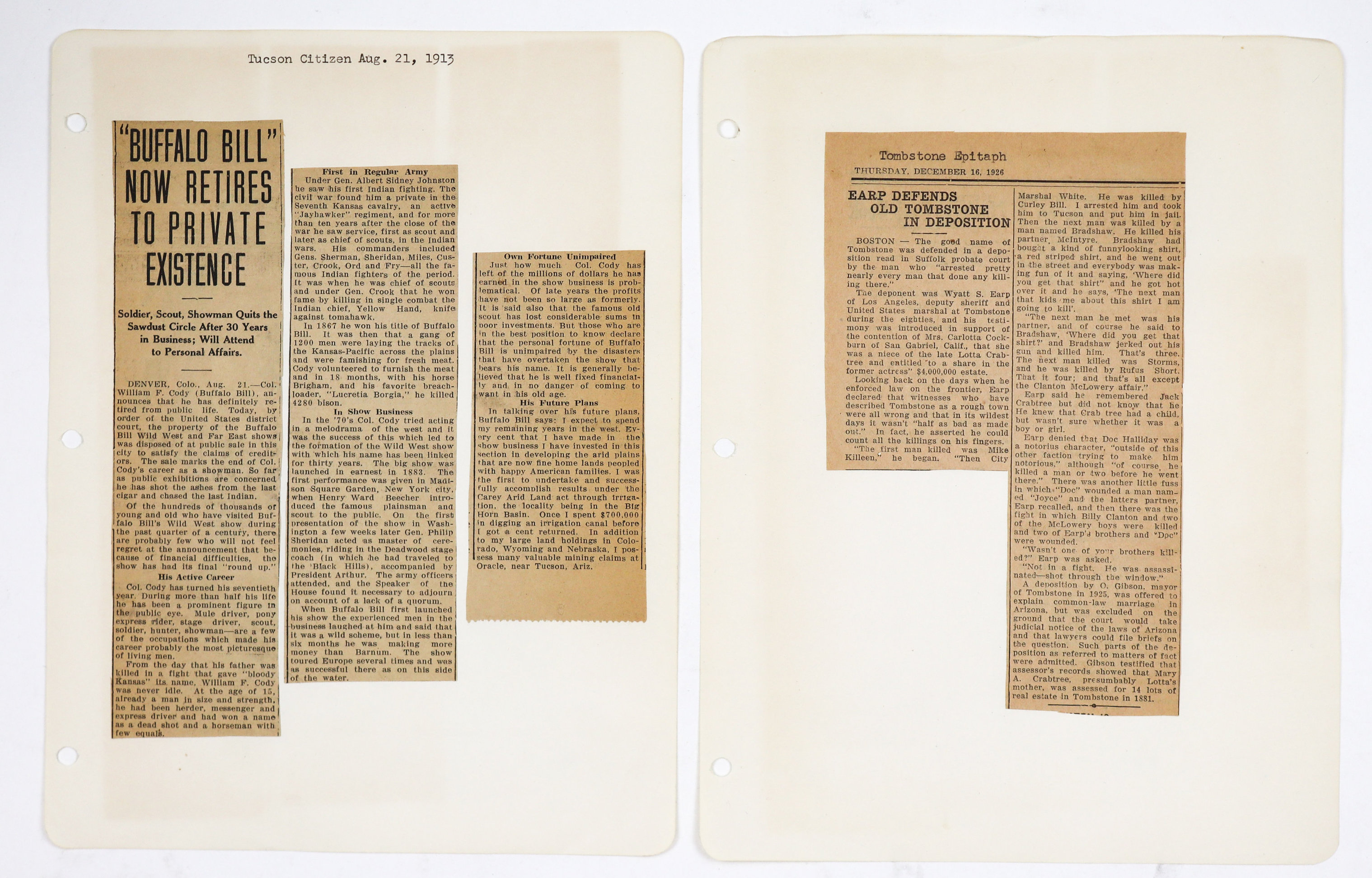
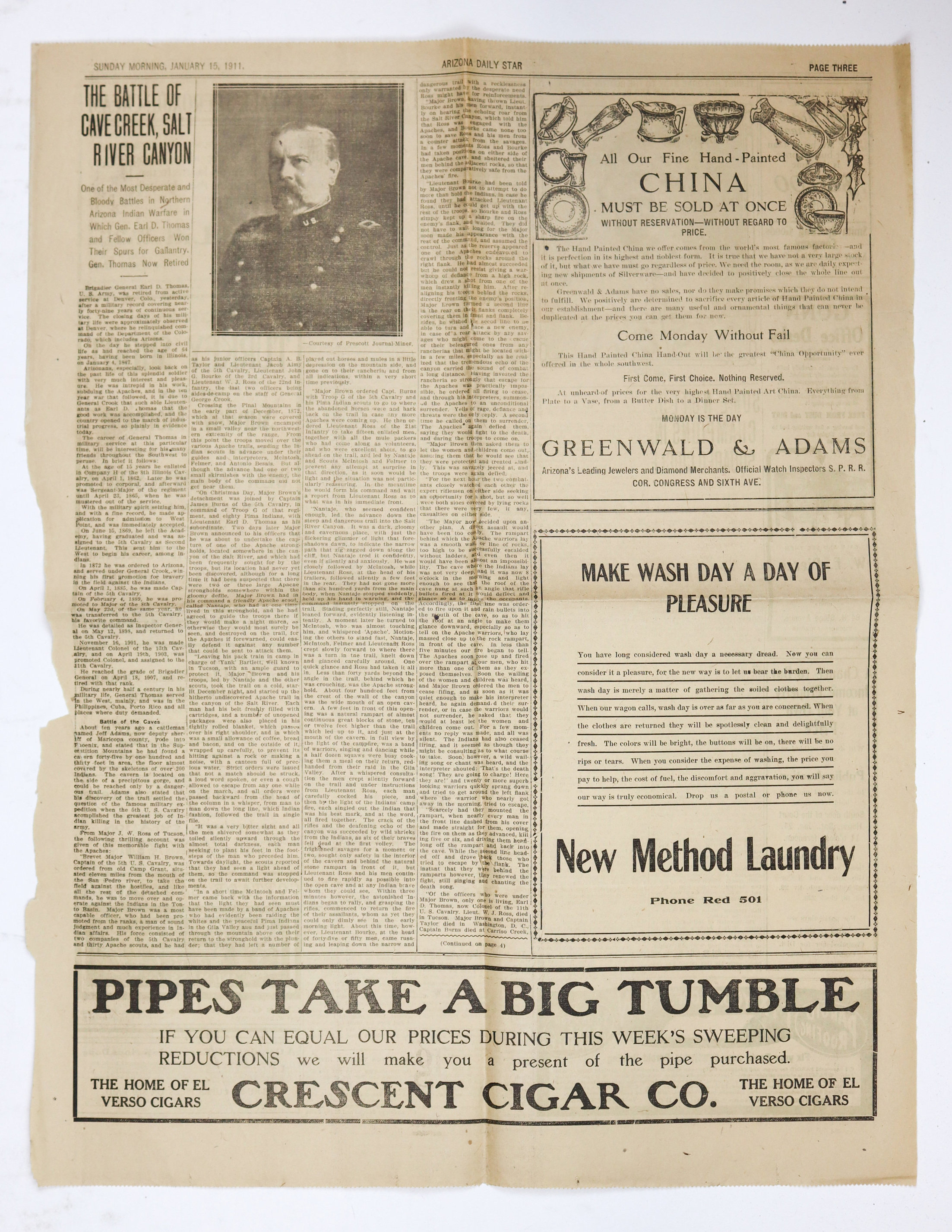
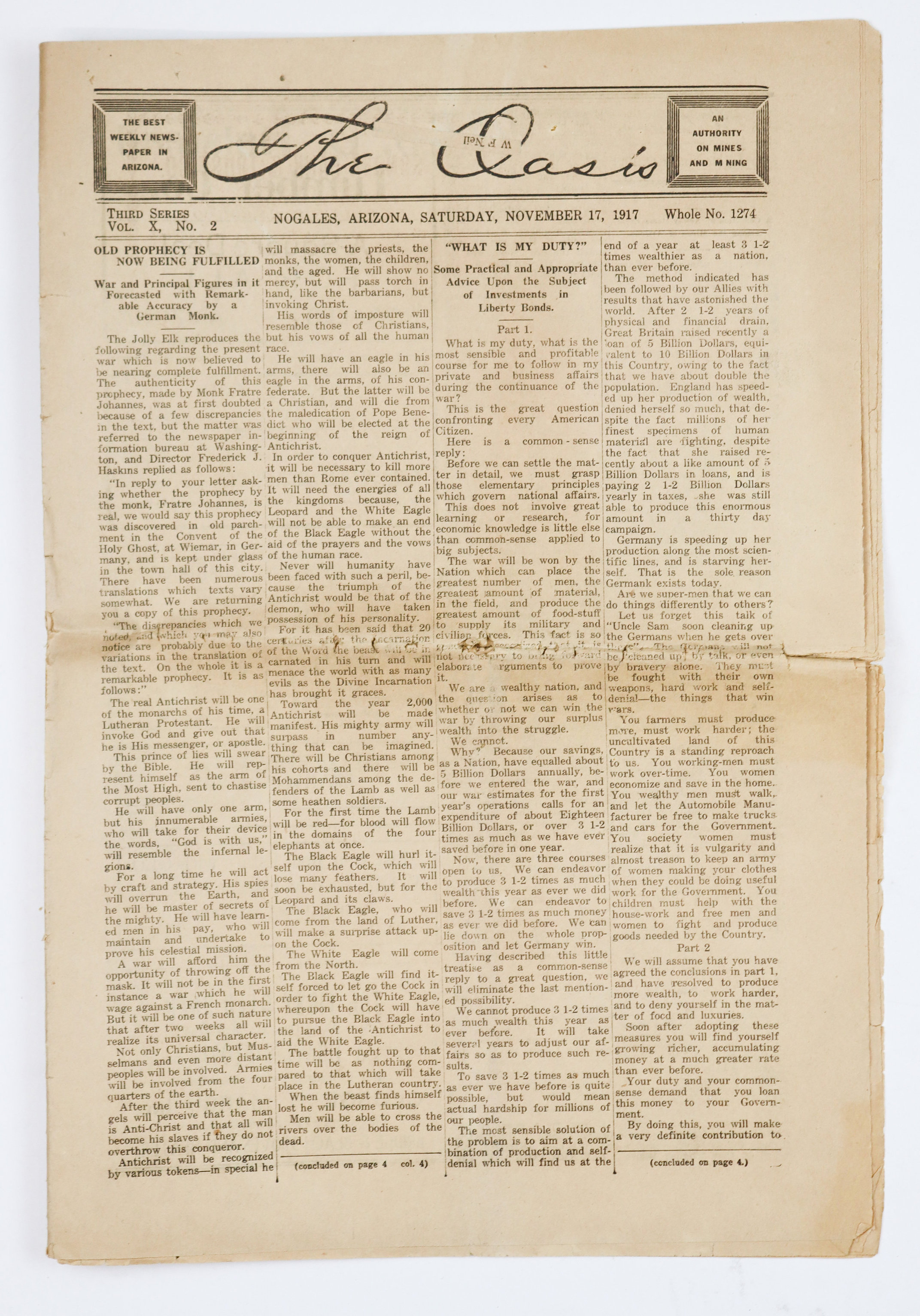
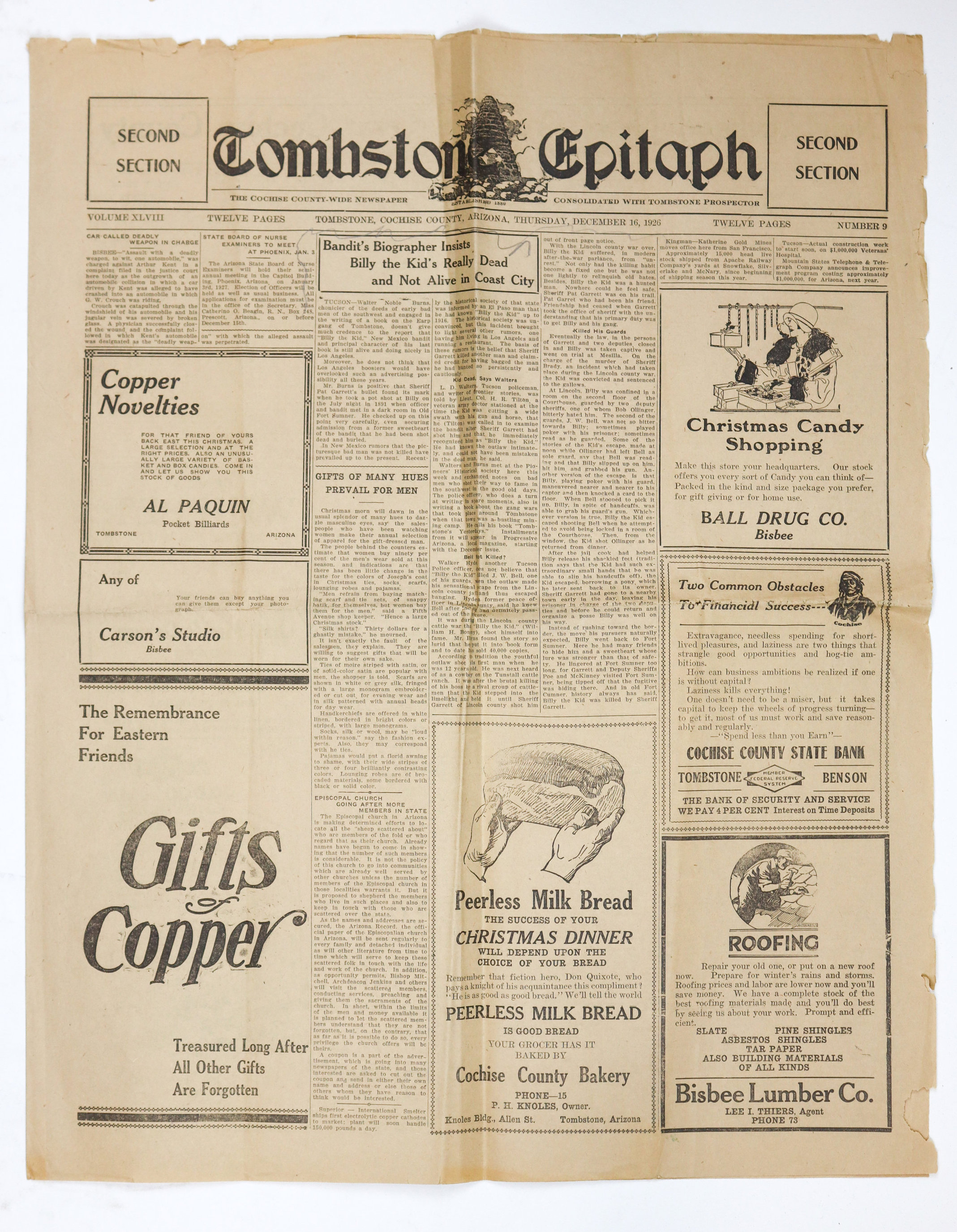
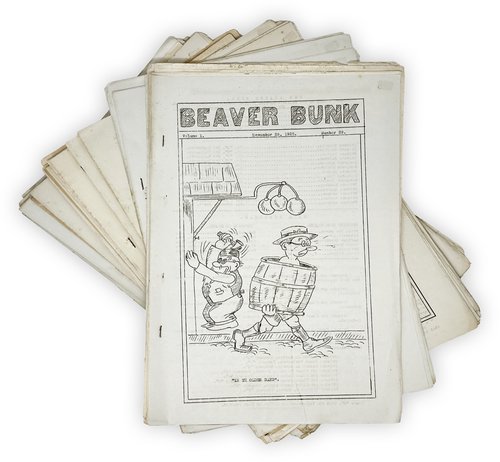
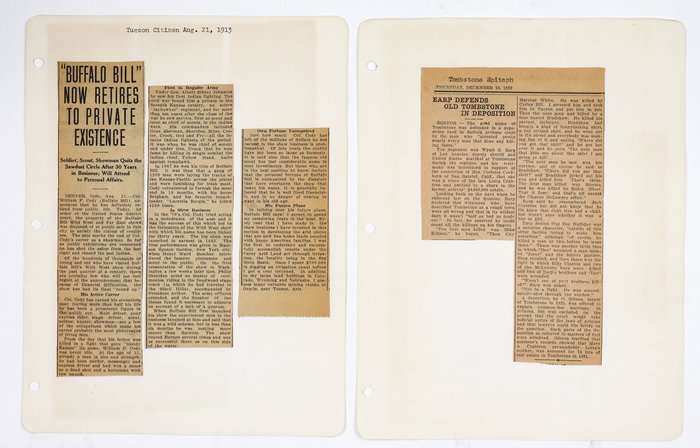
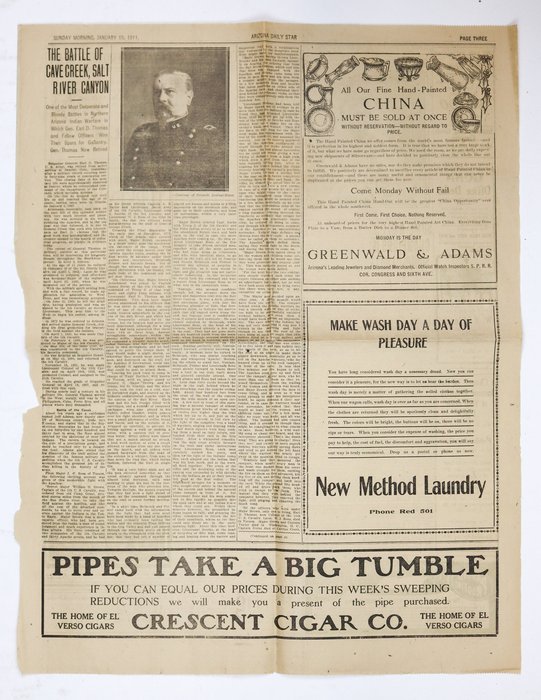
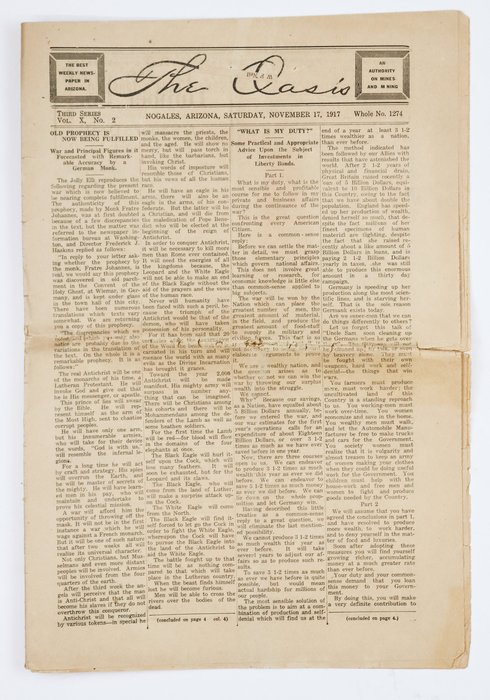
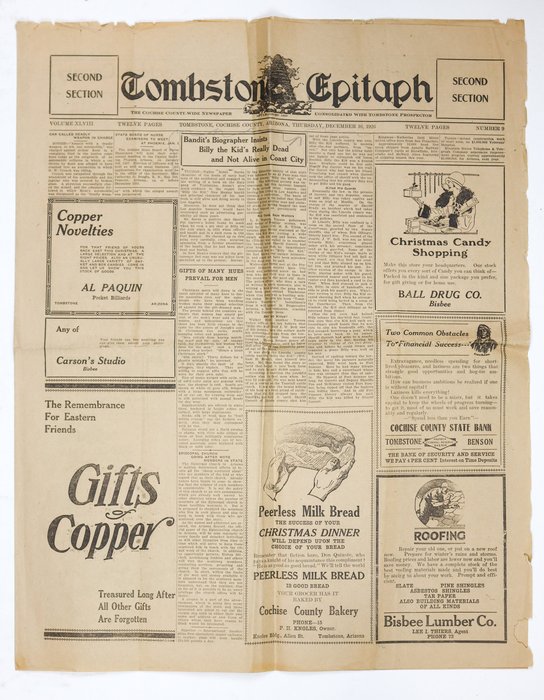
— Two period newspapers (The Oasis of November 17, 1917 and Tombstone Epitaph of December 26, 1926) and three newspaper clippings, featuring articles about early Arizona outlaws, including “The Battle of Cave Creek, Salt River Canyon” (Sunday Morning, January 15, 1911); “Earp Defends Old Tombstone in Deposition” (Tucson Citizen, August 21, 1913), and “Buffalo Bill Now Retires to Private Existence” (Tombstone Epitaph, December 16, 1926). These were likely collected by Melvin in his later years, while working on his reminiscences of Arizona Territory.
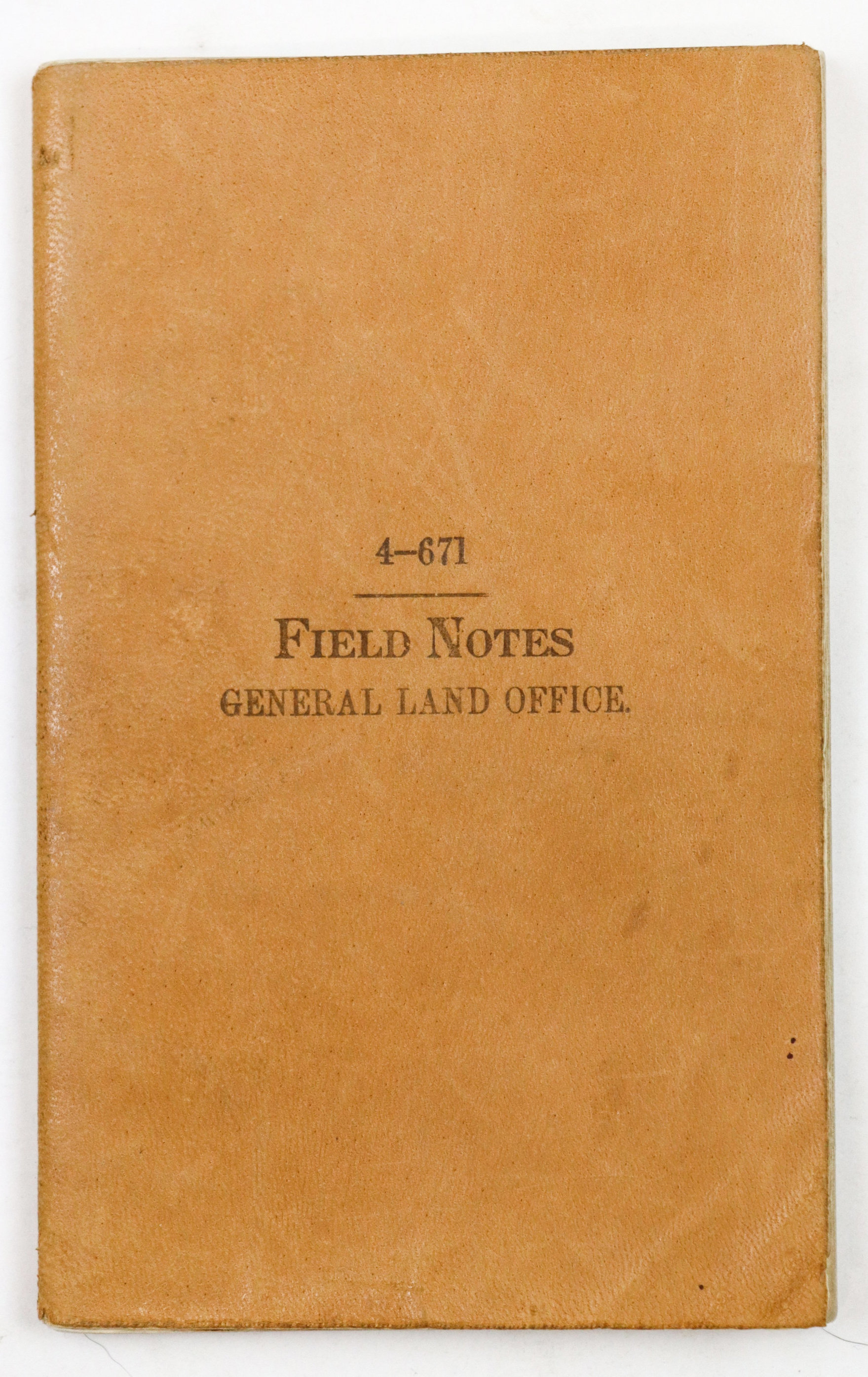
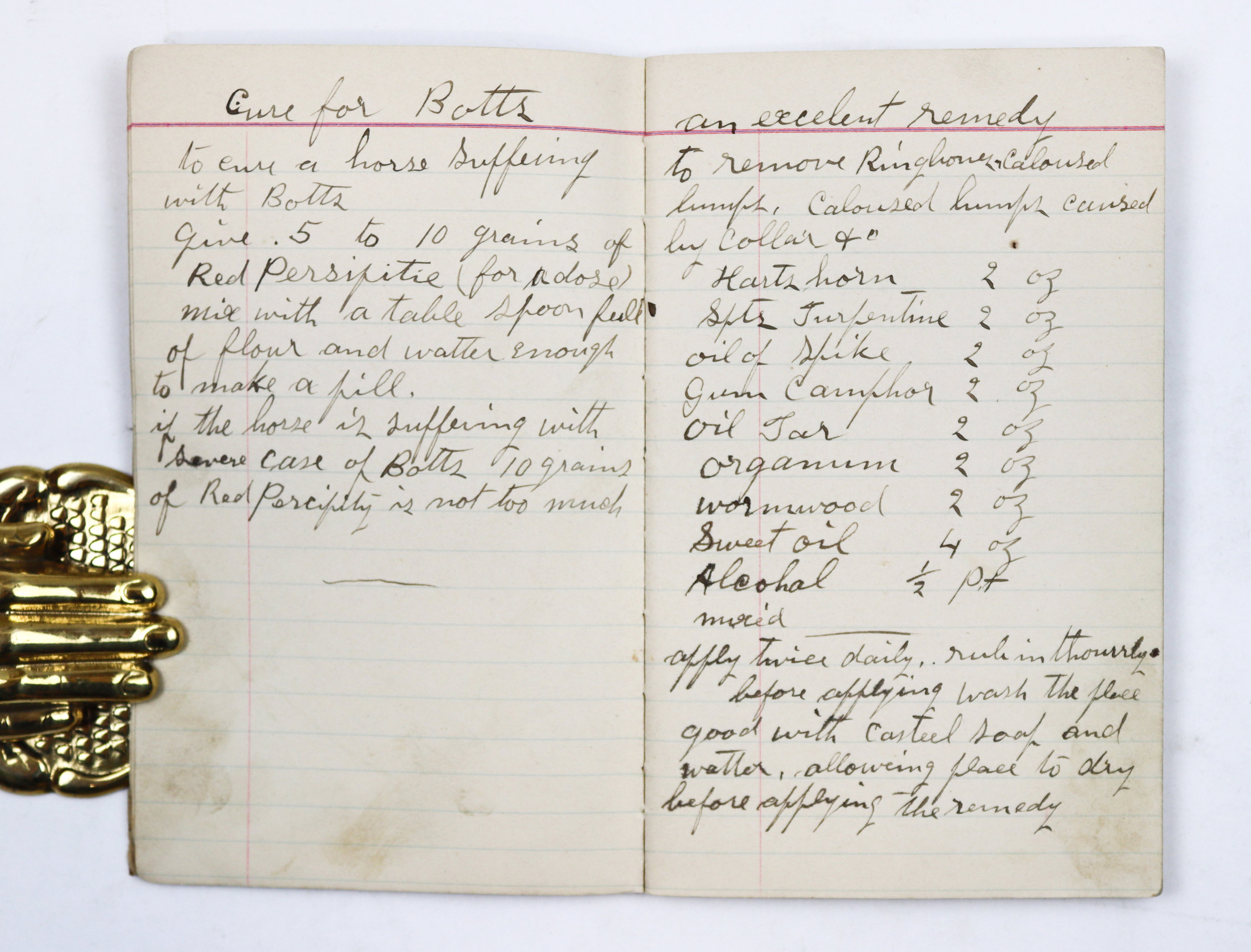
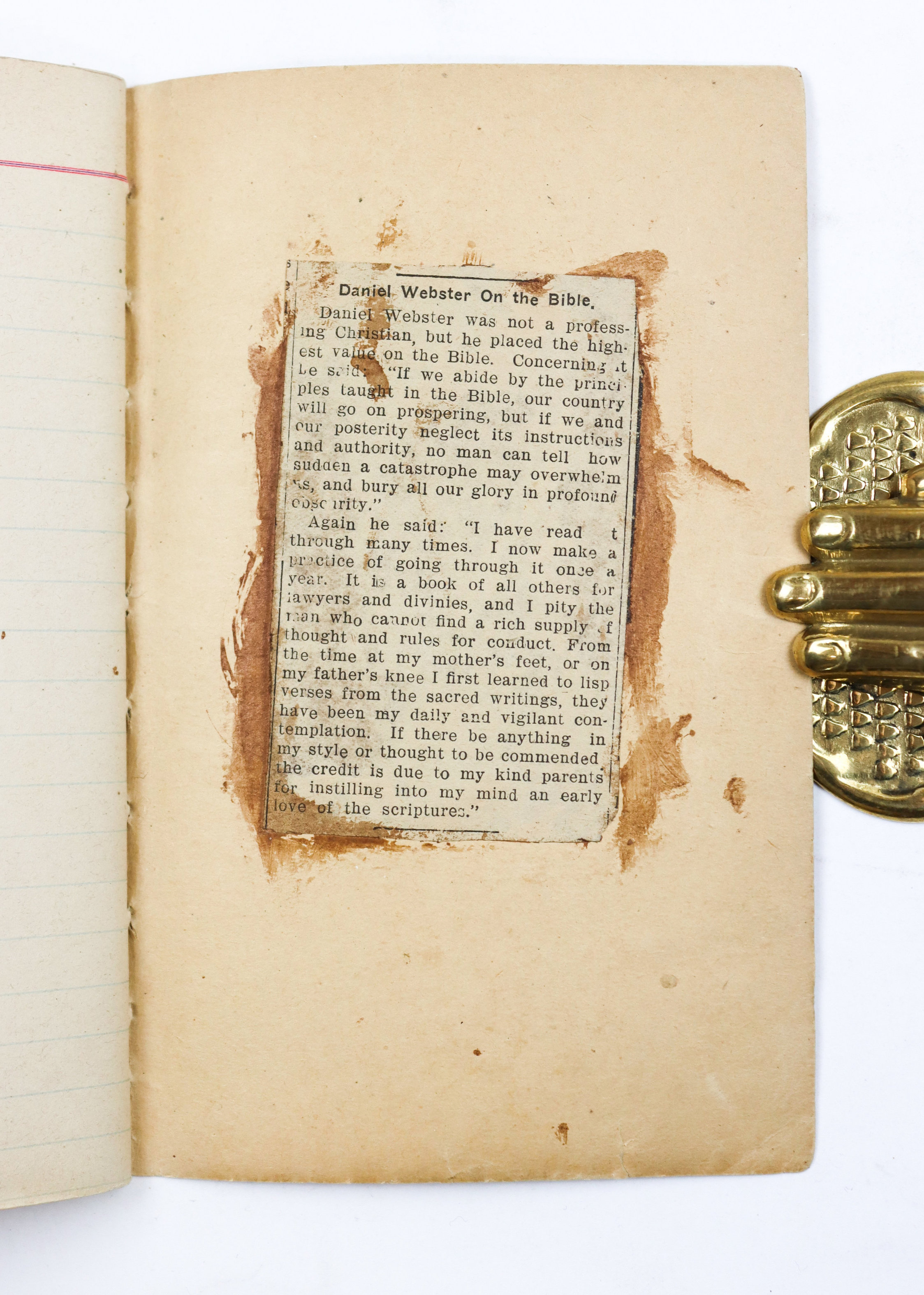
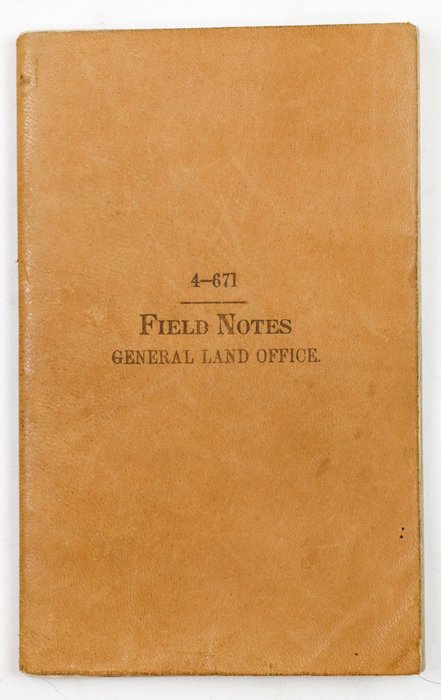
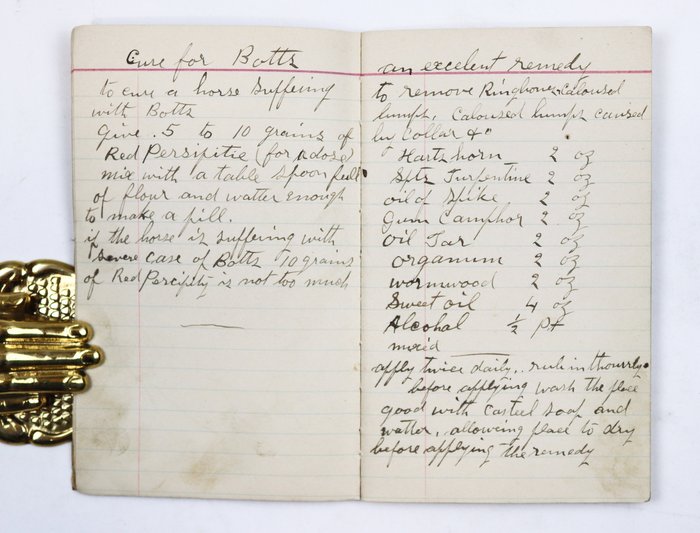
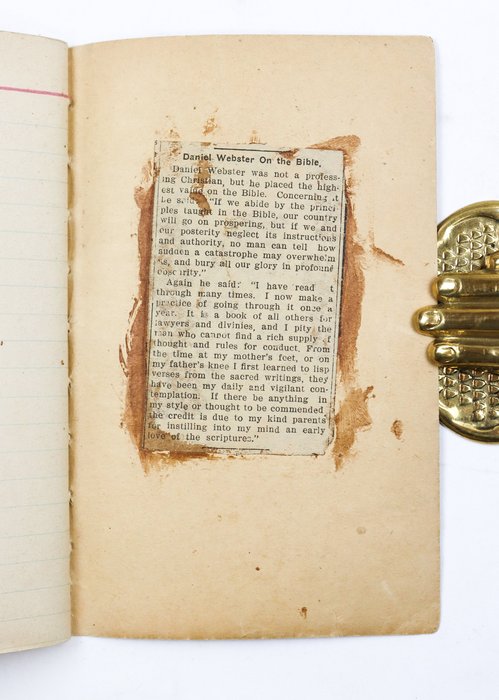
— A field notebook with 11 pages of manuscript notes by Melvin, featuring practical medical and veterinary remedies (joint pain, horse parasites, rattlesnake bites), workshop recipes (steel tempering, hide tanning, and gold lettering on granite), and notes on animal care (cough remedies, treatment of collar sores, and warts). The notebook is also supplemented with six period newspaper clippings on the death of George Creaghe, horse aging, and a “pioneer cure” for hydrophobia.
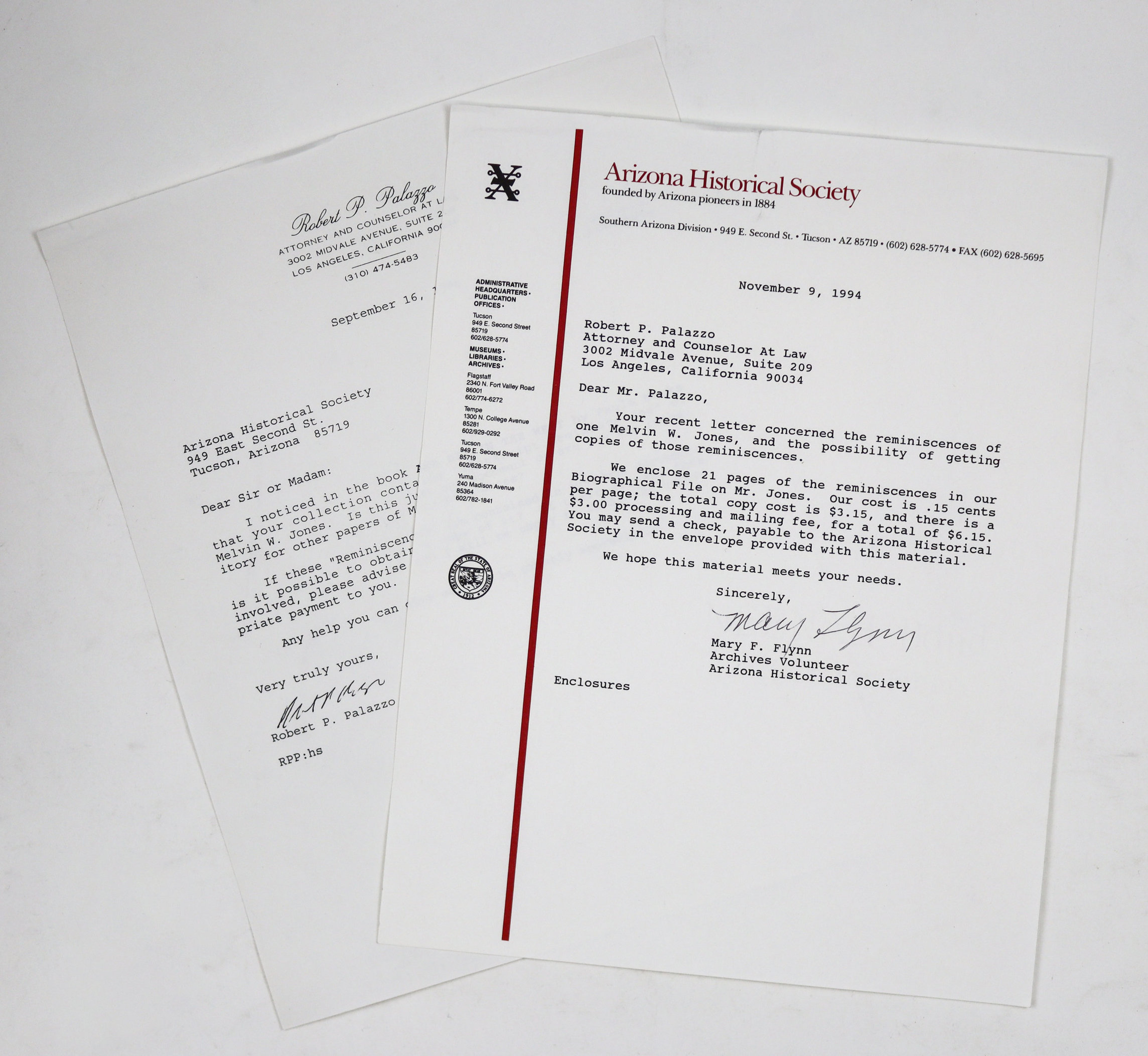
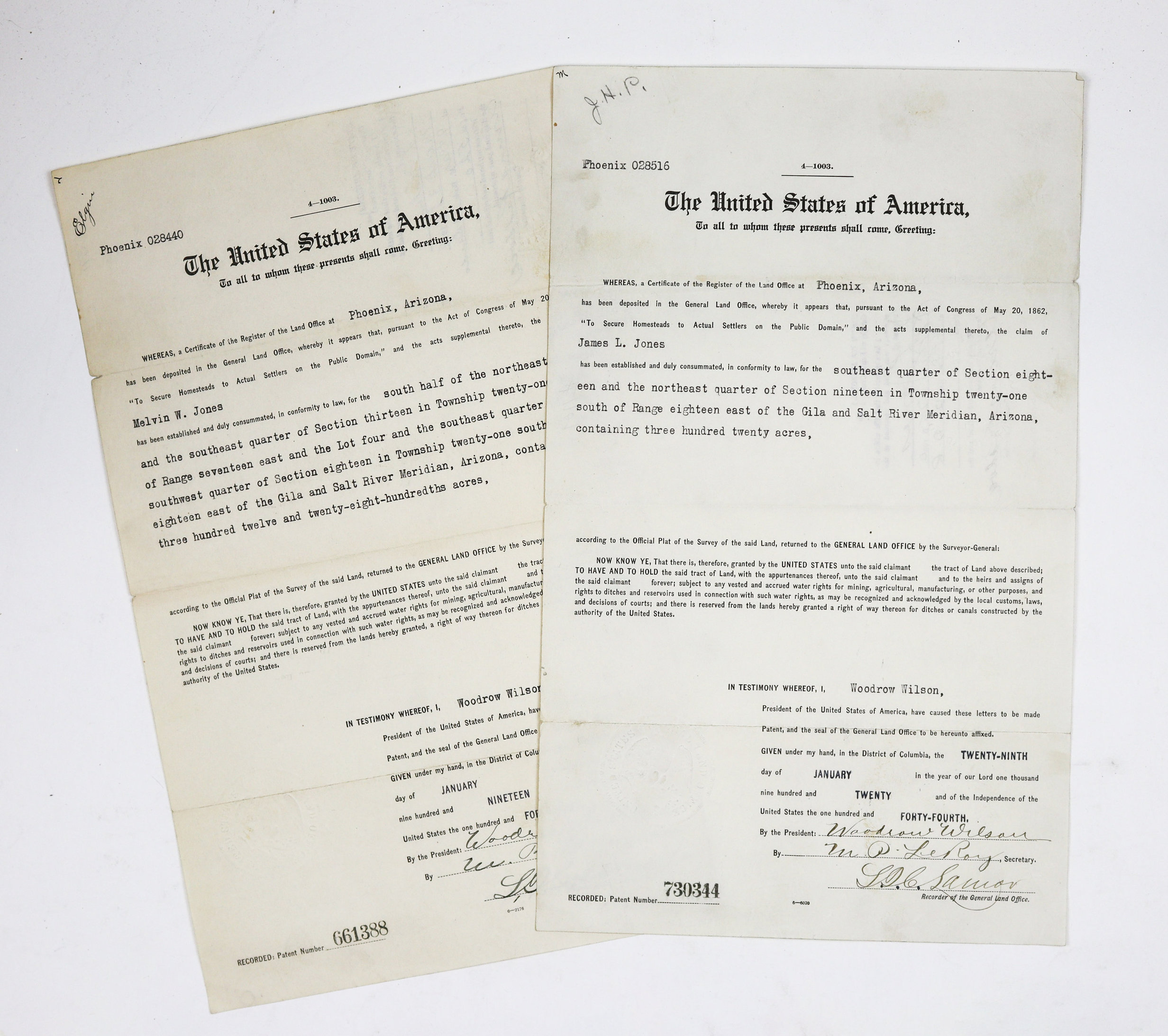
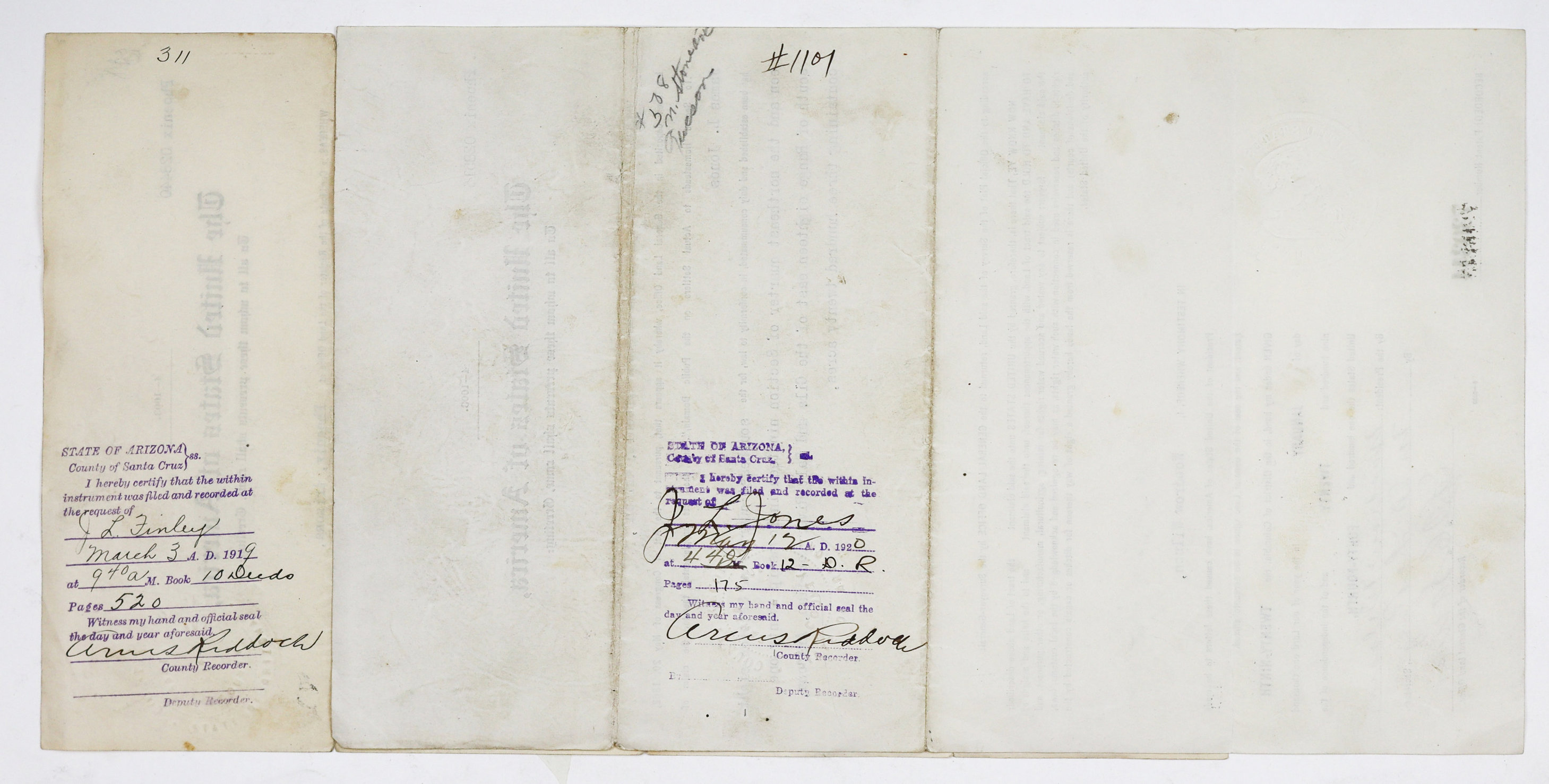
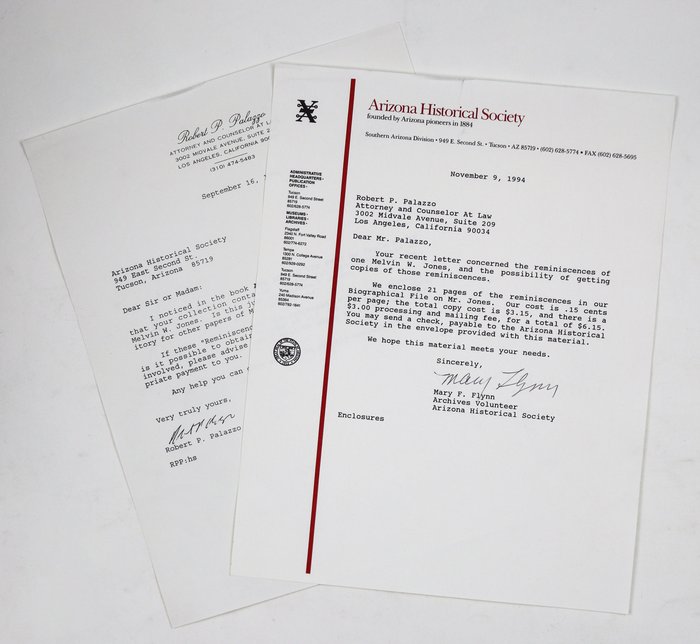
— Other documents from the collection mostly include 1919 and 1920 land patents granting Melvin W. Jones and his son 312 and 320 acres respectively in Phoenix, Arizona; obituaries of Melvin Jones from the Arizona Daily Star and the Tucson Citizen in 1933; 1994 correspondence between the previous owner of the archive Robert Palazzo and the Arizona Historical Society concerning copies of Jones’s memoir, including a 21-page typescript of his reminiscences; and references to Melvin Jones in works on Wyatt Earp and the Tombstone era by Paula Marks, Steve Gatto, Glenn G. Boyer, Casey Tefertiller, Walter Noble Burns, Lynn R. Bailey, and Richard E. Erwin.
Overall, an interesting, extensive archive of original and typed manuscripts, official documents, newspapers, field notes, original gelatin silver photographs, and photo negatives, documenting the first-hand account of early days of Arizona Territory.