

#NY003
1925-1926
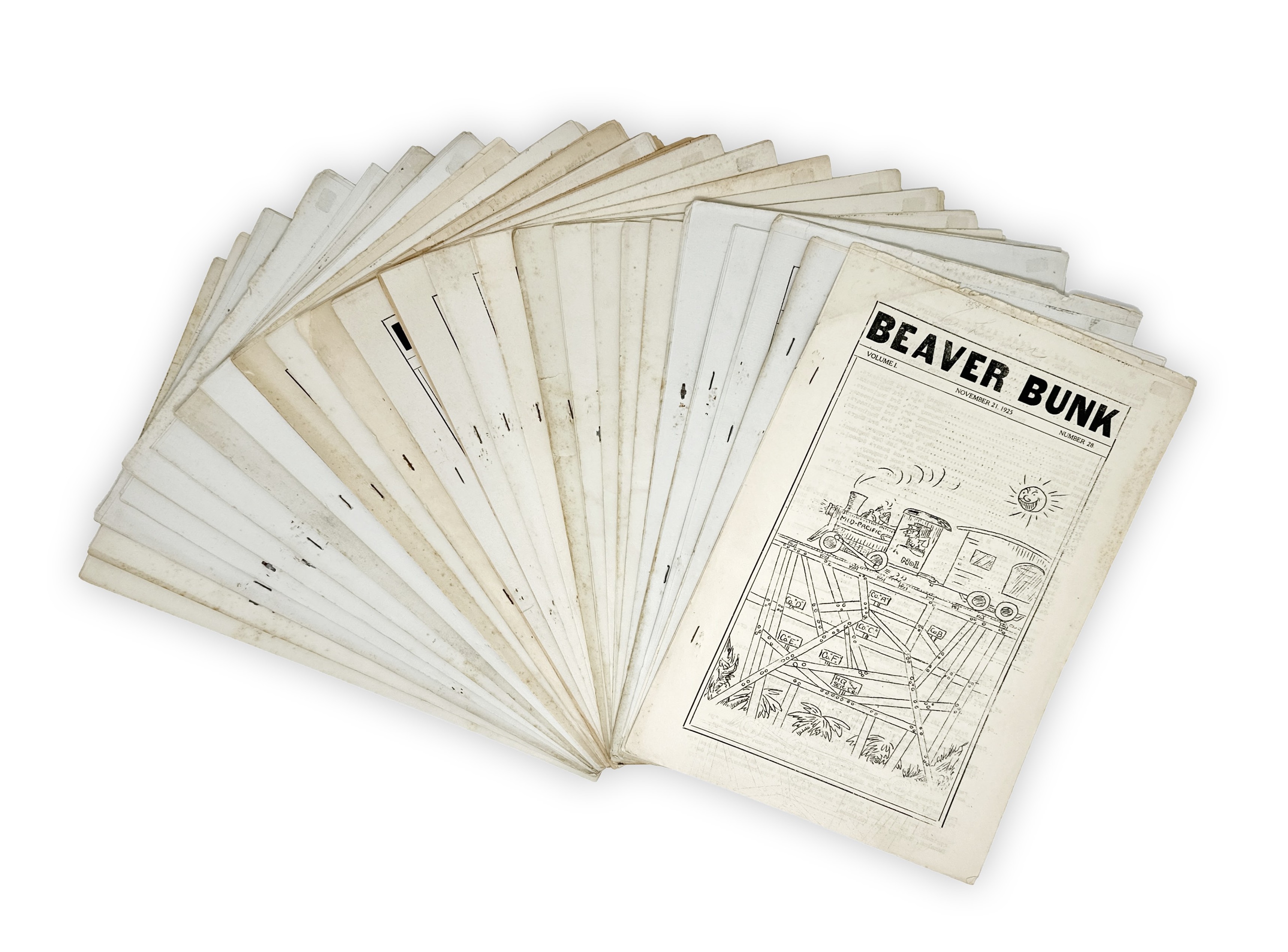
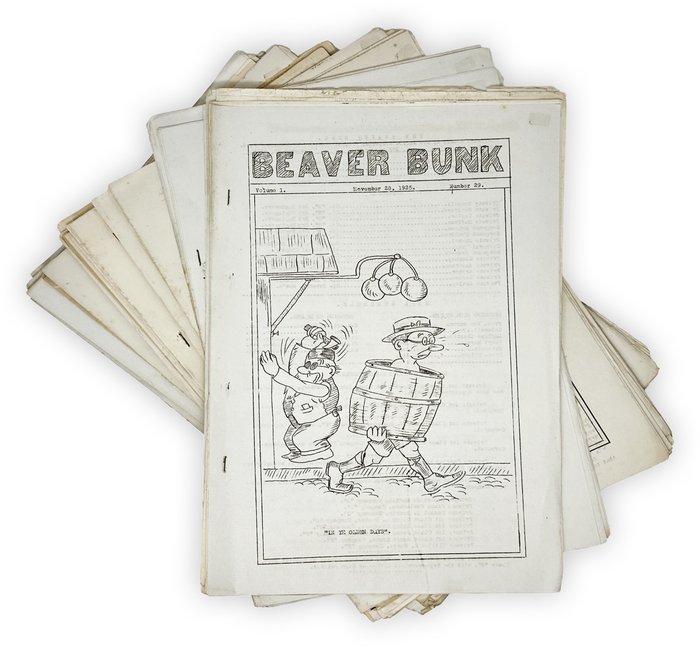
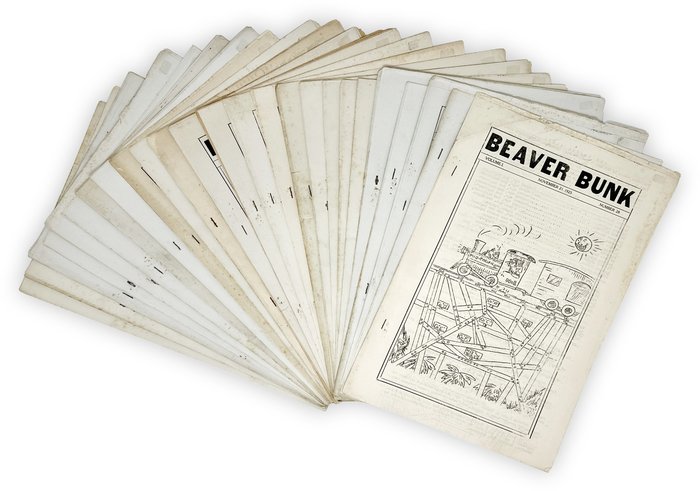
8-12 pp.per issue. 14 x 8,5 in. Each issue is stapled with two staples. Overall in very good condition, occasional foxing, occasional issue missing a staple. Owner’s name ‘Winnie W.H.’ (likely corporal Winn, reporter) on some of the issues. First issue of 1926 mistakenly printed as 1925, but corrected in pencil.
Issues #12, 13, 14, 15, 16, 17, 18, 19, 20, 21, 22, 23, 24, 25, 26, 27, 28, 29, 30, 31, 32, 33, 34, 35, 36, 37, 41.
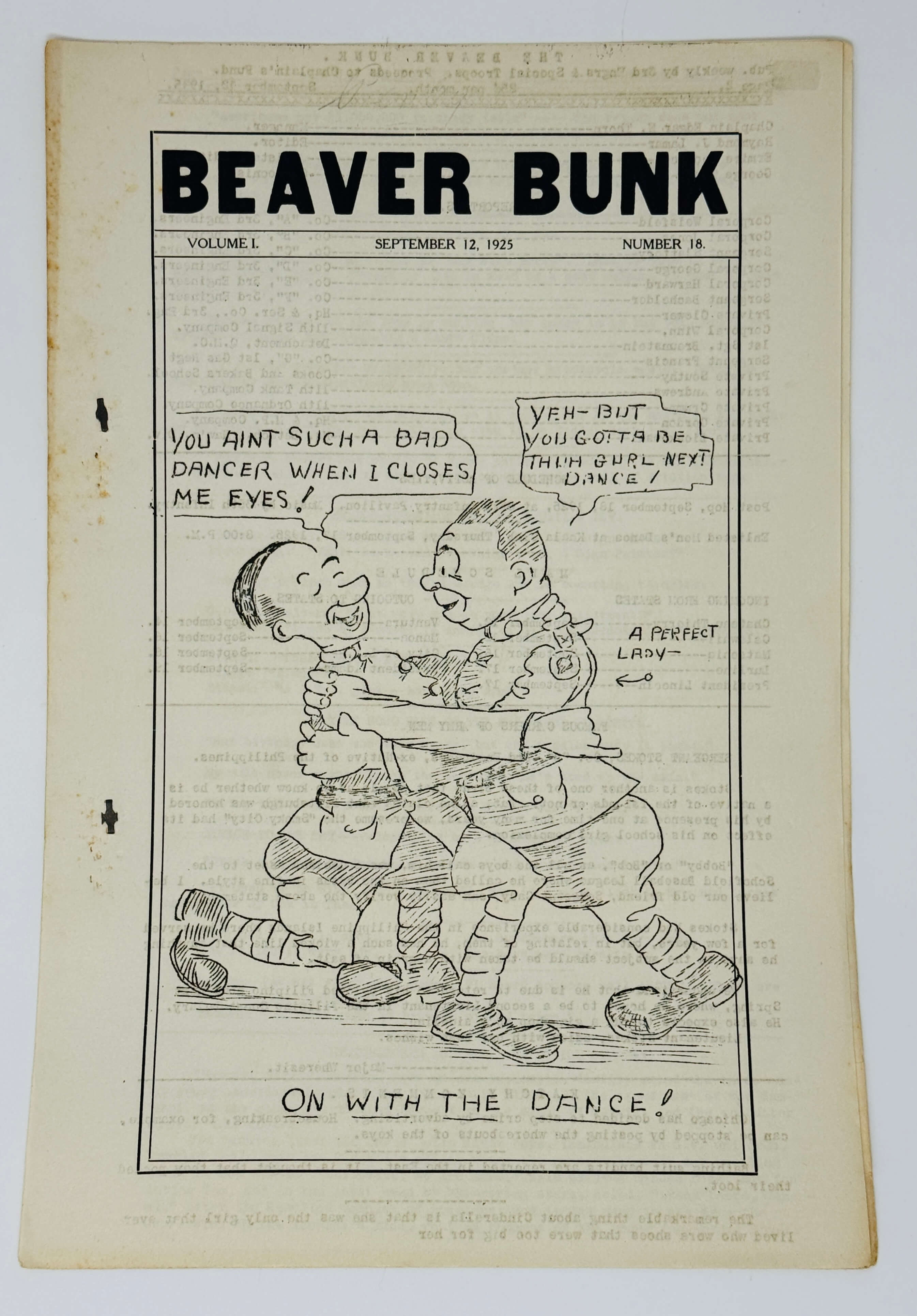
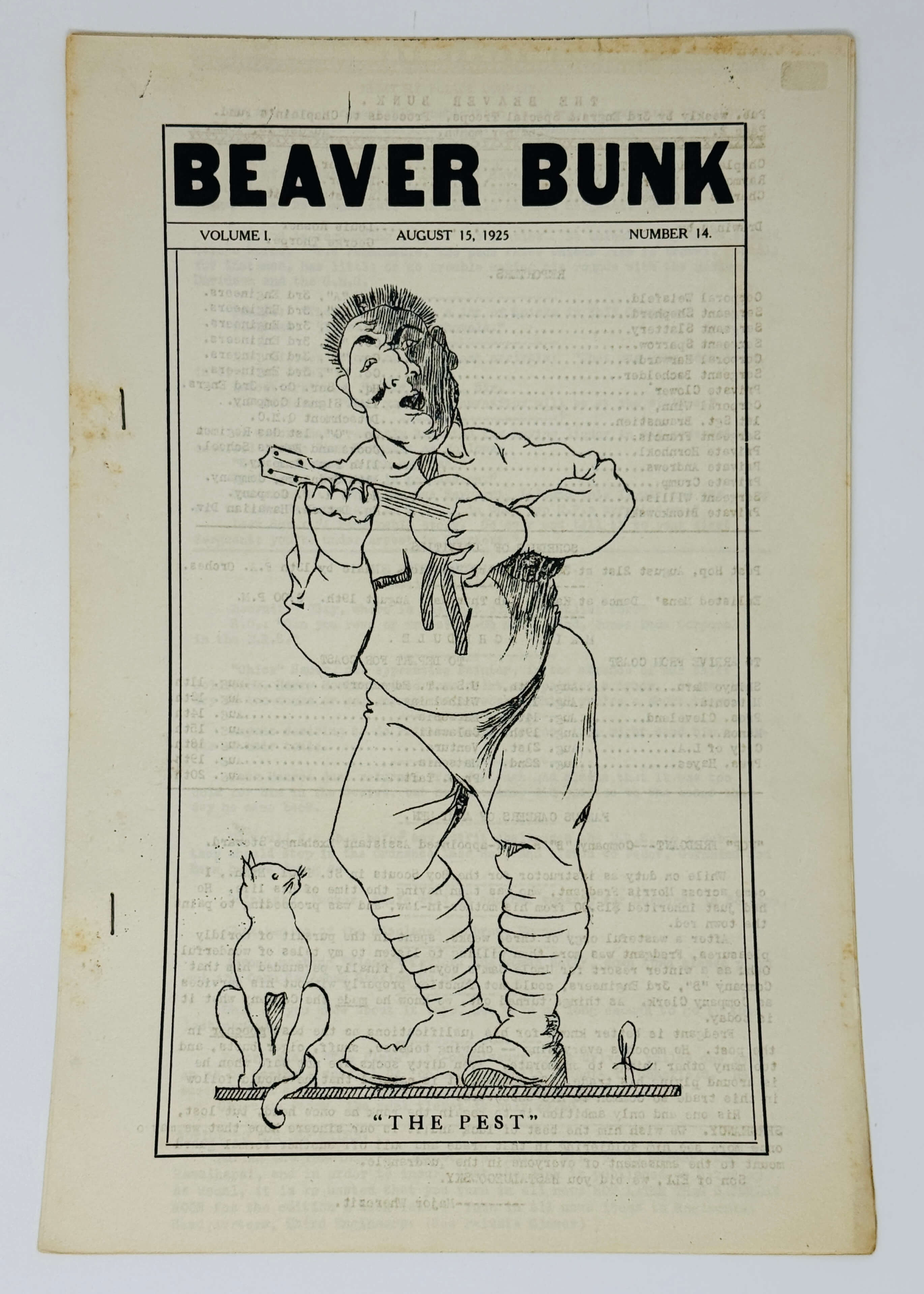
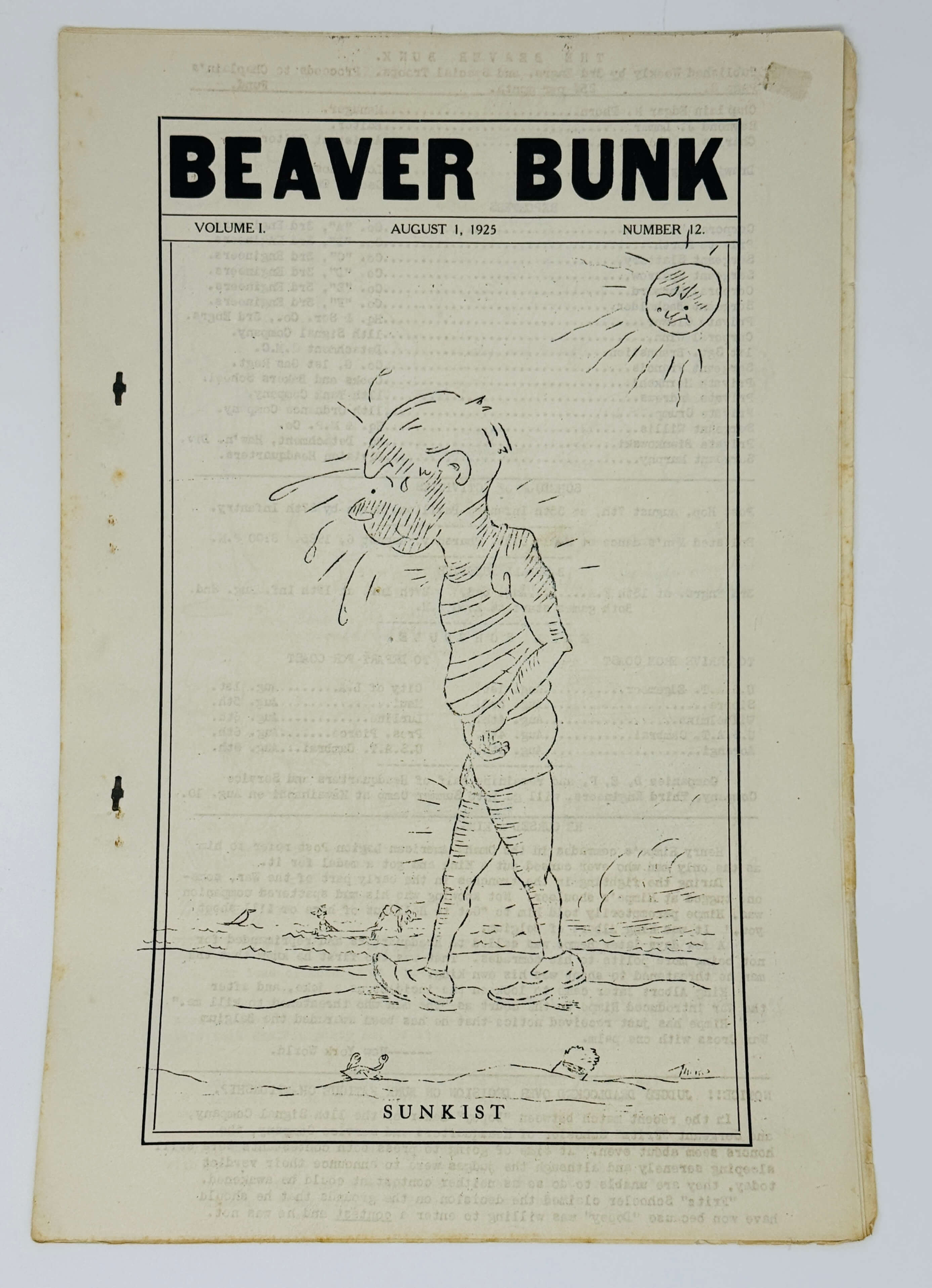
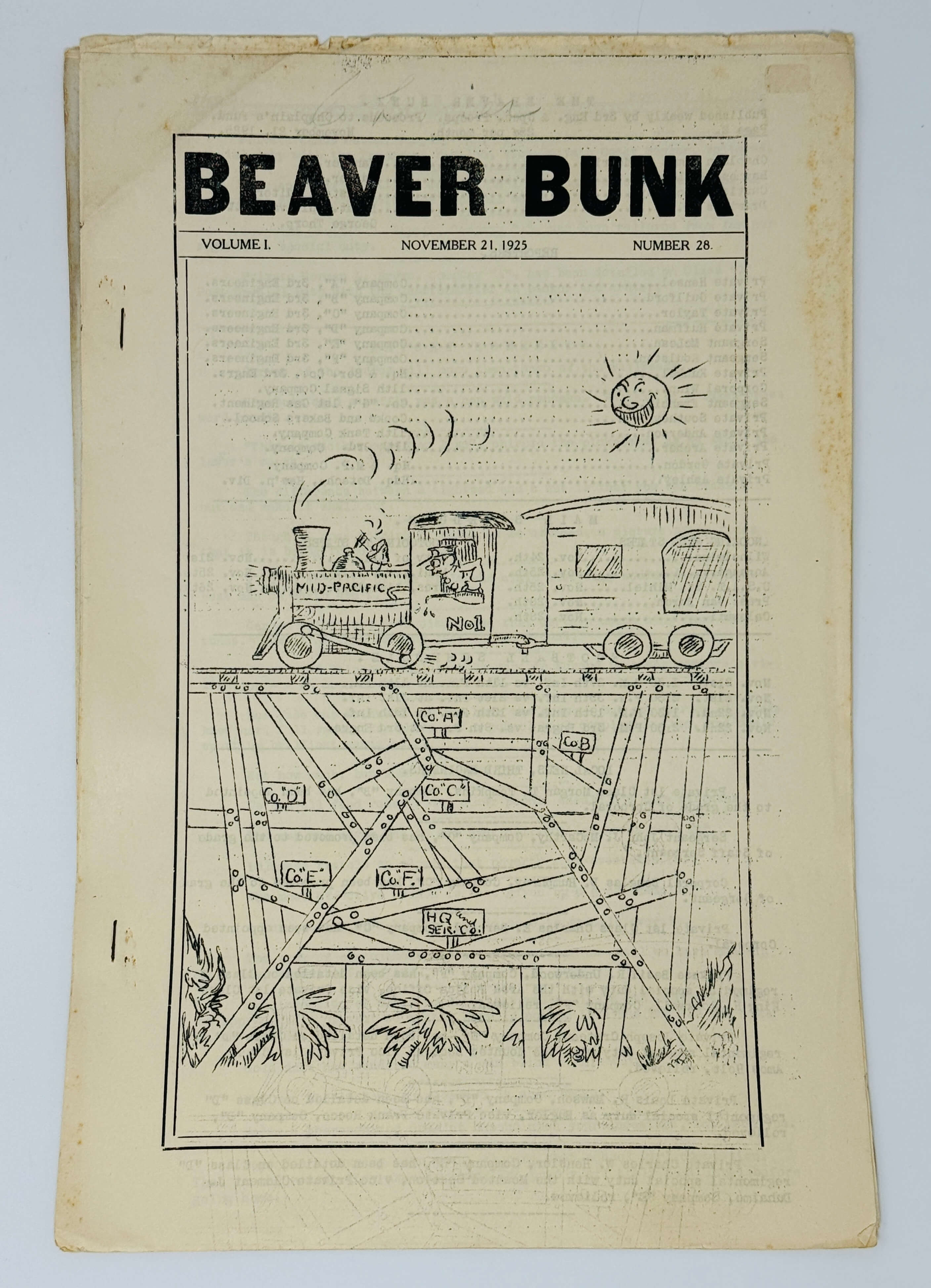
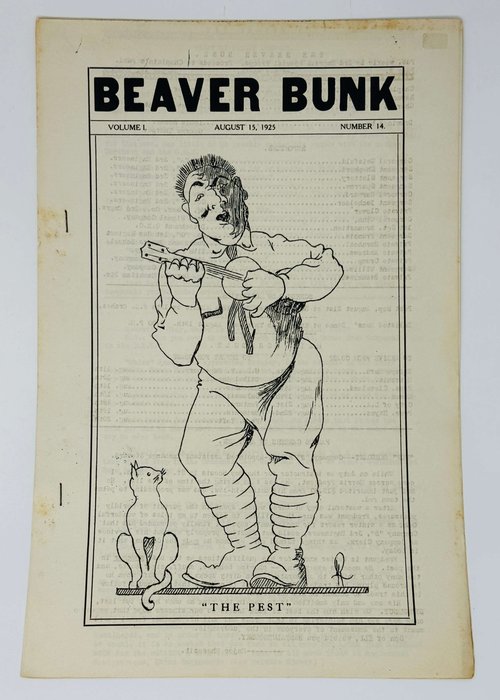
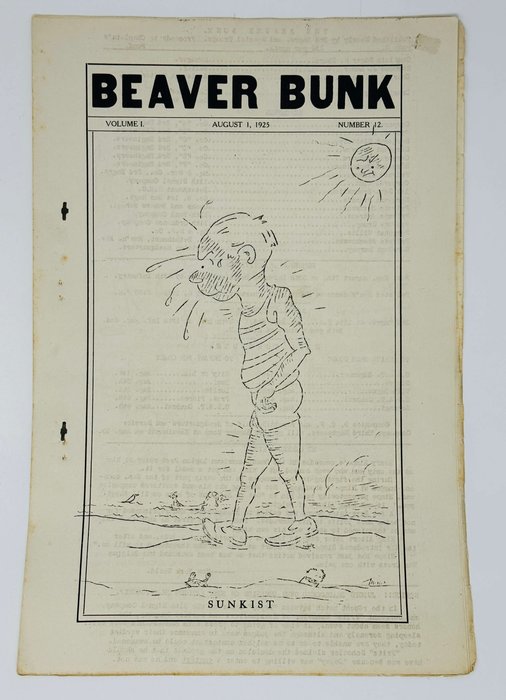
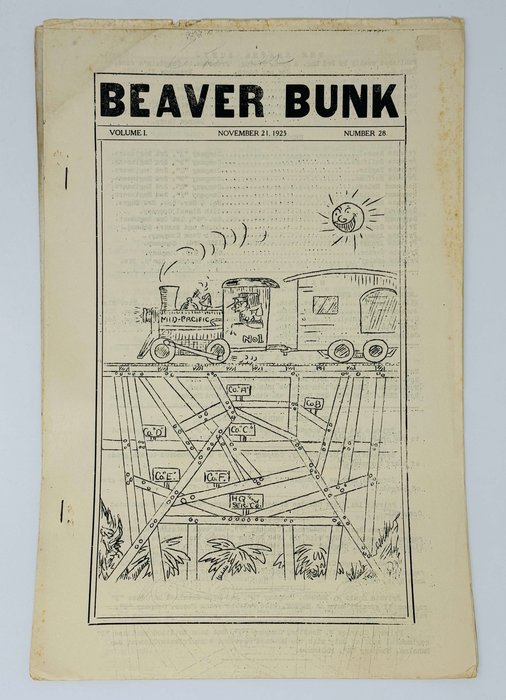
Rare mimeograph publication, prepared by the team of twenty one people: editors Raymond J.Lamar and Charles H.Clower, under management of chaplain Edgar N.Thorn, two artists and sixteen reporters. Each issue included the schedule of activities, baseball and mail schedules, couple of extracts from mainland periodicals, satirical drawings on the life in the battalion, bios of the men of the unit, poems and songs, anecdotes, short plays, advertisements, literary pieces, ‘katchy komments’ (what was heard by reporters around the barracks), things overheard in the local cafes (We Brothers Cafe, Chock’s Cafe). The Division also had its own School for Bakers and Cooks, established in 1920s, the magazines includes the jokes and trivia from there as well.
3rd engineer battalion was transferred to HI in 1921 and became the main construction force on Oahu for the military construction, where it was part of Hawaiian Division of US Army, which was the main defensive force in the islands in 1920s, participating in Marine maneuvers and simulating the invasion scenarios. The life of the Division in 1920s were mostly limited to Schofield and the area, with little presence in Honolulu: this is why this periodical is an important source on the everyday activities of the early US servicemen on Hawaii.
The periodical is filled with small details of the life of army men in Hawaii, showing they were soaking into Aloha sprit, despite being constrained to their barracks for the most time. The phrases like ‘Wondering if he has gone ‘Oahu’ are found throughout the issues. When one private asked what he will miss about Hawaii the most, he replied Missing ‘Honolulu Sweet Mamas’.
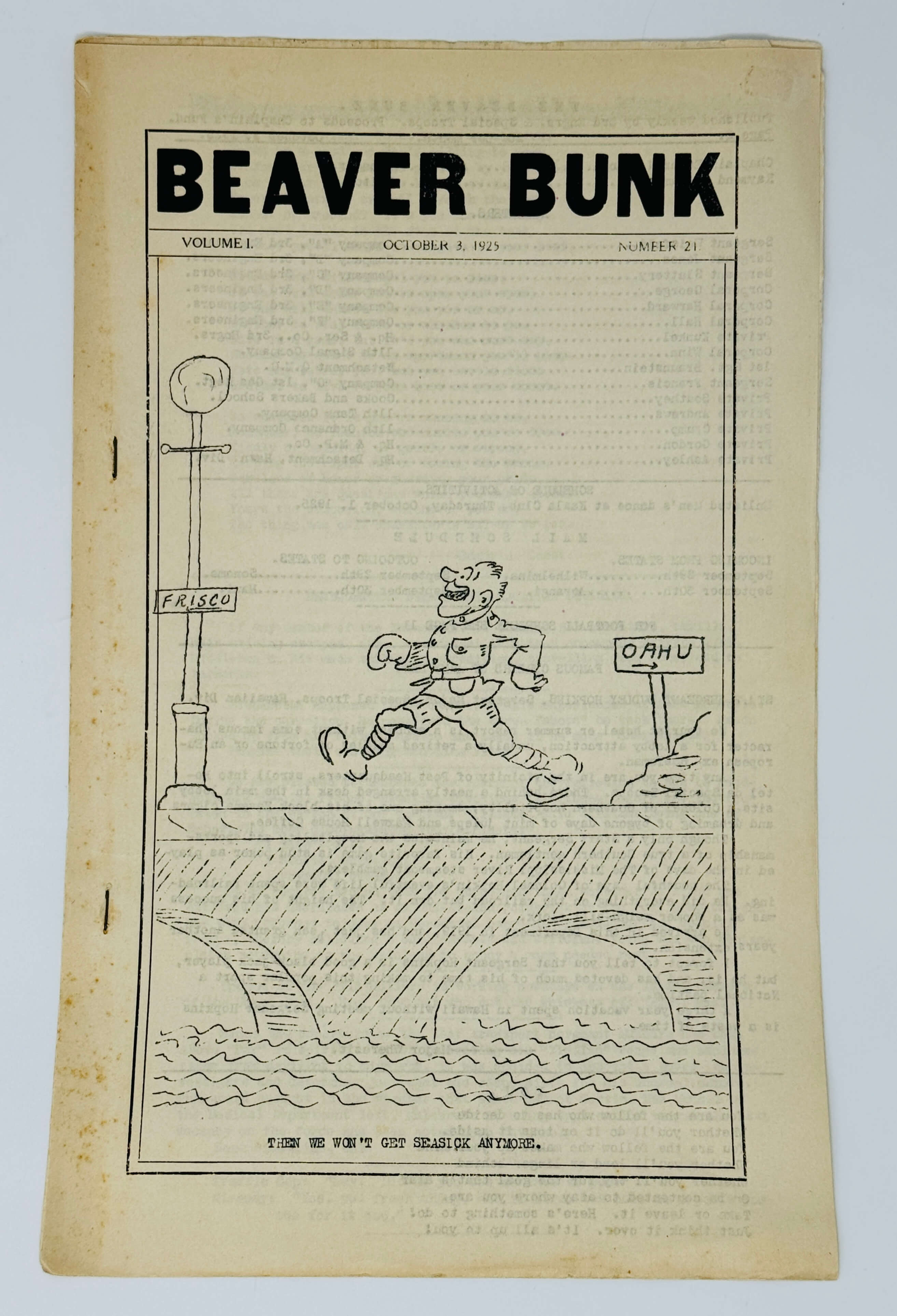
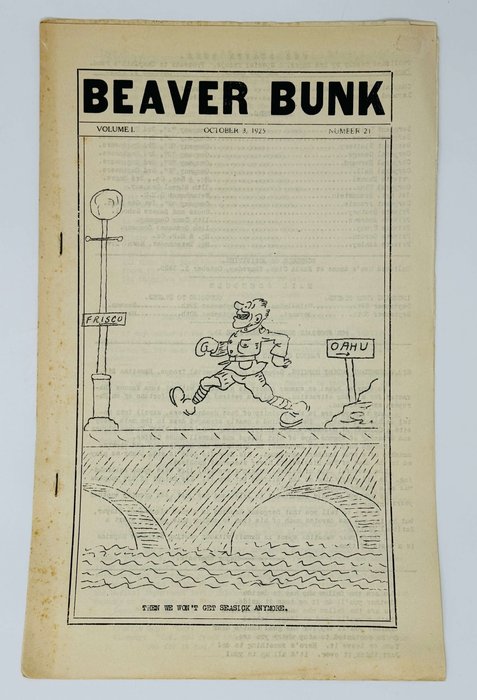
Another joke found in one of the issues: ‘What a fine place Oahu would be if only it had a bridge to Frisco’. (same bridge is pictures on the cover of the later issue).
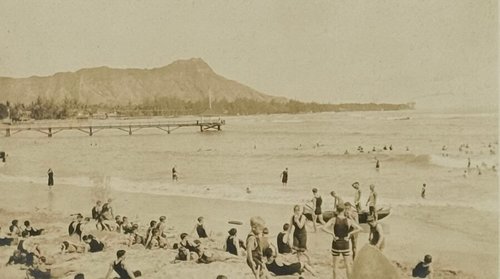
On the anecdote of newcomers arriving to the Regiment, they greeted the officer with: ‘Aloha there, General’, after being ‘beached themselves on the sands of Waikiki’.
Interesting content about experiences of army men in Hawaii includes:
— List of ‘Well known sayings in Oahu’;
— Advices on life in Hawaii for recruits: ‘go to Haleiwa (Hay-lever) for swim, but write home and say you went to swim in Waikiki (Walk-a-key)’, ‘Be careful about the souvenirs you send home from Hawaii. Always tear off ‘made in Germany’ tags from hula skirts, Koa wood, sea shells, beads etc’., ‘Mr.Kapu owns all the pineapple fields and has no objections to visitors taking as many samples as they want. Be careful not to pick any of the Army specials which cost $40 to $60 each’;
— Report on a sgt. Bogart ‘taking up the art of wave diving’ at Waianae beach;
— Report on the interaction between the ‘Count’ and several Honolulu Policemen, to whom he ‘demonstrated the knowledge of Marine Manual of Self Defense (or Offence)’. The same ‘count’ is mentioned in another issue as Count Adam Krusasvitch, who is credited with the following: ‘Weston society soon will be drinking from Samovars and naming their children Boris as a result of the craze for all things Russian…’ The Battalion has a large number of Slavic surnames in their ranks: mentioned are cook Yaraslavky , Sharpinski, Maciejko and others.
— Report on the forming of a ‘regular band’ with two ukulele players in it;
— Notice of 6 servicemen ‘enjoying their vacation in the wilds of Koolau Dam’, which was built by 3rd engineer battalion at the time, their reply to the paper printed in the next issue, mentioning the life at the construction sight;
— A description of the humorous project of cable car between Waianae to Schofield barracks, to Hilo (which is when translated means City of Wine)
— A short anecdote about Filipino helper struggle with understanding English at the School for Bakers and Cooks Q.M.C.
— Advise to drink Hawaii’s favorite beverage ‘Oke’, ‘if you want to die young and happy’ (meaning native Hawaiian alcohol drink Ōkolehao). Another joke on the same subject goes: ‘In these days of high-priced One, some save a little for an eye opener, while others drink it all, which results in permanent eye closers’.
— Short bio of the Boston-born serviceman nicknamed ‘Nigger’;
— Short bio of Pittsburg-born Jewish serviceman on becoming an Army Engineer;
— A somewhat crude anecdotal short story on the racial diversity of Hawaii:
The most of us can look at a man and tell at once whether he is by race, White, Chinese, Japanese, Korean, Hawaiian or Filipino. A few men may be blindfolded and by hearing these men speak, likewise tell to what race the speaker belongs. But neither the most of us nor the least of us can tell what kind of a man the man is just thru seeing him or hearing his ordinary speech. It seems to me that the Manager has it on both the most and the least of us; for he can sit in his office along about 11:30 and can tell without being able to speak Tagalog or Cantonese or any of the rest, or without looking out of the door, just what sort of men are passing by. How does he do it? Simply by the use to which they put language. It has come to us thru long observation that the man who uses cuss words on any and all occasions is not very much of a man. And so when I hear that sort of stuff I occasionally get up and look out at the men who are doing the talking and cussing. And I find out as a usual thing that the big cuss words come from the men who look the part - Tar Sticks. And somehow cusswords stick, too and twist a man's face and general appearance in such a way that they give the same impression that his words do.
Not in the Worldcat.