
#MD2
1866
Quarto bifolium 9,5 x 7,5 in. 4 pp. Black ink of yellowish lined wove paper. Fold marks, light stains on the last page, but otherwise a very good collection of two interesting letters, written in a legible hand.
Historically significant collection of two original letters written by pioneer gold prospectors in Helena, Montana Territory, with vivid firsthand accounts of gold mining during the peak years of the Montana gold rush.
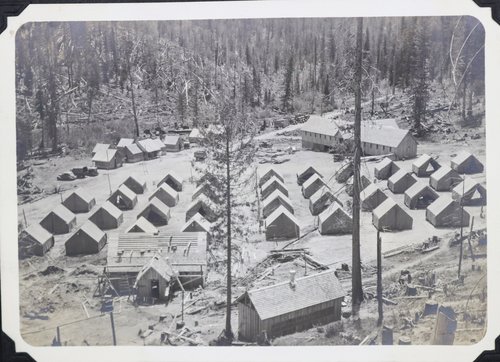
At the time the letters were written, Helena was a rapidly expanding mining town that emerged following the discovery of gold deposits in nearby Last Chance Gulch in 1864. By the mid-1860s, Helena had developed into one of the most productive and lucrative placer-mining districts in the United States. The town was defined by intensive mining activity, speculative boom conditions, and ongoing concerns about lawlessness, with gold shipments often requiring armed protection. After extraordinary early yields, the placer deposits entered a period of decline in the late 1860s, leading to a gradual transition from surface placers to quartz mining.
The letters were written by father and son, Philip H. Welch, who had previously lived in California before relocating to Helena, Montana Territory, in the mid-1860s. In correspondence with “Friend Anderson,” the Welches describe their work on mining ditches, typical wages, and the high levels of crime. They compare Montana’s mining opportunities to those in California, emphasizing the region’s abundant gold in the deep diggings of nearby Confederate Gulch. Especially interesting is their account of an extraordinary shipment of a ton of gold dust bound for the state and escorted by twenty armed guards. In the rest of the letters, the authors discuss the challenges of frontier mining, including scarce equipment, high prices, lawless camps with numerous road agents and no possibility of insuring money, and the expected rise in wages once water reached the Helena claims.
Overall, historically interesting collection of two original autograph letters, with vivid firsthand accounts of gold mining during the peak years of the Montana gold rush.
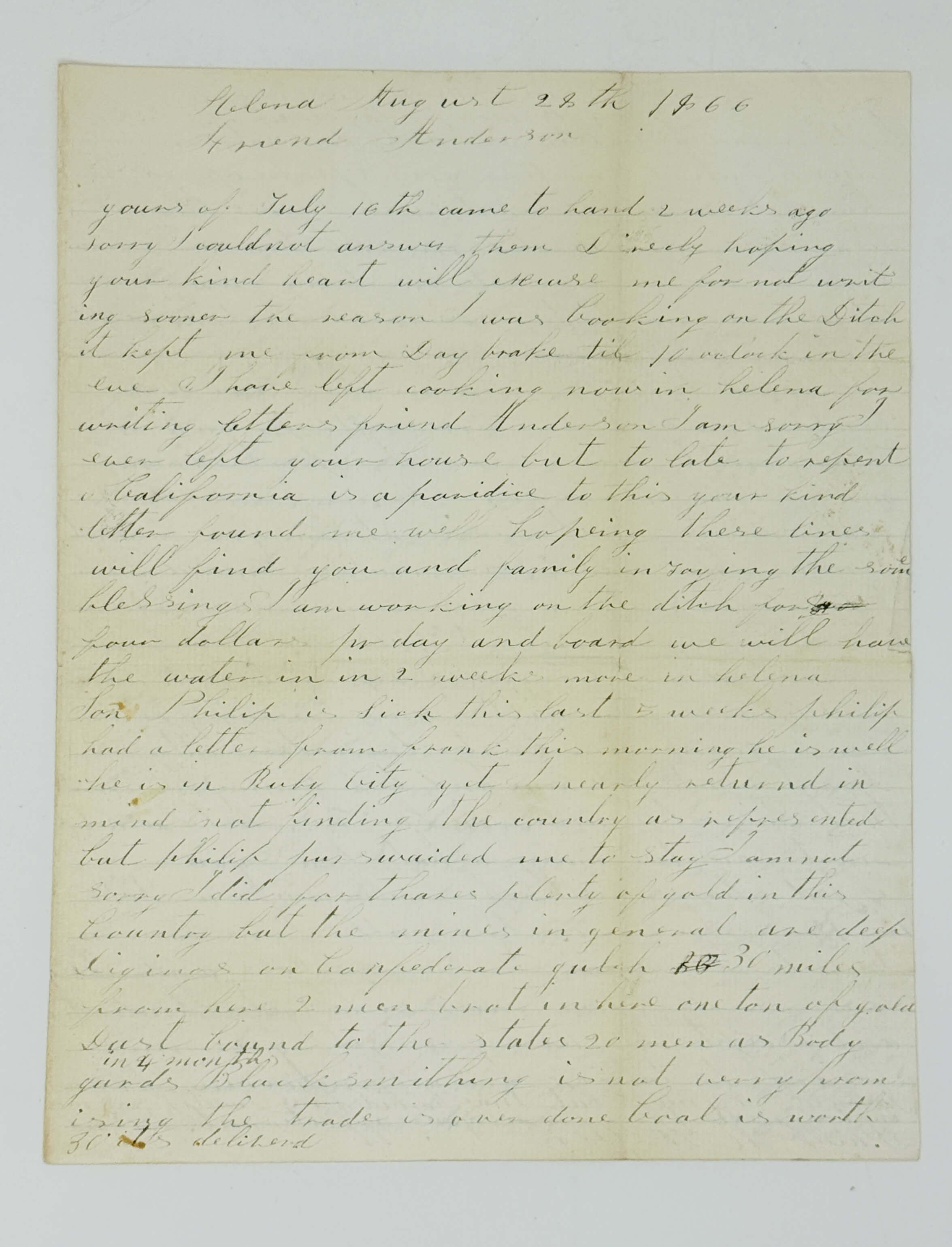
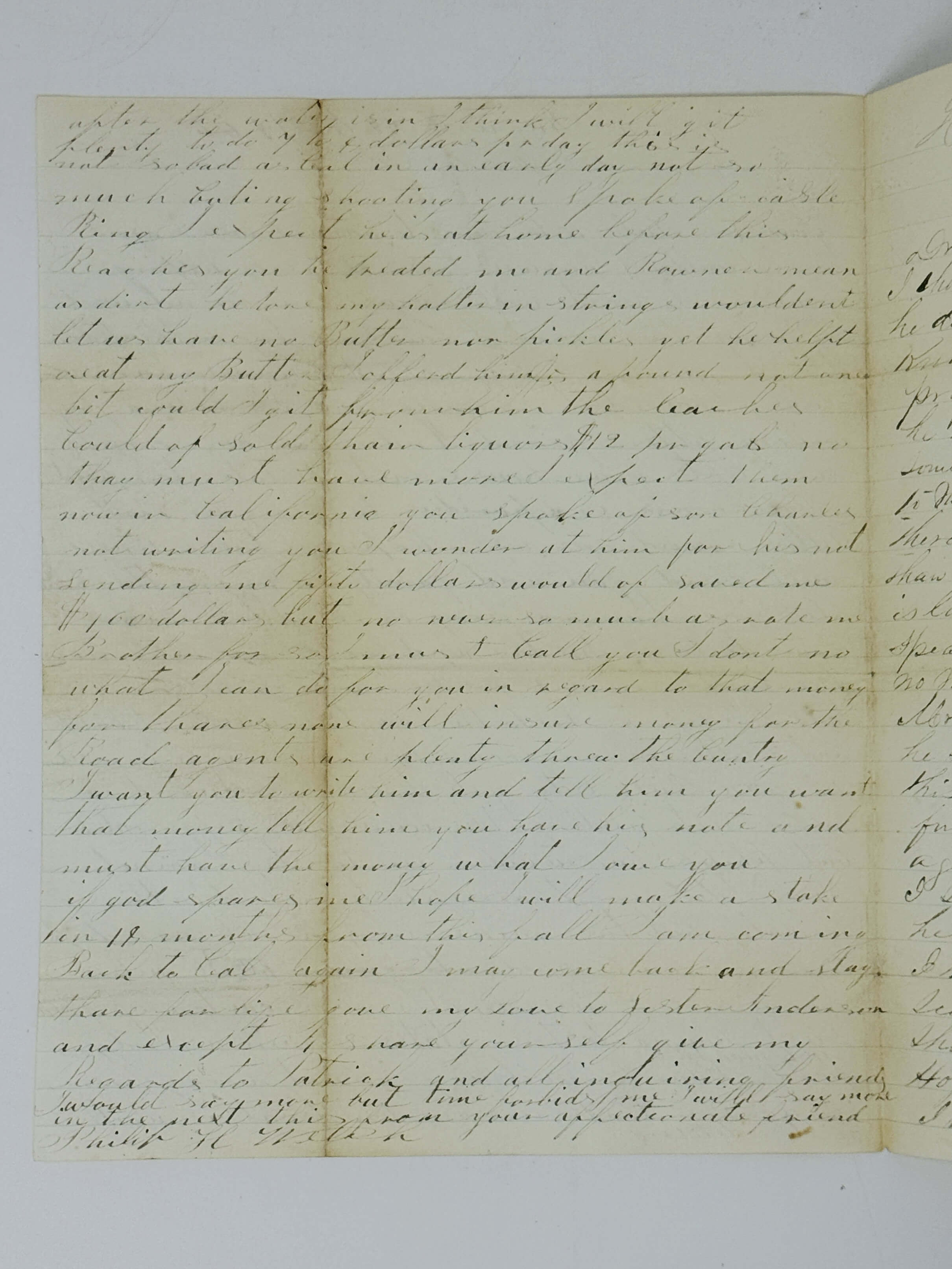
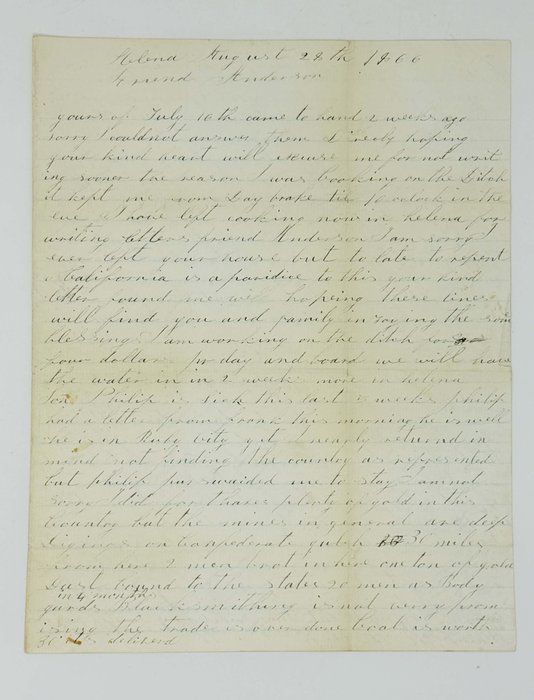
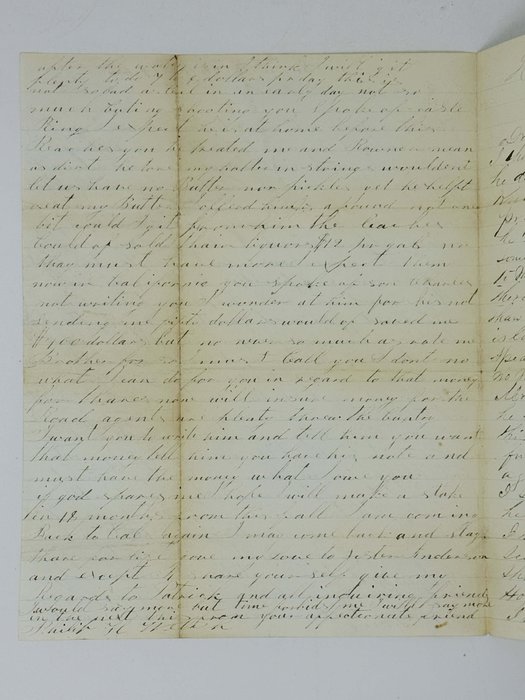
Excerpts from the first letter: “I am working on the ditch for four dollars per day and board. We will have the water in in 2 weeks more in Helena. Son Philip is sick this last five weeks Philip had a letter from frank this morning he is well he is in Ruby City yet I nearly returnd in mind not finding the country as represented but Philip purswaided me to stay. I am not sorry I did for thares plenty of gold in this Country but the mines in general are deep digings on Confederate gulch 30 miles from here 2 men brot in here one ton of gold dust bound to the state 20 men as Body gards. Blacksmithing is not verry promising the trade is one done boat is worth 30 its delivered. I offered him a pound not any bit could I get from him the Coaches could af sold their liquors $12 pr gal no thay must have more expect them now in California. You spoke of son Charles not writing you I wonder at him for his not sending me fifty dollars would saved me $100 dollars but no never so much as rate me Brother for so I must Call you I don’t know what I can do for you in regard to that money for chance none will insure money for the Road agents are plenty threw the Country. I want you to write him and tell him you have his note and must have the money what I owe you. If God shares me I hope I will make a stake in 18 months from this fall. I am coming back to Cal again.”
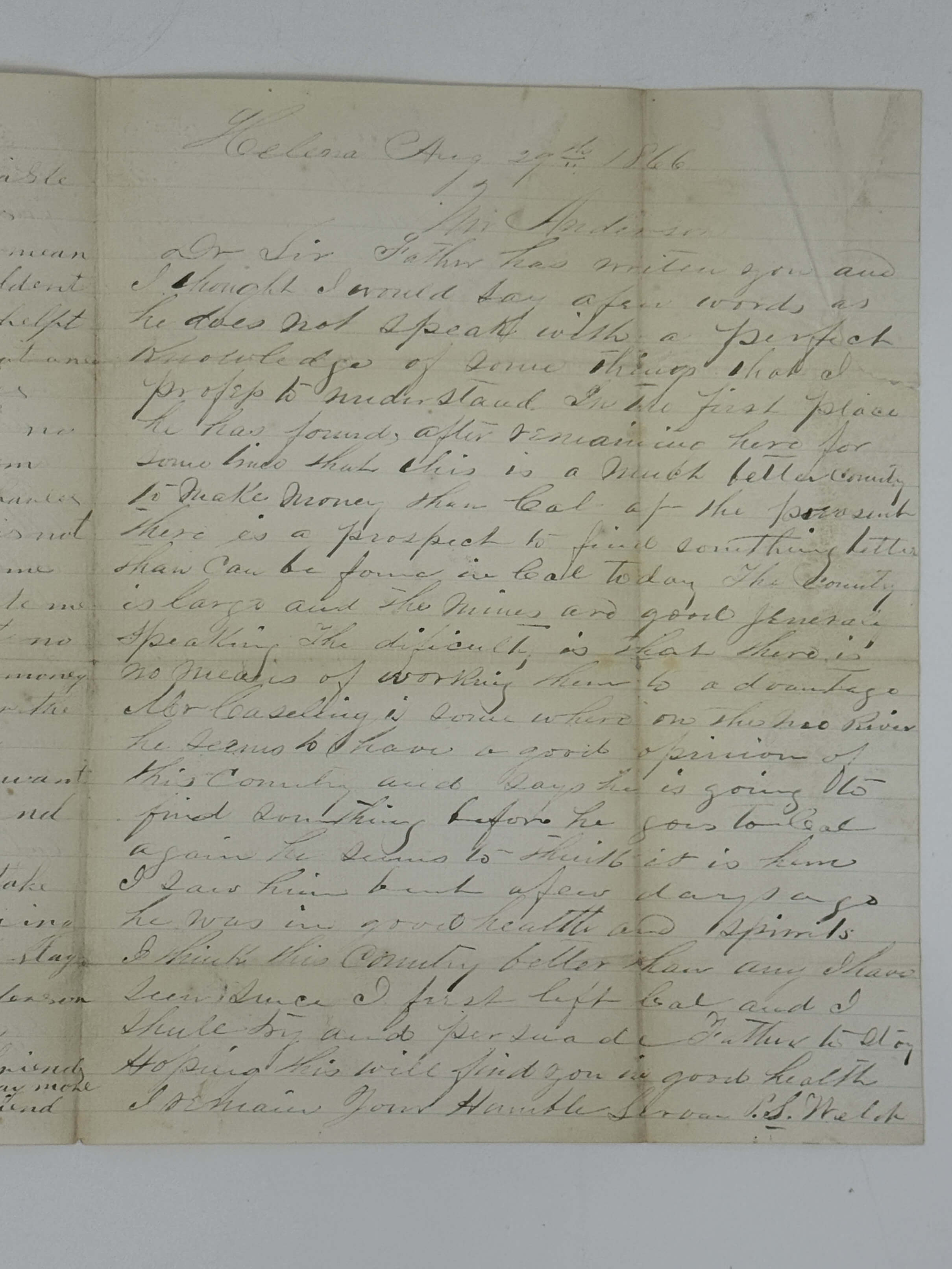
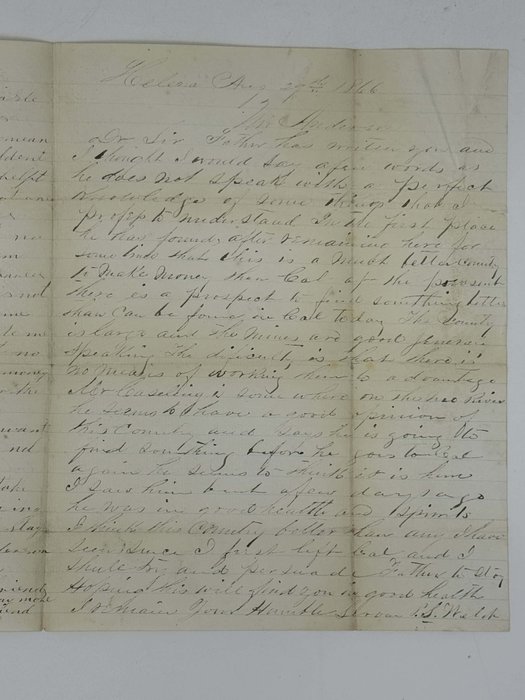
Excerpts from the second letter: “Dear Sir Father has written you and I thought I would say a few words as he does not speak with a perfect knowledge of some things that I profess to understand. In the first place, he has found, after remaining here for some time that this is a much better country to make money than Cal at the present. There is a prospect to find something better than can be found in Cal today. The Country is large and the mines are good general speaking. The difficulty is that there is no means of working there to adavantage. Mr Caseling is some where on the River, he seams to have a good opinion of the Country and says he is going to find something before he goes to Cal again he seems to think it is home. I saw him back a few days ago he was in a good health and spirits. I think this Country better than any I have seen since I first left Cal and I shuld try and persuade.”