
#MD54
Ca. 1864-1889
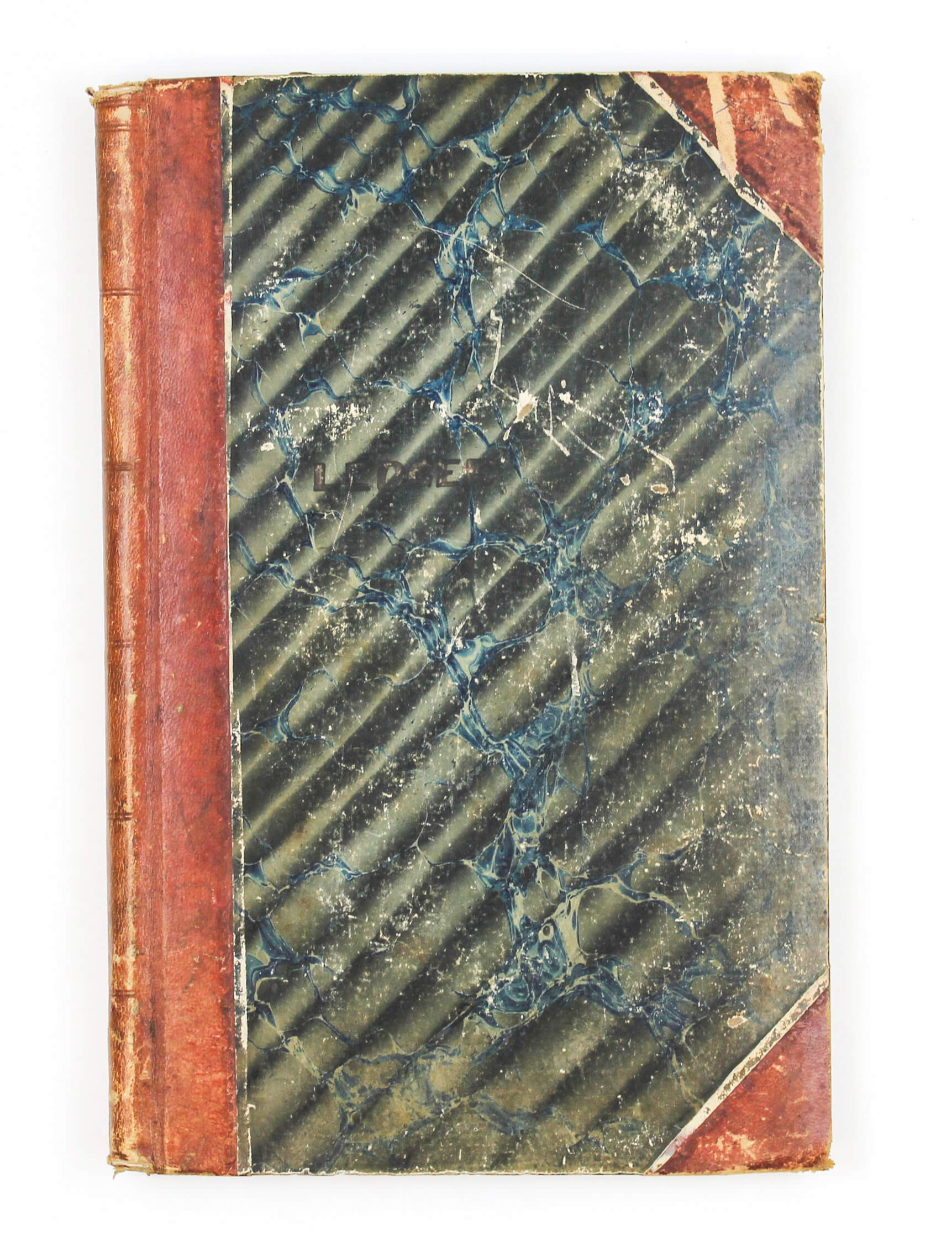
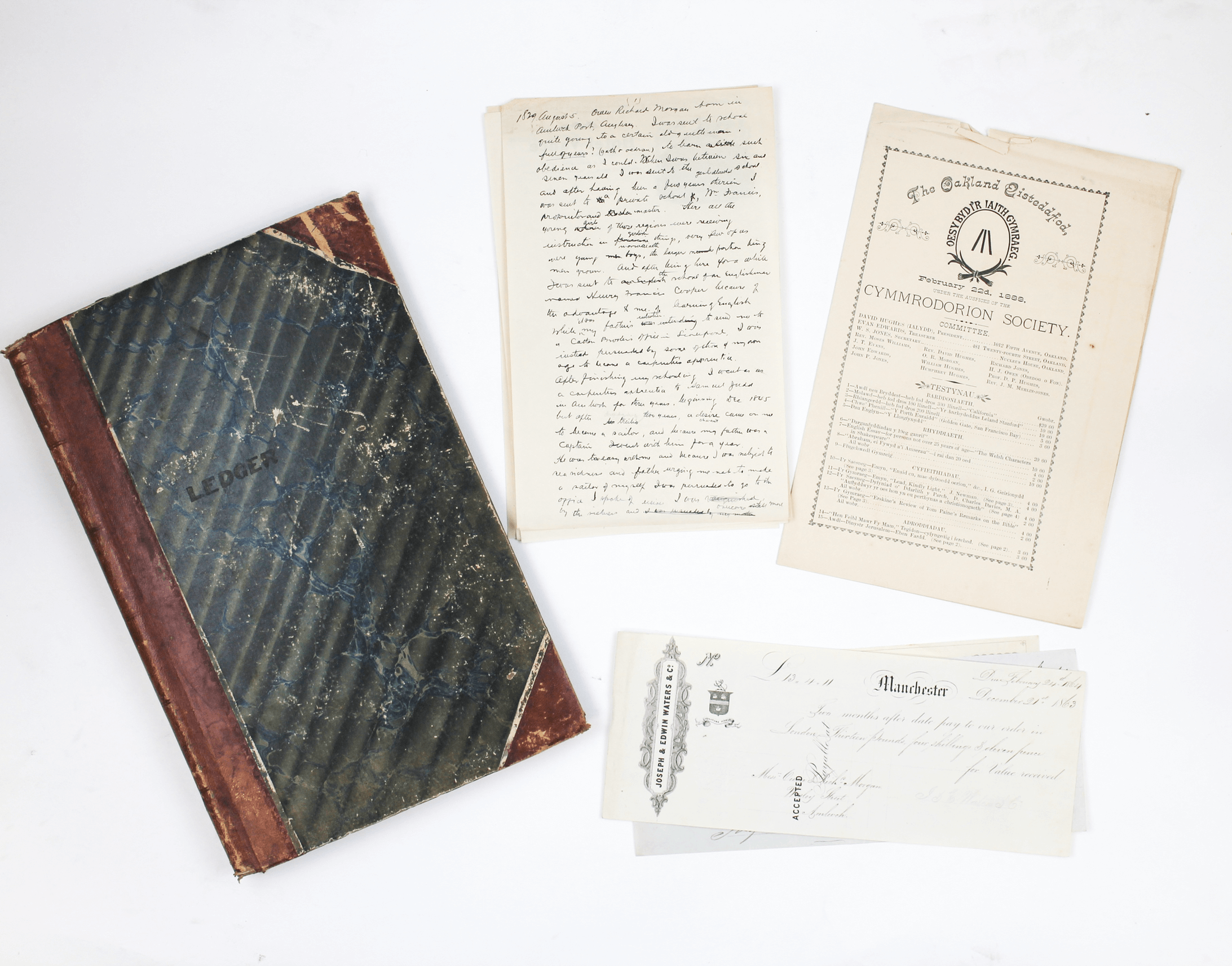
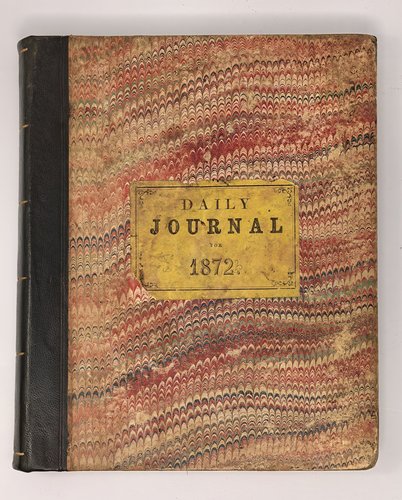
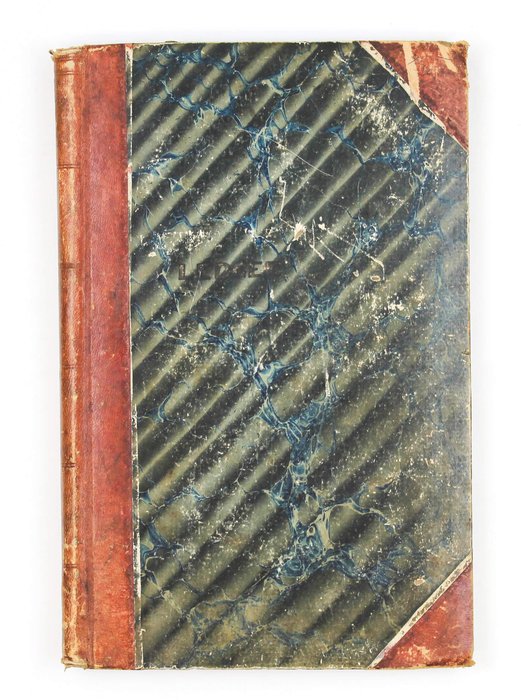
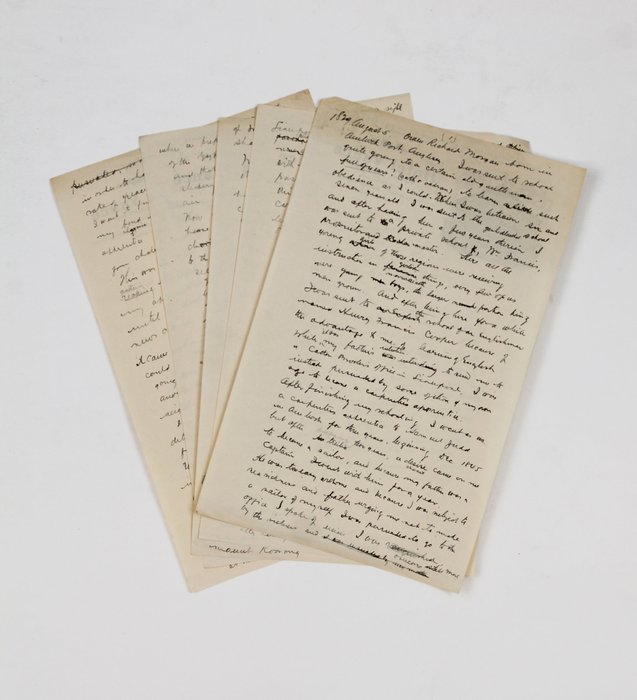
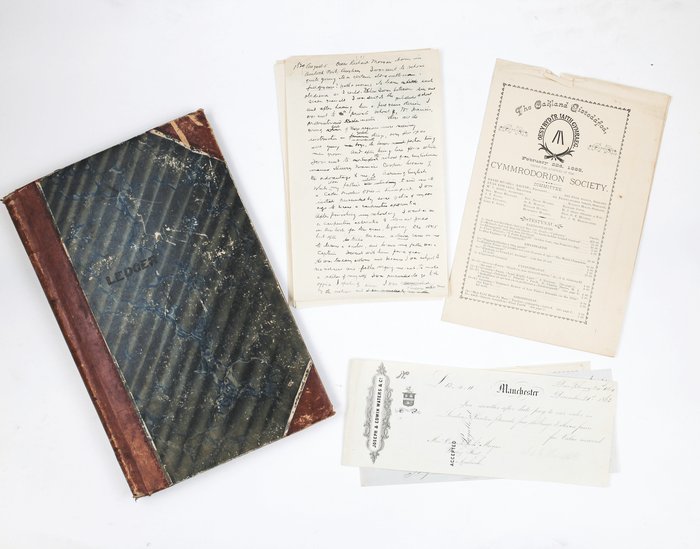
Folio journal (ca. 32,3x21,2 cm). [30], 102-342 pp., including ca. 53 pages of handwritten text in Welsh; with ca. eight pages of loosely inserted original handwritten manuscripts (including five pages written in English on the verso of the official printed letterhead of Hotel Vance in Eureka, California) from ca. 23,9x15,1 c (9 ½ x 5 ¾ in) to ca. 20,3x12,5 (8x5 in); five receipts with official printed letterheads (in English), from 25,1x10,1 cm (4x9 ¾ in) to 9,2x17,4 cm (3 ½ x 6 ¾ in); two printed programs (overall nine pages) of the Oakland Eisteddfods for 1887 and 1888 (in Welsh and English), each ca. 21x15,9 cm (8 ¼ x 6 ¼ in) and ca. 26,2x17,4 cm (10 ¼ x 6 ¾ in) (including one page mounted in the journal); two English newspaper clippings (including one mounted in the journal), each ca. 33x6,3 cm (13 x 2 ½ in) and ca. 10,4x6 cm (4 x 2 ½ in), and one typescript English translation of a part of Morgan’s timeline ca. 33x21,3 cm (13 x 8 ½ in). Half-leather binding with marbled endpapers. Binding rubbed with worn edges, one page detached, loosely inserted receipts with occasional light stains, one receipt with the number '1' and two stars cut out, one loosely inserted program with tears at the upper margin, but otherwise a very good archive.
Historically significant archive of an original handwritten journal, manuscripts, printed receipts, and newspaper clippings related to the family of Owen Richard Morgan (ca. 1829–1895), an Oakland-based Welsh carpenter, offering rare first-hand accounts of the Victorian Gold Rush and the early Welsh diaspora in California.
The Australian gold rushes of the 1850s marked the first major influx of Welsh migrants, many seeking to escape industrial hardship or declining rural life. Traveling mainly via Liverpool to Melbourne, they dispersed across the Victorian goldfields, rapidly increasing the Welsh-born population in Victoria from 2,326 in 1854 to over 6,000 by 1861. As gold yields declined, many moved on to California from the 1860s, drawn by mining, skilled trades, and urban growth. In both Australia and California, Welsh migrants formed close-knit communities, preserving their cultural identity through chapels, eisteddfods, and societies such as the Cymmrodorion.
The compiler, Owen Richard Morgan, was a Welsh master carpenter and civic leader who resided in California for over thirty years, primarily in Oakland's Second Ward. Born in Amlwch, Anglesey, he first sought his fortune in the 1852 Victorian Gold Rush in Australia. After returning to Wales to establish the short-lived Morgan & Evans Foundry and a drapery shop, he migrated to California in 1864. In the Bay Area, Morgan became a successful contractor and served as a supervisor for the Spring Valley Water Company. He was also a trustee for the Plymouth Avenue Congregational Church and a candidate for Public Administrator.
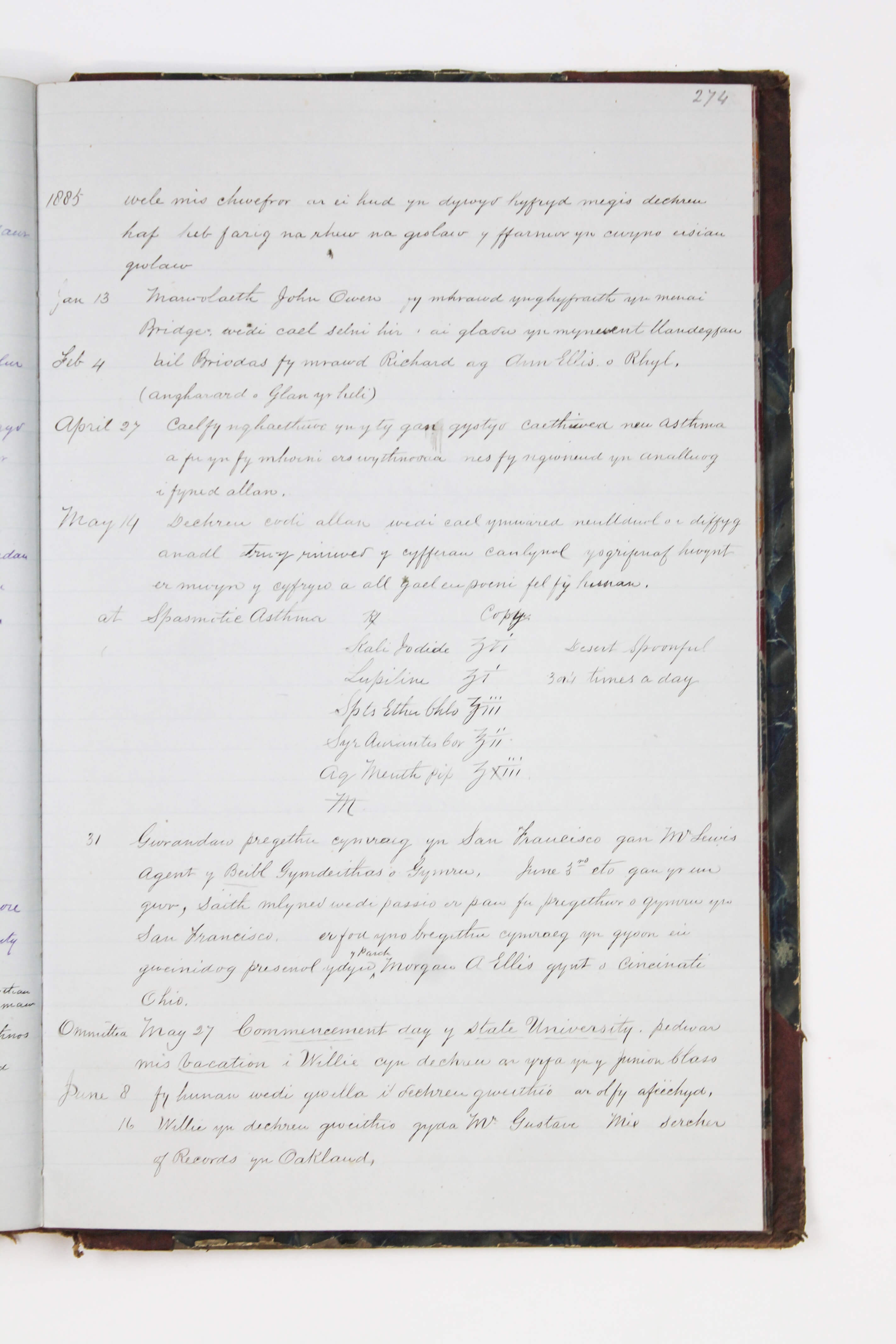
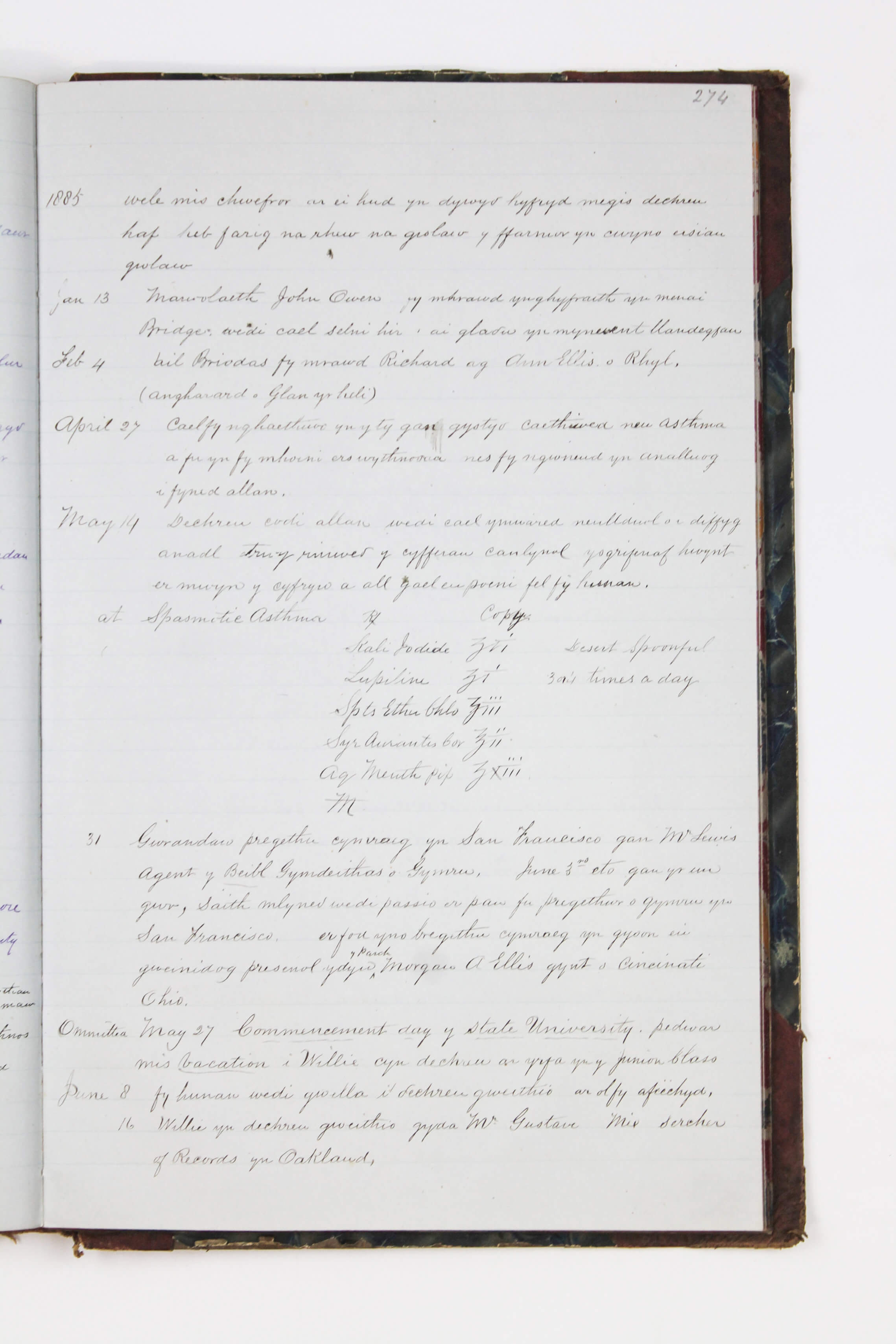
The archive consists of Owen’s handwritten journal and several pieces of printed ephemera, documenting the early lives and social experiences of Welsh emigrants in the 19th century.
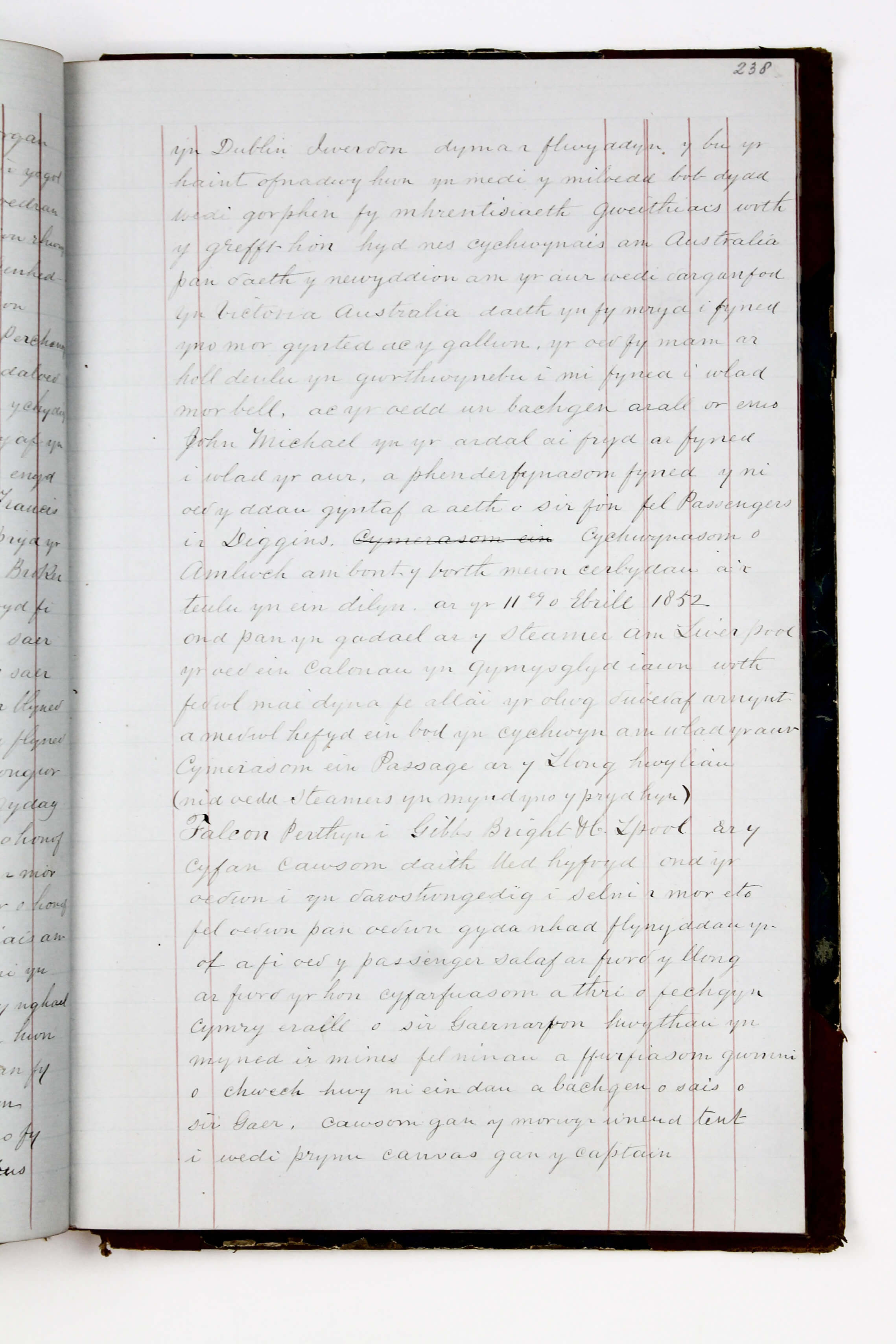
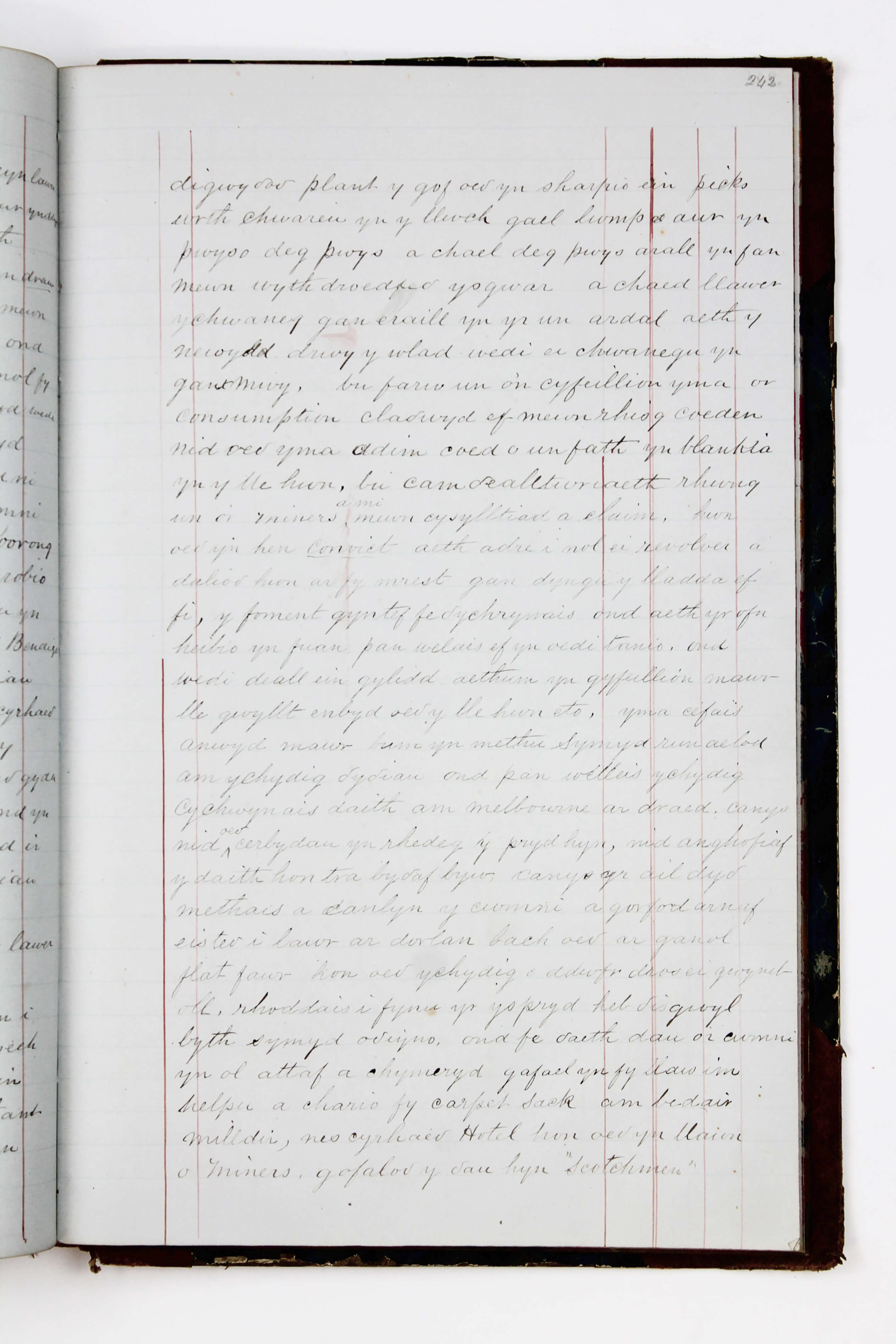
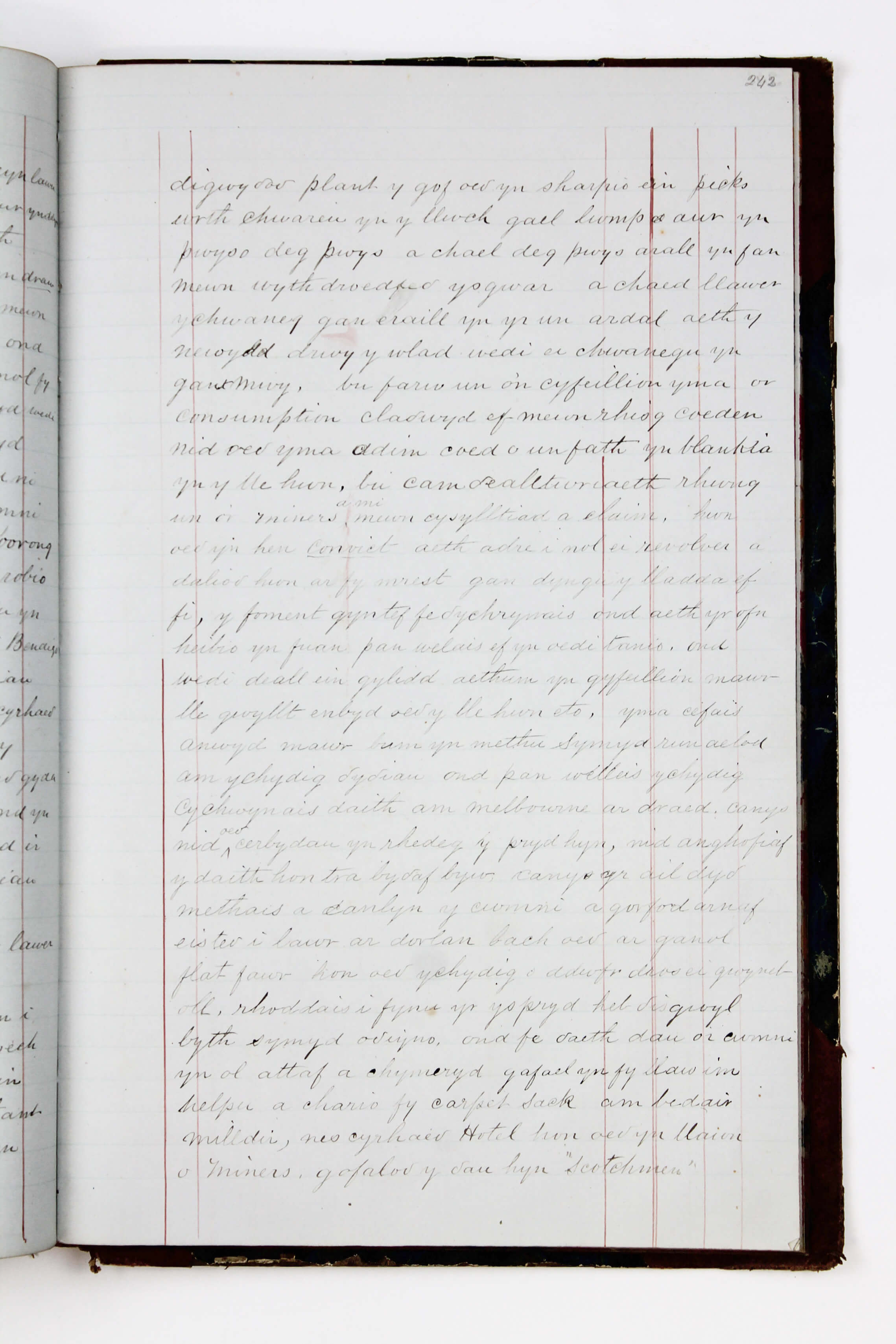
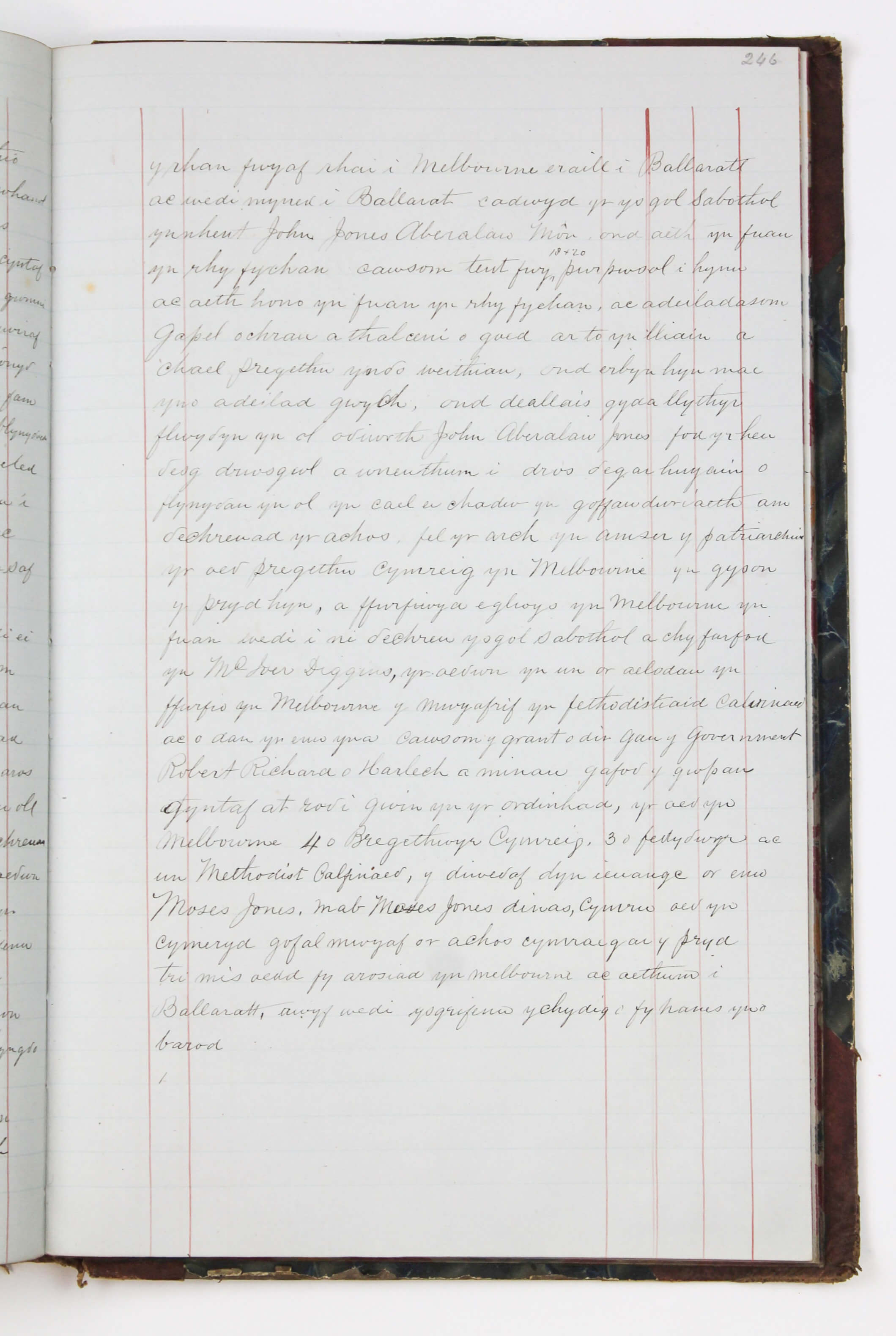
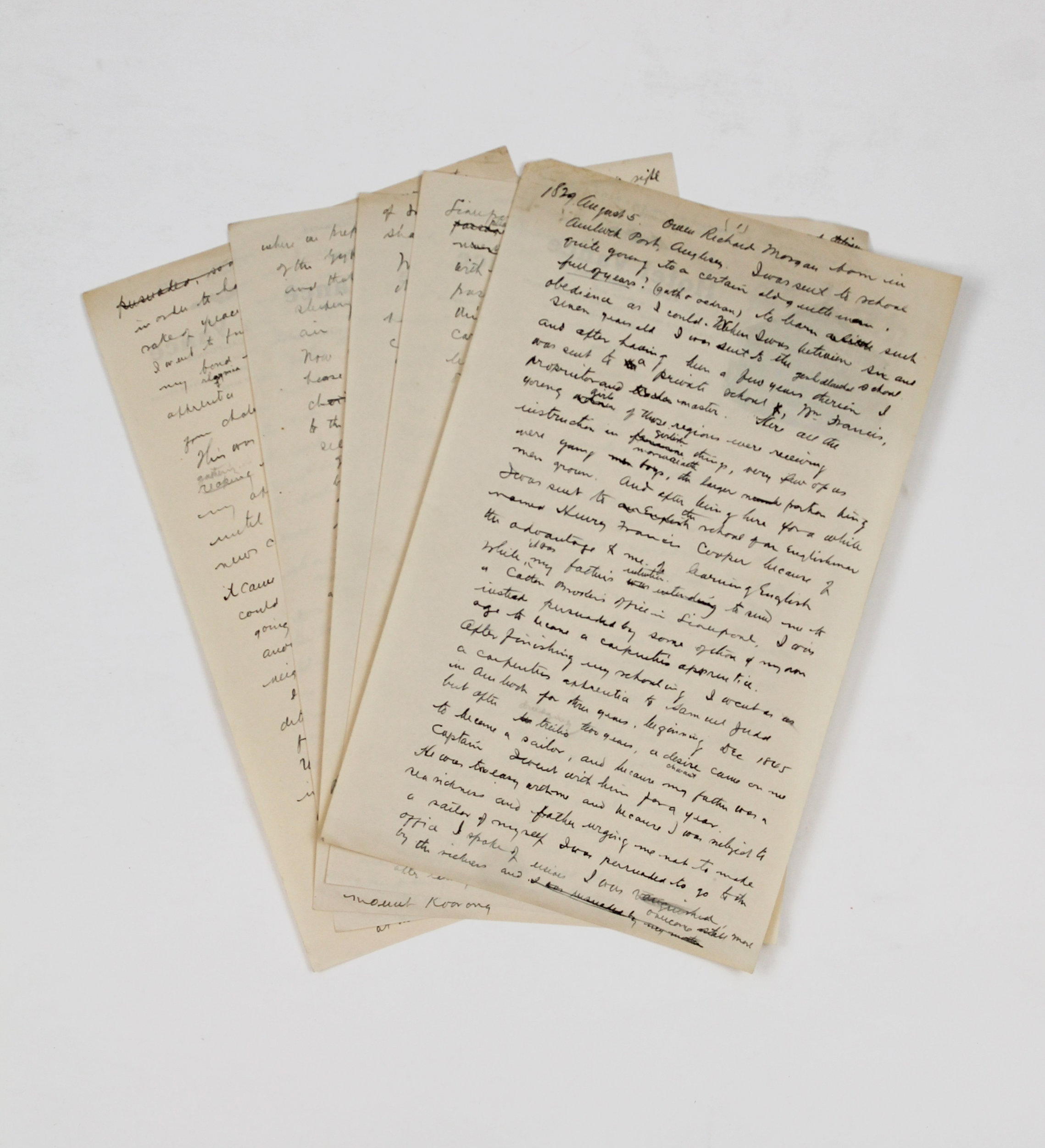
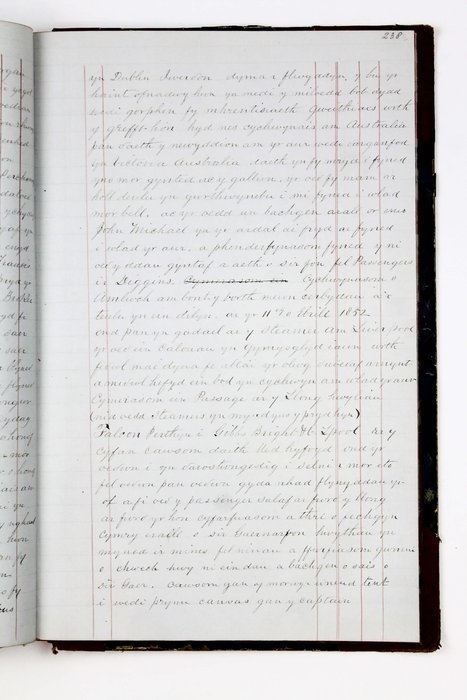
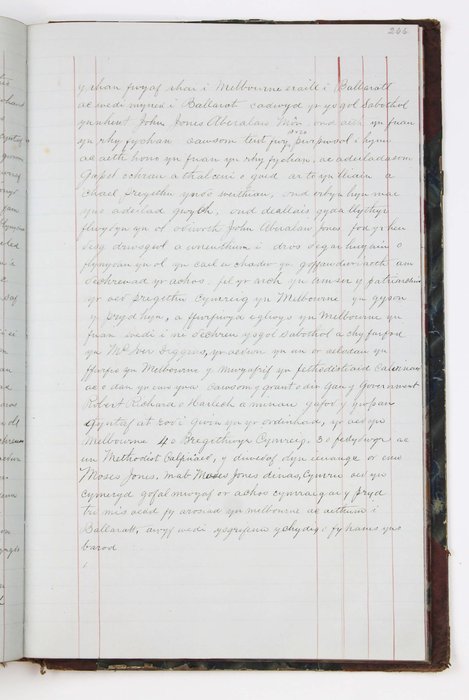
The journal features Owen’s extensive autobiography, composed in California in 1885, recording his life in Wales and Australia. The author recounts his early education in Amlwch, his brief training as a sea captain, and his eventual career as a carpenter. Especially interesting is Owen’s eight-page account of the Victorian Gold Rush, mentioning the most common route from Amlwch to Melbourne (via ship “Falcon” from Liverpool), the city’s overcrowded housing, and rising rent prices. He recalls moving between various mining districts (Forest Creek, Bendigo, McIvor, and Ballarat) with fellow Welshmen in search of new goldfields, enduring lice-infested shanties, and the constant threat of robbers. Importantly, Owen also discusses the religious life of Welsh miners and notes his efforts to establish a Welsh Sunday School at McIvor and a formal chapel in Ballarat. Towards the end, the author provides a detailed account of the Eureka Rebellion (the historic 1854 revolt of gold miners against the British colonial administration), describing the collapse of his mining shaft and the grim sight of dead bodies at the barricades. The autobiography concludes with Owen’s description of his journey home and his subsequent years operating foundry and shop businesses in Amlwch Port. This section of the journal is supplemented by an eight-page handwritten English translation of part of the autobiography, written on the versos of official Hotel Vance letterhead from Eureka, California.
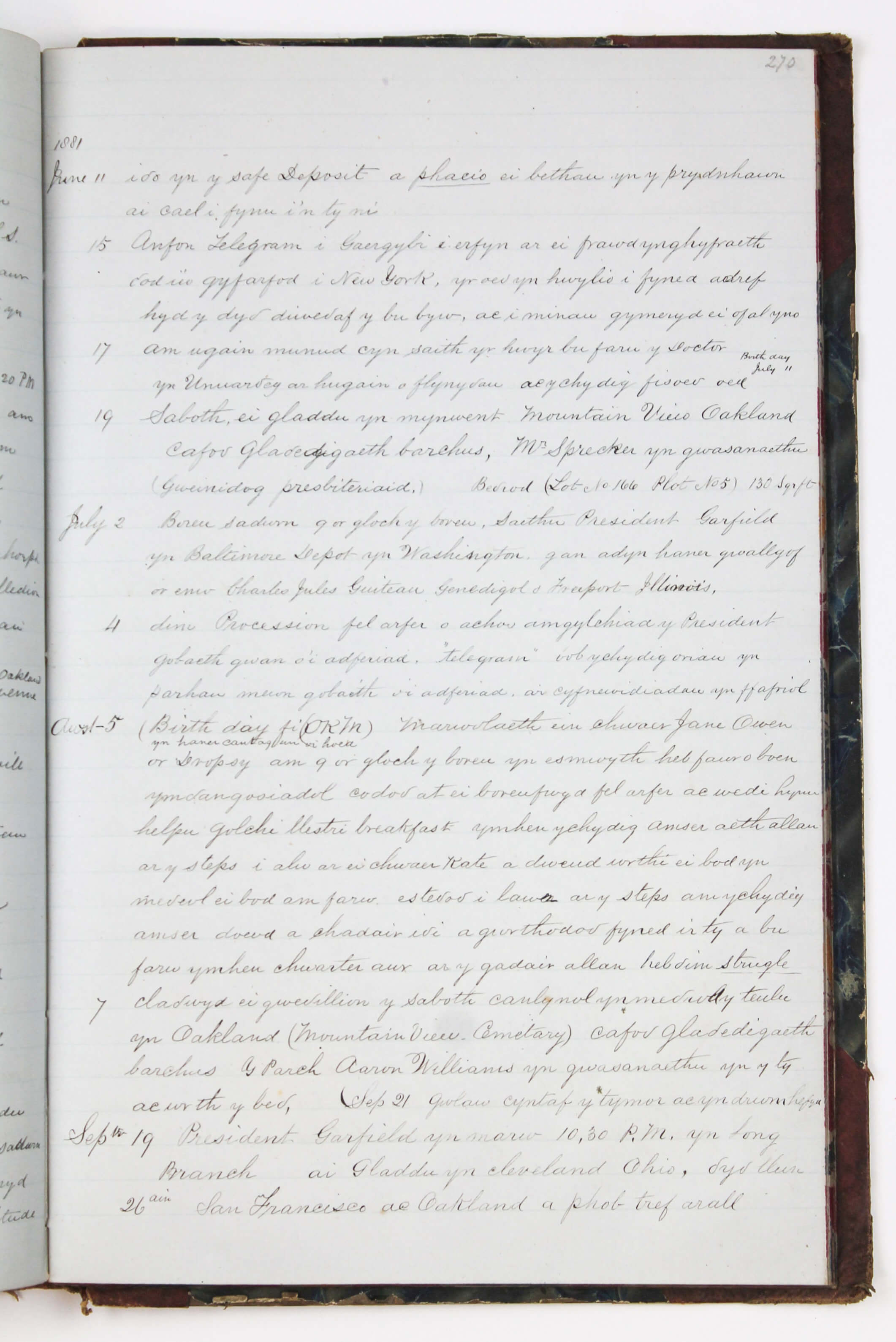
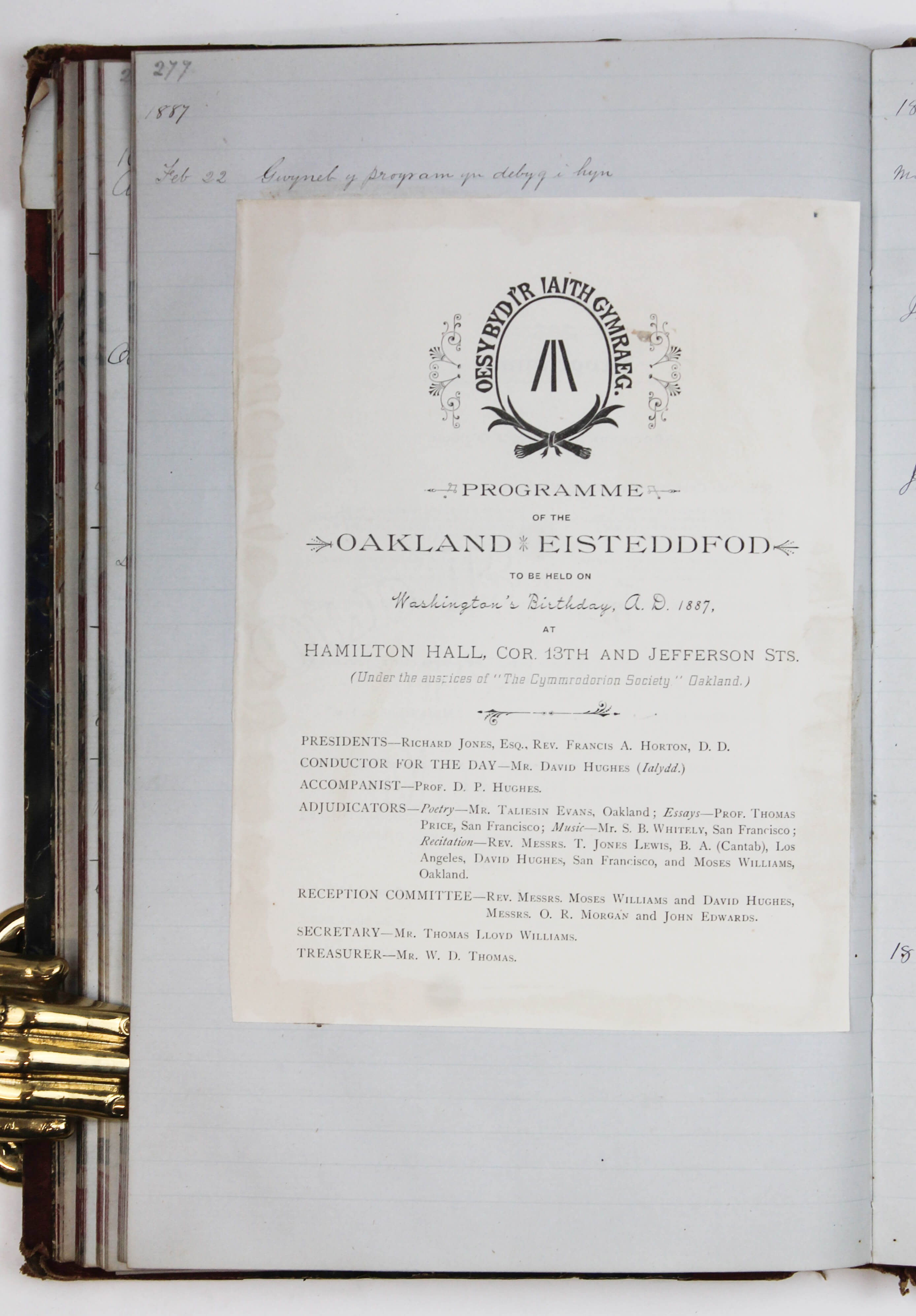
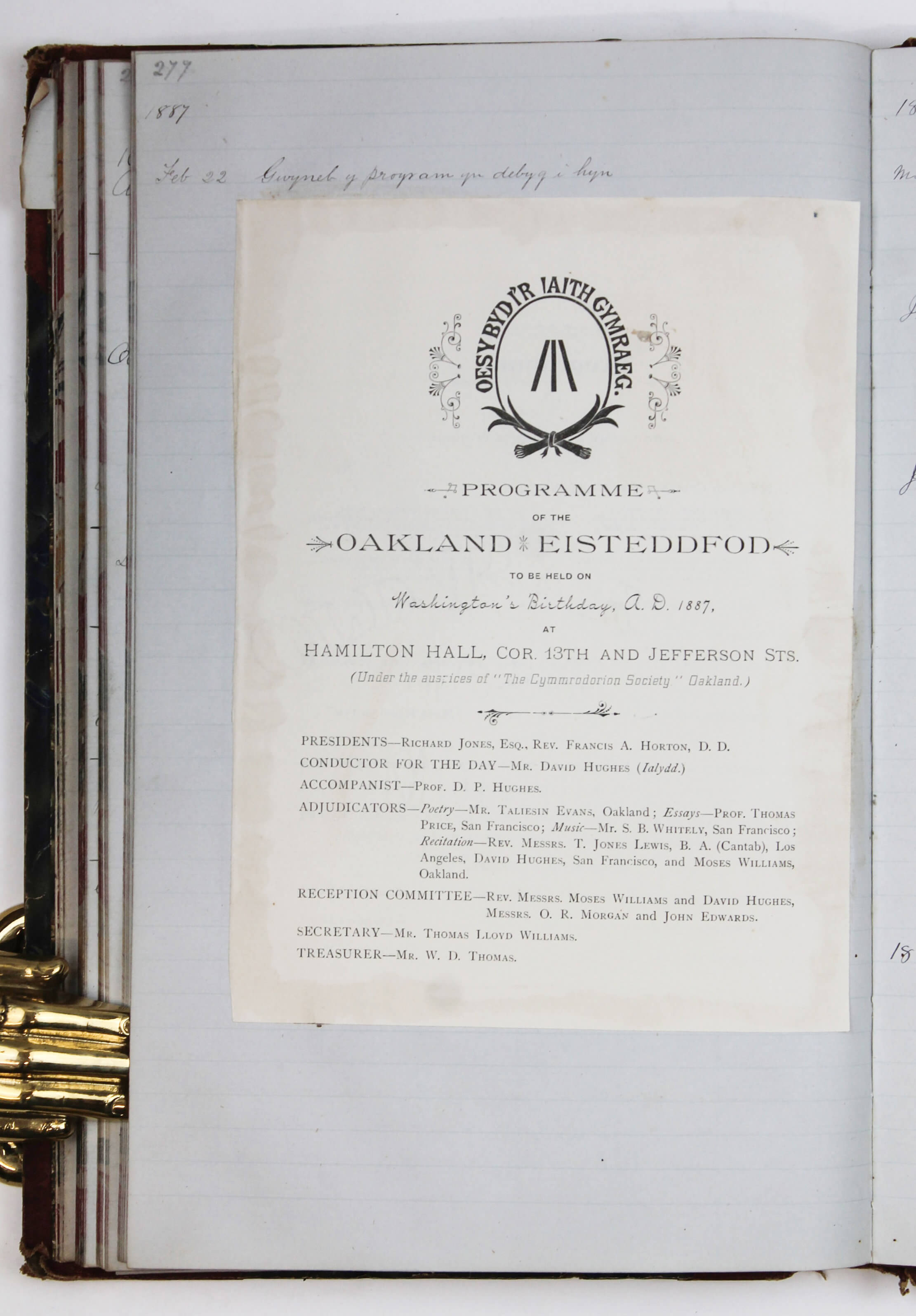
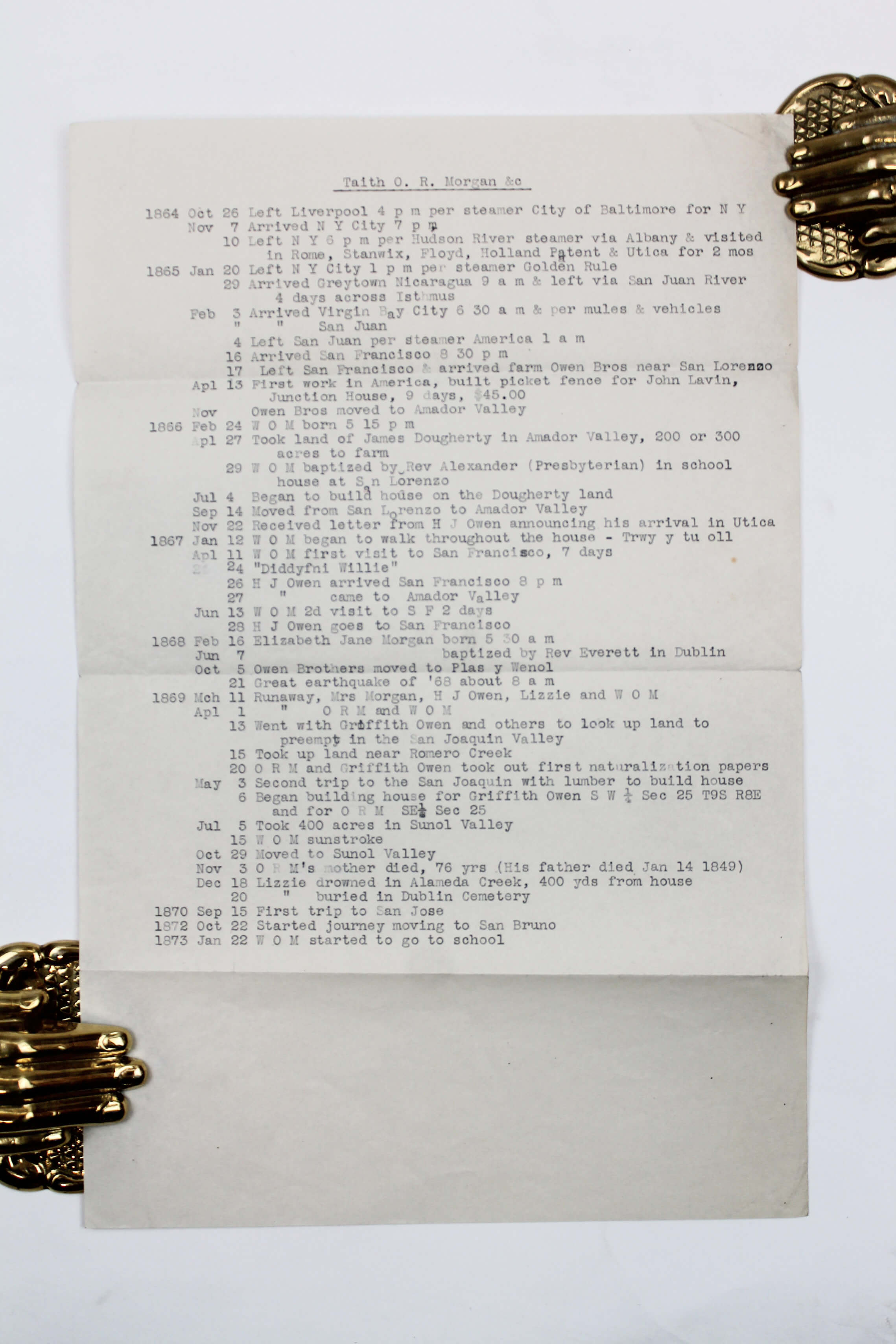
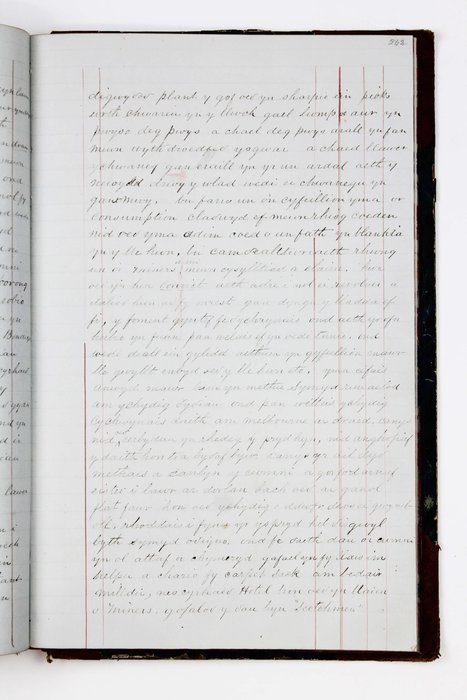
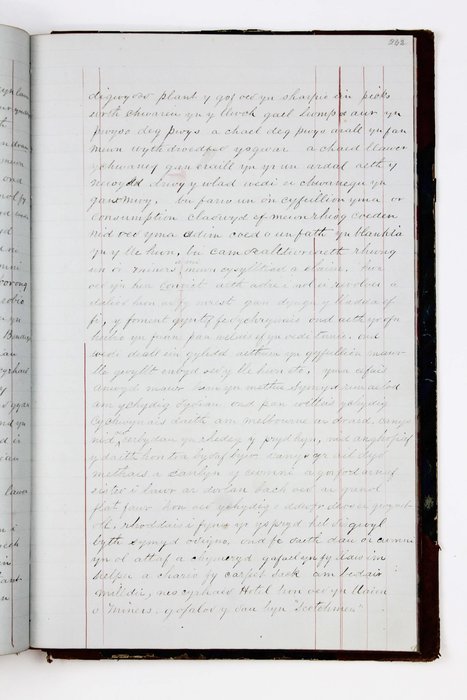
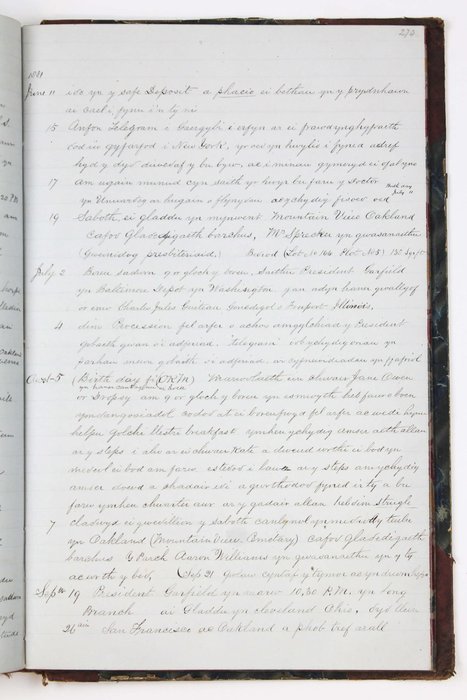
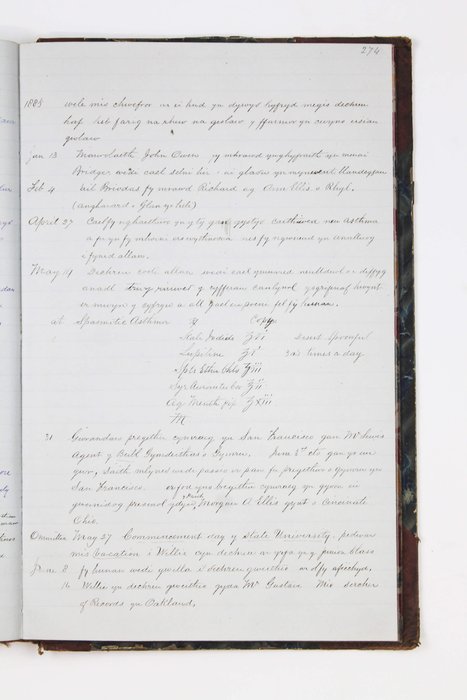
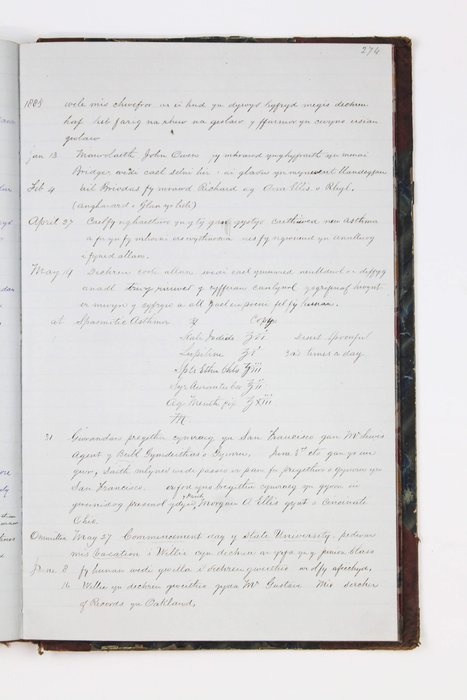
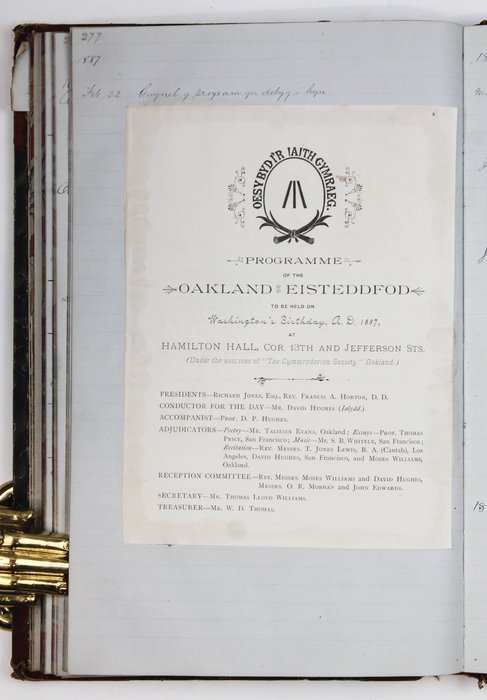
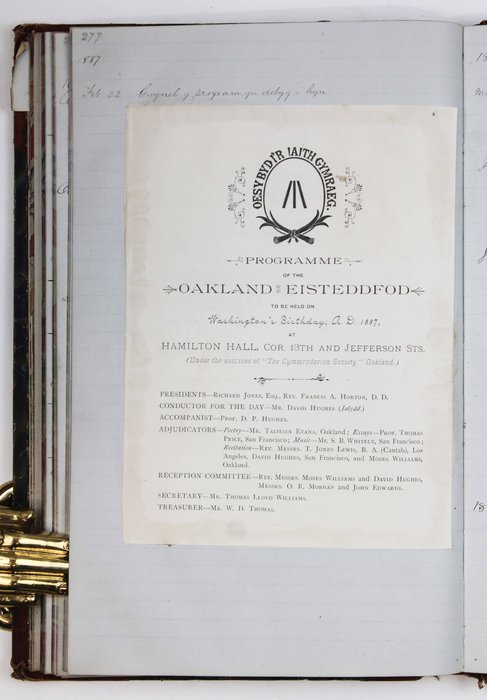
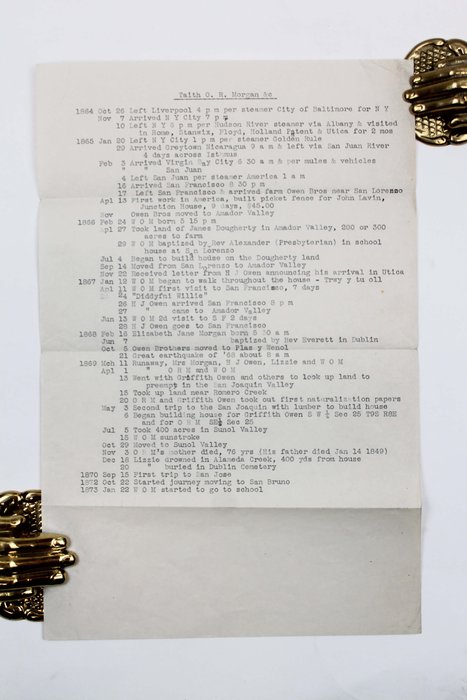
The most extensive part of the journal (over twenty-five pages) continues Owen’s autobiography with a detailed timeline of his life in America from 1864 to 1888. It opens with his arrival in New York aboard the SS “City of Baltimore” and his first employment as a fencer at Junction House. The narrative follows Owen’s personal and professional life alongside major historical events, including the assassination of President Garfield and the Great San Francisco Earthquake of 1868 (which he describes as rocking his house "like a ship in a storm.") Especially interesting are Owen’s descriptions of the California Welsh diaspora. He documents the establishment of the Oakland Cymmrodorion Society in 1886 and preparations for the 1887 Oakland Eisteddfod at Hamilton Hall, with detailed accounts of competitions (singing, essays, poetry, etc.) held against the San Francisco society, menus for intermissions, and awarded prizes. Owen also notes lesser-known cultural practices, including Welsh “basket parties” and the custom of female members hiring rooms at the Masonic Temple to receive callers. The timeline names numerous early Welsh settlers in California, including Thomas Rowland, Griffith Owen, Aaron Williams, Willie Morgan, Richard Jones, David Hughes, and Thomas Williams. This part of the journal is supplemented by a handwritten continuation of the timeline for 1889 (in Welsh) and a typewritten English translation of Owen Morgan’s American timeline for the years 1864–1873.
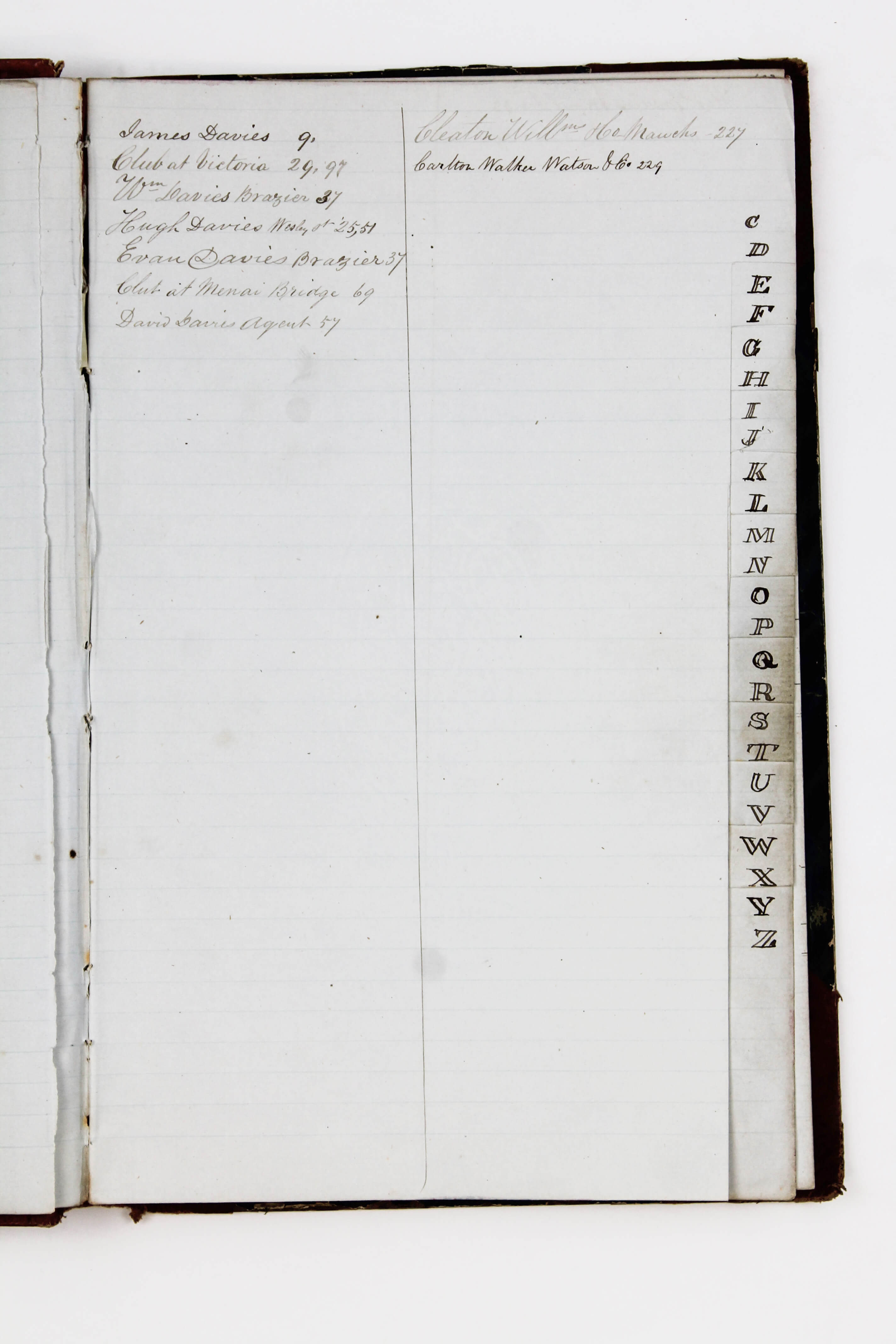
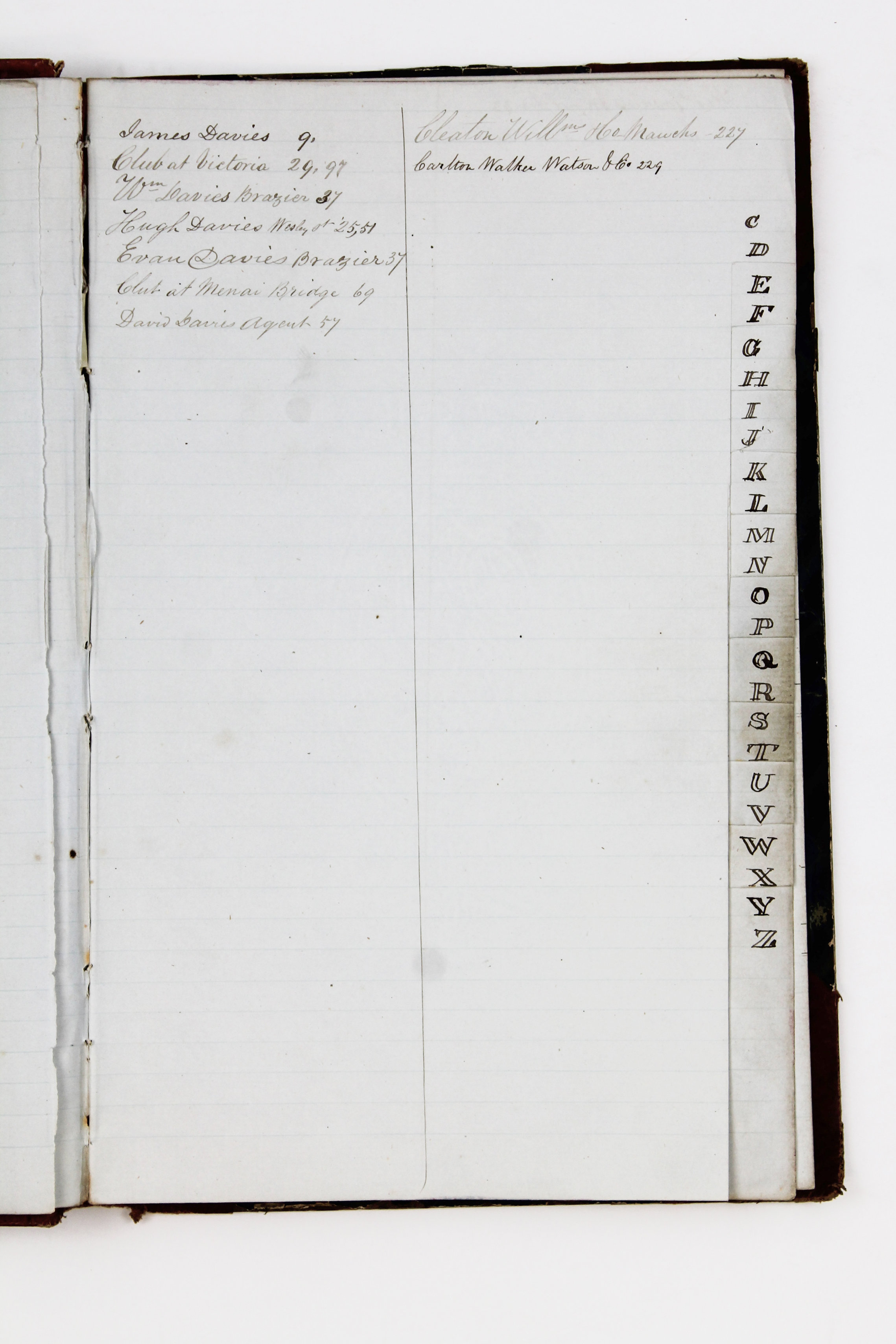
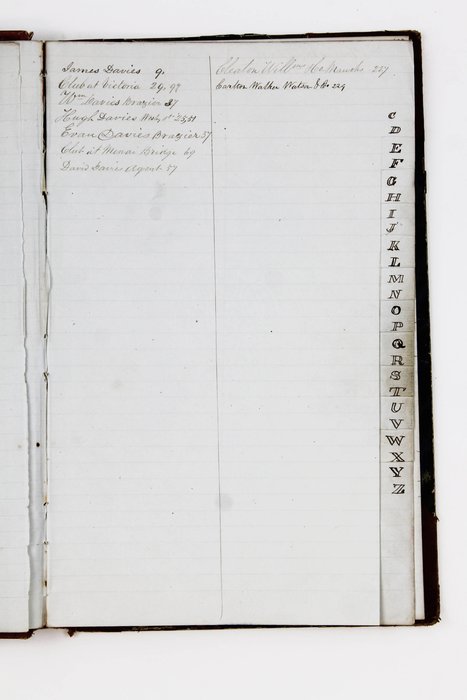
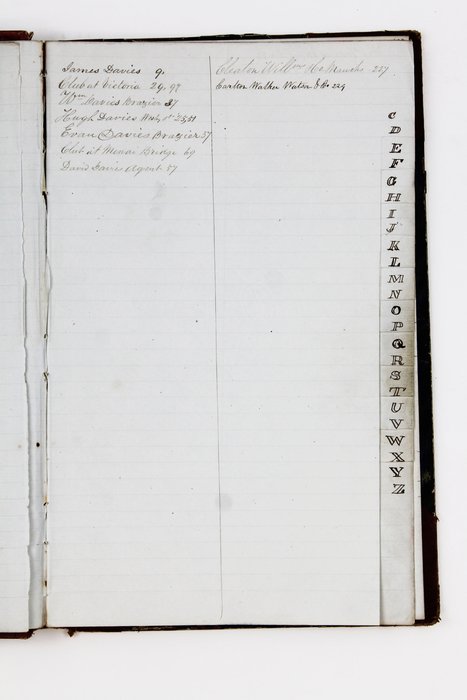
Another section of the journal is a pre-tabbed Business and Social Index, apparently begun in the early 1860s while Owen was operating a foundry in Wales. The index lists over 100 contacts, largely Welsh individuals and local firms, including Cleaton Willm & Co and Carlton Walker Watson & Co. Many entries include occupations, addresses, and numerical references, likely linked to a separate business ledger. Women are recorded primarily as dressmakers, while men appear as agents, braziers, molders, sawyers, painters, seamen, printers, and shoemakers. Importantly, the index names several Welshmen who later emigrated to California and became prominent members of the Cymmrodorion Society, including William Hughes (smelter), Hugh Davies, William Jones, and David Hughes, later Vice President of the Oakland Cymmrodorion Society.
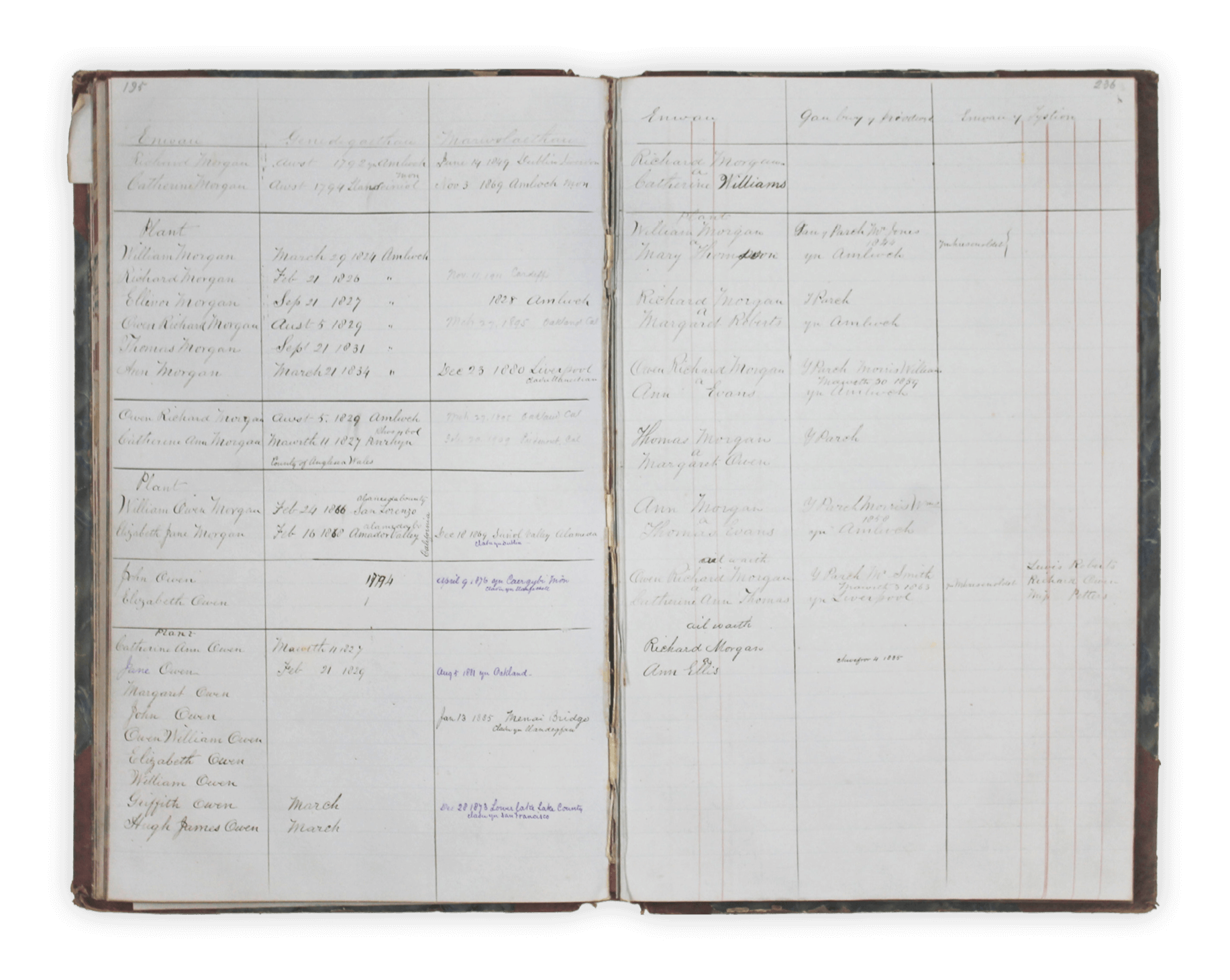
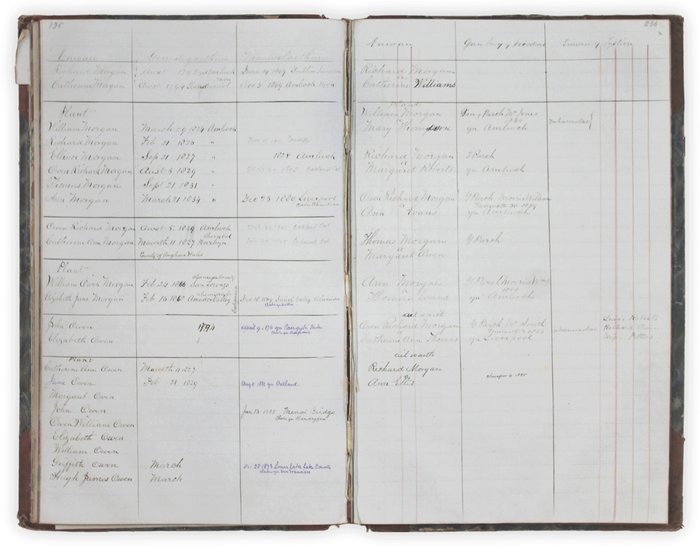
The final portion consists of a formal Family Register. This section provides a chronological record of the Morgan lineages, documenting births, locations, and deaths. Owen meticulously traces his ancestry back to his grandparents in Amlwch and Llandeiniol, extending the genealogy to include his wife’s family (Owen) and multiple generations of descendants.
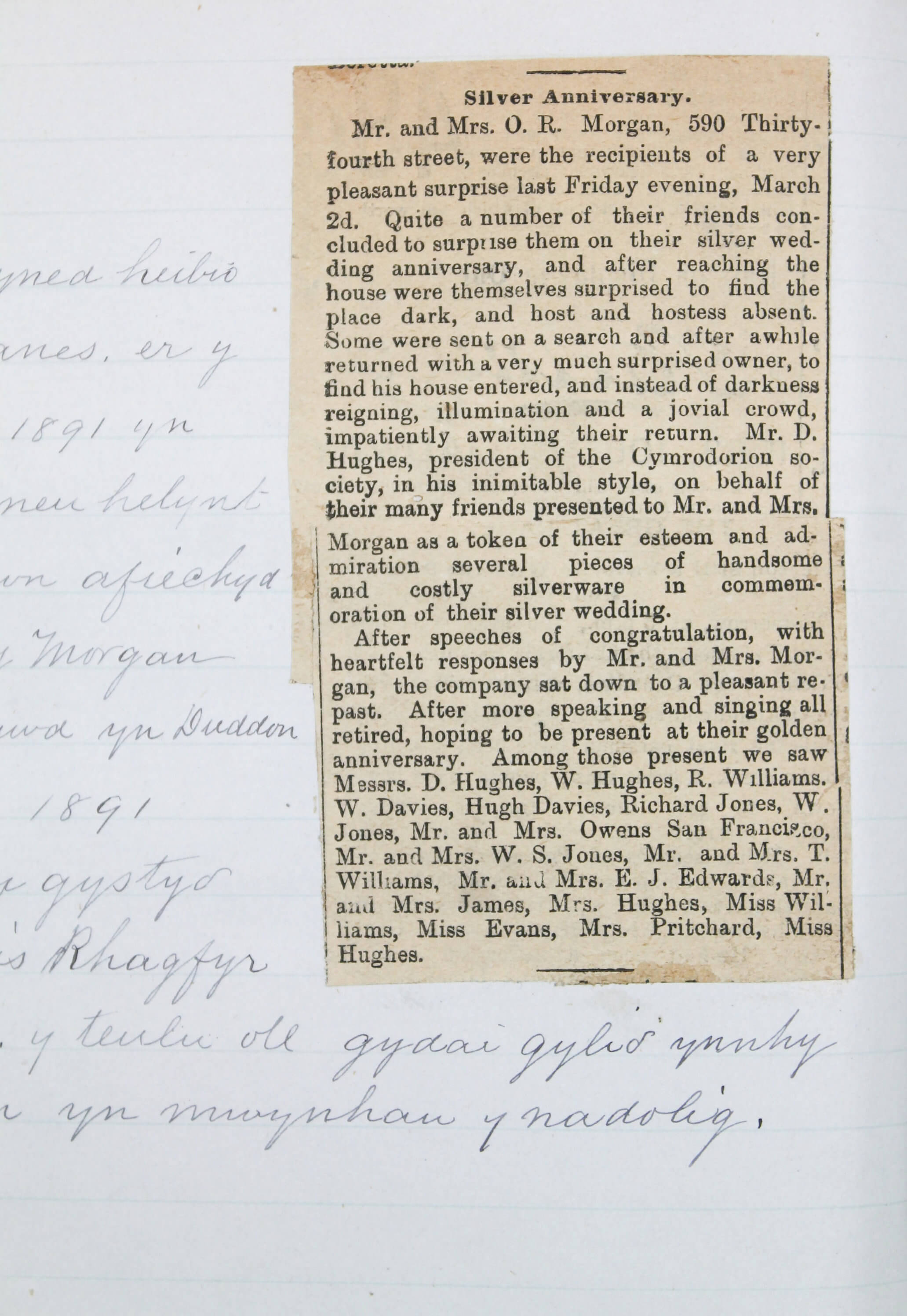
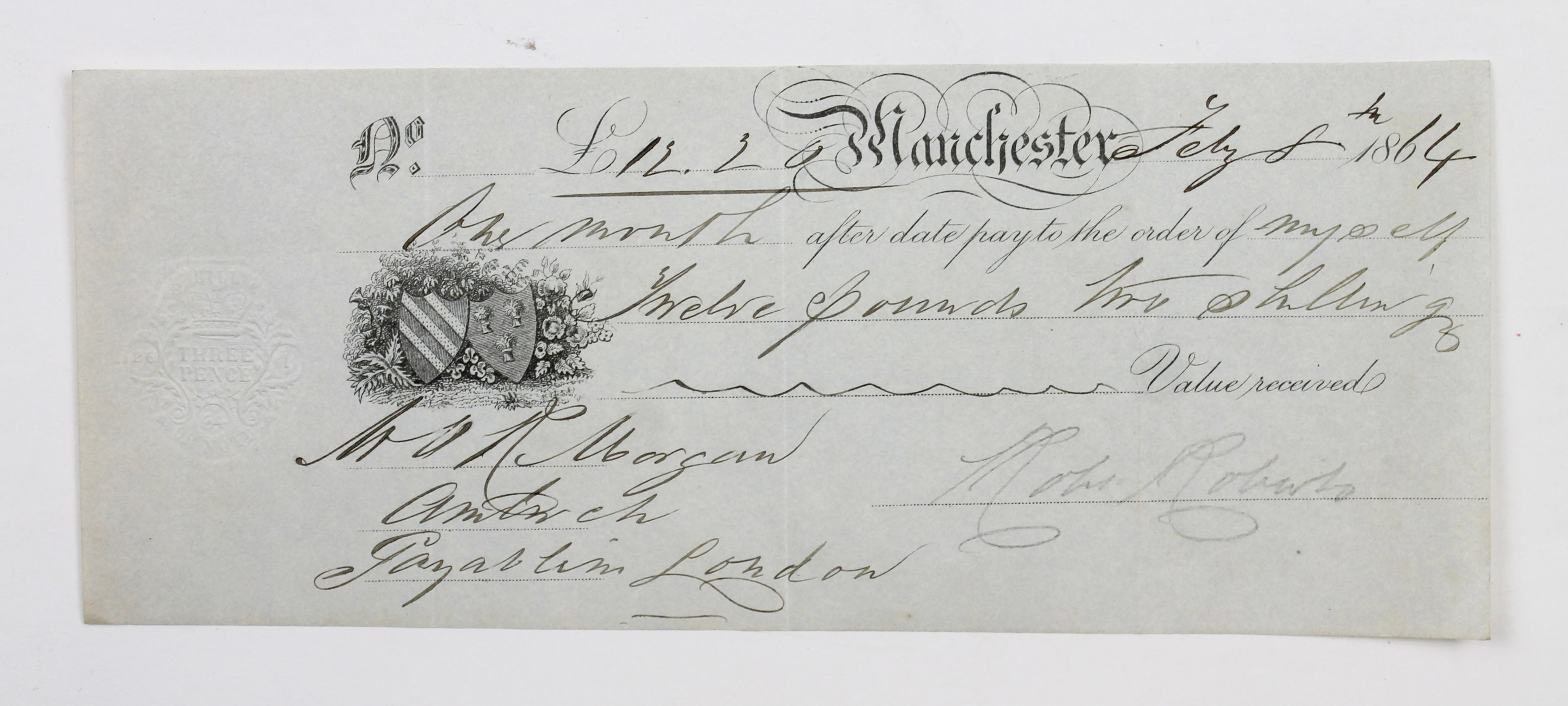
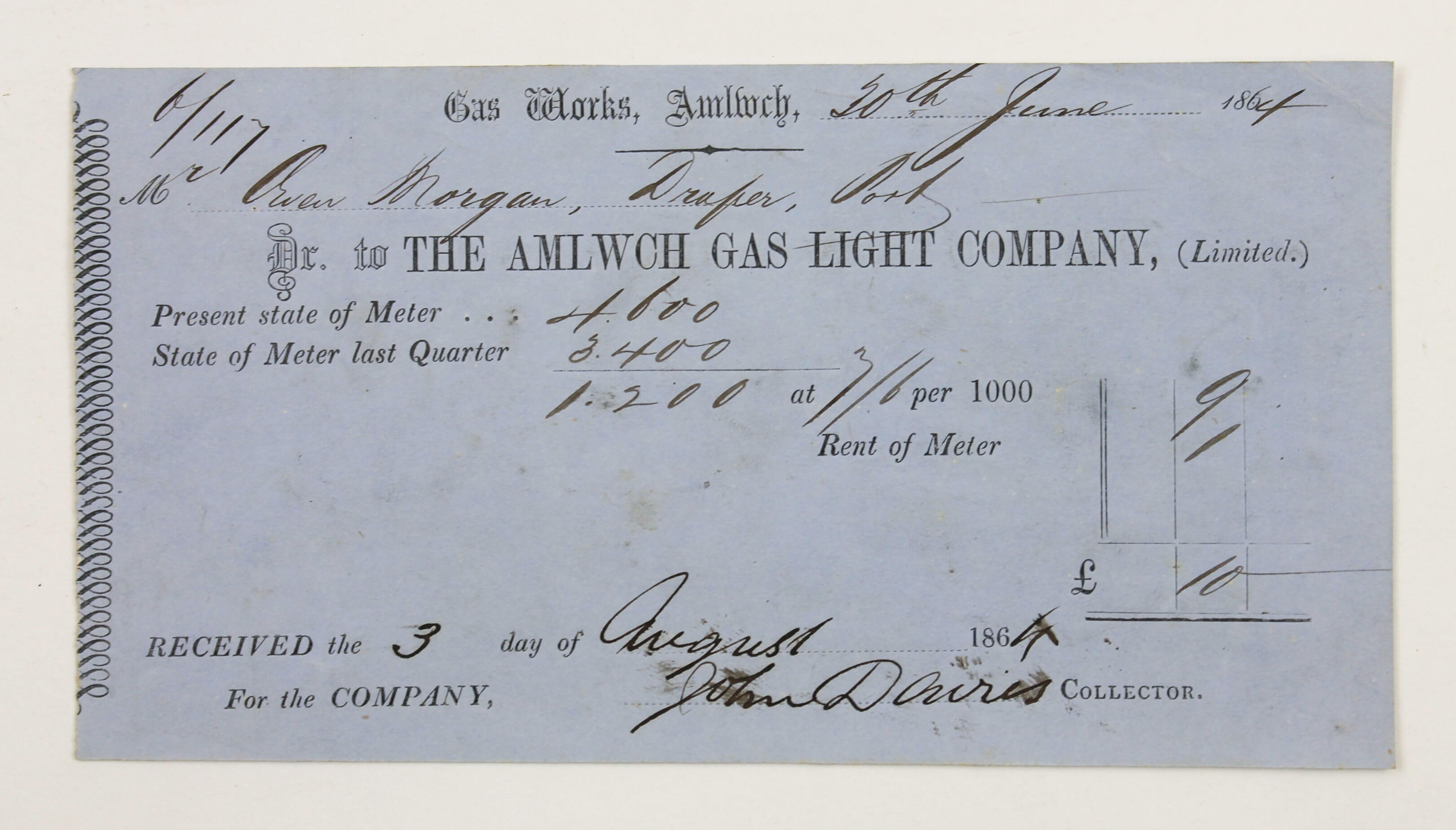
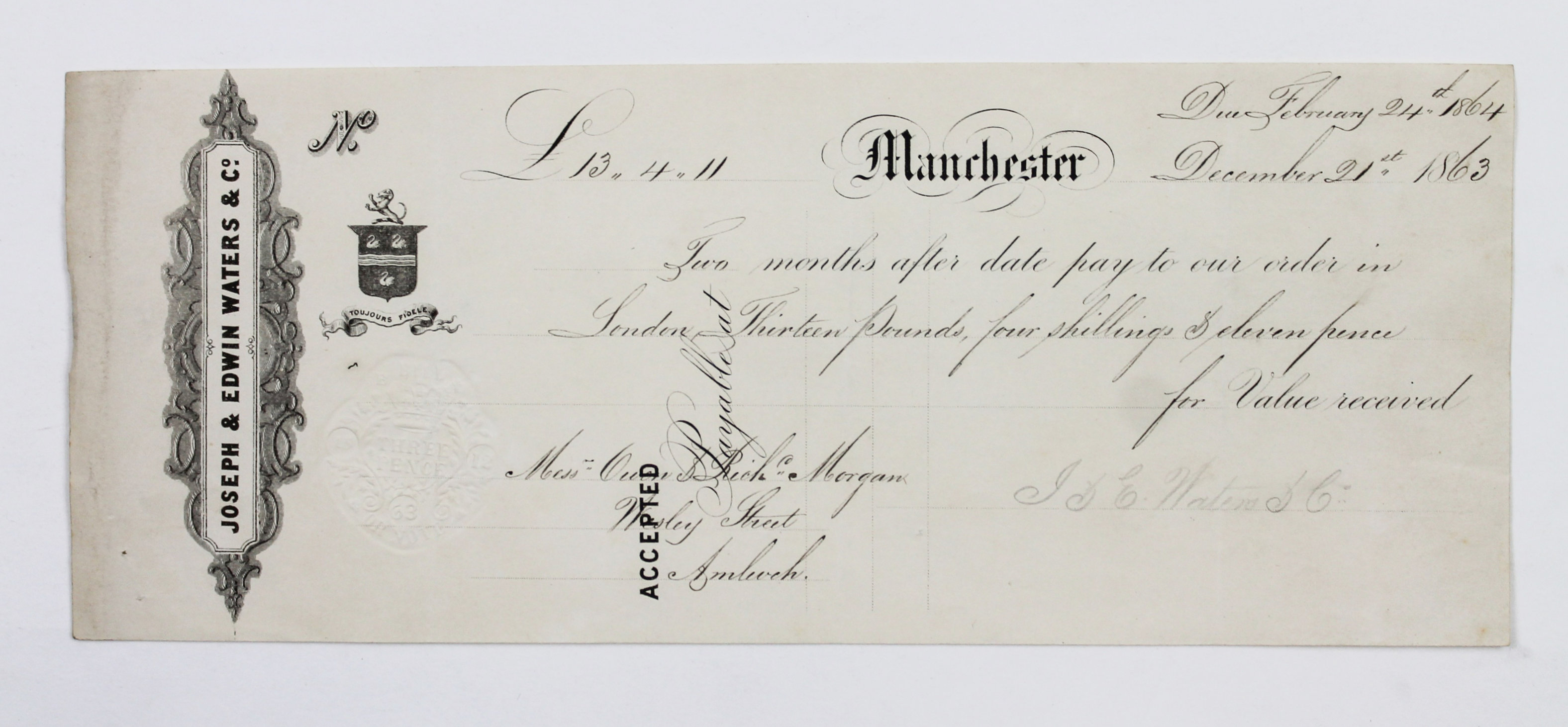
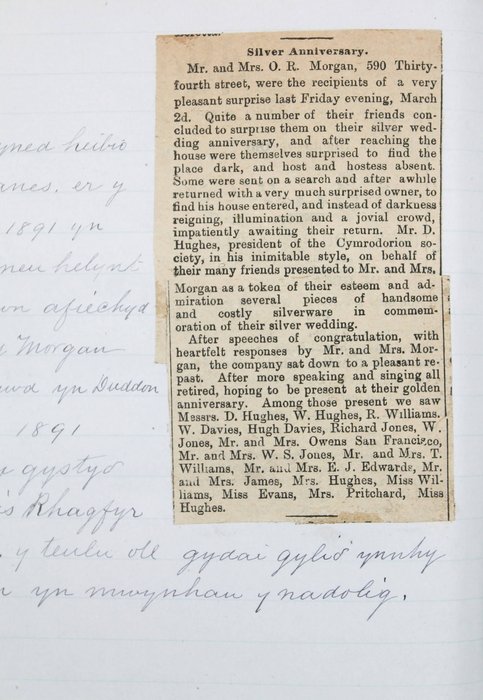
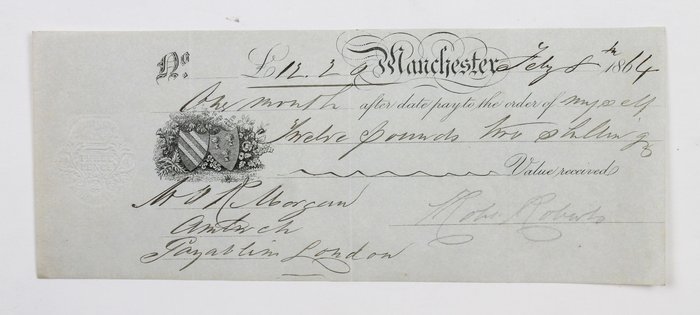
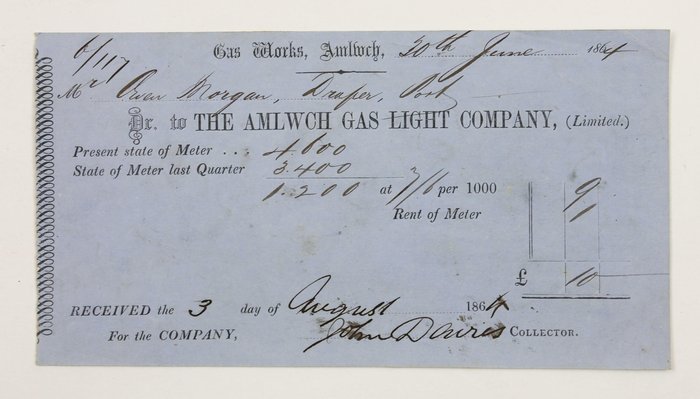
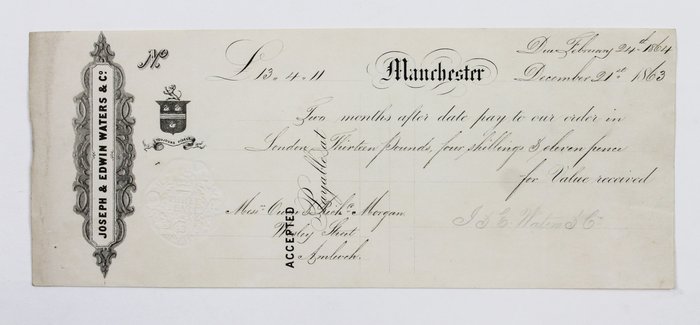
The archive is supplemented by several pieces of period printed ephemera, including five printed receipts from the 1860s and 1873, addressed to or issued by Morgans & Evans or Owen Richard Morgan. These receipts mostly feature the official letterheads of early Welsh and Manchester businesses, including the Amlwch Gas Light Company and Joseph & Edwin Waters & Co. of Manchester; the original programs for the Oakland Eisteddfod of 1887 and February 22, 1888 (former mounted in the journal); and two clippings from period English-language newspaper (one mounted in the journal).
Overall, historically significant archive from the family of Owen Richard Morgan, a San Francisco and Oakland-based Welsh carpenter, offering rare, first-hand accounts of the Victorian Gold Rush and the early life of Welsh diaspora in California.