
#NY020
1859
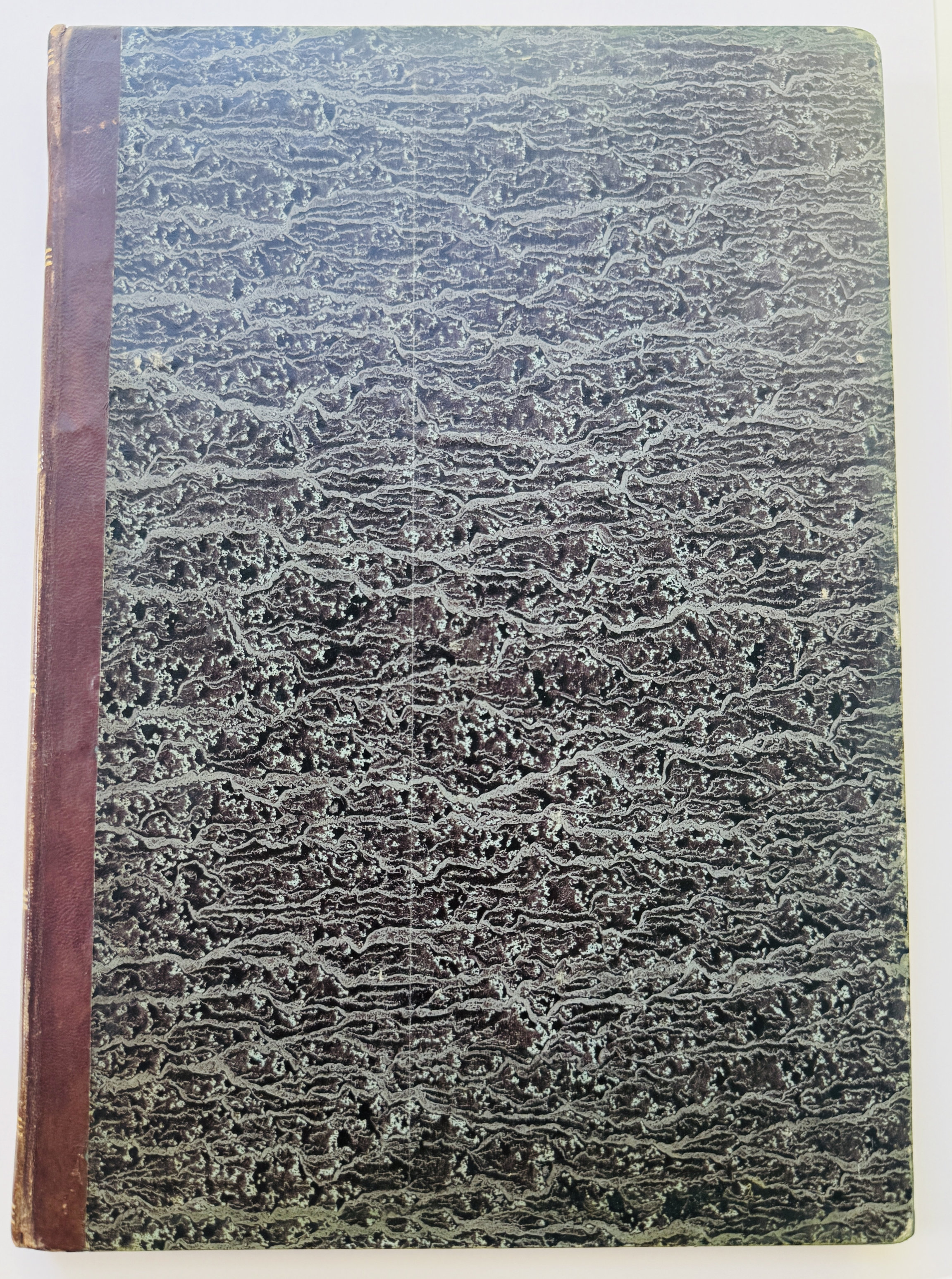
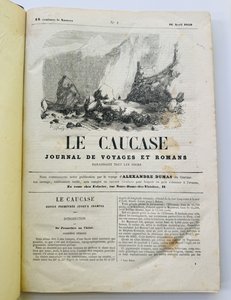
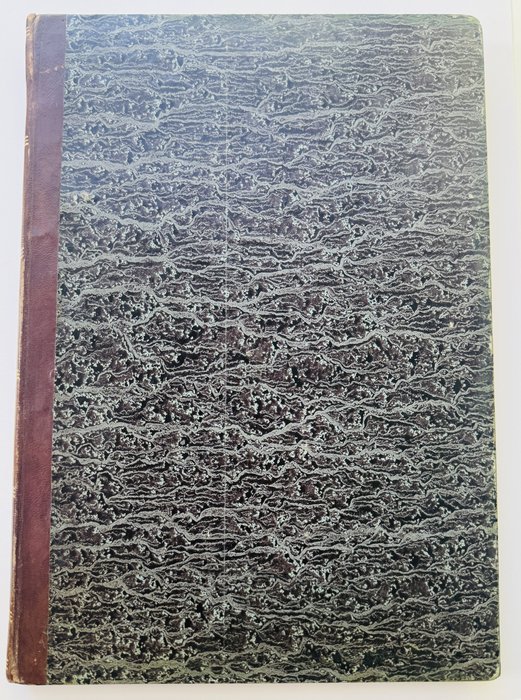
240 pp.: ill. 30,3x22,2 cm. Quarter leather binding with gilt-lettered title “Le Caucase” on the spine. Very good. Binding slightly worn, tear of the spine, minor foxing.
First lifetime edition. Text in French. According to the electronic catalog of the National Parliamentary Library of Georgia, the text was first translated into Georgian in 1964 by T. Kikodze.
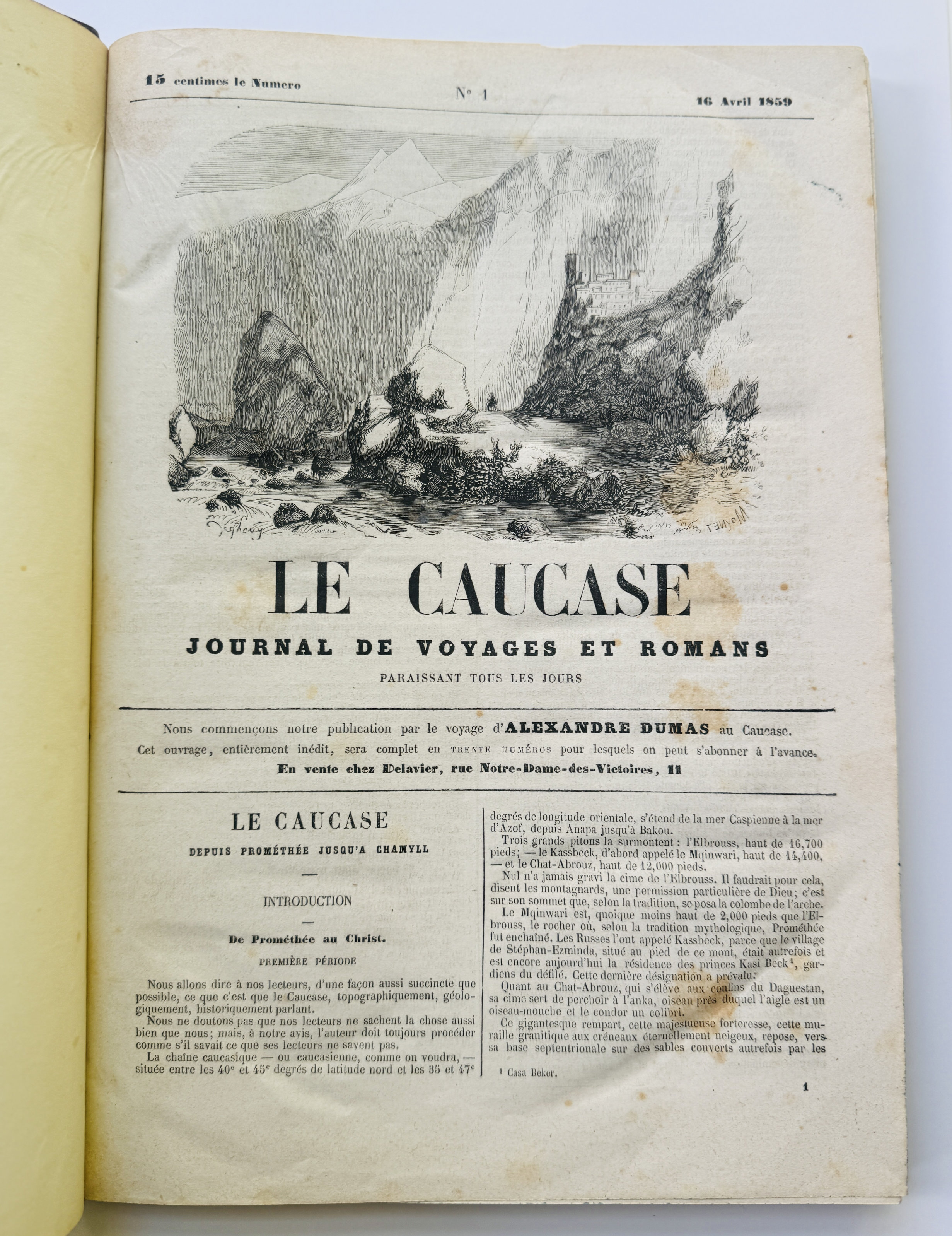
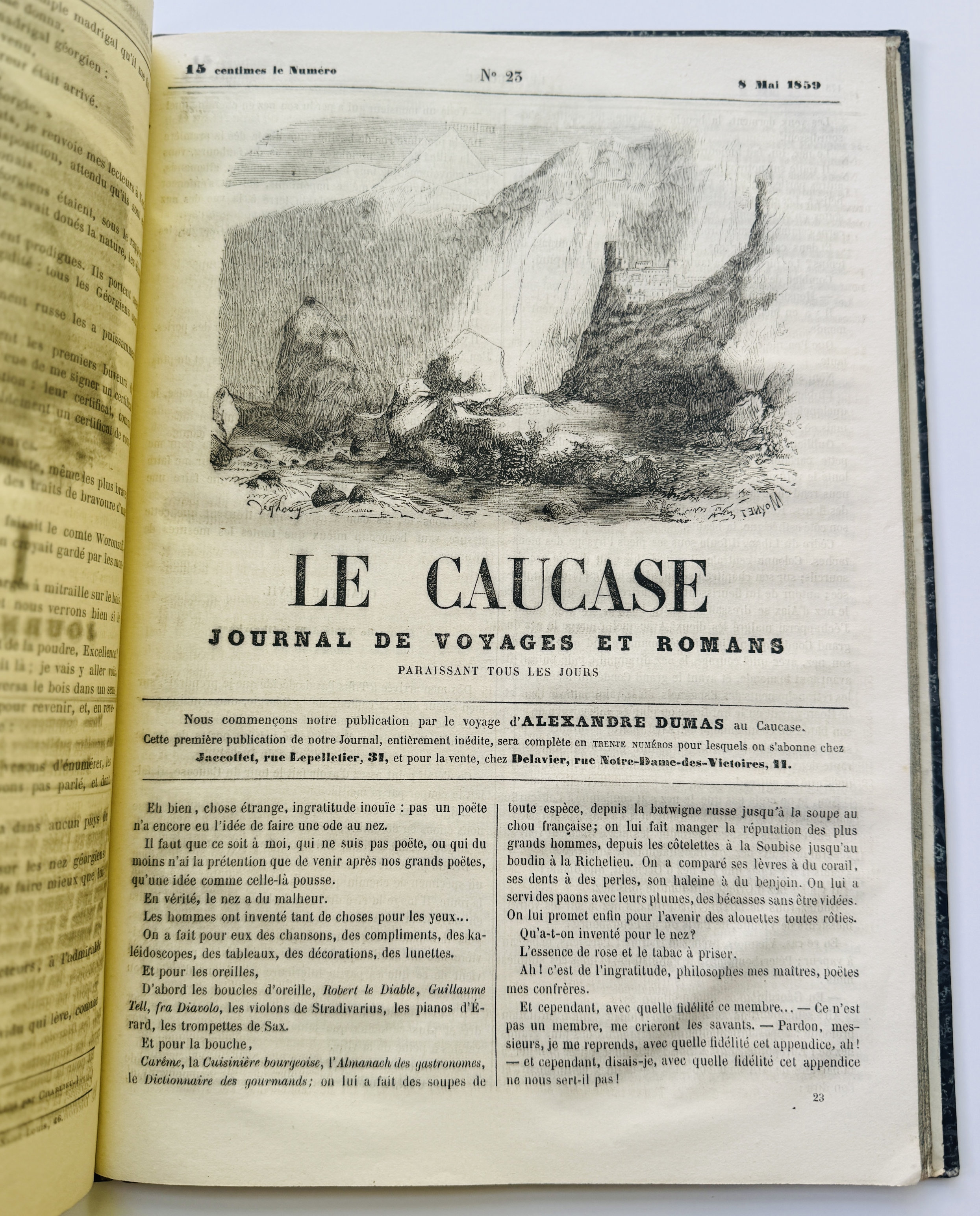
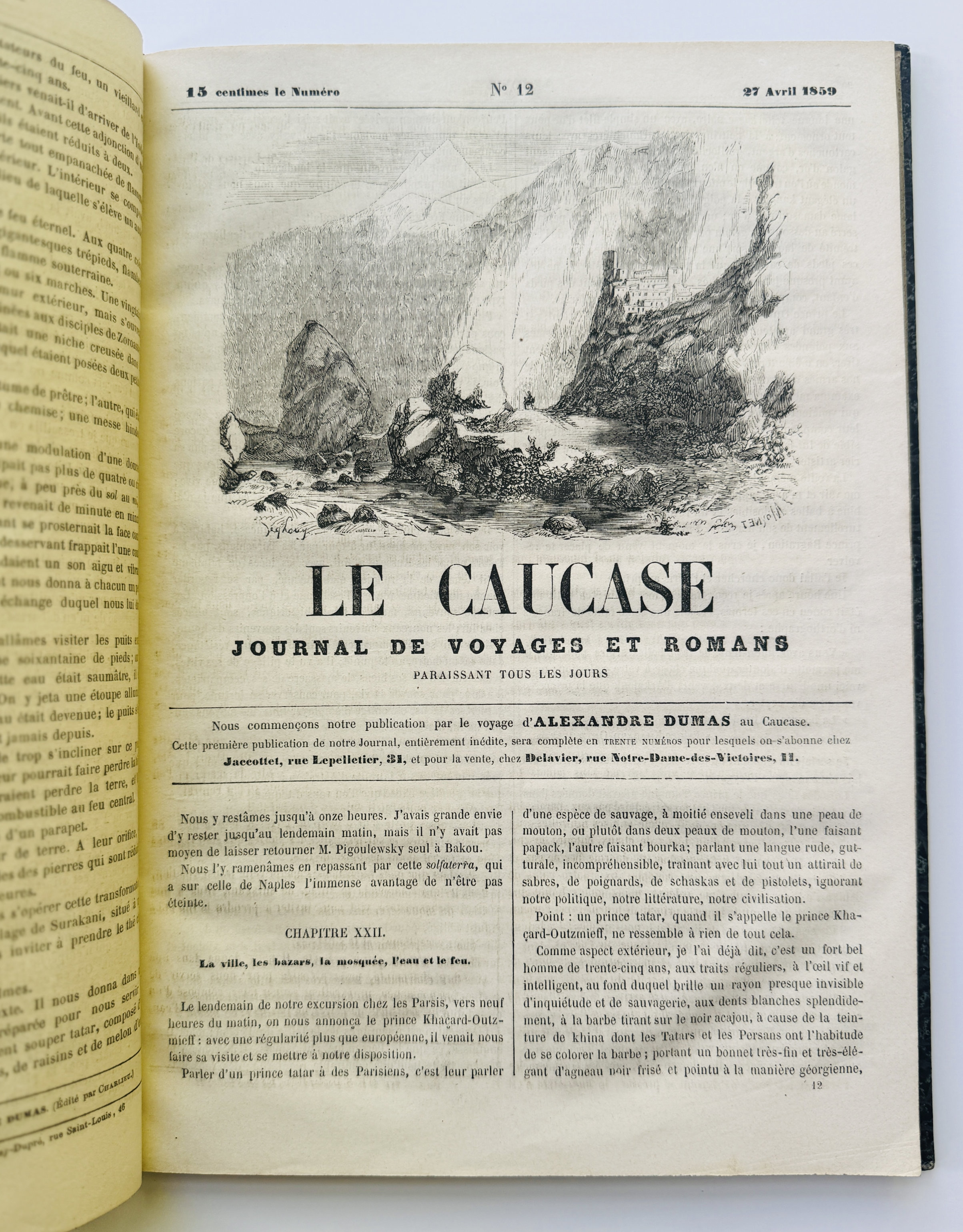
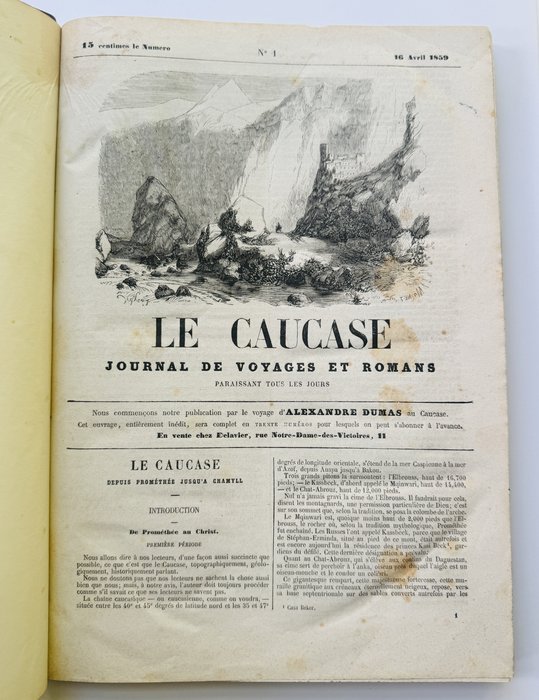
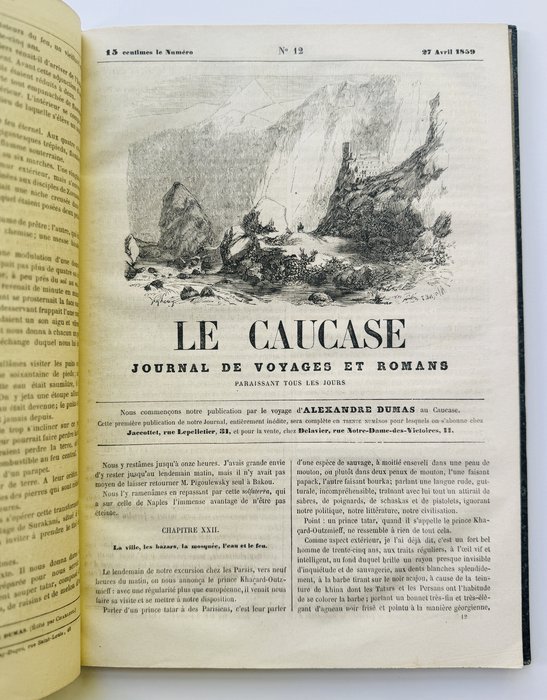
Extremely rare complete set (30 issues) of the daily journal “Le Caucase” published by the renowned French writer and playwright Alexander Dumas (1802-1870). The journal was issued between April 16 and May 15, 1859, and served as the first platform for Dumas to share his vivid impressions of a three-month expedition through the Caucasus.
Dumas Caucasian adventure began in the autumn of 1858 when he left Paris for the Russian Empire; after visiting Moscow and Saint Petersburg, he traveled through Dagestan (Kizlyar, Derbent) and Azerbaijan (Baku, Shamakhi, Shaki Uyezd) before arriving in Tiflis (Tbilisi) on December 1. Over the next six weeks, Dumas explored Mtskheta, Gori, Surami, Kutaisi, and Poti, ultimately departing the port city in February 1859 to return to Paris via Trebizond.
After returning to France, the writer, deeply impressed by the Caucasus, decided to share his experiences in the pages of Le Caucase. Although the journal describes his travels through Dagestan and Azerbaijan, most of the text is devoted to Georgia. Dumas writes about the country’s historical past, religious beliefs, local customs, cuisine, and the character of the Georgian people. Georgian women, in particular, earned the writer’s admiration: “Europe has no idea of the beauty of the peoples of Colchis. Needless to say, the women of Tiflis are the most beautiful and charming.” One of the most entertaining episodes recounts Dumas’s visit to the famous bathhouses of Tiflis: “Why does Paris, the city of refined pleasures, not have baths like these? Why does not a single enterprising Parisian hire at least two bath attendants from Tiflis?” the author laments upon leaving the baths. Equally fascinating is his description of a Georgian feast in the 1850s: “At a Georgian table, people eat whatever comes their way. Food itself is the least important part of the meal, which consists mainly of fresh herbs and their roots: salad without oil or vinegar, green onions, mallow, tarragon, and radishes.” A substantial portion of the journal is devoted to Georgian wine-drinking culture: “At a Georgian table, ordinary drinkers consume five or six bottles of wine, stronger drinkers fourteen or fifteen. Some even drink not by the bottle but by the skin, reaching twenty to twenty-five bottles.” In other parts, Dumas describes the streets, bazaars, caravanserais, opera house, and Sioni Cathedral of Tiflis, while also recording recipes for Georgian dishes. The journal further includes accounts of his journeys to Mtskheta, Gori, Surami, Kutaisi, and Poti.
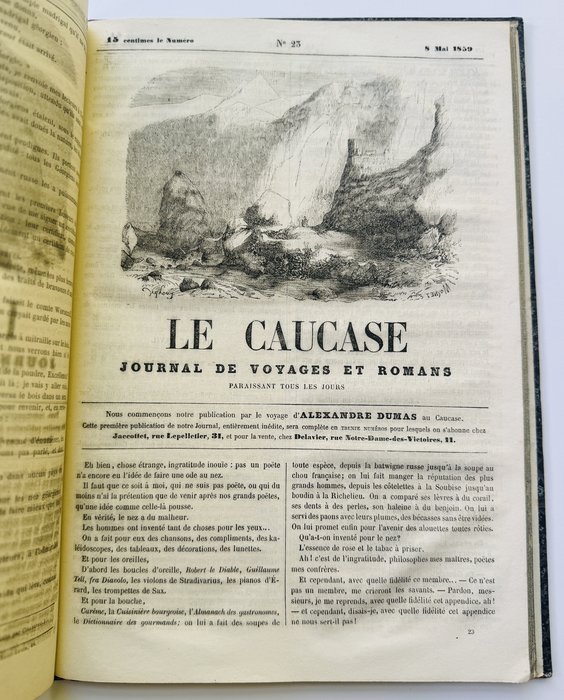
Each issue features a sketch on a Caucasian theme by the artist Jean-Pierre Moynet, who accompanied Alexandre Dumas during his journey through the Caucasus. The publication is accompanied by a portrait of Dumas reproduced from Le Livre (1883, fourth year of publication).
Overall, an exceptionally rare insight into the famous French writer’s first-hand impressions of nineteenth-century Georgia.
Worldcat shows 3 copies of the edition in the New York Public Library, Harvard Library, and Concordia College.