
#N4-026
Ca. 1860-1890s
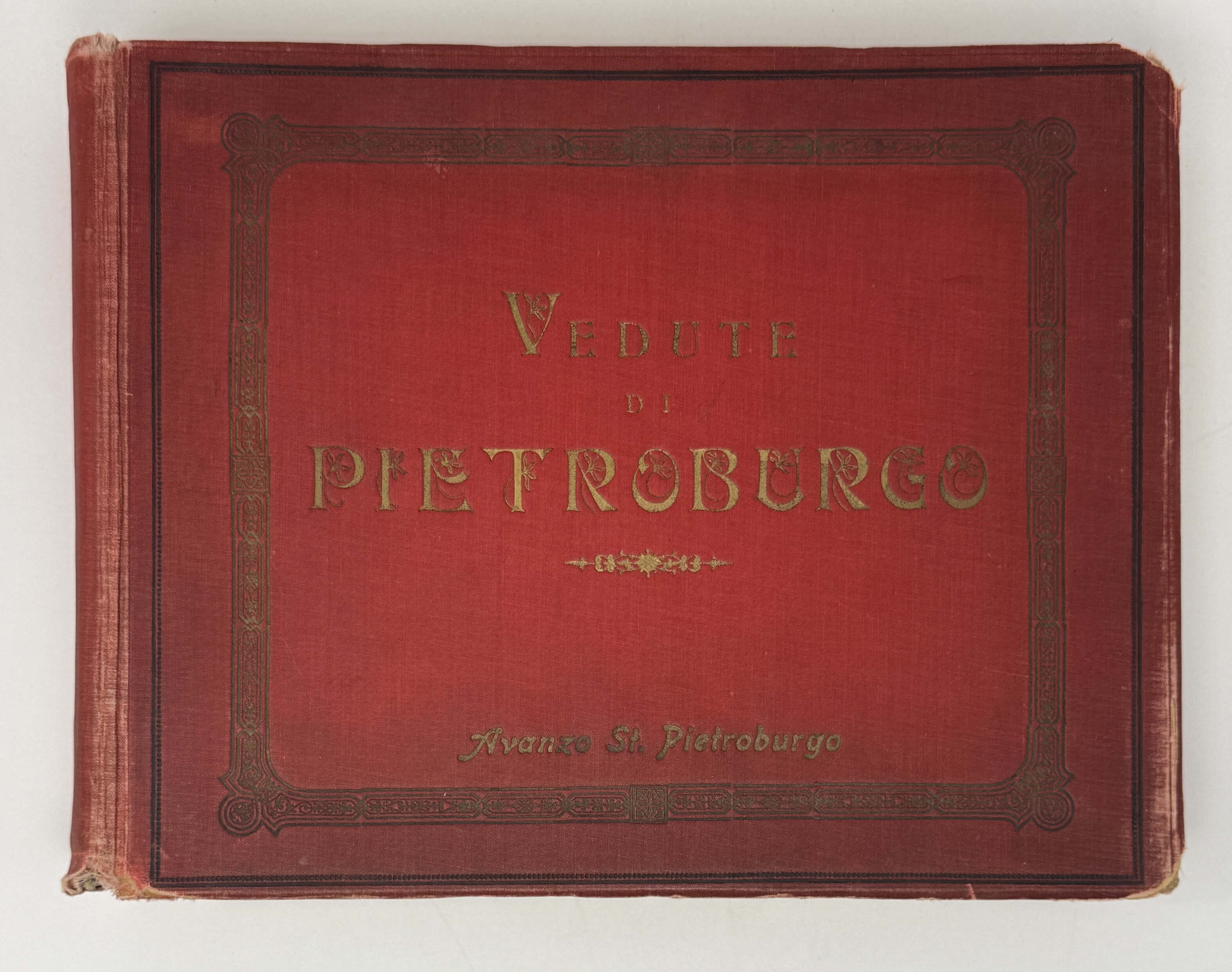
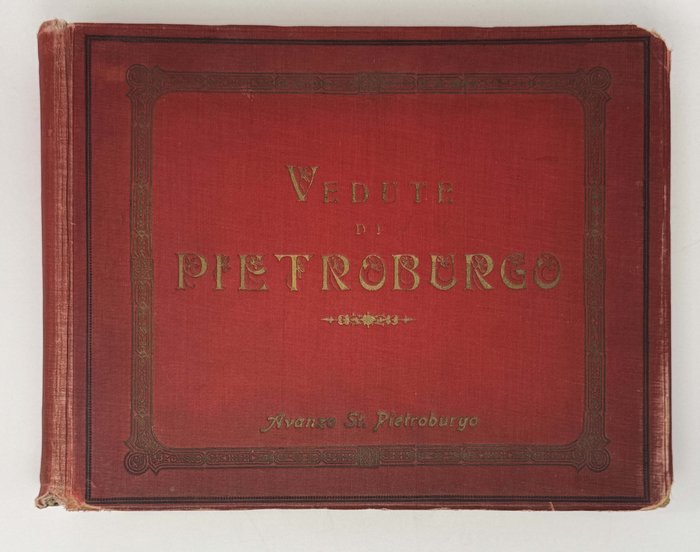
Oblong Folio album (ca. 34x40,5 cm or 13 ¼ x 16 in). 20 card stock leaves. With 51 mounted original gelatin silver and albumen photos, including thirty-three photos ca. 20x26 cm (10 ¼ x 8 in), twelve photos ca. 9,3x13,5 cm (3 ½ x 5 ¼ in), and six smaller photos at the rear ca. 5x9 cm (2 x 3 ½ in). Most of the photos are numbered in negative. Period full cloth album with gilt-tooled ornaments on the front board and the spine, as well as the title “Vedette di Pietroburgo. Acanzo St. Peietroburgo” on the cover; decorative endpapers; all edges gilt. Binding slightly bumped with minor loss of cloth on the corners of the boards, mild foxing on the mounts, but otherwise a very good album of large, well-preserved studio photographs in period coloring.
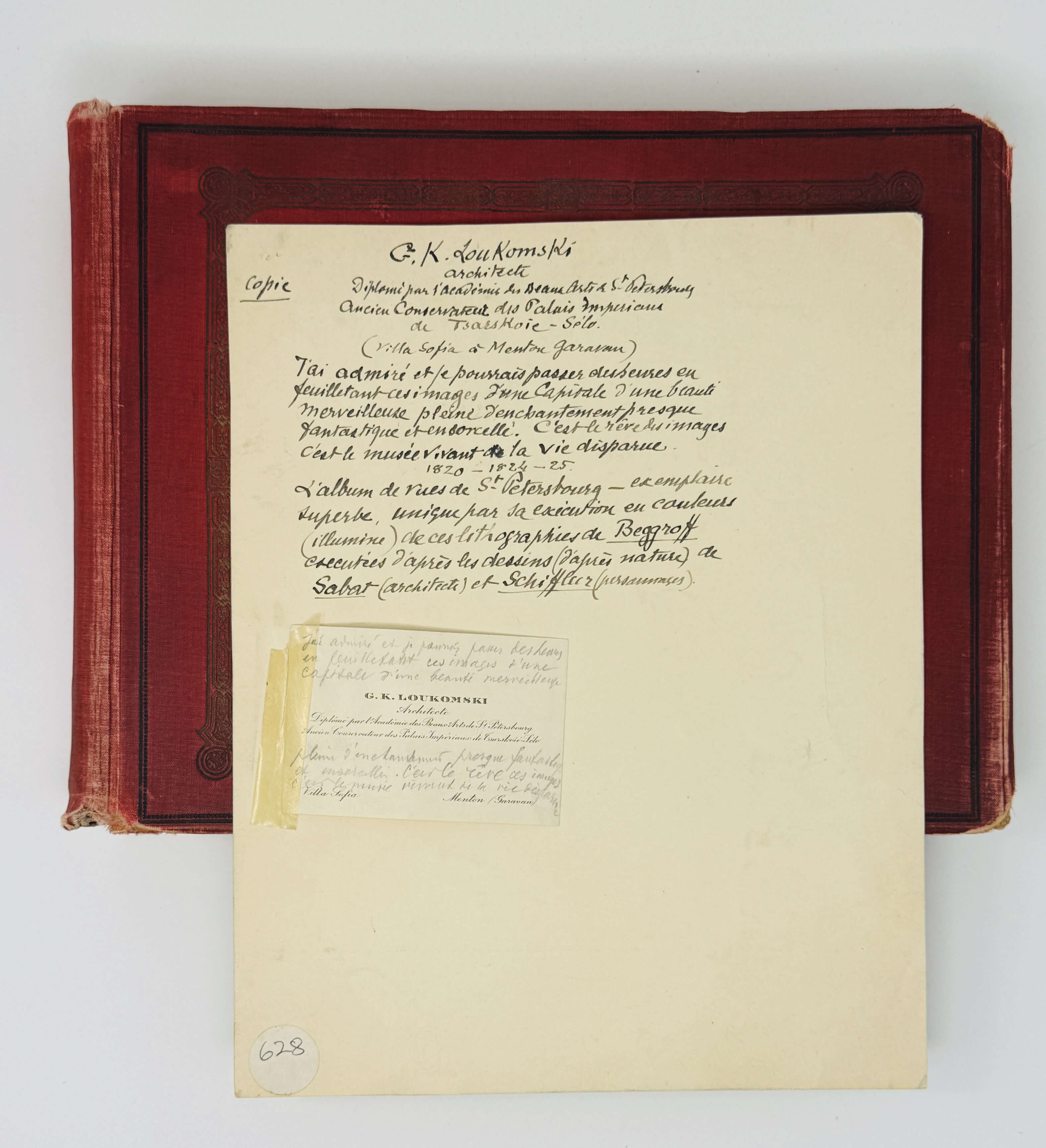
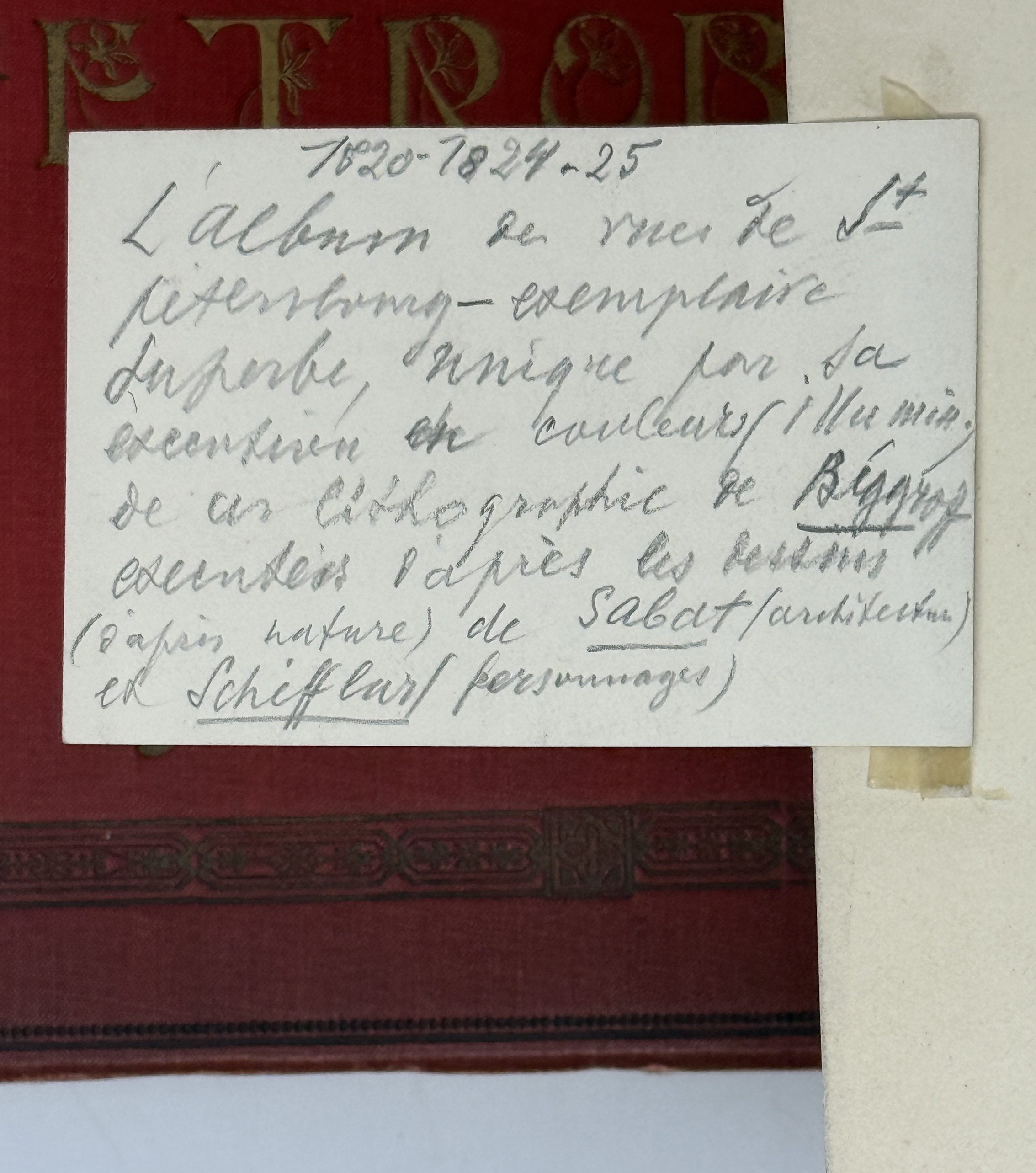
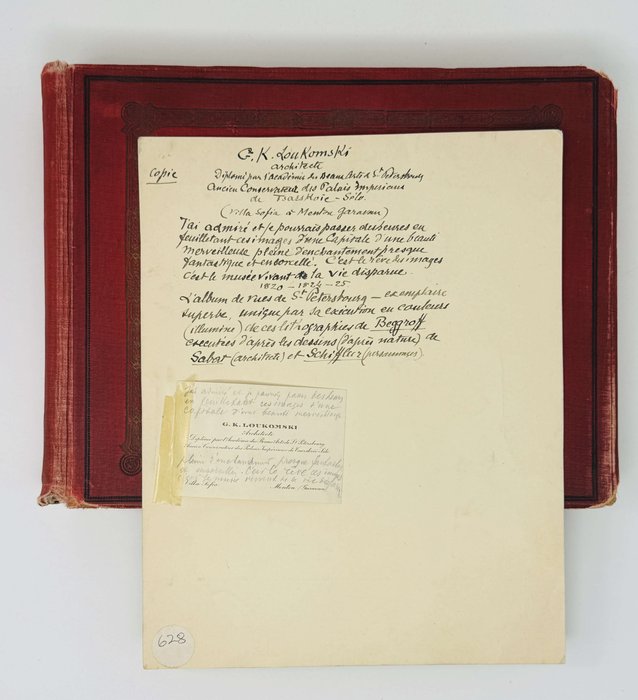
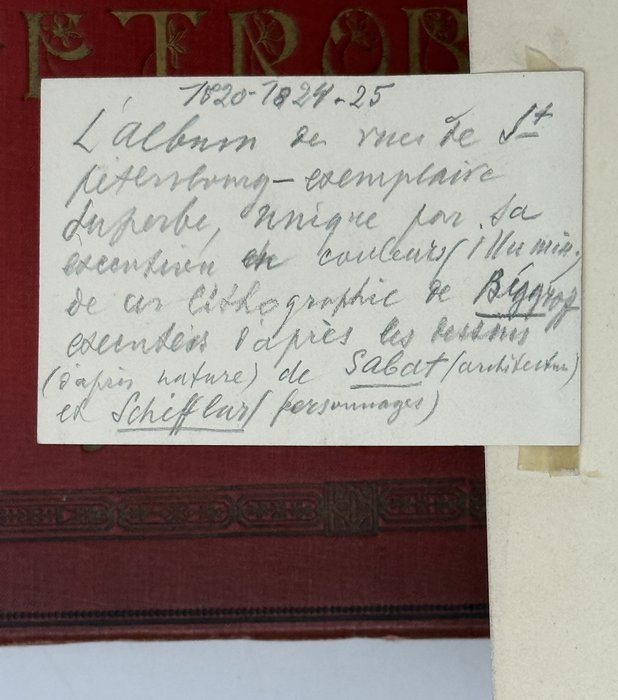
Together with a carte de visite by Lukomski from the 1930s, featuring his extensive pencil note in French. In the note, Lukomski praises the album as a "superb example" depicting a "capital now gone" and compares it to the prestigious lithographic editions by famous publishers of the 1820s. He writes: “L’album de vis de st Petersburg exemplaire superbe unique par son exécution en couleurs (illuminées) de ces lithographies de Beggroff exécutées d’après les dessins (d’après nature) de Sabat (architecte) et Schiffer (l’album de vues).”
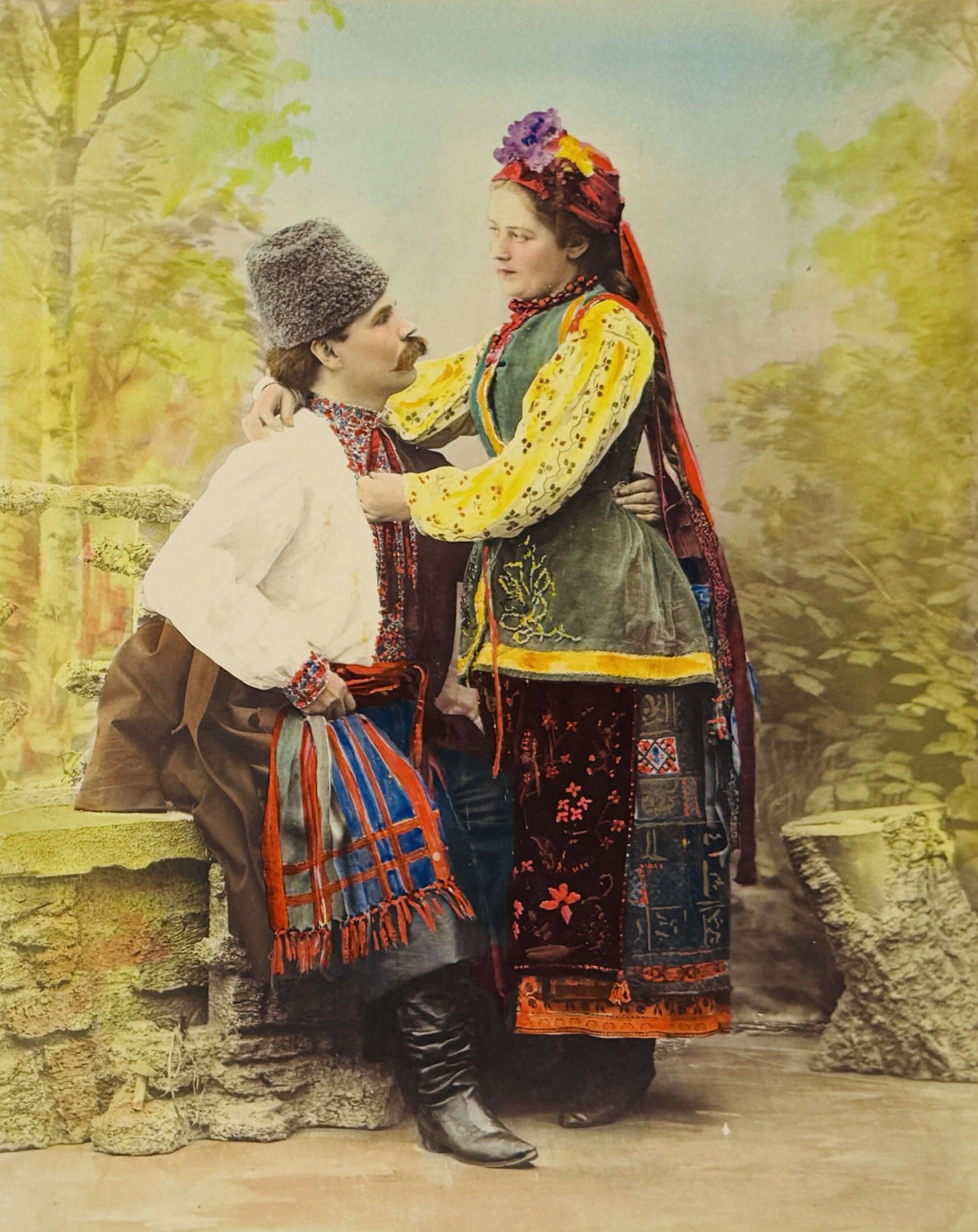
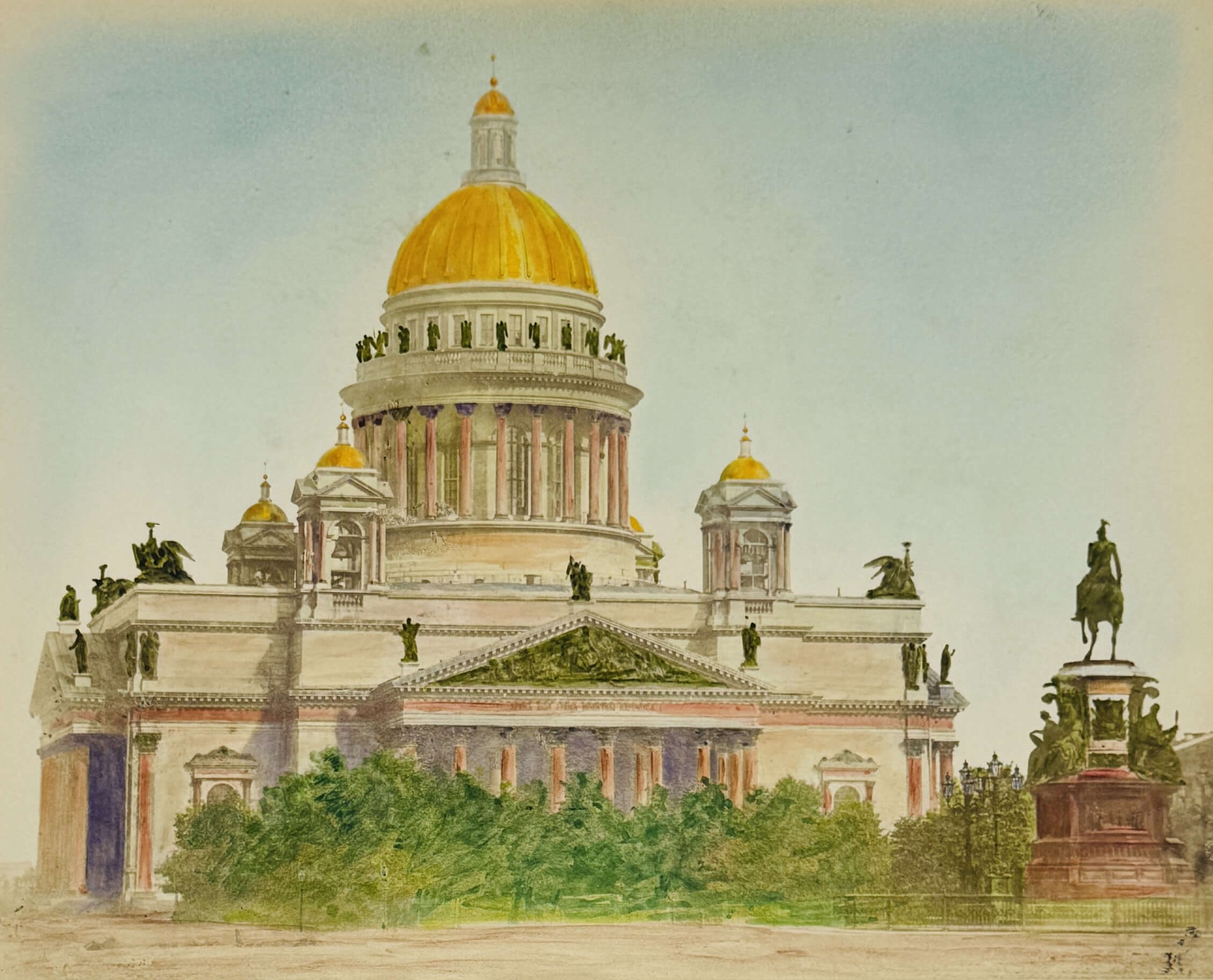
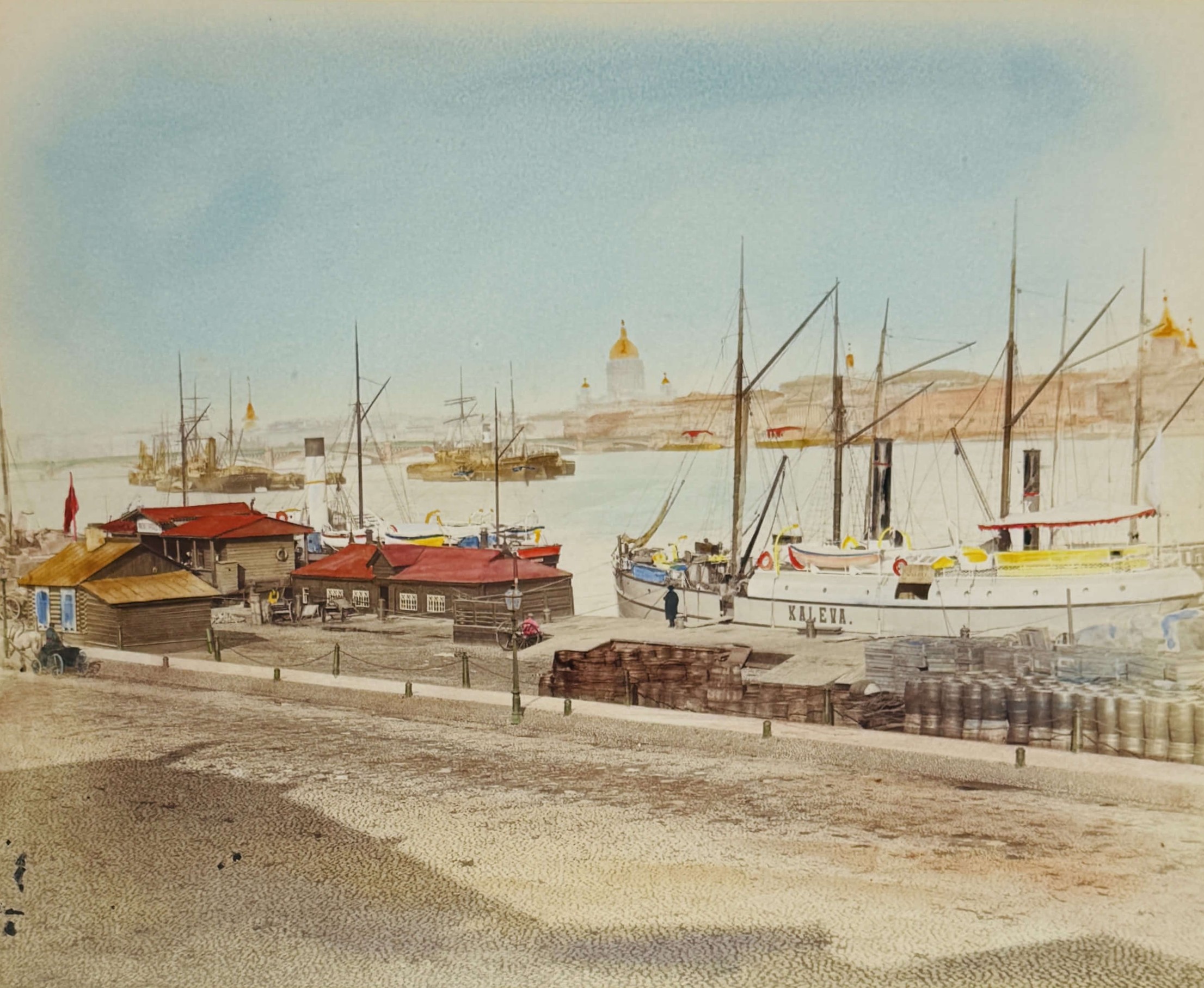
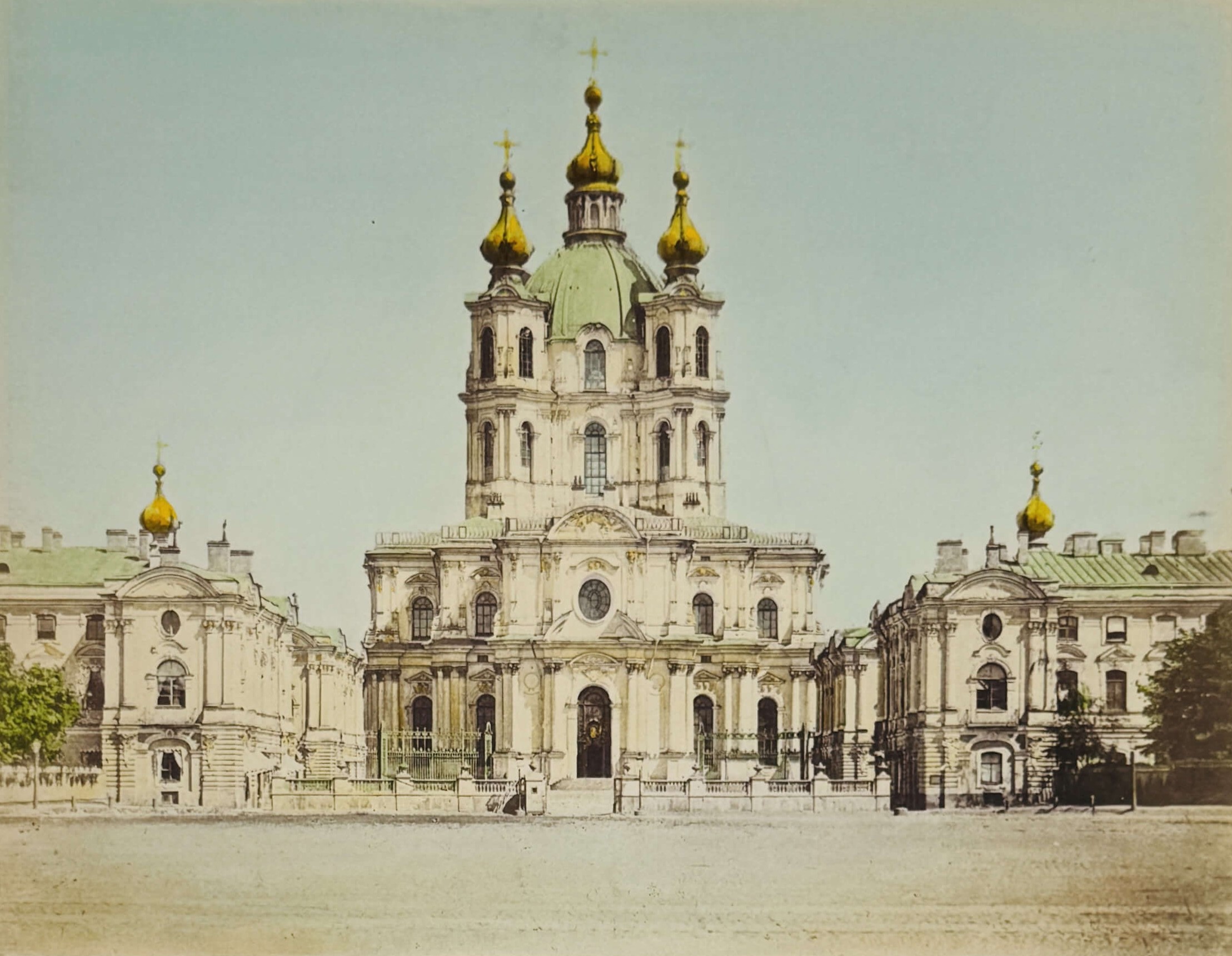
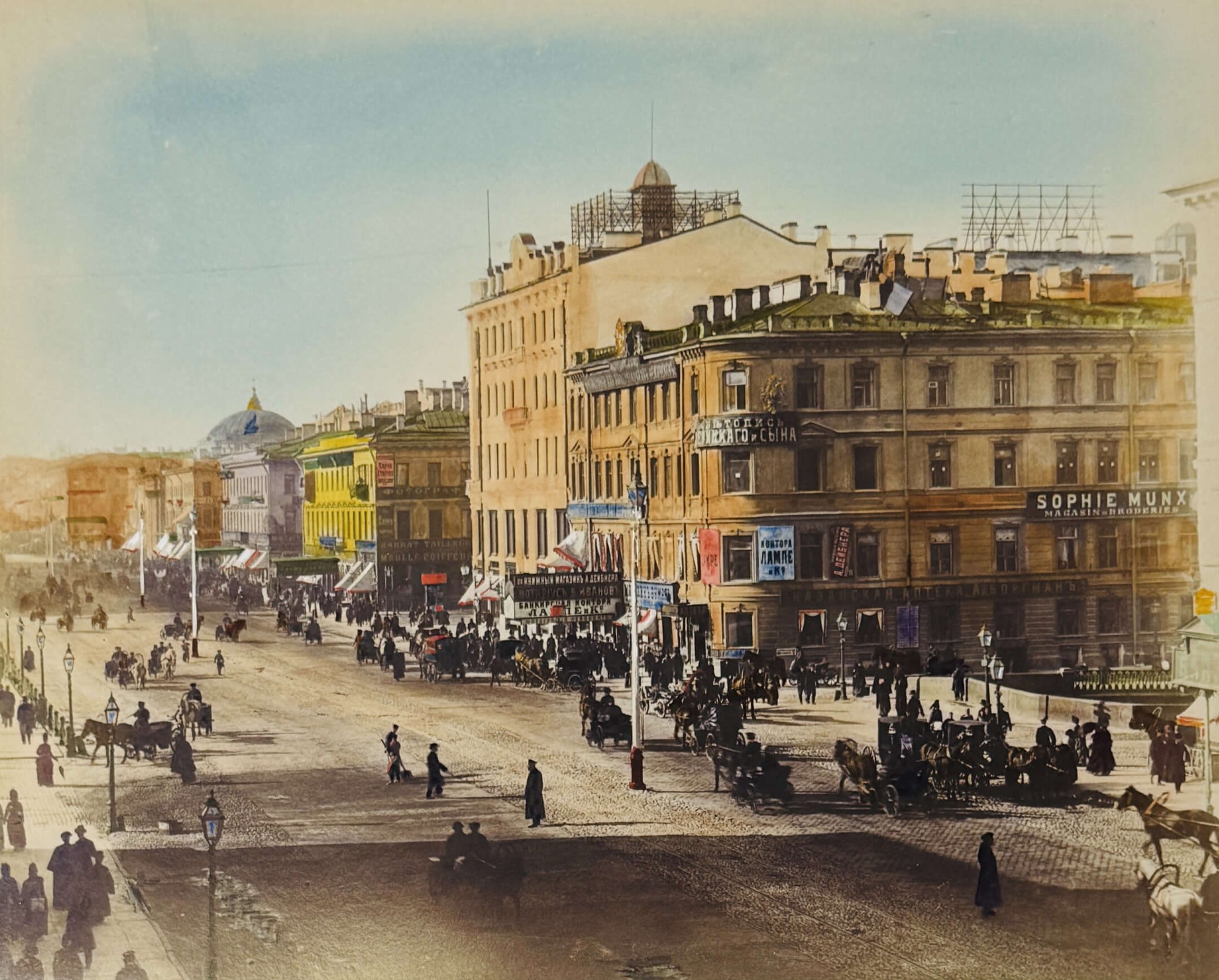
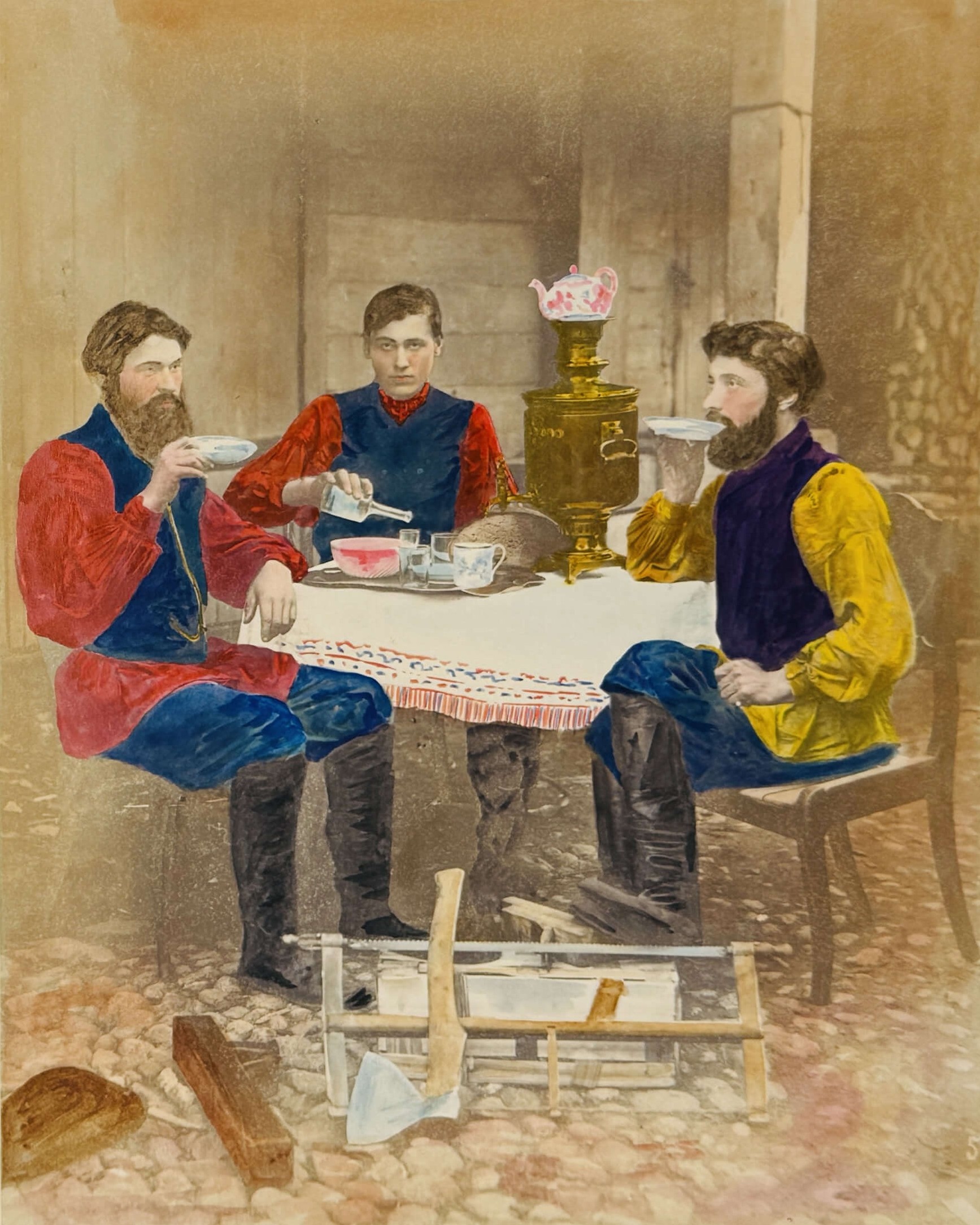
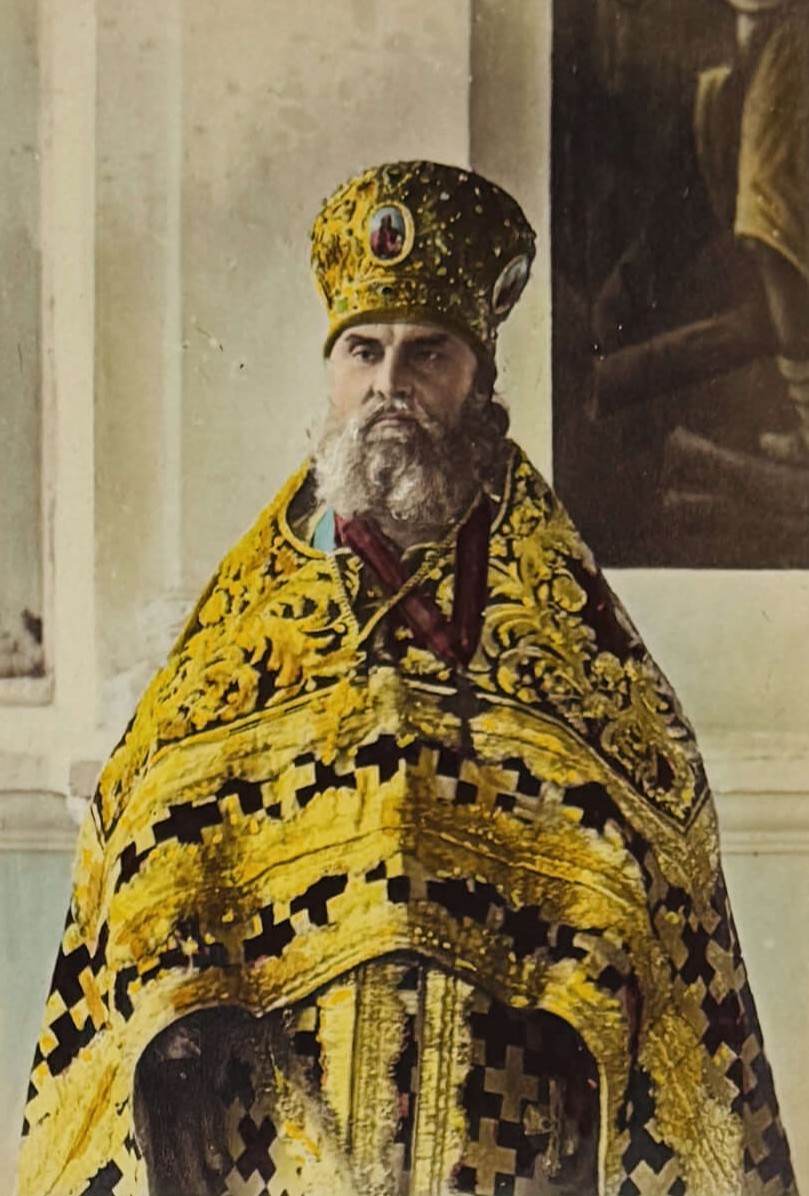
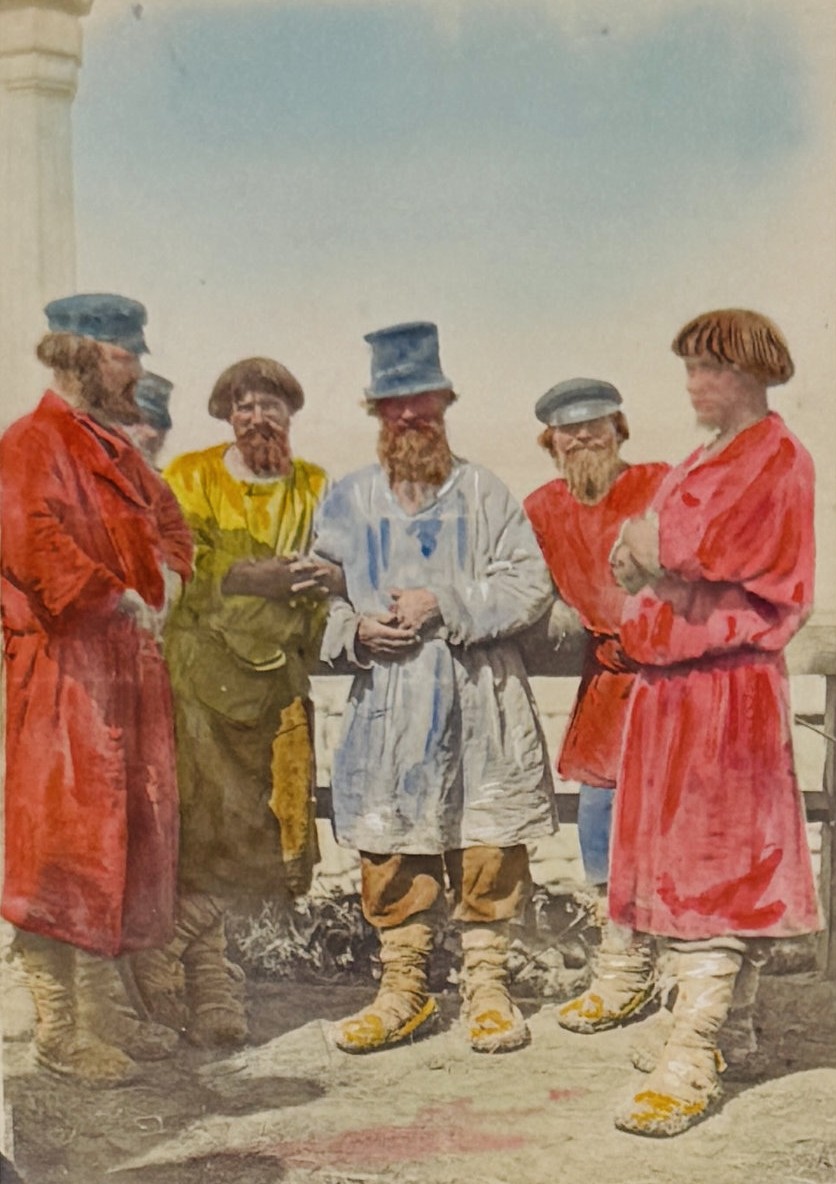
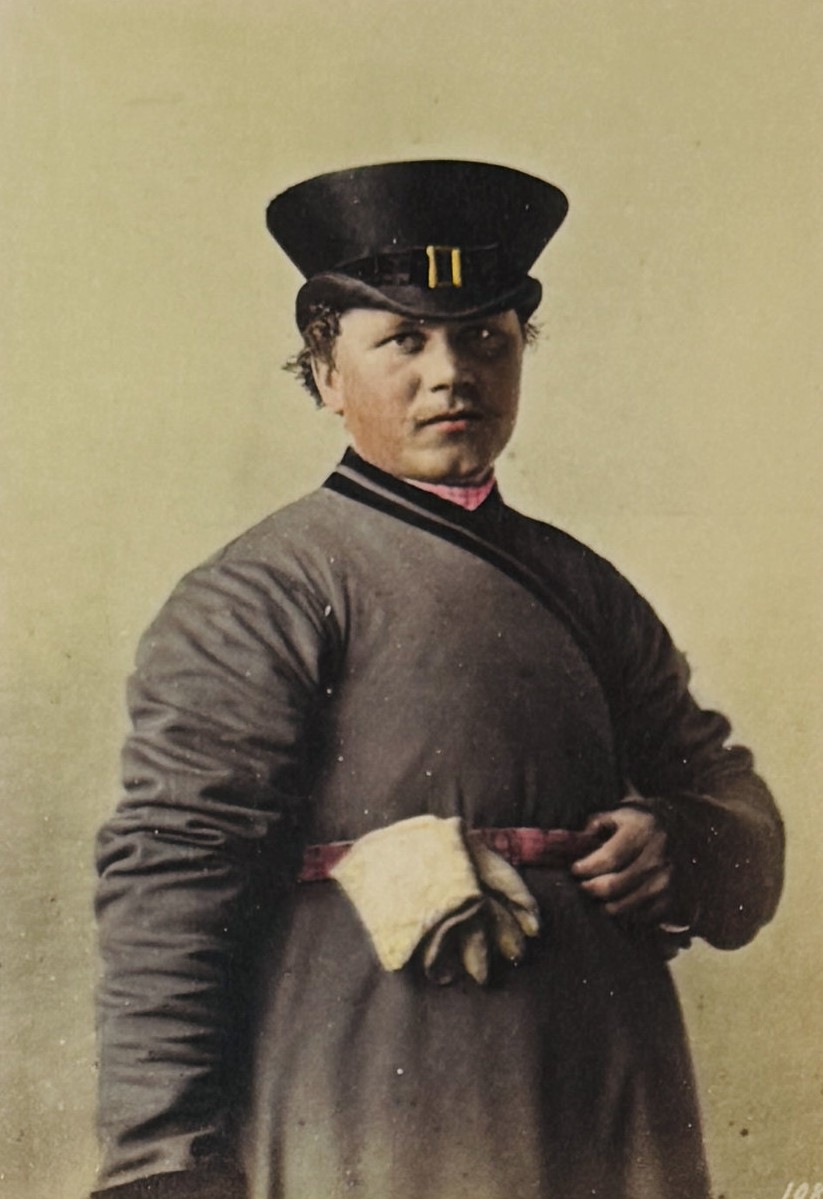
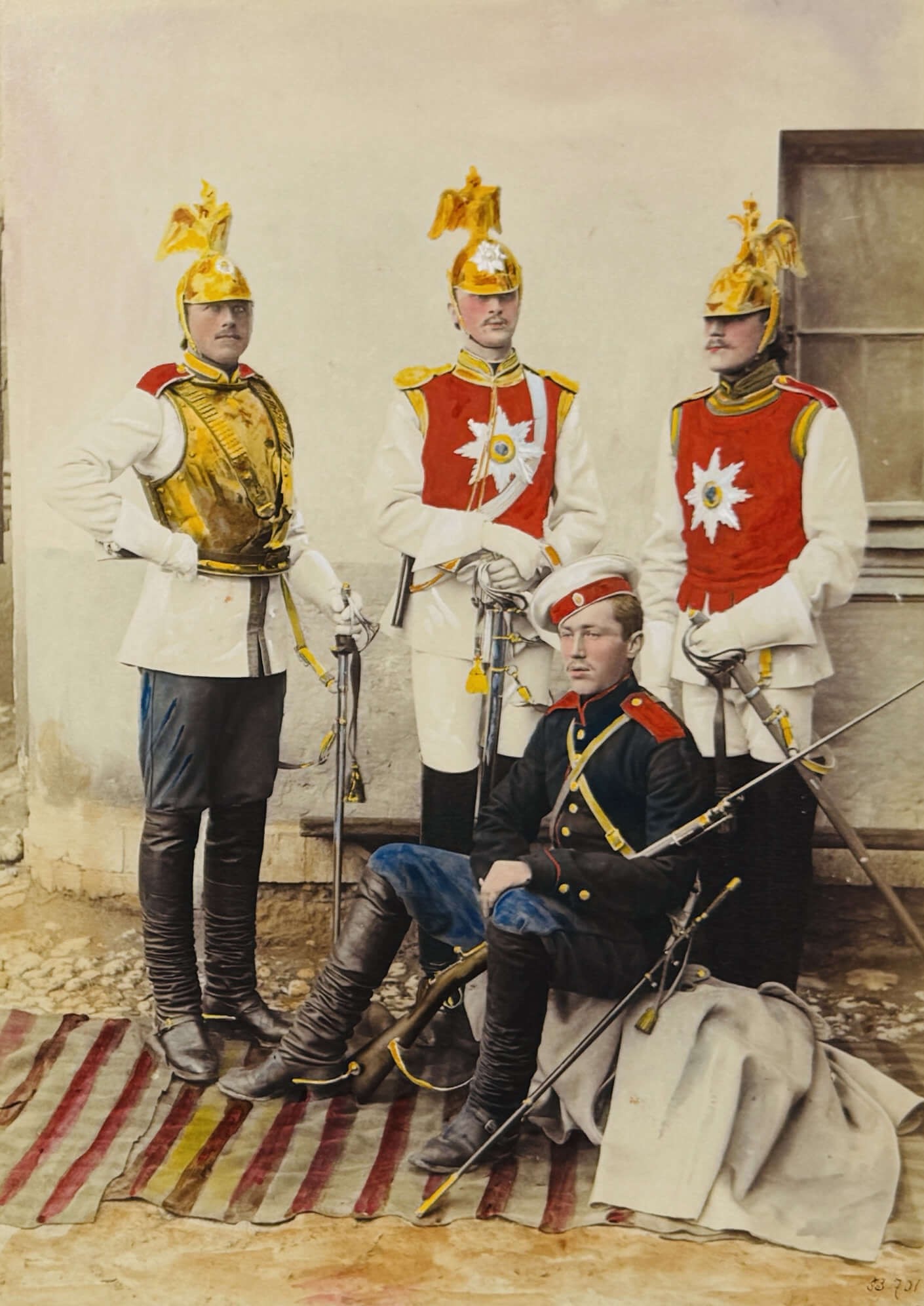
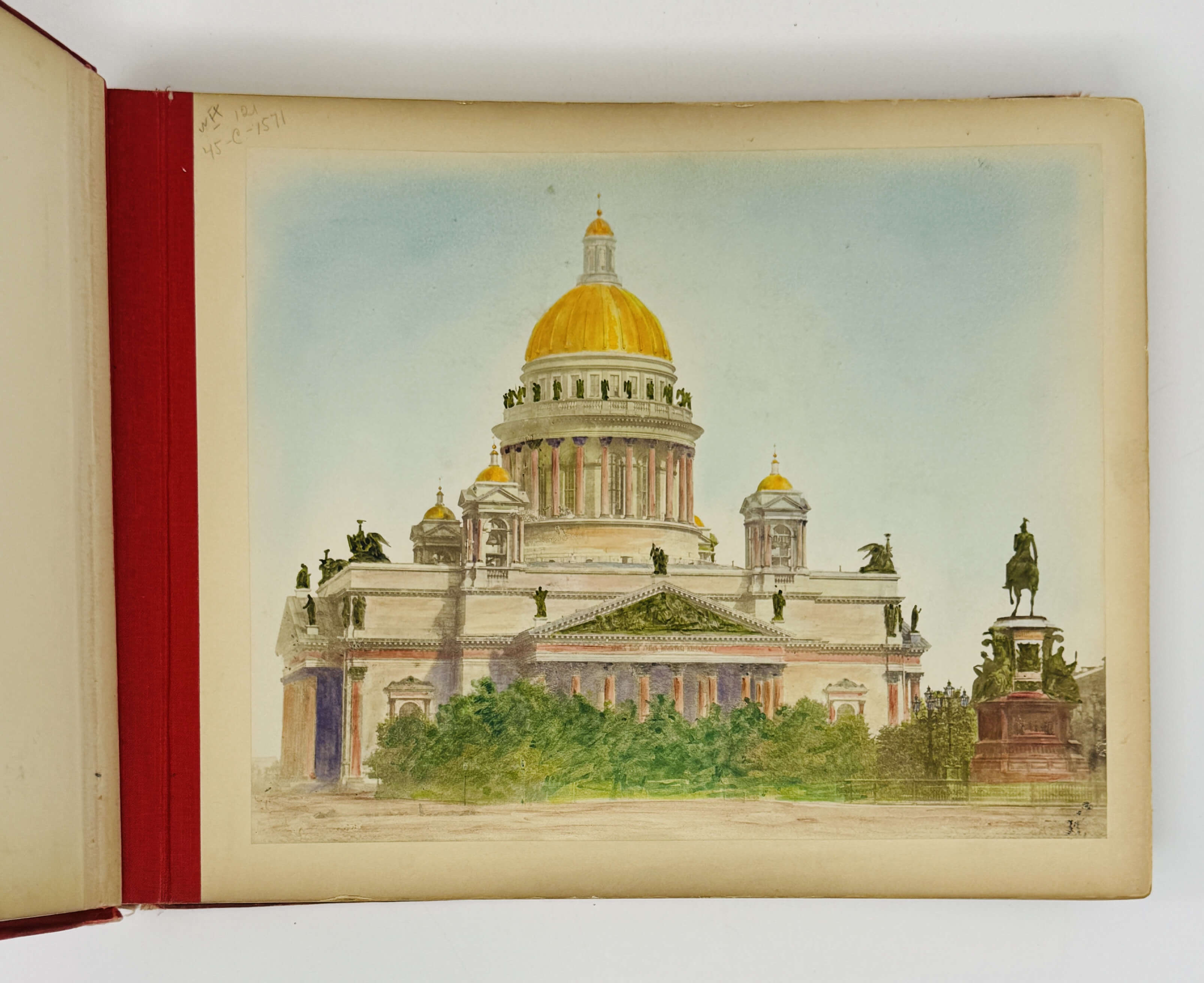
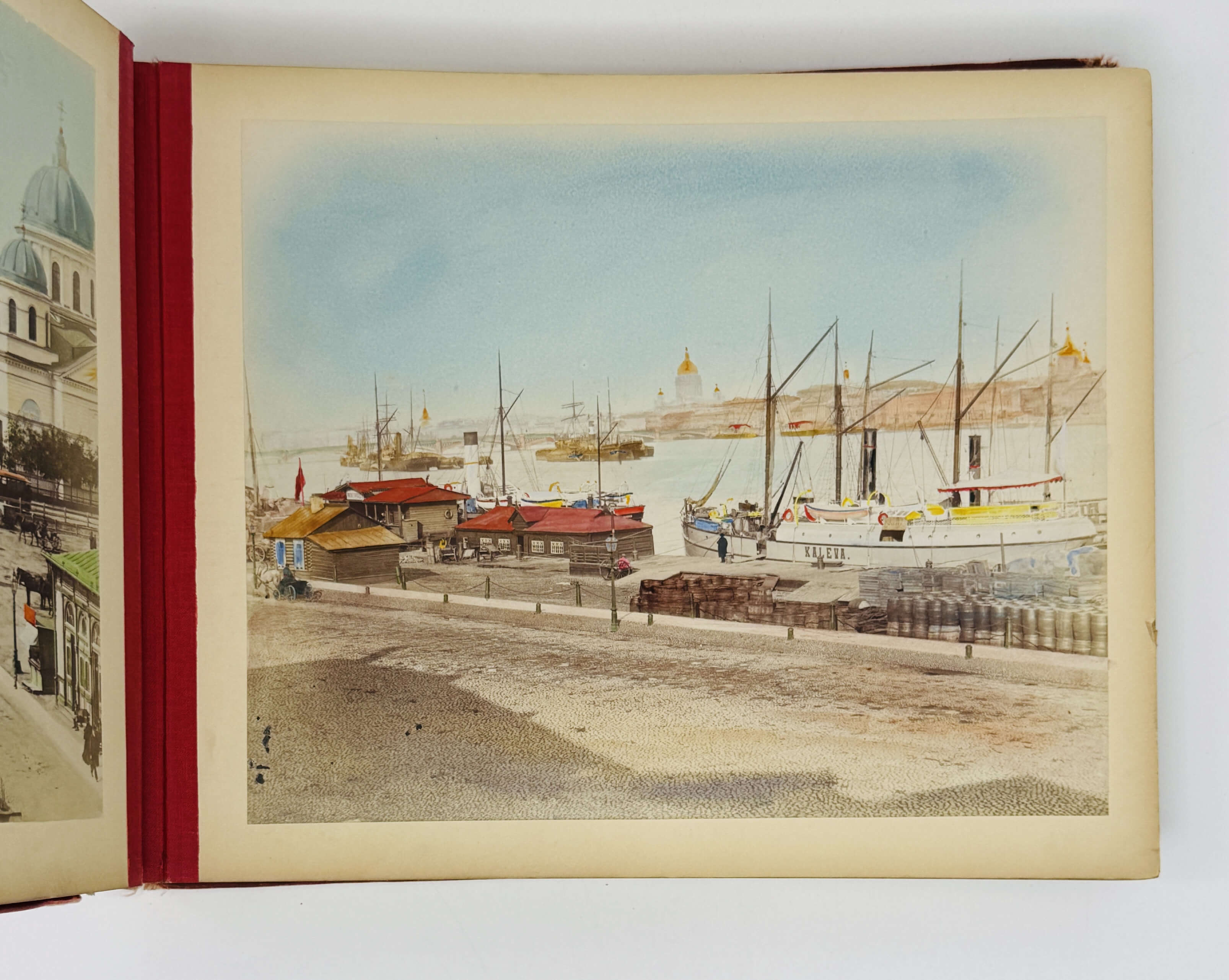
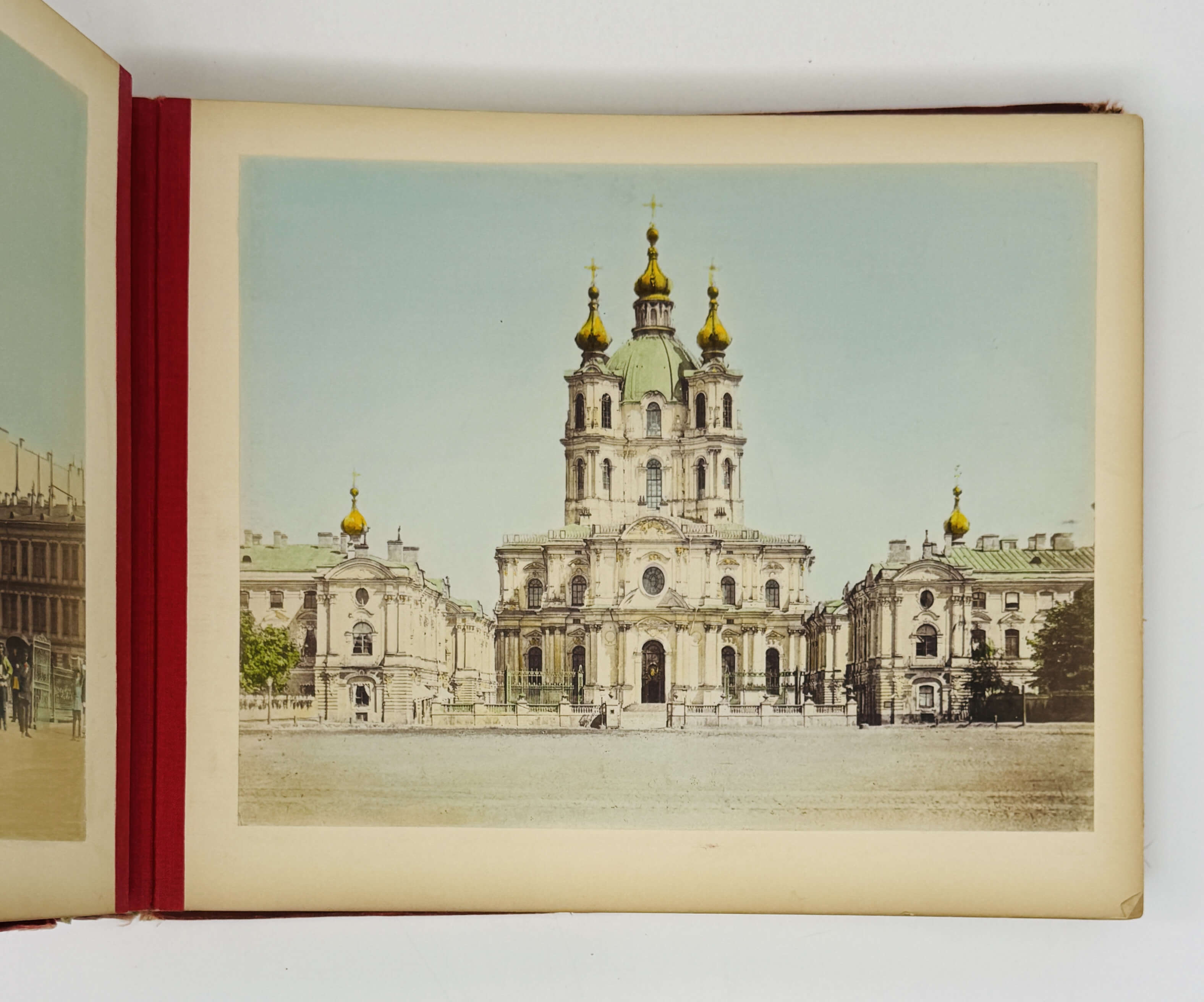
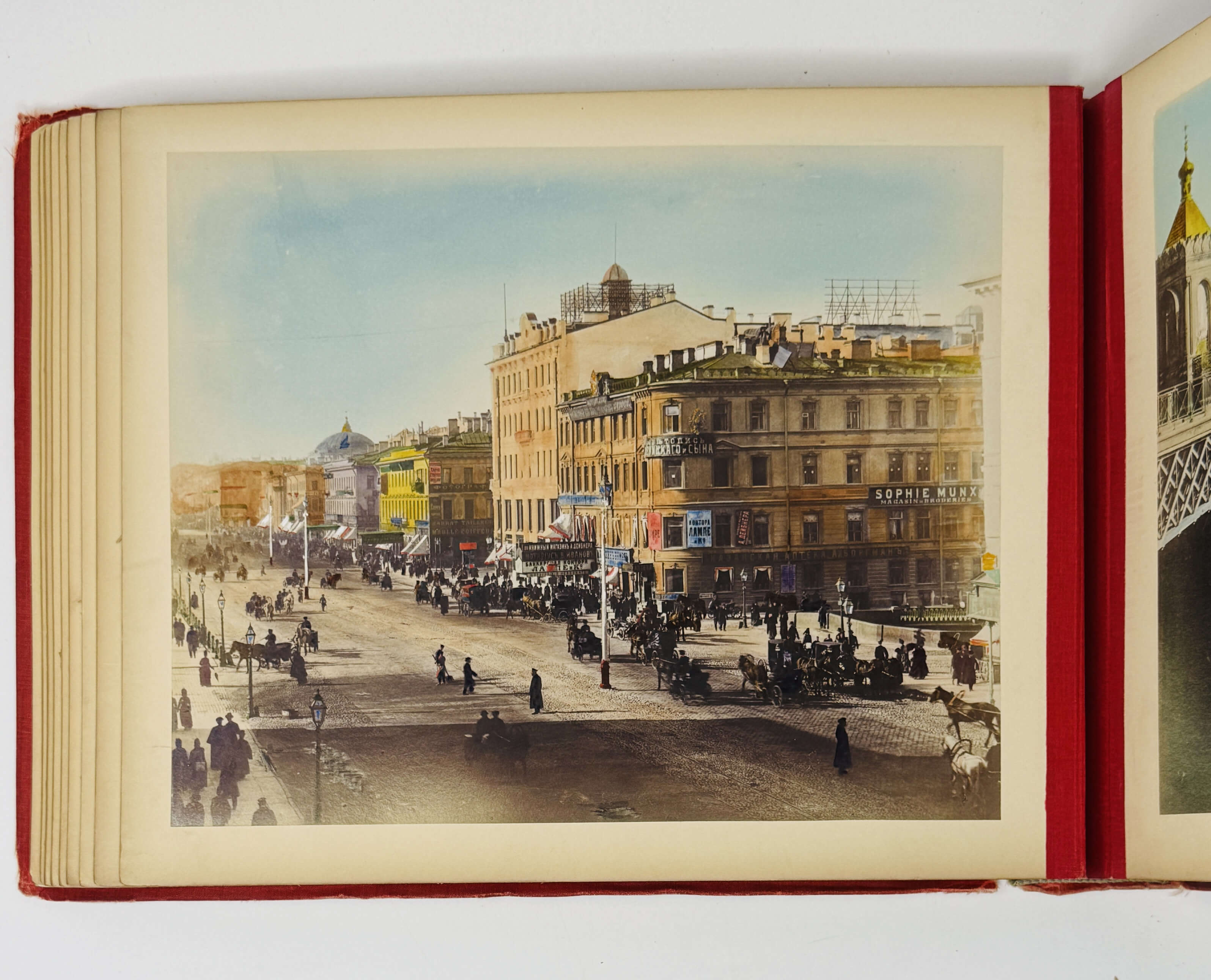
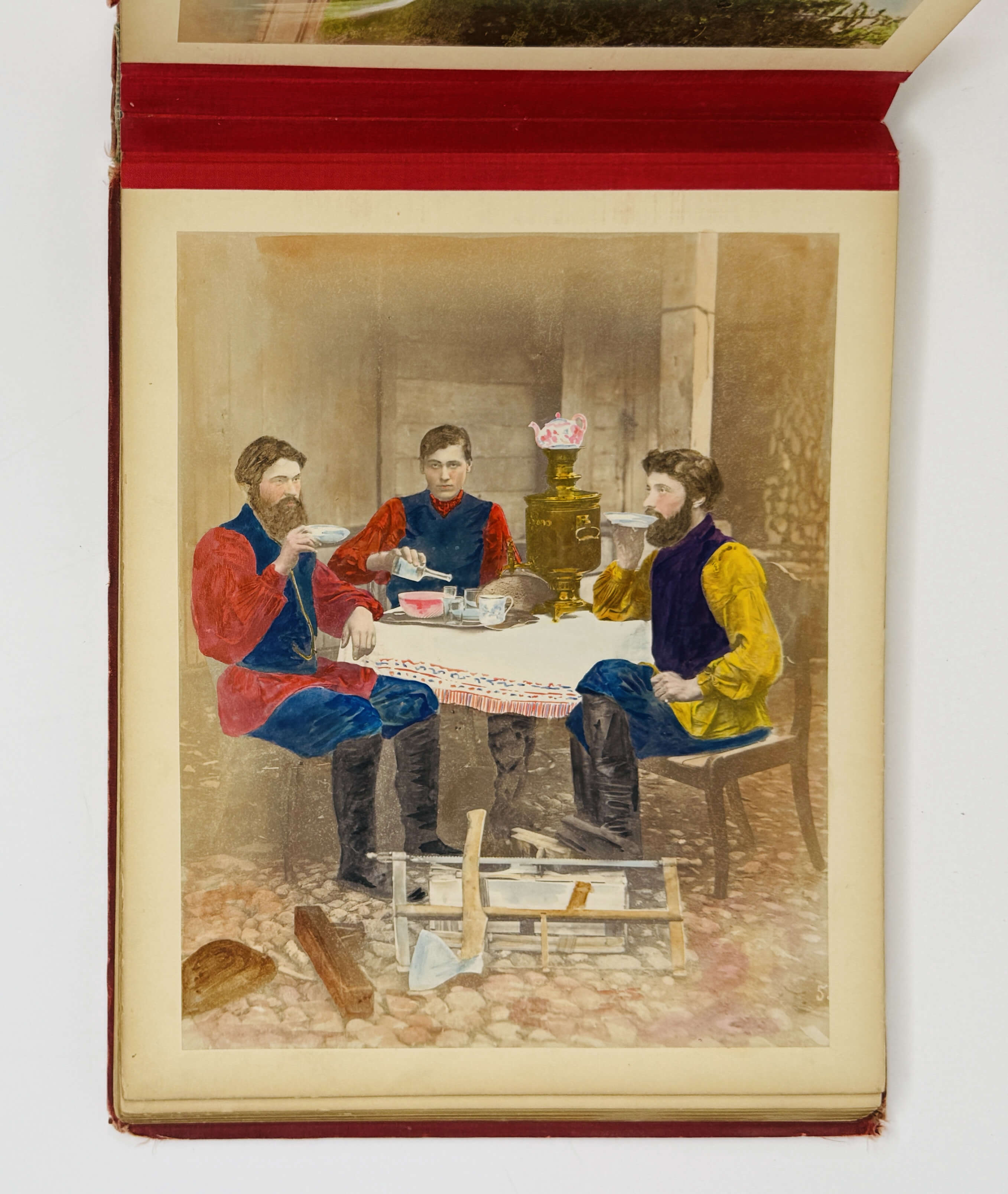
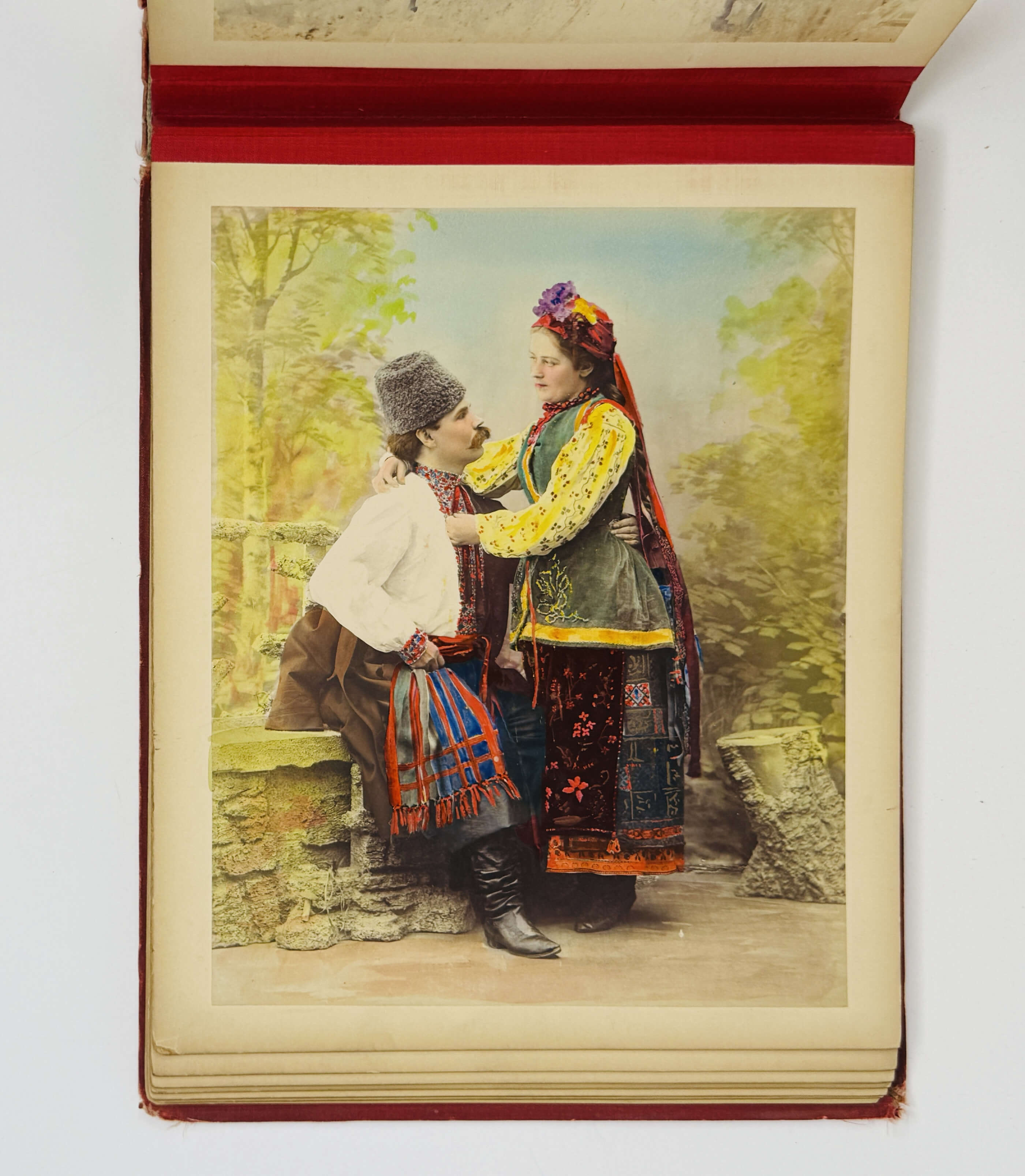
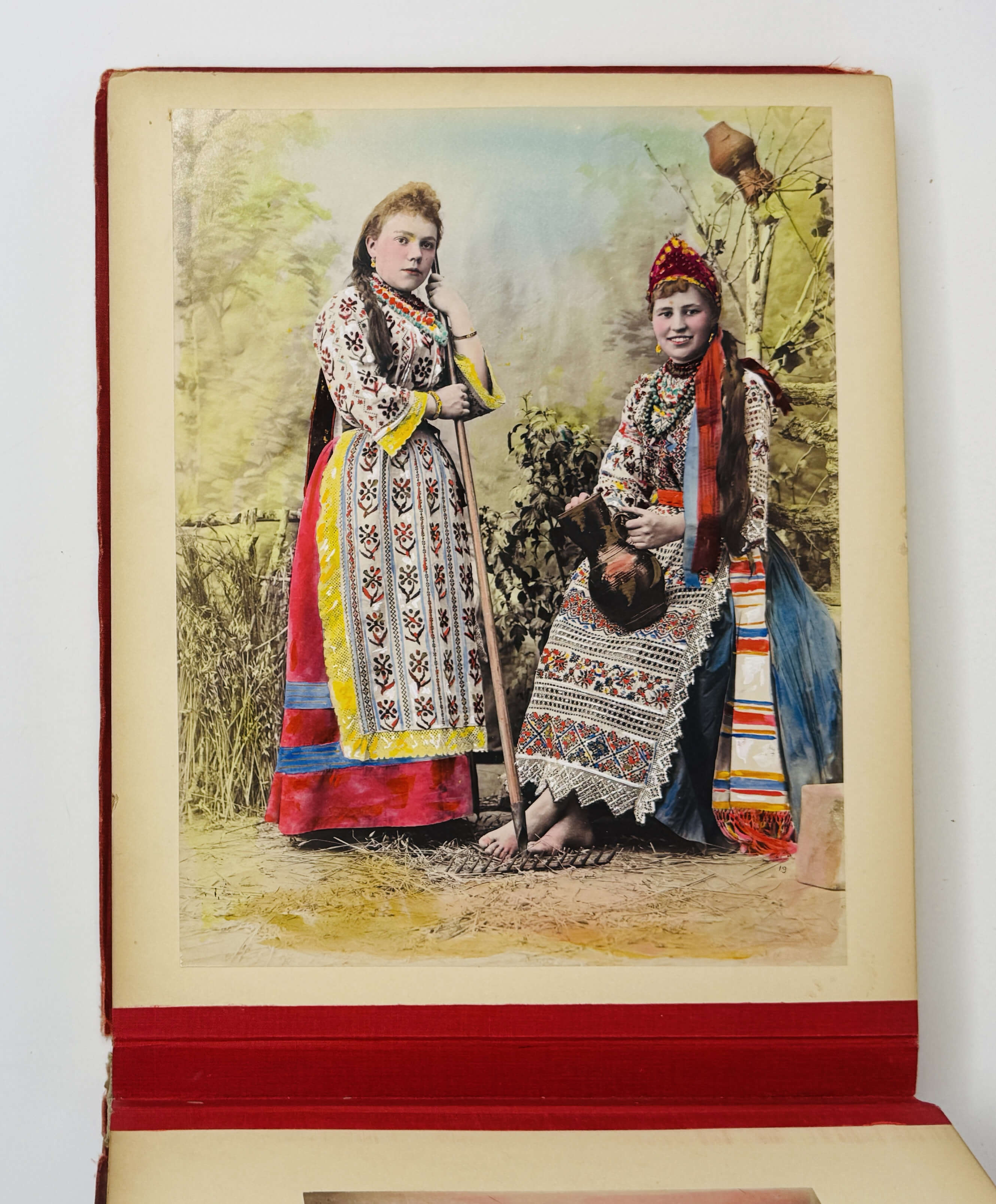
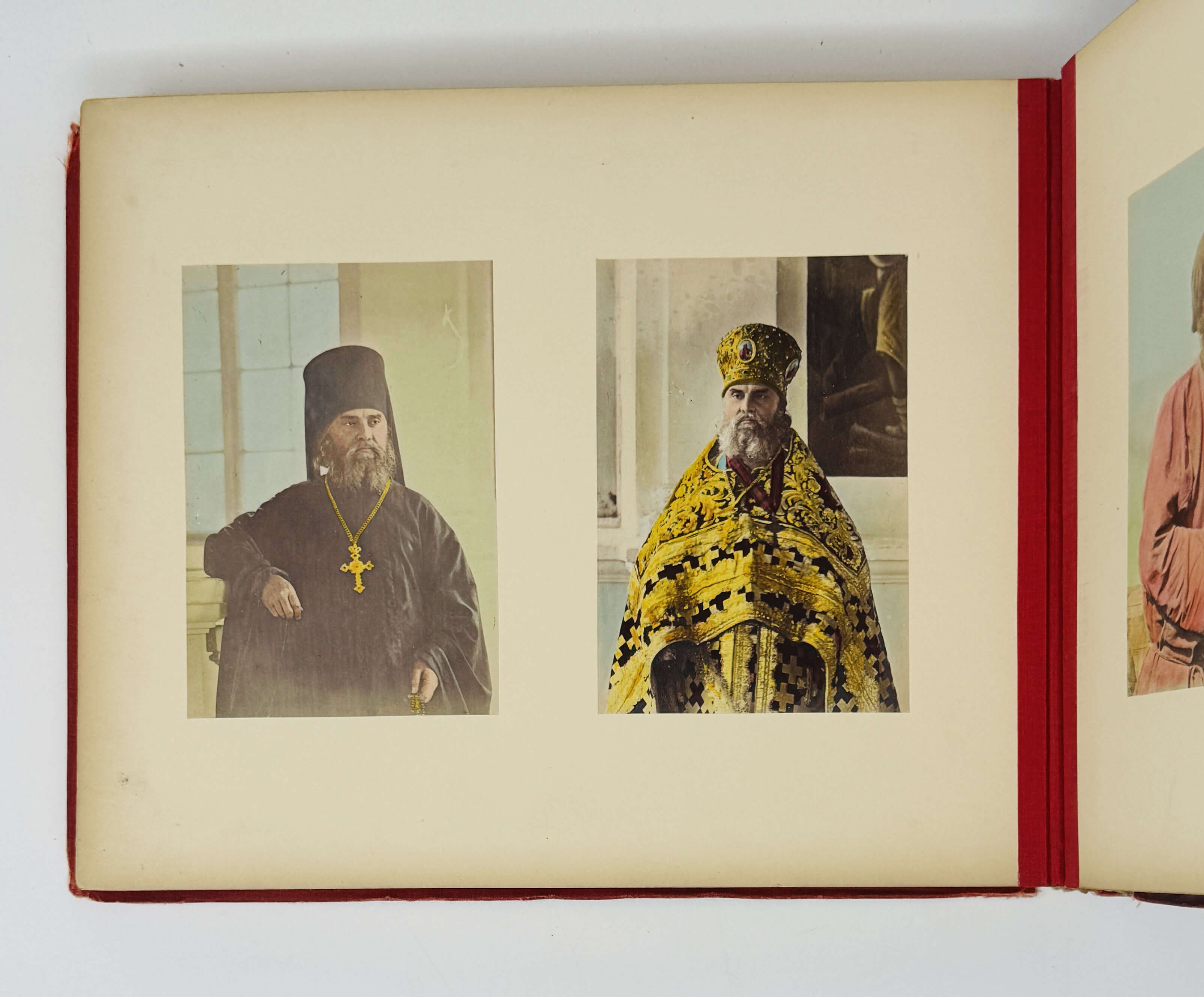
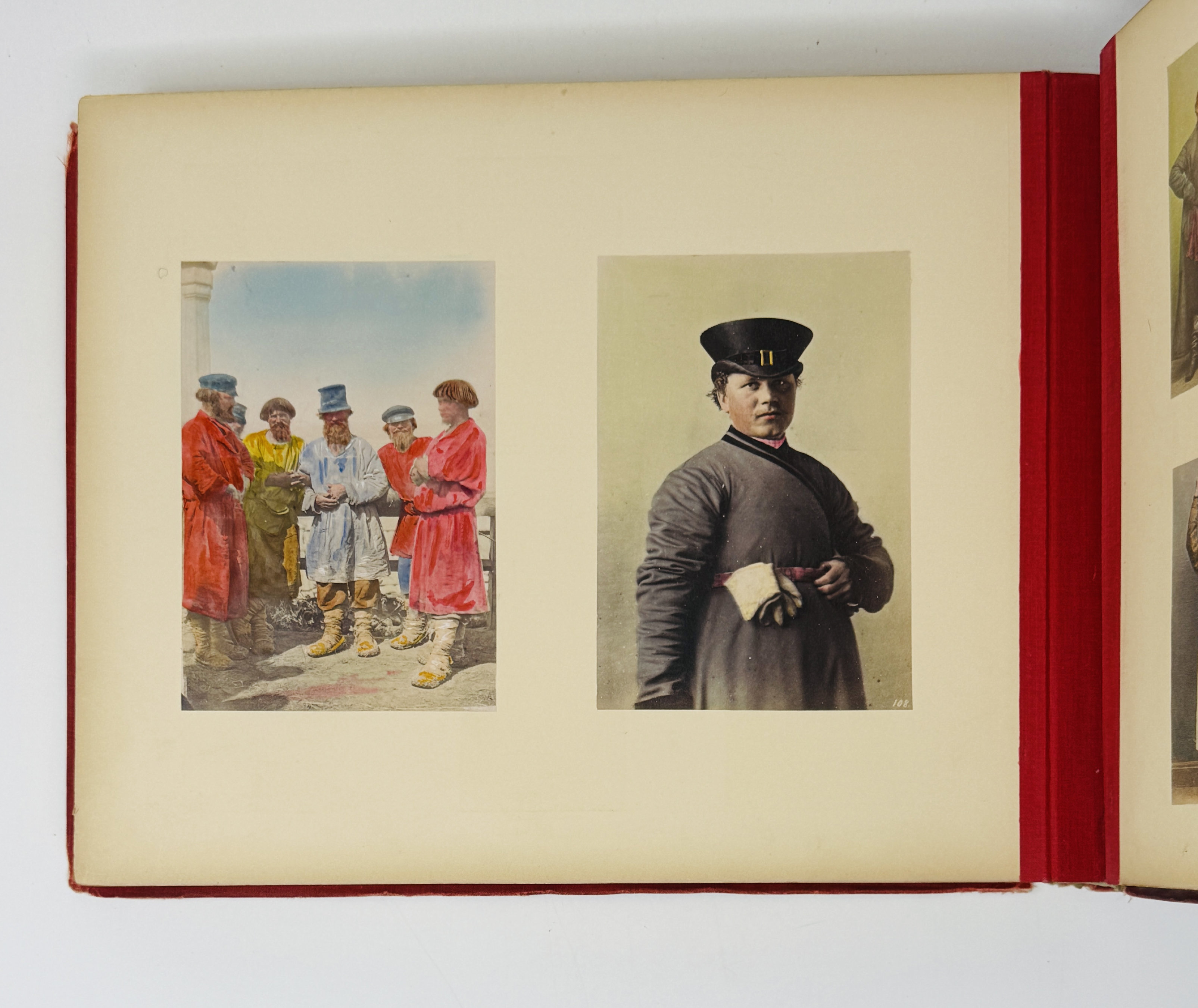
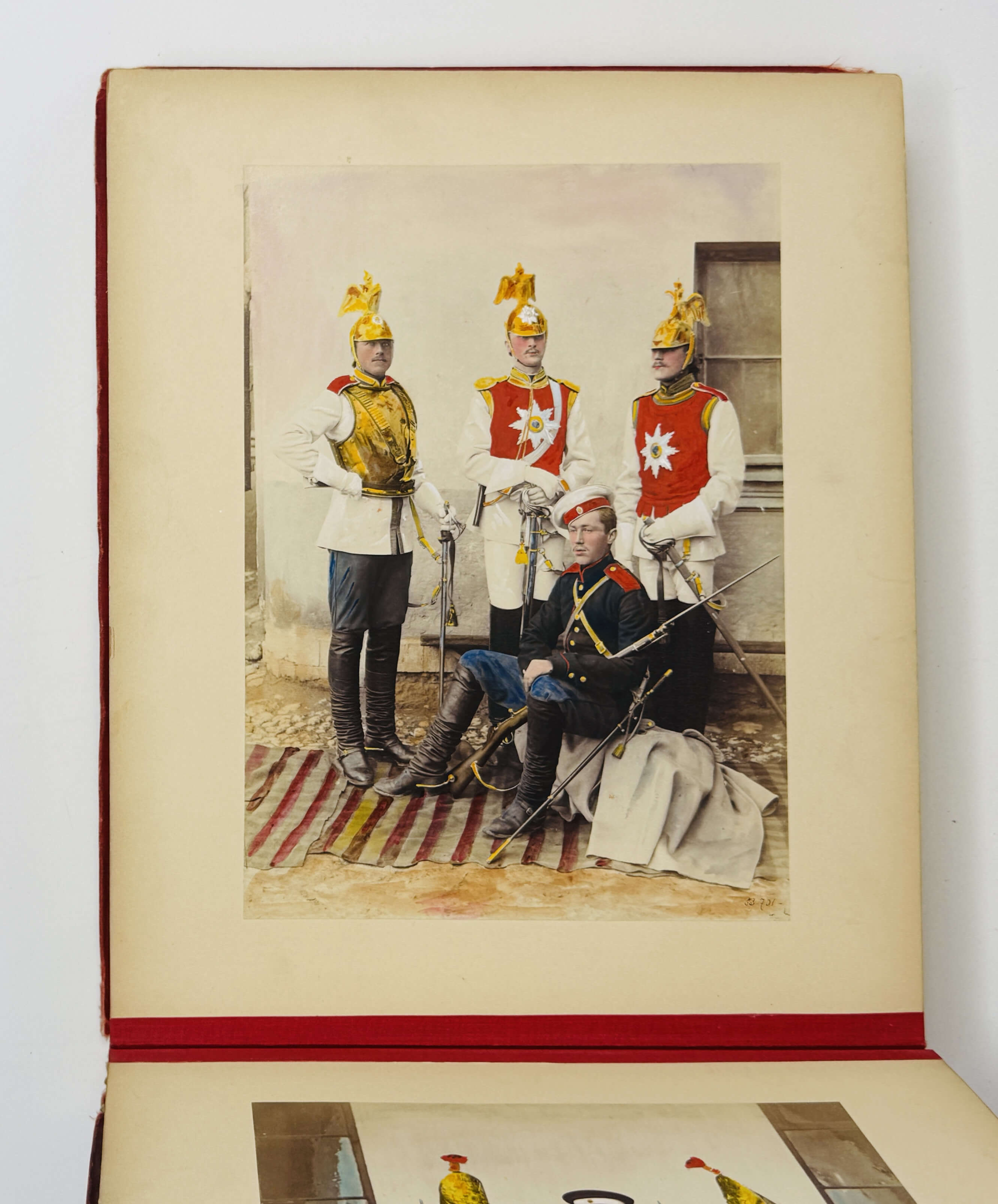
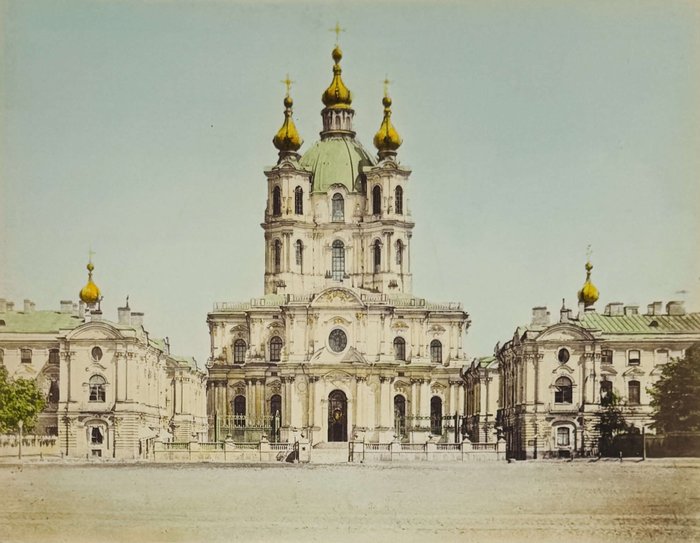
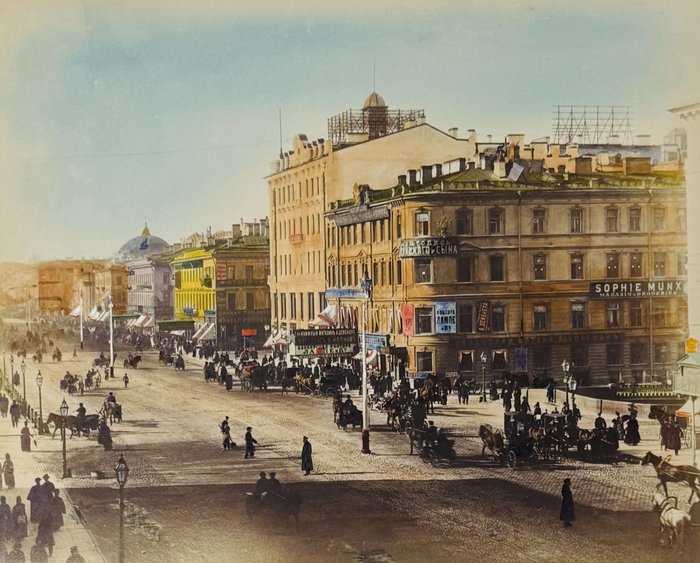
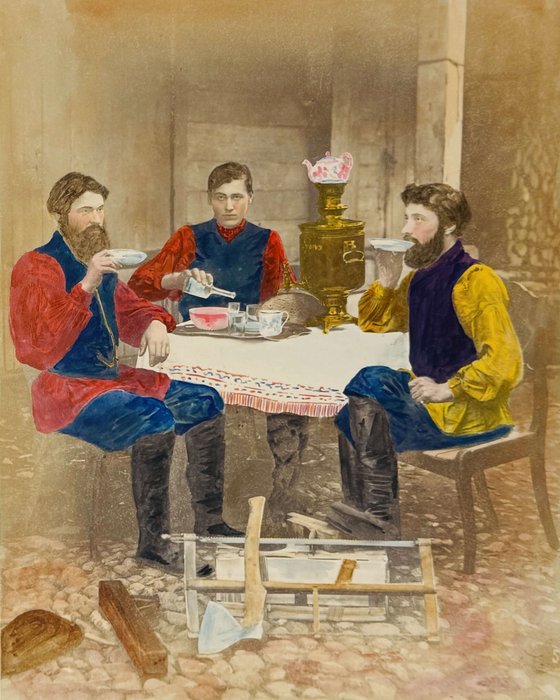
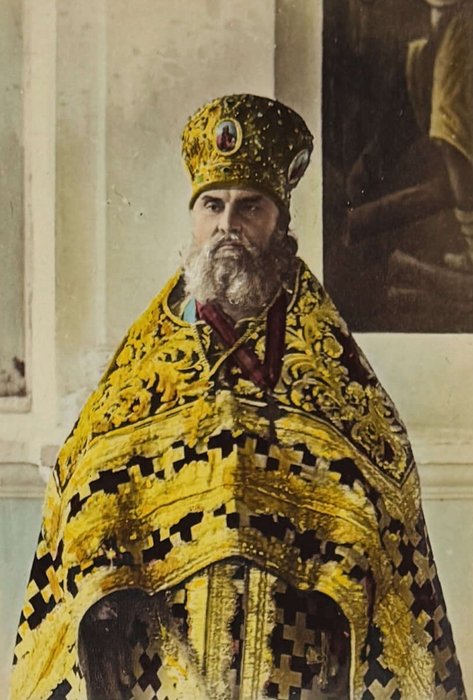
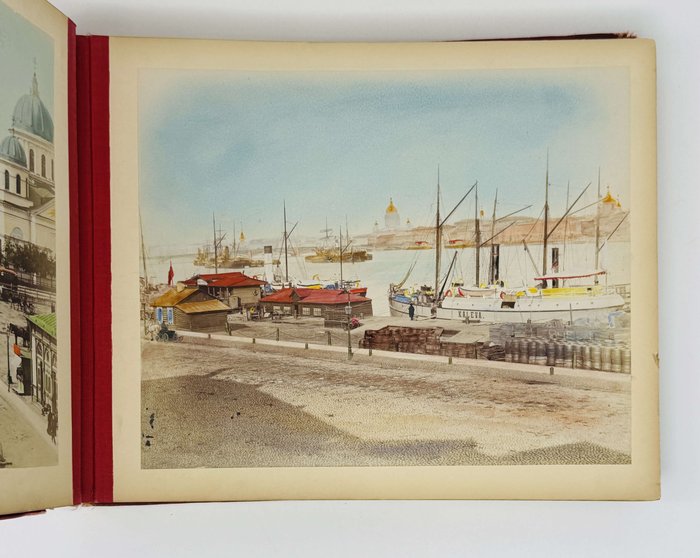
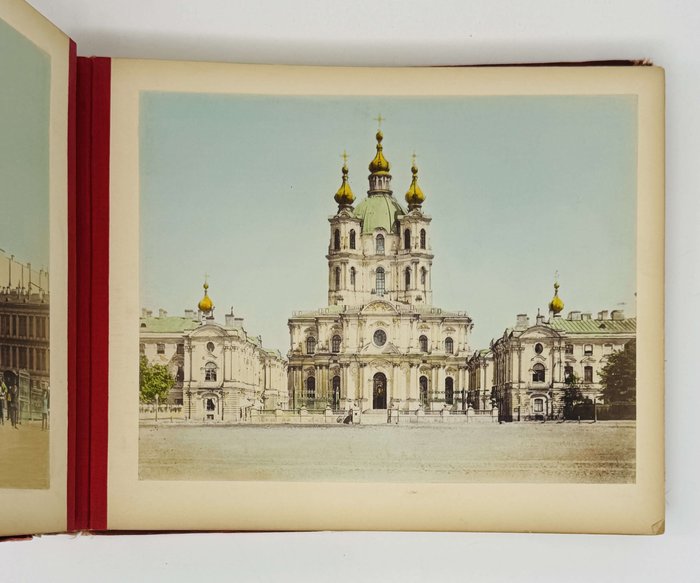
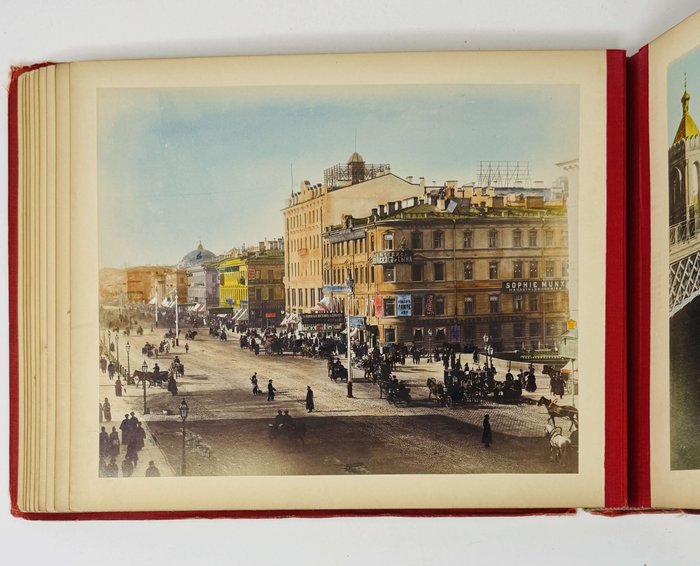
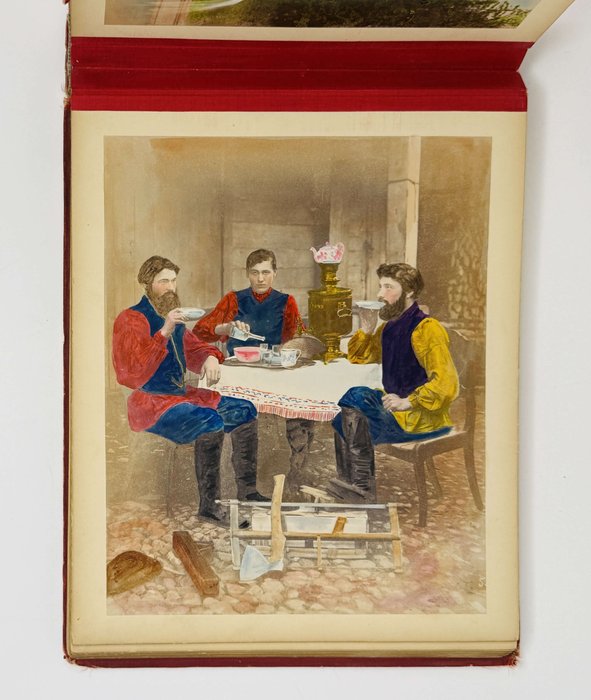
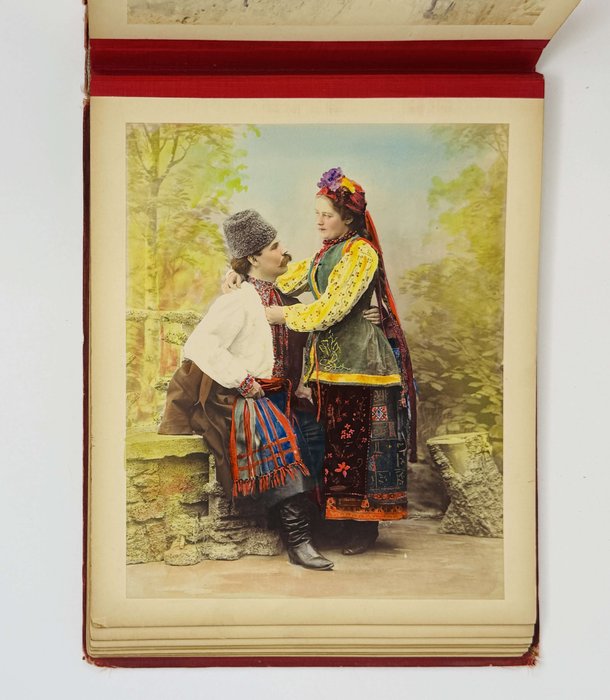
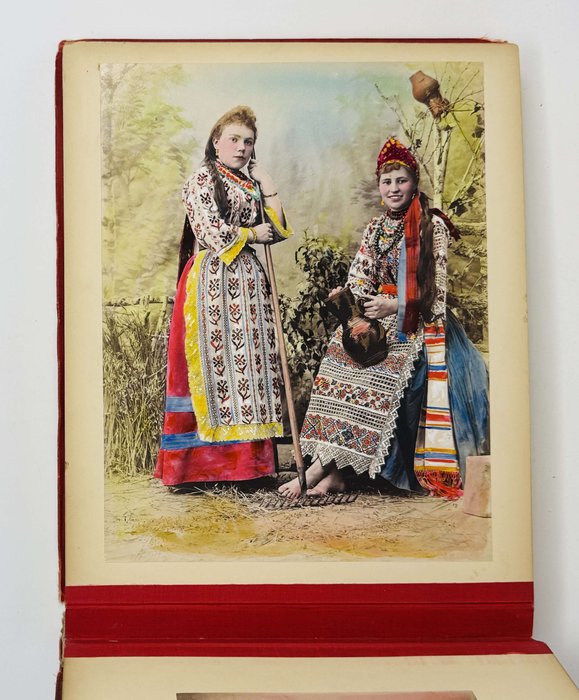
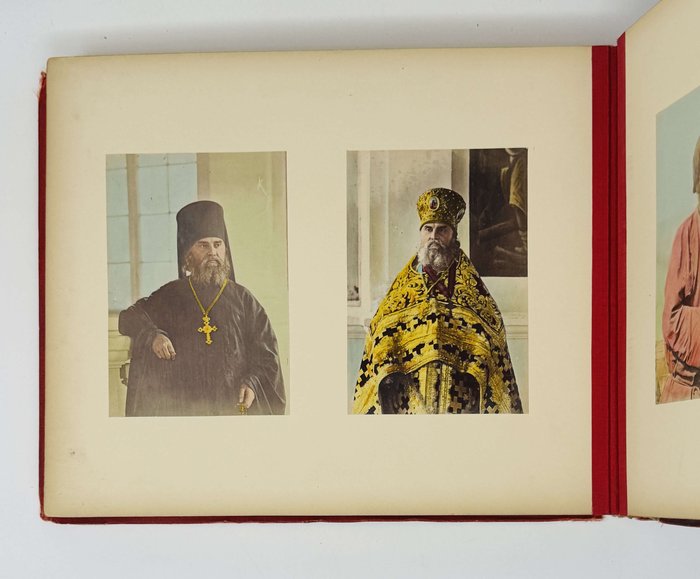
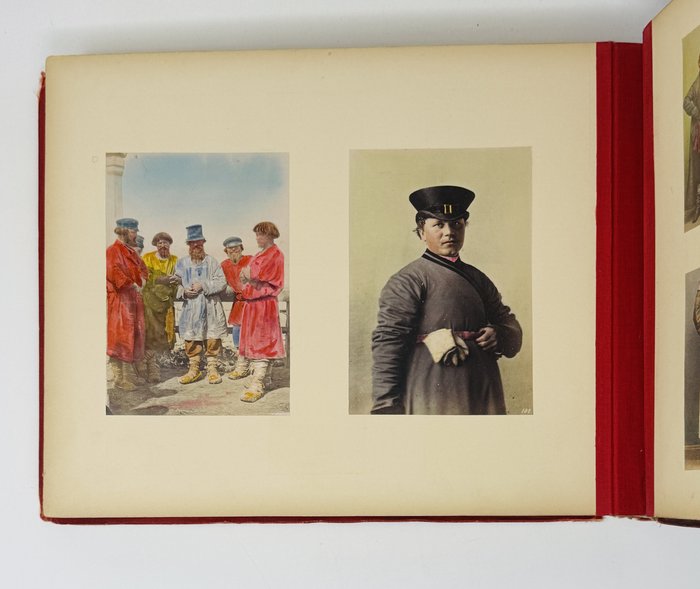
Historically interesting collection from the late 19th-century Russian Empire, featuring excellent "Russian Types" by the pioneering genre photographer William Carrick, rare architectural views of St. Petersburg from the Jean-Baptiste Avanzo studio, and various military group portraits.
The album originates from the collection of Georgi Lukomski (1884–1952), a preeminent Russian architectural historian, artist, book designer, and critic for “Starye Gody.” Following the 1917 Revolution, Lukomski played a vital role in preserving imperial heritage, documenting palace valuables and serving as chief curator of the Khanenko art collection in Kyiv. An expert in Ukrainian Baroque and Byzantine art, he eventually emigrated to France in 1920. There, he became a central figure in the Russian émigré community as the organizer of the influential art periodical “Zhar Ptitsa” [i.e. Firebird].
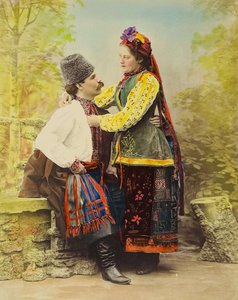
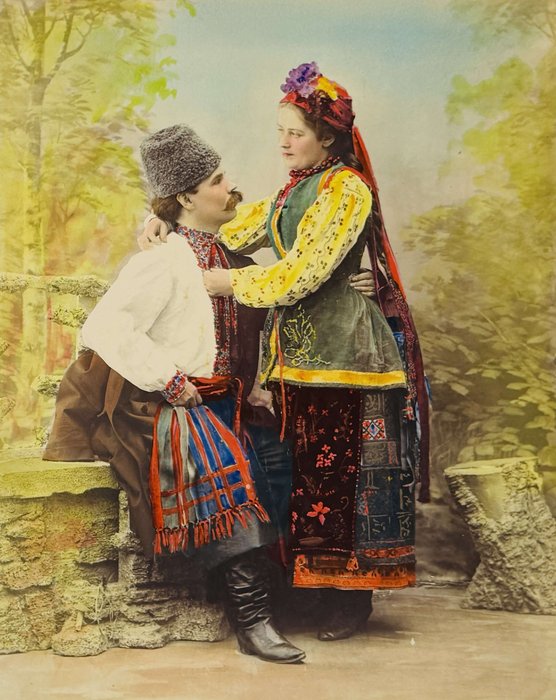
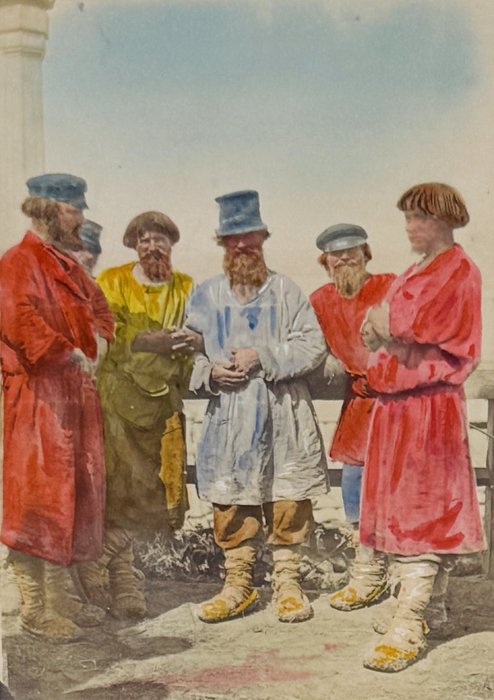
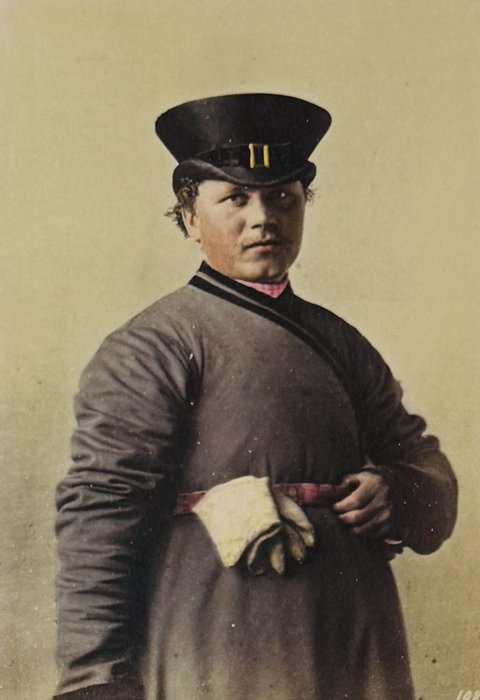
The collection contains thirty-three rare “Russian Types” photographs, depicting street vendors, water carriers, wood carriers, a "white" priest in full vestments, and peasant women in traditional kokoshniks (traditional Russian headwear). Interesting scenes include a Russian tea party, a troika (three-horse carriage), and various urban laborers like the izvozshchik (cabman). The photographs were produced by William Carrick (1827 or 1830 - 1878), a renowned Scottish photographer. Carrick opened a studio in St. Petersburg in 1859 with his partner, John McGregor. While he initially provided photographic studies for painters and produced art reproductions, he became one of the first photographers to venture out of the studio to capture "Rural Life." His work was so culturally significant that in 1862, Crown Prince Nicholas awarded him a diamond ring for his "Russian Types" carte-de-visite series. Over the following decade, Carrick produced more than 700 "Type" photographs across the St. Petersburg region, the Novgorod province, and Finland, creating what remains the preeminent visual illustration of the vast social variety within Russian cities and villages.
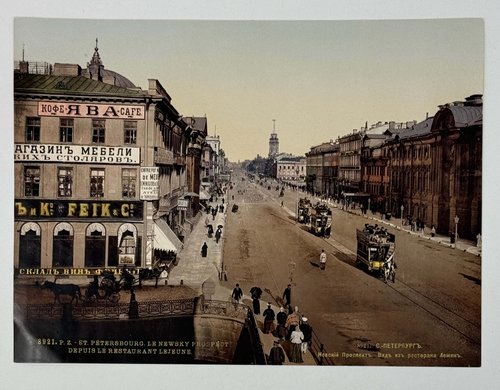
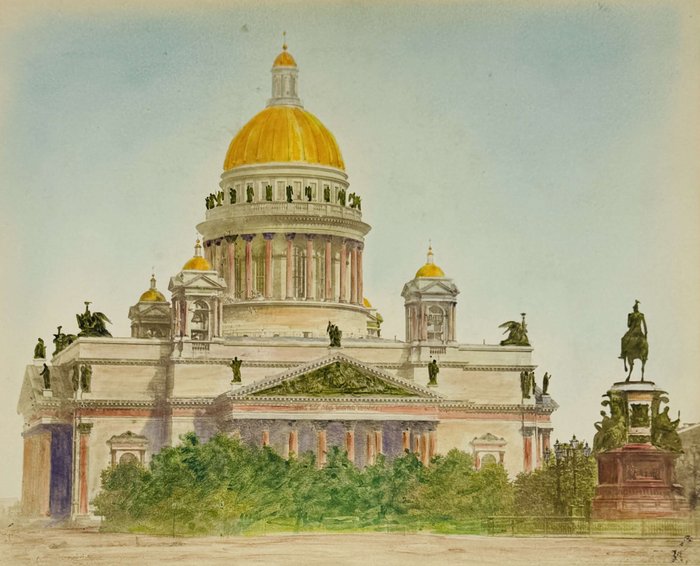
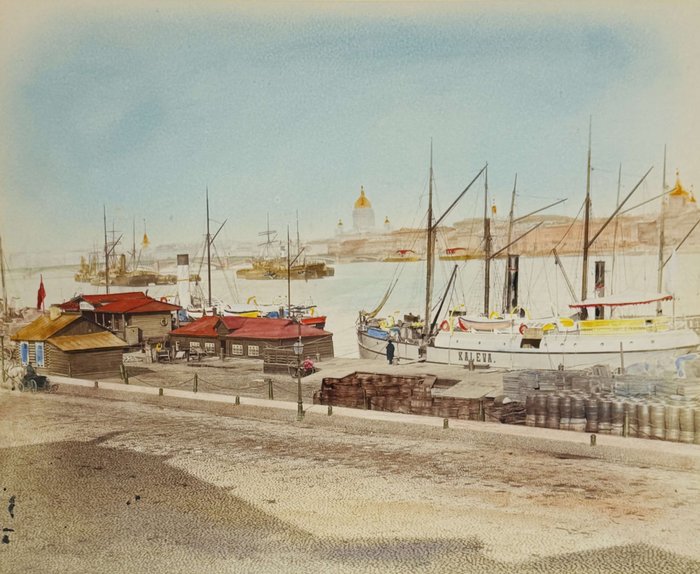
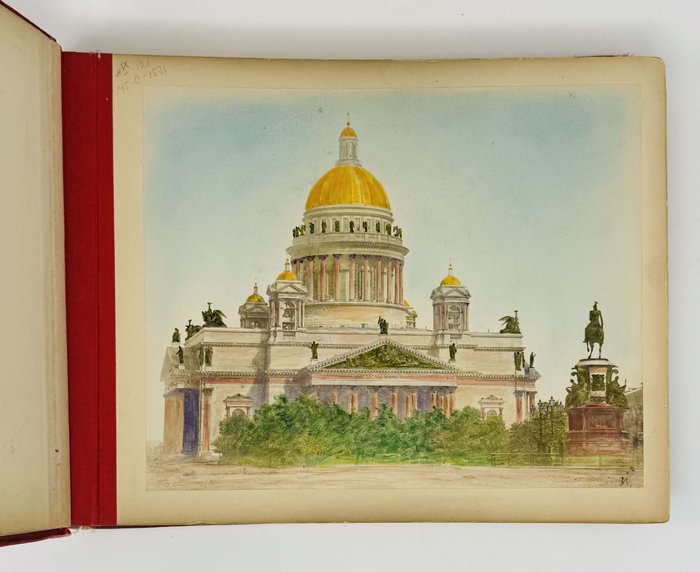
The collection also features fourteen excellent views of 19th-century Saint Petersburg produced by the studio of Moscow-based Austrian photographer Jean-Baptiste Avanzo (1853–?). As the owner of the prestigious "B. Avanzo" art salon on Kuznetsky Most, Avanzo was a central figure in the Russian art trade and became a full member of the Russian Photographic Society in 1904. His salon, a primary distributor for the era's finest topographical photography, operated until the outbreak of World War I.
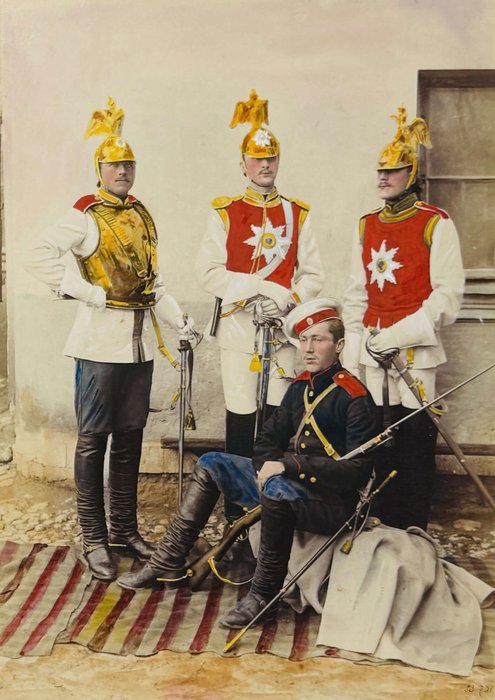
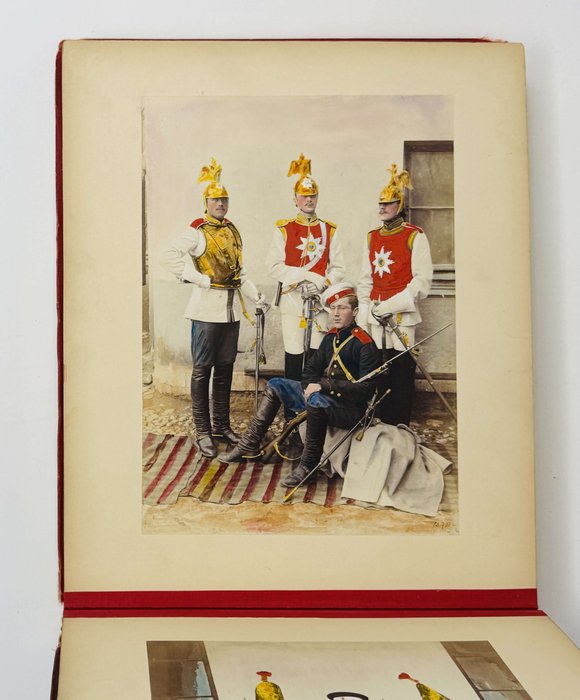
The album concludes with three well-executed military photographs depicting the Chevalier Guards of the Regiment of Empress Maria Feodorovna, a group portrait of the Pavlovskiy Regiment, and a study of Russian gunners positioned around an artillery piece. Importantly, the photograph of the Chevalier Guards features a young Carl Gustaf Mannerheim (seated), the future founder of independent Finland.
Overall, historically interesting collection from the late 19th-century Russian Empire.