
#N4-045
1920s-1940s
Yoshiro Hashimoto (1886-1941) was born in Tochikiken, Japan, attended Meiji University in Tokyo, graduated with engineering degree before moving to USA in 1922. There he found a floral business ‘United Florists’ on 2037 Fillmore st., later moving to 309 Mason St. He got married in 1926 to Sumiye and the couple had two children together, Aiko and Kuniko. The business was growing, catering mostly to Japanese community of the city (however the non-immigrant customers are mentioned in present archive, as well as the Philippine customers of Fillmore district).
On 7th of September Yoshiro suddenly was taken to hospital and died one month later. His funeral held on 10th of October, 1941. Sumiye ran the business on her own for the next 2 months, on 8th of December, 1941 she closed the shop and was under the impression, that FBI ordered her to give up the keys to the building. In the end she was able to operate her business from Japantown until March, 1942, with some limitations: in one document in the archive she recalls inability to go and see the customer at St.Francis hotel, citing the ban on travel beyond Van Ness Ave. In the summer of 1942 Sumiye was sent to Heart Mountain via Pomona Assembly Center. The archive includes photos from the camp, correspondence received and sent by Sumiye to her relatives, camp administration and her insurance agent. In camp Sumiye apparently didn’t receive the medical help for her health condition, according to the documents in the archive.
Sumiye, Aiko and Kuniko (since 1945 they started to use the names Alice and Mary) have returned to San Francisco.
All of Sumiye’s possessions both her from her business and her household were either stolen or damaged beyond repair in her absence. The archive includes the inventory of assets lost, together with Sumiye’s comments.
Sumiye was not working for 2 years, before re-opening United Florists in 1951, also working part-time at International Institute (1860 Washington St) (the International Institute of San Francisco was a charter member of the Community Chest (later becoming part of the United Way). She acme a US citizen in 1953.
The above description of Hashimoto biographies was done using solely documents from the present archive.
The archive includes:
Notebooks & Manuscripts (altogether 255 handwritten pages):
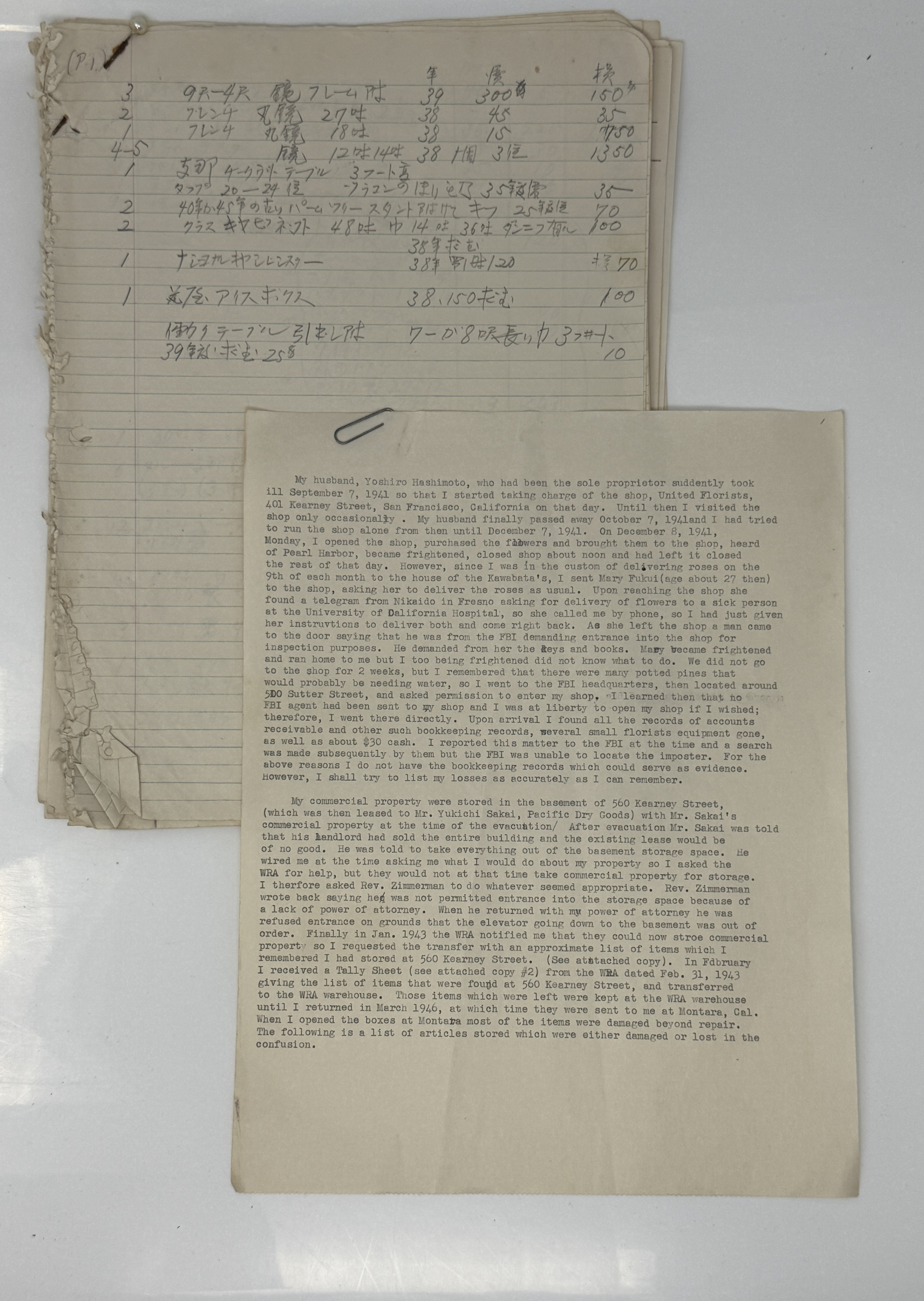
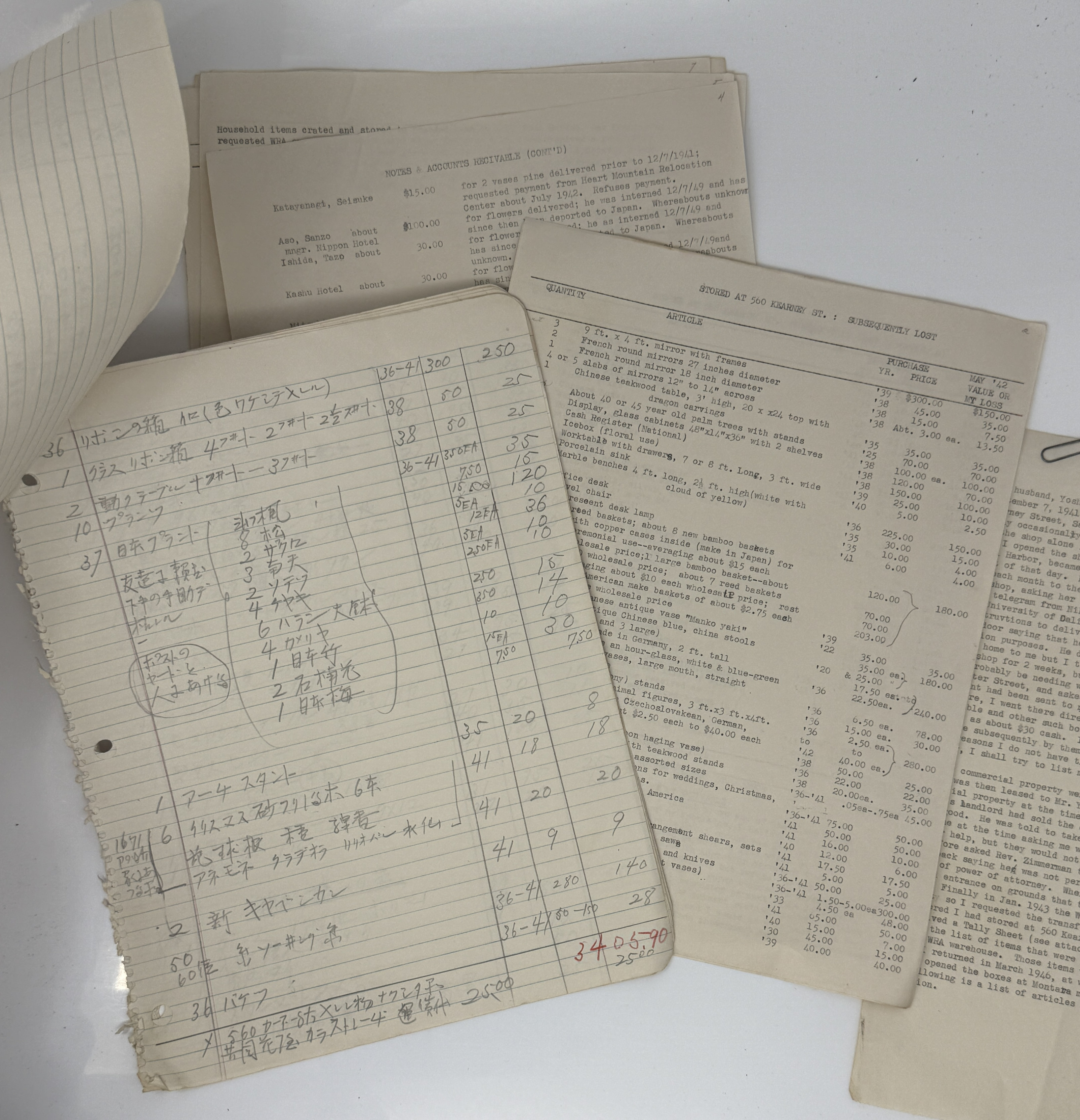
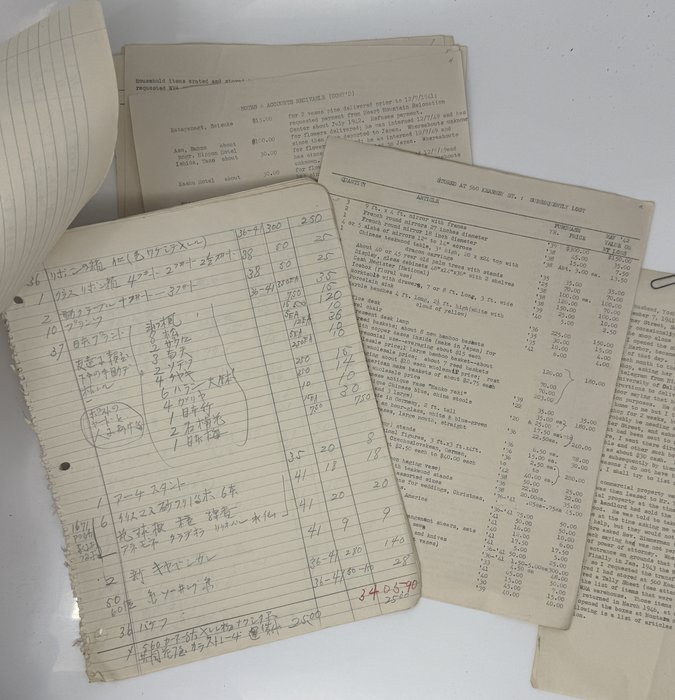
— Handwritten list of property.[11] p. 8,5 x 11 in. Pinned with with a mother-of-pearl pin. In Japanese. With English typescript translation.
The list includes the purchase price for each item and the value as of 1942.
First part of the list includes what was owned by United Florists, stored at 650 Kearney st. and subsequently lost during the years, when Sumiye was interned in Wyoming.
The list is the inventory of the floral shop as of late 1941, when the business was grounded to a halt by the war. It details all the vases, Japanese, Chinese and German, office supplies, ribbons, Japanese plants (with remark that they were stored with friends and dried up due to inexperienced care). Accounts receivable at the end of this section give names and business relationships with customers, for example: ‘Aki Hotel. $15 on flowers sent, requested payments about Jan.1942, Mes.Aki refused me payment stating she knows nothing about the business and I would have to wait till her husband returned from internment camp’.; ‘Aso Sanzo, manager at Nippon Hotel. About $100 for flowers delivered. He was interned 12/7/1949 and has since been deported to Japan. Whereabouts unknown’. ‘Mitsubishi. About $50 for flowers delivered. Closed with outbreak of war, employees deported cannot obtain payments’, ‘About 17 or 18 Philipine customers $100. One of these was chief waiter at Mssajin, so I went to request payment and told he was at St.Francis hotel, but with travel restrictions on our travel beyond Van Ness Avenue I was unable to go and see him. Requested payments of those living in the Fillmore are, but was refused of payment or could not collect in time before evacuation’. Total loses for United Florists stated as over $4000.
Second part of the list describes the household items left at home.
It starts with the explanation, that at the boarded hime at 1671 Post Street, where Hashimoto family lived everything was left as is in time of evacuation. Sumiye asked WRA agents to examine the house in 1943, and received a reply, that everything was intact. In April, 1945 Sumiye, worried, that there are rumors that there were a lot of cases of theft from vacant houses of American Japanese in San Francisco, asked her friend Rev. John Zimmerman (1801 Octavia St) check over her things, and she received a reply on 18th of May, that everything was gone.
The list of items include the year of purchase, printed paid and value (less, due to depreciation). The list has a separate section on things of ‘Family heir-loom, brought from Japan’, including ‘No’ dance figurines, antique ‘Okina’, two sets of ‘kaiseki-zen’, ‘osakazuki’ set, ‘Gifu’ lantern, two Inchmatsu dolls etc. The list of items bought in US include the items, manufactured by Japanese American community, like ‘Table for plants (7 shelves), made by Wakasa, Japanese Zabuton, shakuhachi bamboo flutes. On books Sumiye wrote: ‘Approximately 90 to 100 previous books. My husband was an Meiji grad., in the US attended Stanford and some law college, was interested in French literature’. This is one section Sumiye was not sure about price and value, writing ‘Do not know, probably worth $600 or more’.
American items include Shirley Temple dolls, Christmas ornaments, toy piano and xylophone, records, tennis rackets etc.
Total loses of household items stated as over $2000.
Then two short lists of forced abandoned items and expenses incurred incident to evacuation are listed. The list of insurance premiums to Hiko Hashimoto Insurance policy are listed.
Total loses for Hashimoto family due to Evacuation stated as $2799.55
Together with:
— Manuscript draft leaf of calculations for the list above. [2] p. 6,5 x 5 in.
Together with:
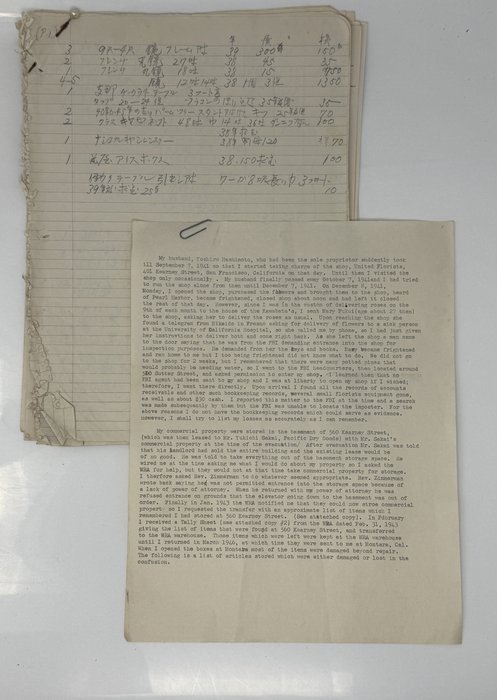
— 1 typewritten page of explanations how the property was stored and damaged.
In this page Sumiye recalls the sudden death of her husband on 7th of October, 1941, two months of her running the United Florist aline, on 8th of December ‘I heard of Pearl Harbor, became frightened, closed the shop… However, as I was in custom of delivering roses to the 9th of each month to the house of Kawabata’s, I sent Mary Fukui (aged 27 then) to the shop… At the shop, the man came saying that he was from the FBI demanding entrance into the shop for inspection purposes. He demanded from her keys and books. Mary got frightened and ran home too..’
After that Sumiye went to FBI headquarters and asked the permission to enter the shop, where she was told no agent was assigned to go into the shop, she went to check on the shop and found cash register emptied, as well as records of accounts receivable and some equipment. FBI was asked to look into it, but the imposter was never found.
Upon leaving to Wyoming Sumiye agreed to store her commercial property in the basement of 560 Kearney St., in the Pacific Dry Goods shop with Mr.Yukichi Sakai. When she was away the building was sold and Sakai was asked to move out. Sumiye’s friend rev. John Zimmerman tried to recover the property from the new owners, but was denied access, however by 1943 WRA agreed to store commercial property of the interned in their warehouse in Montara, CA.
Upon return from Wyoming Sumiye opened the boxes from Montara and found that ‘most of the items were damaged beyond the repair’.
This led to Sumiye asking for reimburse her for the items lost and damaged from her home and the shop and the creation of this list.
— Handwritten list in Japanese of the people, who gave Yoshiro money in 1922 for organizing his life in America. Written on the envelope, [2] p. 4,5 x 3 in.
— Handwritten instruction on how to build a replica of Mt.Fuji. [San Francisco, 1920-1930s]. [2] p. 5,5 x 8,5 in. With schematic drawing of Mt.Fuji on the verso.
— Handwritten note on the funeral rites for the late Mr. Yoshiro Hashimoto, held at the Sokoji Zen Buddhist Temple (桑港寺, Sokoji). San Francisco , ca. October 10, 1941. [1] p. 8,5 x 8 in. In Japanese.
The Sokoji-Soto Mission of San Francisco, founded in 1934 at 1691 Laguna Street, was ounded by Reverend Hosen Isobe to serve Japanese immigrants. It operates in the same location now.
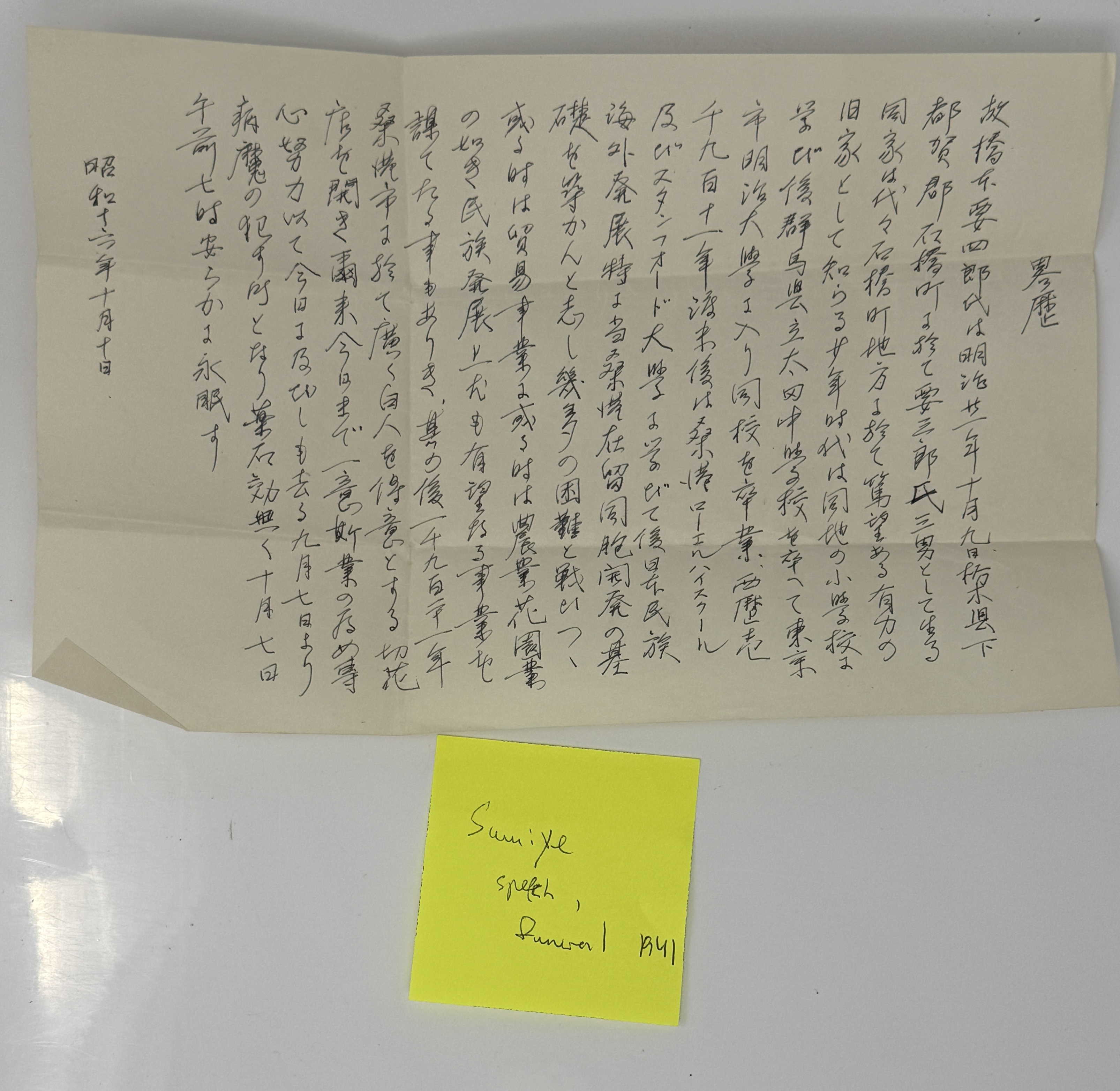
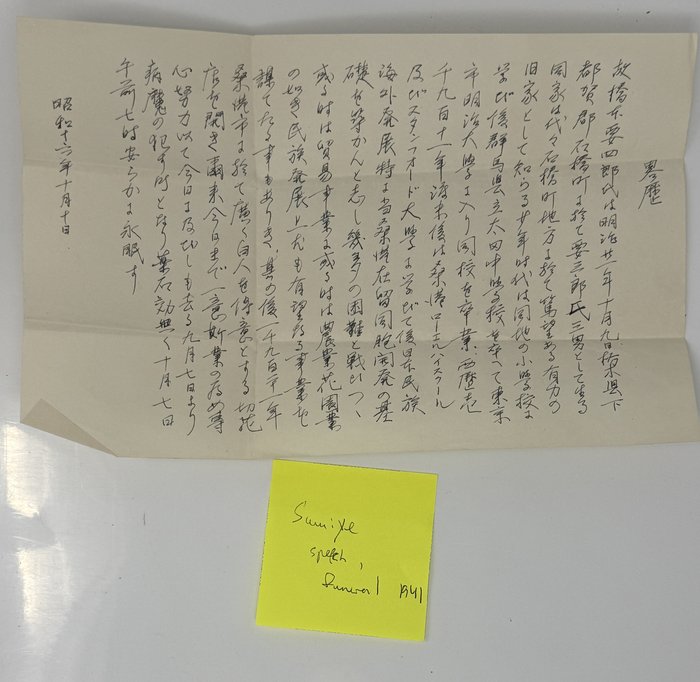
— Sumiye Hashimoto. The handwritten speech at the funeral of her husband, Yoshiro. San Francisco, ca. 10th of October, 1941. [1] p. 8,5 x 12 in. In Japanese.
In this address Sumiye retells the major events in her husband’s life, his studying at Meiji University in Tokyo (engineering degree) in Tokyo, then Stanford, mentioned his business in floriculture and horticulture, praising his business energy and mourning his sudden death.
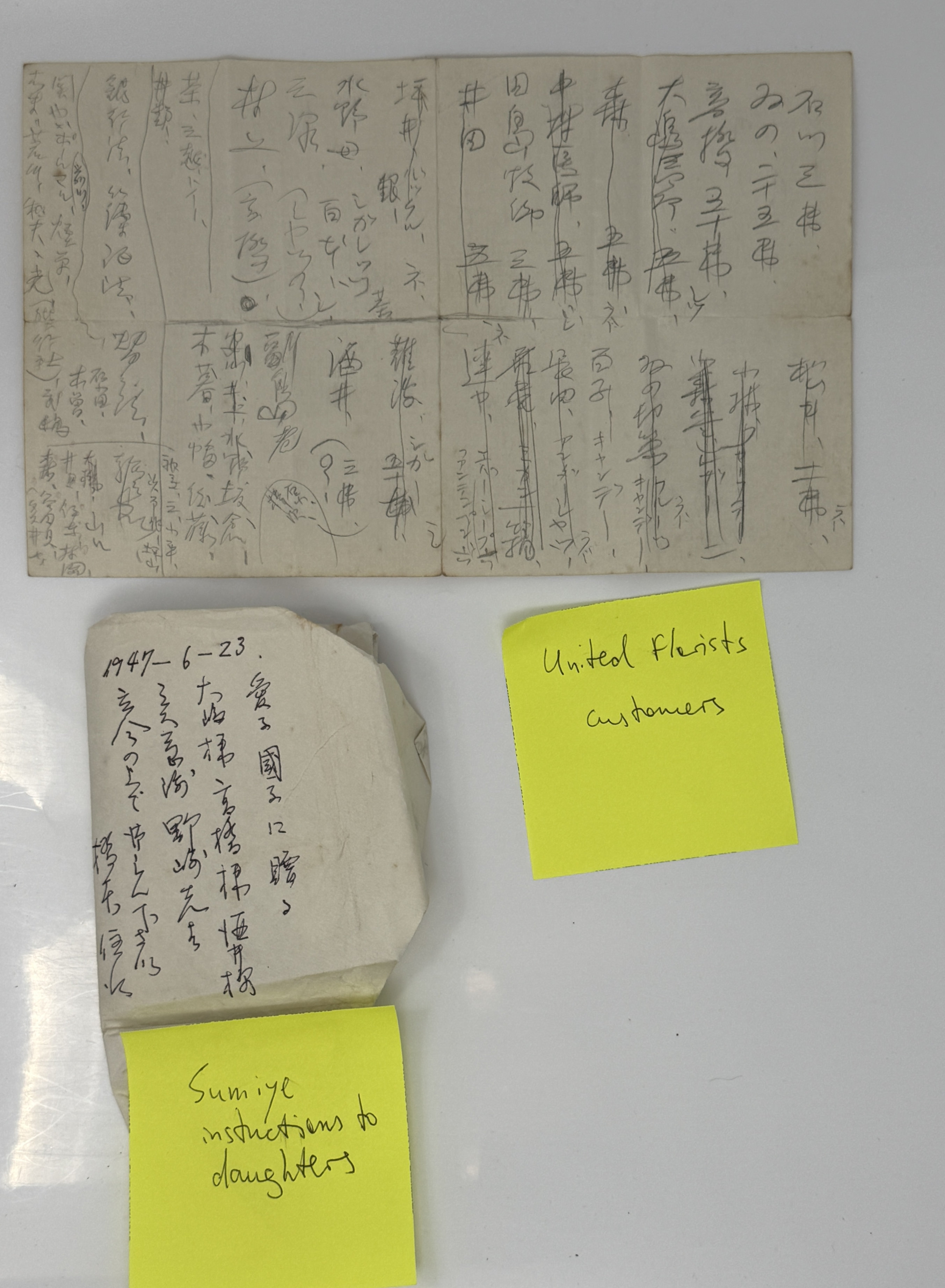
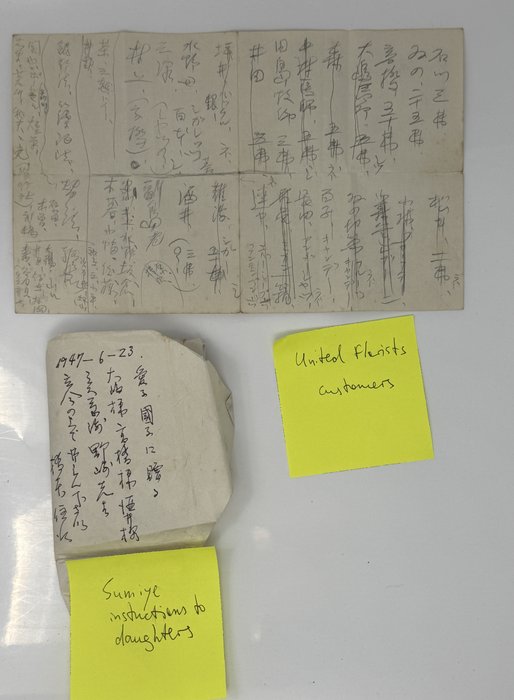
— Sumiye Hashimoto. The handwritten set of instructions in case of her death, addressed to her daughters. San Francisco: 23rd go June, 1947. [4] p. Together with the handwritten envelope. In Japanese.
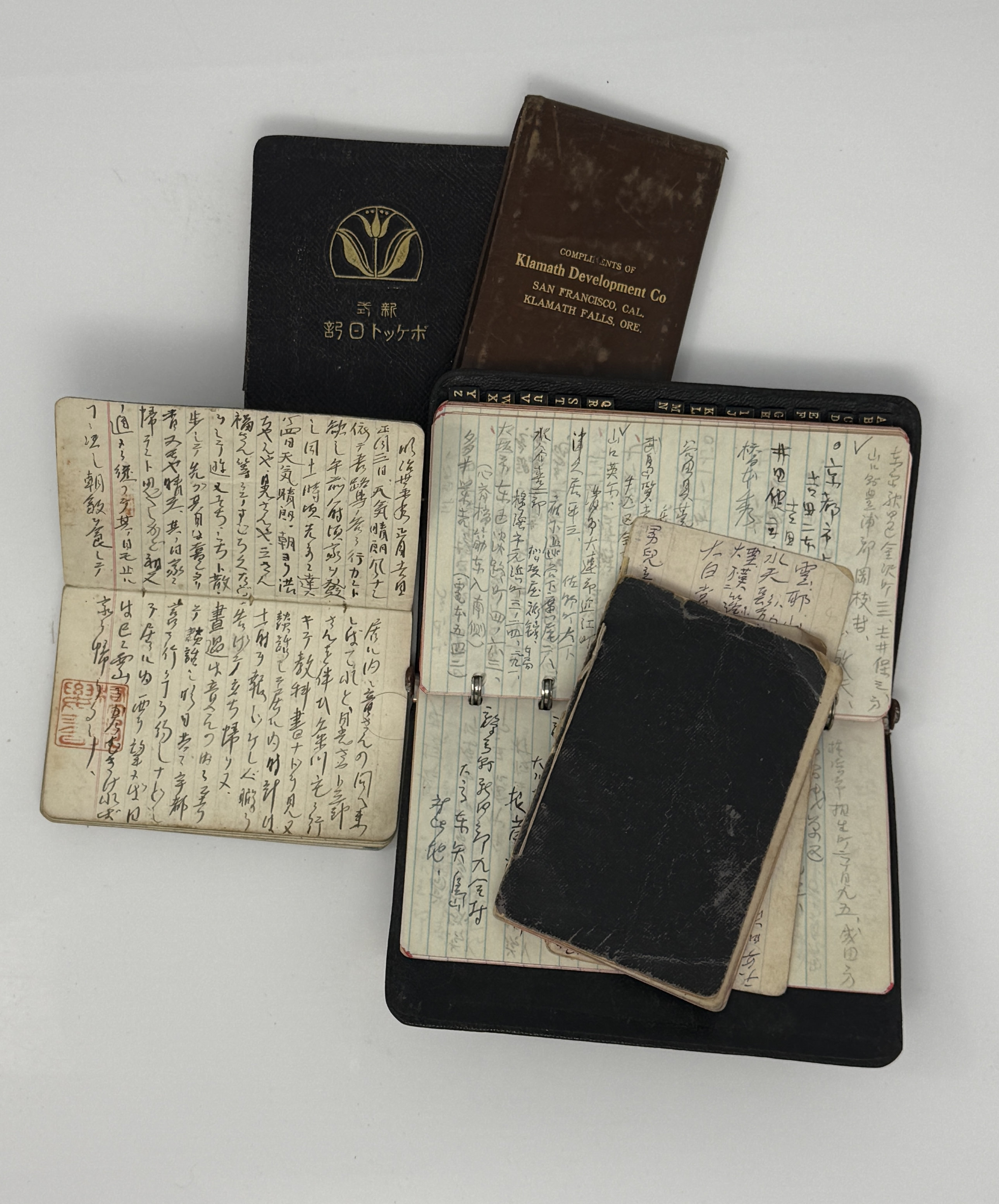
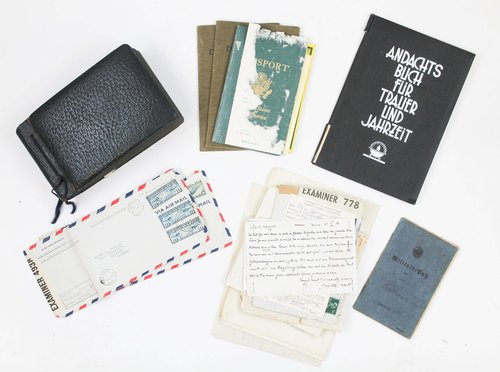
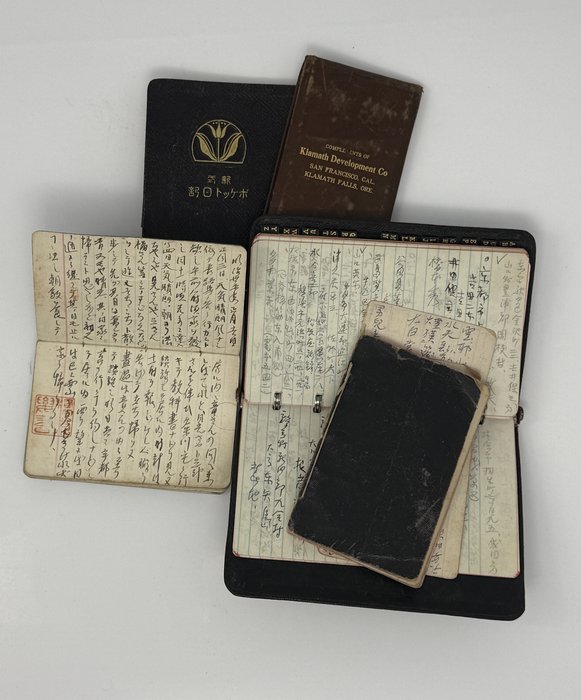
— Yoshiro Hashimoto. There hand-written notebooks by Yoshiro. [Japan, San Francisco], ca.1900-1930s. Two books in cloth binding, one in full leather. 4x3 and 4,5 x 3,5 in. [223] handwritten pages altogether in three books. Bindings are loose due to heavy use.
In Japanese, few pages in English.
The notebooks that were kept by Yoshiro during his time in Meiji University in Tokyo in 1900s and 1910s and supplemented by him in his early years in San Francisco. The books contain the addresses of acquaintances in Japan and USA, the notes of lectures, letter drafts, the train tables, the list of events in Japanese history, the rates for the money transfers, three-line haiku likely composed by Yoshiro himself and a folk method for treating beriberi (脚気).
7 pages are dedicated to the diary of the student period: Yoshiro describes where he went out and with whom (friends are referred to by nicknames, not their full names). Specific Japanese details are mentioned: the New Year's dish zoni (雑煮, zoni), the city of Utsunomiya, and house decorations for Emperor Kōmei's (孝明, Komei 1831-1867) memorial day. The author also describes how, having fallen ill, he missed a baseball game with his classmates, which his team ultimately won, and how he sent a letter home informing his family of his condition, which was responded to by a visit from his older brother, much to his delight (the diary ends here).
Four pages are dedicated to an essay ‘“Remembering my hometown” (故郷を思ふ); One leaf is dedicated to thenformation on teacher salaries at various educational institutions and information on the Japan Association of Secondary Education (headquarters address, chairman's name, and a sketch of its emblem).
Four pages are dedicated to information on the salaries of teachers at various educational institutions, secretaries and translators (specific ones, with names, surnames and social class affiliation) - apparently Yoshiro considered teacher’s career.
— Address book in Japanese and English with the addresses of Japanese in America (mostly West Coast) and Japan. [10] p. Altogether more than 90 addresses are written down. The book ends with the lyrics to "Over There", a song by George M. Cohan, written in pencil. The rest of the address book is blank.
— Klamath Development Co (San Francisco) notebook. Full-leather binding. The book is empty, apart from first 6 pages. They list groceries and expenses in English and Japanese. Ca.1930s.
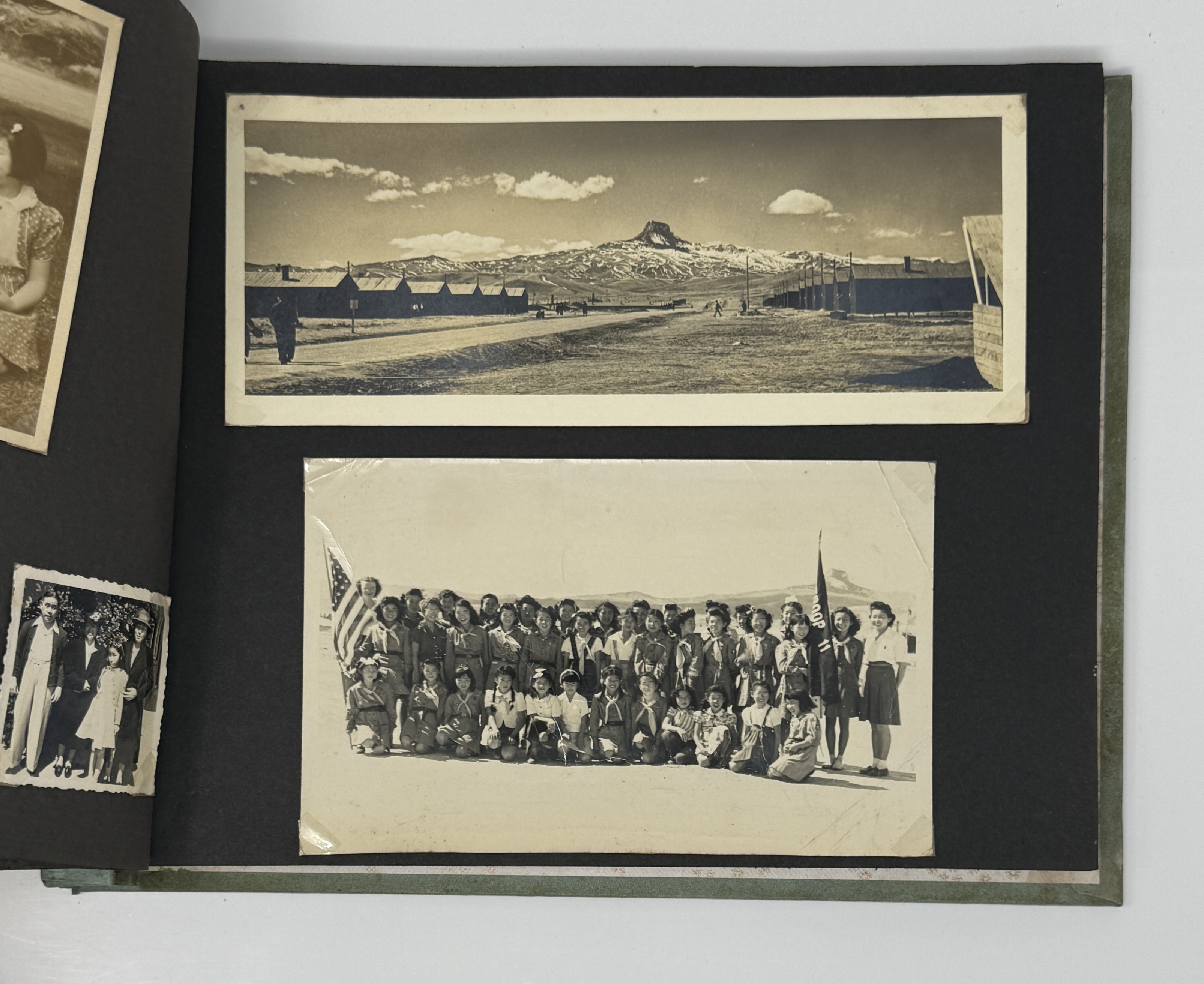
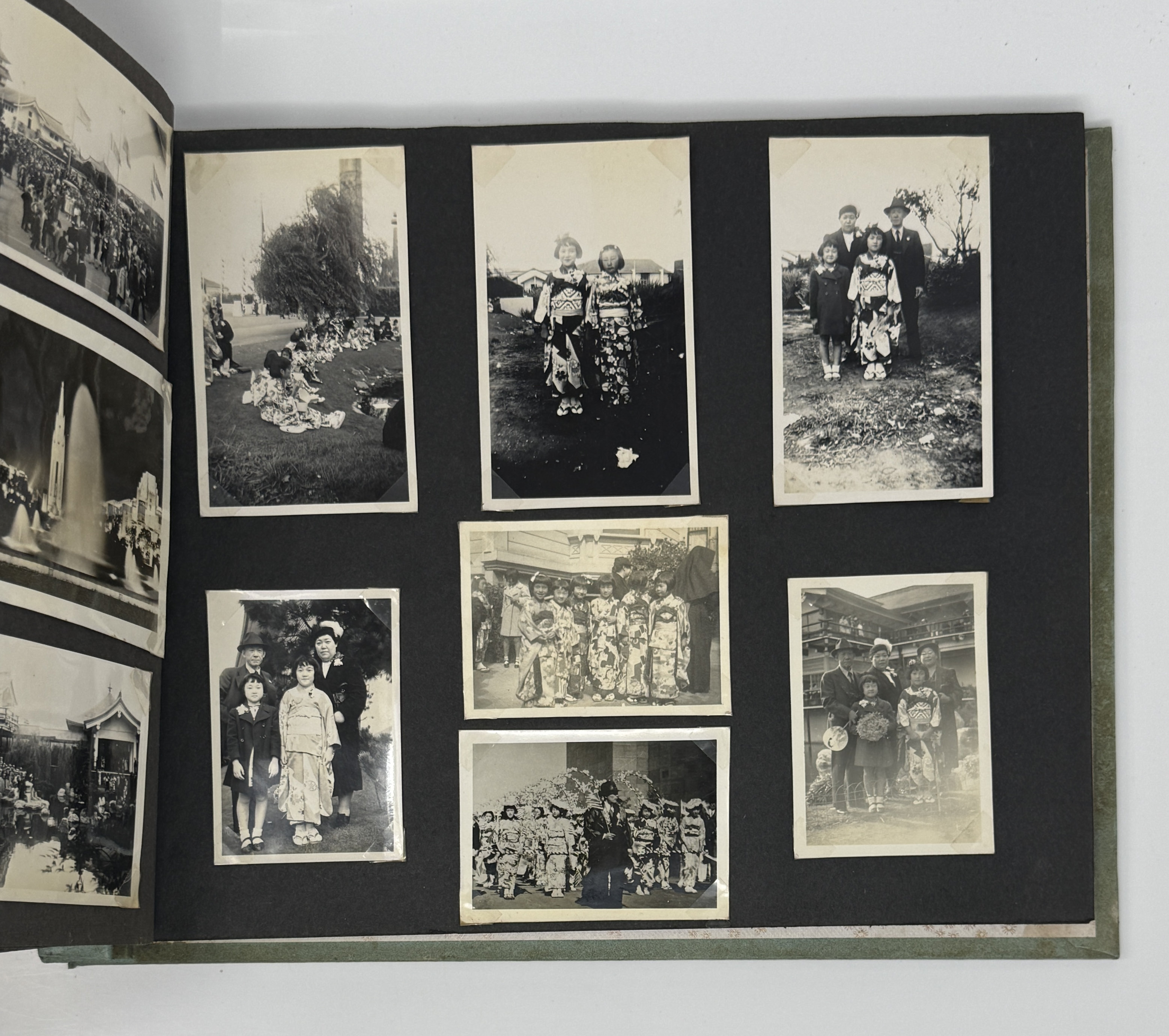
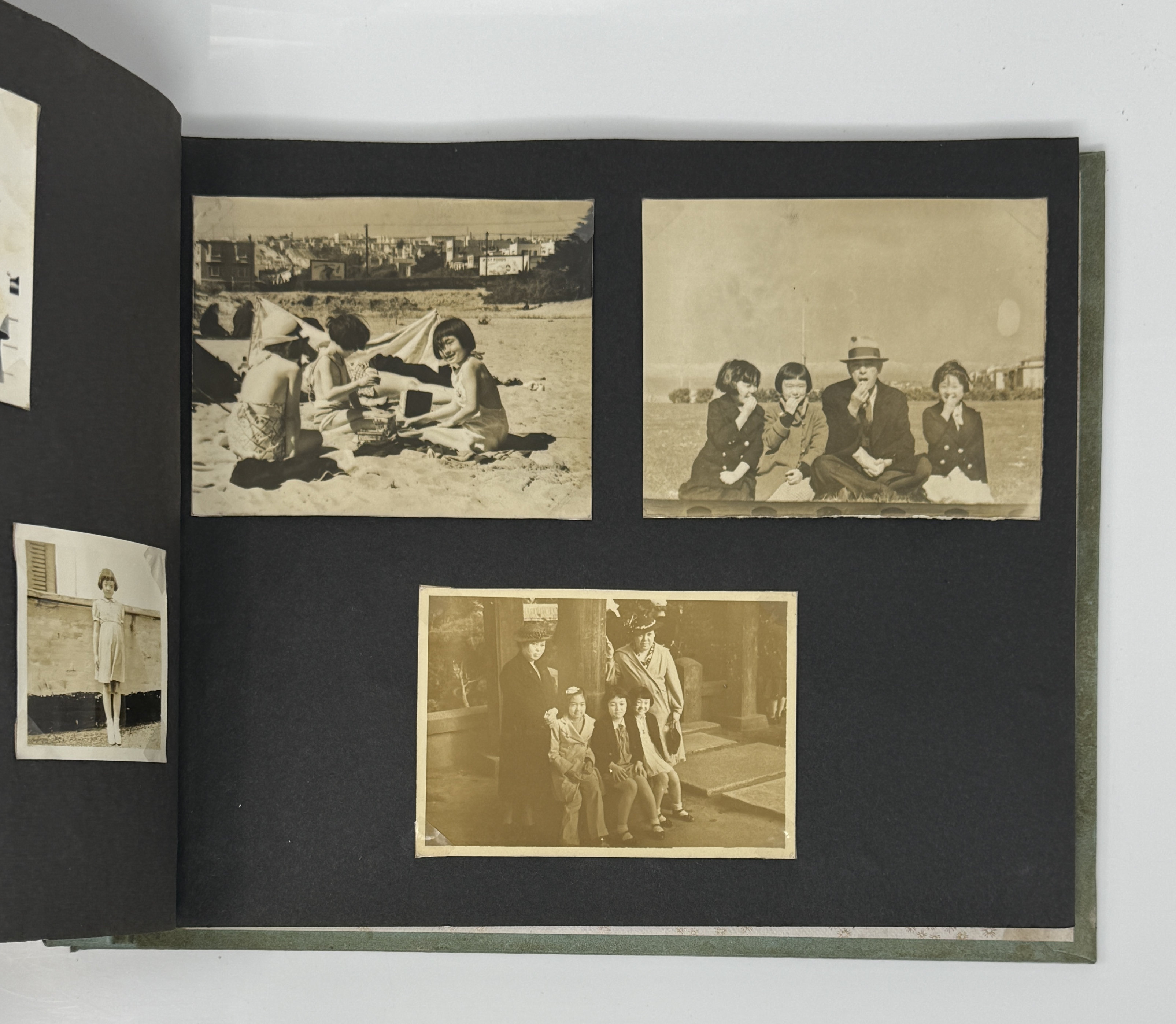
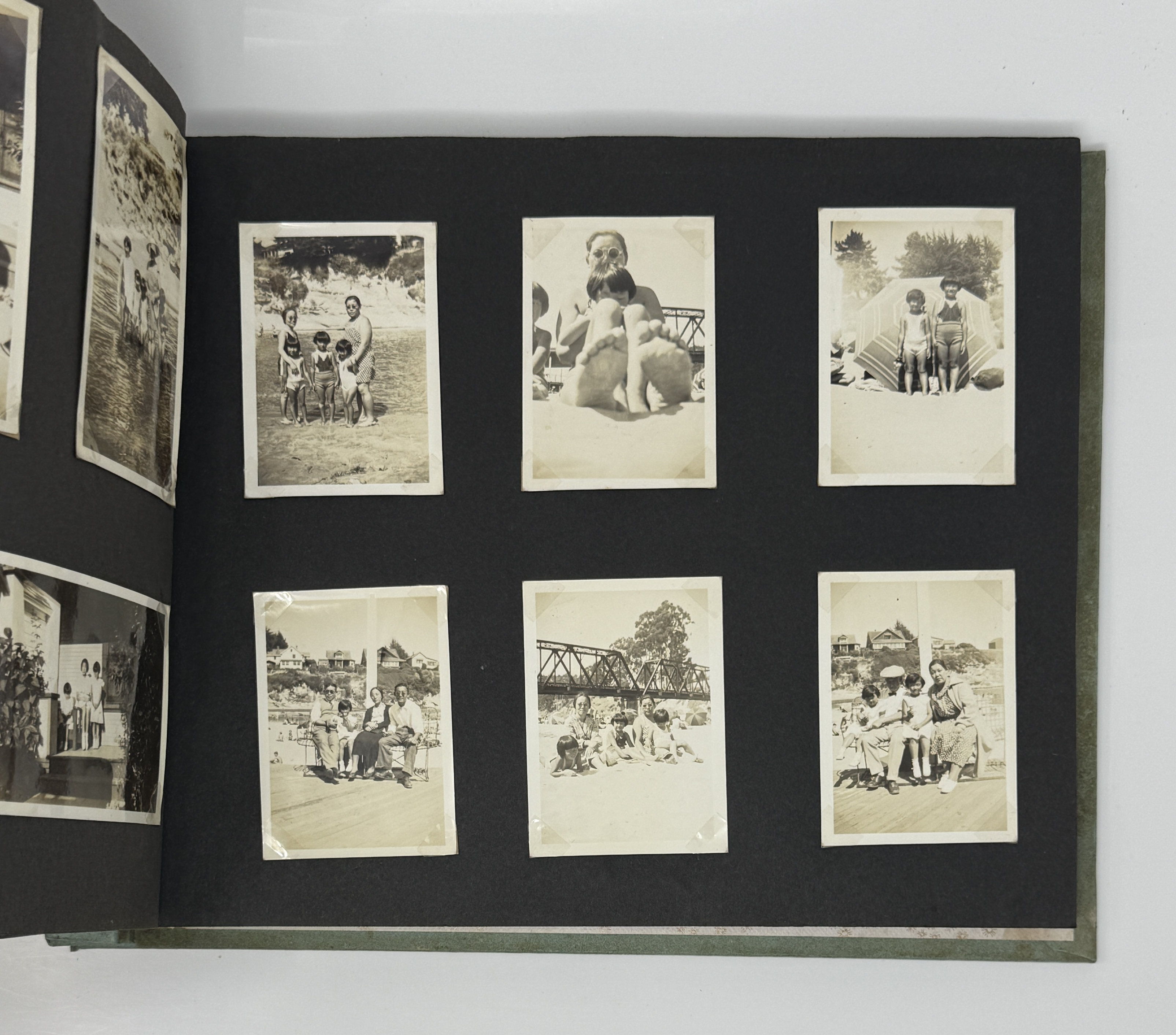
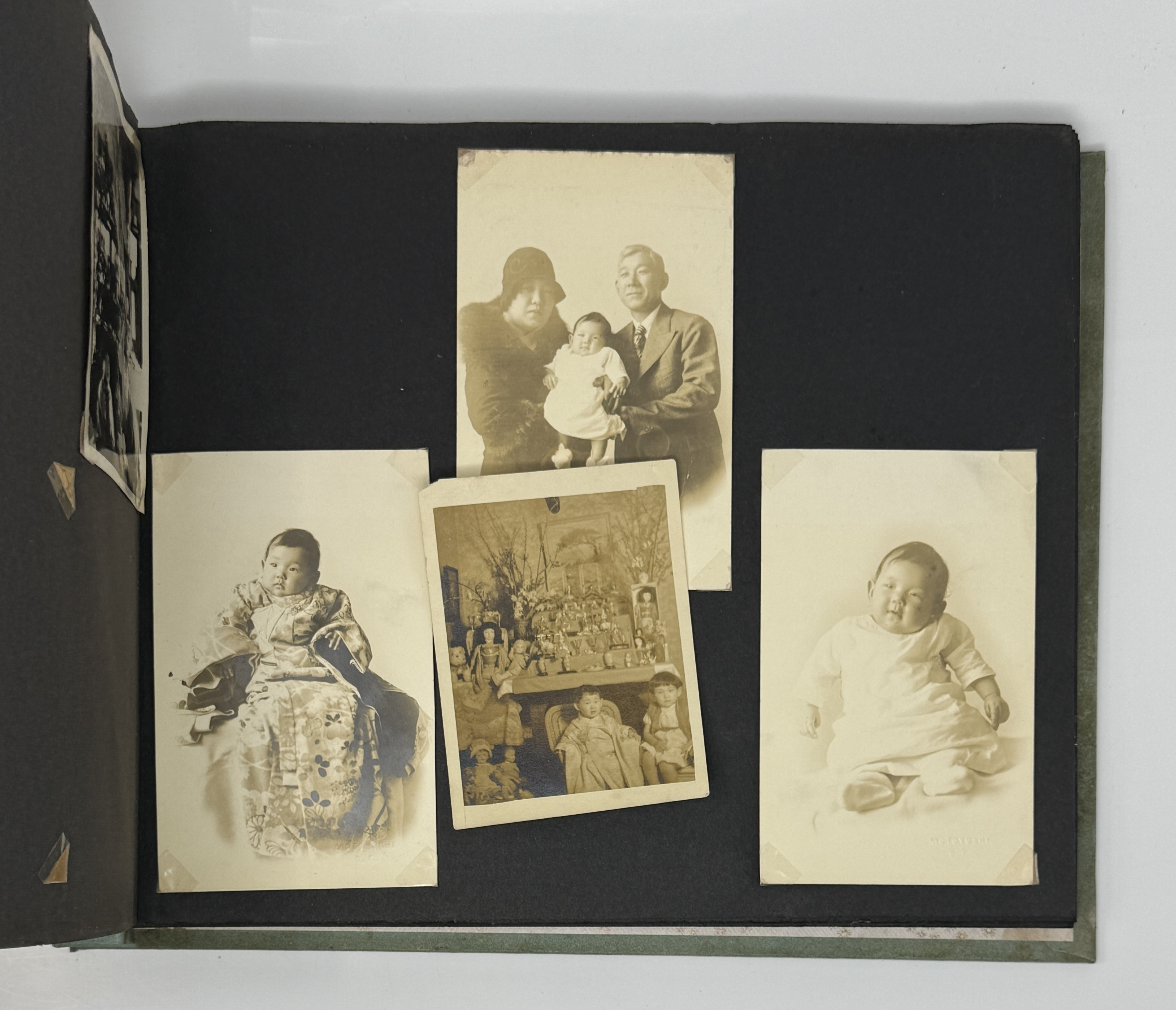
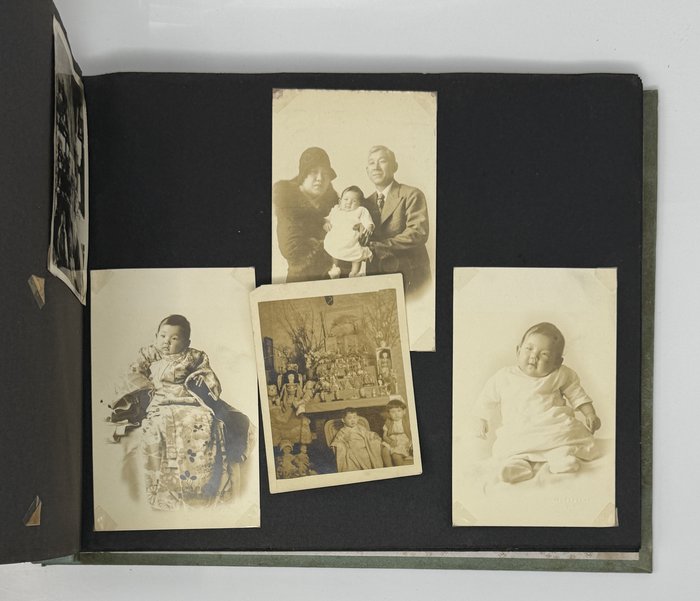
Family photo album of Hashimoto family. San Francisco, 1920-1940s.
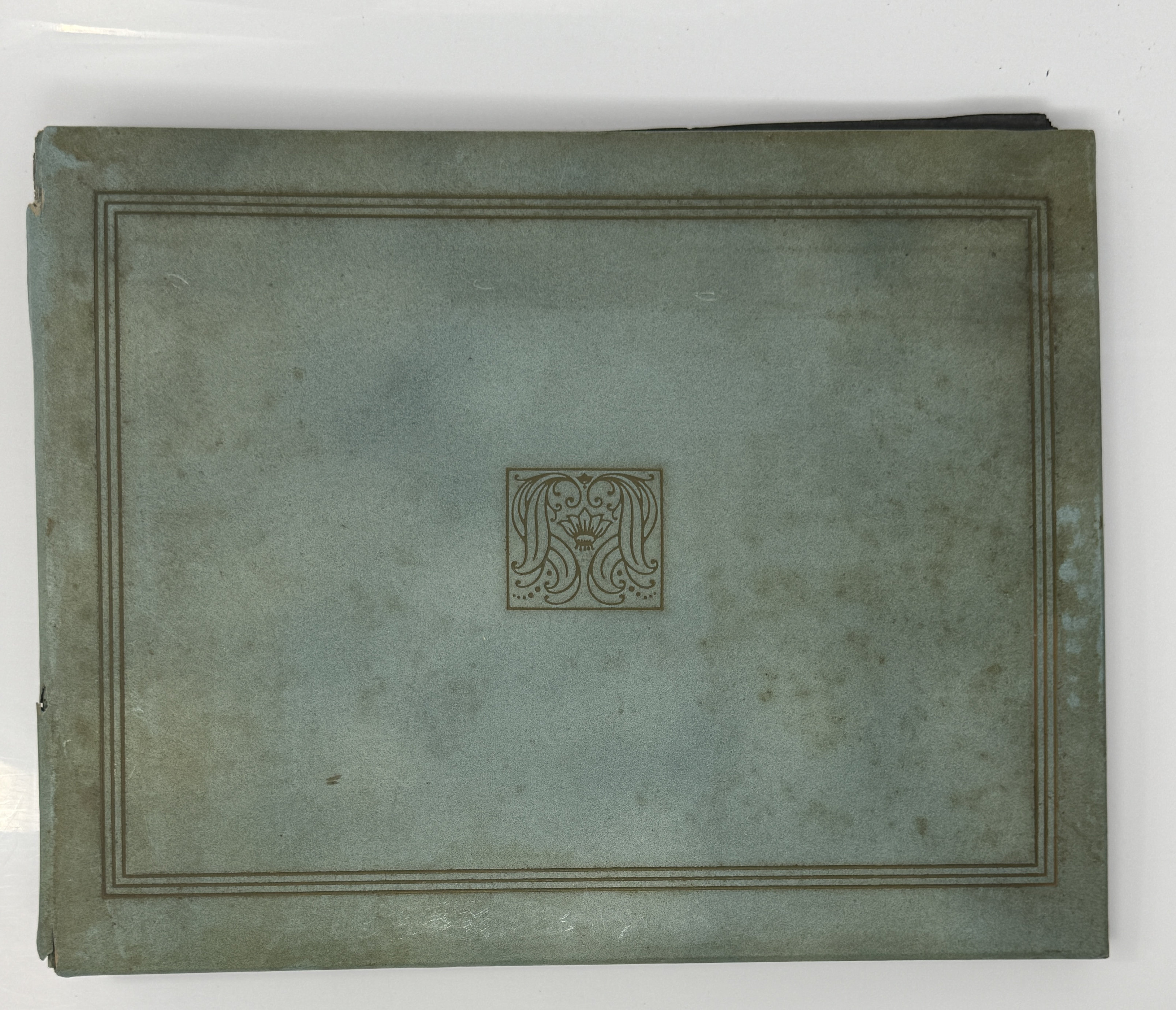
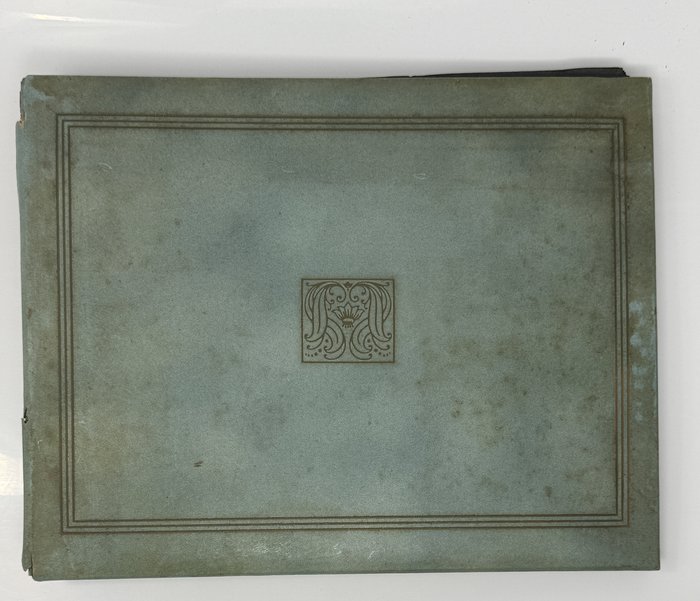
74 original photographs ranging from 3,5 x 9,5 in. to 2 x 2 in. 28 stock leaves (including 15 blank ones). 10,5 x 13 in. Green cloth boards. Boards are detachable, otherwise photos are in very good condition.
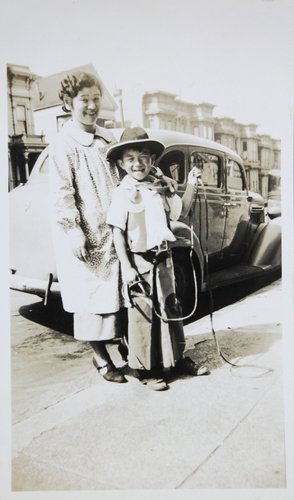
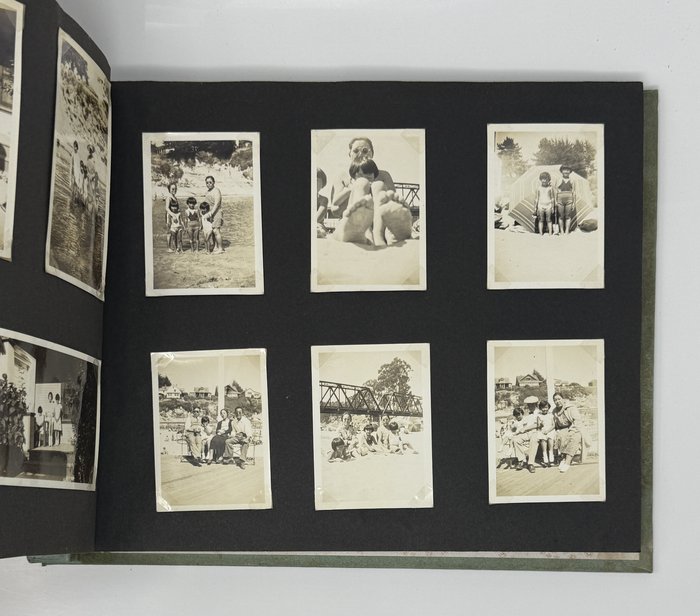
The album shows Sumiye, Yoshiro and their three daughters during their life in San Francisco
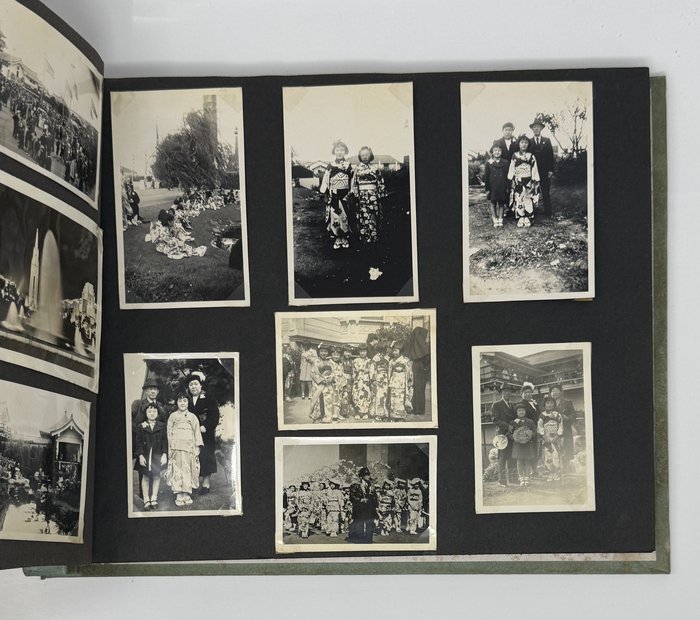
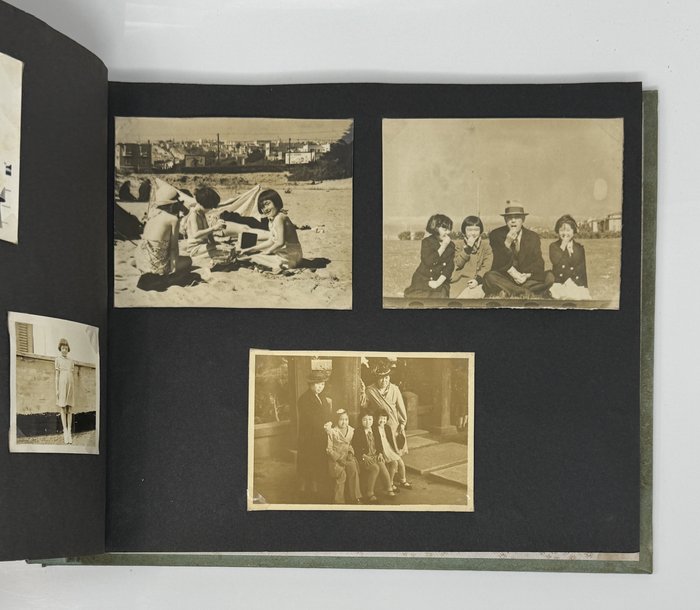
One photo shows Yoshiro with daughters on the Ocean Beach corner of Golden Gate Park, Richmond district is laying out on the background. Another photo shows the family in Golden Gate Park. Many photos depict children in kimonos outside their house in San Francisco, and in church. Apart from the family of Hashimoto, other Japanese Americans are photographed, one photo showing a man with two boys and two girls sitting next to Old Saint Mary’s Cathedral in San Francisco Chinatown.
Six studio photographs were done San Francisco’s Motoyoshi Studio (2021 Fillmore Street), one of the few Japanese-run studios in the city. Likely the amateur shots were developed at Wakasa Studio (1627 Geary st.), as present archive has the envelope from the studio.
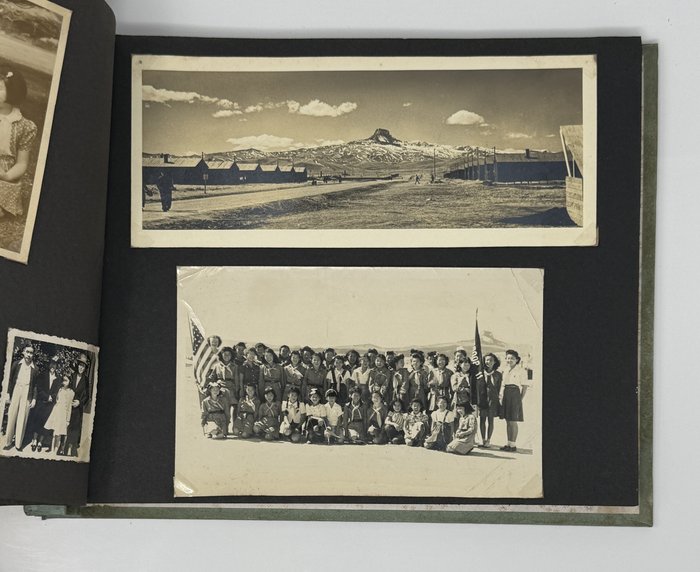
The family shown visiting California World’s Fair in San Francisco Bay on Treasure Island in 1939. The Japanese American procession is photographed in traditional attire, carrying American flag, as well as Japanese pavilion. One photo shows family photographed next to three Japanese sailors, likely from Japanese steamer SS Korea Maru - the only time the family traveled back to Japan was on this steamer in 1931. Two photos are from Heart Mountain camp: a panoramic view of the camp and the Girl Scout group photo of the camp with the flag of the group and the American flag.
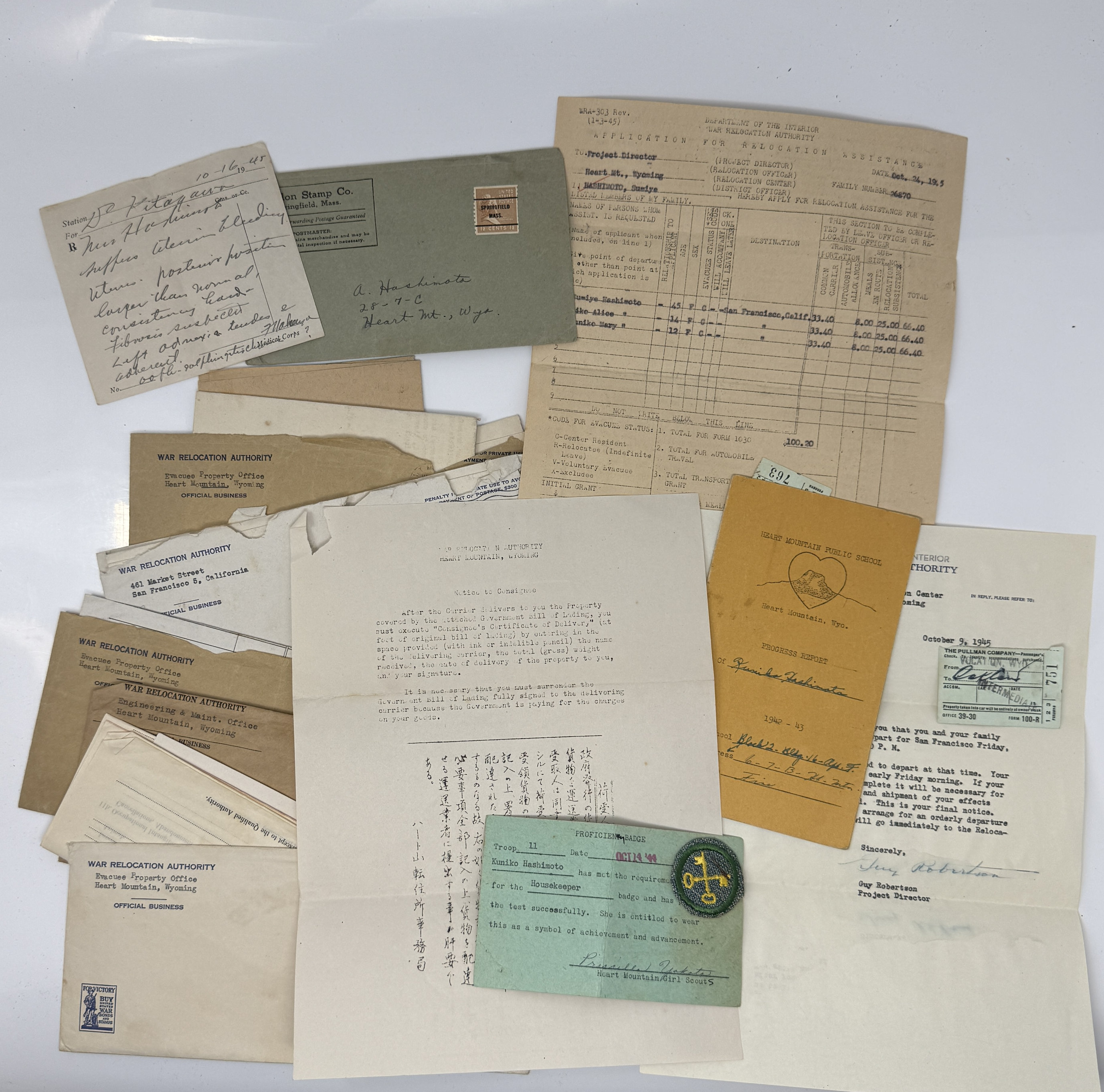
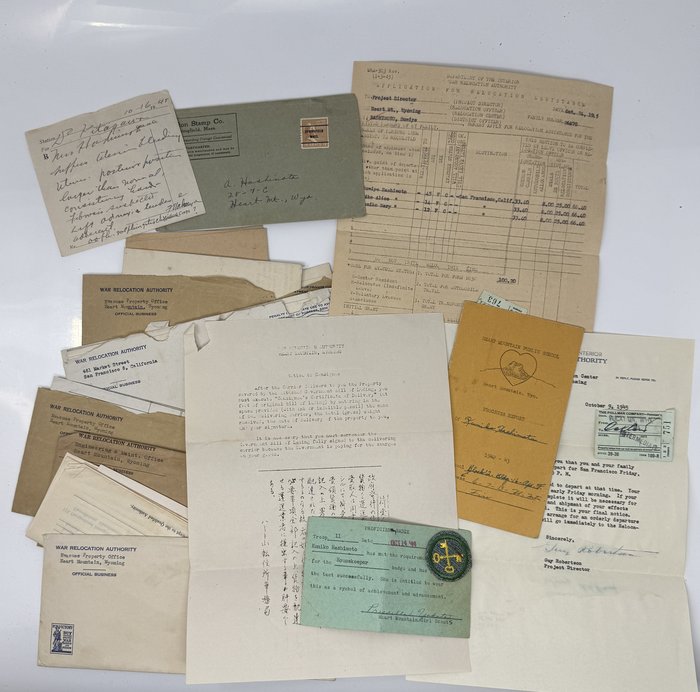
Heart Mountain Related documents:
— Typewritten General Order on Pomona Assembly Center Letterhead, notifying that there are ‘no changes in the train lists’ and that ‘Japanese personnel are in no way responsible for the train listing or movements..’. Ca. 1942. [1] p.
— Heart Mountain Public School report card of Kuniko Hashimoto. Ca.1942/1943.
— Scout badge for ‘Housekeeping’ received by Kuniko Hashimoto of Hear Mountain Girl Scouts, troop 1. [1] p.of certificate and the badge — present.
— The typewritten note, notifying, that Sumiye, Aiko and Kuniko are to be moved to Relocation Center on 20th of August, 1942: ‘Your baggage car must be placed outside your barrack for Inspection and pick up..’
— Request for Storage of Property, filled by Sumiye (copy). Ca. 13th of November, 1943. [4] p.
— A telegram received by Sumiye in Heart Mountain Relocation Center from her nephew Kenshiro Hashimoto. ca.1944. [1] p. Handwritten text in Japanese. In the telegram he informs his aunt of the successful graduation and asks after her.
— American Red Cross civilian message form, filled by Sumiye from Heart Mountain Relocation Center. ca.11th of May, 1945. [1] p. Handwritten text in Japanese, typescript translation in English. Letter was sent to Katsutaro Karasaki in Japan.
— Heart Mountain Community Enterprises. Three Statements of final patronage refunds for Sumiye. Ca. 1942,1943,1944
— Heart Mountain Community Enterprises. Deposit slip by Sumiye, signed by S.Kobayashi. ca. 19th of March, 1943. Together with the stamped envelope from Community Enterprises to Sumiye’s camp address.
— Handwritten list in Japanese of the personal items, lent to Mr.Takahashi in Montara, CA, completed by Sumiye. [1] p. 10 x 9,5 in.
— Application for relocation assistance, filled in by Sumiye and submitted to WRA upon Sumiye, Aiko and Kuniko leaving Heart Mt. Camp. The total amount granted for the trip back was just under $300. Ca. October 1945
— Two train tickets from Vocation, Wyoming to Oakland, CA. ca.1945.
— Dr.Kitagawa handwritten patient examination report, conducted on 16th of October, 1945. It reads: ‘Suffers uterine bleeding. Uterus - posterior position larger than normal, consistency hard - fibrosis suspeced (suspected). Left adnexia tender & adherent.’
— Four Deposit receipts by Sumiye Hashimoto darted 27th of December, 1943, 18th of March, 1944, 29th of May, 1945 and 1st of August, 1945.
9 Typewritten letters from WRA to Sumiye Hashimoto. Ca.1942-1945:
— Notice to Consignee in English and Japanese. [no date, ca. 1942]. [1] p. The notices states that consignee must agree with Certificate of Delivery, and sign the bill of landing.
— On 1st of April, 1943 Earle P.Browne, the evacuate property superviser sent Sumi (sic!) Hashimoto Evacuee Property Report. [3] p.
— On 30th of April, 1943 Earle P.Browne, the evacuate property superviser acknowledges, that due to the mix-up Sumiye’s property has been stored partly under the name of Takazawa.
— On March 21st, 1944 Mr.Toya made an inspection of Sumiye’s property and sent her loss survey of Pacific Coast Evacuees (Form No.101), present in two copies, both blank.
— On July, 9th, 1945 Murray Daninhirsch of Welfare Section of WRA informed Sumiye, that she was stropped of assistance for June, because ‘you made no effort to work out any resettlement plans. We told you that you had adequate resources with which to resettle… We understand you are in need of medical care, but we informed you, that such medial care is available in outside communities, where you could received treatment you need’.
— On 10th of October, 1945 in a letter Project Director of Heart Mountain Relocation Center Guy Robertson writes: ‘Dear Sumiya (sic!) Hashimoto, this is to notify you that your family is now being scheduled to depart from the center. As son as housing, either temporary or permanent, is available arrangements will be made to return you to your former city or town, where you were living at the time of your evacuation…’ [1] p.
— On 30th of October Sumiye received Allien’s travel permit to leave Heart Mountain. [1] p. 5x8 in.
— In 11th of January, 1946 letter Area Supervisor Charles Miller informs Sumiye, that she has sixty days to clear out her property from WRA warehouse storage.
— Together with 13 stamped WRA envelopes addressed to Sumiye in San Francisco and Heart Montain; one envelope from Springfield, MA, addressed to Aiko Hashimoto at Hear Mountain, Wyoming.
United Florists documents:
— Lease of United Florists of the company’s first location - 2037 Fillmore st. The lease was signed for 5 years and the rent was $40 per month. Ca. March, 1923.
— Letter, stating that Henry & Henry has received $85 for the United Florist rent at the previous location (309 Mason St.), signed by Mr.Hashimoto and Henry & Henry representative. Ca. 3rd of December, 1937. [1] p.
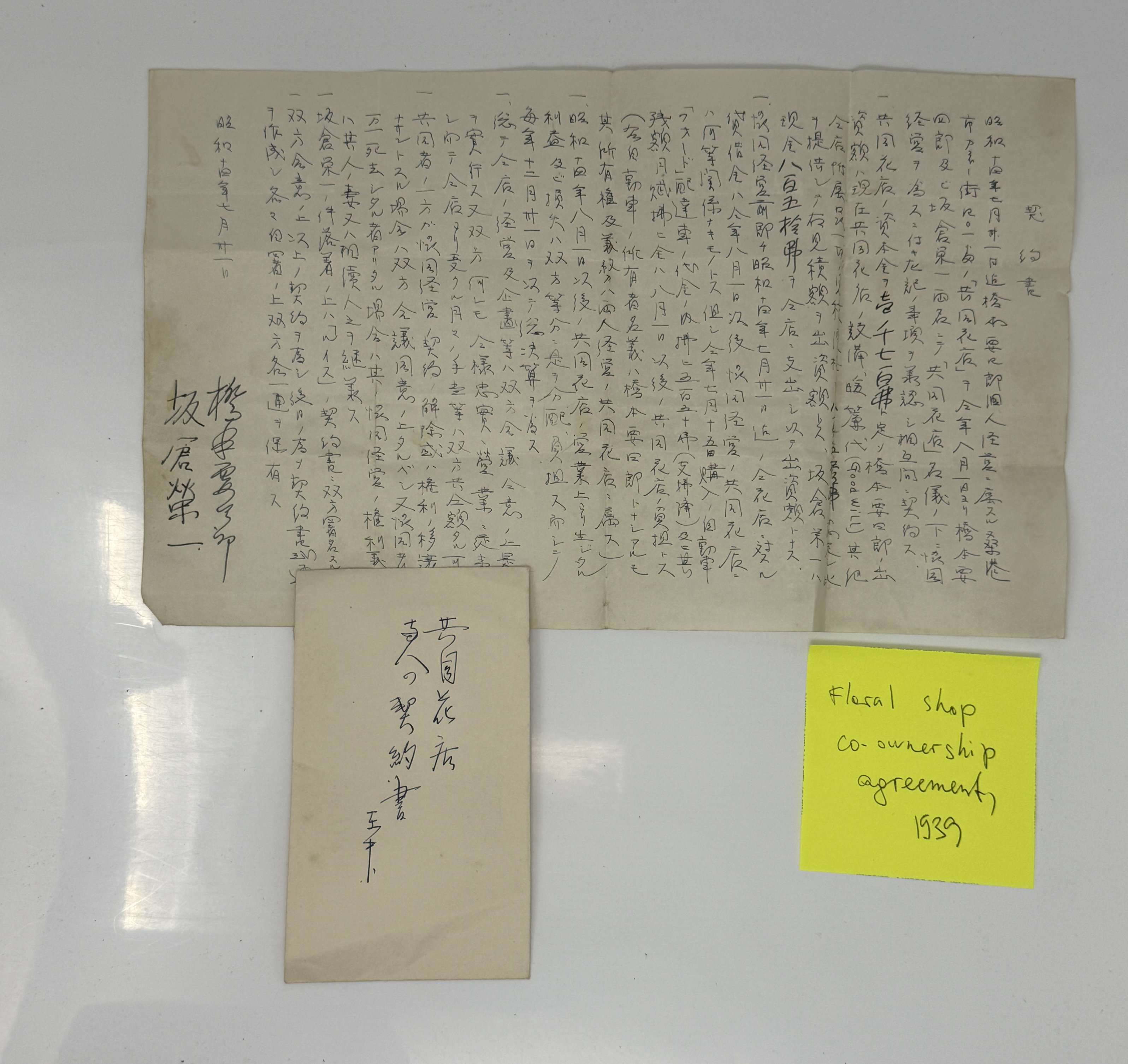
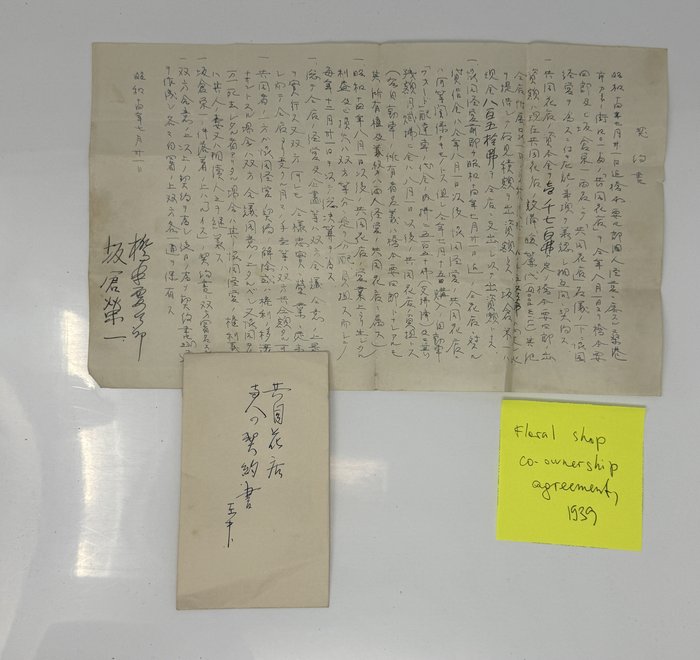
— The floral shop co-ownership agreement. Between Yoshiro Hashimoto and Sakakura Eiichi (坂倉榮). San Francisco: ca.31st of July, 1939. [1] p. 8,5x14 in. Together with the handwritten envelope. Signed by both businessmen at the end.
In Japanese.
— Lease of United Florists for three years, starting in the year 1939, signed by owner of 401 Kearney St. G.Taleri and William Y. Hashimoto. The rent was $65 per month.
— United Florists bill to Mr.M.Nehira of Soko Fish Co. for flowers. Ca. 28th November, 1940. [1] p.
— United Florists bill to Mr.O. Takayamafor china mum flowers and roses. Ca.1940-1941. [2] p.
— United Florists statement blank with the draft of accounts. [1] p.
— United Florists sales tax and use tax return of first quarter of 1942, stating that the shop was closed on March 7th, 1942. [2] p.
Correspondence:
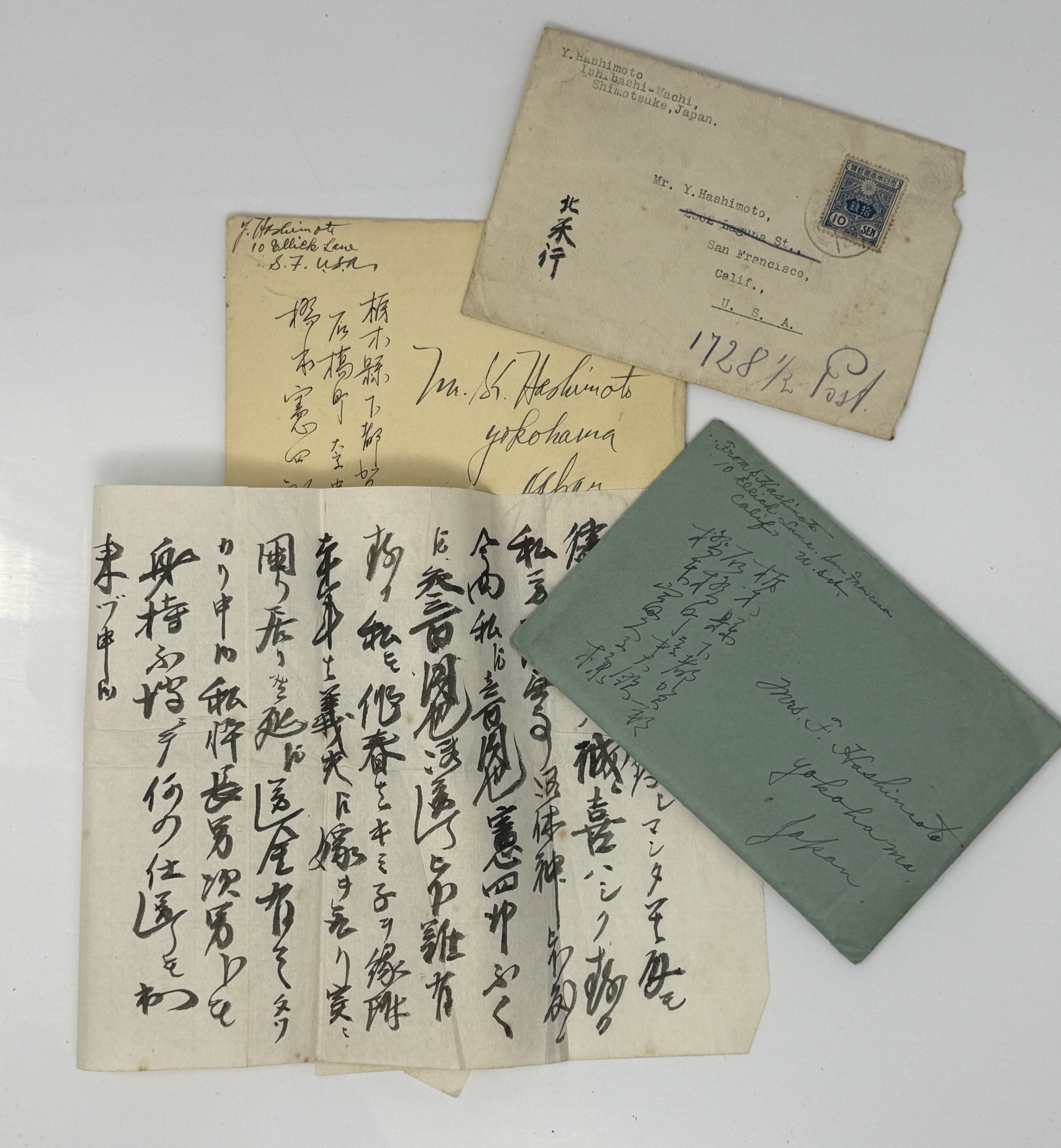
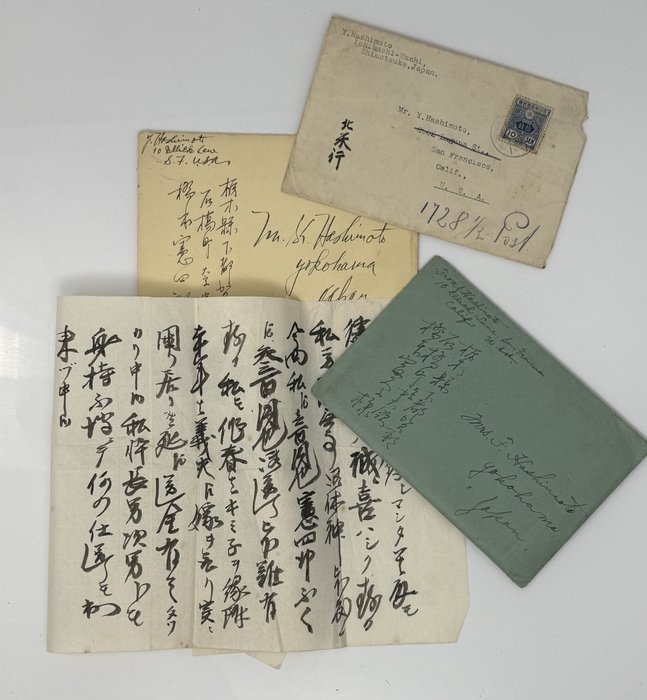
— Handwritten Letter from Kenshiro Hashimoto (橋本憲四郎) senior to his son Yoshiro Hashimoto. Yokohama, ca.1926. [1] p. 21 x 7 in. In Japanese.
In the letter father asks about his son’s life in America and congratulates him on his marriage.
Together with the envelope.
— Handwritten Letter from Sumiye Hashimoto to Hashimoto Fukuko 橋本富久子, her mother-in law. San Francisco: ca.1920s. [9] p., in Japanese. Together with the original envelope.
The most extensive letter of the archive, it includes the details of Sumiye’s life in San Francisco. Quote: ‘Life here has been going on as usual lately. Although circumstances remain challenging, everyone is trying to adapt as best they can. I, too, am continuing to do my job as best I can and haven't lost hope for the best.’
— The interesting moment in the letter concerns Sumiye’s discovery, that radio (in her spelling ラデオ) from Japan, could be tuned in from San Francisco:
‘Japanese radio is now available thanks to [???], making it feel like Japan is closer. It's available from 9 PM, and the Tokyo street broadcast is available from 1 AM. It feels like you're right there at arm's length.’
The hieroglyphs used for describing the factor why the Japanese radio started to transmit in San Francisco are 舞等 [Manira].
It’s possible that Sumiye refers to Manila and the development of radio towers in the Philippines in 1920s.
— Greeting card from the Yoshiro family to Kenshiro Hashimoto (橋本憲四郎) for New Year and Christmas. San Francisco, ca.1930s. Text in Japanese. Signed by Yoshiro, Sumiye, Aiko and Kuniko.
— Handwritten Letter to Yoshiro Hashimoto from Ishikawa (石川,) [San Francisco?] ca.8th of March, 19[30s]. [2] p. In Japanese.
On the verso of the letter the accounting for United Florists, with the names of customers owned money to the shop and the amounts. In Japanese.
— The farewell letter, written by Kuniko Hashimoto at the age of 9 to her father after his cremation. [1] p. ca.October, 1941.
— Three telegrams and a letter to Sumiye about the loss of her husband from her Japanese and American friends in California. Ca. October, 1941.
— Letter from San Mateo County Department of Public Health and Welfare to Sumiye, informing her that the agency can not grant her any further assistance. [1] p. Ca. 21st of March, 1941.
— Letter from Metropolitan Publishing Company in New York, written to United Florists. Ca. 17th of April, 1942. [1] p.
The letter is written in the hostile manner, citing that possibility of involving a collector for the unpaid bill, the letter ends with ‘Remember Pearl Harbor!’ Slogan in all capital letters.
— Letter from FBI to Sumiye enclosing the death certificate of Yoshiro. [ca.1940s]. [1] p.
— Letter from Mail’s Indian Trading Post in Albuquerque, NM, informing Sumije (sic!), that the figured Mexican pots are out of stock. Ca. 28th of January, 1946. [1] p. Together with an envelope.
— Letter from Public Welfare Department of San Francisco to Sumiye citing the increase of payments to Kuniko as part of ‘aid to needy children’. [1] p. Ca. 26th of April, 1946.
— Two identical replies from Bureau of Immigration in Washington, DC. Prolonging Sumiye’s permit to remain in United States for additional six months. [2] p. [no date].
Passports & Other Documents :
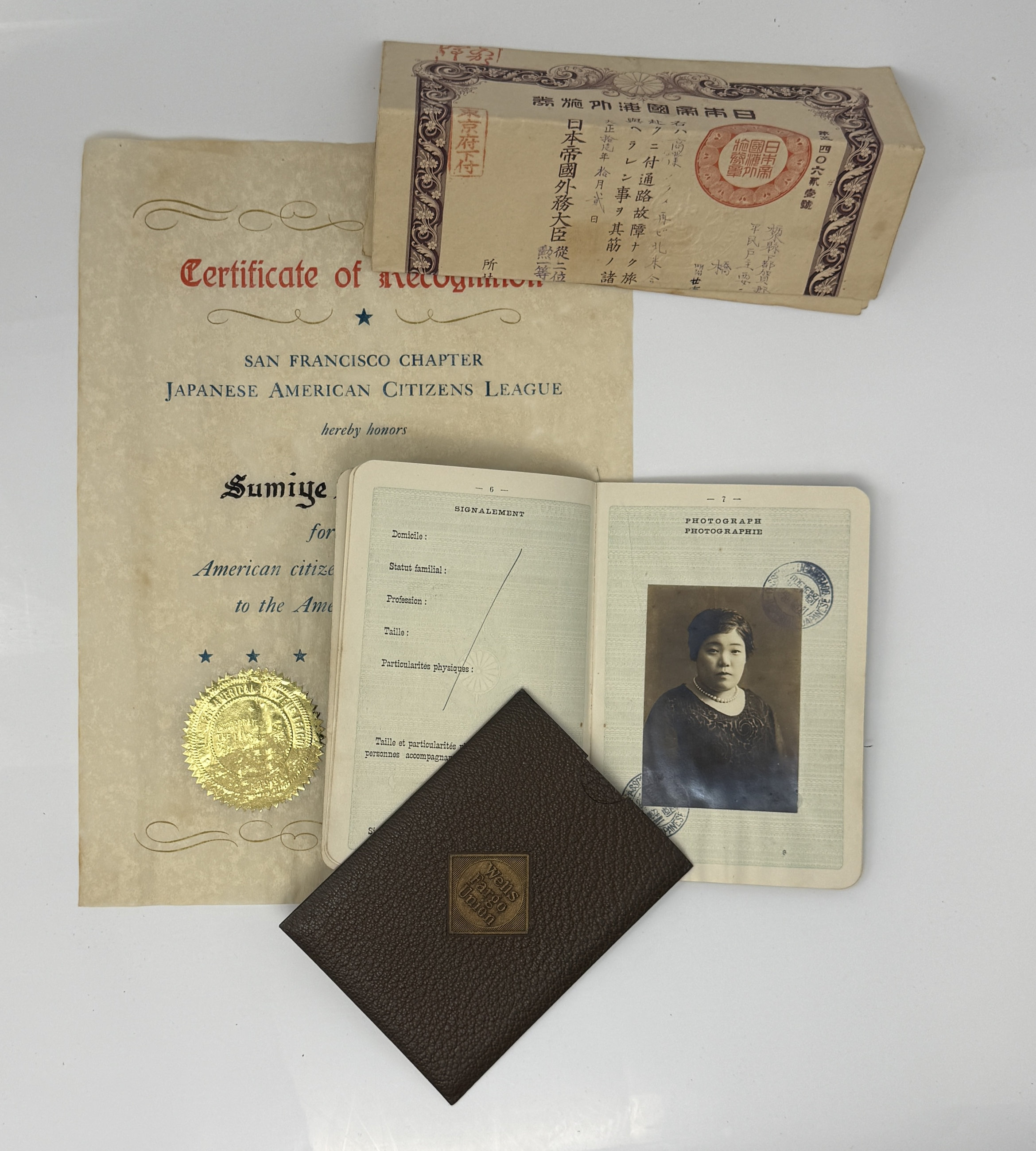
— Imperial Japanese Government Passport N540621. Yokohama, 1922. In Japanese and English. [4] p. 10x8 in. Yoshiro Hashimoto’s passport on his proceeding to America. Stamped at American consulate.
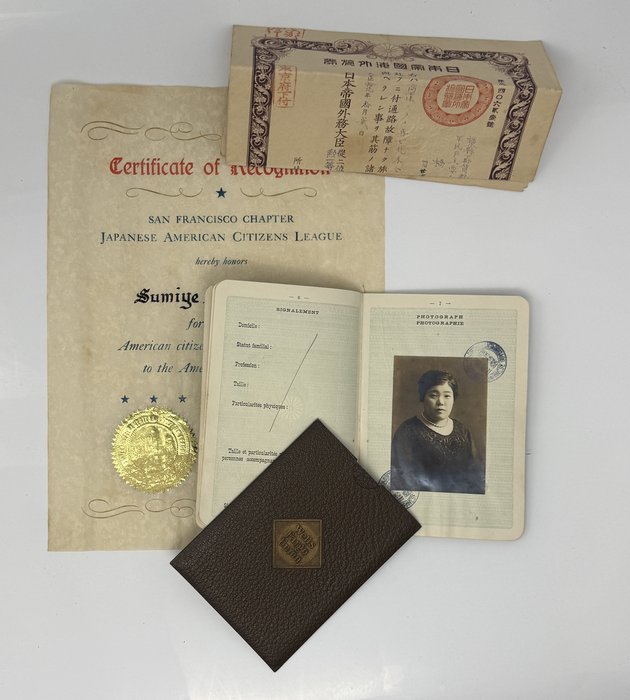
— Imperial Japanese Government Passport N120431. Ca.1929. Sumiye Hashimoto’s passport on his proceeding to America. Together with 1 p. of rules for foreign residents. In Japanese
— Marriage License of Sumiye and Yoshiro. 8th of February, 1926. [1] p.
— Sumiye Hashimoto’s Smallpox vaccination certificate. Kobe: Dr.S.Nakauchi, 1929. [1] p.
— Sumiye Hashimoto’s Certificate of Identification, issues on 2nd of February, 1942. [1] p.
— Sumiye Hashimoto’s Certificate of Naturalization No.7210591. Ca. 21st of December, 1953. At the time she as registered at 1016 Pierce St., San Francisco. [1] p.
— Certificate of Recognition of Sumiye Hashimoto becoming an American citizen. San Francisco: Japanese American Citizens League, [1953]. 12 x 8,5 in. Signed by the president of San Francisco chapter and regional director of NoCal-Western Nevada council.
Together with: the Allien’s Statement of Facts for Preparation of Petition and a receipt of court hearing for the petition scheduled.
— Kuniko Hashimoto smallpox vaccination certificate. Ca. 1940s. 14 x 6 in.
— Permit for Removal of Cremated or Interred Human Remains. San Mateo: 11th of October, 1941. [1] p. The permit states the cause of death of Yoshiro Hashimoto as ‘carcinoma of head of pancreas’, as determined by Dr. Kitagawa. The remains were to delivered to ‘The Buddhist Temple’.
— Yoshiro Hashimoto’s Red Cross membership card. Ca.1941. 2,5 x 3,5 in.
— Sumiye Hashimoto’s Red Cross membership card. Ca.1943. 2,5 x 3,5 in.
— Yoshiro Hashimoto’s Yokohama Specie Bank Ltd deposit book. Ca.1939-1941. The last deposit was made on 16th of August, 1941. The bank’s assets were frozen in late July, 1941 and soon it seized operations.
— Yoshiro (William) Hashimoto’s Wells Fargo Union Saving Book. ca.1931-1942.
— Sumiye Hashimoto’s Wells Fargo Union Saving Book. ca.1942
— Two Wells Fargo bank statements for United Florists, ca.1942.
Insurance documents:
— The Kyoshin Spa automobile insurance card of Untied Florists. In English and in Japanese on verso.
— United States Fire Insurance Co. Automobile certificate of Untied Florists. [2] p. Policy from July 1939 to July, 1940 for 1939 Ford. Together with Service card for the insurance.
— Yoshiro’s American National Insurance record book ca. 1937-1940.
— Insurance report, prepared by Saburo Kido (San Francisco), acknowledging, that Sumiye has receive $3963 on her deceased husband life insurance.
— Sumiye’s American National Insurance record book for premium payments, listing her address in Heart Mountain. Ca.1942-1943.
— Sumiye’s American National Insurance temporary record book for premium payments, listing her address in Heart Mountain. Ca. 1943-1944
— 13 letters from American National Insurance Co. to Sumiye and Aiko Hashimoto from American National Insurance Co. regarding their policies. 4 letters with envelopes are directed to Heart Mountain. Ca.1942-1946.
— Hashimoto policies were about to be abandoned due to non-payments, however in 1943 Sumiye managed to restore the policy and send payments from Wyoming. In 1946 Aiko has chosen a cash surrender of her policy, which is also reflected in the letters.
Ephemera:
— Bill from Shanghai Low cafe in Shanghai. Ca. 1922. 7 x 3,5 in. In English and Chinese. Shanghai Low, which speciality was chop suey and noodles, was located on 532 Grant ave., Hashimoto stopped in Shanghai on his way to California.
— Bill from Byington Electric Co. to Mr.Hashimoto (2037 Fillmore St). Ca. 23rd of March, 1923.
— Two receipts for Anglo-California Trust Co in English and Japanese for checks received. San Francisco, ca.10th of December, 1925.
— Two allien tax receipts for both Yoshiro & Sumiye Hashimoto paid on their departure to San Francisco from Japan on ‘Korea Maru’ and ’Suberua Maru’ respectively in 1929 and 1922.
— Three money order receipts from Sumitomo Bank (Soko Branch) in Tokyo, sent by Yoshiro’s father, totaling ca.$142. Tokyo, 1923 & 1928. Together with 1 receipt from one of the orders from San Francisco. Ca.1924.
— Shintoist service. A memo for the atendees. [San Francisco], ca.1930s. [2] p., one leaf with text on both sides. Pink paper. 9 ¼ x 12 ¼ in. Couple of tears, folding marks.
— List of Japanese dentists in San Francisco. Cut-out from the local newspaper. [1] p. The list consists of professionals with the official licence.
The list includes 6 businesses: (藤田省三, Fujita Shozo), (藤田雄三, Fujita Yuzo), (林, Hayashi), (檜垣益一, Higaki Masukazu), (弘田時次, Hirota Tokitsugu), (樫原, Kashihara).
— Three bills from SS Korea Maru during Hashimoto trip to Japan, ca.1931. Together with the baggage tag. In English and Japanese.
— Kuniko Hashimoto School Report Card. San Francisco, 1939. In Japanese.
— Japanese American citizens League. San Francisco Chapter donation receipt: Sumiye paid five dollars to the league on 12th of March, 1942.
— SS Aikoku Maru emblem (愛國丸) and name in Japanese, drawn on the piece of paper. 13 x 7 in. In red and black pencil.
— Advertisment for E.S.Fraham, a photo post card and business card shop on 7th Street, Richmond, CA.
— Payment Stubs from Bank of Italy in San Francisco, filled in by Yoshiro Hashimoto to different payees. 6 stubs. Ca.1926.
— Alice (Aiko) & Mary (Kuniko) Hashimoto Student’s Period Report cards, for the year 1946/1947.
— Bank of America savings deposit slip. Ca. 29th of October, 1941.
— Duplicate rent receipt book. Ca. 1948.
— 15 business cards. In English and Japanese.
— An envelope with United Florist Kearney st. address.
— 6 envelopes with different San Francisco Letterheads.
— United Floral Company etiquettes, 3 pieces.