
#MD66
Ca. 1914-1923
The archive includes:
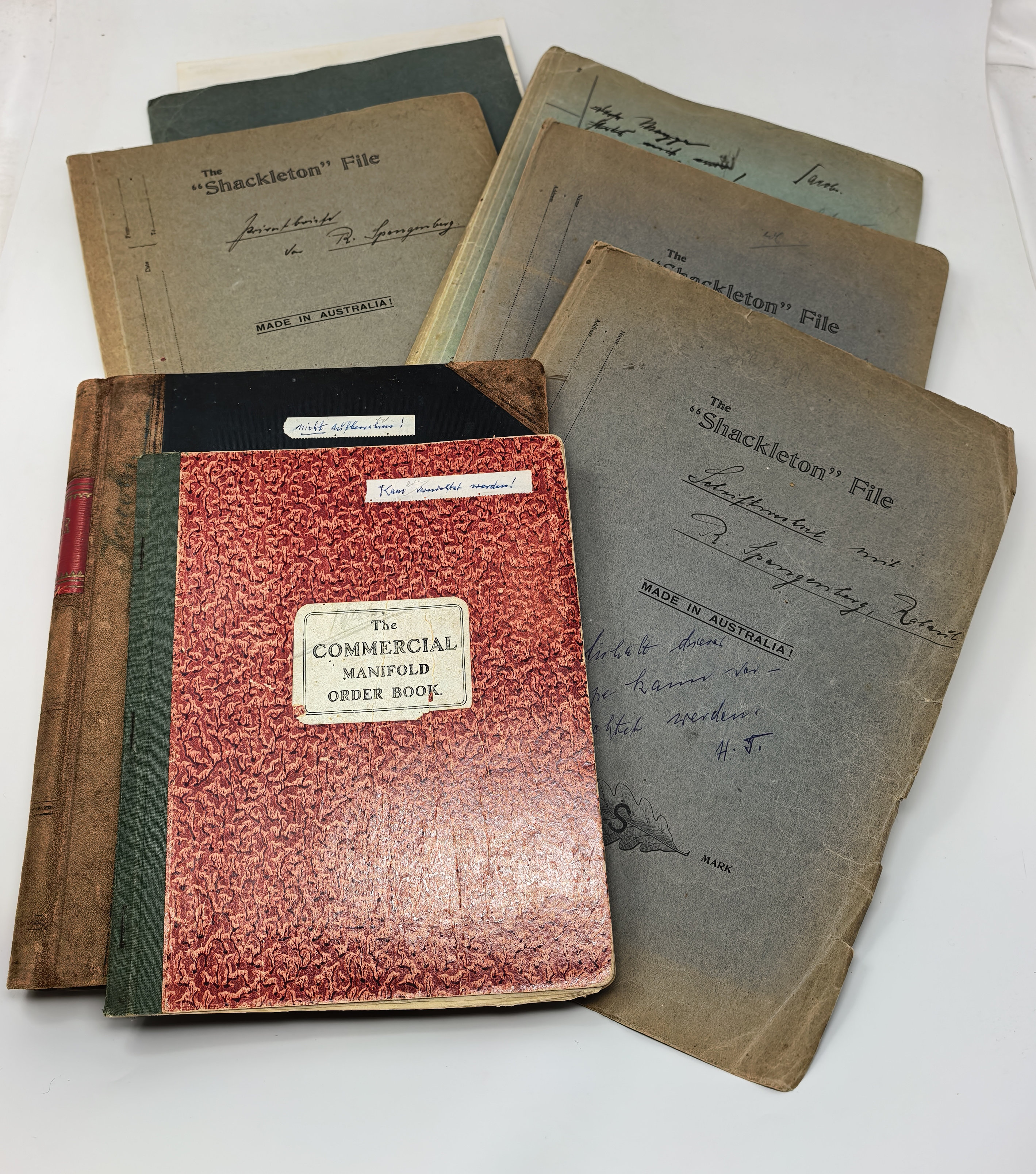
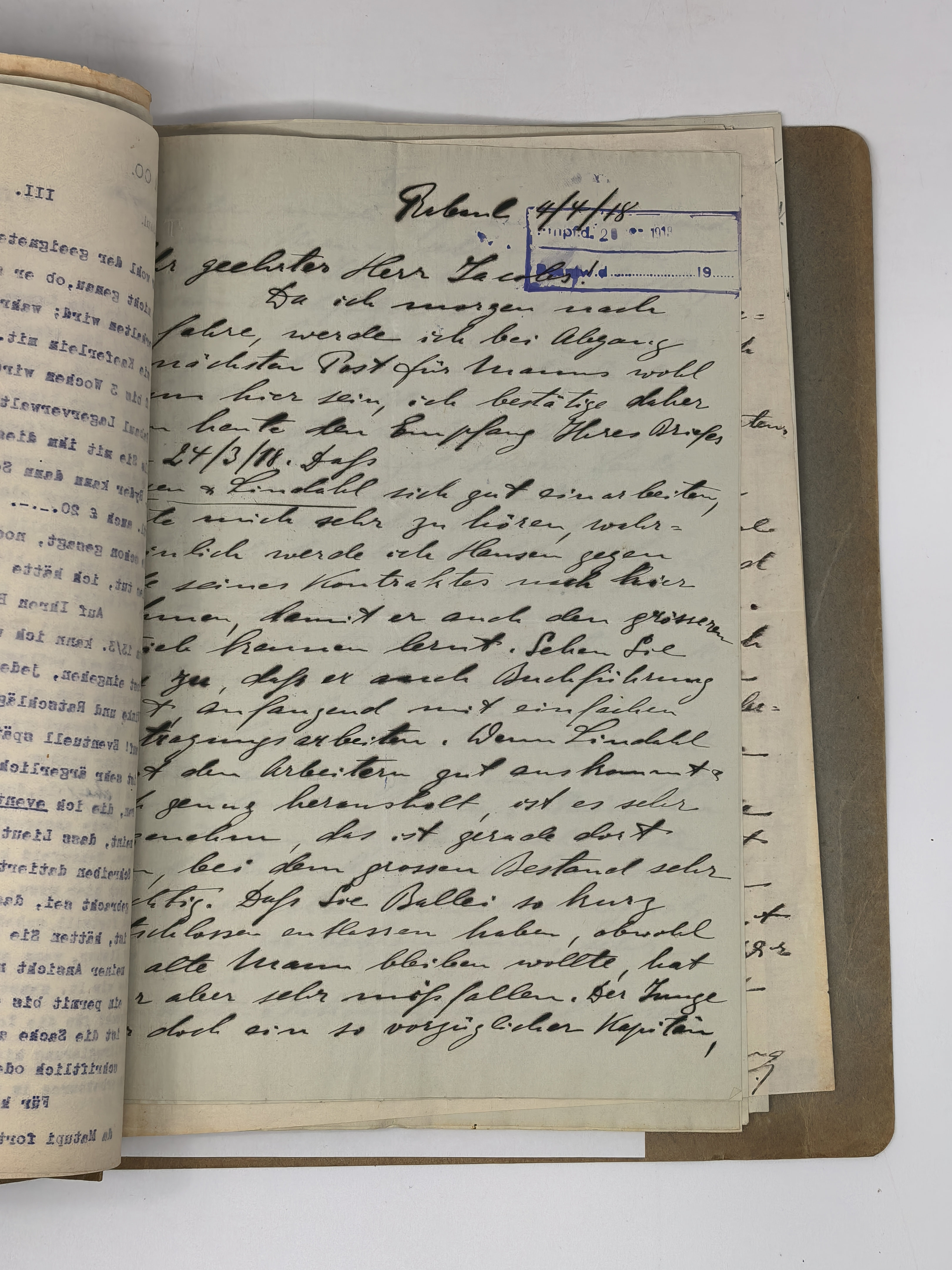
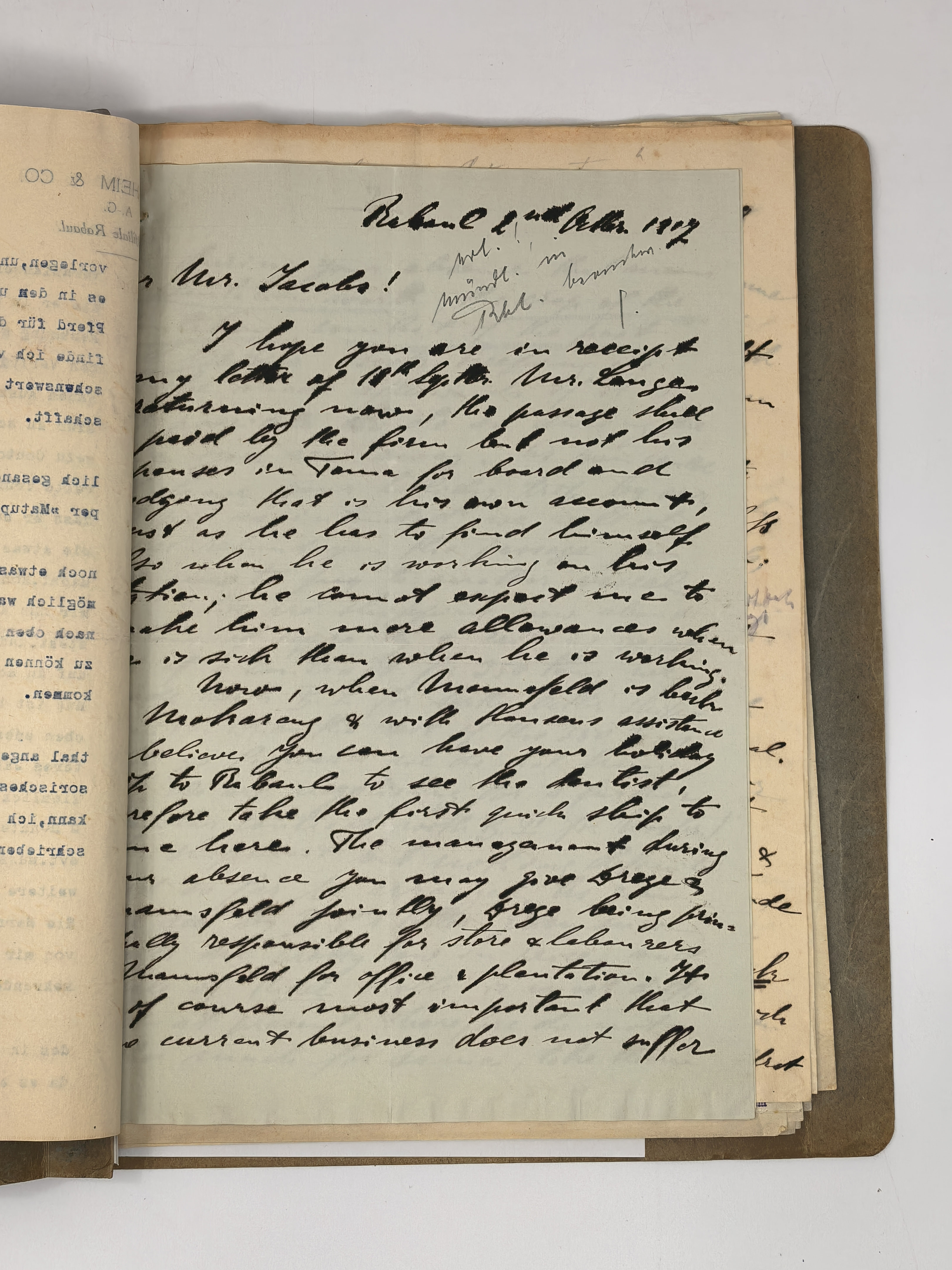
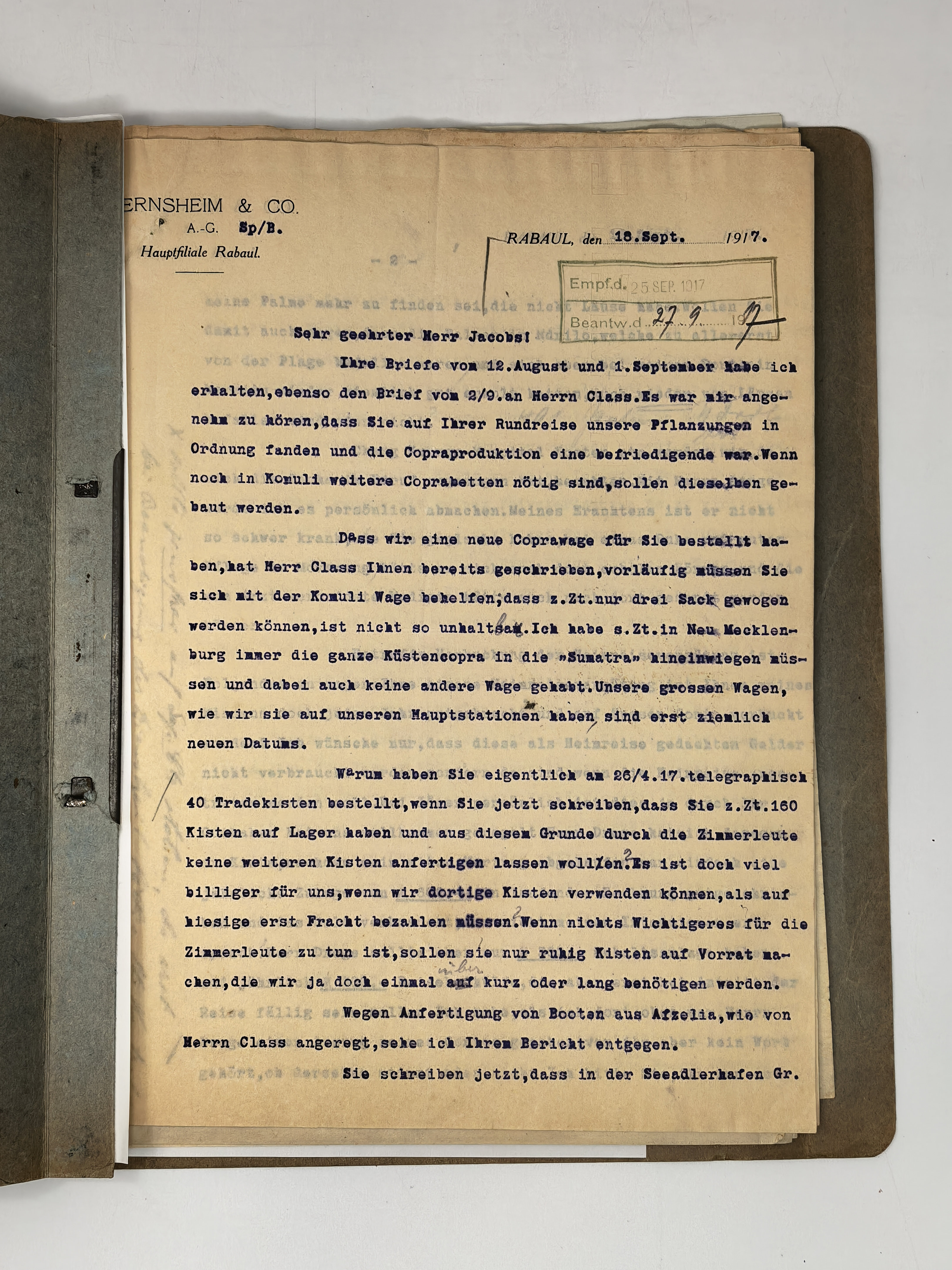
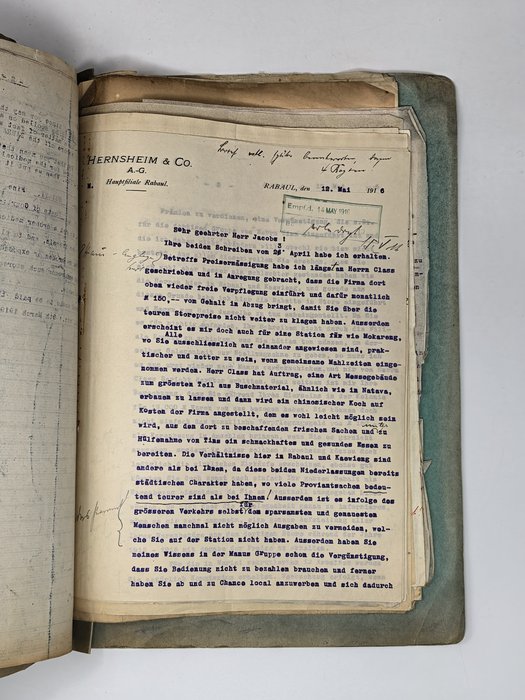
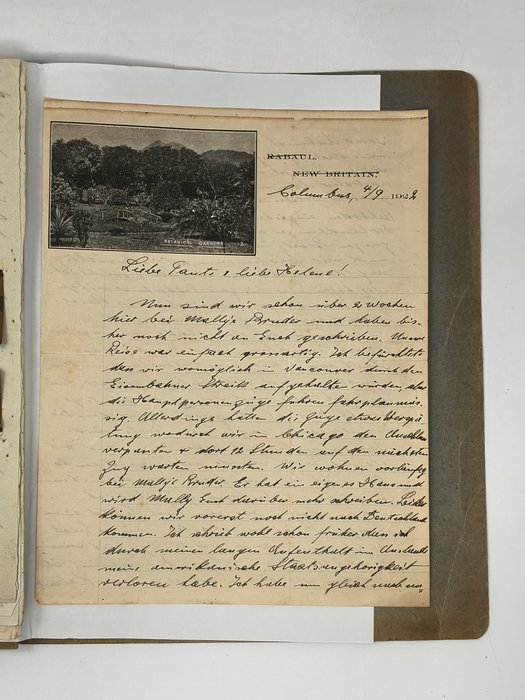
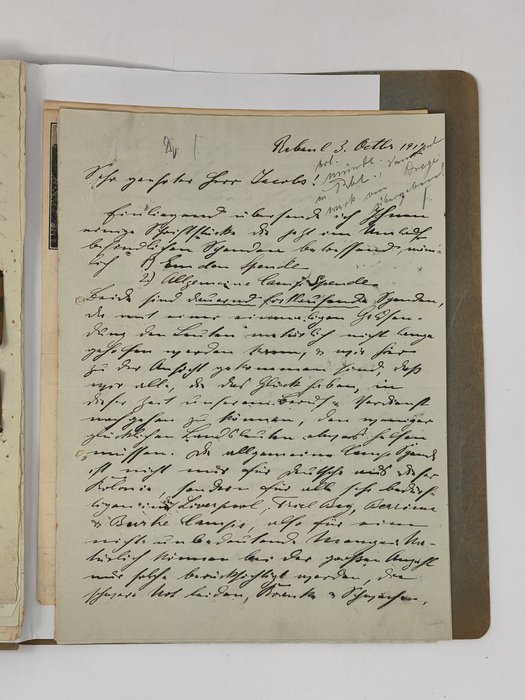
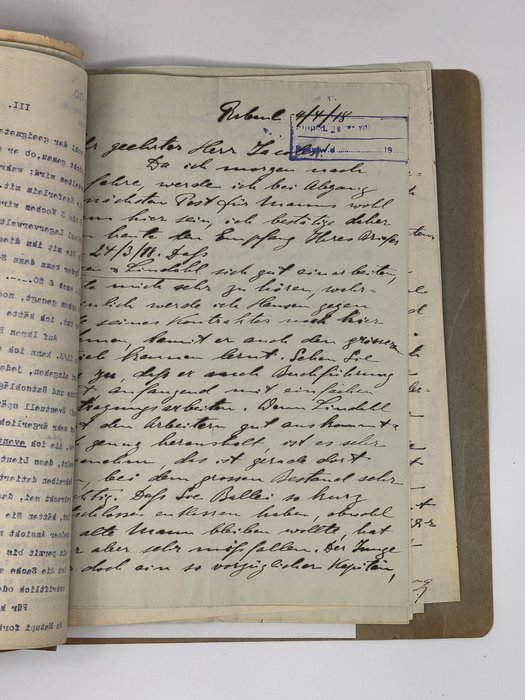
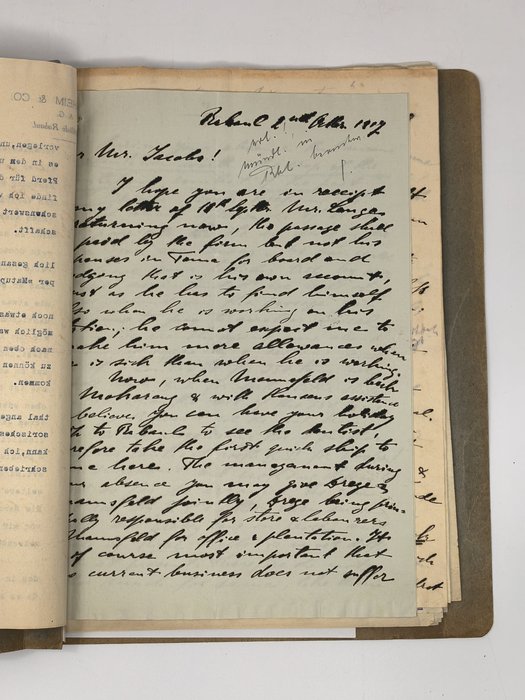
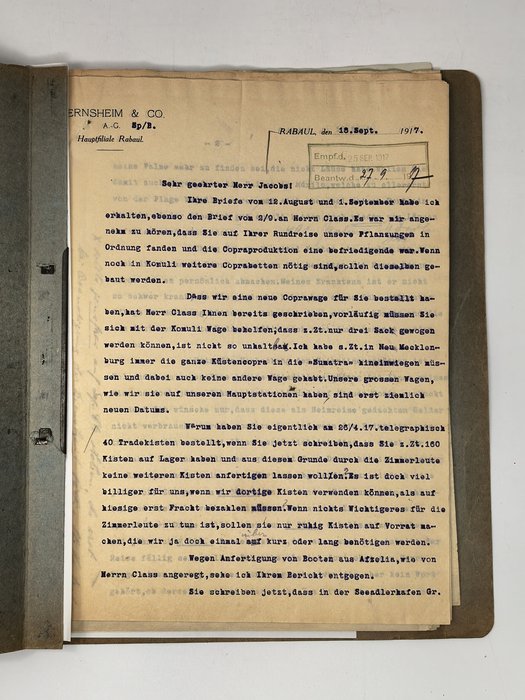
[Four Paper Folders, with ca. 160 Official Letters and Documents Regarding the Affairs of “Hernsheim & Co.” and Jacobs’s Private Affairs].
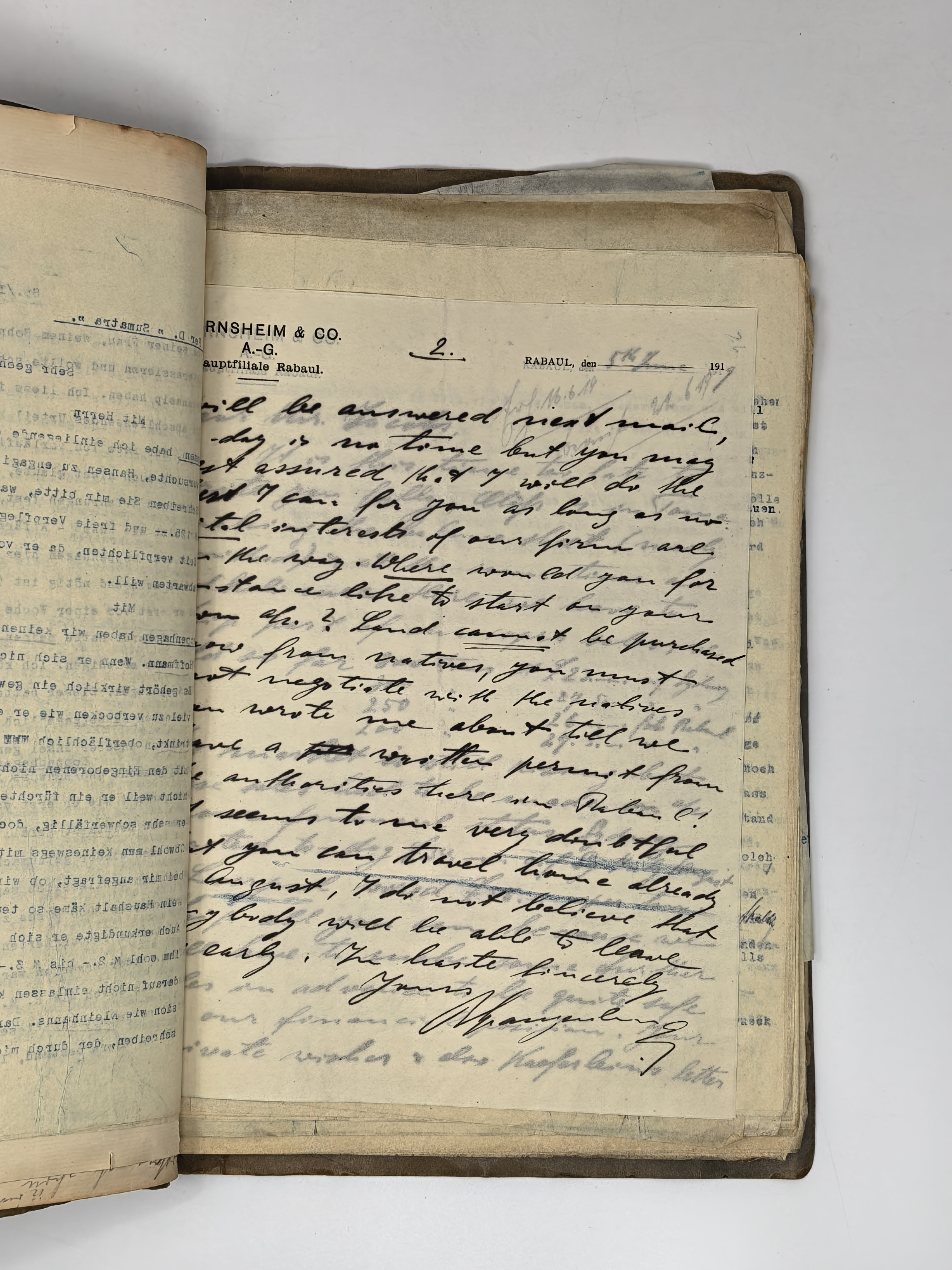
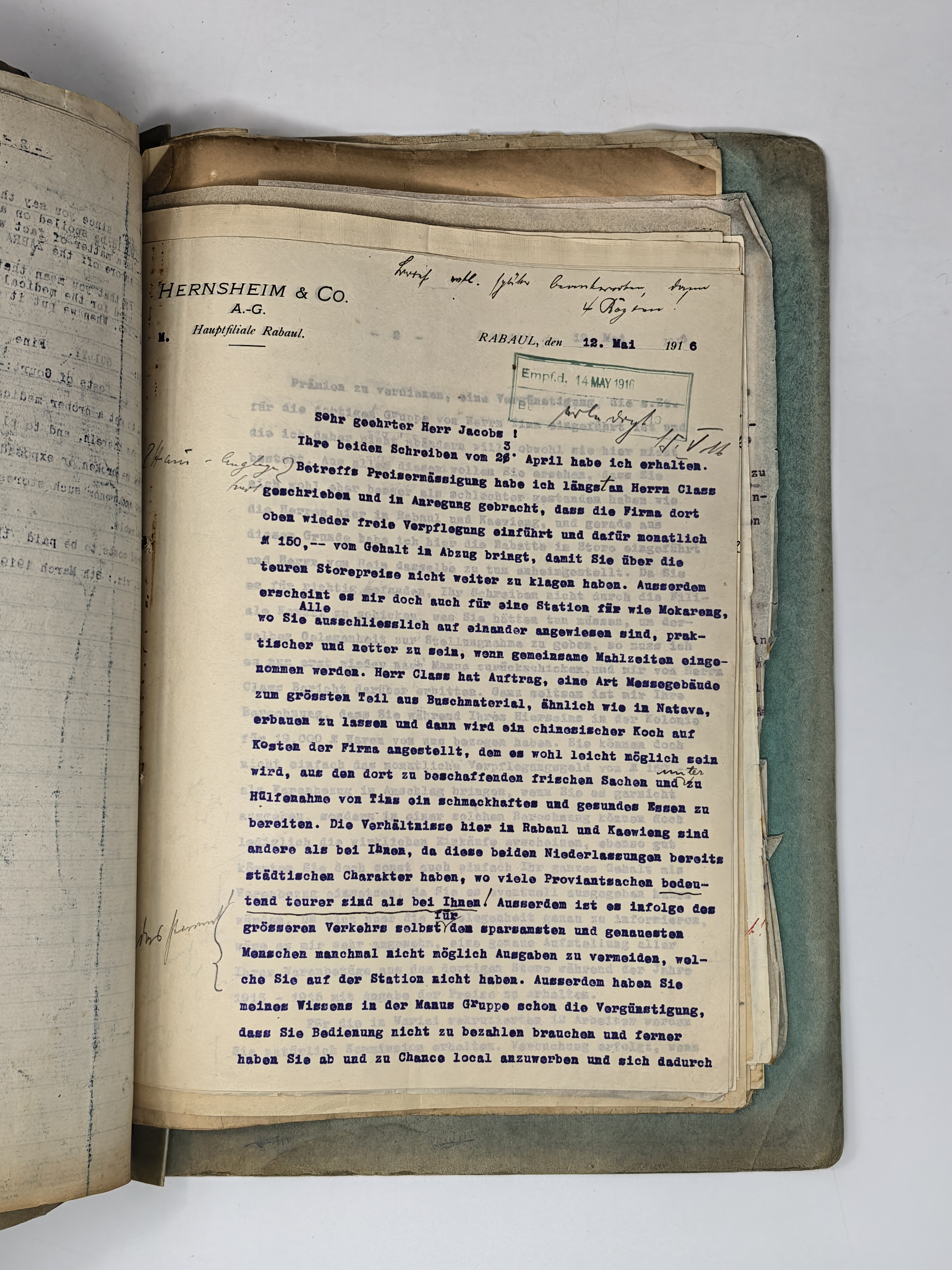
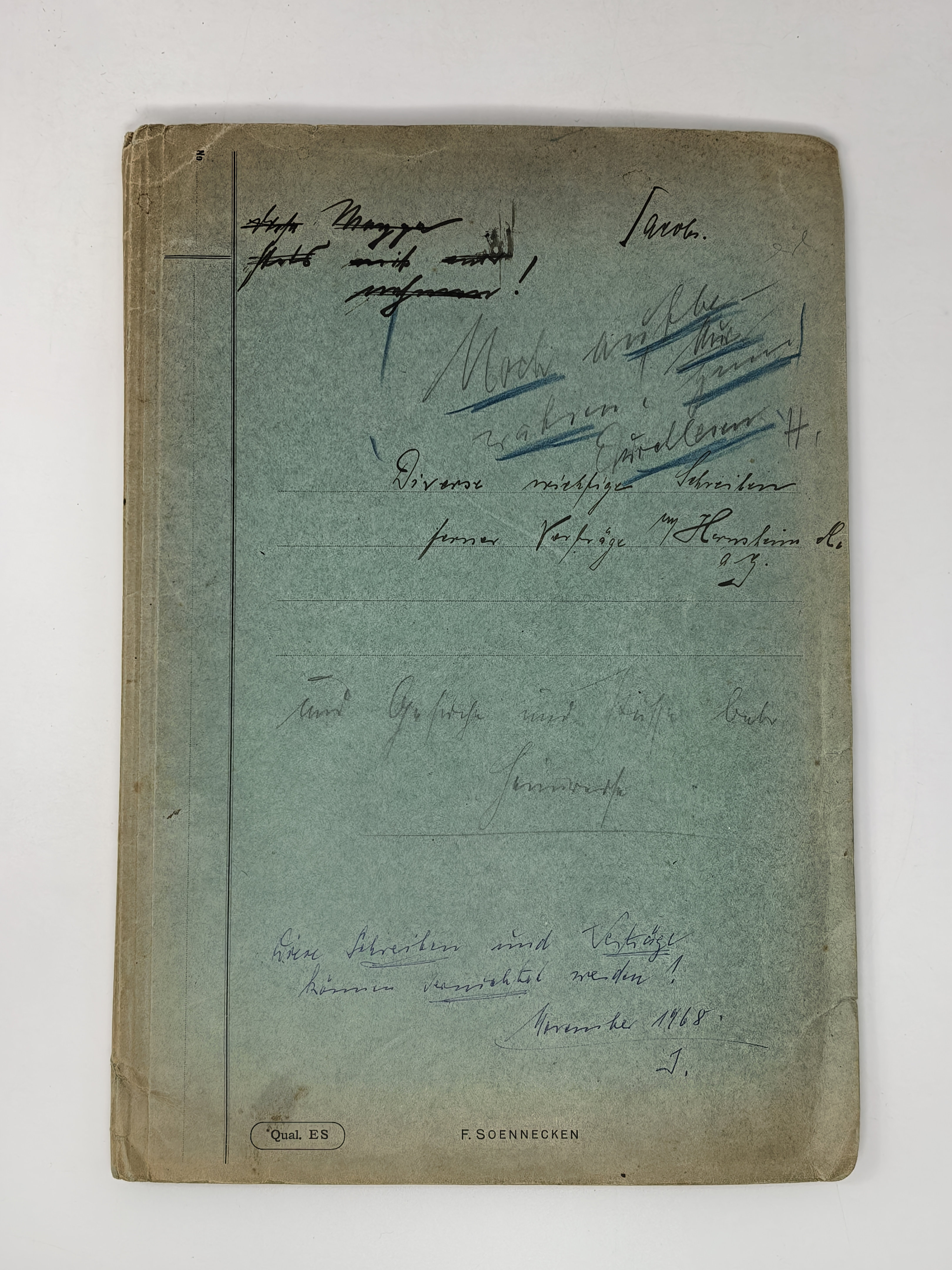
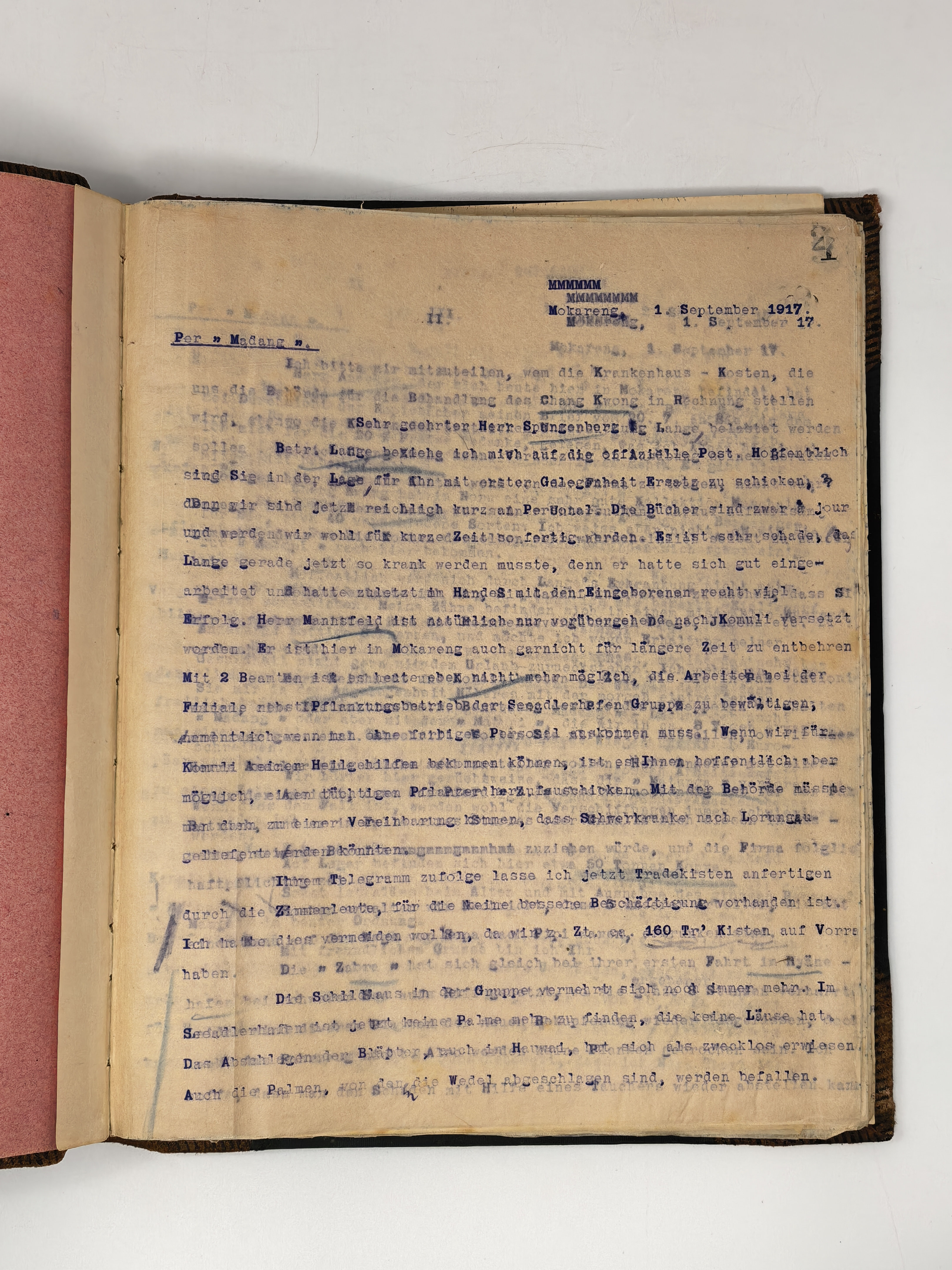
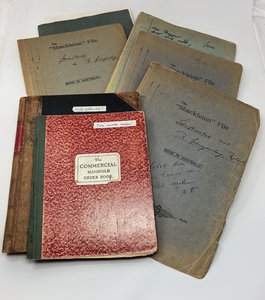
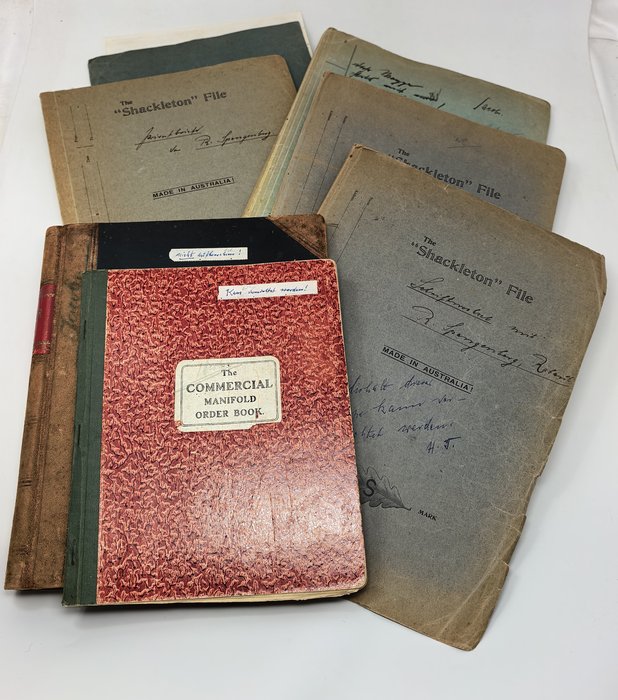
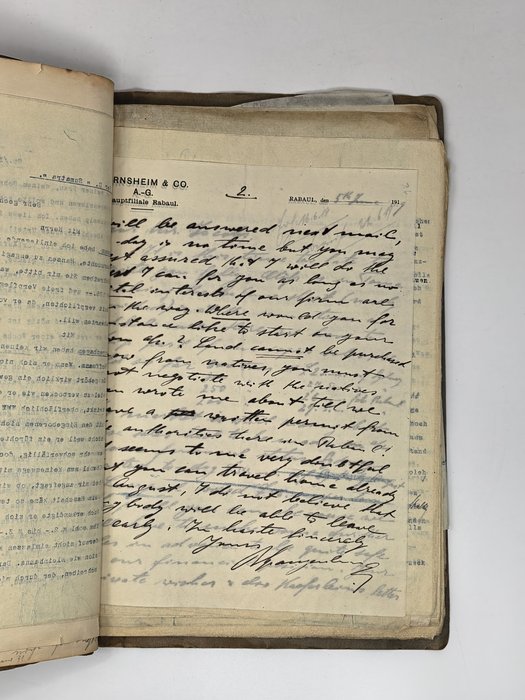
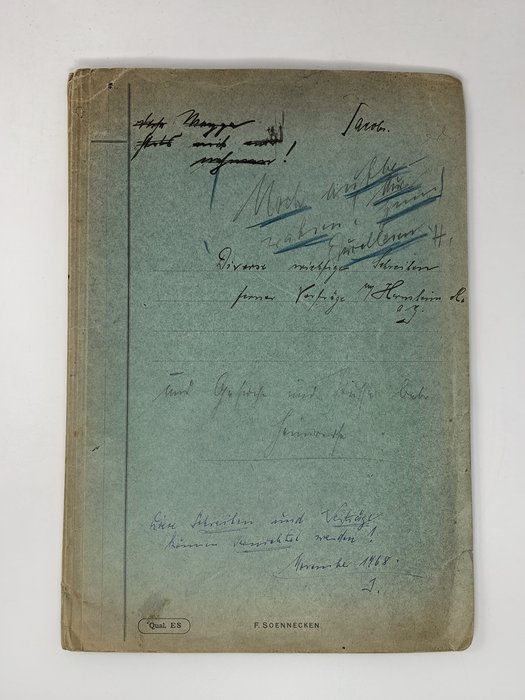
Rabaul, Komuli, Mokareng, Matupi, Madang, Berrima, Columbus, Hamburg, &c. Ca. 1912-1924, 1966. Four Folio paper folders, from ca. 36x25 cm (14 x 9 ¾ in) to ca. 29,5x4 cm (11 ½ x 9 ½ in). Three folders with printed brand titles “The Shackleton File, Made in Australia,” one with printed brand title “F. Soennecken;” all with period and later ink notes in German on the front covers. In all ca. 160 period typewritten or manuscript letters and printed documents, bound in (by punch holes) or inserted into plastic files. In all ca. 370 leaves of text. Numerous documents with printed letterheads of “Hernsheim & Co. A.-G., Pauptfiliale Matupi,” ink stamps “Hernsheim & Co., A.G., Filiale Komuli” (or “Hauptfiliale Rabaul”), and period pencil or ink notes and markings in text. Most documents are in German, several in English. Folders rubbed or with occasional minor tears on extremities, several documents with foldmarks or slightly age-toned, occasional minor tears on extremities; overall very good.
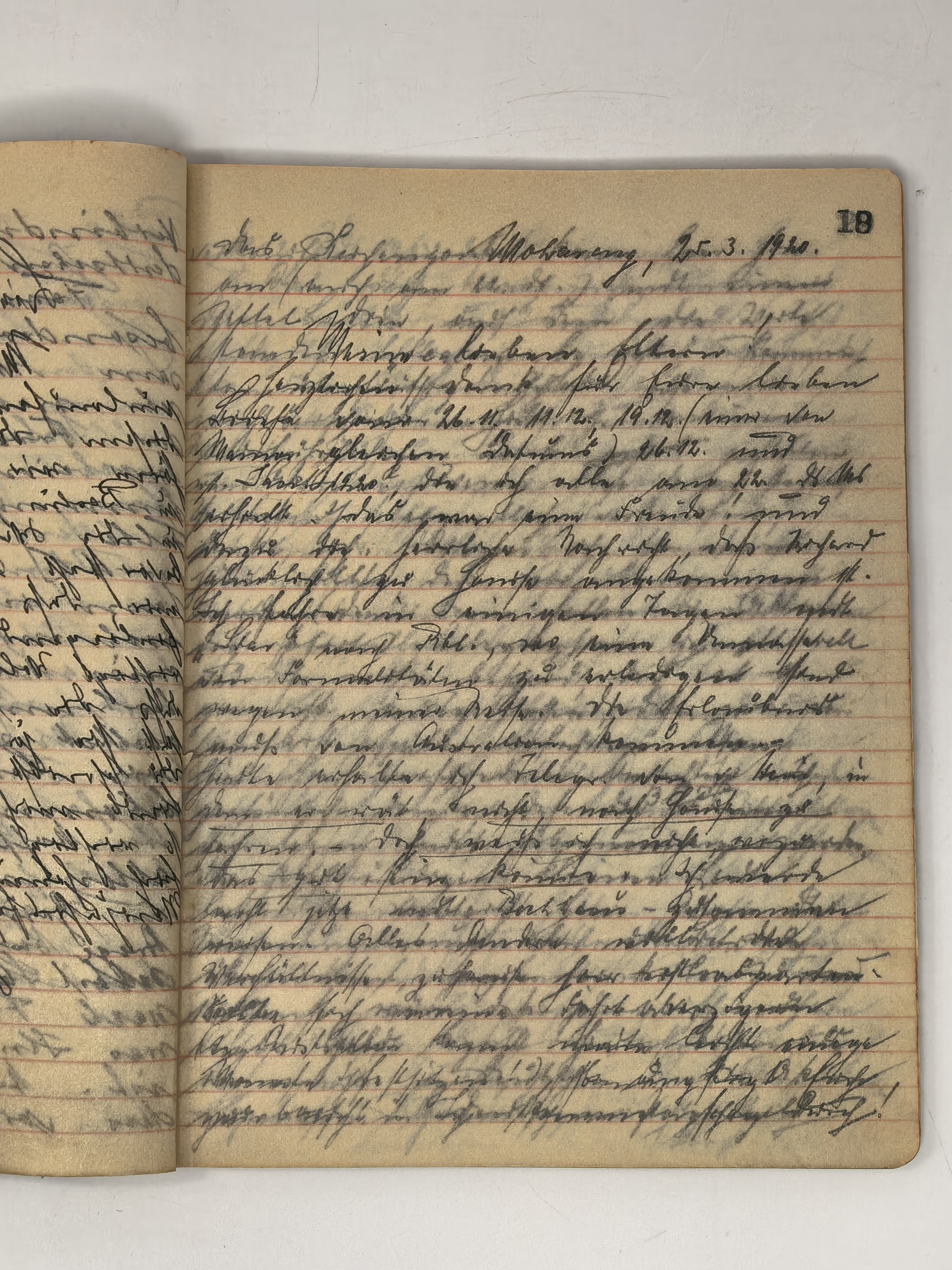
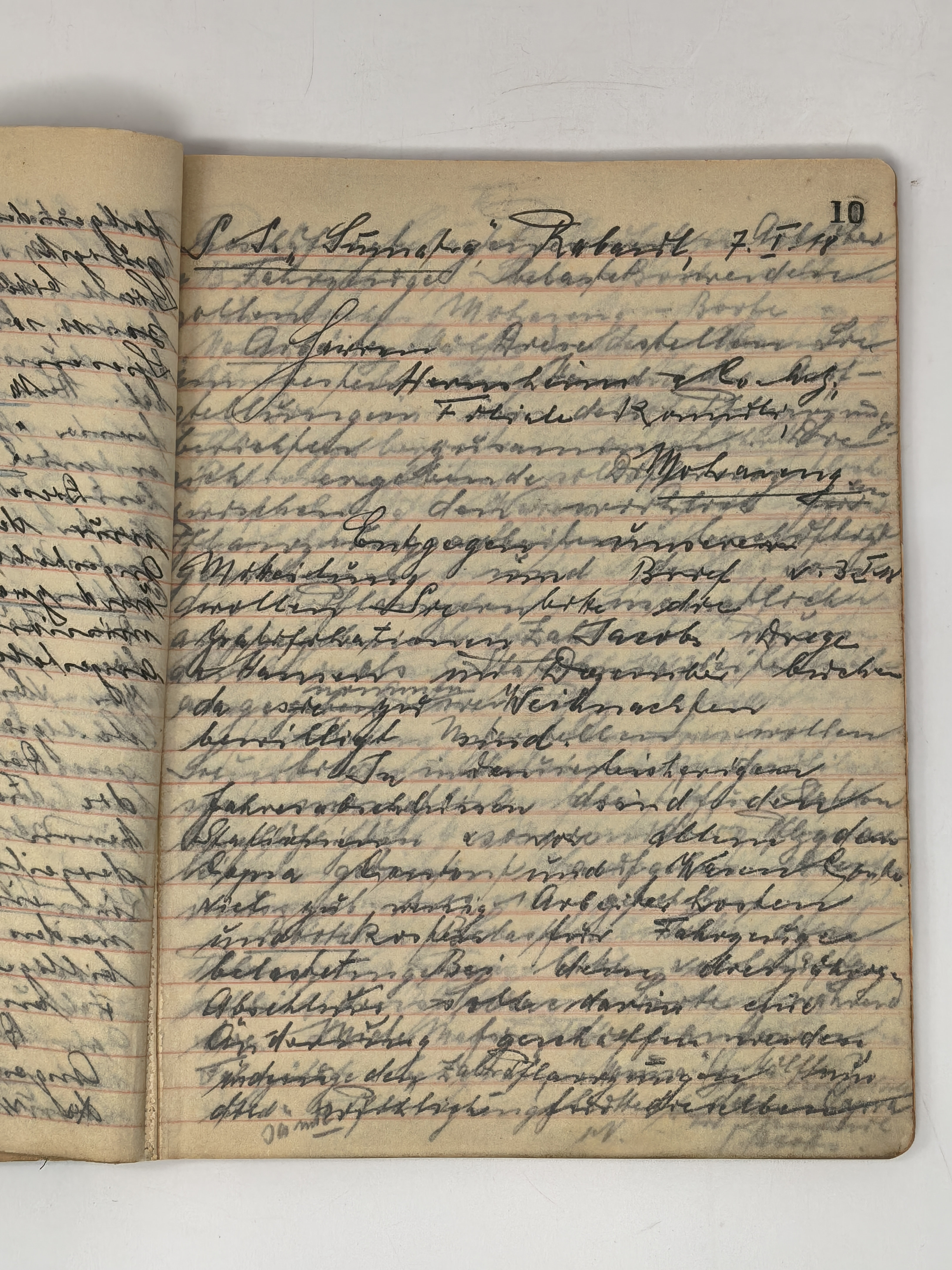
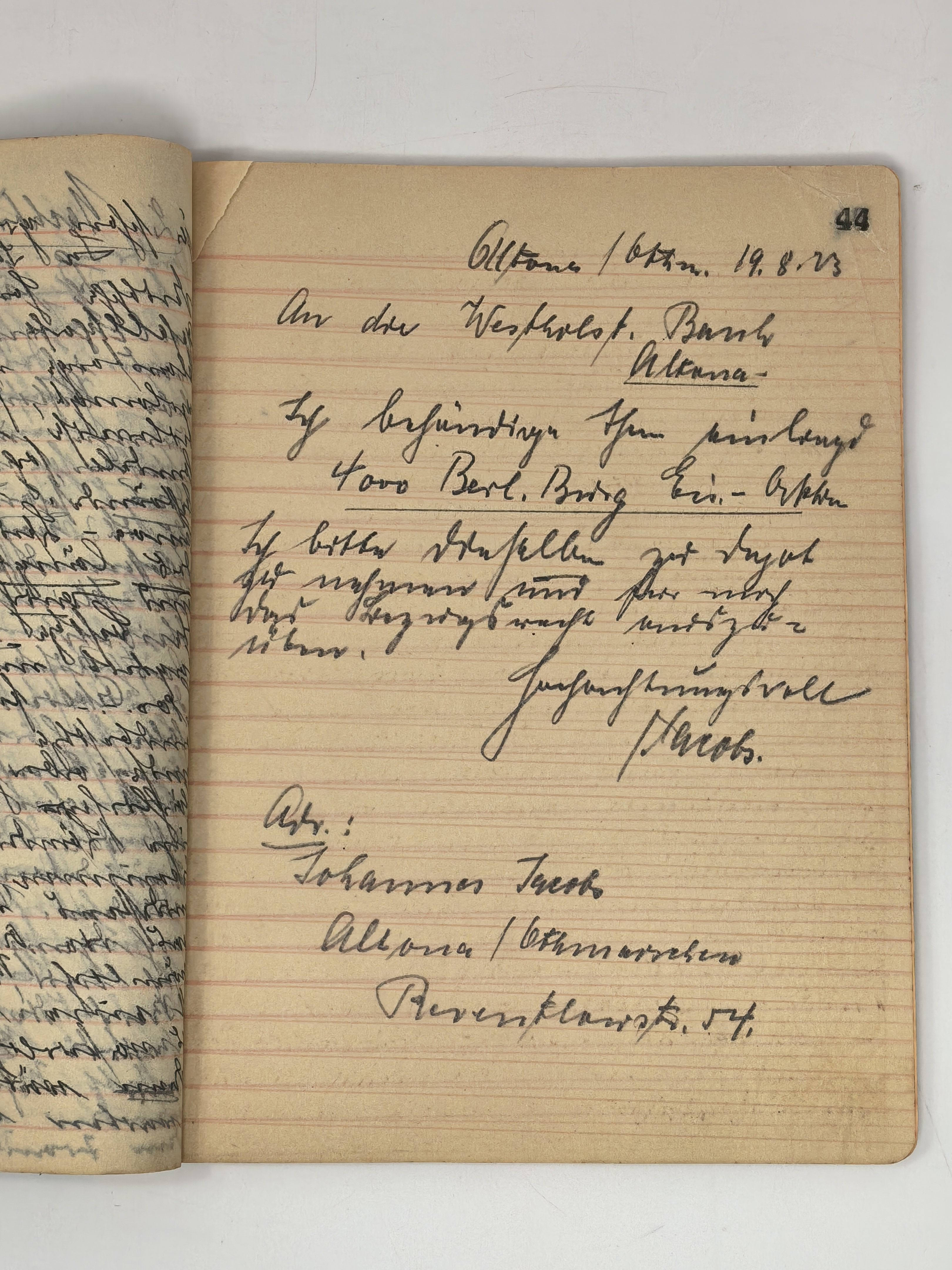
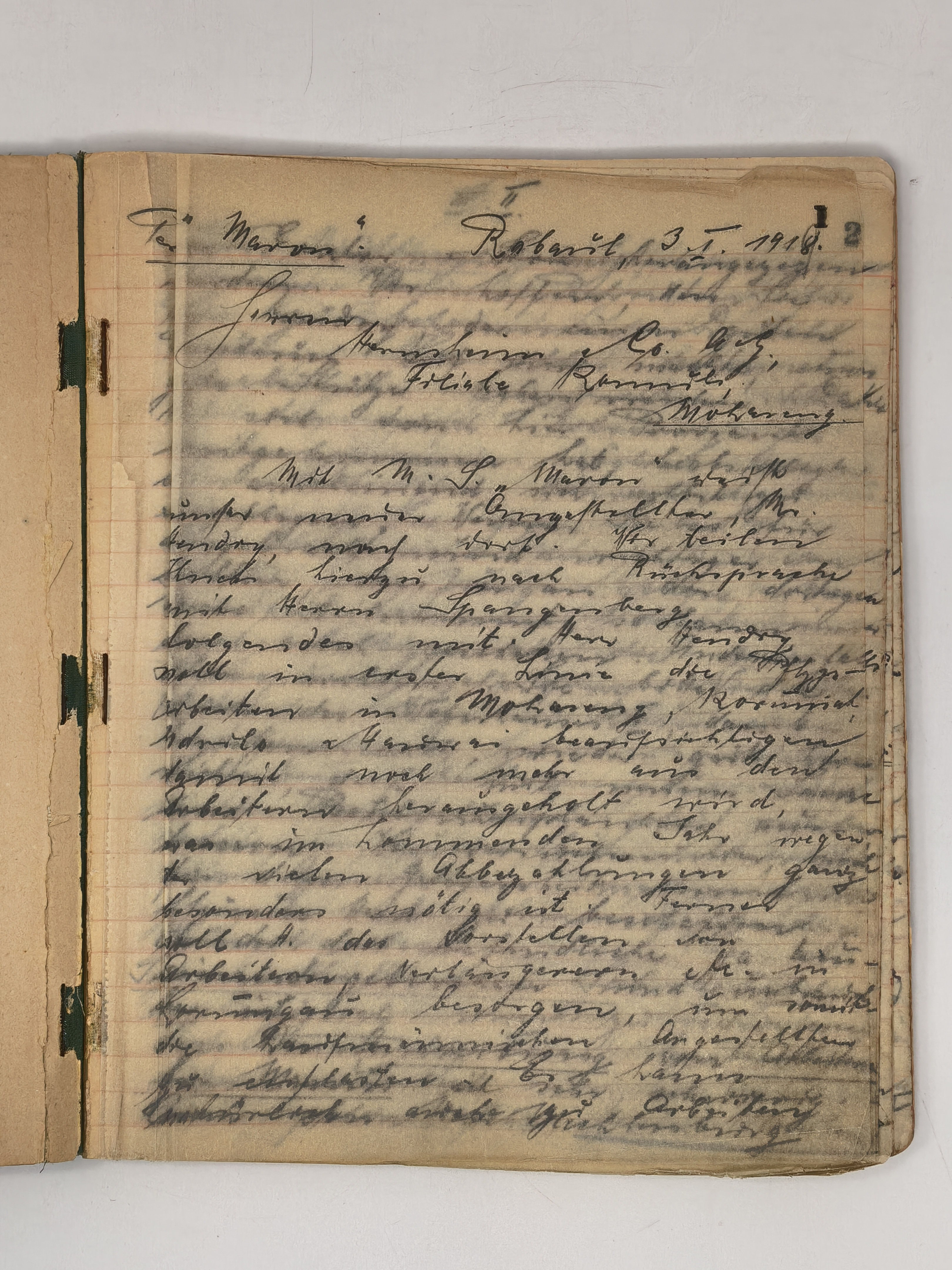
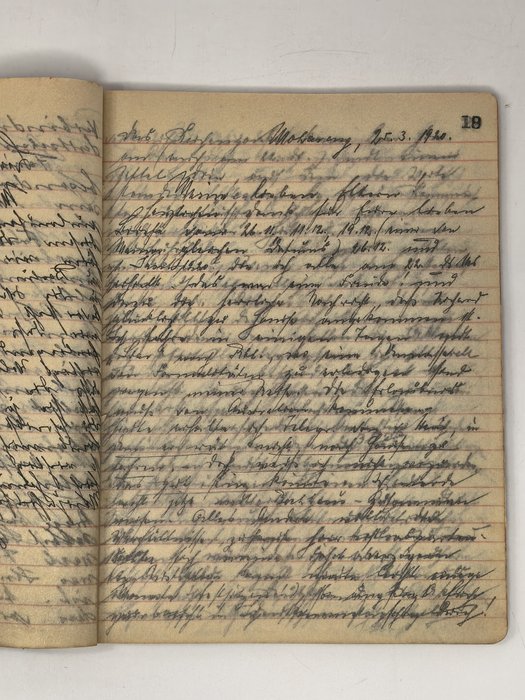
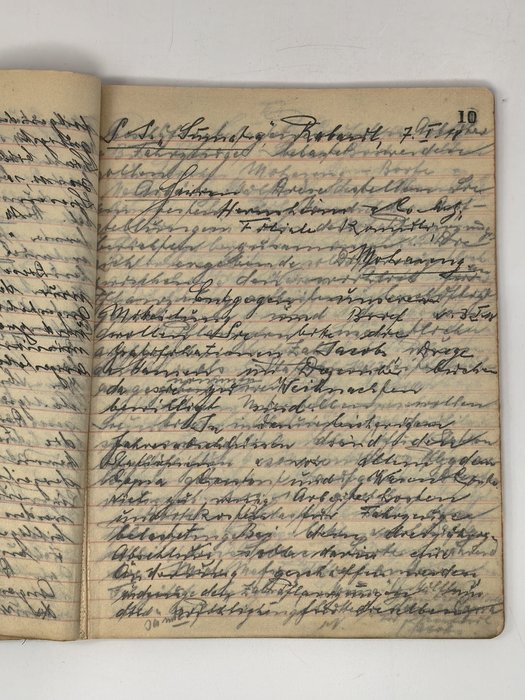
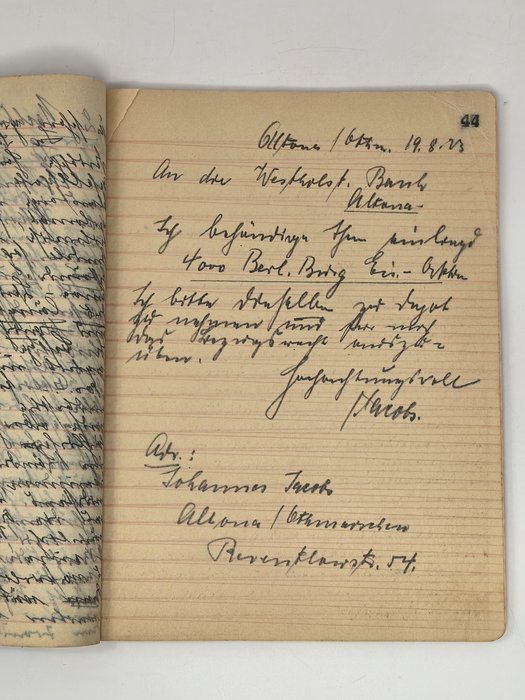
[Two Letter Books with Period Office Copies of ca. 59 Original Letters, Written by Jacobs].
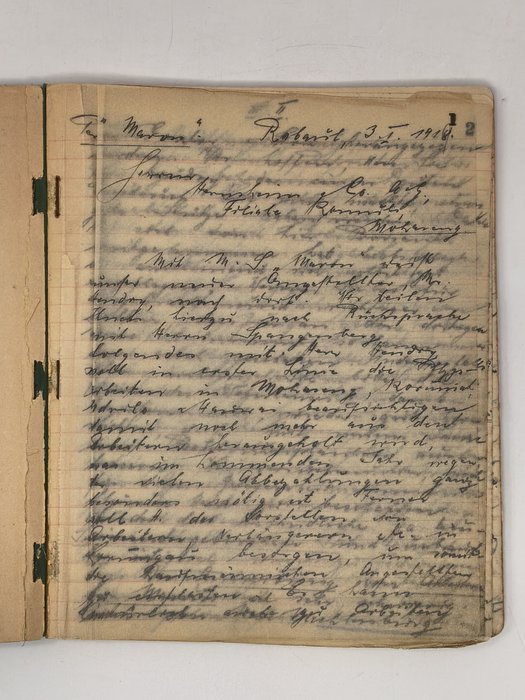
Rabaul, Mokareng, Panama, Colon, Newport News, Altona [Germany], 1917-1920, 1923. Two Quarto letter books from ca. 28x23 cm (11x9 in) to ca. 24,5x20 cm (9 ¾ x 7 ¾ in). Letter book 1: 88 lined leaves with printed numbers in the right upper corners. 44 leaves with manuscript text in German on rectos (copies of 13 original letters). Period hardcover notebook with green cloth spine and red boards; paper label “The commercial manifold order book” on the front board. Binding slightly rubbed on extremities, paper with occasional creases, leaf 31 with a tear and a loss of a piece on the right margin, otherwise very good.
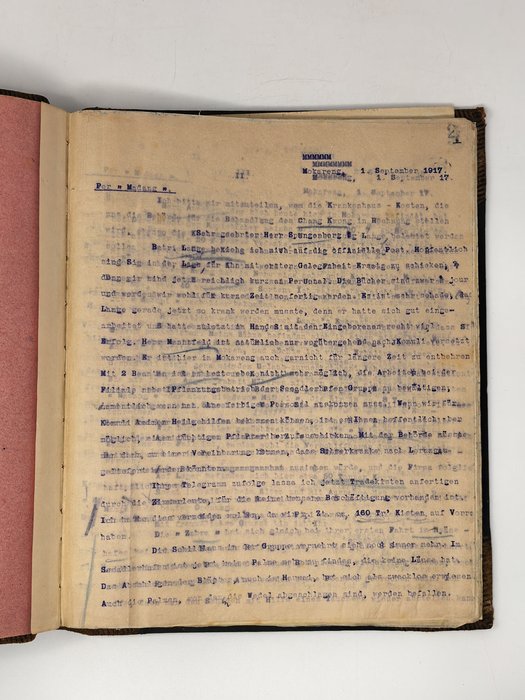
Letter book 2: 13 blank lined leaves of alphabet index (with pink divider leaves); 128 tissue guard leaves with printed numbers in the right upper corners. 124 leaves with copies of ca. 46 Jakobs’ typewritten letters in German; most with copies of his signature at the end; several with period pencil or ink markings or notes in text. Period brown quarter sheep album with green cloth boards; red label with gilt-lettered title “Letter Book” on the spine; paper label with a pen note in German on the front cover. Binding slightly rubbed on extremities, leaves with occasional creases, leaf 8 of the “letter” part previously removed, leaf 39 previously torn off; overall very good.
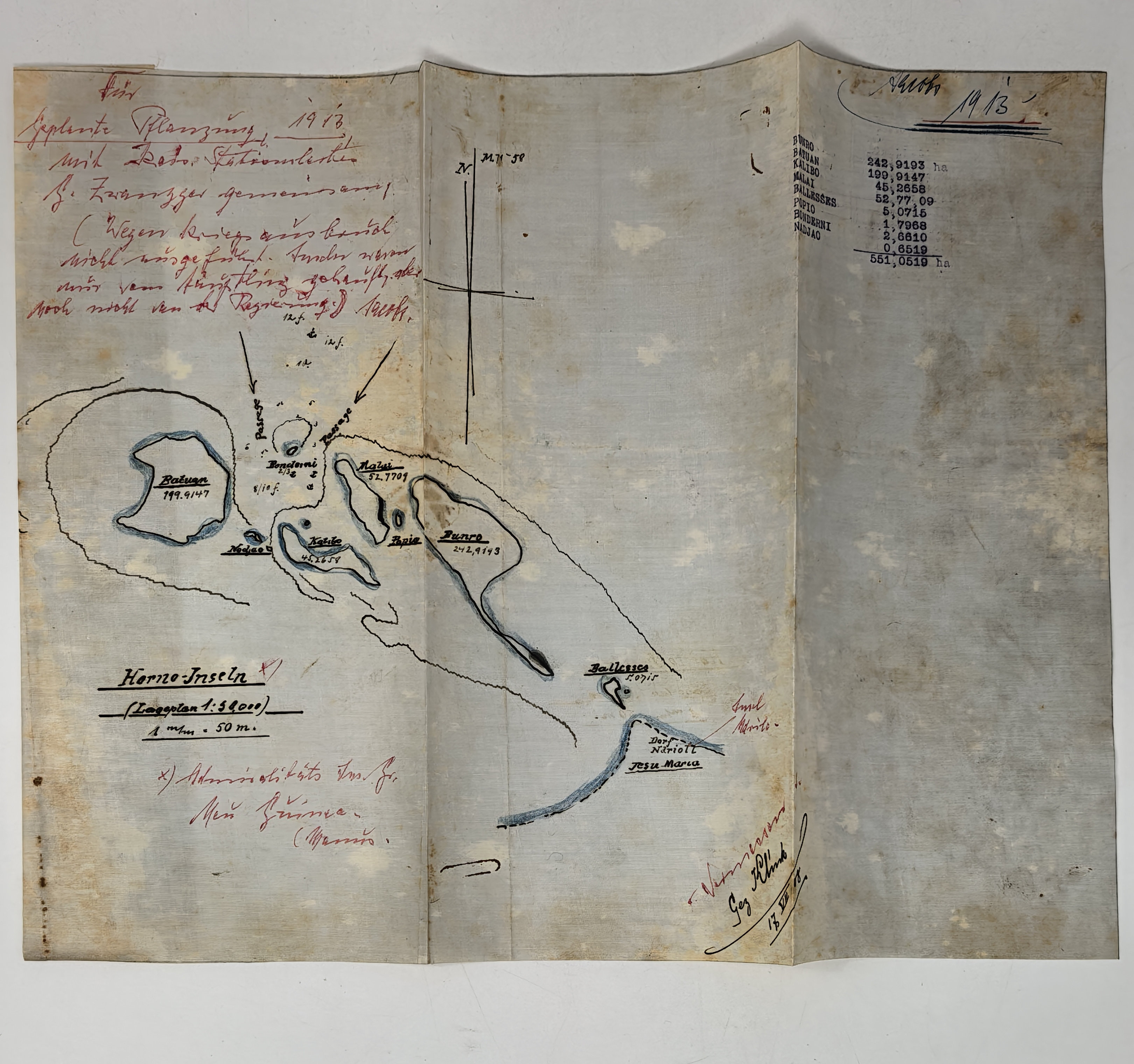
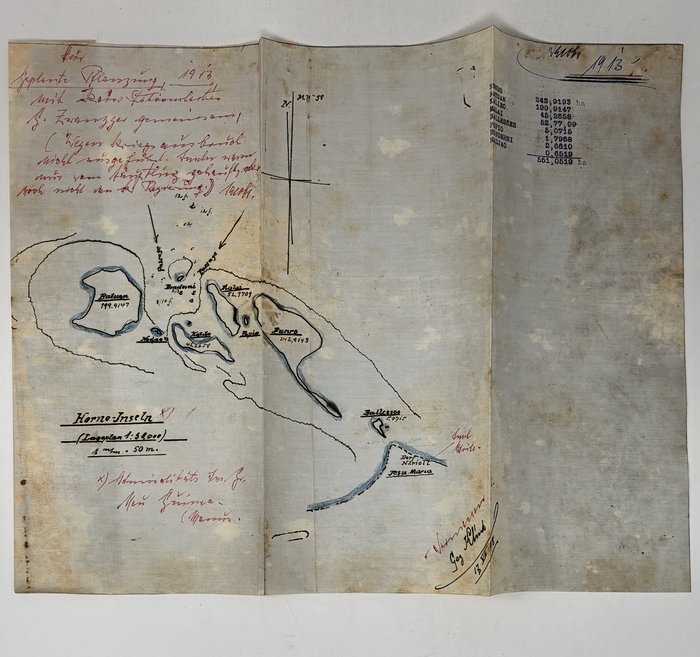
KLINK, Hans. [Original Manuscript Map of the Horno Group of the Admiralty Islands]. Ca. 30,5x44,5 cm (12 x 17 ½ in). Black and blue ink on parchment paper. Compiler’s signature and date in the right lower corner (“Gez. Klink, 17 VII 08”). With a typewritten list of islands and their area in the right upper corner; blue and red ink notes, dates “1913” and Jacobs’ signatures on the upper and lower margins. Fold marks, minor staining, but overall very good.
The map provides the outline of the island, passages, anchorages and sea depths, marks “Dorf Ndrioll” of the “Jesu-Maria” (Rambutyo) Island. The typewritten list specifies the size of each island in hectares. Jacobs’ notes dated 1913 refer to the plan to establish plantations on the islands.
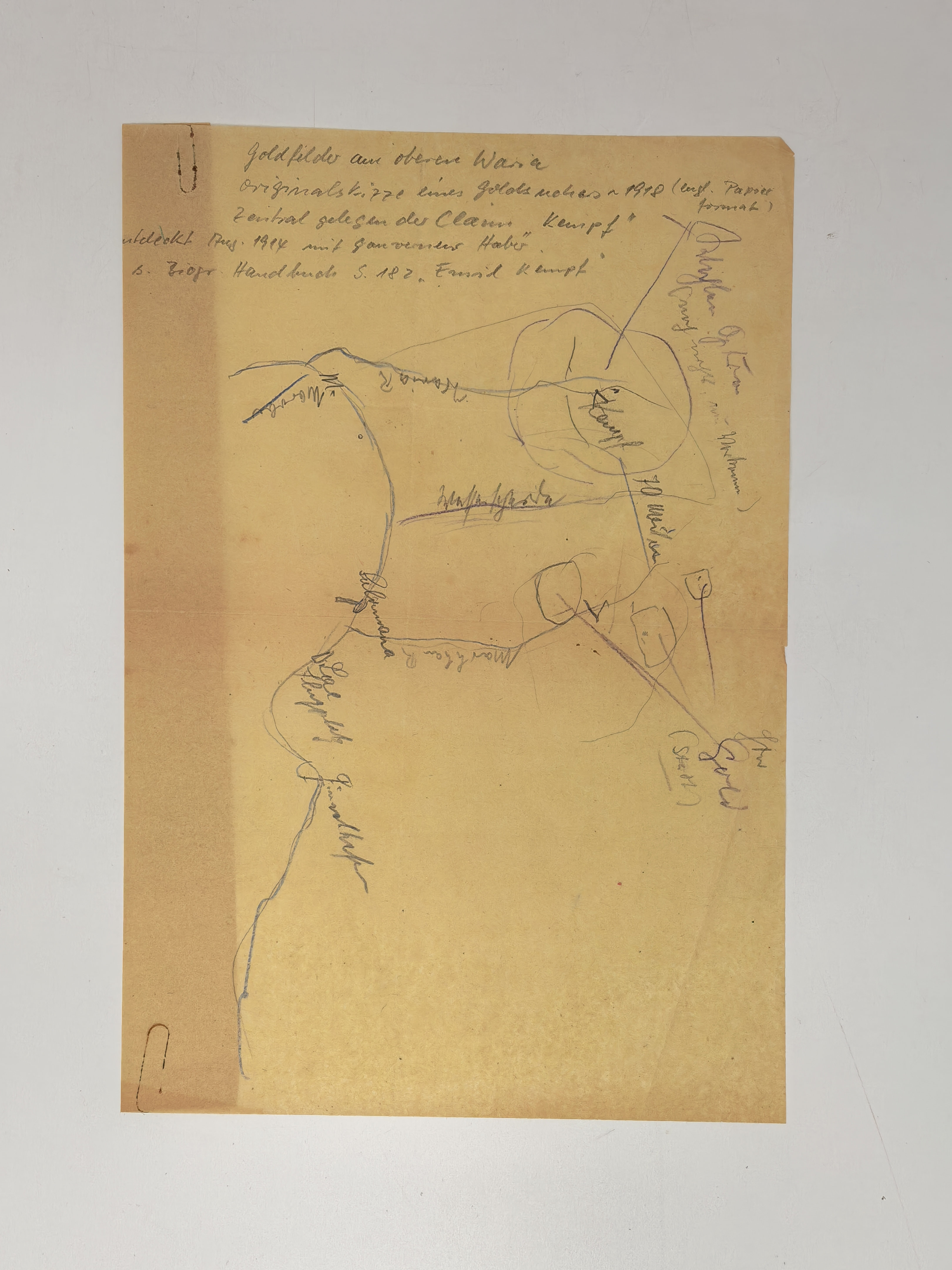
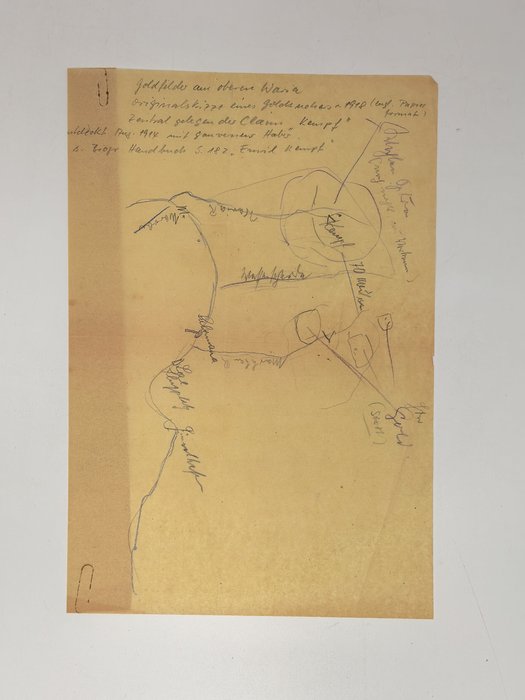
[Original Pencil-Drawn Map of Waria River Goldfields, Titled:] Goldfelde am oberen Waria. Ca. 28,5x22 cm (11 x 8 ½ in). Pencil on tissue guard paper. Fold marks, paper slightly age-toned, minor tear on the left margin not affecting the image, overall very good.
According to the pencil note, the map centers around the “Kempf” claim bordering Waria River; marking Lae, Salamaua and Markham River among other objects.
[Five Printed Periodicals in German and Later Australian-Administered New Guinea].
1) Amtsblatt für das Schutzgebiet Deutsch-Neuguinea. Rabaul, 1 May 1914, No. 9. Small Folio (ca. 30,5x21,5 cm or 12 x8 ½ in). [143-166 = 12] pp. Two period pencil markings in text. Contains official reports, statistics on the colony’s population and economy, account of the expedition of S.M.S. “Cormoran” to the Bougainville Island, &c.
2) Government Gazette/ The Military Government of New Guinea. Rabaul, 1 December 1914. Small Folio (ca. 30,5x21,5 cm or 12 x 8 ½ in). [3-6 = 4] pp. Contains statistical table “The White Population (including Japanese) in German New Guinea on January 1, 1914,” news about the occupation of Admiralty Islands by the Australian military on board the S.S. “Siar” on November 21 (with a period pencil note in German), &c.
3) Government Gazette/ British Administration – (late) German New Guinea. Rabaul, 15 September 1915. Small Folio (ca. 30,5x21,5 cm or 12 x 8 ½ in). 20 pp. Contains “Proclamation revoking proclamation relating to martial law in the Colony of German New Guinea.” With the second copy of the last leaf (pp. 19-20) with a period manuscript note in German.
4) The Rabaul Record. Rabaul, 1 May 1916. Quarto (ca. 27x21 cm or 10 ½ x 8 ¼ in). 12 pp. Contains local news and several articles (“German New Guinea – Area and Population” by J. Lyng, “Gold in New Guinea” by A.L. Joubert, “Marquis de Ray’s Expedition” by H.N. Leach, &c.).
5) [Two British Publications on the Expropriation of the Property of German Companies and Private Individuals in New Guinea]: a) [Supplementary]. Government Gazette/ British Administration of German New Guinea. Rabaul, 23 March 1921. Folio (ca. 30x20 cm or 11 ¾ x 8 in). 2 pp. b) “Expropriation Ordinance 1920”/ British Military Occupation of the Colony of German New Guinea. Leaves 103-104 of the “Rabaul Gazette” (1 September 1920). WITH: a photocopy of both documents and a 1960s’ typewritten translation of a part of document “b” into German.
Historically significant, rare archive of over 210 typed and handwritten letters (original or period copies) and various printed documents, compiled and received by Johannes Jacobs, German manager of the “Hernsheim & Co.’s” Komuli branch on the Admiralty Islands of German New Guinea in ca. 1912-1920.
Founded by Hamburg brothers Eduard and Franz Hernsheim in 1875, the company was transformed into the joint-stock company in 1909 (“Hernsheim & Co. A.-G.”) with the head office in Matupi (Bismark Archipelago, New Britain, German New Guinea; moved to the nearby Rabaul in 1912) and numerous branches on the islands across the southwestern Pacific (Marshall Islands, Carolines, Palau, Solomon Islands, Bismarck archipelago, &c.). Mostly known for its copra trade (in the late 1880s, the company exported nearly 30% of the copra produced in the western Pacific), “Hernsheim & Co.” dealt in Troca shells, mother-of-pearl, timber, nuts, decorative feathers, and other goods. In the early 20th century, the company established branches on Komuli and Manus Islands of the Admiralty group. In 1908-1910, the Admiralty Islands were extensively surveyed by the Hamburg South Seas Expedition, during which the map of the Horno Islands from this collection was drawn by a German traveller and colonial administrator, Hans Klink. Shortly after the beginning of WW1, in September – November 1915, German New Guinea was occupied by the Australian expeditionary force. “Hernsheim & Co.” continued to operate during the occupation, but in ca. 1920-1921, its property was expropriated by the Australian authorities.
The archive was compiled by one Johannes/Hans Jacobs, an associate of “Hernsheim & Co.,” originally from Hamburg. According to one of his later letters from the archive (Othmarschen, November 14, 1966; folder titled [Various papers regarding Hernsheim & Co.]), Jacobs lived in German New Guinea in 1910-1920 and on Manus Island (Admiralty group) in 1912-1920, being “the longest serving European (and German)” in the colony.
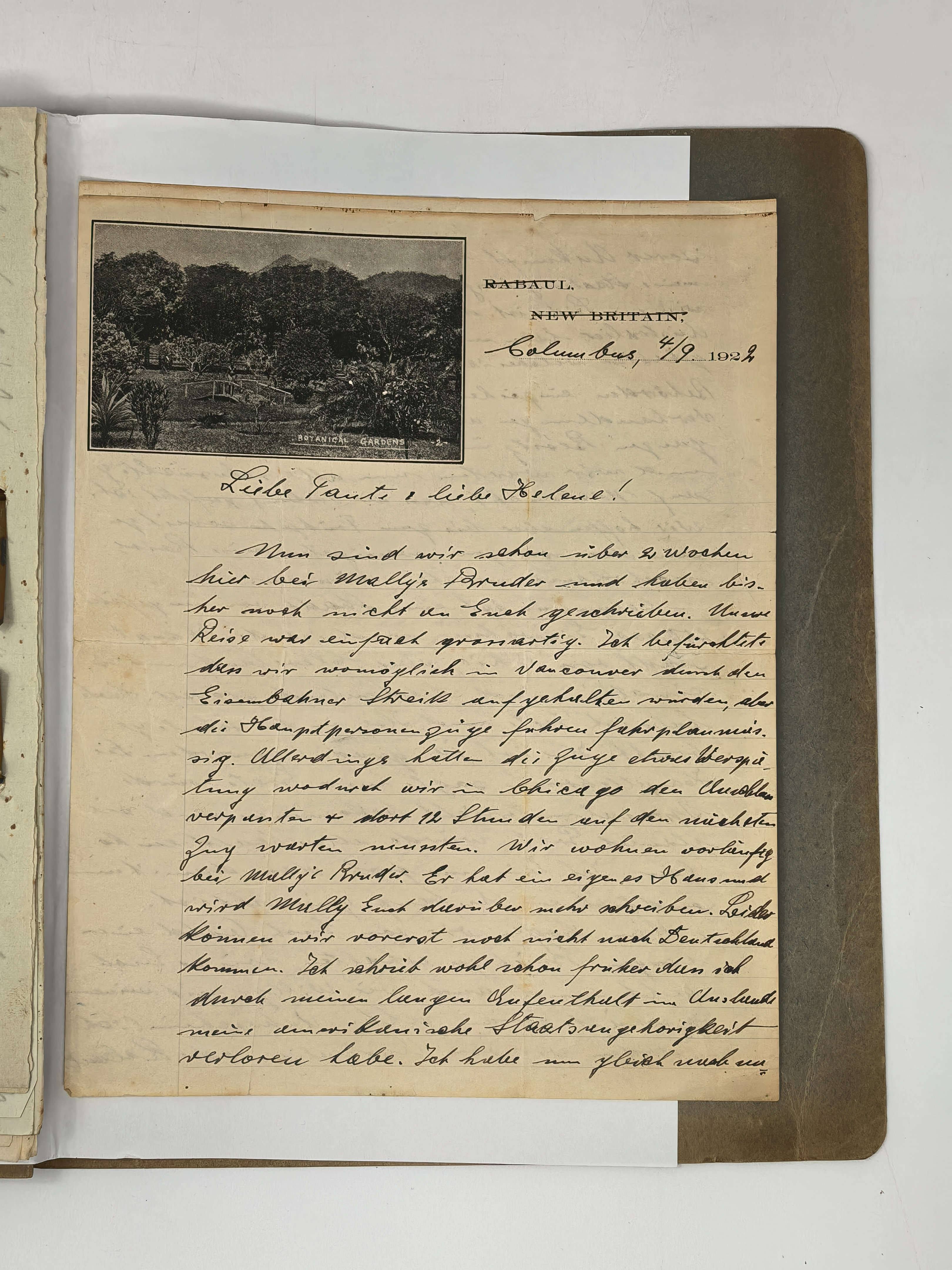
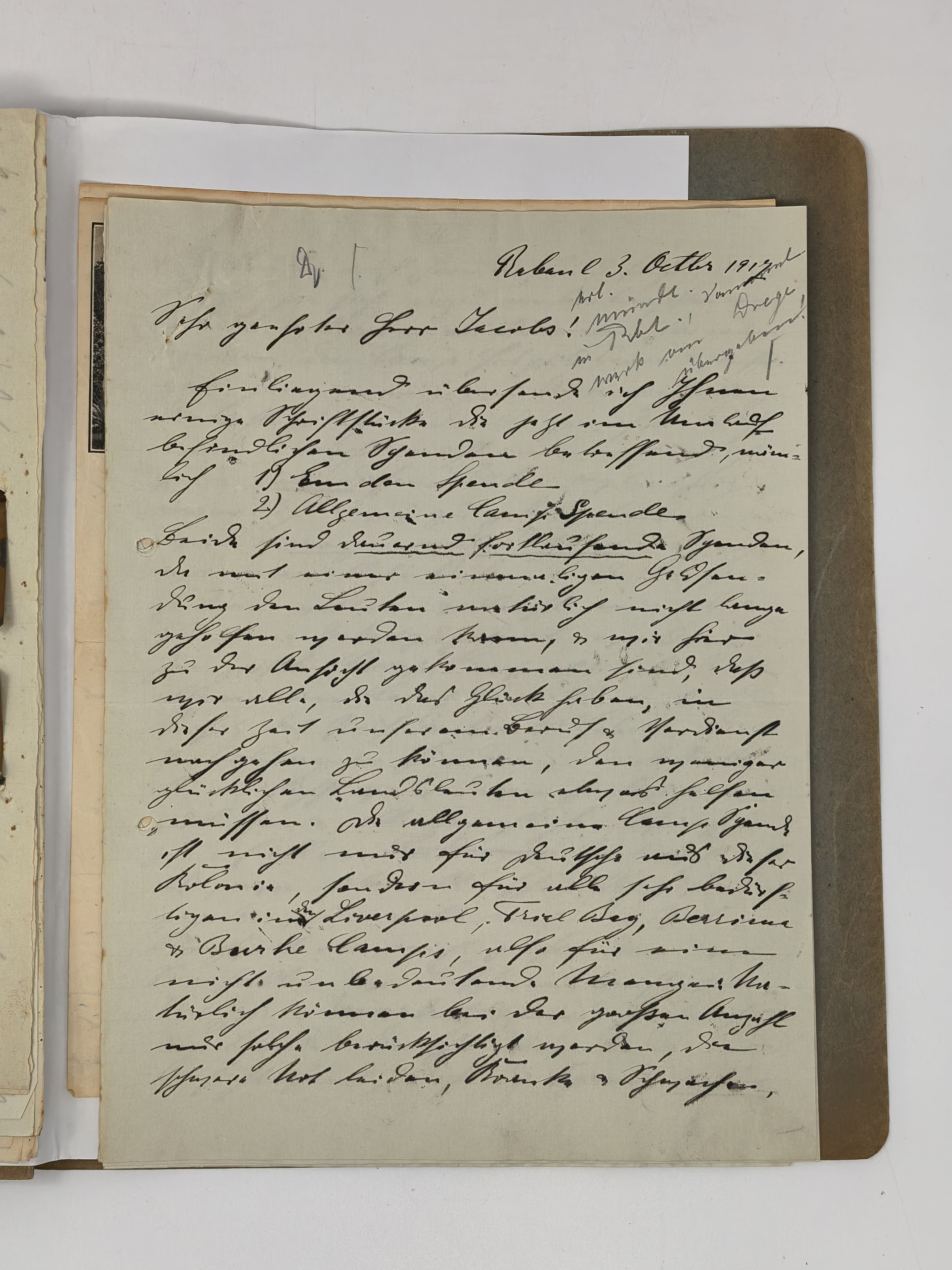
Most of the archive is occupied by the correspondence between Jacobs and his superior, Rudolf Spangenberg (1880-1937), who was the head of “Hernsheim & Co.” with the headquarters in Rabaul. Several original letters by Spangenberg are written in English. The topics cover various aspects of the company’s activities: reports on the state and performance of plantations, appointment and discharge of station managers (including Jacobs’ appointment to Komuli branch in 1912), accounting sheets, papers from “Manus District Court” (March 1919) on the case against “Hernsheim & Co.,” an 18-page “Memorandum on labour conditions in German New Guinea” (Denkschrift über die Arbeiterverhältnisse im Schutzgebiet Deutsch Neu Guinea”), charter agreements, company’s invoices to Jacobs for groceries and various goods for personal use, &c. Many letters discuss or mention local steamers “Sumatra,” “Madang,” “Siar,” “Meklong,” motor schooners “Matupi,” “Möve,” “Ida” and other vessels.
An interesting letter from Jacobs’ predecessor in charge of the Komuli branch, “Her Stehl,” instructs him to restrict the trade in “curiosities” for the benefit of the company only and forbids him to “trade curiosities for yourself” (Komuli, June 25, 1912). Jacobs’ letter written in English to one “Miss E. Höphel” (Mokareng, 24 April 1919), notes that he is “very much astonished about the contents of [her letter] as I never told anybody that I do not wish a woman on my station as stated by you.”
Several letters are addressed to or written by Ernst Ewald Class (“Herr Class”), who served as a manager of the Hernsheim’s station at Kieta, Bougainville Island, and Emil Eduard Timm, general manager of the Hernsheim & Co. in ca. 1912-1913.
Several letters and documents refer to the events of WW1. In a letter to Jacobs, written on August 19, 1914, the author informs him that “according to the latest telegrams, war has broken out between Germany and Russia…” (in translation; Folder [Letters from R. Spangenberg]). A 2-page typewritten document reproduces the text of the “Amtsblatt für das Schutzgebiet Deutsch-Neuguinea” from August 15, 1914, informing about the beginning of WW1. Another letter to Jacobs refers to the officers from S.M.S. “Emden,” imprisoned in Berrima (May 7, 1917; Folder [Letters from R. Spangenberg]). Some of the letters dated after 1914 are signed “J. Jacobs, Kriegsgefangener [prisoner of war].”
A group of documents is connected to Jacobs’ departure from New Guinea in 1920. Among them is a letter from the Australian head of the Manus District to Jacobs (March 22, 1920), acknowledging his intention to leave New Guinea and return to Germany; and Jacobs’ statement (Rabaul, April 20, 1920), written upon his departure from New Guinea, in which he acknowledges that “I shall not in any circumstances be permitted to return to the colony of late German New Guinea and hereby formally and absolutely renounce any intention of right to return to the same colony.” There are also two Australian government customs forms, recording that Jacobs took out two birds of paradise on his voyage to Germany on board S.S. “Morinda” (dated May 15, 1920); and the official “Prisoner of War” certificate, given to Jacob by the 2nd military district of the Commonwealth Military Forces in Sydney on May 27, 1920.
A letter to Spangenberg from Jacobs (Hamburg, December 30, 1920) talks about the circumstances of his return trip (his money was confiscated upon departure from Australia) and current state of affairs in Germany (in translation: “the conditions here cannot be described as bad enough, <…> everything is incredibly expensive; only with great difficulty ad by using every trick in the book can you get enough to eat. The street rules, nobody works, the buildings are filthy <…>;” “I promptly delivered the books and two birds of paradise…”).
Among the later documents is an interesting letter by Ernst Paatzsch (Rabaul businessman, founder of the town’s German Club), dated August 25, 1924, and talking about the life of Germans in the former colony after Jacobs’ departure. Two Jacobs’ letters, dated November 14, 1966, refer to the practice of corporal punishment of native workers in German New Guinea.
The archive also includes a unique manuscript map of the Horno Group of Admiralty islands, a pencil-drawn map of Waria gold fields (modern-day Morobe province of Papua New Guinea) and several rare periodicals published in Rabaul at the end of German and during the early years of Australian rule.
Overall, an important, content-rich archive on the history of a German copra trading company in New Guinea during the last years of German rule and Australian occupation in the course of WW1.